I have known rocks as obstacles, as shelter, and finally as memory. These ten photographs gather these moods: cliff, wall, ruin, creek-bed, boulder, altar, shadow screen, old page. They are not inert. They keep their own weather, their own grammar.
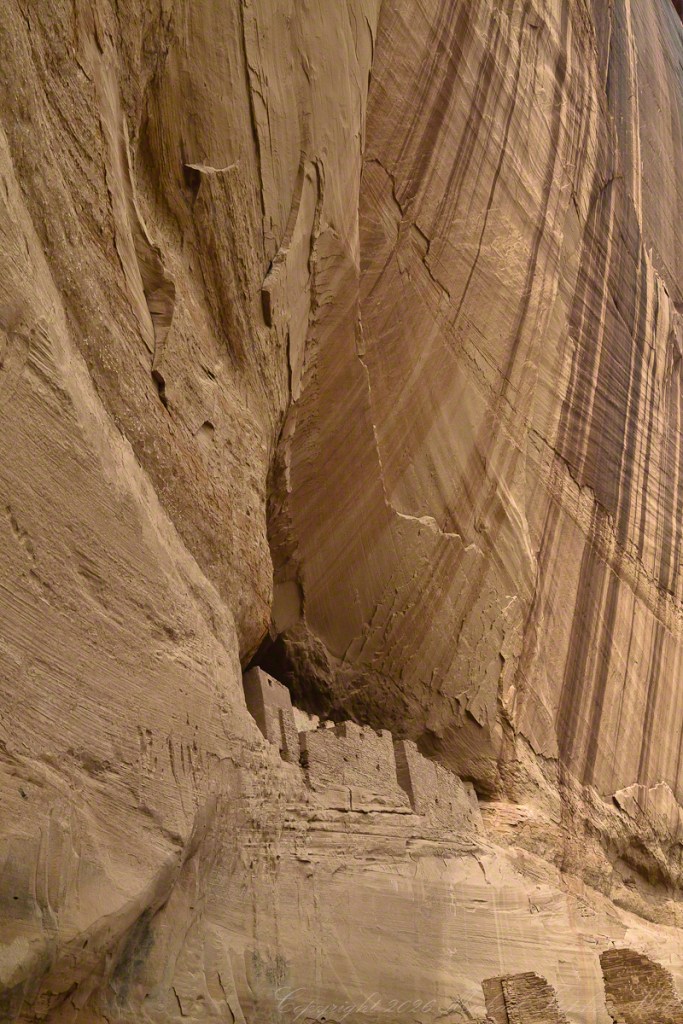
At Mesa Verde, in Montezuma County near Cortez, Colorado, there are cliff dwellings within and of the sandstone, as if a thought withheld. I am reminded those “windows” were doors, and that access to them depended on a toe-trail: a sequence of small depressions in the rock, secure only if begun with the correct hand and foot. These details stay with me, a place understood in the body. The rock was architecture, ladder, lock, and covenant.

In another photograph, the sandstone rises in immense vertical folds, scored and varnished, with ancient rooms tucked low against the wall. The scale is most moral. Human work appears small, but not trivial. A few stacked stones become a claim: we were here, we learned the wall, we lived under its patience.
Elsewhere along Canyon de Chelly a different intimacy is offered as petroglyph horses move across desert varnish on red sandstone, their bodies made by removing darkness. Since horses arrived with Europeans, the image carries a date without numbers. History appears as a pale incision. The rock remembers contact, disruption, motion, and the brief confidence of riders, a page that is best read by subtraction.

Then Reavis Creek, below Reavis Falls in the eastern Superstition Wilderness, softens the meditation. A smooth pale boulder receives branch shadows. Stone becomes a screen for passing light. The marks are temporary, the surface makes them visible. I like that reversal: permanence serving the fleeting. The rock does not need the shadow, but it receives it completely.

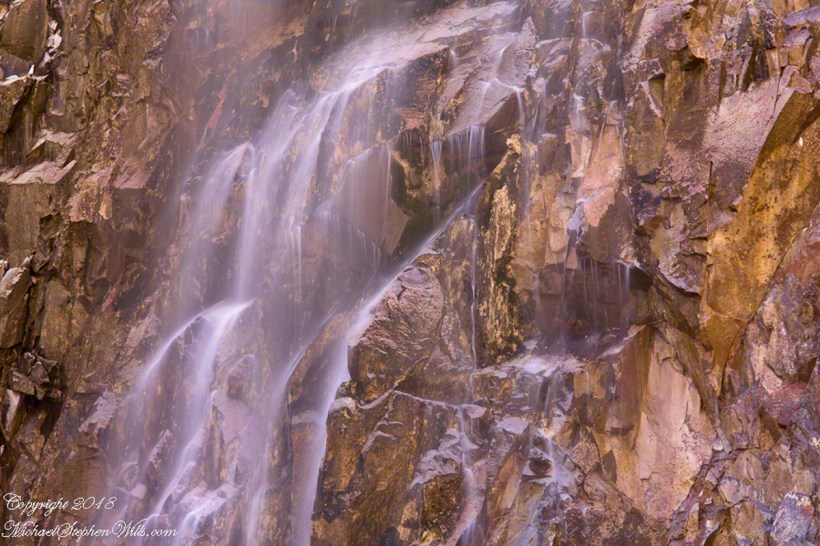
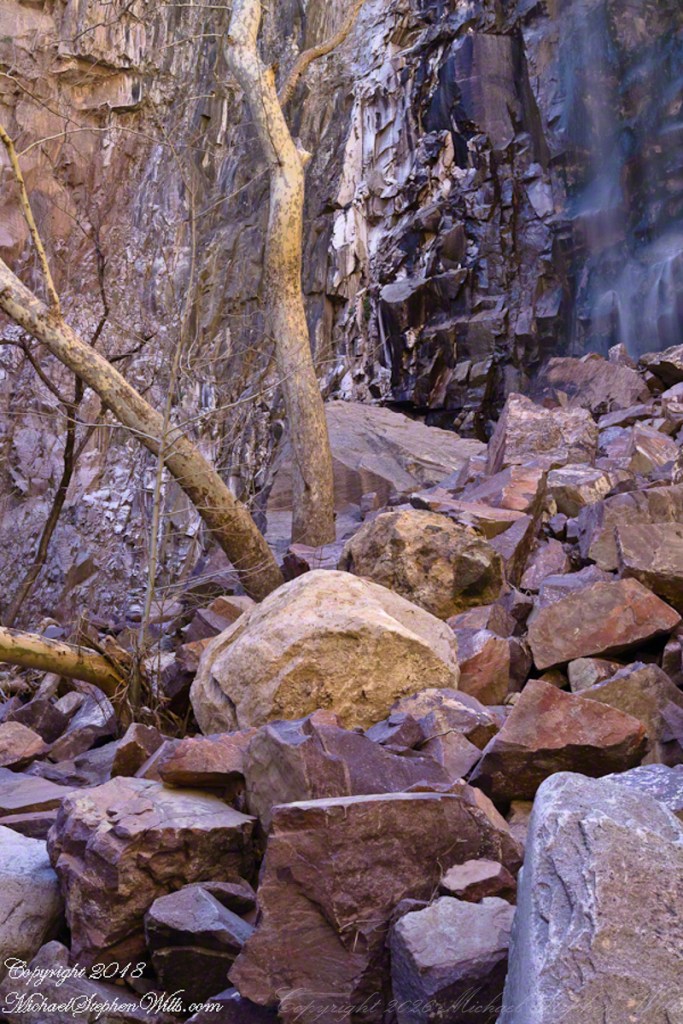
At Reavis Falls where water thins into veils over basalt cliff, water teaches stone the art of yielding without surrender. Nearby, boulders lie piled below the falls, carried down Reavis Creek in flood time or broken from the cliff face. They are the aftermath of force, the creek’s heavy language.
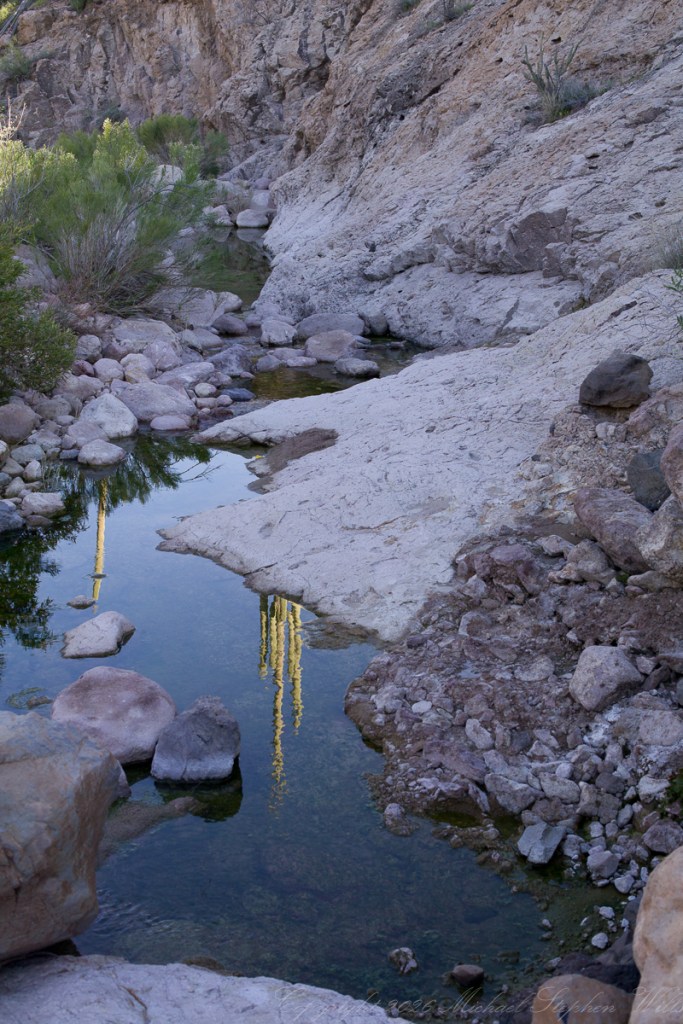
I rested during water gathering in East Boulder Canyon. The pool is narrow, reflective, held among pale stone. Water gathering is one of the oldest errands. In such places, thirst makes geology personal.
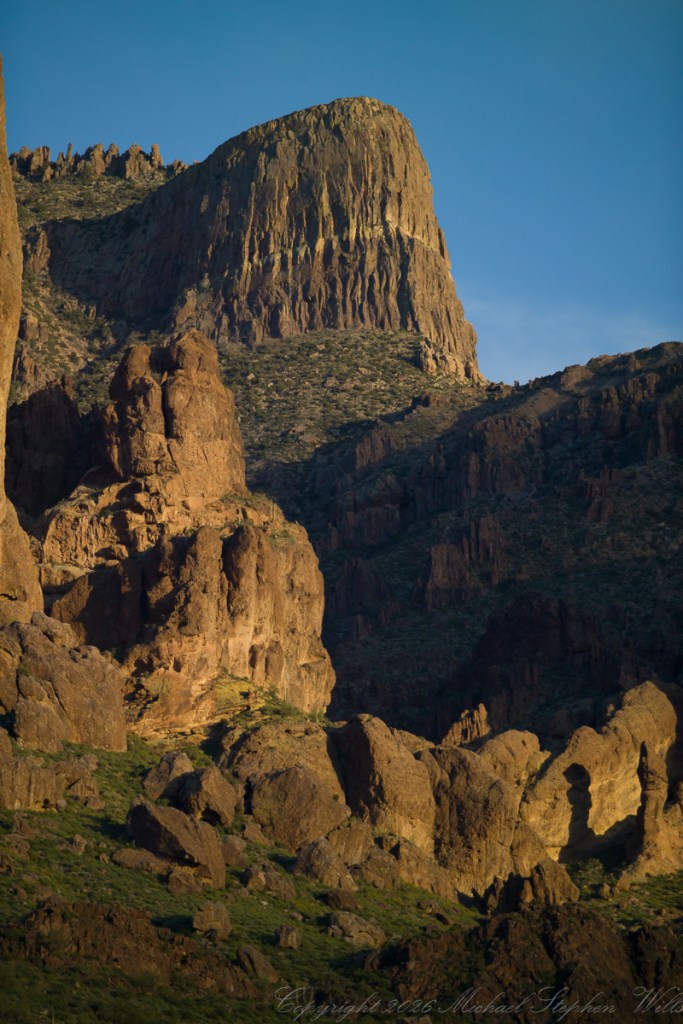
The Flatiron, glowing at sunset above Lost Dutchman State Park, expands the timescale: volcanic eruptions between 20.5 and 18 million years ago, dacite lava, rhyolitic tuff, caldera collapse, uplift, differential weathering. The science does not diminish the wonder; it gives wonder a skeleton. The mountain is long-solidified fire, a flame that learned stillness.
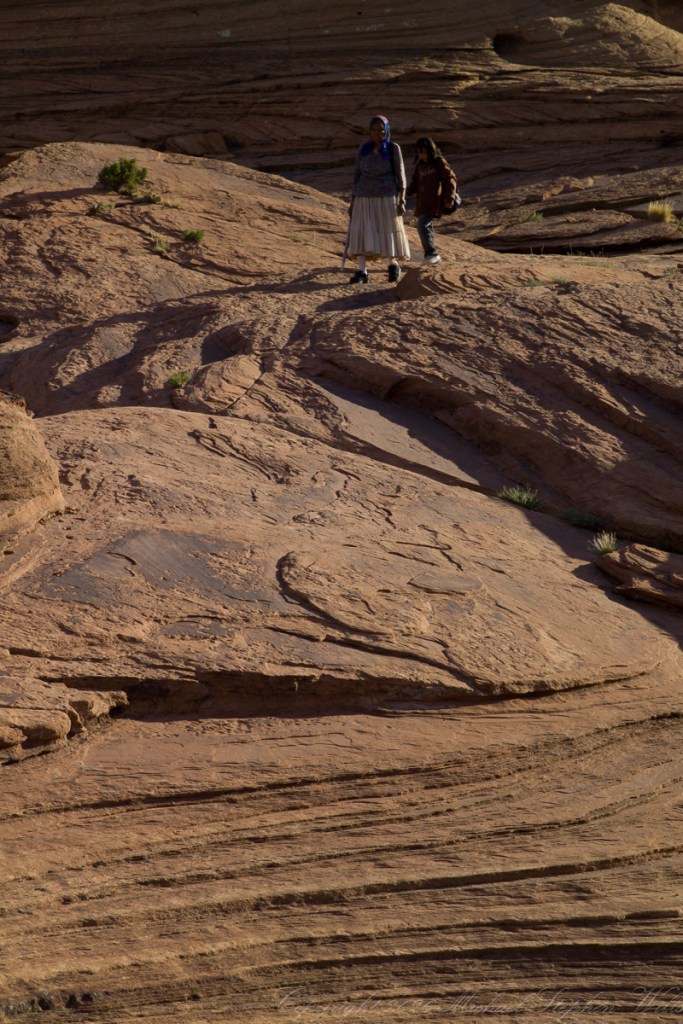
These hikers on red slickrock seem almost ceremonial, crossing a surface grooved by time and runoff. They stand small, not diminished but correctly sized. That may be one gift of rocks: they return us to proportion.
And finally Canyon de Chelly again, the risen gibbous moon beside the red southern canyon wall on the trail to White House. Moon, cliff, brush, evening light: all of it held in a copper quiet. After so many stones, the moon is a far away, familiar rock.

Rocks I have known have not answered me, exactly. They have done something better. They have outlasted my questions until the questions changed.


These are all fabulous photos and the explanations are beautiful Michael.
LikeLiked by 1 person
Thanks, Sheree. We are at home in the southwest.
LikeLiked by 1 person
You can tell
LikeLiked by 1 person
Fascinating!
LikeLiked by 1 person
My feelings exactly for these ancient rocks
LikeLike
What a beautiful meditation in both words and images. Your photographs breathe a deep sense of peace, as if the stones remain silent while telling their stories to those willing to truly look and listen. Thank you for yet another remarkable glimpse into your world.
LikeLiked by 1 person
At home we collect the stones rounded by the glaciers
LikeLiked by 1 person
Wow! I love this, but especially the petroglyph horses. So incredible!
LikeLiked by 1 person
That artist was talented to capture the motion of the horse in such a medium unforgiving of mistakes
LikeLiked by 1 person
Your rocks are wonderful. Dare I say they rock?
LikeLiked by 1 person
…and roll. Ha ha
LikeLiked by 1 person
A contemplative introduction that reflects on rocks as symbols of struggle, protection, and memory, setting a poetic tone for a photographic exploration of natural and historical landscapes.
LikeLiked by 1 person