These flowers are the first to bloom on our property, around the magnolia tree, and are also the first wildflowers photographed with my then new Canon 5D Mark IV dslr . Each year these “buttercups” grow thicker and spread. The latin scientific name Eranthis hyemalis proclaims the early nature of its flowering both in the genus, “Eranthis” – composed of two Greek language roots meaning “spring flower”, and species, “hyemalis” – a term from the Latin language meaning, “winter flowering.” The genus encompasses eight species, all early flowering plants with the common name winter aconite. These can also rightly be called Buttercups as the plant belongs to family Ranunculaceae, buttercups.
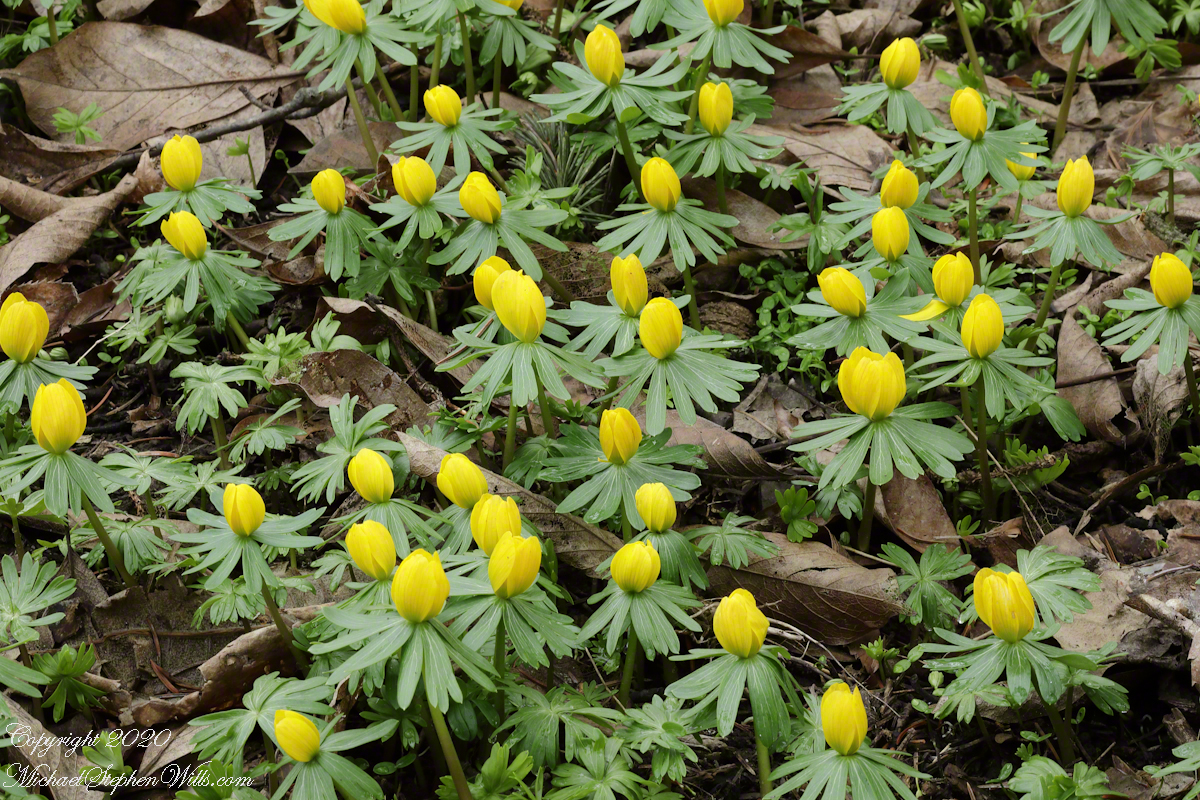
To capture the intricate details possible with the Canon EF 100 mm f/2.8 Macro lens I used here, it’s often necessary to adjust the camera settings to allow for a longer exposure time. This adjustment ensures that enough light reaches the sensor, particularly in macro photography or low-light situations, which helps in producing sharper and more detailed images. All these photographs are from f25. Setting a longer exposure compensates for the reduced light that might be a consequence of using a smaller aperture (higher f-number) for greater depth of field, a common technique in macro photography.”
It’s important to note that while setting a longer exposure can improve image quality by allowing more light to hit the camera’s sensor, it can also introduce the risk of motion blur if the camera or subject moves during the exposure. To minimize camera shake and achieve the best results, I used a Manfrotto “BeFree” tripod and the camera’s built-in timer set to a 2 second delay after a manual shutter release.
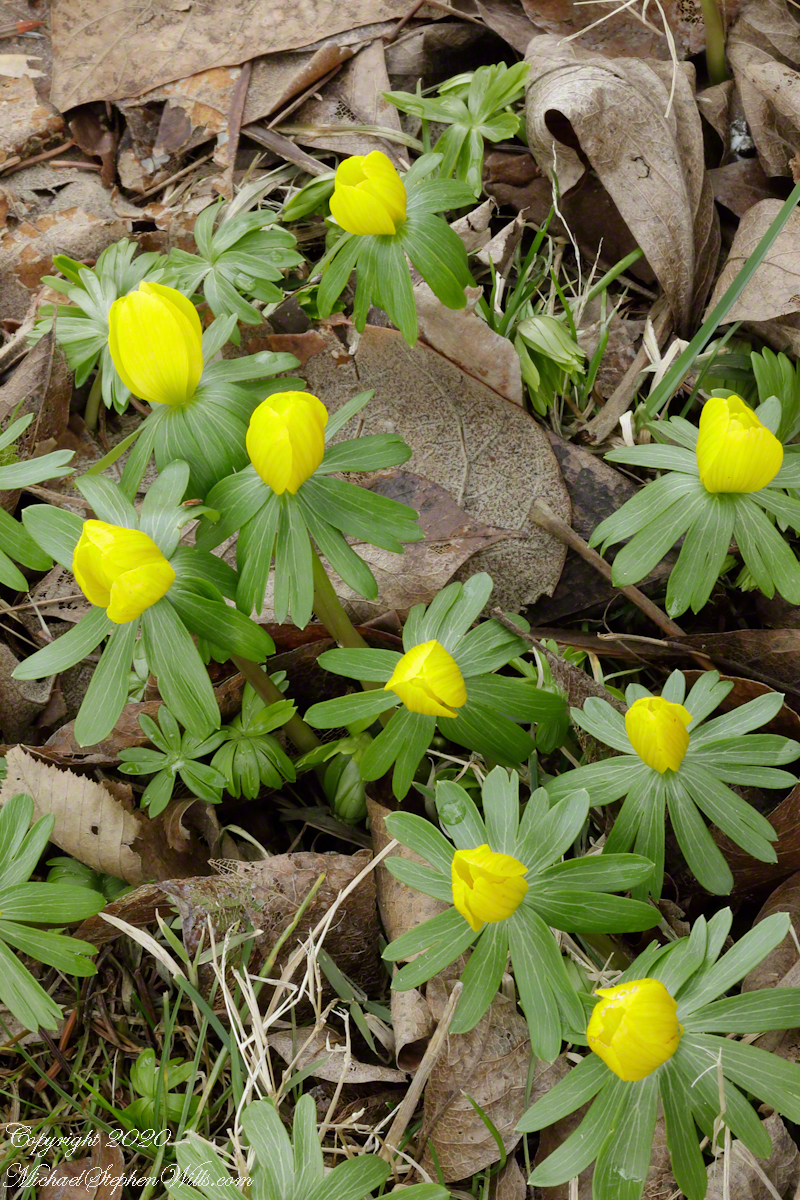
With the thermometer hovering above freezing, these blooms did not open today. The calendar says “late winter”, these Aconite are singing “early spring.”
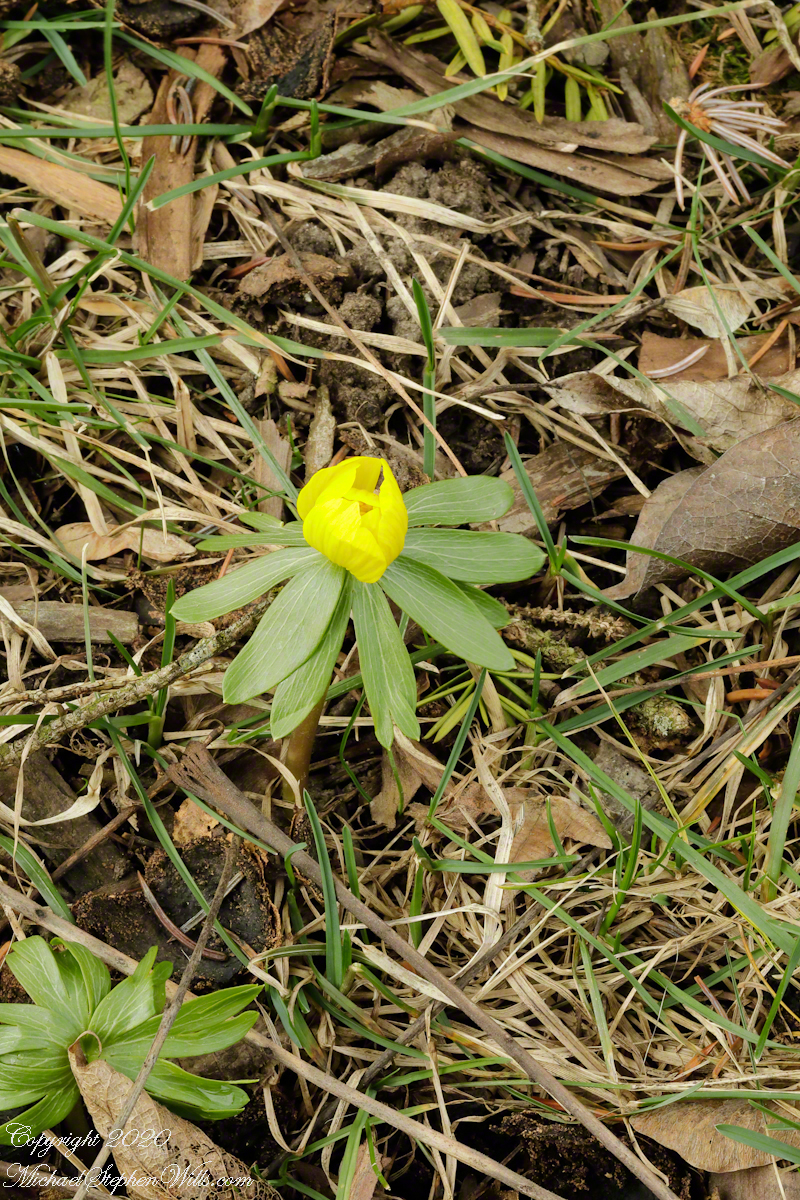


Beautiful yellow 💛
LikeLiked by 3 people
A welcome patch of sunshine when all else is bare.
LikeLiked by 1 person
Yes ✨
LikeLike
Simply charming Michael
LikeLiked by 1 person
Thank You….the good news…they are spreading every year.
LikeLiked by 1 person
All that yellow is so cheerful.
Happy new camera to you. Wear it well.
LikeLiked by 1 person
Thank You, Steve.
LikeLike
Yellow is my favorite color, and these are so beautiful. It snowed here last week, but it’s melted now, and I’m really looking forward to warmer weather.
LikeLiked by 1 person
Our flowers come in waves….these are the densest patch of yellow.
LikeLiked by 1 person
Reblogged this on Ned Hamson's Second Line View of the News.
LikeLiked by 2 people
thank you Ned
LikeLike
These are such pretty little flowers that add a nice burst of colour to signal the start of spring.
LikeLiked by 1 person
Maggie, I’m so glad you appreciate the beauty of winter aconite flowers.
Their vibrant yellow truly is a herald of spring, bringing joy and color after the long winter.
Thank you for visiting!
LikeLiked by 1 person