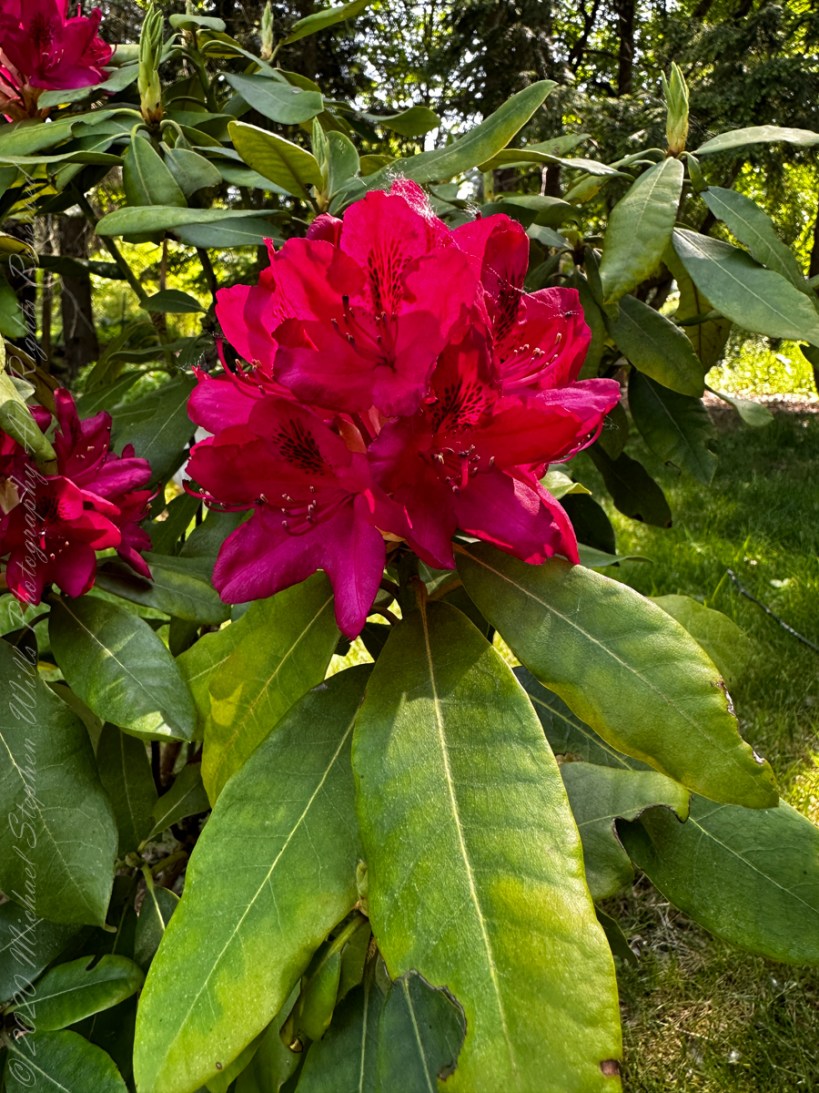
“Like other ericaceous plants (i.e. of the heather family -Ericaceae), most rhododendrons prefer acid soils with a pH of roughly 4.5–5.5; some tropical Vireyas and a few other rhododendron species grow as epiphytes and require a planting mix similar to orchids.”
“Rhododendrons have fibrous roots and prefer well-drained soils high in organic material. In areas with poorly drained or alkaline soils, rhododendrons are often grown in raised beds using media such as composted pine bark. Mulching and careful watering are important, especially before the plant is established. Rhododendron species have long been used in traditional medicine.”
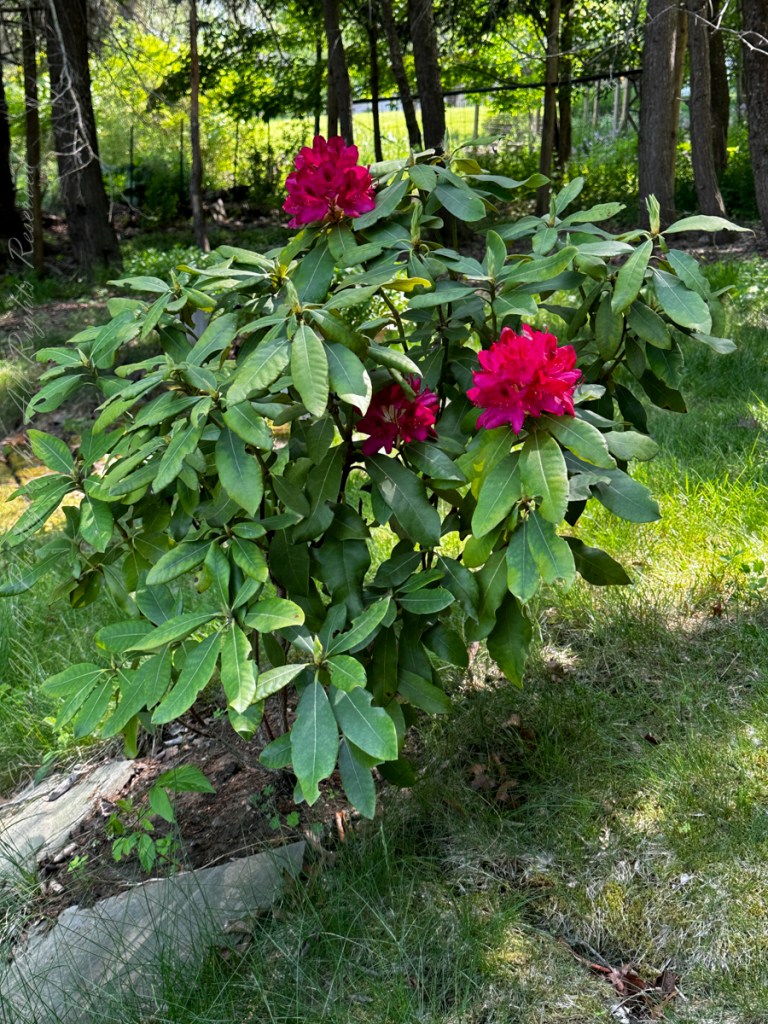
“Animal studies and in vitro research have identified possible anti-inflammatory and hepatoprotective activities which may be due to the antioxidant effects of flavonoids or other phenolic compounds and saponins the plant contains.”
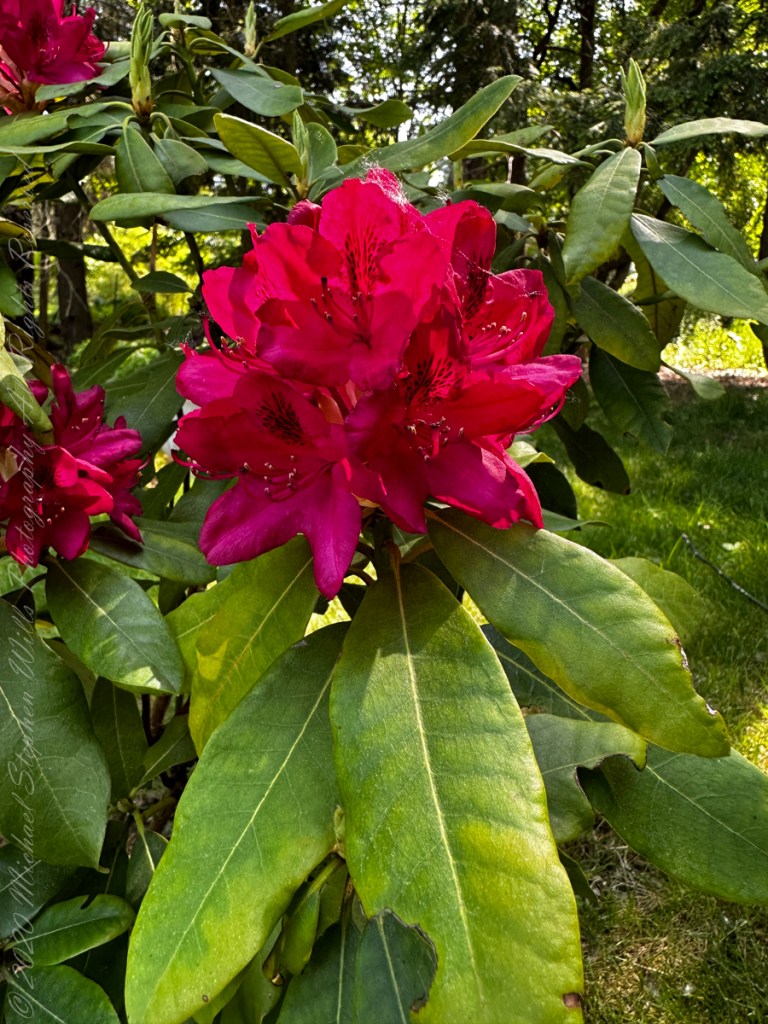
“In the language of flowers, the Rhododendron symbolizes danger and to beware. Floriography (language of flowers) is a means of cryptological communication through the use or arrangement of flowers.”
“Meaning has been attributed to flowers for thousands of years, and some form of floriography has been practiced in traditional cultures throughout Europe, Asia, and Africa. Plants and flowers are used as symbols in the Hebrew Bible, particularly of love and lovers in the Song of Songs, as an emblem for the Israelite people, and for the coming Messiah. William Shakespeare ascribed emblematic meanings to flowers, especially in Hamlet. Interest in floriography soared in Victorian England and in the United States during the 19th century.”
“Gifts of blooms, plants, and specific floral arrangements were used to send a coded message to the recipient, allowing the sender to express feelings which could not be spoken aloud in Victorian society. Armed with floral dictionaries, Victorians often exchanged small “talking bouquets”, called nosegays or tussie-mussies, which could be worn or carried as a fashion accessory.”
Reference: text in italics and quotes is from Wikiedia, “Rhododendron.”
 Michael Stephen Wills Photography