A Ride to Reavis Ranch

Some history and exploration

….continued from the chapter “Desert Luxuries”

After hitching the saddled buckskin, named “Nugget,” and lightly packed pinto to trees beside the trail, The Searcher climbed up to my camp for a visit. I started water for tea and soon we were chatting. Right from the start The Searcher asked for privacy. Devoted to searching the Superstitions for the gold of the “Lost Dutchman Mine,” he organized his expeditions from a staging point near Phoenix and spent nearly sixty days each year in the wilderness. Part of his preparation was a desert survival course provided by the Reavis Mountain School, conducted by Peter Bigfoot.

An Invitation from The Searcher

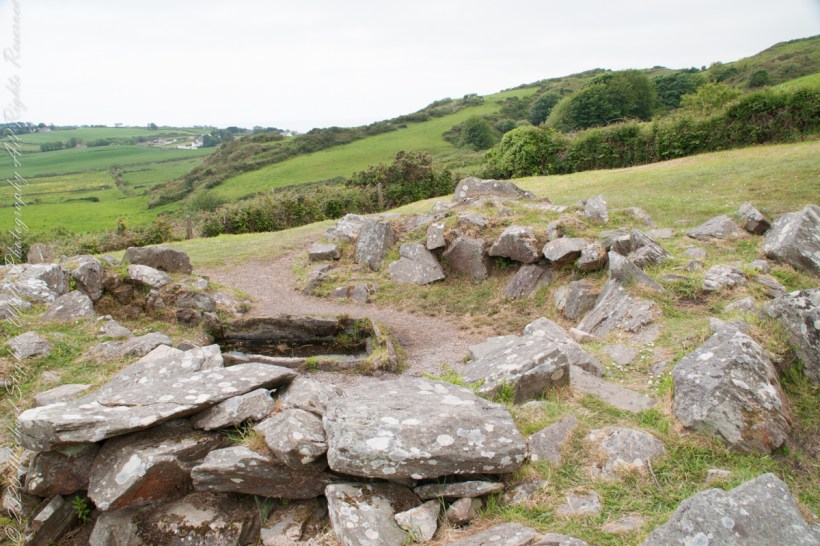
The Searcher described a place near Pine Creek, he called it “Circlestone,” a large, almost perfect circle of precisely fitted stone walls, on the slopes of Mound Mountain above the headwaters of Pine Creek. My sister, Diane, and I found Circlestone on backpack expeditions March and November 2006. WThe site exceeded our expectations, the walls appeared less built than patiently persuaded from the mountain itself.

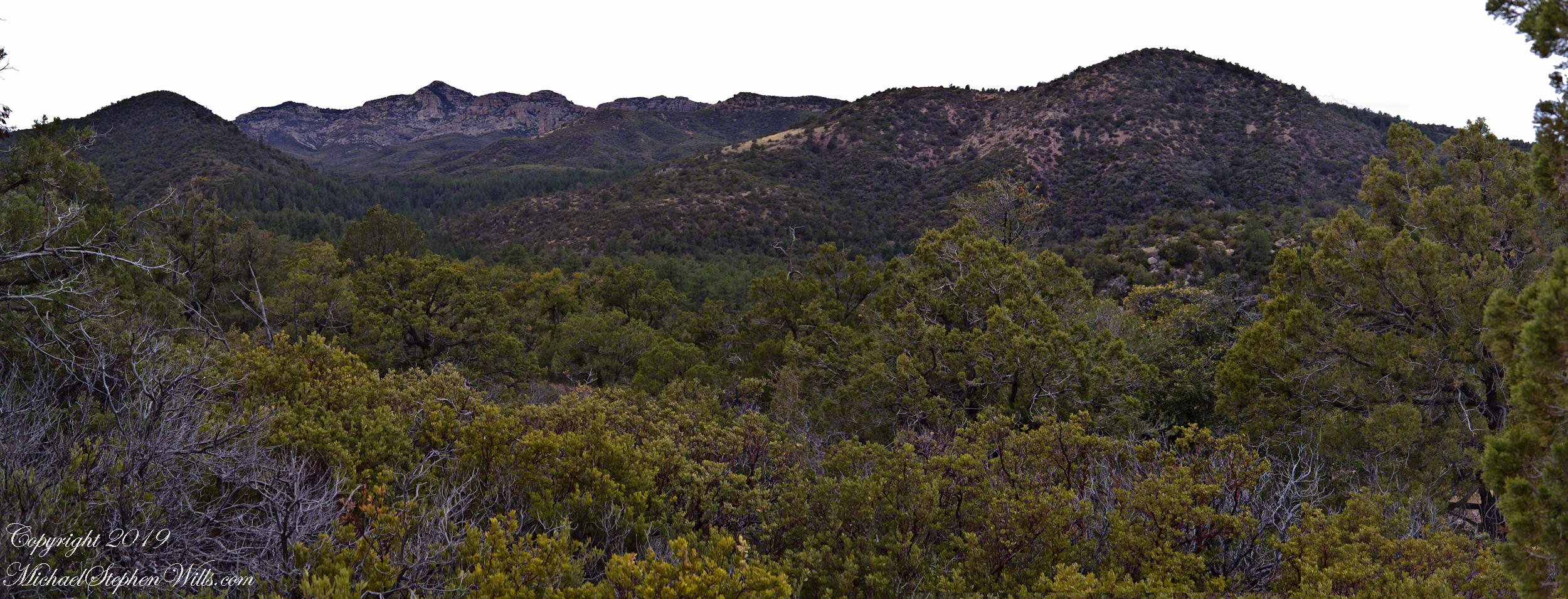
Here is a panorama from March 2006, southwest from the forests of juniper and pinion on the slopes of Mound Mountain.. The southern tip of Reavis Valley is to the right, from there Arizona Trail lead to White Mountain in the distance. It was taken on a later trip, in November of 2006 when my sister, Diane, and I visited Circlestone.

Click any photograph for a larger image.

The Searcher also told of Elisha Marcus Reavis, who settled the Valley west of Pine Creek in 1874. At one point, a band of Apaches planned to kill Reavis, but were respectful of his reputation as a rifle shot. They were waiting him out across from the his dugout, when Reavis stripped naked and, with wild hair and a flaming red beard, charged their camp, knives in both hands. The Apaches rode off, wary of his insane behavior, and never bothered him again.

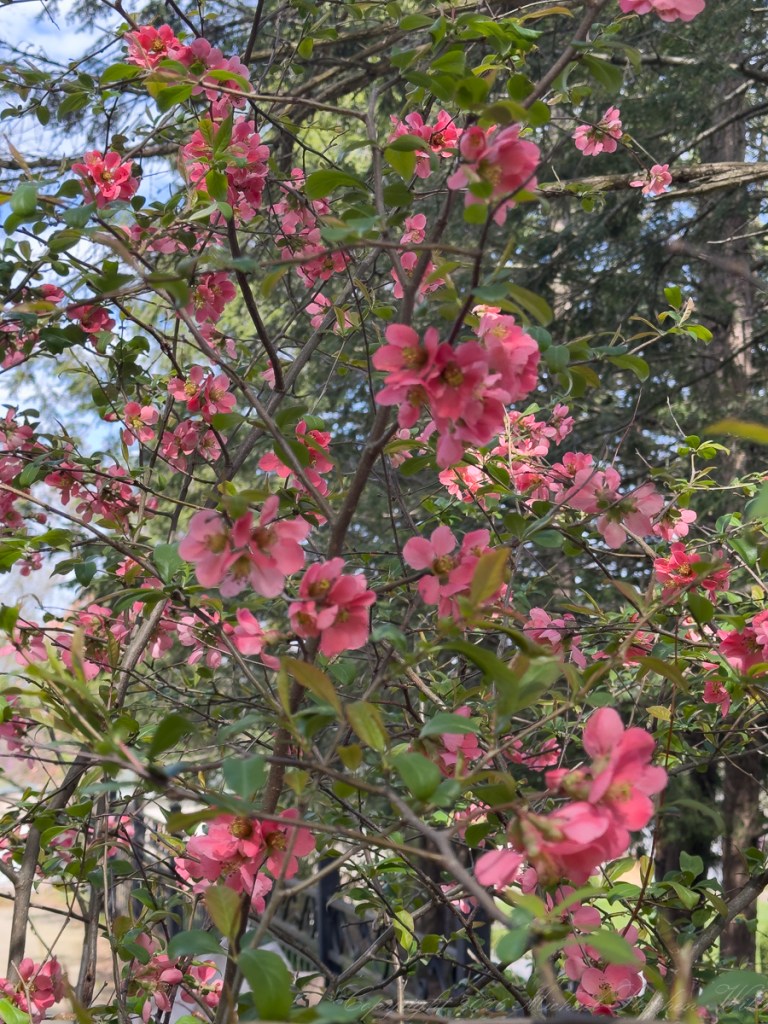
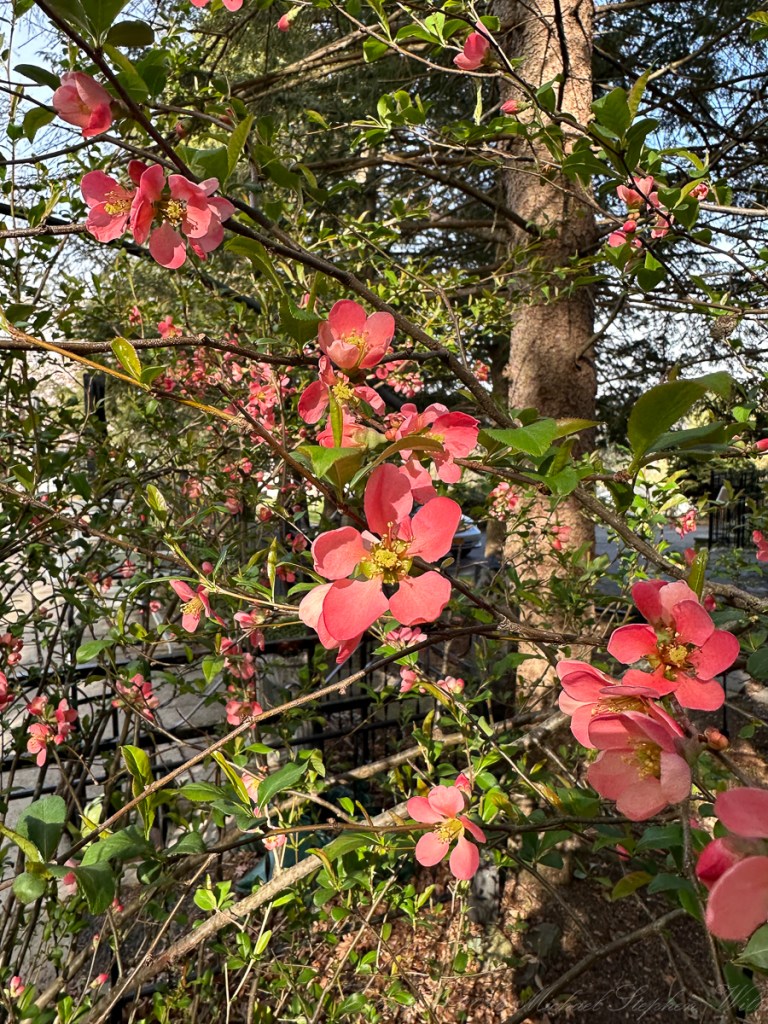
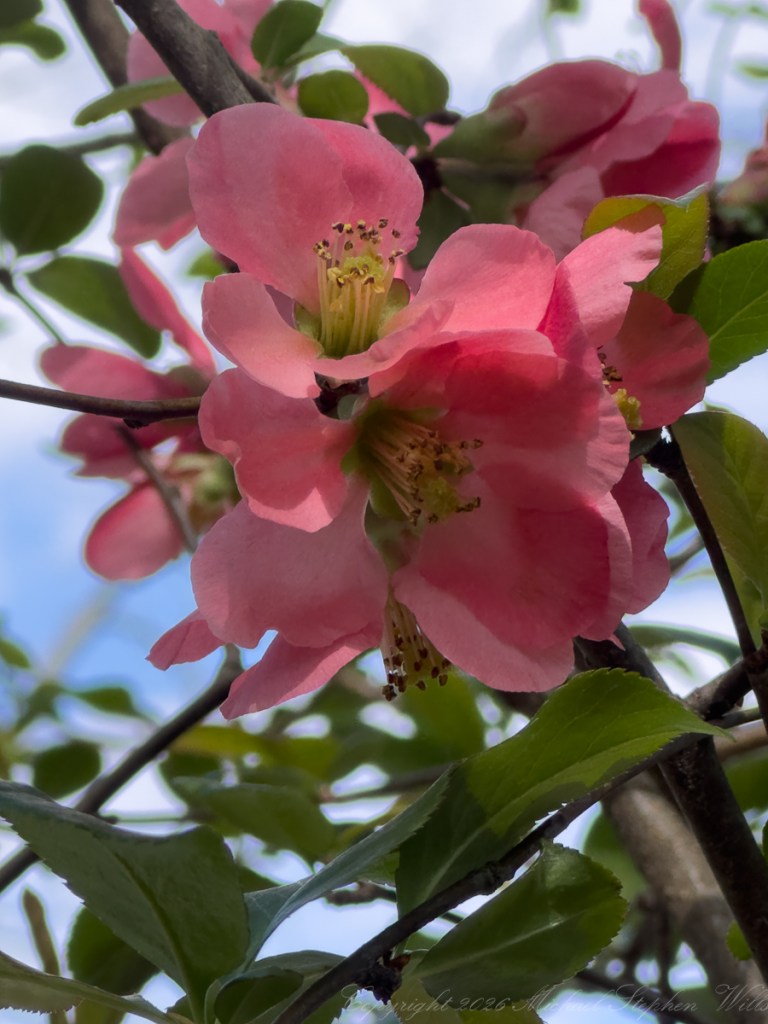
We talked about my prospects and plans when The Searcher offered to take me to the Reavis Valley the next day, on horseback. There is a large apple orchard there and, this being April, we’d be treated to masses of apple blossoms. The day after Reavis Ranch, I could pack out with him down the Arizona Trail, past the Reavis Mountain School, over Campaign Creek and drive back to the Lost Dutchman Park. I readily agreed.

To Reavis Ranch on Horseback

The following morning rose slowly from colorless darkness, accompanied by thin birdsong and the whitening glow of high clouds. When the Searcher arrived around 8 am he was leading the pinto, introduced as Colorado, equipped with a western saddle instead of a pack. As an absolute novice trail rider, I rode while The Searcher held Colorado’s lead rope. The reins were wrapped around the saddle horn, leaving me to hang on and enjoy the view and the swishing tail of Nugget, the buckskin.

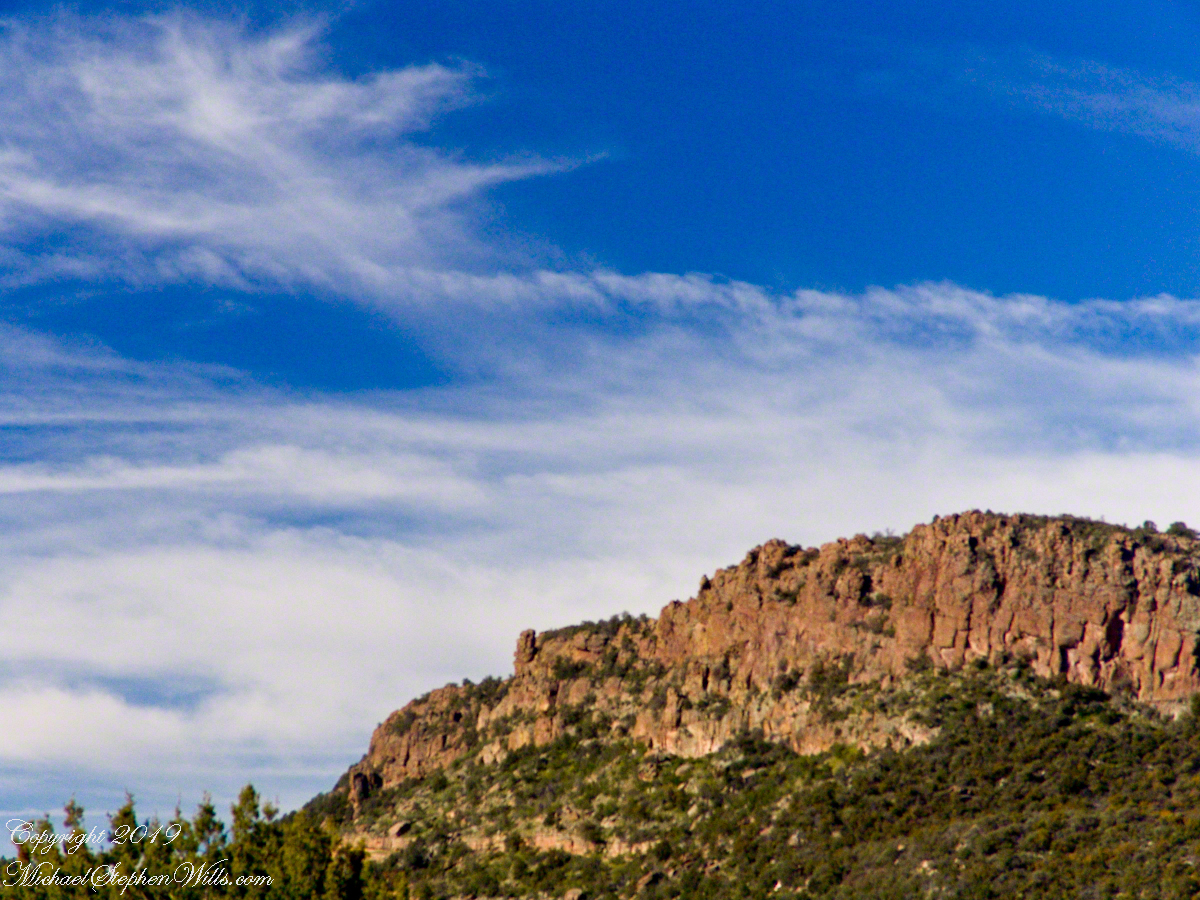
The 2.5 mile trail to Reavis from Pine Creek is typical of the eastern Superstitions, minimally improved, dramatically uneven, littered with boulders polished smooth by decades of hooves, floodwater, and erosion. From Pine Creek there’s a climb of a 631 feet to a 5,278 foot elevation, where the trail meanders beneath a dramatic red cliff with a view of the pinyon/juniper forests on the slopes of Mound Mountain. As he picked our way, The Searcher pointed out the sights. “Circlestone is somewhere over there, a ring of stones overgrown with Alligator Juniper.” I could do little more than observe; photography was entirely out of the question. The trail twisted around the mountain like a dry stream remembering water.

A cliff along the trail to Reavis Ranch offered the ledges and shadowed cover preferred by cougars. In daylight it posed little danger to mounted riders, and attacks against horses were rare. In all our years in Arizona, neither of us had seen more than the tip of a tail slipping behind brush.

This had been a lush April after a wet winter, and small game was plentiful. Only a sick cat would have been desperate enough to stalk horses. The darker possibility—a cougar infected with rabies after encountering a diseased animal at a water source—was a thought neither of us lingered on for long.

Eventually, the path descended steeply to Reavis Creek, the valley floor and intersected with the Reavis Ranch trail. Heading south the Reavis Ranch trail passes the site of a long abandoned ranch. What remained of the adobe and stone ranch house stood on a level bench overlooking what had once been the corral and a broad open meadow.

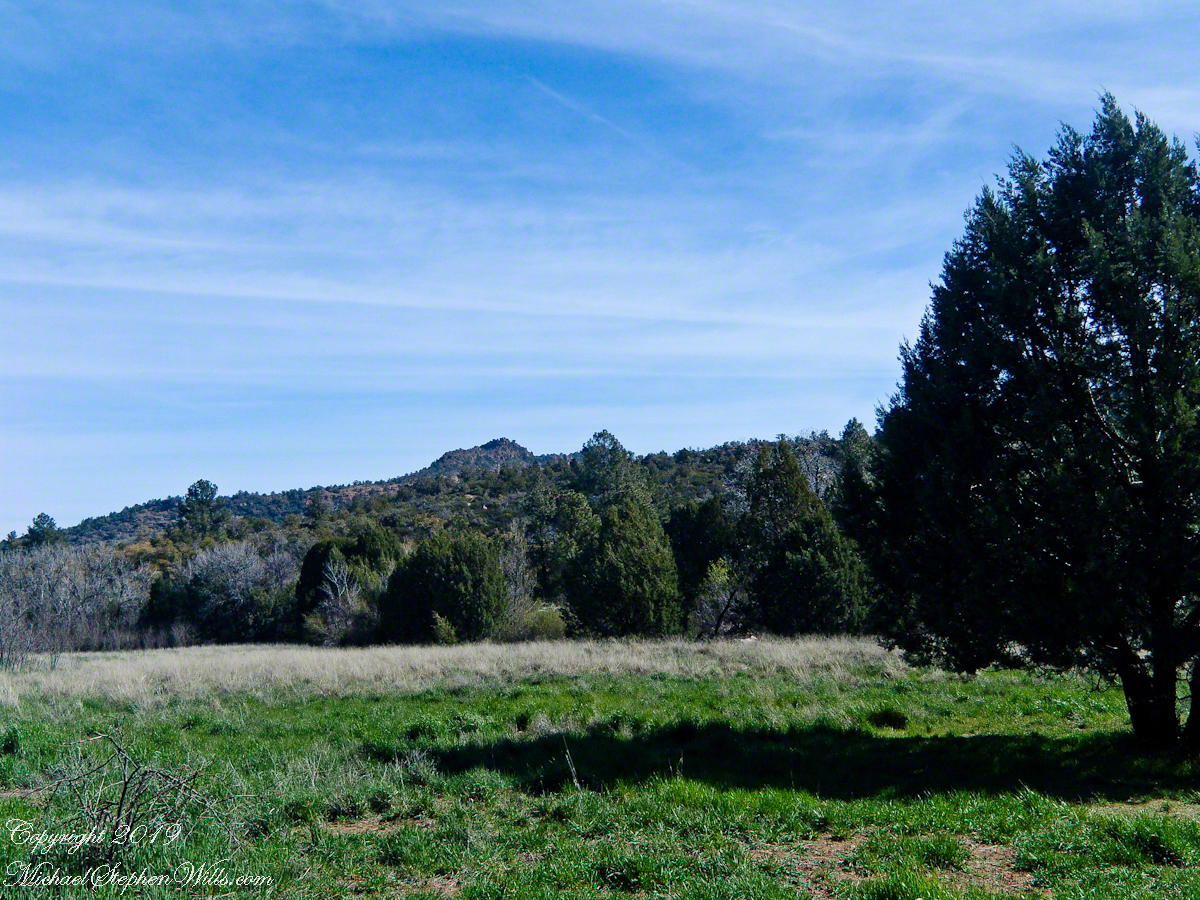
Open field at near the juncture of the trail from Pine Creek with the Reavis Ranch trail.

Apple trees in bloom sween from the former site of the ranch house. There used to be a pond near this spot. With a little imagination, the trail from Pine Creek can be seen on the far ridge.

Reavis Ranch Trail, foreground, traverses the valley length north to south. The Arizona Trail from Pine Creek following below the red rock cliffs in the distance.

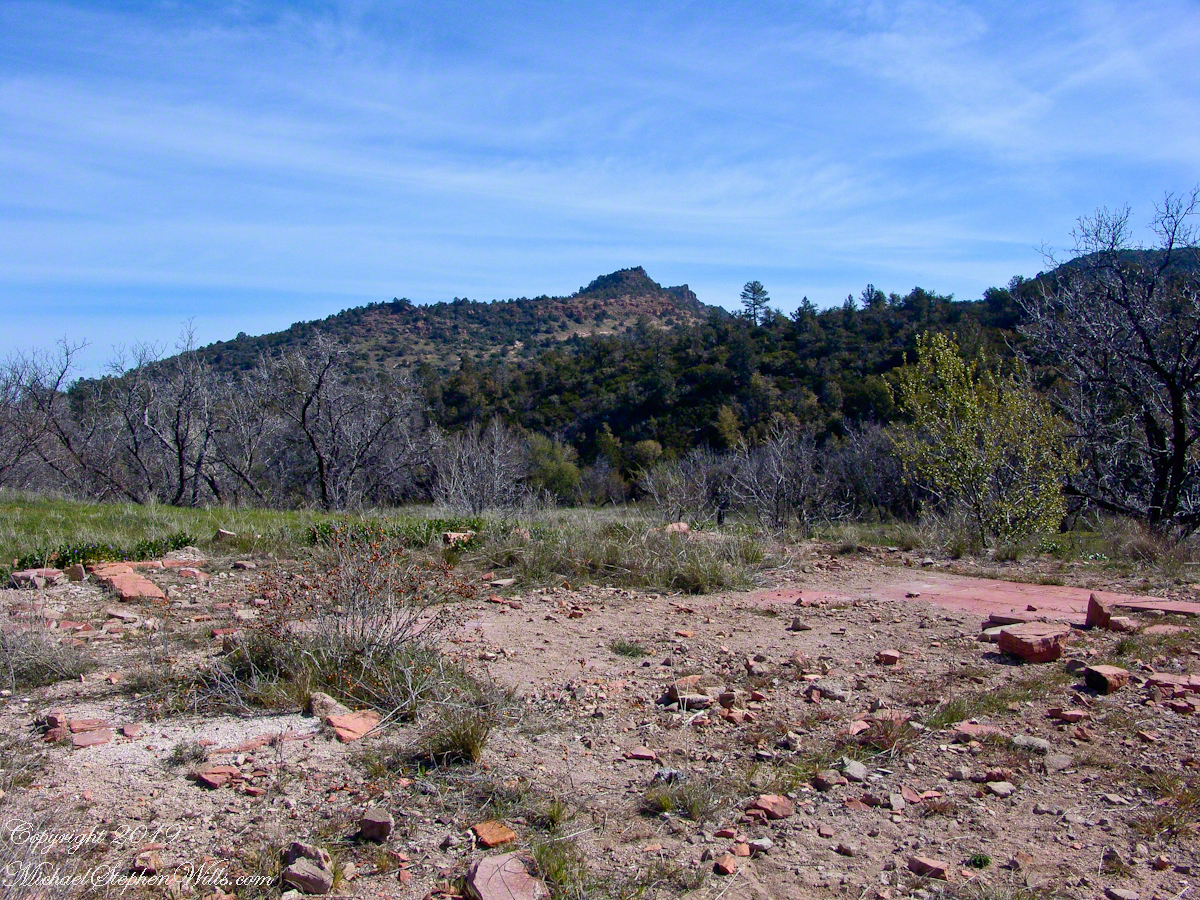
The US Forest Service razed the building after it “burned to the ground” Thanksgiving 1991. I would not call what is left “a foundation,” it is a platform where the house stood. In the photograph, the surviving tiles still suggest the modest warmth of a lived-in home. I’ve seen old photographs of the structure with a large pond to the left of this view, a door and simple porch face east and the pond used to hold irrigation water. The leveled ruin possessed the melancholy geometry of abandoned human hope.

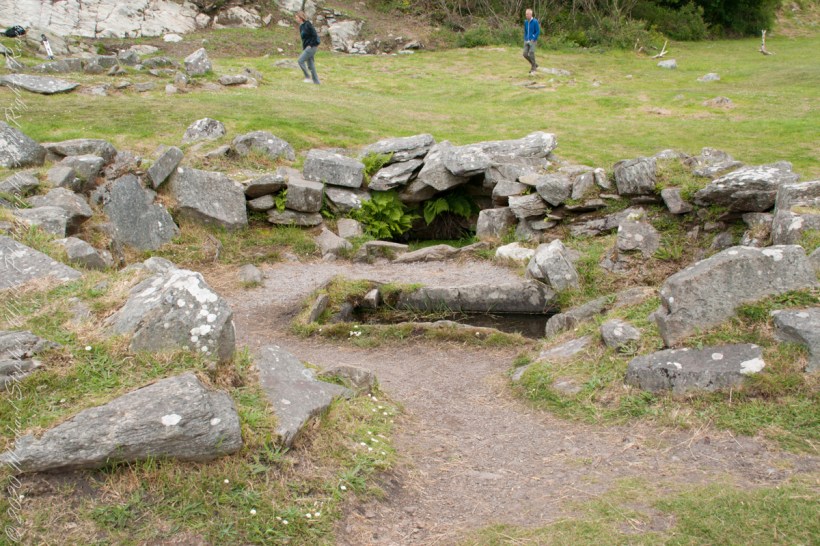
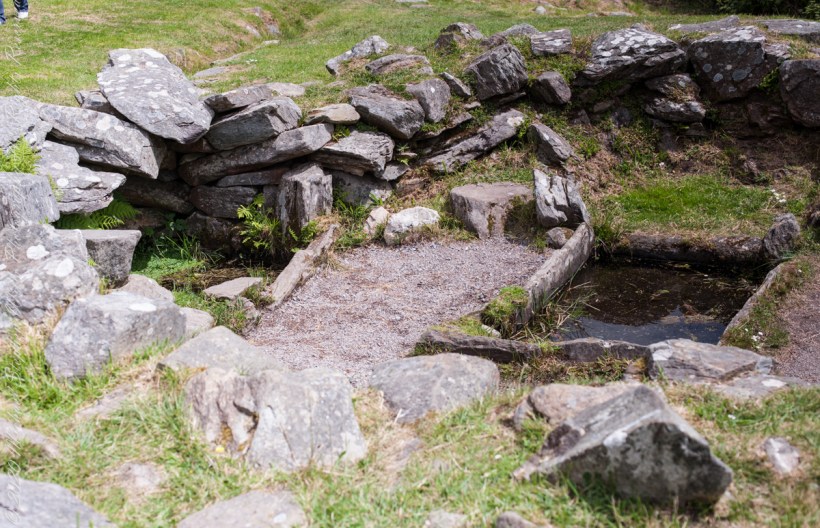
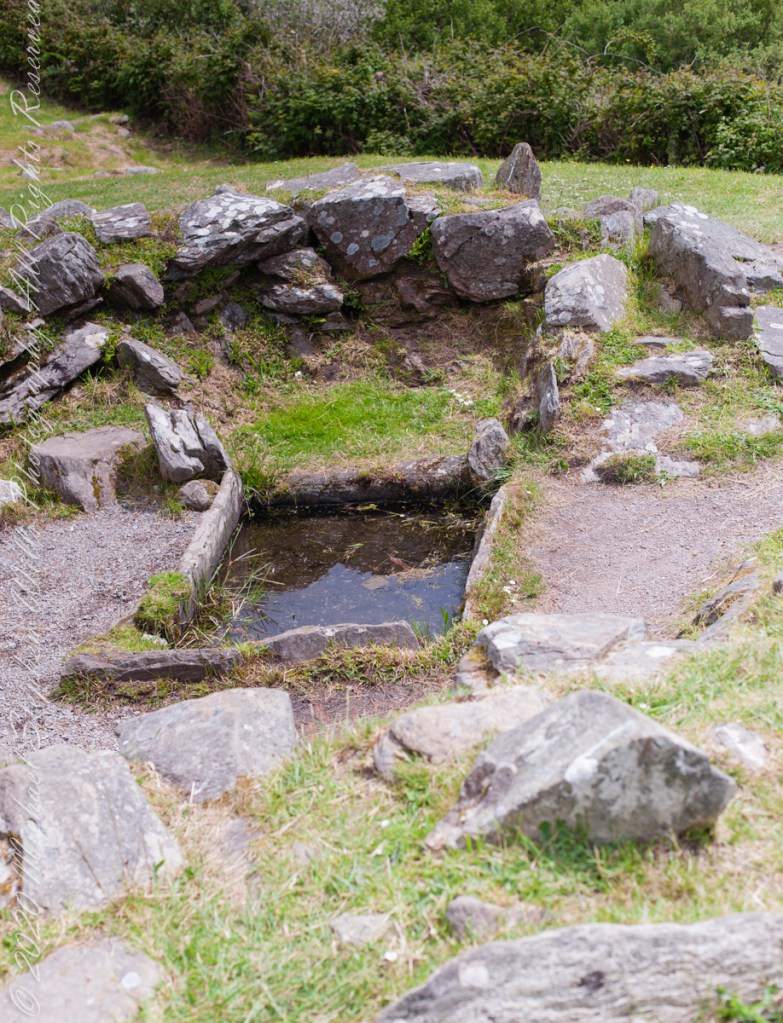
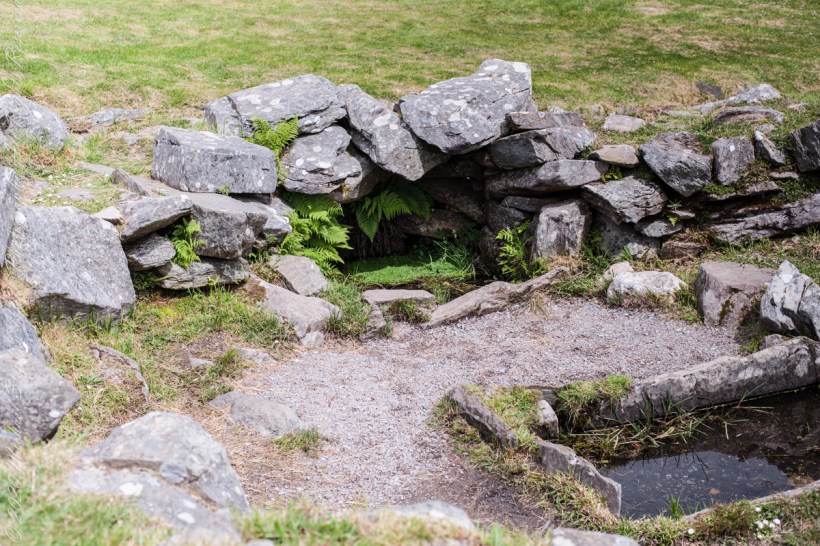
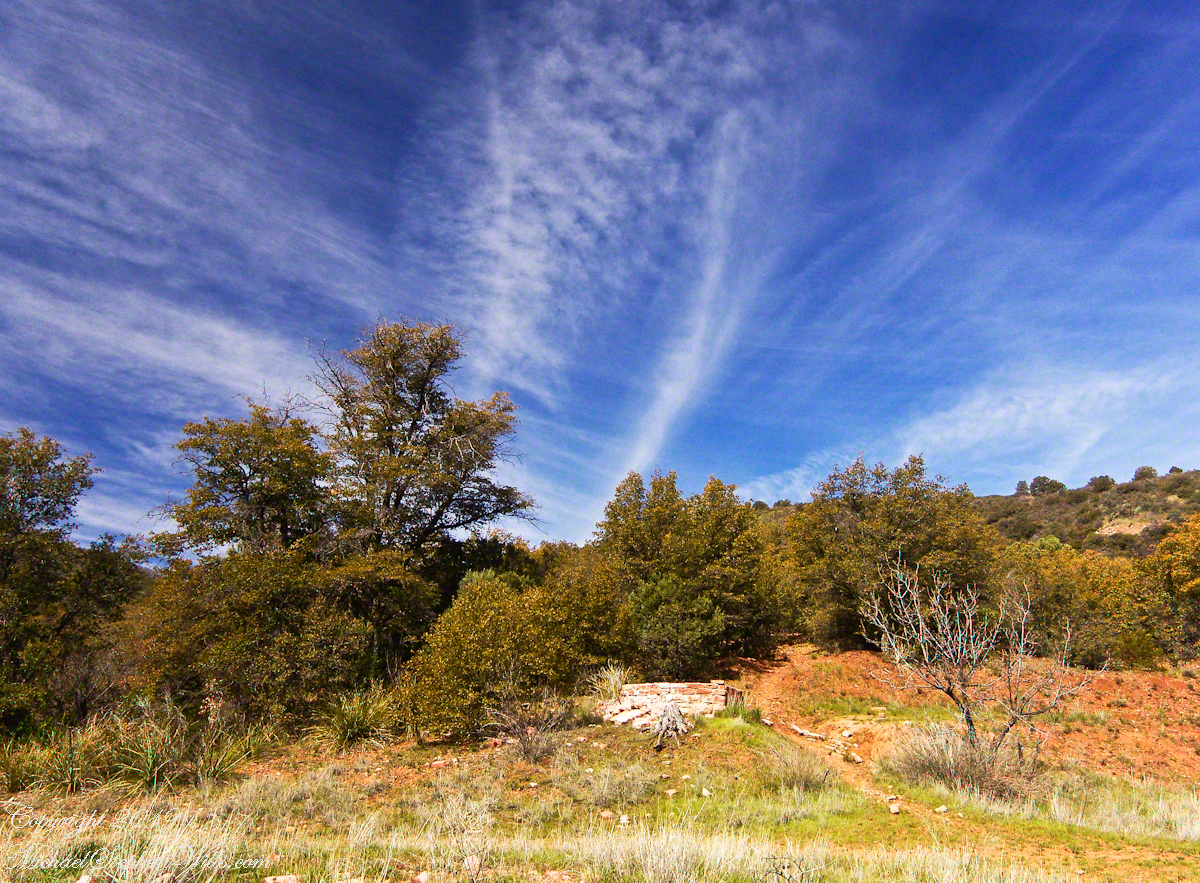
Turning from the ruin, another structure came into view. Built into the western slope above the valley floor was a hexagonal adobe foundation overlooking the remains of the ranch house across the trail.

My interpretation rests partly on the surrounding terrain. South of the structure runs the shallow trace of an excavated canal, suggesting that water from upper Reavis Creek—or one of its tributaries—was diverted into a catchment basin before being stored or directed toward irrigation.

Whatever its exact purpose, the site commands sweeping views of the central valley and is a beautiful place to watch evening settle over the orchard.

Turning from the ruin, another structure came into view. Built into the western slope above the valley floor was a hexagonal adobe foundation overlooking the remains of the ranch house across the trail.

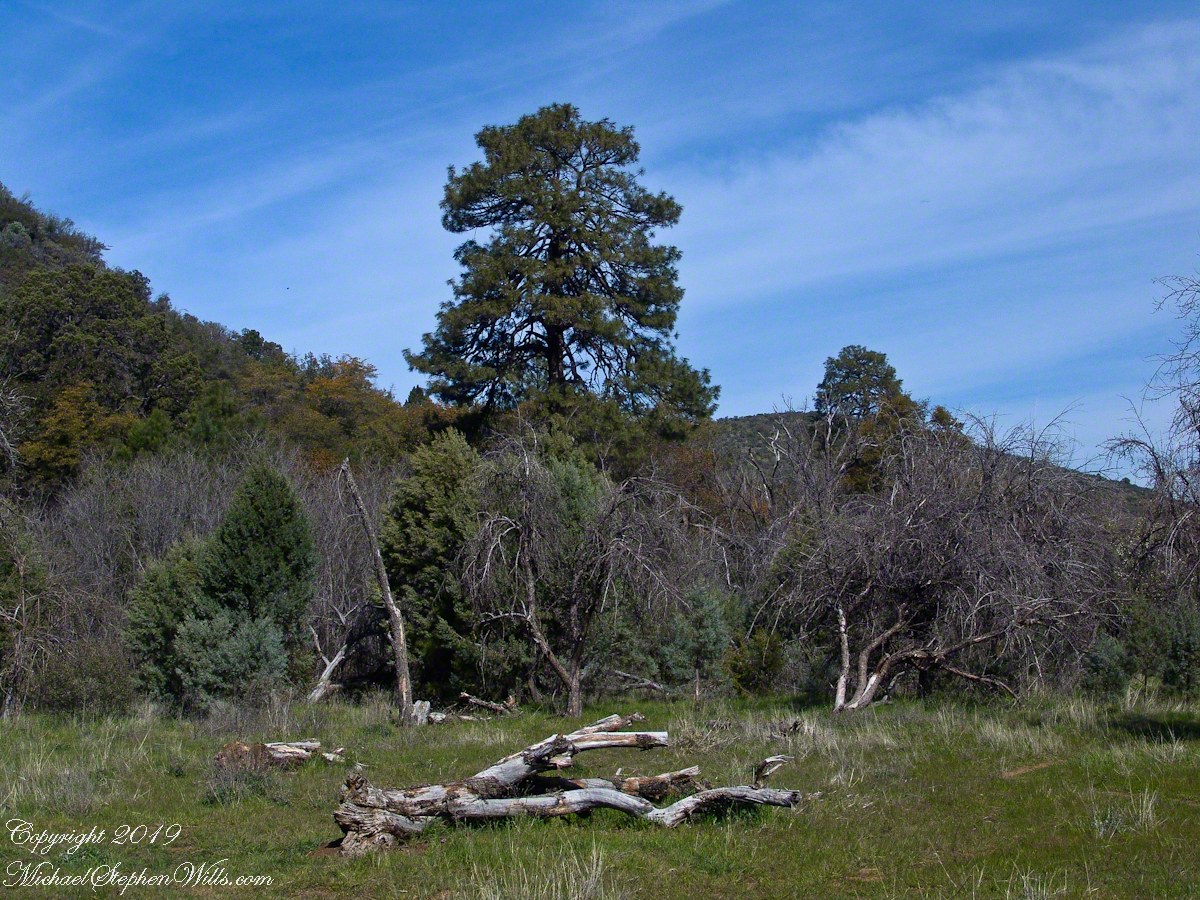
The Searcher led me to a place a few hundred yards south, in a narrowing of the valley, where he let Colorado and Nugget roam free. The horses appreciated the level, open spaces and I enjoyed the Ponderosa pines on the west valley slope. We sat on the smooth trunks of fallen trees, 4 feet in diameter, near Reavis Creek.

Colorado took this opportunity to bolt, headed south. We took off after him into and through a thicket of locust trees where The Searcher cornered Colorado to regain control. “He was abused by a previous owner and can be difficult at times” was how The Searcher put it.

We were close to the end of Reavis Valley where Reavis Creek originates from the drainage of White Mountain, to the west.

We headed north here, back to the ranch house site, to the lush new grass of the apple orchard.

Nugget in Horse Heaven

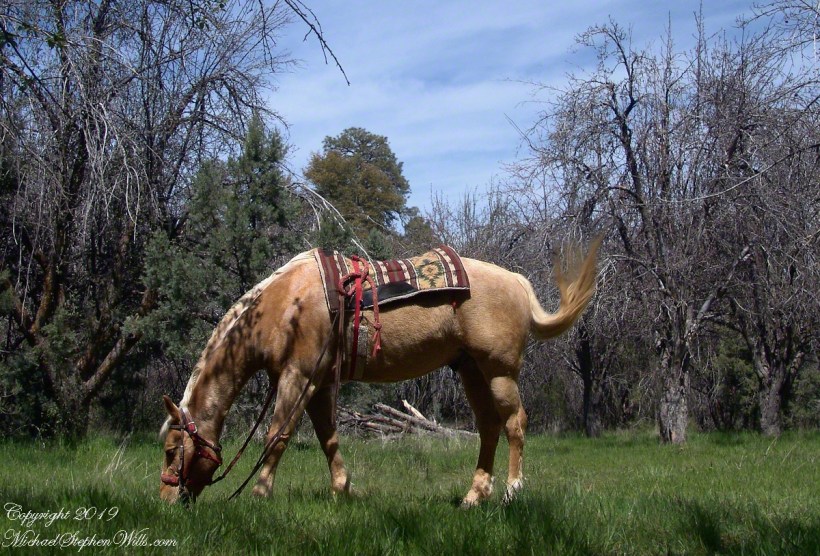
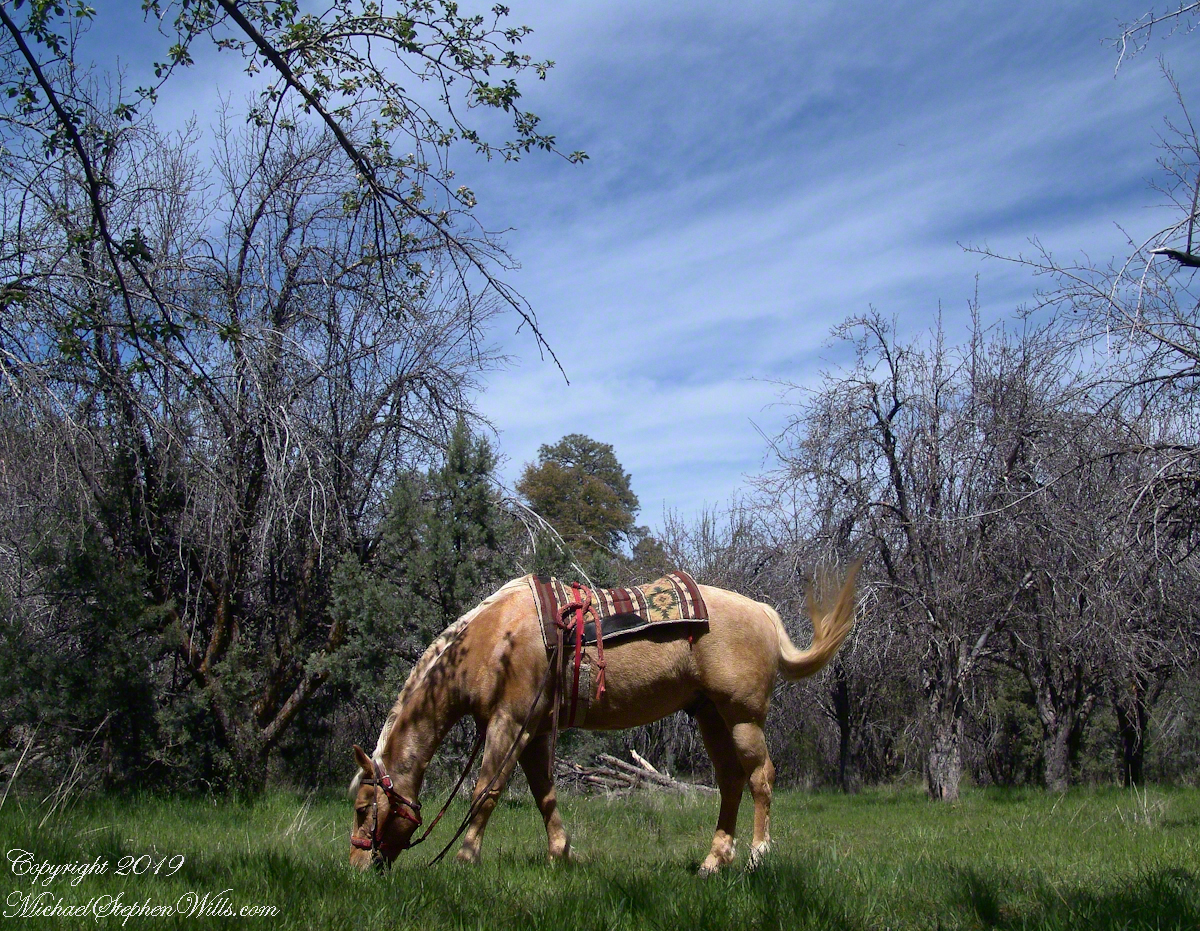
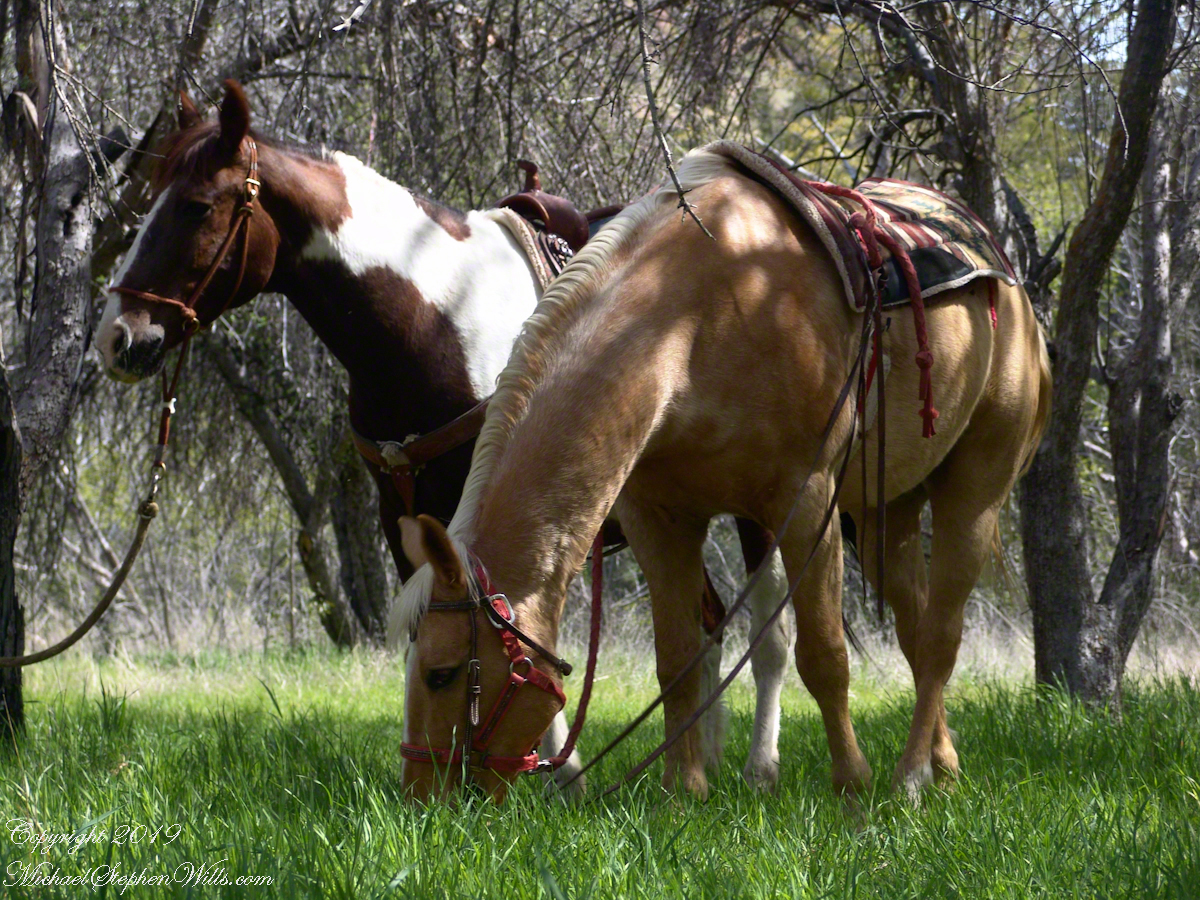
Nugget grazed, tethered with plenty of slack, with the calm assurance of an animal that knew it had arrived in horse heaven. This photograph of the pair shows their personalities, Colorado edgy, Nugget content to feast while the grass is available. The orchard grass rolled in waves around their legs like green water beneath anchored boats.

Colorado on the alert while Nugget grazes, typical of their personalities.

Click me for the next post for photographs and more history of this Apple Orchard in the Superstition Wilderness.

Click me to visit Michael Stephen Wills Online Arizona Gallery.

Copyright 2026 All Rights Reserved Michael Stephen Wills

McLean Bogs in Early Spring: Pitcher Plants, Skunk Cabbage, a Quiet Walk with Grandchildren

A quiet early spring walk through McLean Bogs reveals pitcher plants, skunk cabbage, and the subtle beauty of glacial wetlands shared with grandchildren.

The path into McLean Bogs begins without ceremony, a narrowing of the world. The road falls away, the trees gather closer, and the ground softens underfoot, remembering water. You arrive at a threshold. The air seems altered, quieter, carrying a faint mineral stillness, as though the glacier that shaped this place has not entirely withdrawn its presence.

McLean Bog, Tompkins County, New York State part of Cornell Botanical Gardens

The pond holds the sky with patient fidelity. Its surface is dark, reflective, contemplative—mirroring a band of bare trees and the pale sweep of early-spring cloud. Nothing disturbs it. No wind, no bird, no ripple of urgency. It is the kind of water that asks nothing of you except attention. And in giving it, you feel the pace of your own thoughts begin to slow, as if they too must match the bog’s ancient tempo.

At the edge, grasses stand in muted gold, last year’s growth bowed but not broken. They frame the water as do an unfinished sentence. You can imagine how, in another month, this quiet will be interrupted by green—by the rising insistence of life. But today, the landscape is held in suspension, between endings and beginnings.

On the boardwalk, my grandsons, Sam and Rory, find what the place offers most readily: evidence. A small gray pellet of fur and bone delicately assembled and then discarded. Nearby, a twisting length of scat, marked with the unmistakable language of survival. These are not the symbols we teach in books, but they are legible all the same. The boys lean close, curious, unbothered by what adults might turn away from. To them, this is not unpleasant—it is a clue, a message left behind by an unseen life moving through the same narrow corridors of forest and marsh.

There is something honest in that exchange. The bog does not disguise itself. It offers no curated beauty, no ornamental flourish. What it gives instead is continuity—the quiet assurance that life persists in forms both delicate and stark. And the children, without pretense, receive it as it is.

Deeper in the woods, a small structure of branches rises against the trunk of a tree, a lean-to, improvised and incomplete. Its architecture is simple, almost instinctive, a tentative answer to the question of shelter. Sam and Rory stand before it, boots sunk slightly in the soft ground, their bodies close together in that unconscious gesture of kinship. One leans into the other, not for support exactly, but for connection.

Behind them, the forest extends in gray and brown, a lattice of trunks and fallen limbs. It is not the lush abundance of summer, but something more revealing—a stripped-down anatomy of place. Here you see the bones of the landscape, the structure beneath the surface. And in that exposure, there is a different kind of beauty, one relies on form, on persistence, on time itself.

The boardwalk carries you out into the open bog, where the ground gives way to water and moss. It is a narrow path, elevated just enough to allow passage, and it bends gently, as though respecting the terrain rather than imposing upon it. Rory walks ahead, small against the expanse, following the curve without question. There is trust in that movement—the simple faith that the path will hold, that it leads somewhere worth going.

Around you, the bog stretches in subtle variation. Patches of standing water reflect a green that seems almost improbable in this season, the work of mosses and algae that thrive where others cannot. The vegetation is low, dense, textured—a mosaic rather than a meadow. And here and there, like small embers against the muted field, the pitchers rise.

The pitcher plants are both beautiful and unsettling. Their deep red forms, veined with intricate patterns, hold themselves open to the world. They are vessels, yes, and thresholds, invitations with consequence. Insects, drawn by color or scent, enter and do not leave. It is easy to think of them as passive, but they are anything but. They are active participants in the exchange of life, taking what the poor soil cannot provide.

You kneel to look more closely, drawn in despite yourself. The interior of the pitcher is a map of intention—every line, every curve serving a purpose. And yet, there is an elegance to it, a precision that feels almost artistic. It is not cruelty, exactly, but necessity rendered with a kind of quiet grace.

McLean Bog, Tompkins County, New York State part of Cornell Botanical Gardens

Elsewhere, the first signs of skunk cabbage emerge, their dark, curved forms pushing through saturated ground. They are early risers, indifferent to cold, generating their own heat to break through frost. They do not wait for spring; they create their own version of it. Scattered across the forest floor, they resemble a field of small, listening shapes—each one a declaration that life does not always arrive gently.

And so you move through the bog as a participant in its slow unfolding. Sam and Rory run ahead, then return, their boots muddy, their hands full of nothing in particular. They do not need to name what they have seen. The experience is enough.

As we return to the preserve edge, this sign stands—formal, declarative, assigning significance in the language of designation: Registered Natural Landmark. This place is important, rare, worthy of protection. But the words feel almost secondary after what you have just walked through.

McLEAN BOGS has been designated a REGISTERED NATURAL LANDMARK

This site possesses exceptional value as an illustration of the nation’s natural heritage and contributes to a better understanding of man’s environment.
National Park Service, United States Department of the Interior 1973.

Because the true measure of McLean Bogs is not in its classification, but in its effect. It changes the rhythm of your thinking. It draws your attention downward—to the ground beneath your feet, to the subtle movements of water and growth, to the quiet negotiations of life that continues with or without witnesses.

And perhaps that is what Thoreau meant, though he said it more simply: that heaven is not only above us, distant and abstract, but also here, immediate and tangible, woven into the fabric of the earth itself.

In the bog, that idea does not feel like metaphor. It feels like observation.

Enter your email to receive notification of future postings. I will not sell or share your email address.
The Yarb Woman of Cornell: Elfriede Abbe’s Tribute to Herbal Wisdom in the Botanic Gardens

A quiet encounter with Elfriede Abbe’s Yarb Woman reveals the enduring wisdom of herbal traditions, inviting reflection in the intimate stillness of Cornell’s Herb Garden.

We did not come upon her the way you come upon a monument. On a late winter morning my sister and I chose to walk through the pergola alongside the Richard M. Lewis Education Center and there she was.

There is no plaza, no axial approach, no insistence. Instead, the Yarb Woman statue waits in a corner of the Robison New York State Herb Garden, where paths narrow and attention shifts from spectacle to detail. The pergola frames the space, the beds lie dormant or fragrant depending on the season, and there—almost at eye level with the plants—is the woman herself, bent into her work.

Yarb Woman, Elfriede Abbe, sculptor, The Auraca AHerbarists, May 6, 1980. Robison New York State Herb Garden, Cornell Botanical Gardens, Cornell University, Ithaca, Tompkins County, New York State.

Her posture is one of reguard. That is the first instruction. Her posture is a study in intention: forward-leaning, balanced, attentive. One hand gathers, the other steadies. She is caught mid-action, not posed. This is a figure practicing herbal knowledge.

Right hand on spade handle

And because of that, she alters the space around her. Standing there to regard the statue the garden becomes a workplace—a field of quiet labor. Each plant is no longer merely labeled but noticed. The dried hydrangea beside her, the winter stems, the low green groundcover—everything begins to feel like it belongs to her attention.

Left hand grasping plants, pockets full

We began to notice the small offerings at her feet—stones, a tiny object left by a passerby—that suggest that others have felt this shift. Not worship, exactly, but recognition. A kind of informal acknowledgment that this figure gathers more than herbs; she gathers meaning from the overlooked.

There is something deliberate in her scale. She is not monumental. She does not dominate the garden. Instead, she invites you downward—to stoop, to look, to consider what is beneath your habitual line of sight.

This is consistent the sculptor, Elfriede Abbe’s, larger artistic life. She was not drawn to grand gestures but to process: carving wood, printing pages, observing the minute structures of plants. In “Yarb Woman”, that ethic becomes embodied. The sculpture is less about a person than about a way of being in the world.

To gather. To attend.To work with care.

Standing there, you may feel the subtle inversion: the garden becomes something you enter into, as she has. The distance between observer and participant narrows.

And time shifts slightly. The date on the plaque—1980—anchors the piece historically, but the figure herself resists that anchoring. Herbal practice stretches backward through centuries of unnamed practitioners, most of them women, most of them unrecorded. She could belong to any of them. Or to all.

Yarb Woman, Elfriede Abbe, sculptor, The Auraca AHerbarists, May 6, 1980. Robison New York State Herb Garden, Cornell Botanical Gardens, Cornell University, Ithaca, Tompkins County, New York State.

Even the word “yarb” participates in this temporal layering—an old word surviving in a modern garden, just as old knowledge survives in new forms.

Yarb Woman, Elfriede Abbe, sculptor, The Auraca AHerbarists, May 6, 1980. Robison New York State Herb Garden, Cornell Botanical Gardens, Cornell University, Ithaca, Tompkins County, New York State.

What we encountered, then, was not simply a sculpture. It was a quiet proposition:

That knowledge can be gathered slowly.
That attention is a form of reverence.
And that in the midst of a university—of speed, abstraction, and analysis—there remains a place where understanding begins with kneeling close to the ground.

And noticing what grows there.

Enter your email to receive notification of future postings. I will not sell or share your email address.
Copyright 2026 All Rights Reserved Michael Stephen Wills

A Strange Orchard at Cornell: Discovering Rona Pondick’s Untitled Tree Sculpture

On a March afternoon at Cornell University, I encounter Rona Pondick’s surreal sculpture Untitled Tree, where scattered aluminum “fruit” reveal unsettling human teeth beneath bare branches.

An encounter with Rona Pondick’s Untitled Tree (1997)

One March afternoon on the lawn near the Herbert F. Johnson Museum of Art at Cornell, you might notice a small, leafless tree rising from a circle of red gravel. At first it seems merely dormant, another tree waiting for the long Ithaca winter to loosen its grip. But as you approach, the scene grows quietly unsettling. Around the trunk lie dozens of smooth gray forms—small, rounded objects like stones or fruit that have fallen from the branches.

Then you see the teeth.

The objects scattered beneath the tree are cast aluminum forms bearing unmistakably human molars. They appear to have dropped from the tree like strange metallic apples, a harvest that belongs less to botany than to anatomy. This disquieting grove is Untitled Tree (1997) by the American sculptor Rona Pondick.


The Artist of Hybrids

Pondick, born in Brooklyn in 1952 and trained at Queens College and the Yale School of Art, has spent decades exploring the language of the body in sculpture—often literally. Her work frequently uses casts of body parts, particularly teeth or her own head, creating forms that merge human anatomy with animals, plants, or everyday objects.

The result is a sculptural vocabulary that feels simultaneously ancient and uncanny. Critics often describe her work as “hybrid”—a blending of the human body with other forms, echoing mythic creatures such as sphinxes or centaurs while remaining distinctly contemporary.

Teeth have been a recurring motif in Pondick’s art since the 1980s, when she began casting them and embedding them in unexpected contexts. These fragments of the body carry a peculiar emotional charge: they evoke childhood, appetite, vulnerability, and mortality all at once.


A Sculpture That Feels Like a Dream

Created in 1997, Untitled Tree belongs to a group of works where Pondick began experimenting with trees as sculptural forms. She has explained that she sometimes uses actual branches or trunks as starting points for casting in metal, translating natural textures into aluminum or steel.

The Cornell sculpture is monumental yet restrained:

  • a cast-aluminum tree,
  • surrounded by dozens of small aluminum objects,
  • each about the size of a stone but bearing human teeth.

Seen from a distance, the scene reads like a quiet landscape intervention. Up close, however, it feels like a fragment from a surreal dream—a tree that has shed something disturbingly human.


The Poetry of the Fallen Teeth

Standing before it on that March afternoon, one might think of the sculpture as a botanical riddle.

Trees drop fruit.
They drop leaves.
In autumn they drop seeds.

But this tree has dropped teeth.

The idea is both playful and faintly macabre. The small aluminum forms resemble seeds, yet their teeth suggest the human mouth—the place of speech, hunger, laughter, and loss. The sculpture seems to whisper that the natural world and the human body are not separate realms but entwined systems of growth and decay.

In the red gravel circle beneath the tree, the objects appear almost archaeological, as though a curious species once grew here and shed fragments of itself into the soil.


Cornell’s Quiet Surrealist Grove

Placed on the lawn near the Johnson Museum’s striking I. M. Pei building, the sculpture forms a gentle conversation between art, architecture, and landscape. In winter the bare branches echo the skeletal trees around it. In summer the aluminum trunk gleams among living foliage.

And the scattered teeth remain—silent, patient, and oddly humorous.

They remind us that nature, like art, can be unsettling and beautiful at the same time.

Enter your email to receive notification of future postings. I will not sell or share your email address.
Memories of Valentine’s Day: Family Beginnings and a Lifetime of Shared Journeys

A Valentine’s Day reflection spanning childhood, family, and partnership—where a homemade cake, a living room, and an ocean voyage reveal love’s enduring thread.

Our culture insists that Valentine’s Day is about hearts and chocolates, about gestures that can be wrapped, written, or eaten. My memories tell a longer and more intricate story. Valentine’s Day is thread that runs through decades—binding childhood, family, and shared journeys into a single, evolving narrative.

An early Valentine’s Day memory of mine is anchored in a living room at 107 Deepdale Parkway in Albertson, New York. It is 1959. The room is familiar and ordinary, yet in memory it glows with a particular warmth. My sister Theresa is two, Christine is four, and I am five. We are gathered together, small figures in a modest suburban home, unaware that this fleeting domestic moment will outlast nearly everything else in the room. What I remember most is not an event, but a feeling: the sense of being held within something stable and loving, a family rhythm that proved enduring.

Theresa (2), Michael (5), Christine (4) in the livingroom of 107 Deepdale Parkway, Albertson, New York on Valentines Day 1959

As the years passed, Valentine’s Day shifted its shape, as it does for everyone. Childhood gave way to adolescence, and later to adulthood, when the holiday began to carry expectations and interpretations shaped by romance and partnership. Yet even then, my earliest associations lingered beneath the surface. Valentine’s Day was was beyond an exchange between two people; it was about continuity, about the quiet reassurance that one was part of a larger story.

A part of our celebration this Valentine’s Day cake—chocolate, homemade, and unapologetically generous.  Baked by my wife, Pamela, whose acts of care often expressed themselves through the kitchen. The cake was not elaborate by modern standards, but it does not need to be. Its value lay in what it represented: time taken, effort given, and love made tangible. Long after the plates are washed, the memory of that cake remains inseparable from the idea of Valentine’s Day itself. Love, I learned early, could be simple, nourishing, and shared.

Chocolate Valentines Day cake by Pamela Wills

That understanding deepened over time, especially through my life with Pam. One Valentine’s Day memory stands apart not for its extravagance, but for its improbability. Pam and I found ourselves aboard the Oceania ship “Regatta”, sailing the Pacific Ocean off the coast of Chile. The vastness of the water, the steady rhythm of the ship, and the sense of being suspended between sky and sea created a striking contrast to the small living room of my childhood. Yet the emotional register was remarkably similar. Once again, Valentine’s Day was marked not by spectacle, but by presence.

The following day we reached Puerto Montt, a port city framed by water and volcanoes. The journey itself became a metaphor for the way love matures. Where childhood love had been rooted in home and routine, this later expression unfolded through shared experience and mutual trust. Standing on the deck together, watching the coastline emerge, I was struck by how Valentine’s Day had come to encompasses where we had been and where we were going.

Pam and I aboard the Oceania Regatta sailing the Pacific Ocean off Chile. The following day we reached Puerto Montt.

In that sense, Valentine’s Day functions much like memory itself. It selects certain moments and holds them fast, allowing others to fade. A cake, three young children in a living room, two partners standing together on the open sea. These are not scenes one could have predicted would endure, yet they do, because they are threaded with care, attention, and shared time.

Now, looking back across the span of years, I understand Valentine’s Day as a recurring prompt that asks us to remember where love first took root, how it was tended, and how it has carried us forward. The details change, but the essence remains remarkably constant.

In the end, Valentine’s Day does not demand grand gestures or perfect words. It asks only that we recognize the quiet continuity of love as it moves through our lives—sometimes in a childhood living room, sometimes on the open ocean, always leaving its mark in ways we only fully understand in retrospect.

Enter your email to receive notification of future postings. I will not sell or share your email address.
Atkinson Hall and the Quiet Confidence of Good Design

A new Cornell building settles into its hillside, glass and weathered metal catching sky and trees—less a declaration than an invitation to pause, wander, and think together.

Learning the Shape of a New Building

I first noticed the building from above.

Not in person—on my screen, late at night, when I should have been revising a draft and instead opened Google Earth the way some people open a window. There it was, just off Tower Road, close to Stocking Hall, pale and newly settled into the slope. From that height it looked careful rather than confident, as if it had arrived recently and was still deciding how much of itself to show.

Atkinson Hall, Google Earth from August 2023, 350 Tower Rd, Ithaca, NY 14850

I remember thinking: good placement on a former triangular parking lot. Enough distance from the older buildings to breathe, close enough to feel included. The hill does most of the work. You can see that even from an overhead height.

The next morning I walked there.

Atkinson Hall as viewed from the open field south of the Nevin Welcome Center of Cornell Botanic Gardens

Across the open field the building didn’t announce itself. Trees intervened—pines, bare hardwoods—so that it came into view in pieces: a curve of metal, a long line of glass, brick holding the ground. It felt less like approaching a destination than like gradually realizing you were already there. I liked that. Buildings that reveal themselves all at once tend to exhaust me.

The slope matters. You feel it in your legs as you walk, and the building seems to acknowledge it, stretching rather than standing tall. It does not pretend the land is flat. It follows the descent toward the creek, toward the older geological story underneath all of us.

Up close, the materials settle my attention.

North Side of Atkinson Hall, 350 Tower Rd, Ithaca, NY 14850

Brick at the base—solid, Cornell-familiar, not trying to reinvent anything. Above it, bands of weathered metal curve gently, already carrying the muted browns of fallen leaves, old stone, and stream-worn shale—colors long familiar to the slopes and ravines that shape this campus. They look as though they have agreed to age, which feels like an underrated design choice. The glass holds the sky without insisting on transparency. Some days it reflects trees so clearly that the building nearly disappears into them.

Compare the facade brickwork of Warren Hall, one of the earliest buildings on the Cornell University campus, completed 1868. This is the southwest corner with facade signage, Cornell University, Ithaca, New York

I stop near the windows longer than I intend to. The view steadies me. The hillside, the trees, the quiet persistence of winter light. My notebook stays closed for a few minutes. No one seems to mind.

View near Atkinson, Nevin Welcome Center, Cornell Botanical Gardens, 124 Comstock Knoll Dr, Ithaca, NY 14850

Inside, the building does not behave like a department.

That is the first thing I notice once I begin using it regularly. No single discipline claims the space. Offices and meeting rooms feel provisional, lightly held. Conversations drift. Someone from engineering crosses paths with someone from policy. A food systems researcher borrows a chair from a planner. No one looks lost.

It helps to remember who gathers here. The building hosts people from many parts of the university, each arriving with partial expertise, incomplete questions.

Cornell College / UnitAreas of Engagement
College of Agriculture and Life Sciences (CALS)Food systems, agroecology, climate resilience
College of EngineeringEnergy systems, materials, infrastructure
College of Arts and SciencesEarth systems, ecology, human dimensions
SC Johnson College of BusinessSustainable enterprise, supply chains
College of Architecture, Art, and Planning (AAP)Urban resilience, adaptive design
Cornell Law SchoolEnvironmental law and governance
Public & Global AffairsClimate policy, diplomacy

I keep this list taped inside my notebook. It reminds me that no one here is meant to arrive fully formed. The building expects us to be unfinished.

Cobblestones with fallen oak leaves along Feeny Way, Cornell University, Ithaca, New York

There is a quiet confidence in how the place is run. Systems hum discreetly. Heat holds steady even when the weather rips. Somewhere nearby, unseen, a generator waits, a reassurance. Work continues. Conversations do not end mid-sentence. I think about this more than I expected to. Stability has become a form of generosity.

On certain afternoons I walk the exterior again before heading home.

The curves soften what could have been institutional. Corners ease into one another. Nothing feels sharp. The building does not posture or instruct. It listens. It seems content to let weather, foot traffic, and time finish the job.

I have overheard visitors describe it as “restrained.” I think that is right. It does not wear sustainability as an emblem. It does not ask to be admired. It offers something quieter: space to think without being hurried, to talk without being territorial.

From some angles it nearly disappears into the hillside. From others it asserts itself just enough to be useful. That balance feels intentional, and also rare.

When I sit near the glass and look out, I sometimes imagine the building learning us in return—our habits, our pauses, the way we linger in doorways when a conversation matters. It seems designed for that kind of noticing.

If I were forced to describe it the way a realtor might, I would say it is well built in all the ways that matter. The structure is sound. The site is excellent. The materials will age well. But what I would mean is something less technical.

It is a building willing to wait.

Seen from above, it is still new.
Seen from the field, it is already settled.
Seen from inside, it feels patient.

That patience makes room—for uncertainty, for collaboration, for the long work that does not resolve quickly. I think that is why I keep returning, even on days when I do not strictly need to be there.

The building does not ask what I am producing.
It asks only that I stay awhile.

And for now, that is enough.

Enter your email to receive notification of future postings. I will not sell or share your email address.
Winter Walking at Taughannock Falls: Finding Connection and Quiet Along the Gorge Rim Trails

Winter distills Taughannock Gorge to stone, water, and silence, where careful footsteps along icy rim trails reveal deep connections between landscape, memory, and quiet joy.

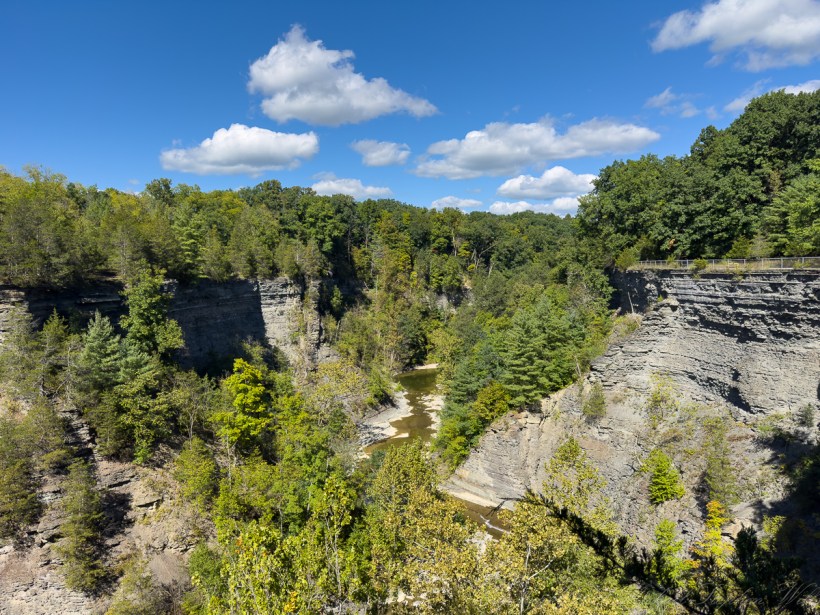
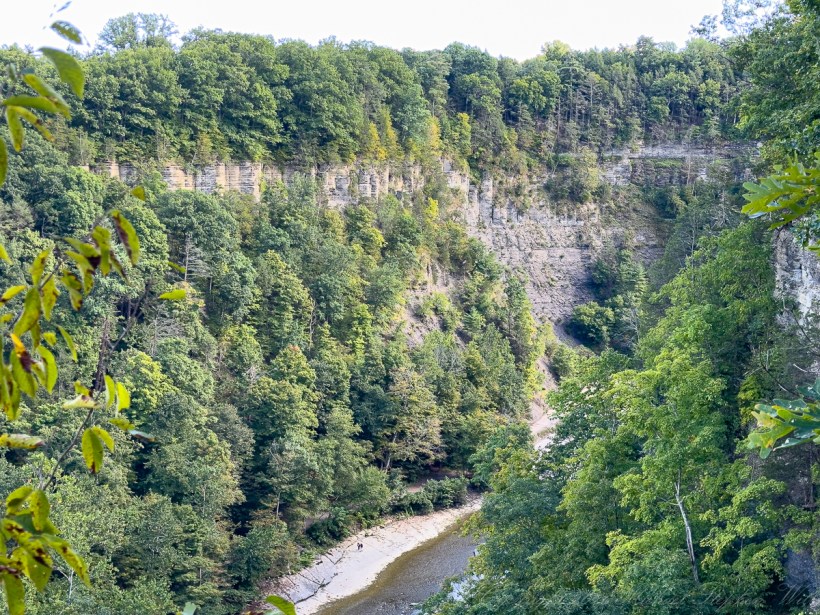
Winter pares the world down to its essential lines, and nowhere is that more apparent than on the rim trails of Taughannock Falls State Park. On a Wednesday afternoon walk, a three-mile pilgrimage, the gorge revealed itself as a living corridor of connections—between water and stone, past and present, effort and joy. The season sharpened every sensation: the crunch and slip of ice underfoot, the hush of leafless woods, the long exhale of the falls echoing unseen below.

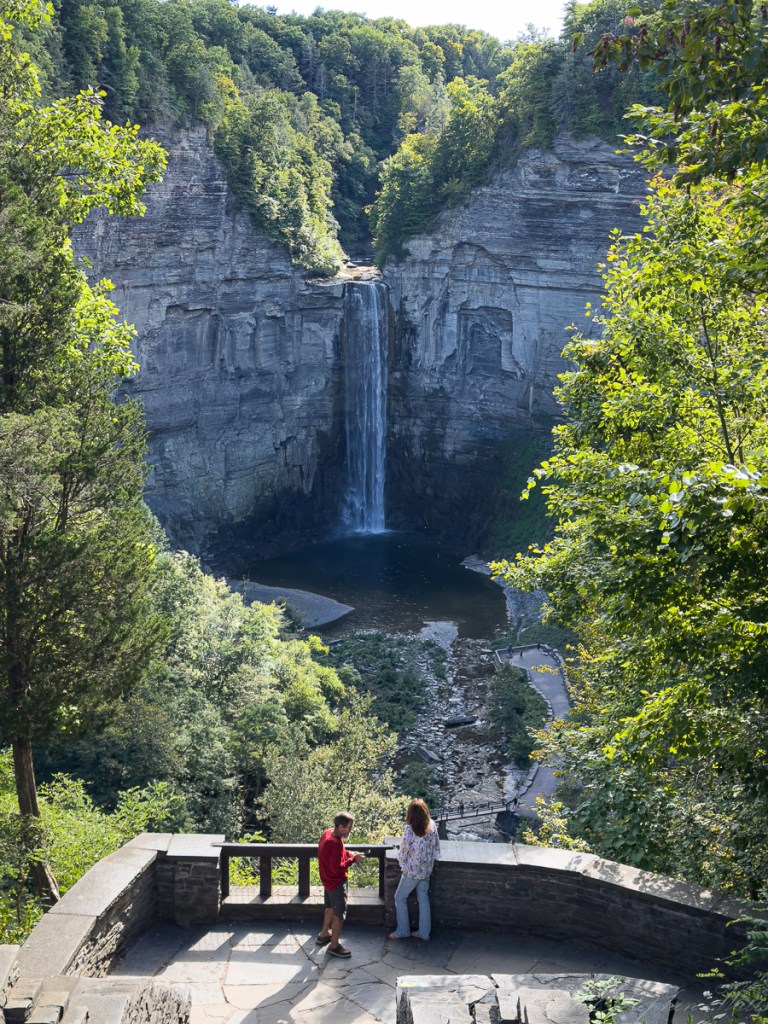
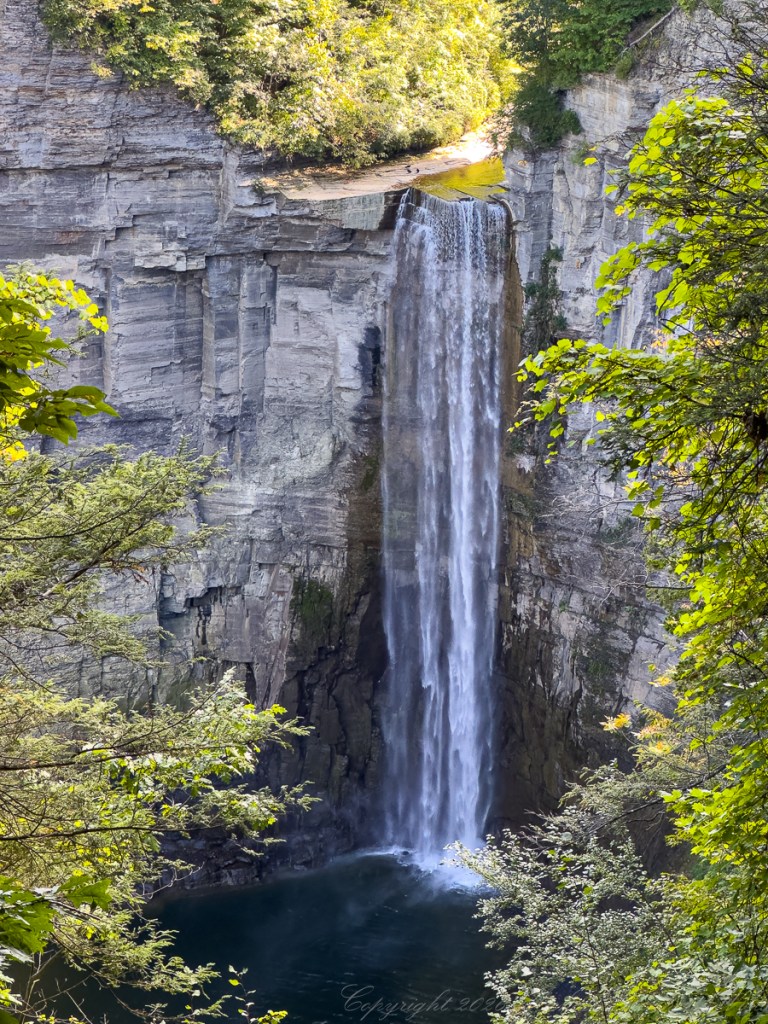
From the overlook, the gorge opens like a vast stone book, its pages written in shale and time. Taughannock Falls drops away in the distance, not so much seen as felt—its presence announced by scale and gravity. Even before stepping onto the trail, the walk establishes its rhythm: pause, look, breathe. Winter insists on this slower tempo. Ice dictates caution, and caution invites attention.

Heading along the Rim Trail my progress became deliberate. The path, glazed in places with solid ice, turned each step into a negotiation. Yet this was no impediment to pleasure. Slowness allowed for noticing the quiet labor of the park maintenance crew, whose careful clearing and repairs spoke of spring already anticipated. Their work stitched the present moment to the coming season, a reminder that parks, like stories, are maintained through this unseen devotion.

The gorge itself is a system of thresholds. A bridge crossing the creek marks the transition from North to South Rim, but it also frames one of the most dramatic views in the park. Standing above the chasm, one senses connection: water flowing beneath, trails diverging and rejoining, human passage layered lightly atop geological endurance. The gorge is a conversation between forces, ongoing and unresolved.

Gorge Road, early November
From the South Rim Trail. Taughannock Falls, New York State Park, Ulysees, Tompkins County, Finger Lakes Region.
Click any photograph for a larger image

Ice eventually nudged my walk onto Gorge Road, which parallels the South Rim Trail like a quieter narrative strand. Here, the landscape shifts from wild drama to human memory. A curve in the road reveals a farmhouse, modest and fragile beside its outsized barn. In winter, the absence of leaves makes the scene stark and honest. The farmstead buildings do not ask for nostalgia; they simply stand, bearing witness to lives tethered to this steep land. The structures emerge gradually as I walk downhill, as if the land itself were choosing when to reveal them.

Overview of this small cemetery overlooking Cayuga Lake

A short detour leads to a small cemetery perched on a shelf above Cayuga Lake, near the Taughannock Farms Inn. In winter, cemeteries feel less like places of mourning and more like rooms of quiet conversation. Headstones rise from frozen ground, their inscriptions softened by time and distance. From this vantage point, lake and sky merge in pale bands, and the lives commemorated here feel gently folded into the larger story of the landscape. The dead, too, are part of the park’s web of connections.

Another detour brings the lower falls into view—a more intimate expression of the same water that plunges dramatically upstream. Here the sound is closer, the movement more conversational. It is easy to imagine this water traveling, moment by moment, linking ravine to lake, winter to spring, memory to presence.

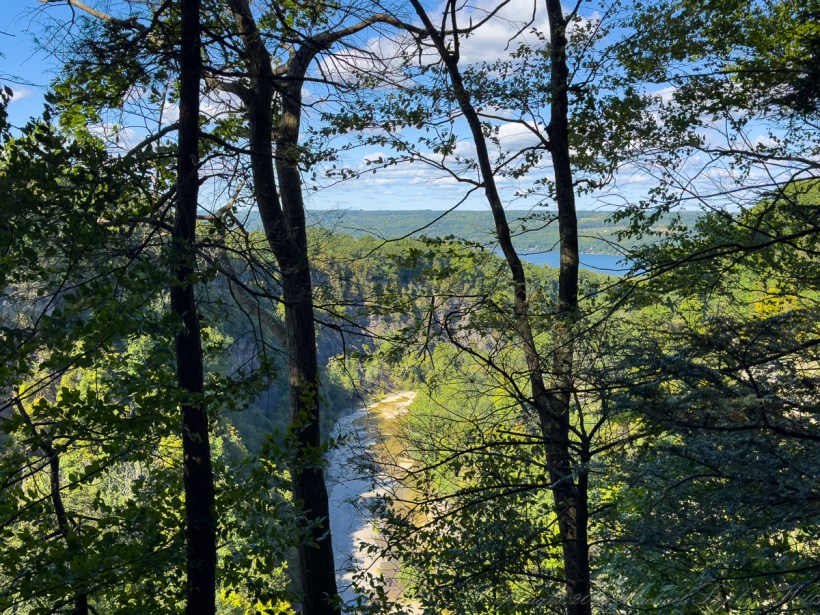
One of many Rim Trail overlooks. That is the Gorge Trail, below.

Rejoining the rim trail for the final climb north, the gorge offers repeated overlooks where the Gorge Trail can be seen threading below. These moments collapse distance: walker and walker, above and below, bound by the same route at different elevations. Over the course of roughly three miles and almost 600 feet of cumulative elevation change, effort becomes its own reward. Two hours pass not as measured time but as a sustained attentiveness, a gift winter offers to those willing to meet it on its terms.

Walking these trails in winter is about entering a conversation with the land—listening to ice, stone, water, and history speak in a quieter register. The joy lies in connection: trail to trail, gorge to road, past to present, and walker to place. In winter, Taughannock invites, gently and honestly, those who are willing to walk slowly enough to see.

Enter your email to receive notification of future postings. I will not sell or share your email address.
Bells for Christmas

The symbolic power of the numeral three, reflected in various cultural, religious, and secular contexts, underscores its universal significance. From the mystical trinities of gods to the practical applications in rhetoric and storytelling, and the fundamental structure of our physical world, the number three resonates with a sense of completeness, balance, and harmony. Its pervasive presence in different aspects of human thought and culture attests to its enduring and profound symbolism.

Continue reading “Bells for Christmas”

Fens, Bogs, and Flowing Water of Malloryville Preserve of Freeville, New York

Discover Malloryville Preserve in Freeville, New York—a hidden Finger Lakes wetland of fens, bogs, and flowing water where glacial history and rare plants meet.

Water defines the O.D. von Engeln Preserve at Malloryville long before we see or hear it. At first, it is only a dampness in the air, a coolness at ankle level, a dark sheen between sedge tussocks. In the space of a half-hour walk, we pass through fen, bog, marsh, and swamp, each distinct, yet bound together by the same slow, persistent flow.

Here we are traversing a swamp, our steps buoyed along on planking made from recycled plastic. The boardwalk floats visually above pools the color of tea, edged with moss and skunk cabbage. It’s easy to imagine what this crossing would have been like before the planks were laid—boots sinking, knees splashed, delicate plants crushed. The modern walkway is a quiet compromise: we may enter this saturated world without trampling it, a human gesture that matches the preserve’s ethos of protection and restraint.

The Malloryville wetlands lie in a low pocket along Fall Creek, a landscape shaped by the last ice age. As the glacier that once covered this region melted, torrents of water tunneled through the ice, depositing braided ridges of sand and gravel known as eskers. Today, more than a mile of these ancient riverbeds winds through the preserve, narrow wooded spines rising above the surrounding wetlands. From an esker crest, the pattern of water reveals itself: dark channels of open flow, pale pools rimmed with sedge, patches of sphagnum floating like cushions, and, farther off, the straight silver of Fall Creek.

But the story of Malloryville’s water begins far from these pools. Rain falls on the uplands as cool, slightly acidic water. It sinks through glacial till—a jumble left by the ice—and begins a long, blind journey underground. As it moves, the water reacts with the minerals it encounters. Where it brushes limestone or other carbonate-rich layers, it is slowly neutralized and picks up dissolved calcium and magnesium. By the time it resurfaces in low spots, it may be transformed from sour, soft rain to mineral-rich groundwater.

Those subtle chemical shifts are written onto the land. In some hollows, where water still mainly reflects its origin as rain, the environment becomes a bog—cold, acidic, nutrient-poor. Here, sphagnum moss knits a floating carpet, and only specialists such as leatherleaf and cranberries can endure. In other pockets, where groundwater welling up from below brings minerals, we find fens: lush, lime-touched wetlands offering niches for orchids, sedges, and the carnivorous pitcher plant. Marshes and swamps round out the spectrum, their standing water and wooded shade forming still more microhabitats.

In this small preserve, all these wetland types coexist side by side, threaded by water that often moves so slowly it appears not to move at all. The stillness is deceptive. A slight difference in elevation—barely the height of your boot—can determine whether water spreads and stagnates, seeps outward in a fan, or concentrates into a narrow, unseen channel. Hydrologists studying the area have shown that a water-table mound of only a few inches can redirect the underground flow and, over time, steer the evolution from open fen to peat-filled bog.

Human history here is entwined with that quiet power. The founders of the preserve, themselves from a dairy farming family, came to understand that the springs, seeps, and wetlands feeding Fall Creek were vulnerable. Gravel pits on nearby land had already bitten into the valley; another such excavation on this side would have severed the veins of water that sustain the fen and bog. Their years-long effort to protect the property culminated in a Nature Conservancy preserve whose very purpose is to safeguard water and the uncommon communities it supports.

The boardwalk under our feet is part of that story. Its recycled-plastic planks do not rot in constant dampness, and their smooth, slightly hollow sound reminds us with each step that we are guests in a place where soil never truly dries. At the edges of the walkway, tamarack and red maple lift their trunks from hummocks, their roots anchored in peat built grain by grain from centuries of water-logged plant remains. In the open patches, we can seek out pitcher plants, their flaring, water-filled leaves digesting unwary insects to make up for the nutrient-poor conditions.

Everywhere, water moves almost invisibly. It rises as a cold trickle at the base of the esker, fans through the moss as a thin sheet, and gathers again in dark, tannin-stained channels. It rarely speaks aloud; only in spring flood or after hard rain does it murmur against roots or tap lightly at the plastic planks. Yet its influence is written in every texture and color—emerald moss, rusty sedge, the silvery bark of birch leaning over a pool.

To walk in Malloryville is to learn to read this subtle handwriting. We begin by noticing the obvious: the wetness, the boardwalk, the glimpses of standing water. By the end of the walk, we are tracing gradients—how the plants shift with elevation, how the ground feels underfoot, how the air cools or warms by a degree or two. We sense the long journey of water from sky to stone to peatland to creek, and onward to Cayuga Lake and the wider world beyond.

Water, flowing quietly, almost soundlessly, with powerful effect: Malloryville Preserve, that power is persistence. It is the power to carve a valley, to build a peatland one stem at a time, to sustain rare communities of plants and animals in a modest corner of New York. To honor such water is to move carefully, speak softly, and remember that our presence, like our boardwalk, should allow the flow beneath to continue its ancient work.

Enter your email to receive notification of future postings. I will not sell or share your email address.
Exploring Malloryville Preserve: A Hidden Glacial Wetland Gem in New York’s Finger Lakes

Explore the O.D. von Engeln Preserve at Malloryville, a hidden Finger Lakes wetland where glacial eskers, kettles, and springs reveal the deep story of ice and water.

In the heart of upstate New York, the Finger Lakes region stretches out like a handprint left by the last great ice sheets—long, narrow lakes aligned north to south, their steep-sided valleys feeding into a lattice of creeks, waterfalls, and wetlands. It is a landscape defined by water and time: glaciers grinding south, then melting back north some 12,000 years ago, carving deep troughs, piling up ridges of gravel and sand, and leaving behind a terrain that is anything but simple.
The O.D. von Engeln Preserve at Malloryville, near the small village of Freeville, is one of the quiet places where that story is written most clearly on the land. It doesn’t shout like Taughannock Falls or Ithaca’s famous gorges. Instead, it whispers—through the curves of its hills, the softness of its ground, the unexpected appearance of a spring at the base of a gravel ridge. Here, in a relatively compact area, you can see how ice and water worked together to shape the Finger Lakes region we know today.

Overflow from a Kettle Pond threads through a meadow before feeding Fall Creek. The O.D.von Engeln Preserve at Malloryville.

By the time the preserve officially opened in 1997, the name O.D. von Engeln was already familiar to anyone curious about local geology. His classic book on the Finger Lakes helped generations of readers understand that the scenery around them was not random, but the result of powerful, understandable processes. Reading von Engeln, the rolling hills and quiet valleys near Freeville become more than background—they become evidence: of buried ice, rushing meltwater, and the slow settling of sediments into the forms we walk on now.

Malloryville is an outdoor classroom for that lesson. The preserve is built around a cluster of glacial landforms—eskers, kames, and kettles—that create a three-dimensional mosaic of ridges and hollows. Eskers, those long, winding gravel ridges left by rivers that once flowed inside the glacier, snake through the forest like frozen currents of stone. Kames—steep, irregular hills of sand and gravel—rise suddenly from the surrounding lowlands. Kettles, the depressions left behind when buried ice blocks melted away, now cradle wetlands and pools.

Beneath and between these features, groundwater is constantly on the move. It seeps through layers of sand and gravel, emerges as cold springs at the foot of slopes, and spreads out into swamps, fens, and marshes. In the Finger Lakes, water is always telling a story; at Malloryville, it’s simply easier to hear. Follow the trail and you move through a succession of wet worlds: a seep-fed fen with delicate mosses and sedges, a shrub swamp where skunk cabbage thrusts up in early spring, a cattail marsh that hums with birds and insects in summer.

For my family, the story of Malloryville began even before the preserve had a name. We lived nearby along Fall Creek, itself a thread in the larger fabric of the Cayuga Lake watershed. My son and I camped for the first time on top of an esker just beyond our front door, our tent perched on what I would later learn was the remnant of a stream that once tunneled through the base of a glacier. At the time, it was simply a magical narrow ridge in the woods. Only later, with von Engeln’s guidance and the preserve’s interpretive signs, did that ridge become a sentence in a much older, longer narrative.

That is one of the great gifts of the Finger Lakes: the chance to move from simple admiration—“this is beautiful”—to understanding—“this is how it came to be.” The steep slopes along Cayuga, Seneca, or Skaneateles; the drumlin fields near the north ends of the lakes; the hanging valleys and waterfalls; and the quiet wetlands of places like Malloryville are all chapters in the same glacial chronicle. Once you learn to read one place, you begin to read them all.

Walking into the O.D. von Engeln Preserve, you enter that story at a small, intimate scale. The parking area and trailhead give way quickly to a world where the ground feels different—sometimes firm and gravelly, sometimes soft and yielding underfoot. Wooden walkways and narrow paths thread through shady forest and open wetland. Each bend offers a subtle shift: a new plant community, a change in water clarity or flow, a small sign explaining what lies beneath your feet.

Fall Creek meanders through the esker fields of the Malloryville Preserve. Here is the view from an abandoned railroad bridge. The preserve is near Freeville in the Finger Lakes Region of New York State.

This is not grand scenery in the postcard sense; it is something quieter and deeper. Malloryville invites you to slow down and notice. To ask why a particular ridge is so narrow, why water emerges here but not there, why one hollow is filled with shrubs and another with moss and sedge. In learning those answers, you gain not only an appreciation for this modest preserve but also a richer understanding of the entire Finger Lakes region.

The Trout Lily (Erythronium americanum) is named for the mottled brown leaves resembling marking on trout.

In the end, the O.D. von Engeln Preserve at Malloryville is a lens—a way of seeing. Through it, the familiar landscapes of central New York—valleys, hills, streams, and lakes—come into sharper focus as the lasting work of ice and water. Stand on an esker, look across a kettle wetland, listen to the quiet trickle of a spring, and you are standing inside the very processes that shaped the Finger Lakes.

Enter your email to receive notification of future postings. I will not sell or share your email address.