Hepatica at Fillmore Glen: Quiet Wonders Beneath the Leafless Trees

On a quiet April walk in Fillmore Glen State Park, I found Hepatica acutiloba blooming beneath leafless trees—small, luminous flowers that turned the still-brown woods into a meditation on patience, renewal, and grace.

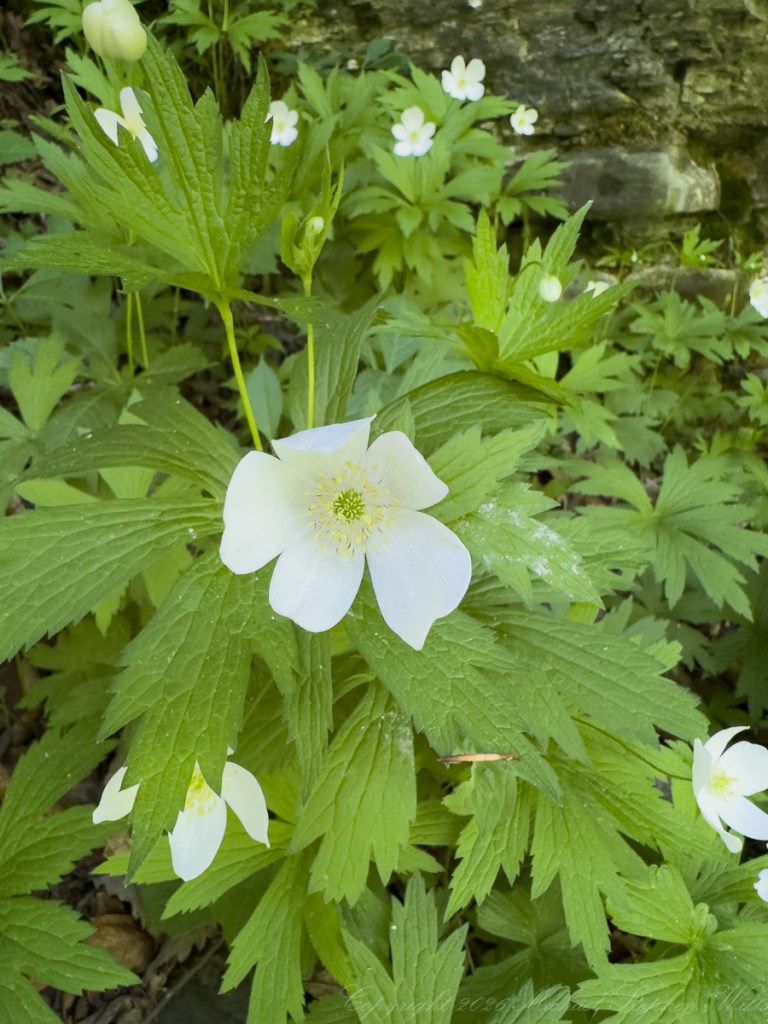
On April 11, 2026, I walked Fillmore Glen State Park beneath trees still bare, their branches opening the woods to the cool, unguarded light of early spring. The forest had not yet put on its full green speech. Last year’s leaves still covered the ground in shades of russet and tan, and among them, close to the earth, I found Hepatica acutiloba beginning to bloom.

These are flowers that ask for slowness. No one hurrying through the woods would fully see them. I had to kneel, lower myself into their world, and let my eyes adjust to their scale. Only then did they begin to reveal themselves: first as closed buds, pale and self-contained, then as opened white blossoms shining from the leaf litter like small votives in the dim cathedral of the spring woods.

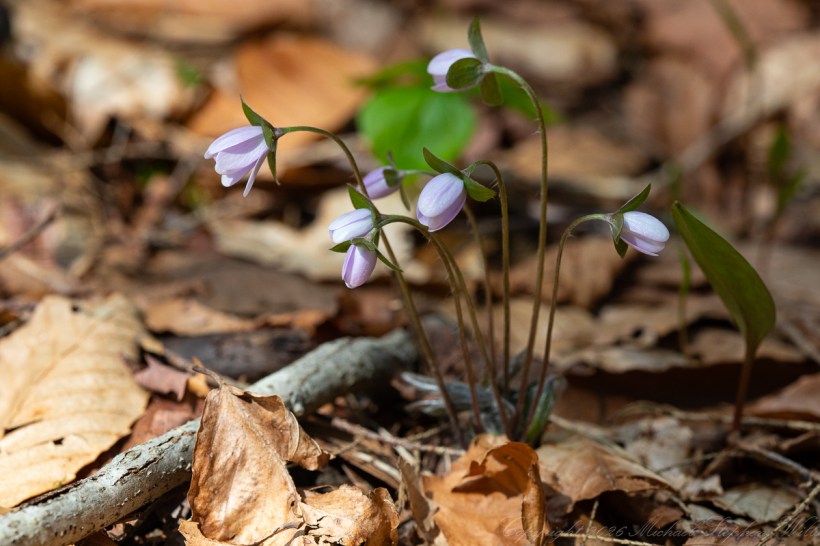
This flower was a light lavender blossoms, still closed, rising from the forest floor on a delicate stems. The sun had reached in, and I made the image handheld, steadying the camera on the ground. Even unopened, it seemed to hold light within itself, as though the day had touched it but not yet persuaded it to unfold. I have always loved that about hepatica. It does not fling itself into spring. It listens first. It waits with an old intelligence, answering warmth and brightness in its own time.

Lavender Hepatica Blossoms, closed

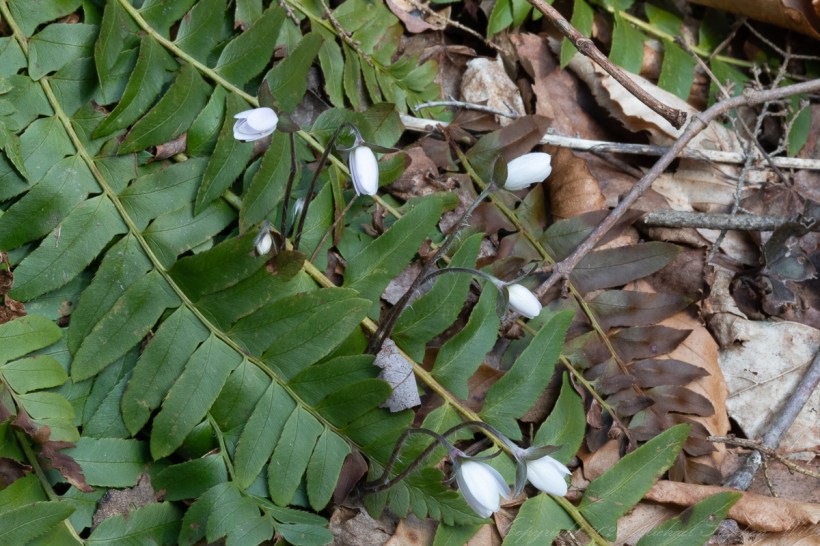
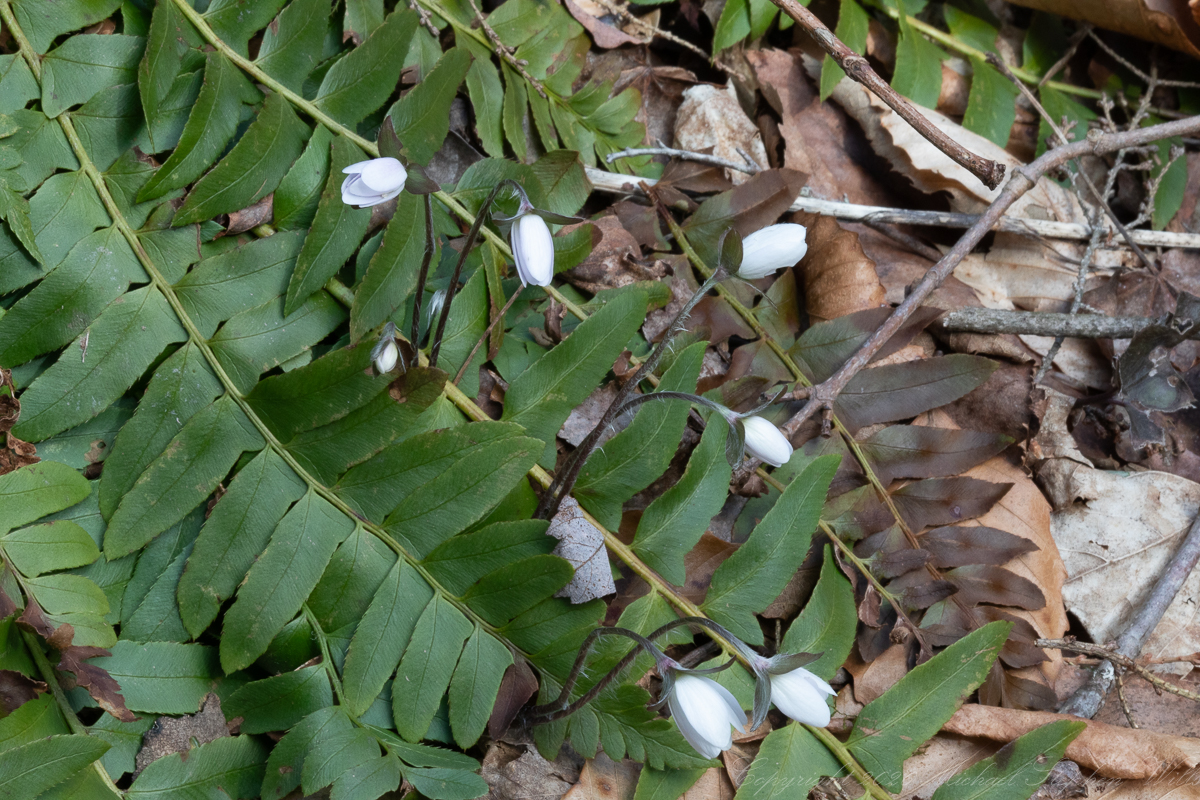
A second cluster of closed blossoms rested among evergreen fern fronds, which appear to be Christmas fern, Polystichum acrostichoides. Their leathery green pinnae, carried through the winter, formed a fitting companion to these early flowers. Together they seemed to embody one of the quiet truths of the April woods: that renewal does not come as a sudden trumpet blast, but by degrees. First the fern still holding its winter green. Then the bud. Then the opening. Then the day when the whole hillside begins to feel like a promise being kept.

White Hepatica Blossoms with Christmas Fern

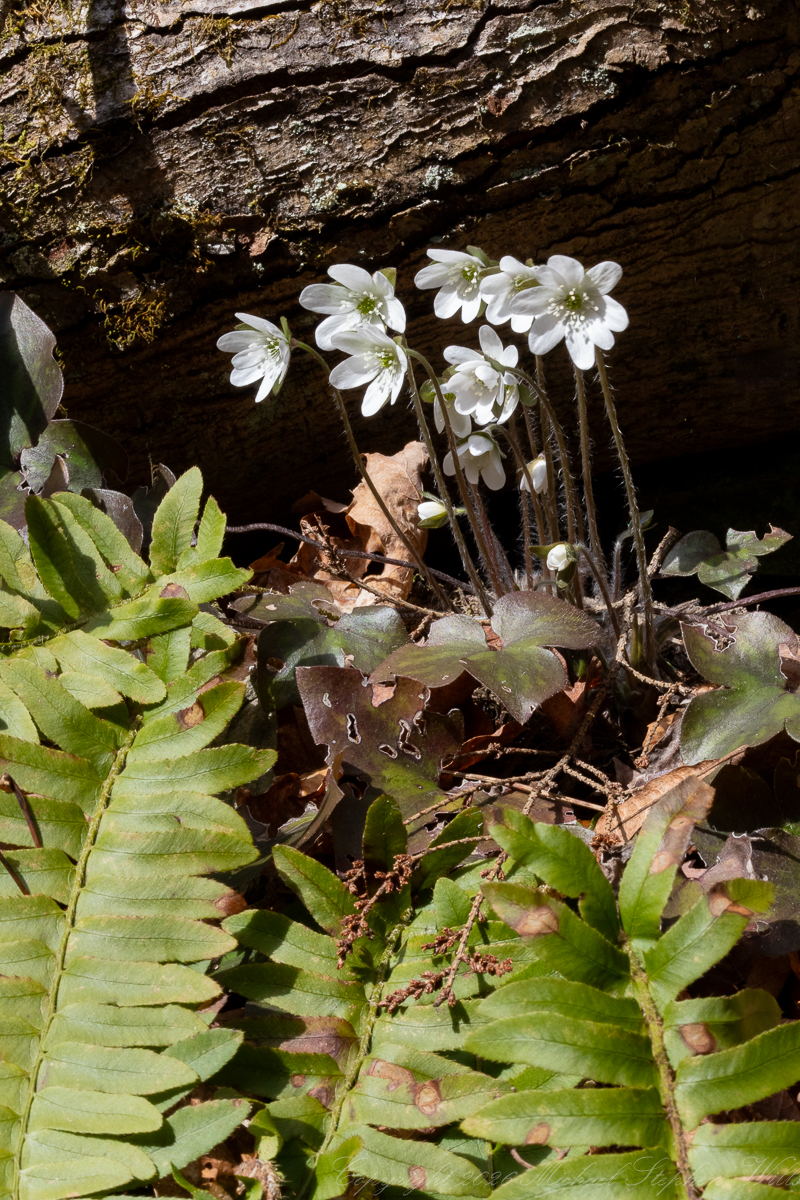
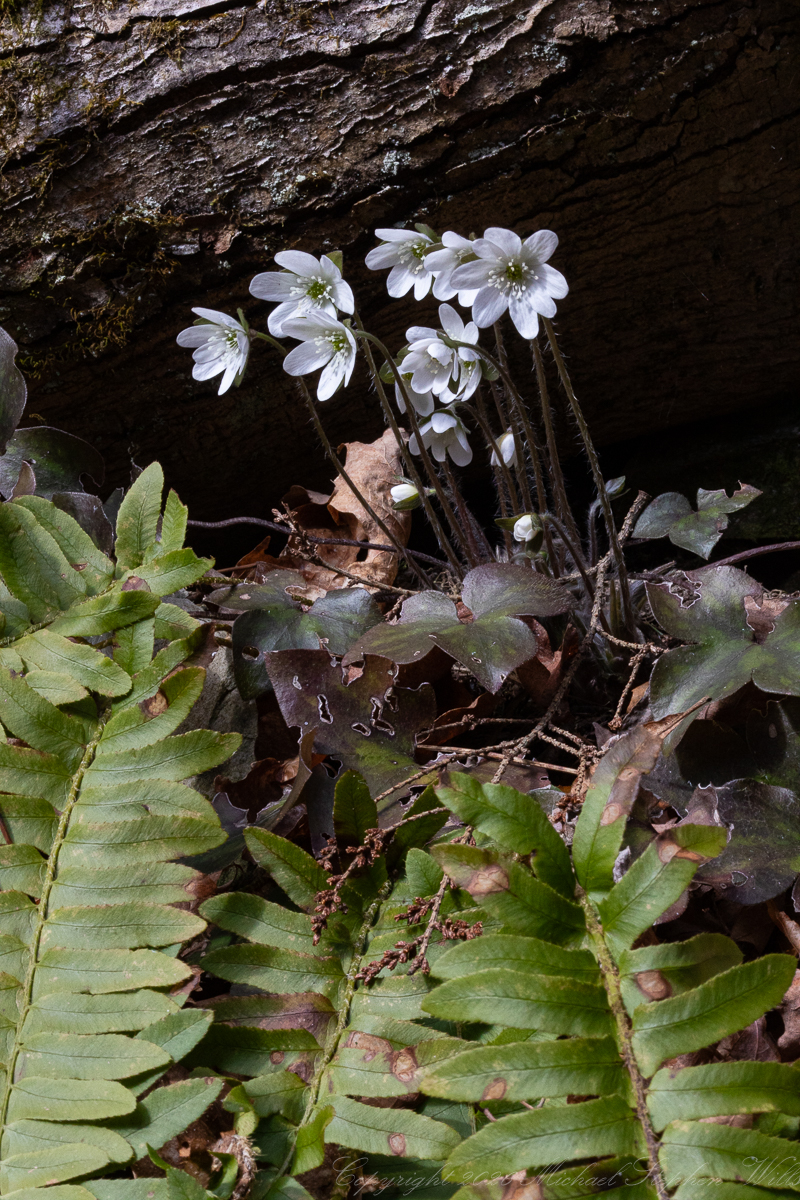
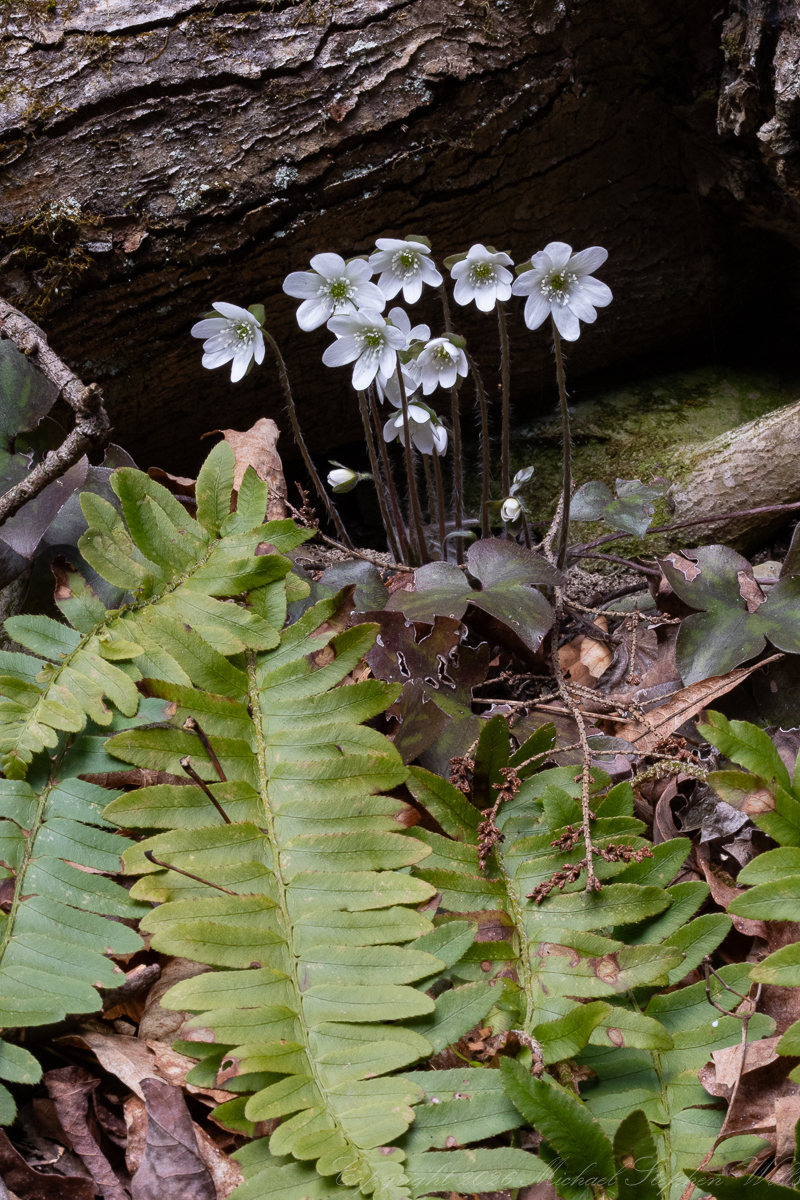
The last three photographs showed the same group of white hepatica blossoms growing on a south-facing slope beneath a tree root. By then I had placed the camera on my Manfrotto BeFree tripod, and I worked more deliberately, grateful for the patience that such flowers invite. One image was made in sunlight; the others when the sun had passed behind a cloud. That change mattered. In the sun, the white blossoms seemed almost to ring like little bells of light. Under cloud, they grew quieter, softer, more inward. The mood deepened. The exposed root above them became a rough shelter, a woodland lintel, and the blossoms beneath gathered into a hidden chapel of spring.

Hepatica acutiloba in sunlight on an early spring afternoon. Fillmore Glen New York State Park, Cayuga County, Finger Lakes Region, New York State. April 2026

I stood there for a long while, looking not only at the flowers but at the place that had made their blooming possible. A south-facing slope gathers warmth earlier in the season. The root held the bank in place and offered a small measure of protection. The leaf litter insulated the soil. The ferns kept their green nearby. Nothing in such a scene is accidental. The woods are full of these small negotiations between light, temperature, shelter, and time. Hepatica, for all its delicacy, is a master of them.

Here a cloud hid the sun, the blossoms in side view.

We call these flowers spring ephemerals, and the name is true in one sense. Their season of bloom is brief. Before long, the trees overhead will leaf out, and the bright interval in which they thrive will begin to close. Yet “ephemeral” can sound too fragile a word for a plant so well adapted, so seasoned in its timing. Hepatica does not merely appear and vanish. It endures. Its leaves persist through winter. Its flowering is tuned to a narrow ecological opening, one shaped by the still-bare canopy of the deciduous forest. For a few precious weeks, before shade deepens, it steps into the light and makes use of what the season offers.

The sun still hidden by a cloud, the blossoms face on.

Perhaps that is why hepatica has so often found a place in literature and nature writing. It carries a symbolism that feels earned rather than assigned. It arrives when the world still bears winter’s austerity, and so its bloom seems less decorative than revelatory. Generations of observers have seen in such flowers a sign that the year turns first in whispers. Not through spectacle, but through fidelity. A small flower opening under bare branches can change the whole moral weather of a walk.

That was how it felt to me at Fillmore Glen. The woods were still mostly brown and gray, still waiting for leaf and shade and birdsong in full chorus. Yet these blossoms had already crossed some invisible threshold. They were spring in its purest form: not abundance, but inception. Not the full choir, but the first clear note.

Photography, in such moments, becomes for me an act of receiving. The changing light, the choice of aperture, the longer exposures when the sun went behind a cloud, the shift from handholding to bracing to tripod—all of it asked for attention. Hepatica does not yield itself to haste. It asks me to be present enough to notice what kind of light it is standing in, what kind of slope it has chosen, what old leaves still surround it, what green companions remain from winter. The camera only deepens that act of seeing.

I left Fillmore Glen feeling that I had witnessed something both small and immense. These flowers were no larger than a coin, yet they altered the whole forest around them. The leaf litter no longer seemed merely dead, but sheltering. The bare trees no longer seemed empty, but expectant. In the presence of hepatica, the woods felt poised on the edge of utterance.

That may be the lasting wonder of these early blooms. They do not overwhelm. They steady. They remind me that beauty often comes close to the ground, half-hidden, speaking softly. In the leafless woods of April, that soft speech can feel like grace.

Enter your email to receive notification of future postings. I will not sell or share your email address.

Hylodesmum glutinosum: Characteristics and Ecology

The author reflects on hiking at Taughannock Falls State Park, discovering the Large-Flowered Tick Trefoil’s beauty and ecological significance.

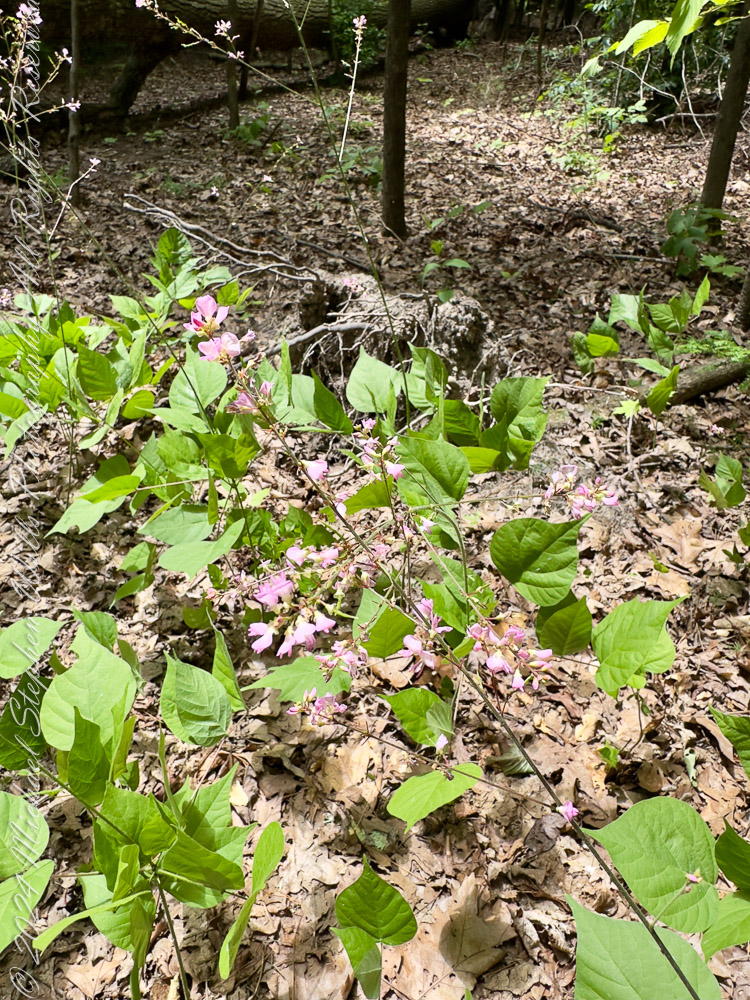
It was a high summer day as I enjoyed a customary hike around of Taughannock Falls State Park on the South and North Rim trails. Here sunlight filtered through the dense canopy, dappling the forest floor with shifting patches of light. Along the trail, my attention was drawn to a cluster of pink blossoms rising on slender, upright stems. Intrigued by their delicate beauty, I crouched down for a closer look. The plant rose above the forest floor, its trifoliate leaves broad and prominently veined, each leaflet slightly larger than I would have expected. These leaves seemed to anchor the plant to the shaded understory, while its flowers reached upward, as though eager to catch the fleeting rays of sun. I captured the plant in this photographs, later used it to identify Hylodesmum glutinosum, or Large-Flowered Tick Trefoil.

Characteristics of the Plant

The Large-Flowered Tick Trefoil is a striking member of the pea family (Fabaceae). Its pink, pea-like flowers are arranged in graceful racemes along the upper portions of its stems, their vibrant color contrasting beautifully with the green foliage around them. The leaves, broad and trifoliate, lend the plant its distinctive appearance. The name “tick trefoil” refers to the plant’s seed pods, which are flat and segmented, equipped with tiny hooks that cling stubbornly to passing animals or hikers, hitchhiking their way to new locations.

The plant is native to eastern North America, including the forests and trails of New York State. Its preference for rich, well-drained soils in partially shaded woodlands makes it a common sight in places like Taughannock Falls State Park. Blooming from mid to late summer, it provides an essential nectar source for bees and other pollinators, playing its part in the intricate web of the forest ecosystem.

Etymology of the Name

The genus name, Hylodesmum, was established only twenty-five years ago when the plant was reclassified from the genus Desmodium to a new genus within the tribe Desmodieae. The name reflects its forested habitat, with “hylo” derived from the Greek word for “wood” or “forest.” Previously described in 1802 as Hedysarum glutinosum and later placed in Desmodium, the species name glutinosum remains unchanged, meaning “sticky” in Latin. This aptly describes the plant’s seed pods, which adhere to anything that brushes past them. Together, these names encapsulate both the botanical structure and the unique dispersal strategy of this plant.

History and Folklore

Native Americans and early settlers were intimately familiar with tick trefoils. The plant’s seeds, notorious for clinging to clothing and fur, earned it a reputation as a nuisance, but its resilience and utility could not be overlooked. Indigenous peoples utilized various parts of the plant for medicinal purposes. The roots and leaves were brewed into teas to treat fevers and digestive ailments, while poultices made from the leaves were applied to wounds to promote healing. Such uses highlight the depth of knowledge early inhabitants had about their environment.

The plant’s sticky seed pods also became the subject of folklore. Children in rural communities would playfully call it “hitchhiker’s weed,” competing to see who could collect the most seeds on their clothing during outdoor adventures. These seeds, so adept at attaching themselves to passersby, were seen as symbols of persistence and adaptability, traits that many admired.

Uses and Ecological Role

While Hylodesmum glutinosum is not commonly cultivated, its ecological contributions are significant. As a member of the Fabaceae family, it has the ability to fix nitrogen in the soil through a symbiotic relationship with rhizobia bacteria in its root nodules. This makes it a valuable plant in maintaining soil fertility in its native ecosystems. Its flowers attract pollinators like bees and butterflies, ensuring that the forest remains vibrant and full of life.

In addition to its ecological importance, the plant’s seeds have a curious modern use: they’ve been studied for their ability to help detect movement in the environment. Researchers have examined the sticky pods’ structure as a natural model for creating adhesives and tracking devices, proving once again that even the smallest details in nature can inspire human ingenuity.

A Moment of Reflection

As I rose to my feet, brushing the leaf litter from my hands, I felt a renewed sense of wonder for the intricate lives of the plants surrounding me. The Large-Flowered Tick Trefoil, with its vivid pink flowers and ingenious seed pods, seemed to embody the essence of the forest: a harmonious blend of beauty, resilience, and interconnection.

Walking away, I carried with me not just the memory of its vibrant blooms, a deep respect for its role in the natural world. In the quiet of Taughannock’s wooded trails, Hylodesmum glutinosum had shared its story, a tale of persistence, adaptation, and the hidden wonders that flourish when we take the time to notice.

Enter your email to receive notification of future postings. I will not sell or share your email address.

The Resilience and Beauty of the Heartleaf Foamflower

Step into the enchanting world of the Heartleaf Foamflower in Treman Gorge. Marvel at its star-like blossoms and explore its tale of resilience and beauty—a hidden gem in the lush forest floor.

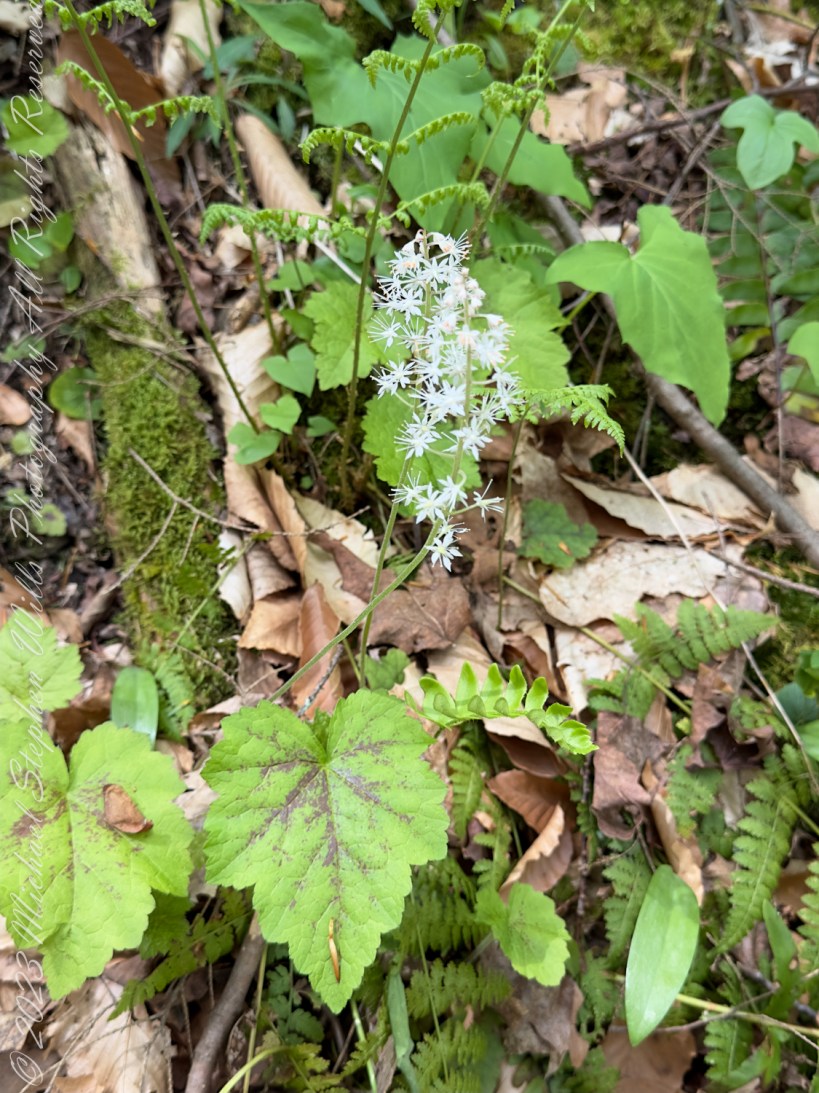
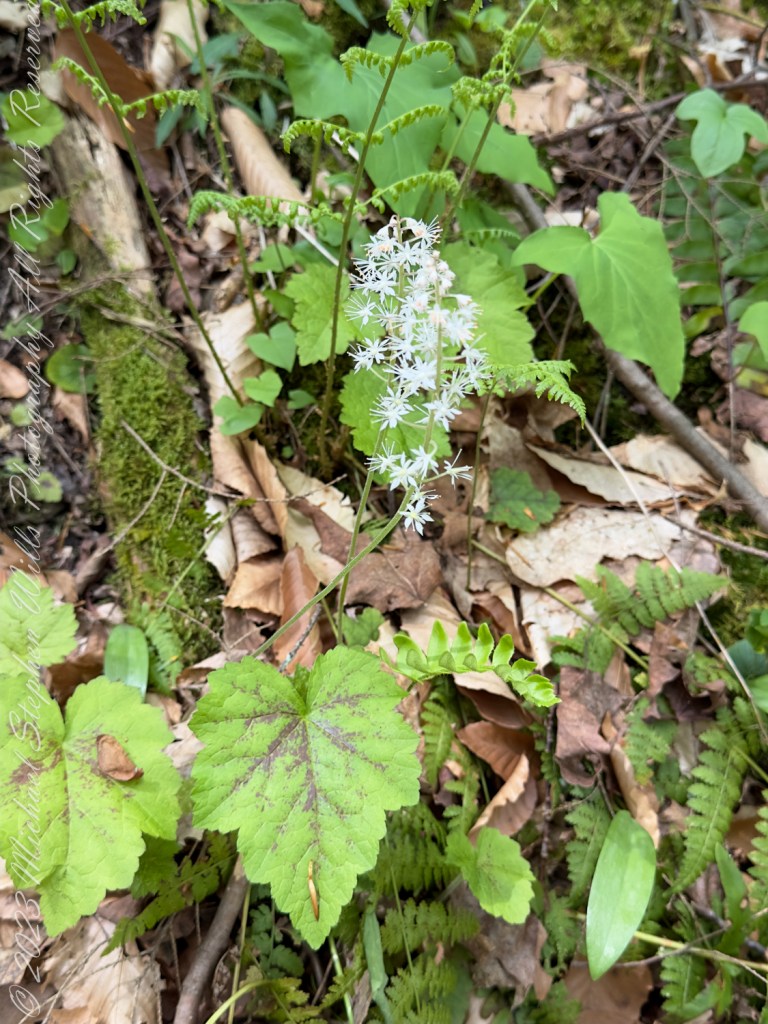
Amid the echoing call of the Treman gorge, the Heartleaf Foamflower (Tiarella cordifolia) emerges as a charming herald of spring. This modest yet captivating wildflower, with its star-like blossoms and heart-shaped leaves, offers a delightful study of nature’s intricate designs and adaptations.

Natural History of Heartleaf Foamflower

Tiarella cordifolia, commonly known as Heartleaf Foamflower, belongs to the saxifrage family. It thrives under the dappled shade of deciduous forests, often forming lush carpets along the moist, rich soils near streams or on the shaded forest floor. The Heartleaf Foamflower blooms in the late spring, presenting delicate white flowers that rise above the foliage on thin, wiry stems. These blossoms cluster into spiky foamy plumes, giving the plant its descriptive name.

In Robert H. Treman State Park, known for its deep gorge and cascading waterfalls, the Heartleaf Foamflower adds a layer of understated elegance to the rugged landscape. Here, the plant benefits from the high humidity and the protective canopy of mature trees, conditions that mirror the environments of its ancestral wilds.

Propagation in the Wild

Propagation of the Heartleaf Foamflower is a testament to its resilience and adaptability. The plant spreads primarily through stolons—horizontal runners that extend from the parent plant and root at nodes to form new clones. This vegetative reproduction allows dense colonies of foamflower to develop, creating a continuous undergrowth that stabilizes the soil and adds to the forest’s understorey diversity. After flowering, the foamflower produces dry capsules that release tiny seeds, capable of germinating under the right moisture and shade conditions, further expanding its reach within its habitat.

Uses by Humanity

While not widely known for its medicinal or culinary uses, the Heartleaf Foamflower holds a place in traditional gardening and native plant landscaping. Its ability to form dense ground covers and its charming appearance make it a favorite among gardeners looking to emulate a woodland setting. Beyond aesthetics, the foamflower serves as an ecological staple in native plant gardens, supporting local pollinators and contributing to the biodiversity of garden ecosystems.

Fanciful Exploration

Imagine a time when the floors of what now is Treman Gorge were untouched by trails or footprints. In this ancient tableau, the Heartleaf Foamflower quietly asserted its presence. Those soft white blooms a stark contrast to the deep greens and earthen browns of the forest floor. Native Americans might have admired its beauty or recognized its value in the tapestry of the woodland realm.

Today, visitors to Robert H. Treman State Park can witness this enduring beauty. As they wander along the gorge’s paths, they tread near these floral gems, stepping through the pages of a natural history that continues to unfold with each blooming season. The Heartleaf Foamflower, with its humble grace and enduring spirit, remains a symbol of the wild and pristine beauty that Treman Gorge has preserved through the ages.

Copyright 2024 Michael Stephen Wills All Rights Reserved