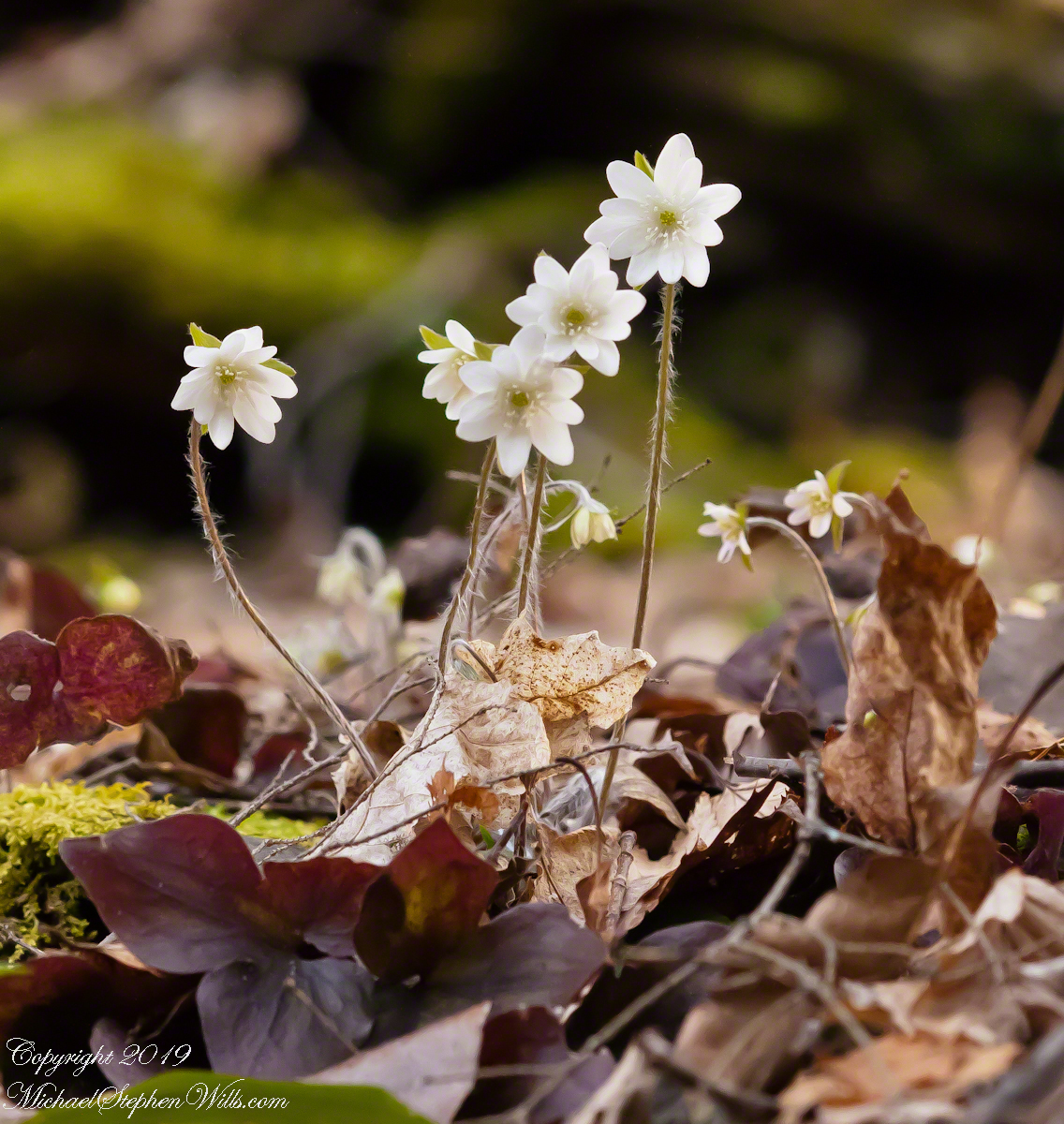
From Thimbleweed to Canada Anemone: Wildflower Photography in the Finger Lakes

White anemones at Malloryville and Treman reveal thimbleweed and Canada anemone through intimate portraits, shifting light, woodland edges, and quiet transformation from bloom to seed.

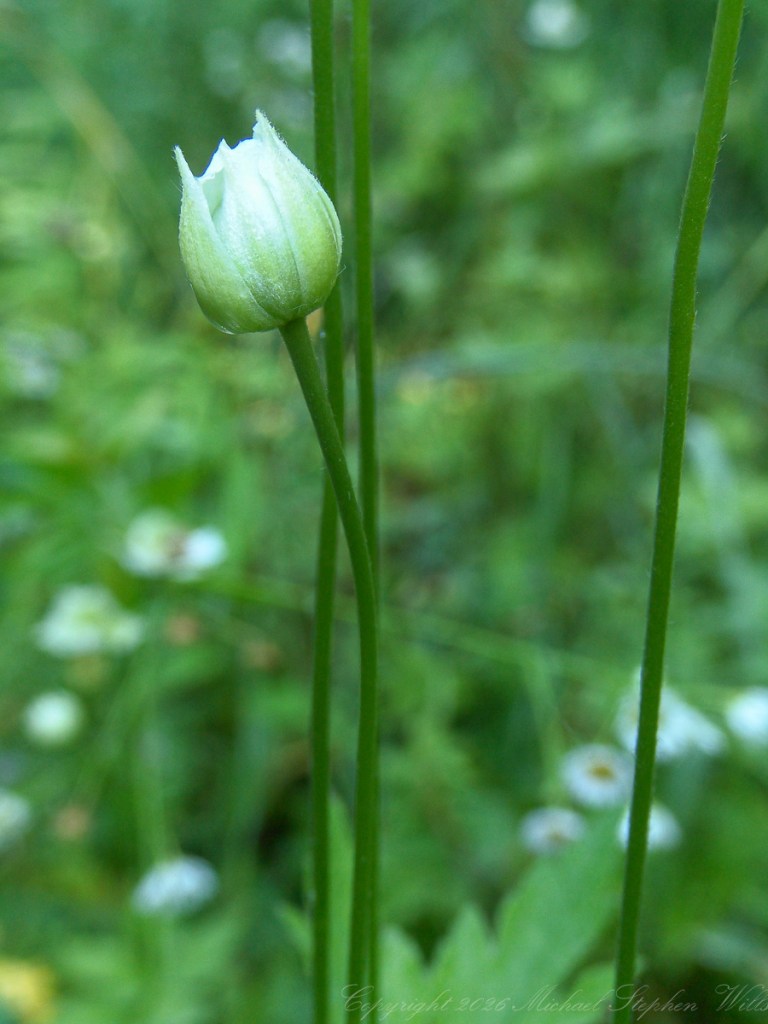
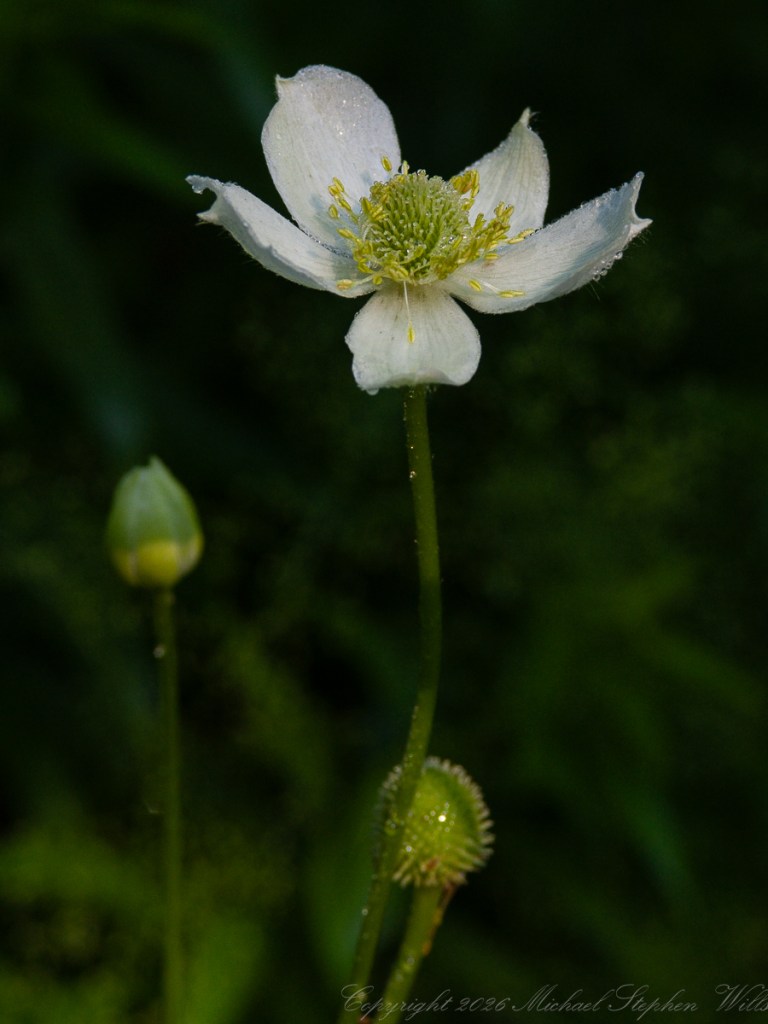
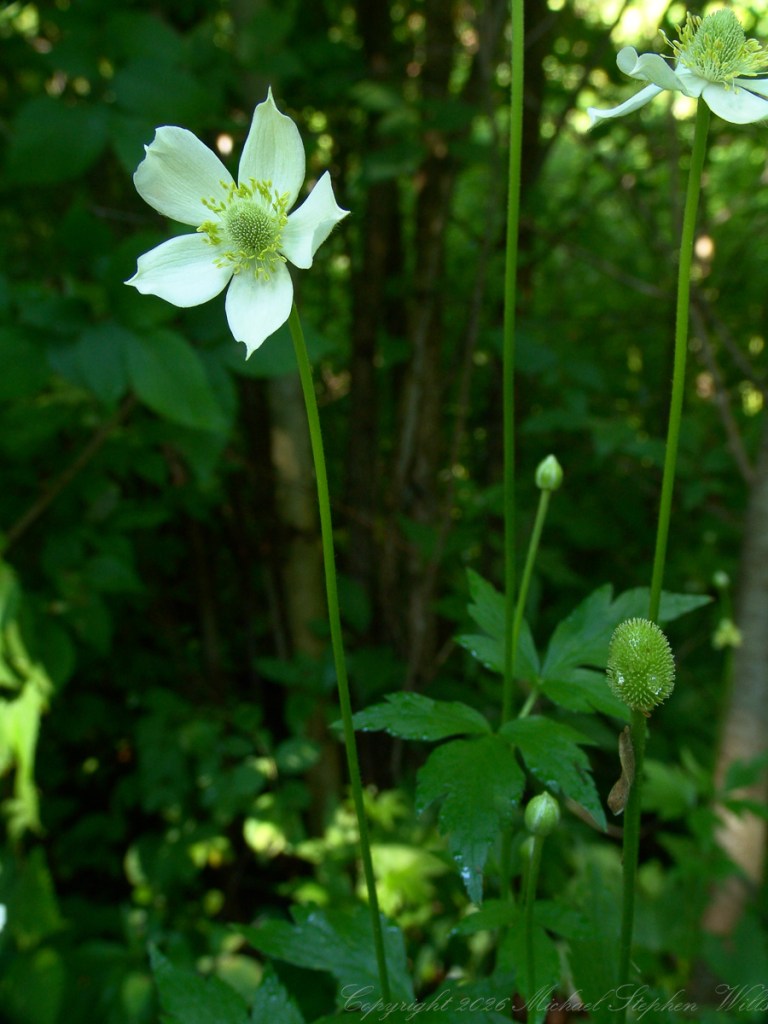
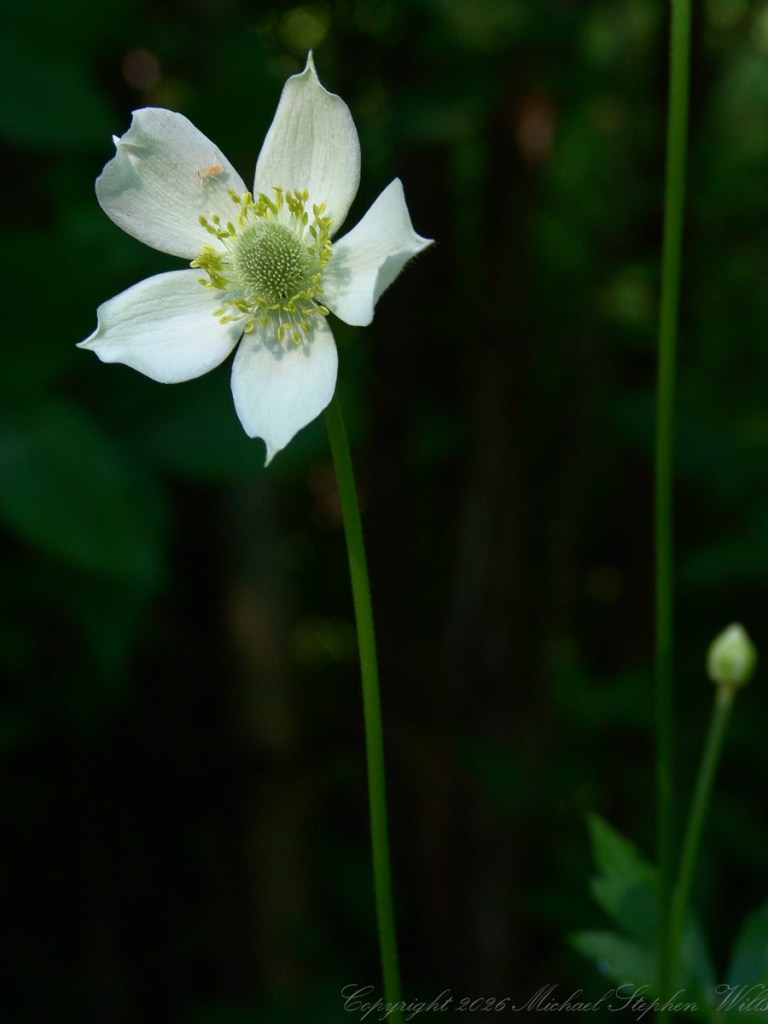
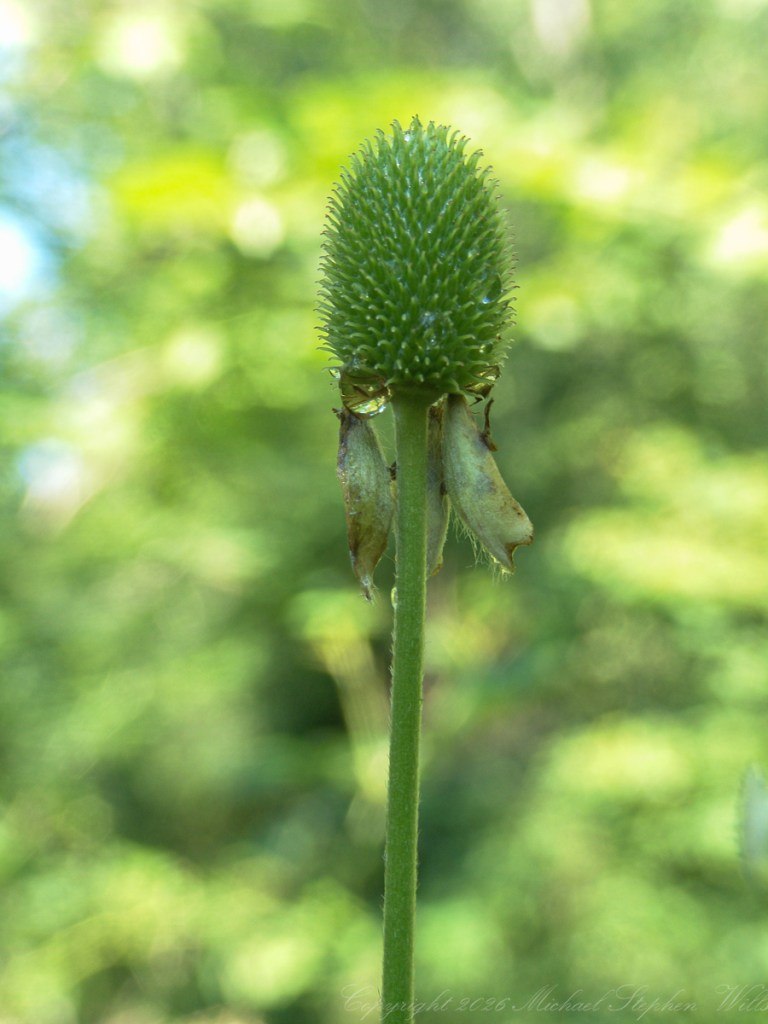
Along the long defunct railroad right of way at the O. D. von Engeln Preserve in Malloryville, Tompkins County, my 2005 photographs in the following gallery show thimbleweed, Anemone virginiana, in a world of green stillness. Made with a tripod-mounted Sony DSC-F828, they have the patient intimacy of deliberate looking. The camera holds close to one flower, then another stage of the same life, as if time itself had paused among the stems. One bloom faces the lens like a small moon with a green-gold sun at its center. Buds stand nearby, closed and expectant, like folded letters. Later frames reveal the flower after weather and time have touched it: sepals lifted and worn, stamens loosened, dew clinging to the stem, the seed head beginning its bristling ascent. The plant is caught mid-transformation, a white flame becoming a green lantern.
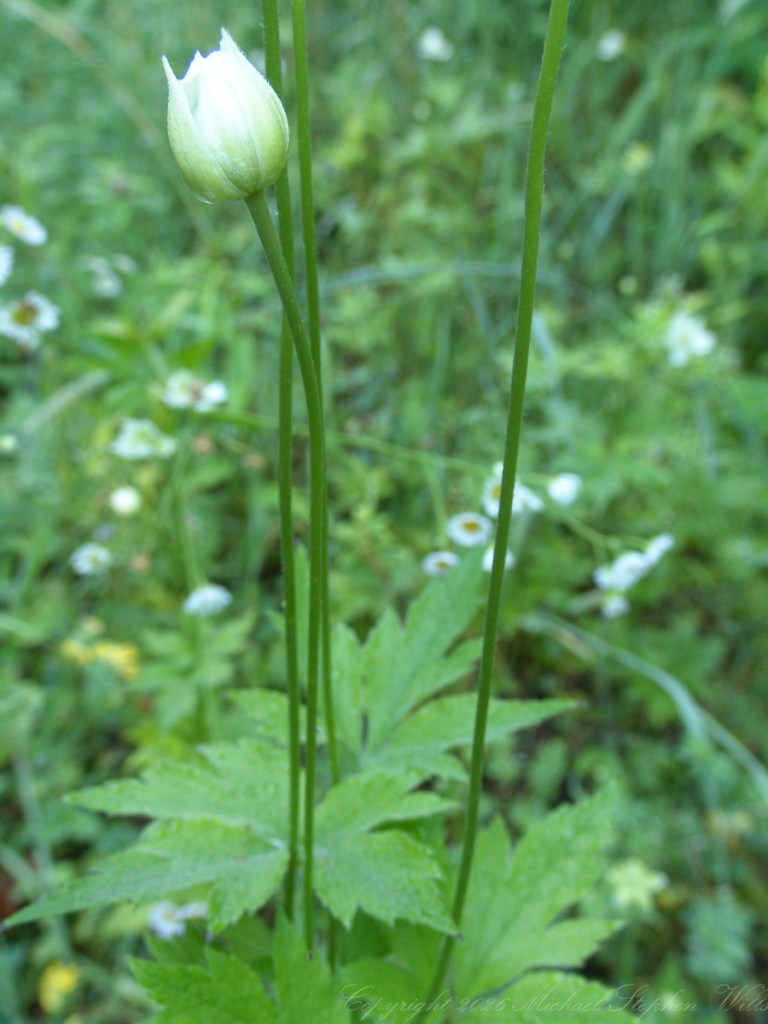
These Thimbleweeds are not white anemones in the soft sense of a spring flower, but tall anemones, thimbleweeds, plants of height, poise, and aftermath. Their most memorable structure is already waiting at the center of the flower: the green cone that will remain when the white sepals have gone. Freshly opened the flower is tender and stippled, ringed by yellow stamens; later it rises alone, armored in fine points, a little tower of continuance. The flower has not vanished. It has changed its language.

My 2005 photographs are portraits, each built from closeness and quiet restraint. The shallow focus turns the surrounding vegetation into a green tide, leaving the thimbleweed suspended in its own clear weather. The tripod’s steadiness gives the images a contemplative gravity. Nothing feels seized. Everything feels attended to. The thin stems become vertical measures in the dim woods, and the pale flowers seem to shine not by brightness alone but by contrast with the shaded world behind them.

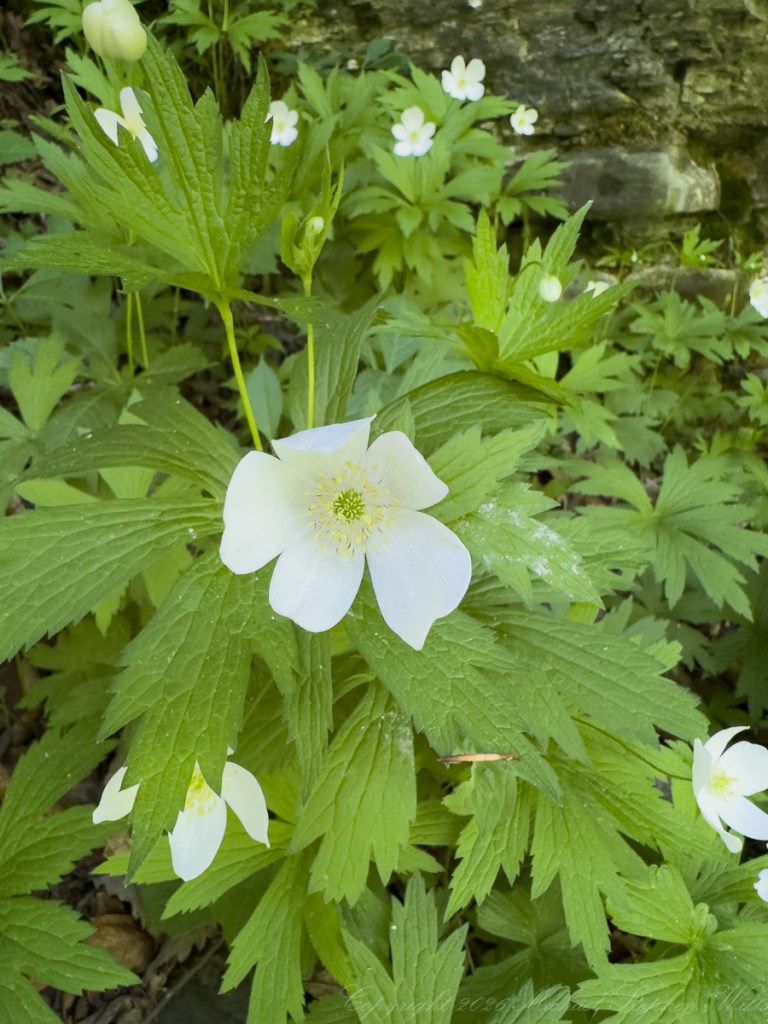
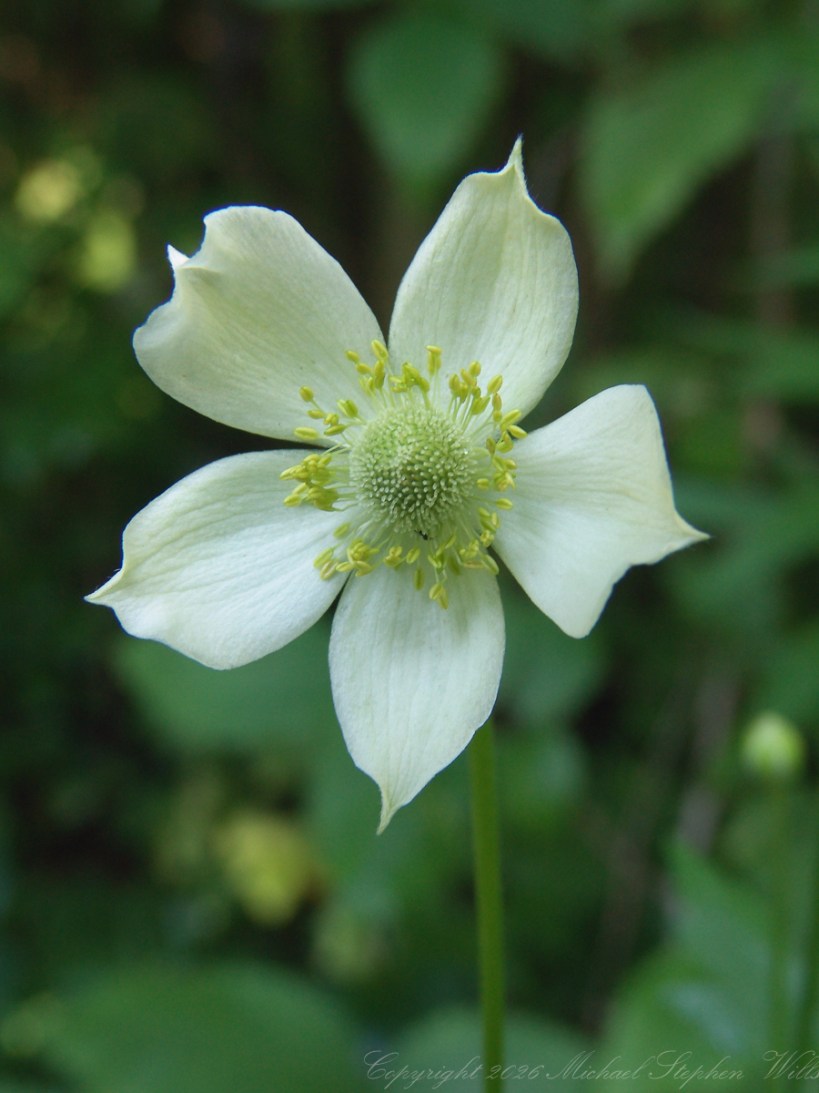
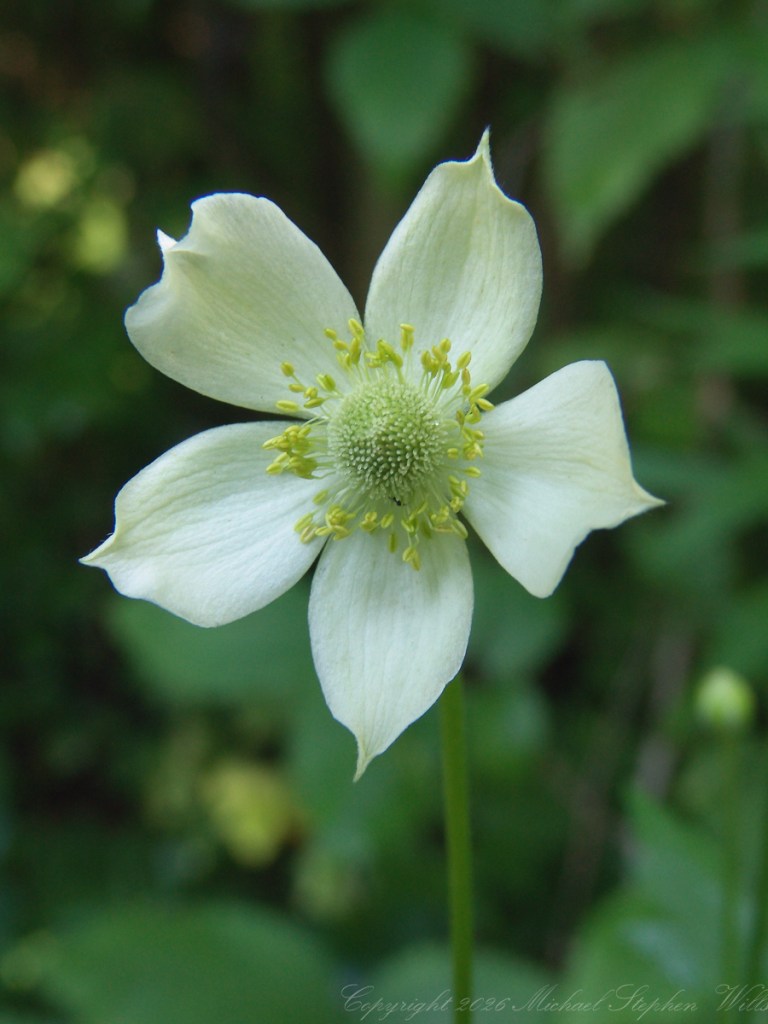
More than twenty years later, on June 13, 2026, the photographs from Robert H. Treman State Park near Ithaca offer another kind of seeing. These images, made with an iPhone 14 Pro Max, show Canada anemone, Anemonastrum canadense, along the Gorge Trail. The style is wider, more immediate, more ecological. Instead of isolating a single flower in formal portrait, the camera gathers the colony: white blossoms scattered among sharply cut leaves, stone wall, leaf litter, and the living green of the gorge. The plant is here a constellation at ground level.
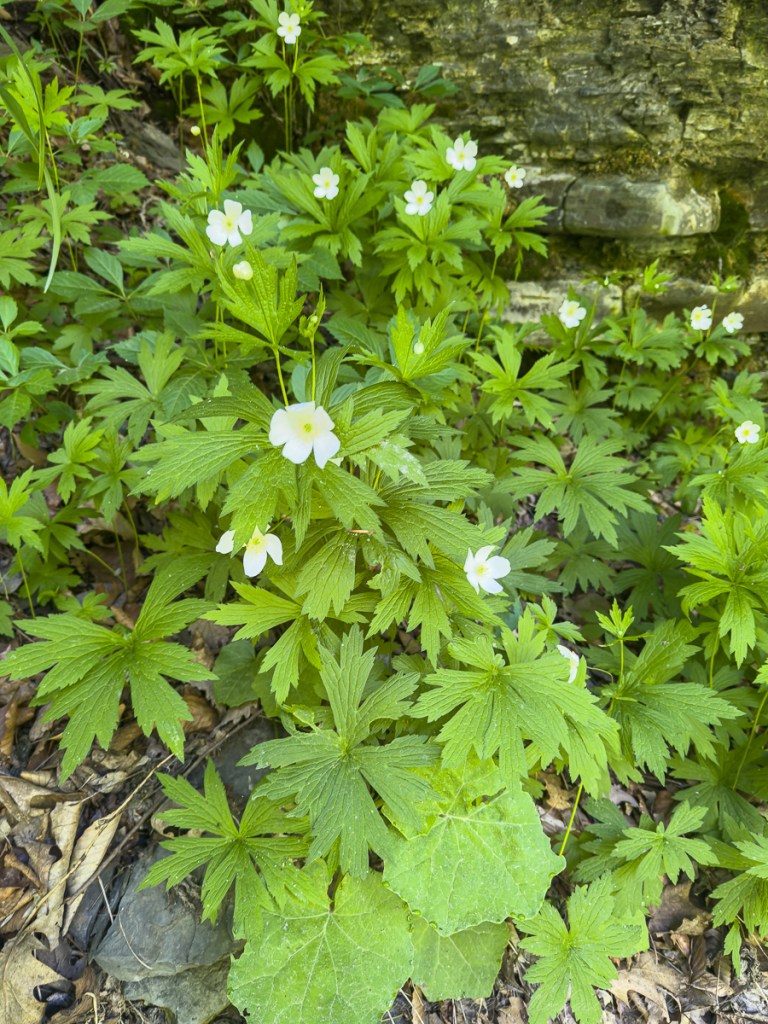
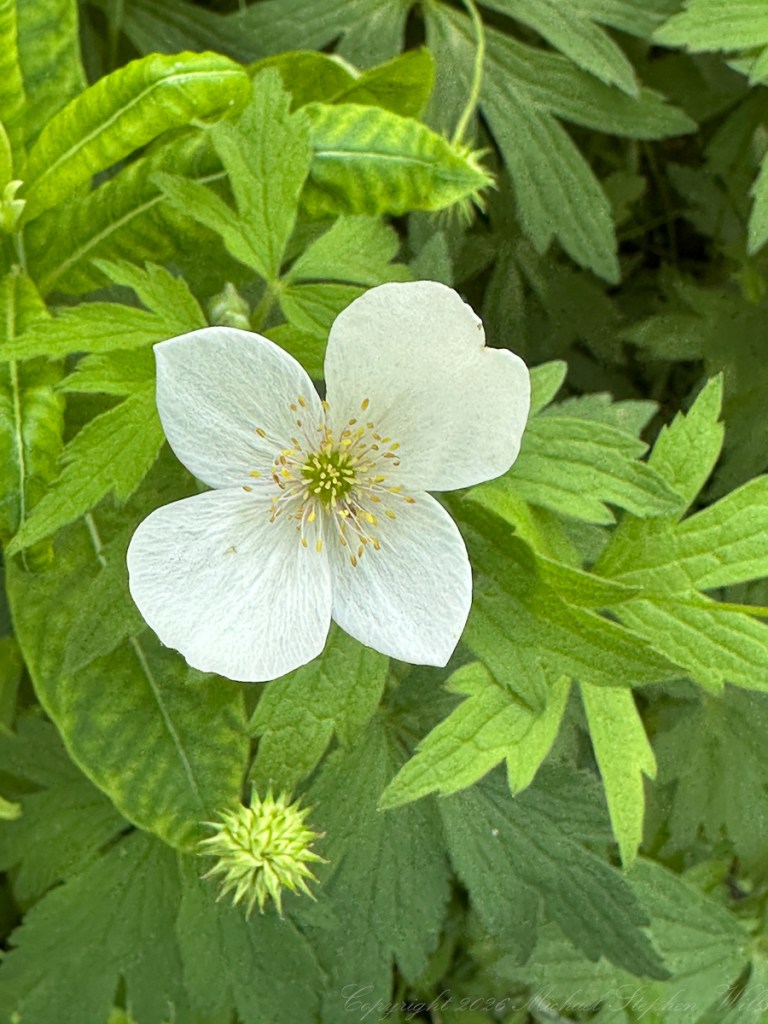
These photographs from the Gorge Trail of Robert H. Treman park have the fluency of a walk. They bring us into the place where the flowers grow, letting the eye move from blossom to leaf, from wall to moist soil, from one white face to another. In the close views, the Canada anemone opens with a rounder, simpler grace than the thimbleweed: white petals surrounding a modest green center and delicate yellow anthers. In the wider frames, its leaves make a bright, serrated fabric over the ground, a many-handed greenery receiving the light.

The contrast between the two sets is also a contrast between eras of photography. The Sony images feel like field studies made with ceremony: tripod, fixed attention, a single subject lifted from the woodland dimness. The iPhone images feel like discoveries carried in the hand, the eye moving freely through a living patch of plants. One approach gives us the flower as emblem; the other gives us the flower as citizen of a community. Together they make a fuller truth.

Across a twenty-one-year span, the technology changed dramatically. The 2005 Malloryville series has the patient, close-focus attention of a dedicated camera: ISO 64, small aperture, long exposures, the photographer leaning into stillness. The 2026 Treman images arrive through a phone camera, quick and bright, able to record both blossom and habitat with effortless clarity. Yet the flowers themselves refuse to become dated. These anemone are older than both cameras and indifferent to their sophistication. It keeps its own calendar: bud, bloom, seed, root, return.

Yet the kinship between the plants persists. Both hold white blooms above finely divided leaves. Both belong to the cool, green margins of the Finger Lakes landscape. Both take the ordinary materials of summer, water, shade, stone, soil, and passing light, and make from them a brief astonishment. The thimbleweed raises its solitary green future on a long stem. The Canada anemone spreads its brightness in company. One is a sentence written upward; the other, a page of scattered stars.

The wonder of these anemone is partly structural. Their “petals” are actually petal-like sepals, often five, sometimes more, white and slightly irregular, as if each flower has been hand-torn from light. The yellow stamens ring a green central cone, a small workshop of pollen and future seed. Insects visit for what the flower offers, while the plant asks only for suitable ground and enough room to run. It is not timid. Gardeners know they can spread vigorously, but in the wild that vigor reads differently: not aggression, but insistence. It is the plant saying, “Here is moisture, here is light, here is my chance.”

The photographs also show how much of wildflower beauty lies in context. The pristine frontal bloom is lovely, yes, but so is the closed bud held among vertical stems; so is the aging seed head with spent sepals hanging like weathered pennants; so is the colony rising from a gorge-side floor. Wonder does not reside only in peak bloom. It lives in the before and after, in the green machinery of leaves, in the “almost,” the “not yet,” and the “still becoming.”

To look at the anemone in this way is to be reminded that native plants are actors in the ecological drama of a place: stabilizing soil, feeding insects, responding to light gaps, marking moisture, stitching disturbed edges back into life. Their beauty is functional, and their function is beautiful. A wildflower is never only its moment of bloom. It is bud and blossom, seed and stem, place and weather, memory and return.

These photographs understand that. They show not just flowers, but the disciplined patience of plants: the hush before opening, the radiance of full display, the quiet labor after beauty has done its visible work. In Malloryville, a white flame becomes a green lantern. At Treman, small moons gather beside the stone. And through both, the green world keeps speaking in its oldest memorable phrase: nothing delicate is merely fragile.
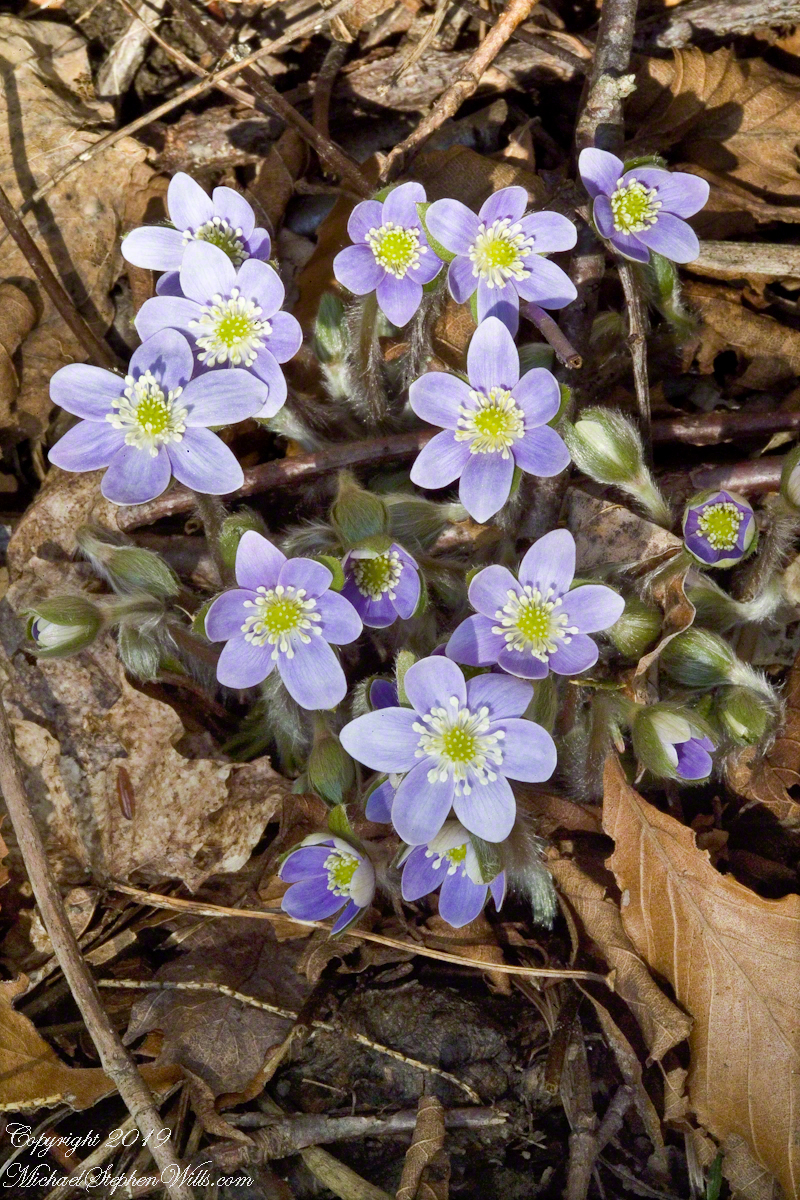
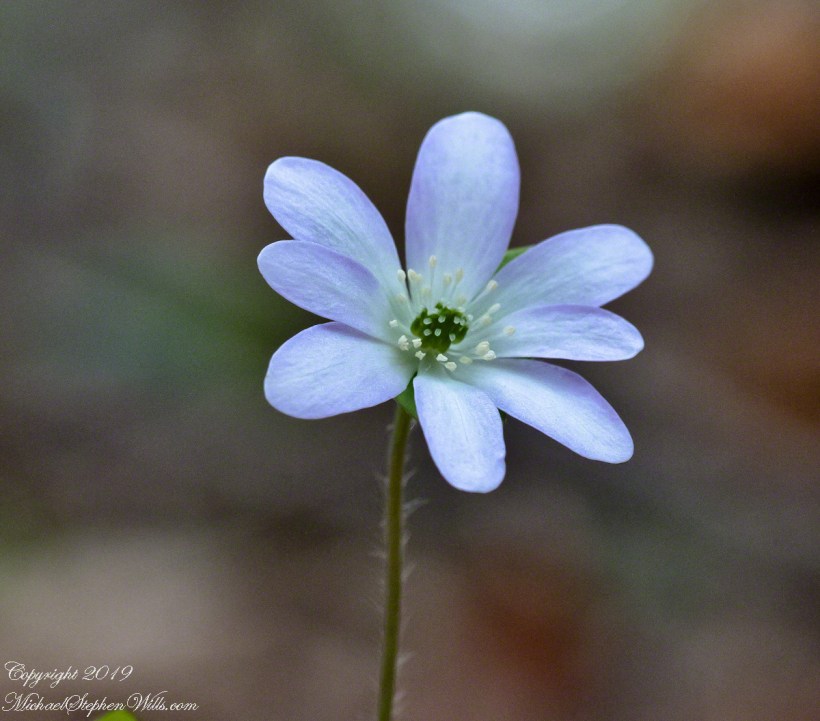
Click me to visit Michael Stephen Wills Online Finger Lakes Gallery.

Enter your email to receive notification of future postings. I will not sell or share your email address.

Forest Gems – The Natural History and Lore of Hepatica

Join us on a journey through the enchanting forests of the Finger Lakes as we explore the fascinating world of Hepatica nobilis. Discover the lore, natural history, and beauty of these early spring bloomers. Dive into the magic of the wild!

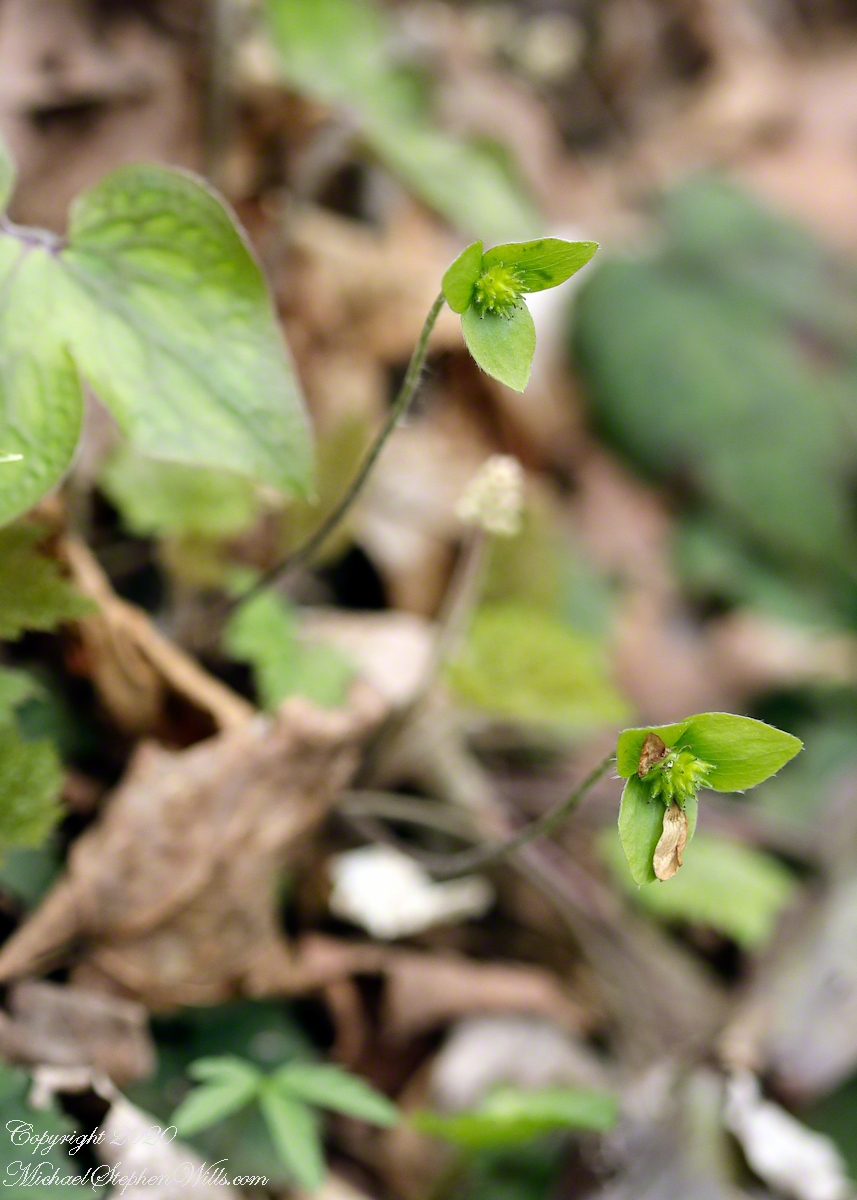
As I ventured along the Gorge Trail of Robert H. Treman New York State Park, I stumbled upon a captivating sight. Amidst the rich leaf litter and emerging greenery, clusters of Hepatica plants caught my eye. Although the flowers had already gone to seed, their distinctive leaves and stems told a story of early spring beauty in the heart of the Finger Lakes Region, Tompkins County. Using my Apple iPhone 14 ProMax, I documented these charming plants, eager to delve deeper into their fascinating world.

Hepatica, scientifically known as Hepatica nobilis, also goes by several common names including Liverleaf, Liverwort, and Kidneywort. The genus name “Hepatica” comes from the Greek word “hepar,” meaning liver, due to the shape and color of its leaves, which resemble the lobes of a human liver. This resemblance led to the plant being used historically in herbal medicine to treat liver ailments, in line with the Doctrine of Signatures—a belief that plants resembling body parts could cure ailments of those parts.

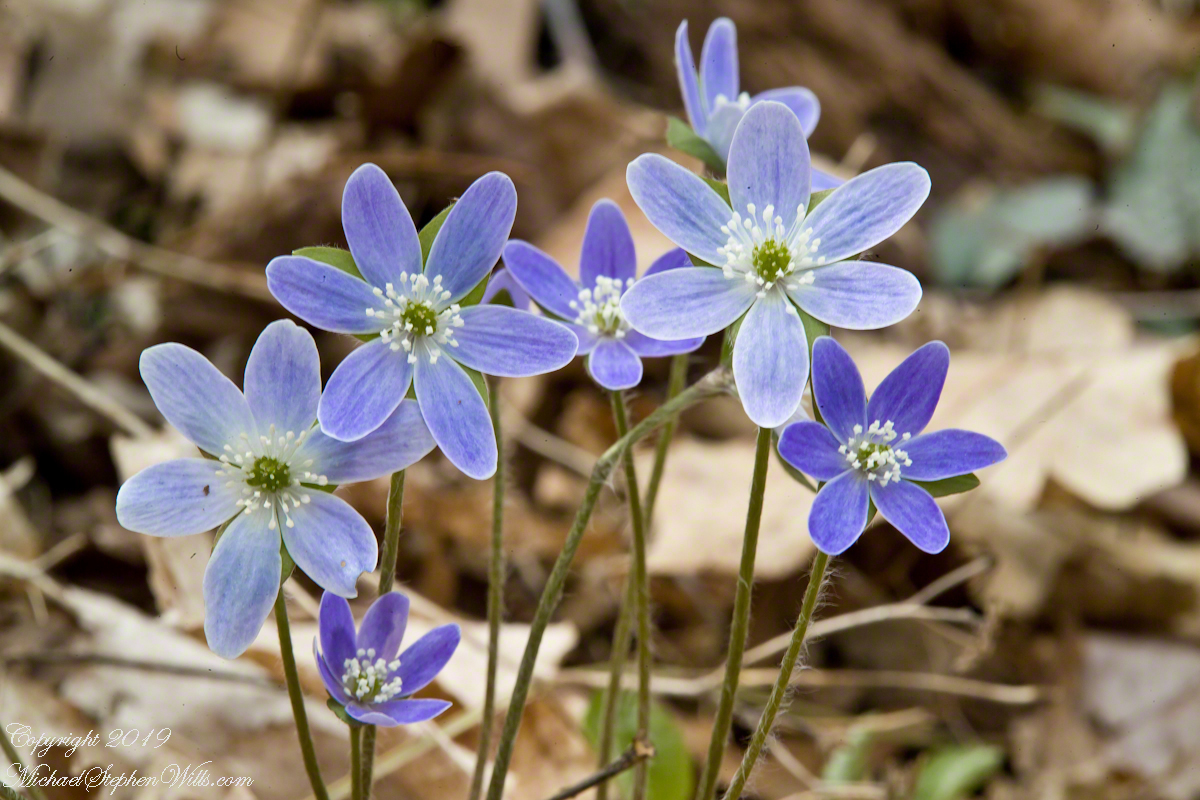
Fillmore Glen New York State Park, Moravia, New York on an April afternoon.

The common names of Hepatica reflect its historical medicinal uses. “Liverleaf” and “Liverwort” both reference its liver-shaped leaves, while “Kidneywort” likely arose from the kidney-like appearance of its seeds. These names have endured through centuries, reflecting the plant’s significant role in both folklore and herbal medicine.

Hepatica is a perennial plant in the buttercup family, Ranunculaceae. It thrives in deciduous forests, often found in shaded areas with rich, well-drained soil. The plant is one of the first to bloom in early spring, producing delicate flowers in shades of white, pink, blue, or purple. By the time I encountered them on my hike, the flowers had already transitioned to seed, but the distinctive lobed leaves remained vibrant and lush.

Fillmore Glen New York State Park, Moravia, New York on an April afternoon.

Reproduction in Hepatica is primarily through seed, though the plant can also propagate vegetatively. The flowers are insect-pollinated, attracting early-season pollinators such as bees and flies. Once pollinated, the flowers produce seeds encased in small, fuzzy fruits. These seeds are often dispersed by ants, a process known as myrmecochory, which helps ensure the plant’s spread throughout the forest floor.

Native American tribes, including the Iroquois, valued Hepatica for its medicinal properties. They used the leaves to brew teas believed to treat liver disorders, digestive issues, and skin ailments. European settlers adopted similar practices, incorporating Hepatica into their own herbal remedies.

In European folklore, Hepatica was often associated with healing and protection. The plant was believed to ward off evil spirits and protect against various maladies. In the language of flowers, Hepatica symbolizes confidence and bravery, reflecting its early emergence in the harsh conditions of early spring.

Fillmore Glen New York State Park, Moravia, New York on an April afternoon.

Today, Hepatica continues to enchant nature enthusiasts and hikers with its early blooms and lush foliage. It plays a crucial role in the ecosystem, providing a vital source of nectar for early pollinators and contributing to the biodiversity of deciduous forests.

Walking through the gorge, I felt a deep connection to the natural history and cultural significance of Hepatica. The plant’s resilience and beauty, even in its seeding stage, served as a reminder of the enduring cycles of nature and the intricate relationships between plants, animals, and humans.

In conclusion, Hepatica nobilis, or Liverleaf, is a plant of remarkable beauty and historical significance. Its early spring blooms and distinctive leaves make it a cherished sight in the forests of the Finger Lakes. As I continued my hike, I felt a profound appreciation for the rich tapestry of life that Hepatica represents, a testament to the enduring wonders of nature.

Copyright 2024 Michael Stephen Wills All Rights Reserved

The Enchanting Sweet White Violets of Treman Gorge

Discover the enchanting Sweet White Violets (Viola blanda) in Treman Gorge. Join us as we explore their natural history, lore, and beauty in the heart of the Finger Lakes. Dive into the magic of spring time blooms!

As I walked the Gorge Trail of Robert H. Treman New York State Park, my attention was captivated by a lush carpet of delicate white flowers nestled among the vibrant green foliage. These enchanting blooms, known as Viola blanda or Sweet White Violets, were a delightful sight against the backdrop of the rugged terrain of the Finger Lakes Region in Tompkins County. Armed with my trusty Apple iPhone 14 ProMax, I couldn’t resist capturing the moment.

Viola blanda, also known as Sweet White Violet or Pale Violet, derives its scientific name from Latin. “Viola” is the classical Latin name for violets, while “blanda” means charming or pleasant, an apt description for these delightful little plants. The name “Sweet White Violet” alludes to the delicate and sweet fragrance of its flowers, a scent that is often subtle but unmistakably pleasant when noticed.

Sweet White Violets are perennial plants, part of the Violaceae family, and are typically found in moist, wooded areas. They are one of the first wildflowers to bloom in spring, their pure white petals standing out amidst the fresh green growth of the forest floor. The leaves are heart-shaped with finely serrated edges, and they form a dense mat that can cover the ground in a verdant blanket.

The reproduction of Viola blanda is fascinating. These plants produce both cleistogamous and chasmogamous flowers. The chasmogamous flowers, which are the ones most of us are familiar with, are the showy, white blooms that open fully and are pollinated by insects. Cleistogamous flowers, on the other hand, do not open and are self-pollinating. This dual strategy ensures that the plant can reproduce even in the absence of pollinators, securing its presence in the ecosystem year after year.

Native Americans, particularly the Iroquois tribes whose region this included, held violets in high regard. They used the plant medicinally to treat colds, coughs, and headaches. The leaves were often brewed into a tea, believed to have soothing properties. European settlers, too, were fond of the violet. They would often use the leaves and flowers in salads and as a garnish, taking advantage of both its nutritional value and pleasant taste.

Interestingly, in folklore, violets were associated with love and were often used in love potions. The ancient Greeks believed that violets could moderate anger and induce sleep. In the language of flowers, which was particularly popular during the Victorian era, violets symbolized modesty and faithfulness.

In modern times, the Sweet White Violet continues to charm nature enthusiasts and hikers alike. It plays a crucial role in the ecosystem, providing early spring nectar for pollinators such as bees and butterflies. The plant also serves as a host for certain butterfly species, which lay their eggs on the leaves. As the caterpillars hatch, they feed on the leaves, continuing the cycle of life.

Walking through the gorge, I felt a profound connection to the natural world. The Sweet White Violet, with its humble beauty and rich history, served as a reminder of the intricate web of life that thrives in these woods. Each step on the trail was a journey through the park and a walk through time, connecting me to the countless generations who have walked these paths before me, enchanted by the same delicate flowers.

In conclusion, the Viola blanda, or Sweet White Violet, is more than just a pretty face in the forest. It is a plant steeped in history, folklore, and ecological importance. As I continued my hike, I felt grateful for the opportunity to witness such beauty firsthand and to share in the timeless joy that these charming plants bring to the world.

Copyright 2024 Michael Stephen Wills All Rights Reserved