From Thimbleweed to Canada Anemone: Wildflower Photography in the Finger Lakes

White anemones at Malloryville and Treman reveal thimbleweed and Canada anemone through intimate portraits, shifting light, woodland edges, and quiet transformation from bloom to seed.

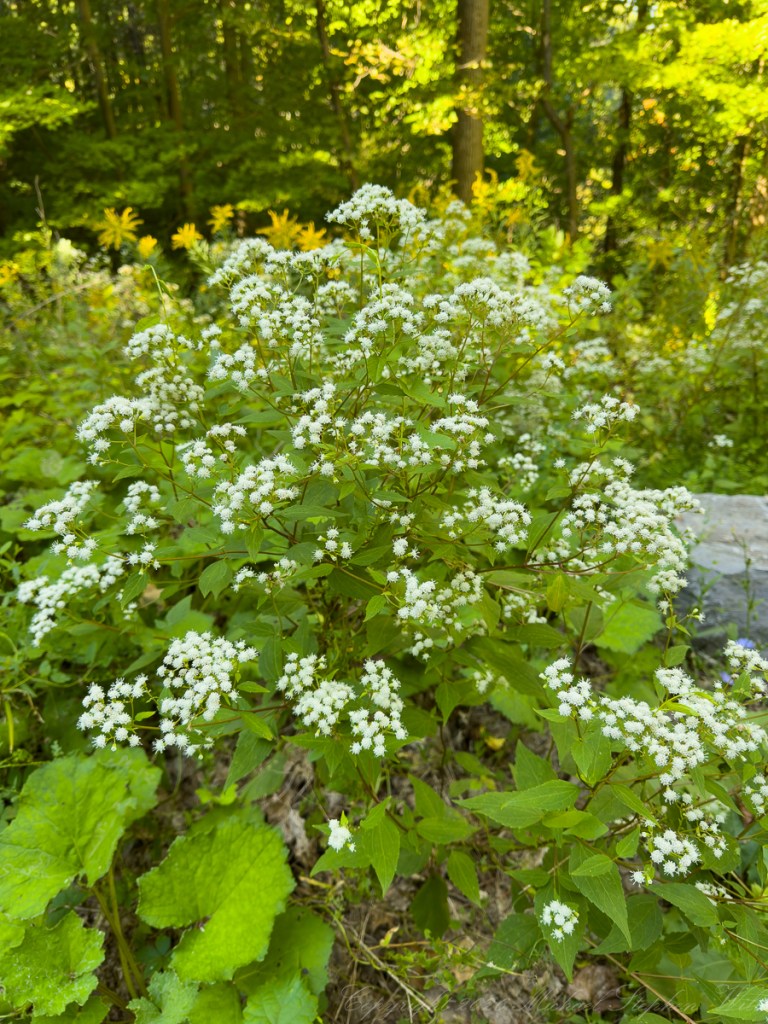
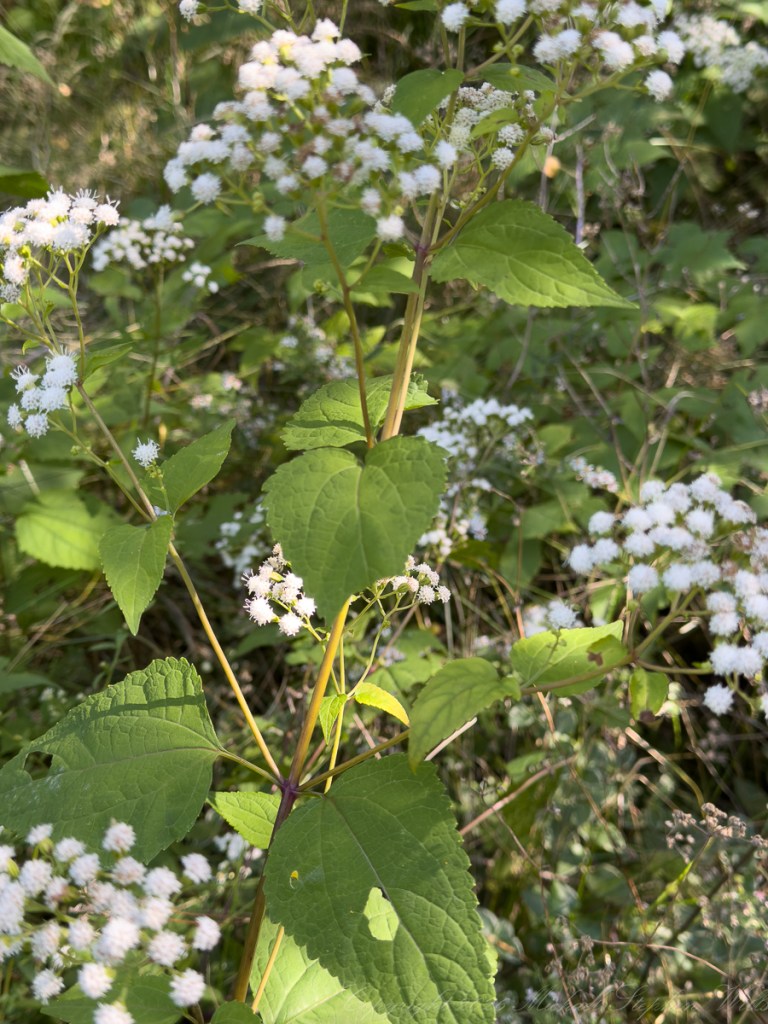
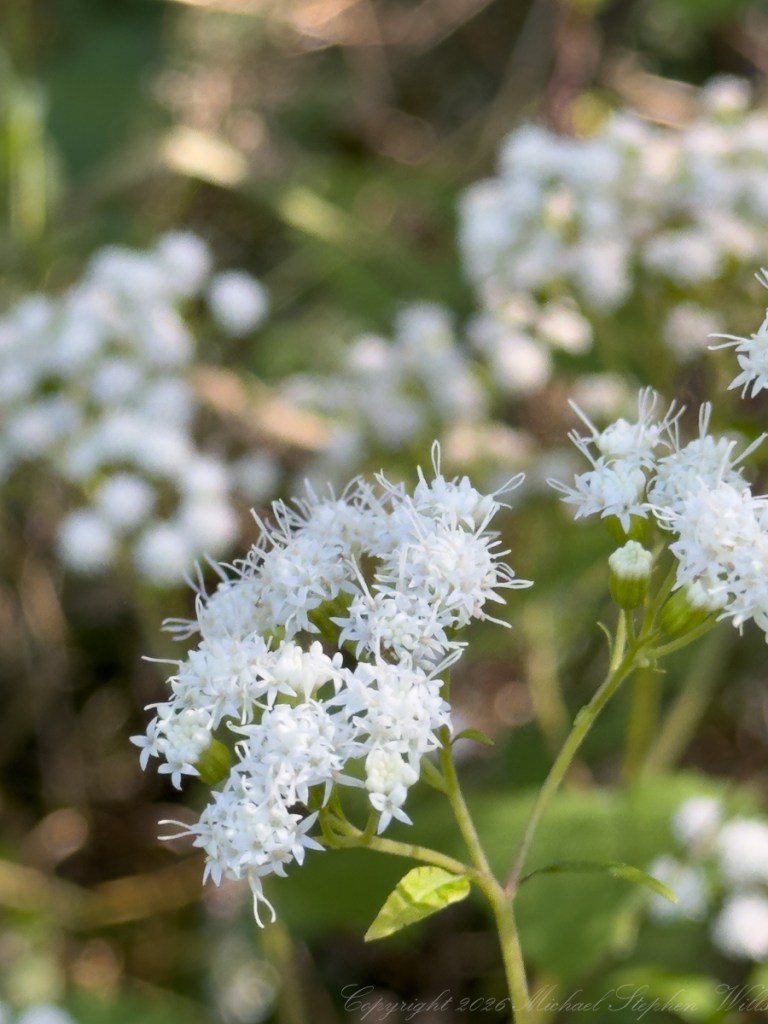
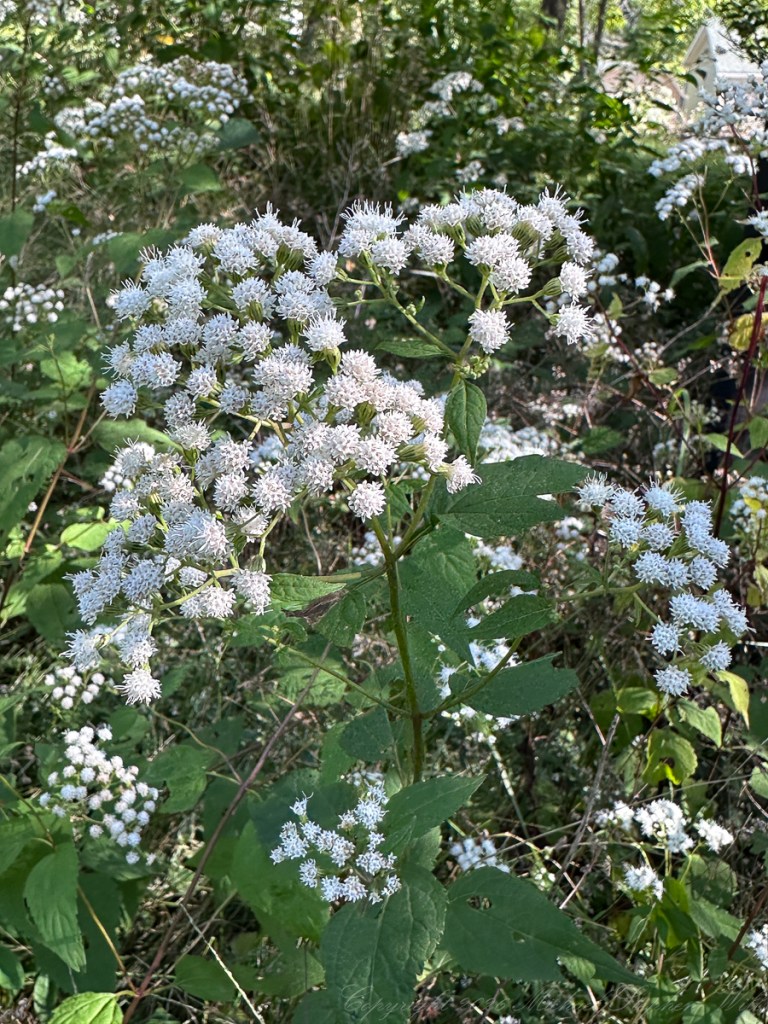
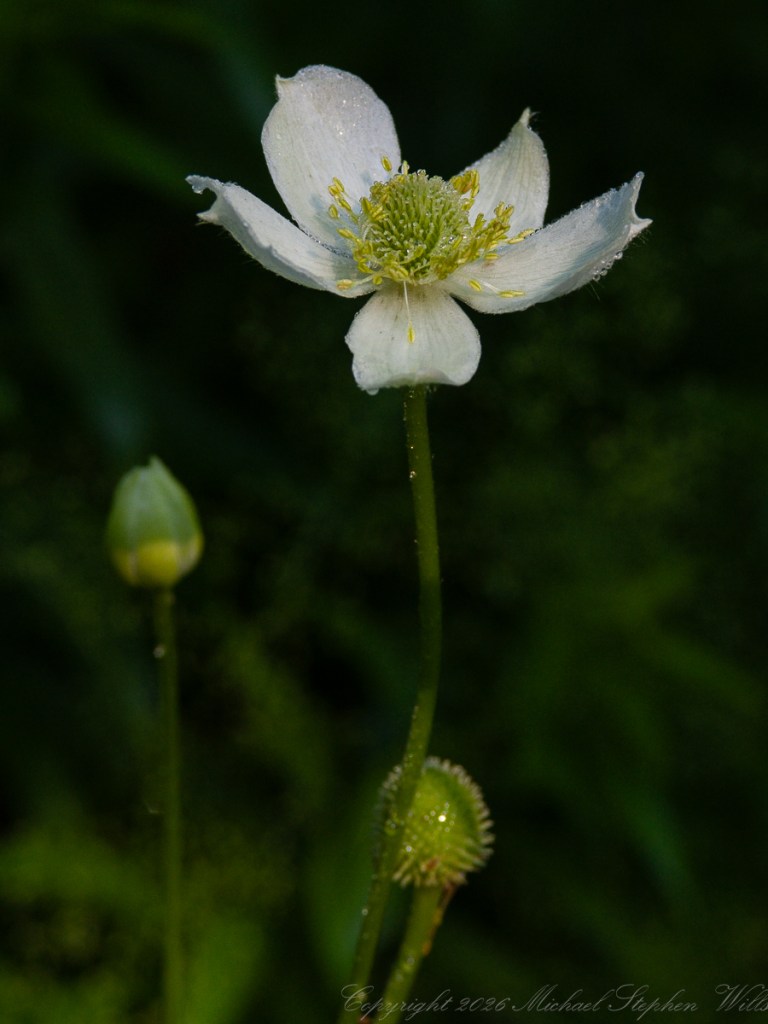
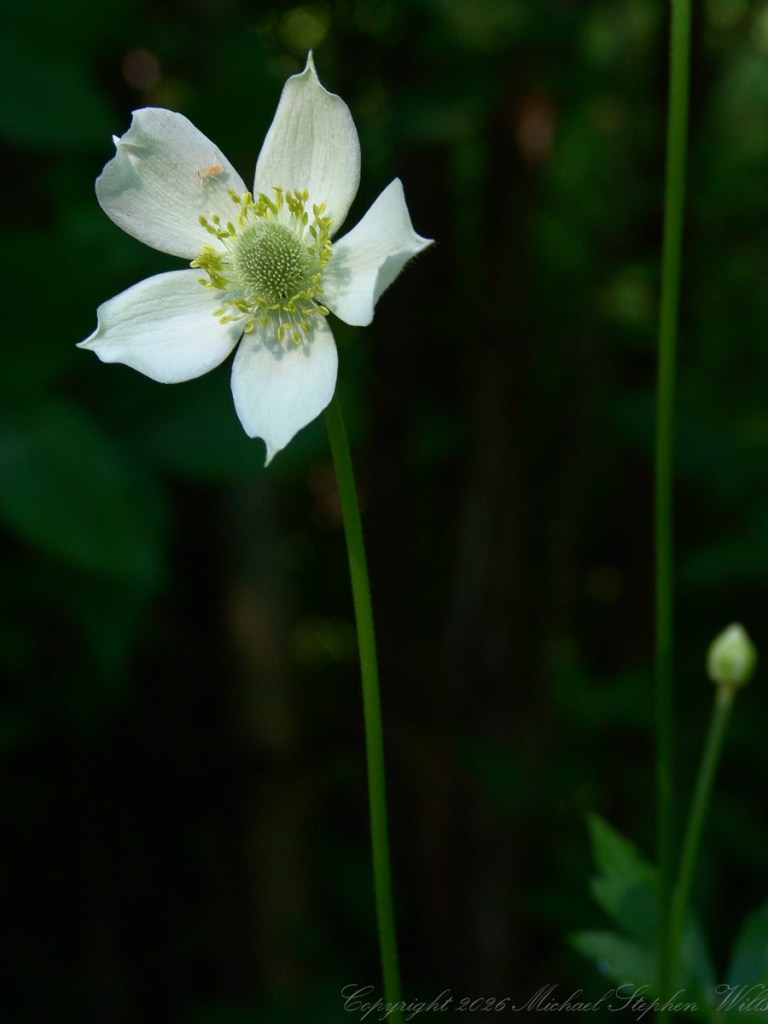
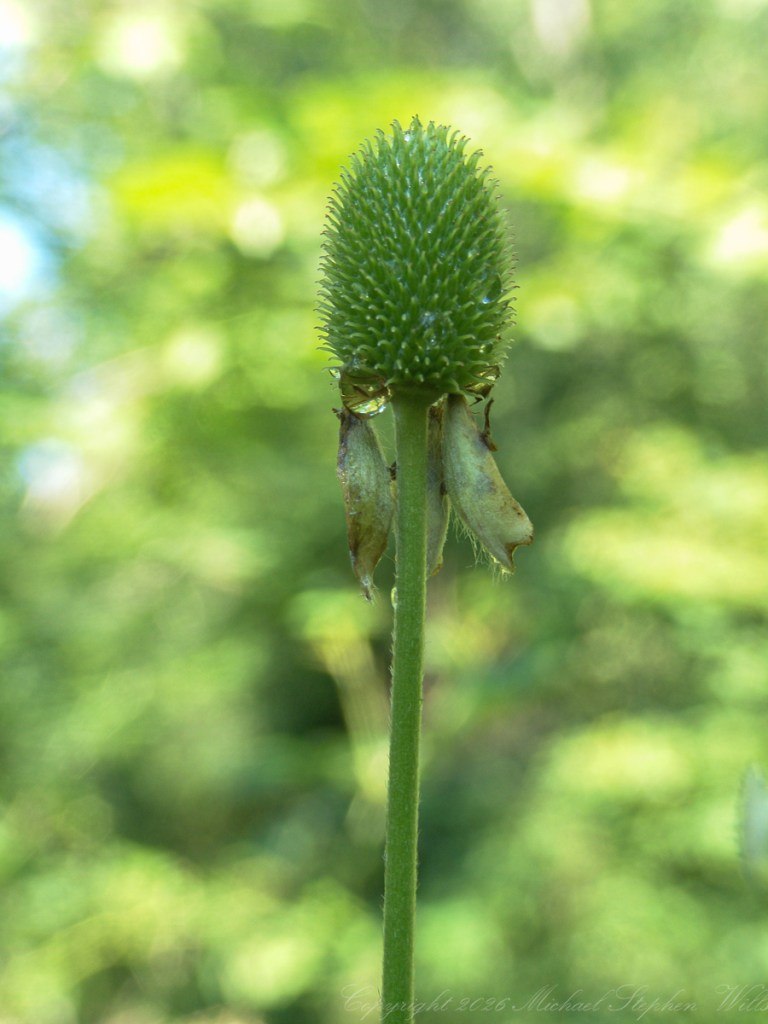
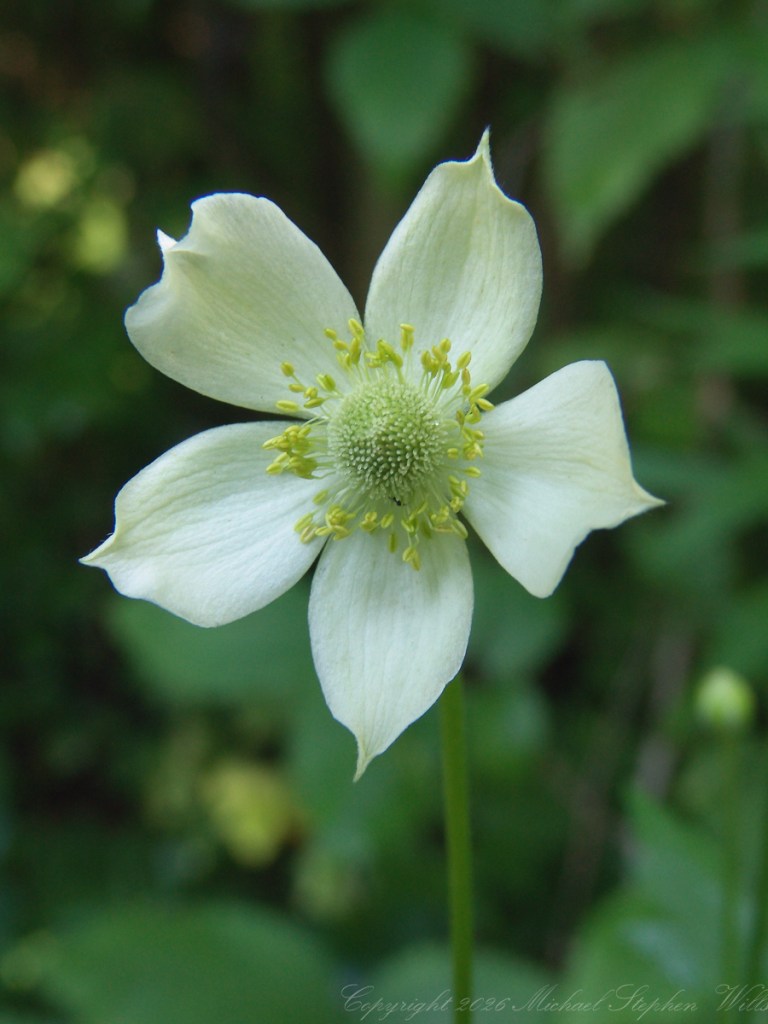
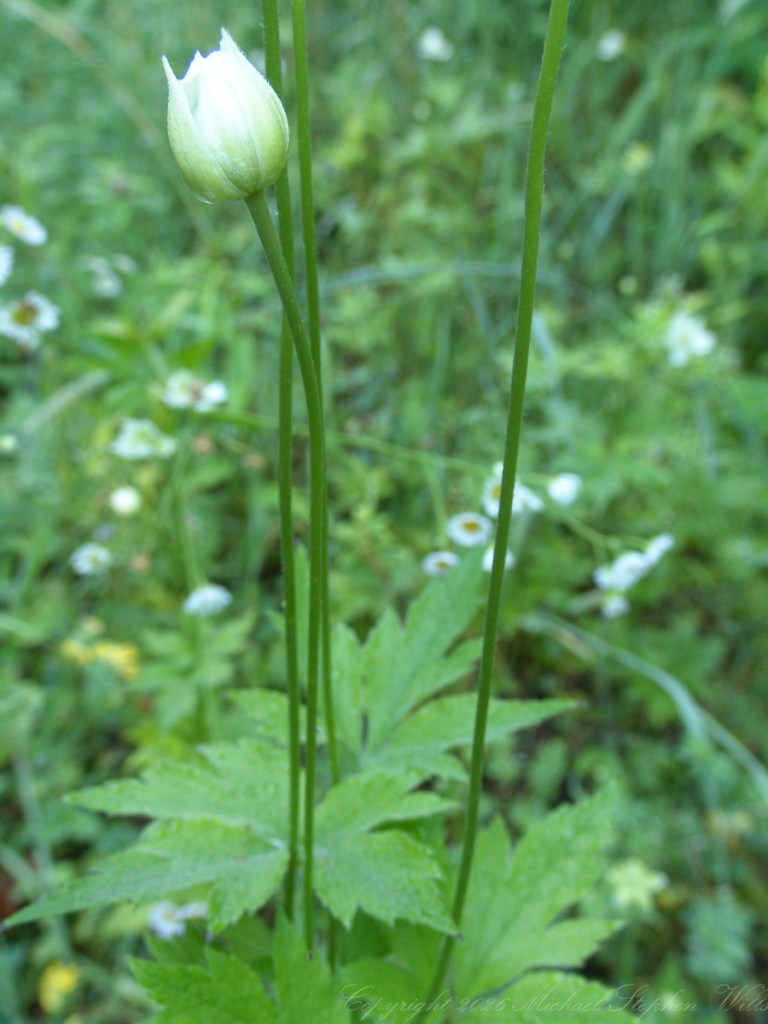
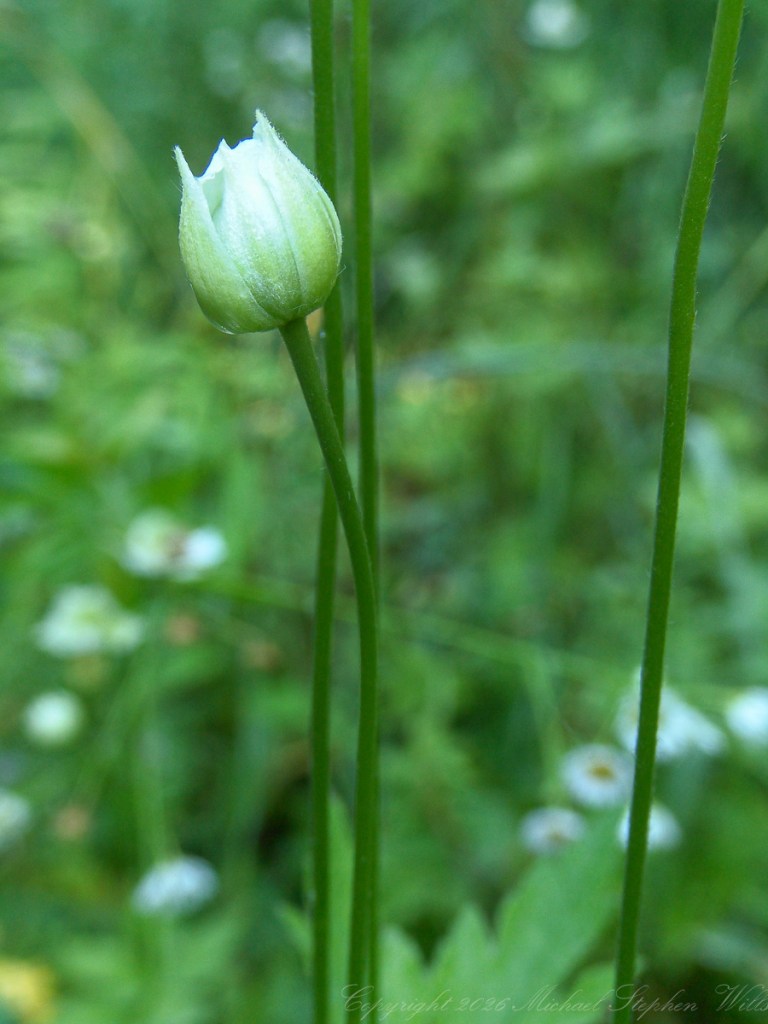
Along the long defunct railroad right of way at the O. D. von Engeln Preserve in Malloryville, Tompkins County, my 2005 photographs in the following gallery show thimbleweed, Anemone virginiana, in a world of green stillness. Made with a tripod-mounted Sony DSC-F828, they have the patient intimacy of deliberate looking. The camera holds close to one flower, then another stage of the same life, as if time itself had paused among the stems. One bloom faces the lens like a small moon with a green-gold sun at its center. Buds stand nearby, closed and expectant, like folded letters. Later frames reveal the flower after weather and time have touched it: sepals lifted and worn, stamens loosened, dew clinging to the stem, the seed head beginning its bristling ascent. The plant is caught mid-transformation, a white flame becoming a green lantern.

These Thimbleweeds are not white anemones in the soft sense of a spring flower, but tall anemones, thimbleweeds, plants of height, poise, and aftermath. Their most memorable structure is already waiting at the center of the flower: the green cone that will remain when the white sepals have gone. Freshly opened the flower is tender and stippled, ringed by yellow stamens; later it rises alone, armored in fine points, a little tower of continuance. The flower has not vanished. It has changed its language.

My 2005 photographs are portraits, each built from closeness and quiet restraint. The shallow focus turns the surrounding vegetation into a green tide, leaving the thimbleweed suspended in its own clear weather. The tripod’s steadiness gives the images a contemplative gravity. Nothing feels seized. Everything feels attended to. The thin stems become vertical measures in the dim woods, and the pale flowers seem to shine not by brightness alone but by contrast with the shaded world behind them.

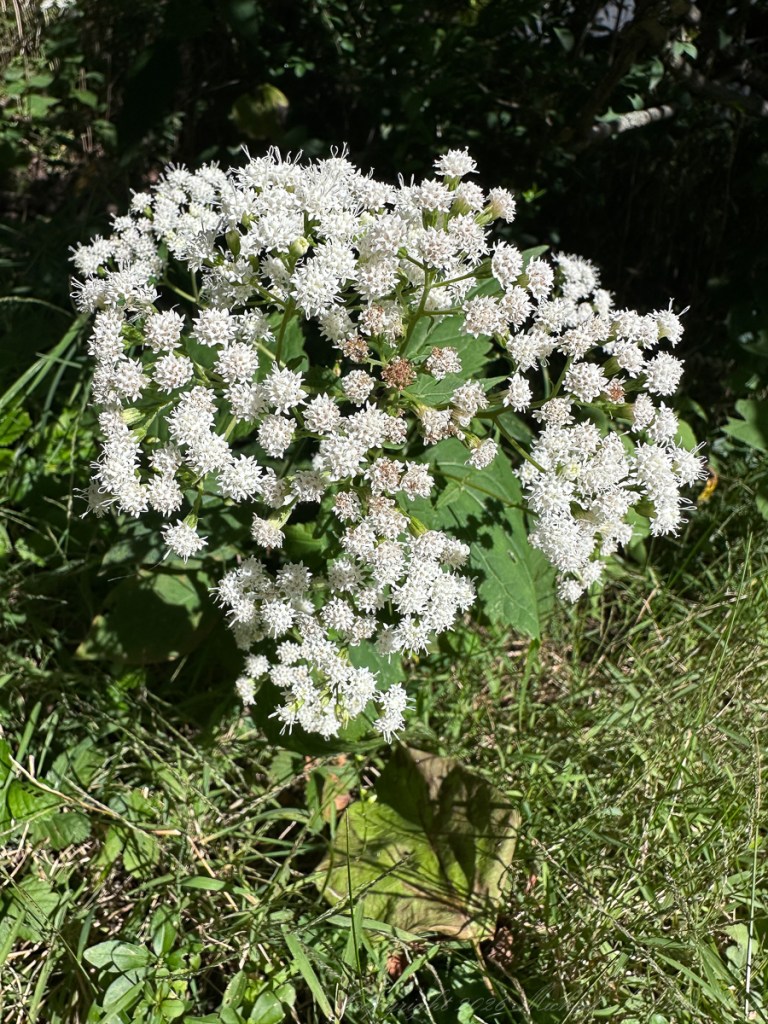
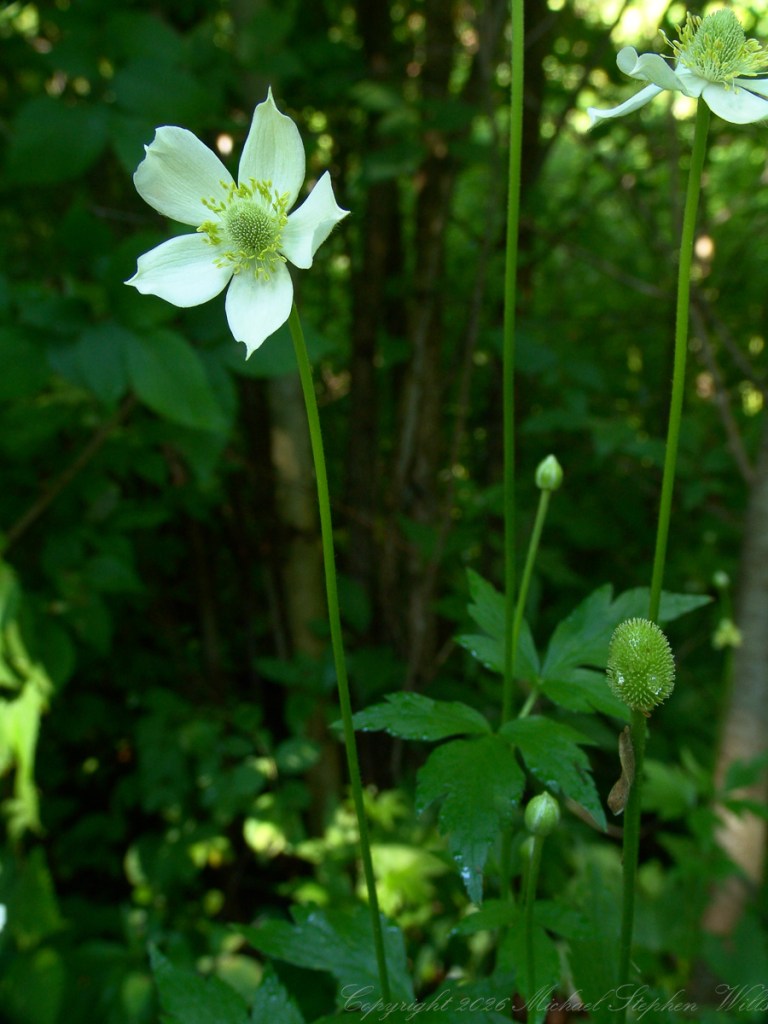
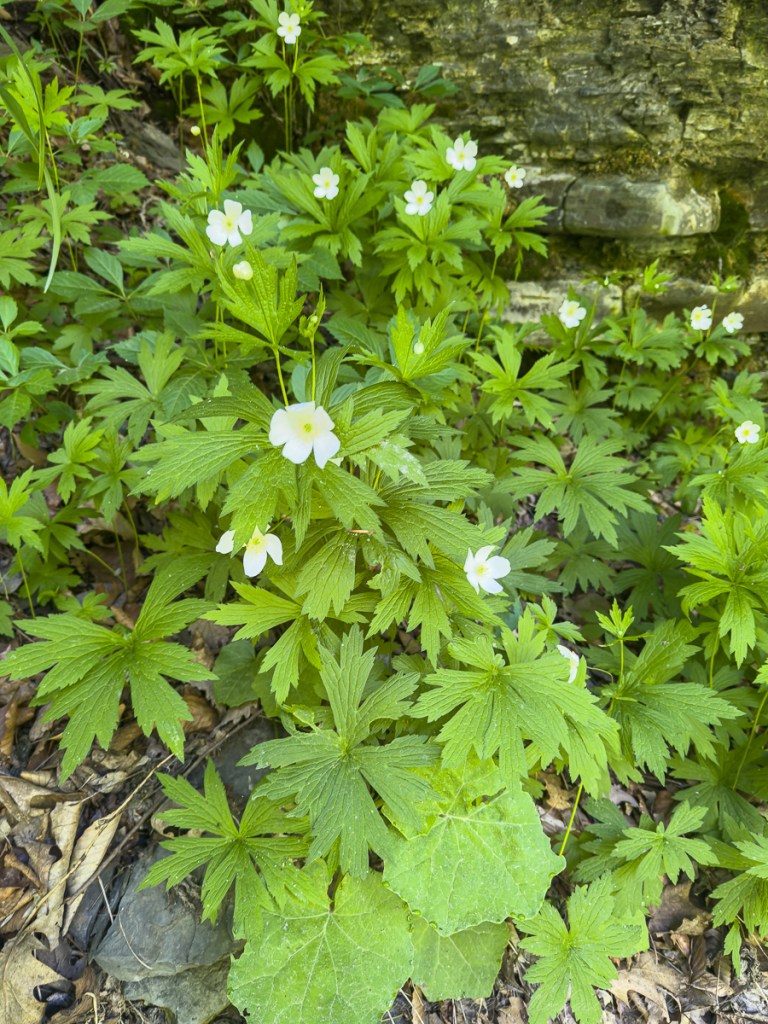
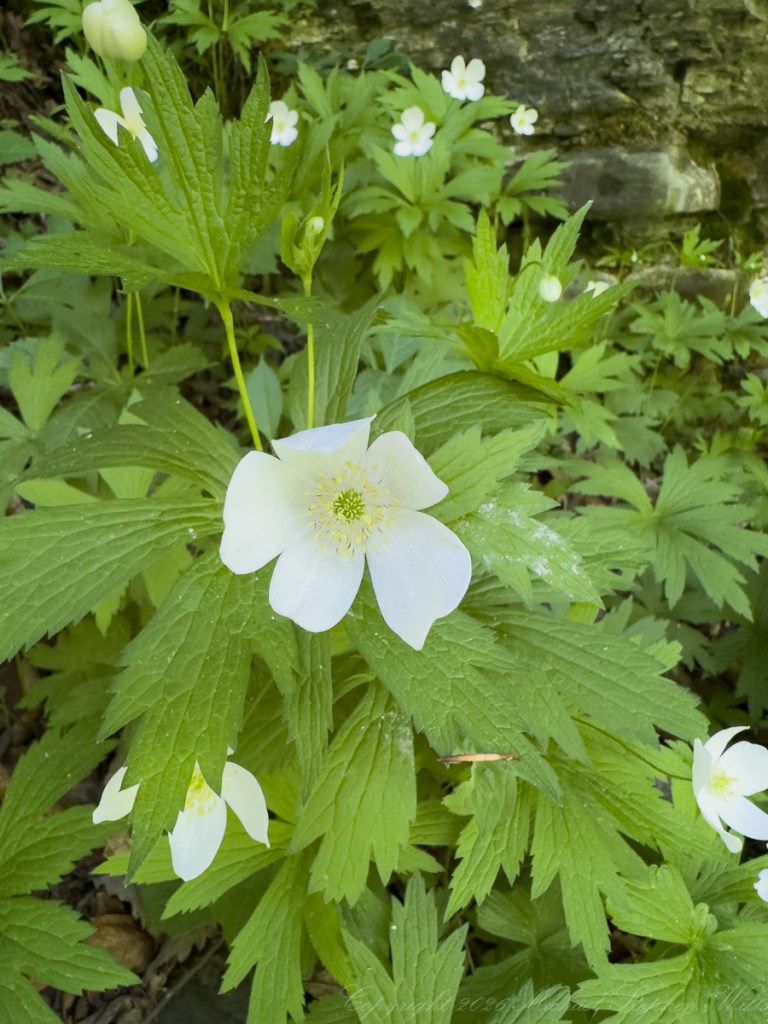
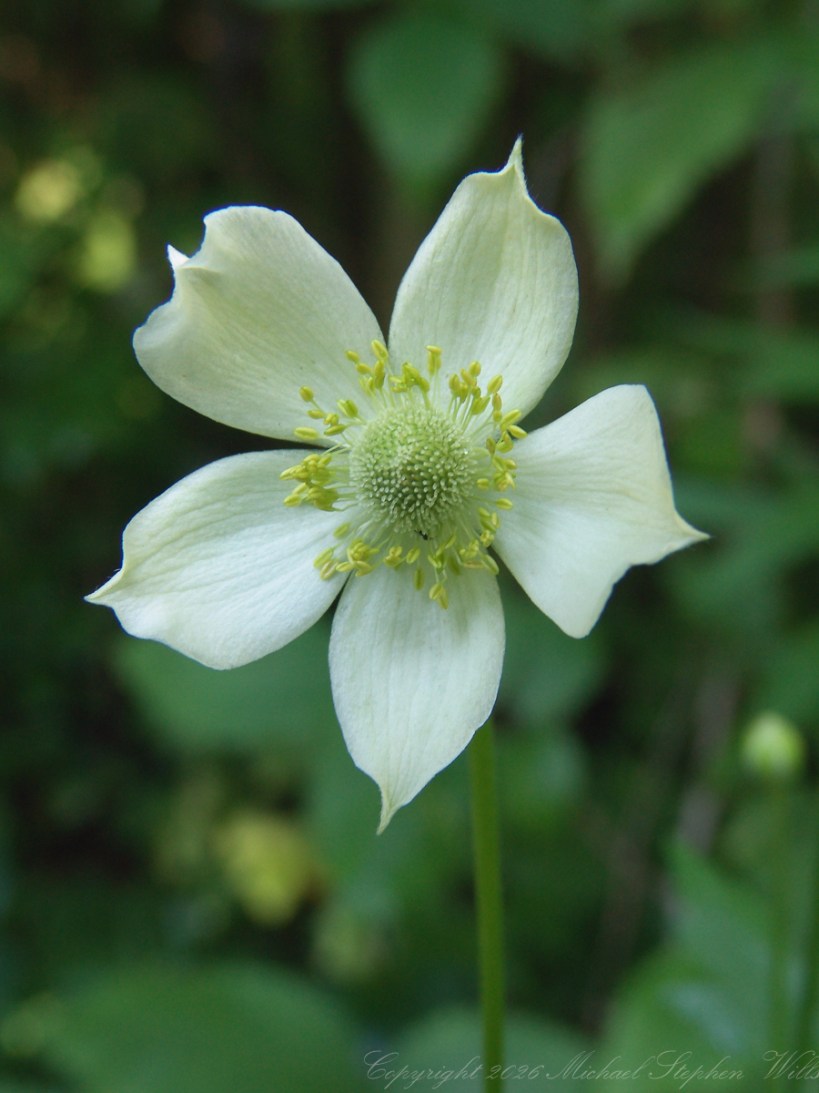
More than twenty years later, on June 13, 2026, the photographs from Robert H. Treman State Park near Ithaca offer another kind of seeing. These images, made with an iPhone 14 Pro Max, show Canada anemone, Anemonastrum canadense, along the Gorge Trail. The style is wider, more immediate, more ecological. Instead of isolating a single flower in formal portrait, the camera gathers the colony: white blossoms scattered among sharply cut leaves, stone wall, leaf litter, and the living green of the gorge. The plant is here a constellation at ground level.

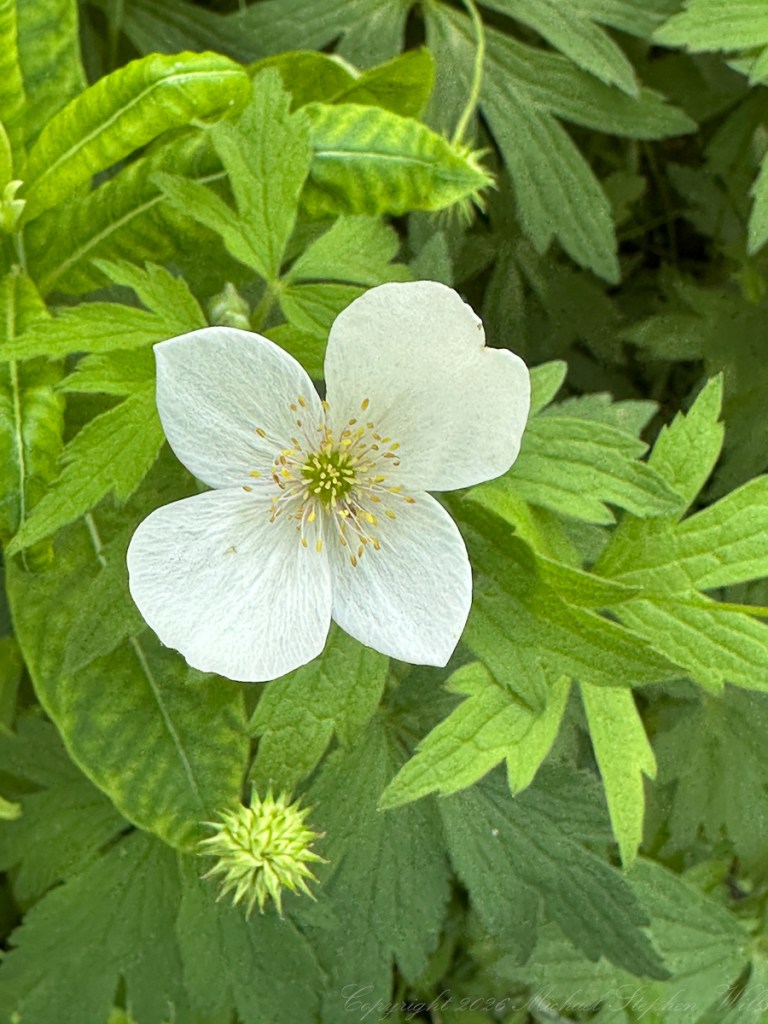
These photographs from the Gorge Trail of Robert H. Treman park have the fluency of a walk. They bring us into the place where the flowers grow, letting the eye move from blossom to leaf, from wall to moist soil, from one white face to another. In the close views, the Canada anemone opens with a rounder, simpler grace than the thimbleweed: white petals surrounding a modest green center and delicate yellow anthers. In the wider frames, its leaves make a bright, serrated fabric over the ground, a many-handed greenery receiving the light.

The contrast between the two sets is also a contrast between eras of photography. The Sony images feel like field studies made with ceremony: tripod, fixed attention, a single subject lifted from the woodland dimness. The iPhone images feel like discoveries carried in the hand, the eye moving freely through a living patch of plants. One approach gives us the flower as emblem; the other gives us the flower as citizen of a community. Together they make a fuller truth.

Across a twenty-one-year span, the technology changed dramatically. The 2005 Malloryville series has the patient, close-focus attention of a dedicated camera: ISO 64, small aperture, long exposures, the photographer leaning into stillness. The 2026 Treman images arrive through a phone camera, quick and bright, able to record both blossom and habitat with effortless clarity. Yet the flowers themselves refuse to become dated. These anemone are older than both cameras and indifferent to their sophistication. It keeps its own calendar: bud, bloom, seed, root, return.

Yet the kinship between the plants persists. Both hold white blooms above finely divided leaves. Both belong to the cool, green margins of the Finger Lakes landscape. Both take the ordinary materials of summer, water, shade, stone, soil, and passing light, and make from them a brief astonishment. The thimbleweed raises its solitary green future on a long stem. The Canada anemone spreads its brightness in company. One is a sentence written upward; the other, a page of scattered stars.

The wonder of these anemone is partly structural. Their “petals” are actually petal-like sepals, often five, sometimes more, white and slightly irregular, as if each flower has been hand-torn from light. The yellow stamens ring a green central cone, a small workshop of pollen and future seed. Insects visit for what the flower offers, while the plant asks only for suitable ground and enough room to run. It is not timid. Gardeners know they can spread vigorously, but in the wild that vigor reads differently: not aggression, but insistence. It is the plant saying, “Here is moisture, here is light, here is my chance.”

The photographs also show how much of wildflower beauty lies in context. The pristine frontal bloom is lovely, yes, but so is the closed bud held among vertical stems; so is the aging seed head with spent sepals hanging like weathered pennants; so is the colony rising from a gorge-side floor. Wonder does not reside only in peak bloom. It lives in the before and after, in the green machinery of leaves, in the “almost,” the “not yet,” and the “still becoming.”

To look at the anemone in this way is to be reminded that native plants are actors in the ecological drama of a place: stabilizing soil, feeding insects, responding to light gaps, marking moisture, stitching disturbed edges back into life. Their beauty is functional, and their function is beautiful. A wildflower is never only its moment of bloom. It is bud and blossom, seed and stem, place and weather, memory and return.

These photographs understand that. They show not just flowers, but the disciplined patience of plants: the hush before opening, the radiance of full display, the quiet labor after beauty has done its visible work. In Malloryville, a white flame becomes a green lantern. At Treman, small moons gather beside the stone. And through both, the green world keeps speaking in its oldest memorable phrase: nothing delicate is merely fragile.

Click me to visit Michael Stephen Wills Online Finger Lakes Gallery.

Enter your email to receive notification of future postings. I will not sell or share your email address.
A June Meditation at Houston Pond in Cornell’s F.R. Newman Arboretum

A June meditation at Houston Pond in Cornell’s F.R. Newman Arboretum, where water lilies, turtles, cattails, and summer light gather into green silence.

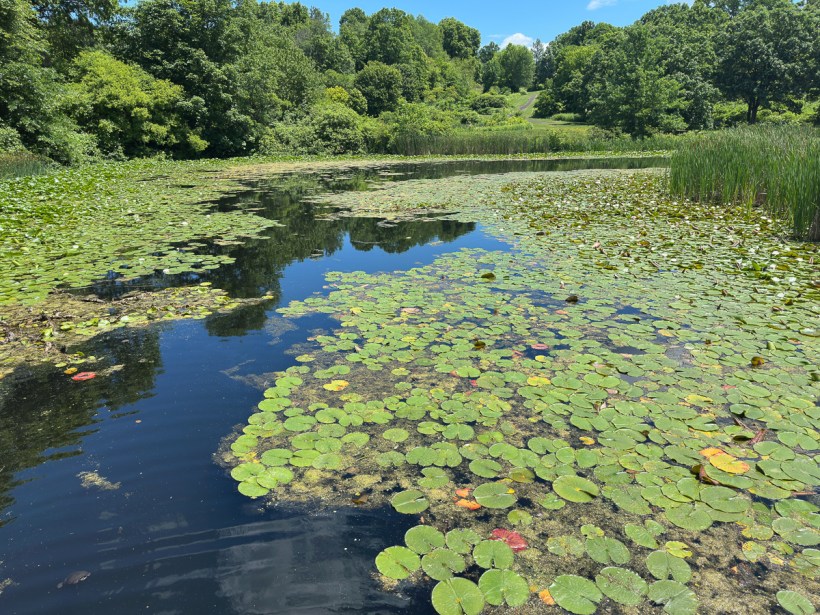
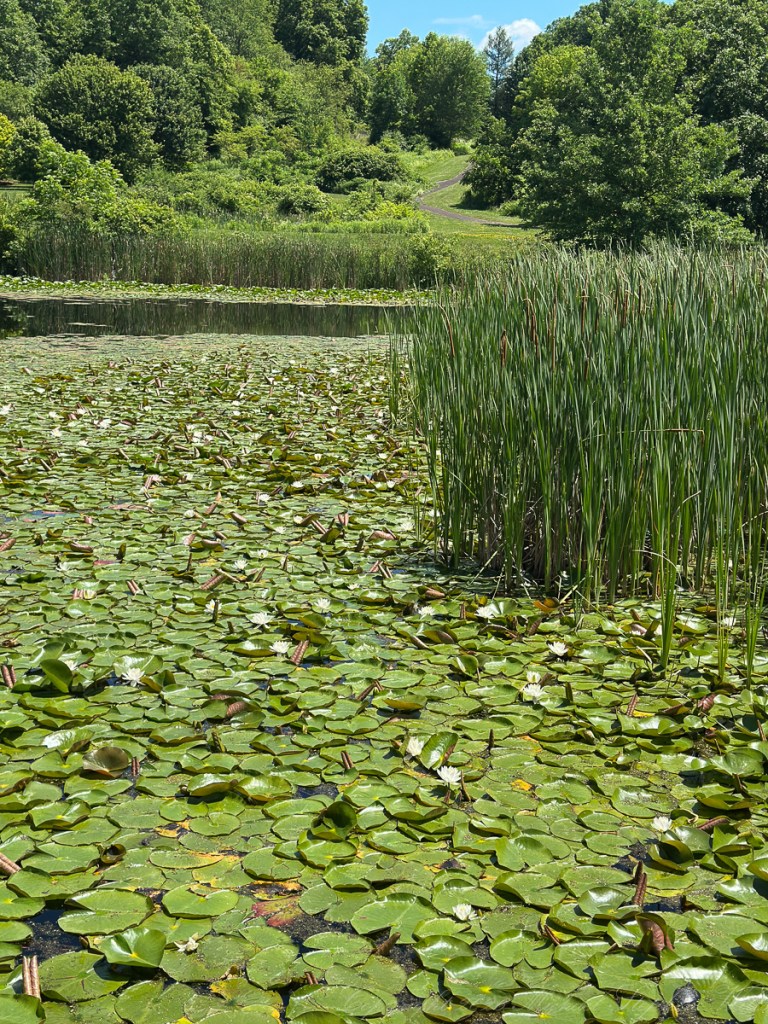
On June 21, 2026, just after noon, Houston Pond of the F.R. Newman Arboretum held the day in a green, breathing stillness. The sun stood high over Ithaca, bright enough to polish every lily pad, every cattail blade, every glossy fold of leaf. This light of the first summer day entered the scene, becoming part of the water, part of the trees, part of the quiet intelligence of the pond.

Houston Pond

The pond was nearly covered with lily pads, a floating mosaic of green circles, some fresh and whole, others freckled, torn, yellowing. Between them, dark water opened in irregular channels, deep blue-black, mirroring trees and sky. These openings felt like pauses in a long sentence, small places where the pond allowed itself to breathe. Around the margins, cattails stood in dense ranks, upright and watchful, like a congregation listening to the sermon of light.

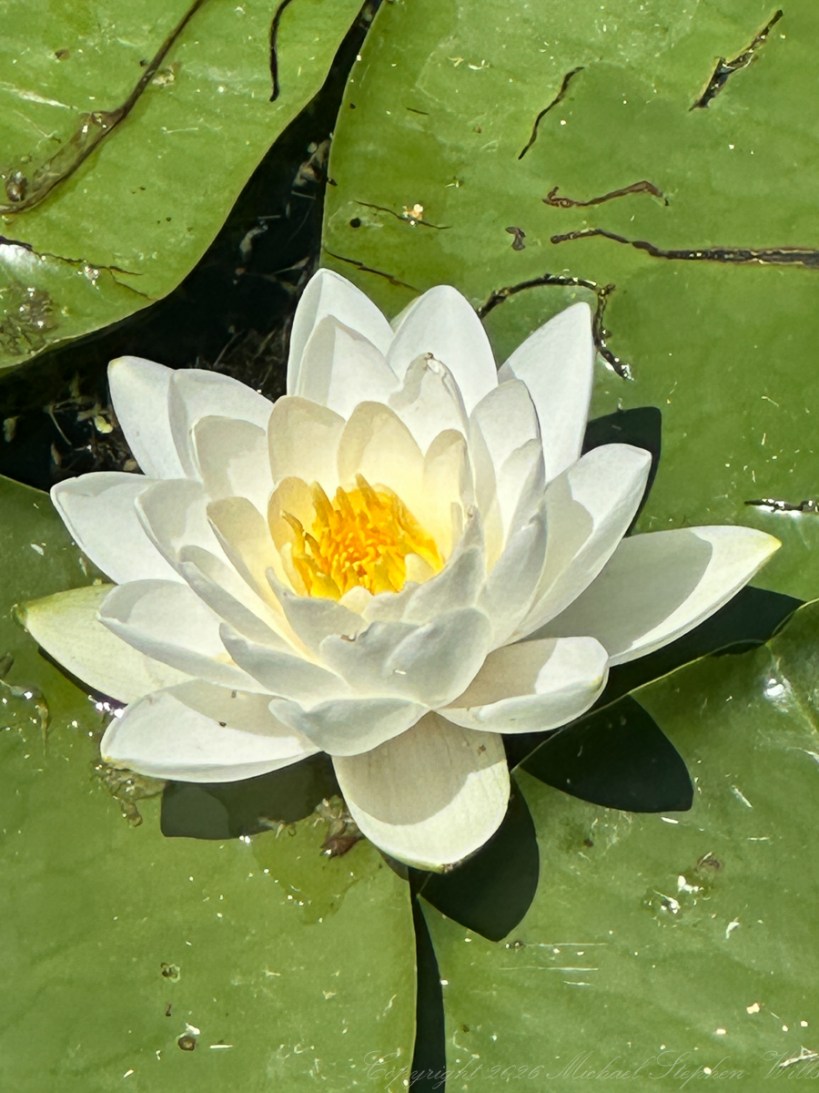
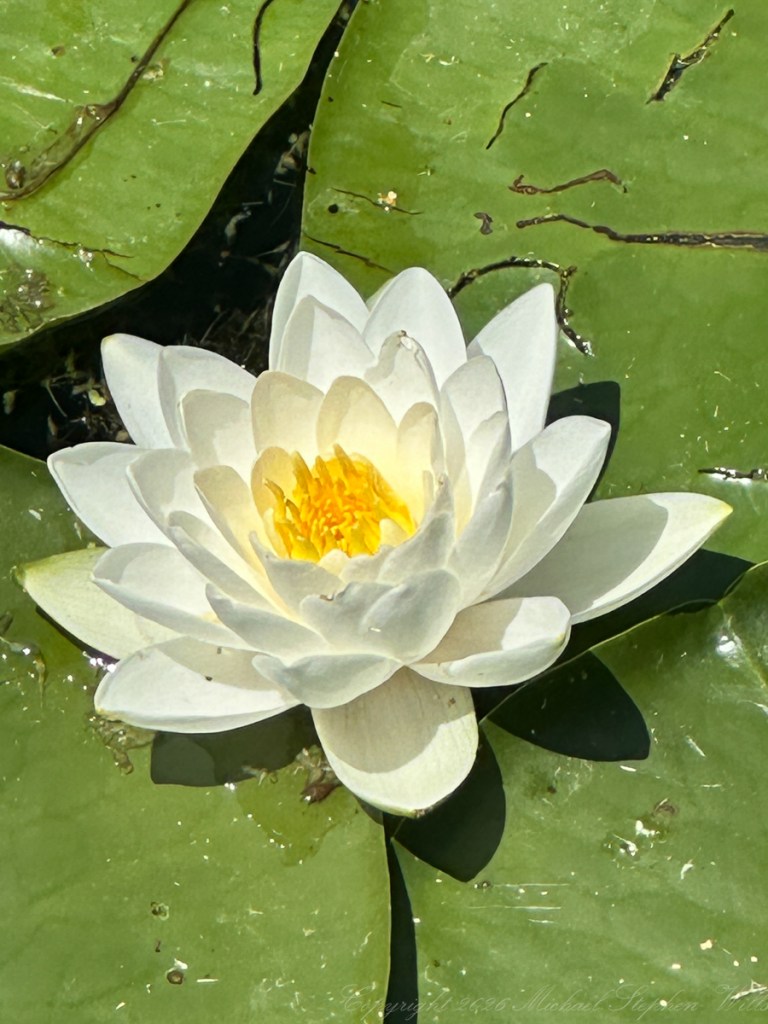
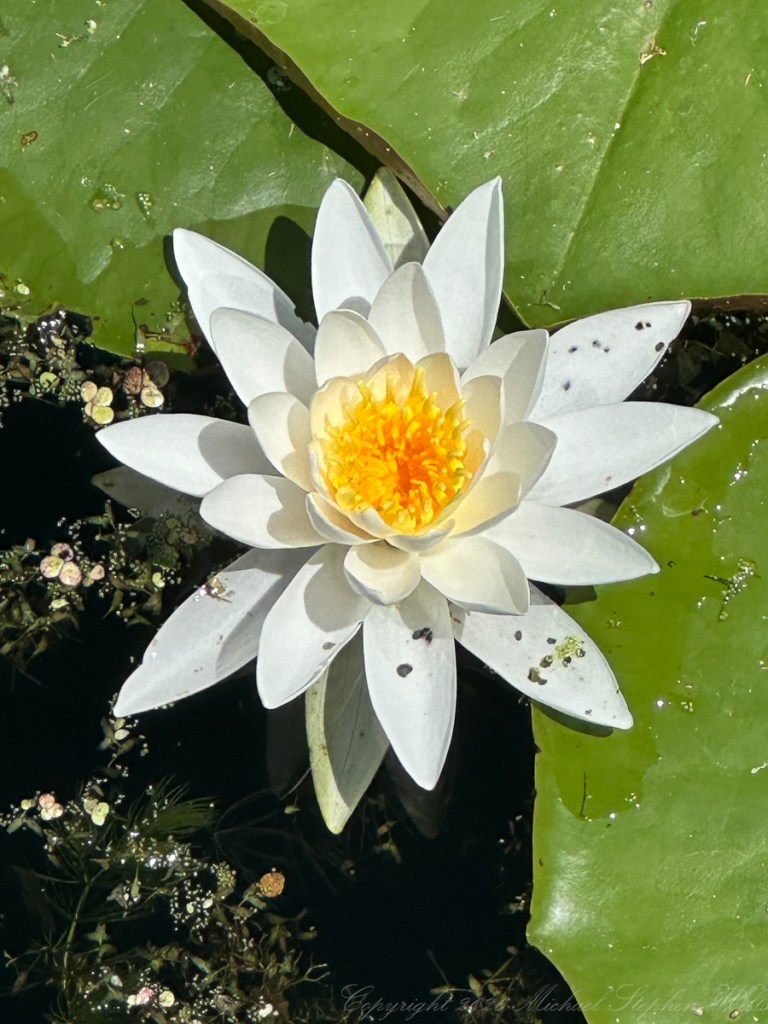
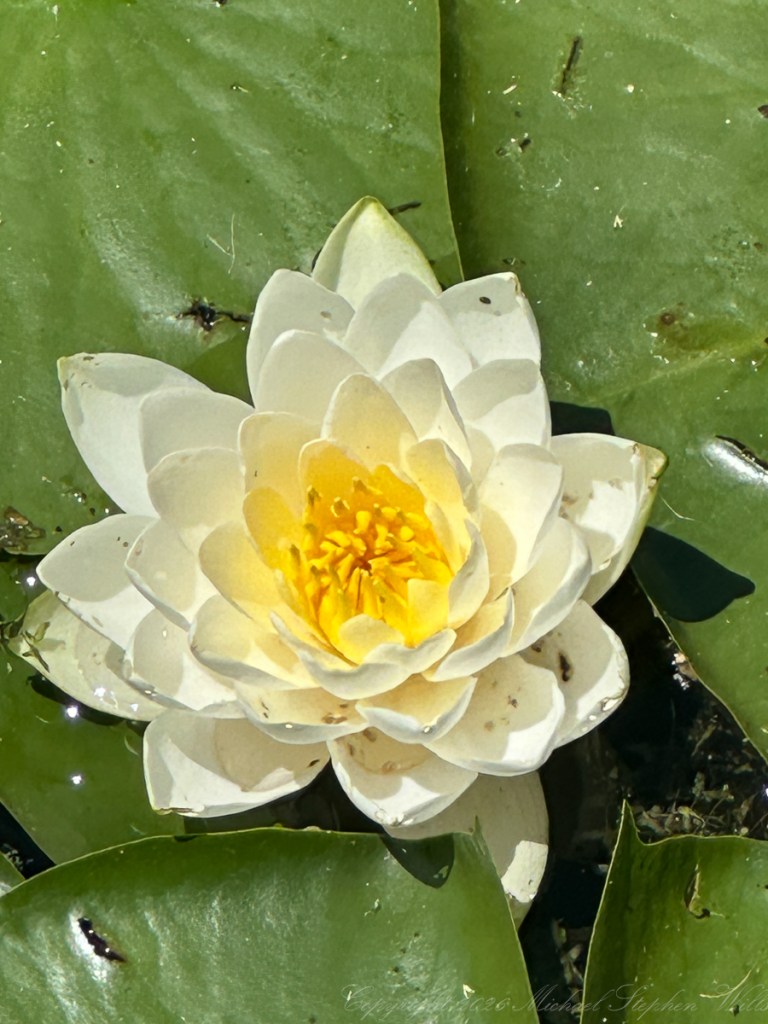
At the center of this water-world, white lilies opened with calm authority. Their petals rose cleanly from the surrounding abundance, white against green, flame-hearted with yellow. Each flower seemed impossible and inevitable at once: born from mud, rooted in darkness, arriving as a cup of light. A water lily is one of nature’s great acts of persuasion. It asks us to believe that beauty can rise without apology from what is hidden, tangled, and submerged.

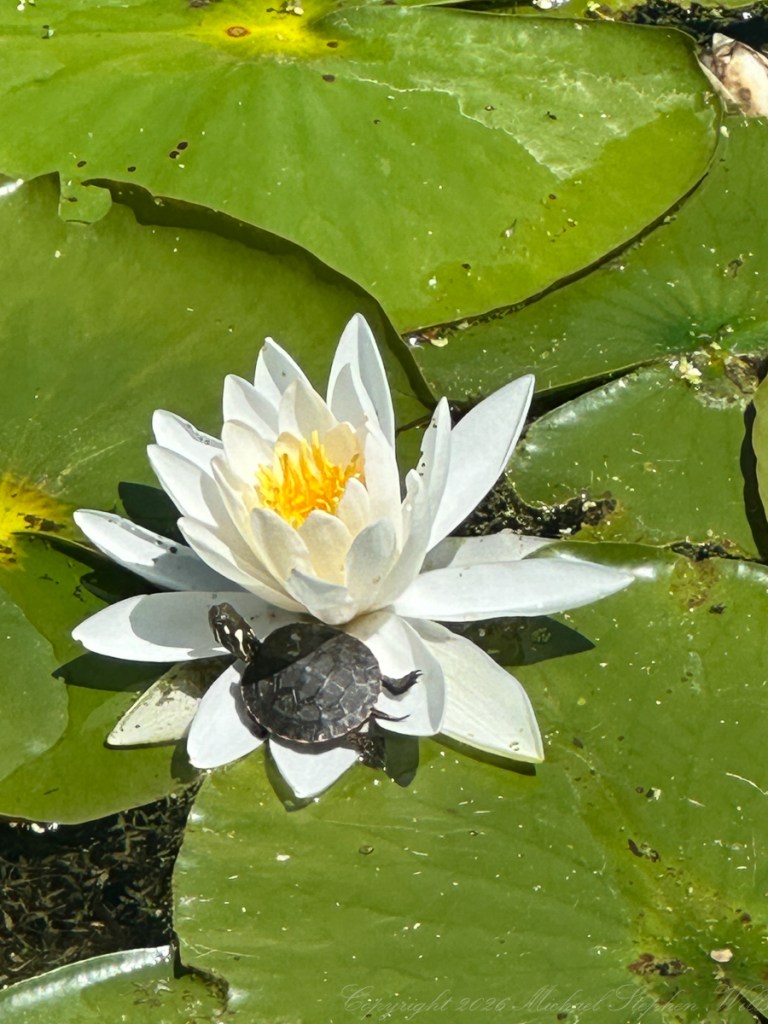
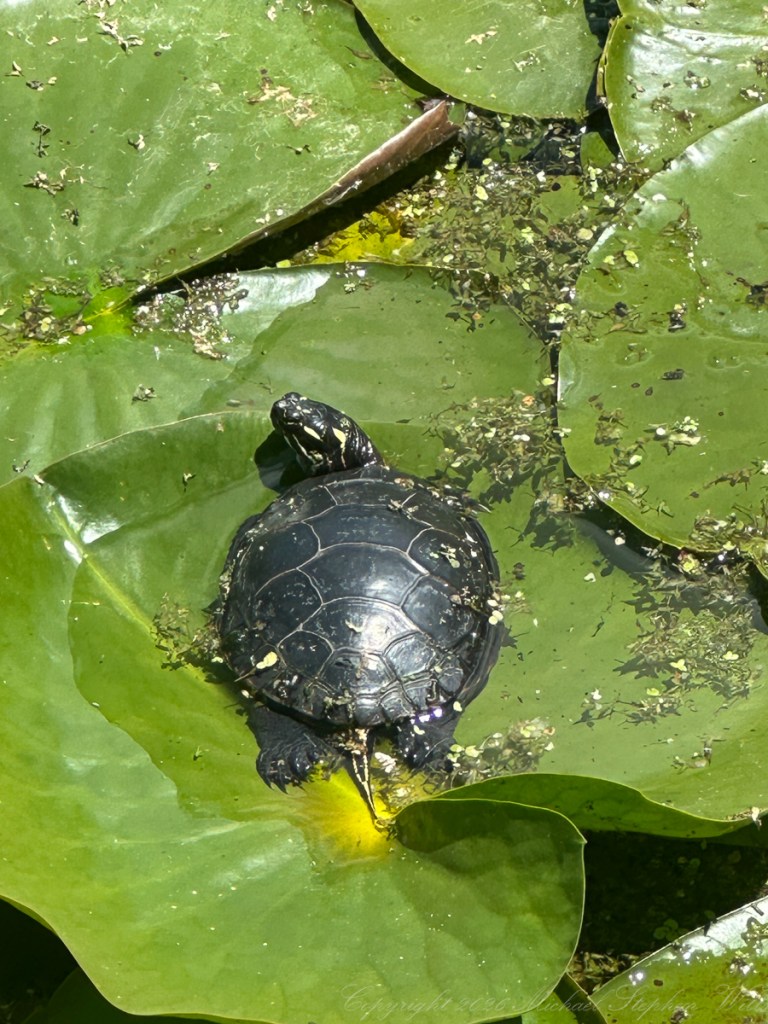
One blossom carried an unexpected visitor. A small turtle had climbed onto the flower, its dark shell resting against the white petals, one leg extended in complete confidence. The scene was both comic and profound. The lily was a raft, a chapel, a sun-warmed throne. The turtle seemed to understand what people often forget: beauty is not diminished by being used. It is completed by being entered. The flower did not become less beautiful because the turtle climbed aboard. It became more of the world.

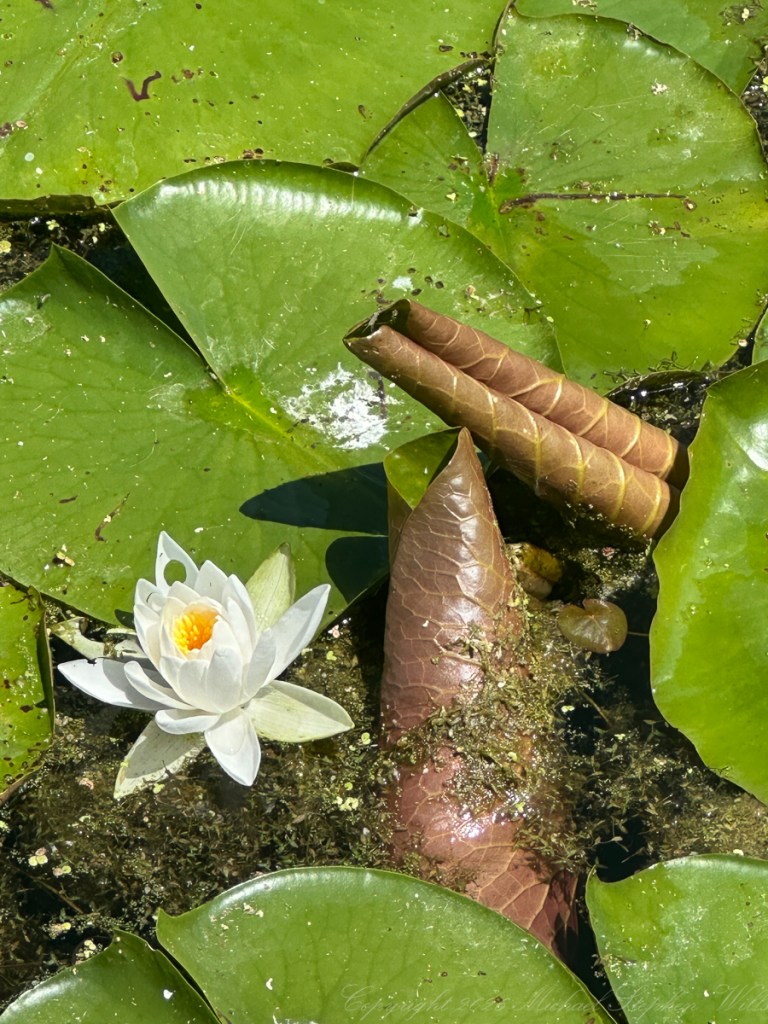
Nearby, new lily leaves still held their rolled shapes, brown and burnished, rising like curled scrolls from the water. They had not yet flattened into the broad green plates surrounding them. In their tight forms was the promise of unfolding, the secret grammar of growth. Around them, older leaves floated with scars and stains, reminders that even in June’s fullness the season carries time within it. Summer is not a fixed paradise. It is motion disguised as abundance.

Beyond the pond, the arboretum rose in layers: meadow, shrubs, cattails, dark trees, open sky. A path climbed away through the greenery, pale and narrow, inviting without insisting. The woods stood dense and generous, every tree leafed out in the opulence of early summer. Clouds drifted over the blue, white and soft, their reflections briefly caught in the pond’s darker openings. The whole place seemed balanced between cultivation and surrender. Human hands had shaped the arboretum, named its paths, protected its plantings, opened it to walkers and watchers. Yet the pond itself answered in its own language: water, root, wing, shell, blossom, shadow.

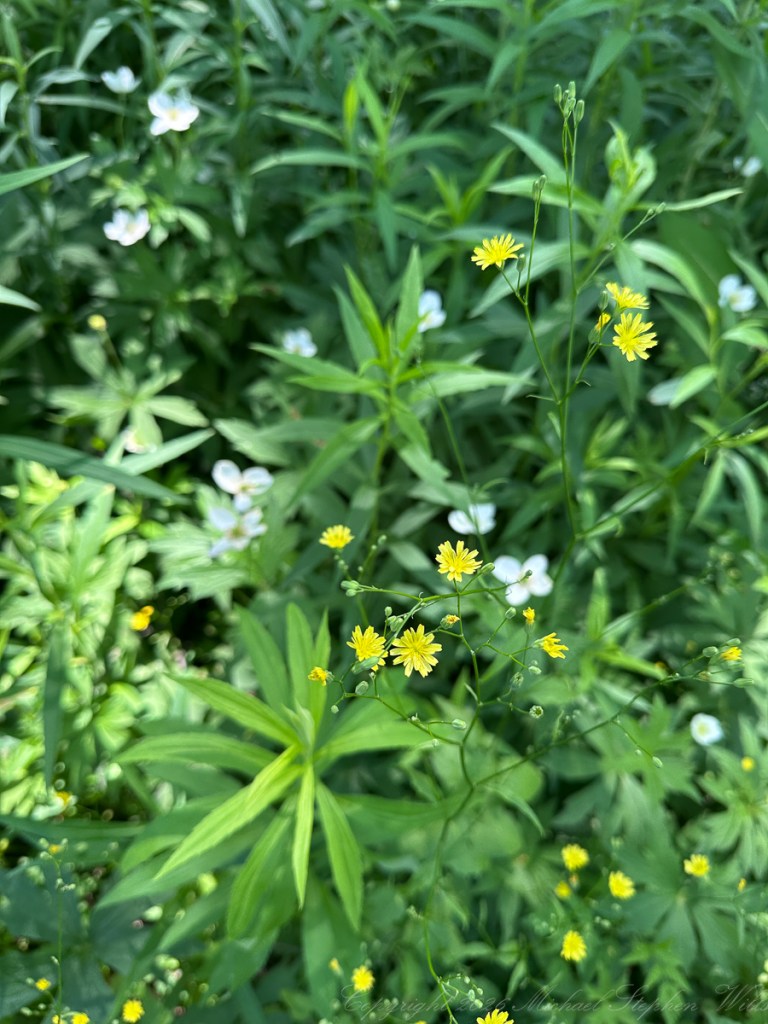
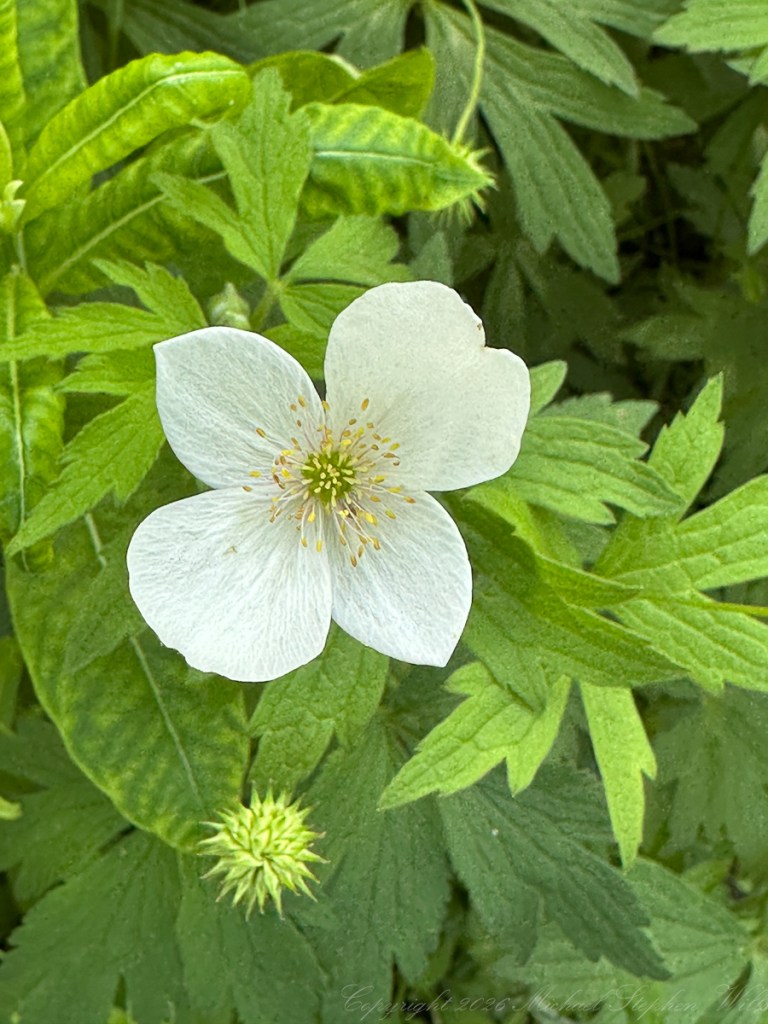
Away from the broad view, the smaller flowers made their quieter claims. Tiny yellow blooms lifted themselves on fine stems among the leaves, little sparks in a green hush. White blossoms hovered behind them, half blurred, like memories of spring still lingering in the understory. A single white flower opened over sharply cut leaves, its petals simple, its center delicate with stamens. It had none of the dramatic presence of the water lilies, but it possessed a different power: the power of being almost missed.

That is one of the arboretum’s gifts. It teaches scale. First the eye takes in the pond, the sweep of trees, the blue sky, the mass of cattails. Then attention narrows. A petal. A turtle’s foot. A torn leaf edge. A yellow flower no larger than a thought. The place asks us to look widely, then closely, then widely again. It trains the mind away from haste. It reminds us that wonder is not always a thunderclap. Sometimes it is a small white bloom waiting at ankle height.

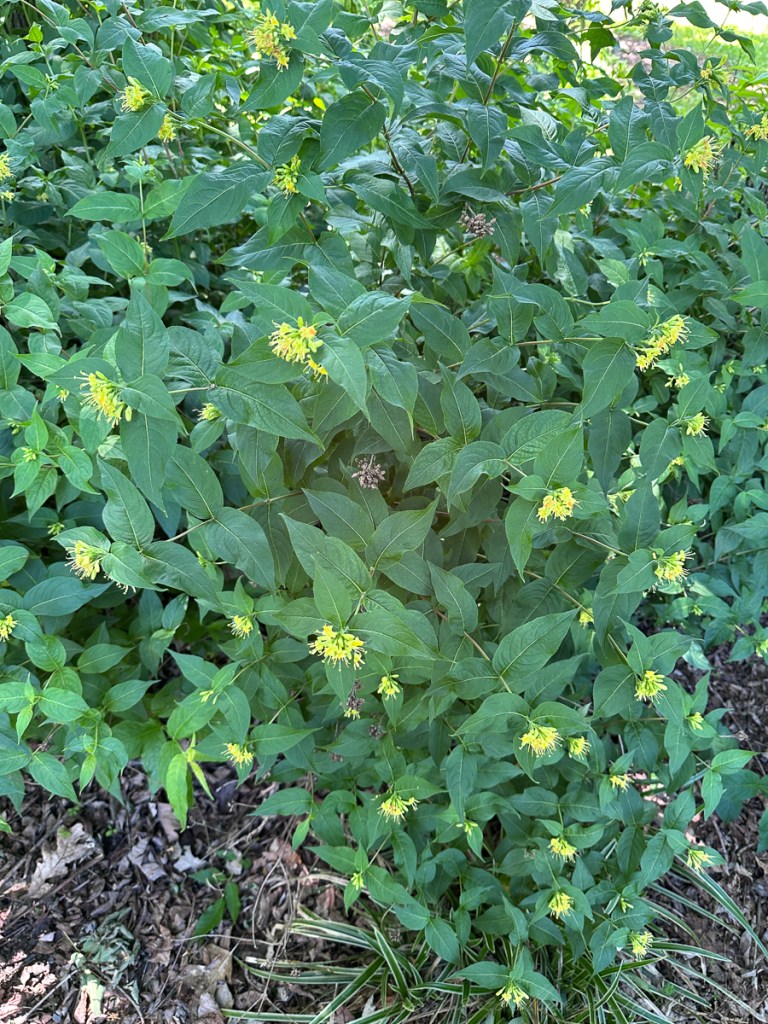
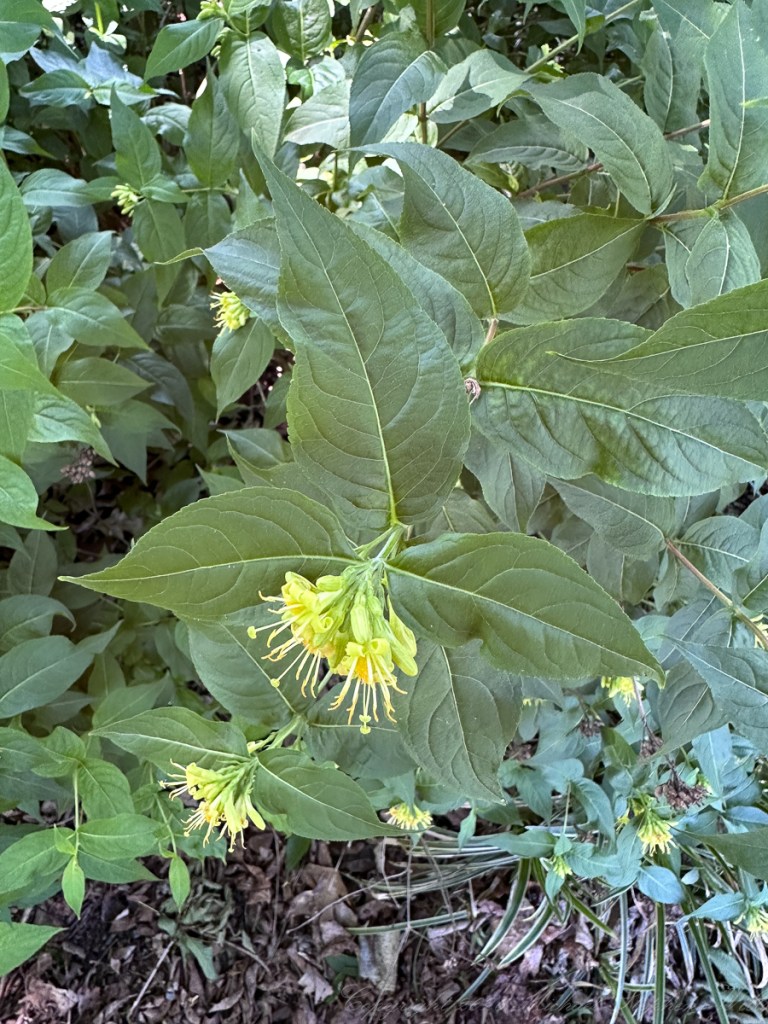
Northern Bush Honeysuckle (Diervilla lonicera)

The yellow honeysuckle-like blossoms tucked among broad leaves offered another kind of intimacy. Their pale tubes and slender filaments seemed made for visitors more delicate than us. They belonged to the hidden commerce of June: pollinators, fragrance, pollen, fruit-to-come. Much of what matters in a place like Houston Pond happens below notice. Roots thicken. Insects navigate. Turtles choose their sunning places. Flowers open and close according to laws older than memory. The pond is never still, only patient.

Northern Bush Honeysuckle (Diervilla lonicera)

Standing there, I felt the day gather itself into one phrase: green silence, golden heart. The white lilies held the light. The cattails guarded the edges. The turtle rested without concern for symbolism. And all around, the arboretum offered its deep reassurance: life does not need to announce itself loudly to be complete.

June in the F.R. Newman Arboretum is a state of attention within a season. Houston Pond receives the sky, feeds the lilies, shelters the small dark bodies of turtles, and gives back a vision of the world refreshed by reflection. To walk there at midday is to be reminded that the ordinary is only ordinary until we stop long enough to see it. Then the pond becomes a mirror with roots, the lily a white flame on dark water, and the whole green world a quiet invitation to belong.

Click me to visit Michael Stephen Wills Online Finger Lakes Gallery.

Enter your email to receive notification of future postings. I will not sell or share your email address.
Discovering Trillium Species: Beauty in Diversity

A reflective springtime journey through Robert H. Treman and Fillmore Glen State Parks reveals the quiet beauty and botanical mysteries of red and white trilliums—exploring their species differences, color shifts, and the wonder of their ephemeral blooms.

Click me for my Getty flower photography.

Late April – Robert H. Treman State Park

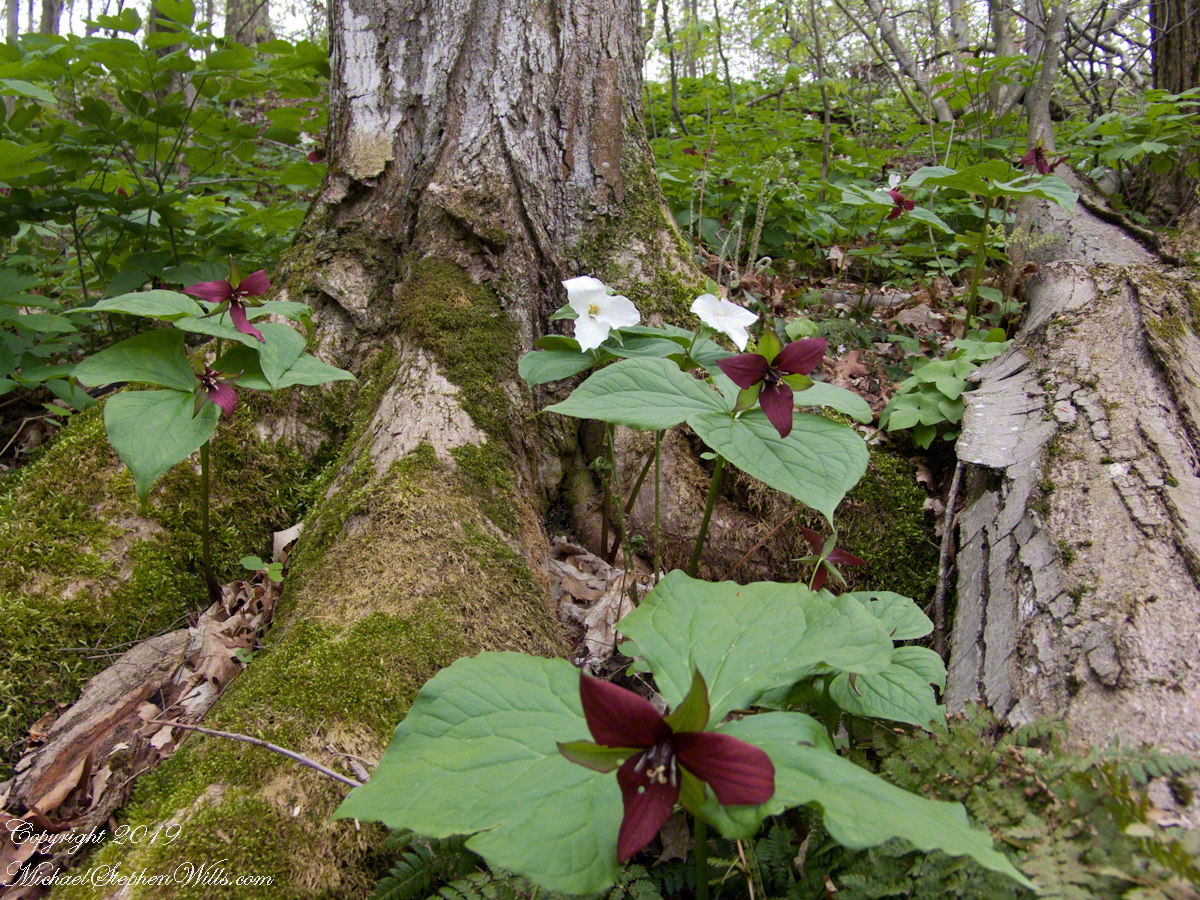
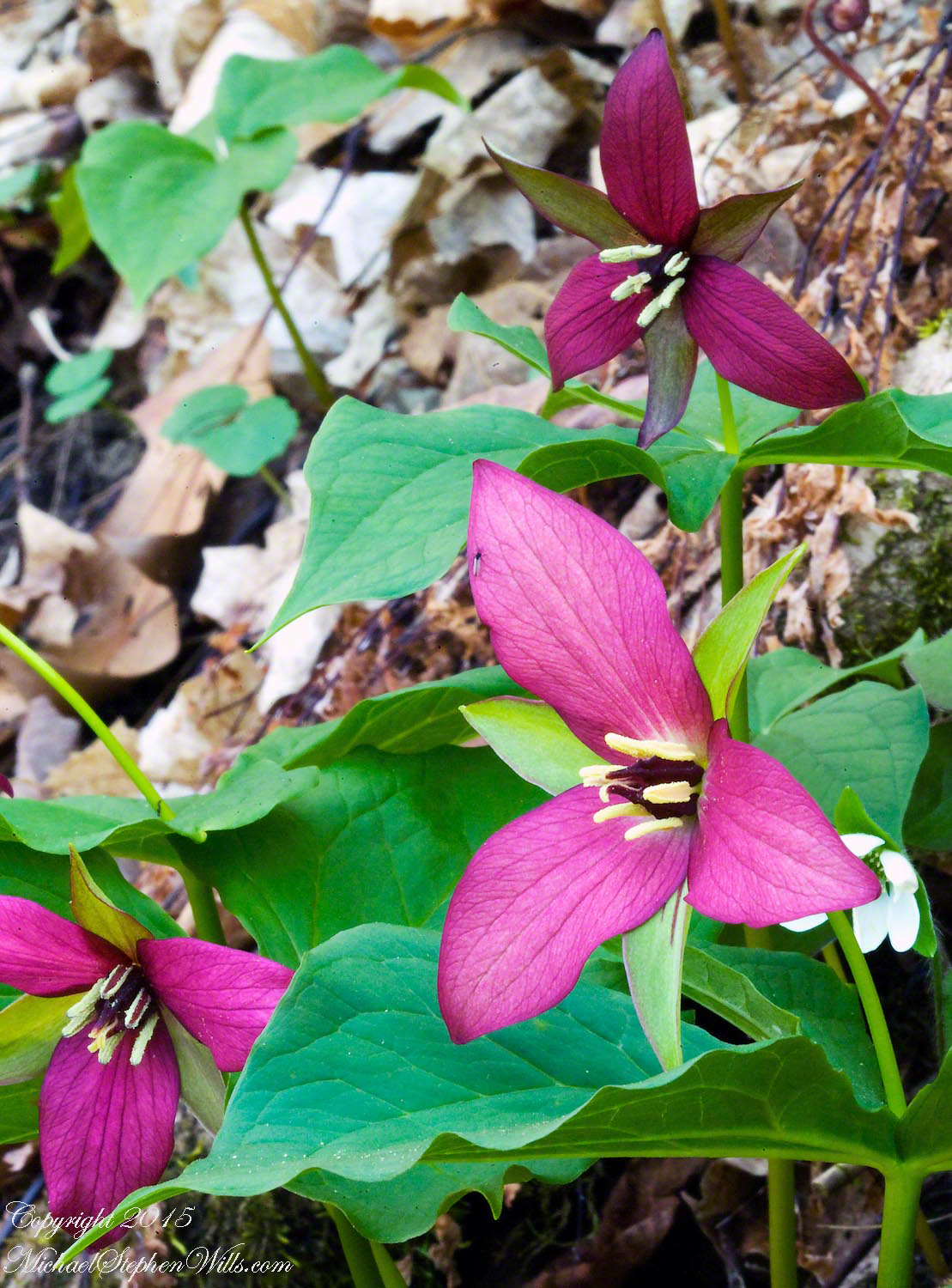
I follow a winding trail through hemlock and maple woods, the air cool and earthy after a spring rain. Under the canopy of budding leaves, I spot a flash of deep burgundy among the moss. Kneeling, I find a red trillium blooming at the base of an old oak. Its three velvety petals are a rich wine color against the green moss and damp leaf litter. A faint musky scent wafts from the flower – no wonder some call it “Stinking Benjamin.” Nearby stands another trillium, but this one is a pristine white star facing upward toward the light. Its broad petals have a gentle wavy edge and no noticeable odor. The red flower droops modestly while the white one opens itself to the sky. Different in color and posture, I realize these are two distinct species1 sharing the same springtime stage.

Red trilliums (Trillium erectum) and white trilliums (Trillium grandiflorum) thrive side by side on the mossy roots of a tree. The maroon “wake robin” flowers nod toward the earth, while the white blooms stand upright to catch the light.

Seeing the red and white blooms side by side feels like meeting two woodland siblings – each unique yet part of the same family. The white trillium is almost luminous in the forest gloom, while the red trillium blends into the shadows with its dark hues. Both emerge from the soil after long, cold months, timing their bloom for the brief sunny window before the trees fully leaf out. Knowing how slowly these perennials grow and how long they live makes their yearly return even more special to witness. Their resilience in coming back each spring fills me with quiet awe.

Early May – Fillmore Glen State Park

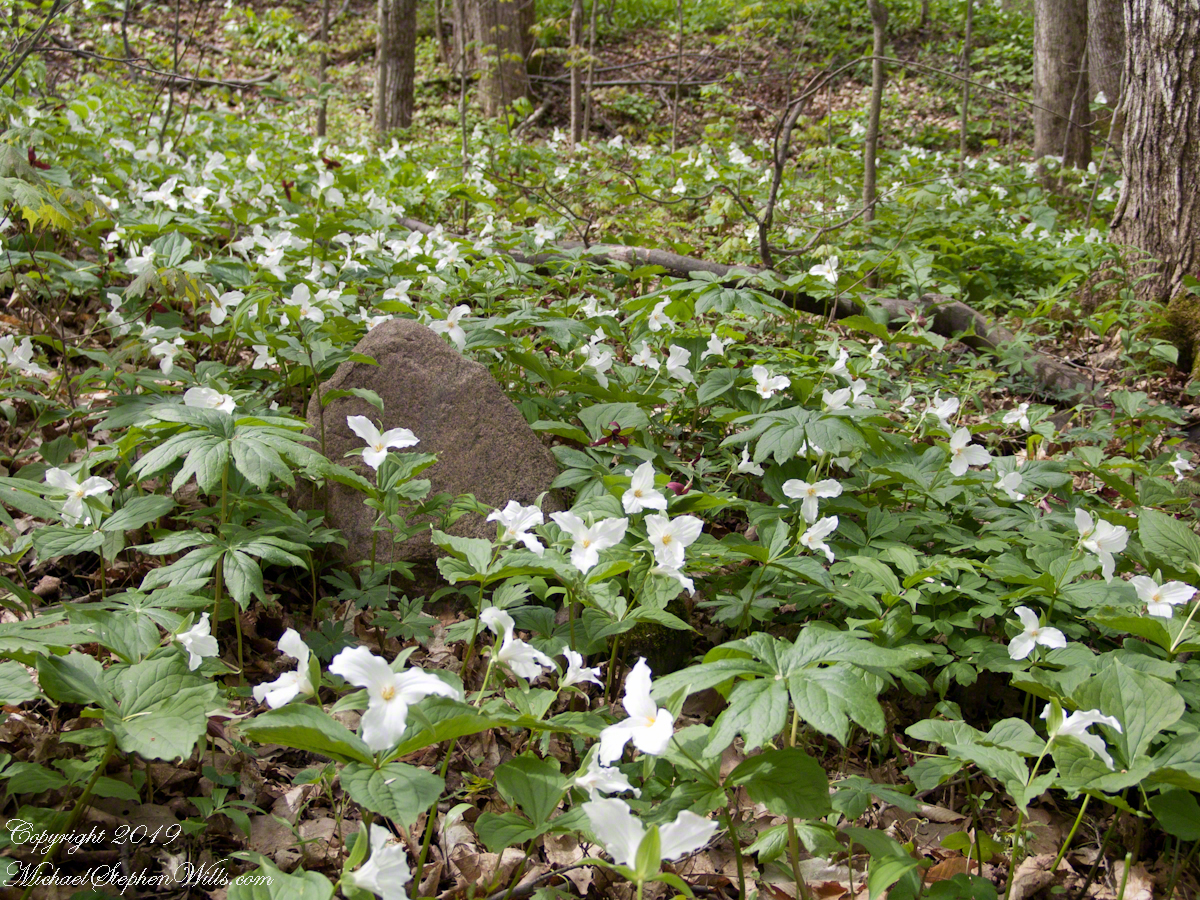
A week later, I wander the lush gorge of Fillmore Glen. The trail is alive with birdsong and the rush of a creek. Dappled sunlight slips through the greening canopy, illuminating patches of the forest floor. Rounding a bend, I catch my breath — the hillside ahead is blanketed with hundreds of white trilliums, a breathtaking constellation of blooms across the ground that feels almost sacred. Careful not to tread on any, I step closer to admire them at eye level.

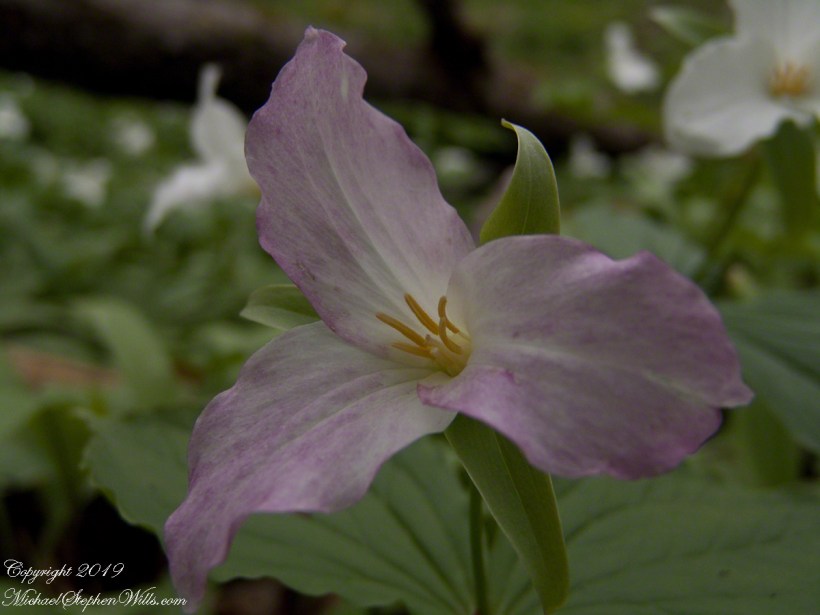
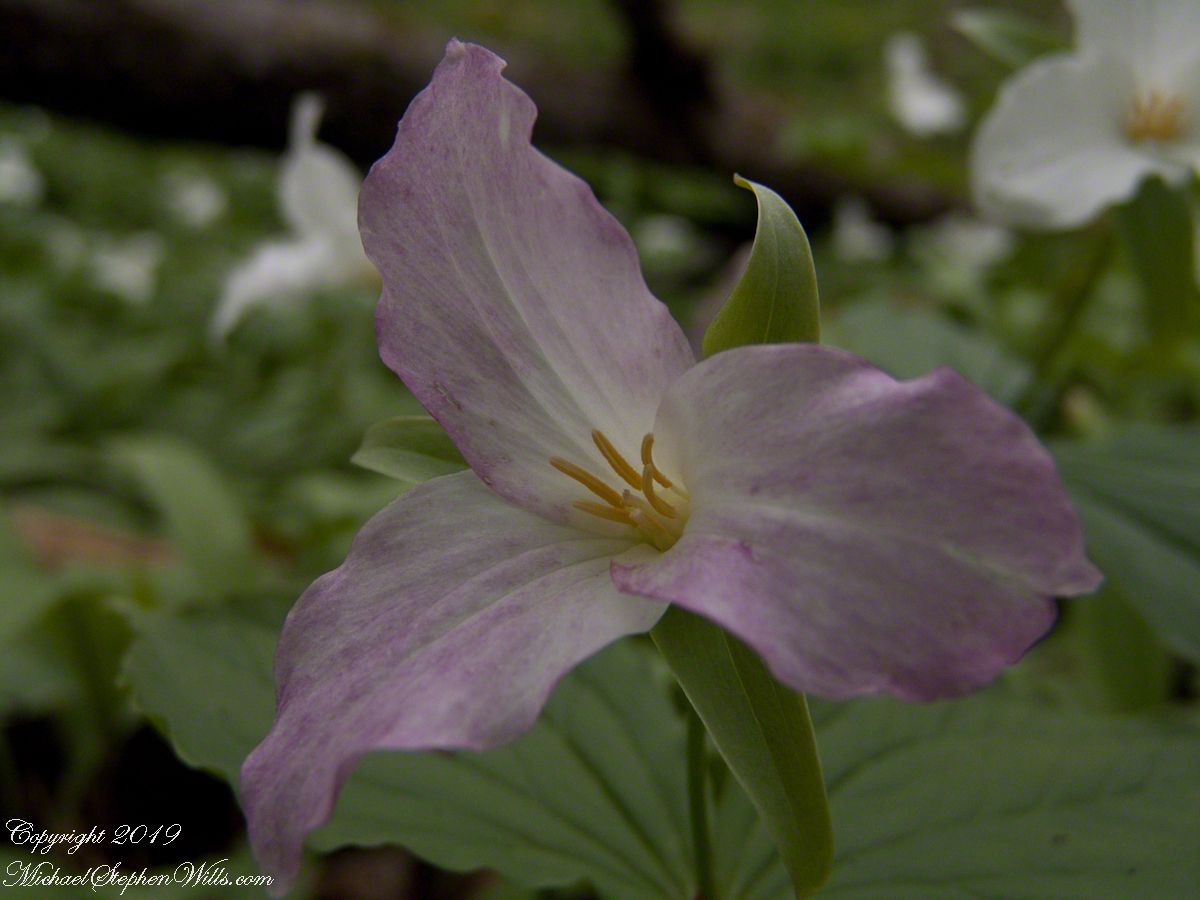
Up close, one large white trillium reveals a surprise: a delicate wash of pink across its aging petals, as if it were blushing. It’s known that after pollination the snow-white petals of Trillium grandiflorum often turn rose-pink with age2. Indeed, many blossoms here wear a faint pink tint, especially those that have been open for a while. This blush of maturity gives the colony a quietly celebratory air – fresh ivory blooms mingling with older siblings tinted softly rose.

The petals of a white trillium take on a soft pink blush as the flower ages, adding a new hue to the spring palette. Fresh white trilliums bloom in the background while older ones show a rosy tint.

In a shaded nook at the edge of the colony, a lone red trillium blooms among the white. I wonder if the red and white trilliums ever hybridize. I see no intermediate colors and recall that the white trillium rarely hybridizes with other species3. The red trillium, by contrast, can swap pollen with certain close relatives, yielding various forms elsewhere. But a true red–white cross never occurs here – each species keeps to its own.

Trillium bloom April through May in central New York State. I found these blooming on the rim of Fillmore Glen near Owasco Lake and the town of Moravia.

The red trillium even has a rare white-petaled form4 easily mistaken for its white-flowered cousin. I linger a bit longer among these graceful “trinity flowers,” my questions answered and my appreciation deepened. As I turn to go, a sunbeam breaks through and illuminates one last trillium by the trail, its white petals touched with pink. I smile, grateful for the chance to witness this woodland wonder.

Click me for another Trillium posting

Enter your email to receive notification of future postings. I will not sell or share your email address.
Footnotes

  1. Different species: Red trillium and white trillium are separate species (Trillium erectum and Trillium grandiflorum, respectively), distinguished by traits like flower orientation and petal shapeidentifythatplant.com.
  2. White petals turn pink: The large white trillium’s petals are pure white upon opening but gradually develop a rose-pink or purple tint as the flower agesnj.gov.
  3. Rare hybridization: Unlike some trilliums that hybridize readily, Trillium grandiflorum (white trillium) is not known to form hybrids with other speciesen.wikipedia.org. Trillium erectum can hybridize with its close relatives, but a red–white trillium cross is not observed in nature.
  4. White form of red trillium: Trillium erectum (normally red) has a variety with white petals, classified as T. erectum var. album, which can be mistaken for a white trillium at a glancemidatlanticnature.blogspot.com.