Hepatica at Fillmore Glen: Quiet Wonders Beneath the Leafless Trees

On a quiet April walk in Fillmore Glen State Park, I found Hepatica acutiloba blooming beneath leafless trees—small, luminous flowers that turned the still-brown woods into a meditation on patience, renewal, and grace.

On April 11, 2026, I walked Fillmore Glen State Park beneath trees still bare, their branches opening the woods to the cool, unguarded light of early spring. The forest had not yet put on its full green speech. Last year’s leaves still covered the ground in shades of russet and tan, and among them, close to the earth, I found Hepatica acutiloba beginning to bloom.

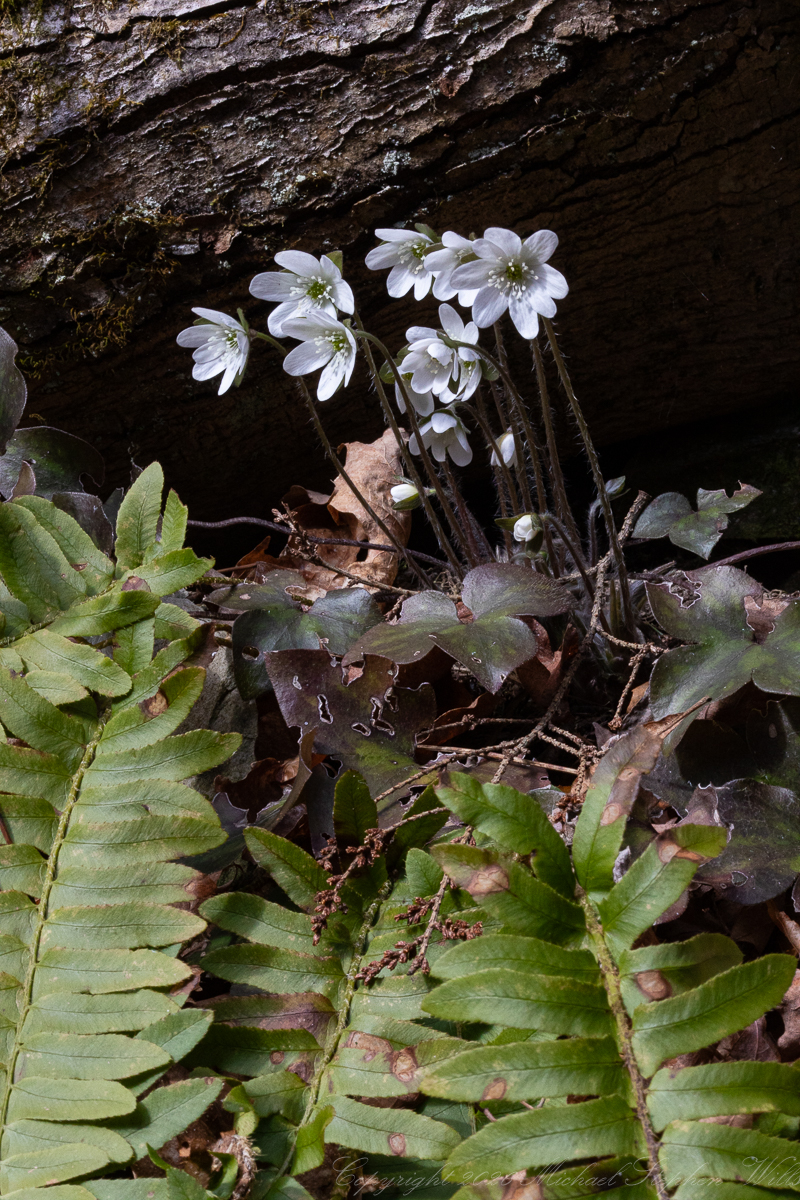
These are flowers that ask for slowness. No one hurrying through the woods would fully see them. I had to kneel, lower myself into their world, and let my eyes adjust to their scale. Only then did they begin to reveal themselves: first as closed buds, pale and self-contained, then as opened white blossoms shining from the leaf litter like small votives in the dim cathedral of the spring woods.

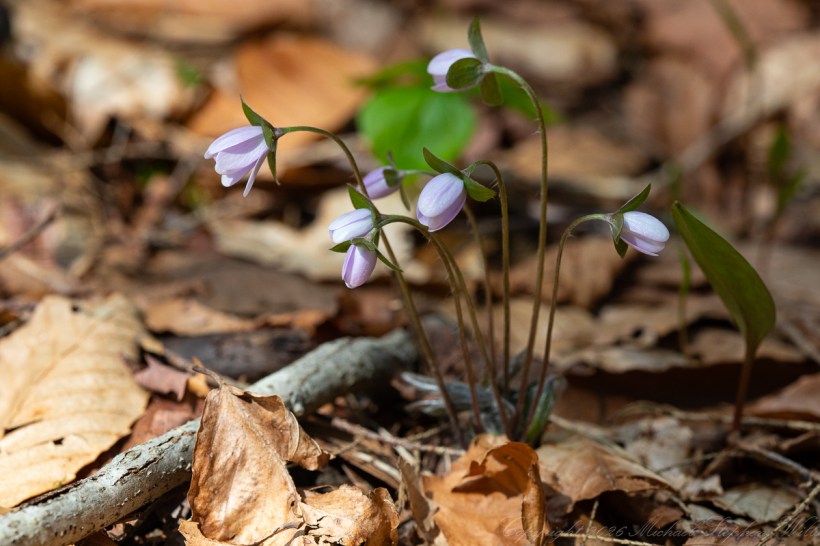
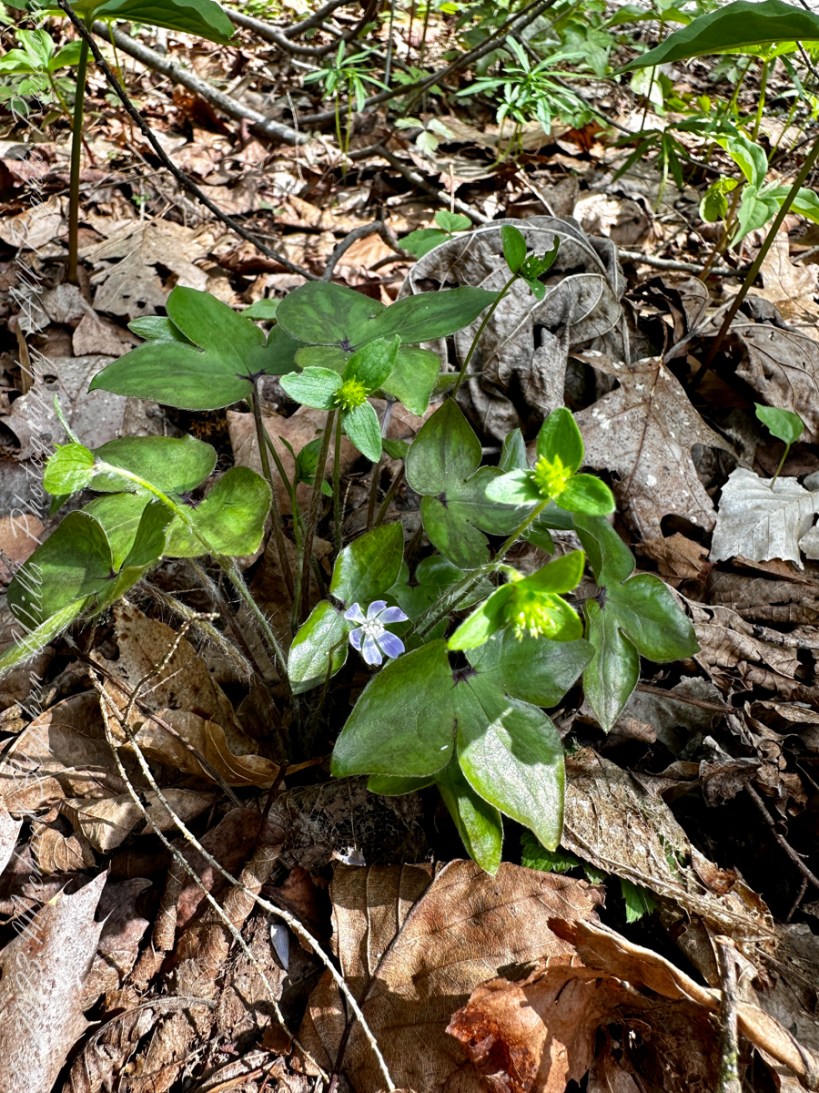
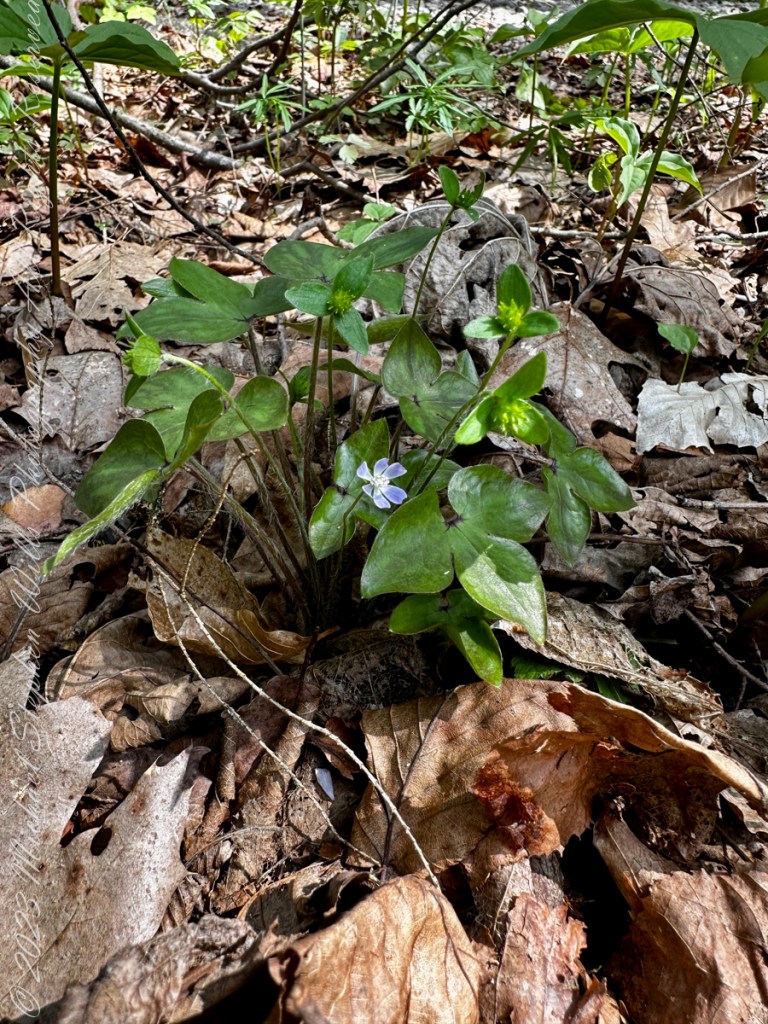
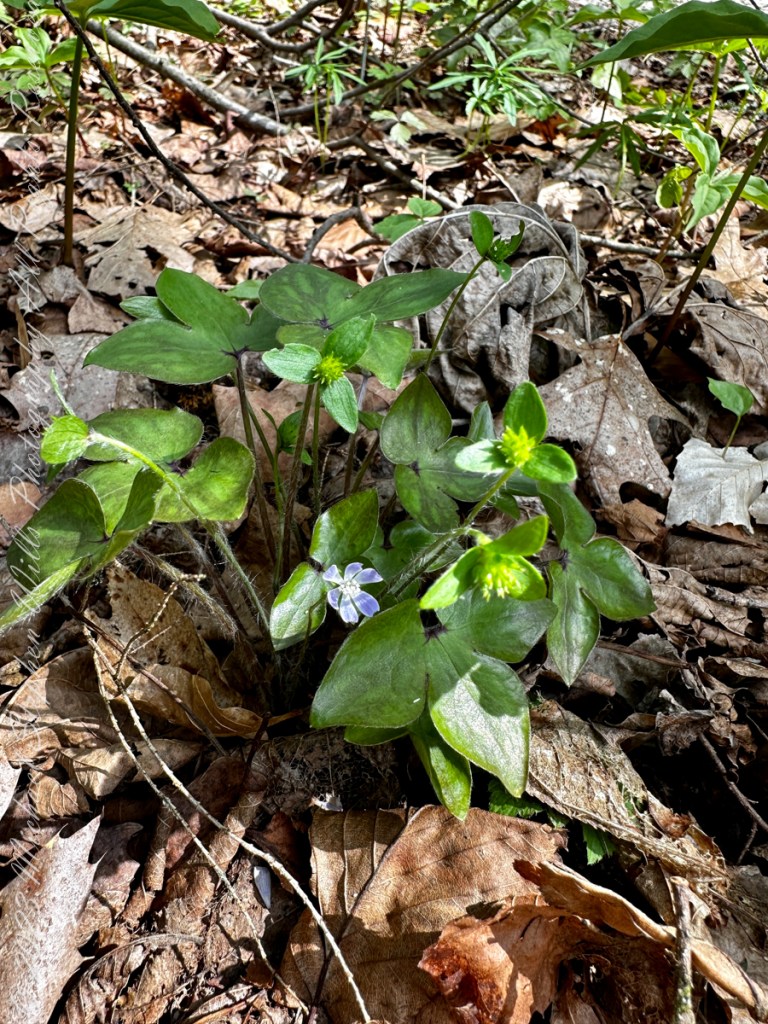
This flower was a light lavender blossoms, still closed, rising from the forest floor on a delicate stems. The sun had reached in, and I made the image handheld, steadying the camera on the ground. Even unopened, it seemed to hold light within itself, as though the day had touched it but not yet persuaded it to unfold. I have always loved that about hepatica. It does not fling itself into spring. It listens first. It waits with an old intelligence, answering warmth and brightness in its own time.

Lavender Hepatica Blossoms, closed

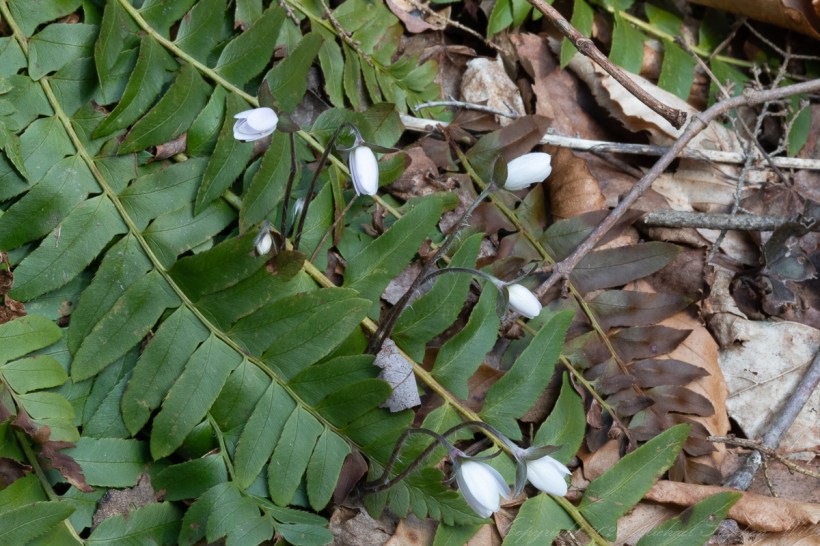
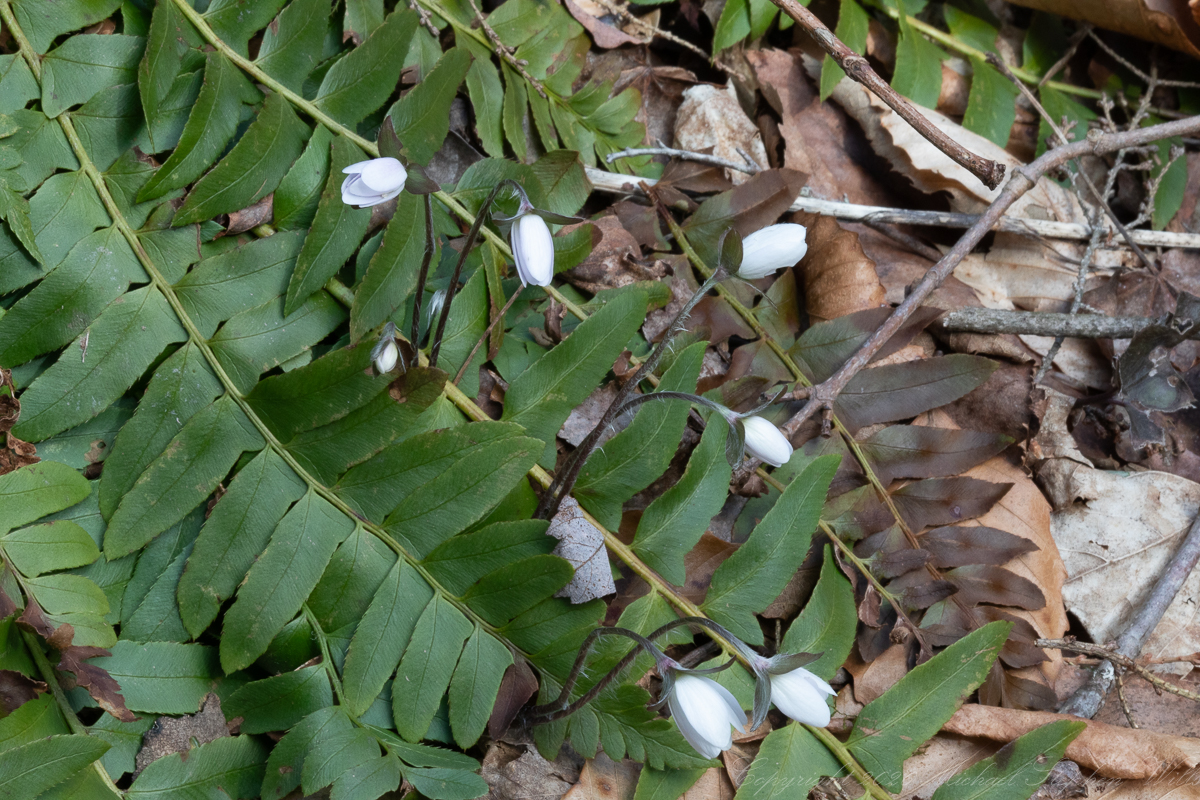
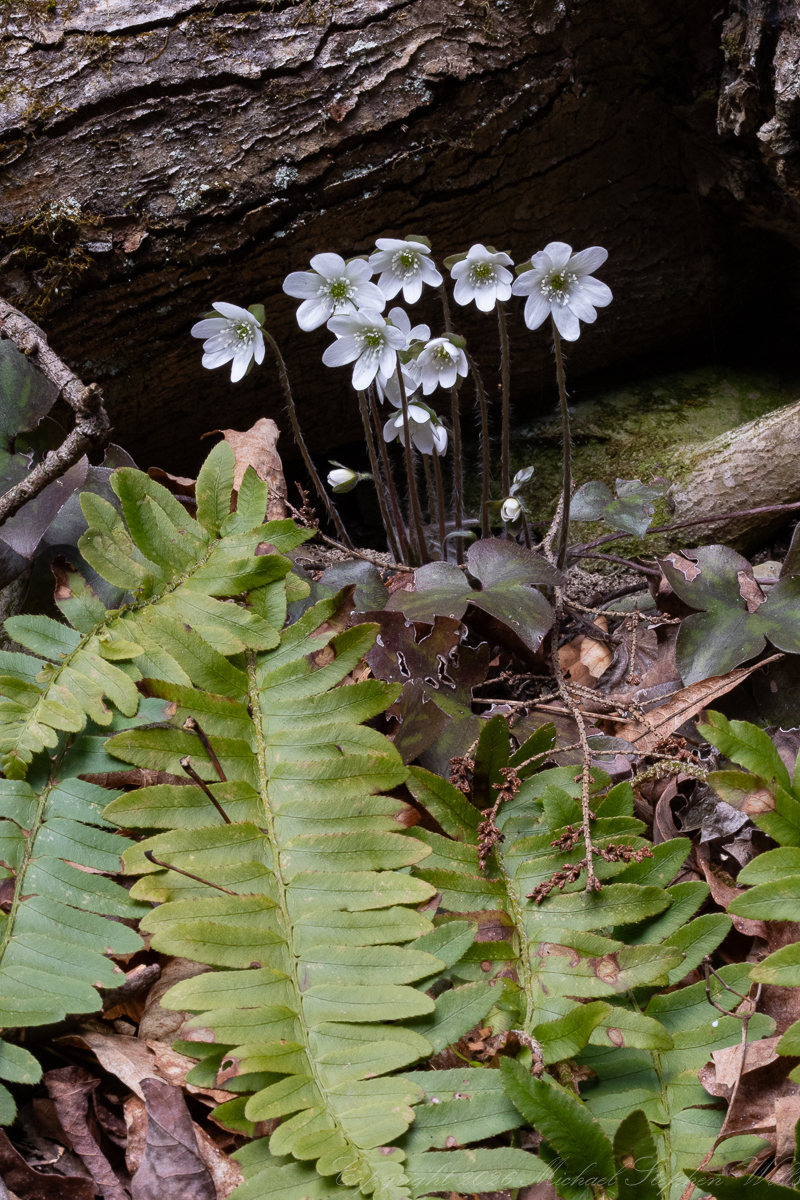
A second cluster of closed blossoms rested among evergreen fern fronds, which appear to be Christmas fern, Polystichum acrostichoides. Their leathery green pinnae, carried through the winter, formed a fitting companion to these early flowers. Together they seemed to embody one of the quiet truths of the April woods: that renewal does not come as a sudden trumpet blast, but by degrees. First the fern still holding its winter green. Then the bud. Then the opening. Then the day when the whole hillside begins to feel like a promise being kept.

White Hepatica Blossoms with Christmas Fern

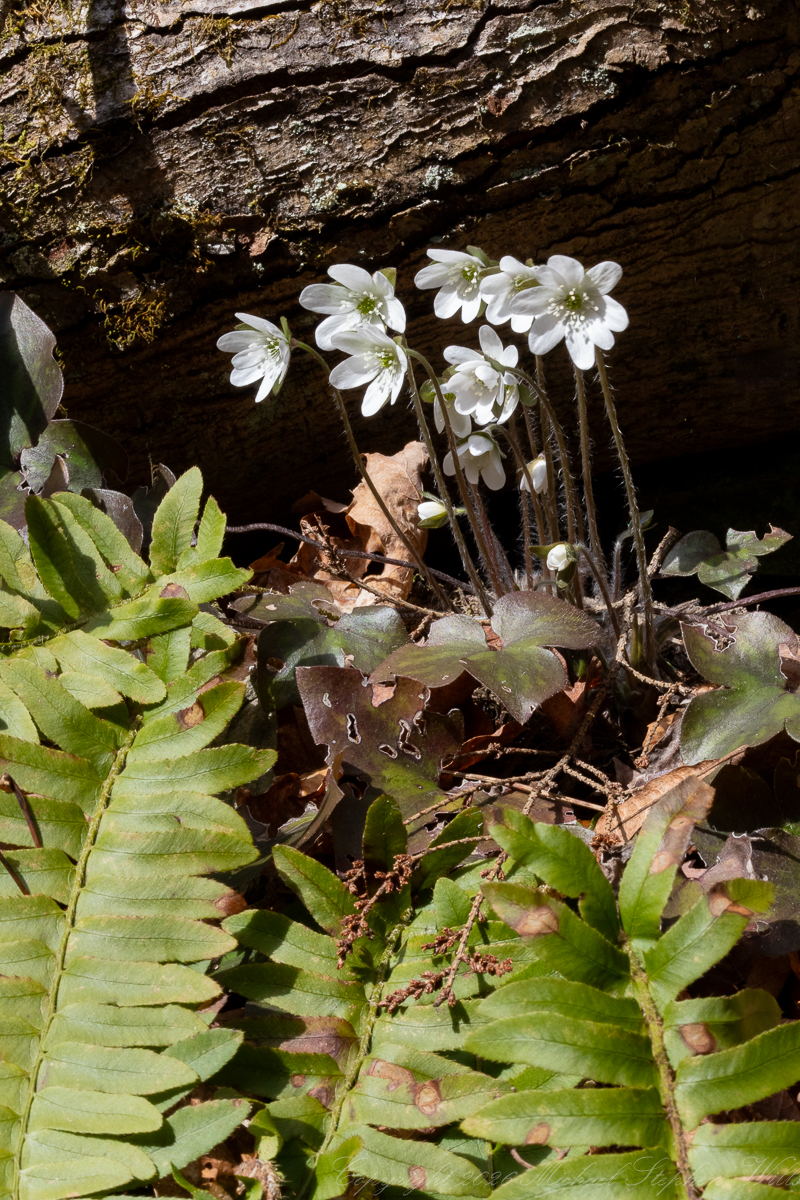
The last three photographs showed the same group of white hepatica blossoms growing on a south-facing slope beneath a tree root. By then I had placed the camera on my Manfrotto BeFree tripod, and I worked more deliberately, grateful for the patience that such flowers invite. One image was made in sunlight; the others when the sun had passed behind a cloud. That change mattered. In the sun, the white blossoms seemed almost to ring like little bells of light. Under cloud, they grew quieter, softer, more inward. The mood deepened. The exposed root above them became a rough shelter, a woodland lintel, and the blossoms beneath gathered into a hidden chapel of spring.

Hepatica acutiloba in sunlight on an early spring afternoon. Fillmore Glen New York State Park, Cayuga County, Finger Lakes Region, New York State. April 2026

I stood there for a long while, looking not only at the flowers but at the place that had made their blooming possible. A south-facing slope gathers warmth earlier in the season. The root held the bank in place and offered a small measure of protection. The leaf litter insulated the soil. The ferns kept their green nearby. Nothing in such a scene is accidental. The woods are full of these small negotiations between light, temperature, shelter, and time. Hepatica, for all its delicacy, is a master of them.

Here a cloud hid the sun, the blossoms in side view.

We call these flowers spring ephemerals, and the name is true in one sense. Their season of bloom is brief. Before long, the trees overhead will leaf out, and the bright interval in which they thrive will begin to close. Yet “ephemeral” can sound too fragile a word for a plant so well adapted, so seasoned in its timing. Hepatica does not merely appear and vanish. It endures. Its leaves persist through winter. Its flowering is tuned to a narrow ecological opening, one shaped by the still-bare canopy of the deciduous forest. For a few precious weeks, before shade deepens, it steps into the light and makes use of what the season offers.

The sun still hidden by a cloud, the blossoms face on.

Perhaps that is why hepatica has so often found a place in literature and nature writing. It carries a symbolism that feels earned rather than assigned. It arrives when the world still bears winter’s austerity, and so its bloom seems less decorative than revelatory. Generations of observers have seen in such flowers a sign that the year turns first in whispers. Not through spectacle, but through fidelity. A small flower opening under bare branches can change the whole moral weather of a walk.

That was how it felt to me at Fillmore Glen. The woods were still mostly brown and gray, still waiting for leaf and shade and birdsong in full chorus. Yet these blossoms had already crossed some invisible threshold. They were spring in its purest form: not abundance, but inception. Not the full choir, but the first clear note.

Photography, in such moments, becomes for me an act of receiving. The changing light, the choice of aperture, the longer exposures when the sun went behind a cloud, the shift from handholding to bracing to tripod—all of it asked for attention. Hepatica does not yield itself to haste. It asks me to be present enough to notice what kind of light it is standing in, what kind of slope it has chosen, what old leaves still surround it, what green companions remain from winter. The camera only deepens that act of seeing.

I left Fillmore Glen feeling that I had witnessed something both small and immense. These flowers were no larger than a coin, yet they altered the whole forest around them. The leaf litter no longer seemed merely dead, but sheltering. The bare trees no longer seemed empty, but expectant. In the presence of hepatica, the woods felt poised on the edge of utterance.

That may be the lasting wonder of these early blooms. They do not overwhelm. They steady. They remind me that beauty often comes close to the ground, half-hidden, speaking softly. In the leafless woods of April, that soft speech can feel like grace.

Enter your email to receive notification of future postings. I will not sell or share your email address.

Discovering Trillium Species: Beauty in Diversity

A reflective springtime journey through Robert H. Treman and Fillmore Glen State Parks reveals the quiet beauty and botanical mysteries of red and white trilliums—exploring their species differences, color shifts, and the wonder of their ephemeral blooms.

Click me for my Getty flower photography.

Late April – Robert H. Treman State Park

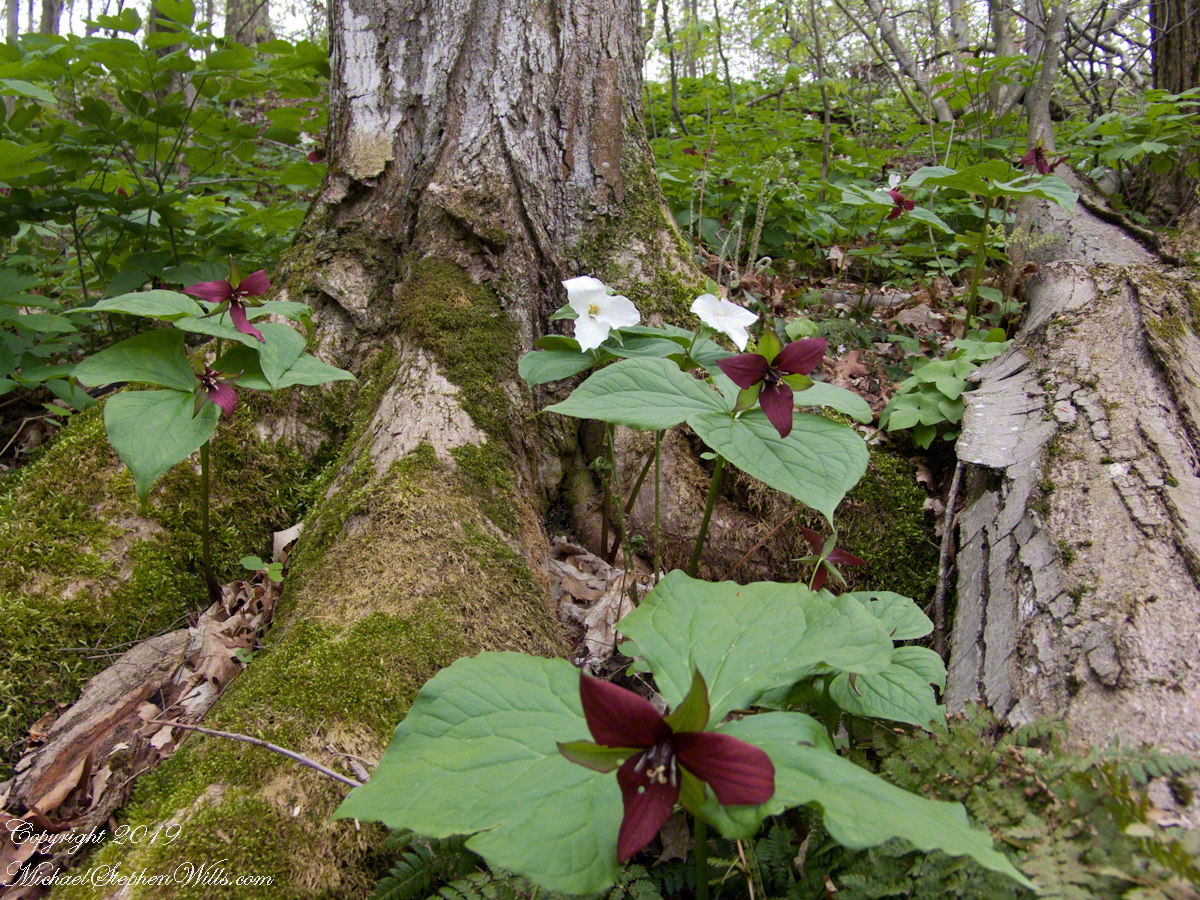
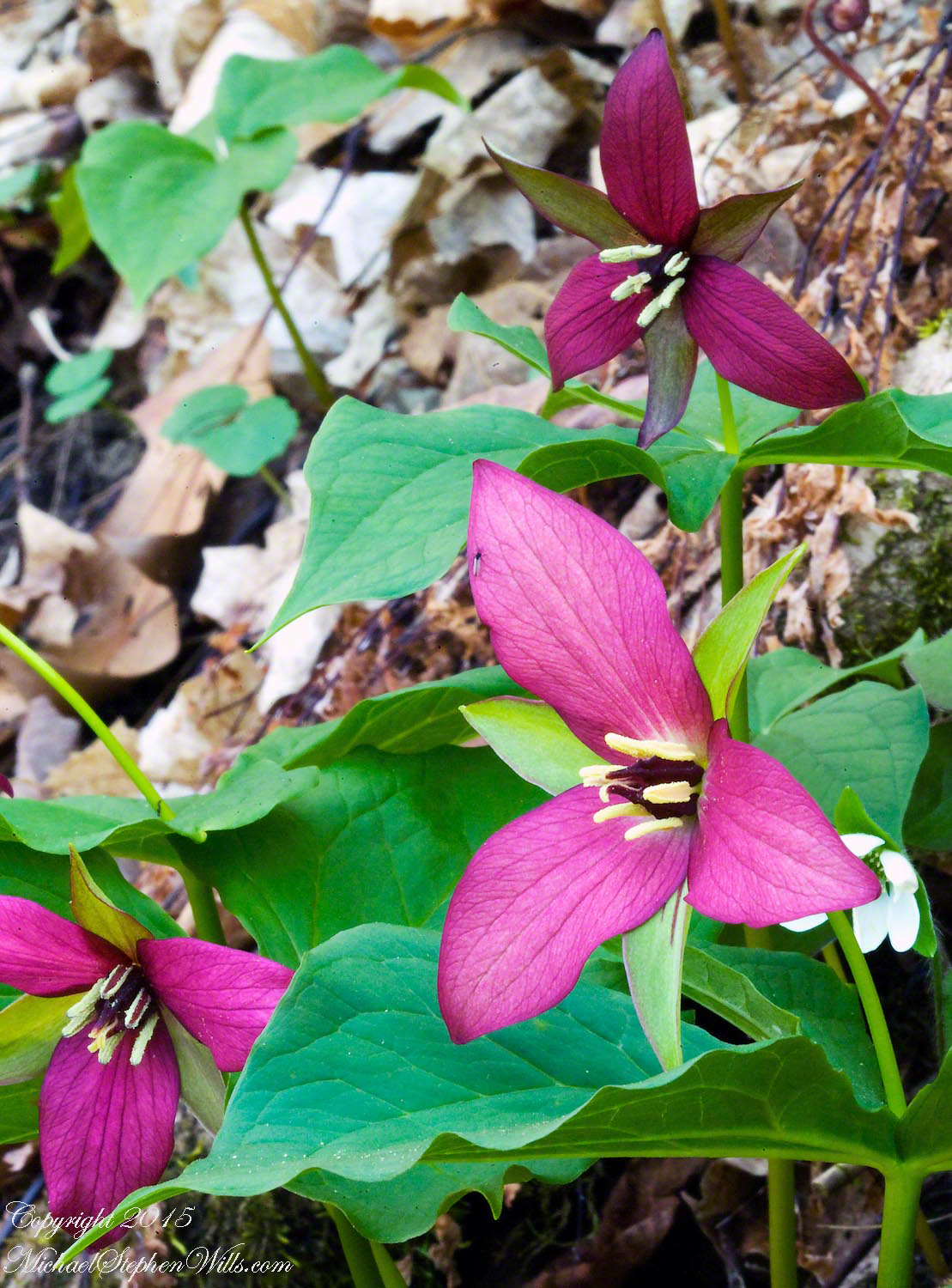
I follow a winding trail through hemlock and maple woods, the air cool and earthy after a spring rain. Under the canopy of budding leaves, I spot a flash of deep burgundy among the moss. Kneeling, I find a red trillium blooming at the base of an old oak. Its three velvety petals are a rich wine color against the green moss and damp leaf litter. A faint musky scent wafts from the flower – no wonder some call it “Stinking Benjamin.” Nearby stands another trillium, but this one is a pristine white star facing upward toward the light. Its broad petals have a gentle wavy edge and no noticeable odor. The red flower droops modestly while the white one opens itself to the sky. Different in color and posture, I realize these are two distinct species1 sharing the same springtime stage.

Red trilliums (Trillium erectum) and white trilliums (Trillium grandiflorum) thrive side by side on the mossy roots of a tree. The maroon “wake robin” flowers nod toward the earth, while the white blooms stand upright to catch the light.

Seeing the red and white blooms side by side feels like meeting two woodland siblings – each unique yet part of the same family. The white trillium is almost luminous in the forest gloom, while the red trillium blends into the shadows with its dark hues. Both emerge from the soil after long, cold months, timing their bloom for the brief sunny window before the trees fully leaf out. Knowing how slowly these perennials grow and how long they live makes their yearly return even more special to witness. Their resilience in coming back each spring fills me with quiet awe.

Early May – Fillmore Glen State Park

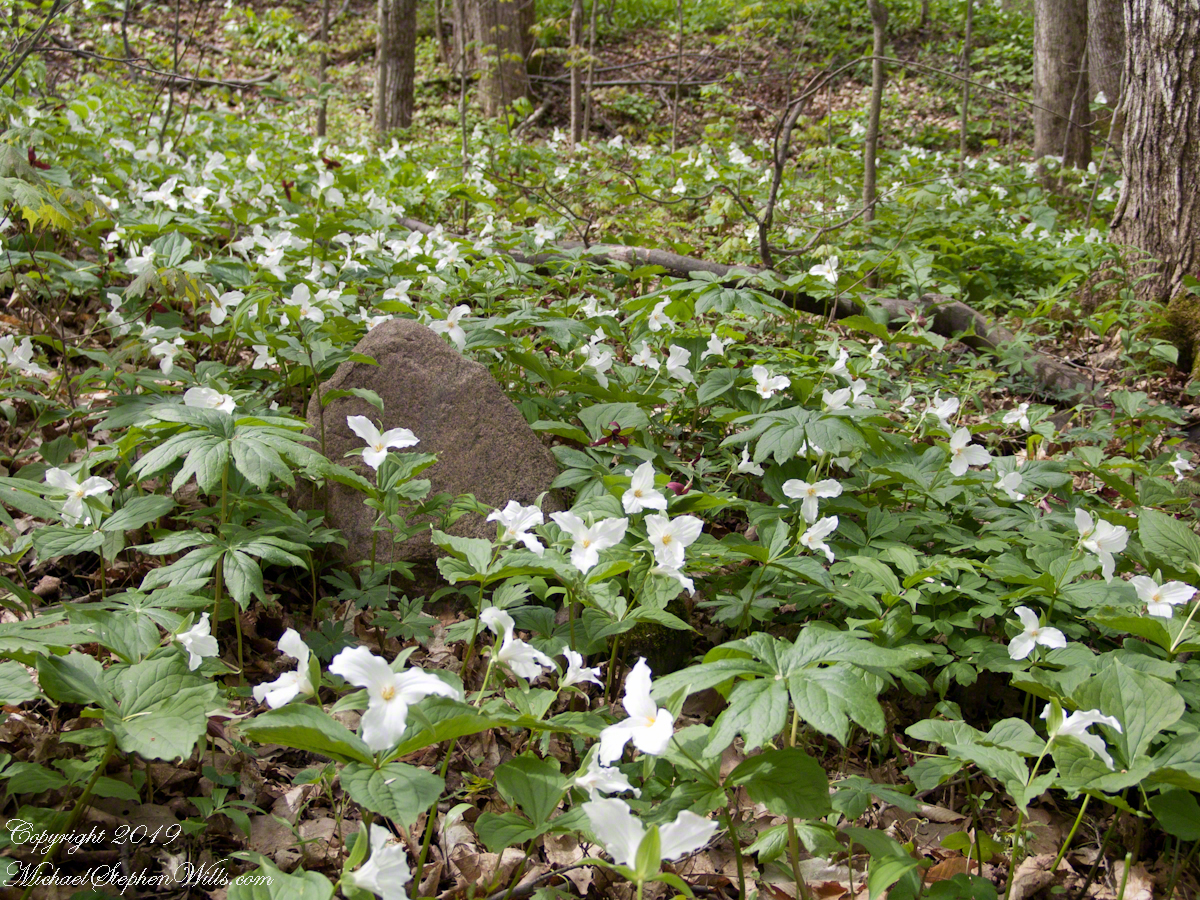
A week later, I wander the lush gorge of Fillmore Glen. The trail is alive with birdsong and the rush of a creek. Dappled sunlight slips through the greening canopy, illuminating patches of the forest floor. Rounding a bend, I catch my breath — the hillside ahead is blanketed with hundreds of white trilliums, a breathtaking constellation of blooms across the ground that feels almost sacred. Careful not to tread on any, I step closer to admire them at eye level.

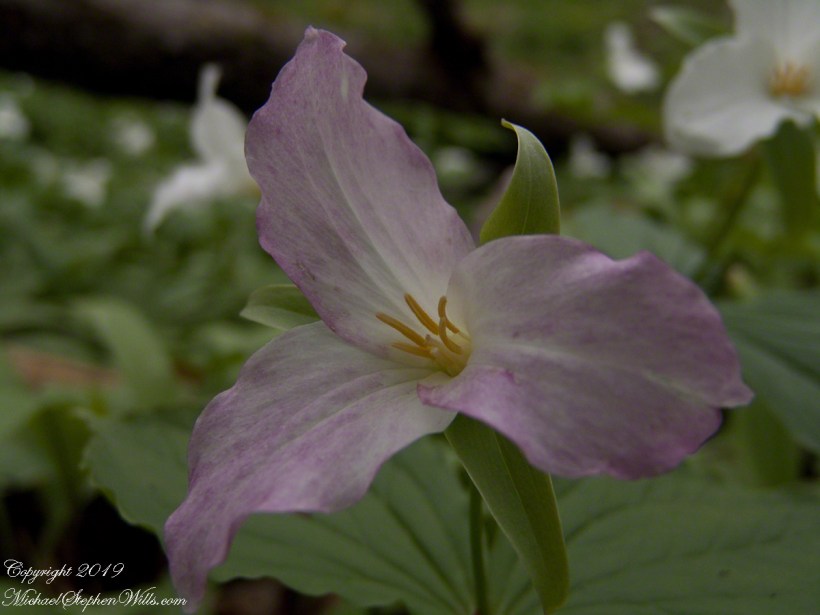
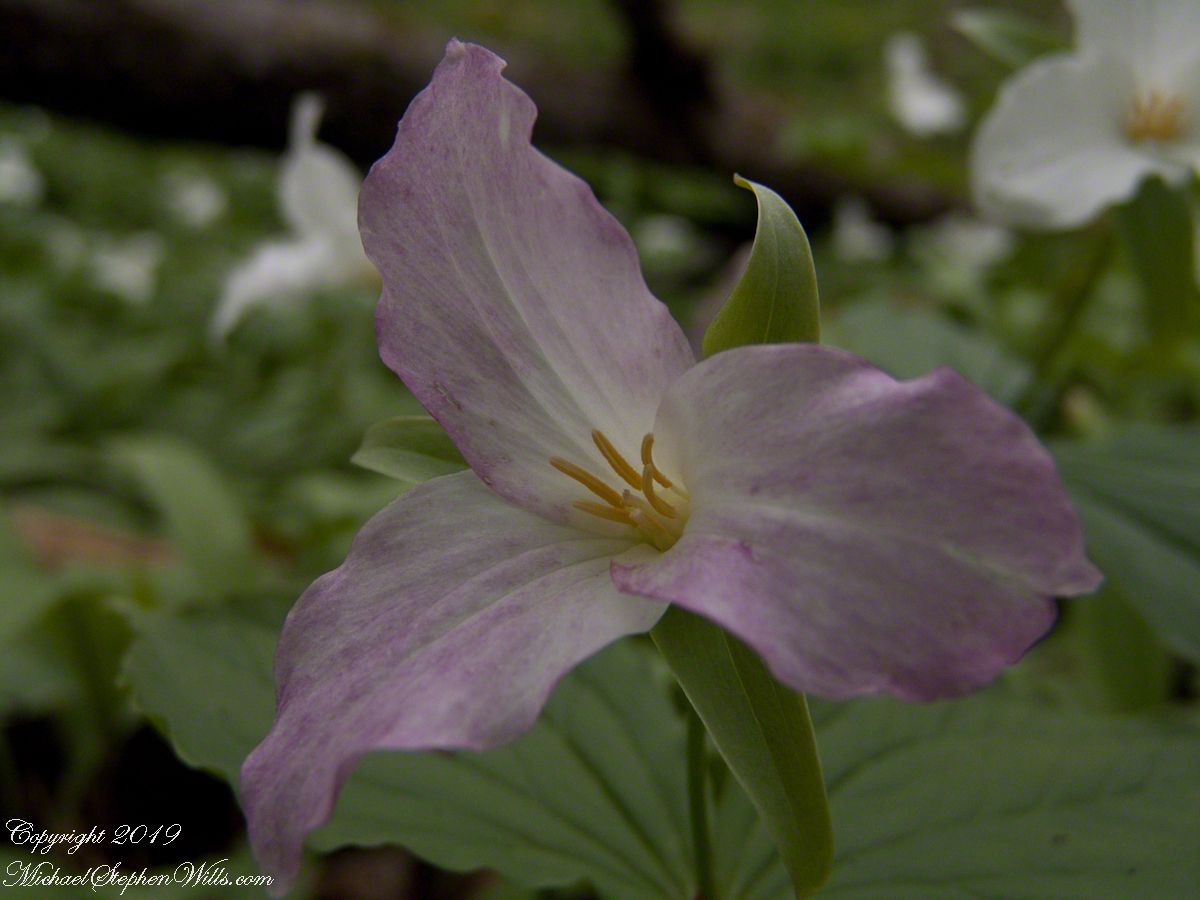
Up close, one large white trillium reveals a surprise: a delicate wash of pink across its aging petals, as if it were blushing. It’s known that after pollination the snow-white petals of Trillium grandiflorum often turn rose-pink with age2. Indeed, many blossoms here wear a faint pink tint, especially those that have been open for a while. This blush of maturity gives the colony a quietly celebratory air – fresh ivory blooms mingling with older siblings tinted softly rose.

The petals of a white trillium take on a soft pink blush as the flower ages, adding a new hue to the spring palette. Fresh white trilliums bloom in the background while older ones show a rosy tint.

In a shaded nook at the edge of the colony, a lone red trillium blooms among the white. I wonder if the red and white trilliums ever hybridize. I see no intermediate colors and recall that the white trillium rarely hybridizes with other species3. The red trillium, by contrast, can swap pollen with certain close relatives, yielding various forms elsewhere. But a true red–white cross never occurs here – each species keeps to its own.

Trillium bloom April through May in central New York State. I found these blooming on the rim of Fillmore Glen near Owasco Lake and the town of Moravia.

The red trillium even has a rare white-petaled form4 easily mistaken for its white-flowered cousin. I linger a bit longer among these graceful “trinity flowers,” my questions answered and my appreciation deepened. As I turn to go, a sunbeam breaks through and illuminates one last trillium by the trail, its white petals touched with pink. I smile, grateful for the chance to witness this woodland wonder.

Click me for another Trillium posting

Enter your email to receive notification of future postings. I will not sell or share your email address.

Footnotes

  1. Different species: Red trillium and white trillium are separate species (Trillium erectum and Trillium grandiflorum, respectively), distinguished by traits like flower orientation and petal shapeidentifythatplant.com.
  2. White petals turn pink: The large white trillium’s petals are pure white upon opening but gradually develop a rose-pink or purple tint as the flower agesnj.gov.
  3. Rare hybridization: Unlike some trilliums that hybridize readily, Trillium grandiflorum (white trillium) is not known to form hybrids with other speciesen.wikipedia.org. Trillium erectum can hybridize with its close relatives, but a red–white trillium cross is not observed in nature.
  4. White form of red trillium: Trillium erectum (normally red) has a variety with white petals, classified as T. erectum var. album, which can be mistaken for a white trillium at a glancemidatlanticnature.blogspot.com.

Winter People Watching

Happy New Year’s Eve

Continue reading “Winter People Watching”

Ephemeral Waterfall

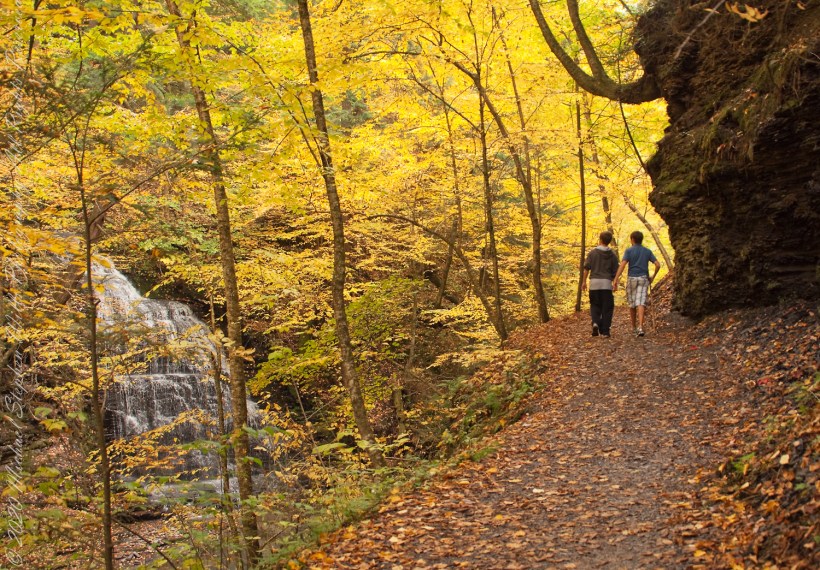
Fillmore Glen State Park in Moravia, New York, offers a changing landscape that serves as a living canvas, with the ironically named Dry Creek feeding its lush greenery. The ebb and flow of water from the creek creates a dynamic setting. Seasons dramatically alter the scenery, from tranquil springs to vibrantly colored autumns, beautifully captured through fine art photography.

Continue reading “Ephemeral Waterfall”

Fruit of the Starflower

A member of the primrose family

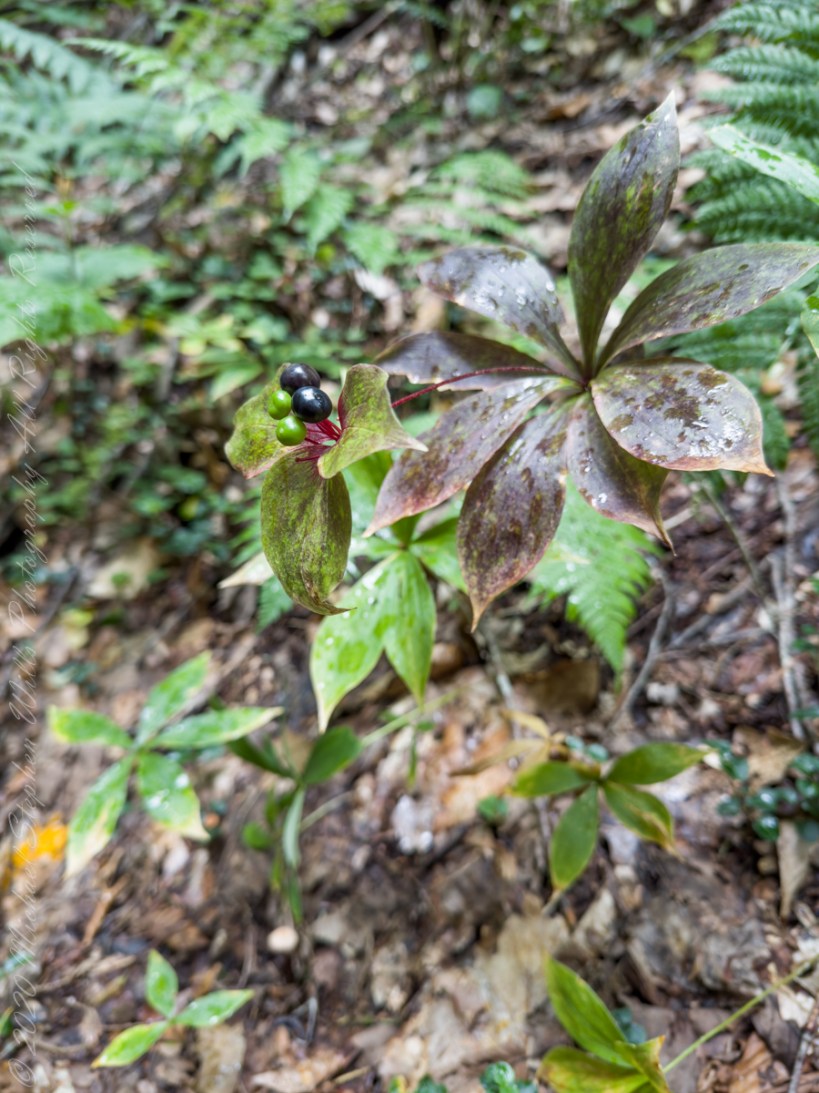
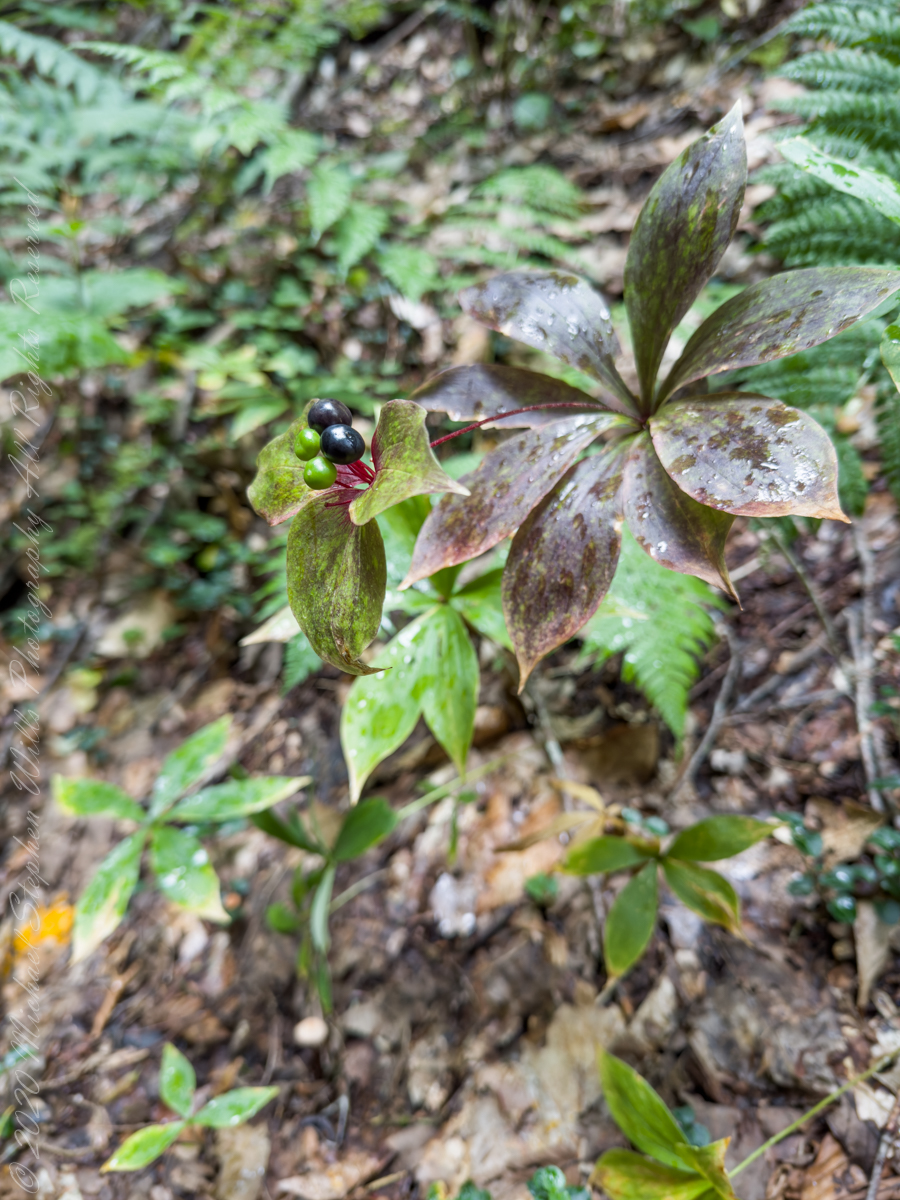
These dark blue berries at the end of a slender naked stalk that arises from the leaf joint at the top of the plant were encountered on a late August day in Fillmore Glen, Moravia, Cayuga County, New York State.  Lysimachia borealis is a perennial wildflower commonly known as Starflower.  After blooming in the spring, as a member of the primrose family these are some of the first flowers to appear, the fertilized flowers develop into this round purple fruit.  To confuse identification, the plant is also known as Trientalis borealis.

“Lysimachia species are used as food plants by the larvae of some butterflies and moths, including the dot moth, grey pug, lime-speck pug, small angle shades, and v-pug.”   Chipmunks eat these fruits as a minor portion of their diet.

“Bees of the genus Macropis are specialized to pollinate oil-producing Lysimachia plants. These bees use exclusively Lysimachia floral oils for building their nests and provisioning cells. Lysimachia floral-specific chemicals are strong attractors for Macropis nuda and Macropis fulvipes bees that are seldom found in other plant genera.”

Do not confuse this with another “starflower,” Borago officinalis, from which an oil is produced commercially.

Reference: text in italics and quotes is from the Wikipedia, “Lysimachia.”

Copyright 2023 Michael Stephen Wills All Rights Reserved

Charles Atwood Memorial

We learned so much from this new sign

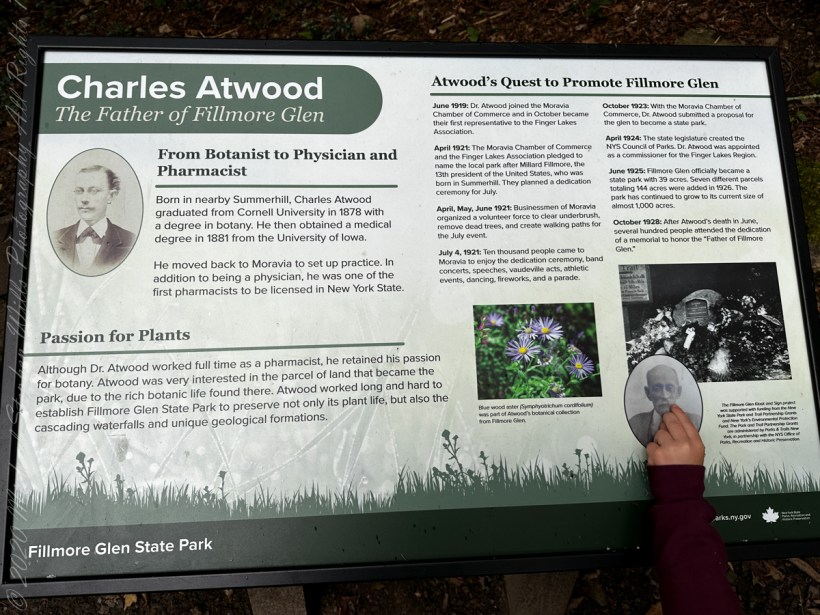
This year, 2023, an informational sign was installed next to the Charles Atwood memorial at the foot of the stone stairs leading to the Gorge Trail.

Charles Atwood The Father of Fillmore Glen

From Botanist to Physician and Pharmacist: born in Summerhill, Cayuga Coun ty, New York State, Charles Atwood graduated from Cornell University in 1878 with a degree in Botany. He then obtained a medical degree in 1881 from the University of Iowa. He moved to Moravia, Cayuga County, to set up practice. In addition to being a physician, he was one of the first pharmacists to be licensed in New York State. A Passion for Plants. Although Dr. Atwood worked full time as a pharmacist, he retained his passion for botany. Atwood was very interested in the parcel of land that became Fillmore Glen Park, due to the rich botanic life found there. Atwood worked long and hard to establish Fillmore Glen State Park to preserve not only its plant life, but also the cascading waterfalls and unique geological formations.”

“Atwood’s Quest to Promote Fillmore Glen. June 1919: Dr. Atwood jointed the Moravia Chamber of Commerce and in October became the first representative to the Finger Lakes Association. April 1921: the Moravia Chanbmer of Commerce and the Finger Lakes Association pledged to name the local park after Millard Fillmore, the 13th president of the United States, who was born in Summerhill. They planned a dedication ceremony for July. April, May, June 1921: Businessmen of Moravia organized a volunteer force to clear underbrush, remove dead trees and create walking paths for the July event. July 4, 1921: Ten thousand people came to Moravia to enjoy the dedication ceremony, band concerts, speeches, vaudeville acts, athletic events, dancing, fireworks and a parade. October 1923: With the Moravia Chamber of Commerce, Dr. Atwood submitted a proposal for the glen to become a state park. April 1924: The state legislature created the New York State Council of Parks. Dr. Atwood was appointed a commissioner for the Finger Lakes Region. June 1925: Fillmore Glen officially became a state park with 39 acres. Seven different parcels totaling 144 acres were added in 1926. The park has continued to grow to its current size of almost 1,000 acres. October 1928: After Dr. Atwood’s death in June, several hundred people attended the dedication of a memorial to honor the ‘Father of Fillmore Glen.'”

Reference: text in italics and quotes is from the new Charles Atwood Sign.

Copyright 2023 Michael Stephen Wills All Rights Reserved

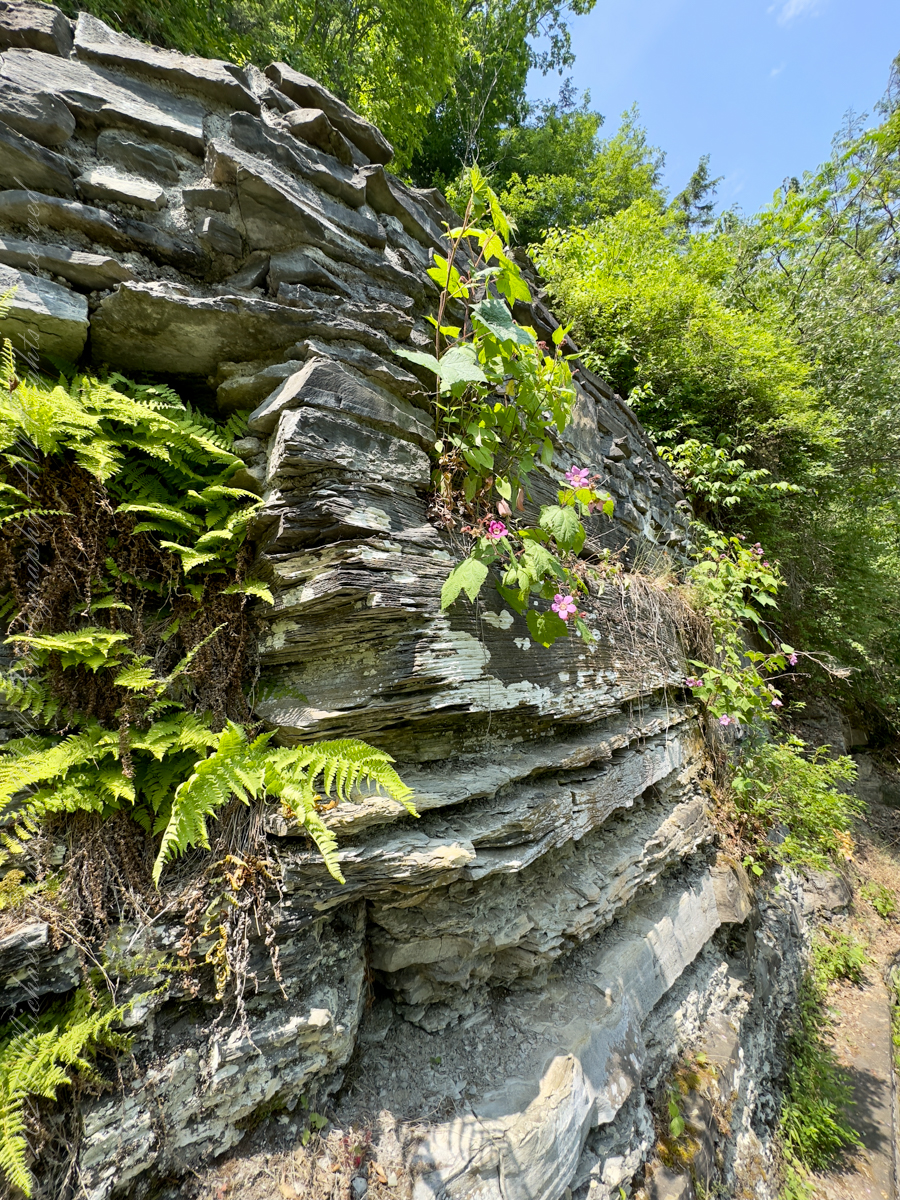
Purple-flowered Raspberry

Among our Gorges

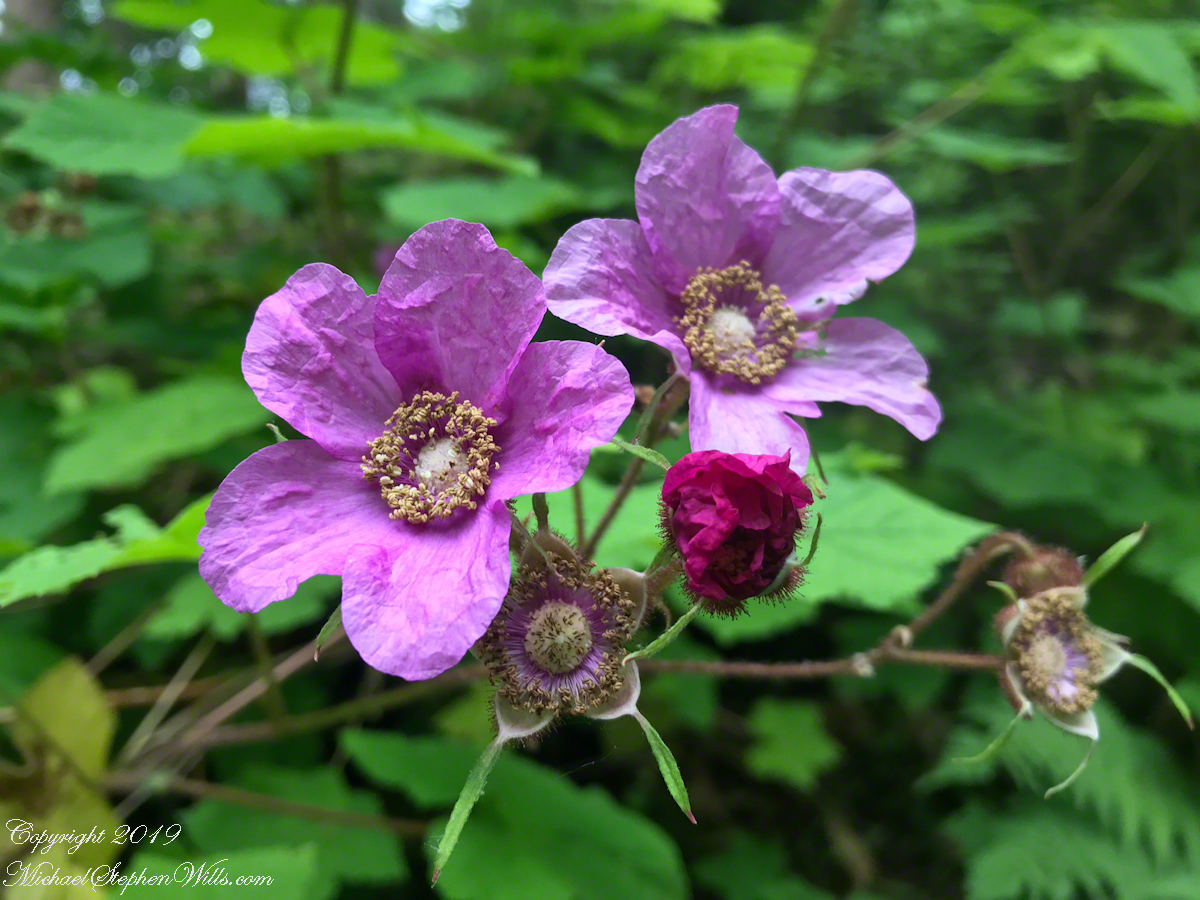
“Rubus odoratus, the purple-flowered raspberry, flowering raspberry, Virginia raspberry, or Thimbleberry is a species of Rubus, native to eastern North America, from Nova Scotia west to Ontario and Wisconsin, and south along the Appalachian Mountains as far as Georgia and Alabama.”

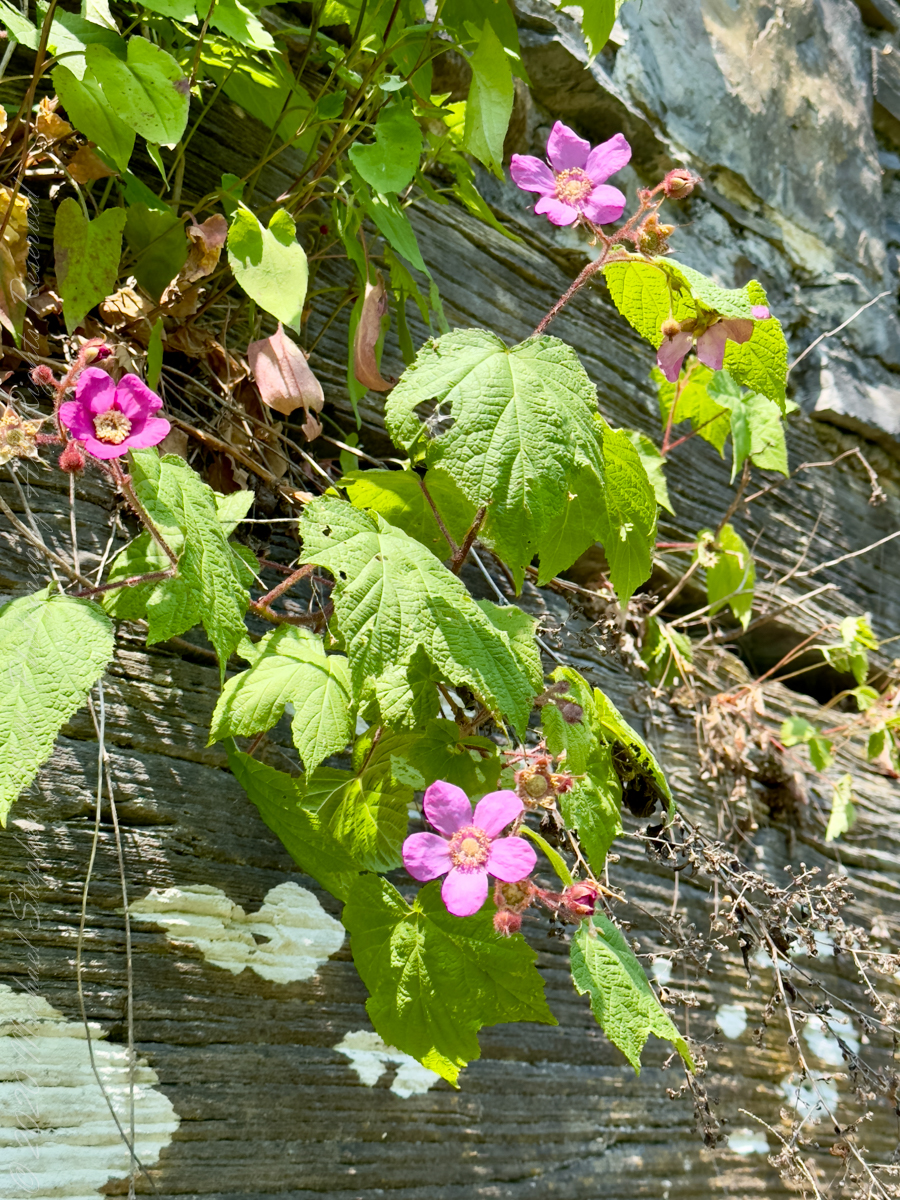
Purple-flowered Raspberry Growing Within Treman Gorge

“Rubus odoratus is a shrub growing to 3 meters (10 feet) tall, with perennial, not biennial, stems (unlike many other species in the genus). Also, unlike most other related species this plant does not have thorns.”

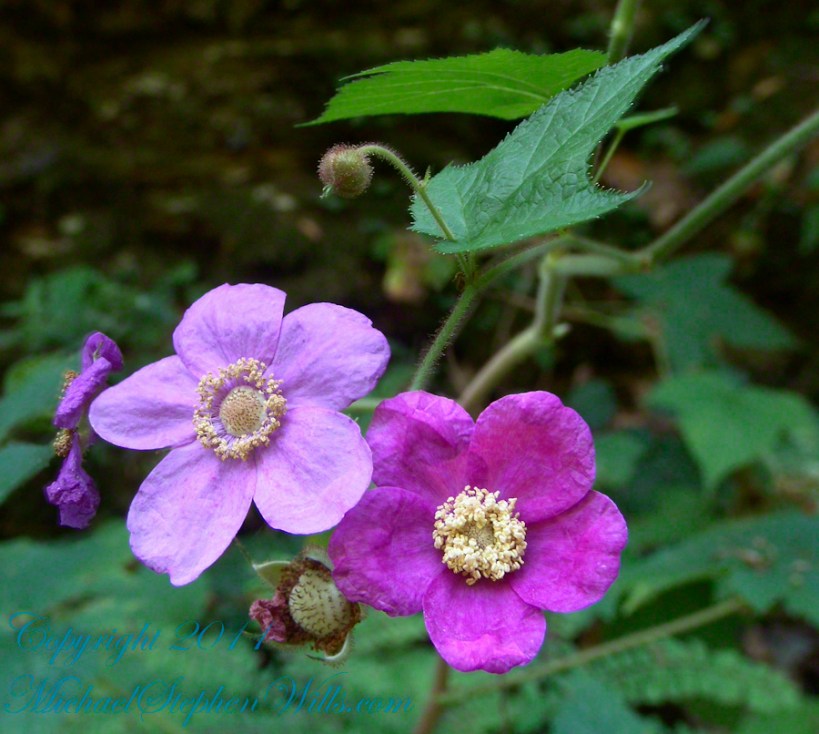
“The leaves are palmately lobed with five (rarely three or seven) lobes, up to 25 cm (10 inches) long and broad, superficially resembling maple leaves. The flowers are 3–5 cm (1.2–2 inches) in diameter, with five magenta or occasionally white petals; they are produced from early spring to early fall. The red edible fruit matures in late summer to early autumn, and resembles a large, flat raspberry with many drupelets, and is rather fuzzy to the touch and tongue.”

We find Purple-flowering Raspberry in the gorges of the Finger Lakes Region of Central New York State where it finds partial shade, rich, slightly acid soil and moderate water. “It is locally naturalized in parts of Washington State and also in Europe, notably southeastern England.”

My photograph captures all flowering forms of this member of the Rose family. This specimen was blooming in August within the shade of Fillmore Glen in the Finger Lakes of New York State.

Reference: text in italics and quotes paraphrased from Wikipedia “Rubus odoratus.”

Copyright 2023 All Rights Reserved Michael Stephen Wills

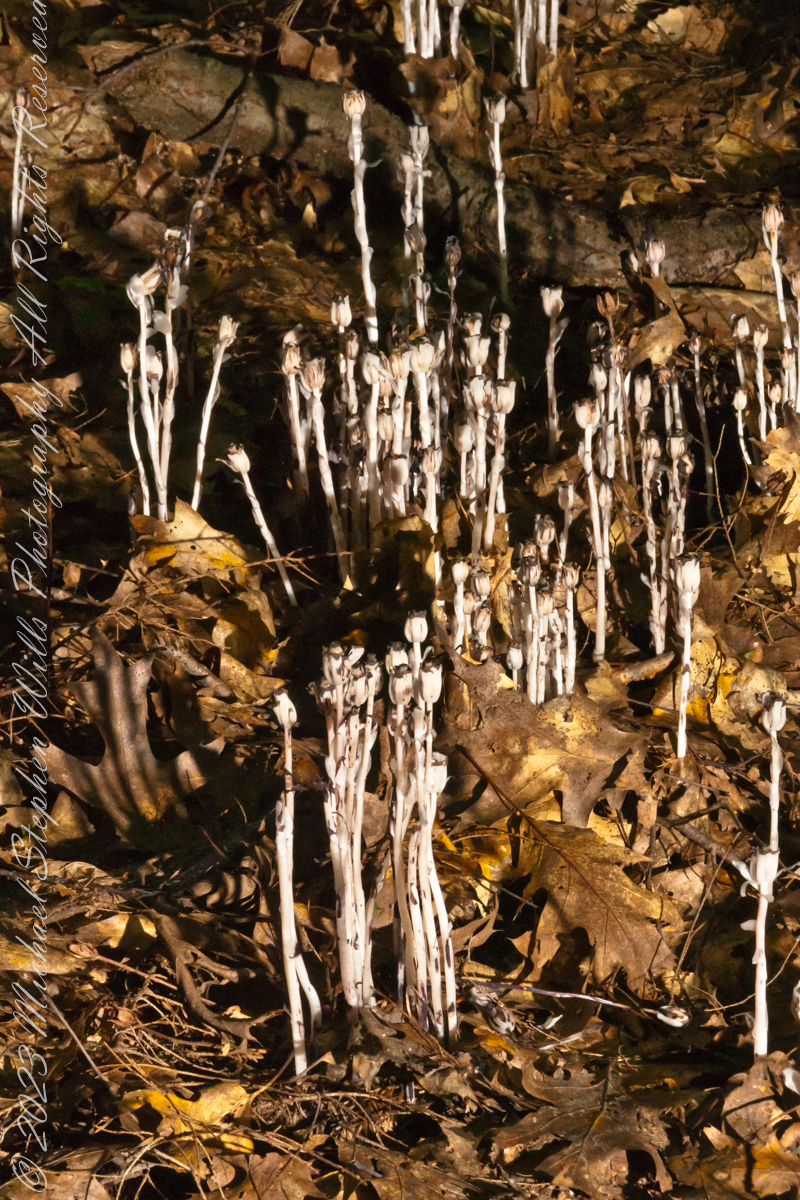
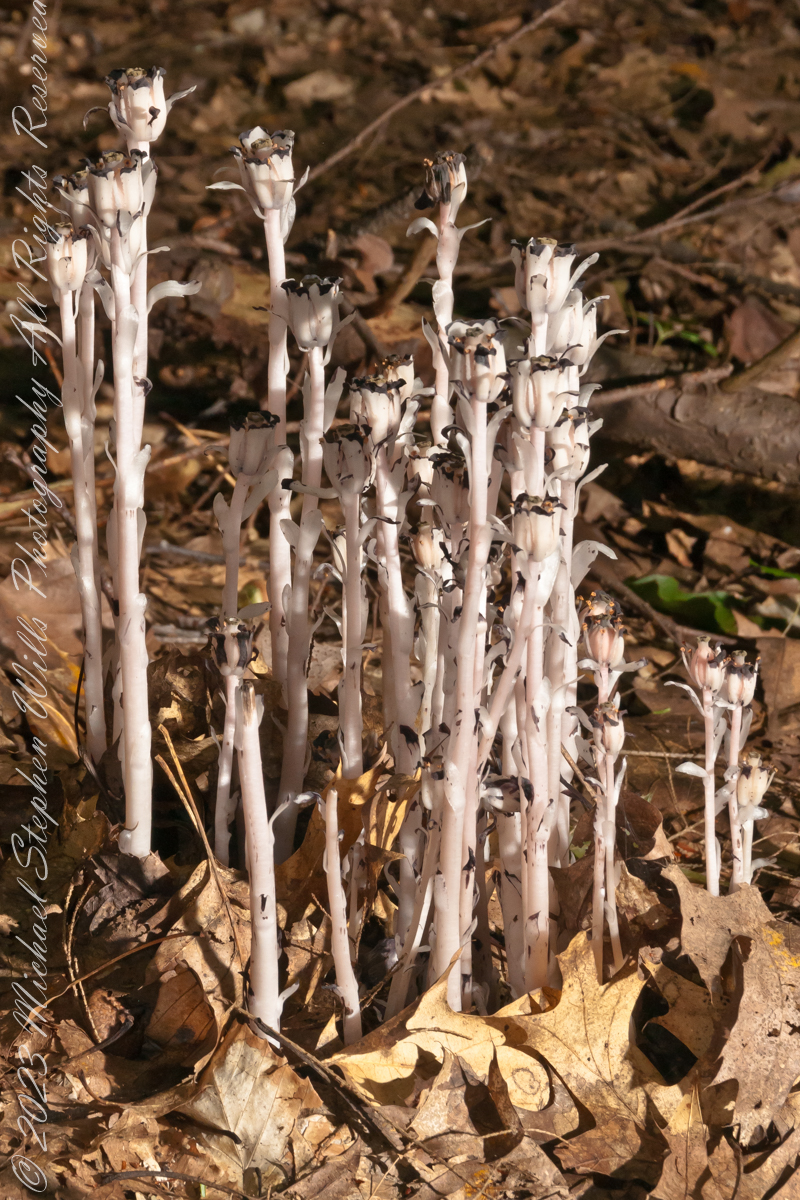
Ghost Pipes that grow in the dark

chlorophyll free

I found these popping up from leaf litter, a mixture of last year’s maple and elm, on an August morning. The dappled light, varied from bright to very dark, exceeded the dynamic range of my equipment, so I set up the Sony dslr Alpha700 with the Sony lens DT 18-200mm f3.5-6.3 on a tripod and, using the remote feature, placed the flash at an optimal angle.

Monotropa uniflora, also known as ghost plant, ghost pipe, or Indian pipe, is an herbaceous perennial plant native to temperate regions of Asia, North America, and northern South America, but with large gaps between areas. The plant is sometimes completely waxy white, but often has black flecks or pale pink coloration. Rare variants may have a deep red color. The name “Monotropa” is Greek for “one turn” and “uniflora” is Latin for “one flowered” as there is one sharply curved stem for each single flower. It flowers from early summer to early autumn, often a few days after rainfall. The fruit, an oval capsule-like structure, enlarges and becomes upright when the seeds mature, at this point stem and capsule looking desiccated and dark brown or black. The seeds of Monotropa uniflora are small, ranging between 0.6–0.8 mm (3⁄128–1⁄32 in) in length.

Unlike most plants, it is white and does not contain chlorophyll. Instead of generating food using the energy from sunlight, it is parasitic, and more specifically a mycoheterotroph. Its hosts are certain fungi that are mycorrhizal with trees, meaning it ultimately gets its food from photosynthetic trees. Since it is not dependent on sunlight to grow, it can grow in very dark environments as in the understory of dense forest. The complex relationship that allows this plant to grow also makes propagation difficult.

The flowers of Monotropa uniflora are visited by various bee and fly species, most commonly bumblebees. Bumblebees are an important pollen dispersal agent for the plant.

Like most mycoheterotrophic plants, Monotropa uniflora associates with a small range of fungal hosts, all of them members of Russulaceae.

It is often associated with beech trees.

The plant contains glycosides and may be toxic to humans.

In addition to various reported medical uses, the plant has been used as an anxiolytic in herbal medicine since the late 19th century.

Reference: in italics is from “Monotropa uniflora,” Wikipedia

Copyright 2023 Michael Stephen Wills All Rights Reserved

Hepatica acutiloba

Old Leaves

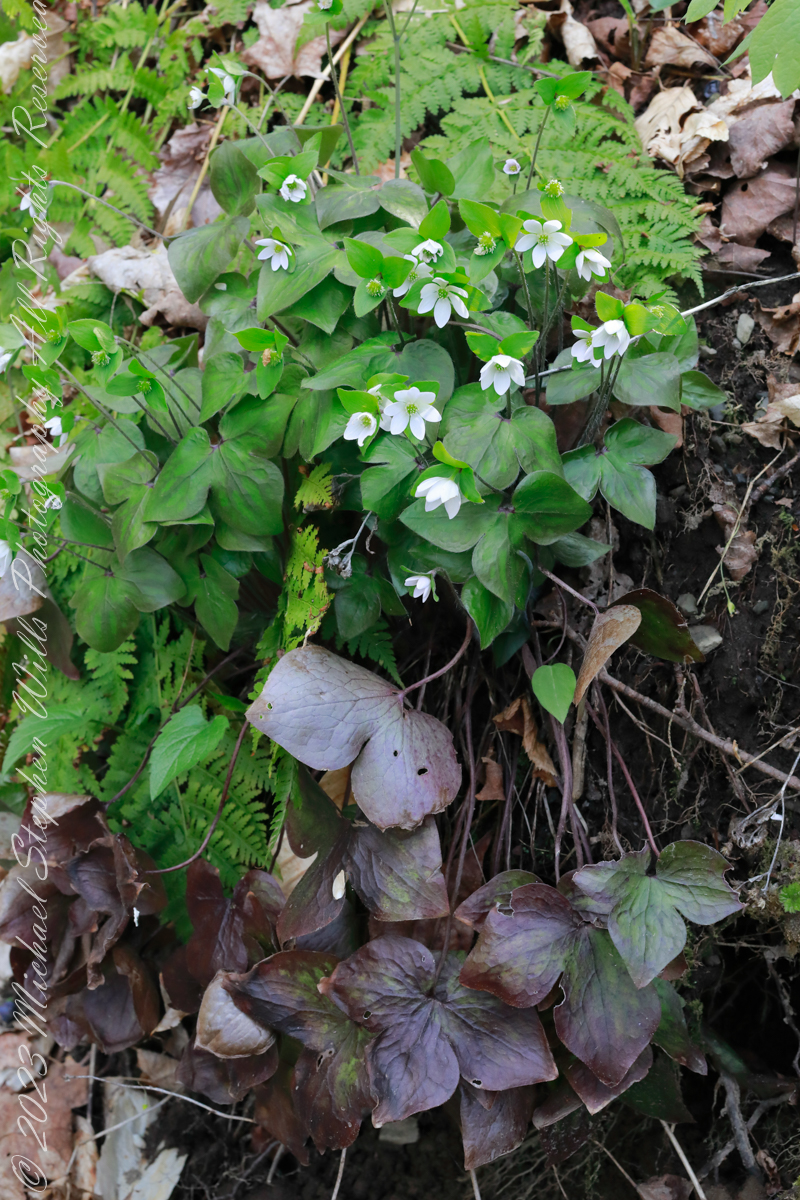
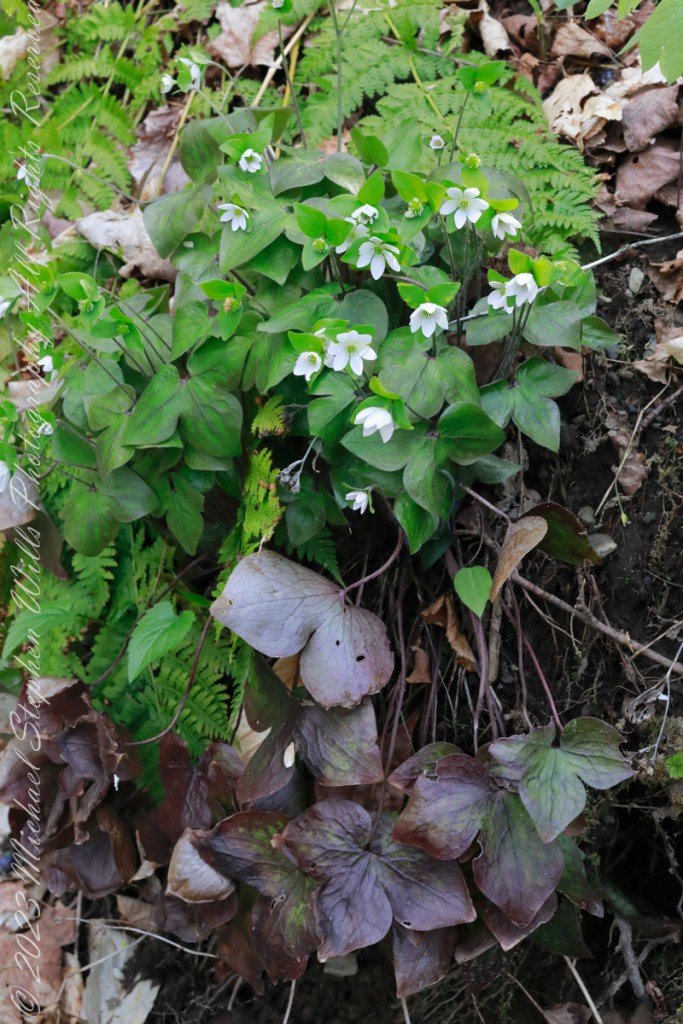
This Hepatica acutiloba, the sharp-lobed hepatica, I found in Fillmore Glen last April, capturing them with the Apple Iphone 14 proMax.

Hepatica acutiloba is also known as sharp-lobed hepatica, liverwort, kidneywort, pennywort, liverleaf. The perennial nature of this plant is seen here in the purplish leaves hanging below, from a previous year’s growth.

The word hepatica derives from the Greek ἡπατικός hēpatikós, from ἧπαρ hêpar ‘liver’, because its three-lobed leaf blotched leaves resemble a diseased human liver.

Click for my Fine Art Photography Gallery.

Plants of genus Hepatica are native to Europe, Asia, and North America.

Europe: Albania, Austria, the Baltic states, Belarus, Bulgaria, Corsica, Czechoslovakia, Denmark, European Russia, Finland, France, Germany, Greece, Hungary, Italy, Norway, Poland, Romania, Spain, Sweden, Switzerland, Ukraine, Yugoslavia

Central Asia: Kazakhstan, Kyrgyzstan, Tajikistan, Western Siberia

Eastern Asia: North China, South Central China, East China, Japan, Korea, Manchuria, Primorsky Krai

South Asia: Pakistan, Western Himalaya

Canada: Manitoba, New Brunswick, Nova Scotia, Ontario, Québec

United States: Alabama, Arkansas, Connecticut, Delaware, District of Columbia, Florida, Georgia, Illinois, Indiana, Iowa, Kentucky, Maine, Maryland, Massachusetts, Michigan, Minnesota, Mississippi, Missouri, New Hampshire, New Jersey, New York, North Carolina, Ohio, Pennsylvania, Rhode Island, South Carolina, Tennessee, Vermont, Virginia, West Virginia, Wisconsin

Plants of the genus have been introduced to Belgium.

These tufted perennials grow to 10 centimeters in height with wiry roots.  Leaves usually three-lobed and untoothed.  Flowers can be blue, pinkish, or white.  Three sepals, small and green.  Petals usually 5, can be more, without a nectary.  Stamens numerous.  Ovary superior; styles short with capitate stigmas.  Pollination is by insects.  Fruits many, one-seeded.  Seeds are green when ripe. dispersed by ants.  

References:
Wikipedia, “Hepatica”
“The Botanical Garden, Vol II” by Roger Phillips and Marytn Rix, Firefly Books, 2002

Copyright 2023 All Rights Reserved Michael Stephen Wills

Hepatica Gone To Seed

AKA liverleaf

This Hepatica acutiloba, the sharp-lobed hepatica, I found in Fillmore Glen last April, capturing them with the Apple Iphone 14 proMax.

“’The liverleaf puts forth her sister blooms of faintest blue soon after the late snows have melted. Indeed, these fragile-seeming, enable-like flowers are sometimes found actually beneath the snow, and form one of the many instances which we encounter among flowers, as among their human contemporaries, where the frail and delicate-looking withstand storm and stress far better than their more robust-appearing brethren.” 

Click for my Fine Art Photography Gallery.

Each clump-forming plant grows 5 to 19 cm (2.0 to 7.5 in) tall, flowering in the early to mid-spring. The flowers are greenish-white, white, purple, or pinkish in color, with a rounded shape. After flowering the fruits are produced in small, rounded columned heads, on pedicels 1 to 4 mm long seen here in these gone to seed flowers. When the fruits, called achenes, are ripe they are ovoid in shape, 3.5–4.7 mm long and 1.3–1.9 mm wide, slightly winged and tend to lack a beak.

“The rusty leaves of last summer are obliged to suffice for the plant’s foliage until some little time after the blossoms have appeared, when the young fresh leaves begin to uncurl themselves.  Someone has suggested that the fuzzy little buds look as though they were still wearing their furs as protection against the wintry weather which so often stretches late into our spring.”

Hepatica cultivation has been popular in Japan since the 18th century (mid-Edo period), where flowers with doubled petals and a range of color patterns have been developed.

Noted for its tolerance of alkaline limestone-derived soils, Hepatica may grow in a wide range of conditions; it can be found either in deeply shaded deciduous (especially beech) woodland and scrub or grassland in full sun. Hepatica will also grow in both sandy and clay-rich substrates, being associated with limestone. Moist soil and winter snowfall are required; Hepatica is tolerant of winter snow cover, but less so of dry frost.

Propagation is done by seeds or by dividing vigorous clumps in spring. However, seedlings take several years to reach bloom size, and divided plants are slow to thicken.

Hepatica was once used as a medicinal herb. Owing to the doctrine of signatures, the plant was once thought to be an effective treatment for liver disorders. Although poisonous in large doses, the leaves and flowers may be used as an astringent, as a demulcent for slow-healing injuries, and as a diuretic.

References:
The quotes are from From “How to know the wildflowers,” by Mrs. William Starr Dana, Houghton Mifflin, Boston, 1989
Otherwise, Wikipedia, “Hepatica acutiloba” and “Hepatica”

Copyright 2023 All Rights Reserved Michael Stephen Wills