Hepatica at Fillmore Glen: Quiet Wonders Beneath the Leafless Trees

On a quiet April walk in Fillmore Glen State Park, I found Hepatica acutiloba blooming beneath leafless trees—small, luminous flowers that turned the still-brown woods into a meditation on patience, renewal, and grace.

On April 11, 2026, I walked Fillmore Glen State Park beneath trees still bare, their branches opening the woods to the cool, unguarded light of early spring. The forest had not yet put on its full green speech. Last year’s leaves still covered the ground in shades of russet and tan, and among them, close to the earth, I found Hepatica acutiloba beginning to bloom.

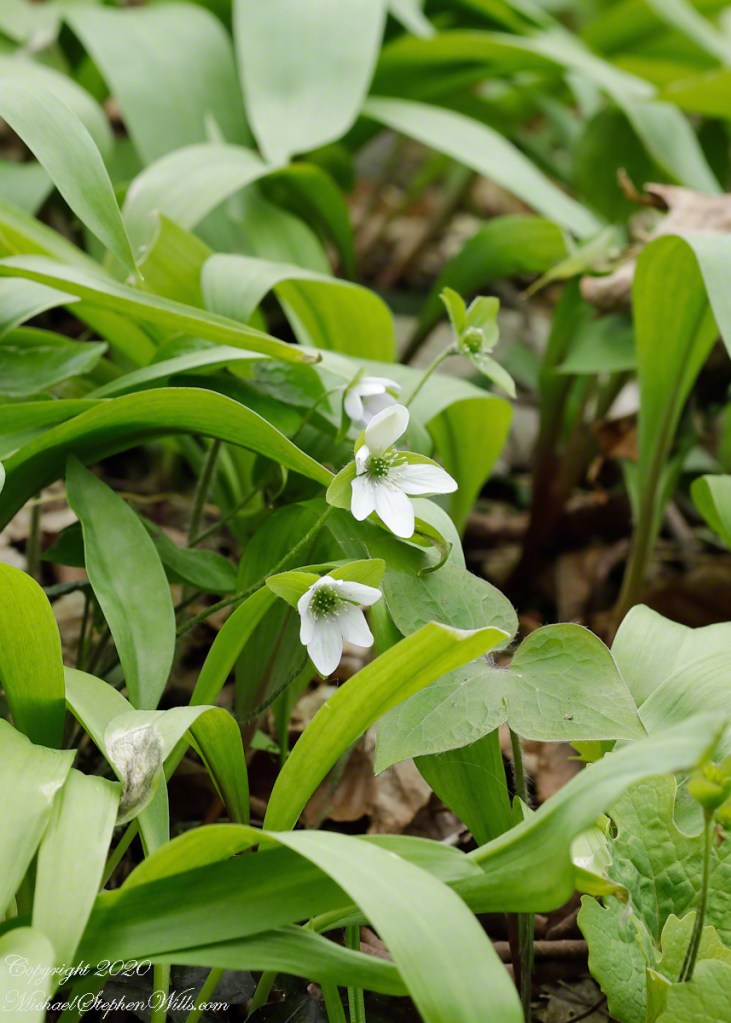
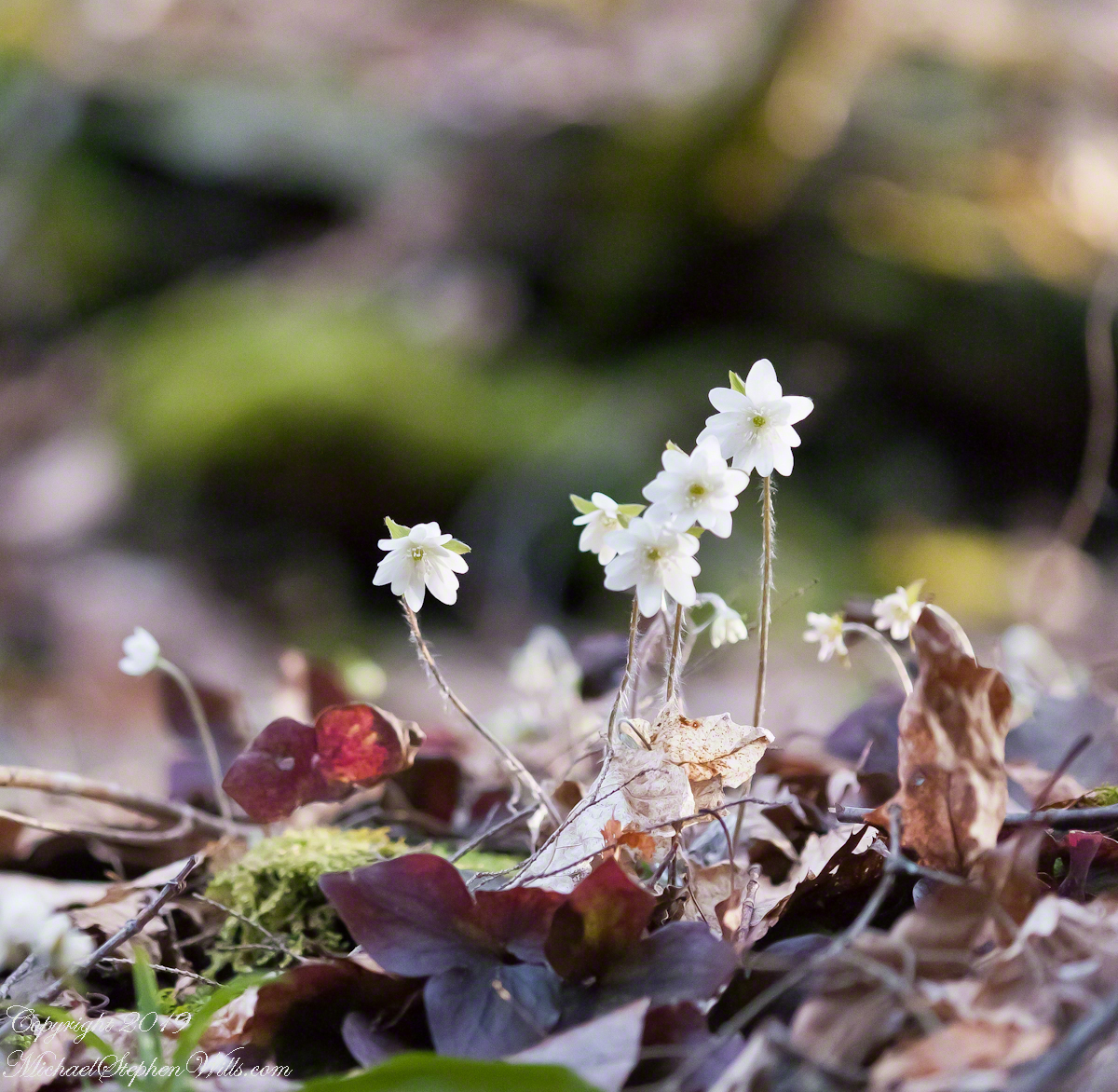
These are flowers that ask for slowness. No one hurrying through the woods would fully see them. I had to kneel, lower myself into their world, and let my eyes adjust to their scale. Only then did they begin to reveal themselves: first as closed buds, pale and self-contained, then as opened white blossoms shining from the leaf litter like small votives in the dim cathedral of the spring woods.

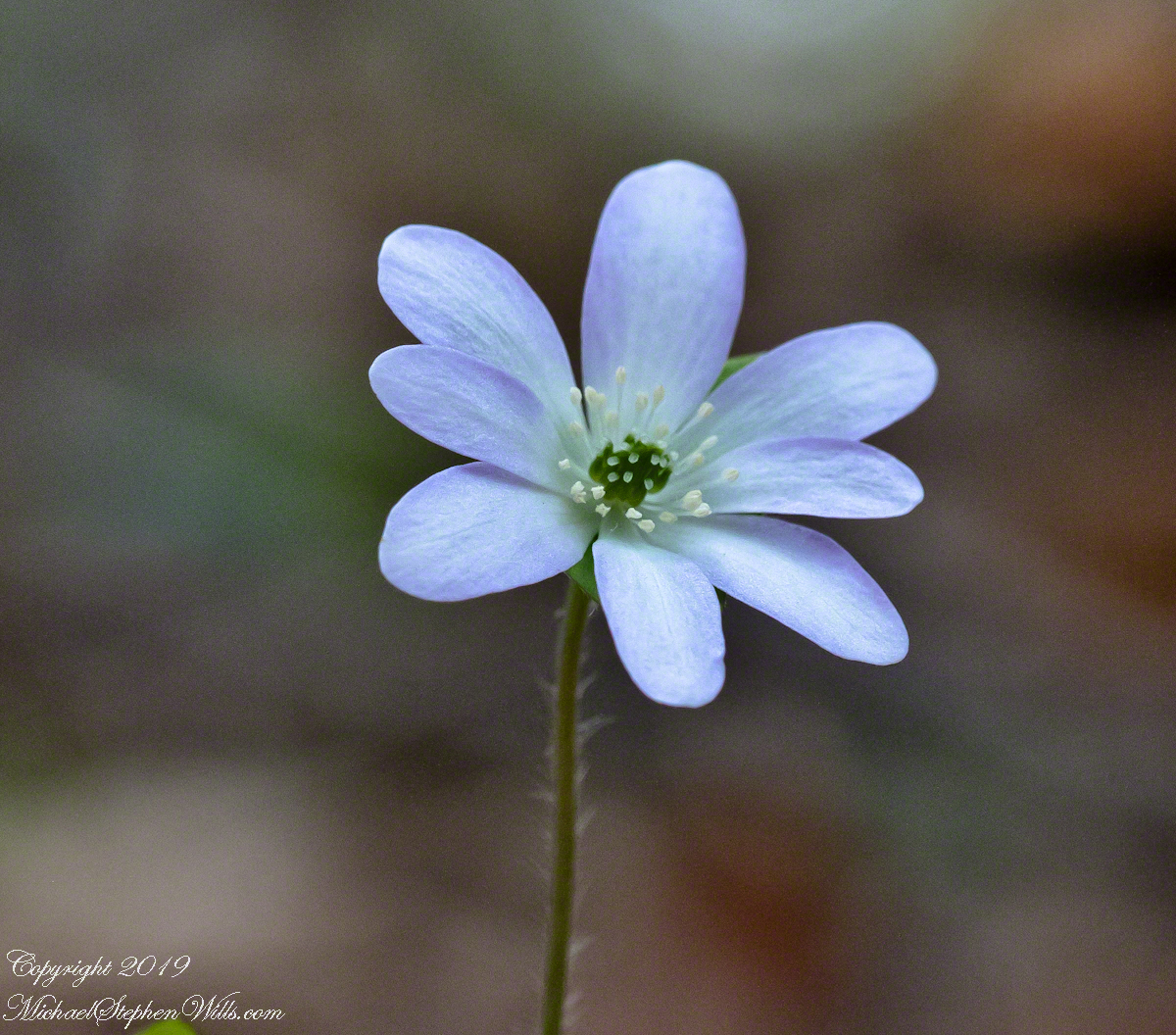
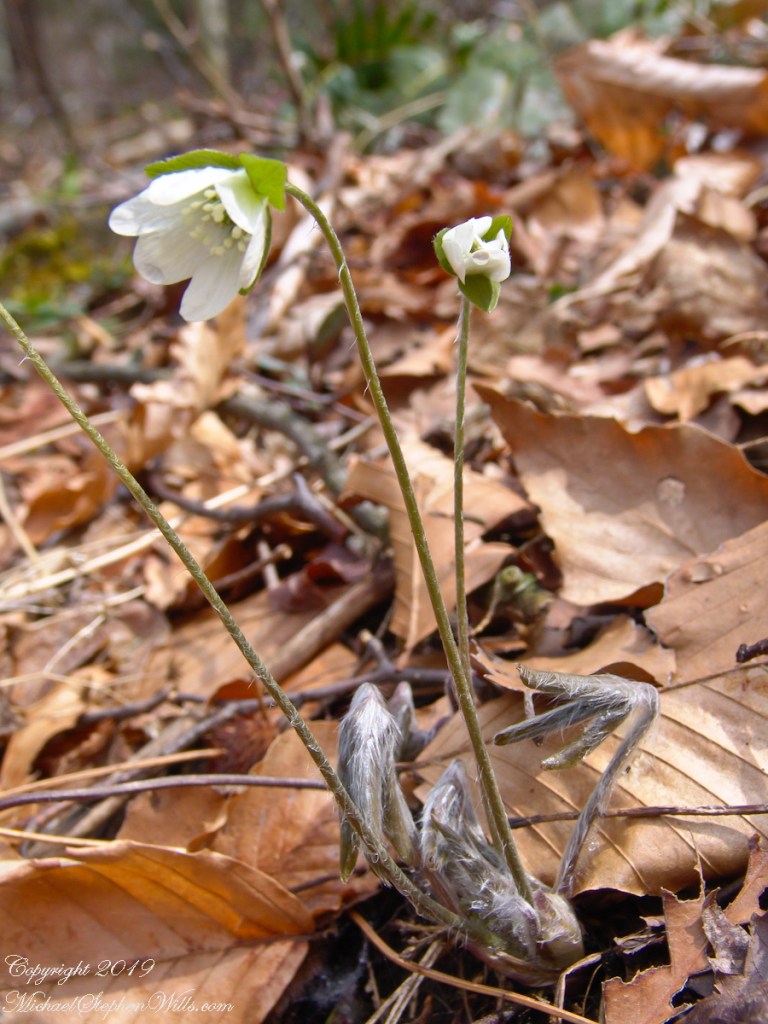
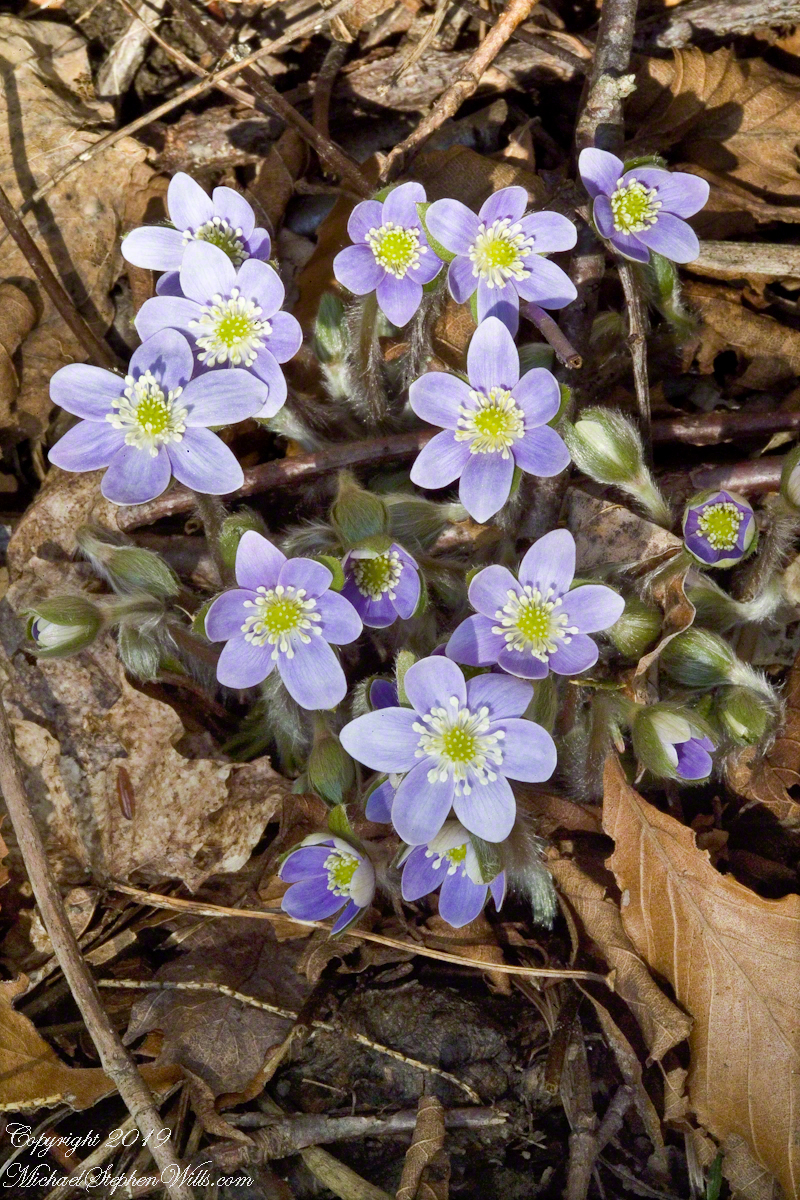
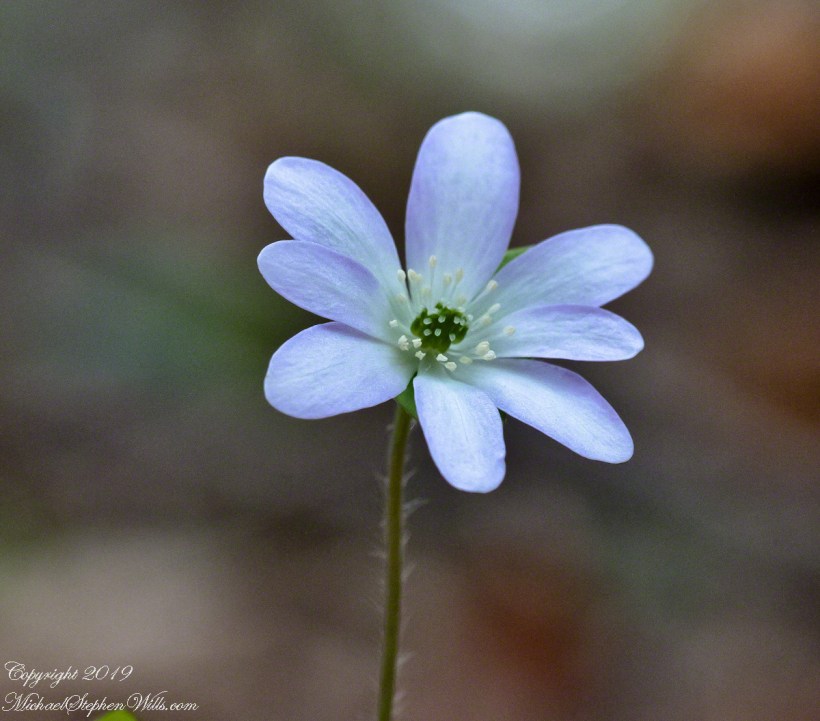
This flower was a light lavender blossoms, still closed, rising from the forest floor on a delicate stems. The sun had reached in, and I made the image handheld, steadying the camera on the ground. Even unopened, it seemed to hold light within itself, as though the day had touched it but not yet persuaded it to unfold. I have always loved that about hepatica. It does not fling itself into spring. It listens first. It waits with an old intelligence, answering warmth and brightness in its own time.
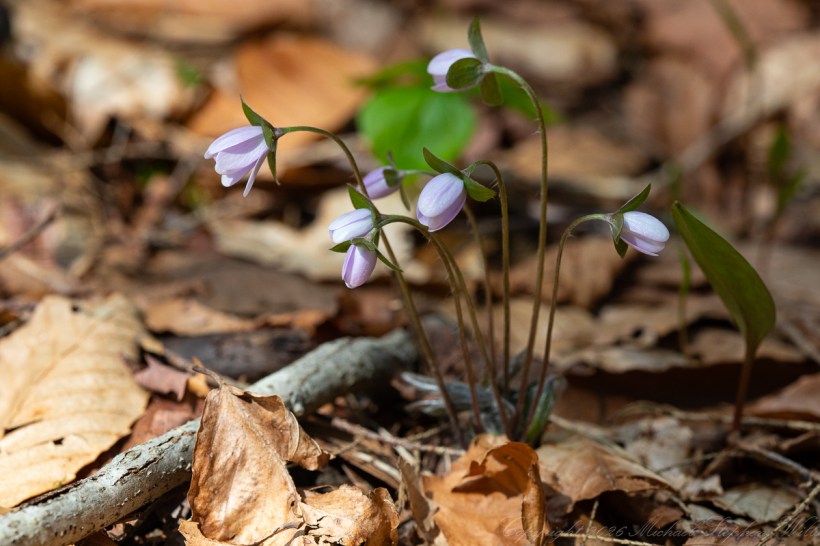
Lavender Hepatica Blossoms, closed

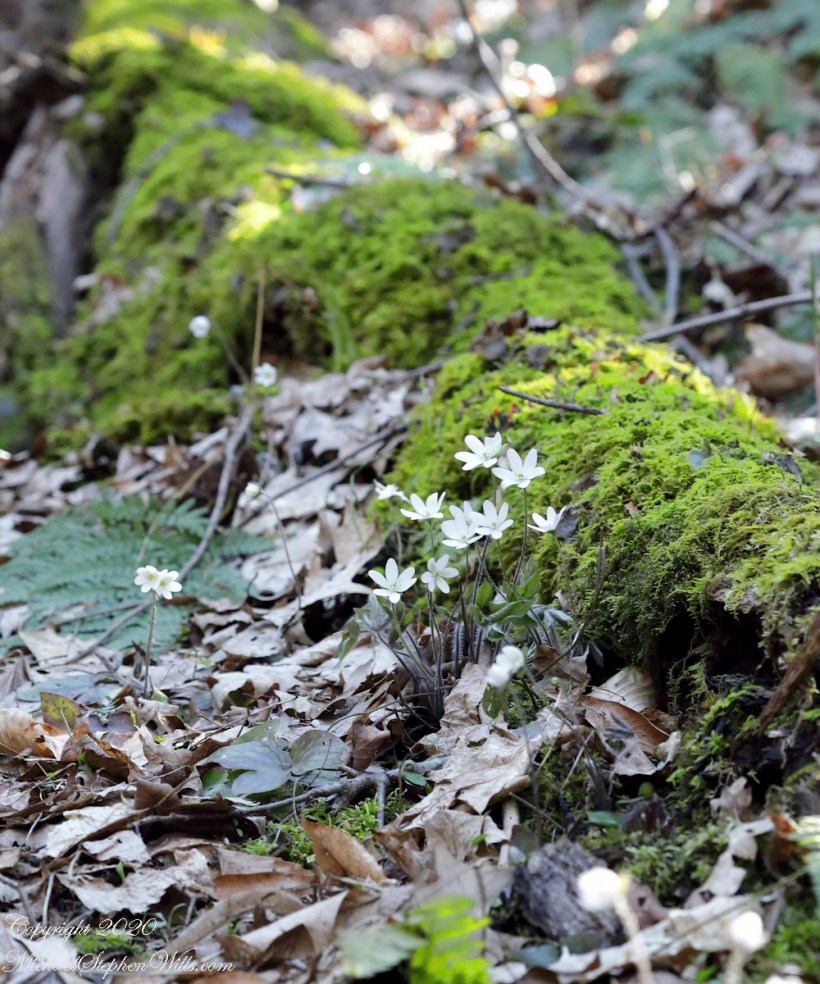
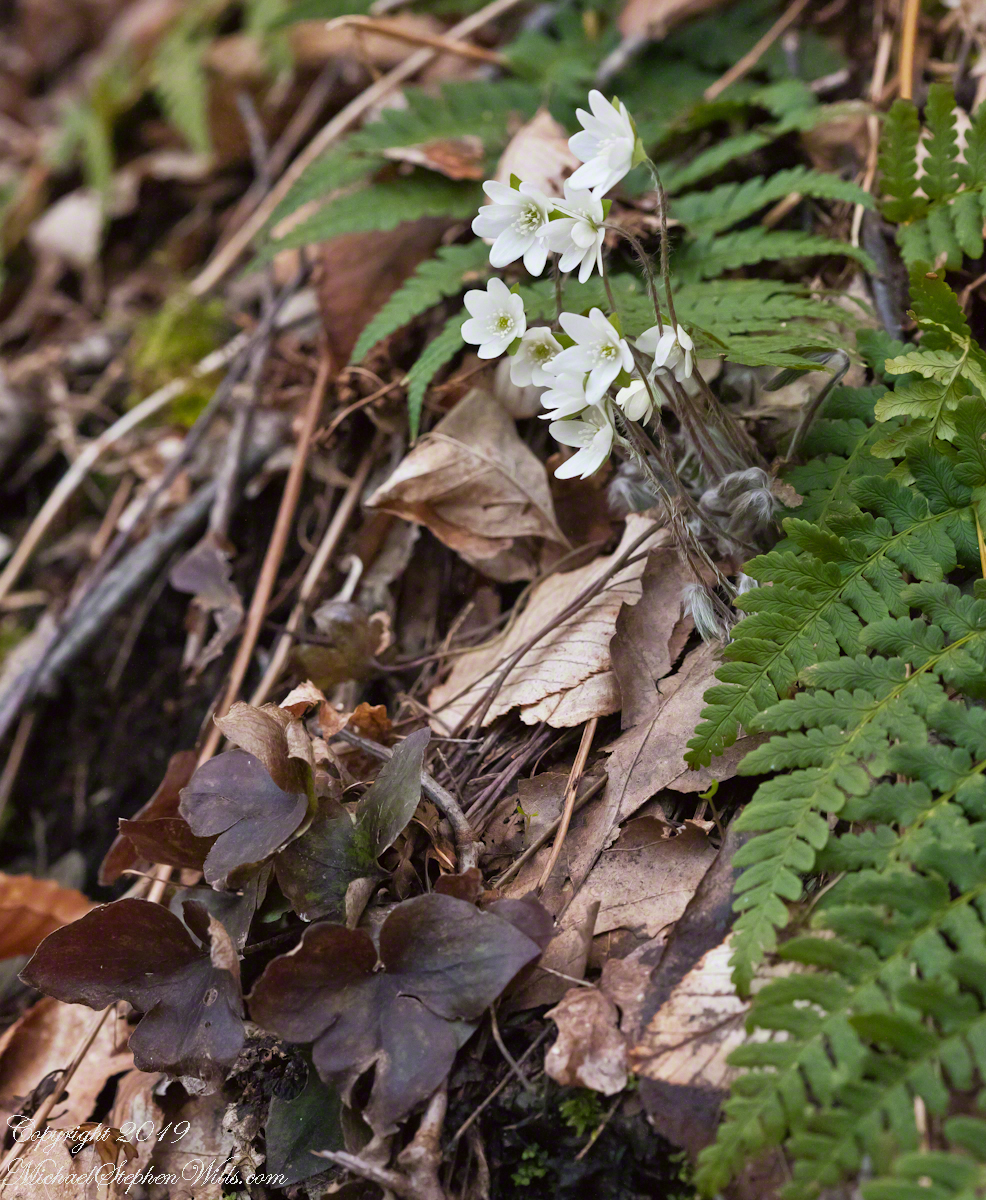
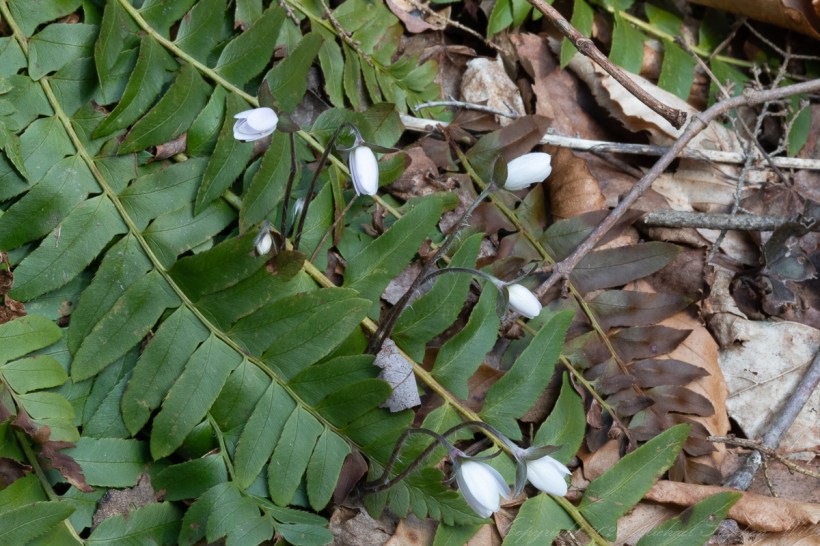
A second cluster of closed blossoms rested among evergreen fern fronds, which appear to be Christmas fern, Polystichum acrostichoides. Their leathery green pinnae, carried through the winter, formed a fitting companion to these early flowers. Together they seemed to embody one of the quiet truths of the April woods: that renewal does not come as a sudden trumpet blast, but by degrees. First the fern still holding its winter green. Then the bud. Then the opening. Then the day when the whole hillside begins to feel like a promise being kept.
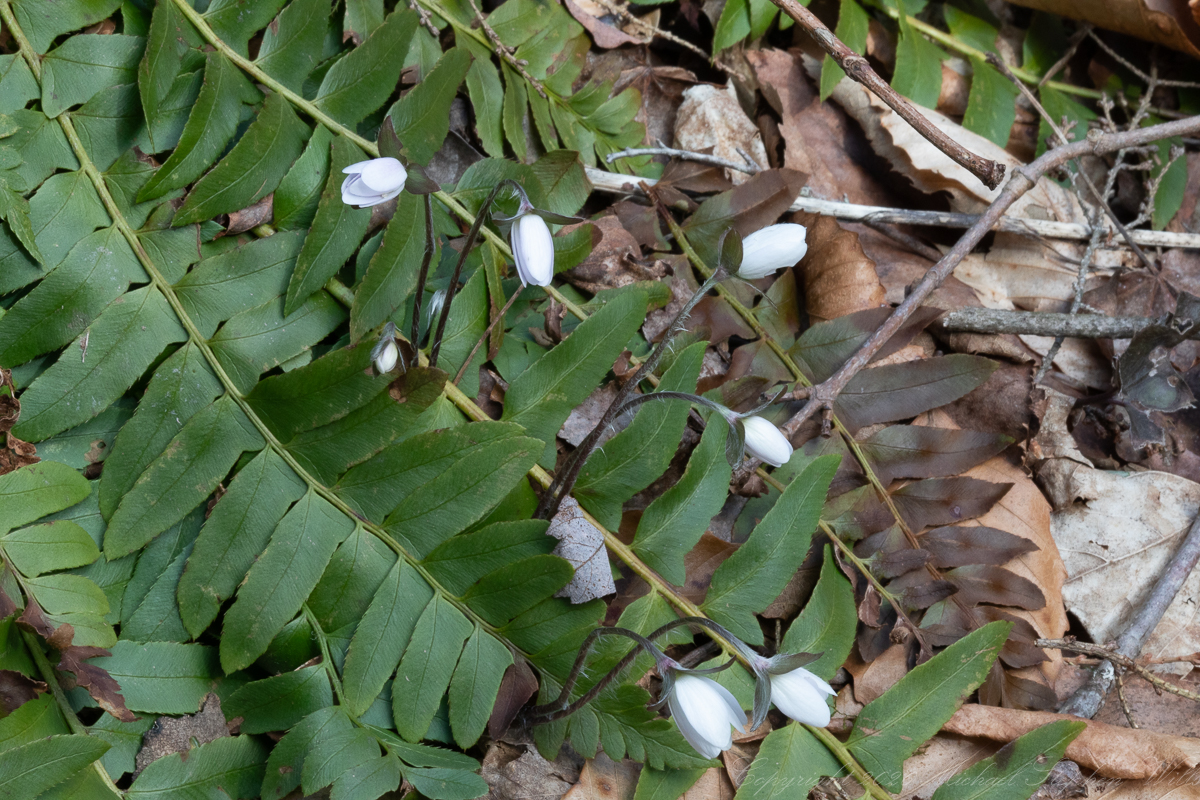
White Hepatica Blossoms with Christmas Fern

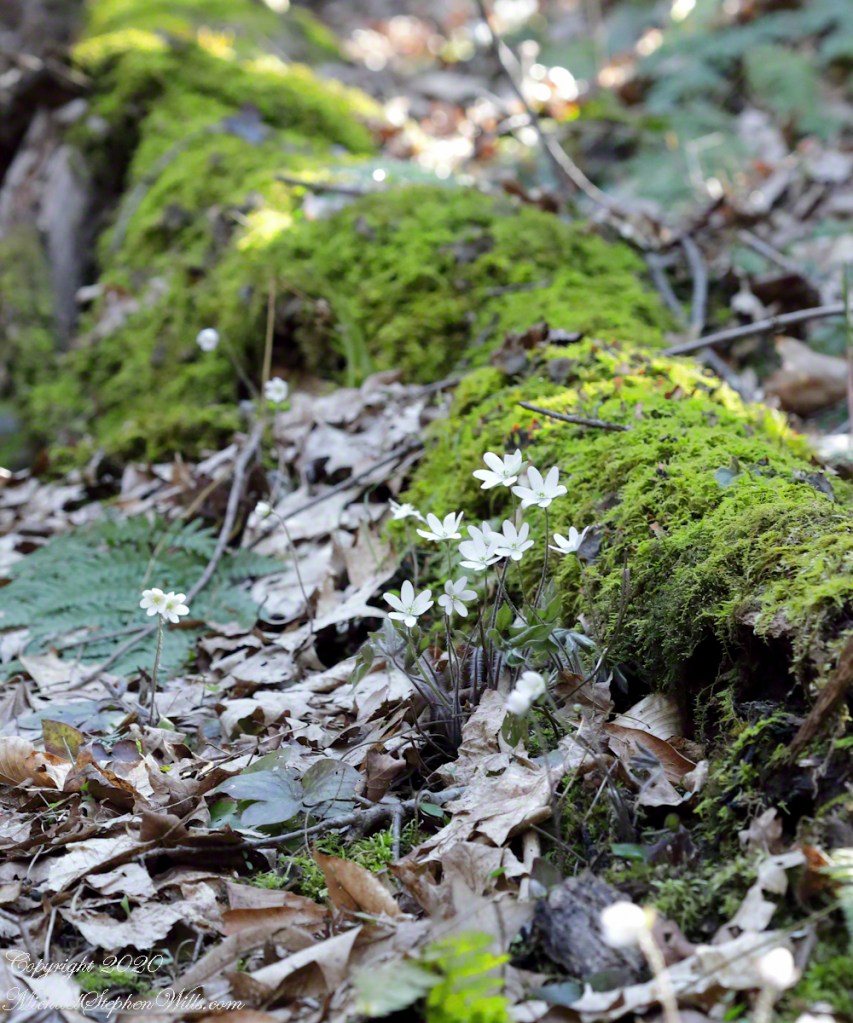
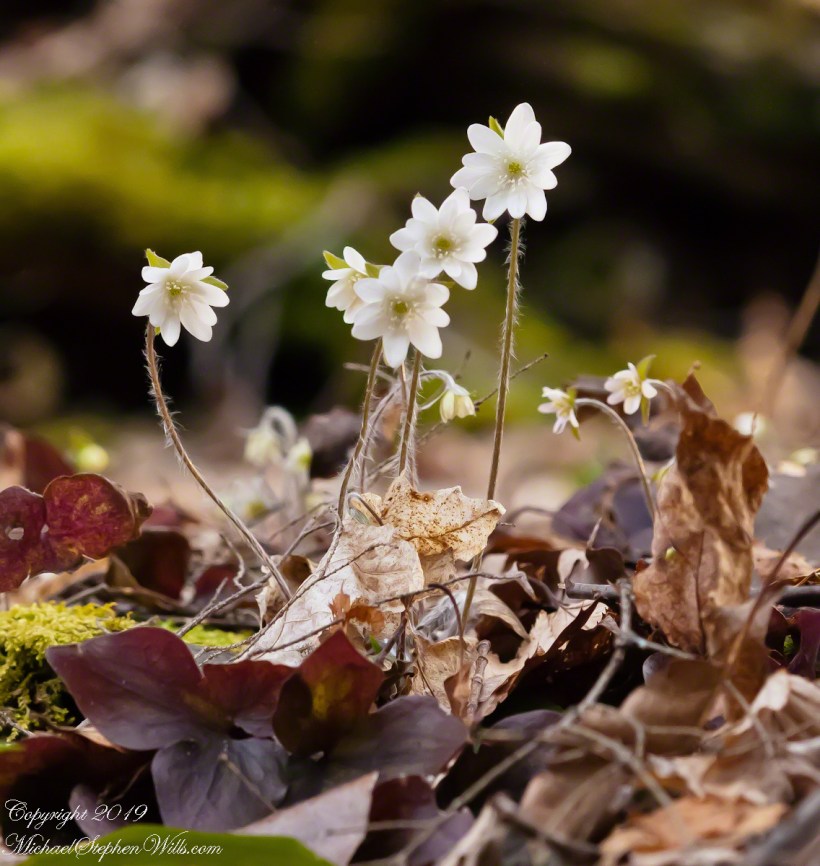
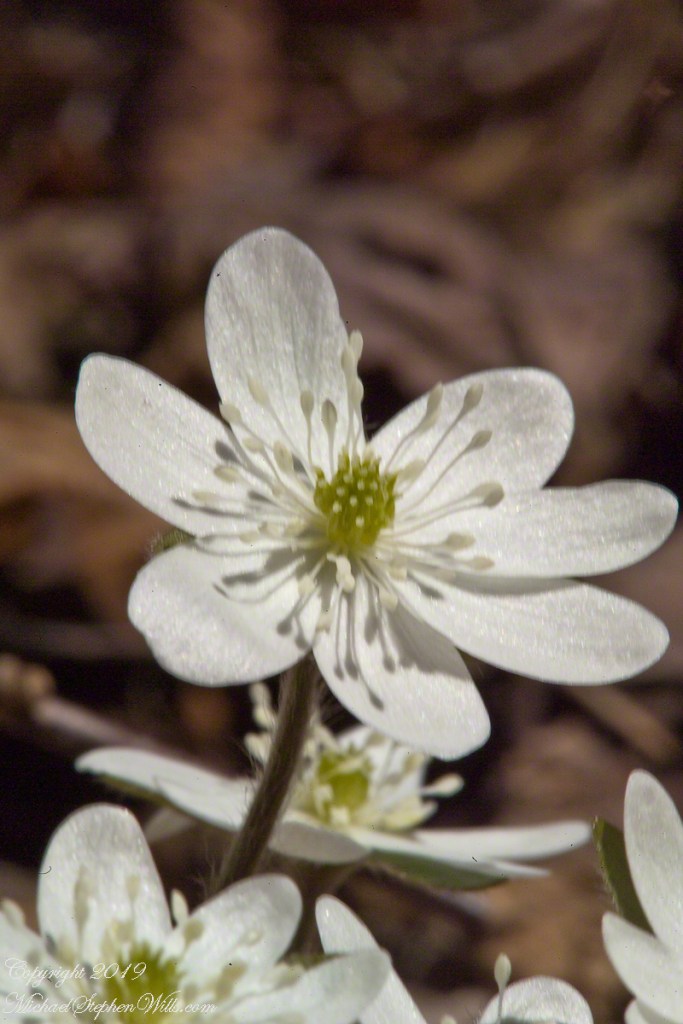
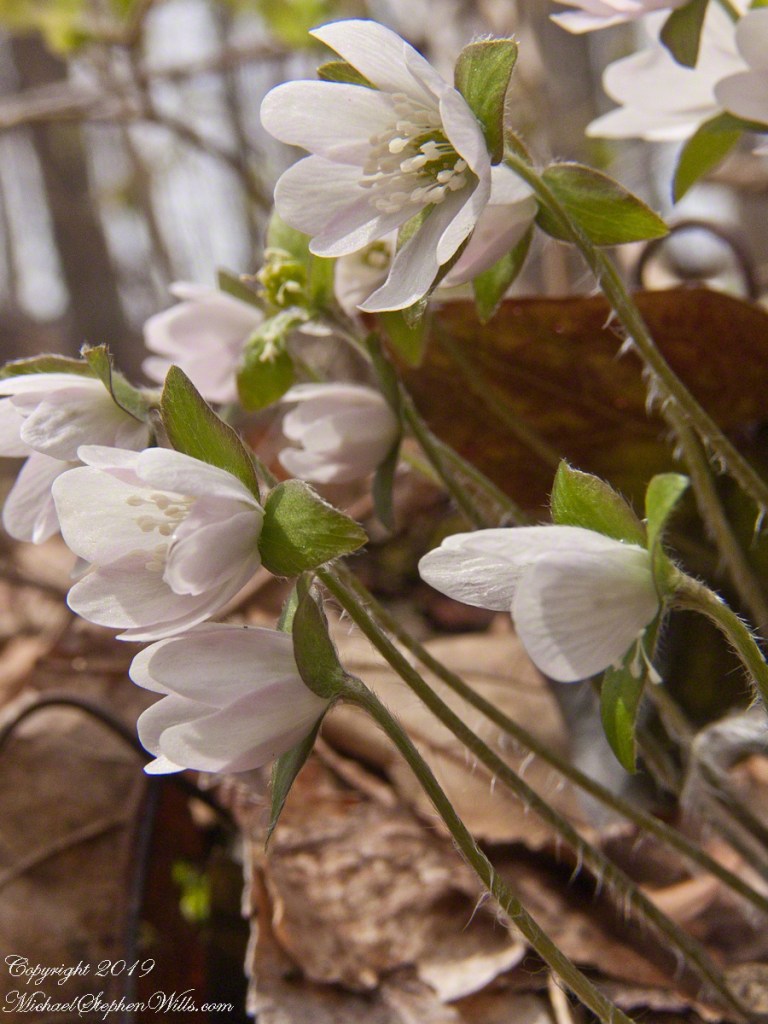
The last three photographs showed the same group of white hepatica blossoms growing on a south-facing slope beneath a tree root. By then I had placed the camera on my Manfrotto BeFree tripod, and I worked more deliberately, grateful for the patience that such flowers invite. One image was made in sunlight; the others when the sun had passed behind a cloud. That change mattered. In the sun, the white blossoms seemed almost to ring like little bells of light. Under cloud, they grew quieter, softer, more inward. The mood deepened. The exposed root above them became a rough shelter, a woodland lintel, and the blossoms beneath gathered into a hidden chapel of spring.
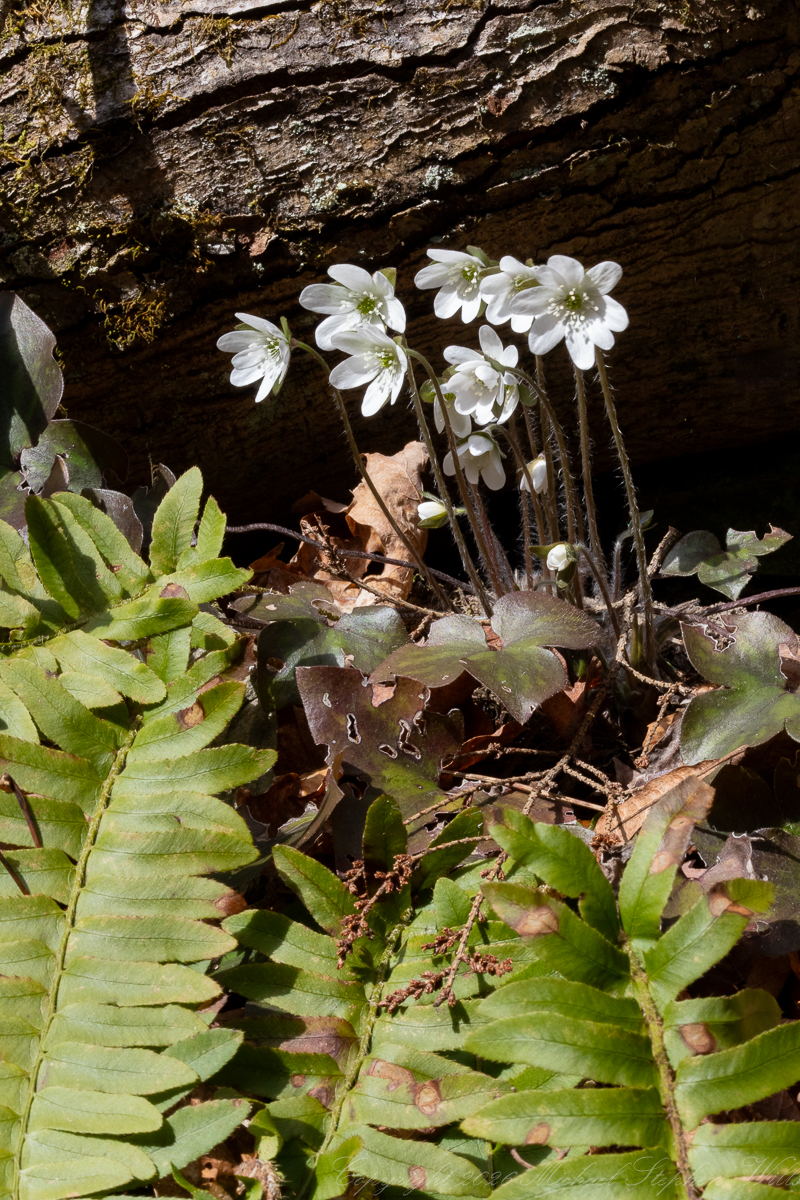
Hepatica acutiloba in sunlight on an early spring afternoon. Fillmore Glen New York State Park, Cayuga County, Finger Lakes Region, New York State. April 2026

I stood there for a long while, looking not only at the flowers but at the place that had made their blooming possible. A south-facing slope gathers warmth earlier in the season. The root held the bank in place and offered a small measure of protection. The leaf litter insulated the soil. The ferns kept their green nearby. Nothing in such a scene is accidental. The woods are full of these small negotiations between light, temperature, shelter, and time. Hepatica, for all its delicacy, is a master of them.
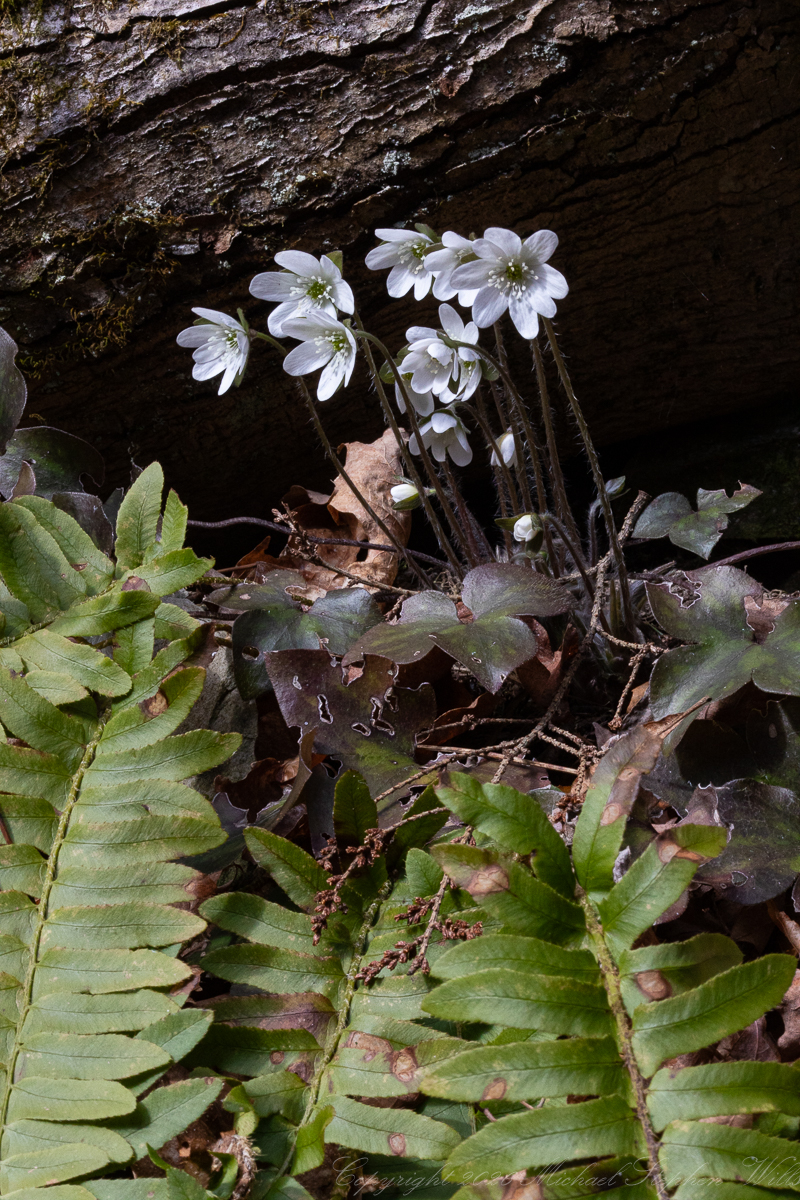
Here a cloud hid the sun, the blossoms in side view.

We call these flowers spring ephemerals, and the name is true in one sense. Their season of bloom is brief. Before long, the trees overhead will leaf out, and the bright interval in which they thrive will begin to close. Yet “ephemeral” can sound too fragile a word for a plant so well adapted, so seasoned in its timing. Hepatica does not merely appear and vanish. It endures. Its leaves persist through winter. Its flowering is tuned to a narrow ecological opening, one shaped by the still-bare canopy of the deciduous forest. For a few precious weeks, before shade deepens, it steps into the light and makes use of what the season offers.
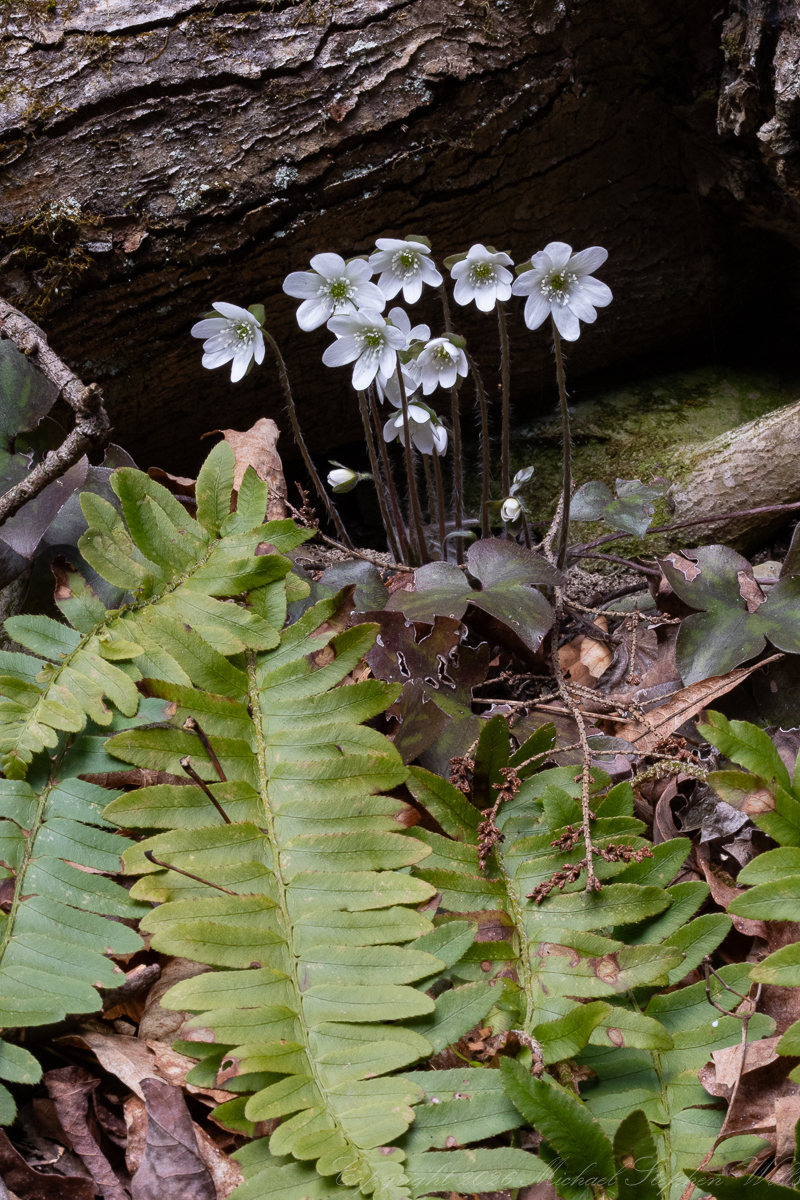
The sun still hidden by a cloud, the blossoms face on.

Perhaps that is why hepatica has so often found a place in literature and nature writing. It carries a symbolism that feels earned rather than assigned. It arrives when the world still bears winter’s austerity, and so its bloom seems less decorative than revelatory. Generations of observers have seen in such flowers a sign that the year turns first in whispers. Not through spectacle, but through fidelity. A small flower opening under bare branches can change the whole moral weather of a walk.

That was how it felt to me at Fillmore Glen. The woods were still mostly brown and gray, still waiting for leaf and shade and birdsong in full chorus. Yet these blossoms had already crossed some invisible threshold. They were spring in its purest form: not abundance, but inception. Not the full choir, but the first clear note.

Photography, in such moments, becomes for me an act of receiving. The changing light, the choice of aperture, the longer exposures when the sun went behind a cloud, the shift from handholding to bracing to tripod—all of it asked for attention. Hepatica does not yield itself to haste. It asks me to be present enough to notice what kind of light it is standing in, what kind of slope it has chosen, what old leaves still surround it, what green companions remain from winter. The camera only deepens that act of seeing.

I left Fillmore Glen feeling that I had witnessed something both small and immense. These flowers were no larger than a coin, yet they altered the whole forest around them. The leaf litter no longer seemed merely dead, but sheltering. The bare trees no longer seemed empty, but expectant. In the presence of hepatica, the woods felt poised on the edge of utterance.

That may be the lasting wonder of these early blooms. They do not overwhelm. They steady. They remind me that beauty often comes close to the ground, half-hidden, speaking softly. In the leafless woods of April, that soft speech can feel like grace.
Enter your email to receive notification of future postings. I will not sell or share your email address.

Forest Gems – The Natural History and Lore of Hepatica

Join us on a journey through the enchanting forests of the Finger Lakes as we explore the fascinating world of Hepatica nobilis. Discover the lore, natural history, and beauty of these early spring bloomers. Dive into the magic of the wild!

As I ventured along the Gorge Trail of Robert H. Treman New York State Park, I stumbled upon a captivating sight. Amidst the rich leaf litter and emerging greenery, clusters of Hepatica plants caught my eye. Although the flowers had already gone to seed, their distinctive leaves and stems told a story of early spring beauty in the heart of the Finger Lakes Region, Tompkins County. Using my Apple iPhone 14 ProMax, I documented these charming plants, eager to delve deeper into their fascinating world.

Hepatica, scientifically known as Hepatica nobilis, also goes by several common names including Liverleaf, Liverwort, and Kidneywort. The genus name “Hepatica” comes from the Greek word “hepar,” meaning liver, due to the shape and color of its leaves, which resemble the lobes of a human liver. This resemblance led to the plant being used historically in herbal medicine to treat liver ailments, in line with the Doctrine of Signatures—a belief that plants resembling body parts could cure ailments of those parts.

Fillmore Glen New York State Park, Moravia, New York on an April afternoon.

The common names of Hepatica reflect its historical medicinal uses. “Liverleaf” and “Liverwort” both reference its liver-shaped leaves, while “Kidneywort” likely arose from the kidney-like appearance of its seeds. These names have endured through centuries, reflecting the plant’s significant role in both folklore and herbal medicine.

Hepatica is a perennial plant in the buttercup family, Ranunculaceae. It thrives in deciduous forests, often found in shaded areas with rich, well-drained soil. The plant is one of the first to bloom in early spring, producing delicate flowers in shades of white, pink, blue, or purple. By the time I encountered them on my hike, the flowers had already transitioned to seed, but the distinctive lobed leaves remained vibrant and lush.

Fillmore Glen New York State Park, Moravia, New York on an April afternoon.

Reproduction in Hepatica is primarily through seed, though the plant can also propagate vegetatively. The flowers are insect-pollinated, attracting early-season pollinators such as bees and flies. Once pollinated, the flowers produce seeds encased in small, fuzzy fruits. These seeds are often dispersed by ants, a process known as myrmecochory, which helps ensure the plant’s spread throughout the forest floor.

Native American tribes, including the Iroquois, valued Hepatica for its medicinal properties. They used the leaves to brew teas believed to treat liver disorders, digestive issues, and skin ailments. European settlers adopted similar practices, incorporating Hepatica into their own herbal remedies.

In European folklore, Hepatica was often associated with healing and protection. The plant was believed to ward off evil spirits and protect against various maladies. In the language of flowers, Hepatica symbolizes confidence and bravery, reflecting its early emergence in the harsh conditions of early spring.

Fillmore Glen New York State Park, Moravia, New York on an April afternoon.

Today, Hepatica continues to enchant nature enthusiasts and hikers with its early blooms and lush foliage. It plays a crucial role in the ecosystem, providing a vital source of nectar for early pollinators and contributing to the biodiversity of deciduous forests.

Walking through the gorge, I felt a deep connection to the natural history and cultural significance of Hepatica. The plant’s resilience and beauty, even in its seeding stage, served as a reminder of the enduring cycles of nature and the intricate relationships between plants, animals, and humans.

In conclusion, Hepatica nobilis, or Liverleaf, is a plant of remarkable beauty and historical significance. Its early spring blooms and distinctive leaves make it a cherished sight in the forests of the Finger Lakes. As I continued my hike, I felt a profound appreciation for the rich tapestry of life that Hepatica represents, a testament to the enduring wonders of nature.

Copyright 2024 Michael Stephen Wills All Rights Reserved

Early Spring I

transformation to seed

Afternoon, May 5th last week was spent in Fillmore Glen New York State Park, Moravia New York. Back in 2002, this was my first wildflower photography experience and repeated many times over the years (Click me for another Hepatica posting). Here is a follow-up showing the next step in the development of Hepatica blossoms, forming seed heads.

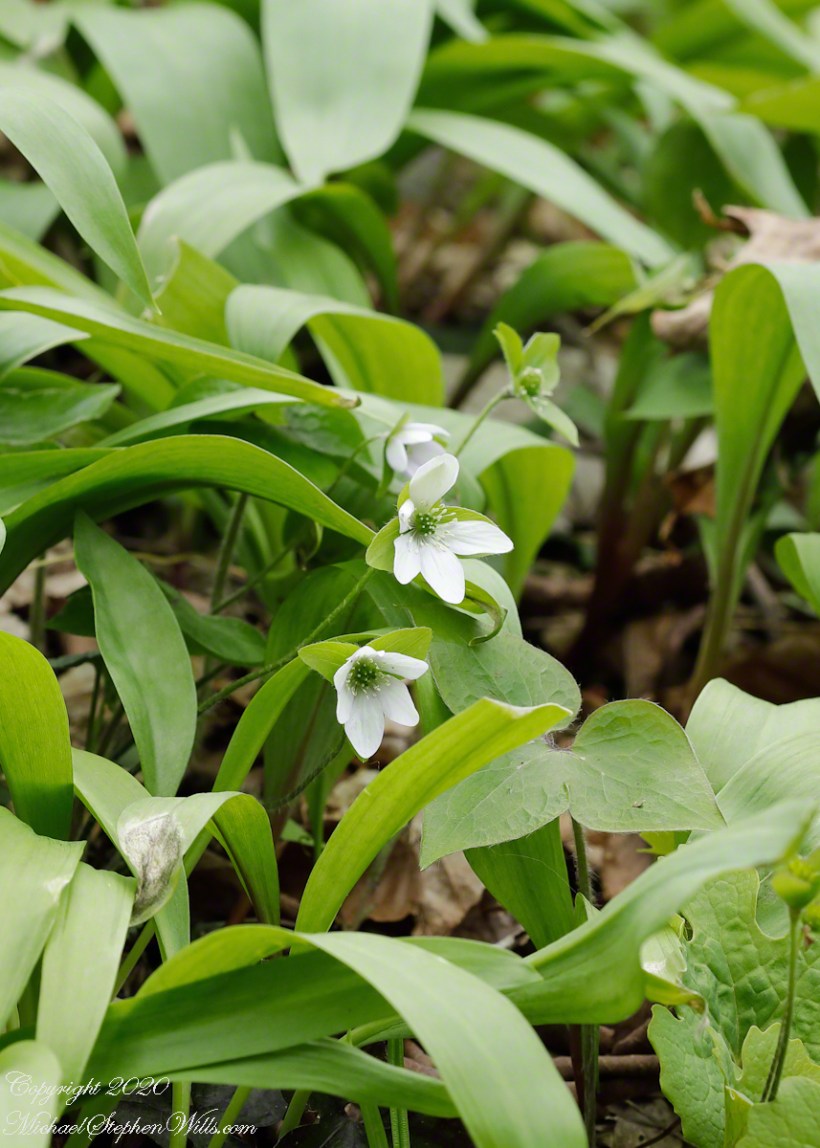
Here you see both flowers and a single seed head set in three bracts.

Click photograph for larger image. To do this from WordPress Reader, you need to first click the title of this post to open a new page.

Click for my “Finger Lakes Memories” Fine Art Photography Gallery.

Copyright 2024 All Rights Reserved Michael Stephen Wills

Spring Outing V

Wildflower Groupings

Red Trillium are early bloomers, along with Hepatica. I often photograph them together. Click me for a 2019 Red Trillium post of photographs from 2007 taken in Fillmore Glen Park.

Here we have two photographs from the end of the April 20, 2020 session. I finished a series of macro Hepatica and, tired (emotionally, not physically) and not wanting to step up the slope, captured the following grouping of a single Red Trillium, lit by a bolt of sunlight, White Hepatica, fern and the budding White Trillim from yesterday’s post. Not the same trillium, a continuation of all the individuals in bud.

Click photograph for a larger view. To do this from WordPress Reader, you need to first click the title of this post to open a new page.

These were 15 feet or so up the slope above the South Rim Trail. I used the 100 mm macro lens, with the spring breezes ISO set to 2500, f/5.6 for a 1/200 exposure.

Not far away, also upslope, was this flower grouping against a moss covered log. Park forestry leaves fallen trees in place to return to the soil. Camera settings are the same.

Both photographs were handheld.

Copyright 2024 All Rights Reserved Michael Stephen Wills

Personable Wildflowers

With wishes for a Blessed Easter 2021

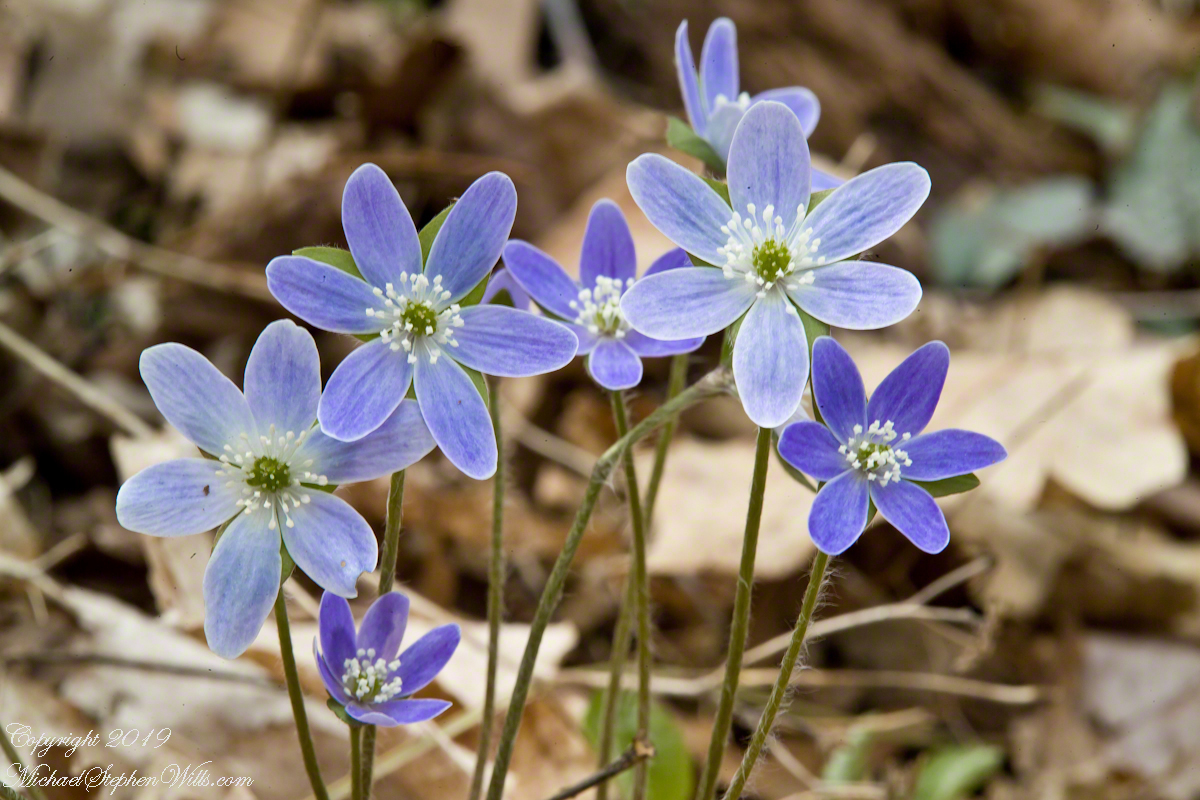
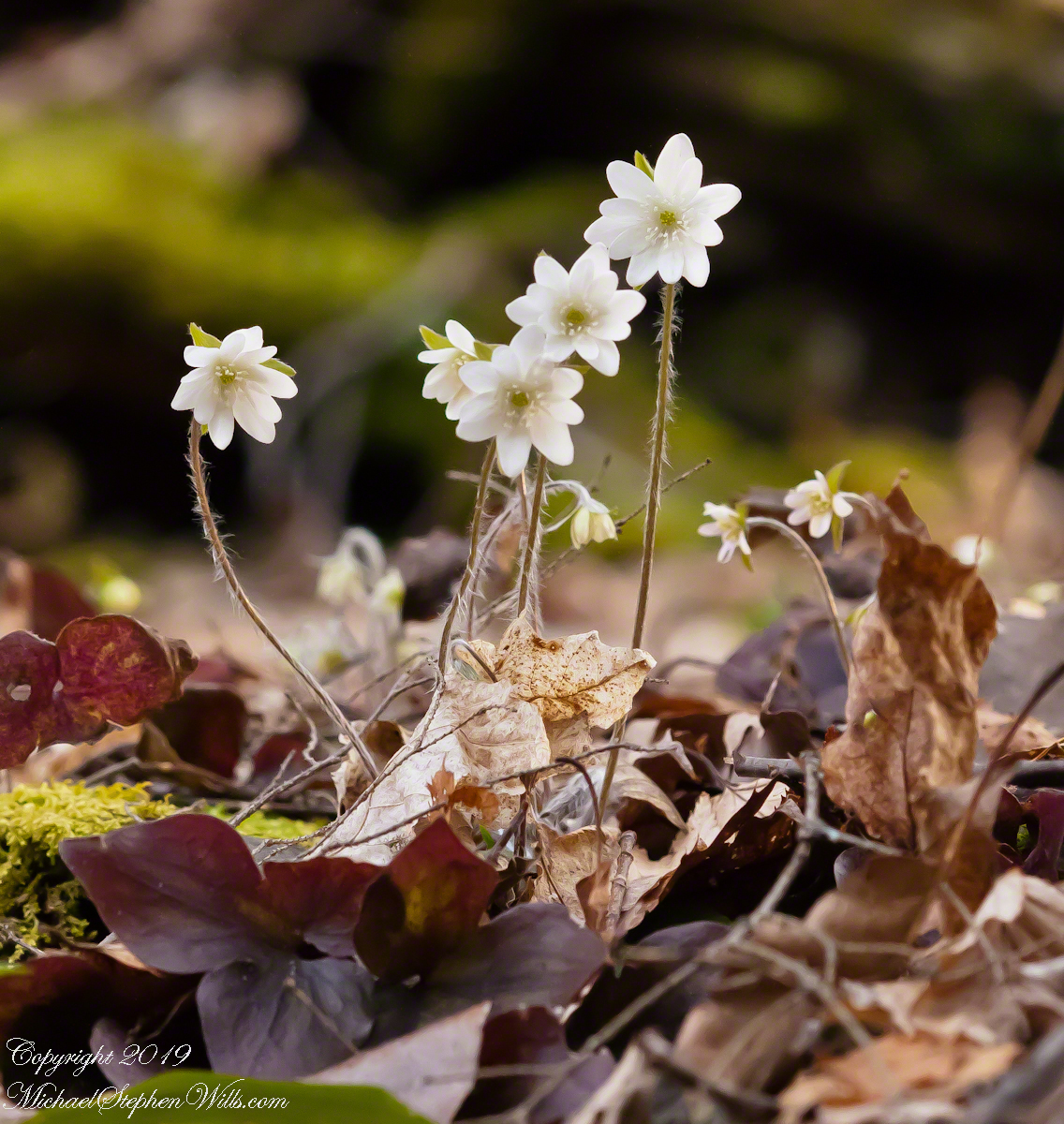
Late one April afternoon these backlit Hepatica on the gorge wall above the South Rim Trail of Treman Gorge posed for their portraits.

Click me for the first post of this series.
Click me for “Finger Lakes Memories”, a gallery of fine art photography.
Copyright 2019 All Rights Reserved Michael Stephen Wills

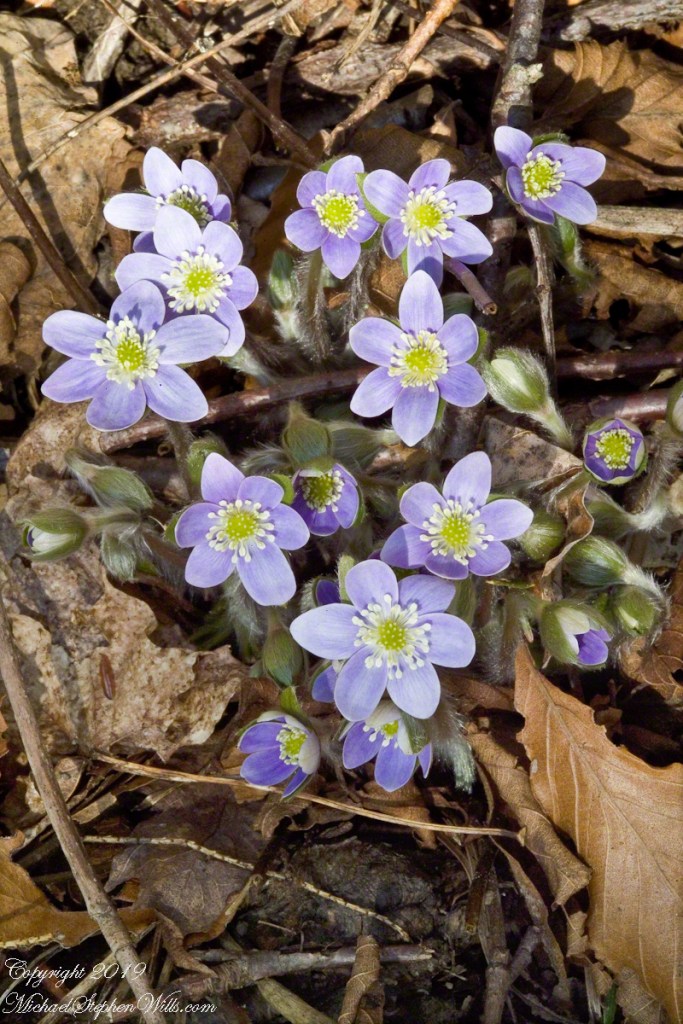
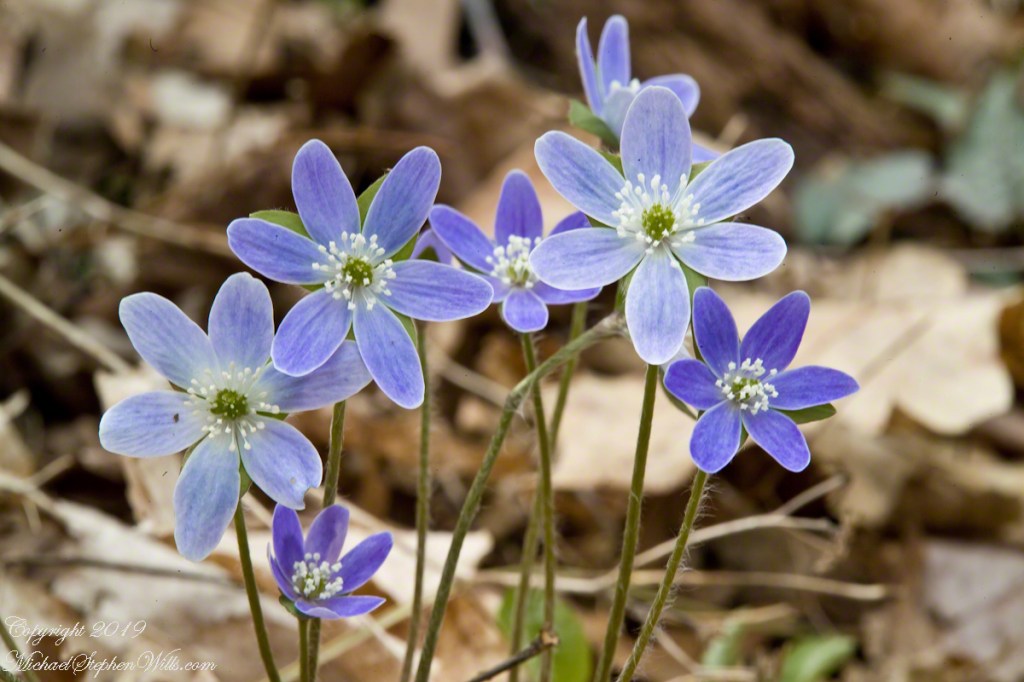
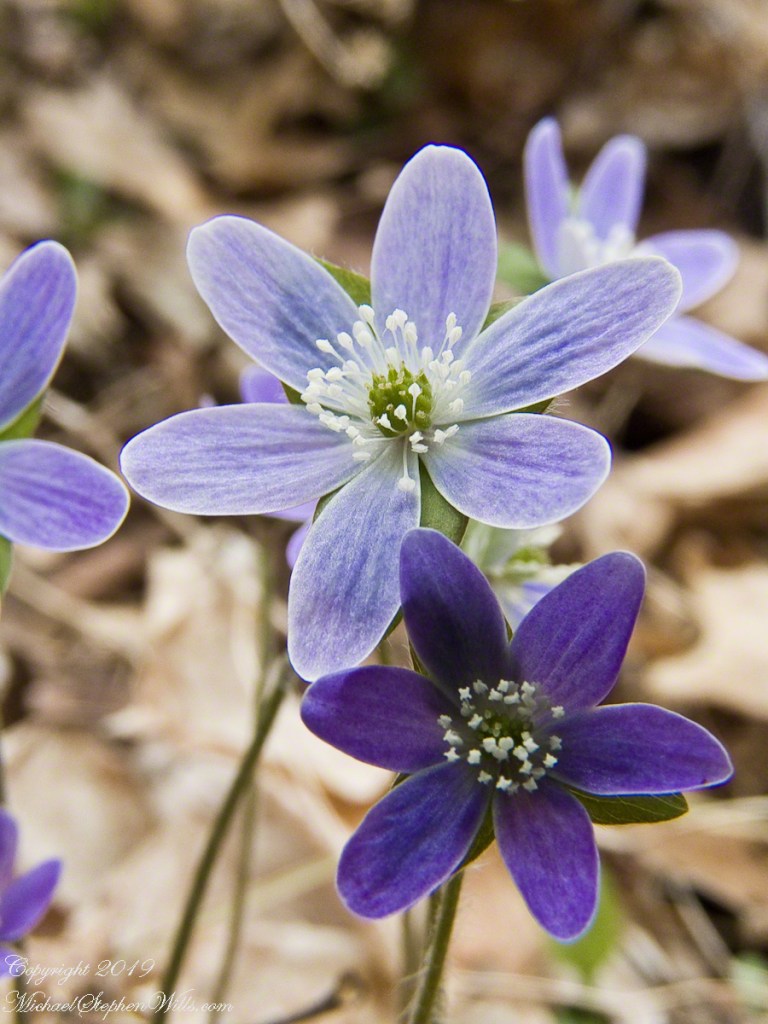
Hepatica

Early Spring Beauties

Most every year since 2002 I’ve photographed these personable beauties, the first wildflowers to bloom as early as late February through the snows.

Click photograph for a larger version
Click me for “Finger Lakes Memories”, a fine art photography gallery.

Copyright 2019 All Rights Reserved Michael Stephen Wills

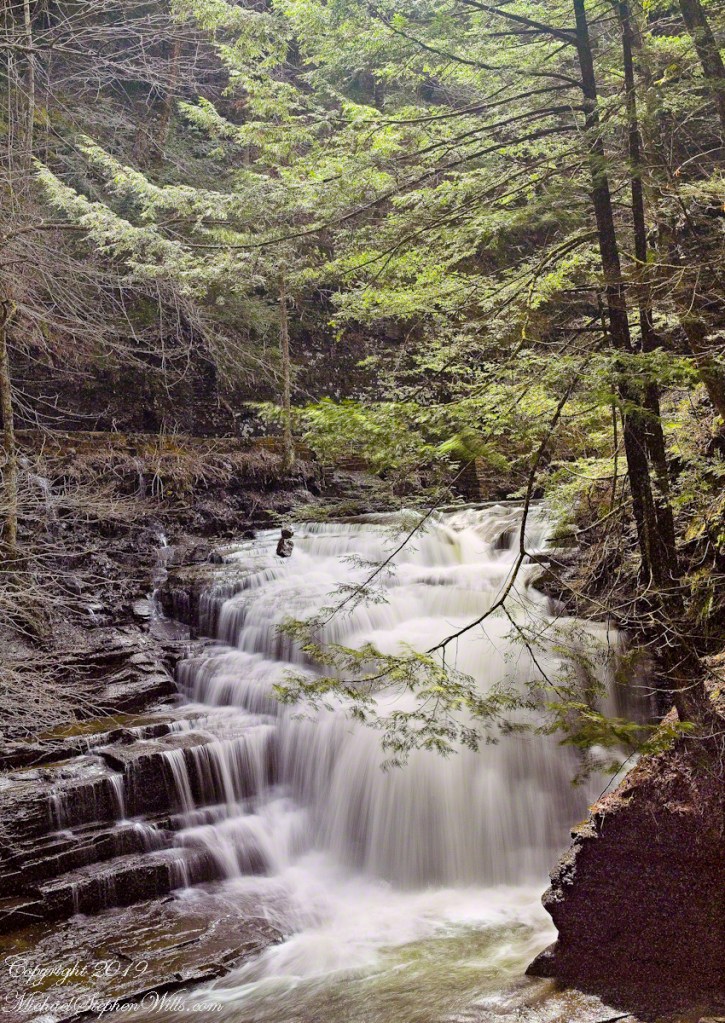
Hepatica, Fillmore Glen

Hepatica from April 2007

Back in 2007 I used a 100 mm Canon Macro lens on a Kodak slr along with a Sony DSC-F828 variable lens for this mix of macro and habitat captures presented as a gallery so you can flip back and forth among the larger images. Click any image to bring up a larger version.

Click for my “Finger Lakes Memories” Fine Art Photography Gallery.

Copyright 2019 All Rights Reserved Michael Stephen Wills

Early Spring II

Hepatica from April 2007

Yesterday you saw a grouping of Hepatica flowers and seed heads. (Click me for another Hepatica posting from this season).

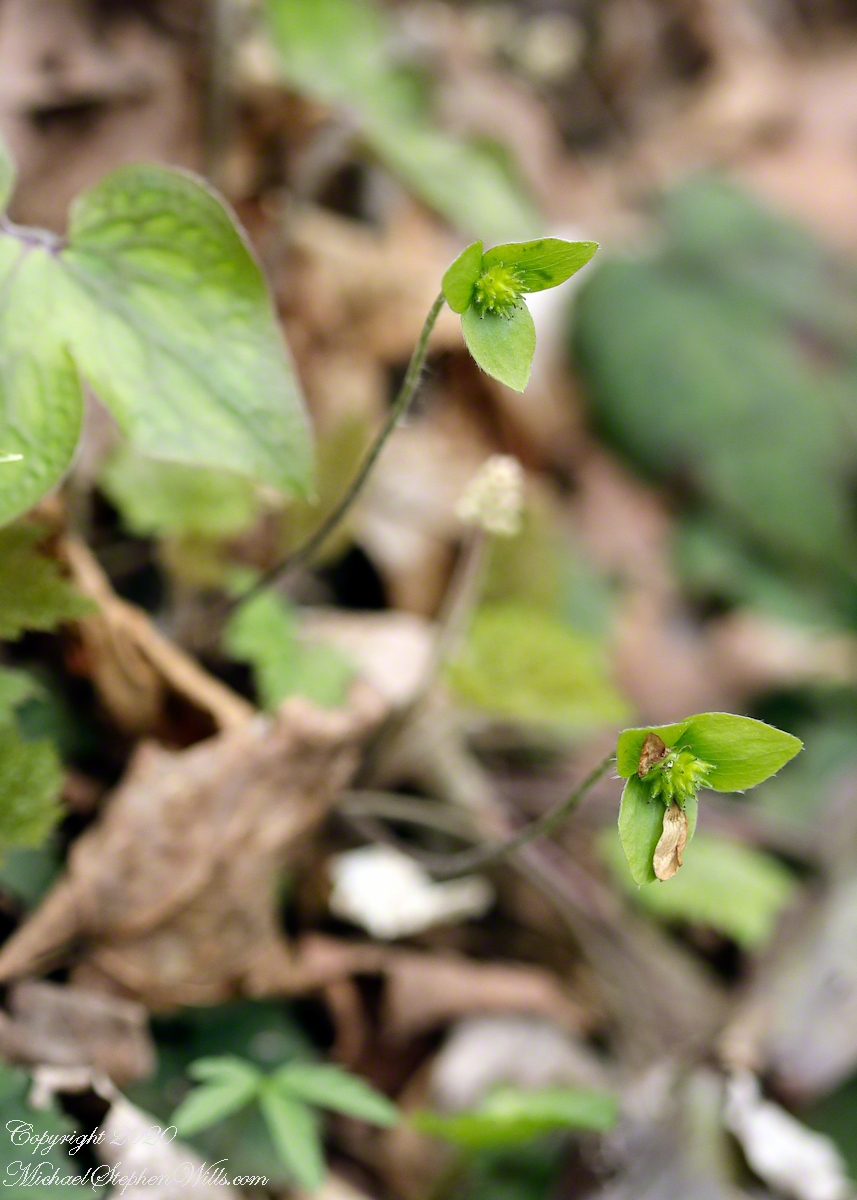
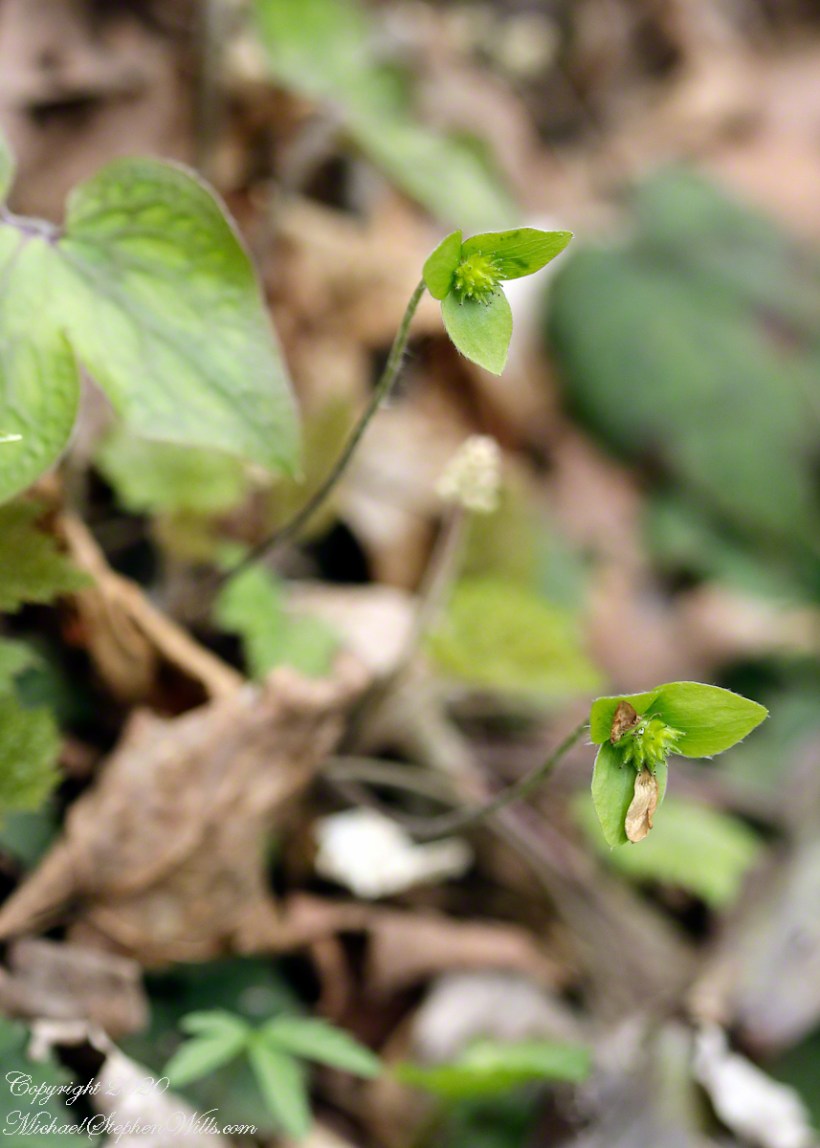
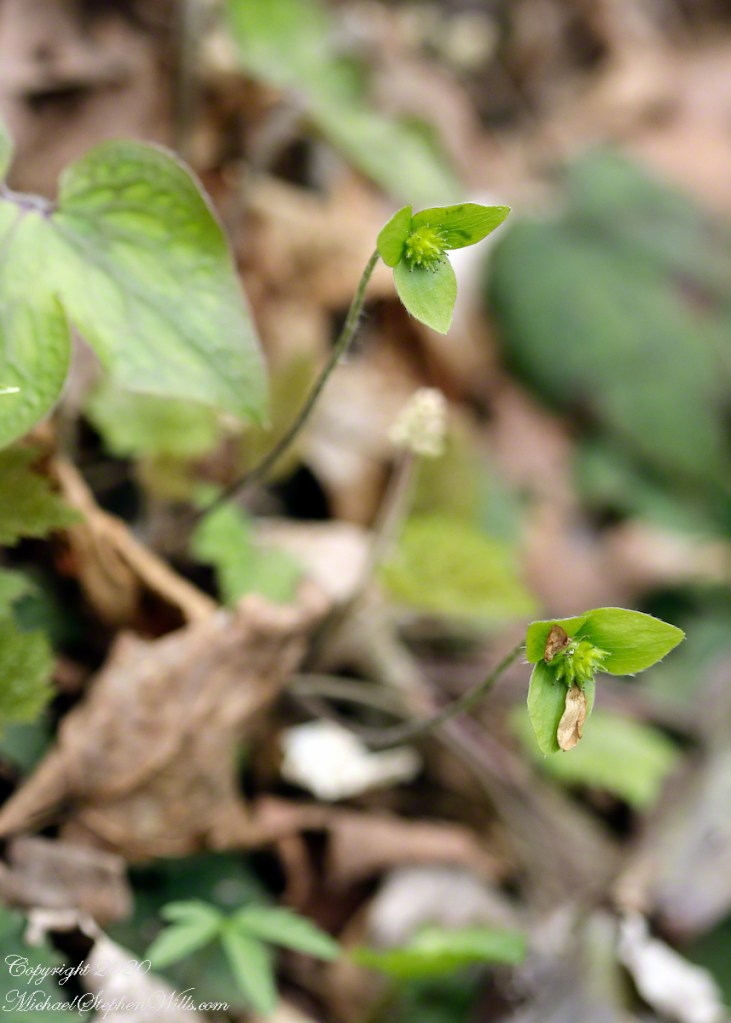
Here you see two seed heads in selective focus, one still has flower petals attached.

Click photograph for larger image. To do this from WordPress Reader, you need to first click the title of this post to open a new page.

Click for my “Finger Lakes Memories” Fine Art Photography Gallery.

Copyright 2020 All Rights Reserved Michael Stephen Wills