A September walk at Taughannock Falls reveals layered cliffs, white snakeroot, drifting clouds, Cayuga Lake, and the quiet threshold between summer and autumn.
On September 14, 2026, Taughannock held itself between seasons. Summer had not yet departed; autumn had not yet claimed the gorge. The trees still wore their full green abundance. Yet, here and there, high on the rims and tucked into the ravine walls, yellow had begun its quiet work. I experienced it as hints, as first thoughts, as small flames beginning among the maples and shrubs.
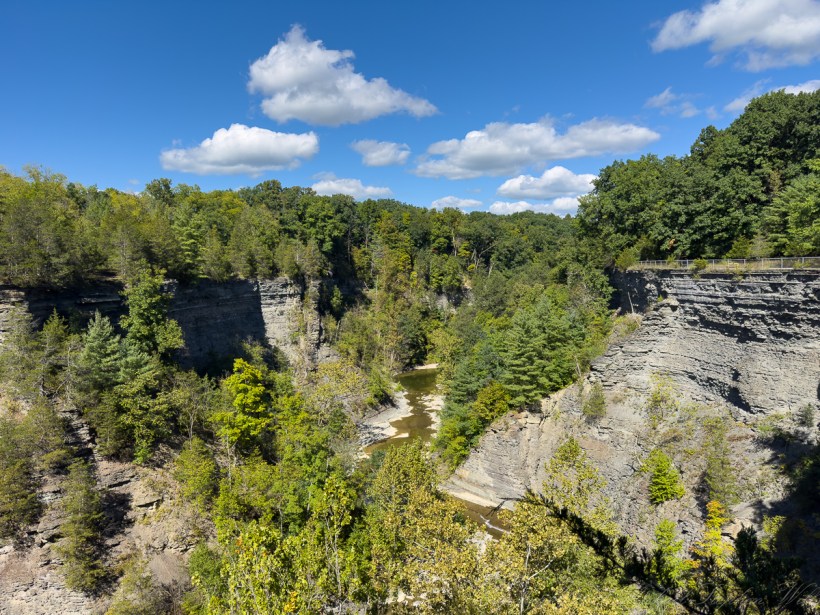
The view from the South Rim Trail. From a walk around Taughannock Falls State Park, down the South rim Trail, up the North Rim Trail. September 14, 2026
The gorge opened first as architecture: a long cleft of layered stone, inhuman shades of gray, cut by water through an immensity of time. From the rim, the creek below seemed almost modest, a brown-green ribbon moving through a corridor it had patiently made. The cliffs did not appear carved so much as remembered into shape. Bed after bed, ledge after ledge, they held the ancient sea in their faces. The rock seemed written in lines, a ledger of vanished depths, pressure, uplift, frost, collapse, and flow. Trees clung wherever they could. Roots found cracks. Cedars leaned over voids. Hardwood trunks rose from impossible perches, answering stone with leaf.
An extravagant sky above all. This blue, saturated and clean, carried great white clouds across the park like slow, wandering thoughts; too soft for a place so sternly cut by geology. Yet that contrast is part of Taughannock’s power: air and stone, cloud and shale, the brief and the enduring sharing one frame. The clouds drifted without urgency while the gorge below testified to forces that measure themselves in millennia. Standing there, the human mind is pulled in two directions at once—toward the fleeting weather of the day and toward the deep patience of the earth.
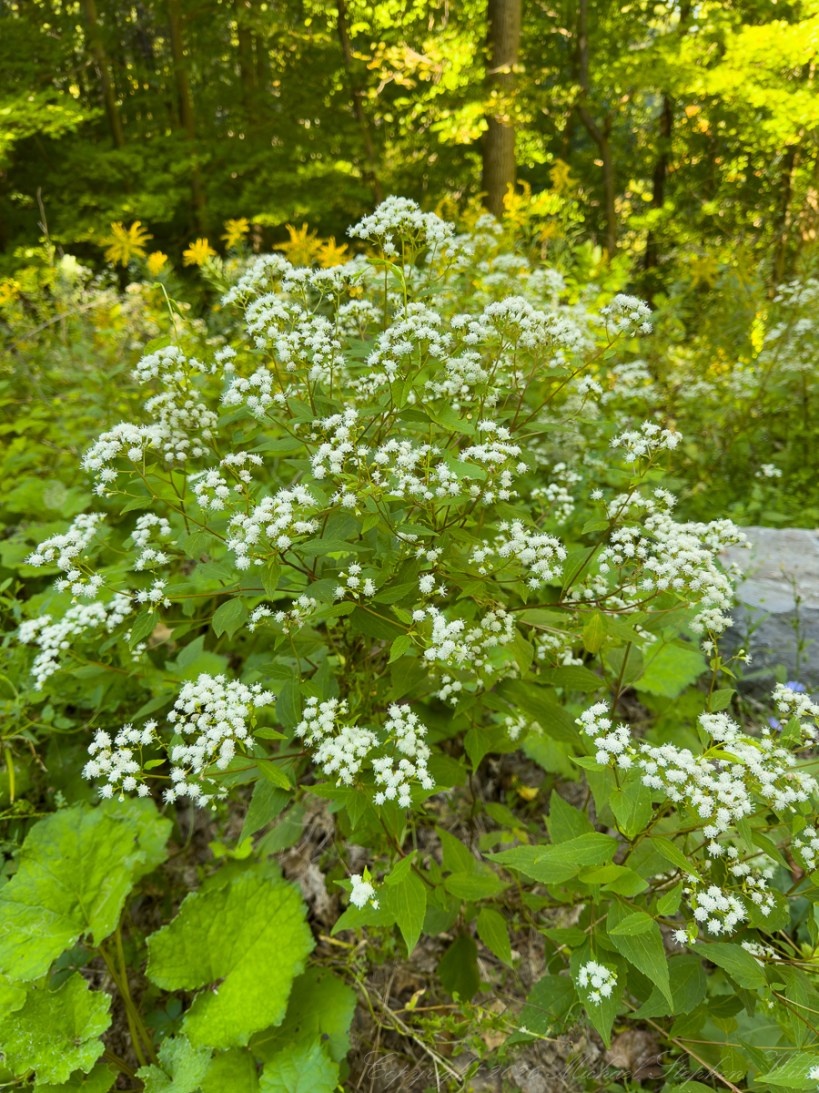
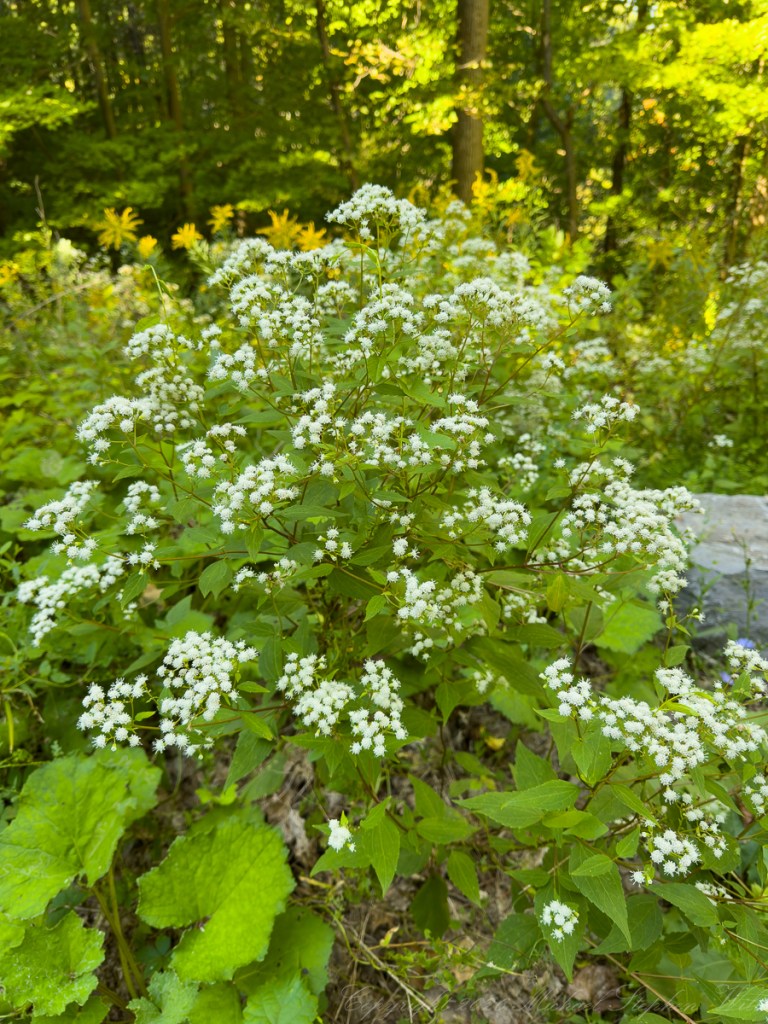
Snakeroot, a poisonous perennial herb
Along the wooded trail, the eye dropped from grandeur to intimacy. White snakeroot bloomed in loose clusters, each tiny flower a small, tufted star gathered into a milky constellation above serrated leaves. Behind it, the forest glowed with the filtered green light of late summer. Goldenrod rose farther back, blurred into warmth. The plants seemed not lesser than the falls or cliffs, only quieter. Requiring a different scale of attention. The gorge overwhelms; the flower invites. One must bend inward to see it properly.
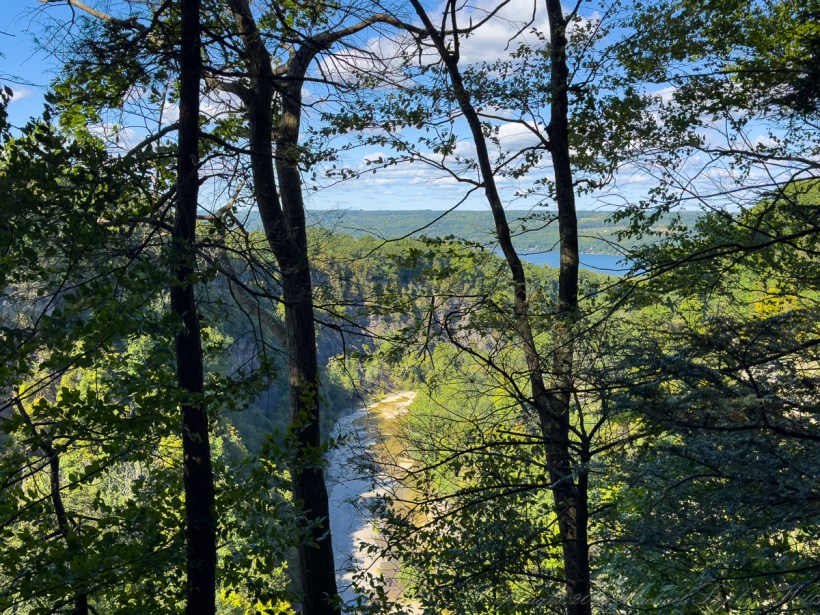
Seen from the South Rim Trail.
Through the trees, Cayuga Lake appeared like a blue promise beyond the gorge. Branches crossed the view in dark strokes, turning the scene into a natural stained-glass window: cliff, water, sky, leaf. The lake lay beyond the ravine’s mouth, broad and reflective, suggesting release after confinement. The creek that had moved through shadow and stone would eventually find that open water. There was comfort in that progression: narrowness giving way to breadth, descent becoming arrival.
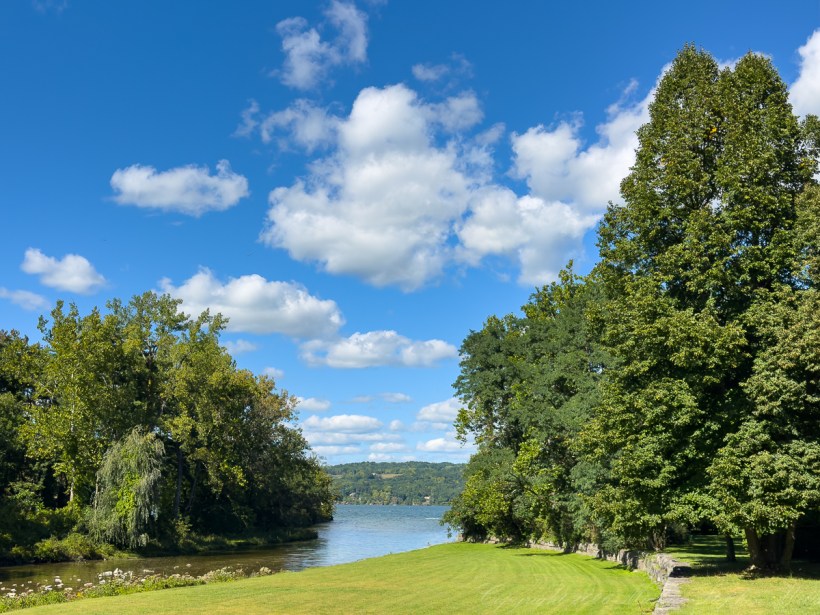
Mouth of Taughannock Creek as it enters Cayuga Lake
At the lakeside, the mood changed again. The same day, the same park, but another world. A green lawn sloped toward the water, bordered by trees heavy with leaves. The lake opened between them, wind-textured and blue-gray beneath the marching clouds. The place felt pastoral after the sternness of the gorge. Here the land breathed easily: gorge cliffs were replaced by open distance, by the far shore softened with trees and scattered houses. The park became a threshold between cultivated calm and wild excavation.
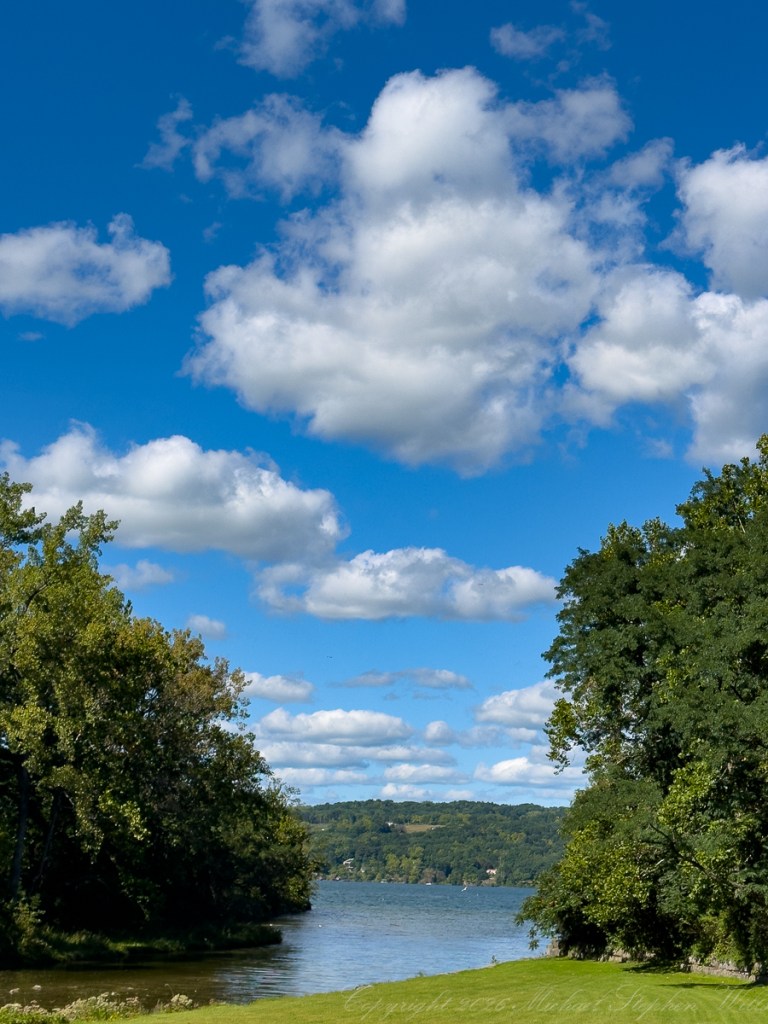
I enjoy the layered effects of clouds.
Then the camera turned upward, giving the sky its own portrait. The clouds took on presence, no longer background but subject—rounded, luminous, casting faint shadows upon themselves. Below them, lake and shore narrowed into a band, as though the world had been rearranged so that sky could speak first. There is a kind of mercy in such a sky. It loosens the mind. It reminds us that even above a gorge, above evidence of erosion and collapse, there is spaciousness.
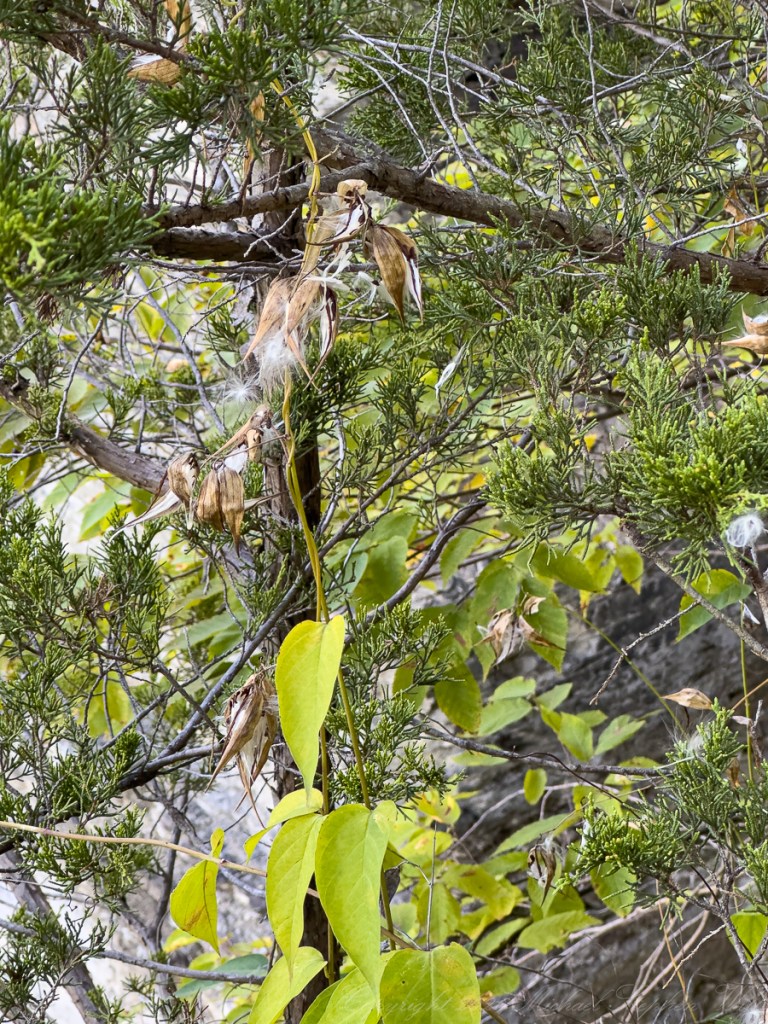
Black Swallow-wort (Vincetoxicum nigrum). Found along the North Rim Trail.
Among the cedars, split pods had released their silk. Pale filaments caught on rough branches and evergreen sprays, small scraps of flight arrested in mid-escape. The pods hung dry and curled, their work nearly done. Seeds that had been hidden were now entrusted to air. This, too, was September’s language: opening, loosening, letting go. Not the dramatic fall of leaves yet, but a subtler surrender. The season had begun to unfasten its clasps.
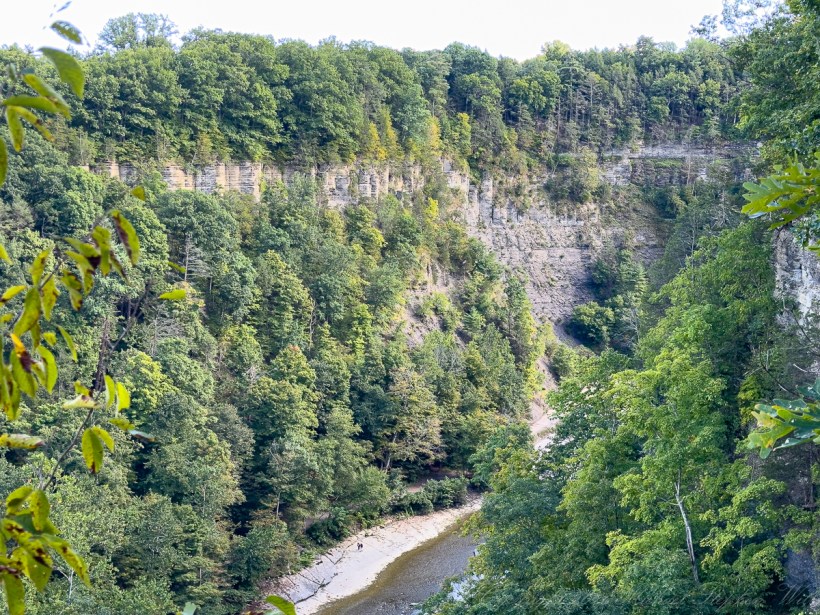
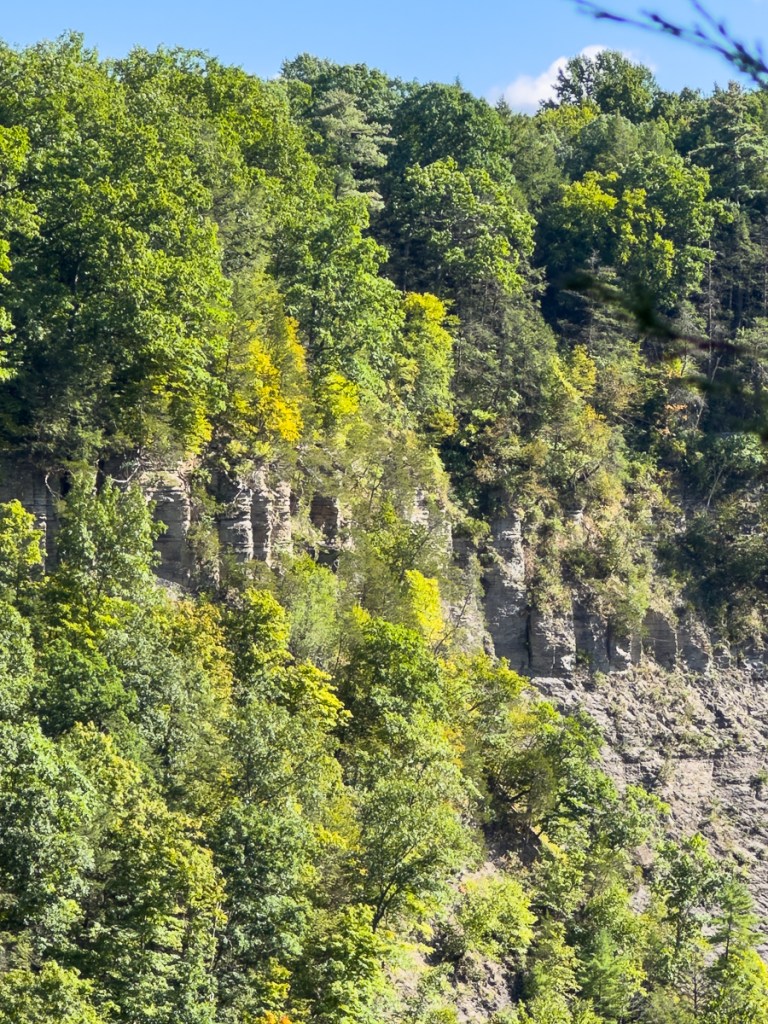
A view from the North Rim Trail.
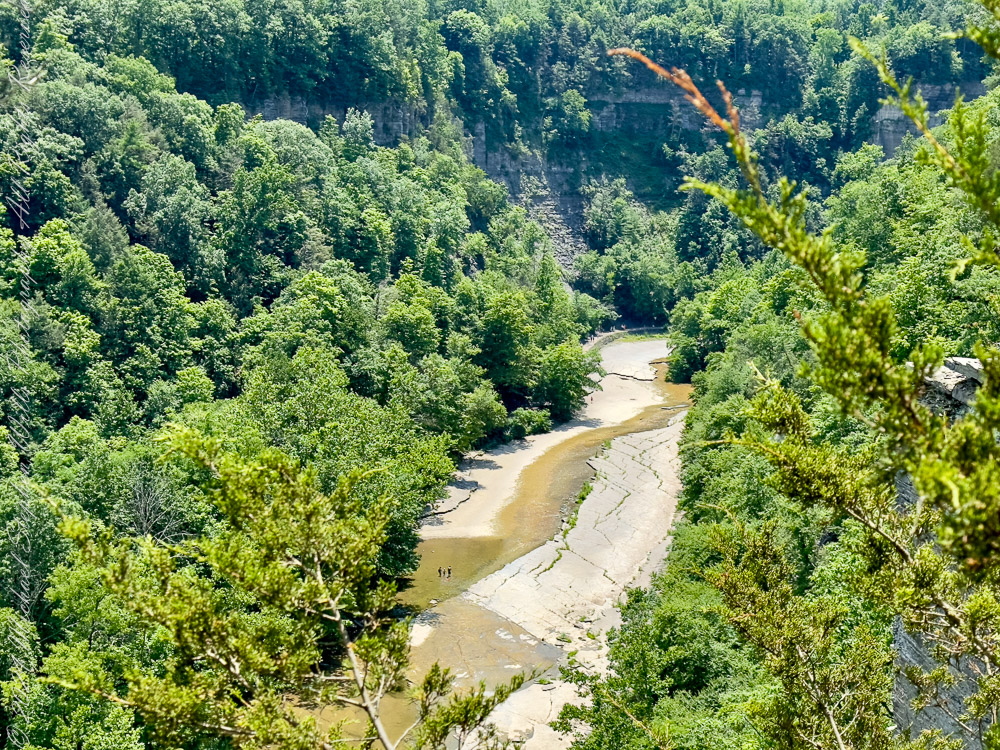
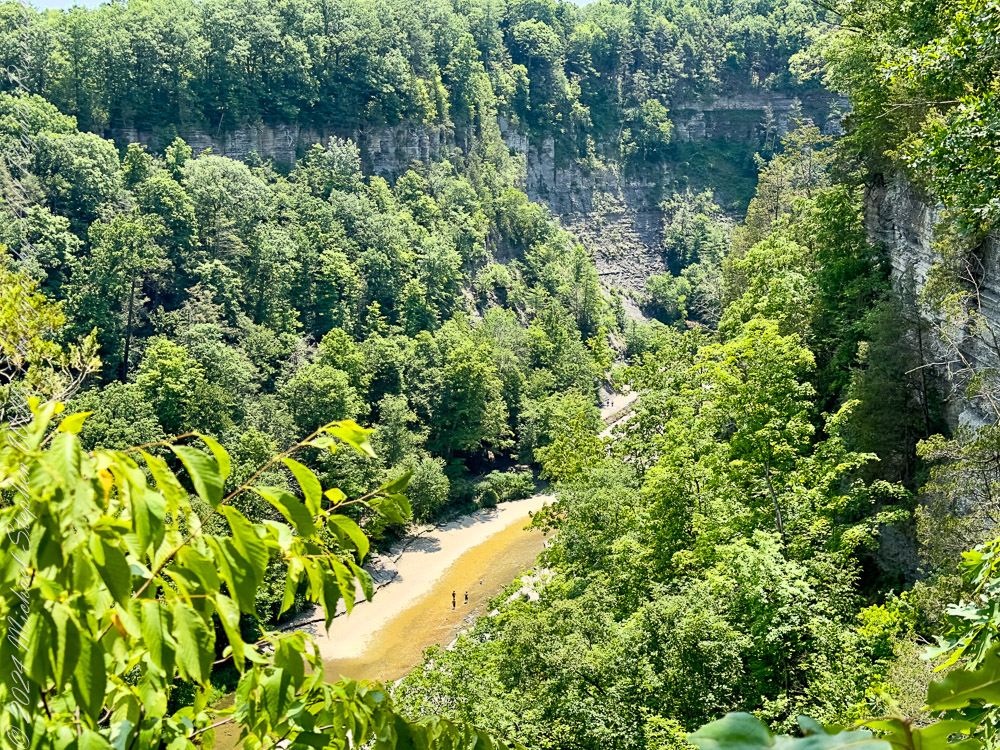
From another rim view, the gorge wall rose in broken columns and pale faces, half-covered by green. Vegetation softened the precipice but did not conceal it. The cliff remained adamant, a vertical memory of water’s persistence. Far below, the creek bent through bars of exposed stone, and tiny figures on the gorge floor gave scale to the scene. The people were scarcely marks against the immensity, yet their presence mattered. They reminded the eye that wonder is not abstract. Someone stands there, looks up, and receives the place.
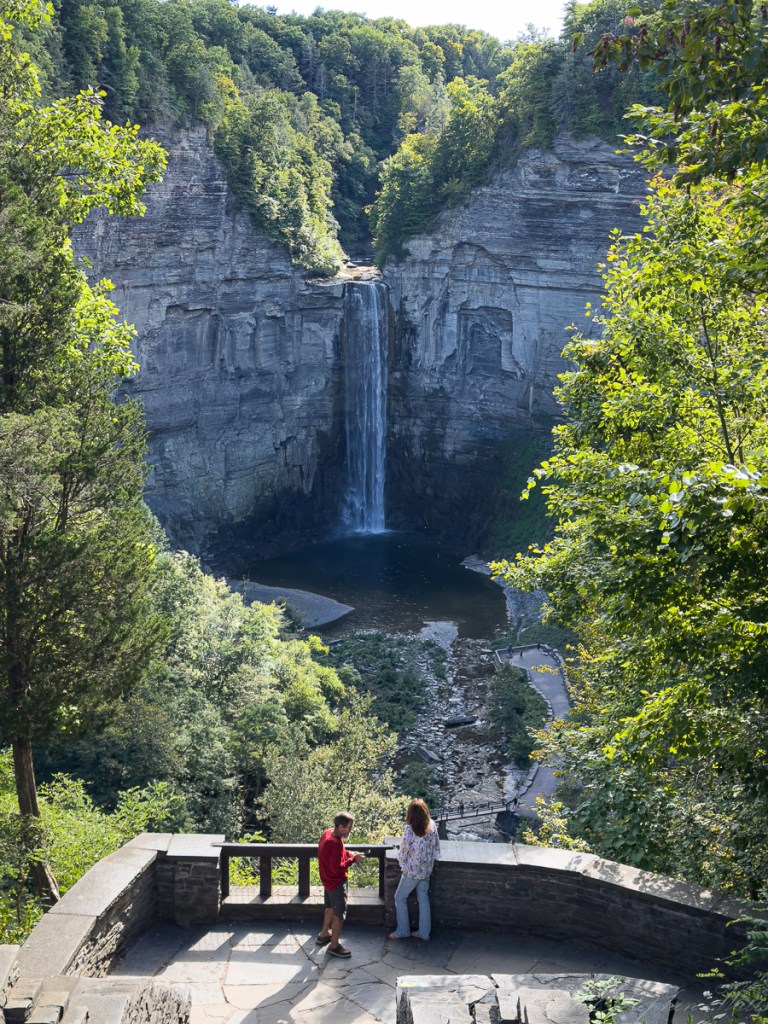
The visitors are on the overlook, in the gorge on the bridge and below the falls.
At the overlook, Taughannock Falls appeared framed by stone and leaf, descending in a long white irrepressible column into the dark basin below. The falls seemed both powerful and delicate, a veil and a force. Water dropped from the high lip in strands, gathered itself in motion, then shattered into mist and sound. Around it, the cliffs bore stains, fractures, alcoves, and ledges—the wounds and ornaments made by time. Layers of visitors receed in the foreground, small and temporary, held for a moment before the great amphitheater.
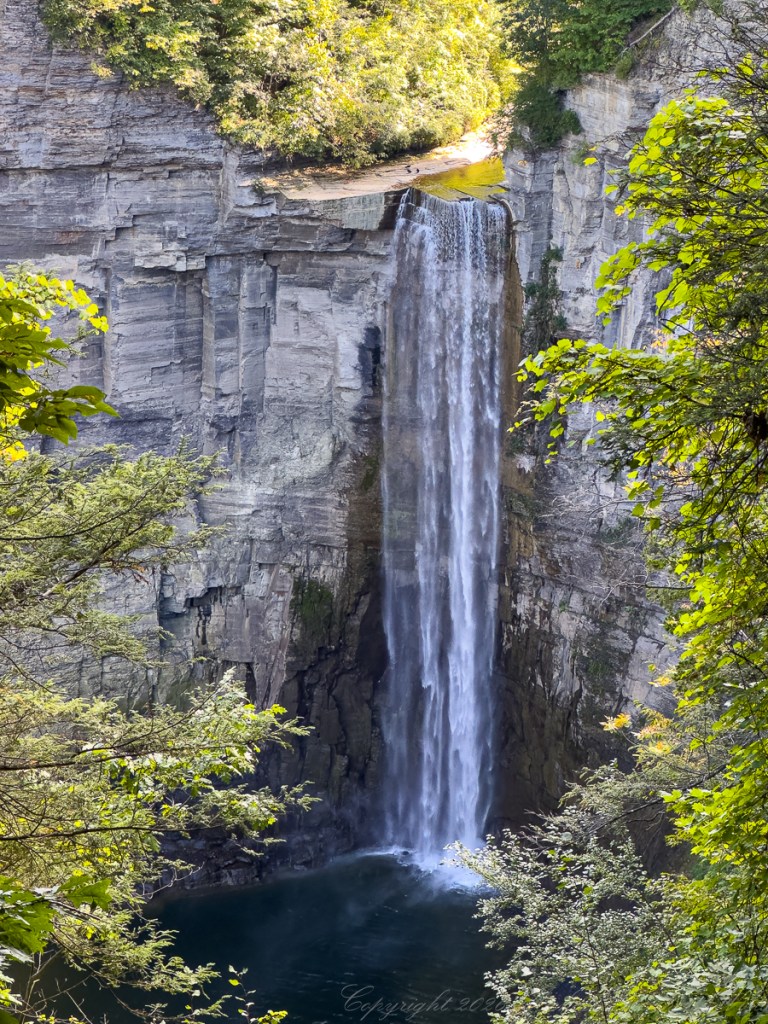
For this view proceed south on the North Rim Trail from the observation area parking. Did you spot the gathering of crows?
Farther along the North Rim Trail, the falls filled the vision. Sunlight touched the rim above; shadow deepened the plunge pool below. The water seemed to fall from brightness into mystery. That is often how memory works: a clear edge, a shining beginning, then a descent into depths we cannot entirely see. Yet the sound continues. The motion continues. The stream that vanishes in shadow reappears downstream, moving toward the lake.
Watch on YouTube for the best experience.
For me, what remains from this walk is a whole sequence: cliff and cloud, snakeroot and seed silk, lake and lawn, distant figures and enduring stone. Taughannock on September 14, 2026, offered no single lesson. It offered a composition of scale. The vast does not cancel the small. The flower belongs beside the gorge. The seed silk belongs beside the falls. The human figure belongs, briefly, gratefully, at the overlook.
An unexpected encounter with Frank and Rob, two African tortoises in Rochester, becomes a meditation on discovery, deep time, adaptation, and the virtue of slowness.
There are discoveries we deliberately seek, and others that simply wait for us to notice them. On August 26, during a visit to the Lamberton Conservatory in Rochester’s Highland Park, Pam and I encountered two creatures that belonged firmly to the second category.
We had come to a conservatory, after all—a place where one expects palms reaching toward panes of glass, orchids suspended among roots and moss, and tropical foliage crowding the paths. I was looking at plants when something considerably more substantial appeared on the level, patterned brick path.
A tortoise.
Then another.
They moved freely among the vegetation, seemingly as much a part of the conservatory as the plants themselves. Nothing about their progress suggested urgency. Each foot was lifted, advanced and planted with deliberation. In a world increasingly measured in fractions of seconds, they seemed governed by another clock.
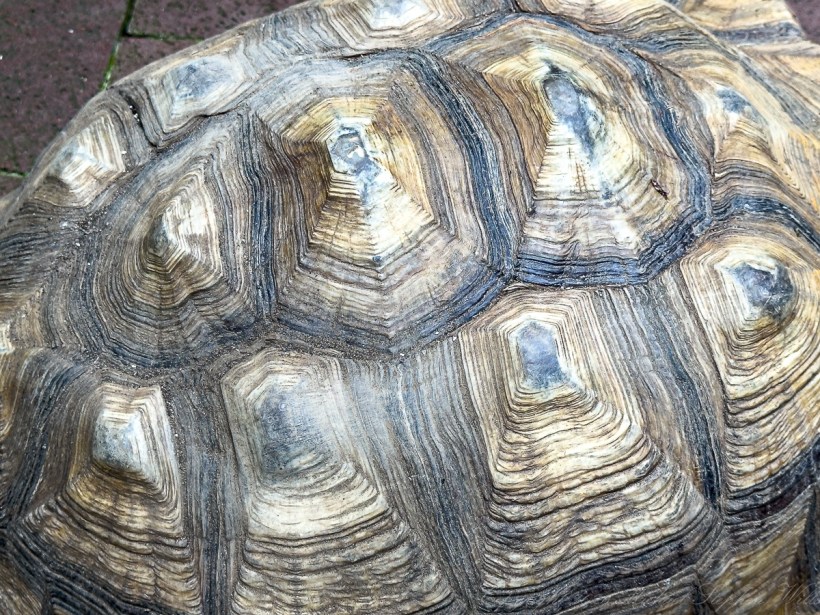
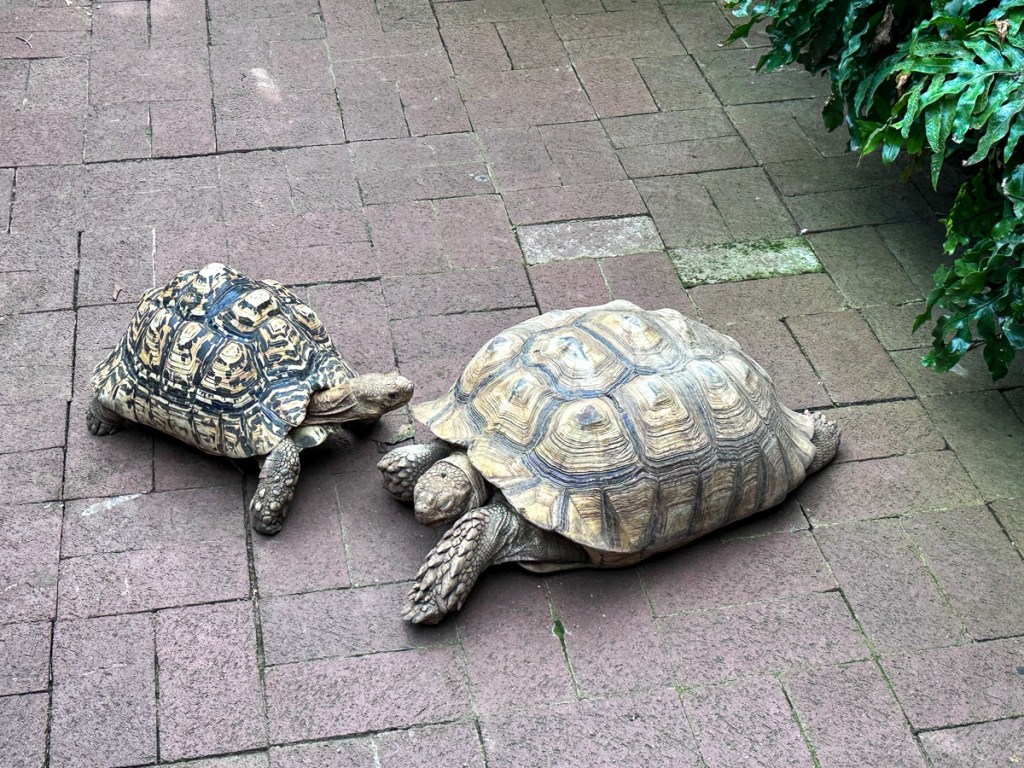
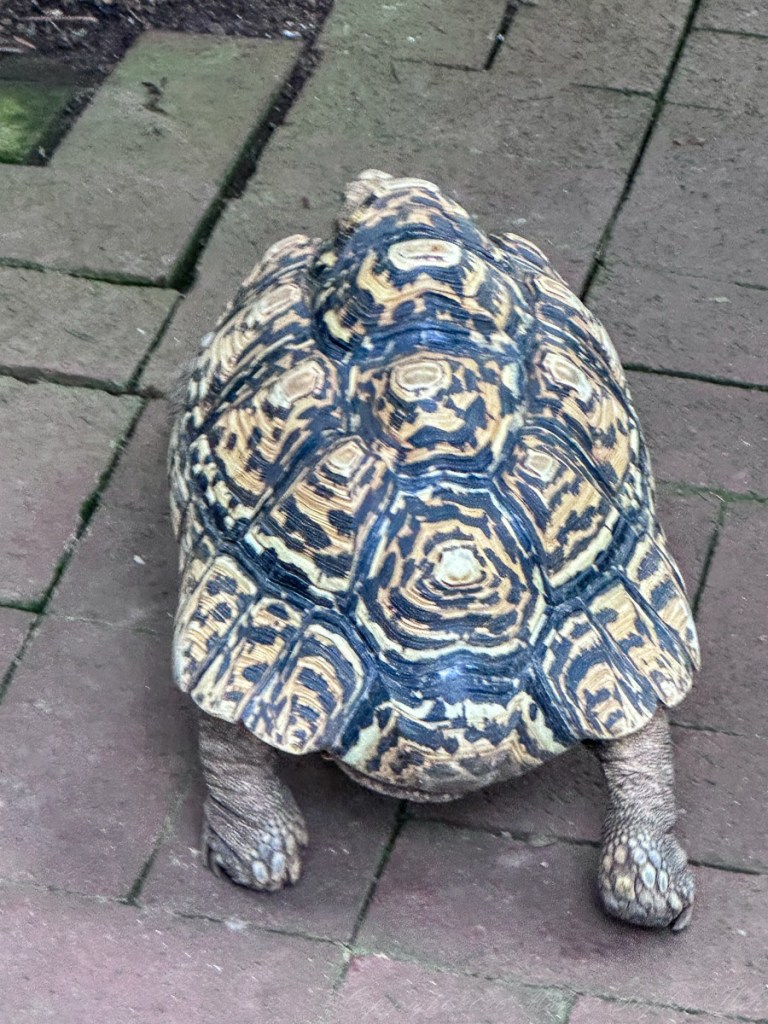
The smaller of the two immediately commanded my attention. His high, domed shell was covered with intricate patterns of yellow, tan and dark brown. Individual scutes carried irregular markings that radiated outward, giving the carapace something of the appearance of an ancient mosaic.
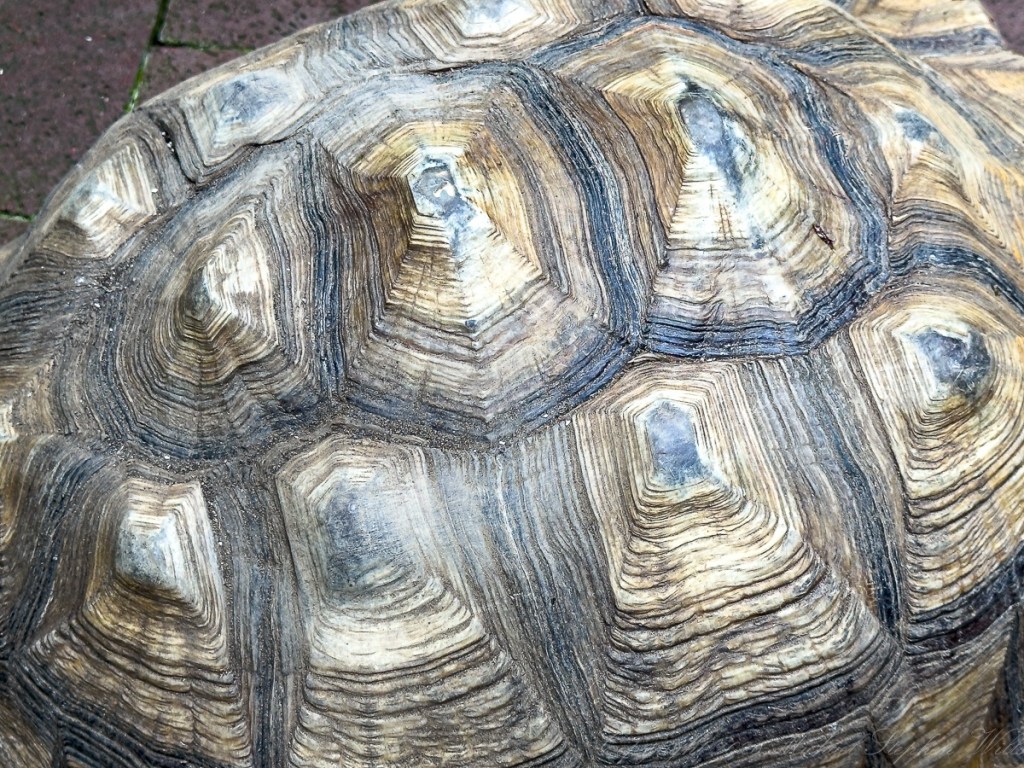
Beside him was an altogether different animal: larger, paler and immensely solid. Her shell was sandy brown, its individual scutes marked by concentric growth ridges. Massive forelegs, armored with heavy scales, supported a body that looked almost prehistoric. If the first tortoise suggested ornament, the second suggested architecture.
I photographed them, fascinated by the contrast.
Only later did the two strangers acquire names and histories.
Nancy Mastin of Lamberton Conservatory identified the patterned tortoise as Frank, a male leopard tortoise (Stigmochelys pardalis), born in 2015. His much larger companion is Rob, a female African spurred, or sulcata, tortoise (Centrochelys sulcata), born in 2016. Both arrived at Lamberton sometime after 2020, donated by private owners who could no longer provide sufficient room for them.
That last detail transforms the encounter.
Frank’s species comes from eastern and southern Africa, where leopard tortoises inhabit savannas and dry grasslands. Their striking shells account for the name. The pattern varies enormously among individuals and changes with age, but Frank retains an especially handsome contrast of dark markings against a warm yellow-brown background.
Rob belongs to a species shaped by harsher country. The sulcata inhabits the semiarid belt along the southern margin of the Sahara, where survival depends partly upon escaping extreme heat. Powerful forelimbs equipped for digging allow these tortoises to excavate substantial burrows. They are giants among terrestrial reptiles—the largest tortoise native to mainland Africa—and their eventual size is precisely why animals purchased when small can become difficult for private owners to accommodate.
Rob is only about ten years old. Frank is about eleven. For animals capable of living for many decades, they are not venerable relics at all. They are comparatively young.
Perhaps that was the greatest surprise.
A tortoise carries age upon its back even when it is young. Its shell evokes fossils, vanished landscapes and evolutionary time. Watching Frank and Rob, I found it difficult not to imagine ancestors moving through African grasslands long before our own species began building conservatories—or cities—or anything else.
Their shells reinforce the illusion. The concentric ridges visible in my close photographs record periods of growth, although they cannot reliably be counted as annual rings. A tortoise shell is not an inert case carried by the animal. It is living anatomy: bone covered by keratinous scutes, growing with the tortoise and protecting a body intimately joined to it.
Yet what I remember most is not anatomy but pace.
Frank was still as Rob approached. Around them rose a manufactured tropics of glass, steel, soil and plants. We passed carefully, Iphones in hand. Somewhere outside, Rochester continued at the speed expected of a modern city.
The tortoises declined to participate in the hurry.
I felt a restoration while watching an animal for which slowness requires no apology. Every movement is sufficient unto itself. A foot advances. Weight shifts. A neck extends. A leaf is investigated. Nothing appears wasted, and nothing appears rushed.
Their presence also tells a quieter human story. Frank and Rob began life in private ownership. As they grew, their needs grew with them until their owners recognized that they could no longer provide adequate space. Donation brought them to Lamberton, where their lives intersected—and, one August afternoon, intersected briefly with mine.
We entered the Conservatory expecting tropical plants. I left with photographs of two African tortoises and, eventually, their names.
Frank and Rob.
That is one of the pleasures of remaining curious: a photograph leads to a species, a species to a name, a name to a history. What began as two unexpected shapes moving beneath tropical foliage became something more memorable—a glimpse of distant Africa, deep evolutionary time, and two remarkably unhurried lives being lived beneath the glass roof of a conservatory in Rochester, New York.
An persistant buzzing at an east-facing window led to an unexpected discovery: an organ-pipe mud dauber tending its earthen nest, revealing a hidden world of architecture, courtship, spider hunting, and parental care just beyond the glass.
On a morning in late July, the songs and raucous calls of Blue Jays, Cardinals, and Carolina Wrens were joined by another sound—an intermittent, insistent buzzing. It seemed to be an angry wasp, an unwelcome distraction as I worked facing the large east-facing picture window. Orchids line the window ledge, their pots and foliage blocking my view of the lower edge where I assumed the insect was trapped.
During one of the silences, I approached with a cup and stiff sheet of paper, prepared to capture the intruder and carry it outdoors. Peering cautiously around the orchid pots, I saw nothing. Then the buzzing resumed. Following the sound, I looked more carefully and discovered something entirely unexpected: affixed to the outside edge of the window was a long tan column of dried earth.
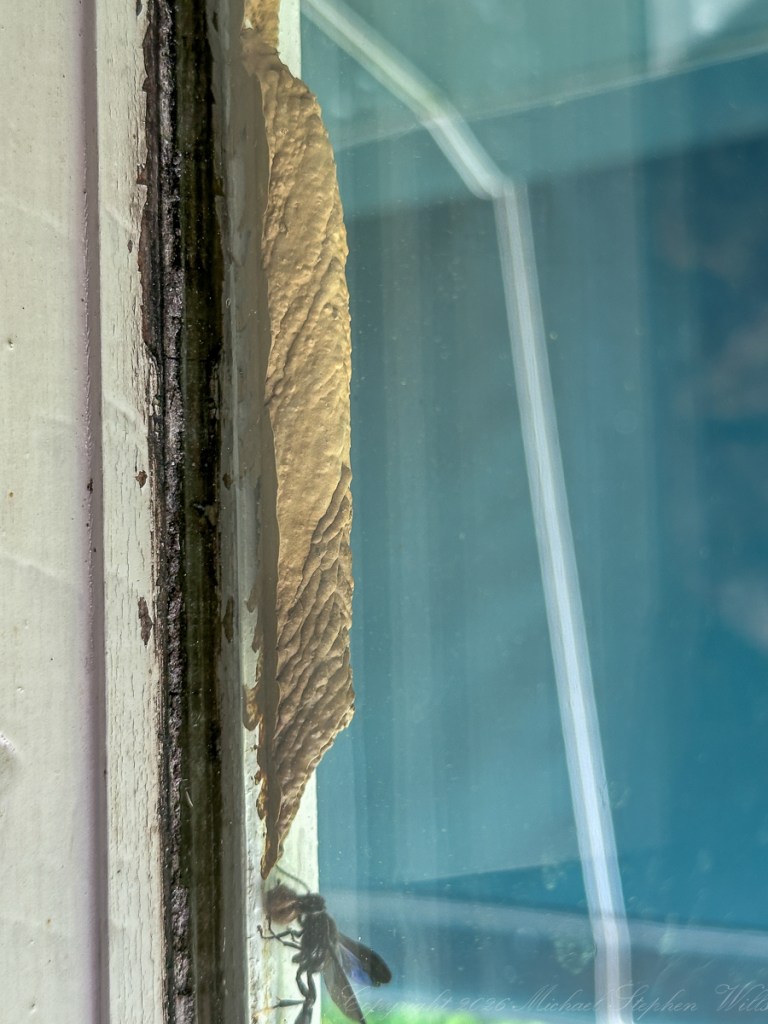
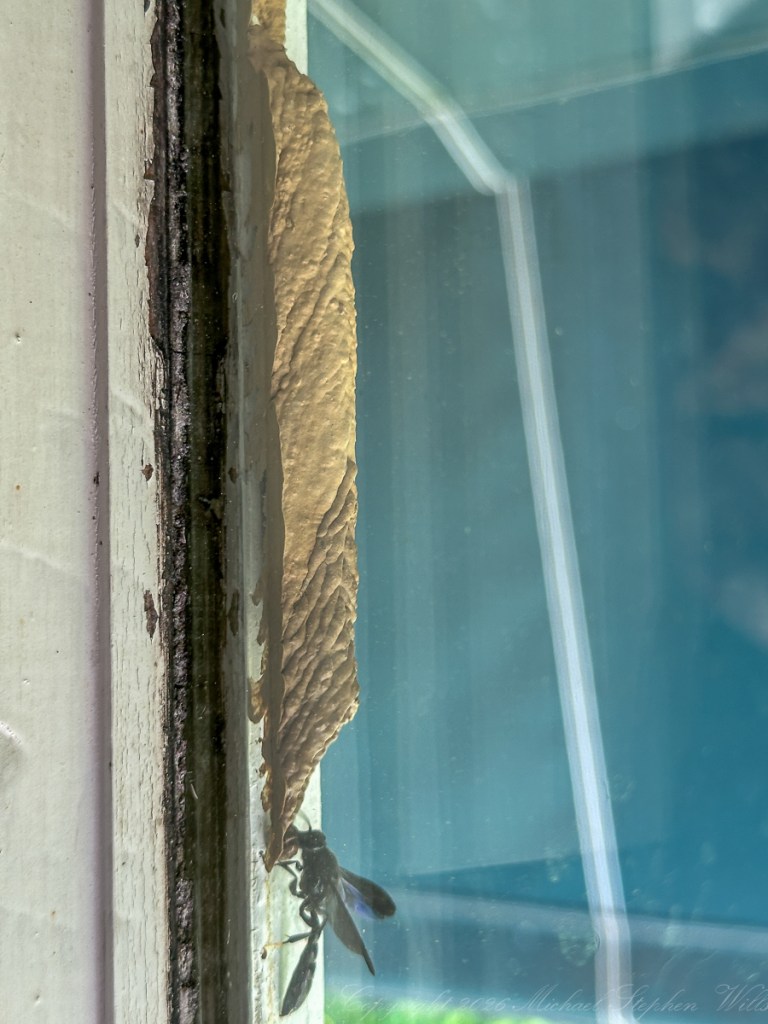
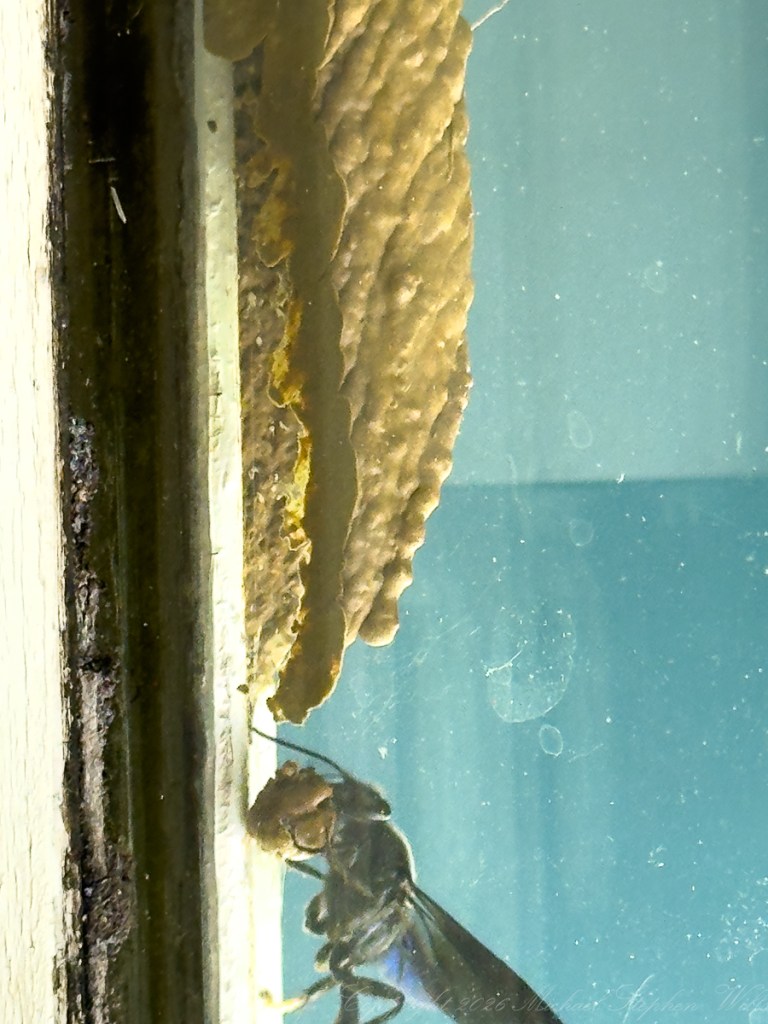
Two wasps, males and female, build a column of mud for a nest. July 14, 2026 at One Westwood Knoll, Ithaca, New York
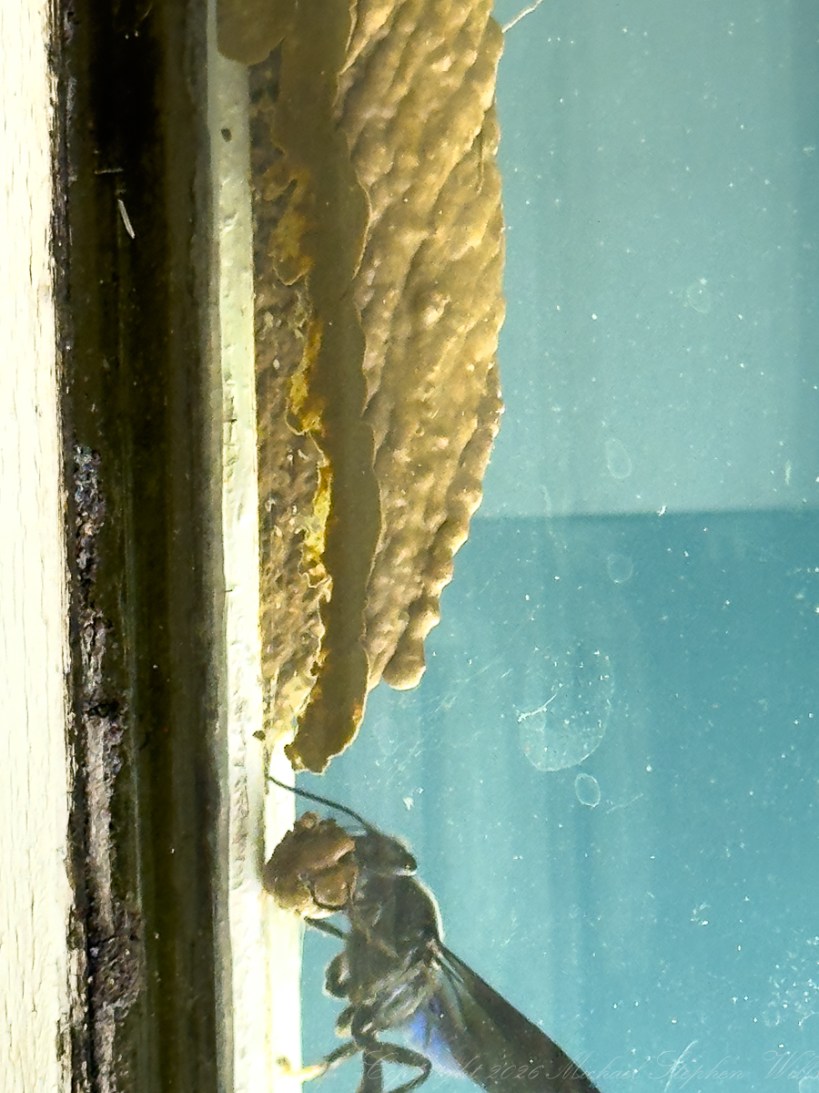
It looked geological—a miniature formation of hardened sediment affixed to the corner of painted wood and glass. Its surface was ridged and corrugated, each irregular band recording some earlier act of construction. At its lower end appeared the architect: a large, lustrous black wasp.
I discovered the wasp’s identity also explained both the strange earthen structure and that surprisingly loud buzz: this was an organ-pipe mud dauber, Trypoxylon politum. The species occurs through much of eastern North America and is the largest member of its genus in our region.
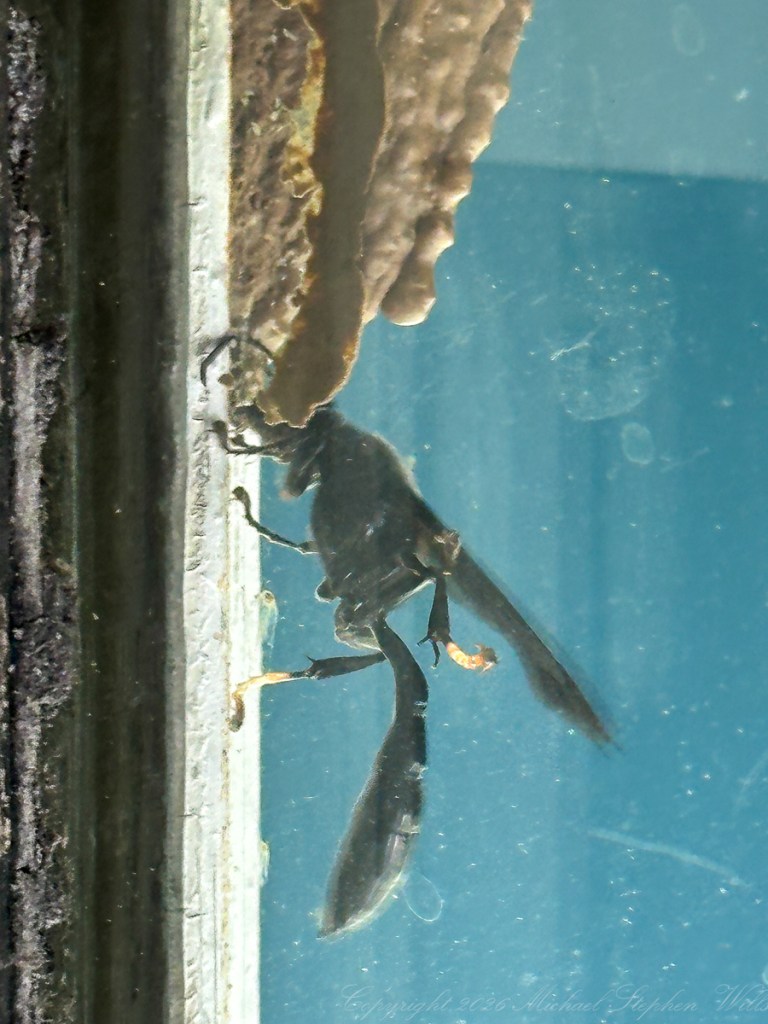
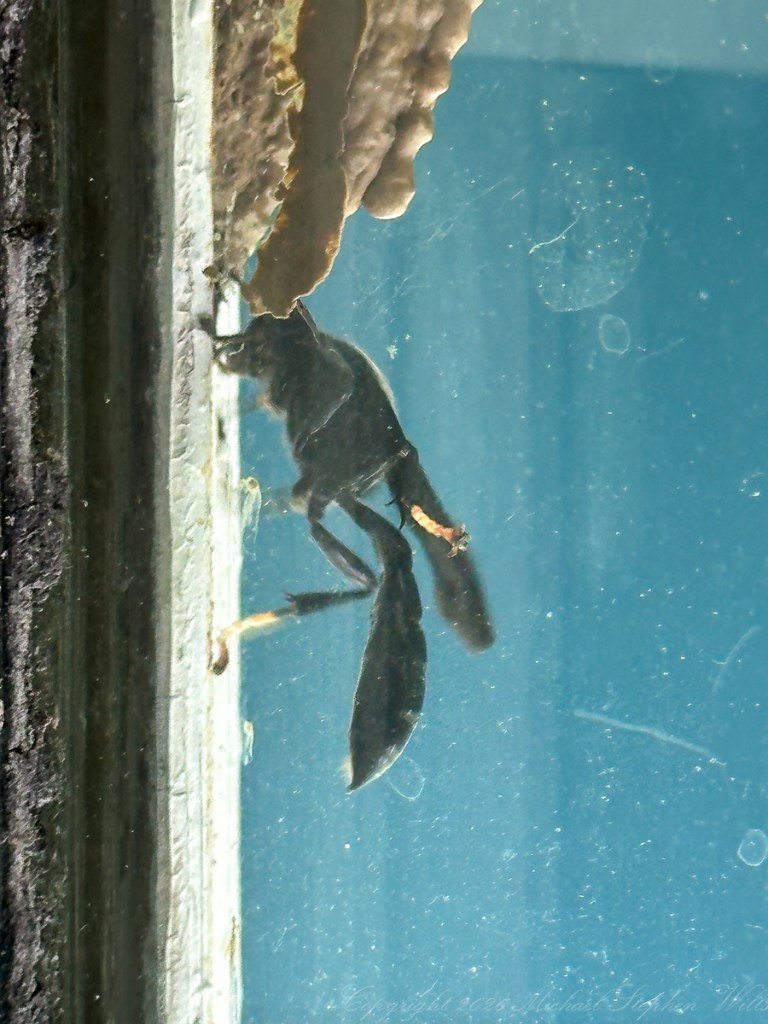
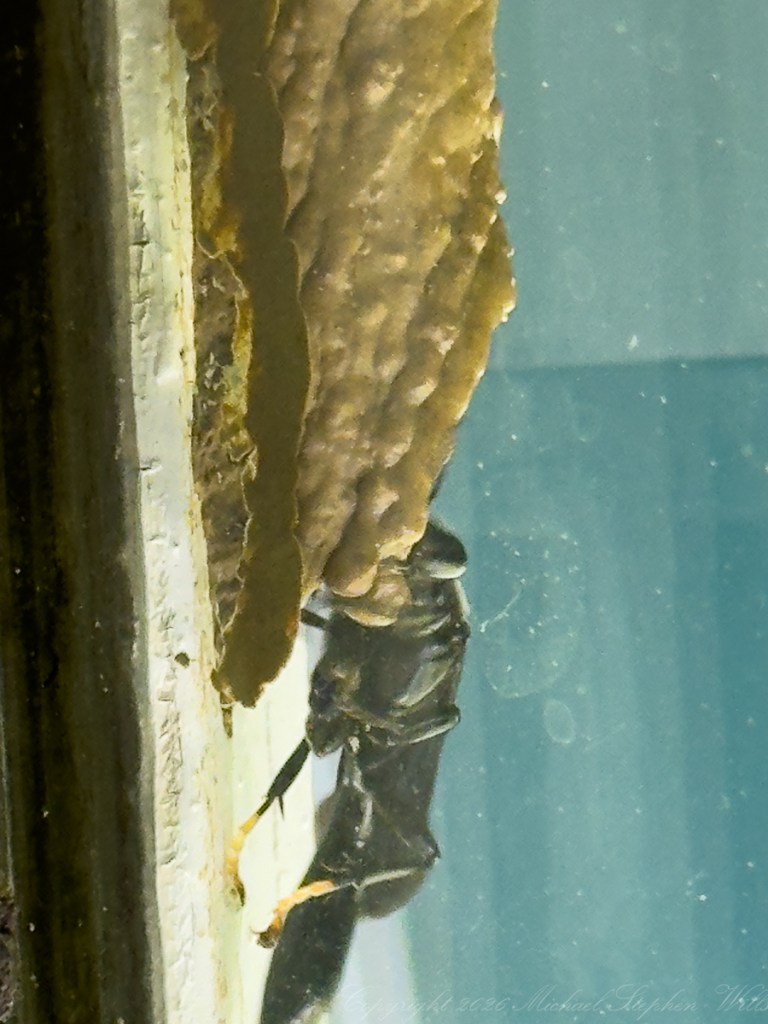
A closer look
The name is wonderfully descriptive. The female constructs elongated tubes of mud side by side against sheltered walls, bridges, rock faces and buildings. A completed group resembles the vertical pipes of an old church organ. What I had initially taken for a crude column of dirt was, in fact, architecture.
The wasp itself has an austere beauty. Its body is predominantly polished black, sometimes seeming almost blue-black as sunlight catches the wings and exoskeleton. The abdomen is extraordinarily slender near its base before widening toward the end, giving the insect a delicate, elongated silhouette. Long black legs hang beneath it, with pale markings on portions of the hind feet. In my photographs the wings sometimes flash an unexpected smoky violet-blue, while the legs grasp the painted window frame beside the ocher-colored mud. Against that earthy structure the wasp looks almost metallic.
Yet the formidable appearance is misleading. Unlike yellowjackets and other colonial wasps, the organ-pipe mud dauber is essentially solitary. There is no queen commanding a workforce and no populous colony ready to defend the nest. A female constructs and provisions her own nest, and solitary wasps consequently tend to be much less defensive than social species.
But Trypoxylon politum adds a fascinating complication to the word solitary.
A male may remain at the nest while his mate is away. He guards its entrance against intruders—including parasitic insects and rival males—and may produce a conspicuous buzzing when something approaches. That behavior makes me reconsider my first encounter. The creature I heard behind the orchids was not an insect frantically trapped indoors at all. The window glass separated us. I was inside; the wasp was outside, stationed beside its earthen fortress. What sounded to me like anger was vigilance, though I also observed similar buzzing as the female shaped each ball of mud.
The female performs the more astonishing work. She gathers wet mud and carries it repeatedly to the nest, gradually extending a tube. Inside she creates a succession of chambers. Then she becomes a hunter.
The Wasp carries each mud ball, places and forms it, during the process emitting a loud buzzing that drew my notic.
Her quarry is spiders.
She captures and paralyzes them, carrying them back to the nest and packing several into each cell—reported numbers range from about three to eighteen spiders with the fertilized female eggs better provisioned. Upon this living but immobilized store of food she lays an egg and seals the chamber with mud. The larva that hatches within has a private larder of fresh prey. Another chamber follows, and another, until the peculiar earthen pipe becomes a nursery divided into hidden rooms.
Watch two wasps building the nest.
There is something almost unsettling in that knowledge. Within the rough tan structure, a nest, on our window frame lie spiders gathered from our garden, each incorporated into the reproductive cycle of another animal. Predator becomes provision; mud becomes shelter; a few inches of ordinary window trim become an ecosystem.
That is what held my attention long after the original buzzing ceased. I had sat only a few feet away, day after day, unaware that another creature was carrying out an intricate sequence of hunting, construction, mating and parental investment on the opposite side of the glass.
The window had seemed a boundary between our house and the natural world. The organ-pipe mud dauber revealed it to be something else: a place where the two worlds meet.
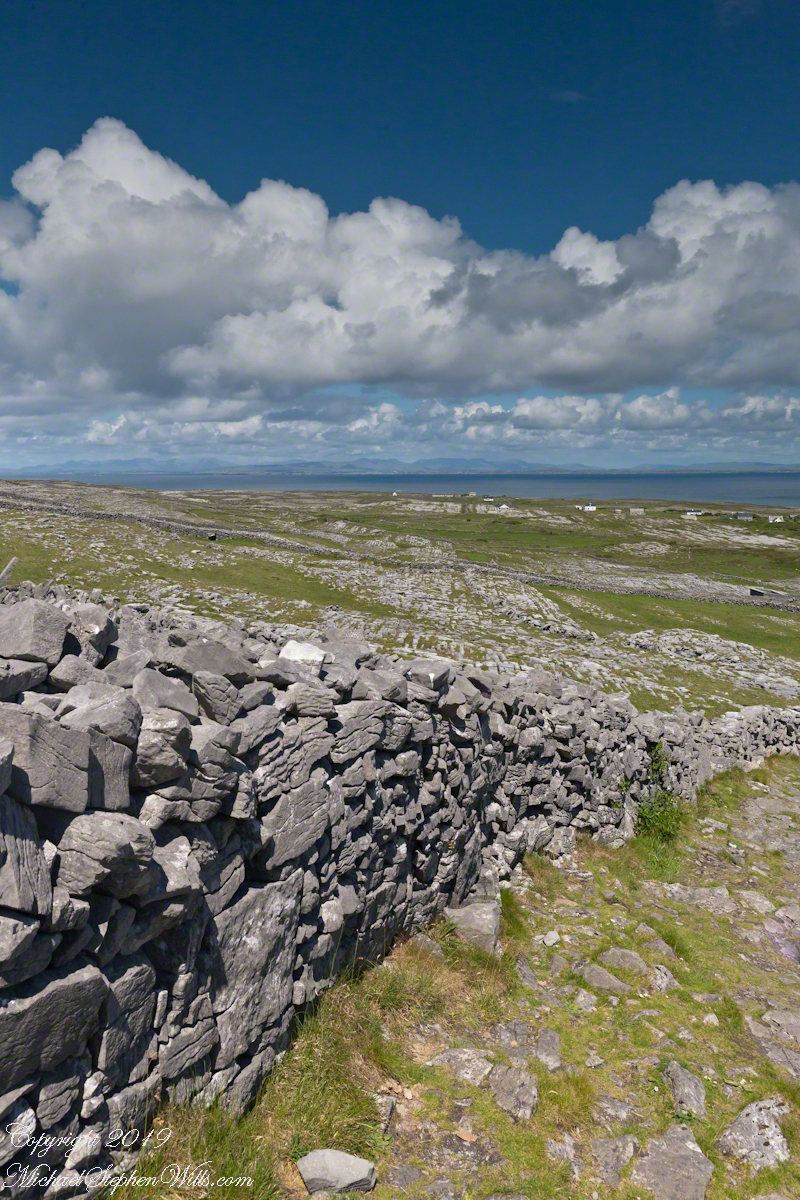
Standing atop the cliffs of Dún Aonghasa on Inis Mór (Inishmore), one is struck by contradiction. Beneath your feet lies a landscape of exposed limestone, fractured and weathered into the unmistakable geometry of karst. These unworked, barren slopes have a pale green covering growing seemingly on air. The Atlantic crashes hundreds of feet below, while inland the island stretches toward Galway Bay in shades of gray and pale green. It seems an improbable place for agriculture.
Yet there they are: fields enclosed by dry stone walls, dotted with cattle and thick enough with grass to sustain them. Looking out across this island, a question naturally arises. Where did the soil come from?
The answer is simple to describe and astonishing to contemplate. The soil of Inis Mór was, in large measure, made by human hands.
The Aran Islands are composed primarily of limestone deposited some 350 million years ago when this part of the world lay beneath warm tropical seas. The shells and skeletal remains of ancient marine organisms accumulated on the seabed and, through immense pressure and time, became stone. Today, limestone accounts for the overwhelming majority of the islands’ bedrock.
Limestone landscapes possess a severe beauty. Rainwater, slightly acidic from dissolved carbon dioxide, which in turn slowly dissolves the rock, creating fissures known as grykes separated by flat blocks called clints. Soil drains rapidly through these cracks. Left to natural processes alone, only thin accumulations of organic material develop and much of the landscape will resemble a stony pavement.
For generations, survival on Inis Mór required transforming that pavement into productive land.
Islanders gathered seaweed from the shoreline, hauling it inland by cart and hand. The seaweed provided organic matter and nutrients, particularly potassium and trace minerals. Sand from the beaches added texture and volume. Mixed together atop the limestone surface, these materials slowly decomposed into something capable of supporting plant life. Over decades—and in some places centuries—layers accumulated.
The process demanded persistence. Storms could strip away exposed earth. Atlantic winds threatened erosion. Each year required renewal: more seaweed, more organic matter, more labor. Roots from grasses and crops helped bind the developing soil together. Animal manure returned nutrients to the ground. What had begun as an artificial growing medium gradually became a living soil ecosystem.
As understood by modern soil science, soil formation is often explained through five factors: climate, organisms, relief, parent material, and time. On Inis Mór, all five are present, but there is a sixth factor impossible to ignore: culture.
Without human intervention, much of the island would likely remain dominated by exposed limestone and sparse vegetation. Instead, generations of residents imposed patience upon geology. Their work transformed an inhospitable environment into a functioning agricultural landscape.
The dry stone walls that divide the island tell the same story. Built from limestone cleared from the fields, they required no mortar. Each stone was carefully selected and placed, creating boundaries that controlled livestock, sheltered plants from relentless winds, and marked family holdings. The walls themselves became part of the ecological fabric, providing habitat for insects, mosses, lichens, and wildflowers.
Visitors often admire these walls for their picturesque quality. They are indeed beautiful and are also evidence of necessity. Every stone removed from a field made space for soil to deepen and grasses to spread. The very act of creating pasture simultaneously generated the material for the island’s defining architecture.
There is poetry in this relationship between hardship and abundance.
In many places, fertile soil is taken for granted. Deep glacial deposits or river sediments create agricultural wealth with little awareness of the thousands of years involved in their formation. On Inis Mór, however, the origins of fertility remain visible. The limestone still protrudes through the fields. The seaweed-strewn shore lies only a short distance away. The walls reveal the labor embedded in the land.
To walk these fields is to encounter a collaboration between people and place extending across centuries. The islanders did not conquer the landscape so much as negotiate with it. They worked within its constraints, borrowing from the sea to enrich the stone and relying upon time to complete what effort had begun.
The resulting landscape offers a quiet lesson. Soil, the foundation of civilization, is created through intricate interactions among rock, water, organisms, and time. On Inis Mór, soil also represents inheritance: the accumulated labor of countless individuals who refused to accept barrenness as destiny.
Viewed from the heights of Dún Aonghasa, the green fields scattered across the gray limestone are miraculous.
Not a miracle of sudden transformation, but one measured in generations—made from seaweed and sand, from patience and persistence, and from the enduring belief that even the most unpromising ground can, with enough care, be coaxed into life.
The answer is simple hard work, hundreds, a thousand years of hauling seaweed and sand, mixing it on the barren limestone, allowing the rot of time to work. Hold it down with roots, till and refresh.
Under a blue February sky, Cayuga Lake keeps its icy grip, revealing how light, time, and physics conspire to make winter’s farewell a slow, luminous negotiation.
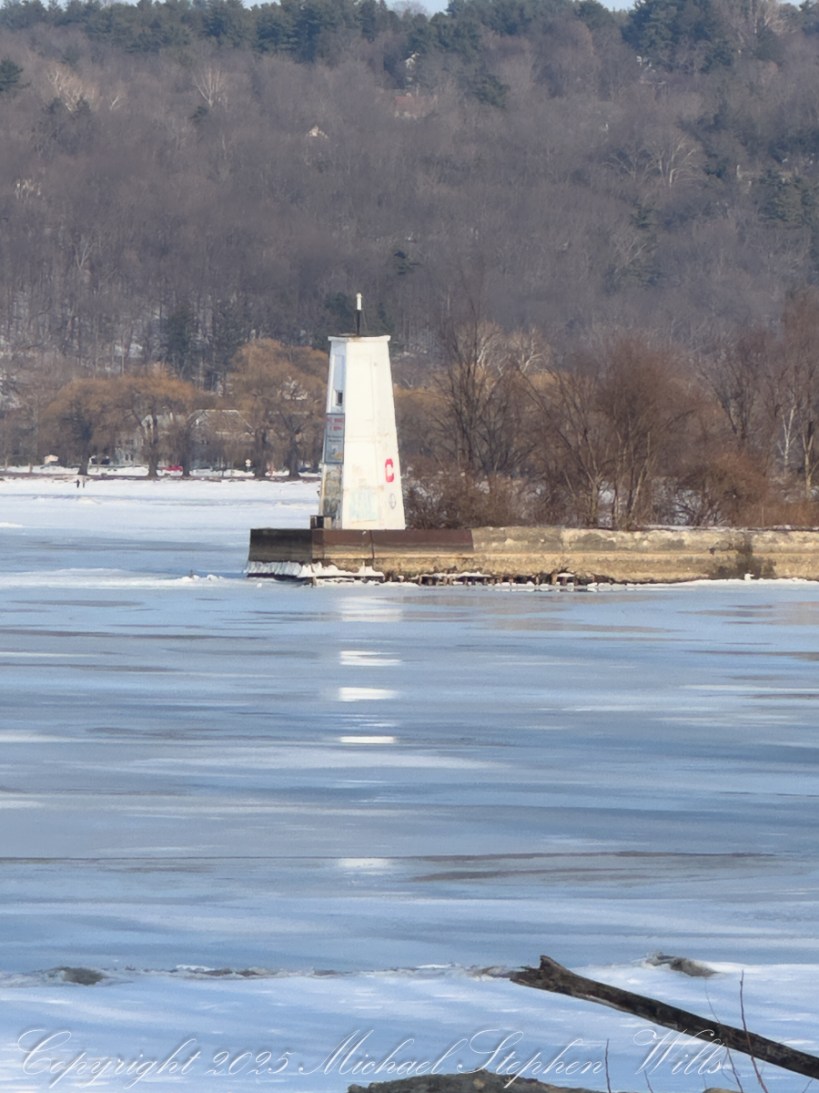
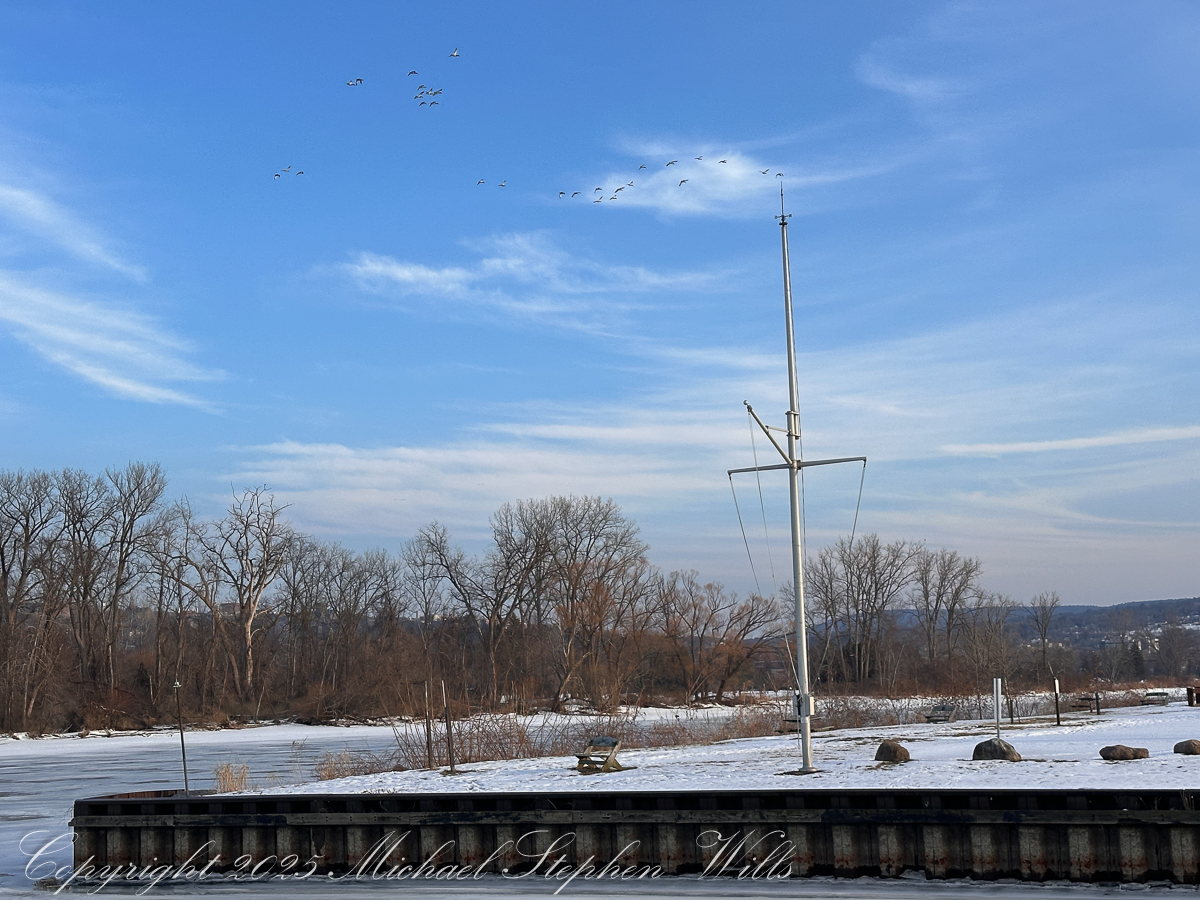
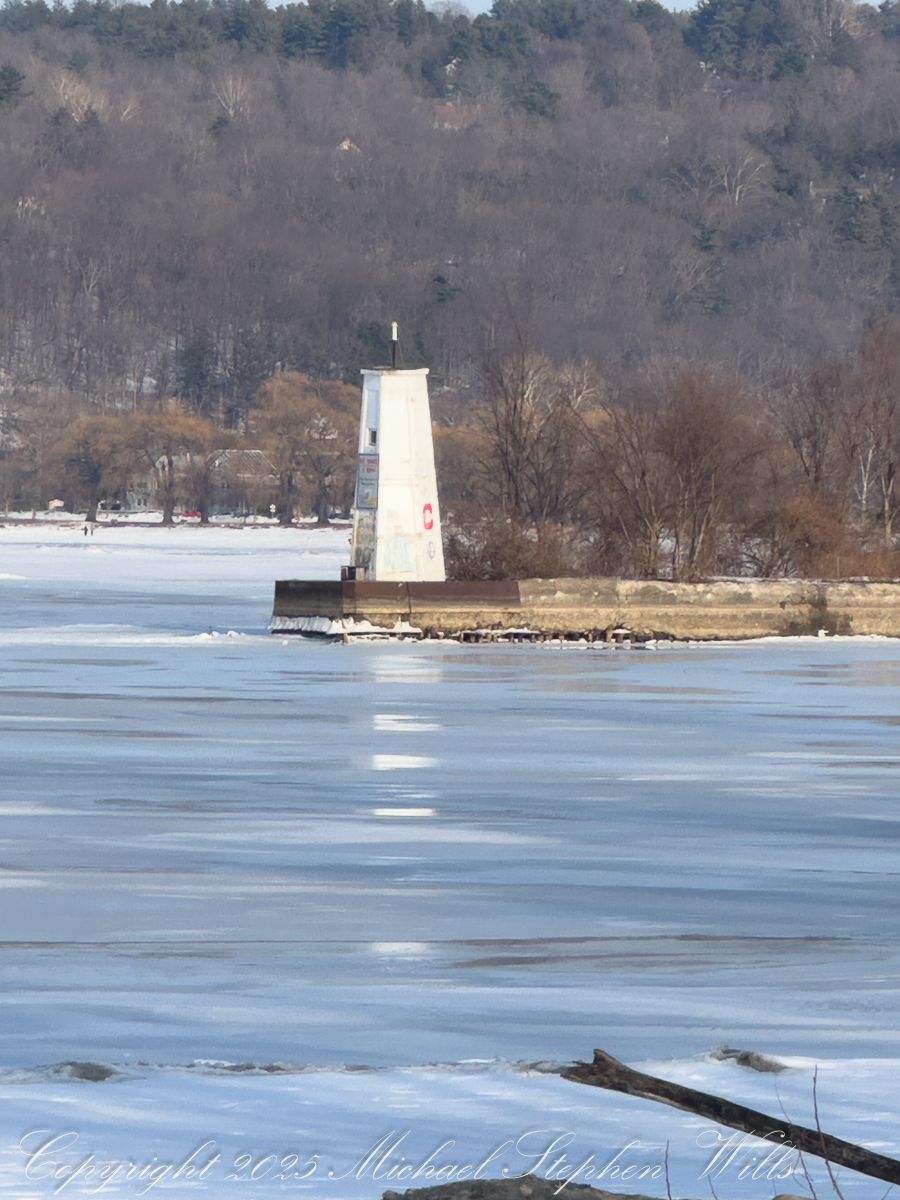
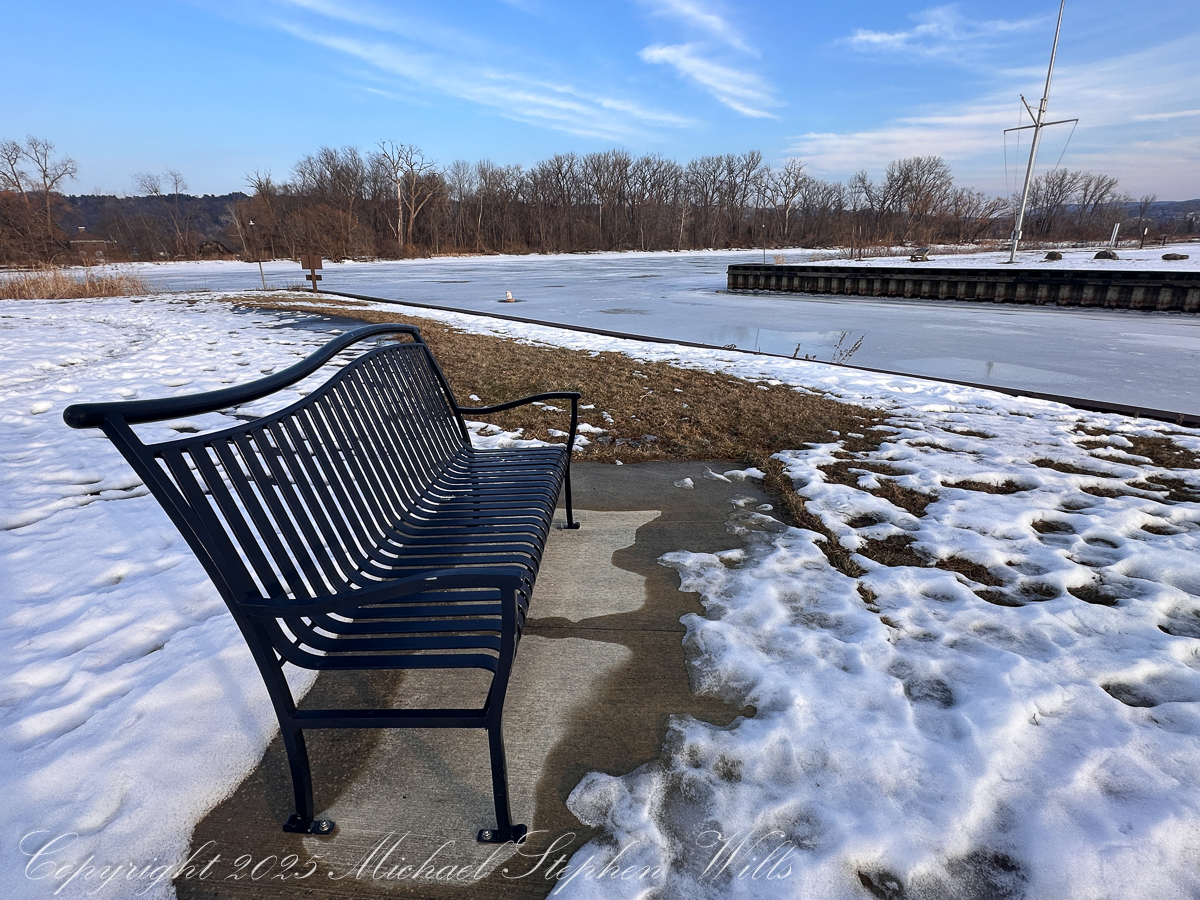
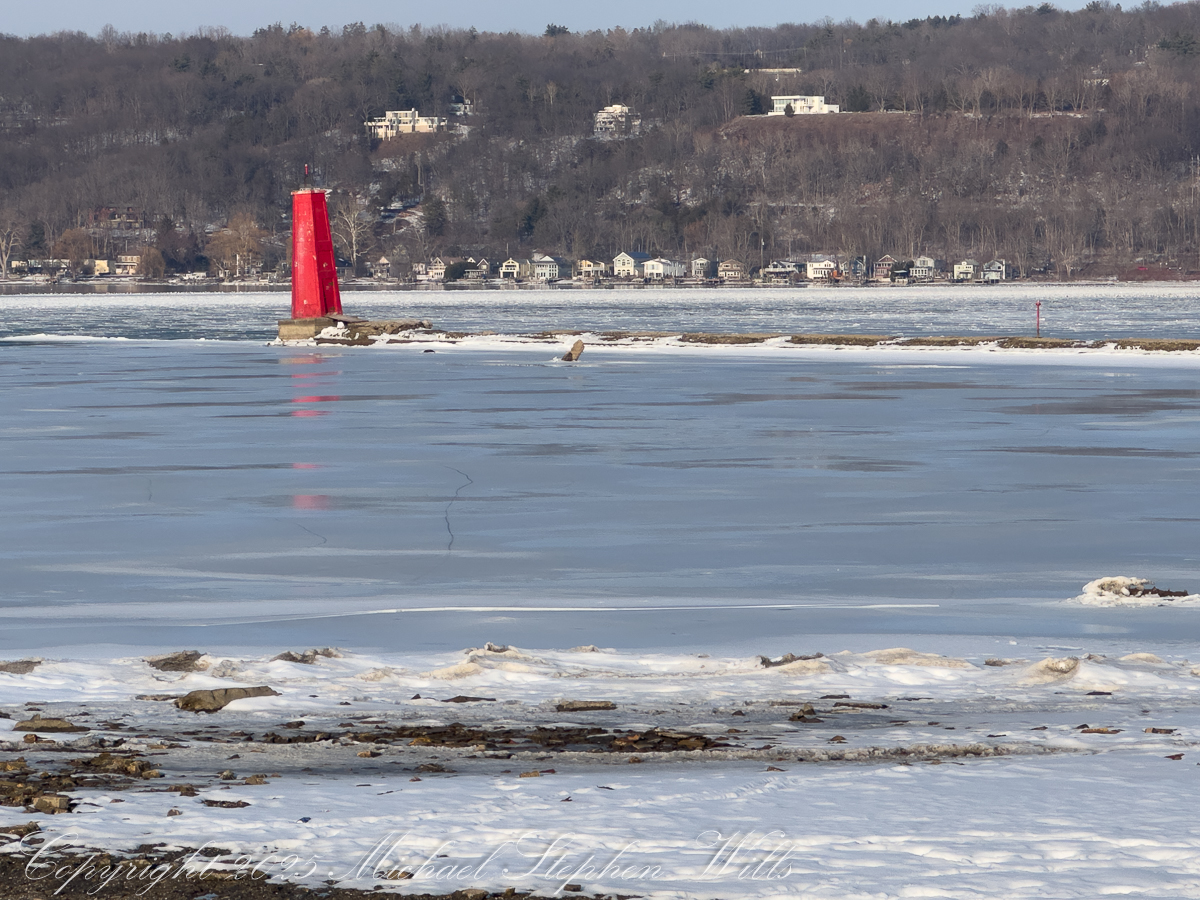
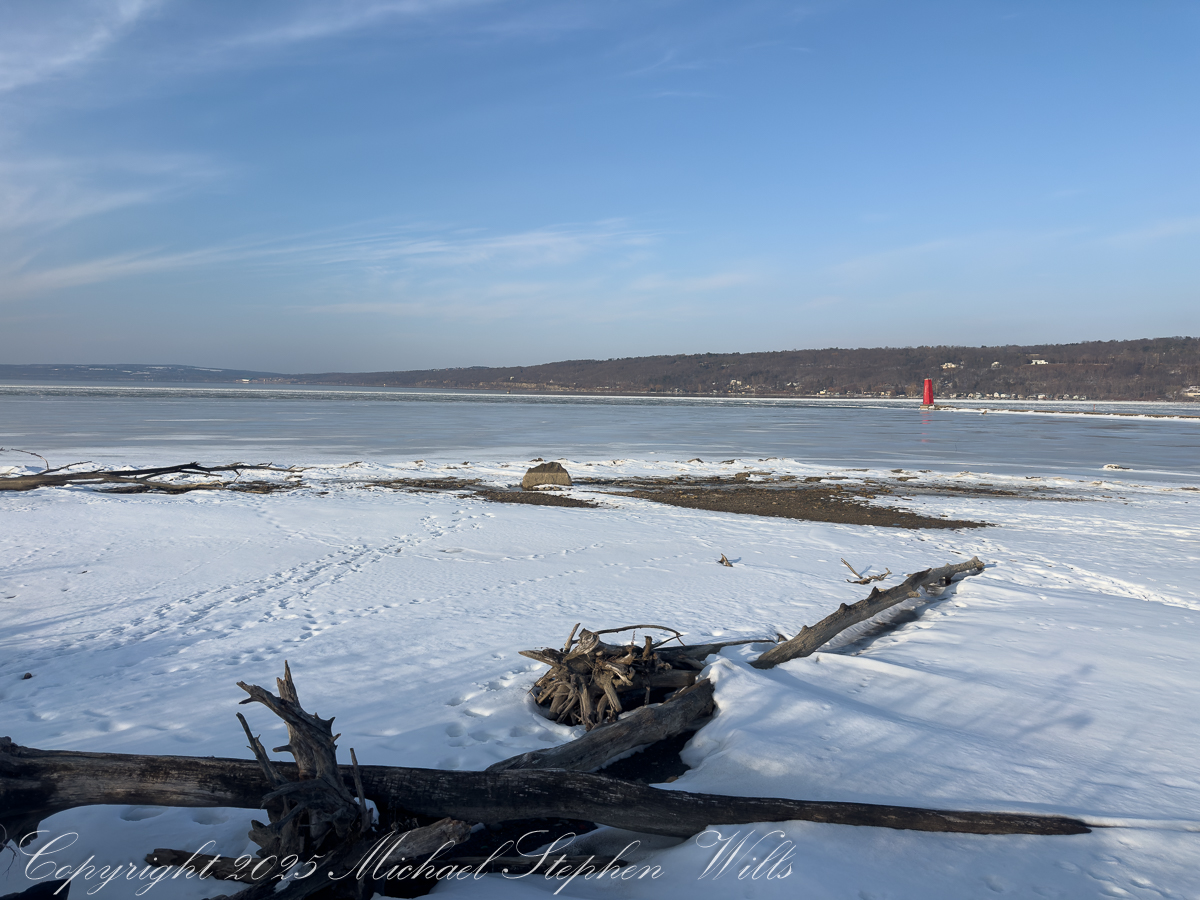
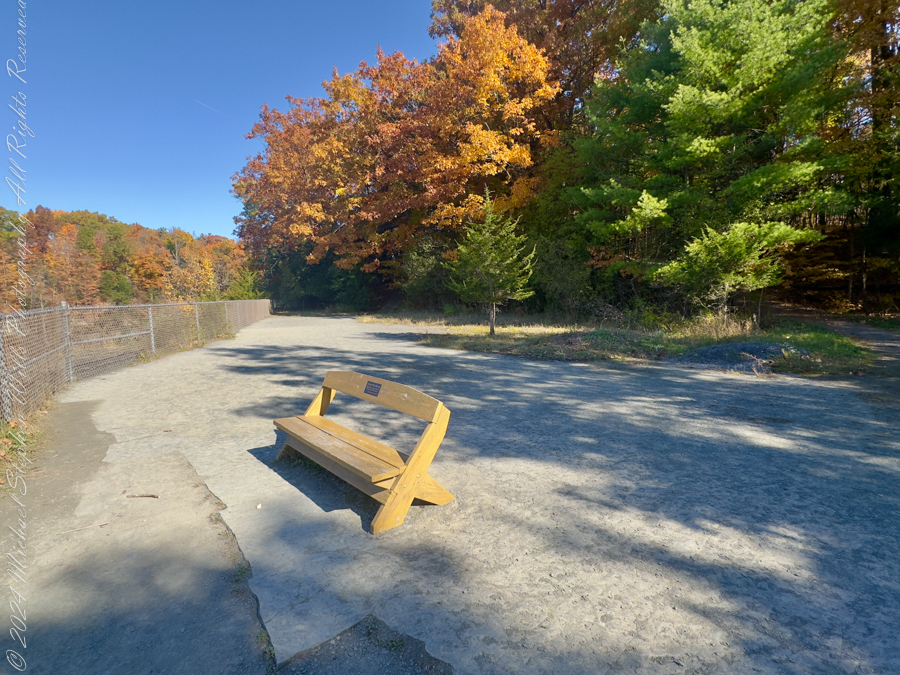
These photographs, made along the frozen margin of Cayuga Lake at Cass Park in mid-February 2026, carry a quiet paradox. The sky is a lucid blue, the light has that late-winter clarity that hints at spring, and yet the lake remains locked under a pale, glassy skin. A few geese stitch the air. A bench waits. Red and white beacons stand where water should be moving. The moment is fixed: late afternoon light in February, Finger Lakes winter—but the deeper story is written in physics, not pixels: why does lake ice linger so stubbornly during a thaw?
The short answer is that water is a hoarder of heat and ice is a keeper of promises. The long answer is the reason these scenes feel suspended between seasons.
Start with the cost of melting itself. Ice does not simply warm into water; it must first be converted, and that conversion demands a large, fixed payment of energy known as the latent heat of fusion. To melt just one kilogram of ice takes about 334,000 joules—and that energy raises the temperature not at all. It is spent entirely on changing solid to liquid.
Scale that up to a lake surface and the numbers become sobering. Even a modest sheet of ice—say ten centimeters thick—contains roughly ninety kilograms of ice per square meter. Melting that much requires on the order of thirty million joules per square meter. To put this in a human context, in 1 kcal there are 4,184 joules. Melting a square meter of ice requres 7,170 kilocalories (kcals) or 3.6 days for a person expending 2,000 kcals per day. Spread across square kilometers of lake, the energy bill climbs into the tens of terajoules. That is the hidden arithmetic behind the familiar disappointment of a February thaw: a few warm days feel dramatic to us, but to a lake they are only a small down payment.
This leads to the second, more subtle constraint: melting ice keeps itself cold. As long as ice is present, the surface of the lake is pinned near 0 °C (32 °F). Incoming heat does not make the surface warmer; it simply converts more ice into water at the same temperature. The thin layer of meltwater that forms on top is also near freezing, so the entire interface remains locked at winter’s threshold. There is no “warming momentum” here—no quick rise in temperature to accelerate the process. The system quietly consumes energy without changing its outward thermal expression.
That is why the lake in these images can look bright and almost springlike while remaining physically winterbound. Sunlight is being spent on erasure, not on warming.
A third rule of water deepens the delay. Freshwater is densest not at freezing, but at about 4 °C (39 °F). In early spring conditions, the coldest water—near 0 °C—floats. The slightly warmer, denser water below tends to stay below. This creates a stable stratification: a cold, near-freezing surface layer sitting like a lid on the lake.
The consequence is crucial. The lake cannot easily mix warmer subsurface water upward to attack the ice from below. The thaw must work mainly from the top and the edges—where sunlight, mild air, rain, and shoreline heat can do their work—rather than through a coordinated, whole-lake turnover. In practical terms, the ice is dismantled by margins and seams, not by a sudden, uniform collapse.
Add to this the reflective nature of ice and snow. The pale surface in these photographs is not merely beautiful; it is also defensive. Bright ice and snow reflect a significant fraction of incoming sunlight back into the sky. Dark, open water would absorb that energy eagerly and warm quickly. As long as the lake remains light-toned, it is actively rejecting some of the very energy that could hasten its release.
Thickness and structure matter too. Winter does not lay down a single, simple sheet. It builds layers: clear black ice, milky refrozen crusts, snow-ice composites, trapped bubbles—each a page in winter’s ledger. A brief thaw may soften the surface, open a lead near shore, or trace fine cracks across the sheet, but the bulk remains. In the closer views—the lighthouse and the red beacon standing in frozen sheen—you can see subtle tonal shifts and faint stress lines, the calligraphy of slow change. These are signs of negotiation, not surrender.
Scale, finally, is destiny. Cayuga is long and deep; it behaves more like a small inland sea than a pond. Small waters can change their minds quickly. Large waters are conservative. They remember. The heat they lost in autumn must be repaid, carefully and in full, before winter loosens its hold. This is why harbors and shallows darken first, why the margins in these scenes show hints of movement while the center keeps its pale composure.
Put together, these rules explain the peculiar patience of February ice. The thaw is not a switch but an accounting. Enormous quantities of energy must be delivered just to accomplish the phase change. While that work is underway, the surface temperature barely moves. The cold meltwater stays on top, limiting mixing. The bright surface reflects sunlight. The lake, in effect, resists haste through the ordinary, unromantic laws of physics.
There is an austere beauty in this. Ice is a temporary architecture built by the loss of heat, and its demolition requires an equally disciplined repayment. The quiet in these images is the quiet of bookkeeping—joules being transferred, layers being undone, thresholds being approached but not yet crossed. When the change finally comes, it often feels sudden: a windy day that breaks the sheet into plates, a warm rain that darkens the surface, a week when the margins retreat visibly. But that drama is only the visible last act of a long, invisible exchange.
So the lake lingers. Not out of stubbornness, but out of fidelity to the rules that govern it. Under a sky that already looks like April, Cayuga is still paying winter’s invoice. The ice remains until the account is settled—and when it finally goes, the benches will no longer face a mirror of light, but a moving field of dark water, ready once again to begin the long work of storing heat for another year.
Enter your email to receive notification of future postings. I will not sell or share your email address.
Copyright 2026 All Rights Reserved Michael Stephen Wills
The Louisa Duemling Meadows celebrate conservation and biodiversity, showcasing vibrant flora and honoring Louisa Duemling’s legacy as a steward of nature.
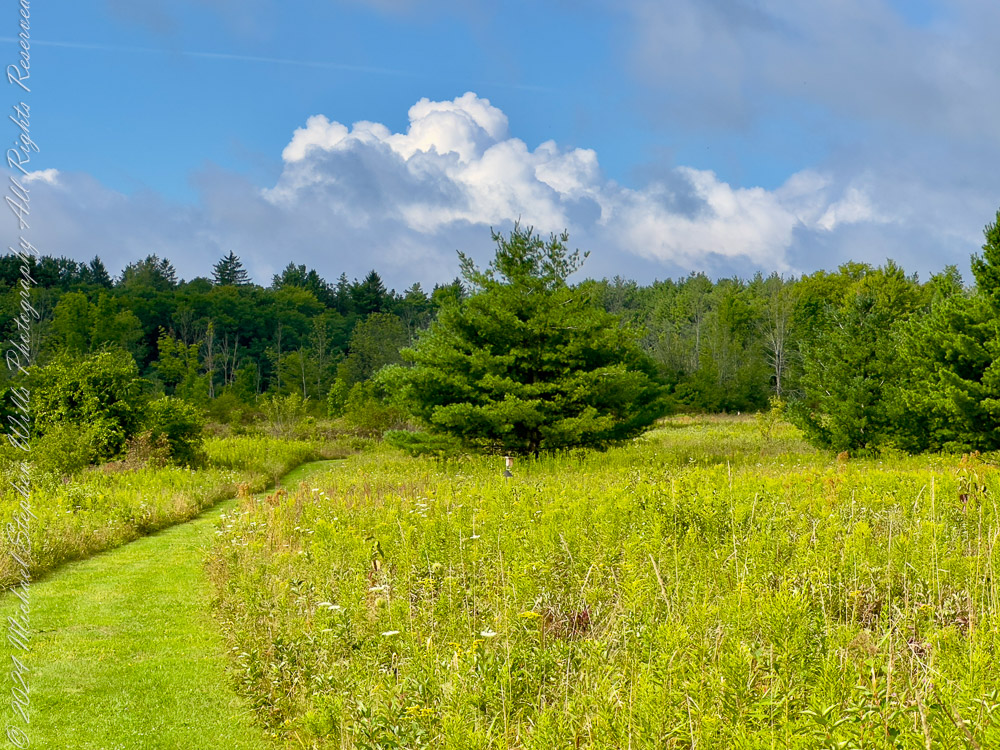
The Louisa Duemling Meadows, nestled within the expansive embrace of Sapsucker Woods, offers a vibrant tableau of life, brimming with opportunities for exploration and a sense of wonder. This new trail, winding through golden fields and punctuated by bursts of wildflowers, whispers tales of the land’s natural and cultural heritage.
Louisa Duemling: A Steward of Nature Louisa Duemling, the meadows’ namesake, was a dedicated conservationist and philanthropist who supported the Cornell Lab of Ornithology’s mission to protect birds and their habitats. Her legacy lives on in these serene fields, where her commitment to preserving the environment is reflected in every thriving plant and songbird.
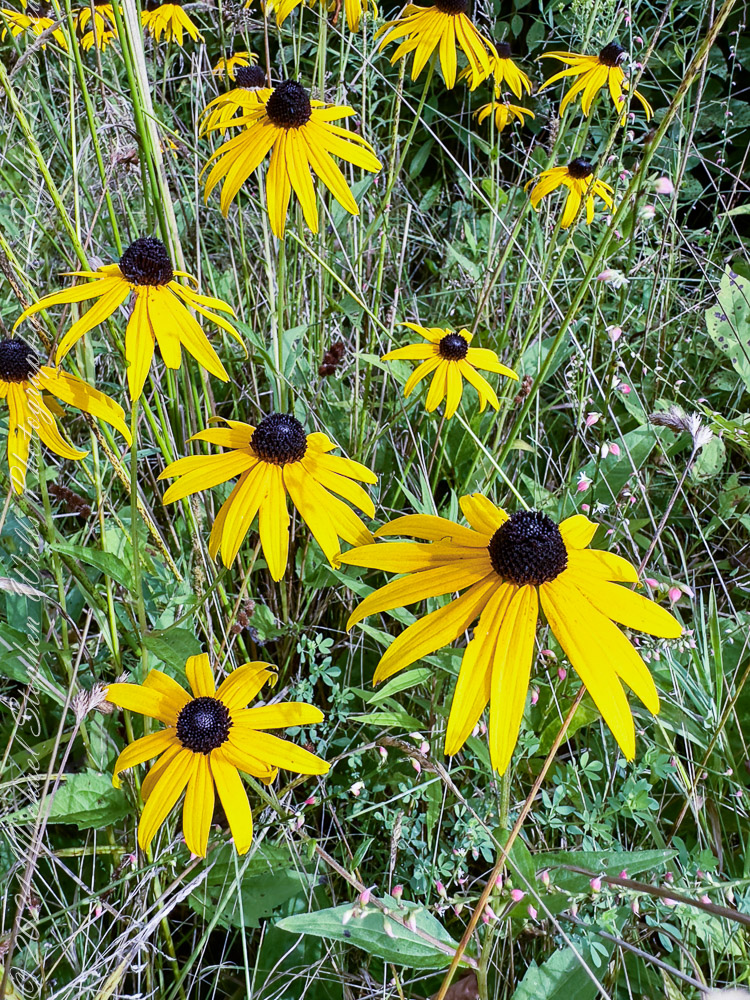
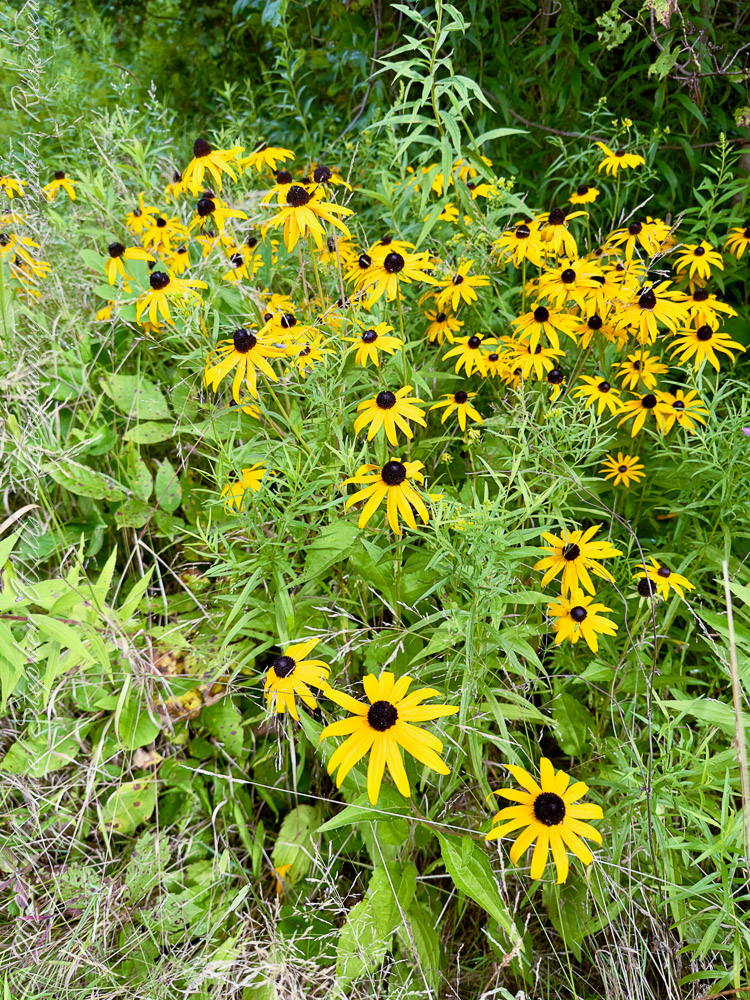
Black-eyed Susans: The Meadow’s Golden Treasure Dominating this summertime landscape with their radiant yellow petals and dark central disks, Black-eyed Susans (Rudbeckia hirta) are a hallmark of the meadows. These cheerful blooms are a delight to the eye, a cornerstone of meadow ecosystems. As members of the Asteraceae family, their composite flowers serve as a rich nectar source for pollinators like bees and butterflies, ensuring the vibrancy of these fields.
Historically, Black-eyed Susans have been used in traditional medicine by Native American tribes for their putative anti-inflammatory properties. Their ability to thrive in diverse conditions also makes them a symbol of resilience and adaptability.
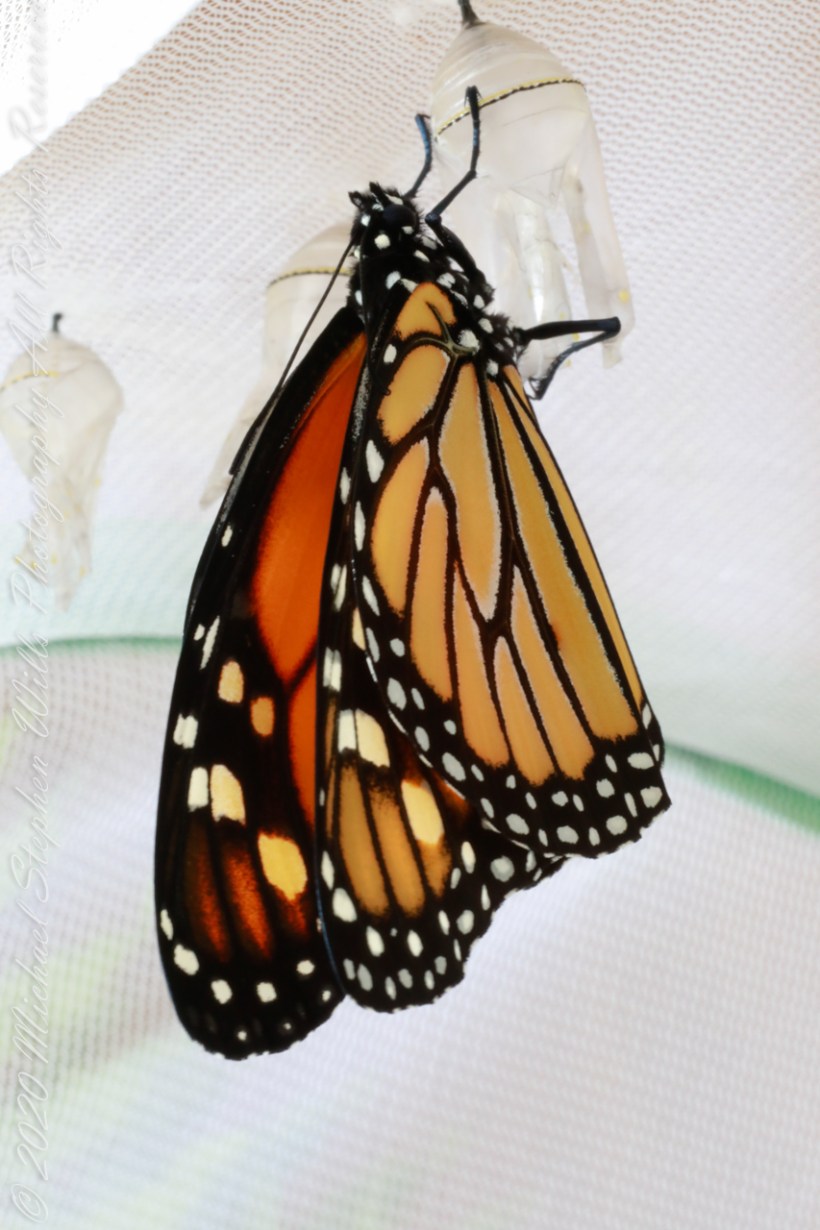
A Symphony of Green and Gold Walking through the trail, one is greeted by the harmonious interplay of goldenrods (Solidago spp.), milkweeds (Asclepias spp.), and asters (Symphyotrichum spp.). Goldenrods, with their feathery clusters of yellow blooms, are often mistaken as allergenic culprits, though it is the inconspicuous ragweed (Ambrosia artemisiifolia) that deserves this reputation. Milkweeds, with their milky sap and delicate pink or white flowers, are vital to monarch butterflies (Danaus plexippus), serving as the sole food source for their larvae.
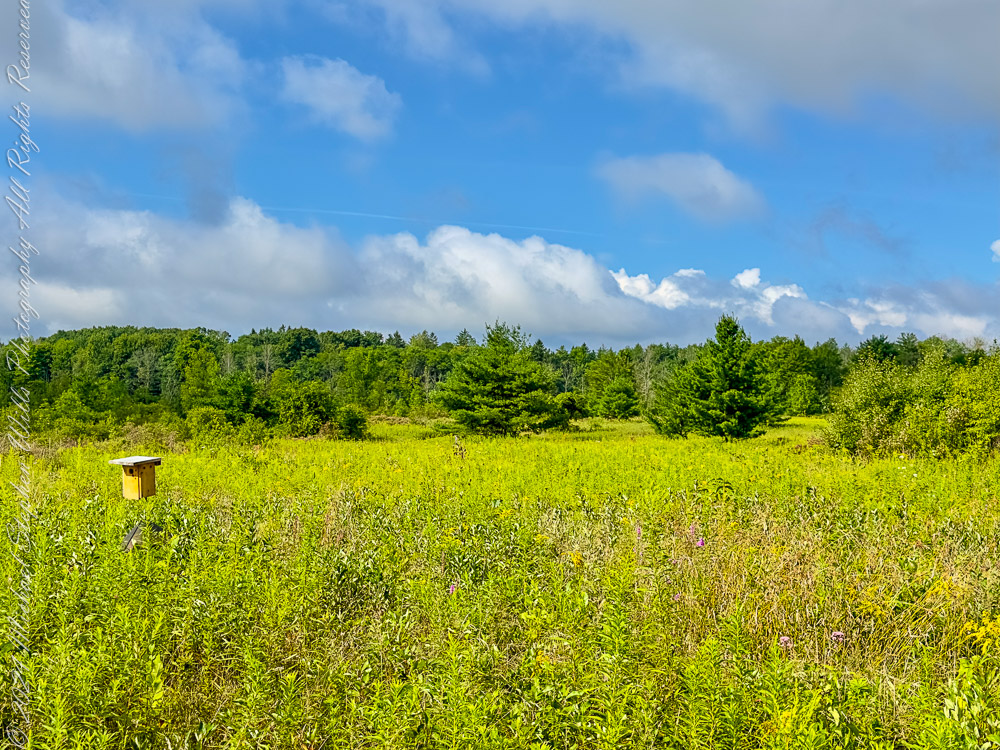
Among these botanical wonders, the birdhouse stands as a sentinel, a reminder of the intricate relationship between flora and fauna. These wooden structures provide safe havens for cavity-nesting birds like Eastern Bluebirds (Sialia sialis) and Tree Swallows (Tachycineta bicolor), fostering biodiversity within the meadow.
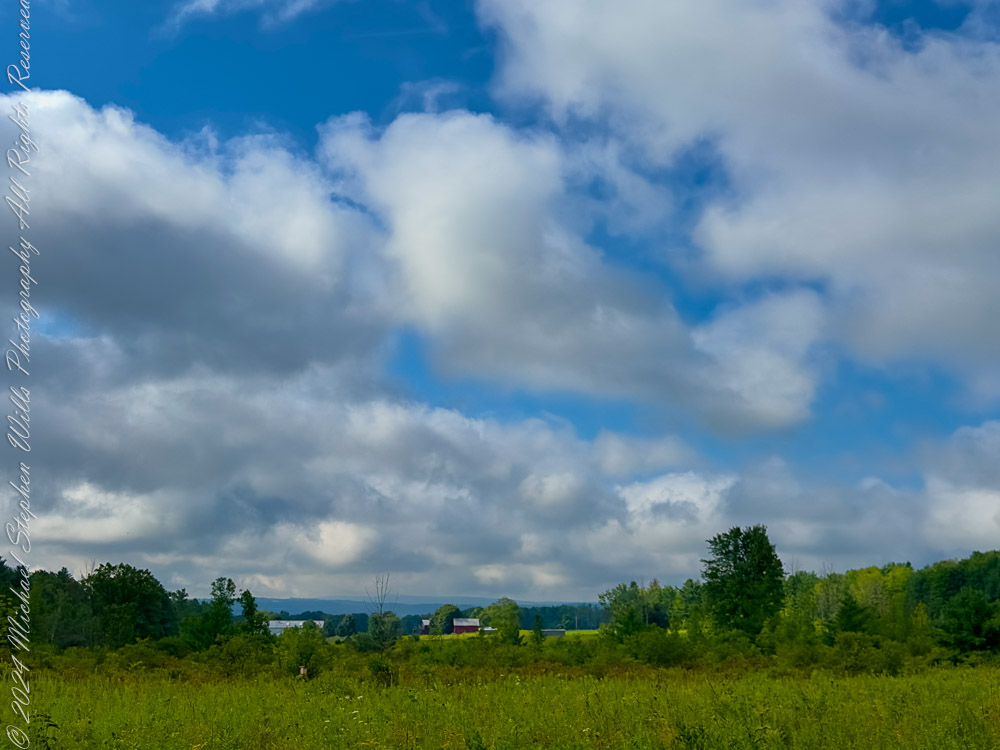
A Horizon Framed by Pines and Clouds The open meadow trails, flanked by clusters of Eastern White Pines (Pinus strobus) and punctuated by the azure sky, invite reflection and renewal. This is a place where the human spirit can align with the rhythms of nature, where each step reveals new layers of beauty and discovery.
Embracing the Spirit of Discovery To wander the Louisa Duemling Meadows is to immerse oneself in the timeless dance of life. The trail, carefully marked yet wild in essence, invites visitors to lose themselves in its beauty while finding solace in its quietude. This is not just a path through nature—it is a journey into the heart of conservation and a celebration of the life that thrives under Louisa Duemling’s enduring legacy.
As you leave the meadow, carry with you not just the memory of golden flowers and vibrant skies but the inspiration to cherish and protect the natural world. The Louisa Duemling Meadows are not only a gift to those who walk its trails but a reminder of the profound impact one can have in preserving our planet’s fragile beauty.
Enter your email to receive notification of future postings. I will not sell or share your email address.
Copyright 2025 All Rights Reserved Michael Stephen Wills
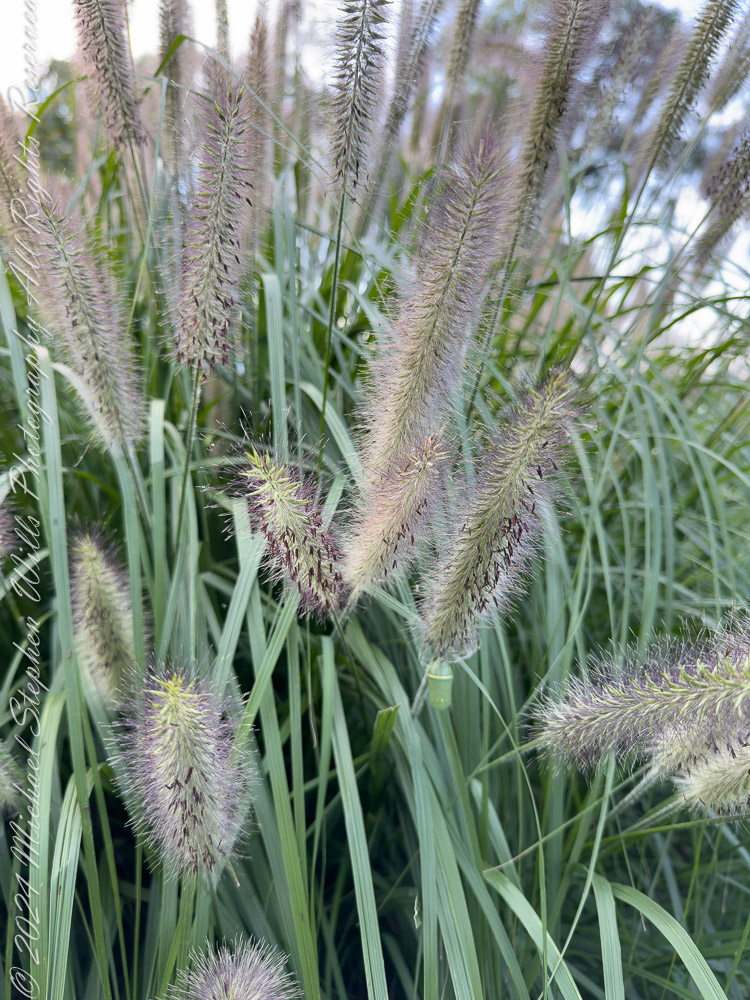
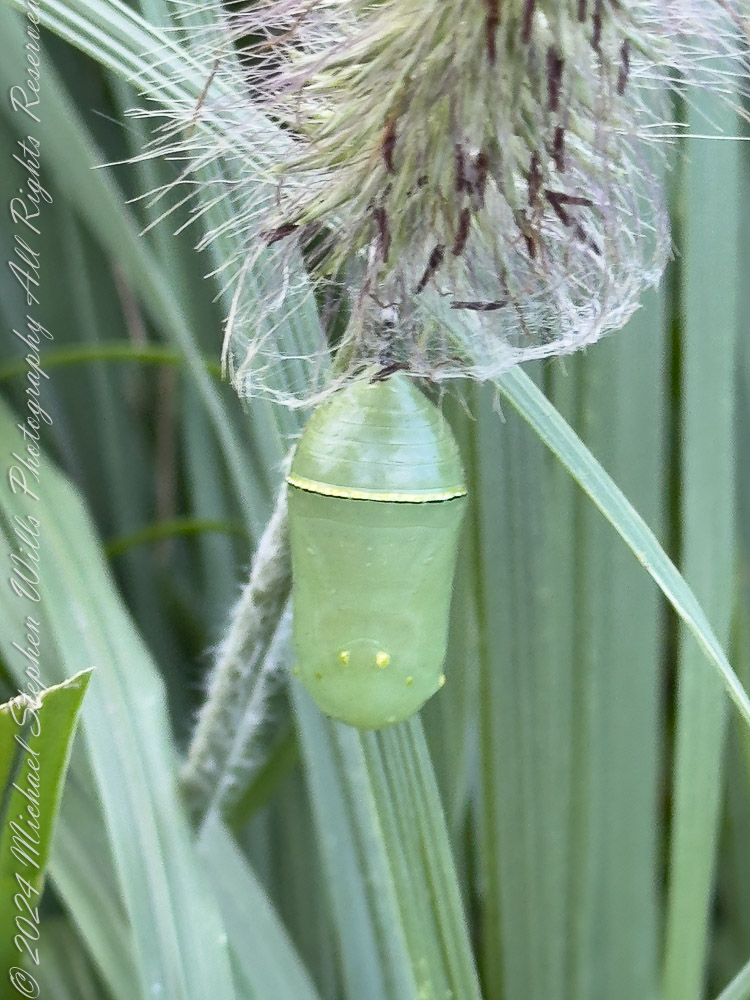
On a warm September afternoon, 2024, Pam and I passed a planting of shimmering grasses along the Cayuga Lake shore, the tips of their feathery plumes swaying in a gentle breeze. Amidst the verdant tapestry, my eyes caught a flash of delicate green—a Monarch chrysalis, hanging like a precious jewel beneath one of the seed heads. It was an unexpected encounter, a moment of grace that felt almost otherworldly. The chrysalis, pale jade with gold accents, looked like something born of magic rather than biology. For a moment, time paused.
The only Monarch chrysalis we found in 2024, notable for the absence of caterpillars around our home. Tompkins Park, Ithaca, New York, Finger Lakes Region
I knelt carefully, mindful not to disturb the fragile life suspended before me. As I leaned in closer, I marveled at the perfection of its design. The intricate gold dots along its casing seemed impossibly precise, as though a divine hand had painted them there. Yet, this chrysalis was also a paradox: it was a shield of stillness, promising the coming transformation of a creature known for motion and migration.
The significance of this discovery didn’t escape me. Just two years ago, the International Union for Conservation of Nature officially classified the Monarch butterfly as “endangered.” Habitat destruction, pesticide use, and climate change have decimated their numbers. Monarchs, once so plentiful they seemed a seasonal certainty, now teeter on the edge of disappearance. To find this chrysalis was to witness a quiet rebellion against those odds, a solitary emblem of resilience in a world fraught with loss.
I thought of their epic journey—a migration that spans thousands of miles, linking Canada to the forests of central Mexico. For generations, these butterflies have followed ancestral paths with unerring precision, defying every obstacle in their way. How can something so small carry the weight of such immense journeys? And how, in a world that seems to grow harsher each year, do they still persist?
This chrysalis, tucked in the grasses of Stewart Park, felt like an answer to those questions. It was a reminder of the resilience of life, the determination of nature to continue despite all that works against it. And yet, it also felt like a fragile promise. The Monarch’s survival is no longer assured; its future, like the butterfly within this chrysalis, hangs by a thread.
As I rose and continued our walk, I carried the image of the chrysalis with me, letting its quiet beauty settle in my mind. I thought of the interconnectedness of all things: the milkweed plants that sustain Monarch caterpillars, the winds that guide their migrations, and the people whose choices shape the landscapes they traverse. Stewardship is not just a responsibility; it is a privilege—an opportunity to ensure that these miraculous creatures continue to grace our skies.
By the time I left the park, the sun had sunk toward the west, its light no longer graced the grasses. I looked back one last time, hoping that this chrysalis would complete its transformation safely. In its stillness, I saw not just hope, but a call to action. The Monarch’s story is not just about survival; it’s about the courage to evolve and adapt, even when the odds seem insurmountable. And perhaps, in witnessing this moment of metamorphosis, we too are reminded of our capacity to change—to become better stewards of the world we share.
Enter your email to receive notification of future postings. I will not sell or share your email address.
Copyright 2025 All Rights Reserved Michael Stephen Wills
Taughannock Falls, a majestic 215-foot waterfall, showcases nature’s beauty and power, intertwining geological history with vibrant ecosystems in New York.
Introduction Nestled in the heart of the Finger Lakes region of New York, Taughannock Falls stands as a testament to the delicate balance of power and beauty in nature. This iconic waterfall plunges 215 feet—one of the tallest single-drop waterfalls east of the Rocky Mountains—into a gorge whose story is written in stone. The park surrounding this natural wonder offers a symphony of sights, from towering cliffs to lush greenery, inviting visitors to explore its ancient secrets and vibrant life.
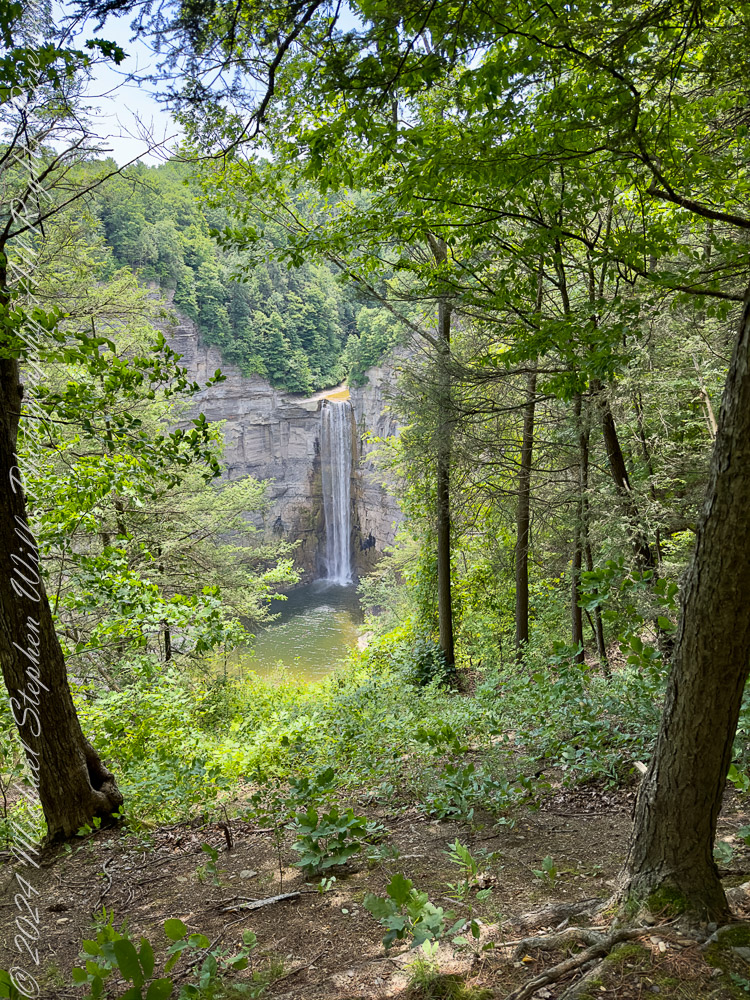
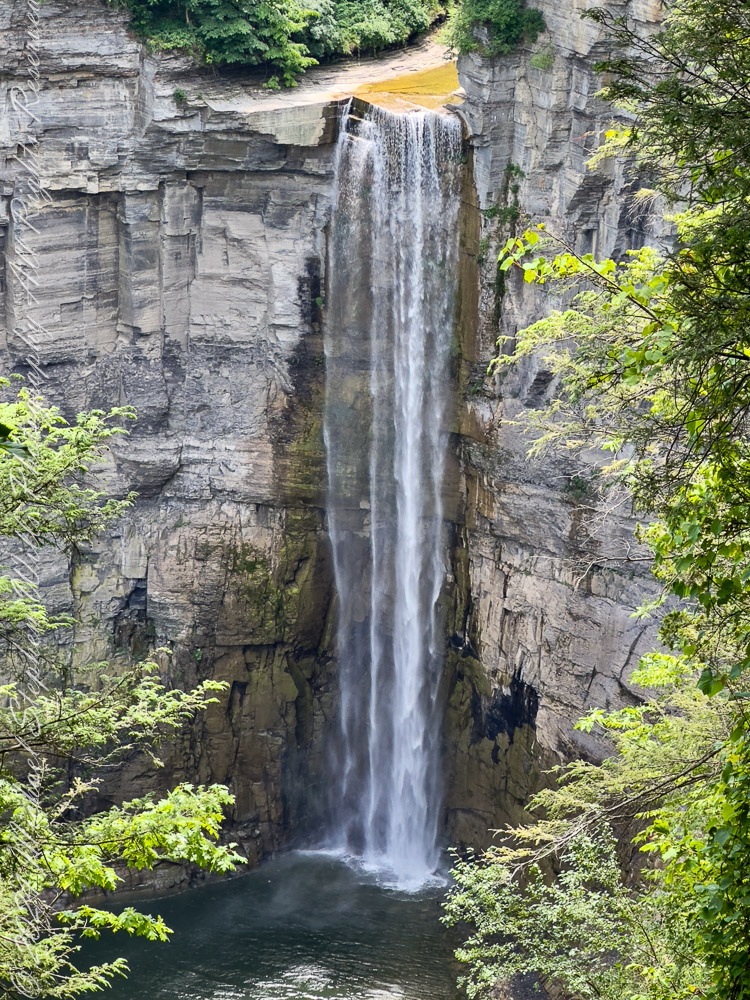
View of taughannock Falls from the South Rim Trail. Taughannock Falls New York State Park, Trumansburg, Tompkins County, Finger Lakes Region
A Story Written in Stone The rocks of Taughannock Falls tell a story that stretches back 380 million years to the Devonian Period, a time when the region was submerged beneath a shallow inland sea. Layer upon layer of shale, sandstone, and limestone formed as sediment settled to the ocean floor, preserving the fossils of marine life that once thrived here. These rocks have endured the passage of eons, but the gorge itself is a far more recent creation.
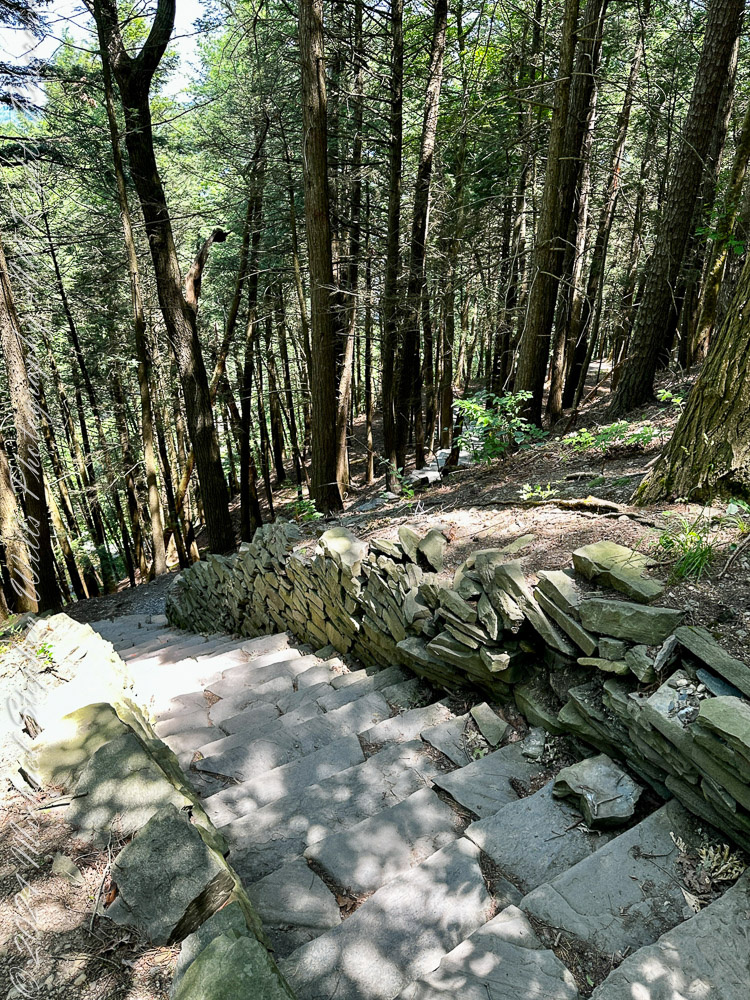
Limestone Steps on the South Rim Trail descend to the gorge floor.
It was the retreat of the mighty Laurentide Ice Sheet, approximately 10,000 years ago, that set the stage for Taughannock’s grandeur. As glaciers melted, torrents of water carved the U-shaped valleys that now cradle the Finger Lakes. Taughannock Creek, a tributary of Cayuga Lake, began its work, etching its path through ancient rock, sculpting the gorge we see today. In just 10,000 years—a fleeting moment in geological time—the relentless force of water carved its way 3/4 of a mile upstream, creating the awe-inspiring chasm and waterfall that continue to evolve even now.
Taughannock Creek carved this landscape over thousands of years.
The Gorge’s Living Tapestry Beyond its geological wonders, Taughannock Falls State Park bursts with life. Along the North and South Rim Trails, Eastern Hemlocks (Tsuga canadensis) stand tall, their evergreen branches weaving shadows that dance across stone stairways and forest floors. These silent sentinels are habitats for myriad creatures and protectors of the delicate ecosystem.
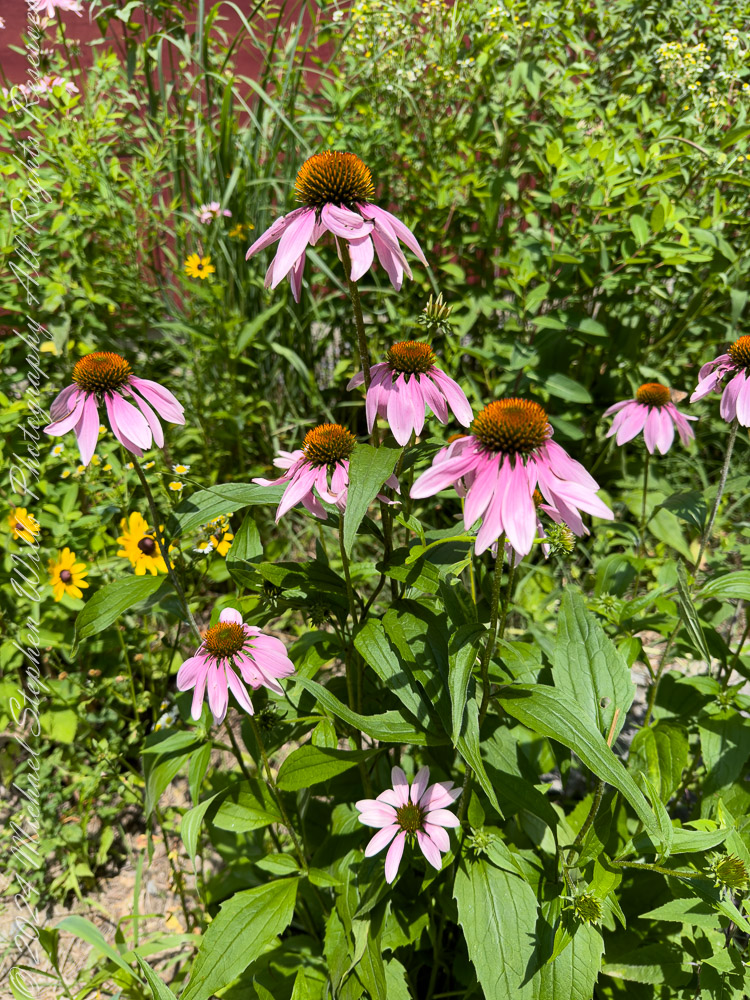
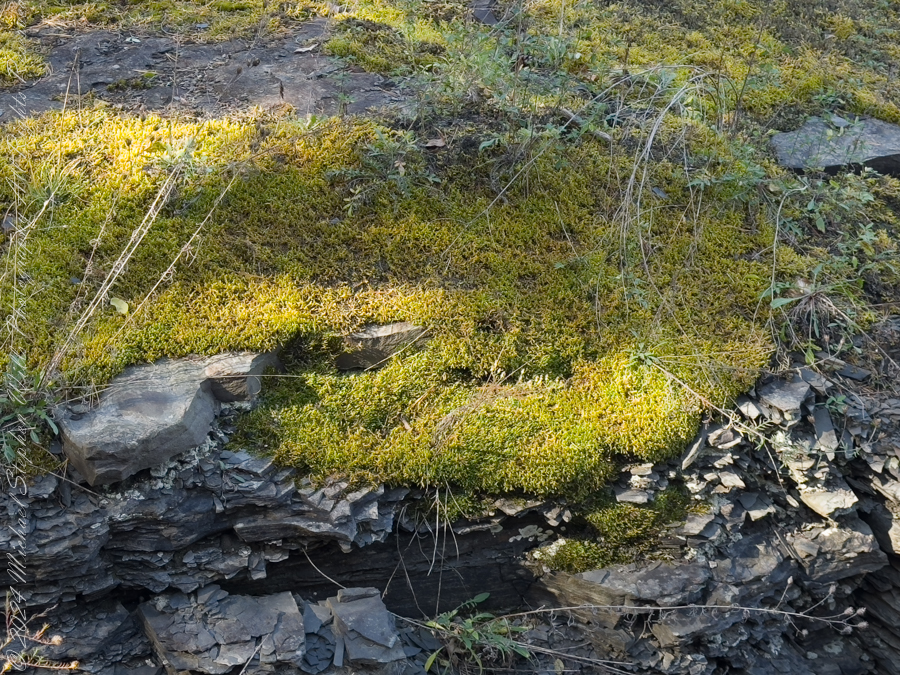
Wildflowers were planted by park staff at the Falls Overlook. The bright yellow of Black-eyed Susans (Rudbeckia hirta) and the vibrant purple of Coneflowers (Echinacea purpurea) attract bees and butterflies, their nectar fueling the intricate web of life that thrives here. Along the trail, on the forest floor, mosses and ferns cling to rocks, softening the edges of the gorge with their verdant touch.
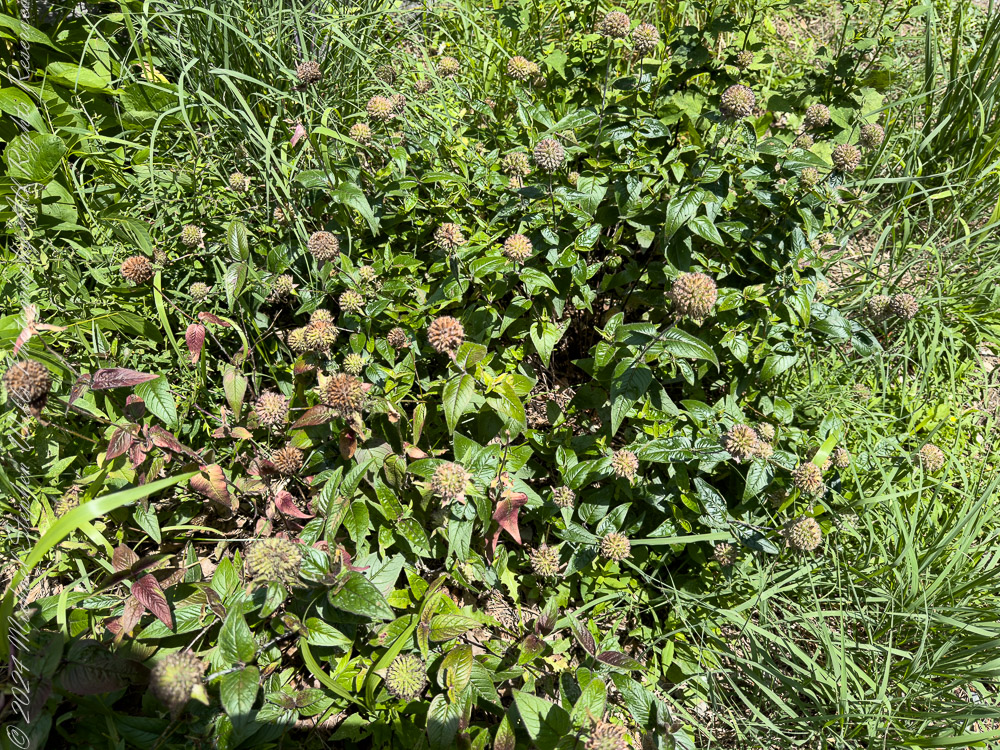
Cone FlowersCone Flowers gone to seedFrom a walk around Taughannock Falls State Park “Rim Trails” October 22nd, 2024. Trumansburg, Tompkins County, Finger Lakes Region, New York State.
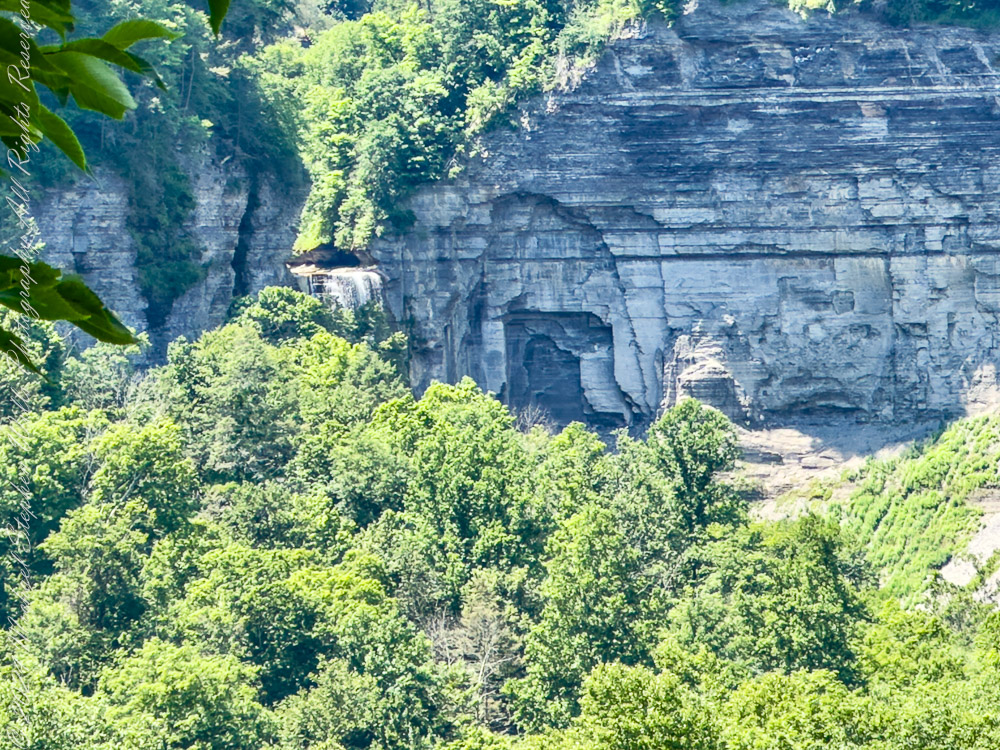
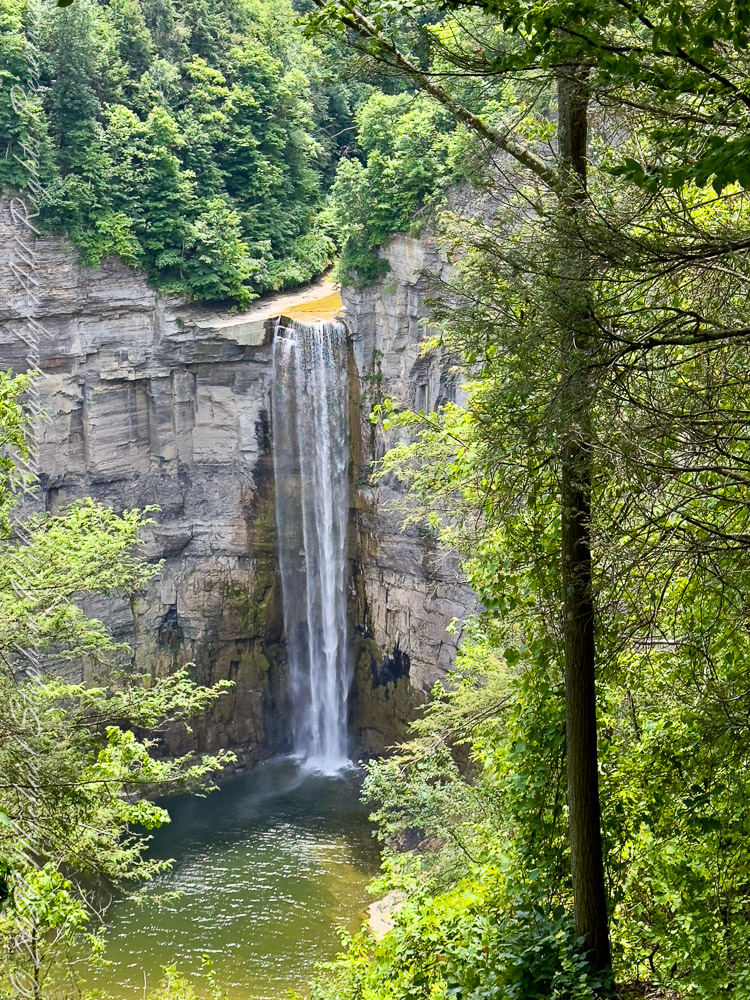
The Fall’s Eternal Dance At the heart of the park is the waterfall itself, its roar both a hymn and a whisper of time’s passage. The view from the North Rim Trail reveals the waterfall framed by steep cliffs, their striations like pages in a book written by water, wind, and time. The plunge pool below, shimmering in sunlight, seems almost sacred—a place where the forces of nature meet in harmony.
Viewed from the North Rim Trail on a summer morning. Taughannock Falls New York State Park, Trumansburg, Tompkins County, Finger Lakes Region
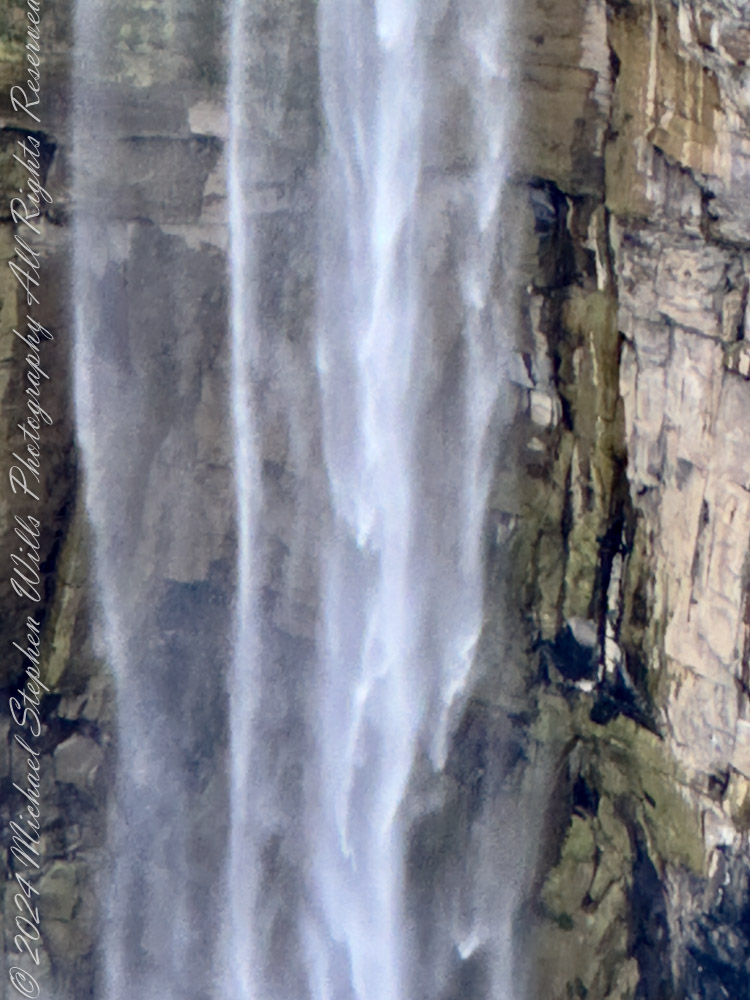
Even as we marvel at its beauty, the falls are a reminder of the earth’s constant transformation. Each drop of water that cascades down the cliff face carries away tiny fragments of rock, continuing the slow, deliberate work of reshaping the land. What we witness today is but one moment in an ongoing process—a fleeting glimpse of a masterpiece in progress.
A Place of Wonder To stand at the edge of Taughannock Falls is to feel both small and connected. The cliffs, formed over hundreds of millions of years, whisper of ancient seas and forgotten worlds. The gorge, carved in the blink of an eye by geological standards, speaks to the power of water and time. And the vibrant life that fills the park reminds us of nature’s resilience and beauty.
As the sun filters through the trees, illuminating the mist that rises from the falls, it’s easy to believe that this place holds magic. Perhaps it’s in the way the water sparkles like diamonds in the sunlight or the way the breeze carries the scent of pine and earth. Or maybe it’s in the knowledge that here, in this park, we are witnesses to a story billions of years in the making.
Conclusion Taughannock Falls State Park is a place of wonder where geology, ecology, and history converge. It invites us to reflect on the immense forces that shape our world and to cherish the fleeting beauty of each moment. Whether you come to marvel at the towering waterfall, walk among the hemlocks, or simply stand in awe of the gorge, Taughannock Falls leaves an indelible mark on the heart—a reminder of nature’s power, resilience, and enduring grace.
Enter your email to receive notification of future postings. I will not sell or share your email address.
Copyright 2024 All Rights Reserved Michael Stephen Wills
After 25 years of visiting Cocoa Beach, a discovery of coquina clams transformed my appreciation for the ecosystem, revealing its beauty, complexity, and intrinsic connections to life.
For nearly two and a half decades, I’ve strolled the sands of Cocoa Beach—since my first visit in March 2001—comforted by the rhythmic Atlantic waves and the familiar stretch of shoreline. I thought I knew this beach intimately; from the way the sunrise paints the water orange to the feel of wet sand under my feet. Yet it wasn’t until a clear morning in February 2025 that I recognized one of its tiniest treasures: the coquina clam. In the past, I might have walked past countless little shells and the tiny siphons and feet in the sand without a second glance. Now, with newfound awareness, I realize an entire world had been bustling at my toes all along.
February 2025: Discovering the Coquina Clams
Early one February morning, as the high tide receded, I noticed something magical happening at the water’s edge. Tiny coquina clams—each no larger than a fingernail—were emerging from the sand only to swiftly burrow down again between each wave.
These living coquina clams were found in the receeding high tide on a February 2025 morning on Cocoa Beach, Brevard County, Florida
Their small wedge-shaped shells, in colors of pastel pinks, purples, yellows, and whites, peeked out for a moment and then vanished, synchronized with the pulse of the ocean. It was as if the beach itself had come alive with confetti-like jewels, re-positioning themselves with every ebb and flow. I stood entranced, wondering how I’d missed this subtle dance for so many years. That morning marked the beginning of my quest to learn about these little clams that had been hiding in plain sight.
Life Beneath the Sand
Once my eyes were opened, I began observing and researching the coquina clams’ hidden world. I learned that each delicate clam is a filter feeder, siphoning in microscopic phytoplankton, algae, and organic particles from the surf. This constant filtering not only feeds the clam but also helps clean and clarify the coastal waters by removing excess nutrients. Coquinas live a fast-paced, transient life by necessity: they typically survive 1–2 years in the wild and can endure a mere few days without the ocean’s moving water.
No wonder they race to burrow when the waves recede—staying submerged is a matter of life and death, as they rely on the surf for both food and oxygen. In their brief lifespan, they continually ride the tides, migrate in swarms up and down the beach, and rebury themselves between each wave to avoid being swept away.
I found it astonishing that such small creatures possess the agility and tenacity to “surf” the waves and dig themselves back into wet sand within seconds, a graceful routine I had unknowingly witnessed that February morning.
Beyond their daily habits, coquina clams also undergo a remarkable life cycle beneath the sand. They spawn in the warmer months, releasing gametes into the water for external fertilization. The resulting larvae drift as plankton for a time before settling into the sand and metamorphosing into tiny clams. With no parental care to guide them these young coquinas must immediately fend for themselves in the surf zone. Perhaps it’s this independent, perilous beginning that drives them to cluster in large colonies—while they aren’t social in a communicative sense, hundreds of coquinas often live side by side in favorable spots, turning patches of wet sand into vibrant mosaics of color and life.
Walking the beach now, I recognize these patches: slightly raised, pebbly areas that, when a wave washes over, suddenly bristle with tiny siphons and feet as the clams feed and reposition. It’s humbling to realize that under each footstep, an entire hidden ecosystem of coquinas might be thriving.
Shells on the Shore: Beauty and Predation
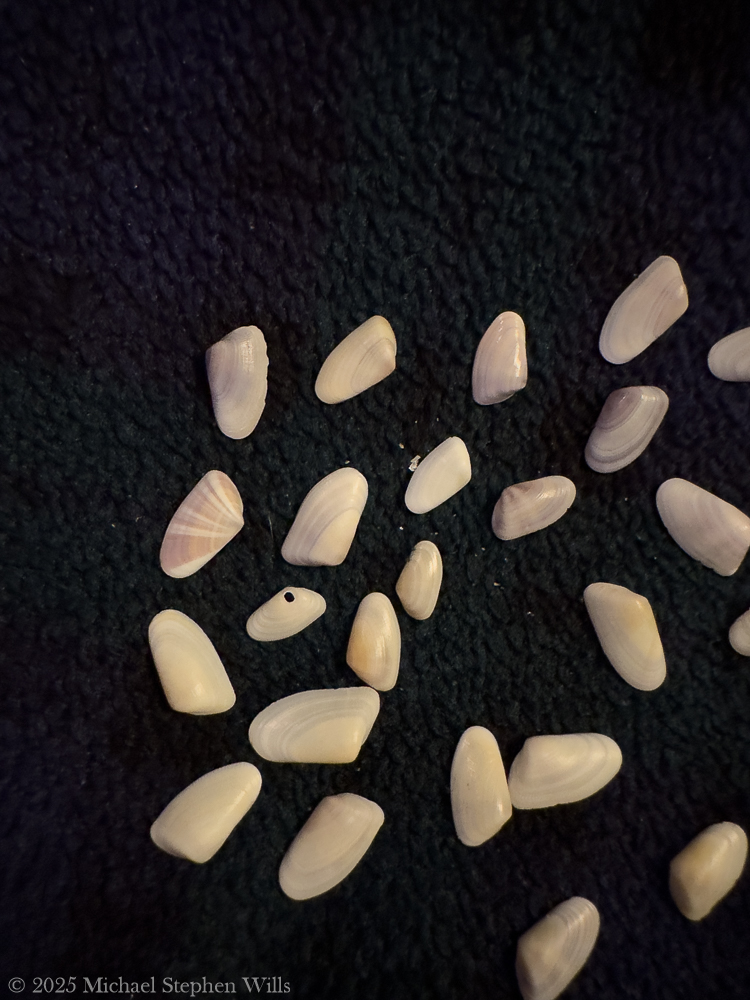
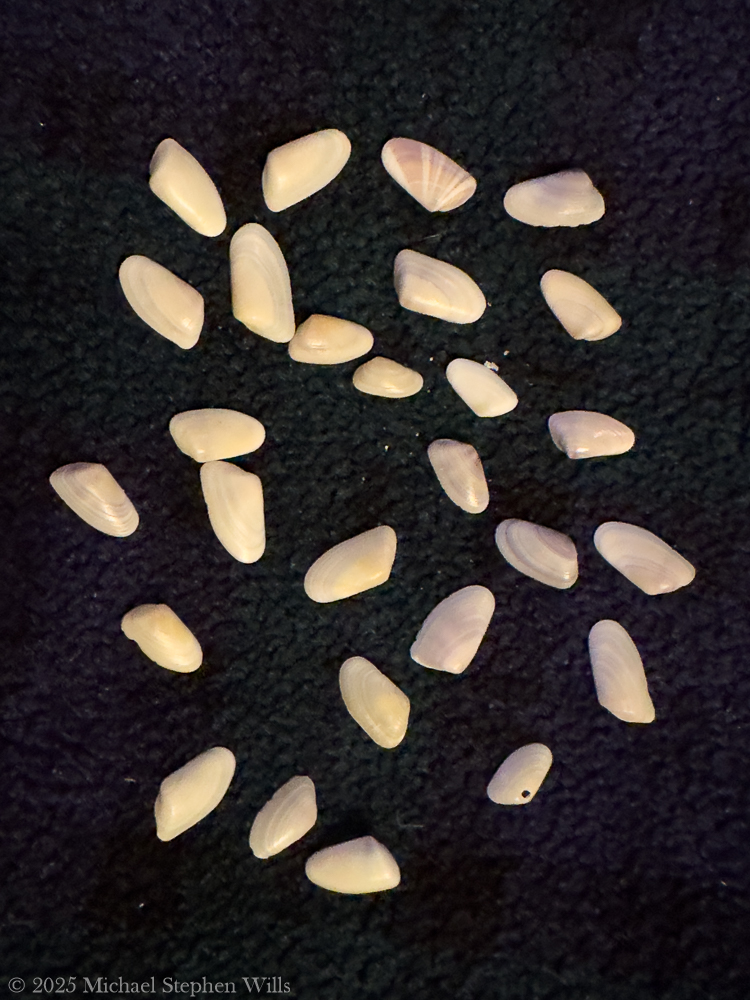
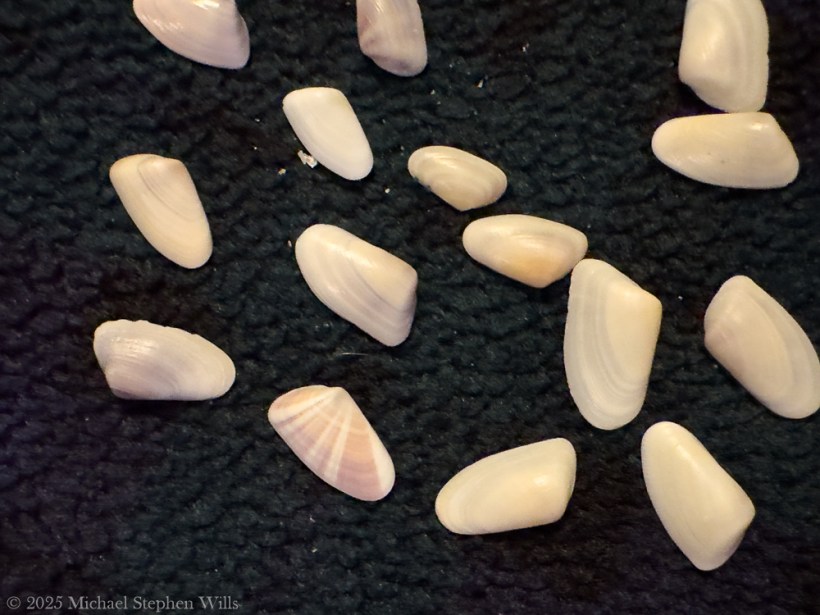
With my new awareness, even the empty shells strewn along the high tide line told a story. I began to collect some of the colorful coquina shells scattered on the sand, marveling at their variety—no two looked exactly alike. Some were solid orange or yellow, others striped with purple and white, each as delicate as a butterfly wing. Many of these shells were intact, evidence of clams that had lived out their short lives or perhaps fallen prey to gentle endings. Others, however, bore mysterious perfectly round holes on their surfaces. At first glance, I thought a tiny drill had punched through them, and in a way, I was right. Those small holes are the signature of predatory snails that haunt the sands: creatures like moon snails (also known as shark’s-eye snails) and whelks that prey on coquinas by literally boring into their shells. These sand-dwelling snails wrap themselves around a clam and use a tongue-like organ called a radula—akin to a miniature saw—to drill a neat hole through the coquina’s shell, aided by acidic secretions to soften the calcium carbonate. Once the hole is complete, the snail devours the clam from within, leaving behind an empty, perforated shell as a grim calling card of the food chain in action.
Seeing those tiny “murder holes,” as beachcombers jokingly call them, on coquina shells transformed my perspective on the shell collections I had casually admired for years. Each shell in my hand represented a life that had been an integral part of the beach ecosystem. Some had been snatched by shorebirds or fish the instant they were exposed by the retreating tide, becoming breakfast for a sanderling or a pompano. Others, as the holes revealed, had been victims of an even stealthier predator under the sand. It struck me that every fragment and hollowed shell on the beach is evidence of a relationship—predator and prey, life and death intertwined on the shore. Instead of seeing a random assortment of pretty shells, I now saw a record of the beach’s vibrant food web written in calcium carbonate. The realization filled me with both wonder and respect: this sunny tourist beach holds quiet tales of survival as dramatic as any wilderness, if one knows where to look.
The Coquina’s Ecological Role
As I dug deeper (both into the sand and the literature), I discovered that coquina clams are far more than a footnote in the beach ecosystem—they are a keystone of coastal ecology. By filtering plankton and detritus from the surf, countless coquinas collectively act as tiny water purifiers, helping maintain water quality along the shore. Their presence in large numbers indicates a beach’s health; in fact, abundant coquina populations signal that the beach environment is robust and unspoiled. A stretch of sand teeming with coquina clams suggests natural, shifting sands and minimal human interference, as these clams thrive best where coastal processes remain undisturbed. In this way, coquinas are like a barometer for the shoreline: if I continue to find them at Cocoa Beach, it means the beach is still alive and supporting complex life.
Coquina clams also form a critical link in the food chain. Numerous shorebirds rely on them as a food source—those flocks of little sandpipers and plovers skittering at the water’s edge have, all along, been feasting on coquinas right under my nose. Fish that patrol the surf, like the Florida pompano and various kinds of drum (whiting), gulp them up as the waves churn the sand.
These coquina clam shells were found February 2025 on Cocoa Beach, Brevard County, Florida
Even ghost crabs and other scavengers benefit, feeding on clams that wash ashore. And of course, the predatory snails under the sand have a specialized taste for them. It’s a reminder that even a creature only an inch long can be a cornerstone of an entire food web, sustaining animals up the chain from mollusks to birds to fish. Standing on the beach now, I often pause and watch the frenetic chase of the shorebirds in the surf, aware that without the coquina clams beneath the foam, that familiar coastal ballet could cease to exist.
Humanity and the Coquina: Intertwined Histories
It’s not only animals that have interacted with coquina clams—we humans have a longstanding relationship with them as well. Historically, Floridians made use of coquinas as a food source. Local folklore and old recipes describe coquina broth and chowder, a delicate soup made by briefly boiling these tiny clams to extract their flavor.
Because each clam is so small, you’d need hundreds to make a pot of soup, so it’s not a common dish today except perhaps as a novelty. Still, the idea that the sands I walk on could literally be cooked into a chowder is a charming and earthy connection between food and place. Early indigenous peoples and European settlers alike would have recognized coquinas as an edible bounty in times when every bit of protein counted.
For best experience, click on “Watch on YouTube”
Humans have also found value in the shells of coquinas beyond admiring their beauty. Over time, vast deposits of coquina shells on ancient beaches hardened into a soft limestone rock called coquina stone (the term “coquina” itself comes from the Spanish for “shellfish” or “cockle,” reflecting its composition).
In a fascinating twist of fate, this sedimentary rock—essentially millions of fused clam shells—became a building material. Here in Florida, coquina stone was quarried and used to construct some of our oldest structures. The historic fortifications in St. Augustine, like Fort Matanzas and Castillo de San Marcos, were built from coquina stone, their walls made resilient by a matrix of coquina clam shells.
I find it poetic that the same little clams I only just learned to appreciate have literally been the building blocks of human shelters that have stood for centuries. Even today, crushed coquina shells are used in landscaping and as decorative ground cover—perhaps you’ve seen driveways or garden paths that gleam with fragments of pink and purple shells.
Our lives overlap with the coquina in subtle ways: from the architecture of coastal Florida to the aesthetics of our beach towns.
Modern conservationists note another connection: by protecting natural beach dynamics, we also protect coquina populations, which in turn supports the whole ecosystem. This means being mindful about coastal development, beach renourishment projects, and even how many shells tourists collect. I’ve become more aware that picking up a few pretty coquina shells as souvenirs is fine, but we must leave plenty behind for the beach to recycle and for other creatures to use. For example shorebirds glean minerals from them. The humble coquina clam has given me a new appreciation for how intimately tied human activity is to the smallest inhabitants of the shore.
Reflections: Wonder in the Little Things
My journeys to Cocoa Beach were enhanced: what began as a casual observation in 2025 has blossomed into a profound shift in the way I experience the beach. I feel as if I’ve been given new eyes—now I notice the glint of tiny shells in the sand and know there’s life (or a story of life) attached to each one. The joy of discovery I felt upon noticing the coquina clams has reignited a childlike curiosity in me. It’s astounding that after decades of visits, there was still a secret to uncover on those familiar shores. This realization makes me wonder: What else have I been missing? It’s a reminder that nature has layers upon layers of wonder, even in places we think we know intimately. Sometimes it just takes a shift in perspective, a bit of knowledge, or a quiet moment of attention to peel back the veil.
In reflecting on the coquina clams of Cocoa Beach, I’ve learned not only about a specific species and its role in the world, but also about myself and the value of lifelong learning. These clams, in their smallness and ubiquity, taught me to slow down and appreciate the intricate tapestry of life at my feet. Now, each time I visit the beach, I smile seeing the waves bring in that rush of foam and sand, knowing a hidden troupe of coquinas is hard at work filtering water, dodging predators, and holding up the very balance of the shore. I often kneel down now, running my fingers gently through the wet sand to feel them retreat, and I silently thank them — for cleaning the water, for feeding the birds and fish, for building historic forts (unbeknownst to themselves), and for showing me that wonder can be found in the smallest of places. Cocoa Beach, through the lens of the coquina clam, feels like a brand new world I’ve been lucky enough to discover, even after all these years
I look forward to other hidden marvels awaiting discovery on my next visit.
References
Abbott, R. T. (1974). American Seashells: The Marine Mollusca of the Atlantic and Pacific Coasts of North America. Van Nostrand Reinhold Company.
Andrews, J. (1994). Shells and Shores of Texas. University of Texas Press.
Brusca, R. C., & Brusca, G. J. (2003). Invertebrates (2nd ed.). Sinauer Associates.
Denny, M., & Gaines, S. (2000). Encyclopedia of Tidepools and Rocky Shores. University of California Press.
Futch, C. R., & Burger, J. (1976). The ecology of coquina clams (Donax variabilis) in the southeastern United States. Marine Biology Journal, 34(2), 157-168.
Leal, J. H. (2002). Seashells of Southern Florida: Living Marine Mollusks of the Florida Keys and Adjacent Regions. Smithsonian Institution Press.
Mikkelsen, P. M., & Bieler, R. (2008). Seashells of Southern Florida: Marine Bivalves, The Bivalvia. Princeton University Press.
Morton, B. (1988). Particulate Matter Processing in Bivalves: An Overview. Journal of Marine Ecology, 19(3), 103-123.
Ruppert, E. E., Fox, R. S., & Barnes, R. D. (2004). Invertebrate Zoology: A Functional Evolutionary Approach (7th ed.). Cengage Learning.
Stanley, S. M. (1970). Relation of shell form to life habits of the Bivalvia. Geological Society of America Memoir, 125, 1-296.
Voss, G. L. (1980). Seashells of the Gulf and Atlantic Coasts. Houghton Mifflin Harcourt.
Wells, H. W., & Gray, I. E. (1960). Habitat selection and the distribution of the coquina clam (Donax variabilis). Ecological Monographs, 30(1), 55-77.
Enter your email to receive notification of future postings. I will not sell or share your email address.
Copyright 2024 All Rights Reserved Michael Stephen Wills
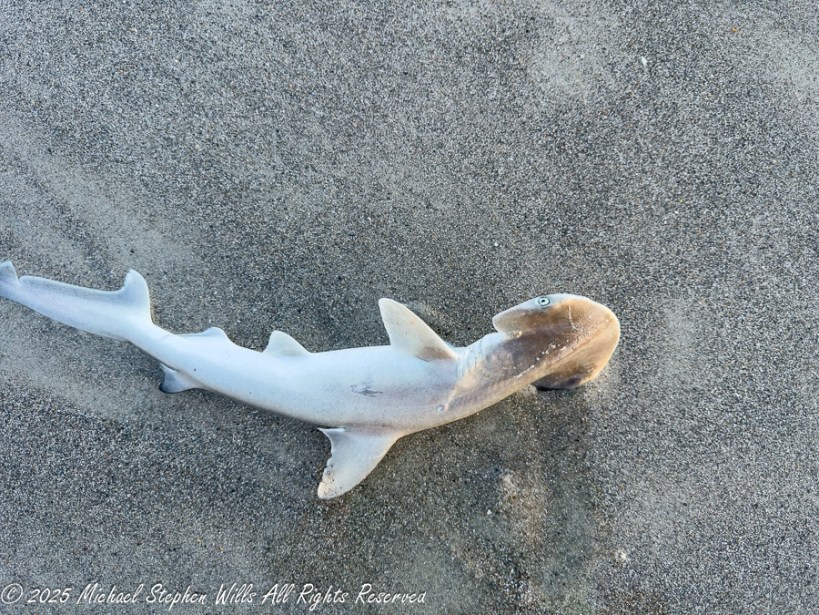
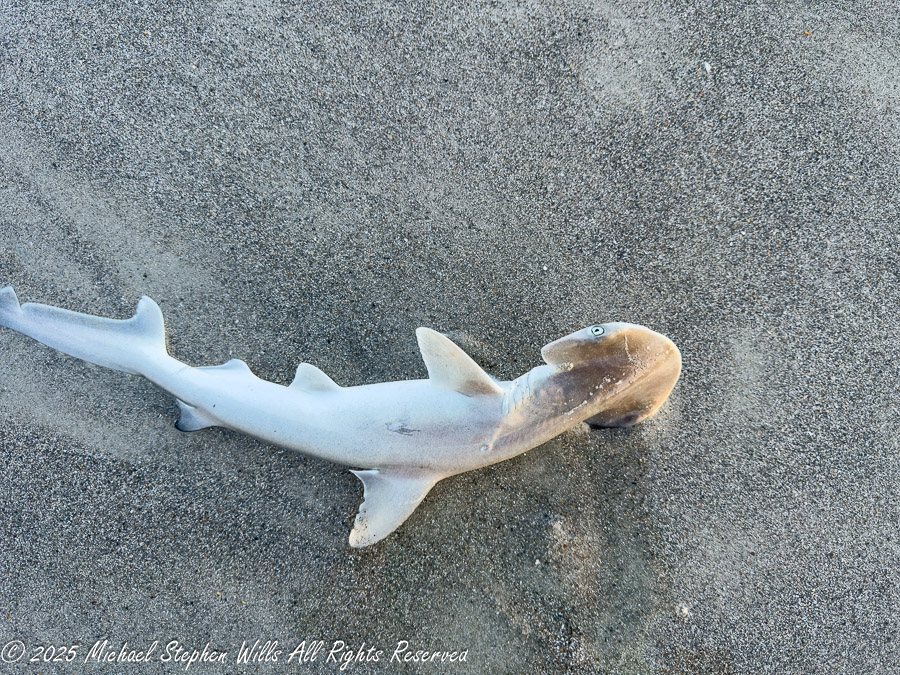
The evening ebb tide had left behind more than just a fresh line of seaweed and broken shells. As I walked along Cocoa Beach, the cool sand beneath my feet, a small shape caught my eye near the water’s edge. At first, it looked like detritus tossed ashore by the restless ocean. But as I stepped closer, I saw the unmistakable outline of a shark—its pale, twitching body lay on the damp sand.
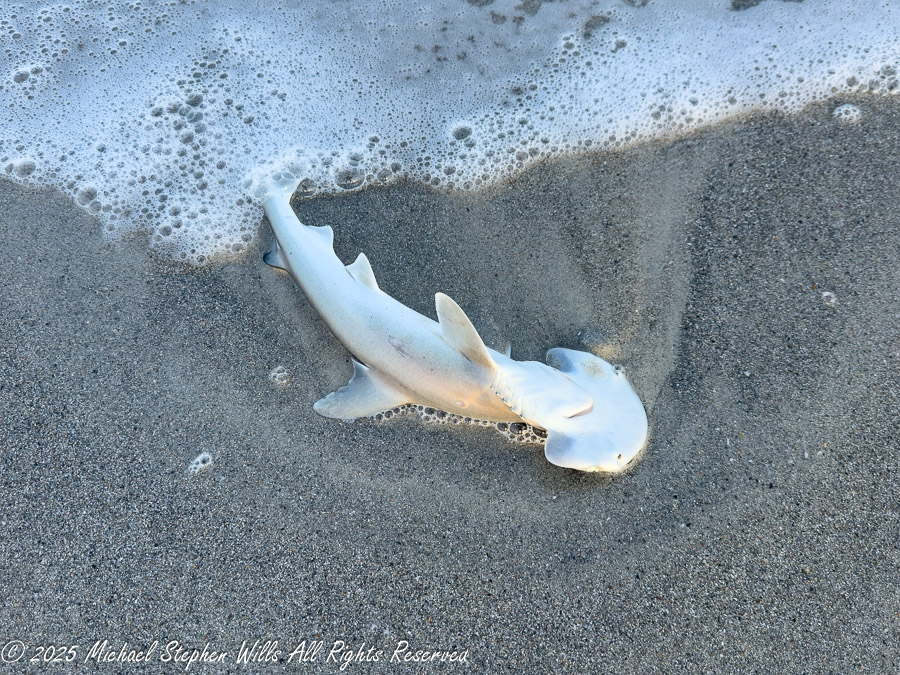
Stopping to bend and examine it, my breath caught as I recognized its flattened, shovel-shaped head. This was a bonnethead shark (Sphyrna tiburo), one of the smallest members of the hammerhead family. Its eyes, positioned far apart on either side of its head, stared blankly at the sky. A thin film of seawater still clung to its sleek, streamlined body, reflecting the golden light of the rising sun.
Its scientific name, Sphyrna tiburo, reveals much about its nature and form. Sphyrna comes from the Greek σφῦρα (sphyra), meaning “hammer,” a fitting reference to the distinct shape shared by all hammerhead sharks. The species name, tiburo, is thought to have originated from an indigenous or Spanish term for small sharks found in the Caribbean and Gulf of Mexico. Together, these words encapsulate the bonnethead’s identity—a hammer-shaped predator of the shallow seas, yet one that stands apart from its larger, more formidable relatives.
Named for its distinctive cephalofoil—the flattened, bonnet-like shape of its head—Sphyrna tiburo plays an essential role in maintaining the balance of marine ecosystems. As a mid-level predator, it helps regulate populations of crabs, shrimp, and small fish, preventing any one species from overpopulating and disrupting the delicate food web. Unlike most sharks, the bonnethead is also partially omnivorous, consuming seagrass along with its usual diet of crustaceans and mollusks. This unique feeding behavior contributes to the health of seagrass beds, which serve as crucial habitats for many marine creatures.
Bonnetheads are harmless to humans, known for their non-aggressive nature and their surprising diet—unlike most sharks, they eat not just crustaceans and fish, but seagrass as well. Gentle foragers of the shallows, they are common in Florida’s coastal waters, where they glide just beneath the surface, their unique head shape helping them detect prey buried beneath the sand.
But this one would swim no more. It was too late. Whether it had fallen victim to a fisherman’s discarded catch, an injury, or something unseen—disease, pollution, or fluctuating ocean temperatures—it was impossible to tell. All I knew was that this creature, so perfectly adapted to the rhythms of the sea, had been cast ashore by forces beyond its control.
A wave surged forward, washing over the shark’s still body, as if the ocean itself fruitlessly nudged it to life. The rising tide swirled, lifting the bonnethead and carrying it back into its world.
As I stood watching the tide pull it away, I felt a strange mix of sorrow and reverence. The sea is full of life, but it also takes life in its endless cycle. The bonnethead had played its part in that vast, unknowable story.
And now, it was gone.
Enter your email to receive notification of future postings. I will not sell or share your email address.
Copyright 2025 All Rights Reserved Michael Stephen Wills