From Limestone to Pasture: How the People of Inis Mór Created Soil on this Aran Island

Beneath the green fields of Inis Mór lies a remarkable story of persistence as generations of islanders created fertile soil atop bare limestone.

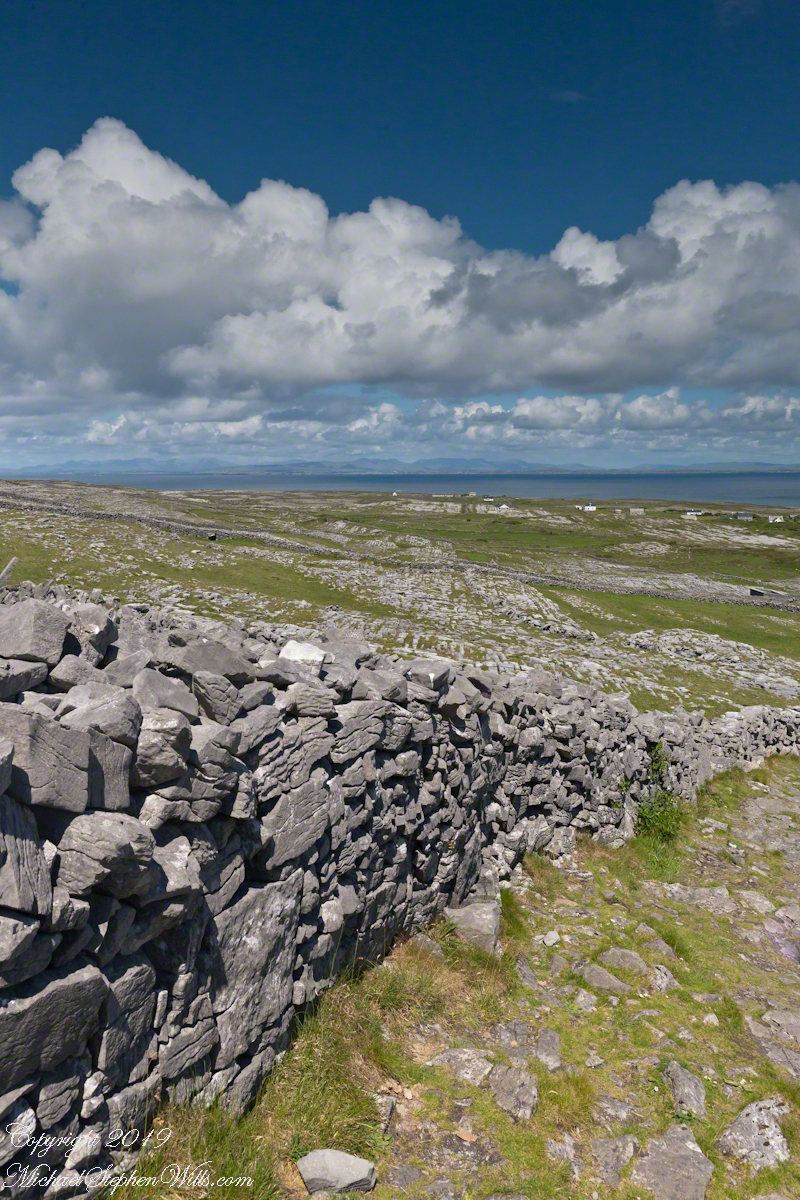
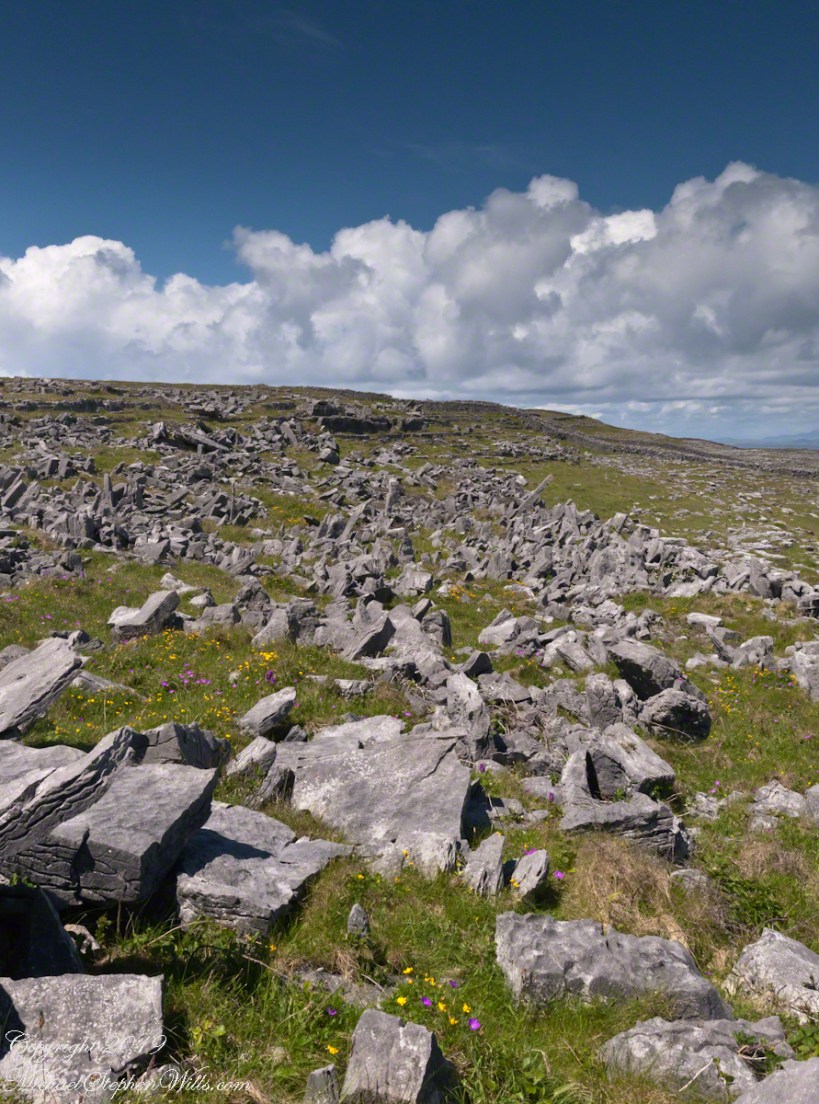
Standing atop the cliffs of Dún Aonghasa on Inis Mór (Inishmore), one is struck by contradiction. Beneath your feet lies a landscape of exposed limestone, fractured and weathered into the unmistakable geometry of karst. These unworked, barren slopes have a pale green covering growing seemingly on air. The Atlantic crashes hundreds of feet below, while inland the island stretches toward Galway Bay in shades of gray and pale green. It seems an improbable place for agriculture.

Yet there they are: fields enclosed by dry stone walls, dotted with cattle and thick enough with grass to sustain them. Looking out across this island, a question naturally arises. Where did the soil come from?
Click the link for my Getty IStock photography of the Aran Islands

The answer is simple to describe and astonishing to contemplate. The soil of Inis Mór was, in large measure, made by human hands.

The Aran Islands are composed primarily of limestone deposited some 350 million years ago when this part of the world lay beneath warm tropical seas. The shells and skeletal remains of ancient marine organisms accumulated on the seabed and, through immense pressure and time, became stone. Today, limestone accounts for the overwhelming majority of the islands’ bedrock.

Limestone landscapes possess a severe beauty. Rainwater, slightly acidic from dissolved carbon dioxide, which in turn slowly dissolves the rock, creating fissures known as grykes separated by flat blocks called clints. Soil drains rapidly through these cracks. Left to natural processes alone, only thin accumulations of organic material develop and much of the landscape will resemble a stony pavement.

For generations, survival on Inis Mór required transforming that pavement into productive land.

Islanders gathered seaweed from the shoreline, hauling it inland by cart and hand. The seaweed provided organic matter and nutrients, particularly potassium and trace minerals. Sand from the beaches added texture and volume. Mixed together atop the limestone surface, these materials slowly decomposed into something capable of supporting plant life. Over decades—and in some places centuries—layers accumulated.

The process demanded persistence. Storms could strip away exposed earth. Atlantic winds threatened erosion. Each year required renewal: more seaweed, more organic matter, more labor. Roots from grasses and crops helped bind the developing soil together. Animal manure returned nutrients to the ground. What had begun as an artificial growing medium gradually became a living soil ecosystem.

As understood by modern soil science, soil formation is often explained through five factors: climate, organisms, relief, parent material, and time. On Inis Mór, all five are present, but there is a sixth factor impossible to ignore: culture.

Without human intervention, much of the island would likely remain dominated by exposed limestone and sparse vegetation. Instead, generations of residents imposed patience upon geology. Their work transformed an inhospitable environment into a functioning agricultural landscape.

The dry stone walls that divide the island tell the same story. Built from limestone cleared from the fields, they required no mortar. Each stone was carefully selected and placed, creating boundaries that controlled livestock, sheltered plants from relentless winds, and marked family holdings. The walls themselves became part of the ecological fabric, providing habitat for insects, mosses, lichens, and wildflowers.

Visitors often admire these walls for their picturesque quality. They are indeed beautiful and are also evidence of necessity. Every stone removed from a field made space for soil to deepen and grasses to spread. The very act of creating pasture simultaneously generated the material for the island’s defining architecture.

There is poetry in this relationship between hardship and abundance.

In many places, fertile soil is taken for granted. Deep glacial deposits or river sediments create agricultural wealth with little awareness of the thousands of years involved in their formation. On Inis Mór, however, the origins of fertility remain visible. The limestone still protrudes through the fields. The seaweed-strewn shore lies only a short distance away. The walls reveal the labor embedded in the land.

To walk these fields is to encounter a collaboration between people and place extending across centuries. The islanders did not conquer the landscape so much as negotiate with it. They worked within its constraints, borrowing from the sea to enrich the stone and relying upon time to complete what effort had begun.

The resulting landscape offers a quiet lesson. Soil, the foundation of civilization, is created through intricate interactions among rock, water, organisms, and time. On Inis Mór, soil also represents inheritance: the accumulated labor of countless individuals who refused to accept barrenness as destiny.

Viewed from the heights of Dún Aonghasa, the green fields scattered across the gray limestone are miraculous.

Not a miracle of sudden transformation, but one measured in generations—made from seaweed and sand, from patience and persistence, and from the enduring belief that even the most unpromising ground can, with enough care, be coaxed into life. 

The answer is simple hard work, hundreds, a thousand years of hauling seaweed and sand, mixing it on the barren limestone, allowing the rot of time to work. Hold it down with roots, till and refresh.
Click me for the first post of this series, “Horse Trap on Inishmore.”

Enter your email to receive notification of future postings. I will not sell or share your email address.

The Dún Aonghasa cheval de fries field

…this defensive structure evokes the enormous scale of the struggles around this place of defense. 

A span of 10,000 years spreads between now and the first possibility of settlement on the island of Eire, then swept clean to bare rock by the weight of ice.  Current scholarship of the Dún Aonghasa ruins, Inishmore, County Galway, the Irish Republic place a settlement within the inner of the four dry stone rings after 6,500 years (1,500 BC or 3,500 years ago).  By way of scale, the first settlement took about 30 times the duration of the U.S. Constitution ratification through 2025: the last state, Rhode Island, ratified the Constitution 1789.

By 700 BC, 2,700 years ago, a series of upright, closely placed stones, were erected between the second and third rings called a cheval de fries field (“Frisian horses” in English) today, this defensive structure evokes the enormous scale of the struggles around this place of defense.  

This is a portion of that field, I believe, taken as Pam and I approach the inner ring entrance, walking a wide path cleared of barriers.  Click the photograph for a larger image with caption.

Click the link for my Getty IStock photography of the Aran Islands
Click me for the first post of this series, “Horse Trap on Inishmore.”

References: search wikipedia for “Dún Aonghasa” and Google “cheval de fries definition” and “Dún Aonghasa.”

Enter your email to receive notification of future postings. I will not sell or share your email address.

Dún Aonghasa Elegy

High above the Atlantic on Inishmore, Dun Aonghasa Elegy reflects on sky, stone, and memory in a timeless Irish landscape shaped by wind and will.

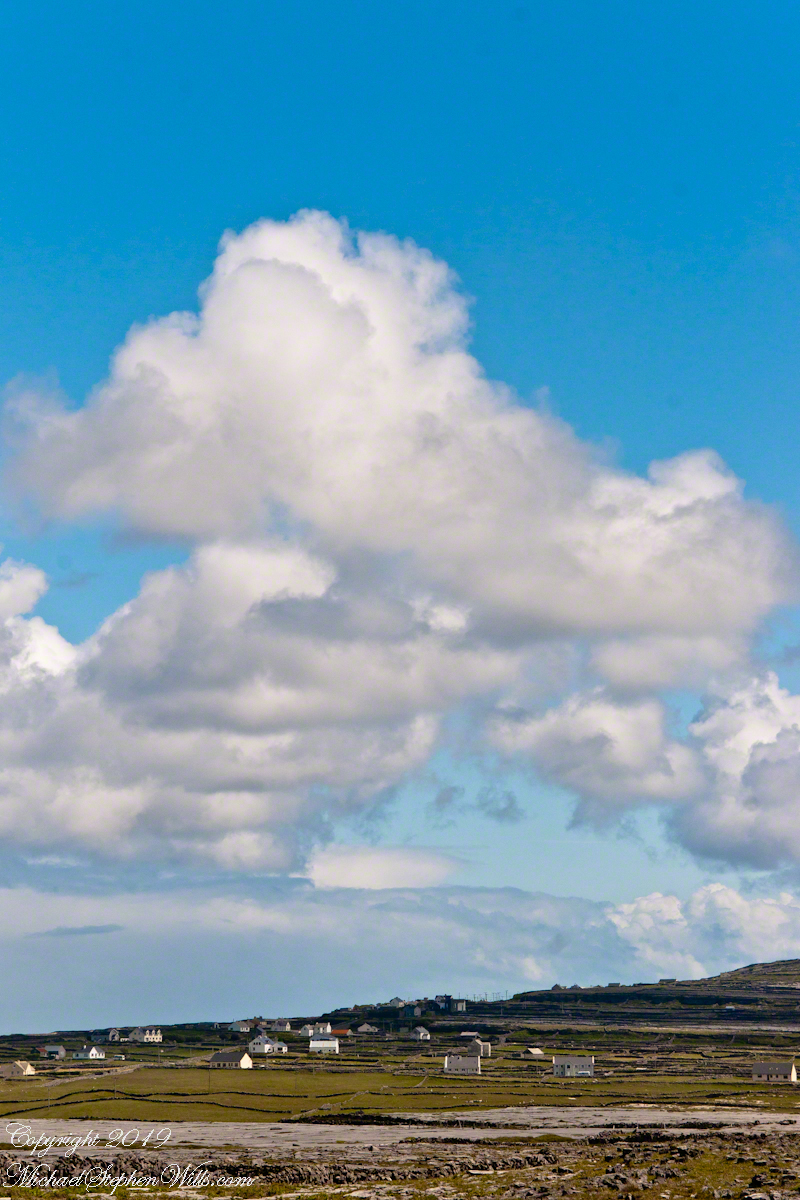
From the commanding location of Dún Aonghasa, looking northeast across Inishmore, the logic of the ancients becomes clear. No better vantage could be found—land unfurling like a hand toward Galway Bay, cottages nestled in green folds, clouds billowing above like sails caught mid-journey. A place of presence. A place of permanence.

Click the link for my Getty IStock photography of the Aran Islands

Perched high on the cliff’s edge, the fort behind, the Atlantic at the back, the wind carried stories—unwritten, unspoken, but felt in the bones. Below, stone walls divided the island into patterns of memory. Fields outlined in rock, laid long ago by hands familiar with hardship and patience. The sea’s pulse echoed faintly in the distance, as steady and unfathomable as time itself.

No words were needed in that moment. Just the hush of sky and stone. Cottages, bleached bright by limewash—kalsomine, the old name still whispered by some—stood resilient against the elements, each one a witness to generations. Each one seemed to carry a personal reverence, a tenderness carved into the landscape.

Paths led gently inland, where wind slowed and voices from distant homes rose faintly through the open air. Along those paths, the rhythm of island life could be read in hoof prints, scattered wool, and the sharp, clean edges of hand-cut stone. There, among the hedges of limestone and wild grass, the living and the lost felt close.

The cloud cover shifted constantly. Shadows passed like thoughts across the land. Toward the shore, the sky opened wide. A silence filled the lungs, as bracing and deep as the Atlantic itself. Time seemed to slow, the mind slipping into the rhythm of the land.

Limestone pavement, rough beneath the boots, told its own tale of erosion and survival. That the earth here could sustain even the most modest farming seemed improbable. Yet here it was: a testament to stubborn hope and quiet ingenuity. In that quiet, ancient energy rose—something older than the fort, older than language. A pulse shared with the rock and wind.

The fort eventually came back into view—perched as if grown from the cliff itself, curved walls enclosing nothing but air and sky. I perceived no defensive bluster, only presence. And what a view it commanded. On days like this, the clouds formed towering cathedrals overhead, white and gold in the sun. Below, the cottages and fields seemed miniature, perfect, enduring.

The wind played echoes of prayer, lullaby, and laughter mingled with the call of seabirds. The thought came that nothing here was ever truly lost—only layered. Generation upon generation, each leaving some trace: a stone placed just so, a wall mended one final time, a cottage roof patched for another winter.

Here, even the air speaks. It moves gently but insistently, brushing the cheeks and stirring something ancient within the chest. Beneath it, the island breathes: not loudly, not urgently, but with the slow, deep rhythm of the tides.

As the sun dipped slightly westward, light changed across the fields, cottages glowing warm against darkening green. The wind softened. The clouds drifted, still massive but no longer looming. Time to return. A glance back offered one last communion with sky, stone, and silence.

Inishmore, on that day had been absorbed. Understood not with the mind, but with something quieter. Something that listens without need for words.

Click me for the first post of this series, “Horse Trap on Inishmore.”

Enter your email to receive notification of future postings. I will not sell or share your email address.

Discovering the Beauty of Saint Fin Barre’s Cathedral in Cork

Saint Fin Barre’s Cathedral features stunning Victorian Gothic artistry, with symbolic ceilings and intricate designs reflecting divine themes and craftsmanship.

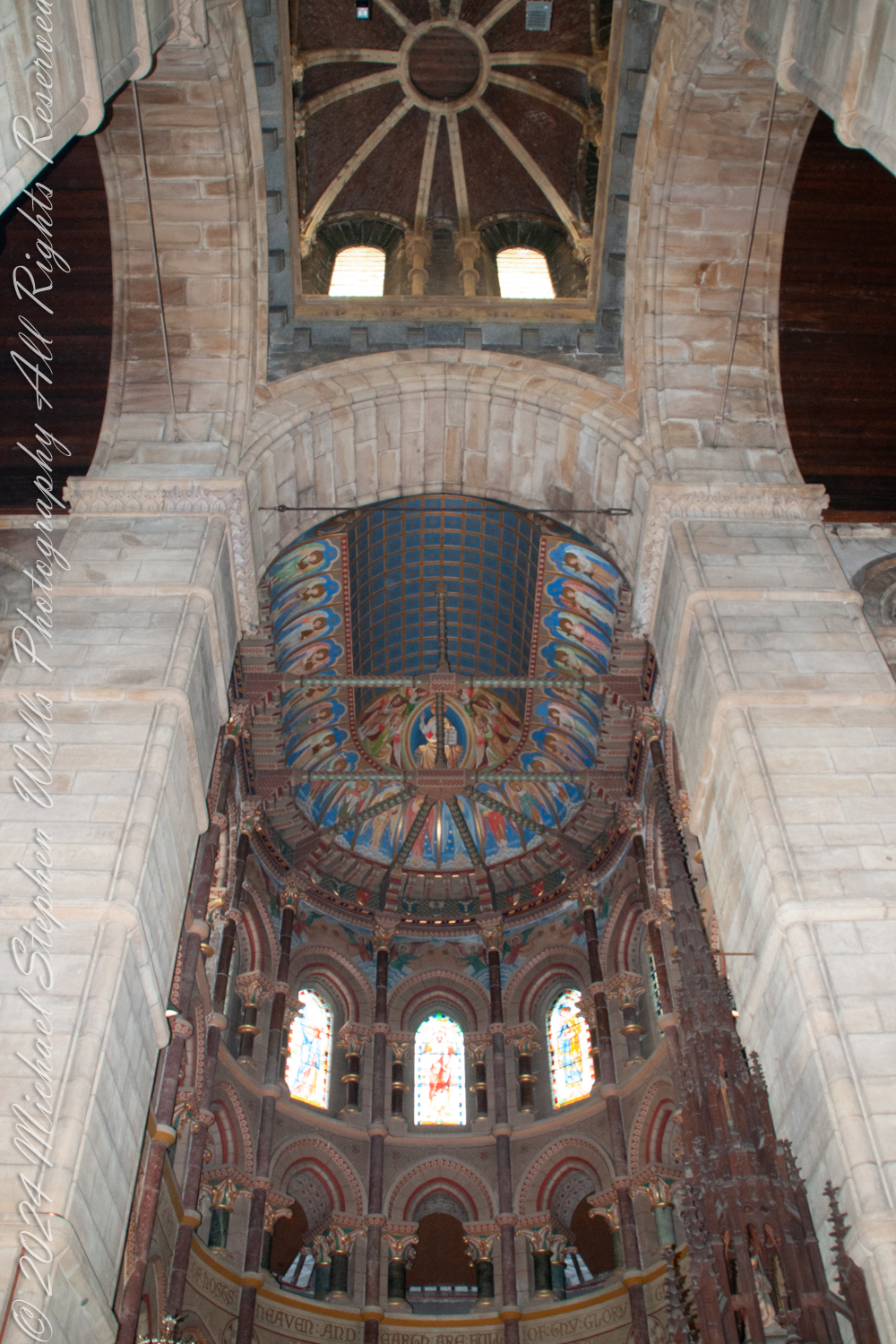
As I stood on the floor of Saint Fin Barre’s Cathedral in Cork, Ireland, I gazed upward toward the Apse and sanctuary ceiling at the eastern end. Turning my eyes directly to the west, I found myself captivated by the crossing ceiling—the very heart where the nave intersects with the transepts, forming the iconic cross shape typical of Gothic cathedral architecture.

In my imagination the central tower and spire soared majestically above the crossing ceiling. The ceiling there featured intricate architectural elements like ribbed vaults and a lantern tower, allowing light to flood into the space below. This crossing served as a beautiful transitional space between the sanctuary and the main body of the cathedral, the nave.

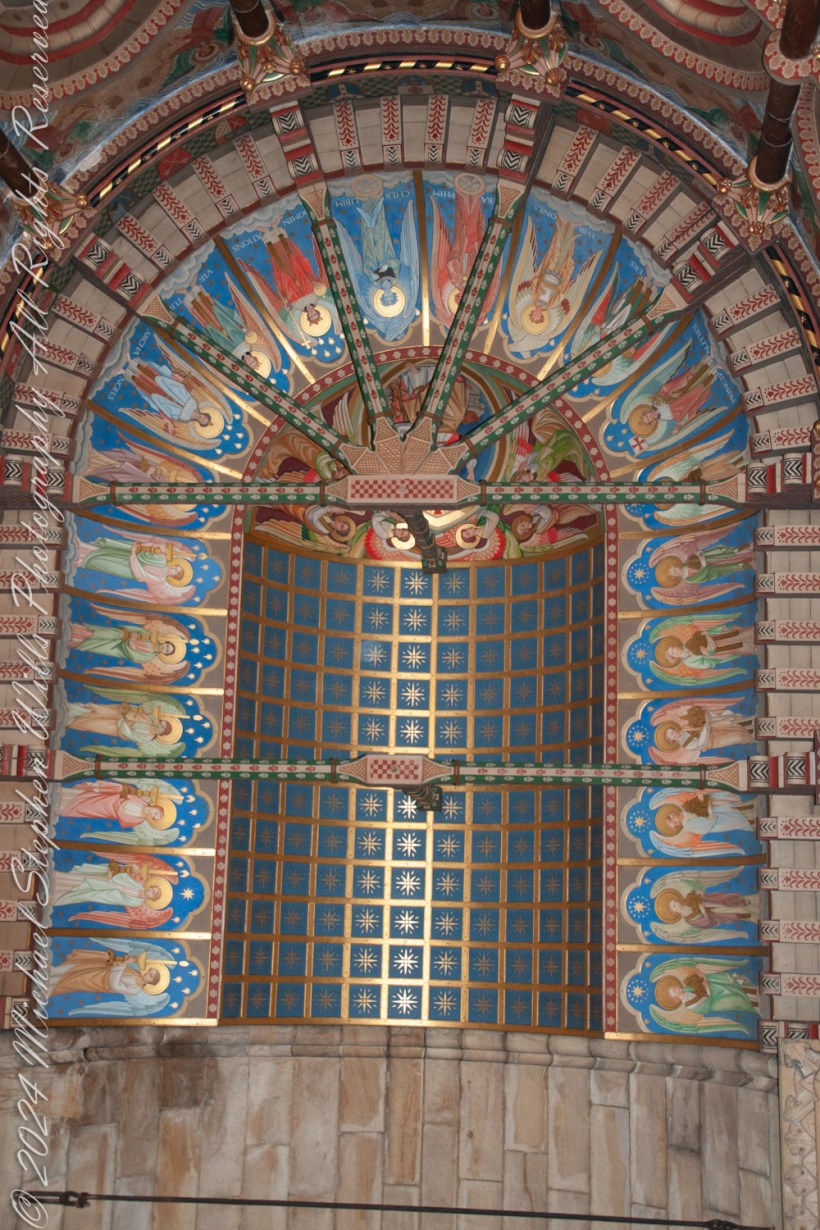
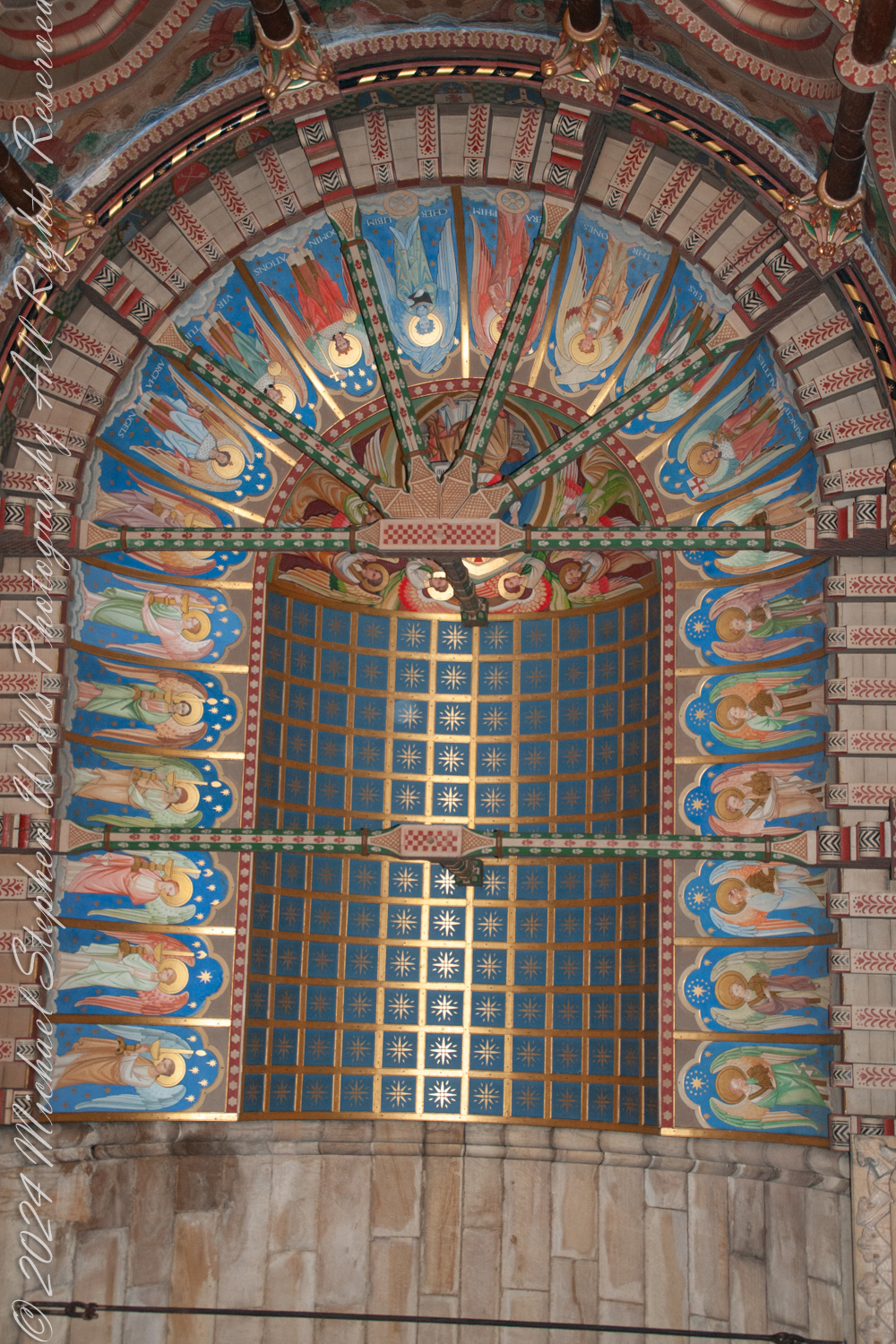
Focusing my camera on the Sanctuary Ceiling of Saint Fin Barre’s Cathedral, I was struck by the stunning example of Victorian Gothic Revival artistry before me. Designed by the architect William Burges, who envisioned every detail of the cathedral, the ceiling reflected his meticulous attention to detail and his love for vibrant colors and symbolic ornamentation.

The rich iconography drew me in. Angels adorned the ceiling, likely representing the celestial hierarchy or the glorification of Christ. Each angel held symbolic items—trumpets, stars, or scrolls—emphasizing their roles as messengers and worshippers of God.

The radiant color scheme was breathtaking. Deep blues, shimmering golds, lush greens, and vivid reds combined to create a striking visual effect, symbolizing heaven and divine majesty. Gold accents caught and reflected the light, reinforcing the idea of heavenly glory.

Geometric and star patterns embellished the vaults. The blue panels dotted with gold stars symbolized the heavens—a common motif in Gothic church ceilings. These stars seemed to represent divine guidance or eternity, adding another layer of meaning to the already rich tapestry above me.

The structural elements themselves were works of art. Painted ribs intersected across the ceiling, highlighting the Gothic architecture’s ribbed vaulting. Their intricate designs in green and red emphasized both structural beauty and functional elegance.

The symbolism was profound. The angels with their instruments and the starry heavens collectively evoked themes of divine worship and the glory of God’s kingdom. This alignment with the Victorian Gothic ideal of infusing spiritual symbolism into architectural elements was evident in every brushstroke.

Knowing that William Burges envisioned Saint Fin Barre’s Cathedral as a “Bible in stone,” I felt a deep connection to his purpose. Standing beneath the Sanctuary Ceiling—the focal point above the altar—I sensed how it served to elevate worshippers’ gaze and spirits toward the divine.

Capturing these scenes through my lens, I was documenting a testament to the artistic and architectural achievements of the 19th century. Saint Fin Barre’s Cathedral is a place of worship and also a living gallery of history, faith, and unparalleled craftsmanship.

Enter your email to receive notification of future postings. I will not sell or share your email address.

The Architectural Symbolism of Saint Fin Barre’s Cathedral

The Western Portico of Saint Fin Barre’s Cathedral illustrates the parable of the ten virgins, emphasizing spiritual preparedness and divine judgment.

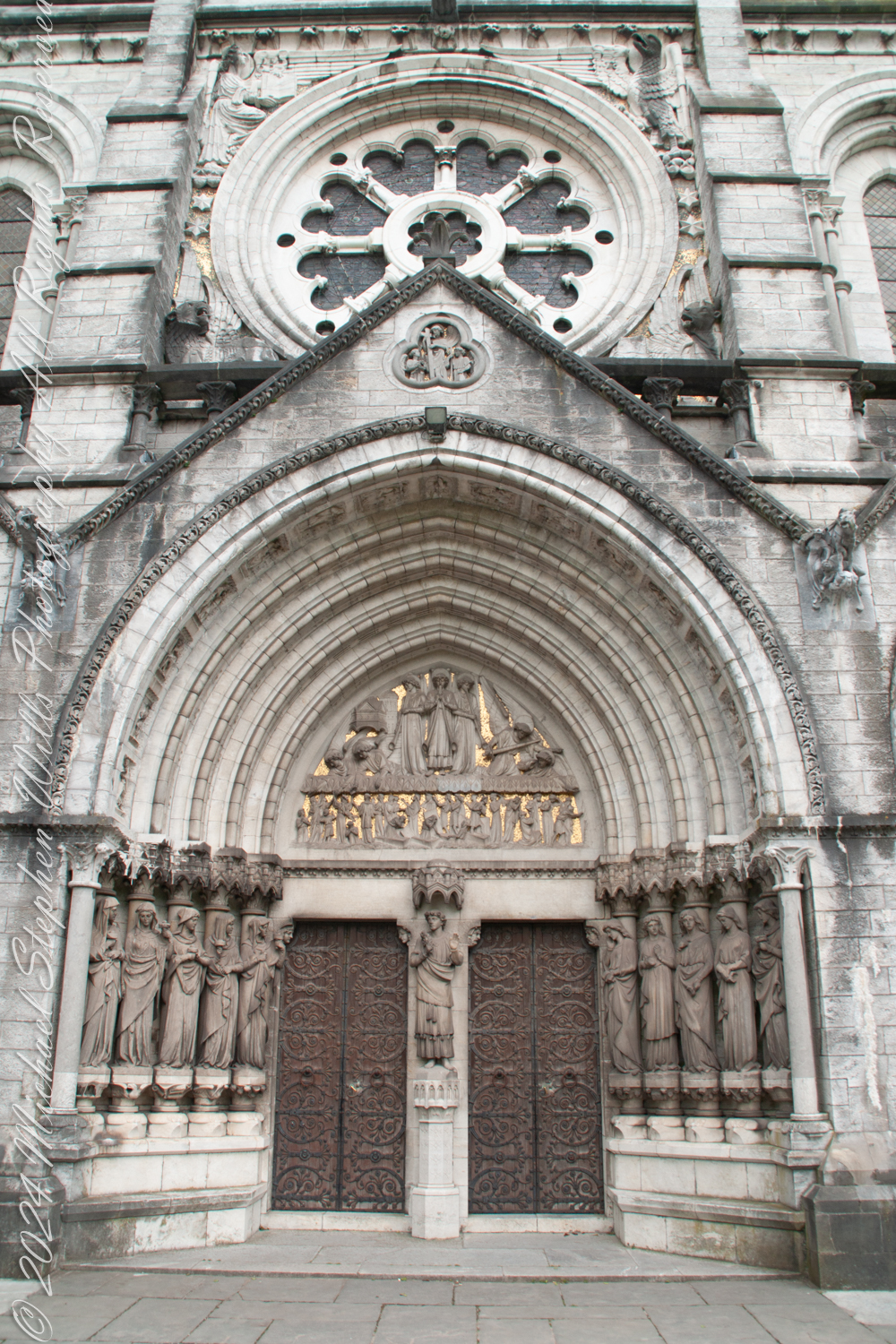
The towering Western Portico of Saint Fin Barre’s Cathedral leads into the sacred space of the church while serving as a canvas for a profound narrative of divine judgment and grace. Standing before it, I am drawn into its intricate details, particularly the central set of doors flanked by the ten virgins—five wise and five foolish—embodied in stunning columnar statues. Their story is drawn from the Gospel of Matthew (25:1–13), a parable of spiritual preparedness that echoes throughout the cathedral’s architecture.

The parable tells of ten virgins who go out to meet the bridegroom, each carrying a lamp. The wise virgins take oil with their lamps, while the foolish take none. When the bridegroom is delayed, all ten fall asleep. At midnight, the cry rings out, “Here is the bridegroom! Come out to meet him!” The virgins awaken and trim their lamps. The foolish ones, realizing their lamps are going out, plead with the wise to share their oil, but the wise refuse, saying, “There may not be enough for both us and you. Instead, go to those who sell oil and buy some for yourselves.” While the foolish virgins are away buying oil, the bridegroom arrives, and the wise virgins go with him into the wedding banquet. The door is shut. Later, the foolish virgins return, crying, “Lord, Lord, open the door for us!” But he replies, “Truly I tell you, I do not know you.” The parable concludes with the warning: “Therefore, keep watch, because you do not know the day or the hour.”

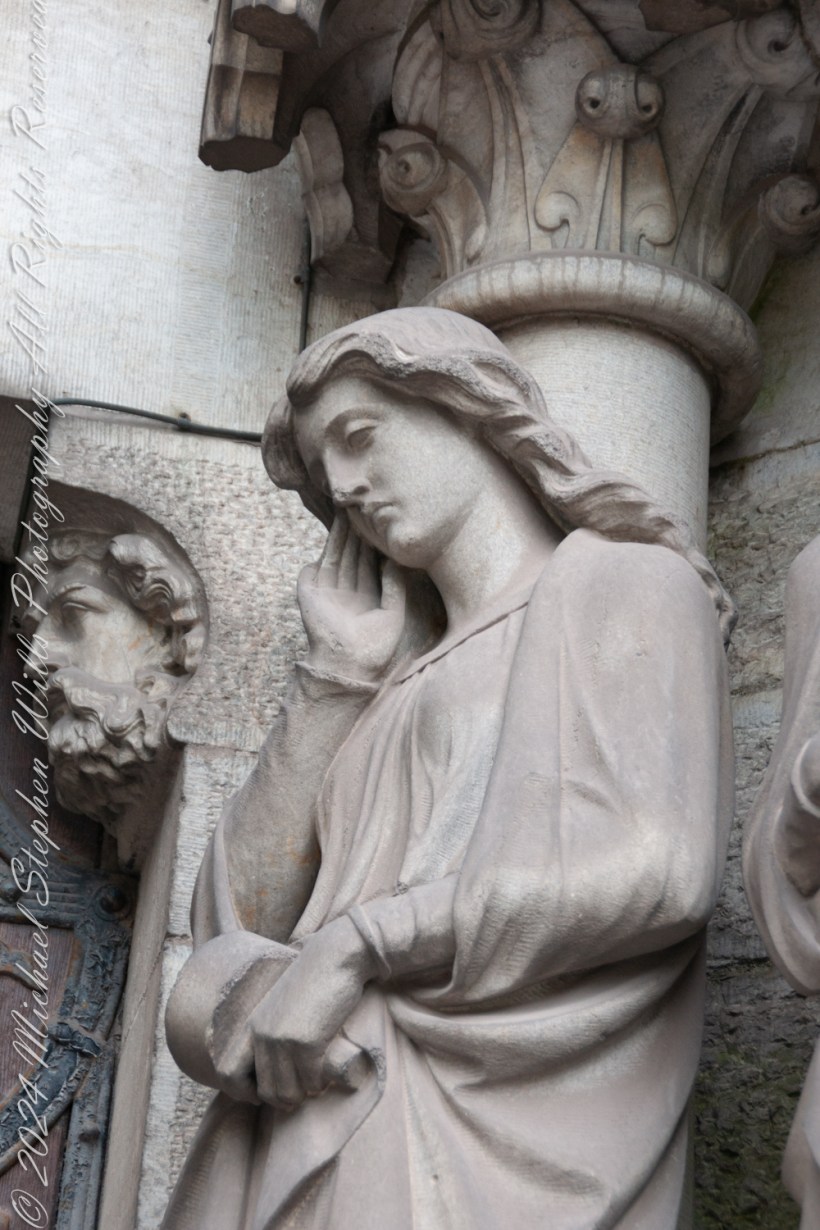
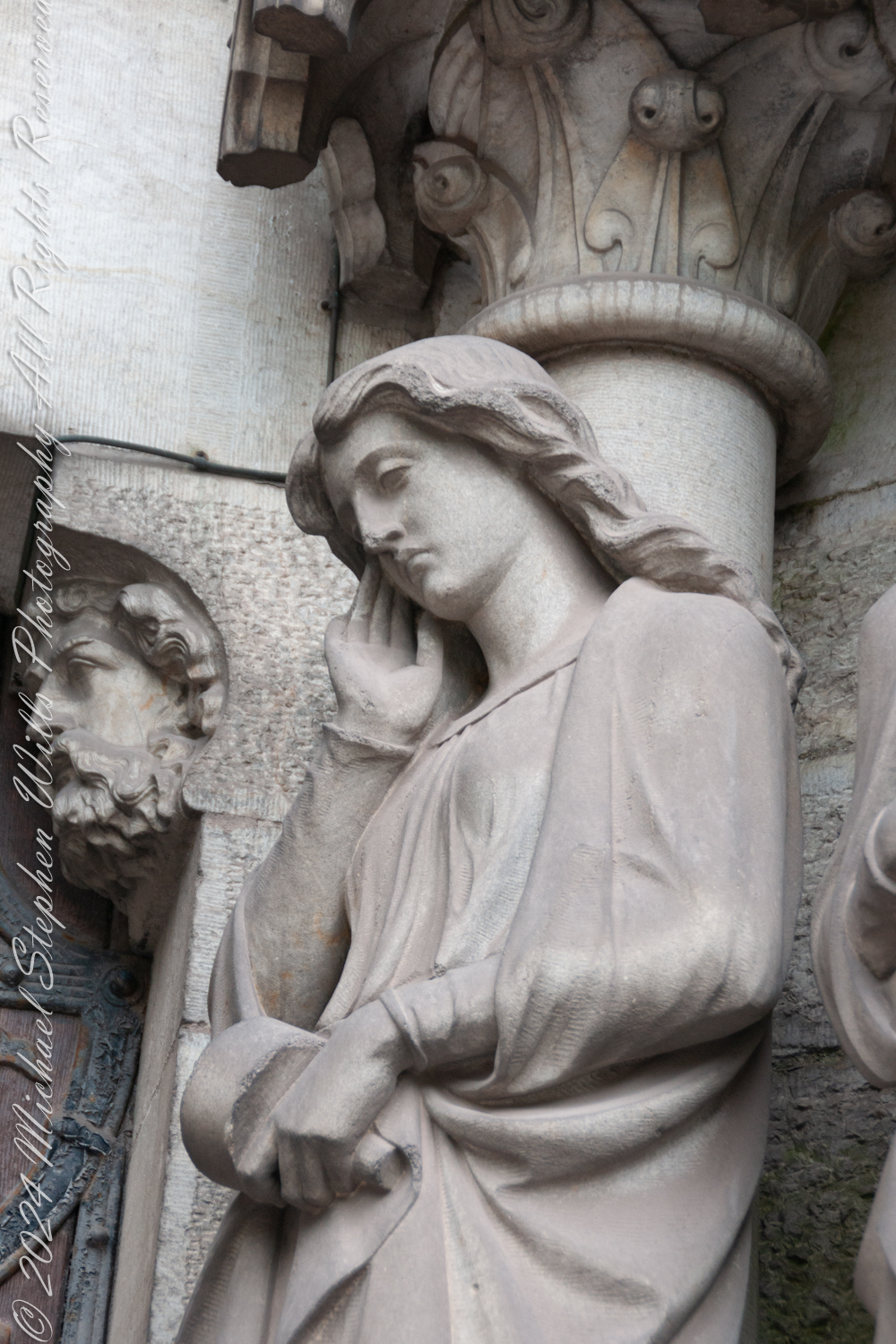
On either side of the central door, the virgins stand as sentinels, embodying this story. The wise virgins, to the right of Christ, hold their lamps aloft, flames burning brightly, symbols of readiness and spiritual vigilance. Their faces are serene, reflecting a sense of fulfillment in their preparedness to meet the bridegroom. To the left, the foolish virgins clutch their unlit lamps, their postures and expressions marked by despair and regret. The detail in their sculpting is exquisite—draped garments, forlorn gazes, and, in the case of the leftmost virgin, a subtle gesture of mourning, her hand resting thoughtfully against her cheek as though lamenting her unpreparedness.

Beneath each figure lies a pedestal adorned with imagery that amplifies their symbolic meaning. The wise virgins stand upon a foundation of flourishing life: vines, flowers, and fruits, evoking the vitality and promise of spiritual readiness. In contrast, the pedestals of the foolish virgins are carved with desolation—withered branches, skeletal forms, and motifs of death, stark reminders of the spiritual decay brought by neglect and complacency.

At the heart of the narrative stands Christ, the Bridegroom. His figure, commanding yet compassionate, turns toward the wise virgins, his gesture one of welcome and blessing. The flowing robes and the serene expression of the Christ figure emphasize his dual roles as judge and redeemer. It is a moment of movement captured in stone—Christ leaning into the wise while his back turns on the foolish, a subtle yet striking commentary on divine justice.

Above the door, the tympanum deepens this narrative, depicting the ultimate moment of judgment. Surmounted by three angels announcing the resurrection, their imagery and gold background harking to the Resurrection Angel of the east cathedral side with gold a symbol of purity and divine light; the dead rise from their graves, their fates determined by their spiritual choices. On the right, angels extend their hands to the faithful, pulling them upward toward eternal life. Their forms radiate lightness, their wings creating a sense of ascension and joy. On the left, the scene is markedly darker: angels, stern and unyielding, drive the condemned downward, their bodies twisted in expressions of agony. Flames lick at the edges of the scene, signaling the fires of damnation.

The weight of this imagery is palpable. The parable of the ten virgins, brought to life in stone, underscores the centrality of vigilance and readiness in the Christian faith. The Western Portico is a story carved in stone, a vivid testament to the choices each person must make. Standing before it, I am not merely a viewer but a participant, invited to reflect on my own readiness and my place in this cosmic drama. The intricacy and theological depth of this space leave an indelible impression, a reminder of the eternal truths that the cathedral seeks to communicate through its art.

Enter your email to receive notification of future postings. I will not sell or share your email address.

What the Resurrection Angel Symbolizes for Cork City

The Resurrection Angel at Saint Fin Barre’s Cathedral symbolizes hope and vigilance, reminding Cork’s citizens of life’s transience and resilience.

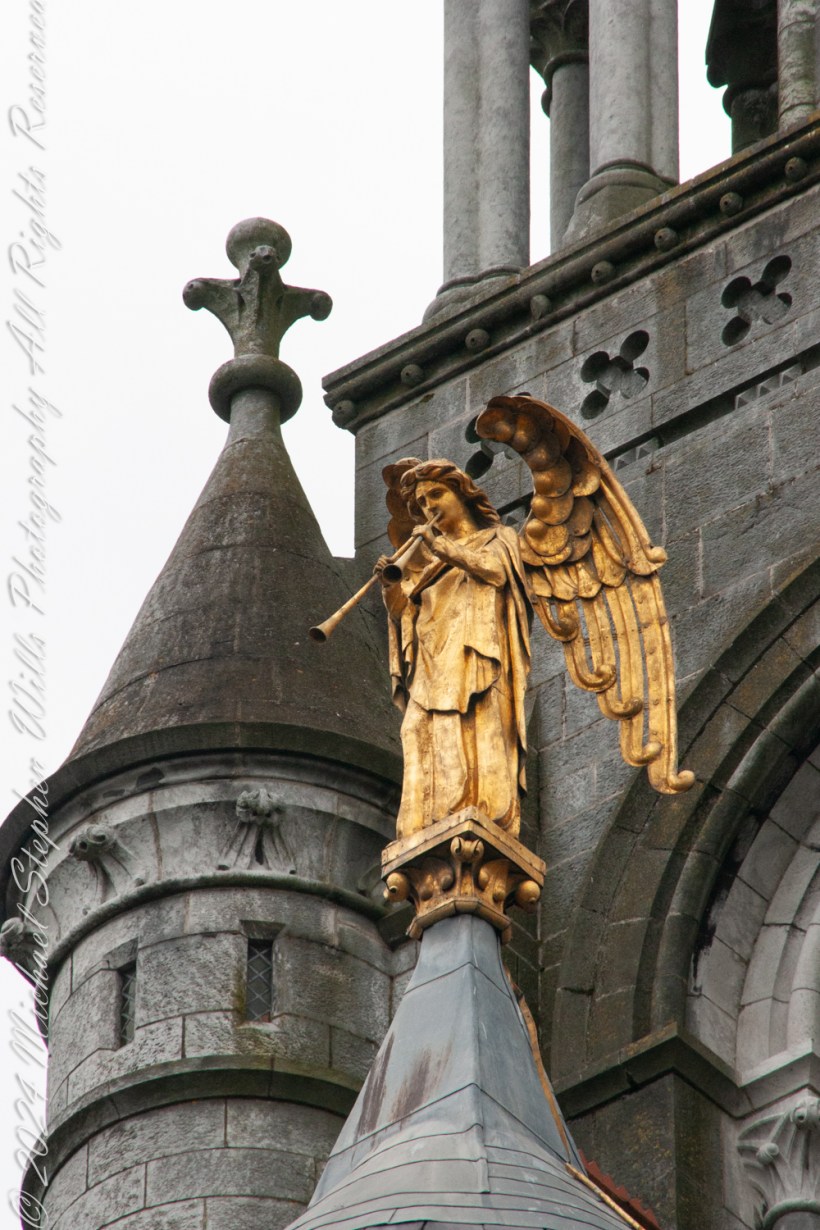
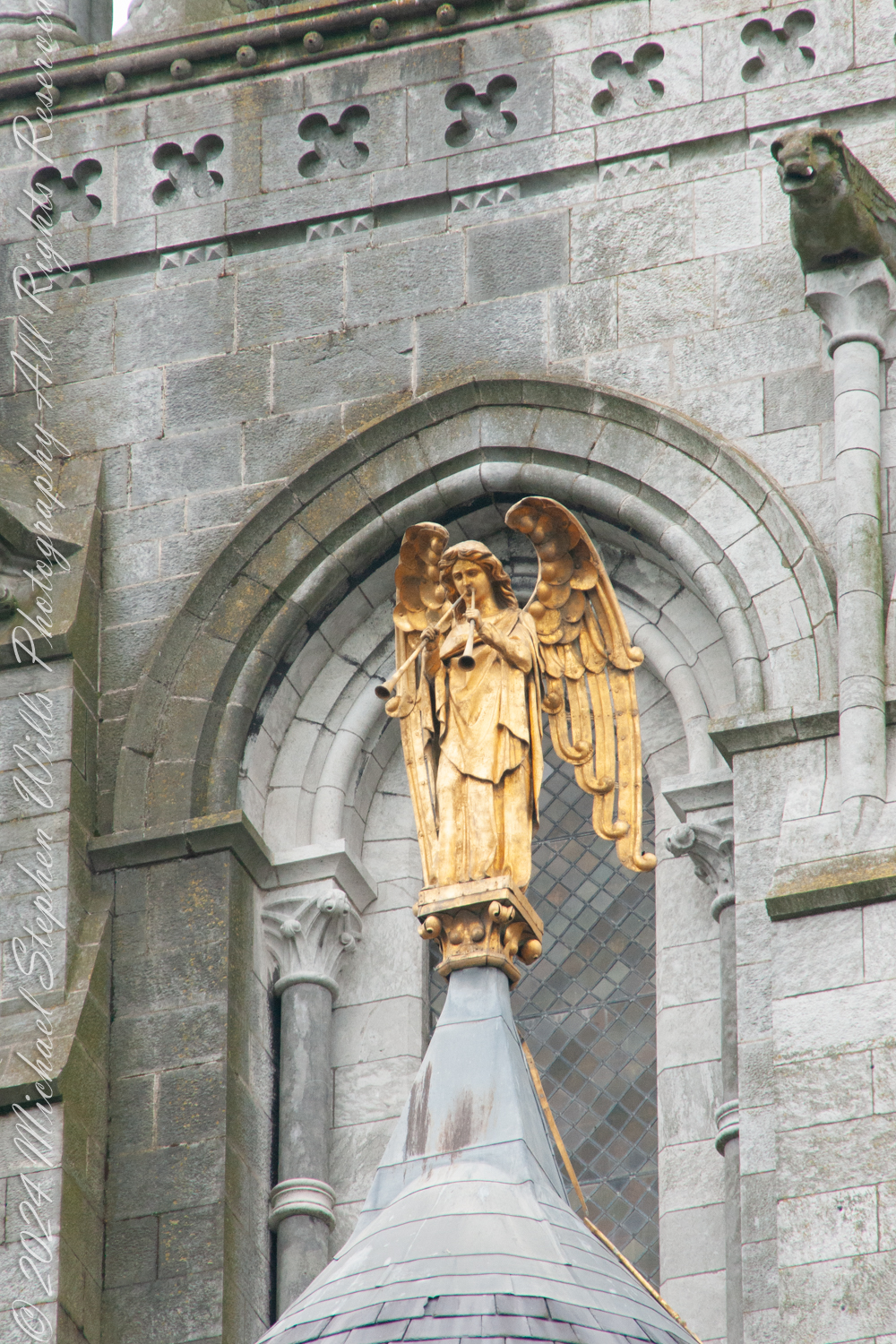
Standing on the east side of Saint Fin Barre’s Cathedral, I lift my gaze to the gilded angel high above the polygonal apse. Known as “The Resurrection Angel,” this radiant figure with its trumpet held aloft commands both awe and contemplation. As an enduring symbol of hope, renewal, and spiritual vigilance this angel carries a profound and dramatic promise: the sound of its trumpet will one day warn the people of Cork of the world’s imminent end, giving them the opportunity to be among the first to ascend to heaven.

The Resurrection Angel’s trumpet echoes the apocalyptic imagery of the Book of Revelation, particularly Revelation 11:15, where the seventh trumpet announces, “The kingdoms of this world have become the kingdoms of our Lord.” Yet in Cork, this celestial figure is imbued with a uniquely local significance. It stands as both guardian and guide, poised to fulfill its divine purpose when the end of days draws near. The legend elevates the angel’s presence beyond theology or art—it becomes a tangible connection between the celestial and the earthly, rooted in the lives of Cork’s citizens.

From an epistemological perspective, the Resurrection Angel poses fascinating questions about how we prepare for the unknown. What does it mean to live in the shadow of an angelic trumpet, one that might sound at any moment? Its silence is a paradox, a quiet yet profound proclamation of life’s transience. The legend suggests that the people of Cork, by virtue of the angel’s warning, are uniquely favored—a notion that intertwines faith with identity and imbues the city with a sense of divine guardianship.

The angel’s golden form shines brightly against the gray stone of the cathedral, a deliberate contrast that speaks to its otherworldly purpose. Gold, a symbol of purity and divine light, captures the eternal amid the temporal. The Resurrection Angel reflects the ambitions of the cathedral’s architect, William Burges, who intended every detail of Saint Fin Barre’s to serve as a testament to faith and artistry. This angel was the final piece installed, marking the cathedral’s completion and fulfilling Burges’ vision of a “perfect work.” According to lore, Burges himself declared that if the angel were ever to fall, it would signal the end of the world—a statement that deepens the mystique surrounding this celestial figure.

For Cork, the angel embodies the city’s resilience and collective spirit. Over centuries, Cork has weathered fires, floods, and rebellion, yet it has always risen anew. The angel, with its legend of warning and redemption, mirrors this cyclical journey of challenge and renewal. Its trumpet, silent but ever-present, reminds the people of Cork to stay vigilant, to hope, and to strive for goodness in the time they have.

As I stand beneath its watchful gaze, I feel the weight of the legend and its implications. If the angel’s trumpet were to sound today, would we be ready? It invites not fear but reflection—a challenge to live with purpose and awareness of the sacred in the everyday. And as I step away, the angel remains, steadfast and golden, a silent guardian over Cork, holding its promise and its warning aloft for generations to come.

Enter your email to receive notification of future postings. I will not sell or share your email address.

Saint Fin Barre’s Cathedral: A Marvel of Victorian Architecture

Saint Fin Barre’s Cathedral, a Gothic Revival masterpiece by William Burges, symbolizes artistry and faith in Cork, Ireland.

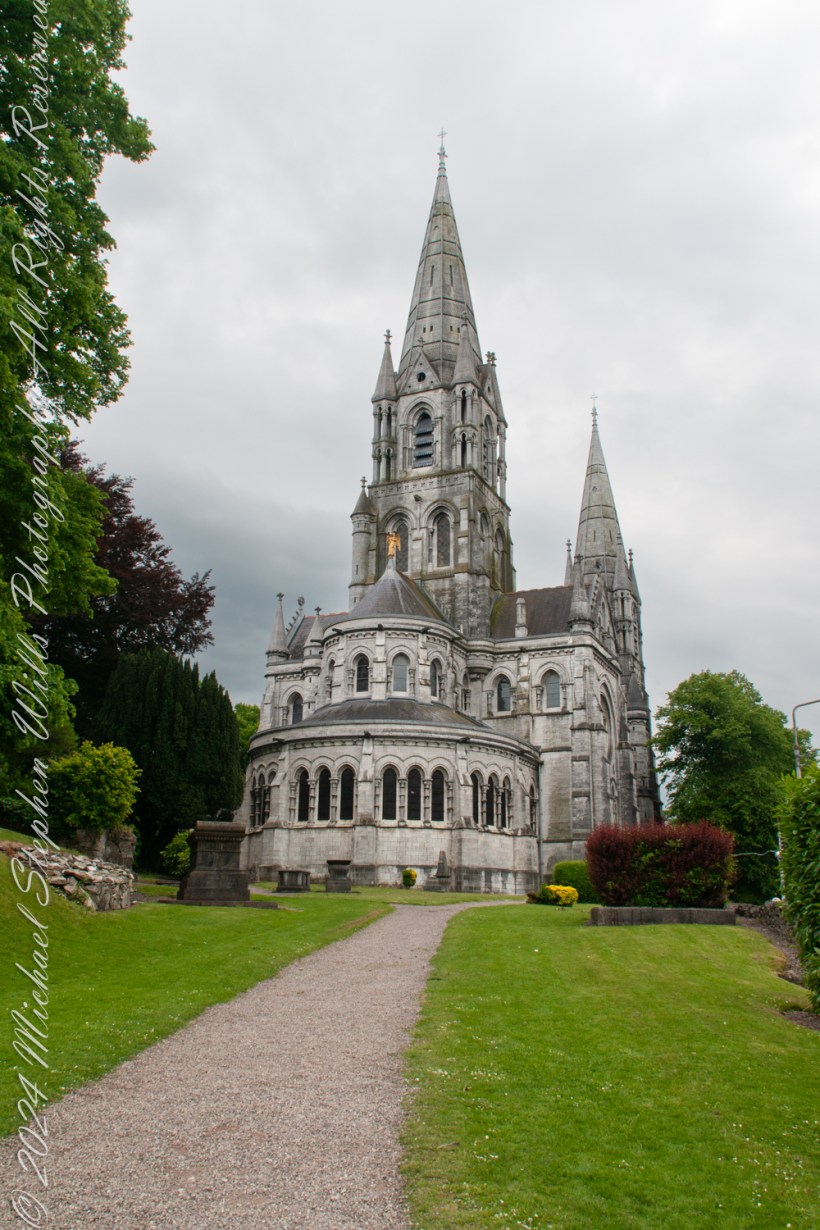
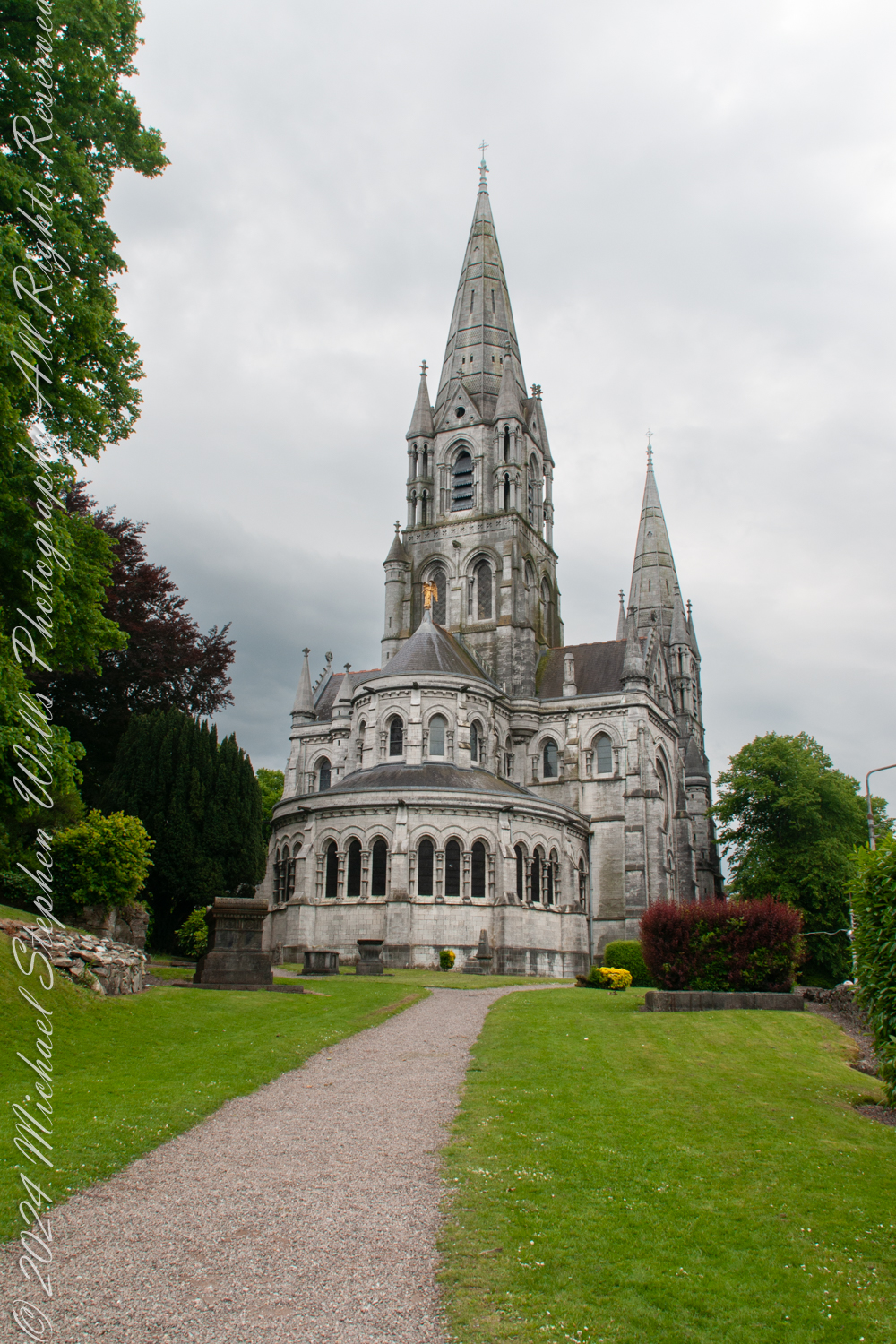
Approaching from the east, we see the polygonal apse at the eastern end houses the high altar and is a key liturgical and architectural feature. Each angular bay is delineated with tall lancet windows filled with stained glass, adding to the richness of the design. Saint Fin Barre’s Cathedral, a masterpiece of Gothic Revival architecture, stands as a beacon of faith and artistry in the heart of Cork, Ireland. Designed by the renowned Victorian architect William Burges, the cathedral is both a testament to the spiritual fervor of its time and a bold statement of artistic vision.

Approaching from the east, we see the polygonal apse at the eastern end houses the high altar and is a key liturgical and architectural feature

Commissioned in 1862, the cathedral replaced an earlier structure, marking a new chapter in Cork’s ecclesiastical history. William Burges, known for his theatrical approach to design, was the perfect choice for this ambitious project. His vision for Saint Fin Barre’s Cathedral blended medieval inspiration with Victorian ingenuity, creating a building that is as much a work of art as a place of worship.

Burges, a figure of eccentric brilliance, was deeply influenced by the principles of the Gothic Revival movement, which sought to recapture the grandeur of medieval European architecture. Drawing from this aesthetic, he designed the cathedral with meticulous attention to detail. Its three spires dominate the Cork skyline, with the central spire rising to an impressive height of 73 meters. These spires are not merely structural; they are symbolic, reaching heavenward in a gesture of devotion.

The exterior of the cathedral, constructed from Cork limestone and Bath stone, is adorned with intricate carvings and sculptures. These include depictions of biblical scenes, saints, and gargoyles, all painstakingly crafted under Burges’s watchful eye. Every detail reflects his belief that architecture should educate as well as inspire. Bishop Street, The Lough, Cork City, County Cork, Ireland

Enter your email to receive notification of future postings. I will not sell or share your email address.

Arrival

Here we have a pleasant carriage rental trip, exploring and photographing the Aran Islands.

Continue reading “Arrival”

Newgrange X

Step into the ancient world of Neolithic monuments and discover the astounding astronomical knowledge of our ancestors. Explore the Newgrange Lightbox in Ireland and similar marvels across Europe, revealing a deep connection between ancient peoples and the cosmos. Join me in unveiling these architectural wonders.

Continue reading “Newgrange X”

Newgrange IX

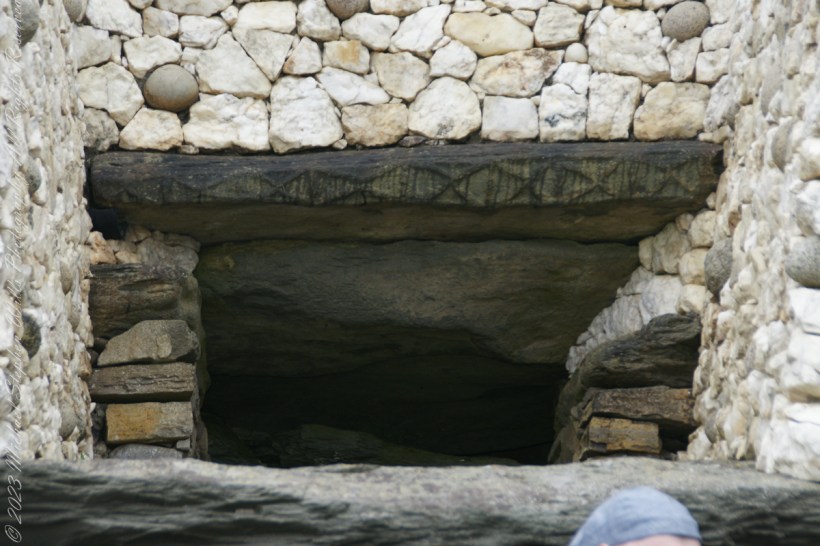
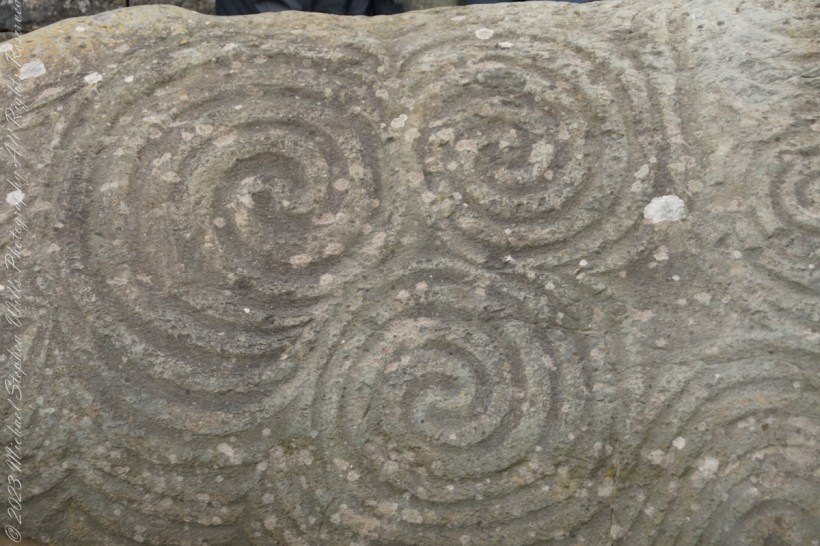
Discover the mysteries of the Newgrange monument’s Entrance Stone, a showcase of exquisite Neolithic rock art. Explore spirals, lozenges, and geometric designs that define European megalithic art and delve into their potential meanings and cultural significance. Join me in uncovering the secrets of this ancient Irish wonder.

Continue reading “Newgrange IX”