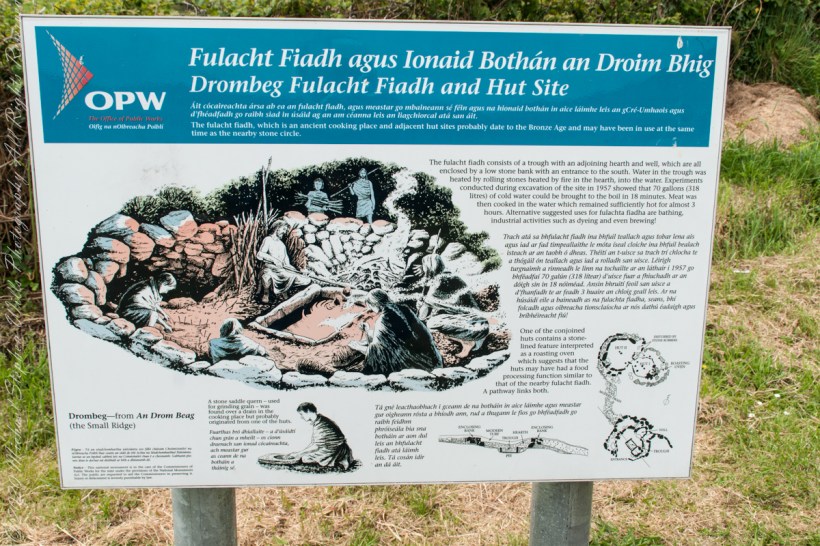
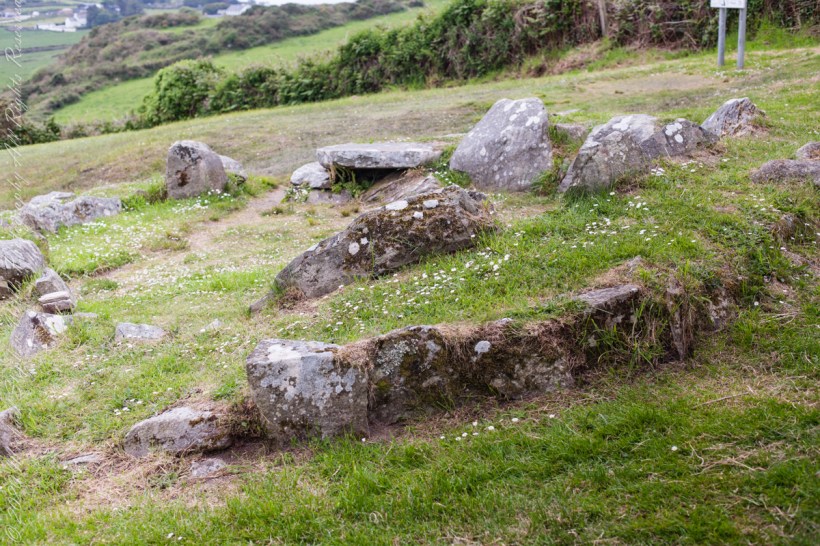
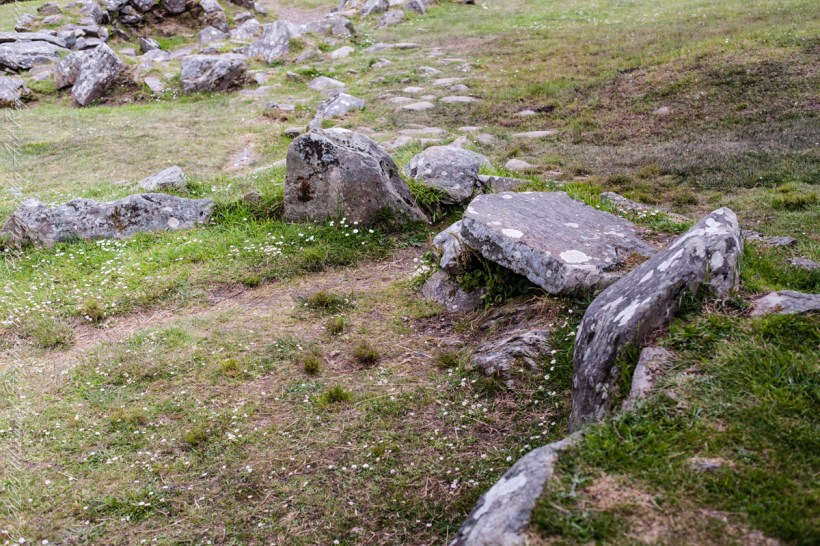
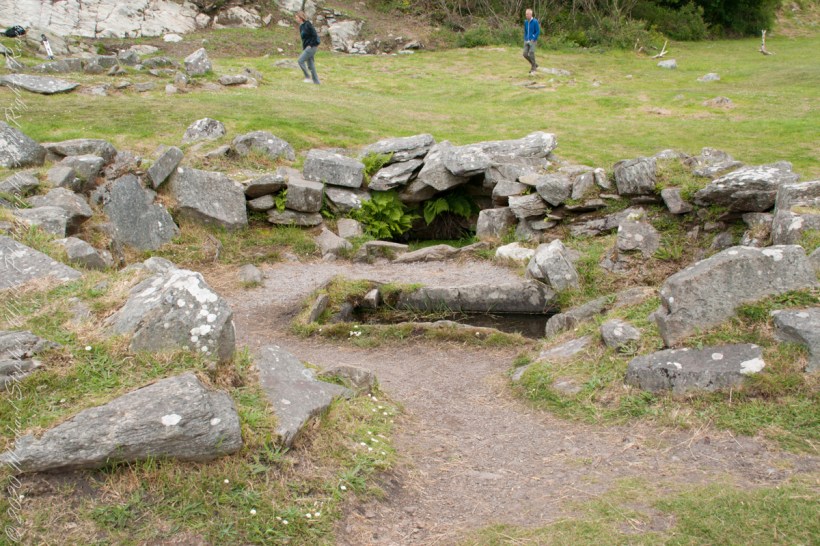
From Limestone to Pasture: How the People of Inis Mór Created Soil on this Aran Island

Beneath the green fields of Inis Mór lies a remarkable story of persistence as generations of islanders created fertile soil atop bare limestone.

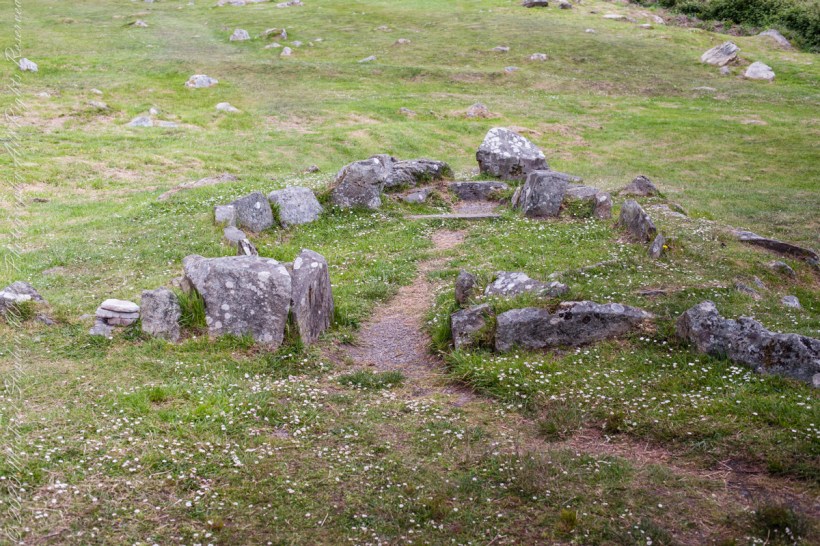
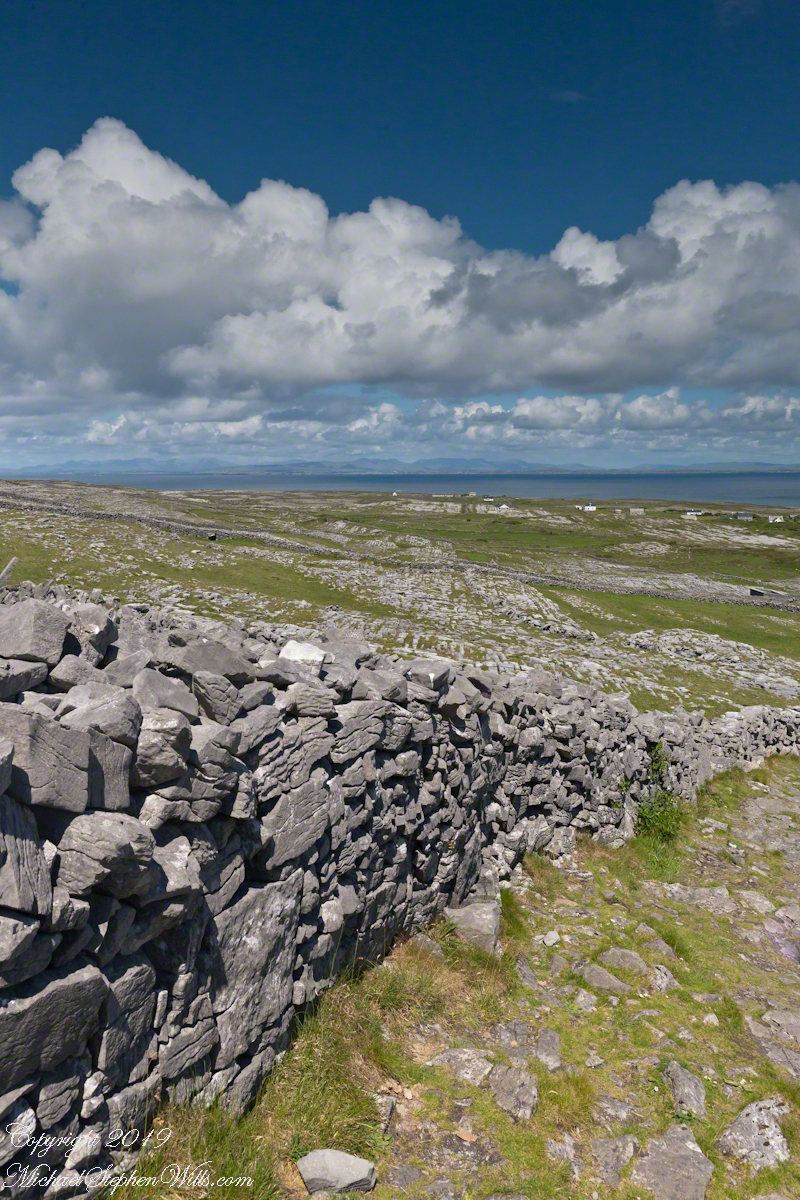
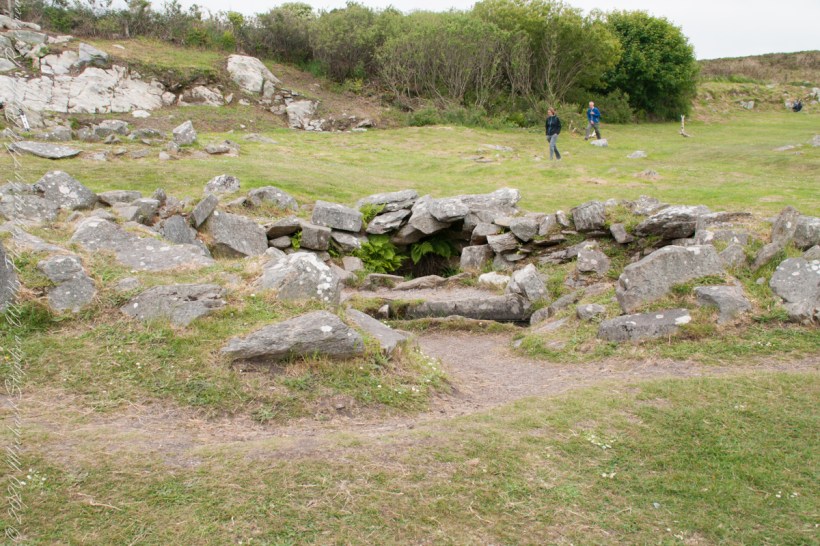
Standing atop the cliffs of Dún Aonghasa on Inis Mór (Inishmore), one is struck by contradiction. Beneath your feet lies a landscape of exposed limestone, fractured and weathered into the unmistakable geometry of karst. These unworked, barren slopes have a pale green covering growing seemingly on air. The Atlantic crashes hundreds of feet below, while inland the island stretches toward Galway Bay in shades of gray and pale green. It seems an improbable place for agriculture.

Yet there they are: fields enclosed by dry stone walls, dotted with cattle and thick enough with grass to sustain them. Looking out across this island, a question naturally arises. Where did the soil come from?

Click the link for my Getty IStock photography of the Aran Islands

The answer is simple to describe and astonishing to contemplate. The soil of Inis Mór was, in large measure, made by human hands.

The Aran Islands are composed primarily of limestone deposited some 350 million years ago when this part of the world lay beneath warm tropical seas. The shells and skeletal remains of ancient marine organisms accumulated on the seabed and, through immense pressure and time, became stone. Today, limestone accounts for the overwhelming majority of the islands’ bedrock.

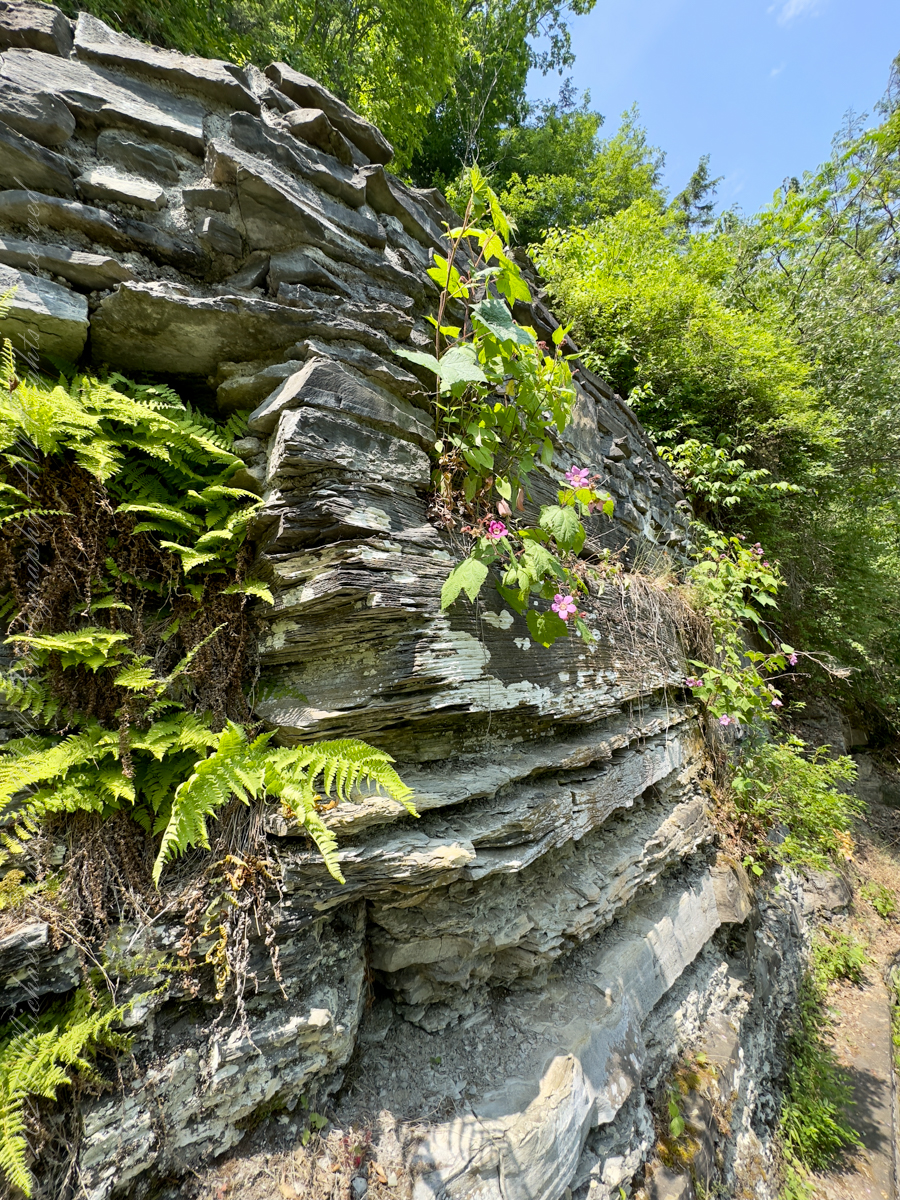
Limestone landscapes possess a severe beauty. Rainwater, slightly acidic from dissolved carbon dioxide, which in turn slowly dissolves the rock, creating fissures known as grykes separated by flat blocks called clints. Soil drains rapidly through these cracks. Left to natural processes alone, only thin accumulations of organic material develop and much of the landscape will resemble a stony pavement.

For generations, survival on Inis Mór required transforming that pavement into productive land.

Islanders gathered seaweed from the shoreline, hauling it inland by cart and hand. The seaweed provided organic matter and nutrients, particularly potassium and trace minerals. Sand from the beaches added texture and volume. Mixed together atop the limestone surface, these materials slowly decomposed into something capable of supporting plant life. Over decades—and in some places centuries—layers accumulated.

The process demanded persistence. Storms could strip away exposed earth. Atlantic winds threatened erosion. Each year required renewal: more seaweed, more organic matter, more labor. Roots from grasses and crops helped bind the developing soil together. Animal manure returned nutrients to the ground. What had begun as an artificial growing medium gradually became a living soil ecosystem.

As understood by modern soil science, soil formation is often explained through five factors: climate, organisms, relief, parent material, and time. On Inis Mór, all five are present, but there is a sixth factor impossible to ignore: culture.

Without human intervention, much of the island would likely remain dominated by exposed limestone and sparse vegetation. Instead, generations of residents imposed patience upon geology. Their work transformed an inhospitable environment into a functioning agricultural landscape.

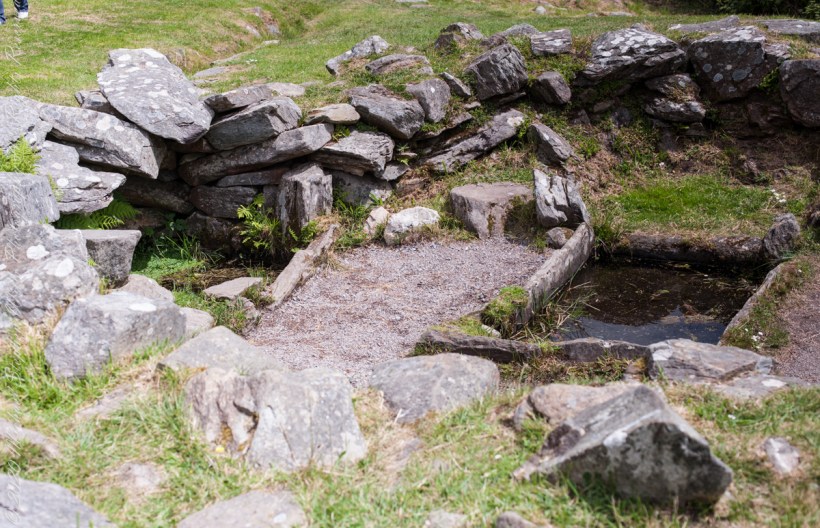
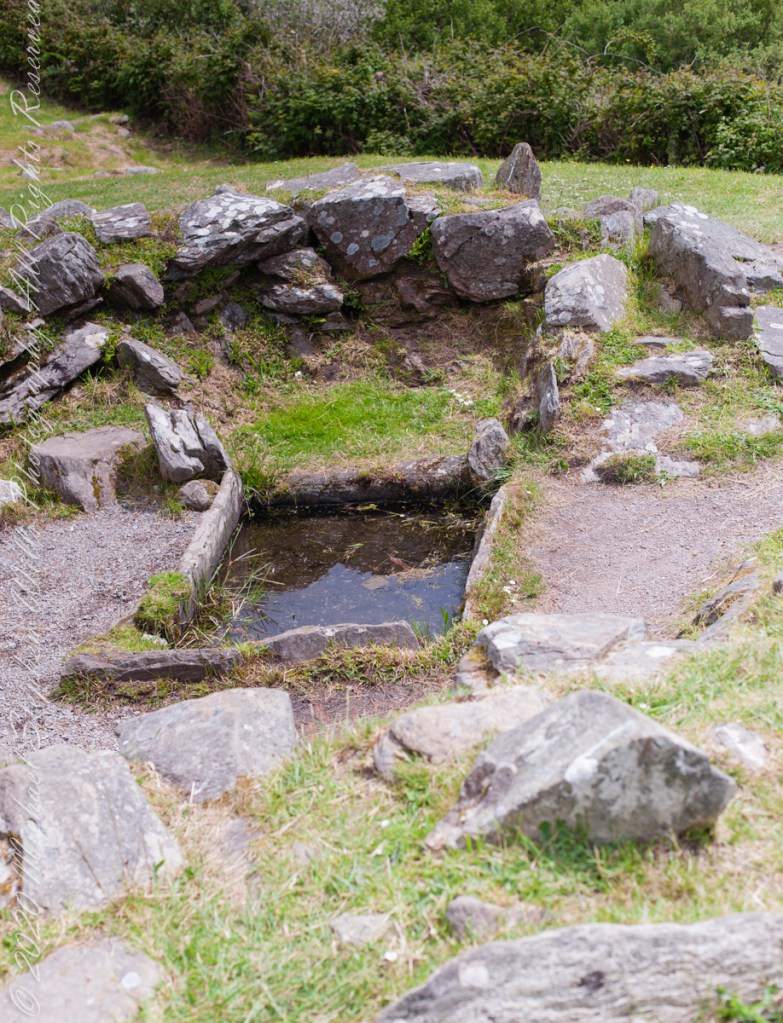
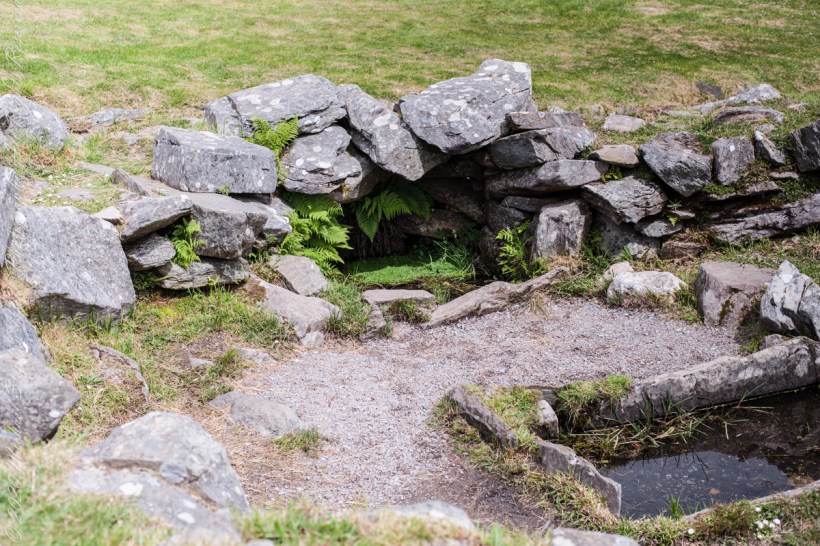
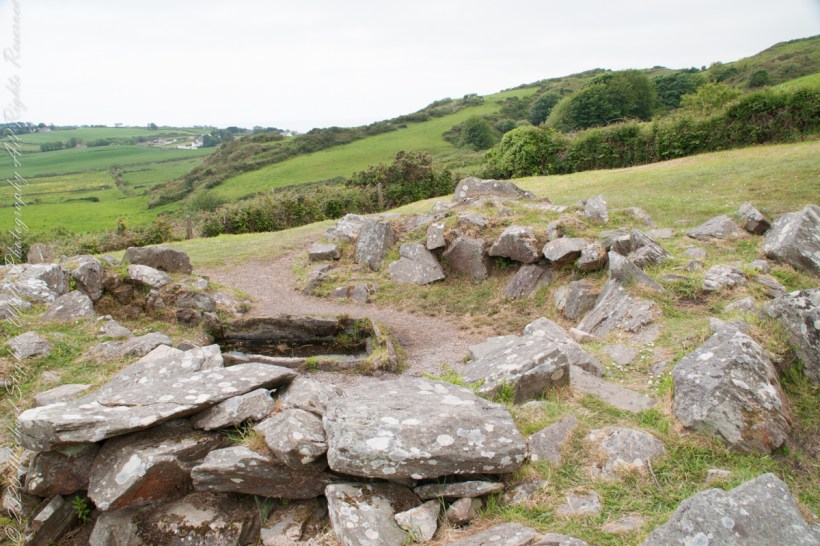
The dry stone walls that divide the island tell the same story. Built from limestone cleared from the fields, they required no mortar. Each stone was carefully selected and placed, creating boundaries that controlled livestock, sheltered plants from relentless winds, and marked family holdings. The walls themselves became part of the ecological fabric, providing habitat for insects, mosses, lichens, and wildflowers.

Visitors often admire these walls for their picturesque quality. They are indeed beautiful and are also evidence of necessity. Every stone removed from a field made space for soil to deepen and grasses to spread. The very act of creating pasture simultaneously generated the material for the island’s defining architecture.

There is poetry in this relationship between hardship and abundance.

In many places, fertile soil is taken for granted. Deep glacial deposits or river sediments create agricultural wealth with little awareness of the thousands of years involved in their formation. On Inis Mór, however, the origins of fertility remain visible. The limestone still protrudes through the fields. The seaweed-strewn shore lies only a short distance away. The walls reveal the labor embedded in the land.

To walk these fields is to encounter a collaboration between people and place extending across centuries. The islanders did not conquer the landscape so much as negotiate with it. They worked within its constraints, borrowing from the sea to enrich the stone and relying upon time to complete what effort had begun.

The resulting landscape offers a quiet lesson. Soil, the foundation of civilization, is created through intricate interactions among rock, water, organisms, and time. On Inis Mór, soil also represents inheritance: the accumulated labor of countless individuals who refused to accept barrenness as destiny.

Viewed from the heights of Dún Aonghasa, the green fields scattered across the gray limestone are miraculous.

Not a miracle of sudden transformation, but one measured in generations—made from seaweed and sand, from patience and persistence, and from the enduring belief that even the most unpromising ground can, with enough care, be coaxed into life. 

The answer is simple hard work, hundreds, a thousand years of hauling seaweed and sand, mixing it on the barren limestone, allowing the rot of time to work. Hold it down with roots, till and refresh.

Click me for the first post of this series, “Horse Trap on Inishmore.”

Enter your email to receive notification of future postings. I will not sell or share your email address.

Holding Out, A Day Off, and Nice to See You: Seward Johnson and the Quiet Theater of Time

A selection of photographs from our January 2019 visit to McKee Botanical Gardens, Vero Beach, Indian River County, Florida

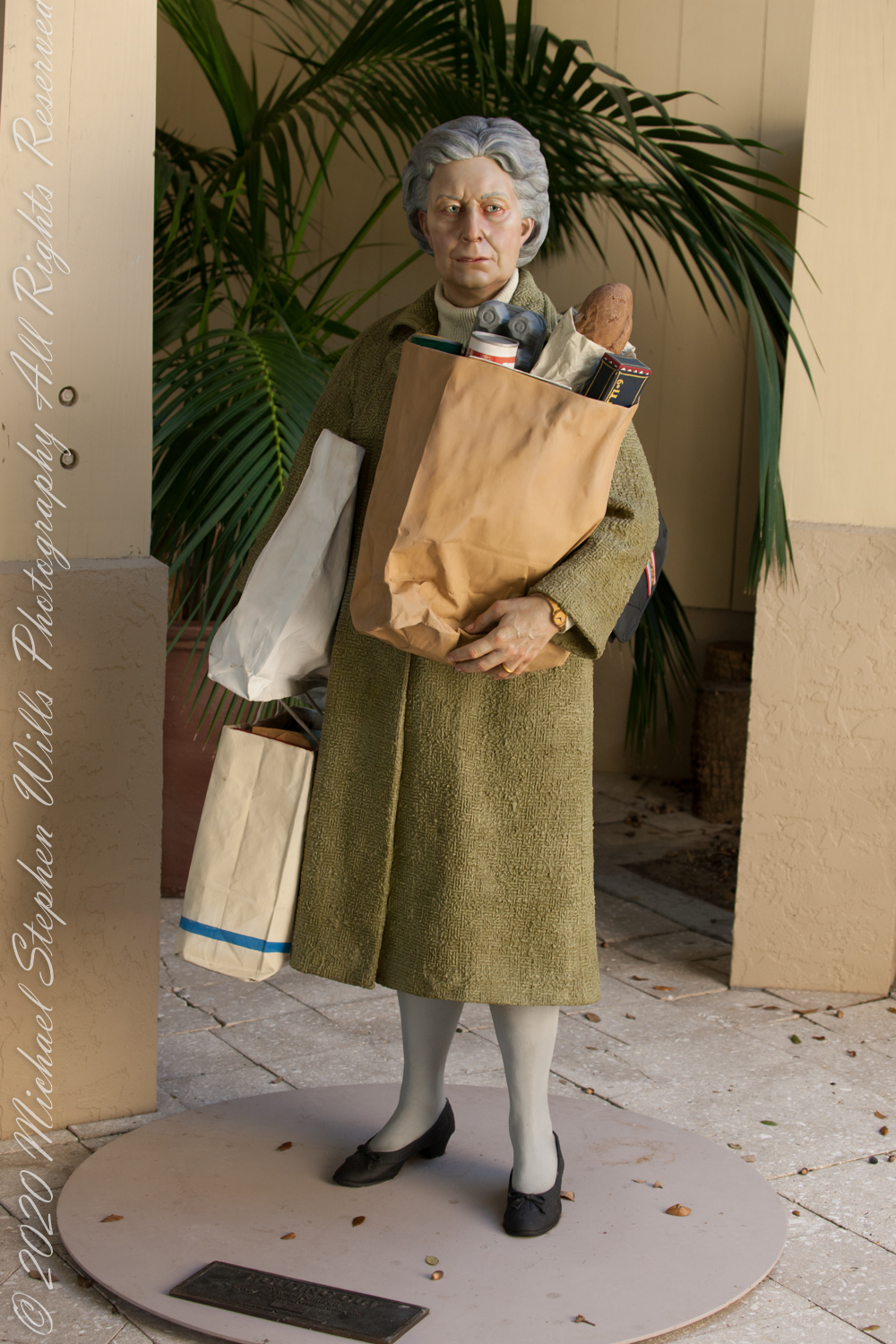
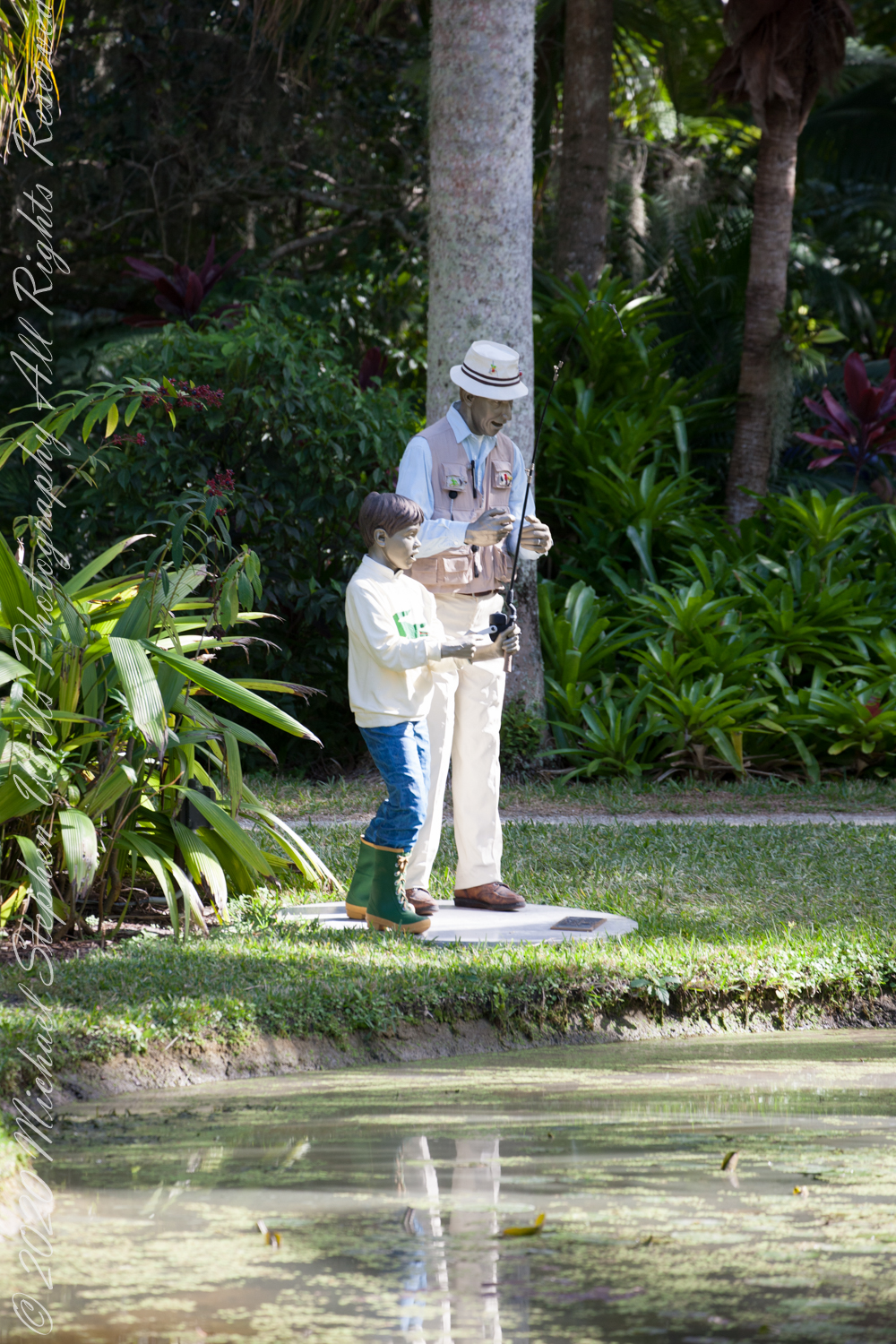
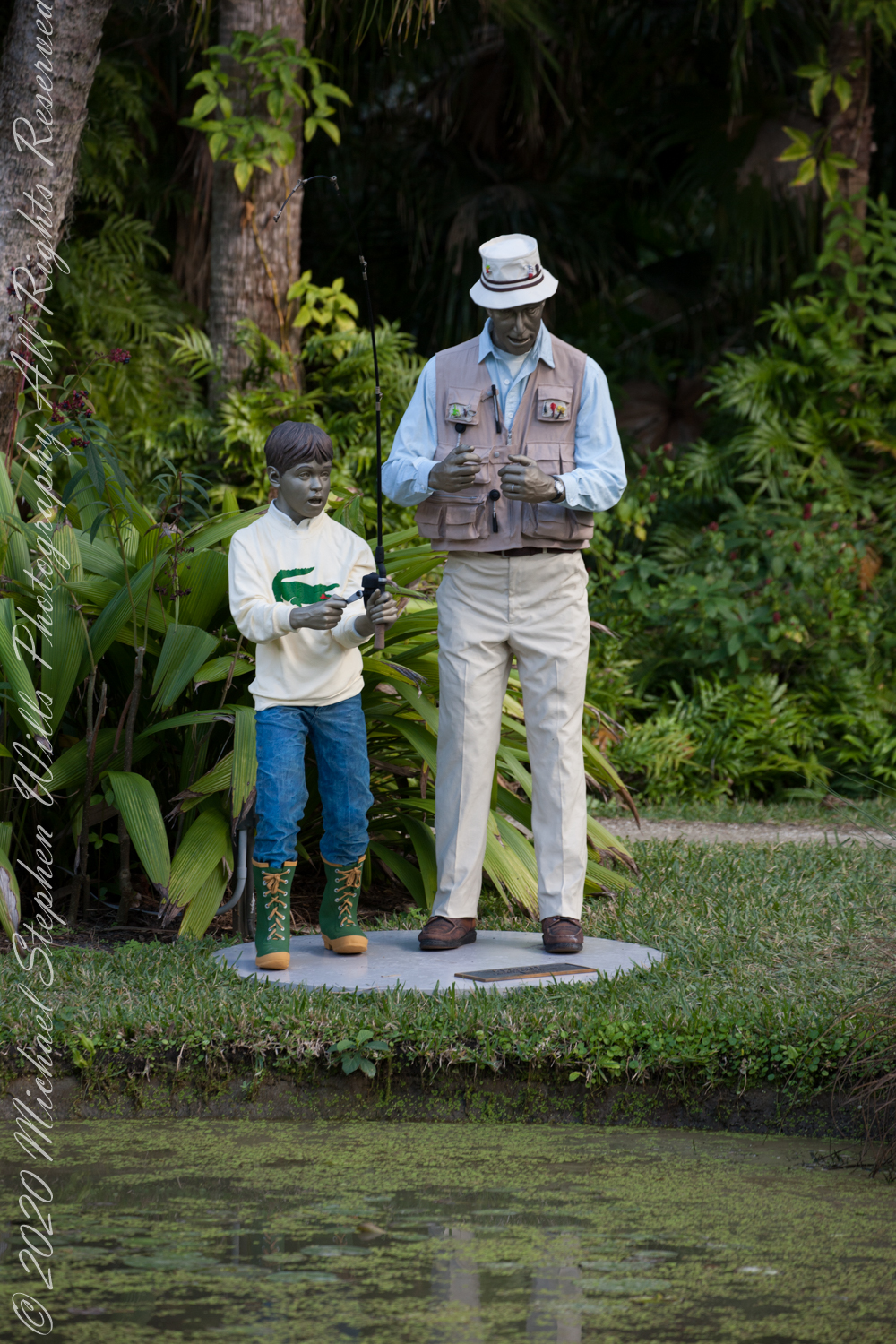
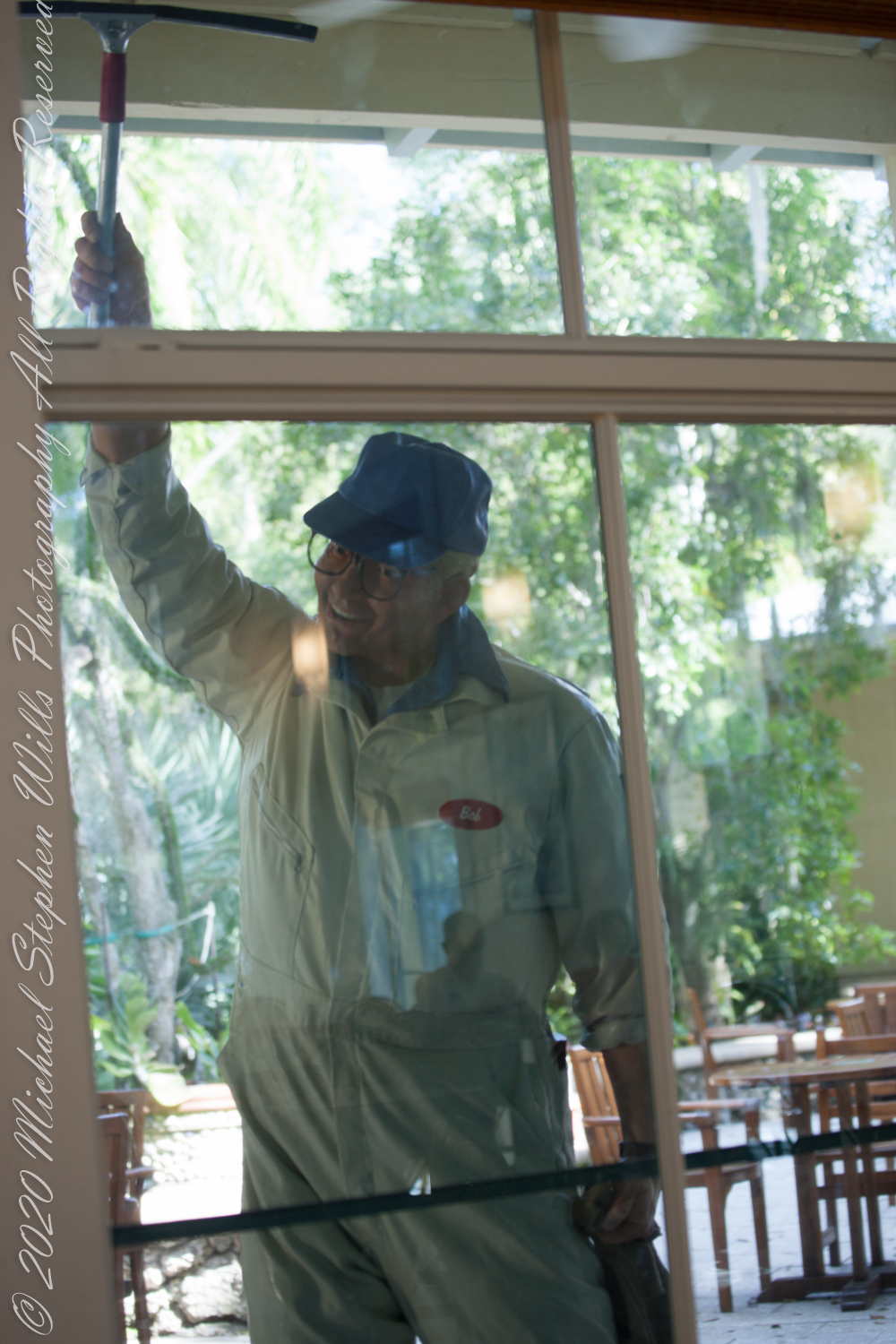
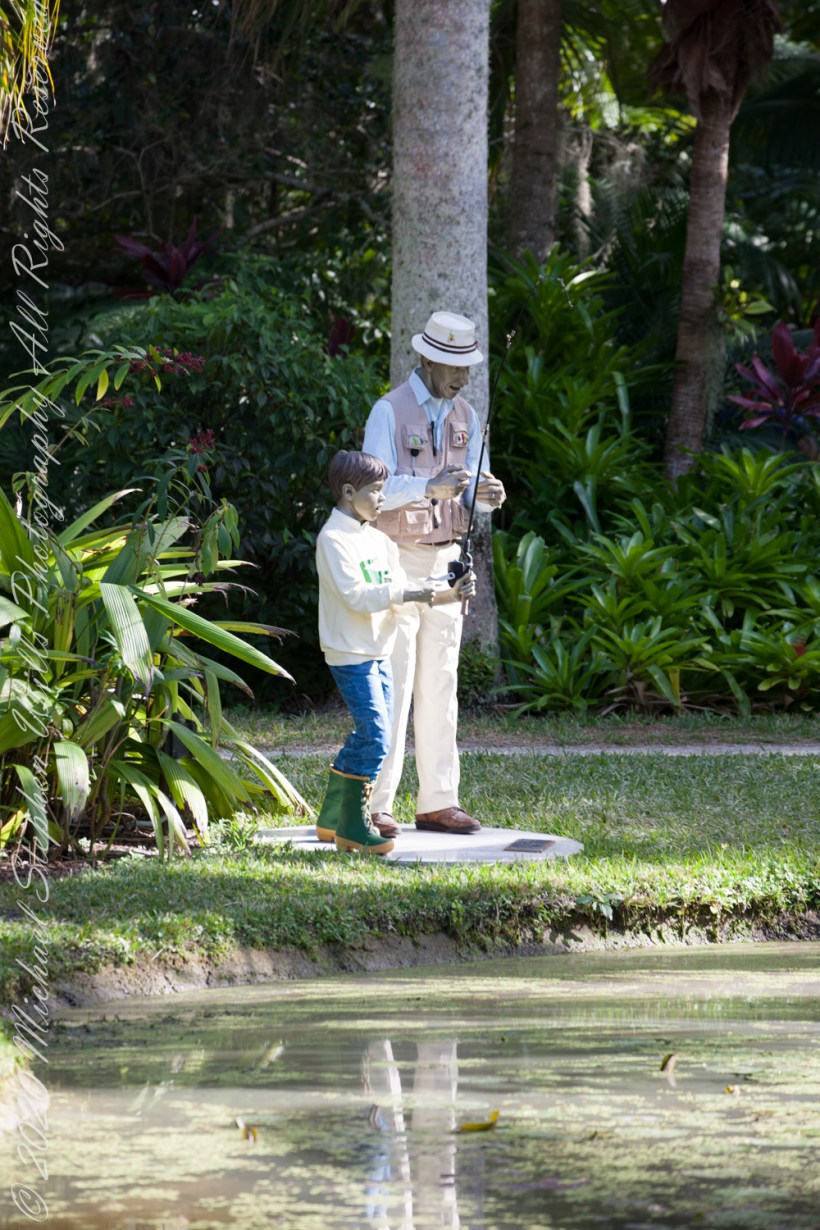
Seward Johnson’s figures have a way of surprising us, they seem to have been waiting for us all along. They stand on sidewalks, lean into ordinary errands, pause in gestures we recognize before we understand why. In Holding Out, A Day Off, and Nice to See You, the artist gives us not heroes, saints, or rulers, but people caught in the small ceremonies of daily life: carrying groceries, taking a pause, greeting another human being. They are bronze, yet they seem to breathe the air of our own passing afternoons. Our grandson’s first impression of Nice to See You was, “How often do they wash his clothes?”

Johnson, born in New Jersey in 1930, became known for life-size painted bronze figures that bring art out of the museum and into public space. His Celebrating the Familiar series does exactly what the title promises. It asks us to look again at what we normally overlook. A person resting. A woman burdened with bags. A meeting on the street. These are not dramatic events, yet they are the substance from which a life is made.

That may be why these sculptures move me. They are comic, playful at first glance. One expects the figure to turn, shift weight, apologize for blocking the way. But the longer I look, the more the humor gives way to tenderness. Johnson’s realism is emotional as well as technical. Postures are caught before the sentence, the hand before the reply, the pause before someone walks away.

Holding Out suggests the labor of ordinary devotion. The figure carries the evidence of errands, appetite, domestic obligation, perhaps generosity. Groceries are never merely groceries. They are meals not yet cooked, tables not yet set, bodies cared for, conversations expected. To carry food home is to participate in one of the oldest forms of love. There is fatigue in such a pose, but also purpose. The sculpture reminds me how much of family life is carried without ceremony.

A Day Off speaks in a different key. A day off is supposed to be freedom, yet even leisure has its burden. Time, once unstructured, can feel strangely precious. We plan to rest, then discover that rest asks something of us: the courage to stop, to let the world proceed without our supervision. Johnson’s figure becomes a meditation on the fragile privilege of an unclaimed hour. The sculpture seems to ask whether we know how to receive such a gift when it comes.

Then there is Nice to See You, a title so simple it nearly disappears into politeness. Yet those four words contain an entire philosophy of relationship. To say “nice to see you” is to acknowledge absence, survival, return. It may be said casually on a sidewalk, but beneath it lies the deeper knowledge that people do vanish from our daily routes. Friends move away. Children grow into distant schedules. Parents and grandparents become memories. Even neighbors, once familiar as weather, can pass out of our lives without a formal goodbye, not to be returned by a simple cleaning of the glass.

The greeting matters because time has been at work between meetings. The person we see again is never exactly the one we last saw. Nor are we the same person doing the seeing. Every reunion, however ordinary, is also a small reckoning with change.

That is the quiet power of Johnson’s public art. His figures appear fixed, but they make us aware of motion: our own. We walk around them. We photograph them. We return years later and find them unchanged, while we have altered in ways both visible and hidden. Bronze preserves the gesture; life revises the viewer.

In this way, the sculptures become companions in memory. They do not explain relationships; they stage them. They show that affection often lives in errands, pauses, greetings, and shared streets. A life together is rarely made of grand declarations. More often it is made of carrying, waiting, recognizing, and returning.

Perhaps that is why these works linger after the first amusement fades. They restore dignity to the unmonumental. They suggest that the passing of time is not only loss, but accumulation. The grocery bag, the free afternoon, the familiar greeting—each becomes a vessel. Each holds what we have given, received, forgotten, and remembered.

Johnson’s people stand still, but they point us toward movement: toward the next errand, the next meeting, the next chance to say, with more feeling than the phrase usually carries, “Nice to see you.”

Click me to visit Michael Stephen Wills Online Finger Lakes Gallery.

Enter your email to receive notification of future postings. I will not sell or share your email address.

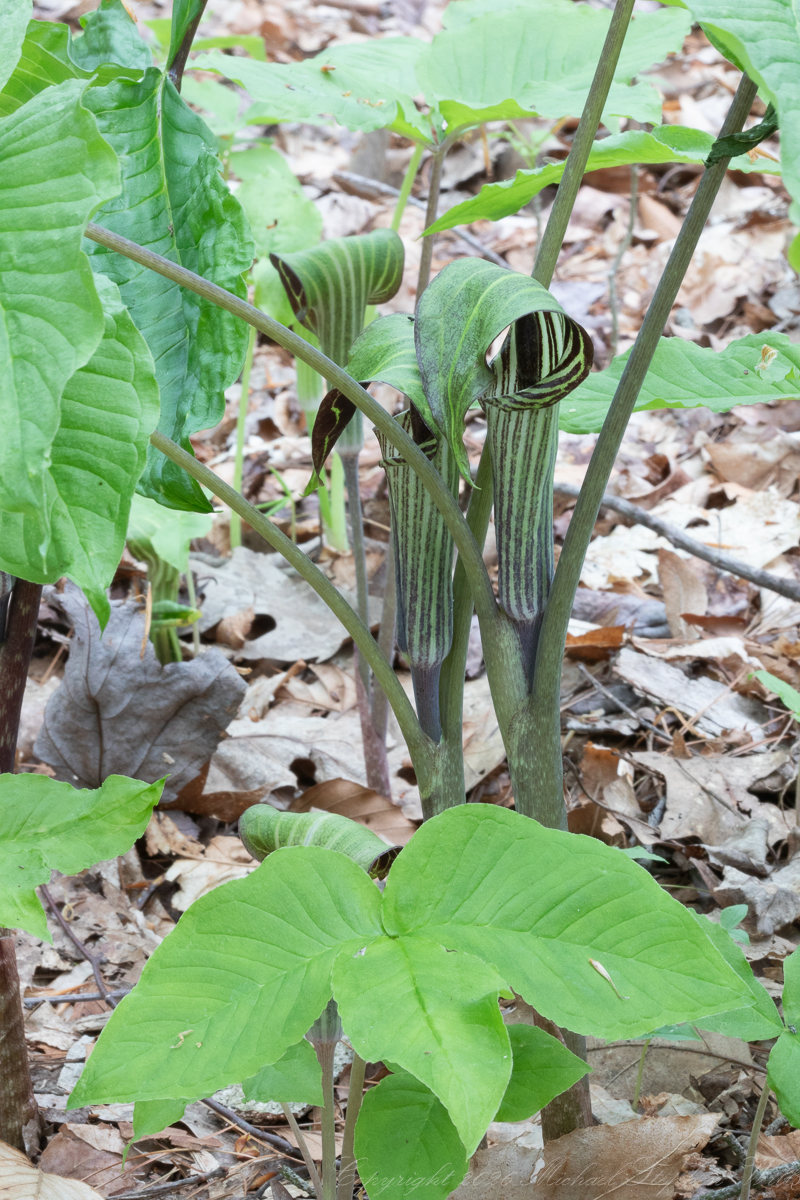
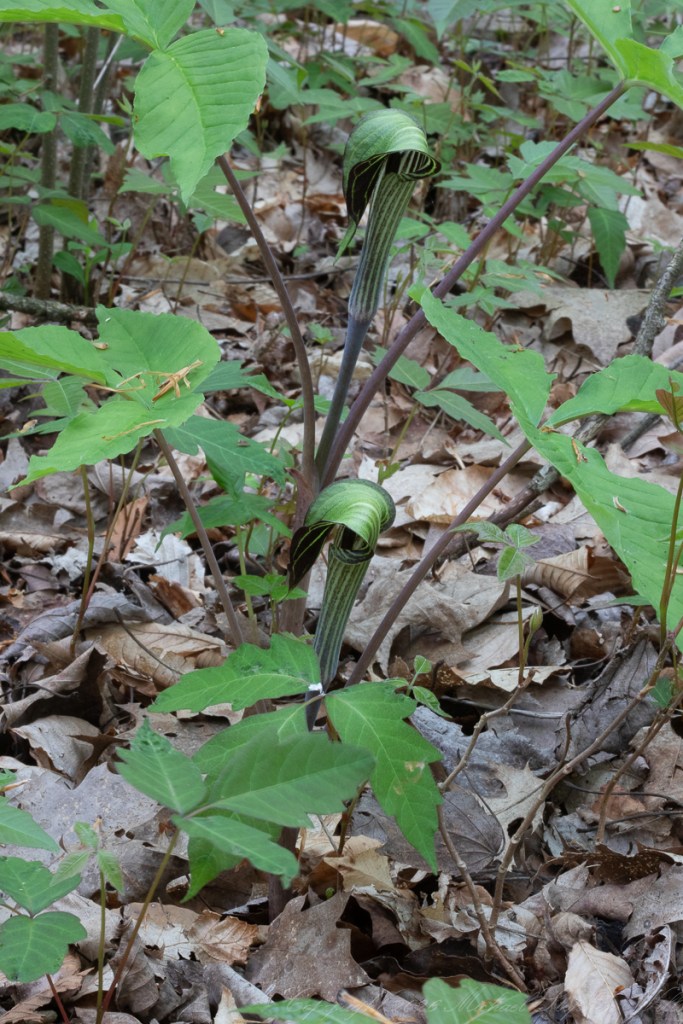
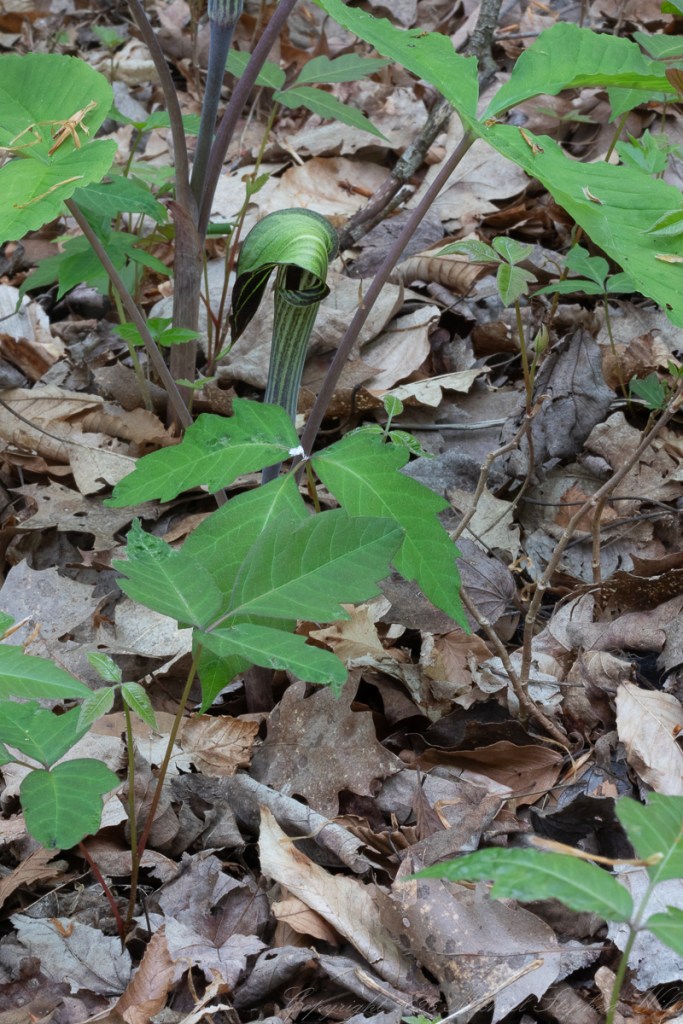
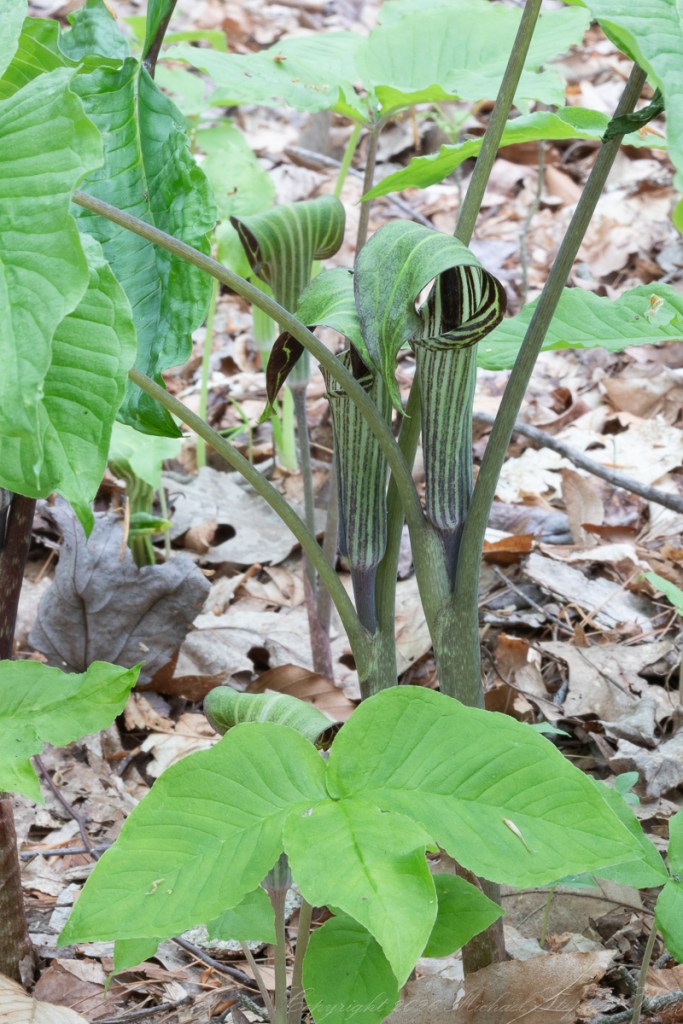
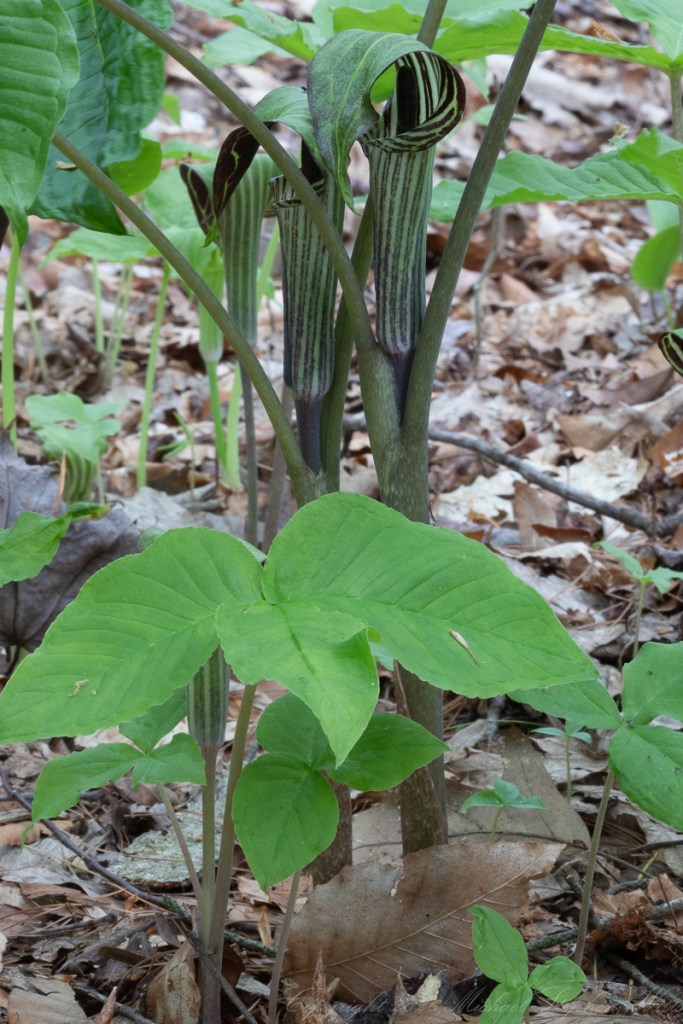
Jack-in-the-Pulpit at Sapsucker Woods: A Woodland Wildflower Meditation

A quiet meditation on Jack-in-the-Pulpit at Sapsucker Woods, where spring birdsong and woodland shadows surround one of the Finger Lakes’ most quietly mysterious wildflowers.

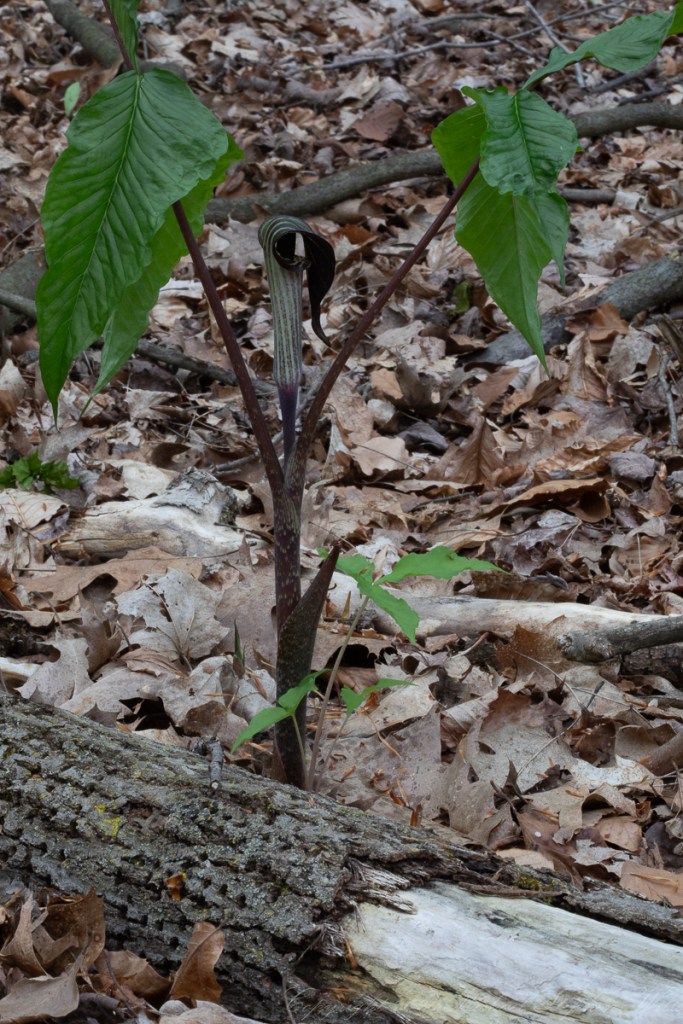
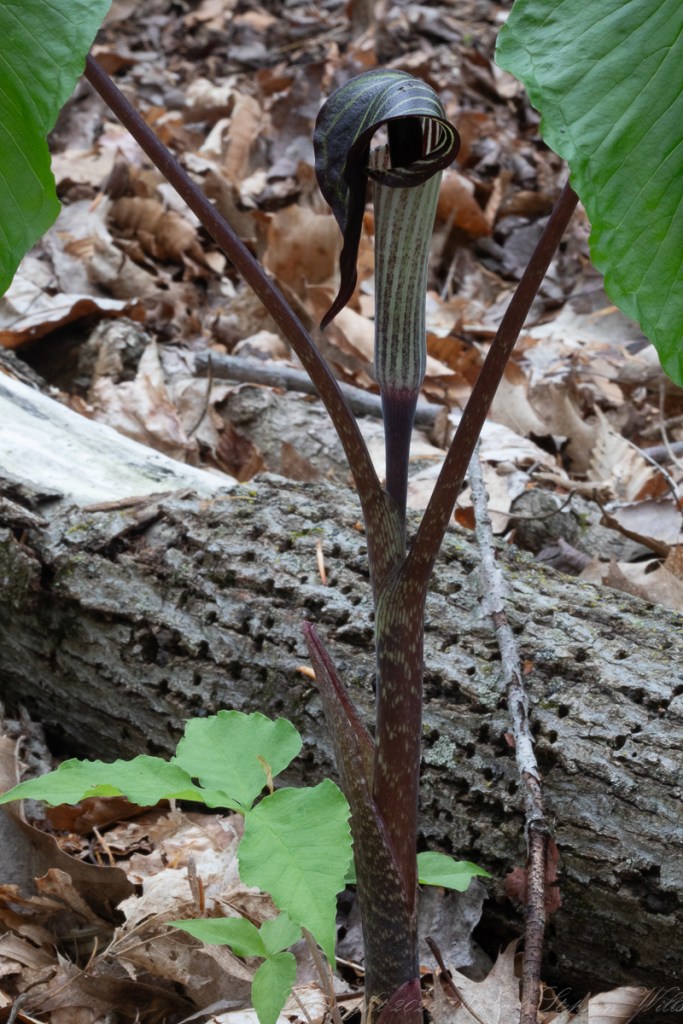
There are plants that announce themselves with banners and trumpets, and there are plants that exist in a vow of secrecy. The Jack-in-the-pulpit belongs to the second order. One does not so much find it as gradually become aware of being observed by it. There in the leaf litter of Sapsucker Woods, among last autumn’s oak leaves and the gray ribs of fallen branches, it rises like a small green minister in a woodland chapel.

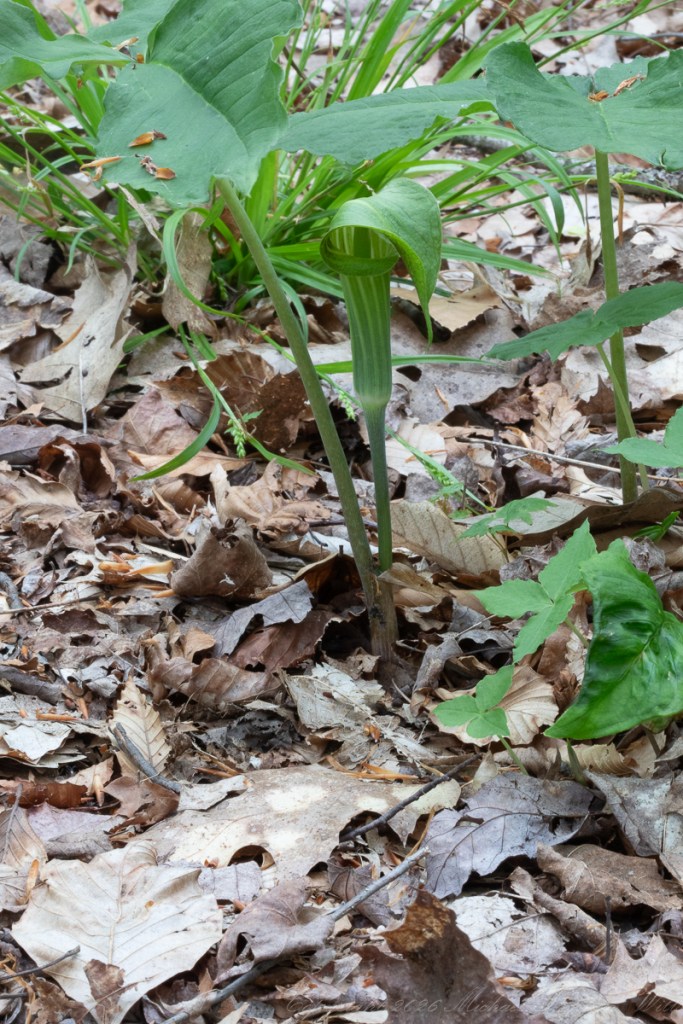
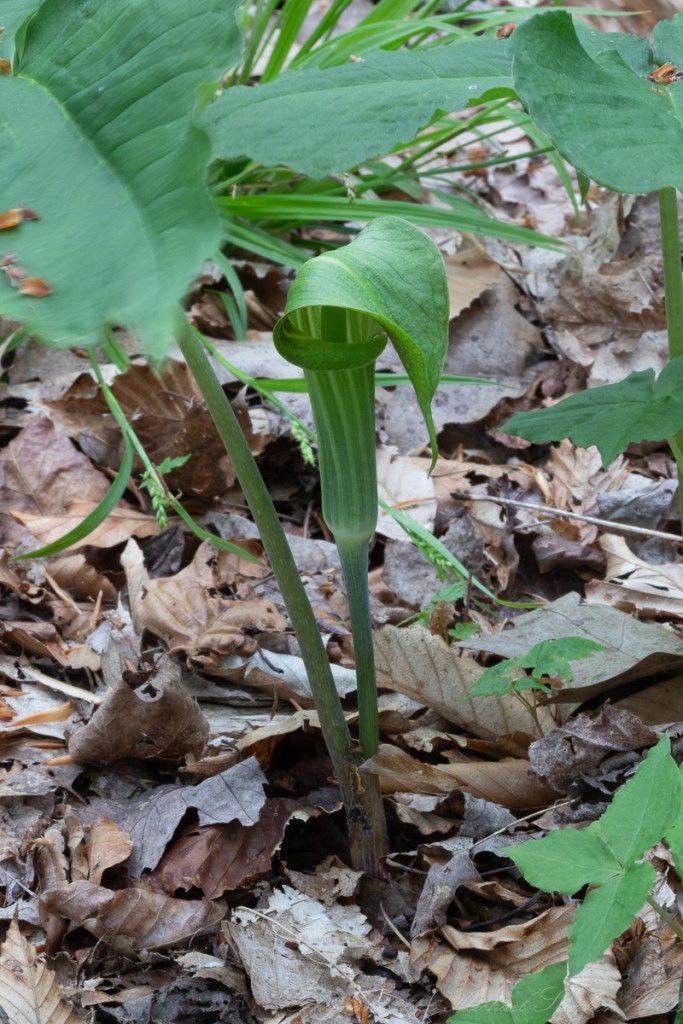
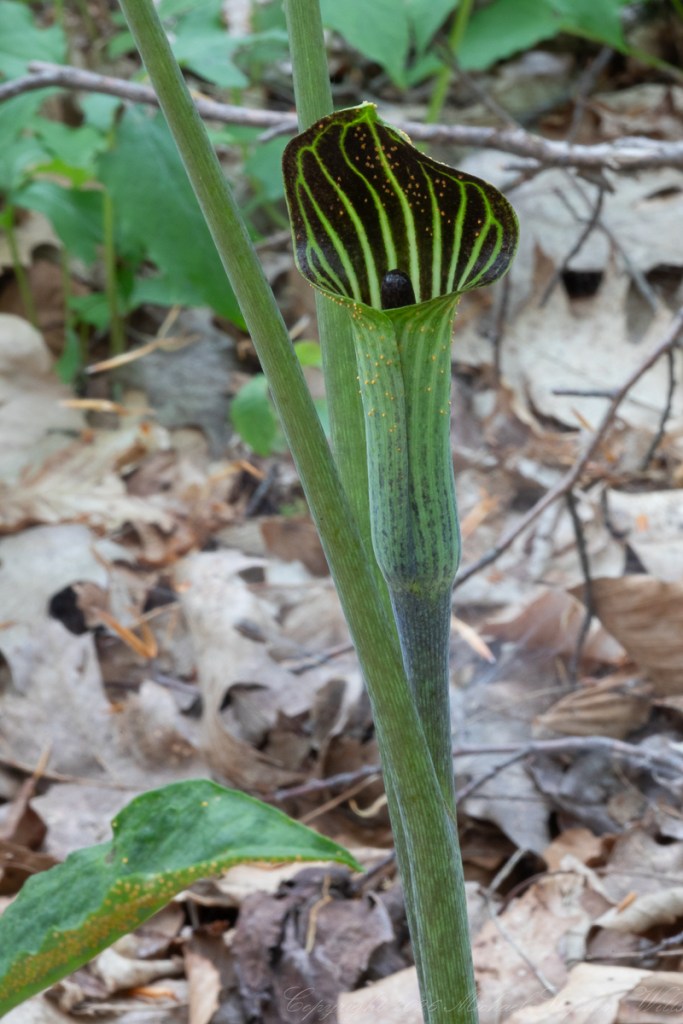
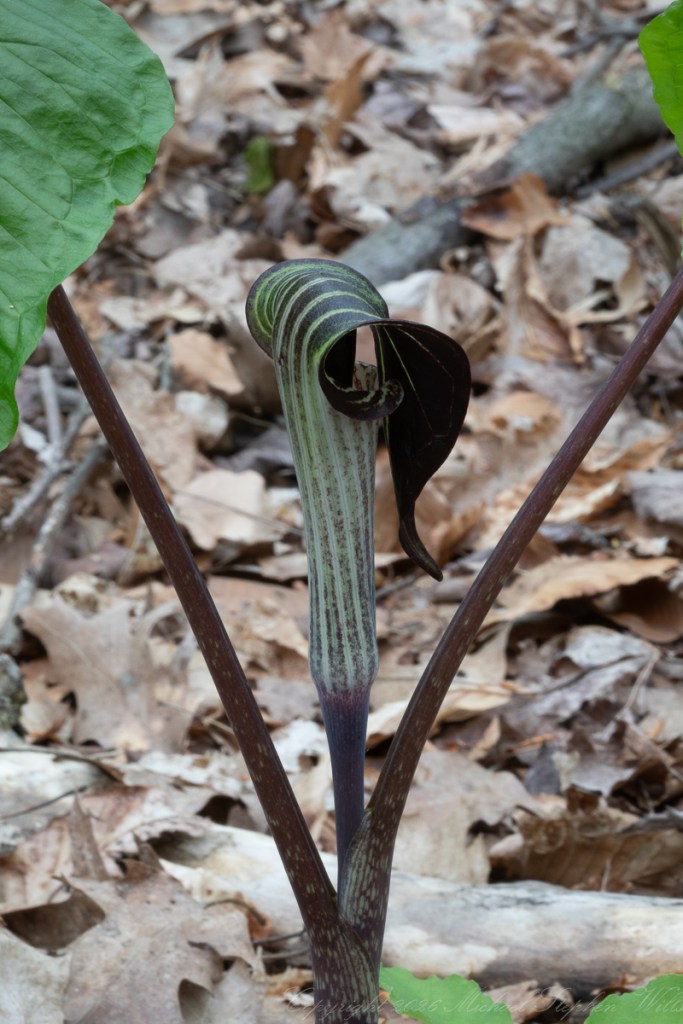
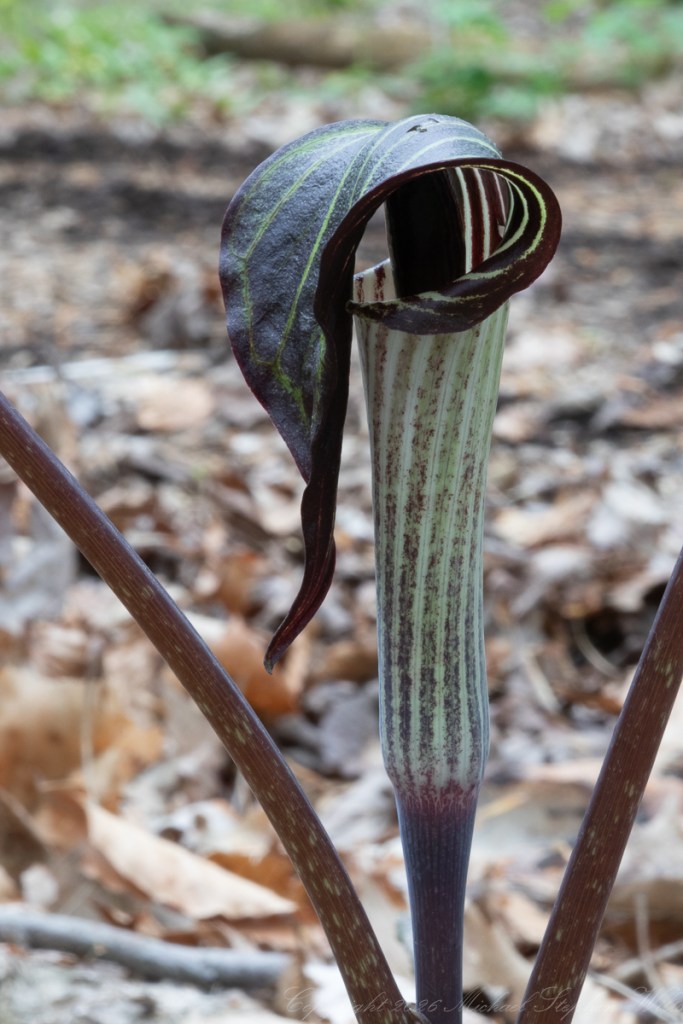
The flower is not showy in the usual sense. It has no bright face lifted to the sun, no petals flung open in invitation. Instead, it is architectural, hooded, inward. The striped spathe bends over the hidden spadix like a pulpit canopy, green outside and darkly veined within, as if the forest itself had written a sermon in shadow and chlorophyll. The longer I looked, the more it seemed less a flower than a presence: a woodland oracle with its hood drawn low.

Sapsucker Woods. Ithaca, Tompkins County, New York State

In one plant, the pulpit flares open, dark-rimmed and luminous inside, its pale ribs running upward like the beams of a tiny cathedral. In another, the hood folds forward modestly, nearly concealing the chamber beneath. A third rises darker, with maroon stems and a striped throat, standing between two leaves like a figure pausing mid-speech. The photographs catch these variations beautifully: the open herald, the shy novice, the cloaked elder, each rooted in the brown memory of last year’s leaves.

Sapsucker Woods in late spring is seldom silent, though its quiet is deep. Overhead, the trees are leafing into their first full confidence. The air carries the flute-notes of wood thrushes from farther back in the green shade, those liquid phrases that seem to fall from a height and then echo somewhere inside the listener. Red-eyed vireos begin their patient, conversational preaching from the canopy. A catbird gives its slate-gray improvisations from the understory, while chickadees stitch the edges of the path with quick notes. The season has a thousand small voices, but the Jack-in-the-pulpit listens more than it sings.

That is part of its charm. It is a plant of composure. Around it, the forest spends itself freely: trillium leaves widen, violets brighten the ground, ferns loosen their green scrolls, and mosquitoes rehearse their thin insistence. But Jack remains collected. Its sermon is not declaimed; it is withheld. It asks the passerby to kneel inwardly, to meet it at its own scale. In a hurried world, it is a lesson in standing still.

Georgia O’Keeffe might have understood this flower’s power: the way a close gaze enlarges the small until it becomes monumental. Seen from a distance, the Jack-in-the-pulpit is easily lost among leaves and stems. Seen closely, it becomes a world of line, chamber, curve, and shadow. The pale vertical striping inside the hood has the force of deliberate drawing. The dark rim of the spathe feels almost painted in, a border between secrecy and revelation. Its form is not delicate so much as concentrated—nature’s own green abstraction, folded around a mystery.

The woodland floor around these plants is a text in itself. Dry beech and oak leaves lie curled like old parchment. Sticks and roots cross the scene with accidental calligraphy. The fresh green leaves of the plant rise cleanly from this litter, making a contrast between decay and renewal so perfect that no moral needs to be supplied. The forest does not discard its past; it feeds upon it. Beneath every new hood and leaf is the slow generosity of what has fallen.

The Jack-in-the-pulpit is exactly the sort of neighbor that repays attention. It does not demand admiration; it rewards intimacy. Bend close and the lines appear, the subtle color, the strange animal vitality of the hooded form. Step back and it disappears again into the leafy congregation. It is a flower with the manners of a secret.

I was struck, especially, by how human we make it. We call it Jack, give it a pulpit, imagine it preaching. Yet perhaps the plant is not humanized so much as we are humbled into plant-like patience. Its chambered flower, its folded canopy, its upright poise—all suggest a ritual older than our metaphors. Before churches, before pulpits, before sermons, there were green hoods rising from the spring earth, gathering insects, light, and rain into the quiet business of being alive.

By the time I left, the birdsong had thickened. The woods were awake in layers: high song, low leaf-rustle, the soft give of the trail underfoot. Behind me, the Jack-in-the-pulpits remained at their posts, small sentinels of the damp shade. They seemed to keep their own counsel, and that was their gift. Some flowers brighten the day; these deepen it. They are not exclamation points in the forest, but parentheses—curved, shadowed, and full of meaning.

Click me to visit Michael Stephen Wills Online Finger Lakes Gallery.

Enter your email to receive notification of future postings. I will not sell or share your email address.

Cutleaf Toothwort and the Pure Green Sweat Bee: A Woodland Encounter in the Mundy Wildflower Garden

A close look at Cutleaf Toothwort and a Pure Green Sweat Bee in Cornell Botanic Gardens’ Mundy Wildflower Garden reveals a small but remarkable drama of spring pollination, adaptation, and woodland renewal.

That afternoon of April 14, 2026, in the Mundy Wildflower Garden, I was moving slowly enough for the woods to begin revealing their smaller intentions. Mid-April in Ithaca is a season of thresholds. The leaf litter still holds the color of last year’s weather—oak brown, beech tan, the dry parchment of a forest not yet fully wakened—but through it rise the first green declarations. Nothing shouts. Everything announces itself in a near-whisper.

It was in that spirit that I came upon the cutleaved toothwort.

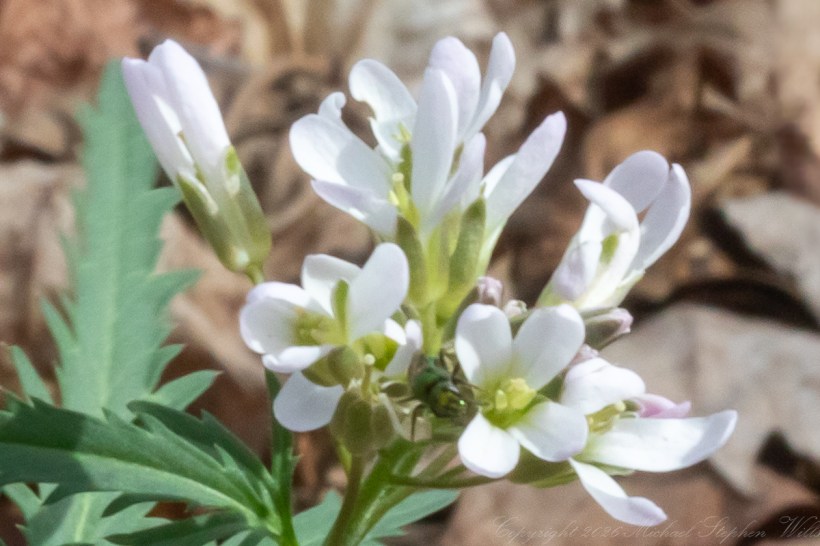
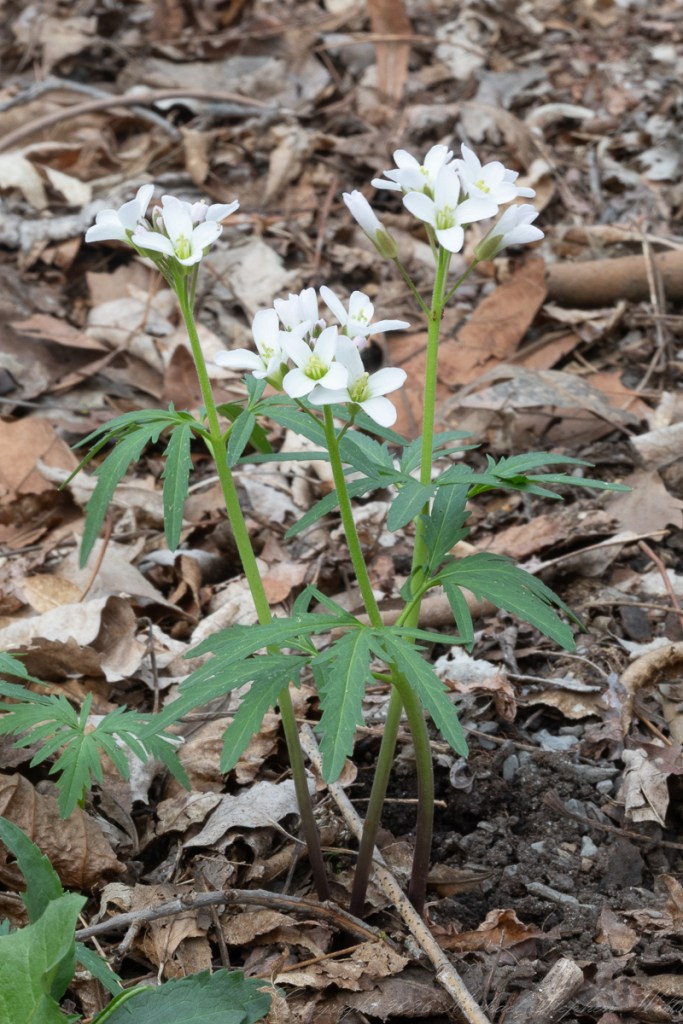
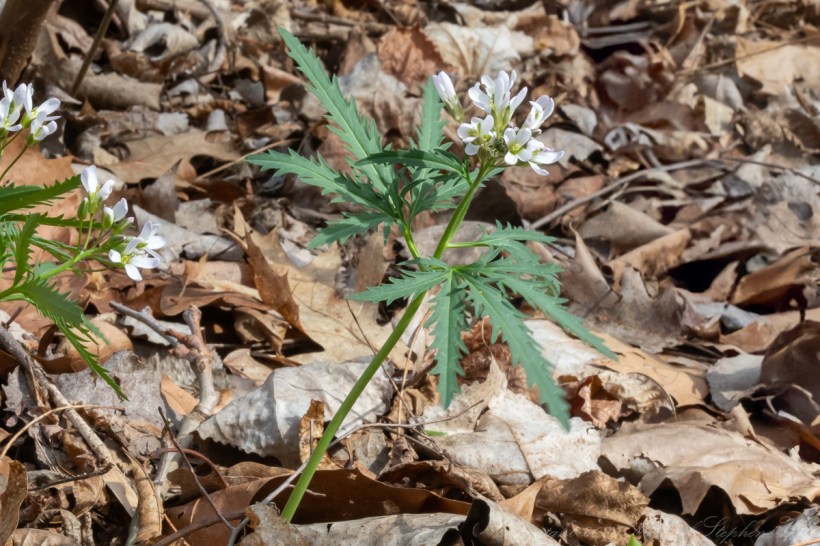
Cardamine concatenata, the cutleaved toothwort, crow’s toes, pepper root or purple-flowered toothwort, is a flowering plant in the family Brassicaceae. Mundy Wildflower Garden, Cornell Botanic Gardens, Ithaca, Tompkins County, Finger Lakes Region, New York State

At first glance the plant seemed almost improbably delicate, as if it had been assembled from a set of fine green gestures and then topped with small white crosses of bloom. The flowers hovered just above the leaf litter, each with four petals, clear evidence of the mustard family to which the plant belongs. The leaves were deeply divided, sharply cut, almost hand-like in their spread, giving the plant its common name. There is something elegant in that foliage: not the broad, self-confident green of summer, but a more intricate, provisional architecture, suited to the brief bright interval before the forest canopy closes.

This was Cutleaf Toothwort, Cardamine concatenata, one of the spring ephemerals, those woodland plants that have evolved to live by speed and timing. Their season is narrow. They rise, leaf out, flower, attract pollinators, set seed, and begin to withdraw before the trees above them fully leaf out and cast the deep shade of late spring and summer. To see one is to witness a life shaped by the economy of light. It does not waste time. It cannot.

And then I noticed the bee.

I had first been looking at the flowers themselves, admiring the small white petals and the poised buds still waiting to open, when a glint of green—alive, metallic, almost jewel-like—caught my eye. There on the bloom was a Pure Green Sweat Bee, almost certainly Augochlora pura, one of the loveliest native bees of eastern woodlands. The name hardly prepares one for the reality. “Green” suggests leaf or moss or some dull vegetal shade. But this bee wore green the way a gemstone wears light. It seemed less colored than illuminated, as though the afternoon sun had condensed into a living body and taken to wing.

What moved me most was the scale of it. The bee was tiny beside the flower, and the flower itself was small in the wide republic of the forest floor. Yet in that little meeting—bee and toothwort, insect and ephemeral—there existed an entire system of ancient reciprocity. The bee had not arrived there by accident. Nor had the flower opened in innocence. Each belonged to the other’s world.

Here is the Pure Green Sweat Bee in a detail of the previous photograph.

The life of a sweat bee is far more complex than its modest size suggests. Augochlora pura is one of our native solitary bees. Unlike honey bees, it does not belong to a great colony with combs and a queen. A female builds and provisions her own nest, often in rotting wood or soft decaying logs, an apt choice for a woodland species. She gathers pollen and nectar, forms a food mass for her offspring, lays an egg, and seals the chamber. Her labor is quiet, uncelebrated, and essential. She is one small carrier of spring fertility, moving genes through the forest one flower visit at a time.

The common name “sweat bee” comes from a habit some species have of landing on human skin to sip salts from perspiration, but there was nothing comic or pesky about this one. On the toothwort it was wholly itself: intent, methodical, radiant. It moved with a professional seriousness from bloom to bloom, entering the white flowers where the reproductive parts stood ready. Pollen clung to its body. The flower offered nectar and pollen as food; the bee, without contract or plan, carried the plant’s future outward. Evolution has made such meetings beautiful, but beauty is not the goal. Continuance is.

And yet beauty is what we are given to see.

The Cutleaf Toothwort has its own intricate life history. It spreads not only by seed but also through underground rhizomes, toothed in form, which gave rise to the older name “toothwort.” Those pale subterranean stems hold stored energy from previous seasons, allowing the plant to rise quickly when soil temperatures soften and light still reaches the woodland floor. It is a plant of patience and timing, of long preparation for a brief display. Its flowers are modest, not showy in the garden-center sense, but perfectly fitted to the early spring woods: visible enough to pollinators, pale enough to stand out against the brown duff, structured for efficiency.

There is also an evolutionary poignancy in the fact that many spring ephemerals depend on the first wave of insect activity after winter. Bees like Augochlora pura emerge into a world that is only beginning to supply forage. A flowering woodland plant in April is an opened pantry, a signal fire, a necessary event in the calendar of survival. Likewise, a native bee visiting those flowers is a participant in a relationship shaped over vast stretches of time. Forest floor, rhizome, petal, pollen grain, bee body, hollow wood nest—all of it is linked.

Standing there with my camera, I felt once again how often wonder arrives disguised as minuteness. The grand spectacles of nature announce themselves: waterfalls, hawks, autumn hillsides, a full moon lifting over a ridge. But this was a smaller magnificence, requiring the humility to stoop, to wait, to look closely enough for significance to emerge from what many walkers would simply call “little white flowers.” The Mundy Wildflower Garden, on an afternoon like this, was displaying as well as conducting spring.

The leaf litter around the plant only deepened the impression. Last year’s fallen leaves were still present, curled and dry, forming the brown text from which the new season writes its first green sentences. Out of that apparent dormancy rose the toothed leaves and white flowers of Cardamine concatenata, and upon them came the emerald bee, a living spark of pollinating purpose. Death feeding life; old canopy nourishing new growth; a forest renewing itself not through spectacle but through a thousand precise exchanges.

I lingered longer than I meant to. That happens to me often in spring. One flower leads to another, one patch of sunlight to another, and then some small drama of natural history arrests the day. But this encounter felt especially complete. The Cutleaf Toothwort embodied the speed, discipline, and elegance of the spring ephemeral strategy. The Pure Green Sweat Bee embodied the brilliance and necessity of native pollinators, creatures upon whose unrecorded labor the health of so many ecosystems depends. Together they made visible a truth the woods are always speaking: survival is collaborative, and beauty often arises where need and adaptation meet.

When I finally moved on, I carried with me the feeling that I had witnessed a brief transaction in the old woodland economy, a little shining exchange older than any path through the garden, older than the institutions built around it, older even than the names we now give to bee and blossom. On an April afternoon, among the leaves of last year, I had found a subject for a photograph within a moment in which evolution, ecology, and grace stood together in one small white flower.

Click me to visit Michael Stephen Wills Online Finger Lakes Gallery.

Enter your email to receive notification of future postings. I will not sell or share your email address.

Discovering Large-Flowered Bellwort Near Mundy Wildflower Garden in Ithaca, New York

On an April afternoon along Fall Creek near Cornell Botanic Gardens, I found my first colony of Large-flowered Bellwort, Uvularia grandiflora—a quiet woodland wildflower shaped by spring light, pollinators, and rich forest soil.

On an April afternoon in 2026, walking along Fall Creek near the Mundy Wildflower Garden at Cornell Botanic Gardens, I came for the first time upon a colony of Large-flowered Bellwort, Uvularia grandiflora, and stopped with the immediate feeling that spring had spoken in a new dialect. I had seen the season gathering itself all around me in buds, in damp leaf litter, in the first loosening of the woods from winter’s gray restraint. But this was different. These flowers did not announce themselves with bravado. They hung quietly beneath their leaves, as though the forest had shaped small yellow lanterns and then thought better of showing them too openly.

I raised my Canon EOS 5D Mark IV with the Canon EF 100 mm f/2.8 Macro USM lens and photographed them handheld at 1/640 second, f/8.0, trying to honor both their delicacy and their poise. Macro work often feels like an act of courtship with detail. One does not seize the subject; one approaches, waits, adjusts, breathes. In the bellworts, I found a plant that rewarded just this kind of attention. At first glance they seemed merely graceful. Then, looking more closely, I began to see their architecture.

These Largeflower Bellworts (Uvularia grandflora) are flourishing on the Cornell University Campus along Fall Creek, adjacent to the Mundy Wildflower Garden. Cornell University, Tompkins County, finger Lakes Region, New York State

Large-flowered Bellwort is a woodland perennial of rich deciduous forests, and it wears that identity in every part of its form. The stems rise smooth and pale, slender but assured, each seeming to carry its burden effortlessly. The leaves clasp the stem in that distinctive bellwort manner, as though the plant were being held in green hands. Beneath them hang the flowers, elongated and drooping, their six yellow tepals twisted and tapered into points. They are not the symmetrical stars of more open-faced blossoms. They are pendants, streamers, tassels of sunlight. In these flowers, yellow becomes motion. Even when still, they seem to trail the memory of a breeze.

The plant’s drooping habit is part of an evolutionary strategy. In the spring woods, before the canopy fully leafs out, ephemeral light reaches the forest floor in a brief annual inheritance. Bellwort rises into that window. It gathers energy quickly, blooms early, and makes use of the few bright weeks before the trees above turn the woodland dim and green. Its season is a narrow one, but not a meager one. This is a plant shaped by timing, by patience, by fidelity to a recurring opportunity. It lives where sunlight is not constant but bestowed.

There is something deeply moving in such an existence. We humans often admire the grand gestures of nature—the waterfall, the hawk, the thunderhead. But woodland wildflowers teach another lesson: that persistence may take the form of exquisite brevity. Uvularia grandiflora does not dominate the landscape. It waits for its rightful hour, then enters the year with quiet authority. It is one of spring’s soft-spoken triumphs.

Ecologically, the bellwort belongs to a community rather than a spectacle. It grows in moist, humus-rich soil, among the remains of last year’s leaves, where decay has become nourishment. Around it are the signatures of a healthy eastern woodland: filtered light, fungal work below ground, the gradual release of nutrients from the forest’s own past. Its roots do not stand apart from this economy of return. They participate in it. The beauty of the flower is inseparable from the labor of decomposition, the unseen commerce of roots and microbes, the long winter’s accumulation of leaf mold. Even here, elegance rises from compost.

And then there are its relationships with other living things. The flowers, nodding and somewhat enclosed, invite a certain intimacy from insect visitors. Bellwort is not a billboard flower. It asks a pollinator to come close, to enter its hanging chamber. Bumblebees, mason bees in the genus Osmia, sweat bees in Halictus and Lasioglossum, and mining bees in Andrena are among its visitors. One bee, Andrena uvulariae, bears in its very name the mark of this botanical relationship, having evolved a close association with Uvularia. To stand before these flowers is to imagine that hidden commerce of spring proceeding just beyond the edge of one’s notice: a queen bumblebee nosing into a drooping bloom, a small Osmia working deliberately among the tepals, an Andrena bee moving with ancient purpose through a plant lineage it has learned by evolution to trust.

What we call a wildflower is also an agreement, a contract written between blossom and insect long before we arrived to admire it. Even after flowering, the bellwort participates in the forest. Its seeds bear fleshy appendages that attract ants, which help carry them away and disperse them through the woodland.

Human beings, of course, enter this world differently. We bring names, lenses, curiosity, memory. We kneel in leaf litter with cameras. We identify, compare, and sometimes misidentify. We make gardens to protect what once grew without us, and then discover that our finest role is not mastery but attention. Finding Large-flowered Bellwort near Fall Creek reminded me that our relationship to such plants is at its best when it is grounded in humility. We do not improve these flowers by naming them; we improve ourselves by learning to see them.

And seeing them, truly seeing them, is no small thing. The petals in these photographs are veined with light. The stems carry a woodland grace, as if drawn in one uninterrupted line. The colony as a whole had the look of a little parliament of bells, each one bowed, each one speaking in silence. They seemed to me like fragments of sun that had slipped through the trees and decided to remain rooted there.

I left Fall Creek that afternoon with the feeling that I had been admitted to a finer scale of perception. Large-flowered Bellwort asks little of the passerby except slowness. Yet in return it offers a great deal: form, adaptation, timing, kinship, restraint. It shows how life in the spring woods is built from tact. Not only from survival, but from style.

Some plants shout the season into being. Bellwort lets it ring softly. And once heard, that note stays with you.

Click me to visit Michael Stephen Wills Online Finger Lakes Gallery.

Enter your email to receive notification of future postings. I will not sell or share your email address.

Where Winter Yields: Skunk Cabbage, Pitcher Plants, and Milky Ice at Malloryville Preserve

A late winter walk through Malloryville Preserve reveals milky ice, emerging skunk cabbage, and hidden wetland life—seen through the curious eyes of grandchildren.

The morning began in that quiet register peculiar to late winter in the Finger Lakes—when the calendar insists on spring, yet the land, still half-claimed by frost, speaks in a more cautious dialect. At the O.D. von Engeln Preserve at Malloryville, the woods held both seasons in tension. Snow lingered in shaded hollows, while the exposed ground, damp and rust-colored, breathed with thaw.

Sam and Rory—boots muddied almost immediately—climbed atop a great, weathered stump, its cut face fanned with the geometry of years. There is something about a stump that invites children upward, as though it were not a remnant but a stage. From their perch they surveyed a kingdom of bare trunks and quiet trails, their laughter momentarily lifting the stillness. Behind them, the forest rose in gray-brown columns, and beneath them, the history of a tree—rings like a clock no one can wind backward.

We moved downslope toward the seepage-fed lowlands that give this preserve its particular character. Here, the ground softens, water gathers, and winter lingers longer in pockets of ice that seem reluctant to relinquish their hold. The ice itself told a story—not clear and crystalline, but cloudy, milky, almost opalescent. This opacity is the signature of trapped air, minute bubbles frozen in suspension as water repeatedly melts and refreezes. Each cycle interrupts the orderly lattice of ice, scattering light and transforming transparency into a pale, diffused glow. It is ice that remembers its instability.

Threading through this ice were narrow rivulets of meltwater, tracing paths around moss-covered hummocks. These islands—bright green even in winter—rose like miniature continents in a frozen sea. On one such hummock, we found this skunk cabbage. Its mottled spathe, deep maroon flecked with yellow, pushed upward through the cold, its form both alien and ancient. I pointed out to the boys that this plant generates its own heat—a metabolic furnace capable of melting the surrounding snow. It is one of the earliest heralds of spring, though it announces itself not with color alone, but with scent—a pungency that walked with us that day.

Nearby, nestled in the sphagnum, were the pitcher plants—Sarracenia purpurea—their tubular leaves tinged with winter’s reds and greens. Even in dormancy, they held their form, each pitcher a small reservoir. I explained how these plants supplement the nutrient-poor conditions of the bog by capturing insects, their modified leaves forming a subtle trap. The boys leaned in, curious, perhaps imagining the unseen dramas that would unfold here in warmer months.

The wetland was a place of plants and textures. The ice thinned near the edges, revealing water beneath that reflected the vertical lines of trees above. Droplets fell intermittently from branches, punctuating the quiet with soft, irregular taps. It was a landscape in transition, each element negotiating its passage from one state to another.

Along a tangle of shrubs, I noticed an unusual growth—a dense, broom-like cluster of twigs protruding from what appeared to be a highbush blueberry. This “witches’ broom” is often the result of fungal infection or other physiological stress, causing the plant to produce a profusion of shoots from a single point. To a child’s eye, it might seem like a bird’s nest or some deliberate construction, but it is, in fact, the plant’s own altered architecture—a distortion that nonetheless becomes part of the ecosystem, offering shelter to small creatures.

Further along, a fallen log bore the layered forms of shelf fungi, each bracket extending outward like a series of pages half-opened. Their colors—muted tans and browns—blended with the wood, yet their structure was unmistakable. These polypores are the quiet recyclers of the forest, breaking down lignin and cellulose, returning the substance of the tree to the soil. I ran my fingers lightly along their surface, feeling the fine texture, while the boys, less cautious, tapped them as though testing their solidity.

On the bark of a nearby tree, we encountered a patch of what looked like pale, fuzzy insulation—the egg mass of the spongy moth. I explained that each of these masses could contain hundreds of eggs, waiting for the warmth of spring to hatch. It was a reminder that even in this subdued season, the next wave of life was already prepared, concealed in plain sight.

As we made our way back, the boys’ boots squelched in the soft ground, their earlier perch on the stump now a distant memory. Yet the morning had offered them—and me—something more enduring than a climb. It had revealed a landscape in flux, where ice is not merely frozen water but a record of change, where plants defy cold through chemistry, and where even decay participates in renewal.

Late winter, in a place like Malloryville, is not an absence of life but a study in persistence. It asks for attention, for patience, and for a willingness to see beauty in transition. Walking with Sam and Rory, I was reminded that discovery does not wait for spring. It is already here, written in ice, moss, and the quiet industry of the forest.

Enter your email to receive notification of future postings. I will not sell or share your email address.

The Yarb Woman of Cornell: Elfriede Abbe’s Tribute to Herbal Wisdom in the Botanic Gardens

A quiet encounter with Elfriede Abbe’s Yarb Woman reveals the enduring wisdom of herbal traditions, inviting reflection in the intimate stillness of Cornell’s Herb Garden.

We did not come upon her the way you come upon a monument. On a late winter morning my sister and I chose to walk through the pergola alongside the Richard M. Lewis Education Center and there she was.

There is no plaza, no axial approach, no insistence. Instead, the Yarb Woman statue waits in a corner of the Robison New York State Herb Garden, where paths narrow and attention shifts from spectacle to detail. The pergola frames the space, the beds lie dormant or fragrant depending on the season, and there—almost at eye level with the plants—is the woman herself, bent into her work.

Yarb Woman, Elfriede Abbe, sculptor, The Auraca AHerbarists, May 6, 1980. Robison New York State Herb Garden, Cornell Botanical Gardens, Cornell University, Ithaca, Tompkins County, New York State.

Her posture is one of reguard. That is the first instruction. Her posture is a study in intention: forward-leaning, balanced, attentive. One hand gathers, the other steadies. She is caught mid-action, not posed. This is a figure practicing herbal knowledge.

Right hand on spade handle

And because of that, she alters the space around her. Standing there to regard the statue the garden becomes a workplace—a field of quiet labor. Each plant is no longer merely labeled but noticed. The dried hydrangea beside her, the winter stems, the low green groundcover—everything begins to feel like it belongs to her attention.

Left hand grasping plants, pockets full

We began to notice the small offerings at her feet—stones, a tiny object left by a passerby—that suggest that others have felt this shift. Not worship, exactly, but recognition. A kind of informal acknowledgment that this figure gathers more than herbs; she gathers meaning from the overlooked.

There is something deliberate in her scale. She is not monumental. She does not dominate the garden. Instead, she invites you downward—to stoop, to look, to consider what is beneath your habitual line of sight.

This is consistent the sculptor, Elfriede Abbe’s, larger artistic life. She was not drawn to grand gestures but to process: carving wood, printing pages, observing the minute structures of plants. In “Yarb Woman”, that ethic becomes embodied. The sculpture is less about a person than about a way of being in the world.

To gather. To attend.To work with care.

Standing there, you may feel the subtle inversion: the garden becomes something you enter into, as she has. The distance between observer and participant narrows.

And time shifts slightly. The date on the plaque—1980—anchors the piece historically, but the figure herself resists that anchoring. Herbal practice stretches backward through centuries of unnamed practitioners, most of them women, most of them unrecorded. She could belong to any of them. Or to all.

Yarb Woman, Elfriede Abbe, sculptor, The Auraca AHerbarists, May 6, 1980. Robison New York State Herb Garden, Cornell Botanical Gardens, Cornell University, Ithaca, Tompkins County, New York State.

Even the word “yarb” participates in this temporal layering—an old word surviving in a modern garden, just as old knowledge survives in new forms.

Yarb Woman, Elfriede Abbe, sculptor, The Auraca AHerbarists, May 6, 1980. Robison New York State Herb Garden, Cornell Botanical Gardens, Cornell University, Ithaca, Tompkins County, New York State.

What we encountered, then, was not simply a sculpture. It was a quiet proposition:

That knowledge can be gathered slowly.
That attention is a form of reverence.
And that in the midst of a university—of speed, abstraction, and analysis—there remains a place where understanding begins with kneeling close to the ground.

And noticing what grows there.

Enter your email to receive notification of future postings. I will not sell or share your email address.

Copyright 2026 All Rights Reserved Michael Stephen Wills
The Science and Poetry of Melting Ice: Cayuga Lake During a Winter Thaw

Under a blue February sky, Cayuga Lake keeps its icy grip, revealing how light, time, and physics conspire to make winter’s farewell a slow, luminous negotiation.

These photographs, made along the frozen margin of Cayuga Lake at Cass Park in mid-February 2026, carry a quiet paradox. The sky is a lucid blue, the light has that late-winter clarity that hints at spring, and yet the lake remains locked under a pale, glassy skin. A few geese stitch the air. A bench waits. Red and white beacons stand where water should be moving. The moment is fixed: late afternoon light in February, Finger Lakes winter—but the deeper story is written in physics, not pixels: why does lake ice linger so stubbornly during a thaw?

The short answer is that water is a hoarder of heat and ice is a keeper of promises. The long answer is the reason these scenes feel suspended between seasons.

Start with the cost of melting itself. Ice does not simply warm into water; it must first be converted, and that conversion demands a large, fixed payment of energy known as the latent heat of fusion. To melt just one kilogram of ice takes about 334,000 joules—and that energy raises the temperature not at all. It is spent entirely on changing solid to liquid.

Scale that up to a lake surface and the numbers become sobering. Even a modest sheet of ice—say ten centimeters thick—contains roughly ninety kilograms of ice per square meter. Melting that much requires on the order of thirty million joules per square meter. To put this in a human context, in 1 kcal there are 4,184 joules. Melting a square meter of ice requres 7,170 kilocalories (kcals) or 3.6 days for a person expending 2,000 kcals per day. Spread across square kilometers of lake, the energy bill climbs into the tens of terajoules. That is the hidden arithmetic behind the familiar disappointment of a February thaw: a few warm days feel dramatic to us, but to a lake they are only a small down payment.

This leads to the second, more subtle constraint: melting ice keeps itself cold. As long as ice is present, the surface of the lake is pinned near 0 °C (32 °F). Incoming heat does not make the surface warmer; it simply converts more ice into water at the same temperature. The thin layer of meltwater that forms on top is also near freezing, so the entire interface remains locked at winter’s threshold. There is no “warming momentum” here—no quick rise in temperature to accelerate the process. The system quietly consumes energy without changing its outward thermal expression.

That is why the lake in these images can look bright and almost springlike while remaining physically winterbound. Sunlight is being spent on erasure, not on warming.

A third rule of water deepens the delay. Freshwater is densest not at freezing, but at about 4 °C (39 °F). In early spring conditions, the coldest water—near 0 °C—floats. The slightly warmer, denser water below tends to stay below. This creates a stable stratification: a cold, near-freezing surface layer sitting like a lid on the lake.

The consequence is crucial. The lake cannot easily mix warmer subsurface water upward to attack the ice from below. The thaw must work mainly from the top and the edges—where sunlight, mild air, rain, and shoreline heat can do their work—rather than through a coordinated, whole-lake turnover. In practical terms, the ice is dismantled by margins and seams, not by a sudden, uniform collapse.

Add to this the reflective nature of ice and snow. The pale surface in these photographs is not merely beautiful; it is also defensive. Bright ice and snow reflect a significant fraction of incoming sunlight back into the sky. Dark, open water would absorb that energy eagerly and warm quickly. As long as the lake remains light-toned, it is actively rejecting some of the very energy that could hasten its release.

Thickness and structure matter too. Winter does not lay down a single, simple sheet. It builds layers: clear black ice, milky refrozen crusts, snow-ice composites, trapped bubbles—each a page in winter’s ledger. A brief thaw may soften the surface, open a lead near shore, or trace fine cracks across the sheet, but the bulk remains. In the closer views—the lighthouse and the red beacon standing in frozen sheen—you can see subtle tonal shifts and faint stress lines, the calligraphy of slow change. These are signs of negotiation, not surrender.

Scale, finally, is destiny. Cayuga is long and deep; it behaves more like a small inland sea than a pond. Small waters can change their minds quickly. Large waters are conservative. They remember. The heat they lost in autumn must be repaid, carefully and in full, before winter loosens its hold. This is why harbors and shallows darken first, why the margins in these scenes show hints of movement while the center keeps its pale composure.

Put together, these rules explain the peculiar patience of February ice. The thaw is not a switch but an accounting. Enormous quantities of energy must be delivered just to accomplish the phase change. While that work is underway, the surface temperature barely moves. The cold meltwater stays on top, limiting mixing. The bright surface reflects sunlight. The lake, in effect, resists haste through the ordinary, unromantic laws of physics.

There is an austere beauty in this. Ice is a temporary architecture built by the loss of heat, and its demolition requires an equally disciplined repayment. The quiet in these images is the quiet of bookkeeping—joules being transferred, layers being undone, thresholds being approached but not yet crossed. When the change finally comes, it often feels sudden: a windy day that breaks the sheet into plates, a warm rain that darkens the surface, a week when the margins retreat visibly. But that drama is only the visible last act of a long, invisible exchange.

So the lake lingers. Not out of stubbornness, but out of fidelity to the rules that govern it. Under a sky that already looks like April, Cayuga is still paying winter’s invoice. The ice remains until the account is settled—and when it finally goes, the benches will no longer face a mirror of light, but a moving field of dark water, ready once again to begin the long work of storing heat for another year.

Enter your email to receive notification of future postings. I will not sell or share your email address.

Juvenile Cooper’s Hawk at a Winter Feeder: A Backyard Predator in the Finger Lakes

On a frigid winter morning, a young Cooper’s Hawk claimed a backyard feeder roof, revealing how predators, snow, and survival intersect in an ordinary Finger Lakes yard.

These four images and YouTube video document a winter visit by a juvenile Cooper’s Hawk (Accipiter cooperii) to our backyard feeder, captured on February 7, 2026, during a snowstorm in mid-morning light in sub-zero temperatures. The metadata places the sequence between 10:35 and 10:37 a.m., recorded on an iPhone 14 Pro Max with a 9 mm f/2.8 lens at low ISO (32) and fast shutter speeds—conditions that make sense for a bright, snowy day when reflected light is abundant and a moving subject demands short exposures. The bird itself, however, tells a longer story than the camera settings can.

Cooper’s Hawks are medium-sized accipiters, built for pursuit in cluttered spaces. Short, rounded wings and a long, banded tail allow them to thread through trees and shrubs with startling agility. In the Finger Lakes region in winter, they increasingly overlap with human habitats because bird feeders concentrate prey. The metal feeder roof in these images is mounded with snow, and the hawk has chosen it as a temporary perch—an elevated, stable platform that offers both a view of potential prey and a place to rest after a chase or to wait out a flurry of weather.

The bird’s plumage marks it as a juvenile, likely hatched the previous summer. Instead of the blue-gray back and fine rufous barring of an adult, this hawk wears brown upperparts patterned with pale, teardrop-shaped spots and a buffy, vertically streaked breast. In the first image, where the bird faces forward through a lattice of branches, those bold brown streaks on a whitish background are especially clear. The eye is yellow rather than the deep red of a mature adult—another reliable sign of youth. Over the next year or two, those eyes will darken and the plumage will transition to the cleaner, more uniform adult pattern.

In this first image, the hawk faces forward, squarely watching the yard.

The long tail, visible in the rear views, shows broad, dark bands and a pale tip. That tail is not just decorative; it is the rudder that lets the hawk brake, pivot, and surge forward in tight quarters. The posture here—upright, alert, feathers slightly fluffed against the cold—suggests a bird conserving heat while remaining ready to launch. In winter, energy balance is critical. Each failed chase costs calories, and each successful one must pay back the effort many times over.

In this second image, the hawk looks over its shoulder, scanning.

Cooper’s Hawks specialize in birds roughly the size of starlings, doves, and jays, though they will also take small mammals. Feeders unintentionally simplify the hunt by bringing many potential targets to a predictable spot. The hawk’s presence does not mean the feeder is “bad” for the ecosystem; rather, it shows the food web functioning in real time. Predators follow prey, and prey follow resources. In snowy conditions, when natural seed and cover are harder to find, that concentration effect is even stronger.

Click me for my Cooper’s Hawk photograph on Getty Istock.

The sequence of images reads like a brief behavioral study. In the first, it faces forward, squarely watching the yard. In the second and fourth, the hawk looks over its shoulder, scanning. In the third, it turns again, keeping its head in near-constant motion—classic raptor vigilance. Accipiters often hunt by surprise, bursting from cover rather than soaring and stooping like falcons or buteos.

In this third image the hawk turns, keeping its head in near-constant motion—classic raptor vigilance.

Winter also shapes the hawk’s relationship with humans. Juveniles, in particular, are more willing to explore unfamiliar structures and take calculated risks. A feeder roof is not a natural perch, but it offers height, stability, and a clear line of sight. Over time, many individuals learn the rhythms of a yard—when sparrows or doves are most active, where cover is thickest, where escape routes lie. Some succeed and stay; others move on.

In this fourth image, the hawk looks over its shoulder, scanning.

From a broader natural history perspective, this bird represents a conservation success story. Cooper’s Hawks suffered declines in the mid-20th century due to pesticide use, but populations rebounded after bans on DDT and related chemicals. Today they are again common across much of North America, including upstate New York, occupying forests, edges, and increasingly suburban landscapes.

Watch Cooper’s Hawk behaviors in this video.

The file metadata anchors this encounter in a precise moment—February light, a cold morning, a quiet pause between hunts. The images, however, capture something timeless: a young predator learning its craft, reading the winter landscape, and testing the boundaries between wild and human-made spaces. For the backyard observer, it is a reminder that even in the most familiar settings, the ancient choreography of predator and prey continues, written in feathers, snow, and a long, banded tail poised for flight.

Enter your email to receive notification of future postings. I will not sell or share your email address.

Memories of Valentine’s Day: Family Beginnings and a Lifetime of Shared Journeys

A Valentine’s Day reflection spanning childhood, family, and partnership—where a homemade cake, a living room, and an ocean voyage reveal love’s enduring thread.

Our culture insists that Valentine’s Day is about hearts and chocolates, about gestures that can be wrapped, written, or eaten. My memories tell a longer and more intricate story. Valentine’s Day is thread that runs through decades—binding childhood, family, and shared journeys into a single, evolving narrative.

An early Valentine’s Day memory of mine is anchored in a living room at 107 Deepdale Parkway in Albertson, New York. It is 1959. The room is familiar and ordinary, yet in memory it glows with a particular warmth. My sister Theresa is two, Christine is four, and I am five. We are gathered together, small figures in a modest suburban home, unaware that this fleeting domestic moment will outlast nearly everything else in the room. What I remember most is not an event, but a feeling: the sense of being held within something stable and loving, a family rhythm that proved enduring.

Theresa (2), Michael (5), Christine (4) in the livingroom of 107 Deepdale Parkway, Albertson, New York on Valentines Day 1959

As the years passed, Valentine’s Day shifted its shape, as it does for everyone. Childhood gave way to adolescence, and later to adulthood, when the holiday began to carry expectations and interpretations shaped by romance and partnership. Yet even then, my earliest associations lingered beneath the surface. Valentine’s Day was was beyond an exchange between two people; it was about continuity, about the quiet reassurance that one was part of a larger story.

A part of our celebration this Valentine’s Day cake—chocolate, homemade, and unapologetically generous.  Baked by my wife, Pamela, whose acts of care often expressed themselves through the kitchen. The cake was not elaborate by modern standards, but it does not need to be. Its value lay in what it represented: time taken, effort given, and love made tangible. Long after the plates are washed, the memory of that cake remains inseparable from the idea of Valentine’s Day itself. Love, I learned early, could be simple, nourishing, and shared.

Chocolate Valentines Day cake by Pamela Wills
That understanding deepened over time, especially through my life with Pam. One Valentine’s Day memory stands apart not for its extravagance, but for its improbability. Pam and I found ourselves aboard the Oceania ship “Regatta”, sailing the Pacific Ocean off the coast of Chile. The vastness of the water, the steady rhythm of the ship, and the sense of being suspended between sky and sea created a striking contrast to the small living room of my childhood. Yet the emotional register was remarkably similar. Once again, Valentine’s Day was marked not by spectacle, but by presence.

The following day we reached Puerto Montt, a port city framed by water and volcanoes. The journey itself became a metaphor for the way love matures. Where childhood love had been rooted in home and routine, this later expression unfolded through shared experience and mutual trust. Standing on the deck together, watching the coastline emerge, I was struck by how Valentine’s Day had come to encompasses where we had been and where we were going.

Pam and I aboard the Oceania Regatta sailing the Pacific Ocean off Chile. The following day we reached Puerto Montt.

In that sense, Valentine’s Day functions much like memory itself. It selects certain moments and holds them fast, allowing others to fade. A cake, three young children in a living room, two partners standing together on the open sea. These are not scenes one could have predicted would endure, yet they do, because they are threaded with care, attention, and shared time.

Now, looking back across the span of years, I understand Valentine’s Day as a recurring prompt that asks us to remember where love first took root, how it was tended, and how it has carried us forward. The details change, but the essence remains remarkably constant.
In the end, Valentine’s Day does not demand grand gestures or perfect words. It asks only that we recognize the quiet continuity of love as it moves through our lives—sometimes in a childhood living room, sometimes on the open ocean, always leaving its mark in ways we only fully understand in retrospect.

Enter your email to receive notification of future postings. I will not sell or share your email address.