Frank and Rob: An Unexpected Meeting at Lamberton Conservatory

An unexpected encounter with Frank and Rob, two African tortoises in Rochester, becomes a meditation on discovery, deep time, adaptation, and the virtue of slowness.

There are discoveries we deliberately seek, and others that simply wait for us to notice them. On August 26, during a visit to the Lamberton Conservatory in Rochester’s Highland Park, Pam and I encountered two creatures that belonged firmly to the second category.

We had come to a conservatory, after all—a place where one expects palms reaching toward panes of glass, orchids suspended among roots and moss, and tropical foliage crowding the paths. I was looking at plants when something considerably more substantial appeared on the level, patterned brick path.

A tortoise.

Then another.
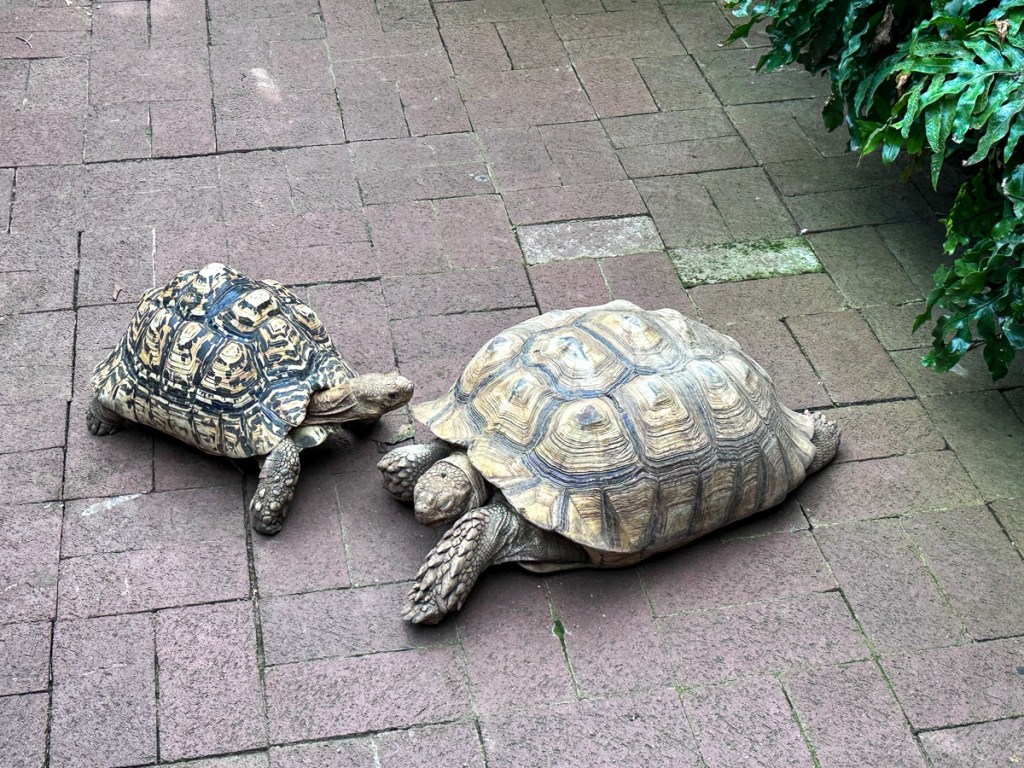
Two tortoises interacting on a paved pathway surrounded by greenery.

They moved freely among the vegetation, seemingly as much a part of the conservatory as the plants themselves. Nothing about their progress suggested urgency. Each foot was lifted, advanced and planted with deliberation. In a world increasingly measured in fractions of seconds, they seemed governed by another clock.

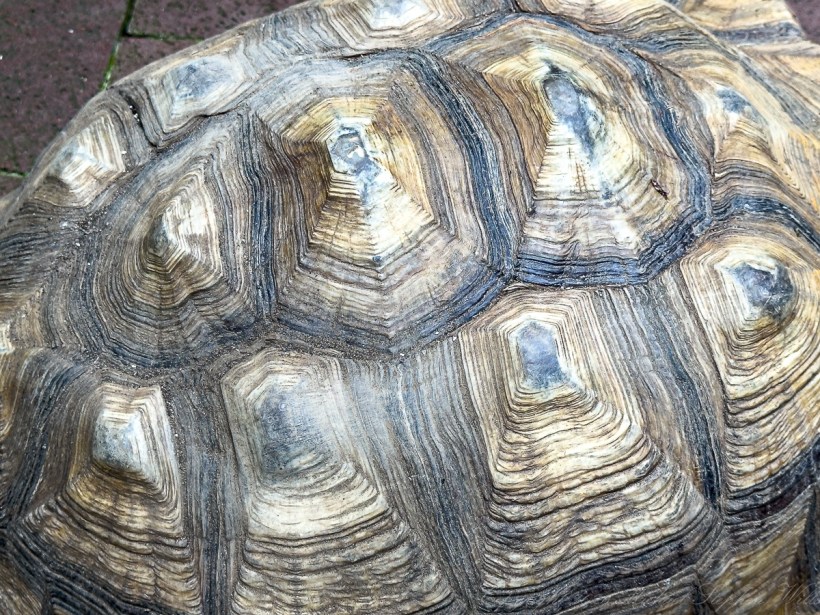
The smaller of the two immediately commanded my attention. His high, domed shell was covered with intricate patterns of yellow, tan and dark brown. Individual scutes carried irregular markings that radiated outward, giving the carapace something of the appearance of an ancient mosaic.
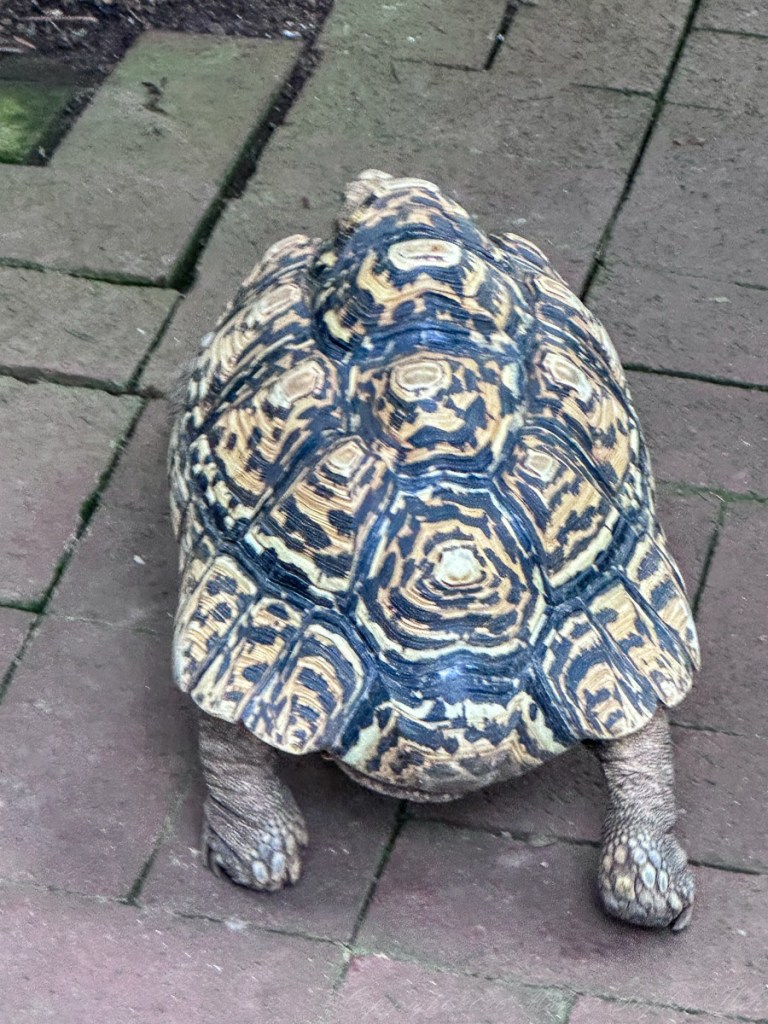
A tortoise walking on a brick path, showcasing its textured shell and limbs.

Beside him was an altogether different animal: larger, paler and immensely solid. Her shell was sandy brown, its individual scutes marked by concentric growth ridges. Massive forelegs, armored with heavy scales, supported a body that looked almost prehistoric. If the first tortoise suggested ornament, the second suggested architecture.

I photographed them, fascinated by the contrast.
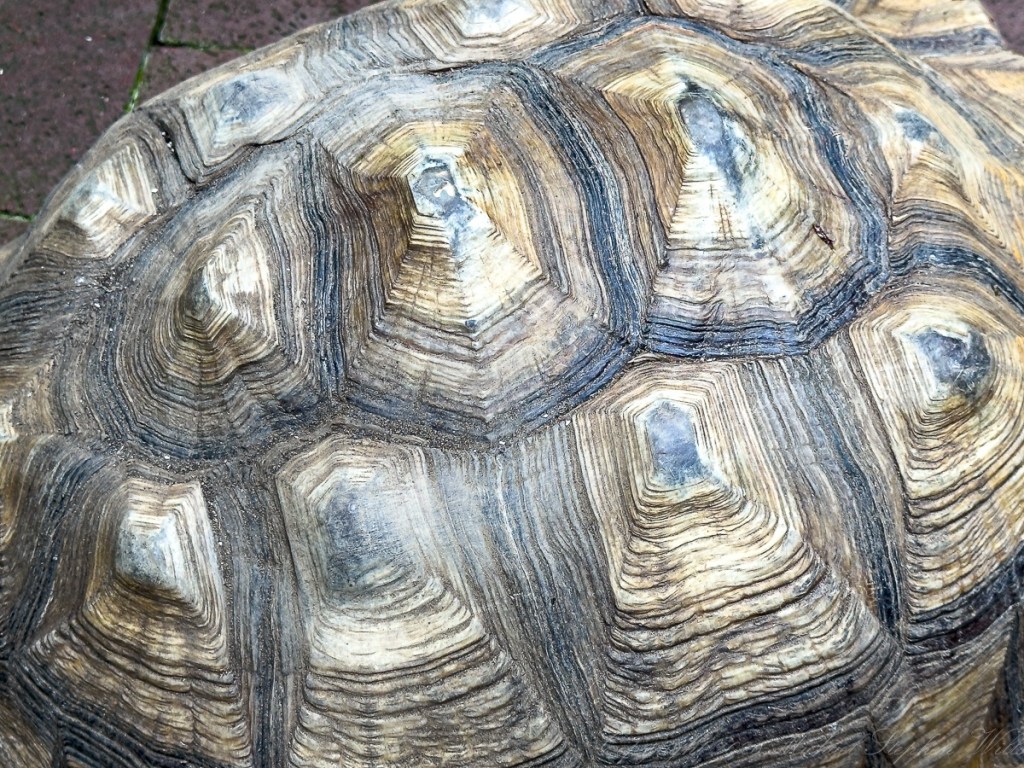
Close-up of a tortoise shell showcasing its intricate patterns and textures.

Only later did the two strangers acquire names and histories.

Nancy Mastin of Lamberton Conservatory identified the patterned tortoise as Frank, a male leopard tortoise (Stigmochelys pardalis), born in 2015. His much larger companion is Rob, a female African spurred, or sulcata, tortoise (Centrochelys sulcata), born in 2016. Both arrived at Lamberton sometime after 2020, donated by private owners who could no longer provide sufficient room for them.

That last detail transforms the encounter.

Frank’s species comes from eastern and southern Africa, where leopard tortoises inhabit savannas and dry grasslands. Their striking shells account for the name. The pattern varies enormously among individuals and changes with age, but Frank retains an especially handsome contrast of dark markings against a warm yellow-brown background.

Rob belongs to a species shaped by harsher country. The sulcata inhabits the semiarid belt along the southern margin of the Sahara, where survival depends partly upon escaping extreme heat. Powerful forelimbs equipped for digging allow these tortoises to excavate substantial burrows. They are giants among terrestrial reptiles—the largest tortoise native to mainland Africa—and their eventual size is precisely why animals purchased when small can become difficult for private owners to accommodate.

Rob is only about ten years old. Frank is about eleven. For animals capable of living for many decades, they are not venerable relics at all. They are comparatively young.

Perhaps that was the greatest surprise.

A tortoise carries age upon its back even when it is young. Its shell evokes fossils, vanished landscapes and evolutionary time. Watching Frank and Rob, I found it difficult not to imagine ancestors moving through African grasslands long before our own species began building conservatories—or cities—or anything else.

Their shells reinforce the illusion. The concentric ridges visible in my close photographs record periods of growth, although they cannot reliably be counted as annual rings. A tortoise shell is not an inert case carried by the animal. It is living anatomy: bone covered by keratinous scutes, growing with the tortoise and protecting a body intimately joined to it.

Yet what I remember most is not anatomy but pace.

Frank was still as Rob approached. Around them rose a manufactured tropics of glass, steel, soil and plants. We passed carefully, Iphones in hand. Somewhere outside, Rochester continued at the speed expected of a modern city.

The tortoises declined to participate in the hurry.

I felt a restoration while watching an animal for which slowness requires no apology. Every movement is sufficient unto itself. A foot advances. Weight shifts. A neck extends. A leaf is investigated. Nothing appears wasted, and nothing appears rushed.

Their presence also tells a quieter human story. Frank and Rob began life in private ownership. As they grew, their needs grew with them until their owners recognized that they could no longer provide adequate space. Donation brought them to Lamberton, where their lives intersected—and, one August afternoon, intersected briefly with mine.

We entered the Conservatory expecting tropical plants. I left with photographs of two African tortoises and, eventually, their names.

Frank and Rob.

That is one of the pleasures of remaining curious: a photograph leads to a species, a species to a name, a name to a history. What began as two unexpected shapes moving beneath tropical foliage became something more memorable—a glimpse of distant Africa, deep evolutionary time, and two remarkably unhurried lives being lived beneath the glass roof of a conservatory in Rochester, New York.
Click me to visit Michael Stephen Wills Online Finger Lakes Gallery.

Enter your email to receive notification of future postings. I will not sell or share your email address.

Stones That Traveled: Glacial Erratics, Deep Time, and the Stories They Leave Behind

Glacial erratics are immigrant stones—carried south by ice, dropped without explanation, and left behind to challenge our sense of permanence, place, and deep time.

There are rocks that merely sit where gravity has placed them, and then there are rocks that arrive with stories already embedded—foreign syllables carried south on ice, dropped without explanation, and left for us to puzzle over. Glacial erratics belong to the second category. They are migrants with no passports, refugees of deep time, whose presence quietly contradicts the landscape that hosts them.

Long before anyone reached for a hand lens or an ice-flow diagram, people answered such contradictions with imagination. In Ireland, a boulder perched just so on a mountain side is not a geologic problem but a resting place. Leprechauns, we are told, favor such stones—high enough to observe human intrusion, solid enough to outlast it. Skepticism, as folklore reminds us, is not always a stable position. Kevin Woods—better known as McCoillte—found that out the hard way when doubt collided with experience on the slopes of Slieve Foye. What followed was not merely a conversion story, but an act of modern mythmaking: folklore translated into bureaucracy, imagination petitioning regulation, and “The Last Leprechauns” entering the unlikely language of conservation. Stone, story, and belief hardened together into something oddly durable.

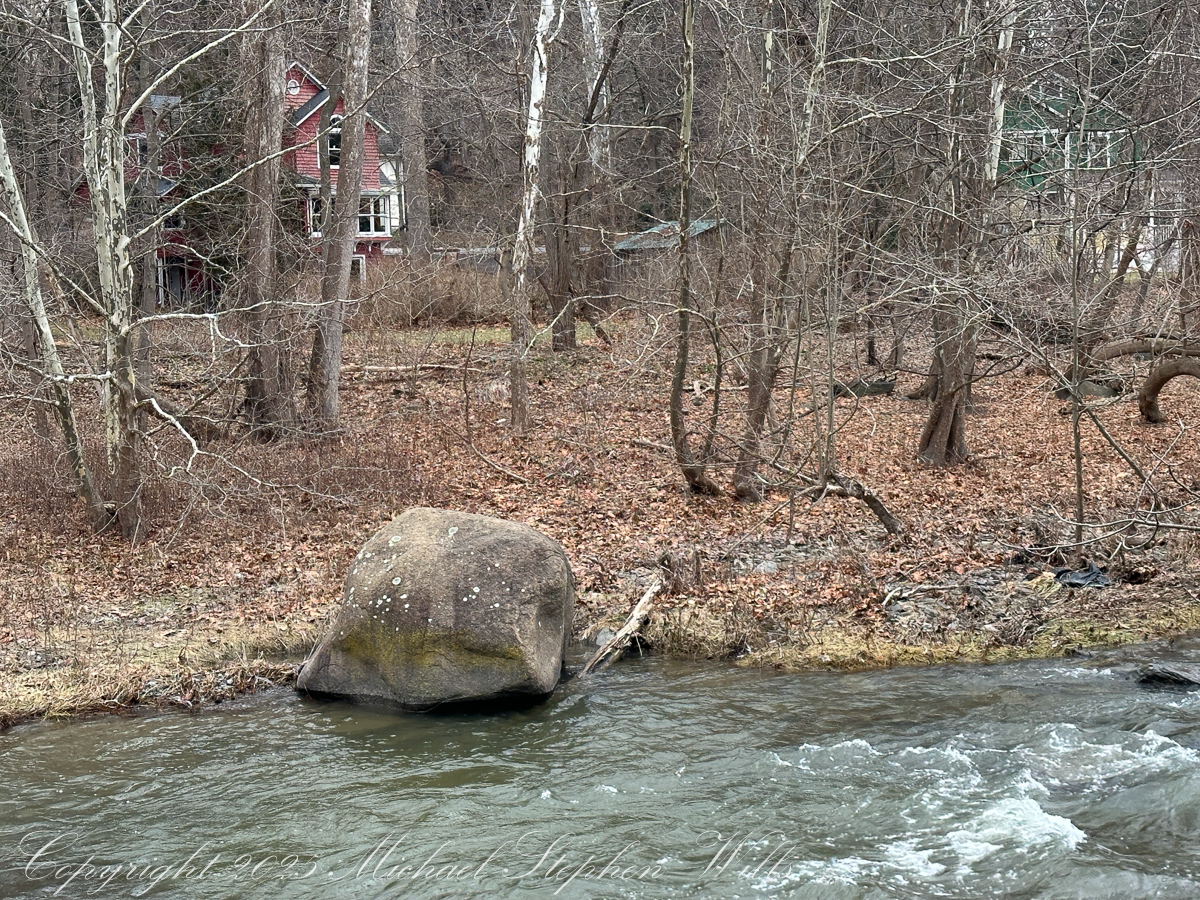
Rocks such as this are a favorite perch for leprechauns to rest and contemplate the works of man who have invaded their world. Inhabitants of Carlingford who wander Slieve Foye have come upon them often enough, their stories and certitude in the existence of the Little People are resistant to manifold doubters with their reasons and arguments. Kevin Woods, aka McCoillte, was a doubter until worked on a stone wall on property he owned on Ghan Road, Carlingford. His belief did not arise on the discovery of the leather purse, covered with ages of dust and lime, nor with the gold coins inside. McCoillte pocketed the coins for luck. As luck would have it, McCoillte loved to walk on Slieve Foye. It was on one such walk he and his dog encountered Little People who paralyzed them to escape. His unexplained absence led to troubles with the wife. This experience brought McCoillte around to enough of a belief that he, with lots of help, succeeded in petitioning the E.U. European Habitats directive to recognize leprechauns a protected species. A reserve was establish on Slieve Foye to protect the “Last Leprechauns” and you can google this phrase to learn more about McCoillte’s stories.

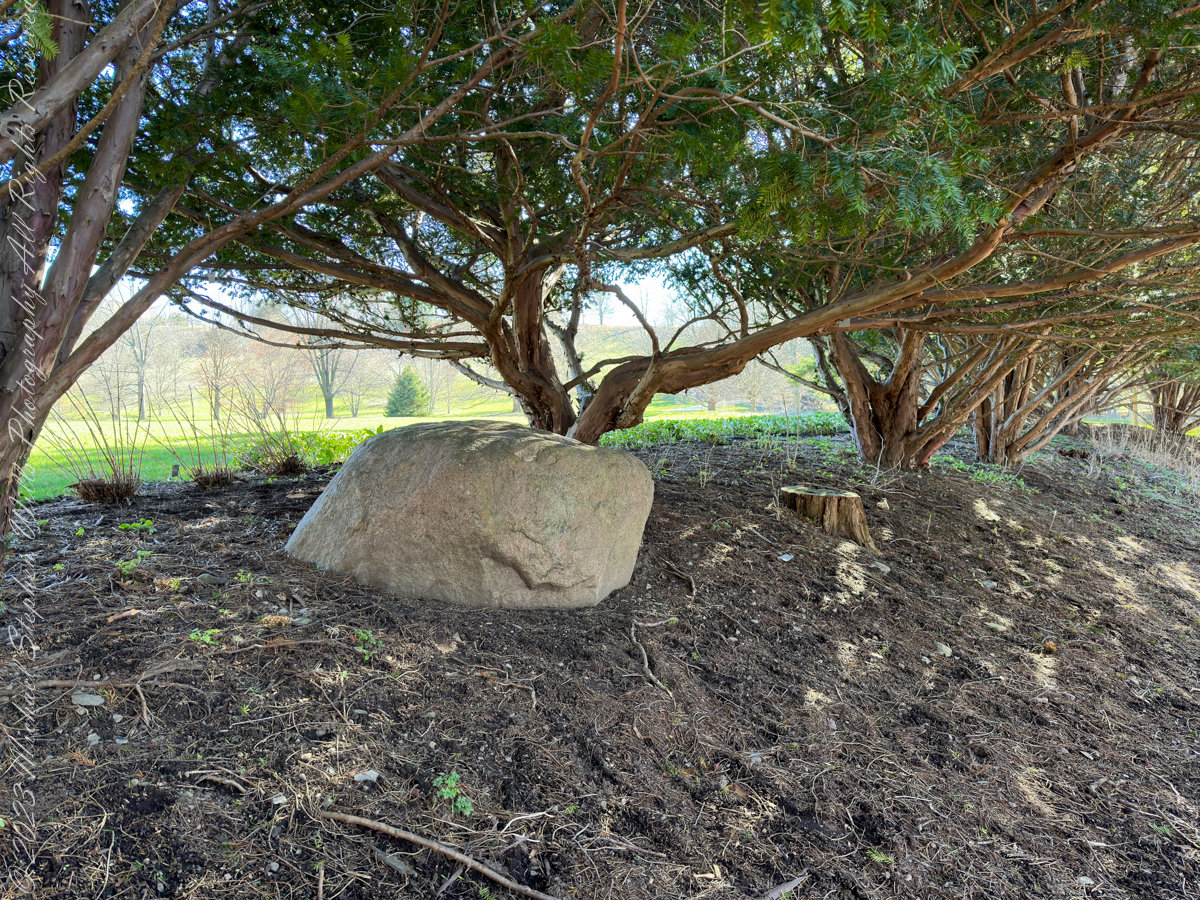
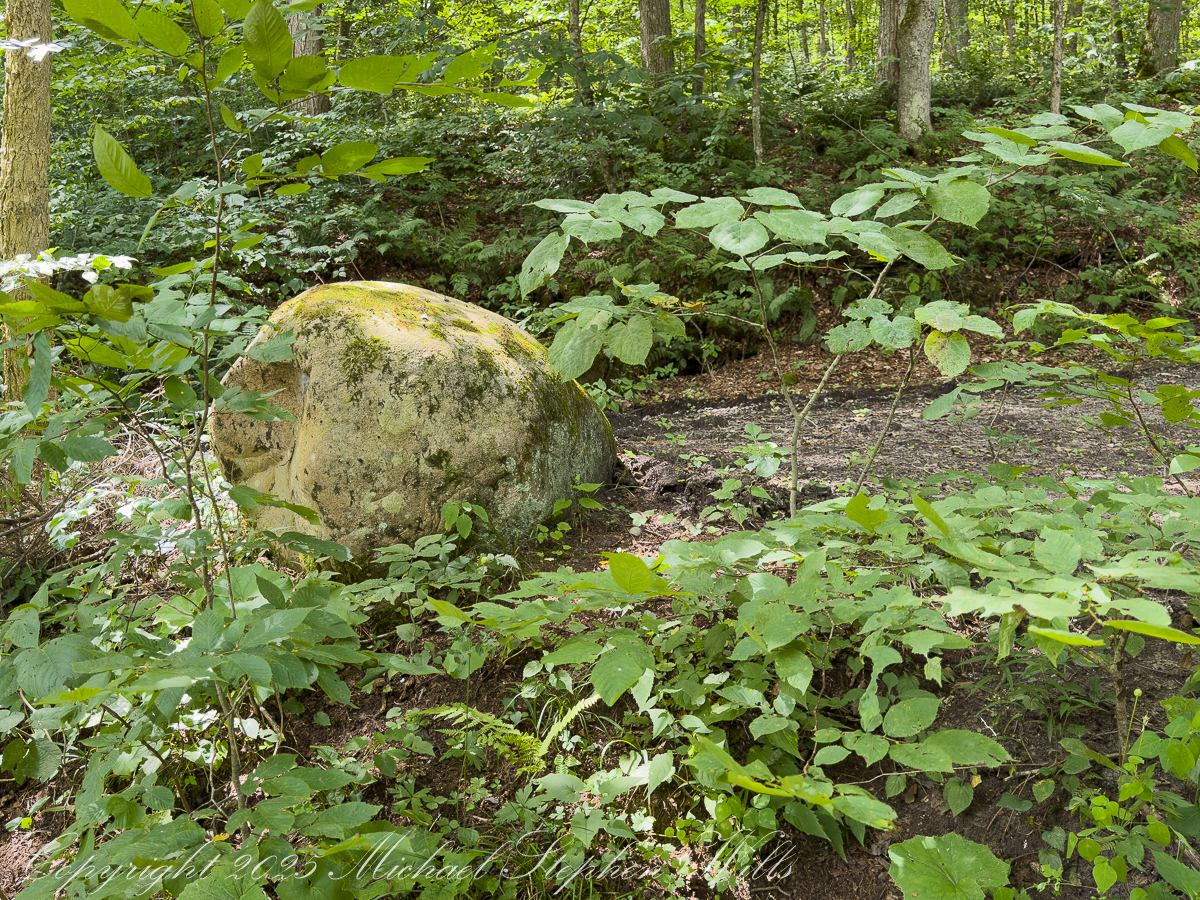
Back in the Finger Lakes, we tend to use a different grammar when confronted by an out-of-place rock. We name it, classify it, and trace its lineage northward. Erratics scattered across Tompkins County are geological sentences that begin somewhere else entirely. The bedrock beneath Ithaca—Devonian shale and sandstone—cannot account for crystalline intruders left behind like forgotten punctuation marks. These stones speak of ice sheets thick enough to erase valleys and decisive enough to transport mountains in fragments.

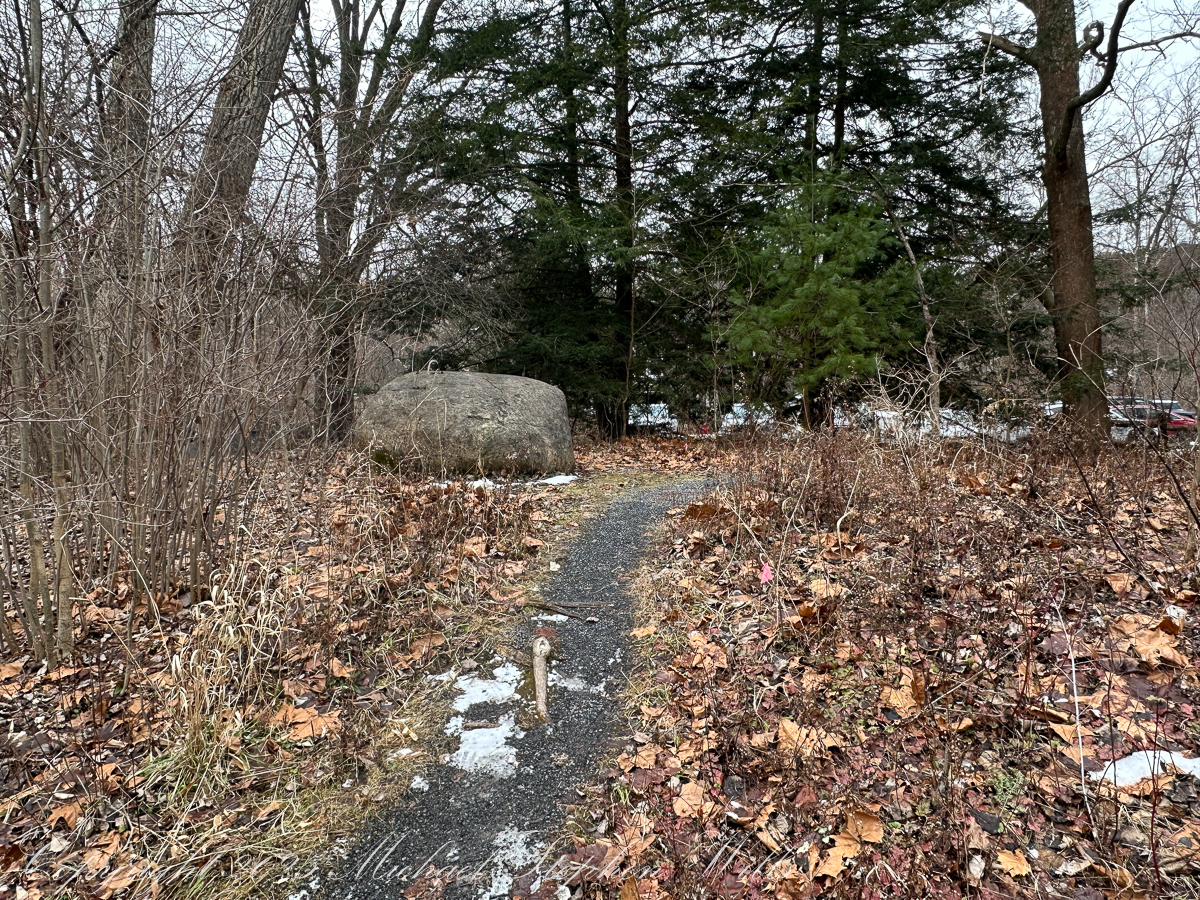
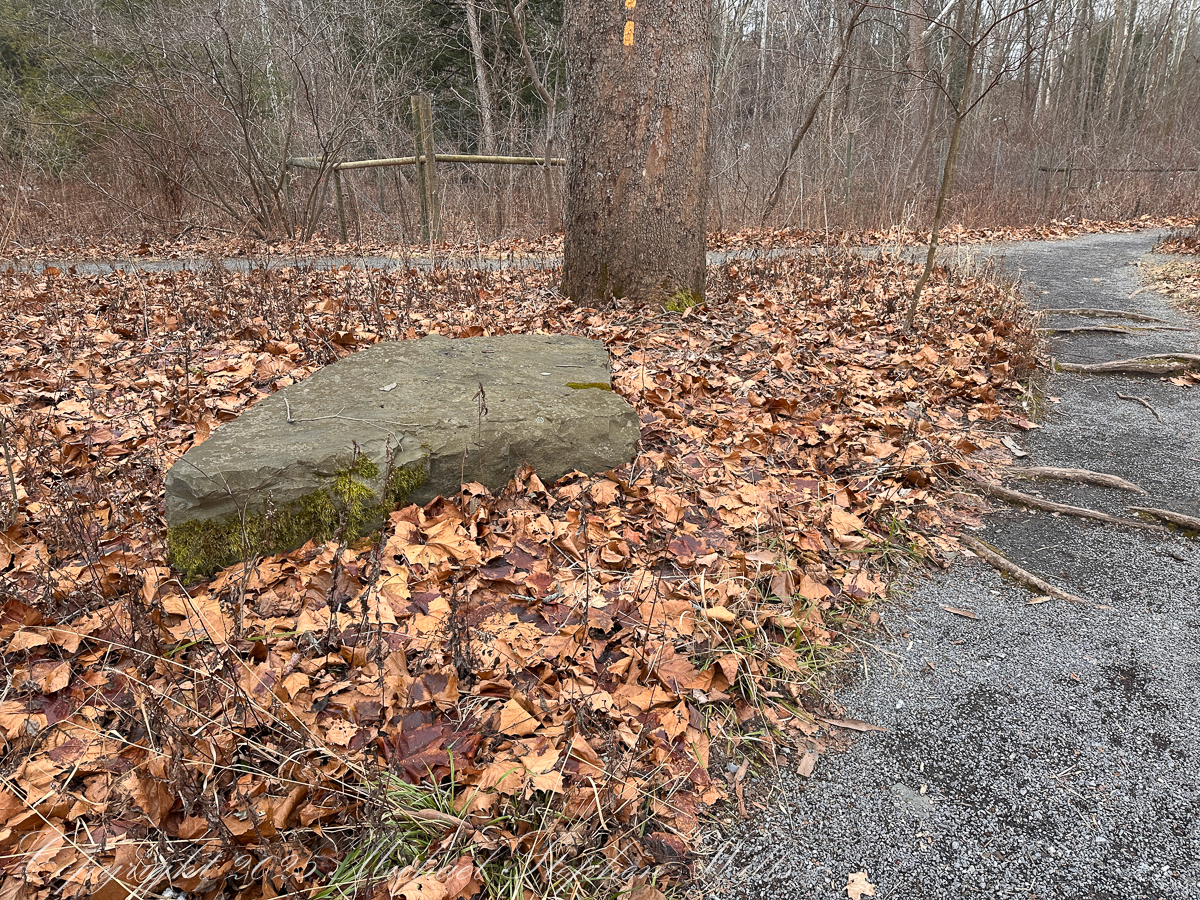
Some of those fragments have been domesticated. Cornell, for example, has never been shy about rearranging its stones. An unremarked erratic along the Allen Trail may once have been shrugged off as inconvenient rubble, while another—dragged from the Sixmile Creek valley—was carved into a seat and made eloquent. The Tarr memorial boulder, resting near McGraw Hall, transforms erratic stone into deliberate monument. It invites rest, contemplation, and perhaps gratitude for those who taught us how to read landscapes written by glaciers.

We find boulders of crystalline rock, commonly derived from Adirondack sources, left behind on the surface of ablation moraine, in the Finger Lakes Region. Cornell finds some and move them, maybe the case for this unremarked erratic found along the Allen Trail of FR Newman Arboretum. Another enormous erratic, brought in from the Sixmile Creek valley, was carved into a seat as a memorial to Professor R.S. Tarr who deciphered much of the glacial history of the Finger Lakes Region. Find it at the southwest corner of McCraw Hall on the Cornell University Campus. Reference: “The Finger Lakes Region: Its Origin and Nature,” O.D. von Engeln, Cornell University Press, 1961 page 106

Glacial Erratic, Fillmore Glen

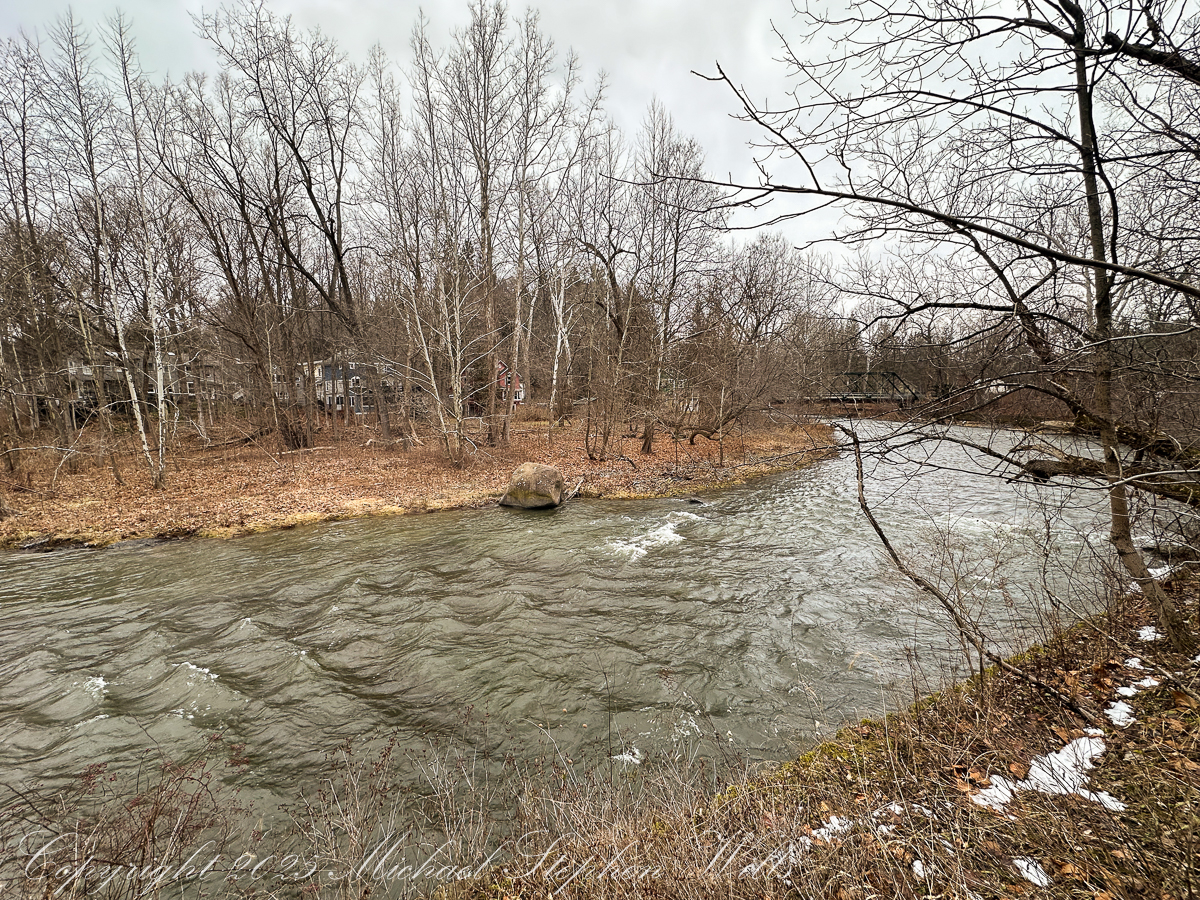
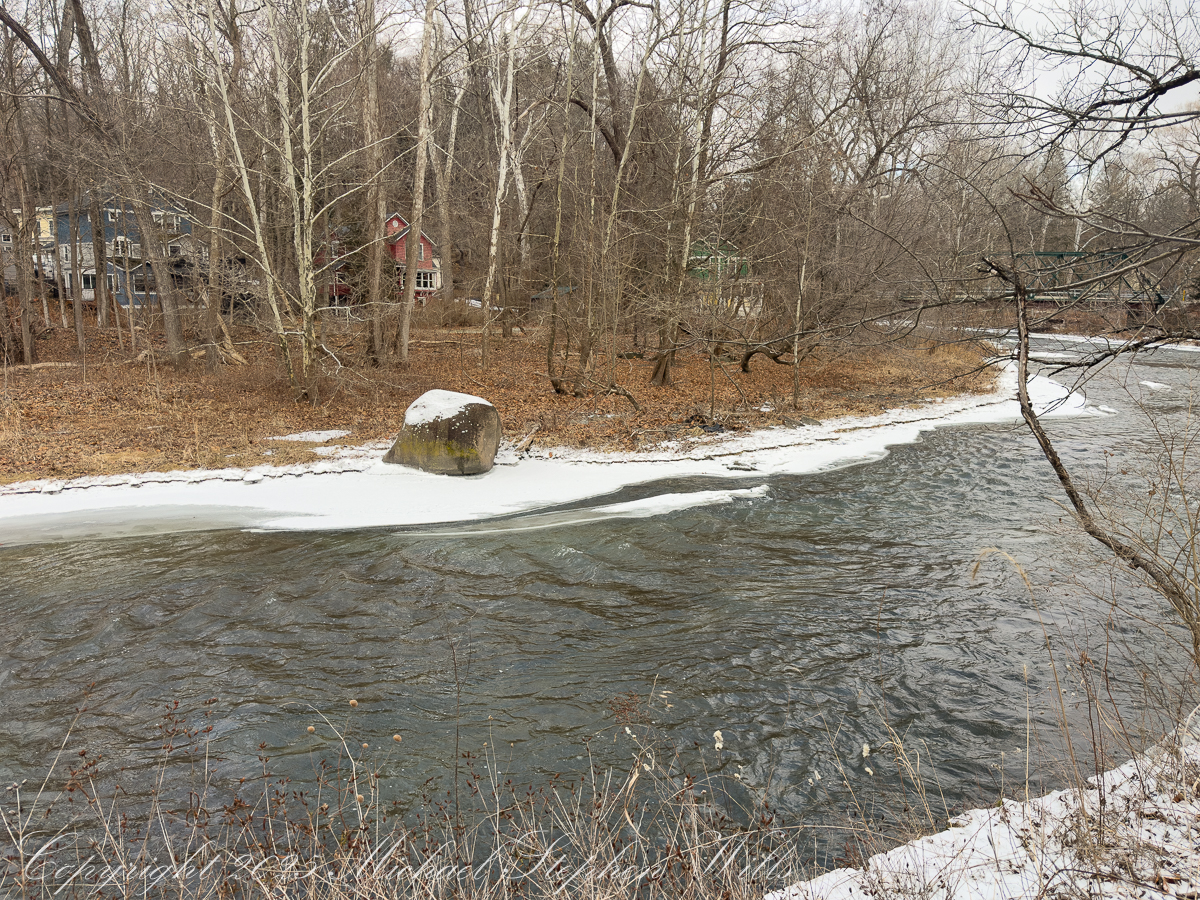
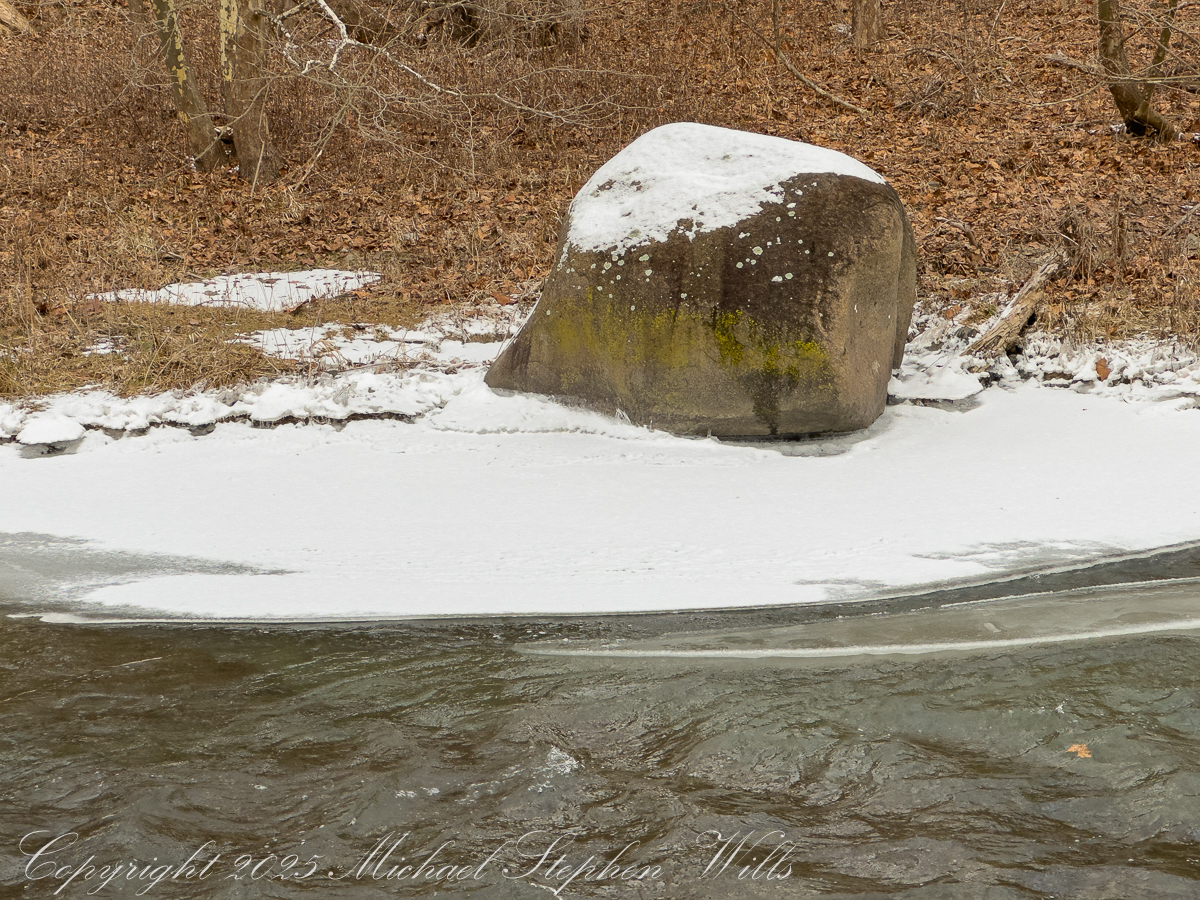
Elsewhere, erratics remain defiantly themselves. In winter, one along Fall Creek alternates between anonymity and revelation, depending on whether snow smooths its surface or retreats to expose lichen constellations. Bridges pass overhead, traffic flows, semesters turn over, yet the rock remains unimpressed. It has already endured pressure sufficient to rearrange its crystals; a passing academic calendar is not likely to trouble it.

This boulder, a glacial erratic, was found near Fall Creek and the Cornell Botanic Gardens Horticulture Building. Cornell University, Ithaca, Tompkins County, New York State

This rock, a glacial erratic, was found near Fall Creek and the Cornell Botanic Gardens Horticulture Building. Cornell University, Ithaca, Tompkins County, New York State

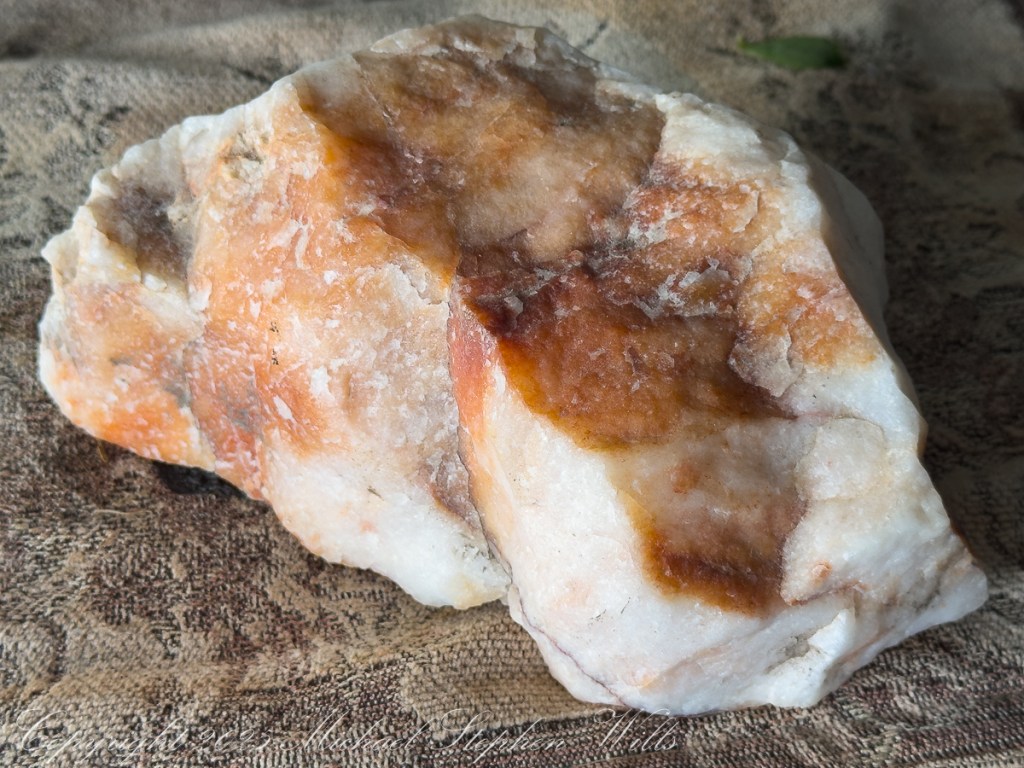
Then there are the stones that confront us most directly—those we stumble upon in fields, pulled from soil by plow or frost, demanding explanation. A white, iron-stained marble boulder in a Tompkins County field is not subtle about its foreignness. It does not belong to the local vocabulary of shale and sandstone. Its pale surface, crystalline texture, and mineral scars point insistently north, toward the Grenville terrane of the Adirondack Lowlands. The Balmat–Edwards–Gouverneur marble belt offers the most persuasive origin story: metamorphosed carbonate rock carried south by Laurentide ice, released when climate and physics finally lost patience with one another.

I found this white marble erratic in a Tompkins County field. The highest-probability source is Grenville marble from the NW Adirondack Lowlands / St. Lawrence County (Gouverneur/Balmat–Edwards marble belt), delivered by southward-flowing Laurentide ice. I say the most probable source is metamorphosed carbonate (marble) from the Grenville terrane to the north—especially the northwest Adirondack Lowlands / St. Lawrence County marble belt (the “Gouverneur Marble” and related Grenville marbles), transported south by the last Laurentide ice sheet. Why that’s the best bet: Ice-flow geometry favors a northern source. In the Finger Lakes, glacial ice advanced with a flow direction that was very close to due south, guided by the north–south bedrock valleys. Tompkins County erratics are “exotic” imports. Local bedrock around Ithaca/Tompkins is Devonian shale/sandstone, but the region contains many nonlocal (“exotic”) glacial erratics carried in from much farther north (including southern Canada and beyond). Marble isn’t local to the Ithaca area, but it is abundant in the NW Adirondack Lowlands. The Balmat–Edwards/Gouverneur area in St. Lawrence County is a classic Grenville Lowlands district with marble belts (the same province that yields cream/white building marble around Gouverneur).

What makes this particular erratic compelling is not just its provenance, but the improbability of its journey. Ice moved with purpose here, flowing south along bedrock valleys like Fall Creek and Cayuga troughs, turning the Finger Lakes region into a conveyor belt for distant geology. When the ice melted, it left behind evidence that refuses to blend in. Erratics are geological truth-tellers. They announce that this place was once unrecognizable, that what seems permanent is merely provisional.

Perhaps that is why folklore clings so naturally to stone. Whether leprechauns or Laurentide ice are credited, erratics insist on a larger frame of reference. They ask us to imagine landscapes in motion and beliefs under revision. A boulder can be a seat, a marker, a perch, or a puzzle—but never merely background. It waits, quietly confident, for us to catch up to its story.

Enter your email to receive notification of future postings. I will not sell or share your email address.

On The Edge of Time Above Taughannock Gorge

Perched above Taughannock Gorge, a moss-covered ledge and cascading falls reveal ancient stories—where Devonian seas once flowed and time’s layers whisper through stone and water.

The morning sun had only just breached the rim of the gorge, sending long slants of golden light across the forest floor. Walking the South Rim Trail of Taughannock Falls State Park, I came upon a quiet, unassuming spot—just a few paces off the path—where the forest seemed to pause in reverence. What greeted me was a small marvel of persistence and time.

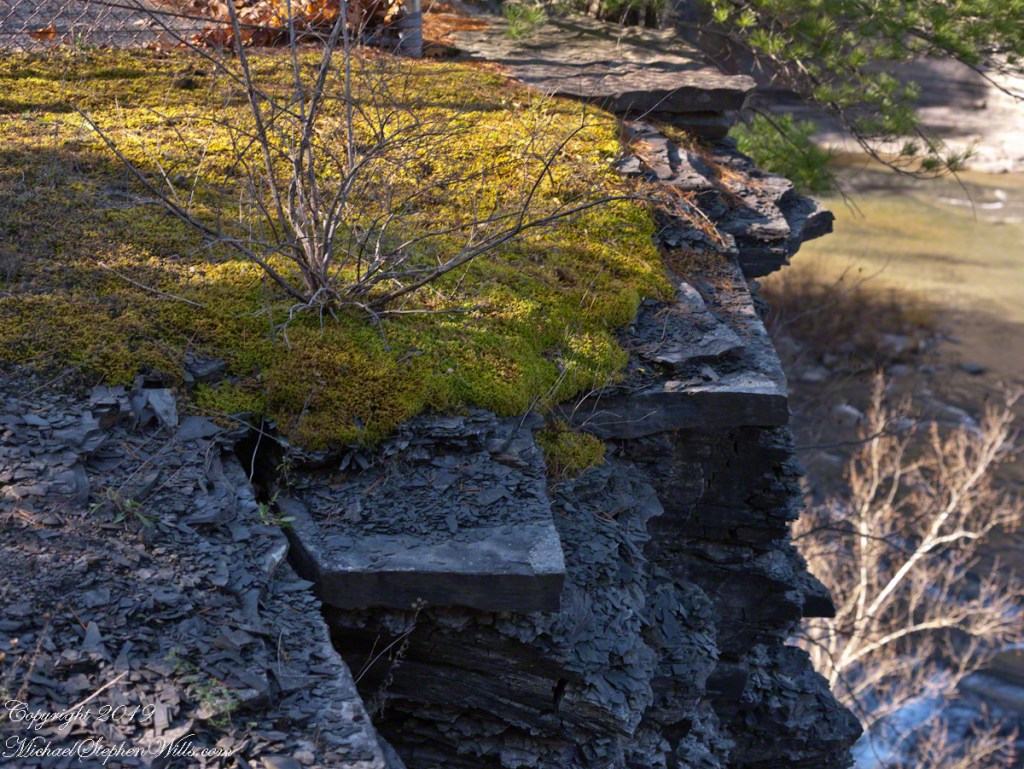
There, rooted precariously atop a slab of brittle shale, was a tenacious shrub rising from a bed of moss, its spindly frame etched in sharp contrast to the soft, green sprawl beneath it. The moss had taken hold on a shelf of rock cantilevered over the gorge like a green tongue of earth defying gravity. Cracks traced the shale’s surface like veins, silent records of the forces that shaped this place—heat, ice, pressure, time. Together, the moss and the bush formed an improbable community, surviving against odds, bound together by the thin soil cradled in stone.

This ledge, suspended over the abyss, seemed less a part of the earth than a question it asked—how much life can cling to the edge before the edge itself gives way?

Beneath this living fragment, the gorge dropped away. Layers upon layers of shale revealed themselves, stacked like a collapsed library of time. Here, the Devonian Period lies exposed to wind and rain, and to those willing to pause and wonder. Each stratum holds the fossil whisper of ancient seas, where trilobites scuttled and coral reefs once stood. This gorge was not carved quickly. It was not born of a moment, but of many—countless raindrops, millennia of ice melt, the slow, sure work of water over stone.

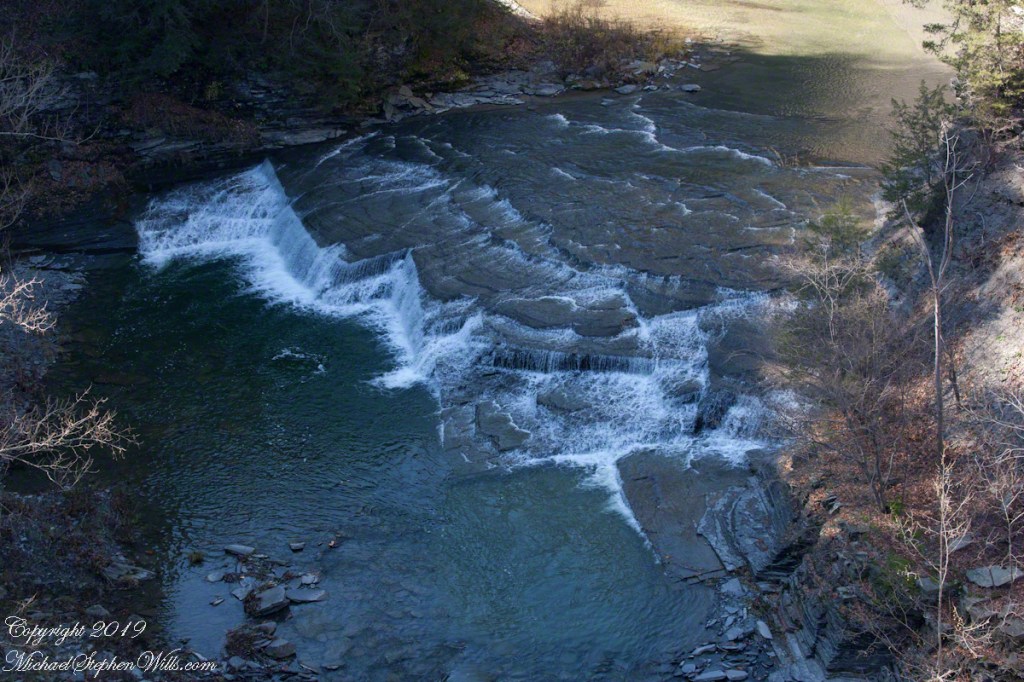
From this natural balcony, I looked out and down to the gorge floor where the creek shaped the land with an artist’s patient hand. The falls, seen from above, no longer thundered—they danced. Spread like the folds of a fan, water curled over smooth stone in steps of white silk. From here, the cascade looked deliberate, choreographed—an elemental performance halfway between gravity and grace.

How many times had this water flowed, reshaped, receded? How often had it carved these grooves, smoothed those ridges, erased the footprints of what came before? Looking at the exposed rock, one could trace the signature of ancient glaciers, feel the memory of long-gone floods. It was humbling—this intersection of change and continuity.

Above it all, the trees stood still. Pine and oak, rooted well back from the edge, offered a kind of sentinel presence. Their shadows stretched long and angled, tracing the contours of both earth and memory. For a moment, I let go of all thought and simply listened—to the murmur of wind through leaves, the faint rush of water far below, and the silence that presses in when the land itself seems to be remembering.

This spot—so easily missed by a hurried hiker—offered a parable of resilience and impermanence. The moss did not grow with certainty, nor the shrub reach with confidence. They survived on the edge because they adapted. They made do with less. They took root where others could not. There was no security in that place, only presence. Only the now.

And isn’t that a lesson worth carrying?

We so often seek stability, firm ground, a clear path. Yet, some of the most beautiful things live just beyond comfort—on ledges, in cracks, in the margins of the known. To pause here was to acknowledge that life thrives not only in sheltered valleys but also at the edge of what seems possible.

As I stepped back onto the trail and continued along the South Rim, the image of that mossy outcrop stayed with me. I carried it in my thoughts like a talisman—proof that even on the brink, life finds a way. And that from above, the most chaotic falls can appear as ordered motion, as a flow toward something larger.

Later, when the sun climbed higher and the light lost its slant, I would look back on this moment not as a spectacular highlight but as something more intimate: a quiet encounter with nature’s subtle artistry, its layered truths, and its enduring invitation to look closely, feel deeply, and walk softly.

For here, above the gorge, at the edge of earth and time, even a whisper leaves a mark.

Enter your email to receive notification of future postings. I will not sell or share your email address.