Where Winter Yields: Skunk Cabbage, Pitcher Plants, and Milky Ice at Malloryville Preserve

A late winter walk through Malloryville Preserve reveals milky ice, emerging skunk cabbage, and hidden wetland life—seen through the curious eyes of grandchildren.

The morning began in that quiet register peculiar to late winter in the Finger Lakes—when the calendar insists on spring, yet the land, still half-claimed by frost, speaks in a more cautious dialect. At the O.D. von Engeln Preserve at Malloryville, the woods held both seasons in tension. Snow lingered in shaded hollows, while the exposed ground, damp and rust-colored, breathed with thaw.

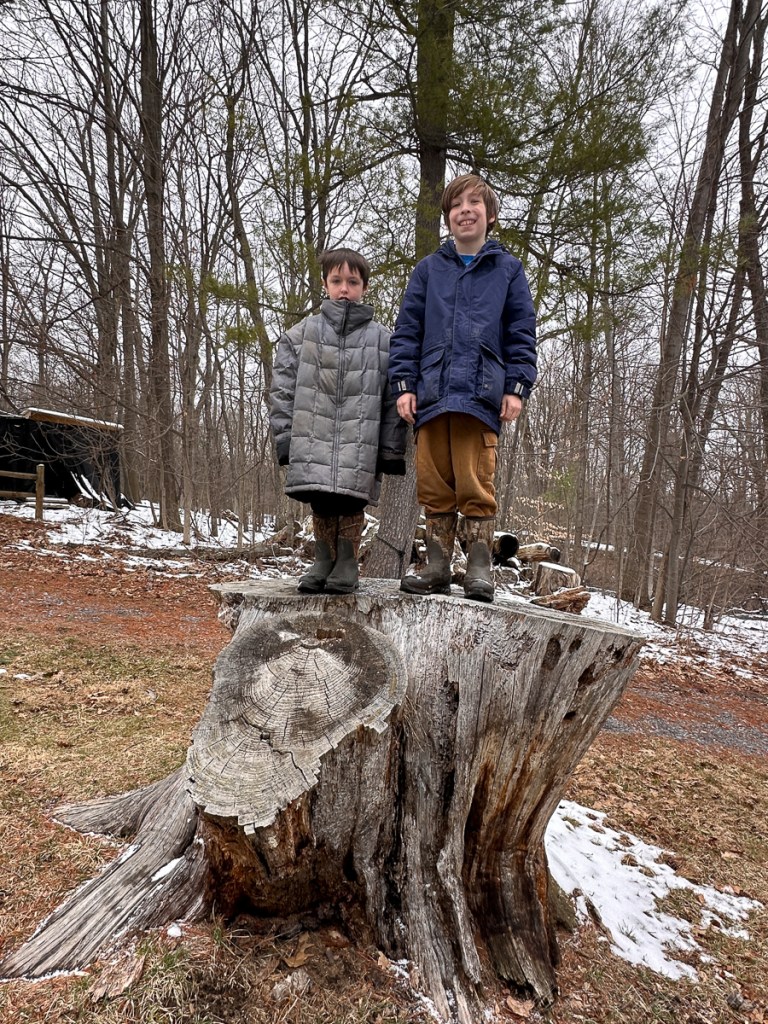
Sam and Rory—boots muddied almost immediately—climbed atop a great, weathered stump, its cut face fanned with the geometry of years. There is something about a stump that invites children upward, as though it were not a remnant but a stage. From their perch they surveyed a kingdom of bare trunks and quiet trails, their laughter momentarily lifting the stillness. Behind them, the forest rose in gray-brown columns, and beneath them, the history of a tree—rings like a clock no one can wind backward.
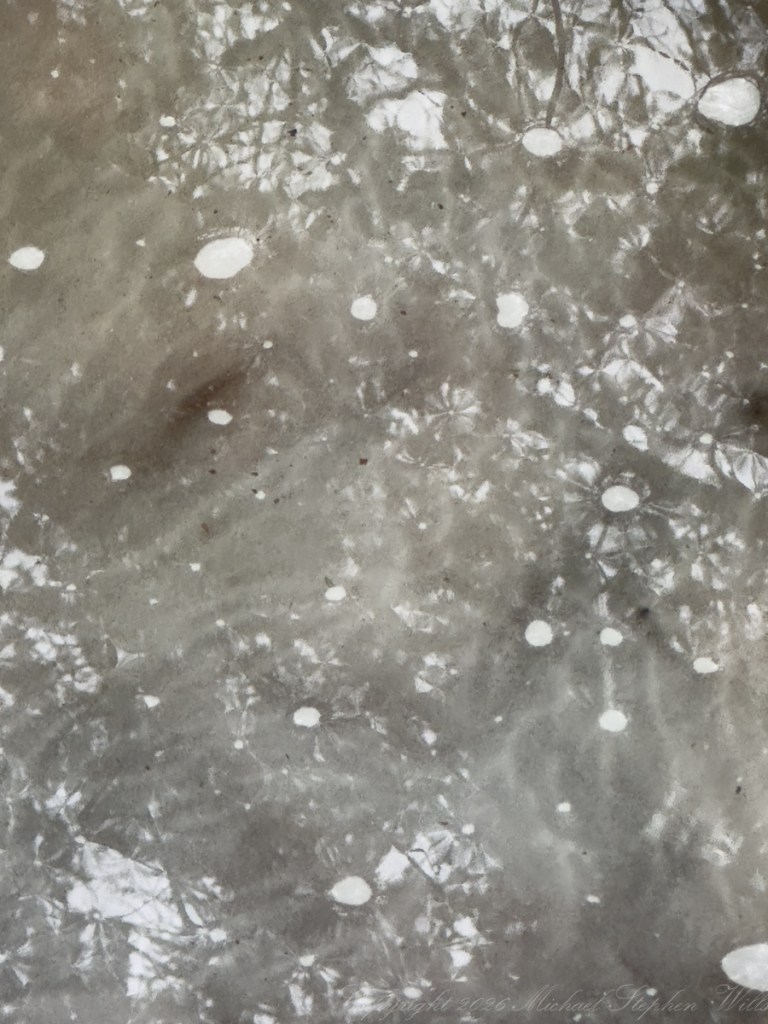
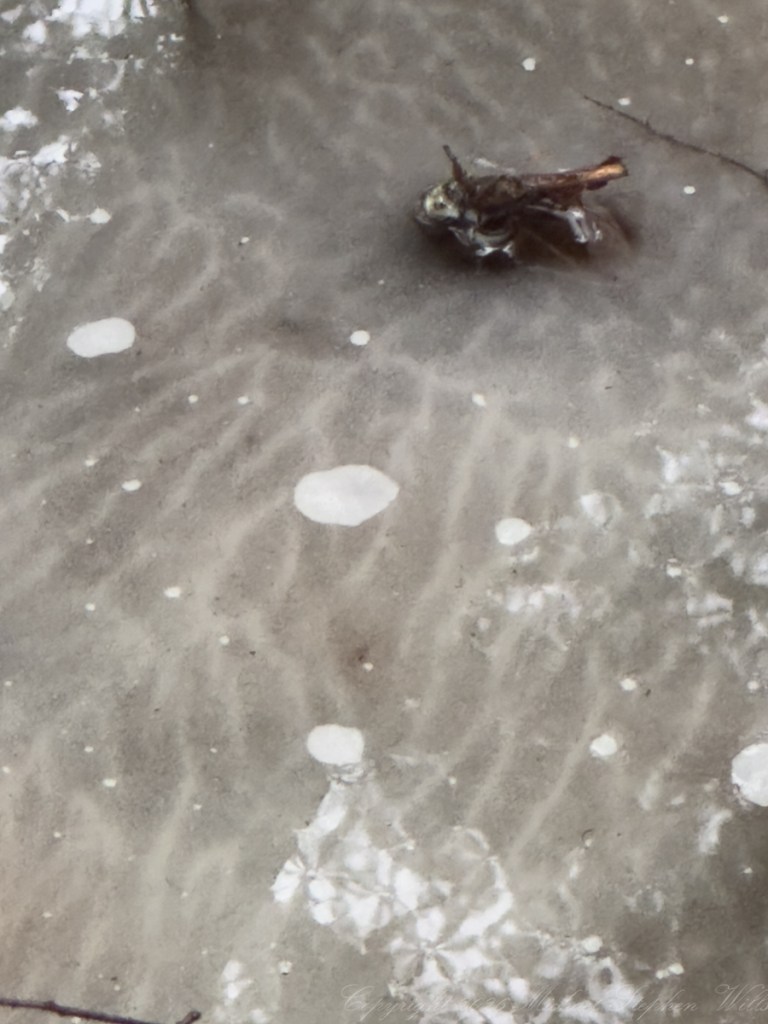
We moved downslope toward the seepage-fed lowlands that give this preserve its particular character. Here, the ground softens, water gathers, and winter lingers longer in pockets of ice that seem reluctant to relinquish their hold. The ice itself told a story—not clear and crystalline, but cloudy, milky, almost opalescent. This opacity is the signature of trapped air, minute bubbles frozen in suspension as water repeatedly melts and refreezes. Each cycle interrupts the orderly lattice of ice, scattering light and transforming transparency into a pale, diffused glow. It is ice that remembers its instability.
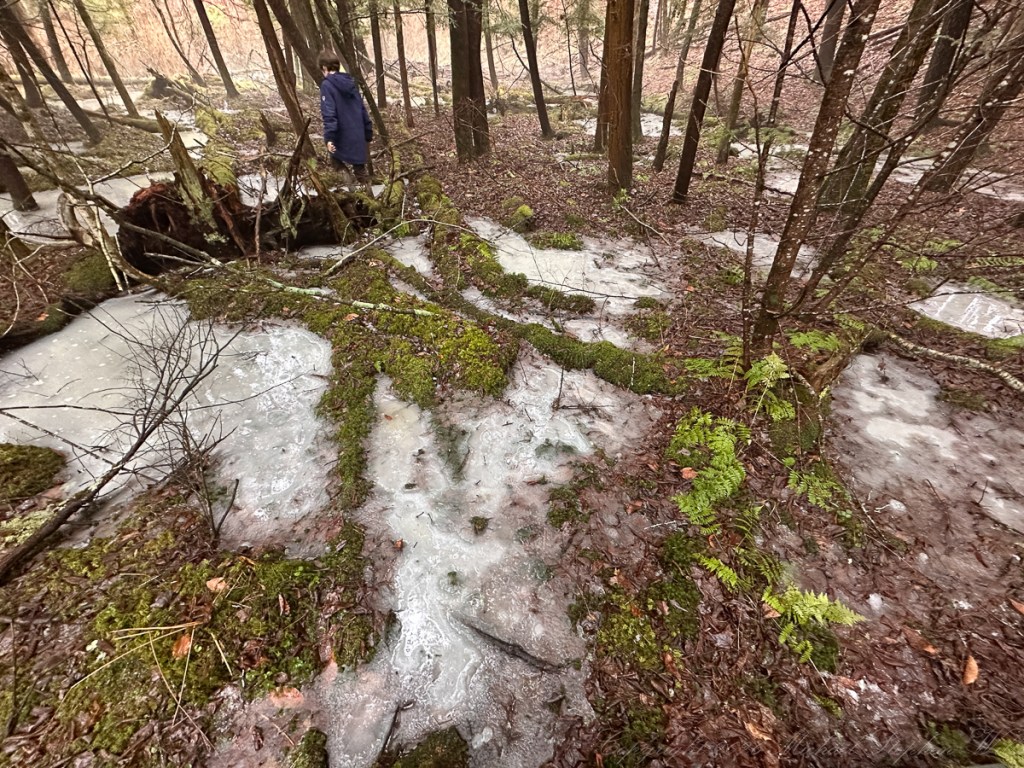
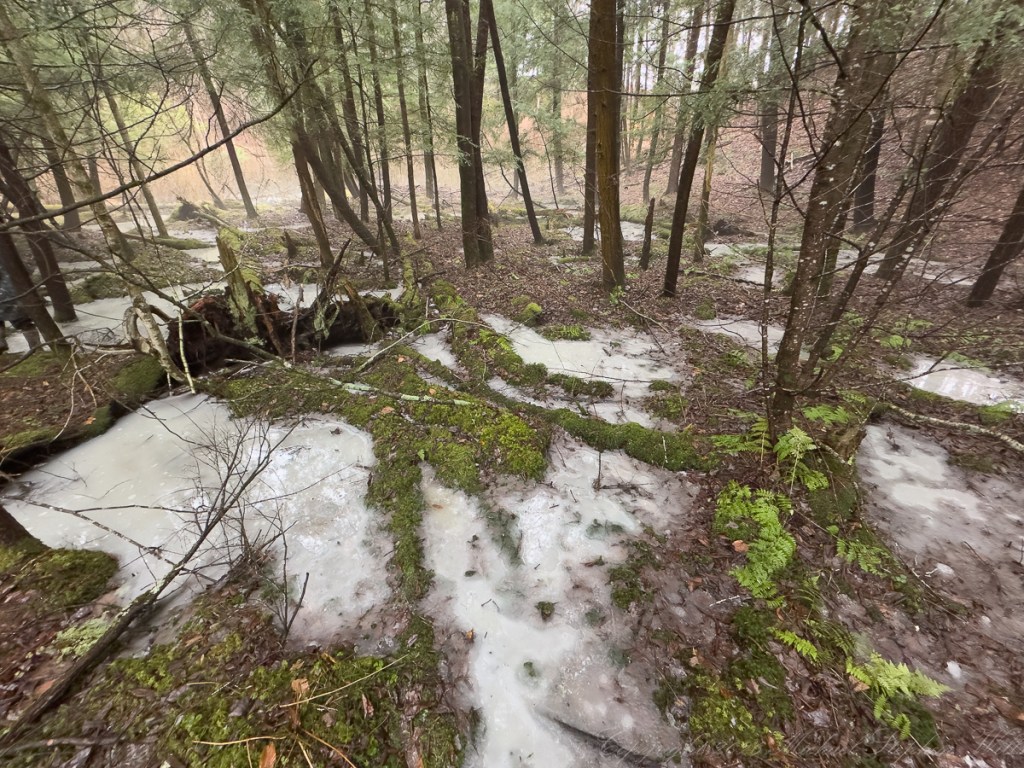
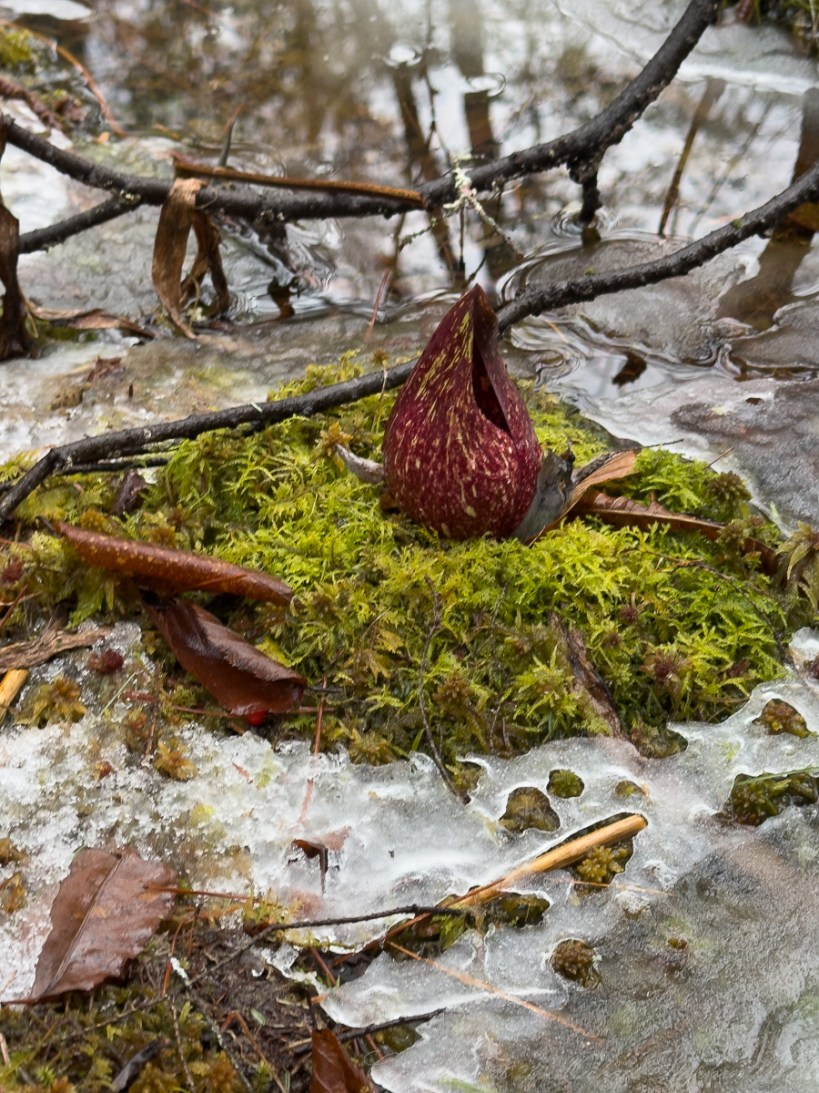
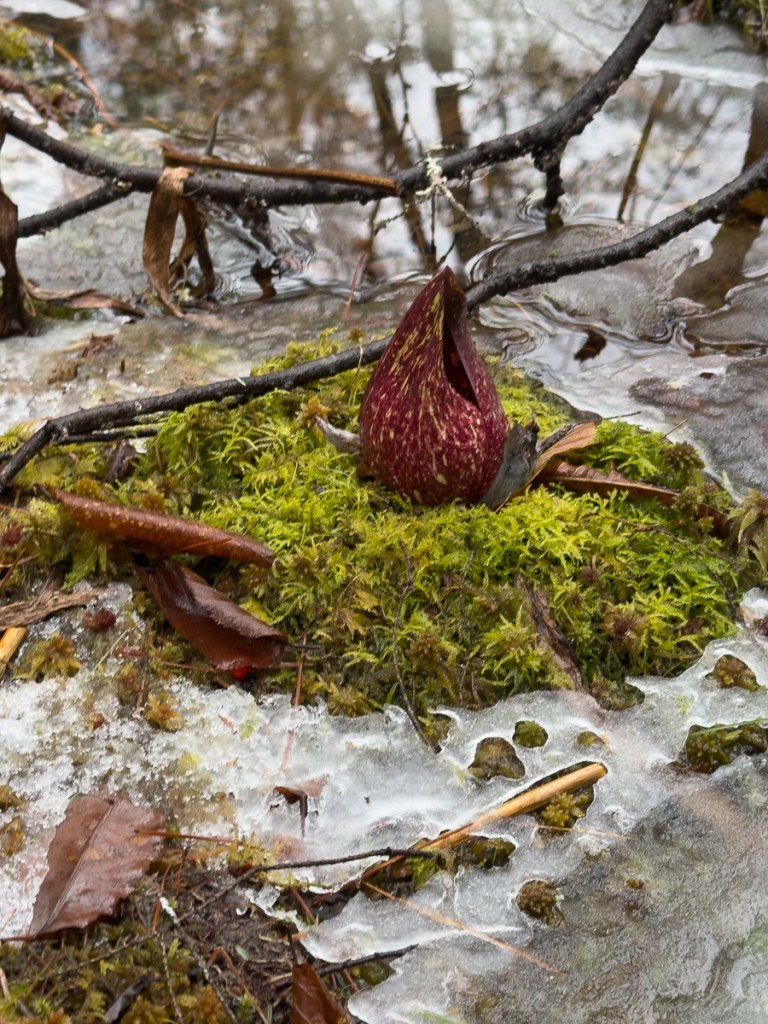
Threading through this ice were narrow rivulets of meltwater, tracing paths around moss-covered hummocks. These islands—bright green even in winter—rose like miniature continents in a frozen sea. On one such hummock, we found this skunk cabbage. Its mottled spathe, deep maroon flecked with yellow, pushed upward through the cold, its form both alien and ancient. I pointed out to the boys that this plant generates its own heat—a metabolic furnace capable of melting the surrounding snow. It is one of the earliest heralds of spring, though it announces itself not with color alone, but with scent—a pungency that walked with us that day.
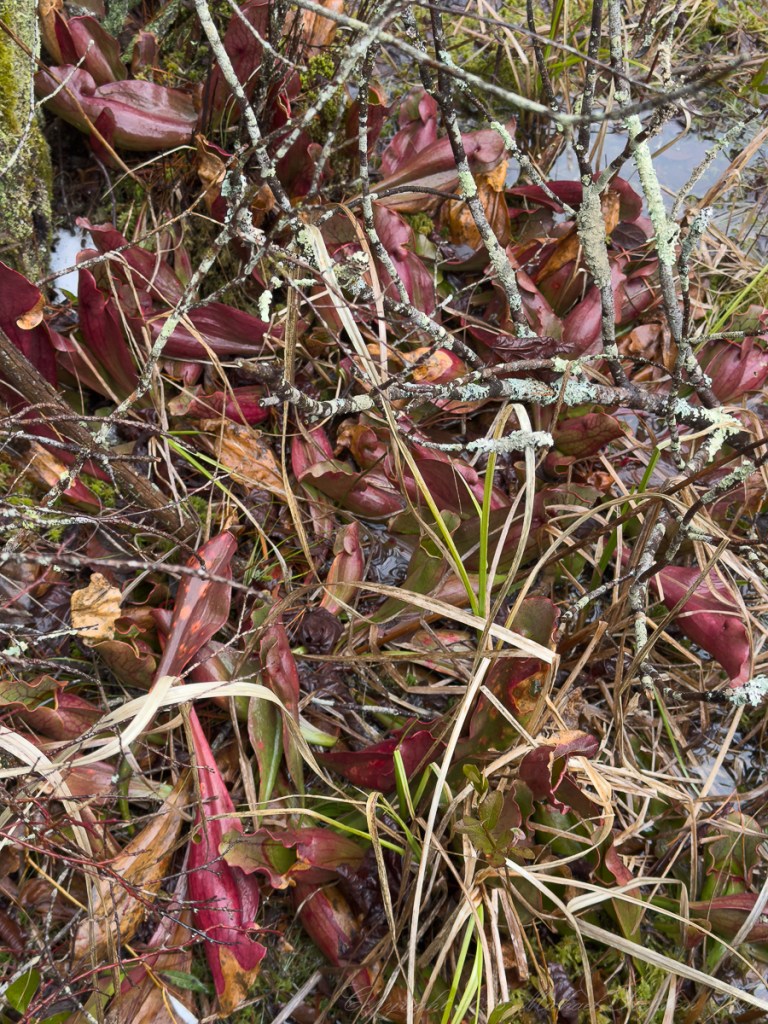
Nearby, nestled in the sphagnum, were the pitcher plants—Sarracenia purpurea—their tubular leaves tinged with winter’s reds and greens. Even in dormancy, they held their form, each pitcher a small reservoir. I explained how these plants supplement the nutrient-poor conditions of the bog by capturing insects, their modified leaves forming a subtle trap. The boys leaned in, curious, perhaps imagining the unseen dramas that would unfold here in warmer months.
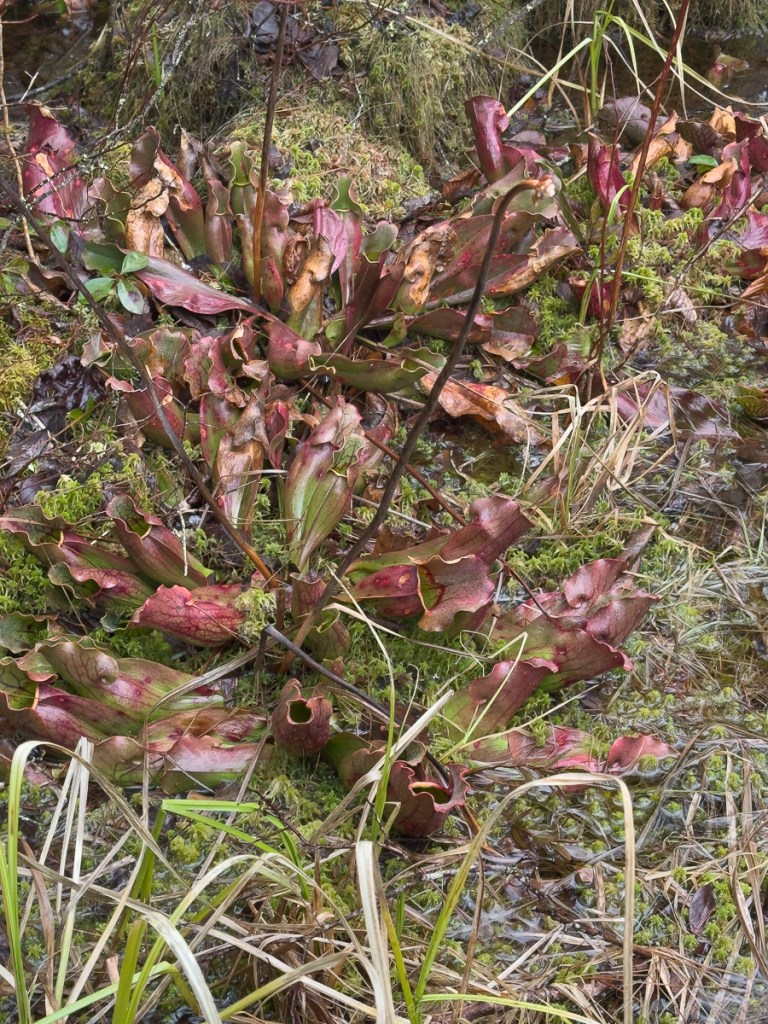
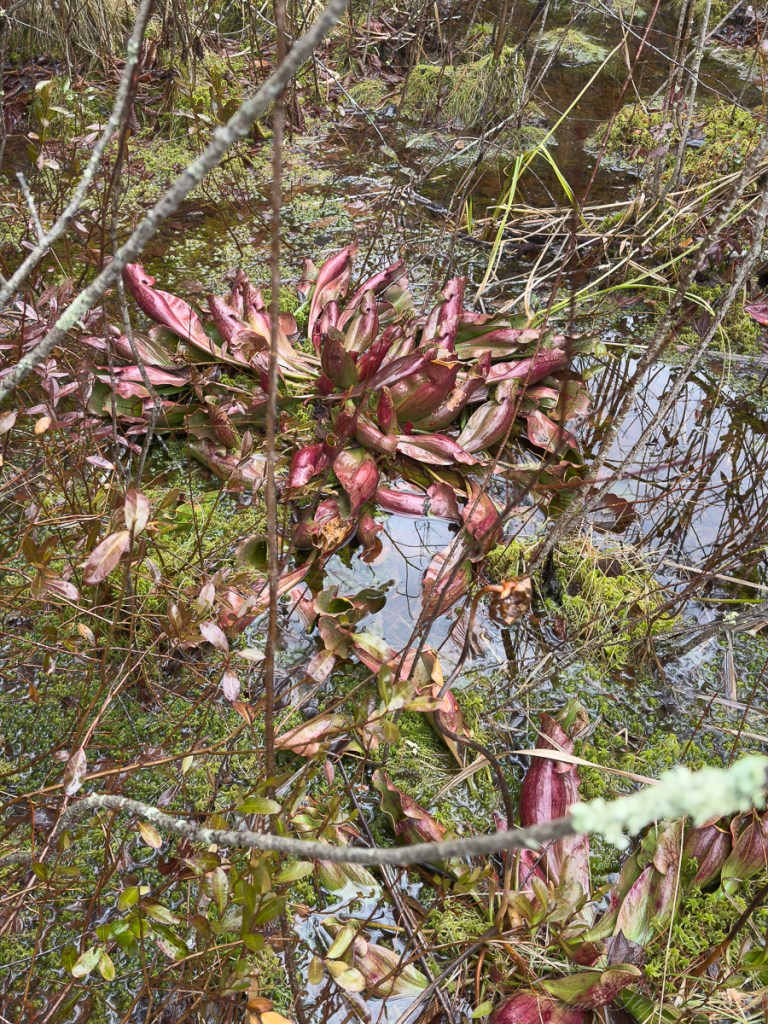
The wetland was a place of plants and textures. The ice thinned near the edges, revealing water beneath that reflected the vertical lines of trees above. Droplets fell intermittently from branches, punctuating the quiet with soft, irregular taps. It was a landscape in transition, each element negotiating its passage from one state to another.

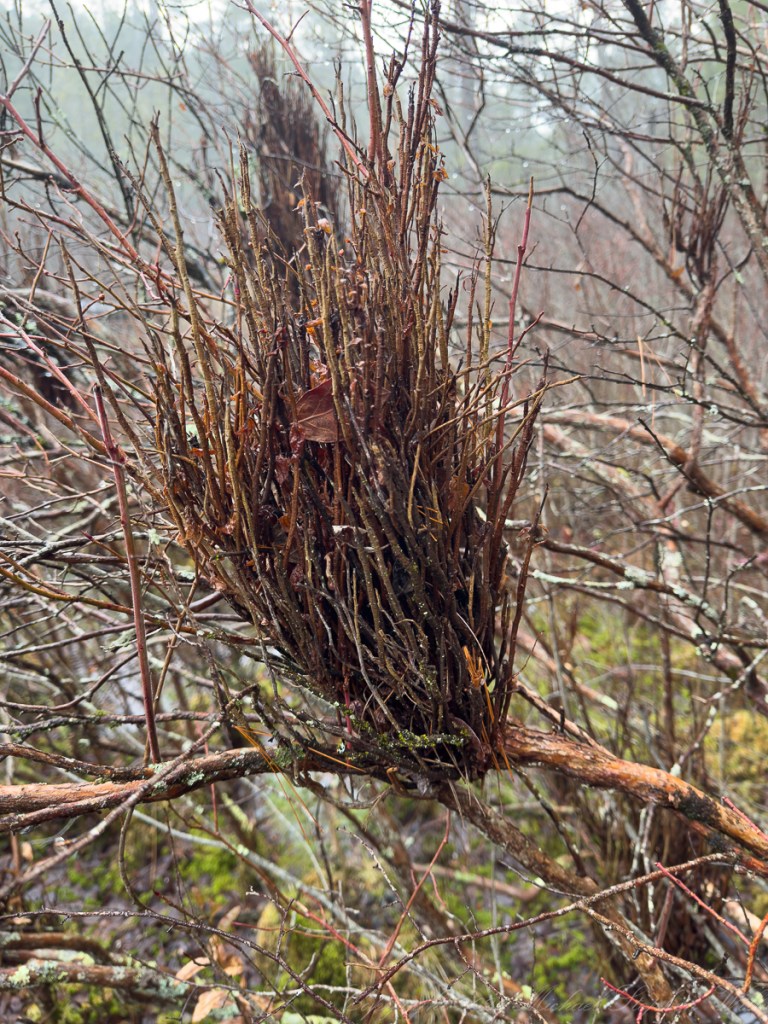
Along a tangle of shrubs, I noticed an unusual growth—a dense, broom-like cluster of twigs protruding from what appeared to be a highbush blueberry. This “witches’ broom” is often the result of fungal infection or other physiological stress, causing the plant to produce a profusion of shoots from a single point. To a child’s eye, it might seem like a bird’s nest or some deliberate construction, but it is, in fact, the plant’s own altered architecture—a distortion that nonetheless becomes part of the ecosystem, offering shelter to small creatures.
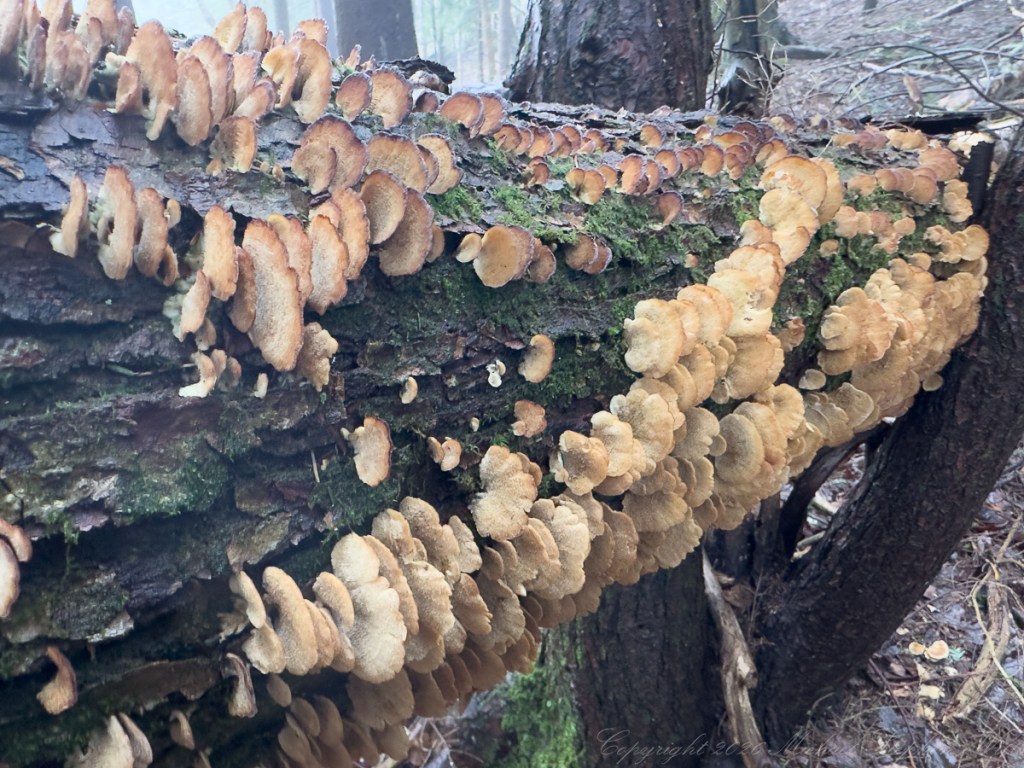
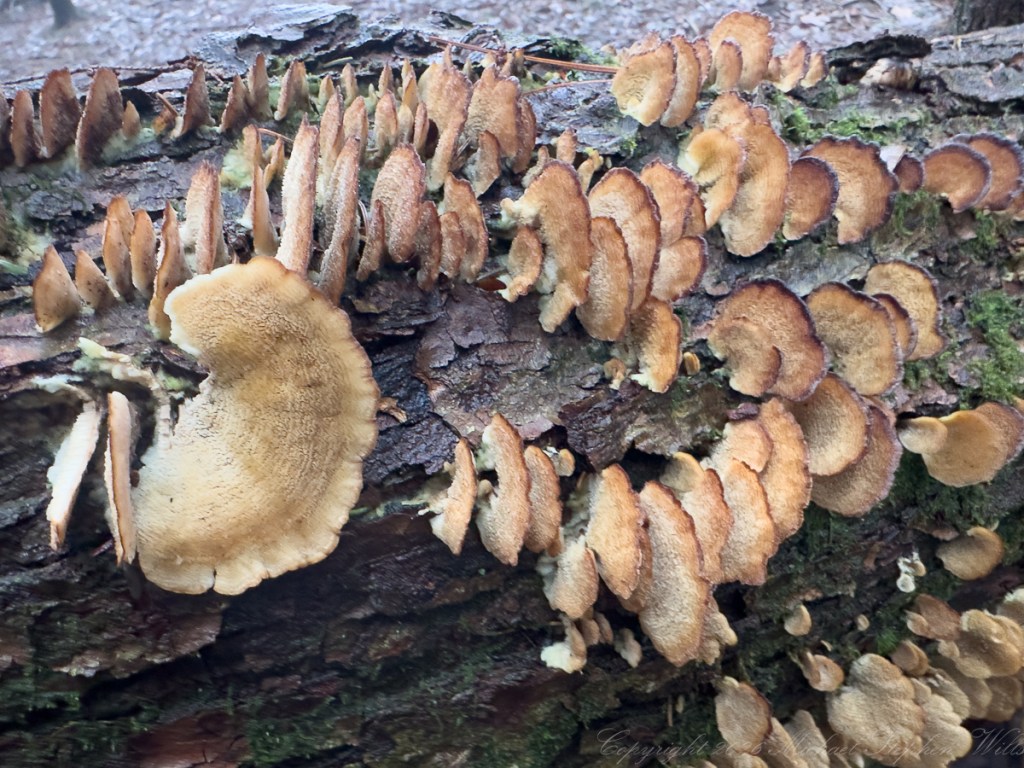
Further along, a fallen log bore the layered forms of shelf fungi, each bracket extending outward like a series of pages half-opened. Their colors—muted tans and browns—blended with the wood, yet their structure was unmistakable. These polypores are the quiet recyclers of the forest, breaking down lignin and cellulose, returning the substance of the tree to the soil. I ran my fingers lightly along their surface, feeling the fine texture, while the boys, less cautious, tapped them as though testing their solidity.
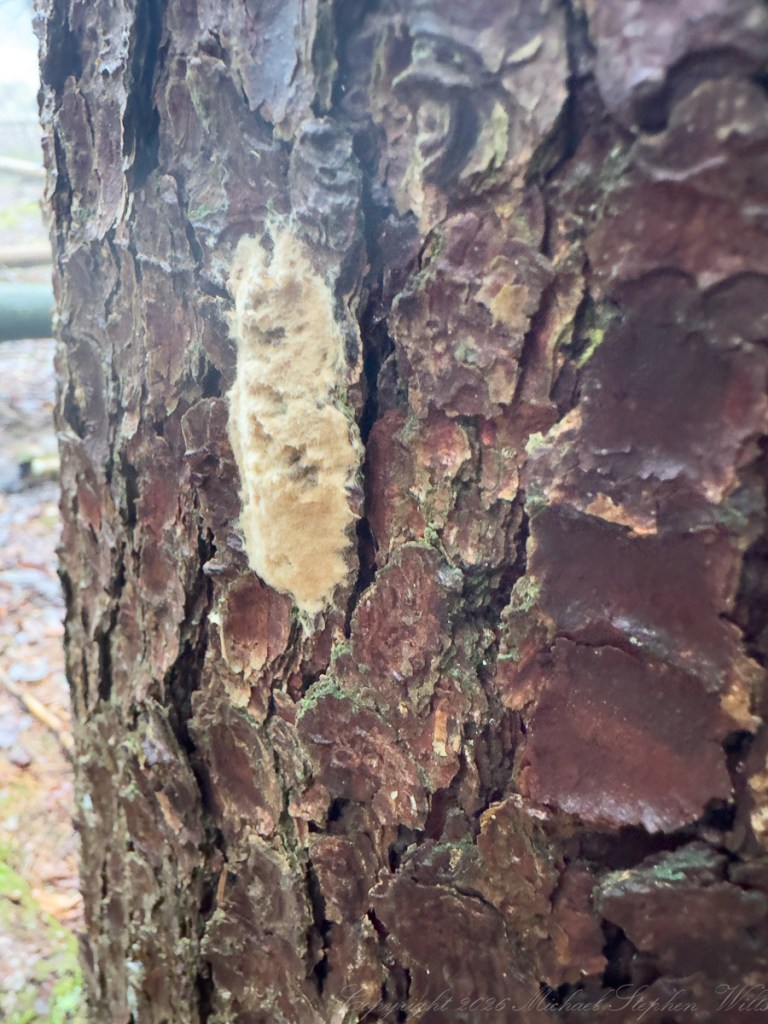
On the bark of a nearby tree, we encountered a patch of what looked like pale, fuzzy insulation—the egg mass of the spongy moth. I explained that each of these masses could contain hundreds of eggs, waiting for the warmth of spring to hatch. It was a reminder that even in this subdued season, the next wave of life was already prepared, concealed in plain sight.
As we made our way back, the boys’ boots squelched in the soft ground, their earlier perch on the stump now a distant memory. Yet the morning had offered them—and me—something more enduring than a climb. It had revealed a landscape in flux, where ice is not merely frozen water but a record of change, where plants defy cold through chemistry, and where even decay participates in renewal.

Late winter, in a place like Malloryville, is not an absence of life but a study in persistence. It asks for attention, for patience, and for a willingness to see beauty in transition. Walking with Sam and Rory, I was reminded that discovery does not wait for spring. It is already here, written in ice, moss, and the quiet industry of the forest.
Enter your email to receive notification of future postings. I will not sell or share your email address.

Glacial Kettle Bog Wonders: Photographing Pitcher Plants at the O.D. Engeln Preserve in Freeville

Step onto Freeville’s O.D. Engeln Preserve boardwalk and meet purple pitcher plants in a glacial kettle bog—carnivorous beauty, hidden blooms, and macro-photo magic.

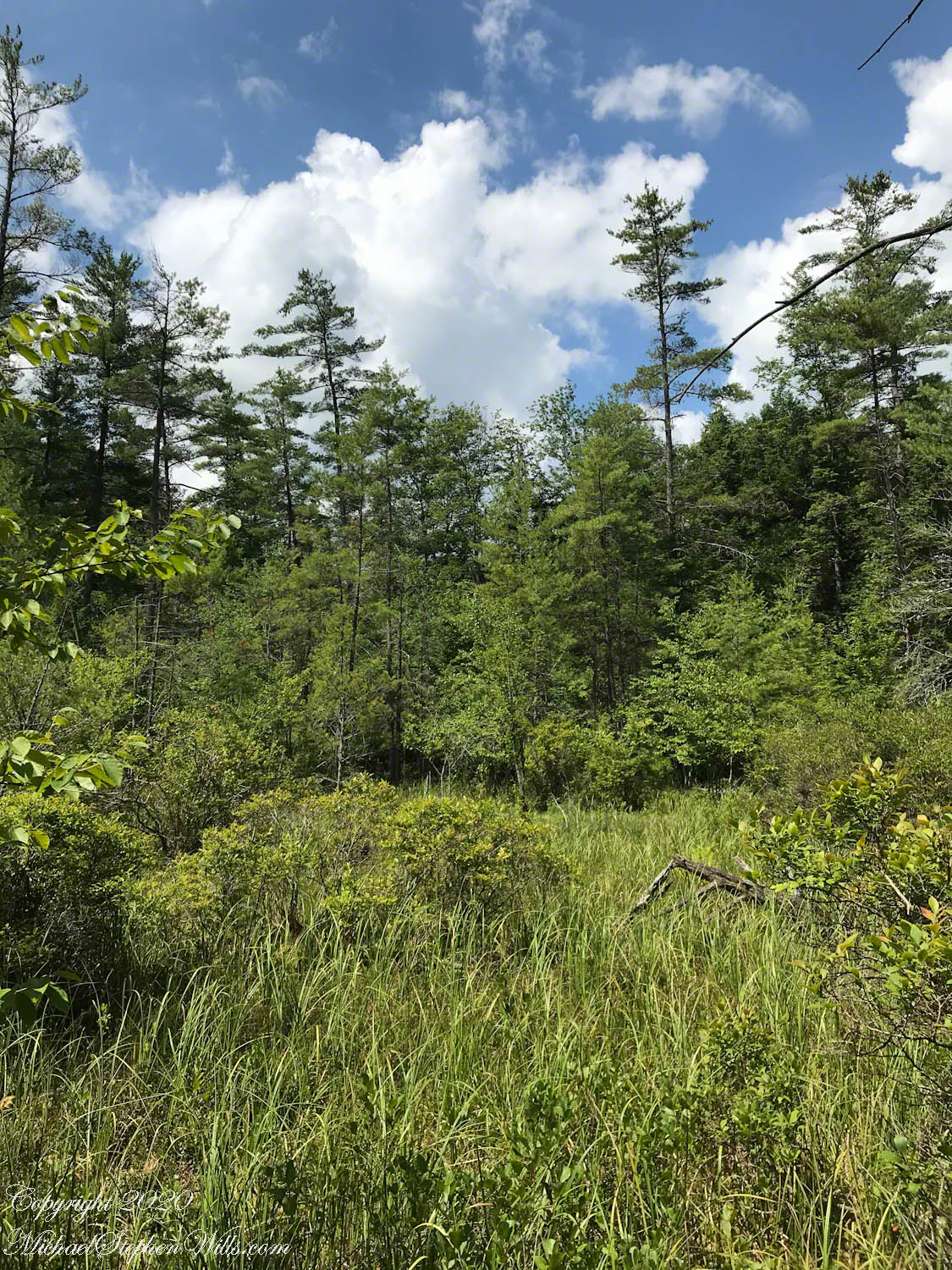
Seen from 1000 feet above in Google Earth, the O.D. (Von) Engeln Preserve at Malloryville Road lays itself out in two glacial “kettles,” pond and bog; a simple diagram drawn by ice and time, then complicated by everything that has happened since. In my photograph, taken from the bog observation platform on a July morning, the sky is rinsed blue, clouds billow, conifers stitch along the rim around open space. Step closer, or lower your lens, and the openness resolves into a crowded, intimate architecture of sedges and moss, twigs and standing water, sunlight and shadow.

I came here for a plant that does not announce itself the way wildflowers often do. The purple pitcher plant, Sarracenia purpurea, is a quiet scandal: a green vessel in a place where green should be satisfied simply to survive. I arrived equipped for attentiveness—an iPhone for the broad scene, and a Canon DSLR with the F2.8 100 mm macro lens for the stars of this bog. The macro lens is an instrument of humility. It forces you to admit that the important drama is often no bigger than your palm.

In earlier years, the pitchers could be found right where a visitor naturally looks—within the central cut-out of the observation deck, close enough to lean over and study. But the bog is not a museum display; it is a living negotiation. This season, highbush blueberries pressing in from the margin had crowded the pitchers out, pushing the flowering plants into the grasses eight to ten feet away. The shift is small in human terms, the kind of distance you cross without thinking. In bog terms, it is displacement—an erasure of a familiar scene, a reminder that rarity is not only about numbers but also about space.

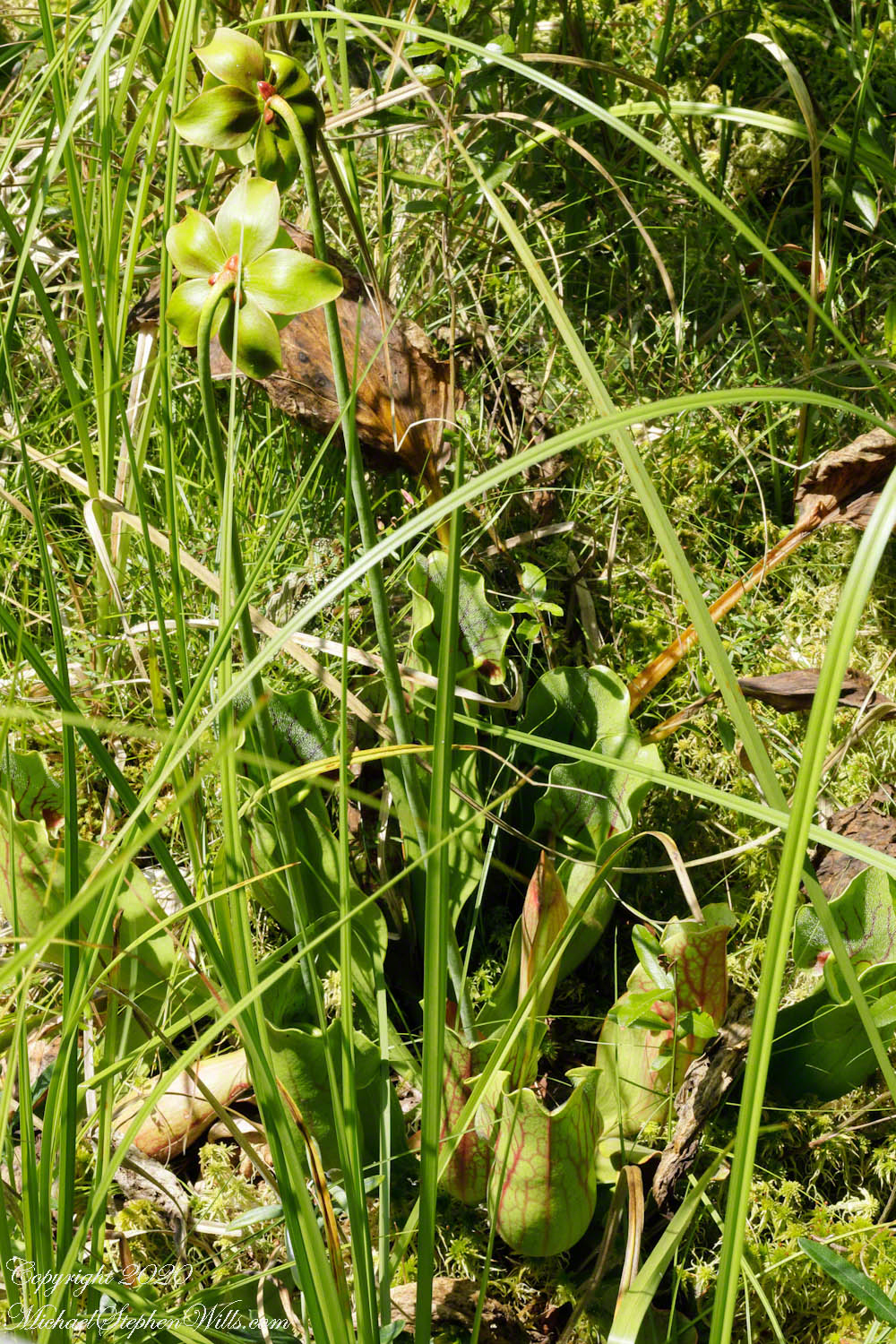
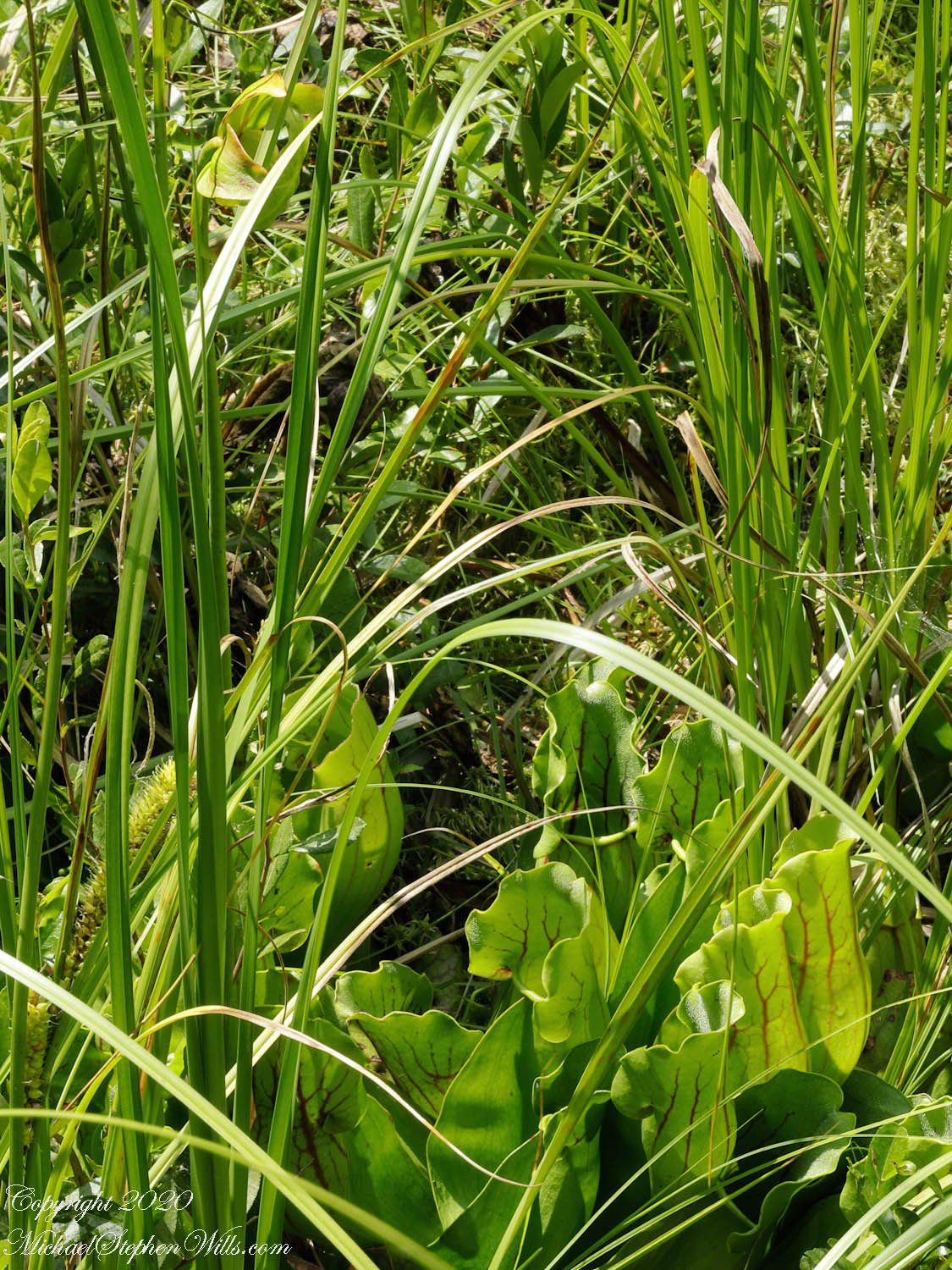
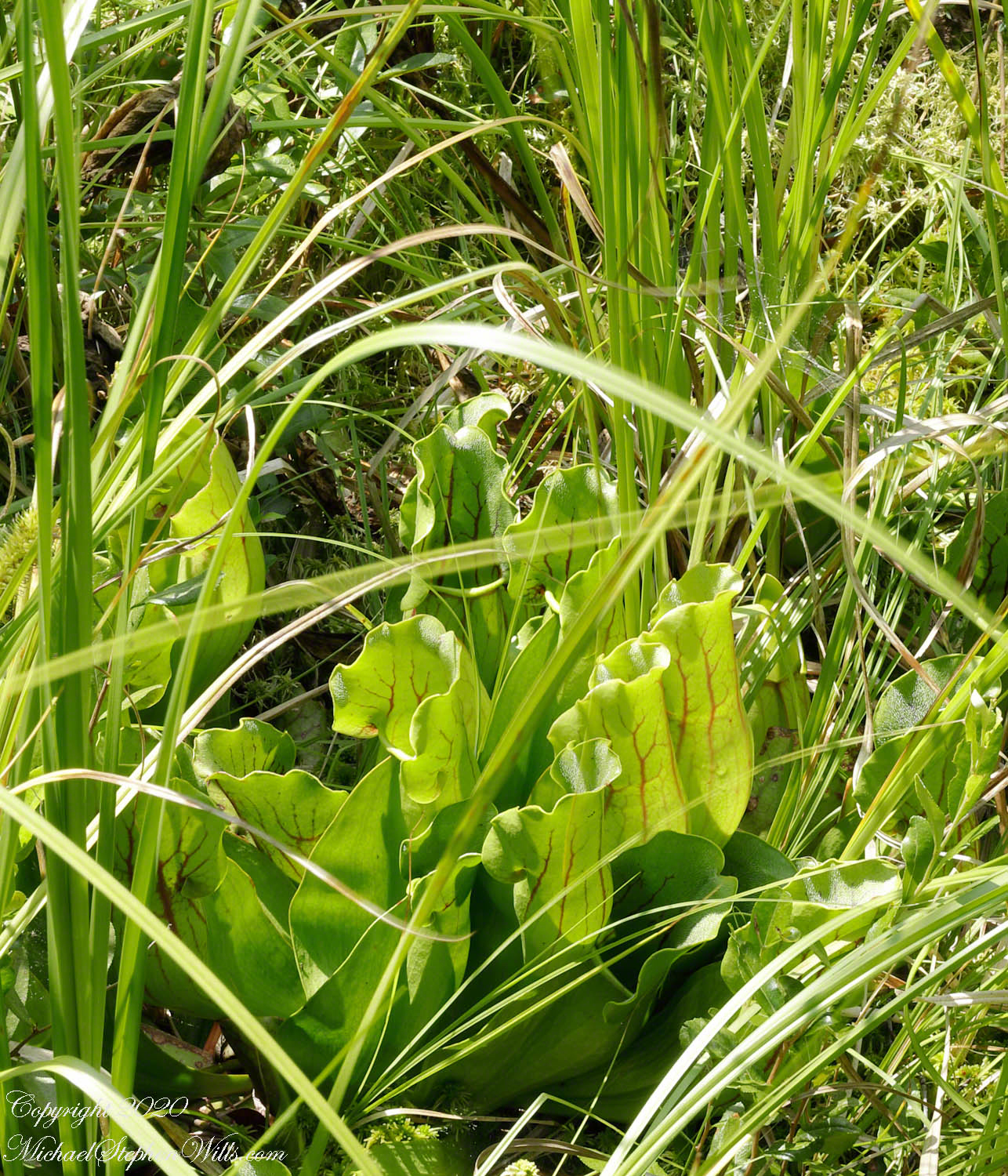
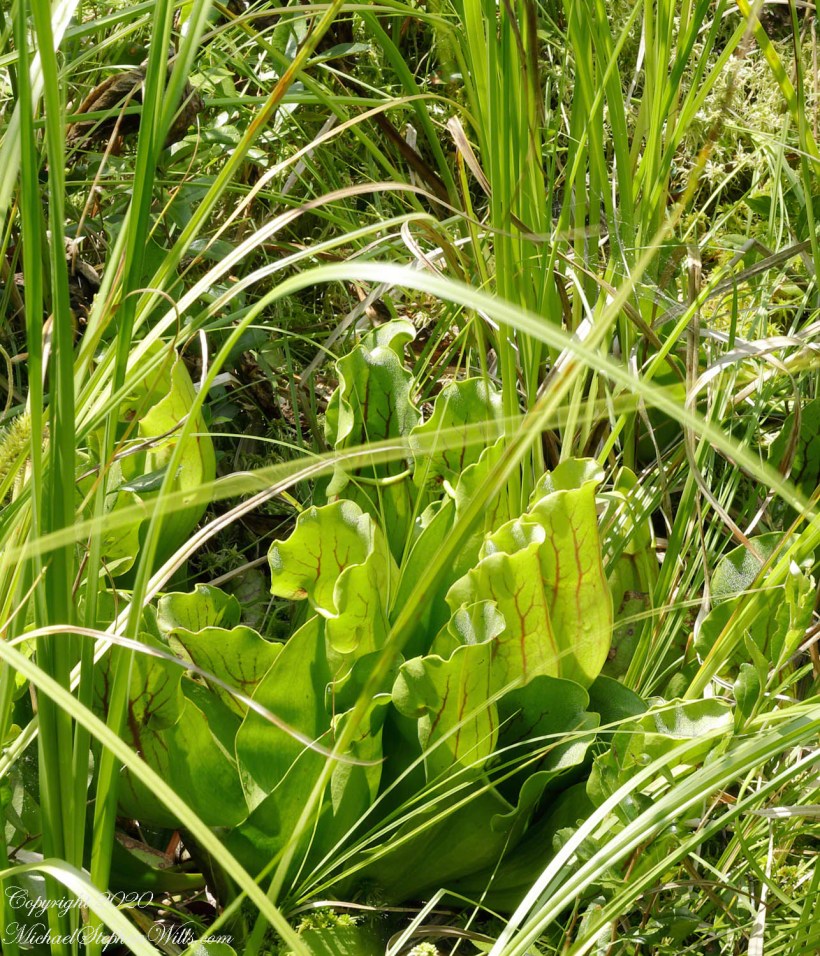
The pitchers themselves—those “turtle socks,” as they’ve been nicknamed—sit at ground level in a rosette, their mouths open to weather. Sunlight floods the cups and turns them into something both domestic and uncanny: a set of green, veined slippers left out to air, or a cluster of small amphorae awaiting an offering. In the bog’s thin soil, nourishment is hard-won. The pitcher plant answers that poverty with invention. Instead of arguing with the chemistry of peat, it borrows from the animal world—luring and taking what the air can spare. The cup is a trap, yes, but also a reservoir: rainwater gathered and held, a miniature wetland that mirrors the preserve’s larger one.

There is a tension here that never quite resolves: the plant’s beauty, and the plant’s appetite. We admire the cup’s red veining, the glossy rim, the way the opening flares like a lip; then we remember what the lip is for. We admire the flower’s elegant sheltering forms; then we realize the shelter is also a funnel, a choreography. This is not cruelty—no more than winter is cruelty. It is adaptation made visible, a lesson in how form follows need, and how need can produce something unexpectedly lovely.

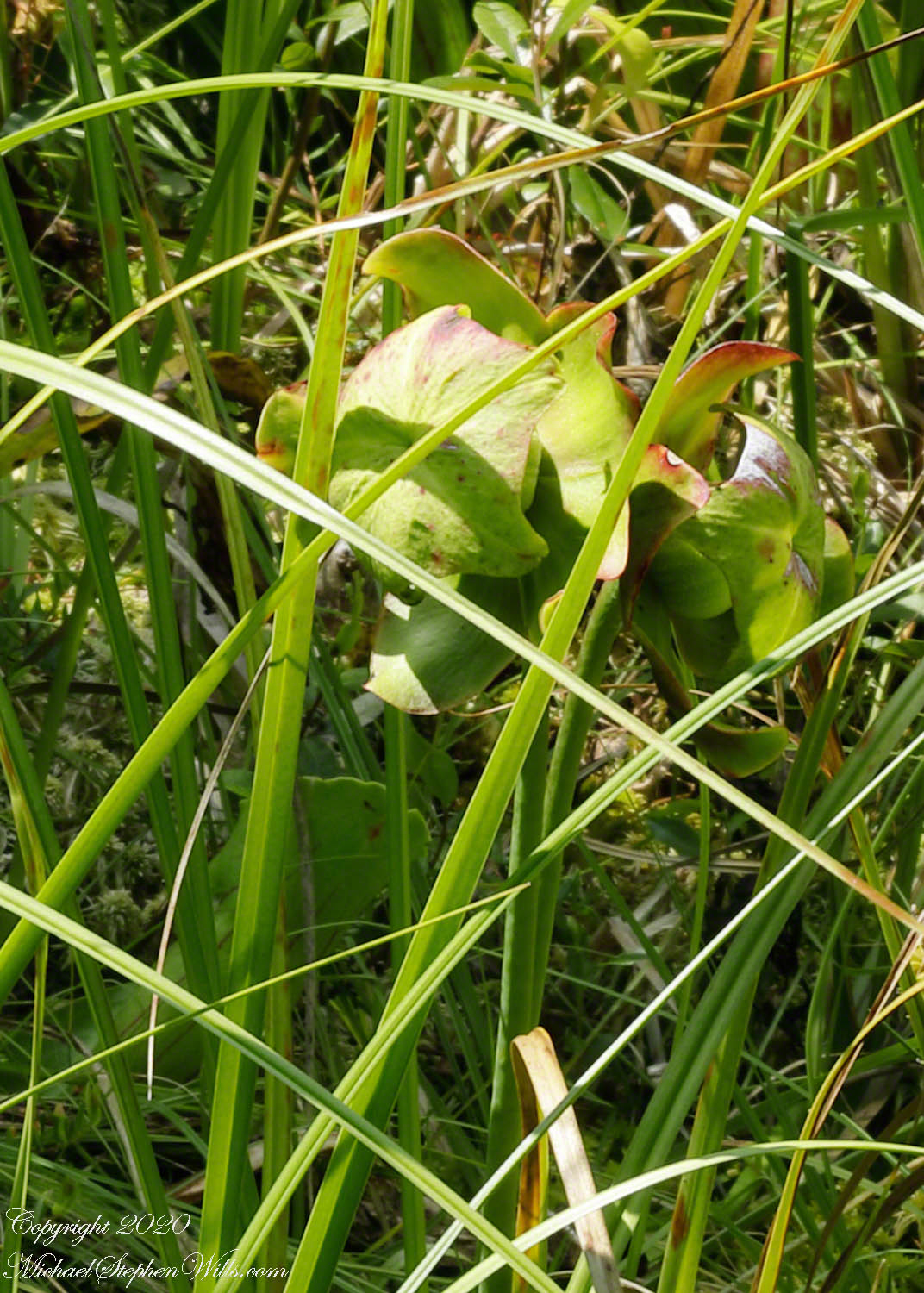
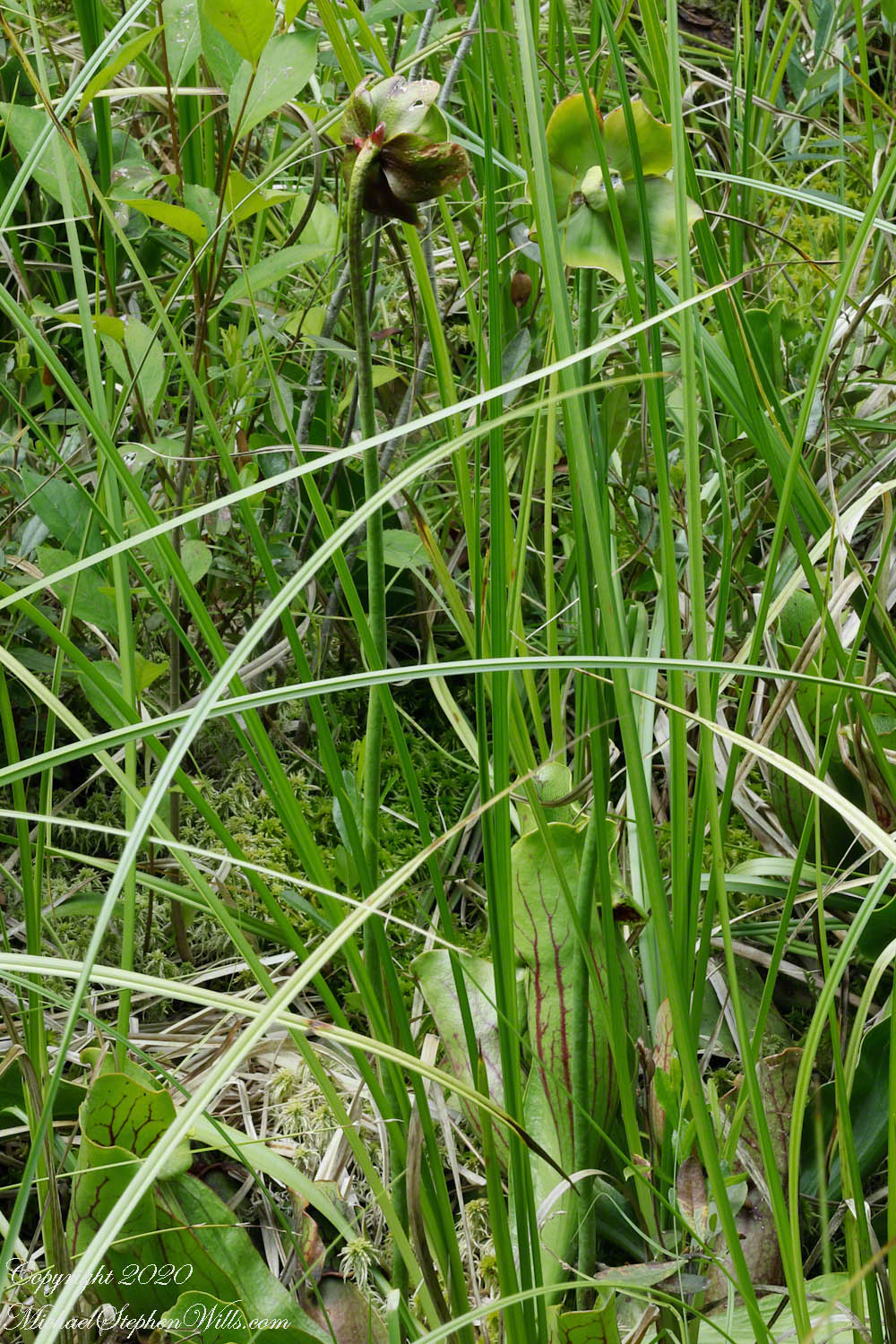
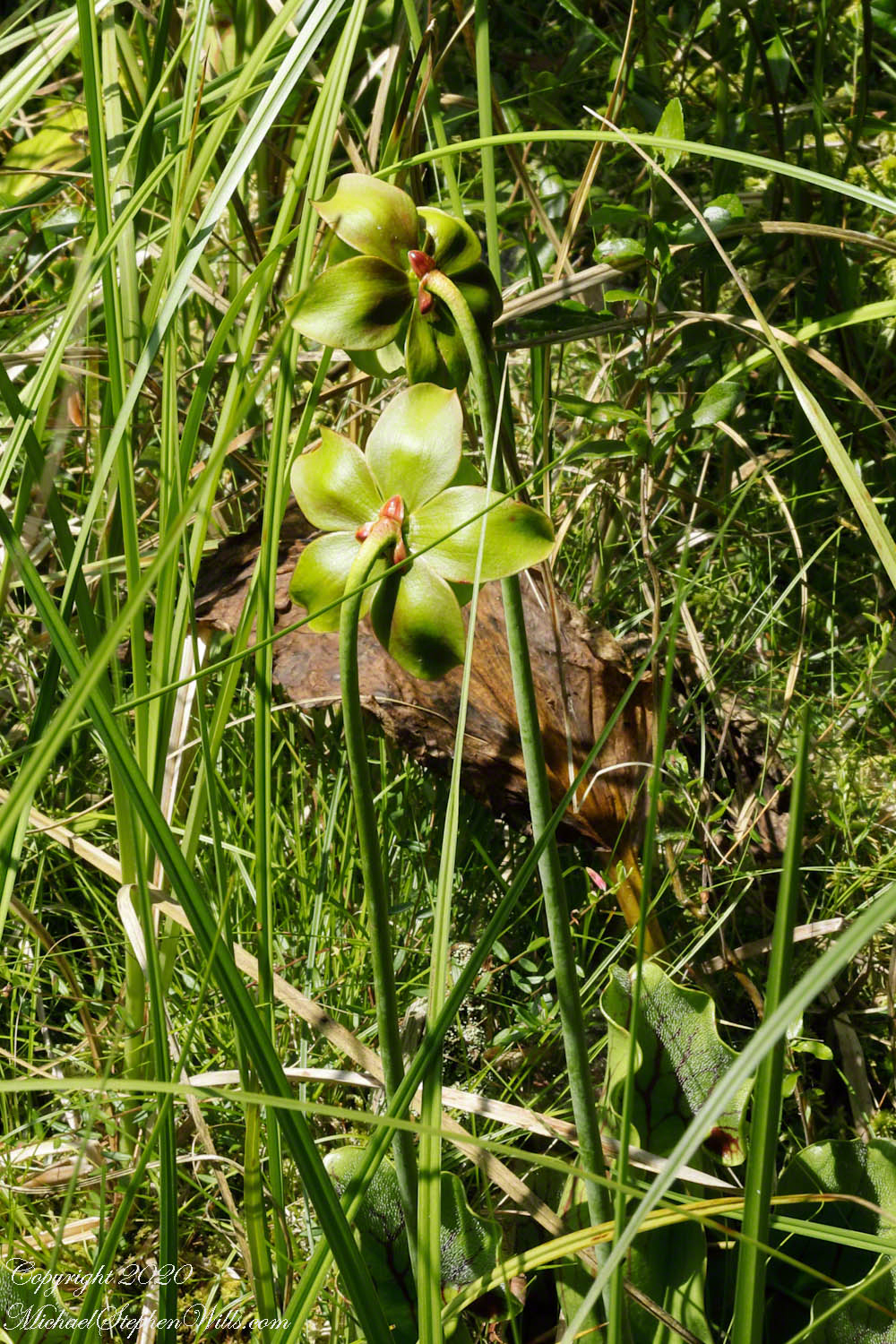
And yet the real marvel—the reason I came that day—rises above the traps on a strong stalk, lifted clear of the dangerous mouths below. The flower is not purple in the obvious way its common name promises. It is subtler and stranger: a suspended structure with the poise of a lantern and the protective logic of armor. It struck me as a flower unlike any I have experienced, resembling an insect carapace, with the reproductive element underneath a hood. That hooded design feels less like ornament than strategy—an architecture that guides a pollinator’s route, controlling entrances and exits the way the pitcher controls the fall of an insect.

Even the flower’s back side refuses to perform for the camera. From the posterior angle, “there are only bracts”—plain supporting structures, the botanical equivalent of scaffolding left in place once the facade is finished. The bog, too, shows its scaffolding everywhere: dead stems, old wood, peat-dark water, last year’s leaves. A preserve is never only what is blooming. It is what persists.

I found myself thinking about the details I wanted but could not quite capture that day: the downward facing hairs inside the pitcher—those one-way bristles that make retreat difficult once a victim has slipped in. I or my lens was not up to this challange. The shortcoming was minor, but instructive. The bog offers glimpses, not guarantees. It invites return visits, different light, different seasons, a different kind of patience.

Standing on the platform I felt the preserve’s central truth: these are landscapes shaped by constraint—by ice, by water, by nutrient scarcity, by the slow encroachment of shrubs—and yet they keep producing improbable forms. The purple pitcher plant is one of those forms: a green cup that drinks rain, a flower that wears a hood, a turtle sock that turns hunger into design. In a place where the ground itself seems to refuse abundance, the plant answers with a different kind of richness—an elegance that is also a solution.

Enter your email to receive notification of future postings. I will not sell or share your email address.

Turtle Socks

Flowers from Mars

Two kettles of the preserve represent a pond and, below, a bog. Here is a photograph from the observation platform using the IPhone 7. I brought along the Canon dslr and 100 mm “macro” lens for the stars of this show…..

….purple pitcher plants (scientific name: Sarracenia purpurea). In past years, the central observation deck cut-out, hosted healthy pitchers. Today, invading high bush blueberries from the bog margin, crowded out the pitchers and the only flowering plant were among the grasses 8 to 10 feet away. My goal was photographing the extraordinary flowers.

Each flower rises from the base on a strong stalk. Here are the pitchers, also called “turtle socks”, flooded with sunlight.

A flower unlike any I have experienced, like the carapace of an insect, the reproductive element underneath a hood.

The posterior, there are only bracts.

I have, somewhere, macro images of the pitcher, with the downward facing hairs. Brought the wrong lens to capture this at a distance.

Click Me for the first post of this series.

Copyright 2020 Michael Stephen Wills All Rights Reserved