From Thimbleweed to Canada Anemone: Wildflower Photography in the Finger Lakes

White anemones at Malloryville and Treman reveal thimbleweed and Canada anemone through intimate portraits, shifting light, woodland edges, and quiet transformation from bloom to seed.

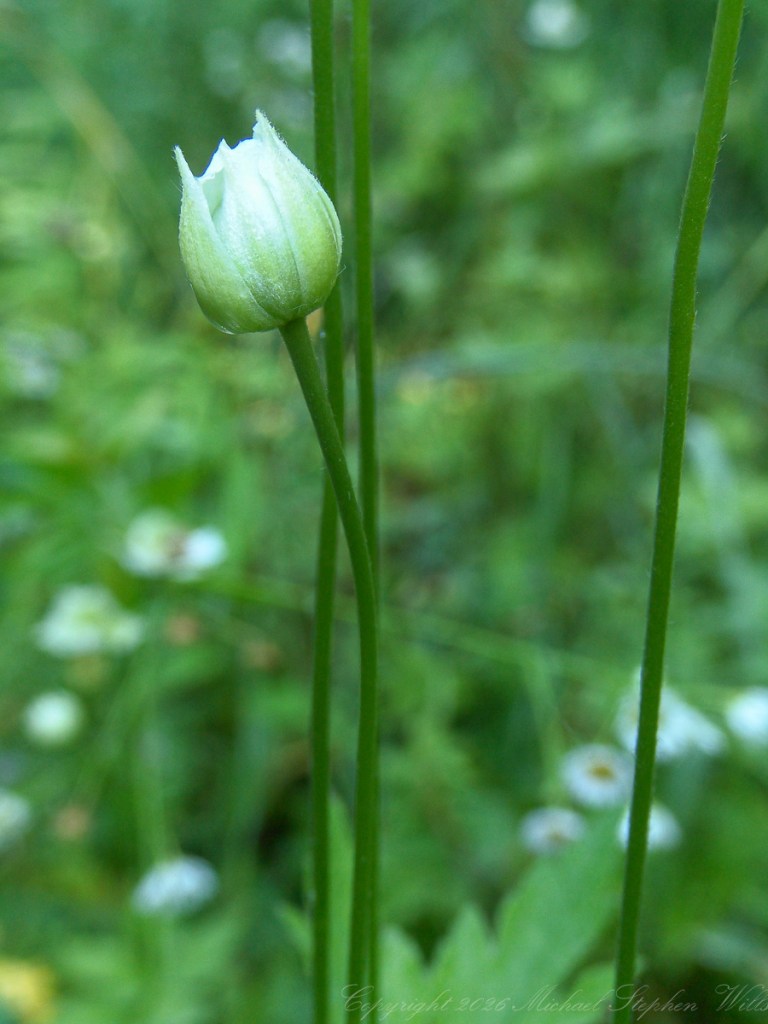
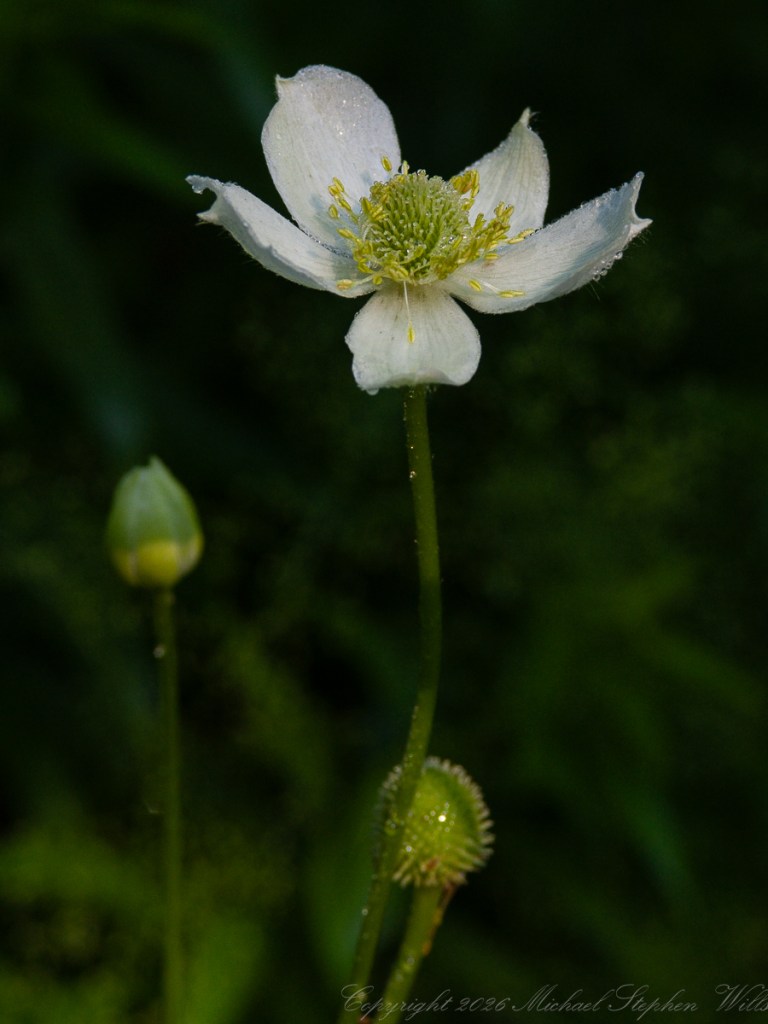
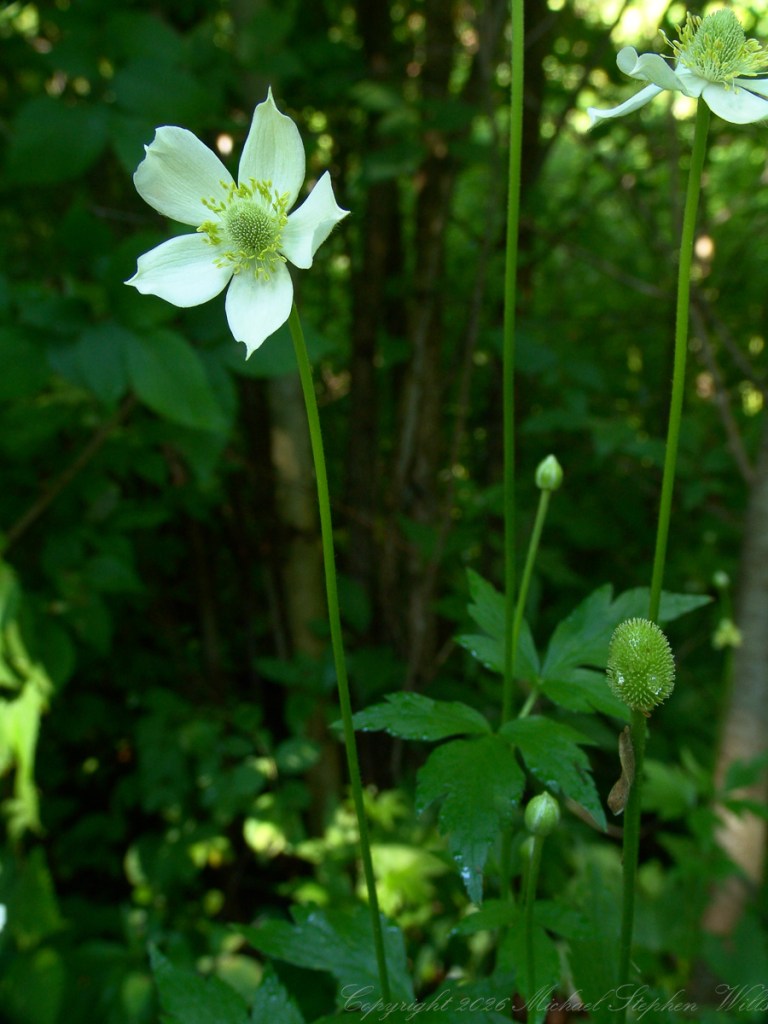
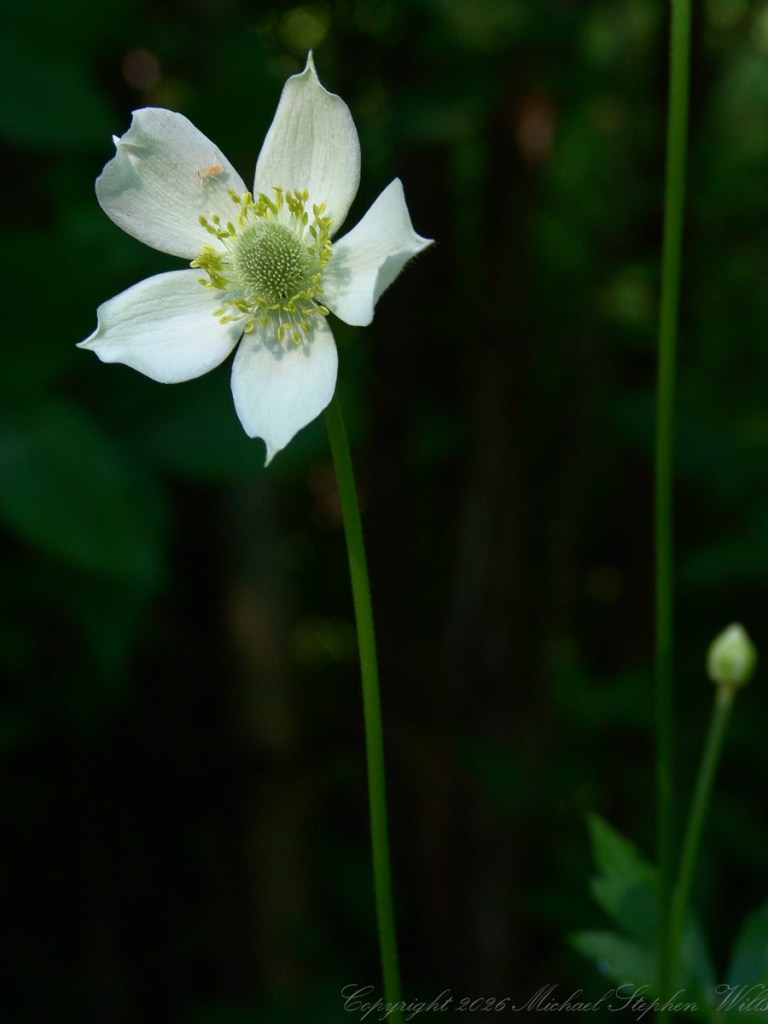
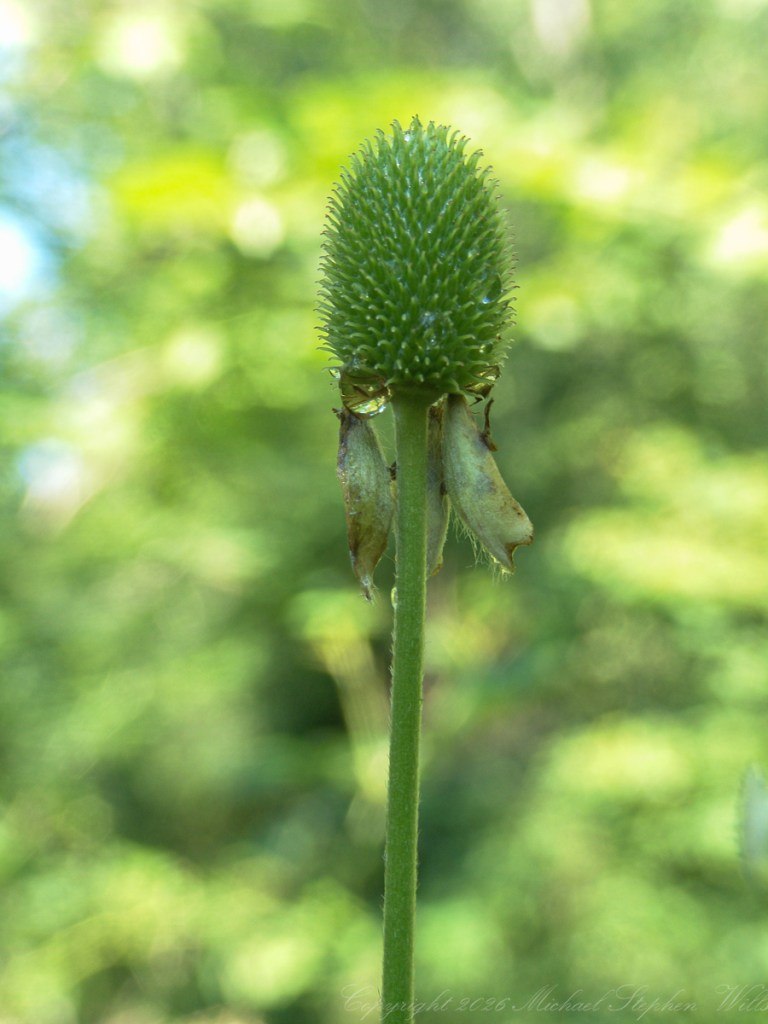
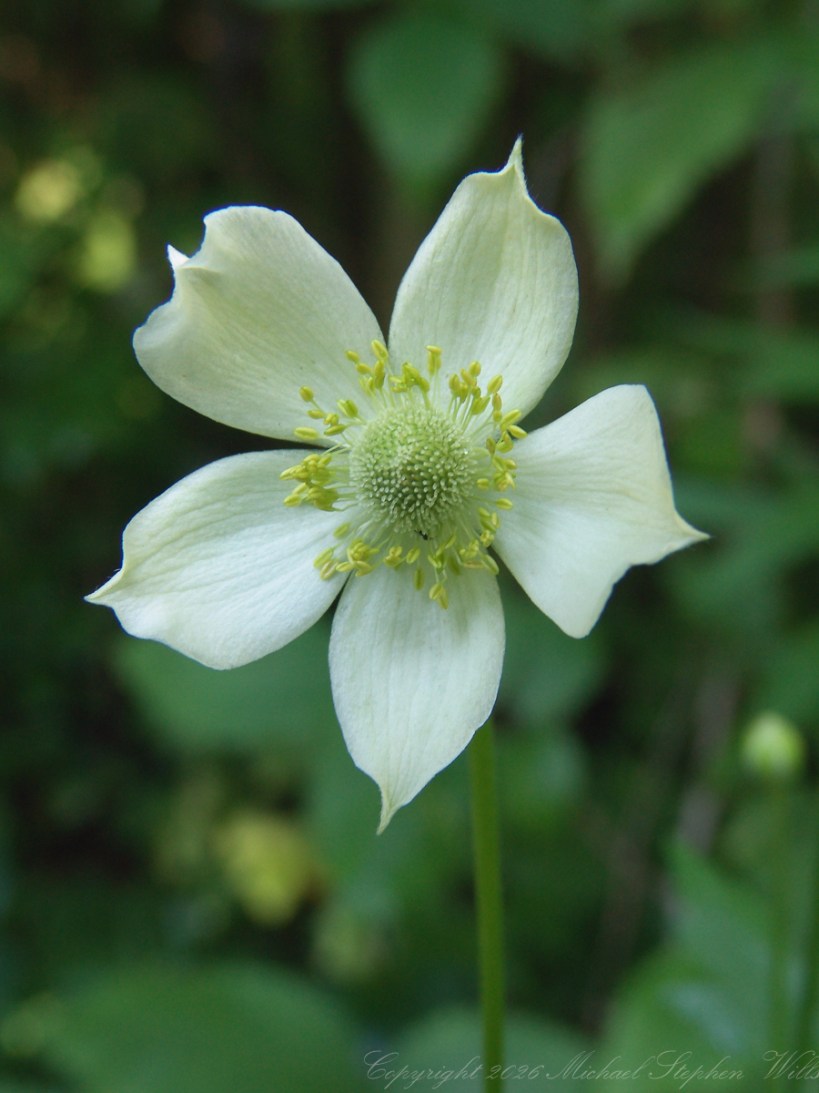
Along the long defunct railroad right of way at the O. D. von Engeln Preserve in Malloryville, Tompkins County, my 2005 photographs in the following gallery show thimbleweed, Anemone virginiana, in a world of green stillness. Made with a tripod-mounted Sony DSC-F828, they have the patient intimacy of deliberate looking. The camera holds close to one flower, then another stage of the same life, as if time itself had paused among the stems. One bloom faces the lens like a small moon with a green-gold sun at its center. Buds stand nearby, closed and expectant, like folded letters. Later frames reveal the flower after weather and time have touched it: sepals lifted and worn, stamens loosened, dew clinging to the stem, the seed head beginning its bristling ascent. The plant is caught mid-transformation, a white flame becoming a green lantern.
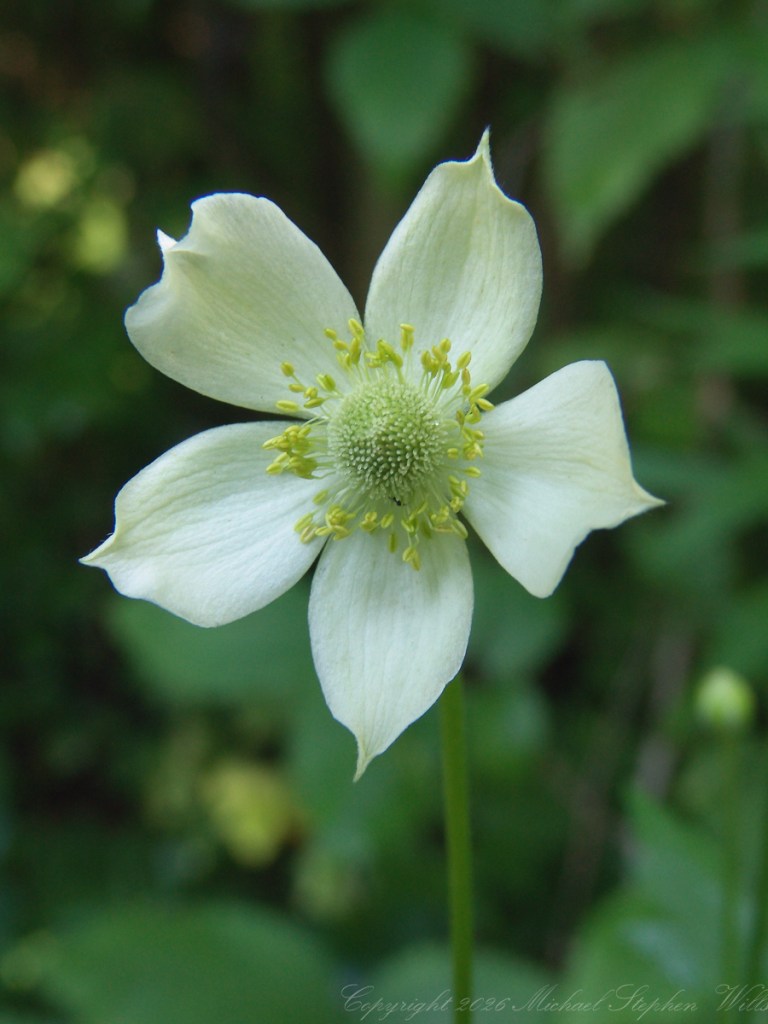
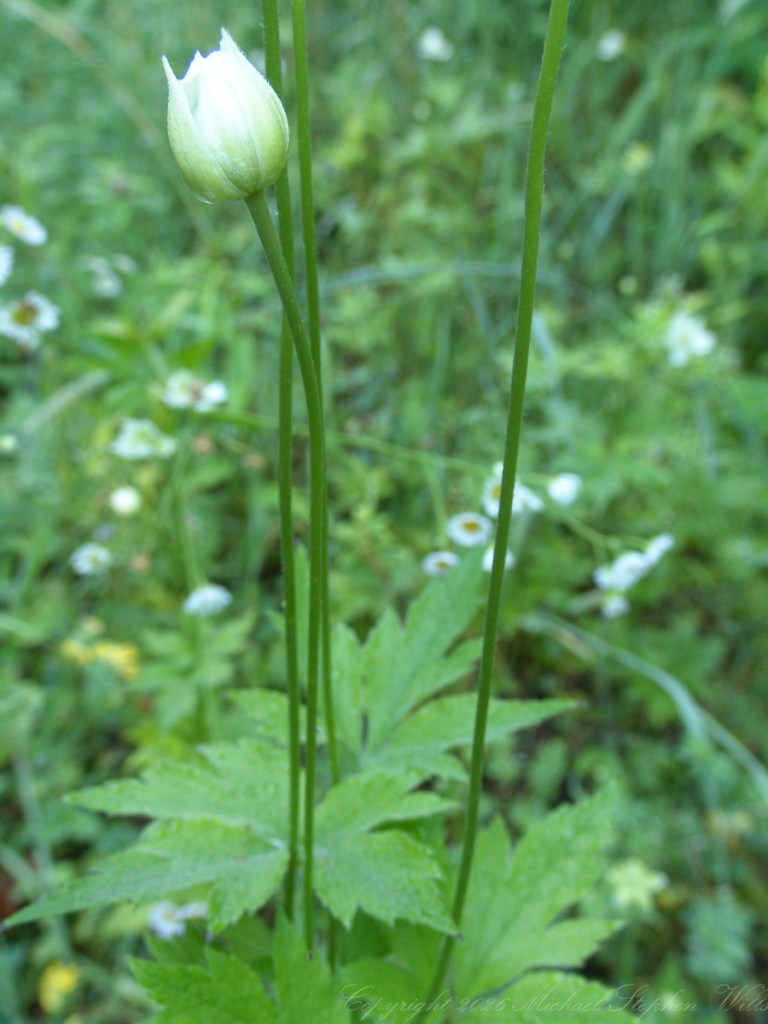
These Thimbleweeds are not white anemones in the soft sense of a spring flower, but tall anemones, thimbleweeds, plants of height, poise, and aftermath. Their most memorable structure is already waiting at the center of the flower: the green cone that will remain when the white sepals have gone. Freshly opened the flower is tender and stippled, ringed by yellow stamens; later it rises alone, armored in fine points, a little tower of continuance. The flower has not vanished. It has changed its language.

My 2005 photographs are portraits, each built from closeness and quiet restraint. The shallow focus turns the surrounding vegetation into a green tide, leaving the thimbleweed suspended in its own clear weather. The tripod’s steadiness gives the images a contemplative gravity. Nothing feels seized. Everything feels attended to. The thin stems become vertical measures in the dim woods, and the pale flowers seem to shine not by brightness alone but by contrast with the shaded world behind them.

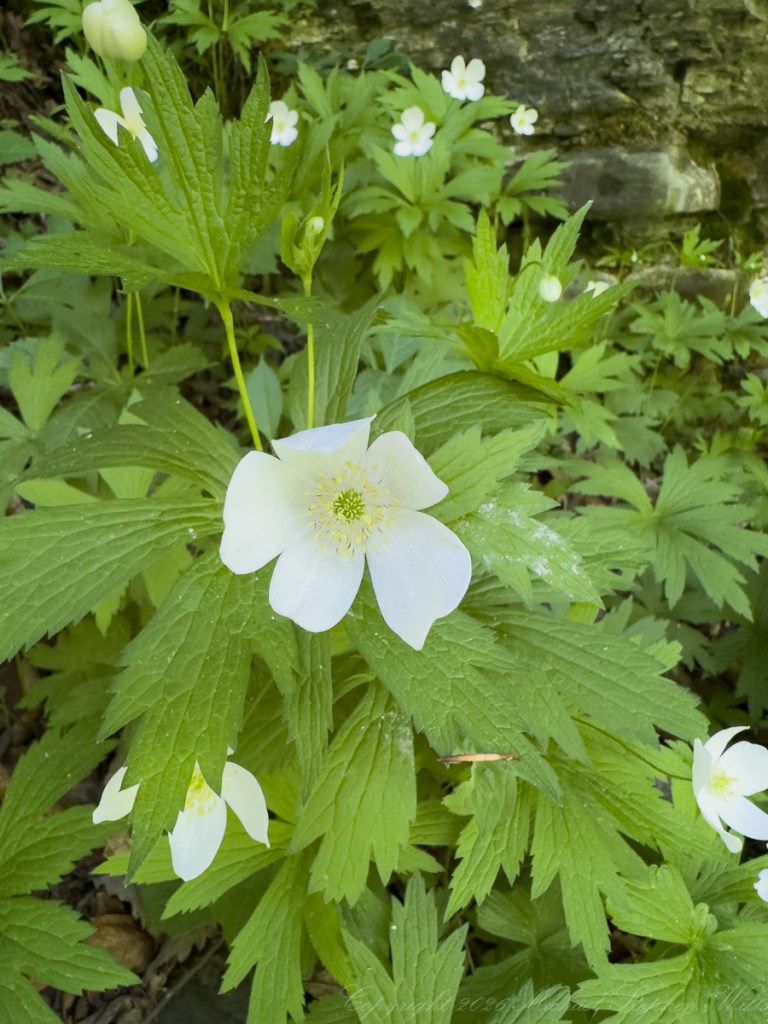
More than twenty years later, on June 13, 2026, the photographs from Robert H. Treman State Park near Ithaca offer another kind of seeing. These images, made with an iPhone 14 Pro Max, show Canada anemone, Anemonastrum canadense, along the Gorge Trail. The style is wider, more immediate, more ecological. Instead of isolating a single flower in formal portrait, the camera gathers the colony: white blossoms scattered among sharply cut leaves, stone wall, leaf litter, and the living green of the gorge. The plant is here a constellation at ground level.
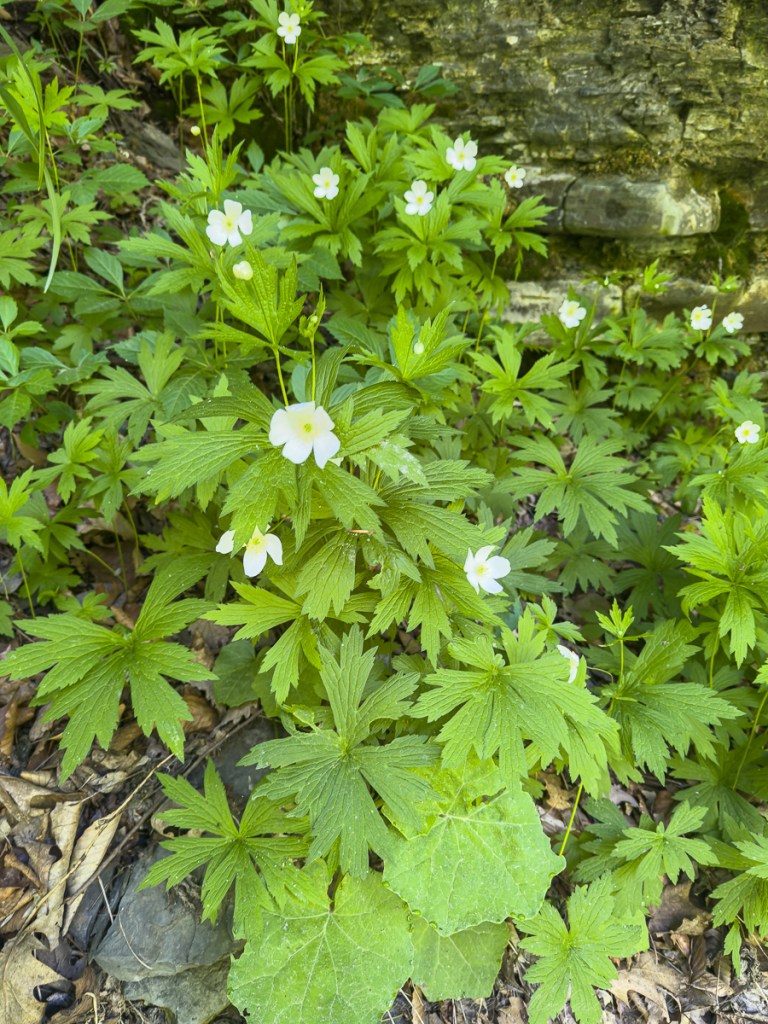
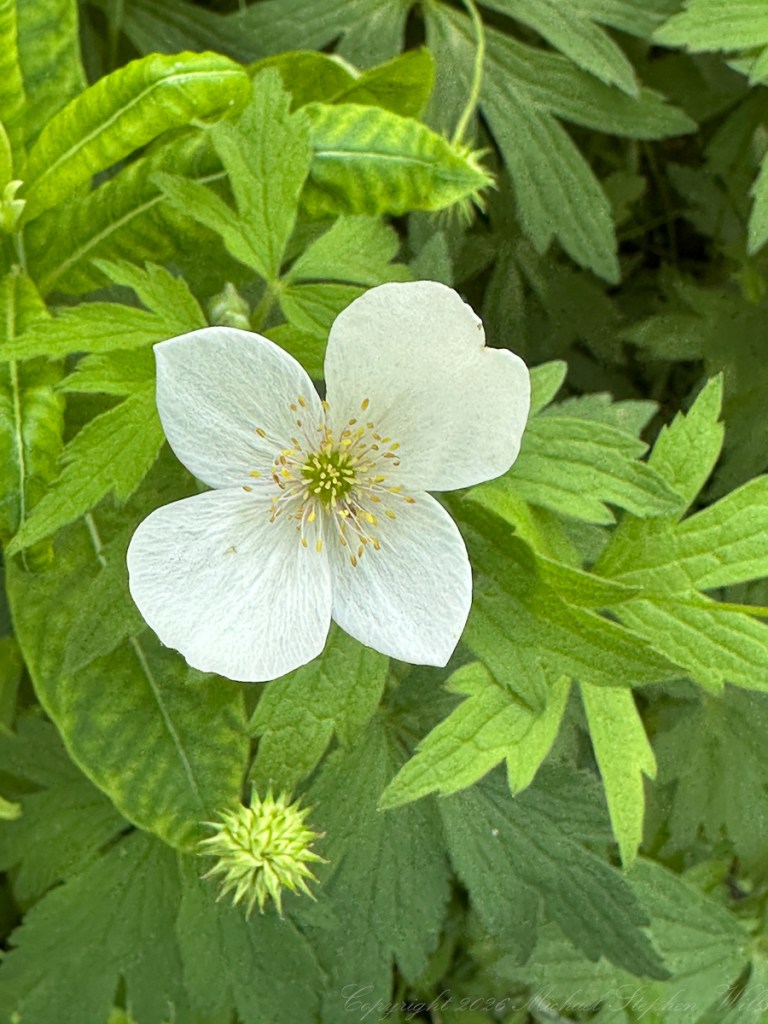
These photographs from the Gorge Trail of Robert H. Treman park have the fluency of a walk. They bring us into the place where the flowers grow, letting the eye move from blossom to leaf, from wall to moist soil, from one white face to another. In the close views, the Canada anemone opens with a rounder, simpler grace than the thimbleweed: white petals surrounding a modest green center and delicate yellow anthers. In the wider frames, its leaves make a bright, serrated fabric over the ground, a many-handed greenery receiving the light.

The contrast between the two sets is also a contrast between eras of photography. The Sony images feel like field studies made with ceremony: tripod, fixed attention, a single subject lifted from the woodland dimness. The iPhone images feel like discoveries carried in the hand, the eye moving freely through a living patch of plants. One approach gives us the flower as emblem; the other gives us the flower as citizen of a community. Together they make a fuller truth.

Across a twenty-one-year span, the technology changed dramatically. The 2005 Malloryville series has the patient, close-focus attention of a dedicated camera: ISO 64, small aperture, long exposures, the photographer leaning into stillness. The 2026 Treman images arrive through a phone camera, quick and bright, able to record both blossom and habitat with effortless clarity. Yet the flowers themselves refuse to become dated. These anemone are older than both cameras and indifferent to their sophistication. It keeps its own calendar: bud, bloom, seed, root, return.

Yet the kinship between the plants persists. Both hold white blooms above finely divided leaves. Both belong to the cool, green margins of the Finger Lakes landscape. Both take the ordinary materials of summer, water, shade, stone, soil, and passing light, and make from them a brief astonishment. The thimbleweed raises its solitary green future on a long stem. The Canada anemone spreads its brightness in company. One is a sentence written upward; the other, a page of scattered stars.

The wonder of these anemone is partly structural. Their “petals” are actually petal-like sepals, often five, sometimes more, white and slightly irregular, as if each flower has been hand-torn from light. The yellow stamens ring a green central cone, a small workshop of pollen and future seed. Insects visit for what the flower offers, while the plant asks only for suitable ground and enough room to run. It is not timid. Gardeners know they can spread vigorously, but in the wild that vigor reads differently: not aggression, but insistence. It is the plant saying, “Here is moisture, here is light, here is my chance.”

The photographs also show how much of wildflower beauty lies in context. The pristine frontal bloom is lovely, yes, but so is the closed bud held among vertical stems; so is the aging seed head with spent sepals hanging like weathered pennants; so is the colony rising from a gorge-side floor. Wonder does not reside only in peak bloom. It lives in the before and after, in the green machinery of leaves, in the “almost,” the “not yet,” and the “still becoming.”

To look at the anemone in this way is to be reminded that native plants are actors in the ecological drama of a place: stabilizing soil, feeding insects, responding to light gaps, marking moisture, stitching disturbed edges back into life. Their beauty is functional, and their function is beautiful. A wildflower is never only its moment of bloom. It is bud and blossom, seed and stem, place and weather, memory and return.

These photographs understand that. They show not just flowers, but the disciplined patience of plants: the hush before opening, the radiance of full display, the quiet labor after beauty has done its visible work. In Malloryville, a white flame becomes a green lantern. At Treman, small moons gather beside the stone. And through both, the green world keeps speaking in its oldest memorable phrase: nothing delicate is merely fragile.
Click me to visit Michael Stephen Wills Online Finger Lakes Gallery.

Enter your email to receive notification of future postings. I will not sell or share your email address.

Where Winter Yields: Skunk Cabbage, Pitcher Plants, and Milky Ice at Malloryville Preserve

A late winter walk through Malloryville Preserve reveals milky ice, emerging skunk cabbage, and hidden wetland life—seen through the curious eyes of grandchildren.

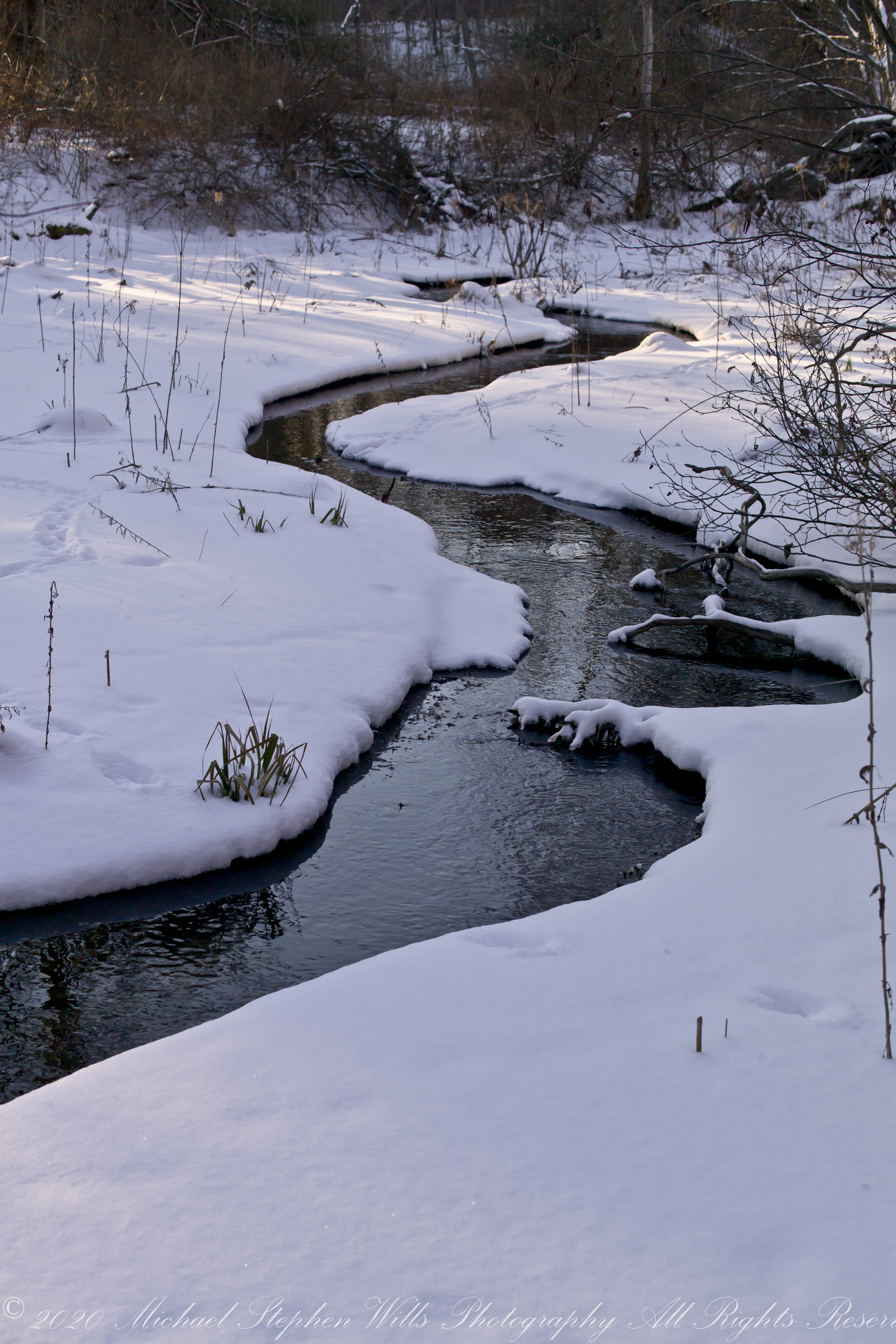
The morning began in that quiet register peculiar to late winter in the Finger Lakes—when the calendar insists on spring, yet the land, still half-claimed by frost, speaks in a more cautious dialect. At the O.D. von Engeln Preserve at Malloryville, the woods held both seasons in tension. Snow lingered in shaded hollows, while the exposed ground, damp and rust-colored, breathed with thaw.

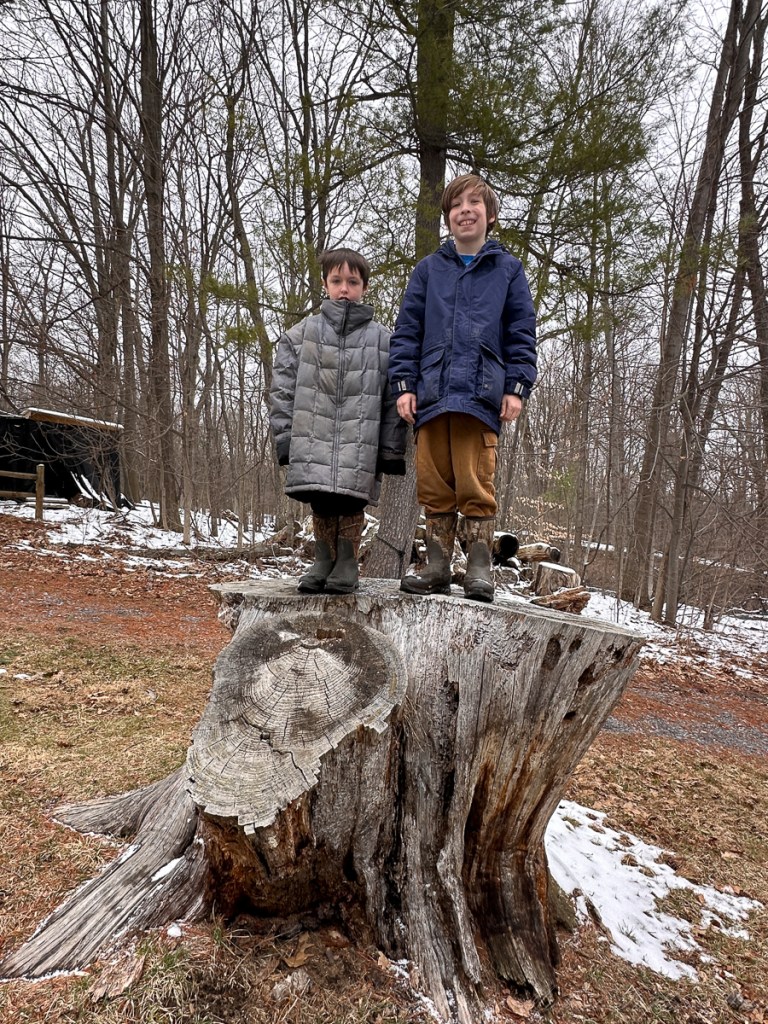
Sam and Rory—boots muddied almost immediately—climbed atop a great, weathered stump, its cut face fanned with the geometry of years. There is something about a stump that invites children upward, as though it were not a remnant but a stage. From their perch they surveyed a kingdom of bare trunks and quiet trails, their laughter momentarily lifting the stillness. Behind them, the forest rose in gray-brown columns, and beneath them, the history of a tree—rings like a clock no one can wind backward.

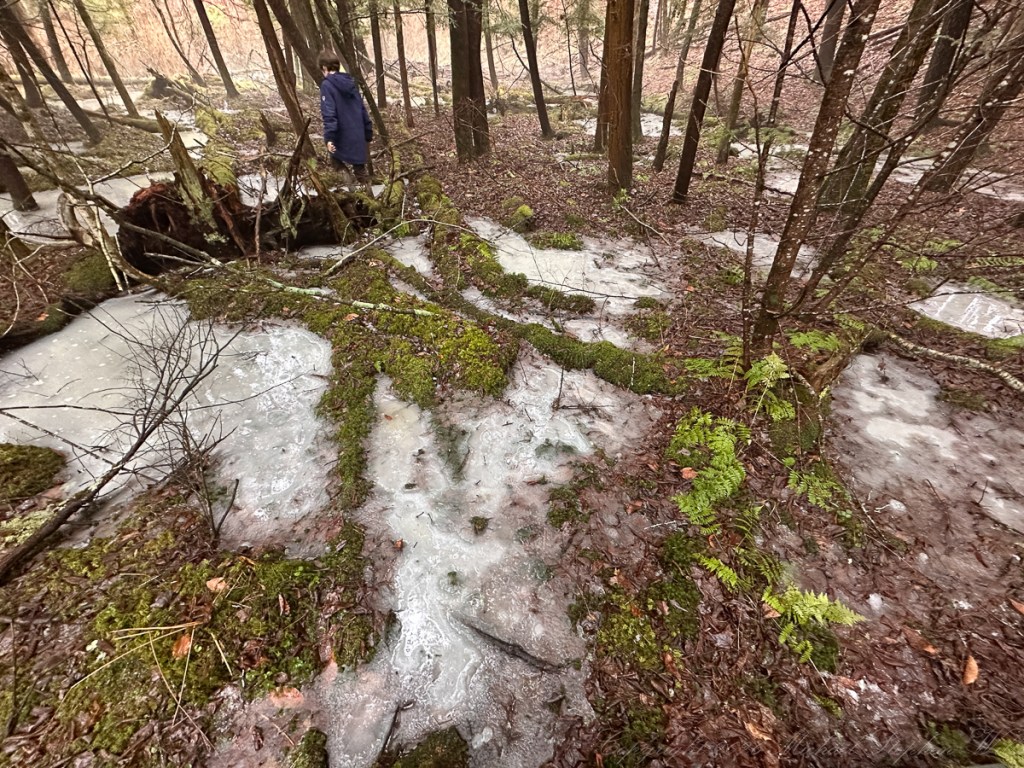
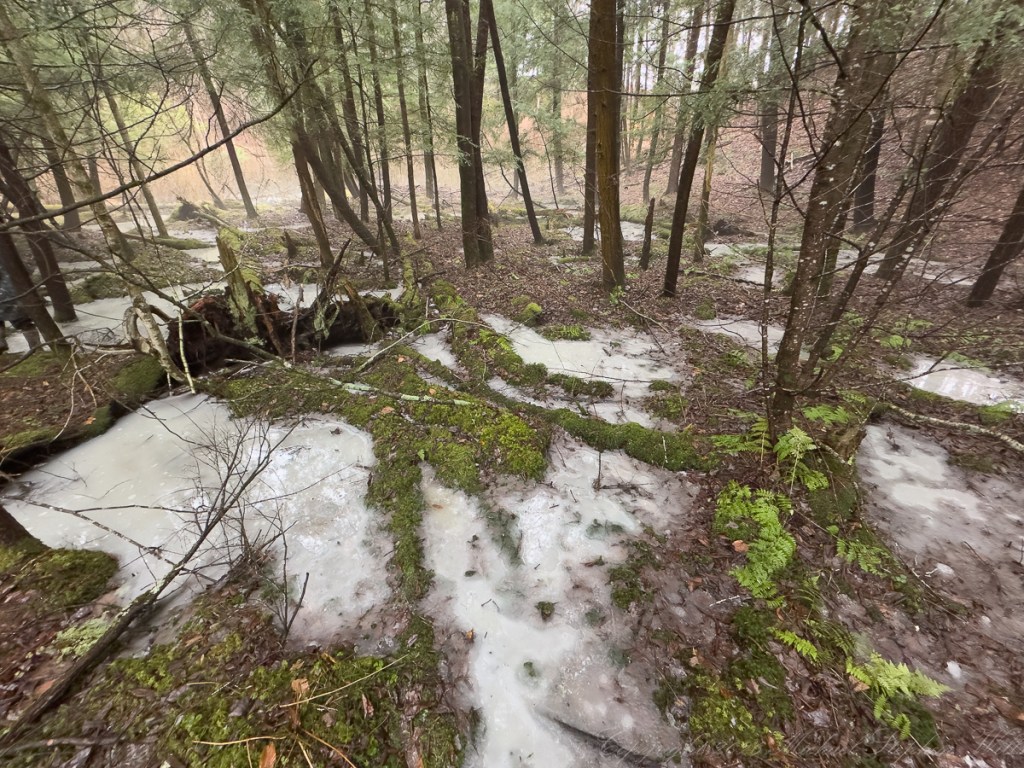
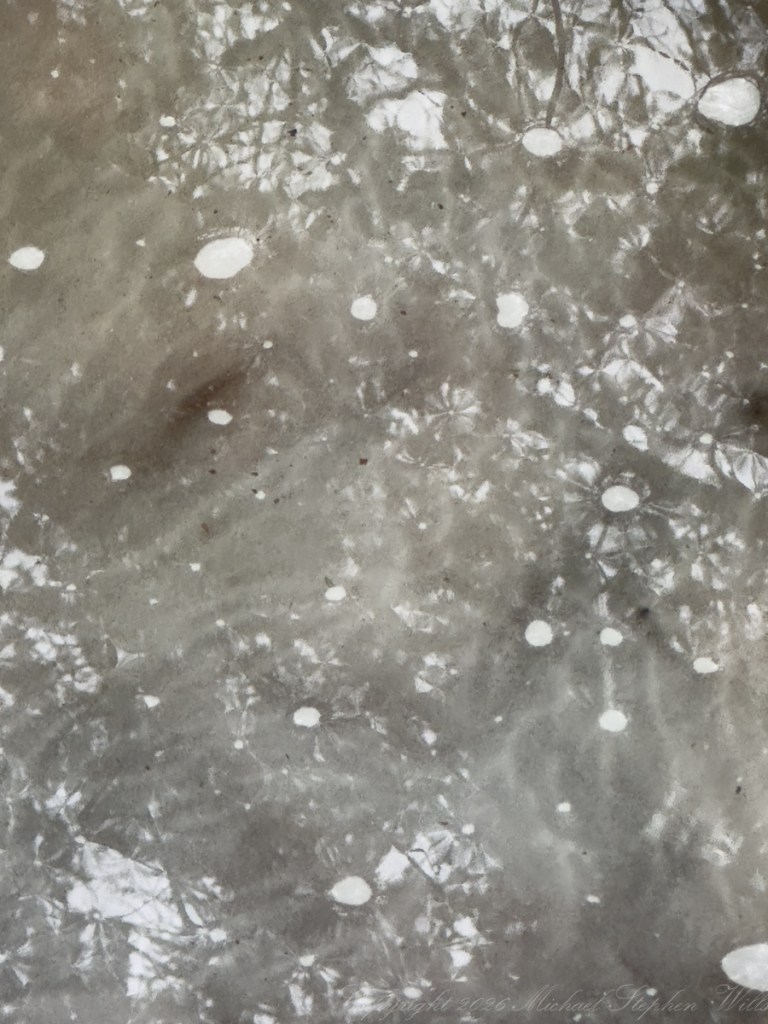
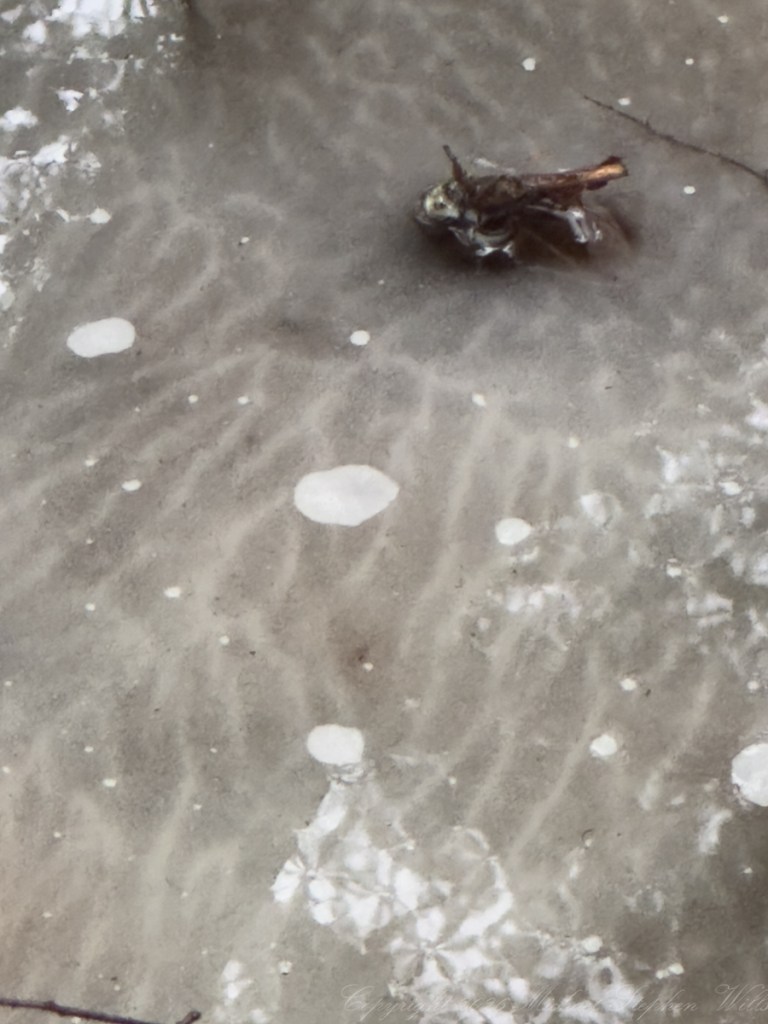
We moved downslope toward the seepage-fed lowlands that give this preserve its particular character. Here, the ground softens, water gathers, and winter lingers longer in pockets of ice that seem reluctant to relinquish their hold. The ice itself told a story—not clear and crystalline, but cloudy, milky, almost opalescent. This opacity is the signature of trapped air, minute bubbles frozen in suspension as water repeatedly melts and refreezes. Each cycle interrupts the orderly lattice of ice, scattering light and transforming transparency into a pale, diffused glow. It is ice that remembers its instability.

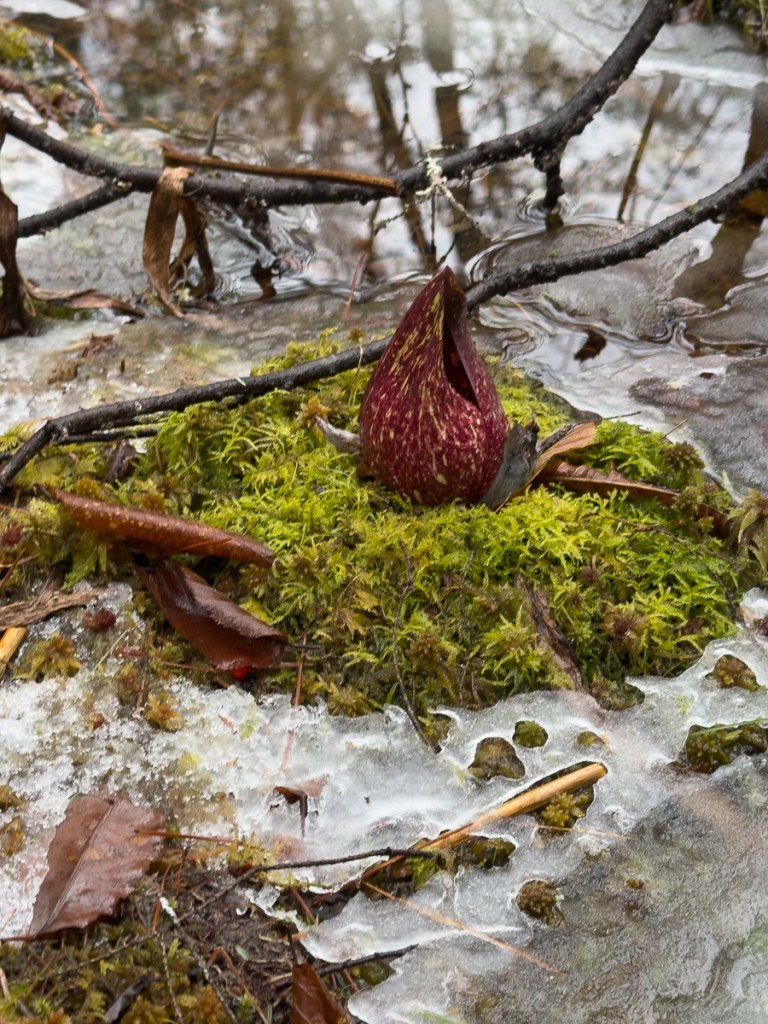
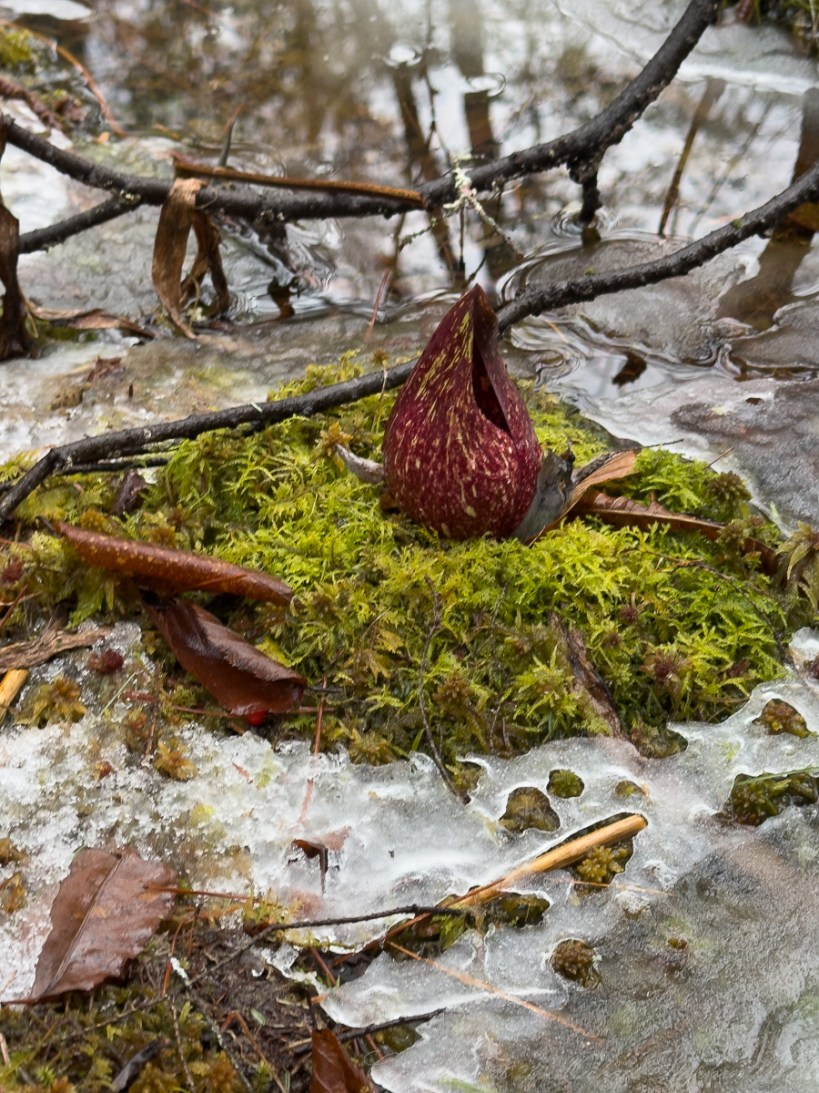
Threading through this ice were narrow rivulets of meltwater, tracing paths around moss-covered hummocks. These islands—bright green even in winter—rose like miniature continents in a frozen sea. On one such hummock, we found this skunk cabbage. Its mottled spathe, deep maroon flecked with yellow, pushed upward through the cold, its form both alien and ancient. I pointed out to the boys that this plant generates its own heat—a metabolic furnace capable of melting the surrounding snow. It is one of the earliest heralds of spring, though it announces itself not with color alone, but with scent—a pungency that walked with us that day.

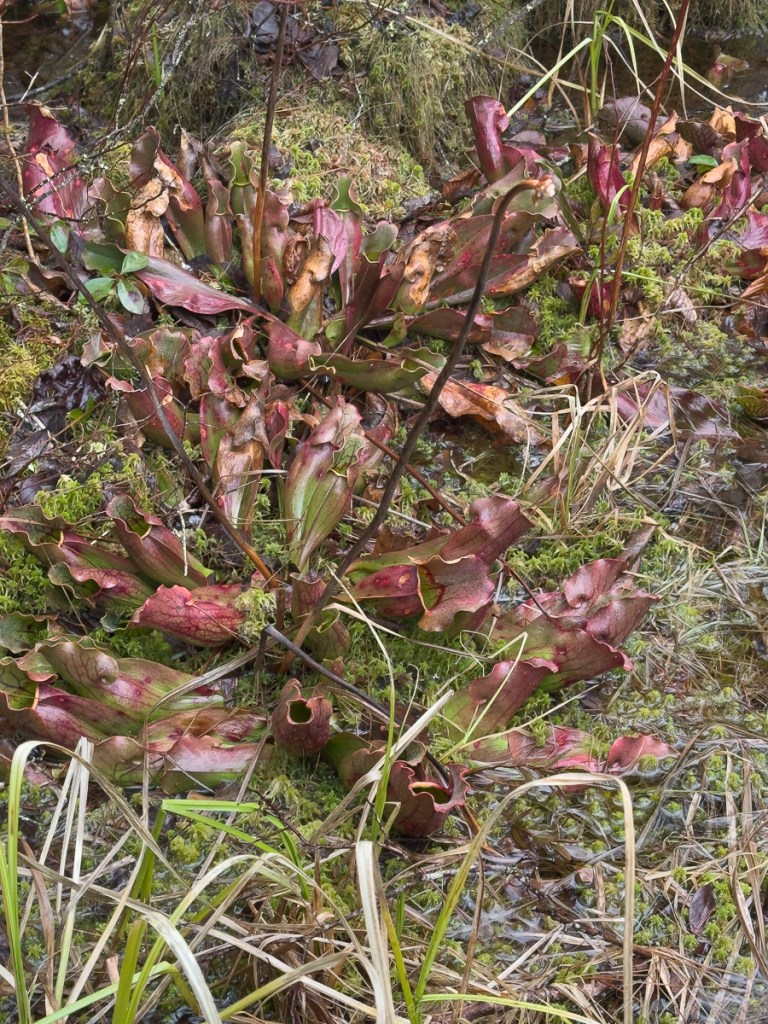
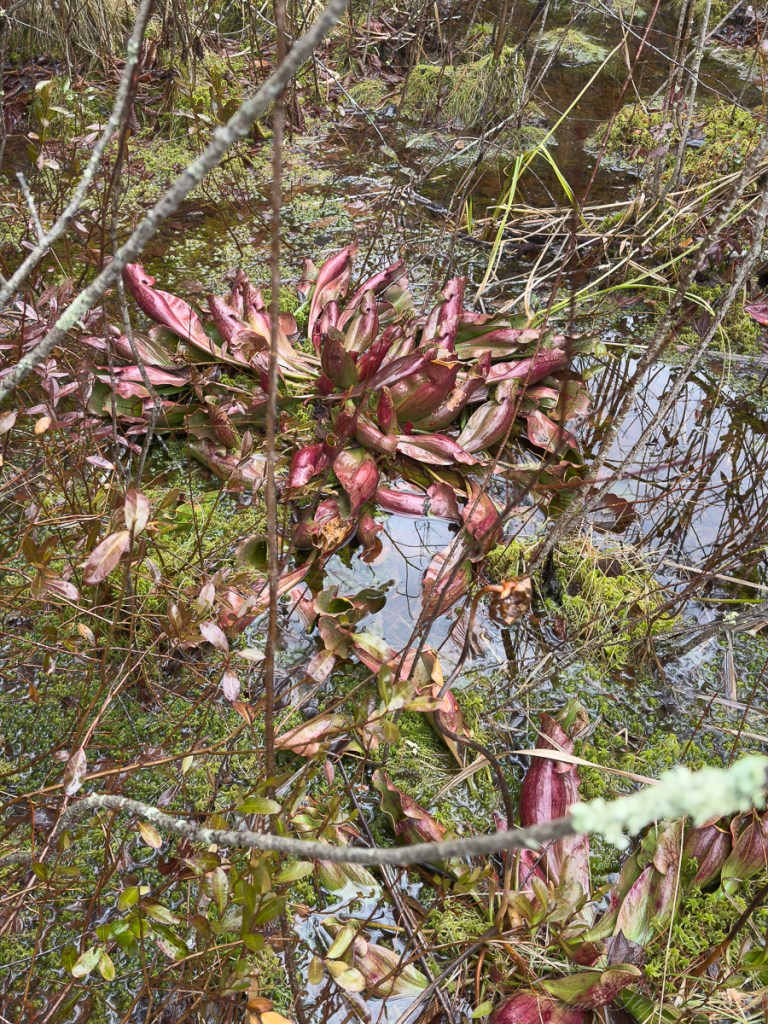
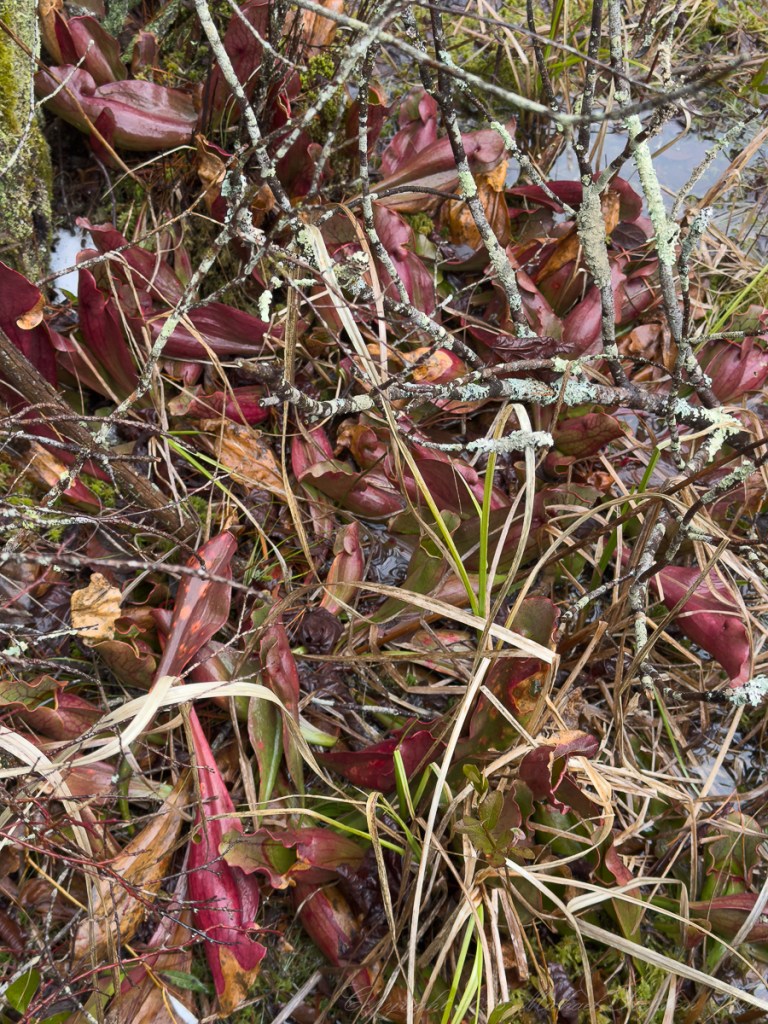
Nearby, nestled in the sphagnum, were the pitcher plants—Sarracenia purpurea—their tubular leaves tinged with winter’s reds and greens. Even in dormancy, they held their form, each pitcher a small reservoir. I explained how these plants supplement the nutrient-poor conditions of the bog by capturing insects, their modified leaves forming a subtle trap. The boys leaned in, curious, perhaps imagining the unseen dramas that would unfold here in warmer months.

The wetland was a place of plants and textures. The ice thinned near the edges, revealing water beneath that reflected the vertical lines of trees above. Droplets fell intermittently from branches, punctuating the quiet with soft, irregular taps. It was a landscape in transition, each element negotiating its passage from one state to another.

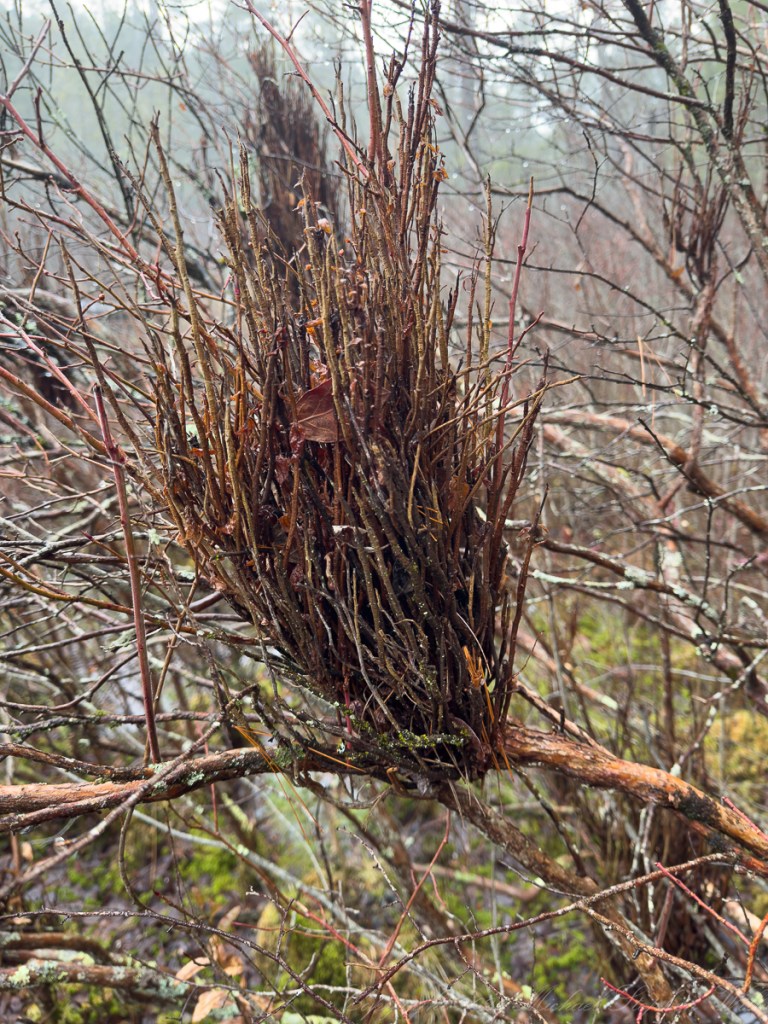
Along a tangle of shrubs, I noticed an unusual growth—a dense, broom-like cluster of twigs protruding from what appeared to be a highbush blueberry. This “witches’ broom” is often the result of fungal infection or other physiological stress, causing the plant to produce a profusion of shoots from a single point. To a child’s eye, it might seem like a bird’s nest or some deliberate construction, but it is, in fact, the plant’s own altered architecture—a distortion that nonetheless becomes part of the ecosystem, offering shelter to small creatures.

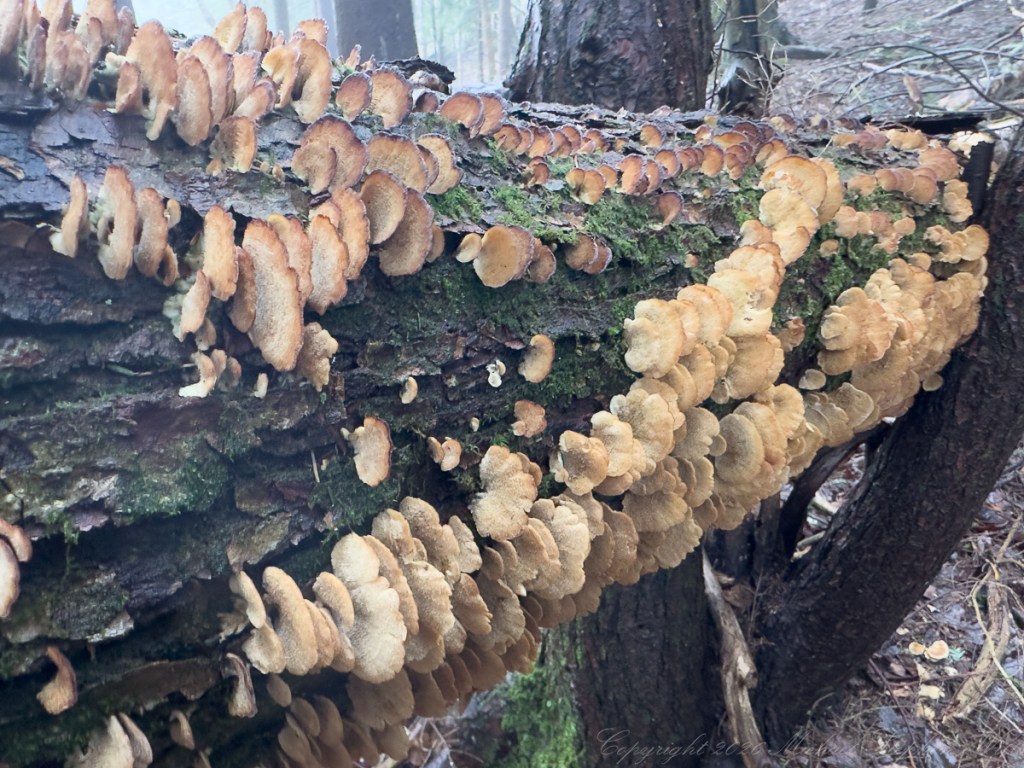
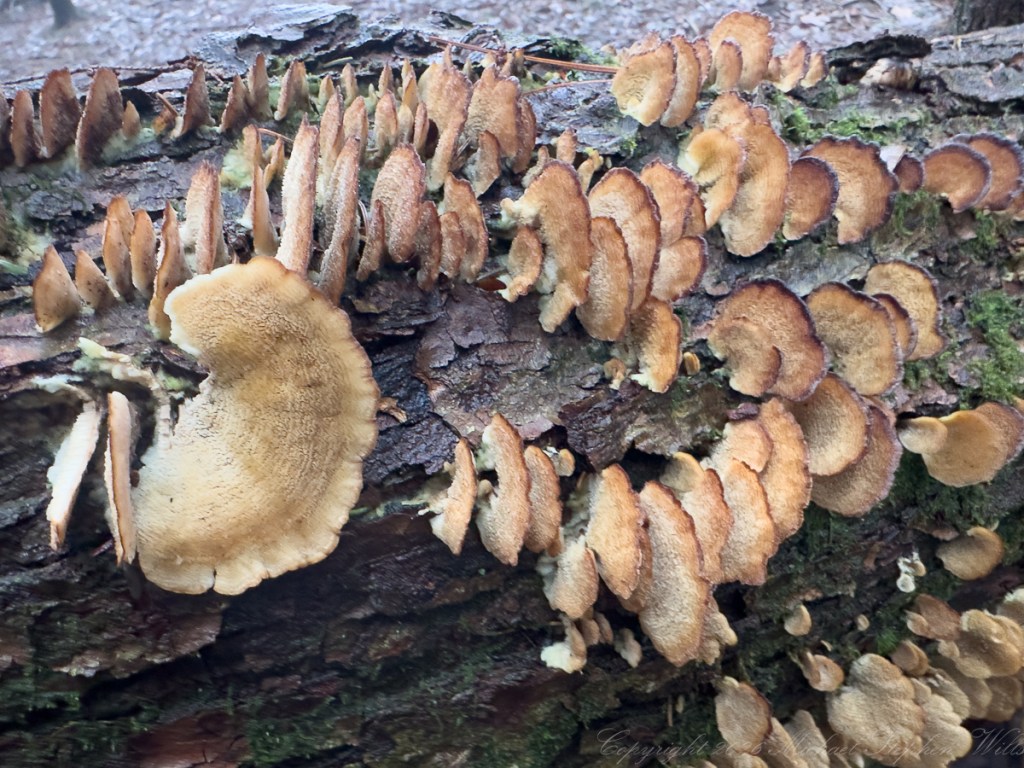
Further along, a fallen log bore the layered forms of shelf fungi, each bracket extending outward like a series of pages half-opened. Their colors—muted tans and browns—blended with the wood, yet their structure was unmistakable. These polypores are the quiet recyclers of the forest, breaking down lignin and cellulose, returning the substance of the tree to the soil. I ran my fingers lightly along their surface, feeling the fine texture, while the boys, less cautious, tapped them as though testing their solidity.

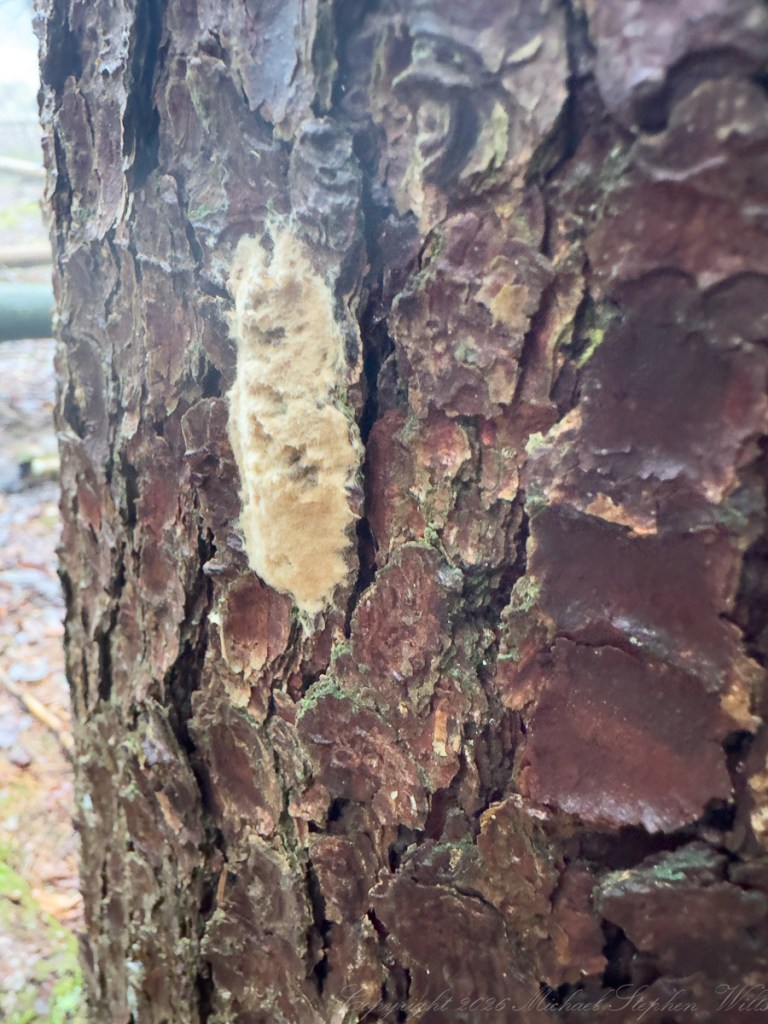
On the bark of a nearby tree, we encountered a patch of what looked like pale, fuzzy insulation—the egg mass of the spongy moth. I explained that each of these masses could contain hundreds of eggs, waiting for the warmth of spring to hatch. It was a reminder that even in this subdued season, the next wave of life was already prepared, concealed in plain sight.

As we made our way back, the boys’ boots squelched in the soft ground, their earlier perch on the stump now a distant memory. Yet the morning had offered them—and me—something more enduring than a climb. It had revealed a landscape in flux, where ice is not merely frozen water but a record of change, where plants defy cold through chemistry, and where even decay participates in renewal.

Late winter, in a place like Malloryville, is not an absence of life but a study in persistence. It asks for attention, for patience, and for a willingness to see beauty in transition. Walking with Sam and Rory, I was reminded that discovery does not wait for spring. It is already here, written in ice, moss, and the quiet industry of the forest.

Enter your email to receive notification of future postings. I will not sell or share your email address.

Exploring Malloryville Preserve: A Hidden Glacial Wetland Gem in New York’s Finger Lakes

Explore the O.D. von Engeln Preserve at Malloryville, a hidden Finger Lakes wetland where glacial eskers, kettles, and springs reveal the deep story of ice and water.

In the heart of upstate New York, the Finger Lakes region stretches out like a handprint left by the last great ice sheets—long, narrow lakes aligned north to south, their steep-sided valleys feeding into a lattice of creeks, waterfalls, and wetlands. It is a landscape defined by water and time: glaciers grinding south, then melting back north some 12,000 years ago, carving deep troughs, piling up ridges of gravel and sand, and leaving behind a terrain that is anything but simple.

The O.D. von Engeln Preserve at Malloryville, near the small village of Freeville, is one of the quiet places where that story is written most clearly on the land. It doesn’t shout like Taughannock Falls or Ithaca’s famous gorges. Instead, it whispers—through the curves of its hills, the softness of its ground, the unexpected appearance of a spring at the base of a gravel ridge. Here, in a relatively compact area, you can see how ice and water worked together to shape the Finger Lakes region we know today.

Overflow from a Kettle Pond threads through a meadow before feeding Fall Creek. The O.D.von Engeln Preserve at Malloryville.

By the time the preserve officially opened in 1997, the name O.D. von Engeln was already familiar to anyone curious about local geology. His classic book on the Finger Lakes helped generations of readers understand that the scenery around them was not random, but the result of powerful, understandable processes. Reading von Engeln, the rolling hills and quiet valleys near Freeville become more than background—they become evidence: of buried ice, rushing meltwater, and the slow settling of sediments into the forms we walk on now.

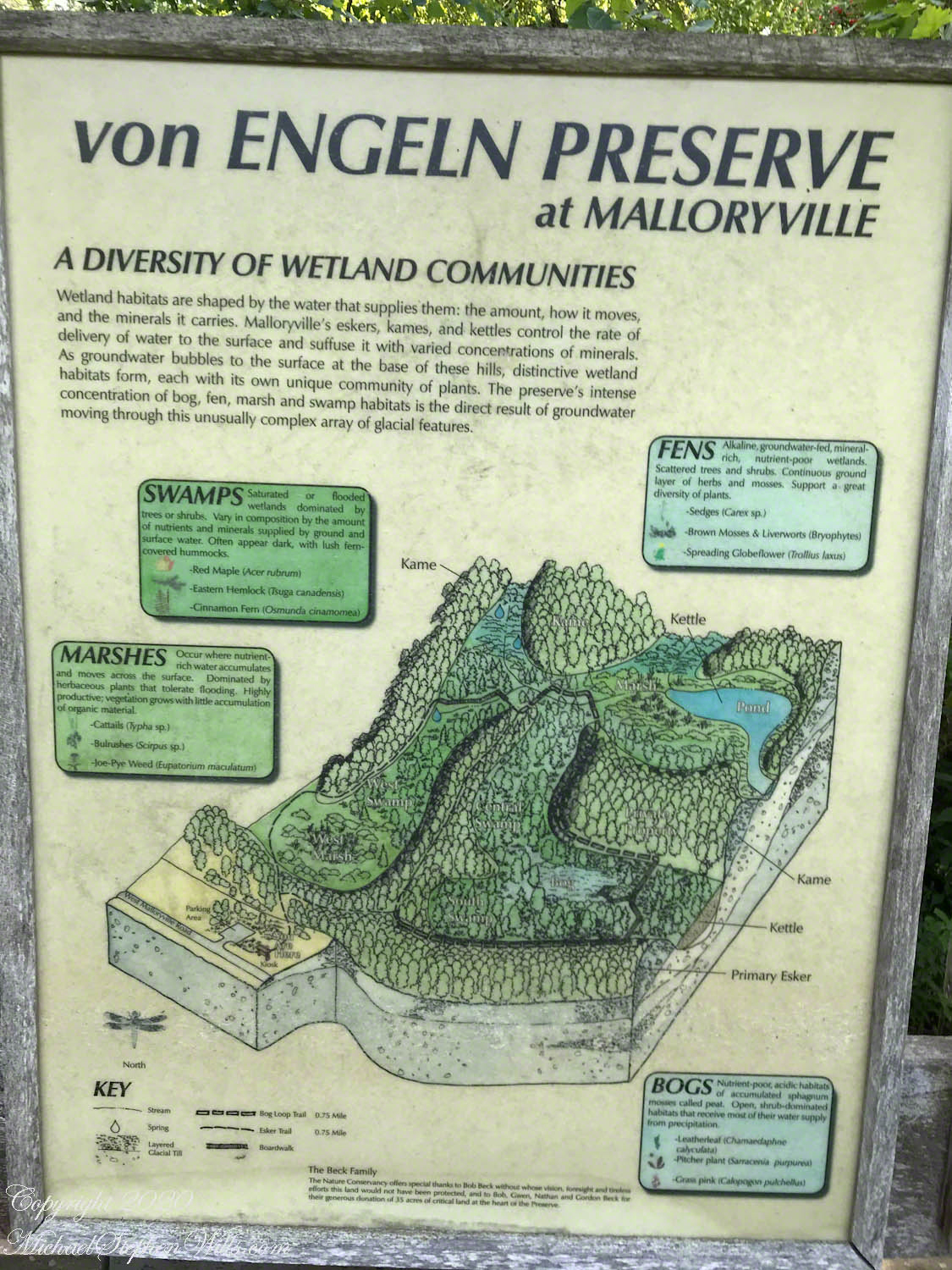
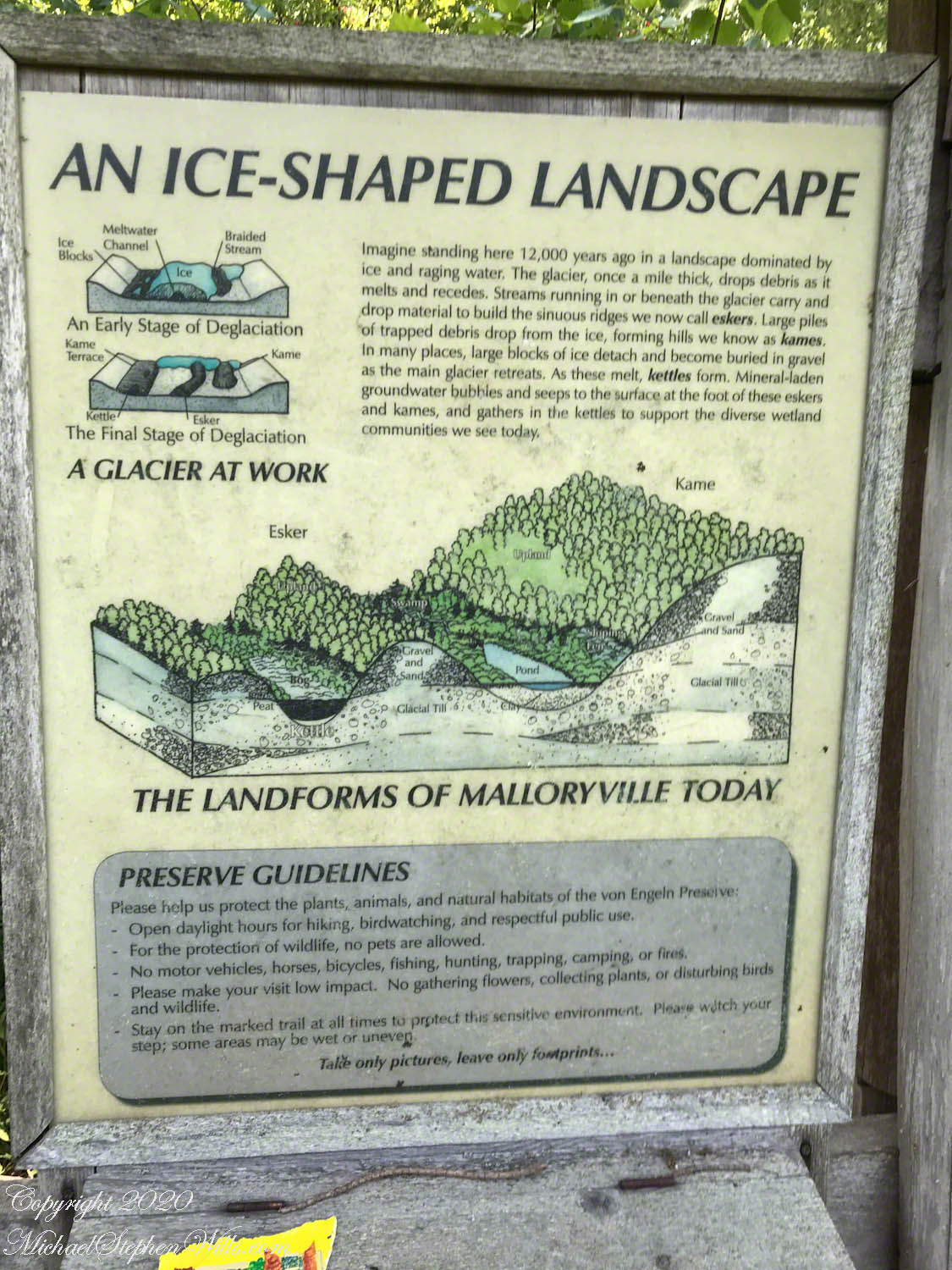
Malloryville is an outdoor classroom for that lesson. The preserve is built around a cluster of glacial landforms—eskers, kames, and kettles—that create a three-dimensional mosaic of ridges and hollows. Eskers, those long, winding gravel ridges left by rivers that once flowed inside the glacier, snake through the forest like frozen currents of stone. Kames—steep, irregular hills of sand and gravel—rise suddenly from the surrounding lowlands. Kettles, the depressions left behind when buried ice blocks melted away, now cradle wetlands and pools.

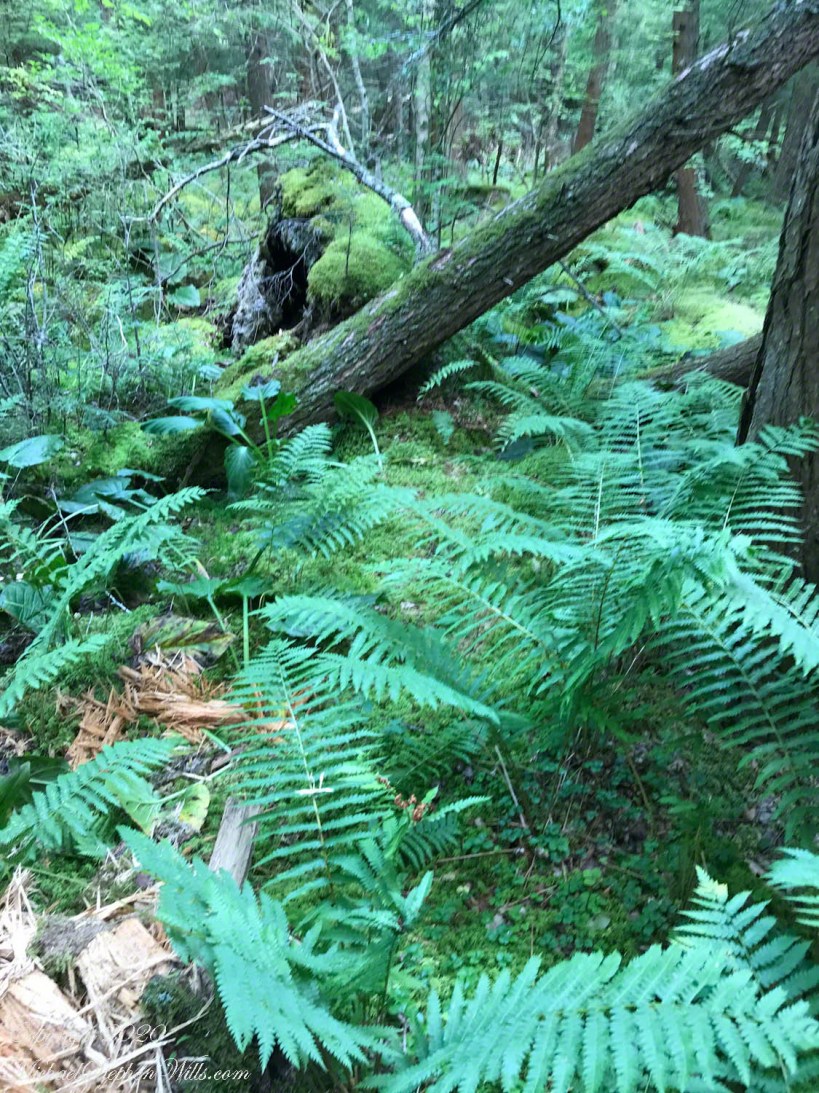
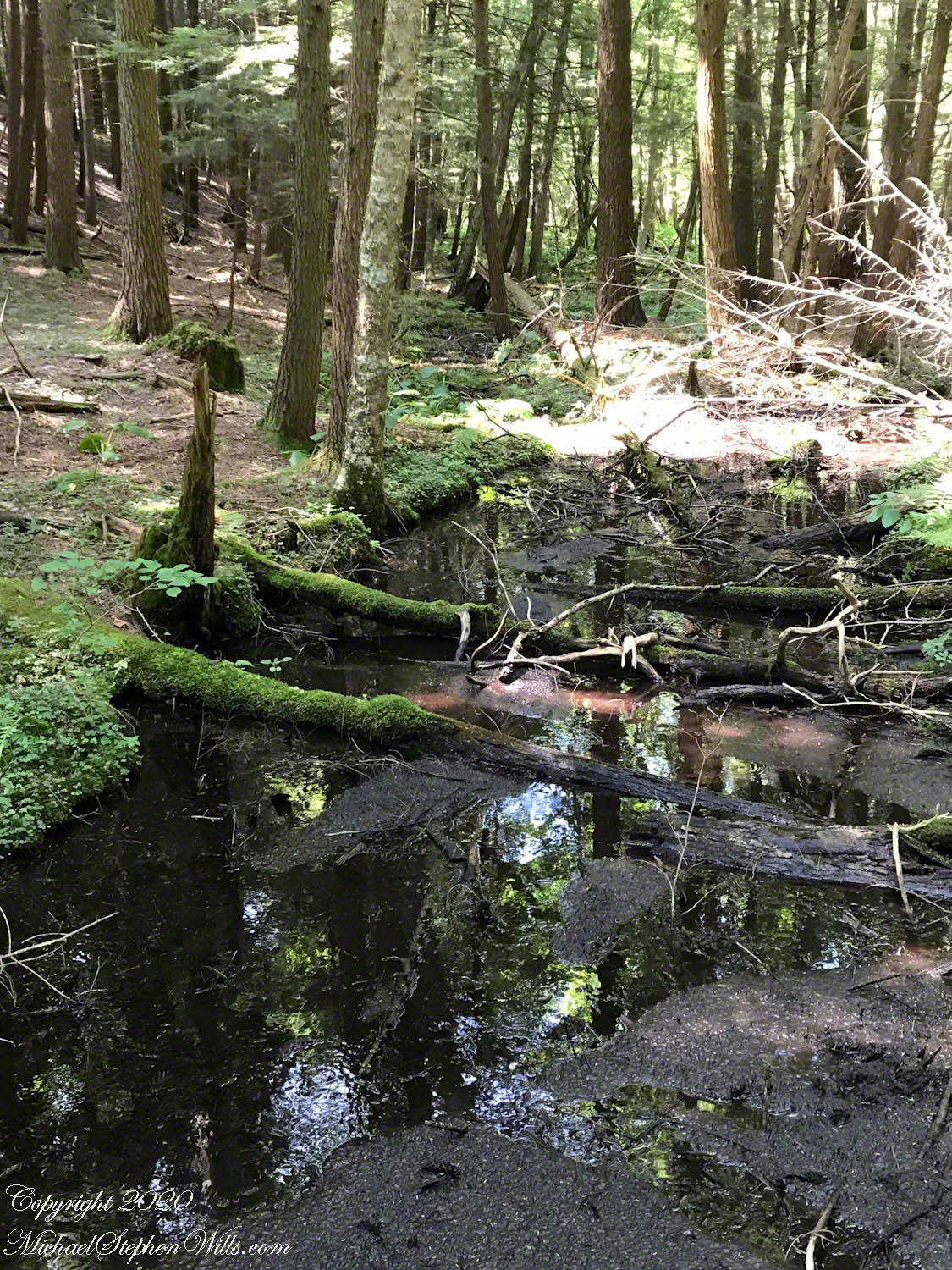
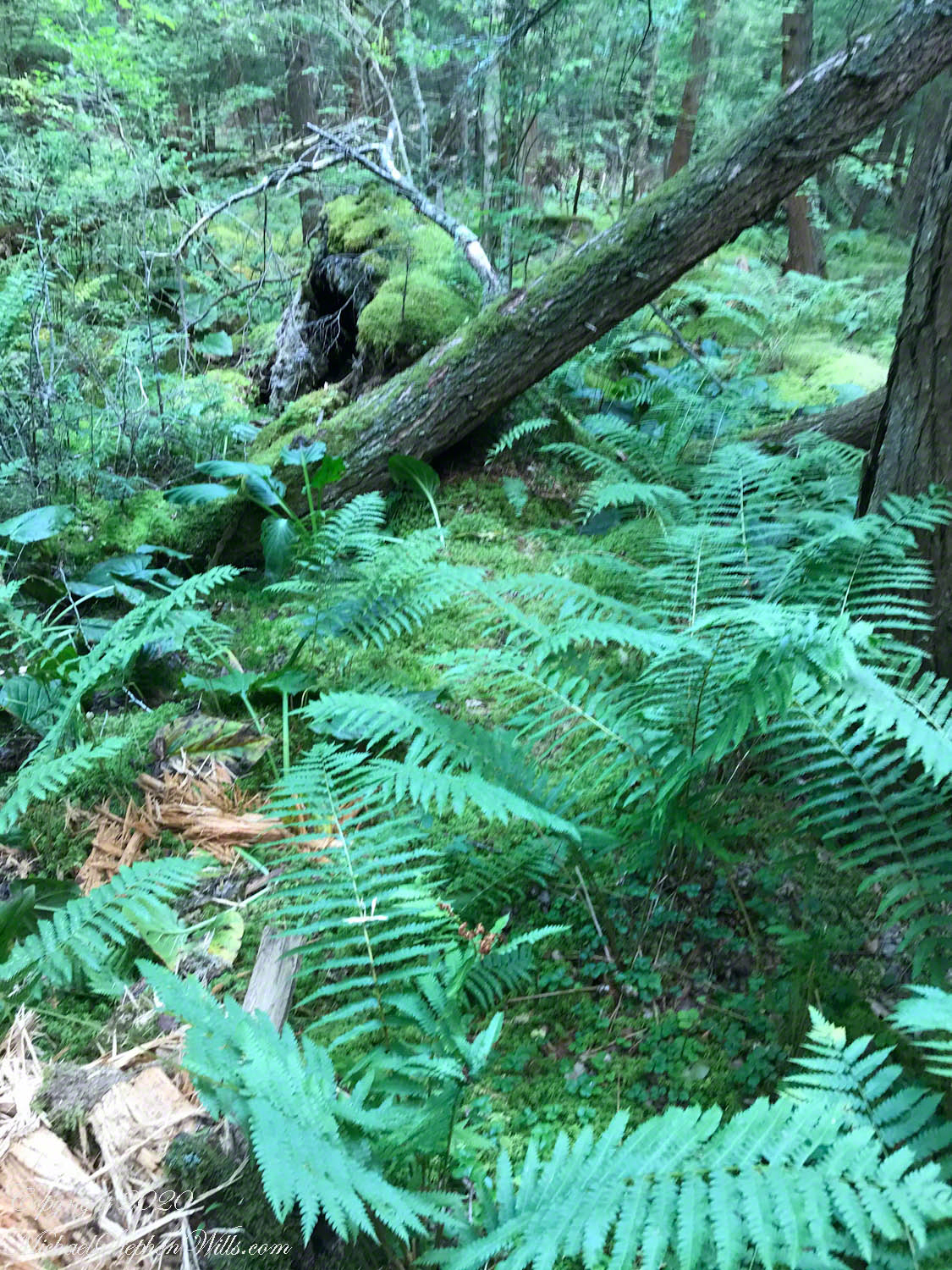
Beneath and between these features, groundwater is constantly on the move. It seeps through layers of sand and gravel, emerges as cold springs at the foot of slopes, and spreads out into swamps, fens, and marshes. In the Finger Lakes, water is always telling a story; at Malloryville, it’s simply easier to hear. Follow the trail and you move through a succession of wet worlds: a seep-fed fen with delicate mosses and sedges, a shrub swamp where skunk cabbage thrusts up in early spring, a cattail marsh that hums with birds and insects in summer.

For my family, the story of Malloryville began even before the preserve had a name. We lived nearby along Fall Creek, itself a thread in the larger fabric of the Cayuga Lake watershed. My son and I camped for the first time on top of an esker just beyond our front door, our tent perched on what I would later learn was the remnant of a stream that once tunneled through the base of a glacier. At the time, it was simply a magical narrow ridge in the woods. Only later, with von Engeln’s guidance and the preserve’s interpretive signs, did that ridge become a sentence in a much older, longer narrative.

That is one of the great gifts of the Finger Lakes: the chance to move from simple admiration—“this is beautiful”—to understanding—“this is how it came to be.” The steep slopes along Cayuga, Seneca, or Skaneateles; the drumlin fields near the north ends of the lakes; the hanging valleys and waterfalls; and the quiet wetlands of places like Malloryville are all chapters in the same glacial chronicle. Once you learn to read one place, you begin to read them all.

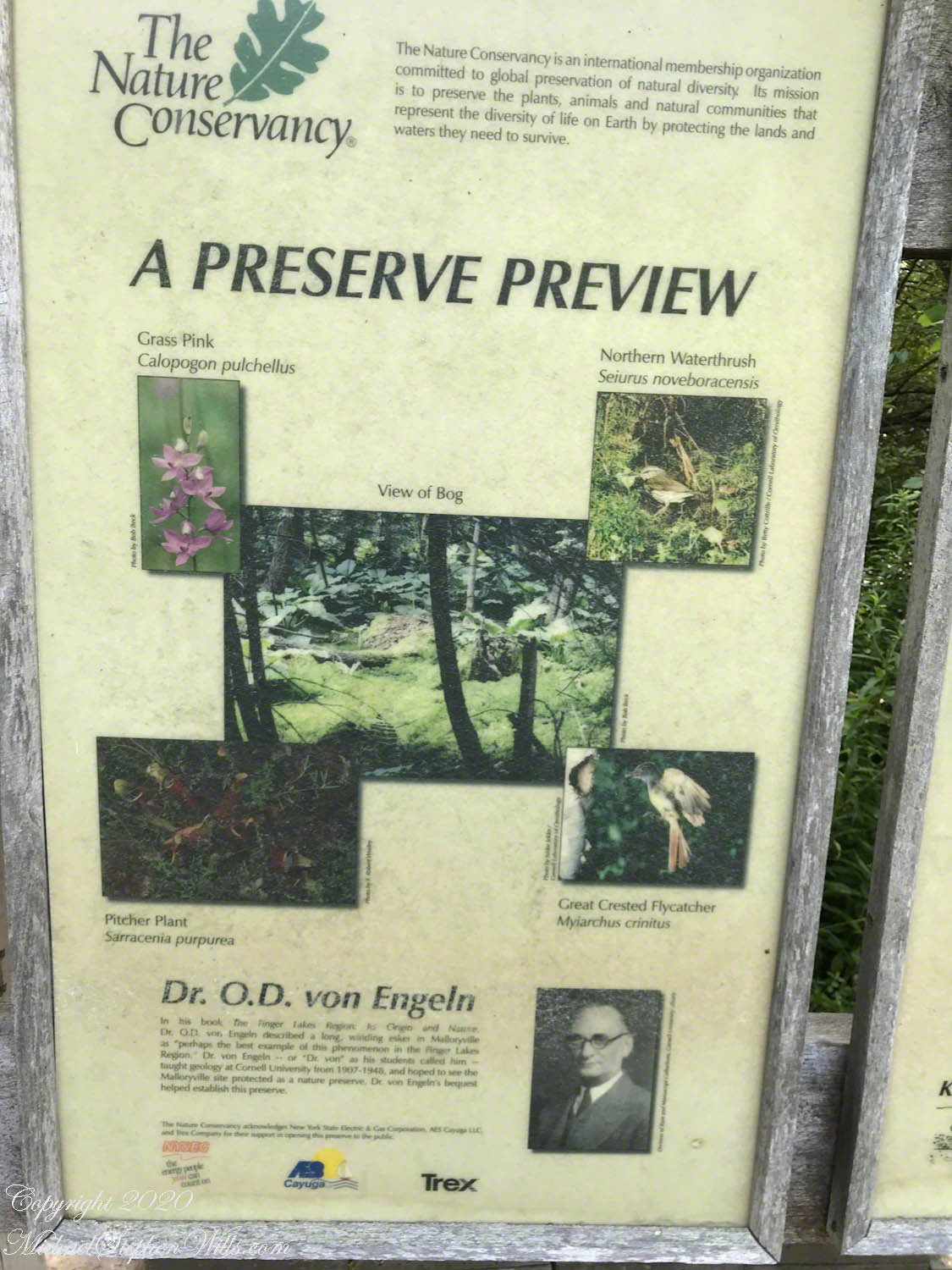
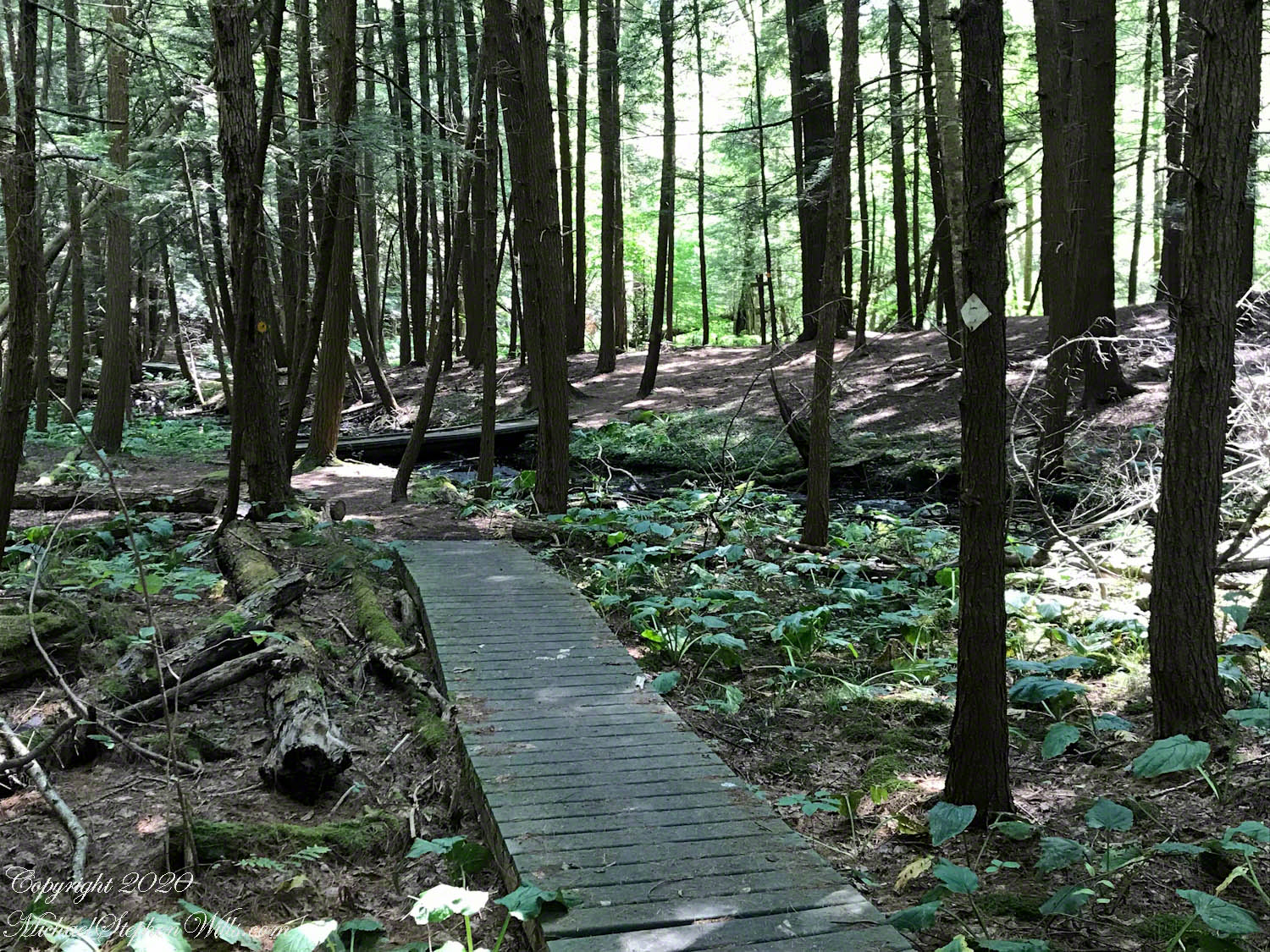
Walking into the O.D. von Engeln Preserve, you enter that story at a small, intimate scale. The parking area and trailhead give way quickly to a world where the ground feels different—sometimes firm and gravelly, sometimes soft and yielding underfoot. Wooden walkways and narrow paths thread through shady forest and open wetland. Each bend offers a subtle shift: a new plant community, a change in water clarity or flow, a small sign explaining what lies beneath your feet.

Fall Creek meanders through the esker fields of the Malloryville Preserve. Here is the view from an abandoned railroad bridge. The preserve is near Freeville in the Finger Lakes Region of New York State.

This is not grand scenery in the postcard sense; it is something quieter and deeper. Malloryville invites you to slow down and notice. To ask why a particular ridge is so narrow, why water emerges here but not there, why one hollow is filled with shrubs and another with moss and sedge. In learning those answers, you gain not only an appreciation for this modest preserve but also a richer understanding of the entire Finger Lakes region.

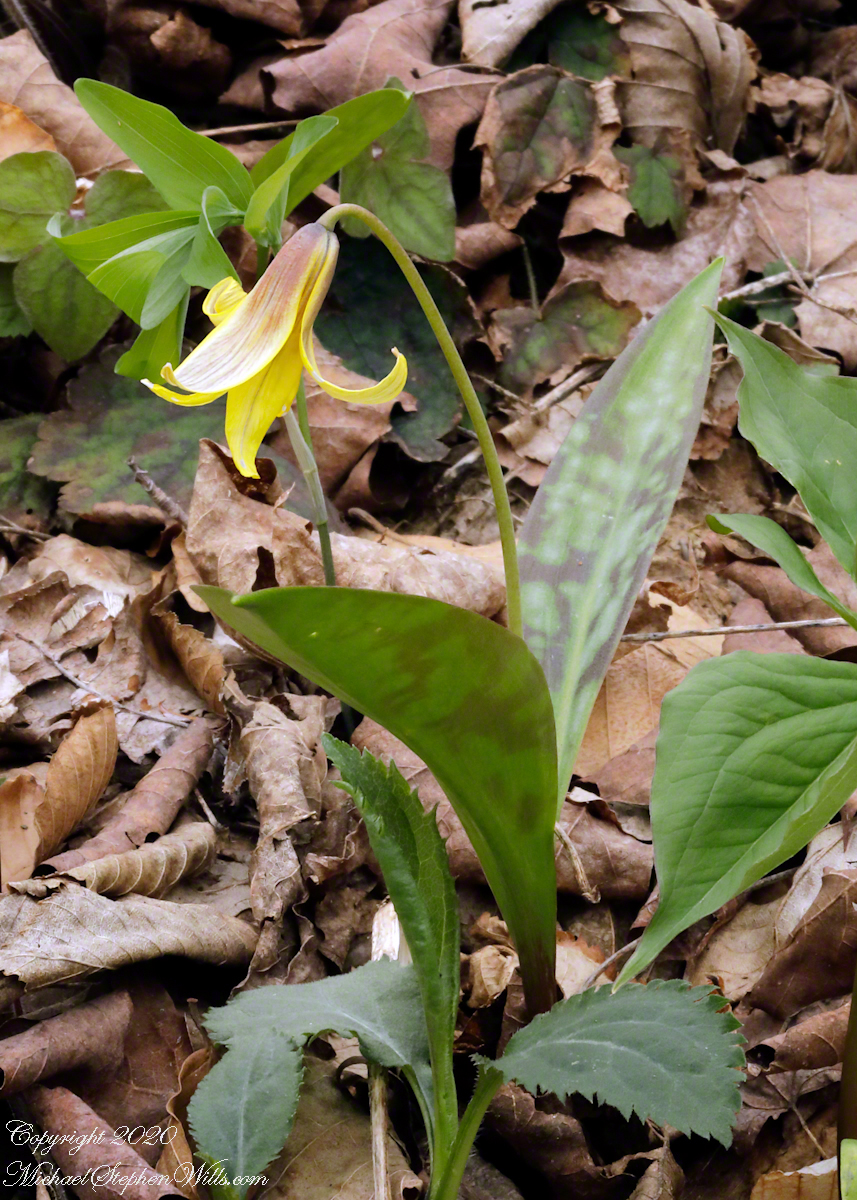
The Trout Lily (Erythronium americanum) is named for the mottled brown leaves resembling marking on trout.

In the end, the O.D. von Engeln Preserve at Malloryville is a lens—a way of seeing. Through it, the familiar landscapes of central New York—valleys, hills, streams, and lakes—come into sharper focus as the lasting work of ice and water. Stand on an esker, look across a kettle wetland, listen to the quiet trickle of a spring, and you are standing inside the very processes that shaped the Finger Lakes.

Enter your email to receive notification of future postings. I will not sell or share your email address.