Jack-in-the-Pulpit at Sapsucker Woods: A Woodland Wildflower Meditation

A quiet meditation on Jack-in-the-Pulpit at Sapsucker Woods, where spring birdsong and woodland shadows surround one of the Finger Lakes’ most quietly mysterious wildflowers.

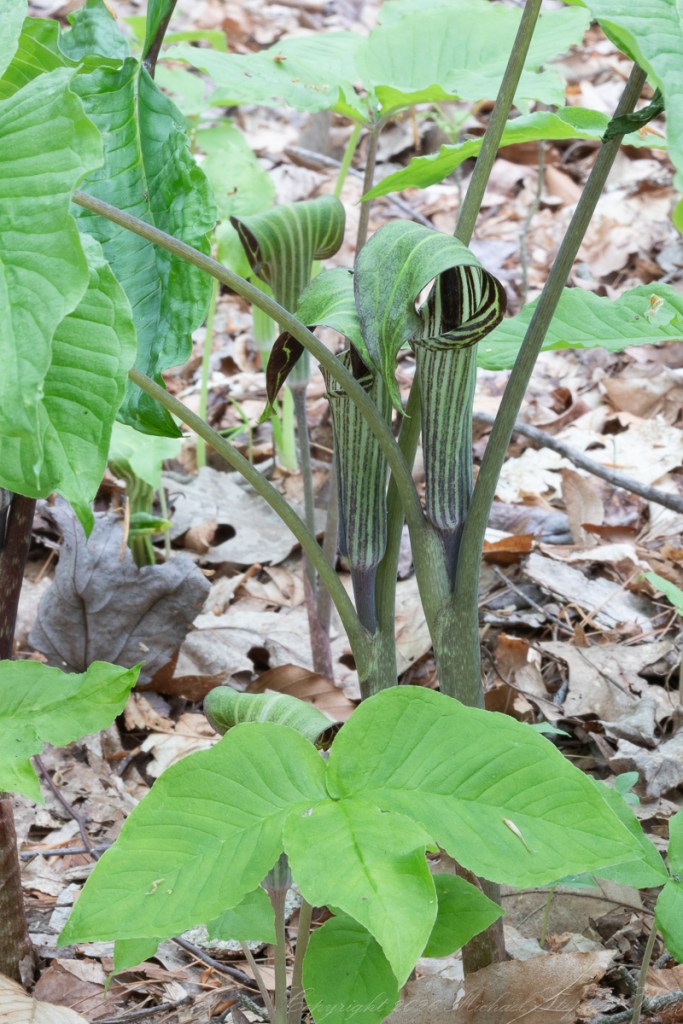
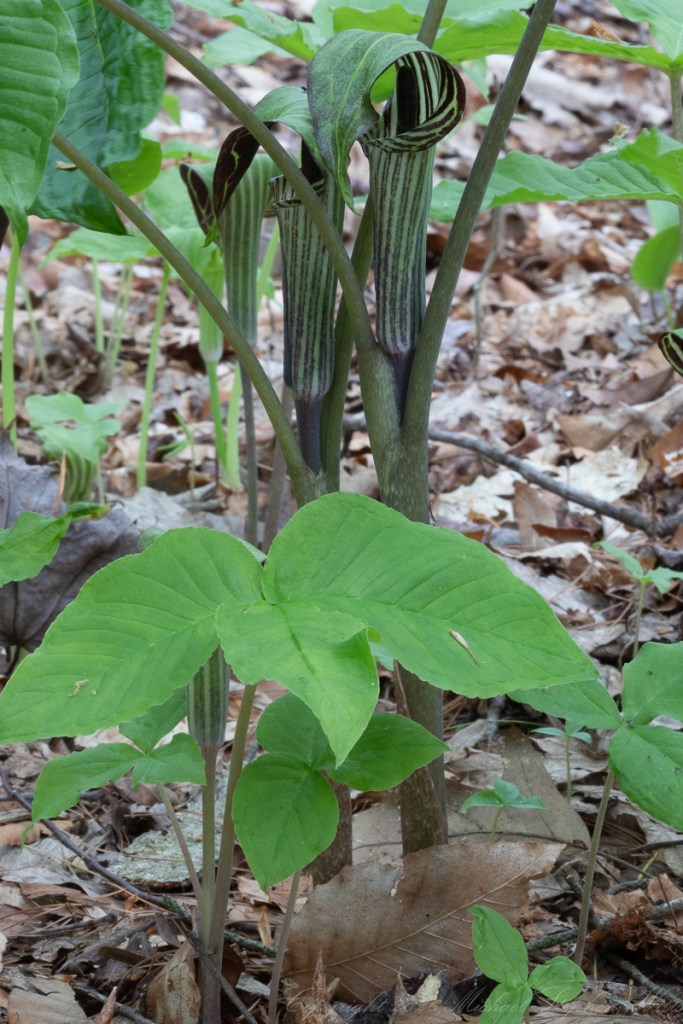
There are plants that announce themselves with banners and trumpets, and there are plants that exist in a vow of secrecy. The Jack-in-the-pulpit belongs to the second order. One does not so much find it as gradually become aware of being observed by it. There in the leaf litter of Sapsucker Woods, among last autumn’s oak leaves and the gray ribs of fallen branches, it rises like a small green minister in a woodland chapel.

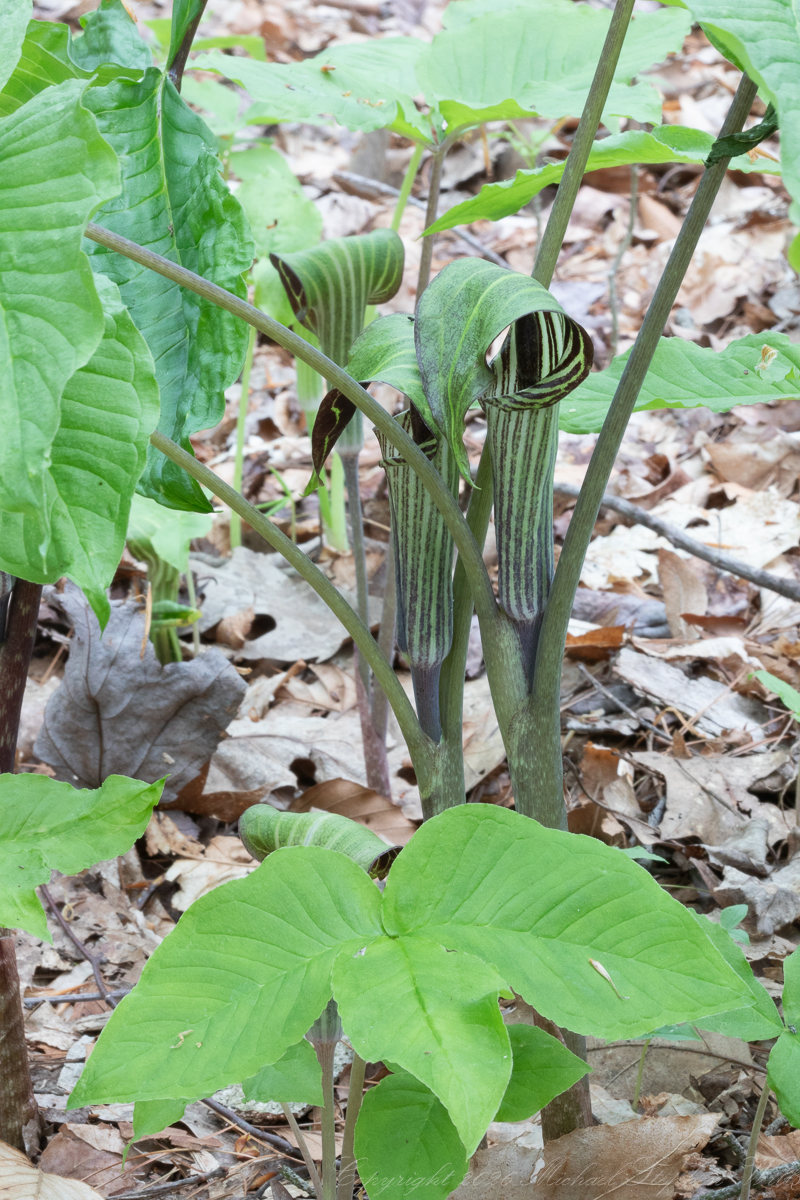
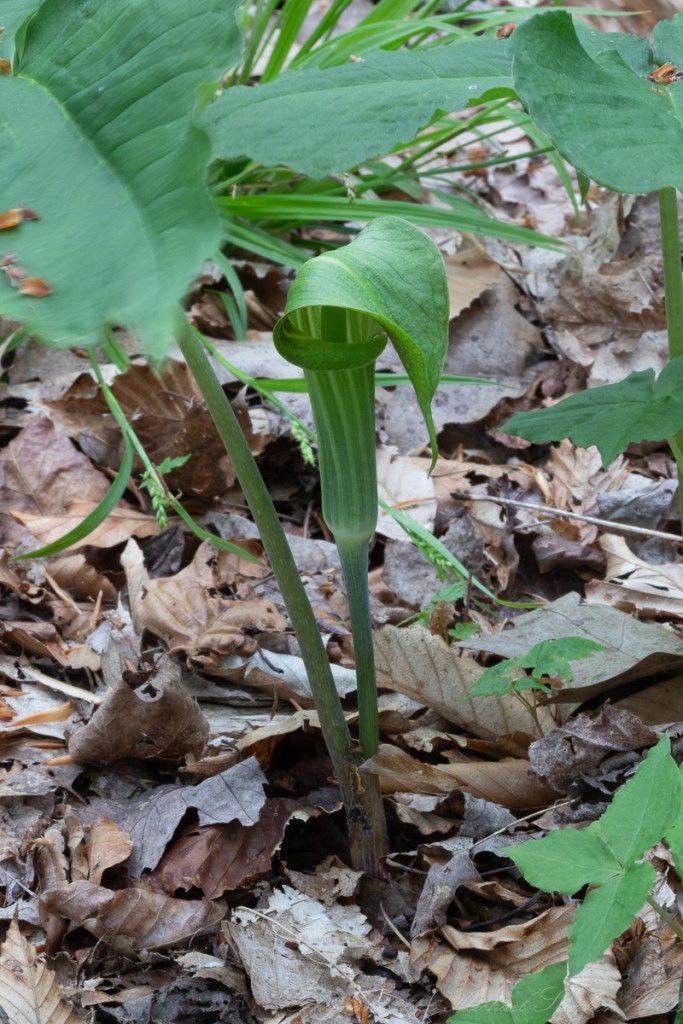
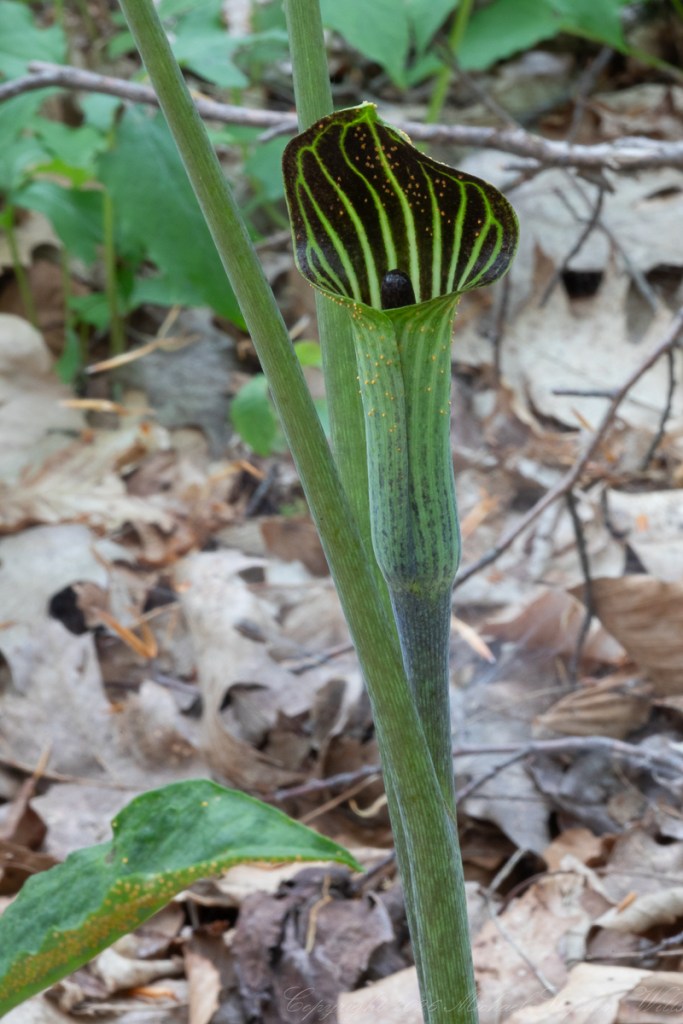
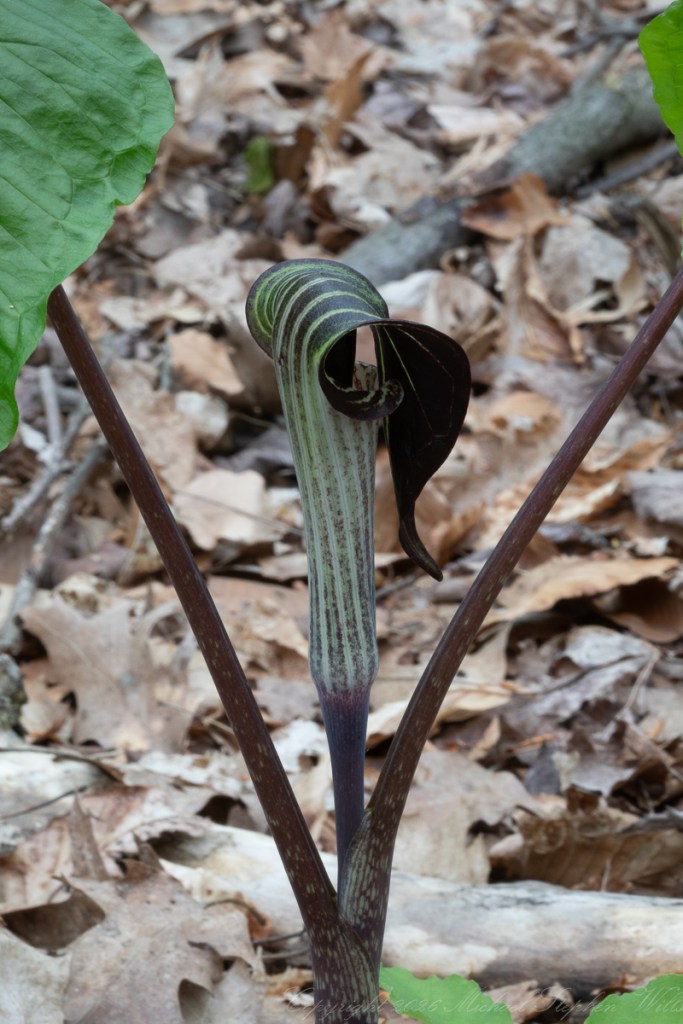
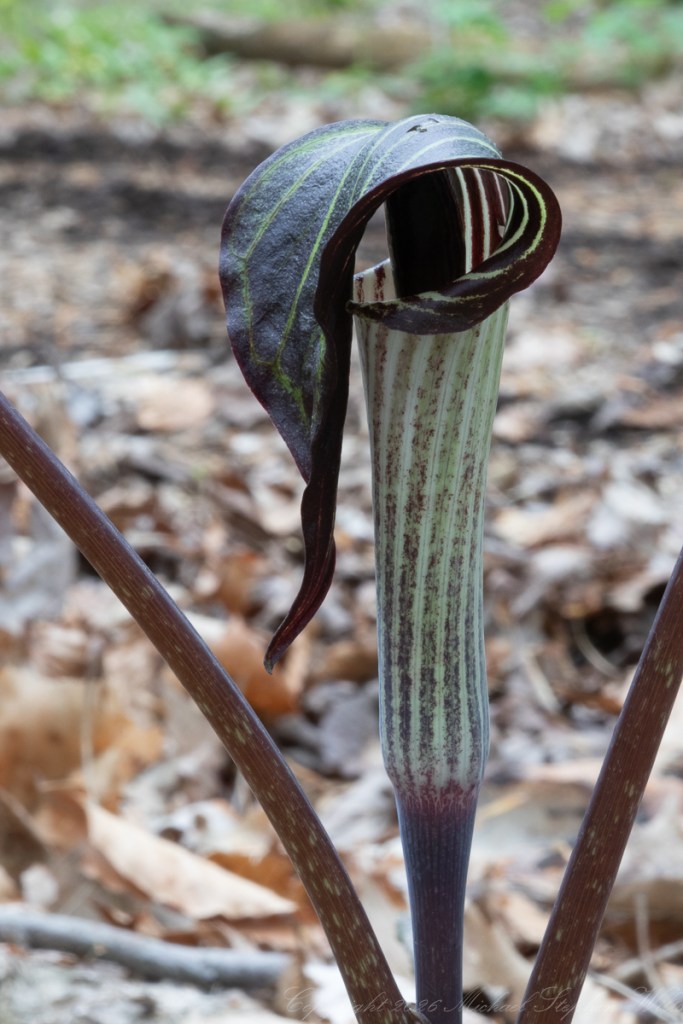
The flower is not showy in the usual sense. It has no bright face lifted to the sun, no petals flung open in invitation. Instead, it is architectural, hooded, inward. The striped spathe bends over the hidden spadix like a pulpit canopy, green outside and darkly veined within, as if the forest itself had written a sermon in shadow and chlorophyll. The longer I looked, the more it seemed less a flower than a presence: a woodland oracle with its hood drawn low.

Sapsucker Woods. Ithaca, Tompkins County, New York State

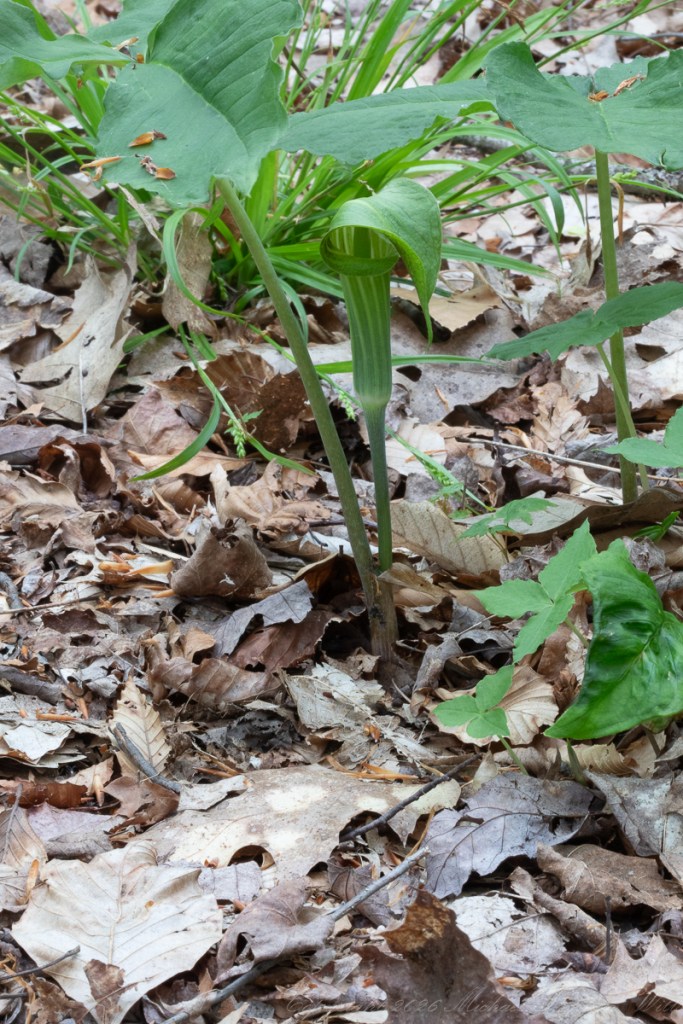
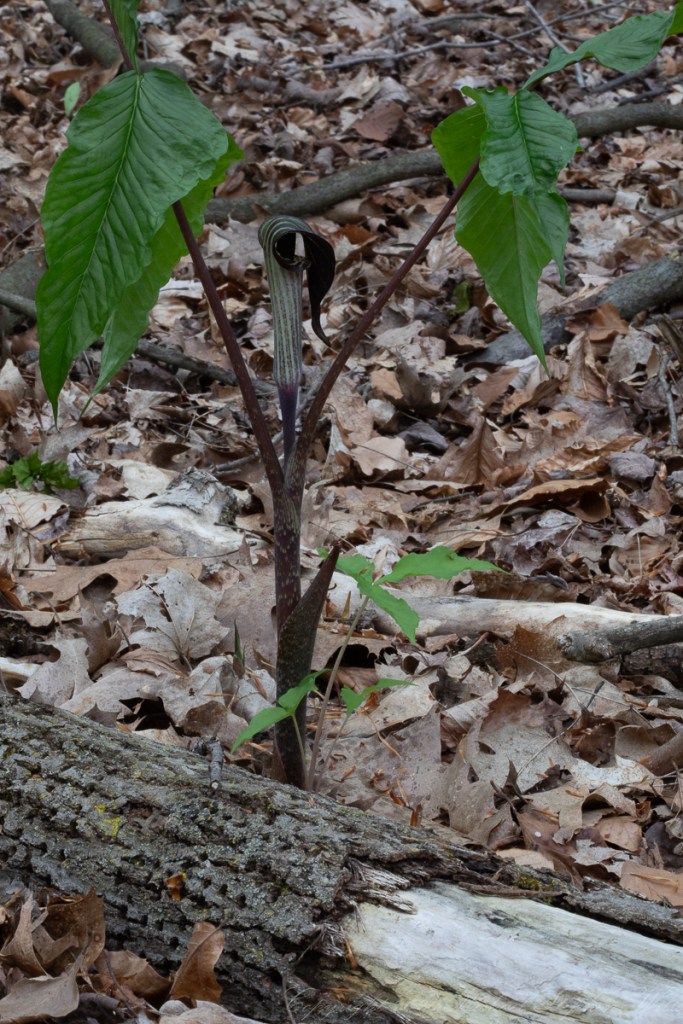
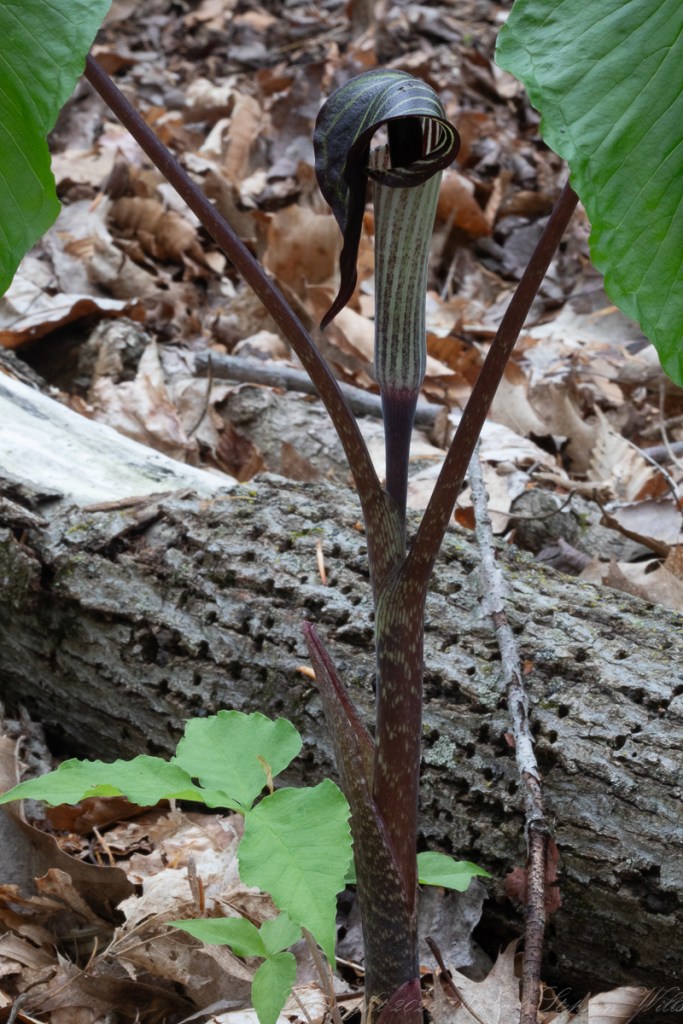
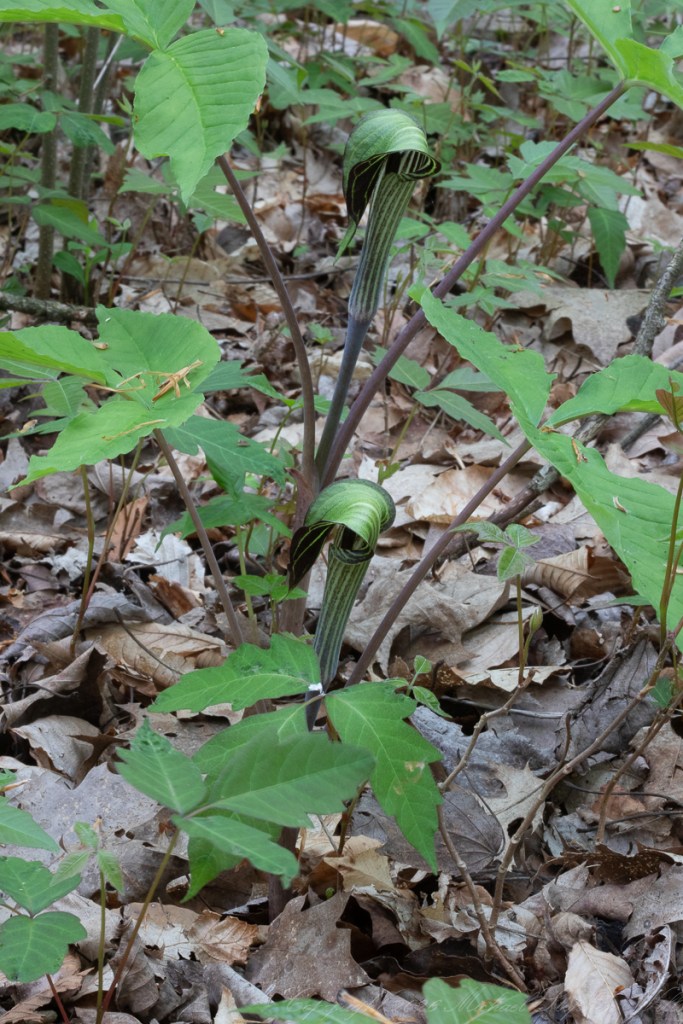
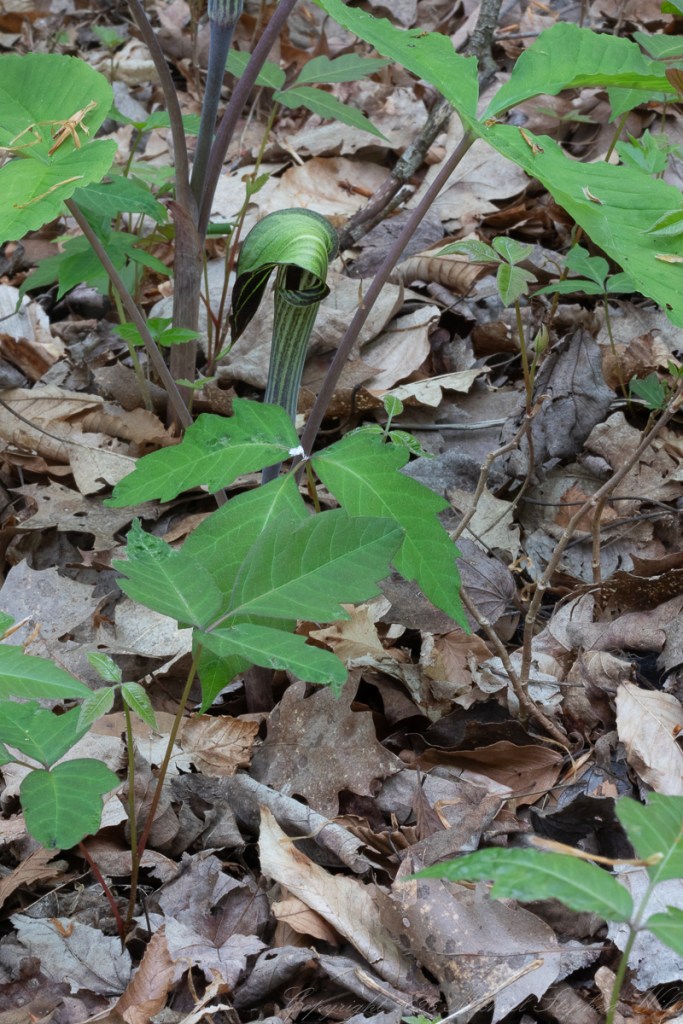
In one plant, the pulpit flares open, dark-rimmed and luminous inside, its pale ribs running upward like the beams of a tiny cathedral. In another, the hood folds forward modestly, nearly concealing the chamber beneath. A third rises darker, with maroon stems and a striped throat, standing between two leaves like a figure pausing mid-speech. The photographs catch these variations beautifully: the open herald, the shy novice, the cloaked elder, each rooted in the brown memory of last year’s leaves.

Sapsucker Woods in late spring is seldom silent, though its quiet is deep. Overhead, the trees are leafing into their first full confidence. The air carries the flute-notes of wood thrushes from farther back in the green shade, those liquid phrases that seem to fall from a height and then echo somewhere inside the listener. Red-eyed vireos begin their patient, conversational preaching from the canopy. A catbird gives its slate-gray improvisations from the understory, while chickadees stitch the edges of the path with quick notes. The season has a thousand small voices, but the Jack-in-the-pulpit listens more than it sings.

That is part of its charm. It is a plant of composure. Around it, the forest spends itself freely: trillium leaves widen, violets brighten the ground, ferns loosen their green scrolls, and mosquitoes rehearse their thin insistence. But Jack remains collected. Its sermon is not declaimed; it is withheld. It asks the passerby to kneel inwardly, to meet it at its own scale. In a hurried world, it is a lesson in standing still.

Georgia O’Keeffe might have understood this flower’s power: the way a close gaze enlarges the small until it becomes monumental. Seen from a distance, the Jack-in-the-pulpit is easily lost among leaves and stems. Seen closely, it becomes a world of line, chamber, curve, and shadow. The pale vertical striping inside the hood has the force of deliberate drawing. The dark rim of the spathe feels almost painted in, a border between secrecy and revelation. Its form is not delicate so much as concentrated—nature’s own green abstraction, folded around a mystery.

The woodland floor around these plants is a text in itself. Dry beech and oak leaves lie curled like old parchment. Sticks and roots cross the scene with accidental calligraphy. The fresh green leaves of the plant rise cleanly from this litter, making a contrast between decay and renewal so perfect that no moral needs to be supplied. The forest does not discard its past; it feeds upon it. Beneath every new hood and leaf is the slow generosity of what has fallen.

The Jack-in-the-pulpit is exactly the sort of neighbor that repays attention. It does not demand admiration; it rewards intimacy. Bend close and the lines appear, the subtle color, the strange animal vitality of the hooded form. Step back and it disappears again into the leafy congregation. It is a flower with the manners of a secret.

I was struck, especially, by how human we make it. We call it Jack, give it a pulpit, imagine it preaching. Yet perhaps the plant is not humanized so much as we are humbled into plant-like patience. Its chambered flower, its folded canopy, its upright poise—all suggest a ritual older than our metaphors. Before churches, before pulpits, before sermons, there were green hoods rising from the spring earth, gathering insects, light, and rain into the quiet business of being alive.

By the time I left, the birdsong had thickened. The woods were awake in layers: high song, low leaf-rustle, the soft give of the trail underfoot. Behind me, the Jack-in-the-pulpits remained at their posts, small sentinels of the damp shade. They seemed to keep their own counsel, and that was their gift. Some flowers brighten the day; these deepen it. They are not exclamation points in the forest, but parentheses—curved, shadowed, and full of meaning.

Click me to visit Michael Stephen Wills Online Finger Lakes Gallery.

Copyright 2026 All Rights Reserved Michael Stephen Wills

Glacial Kettle Bog Wonders: Photographing Pitcher Plants at the O.D. Engeln Preserve in Freeville

Step onto Freeville’s O.D. Engeln Preserve boardwalk and meet purple pitcher plants in a glacial kettle bog—carnivorous beauty, hidden blooms, and macro-photo magic.

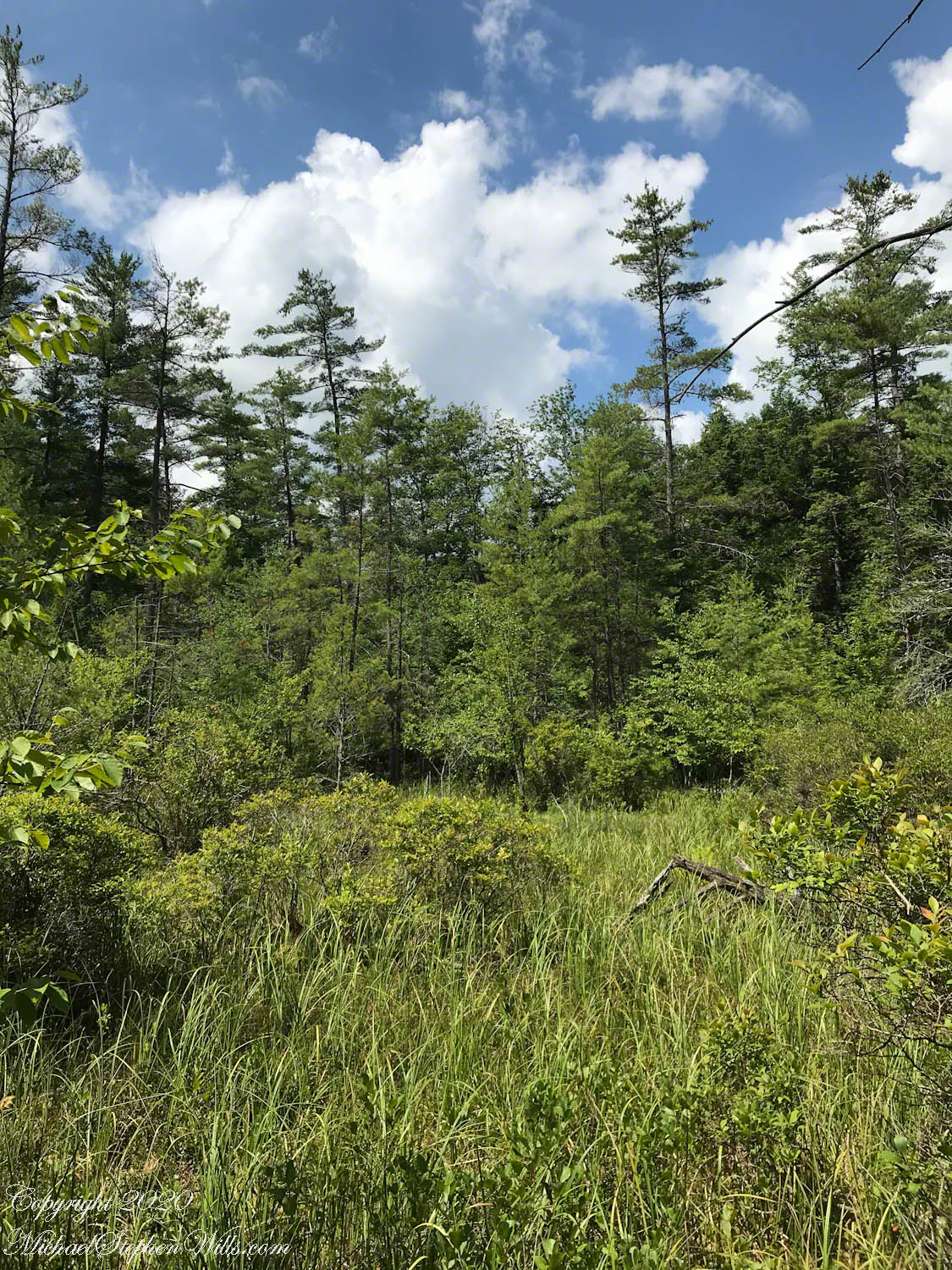
Seen from 1000 feet above in Google Earth, the O.D. (Von) Engeln Preserve at Malloryville Road lays itself out in two glacial “kettles,” pond and bog; a simple diagram drawn by ice and time, then complicated by everything that has happened since. In my photograph, taken from the bog observation platform on a July morning, the sky is rinsed blue, clouds billow, conifers stitch along the rim around open space. Step closer, or lower your lens, and the openness resolves into a crowded, intimate architecture of sedges and moss, twigs and standing water, sunlight and shadow.

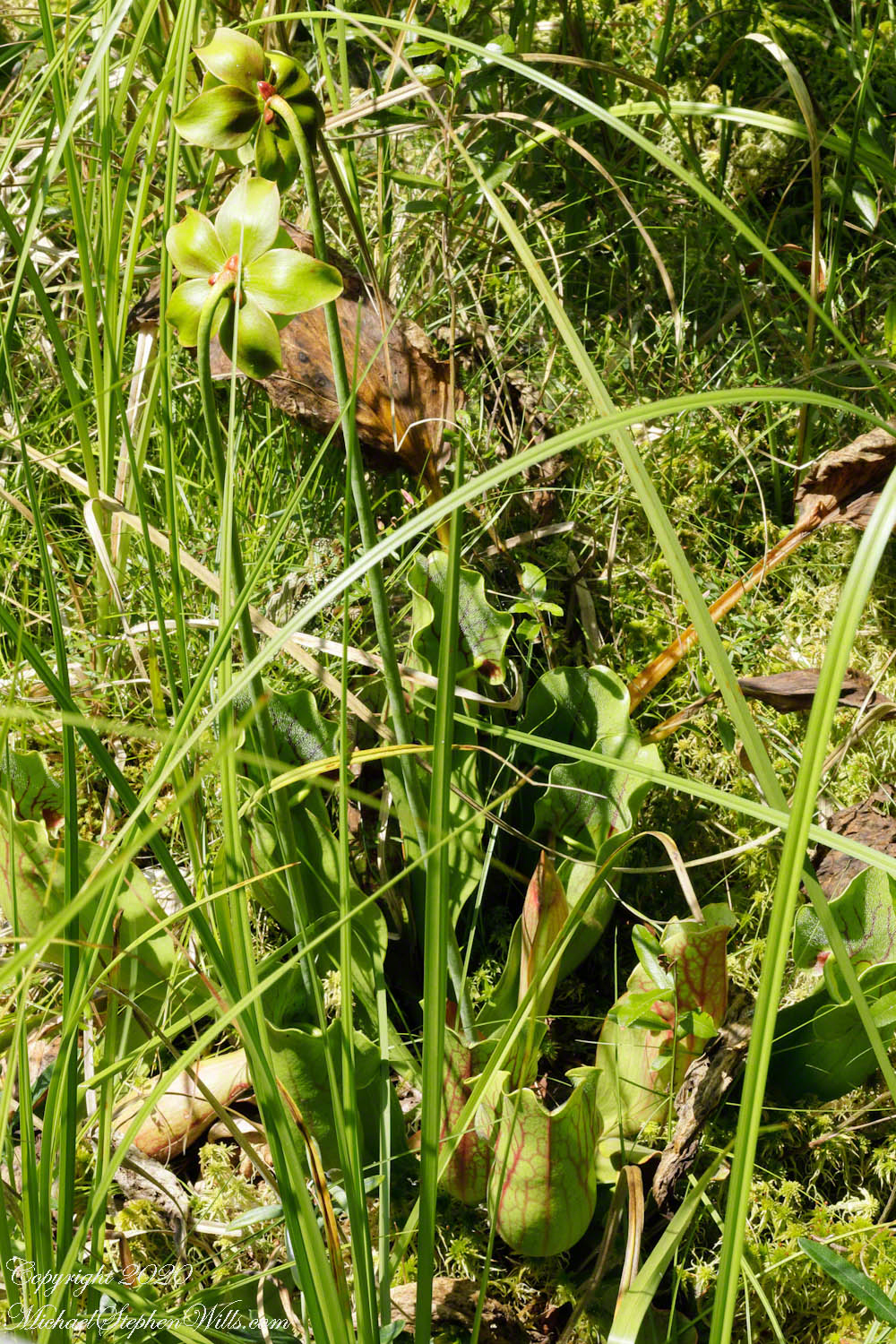
I came here for a plant that does not announce itself the way wildflowers often do. The purple pitcher plant, Sarracenia purpurea, is a quiet scandal: a green vessel in a place where green should be satisfied simply to survive. I arrived equipped for attentiveness—an iPhone for the broad scene, and a Canon DSLR with the F2.8 100 mm macro lens for the stars of this bog. The macro lens is an instrument of humility. It forces you to admit that the important drama is often no bigger than your palm.

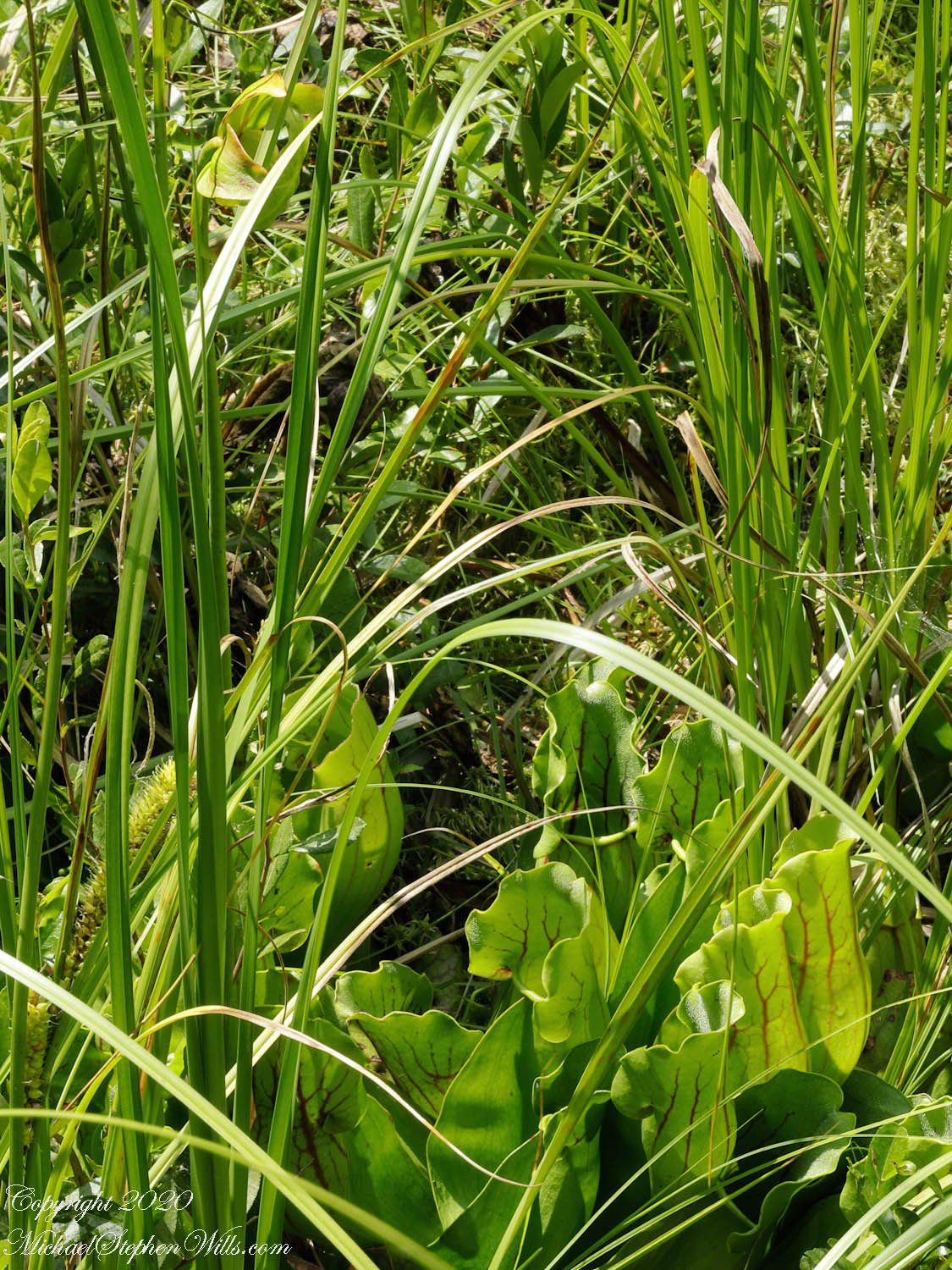
In earlier years, the pitchers could be found right where a visitor naturally looks—within the central cut-out of the observation deck, close enough to lean over and study. But the bog is not a museum display; it is a living negotiation. This season, highbush blueberries pressing in from the margin had crowded the pitchers out, pushing the flowering plants into the grasses eight to ten feet away. The shift is small in human terms, the kind of distance you cross without thinking. In bog terms, it is displacement—an erasure of a familiar scene, a reminder that rarity is not only about numbers but also about space.

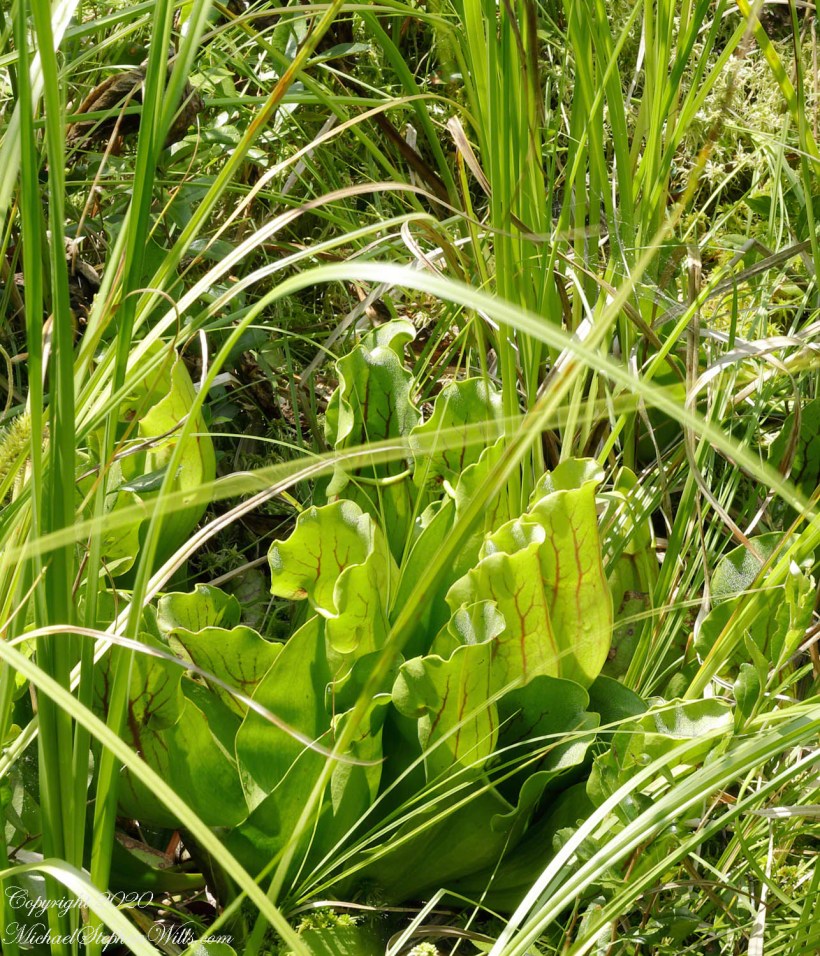
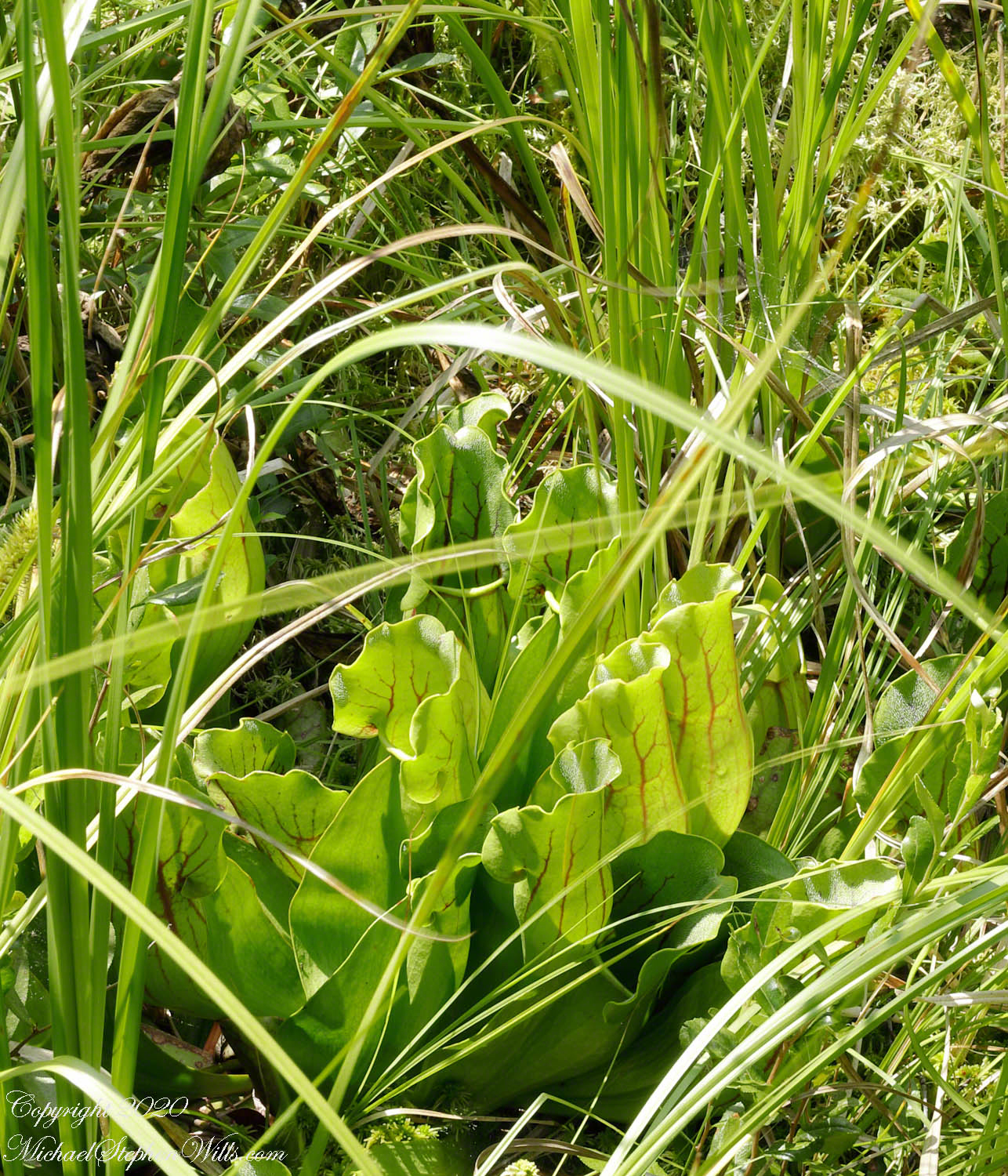
The pitchers themselves—those “turtle socks,” as they’ve been nicknamed—sit at ground level in a rosette, their mouths open to weather. Sunlight floods the cups and turns them into something both domestic and uncanny: a set of green, veined slippers left out to air, or a cluster of small amphorae awaiting an offering. In the bog’s thin soil, nourishment is hard-won. The pitcher plant answers that poverty with invention. Instead of arguing with the chemistry of peat, it borrows from the animal world—luring and taking what the air can spare. The cup is a trap, yes, but also a reservoir: rainwater gathered and held, a miniature wetland that mirrors the preserve’s larger one.

There is a tension here that never quite resolves: the plant’s beauty, and the plant’s appetite. We admire the cup’s red veining, the glossy rim, the way the opening flares like a lip; then we remember what the lip is for. We admire the flower’s elegant sheltering forms; then we realize the shelter is also a funnel, a choreography. This is not cruelty—no more than winter is cruelty. It is adaptation made visible, a lesson in how form follows need, and how need can produce something unexpectedly lovely.

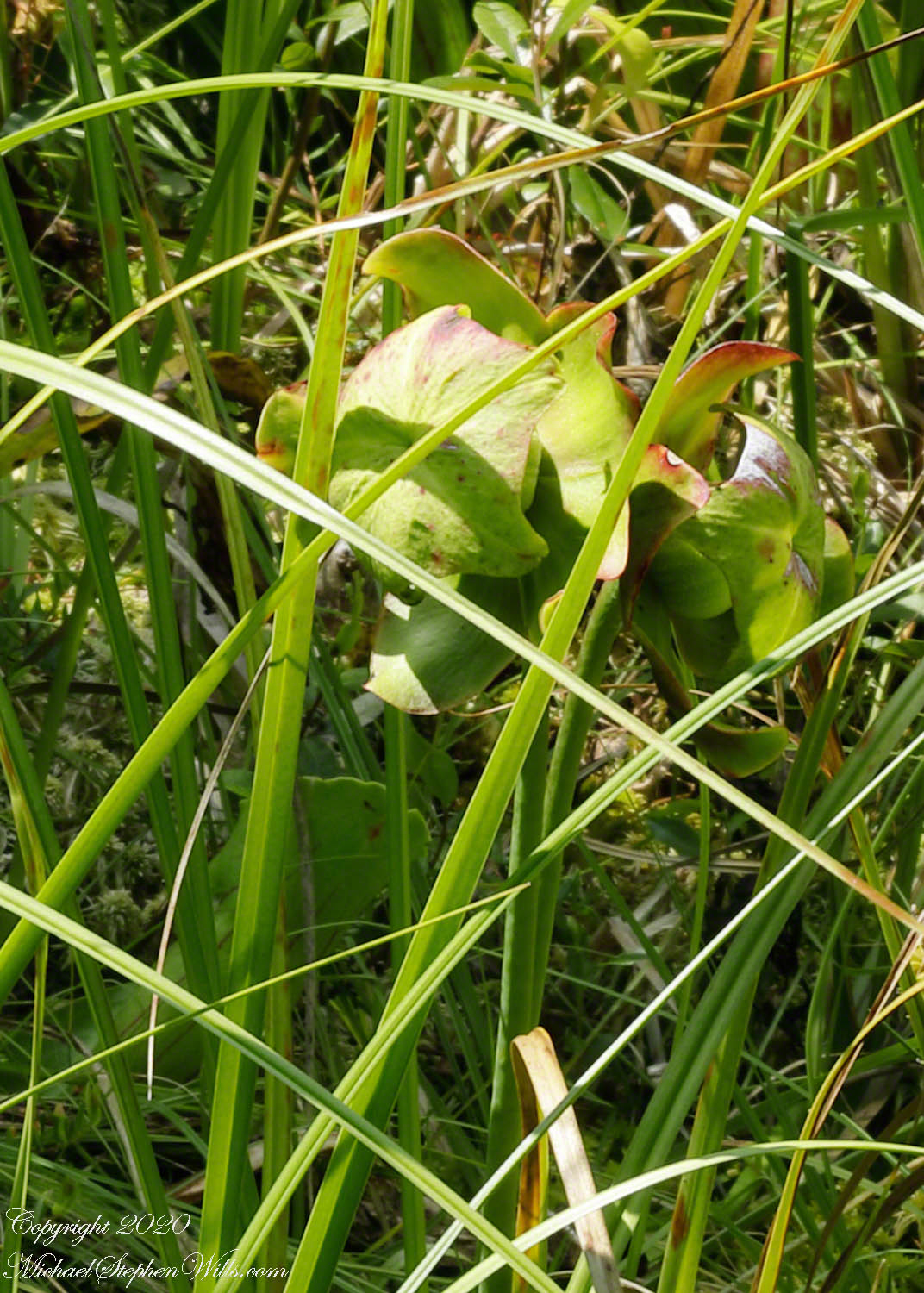
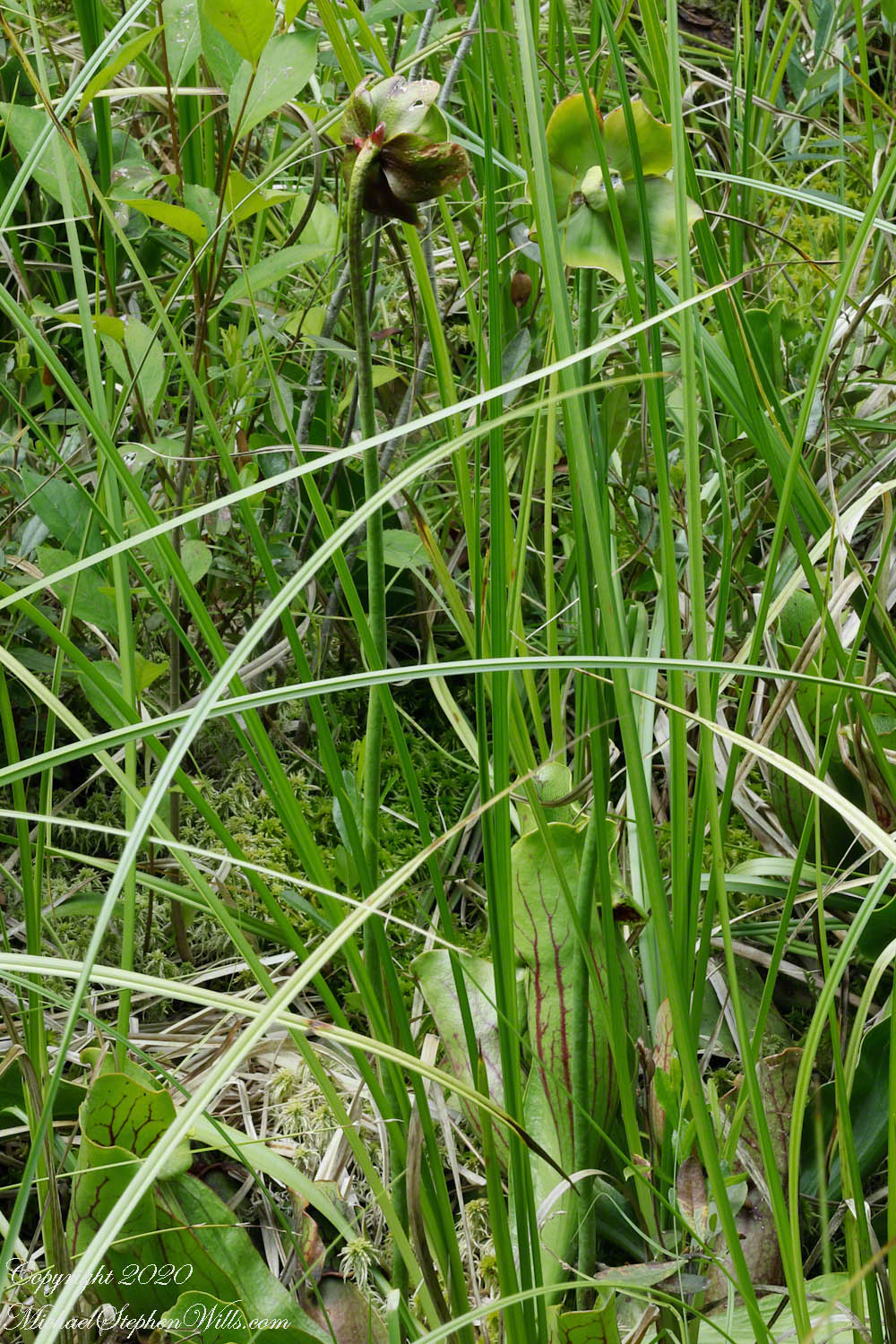
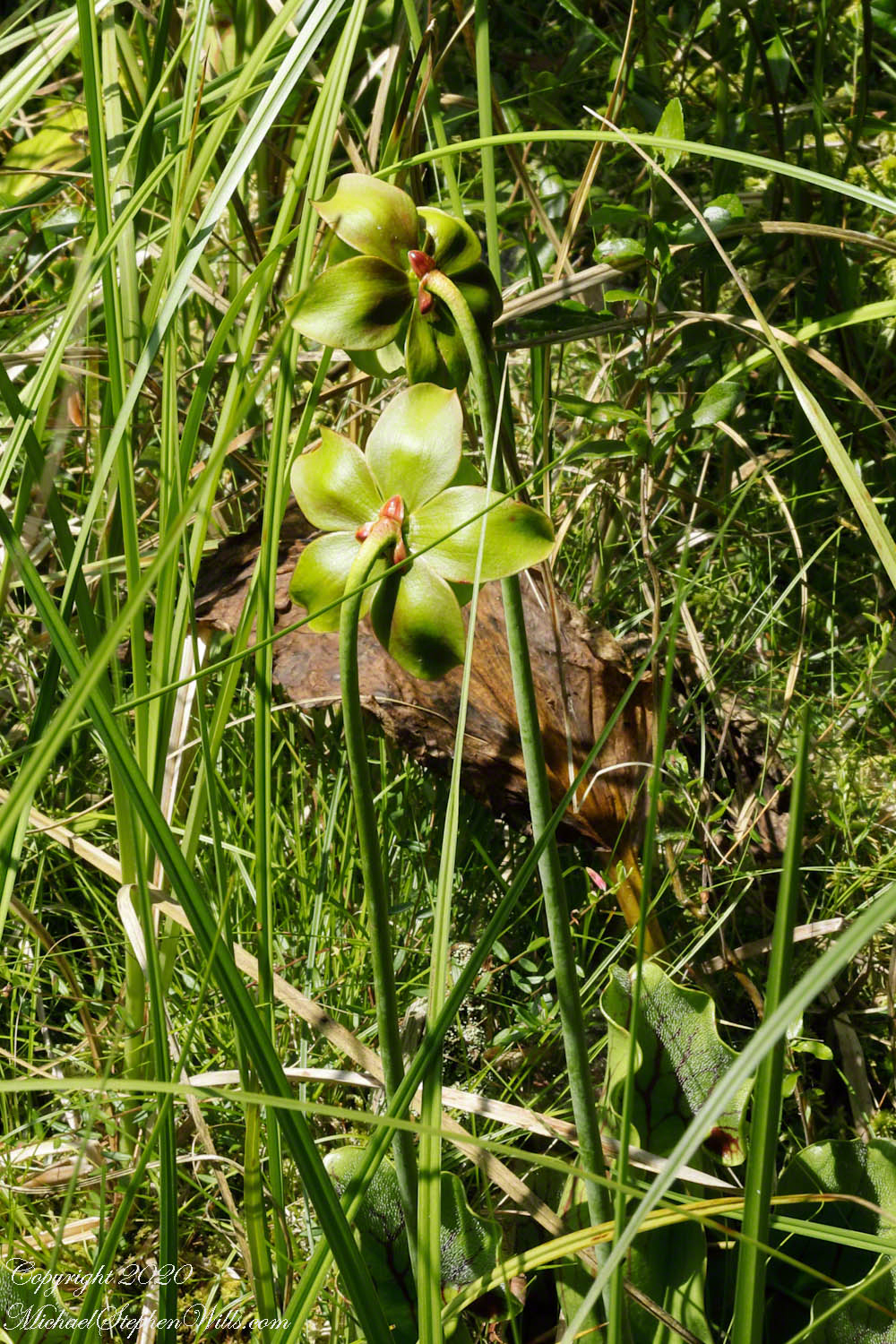
And yet the real marvel—the reason I came that day—rises above the traps on a strong stalk, lifted clear of the dangerous mouths below. The flower is not purple in the obvious way its common name promises. It is subtler and stranger: a suspended structure with the poise of a lantern and the protective logic of armor. It struck me as a flower unlike any I have experienced, resembling an insect carapace, with the reproductive element underneath a hood. That hooded design feels less like ornament than strategy—an architecture that guides a pollinator’s route, controlling entrances and exits the way the pitcher controls the fall of an insect.

Even the flower’s back side refuses to perform for the camera. From the posterior angle, “there are only bracts”—plain supporting structures, the botanical equivalent of scaffolding left in place once the facade is finished. The bog, too, shows its scaffolding everywhere: dead stems, old wood, peat-dark water, last year’s leaves. A preserve is never only what is blooming. It is what persists.

I found myself thinking about the details I wanted but could not quite capture that day: the downward facing hairs inside the pitcher—those one-way bristles that make retreat difficult once a victim has slipped in. I or my lens was not up to this challange. The shortcoming was minor, but instructive. The bog offers glimpses, not guarantees. It invites return visits, different light, different seasons, a different kind of patience.

Standing on the platform I felt the preserve’s central truth: these are landscapes shaped by constraint—by ice, by water, by nutrient scarcity, by the slow encroachment of shrubs—and yet they keep producing improbable forms. The purple pitcher plant is one of those forms: a green cup that drinks rain, a flower that wears a hood, a turtle sock that turns hunger into design. In a place where the ground itself seems to refuse abundance, the plant answers with a different kind of richness—an elegance that is also a solution.

Enter your email to receive notification of future postings. I will not sell or share your email address.

Carex Plantaginea: A Hidden Gem in Treman Gorge

Venture into the shaded woods of Treman Gorge and discover the understated elegance of Carex plantaginea, or seersucker sedge. Explore its broad, textured leaves and uncover its place in nature’s tapestry. Read more!

Today I will start the practive of posting once a week, early Tuesday mornings.

As I made my way through Treman Gorge, the lush greenery and diverse plant life never ceased to amaze me. The trail led me to a lesser-known, but equally fascinating, plant that stood out amid the forest floor’s tapestry. This was Carex plantaginea, commonly known as plantainleaf sedge or seersucker sedge.

First Impressions

My attention was initially drawn to the broad, bright green leaves that resembled those of plantains, hence the common name “plantainleaf sedge.” The leaves were prominently veined and slightly wrinkled, reminiscent of seersucker fabric, giving the plant a unique texture. The scientific name, Carex plantaginea, aptly reflects this characteristic, with “plantaginea” referring to its plantain-like leaves.

Natural History and Habitat


Carex plantaginea is native to the deciduous forests of eastern North America. It thrives in the rich, moist soils found in these regions, making Treman Gorge an ideal habitat. The plant prefers shaded environments, often flourishing under the canopy of taller trees where it can take advantage of the dappled sunlight filtering through the leaves.

This perennial sedge is part of the larger Carex genus, which includes numerous species of sedges that are often found in wetlands and forest understories. Unlike some of its relatives, Carex plantaginea is more commonly found in upland areas, adding to the diversity of the forest floor.

Historical and Modern Uses


Historically, Native American tribes recognized the utility of various Carex species, though specific references to Carex plantaginea are scarce. Sedges were generally used for their fibrous leaves, which could be woven into mats, baskets, and other useful items. The broad leaves of Carex plantaginea would have been particularly suitable for such purposes.

In modern times, Carex plantaginea is appreciated more for its ornamental value. Gardeners and landscape designers often use it in shade gardens and woodland settings, where its striking foliage and low maintenance needs make it a popular choice. Its ability to thrive in shaded areas with moist soil conditions makes it an excellent ground cover for forested landscapes.

Capturing the Moment


I couldn’t resist photographing Carex plantaginea to capture its distinctive beauty. The Apple Iphone 14 ProMax image shows the plant nestled among the rich vegetation of Treman Gorge, its vibrant green leaves contrasting with the surrounding foliage. The wrinkled texture of the leaves is clearly visible, highlighting the plant’s unique appearance.

As I continued my exploration, I felt a sense of wonder and appreciation for the hidden gems that nature offers. Carex plantaginea, with its subtle beauty and ecological importance, is a reminder of the intricate connections within forest ecosystems. Discovering this plant added another layer of richness to my journey through Treman Gorge, deepening my understanding and appreciation of the natural world around me.

Copyright 2024 Michael Stephen Wills All Rights Reserved