Jack-in-the-Pulpit at Sapsucker Woods: A Woodland Wildflower Meditation

A quiet meditation on Jack-in-the-Pulpit at Sapsucker Woods, where spring birdsong and woodland shadows surround one of the Finger Lakes’ most quietly mysterious wildflowers.

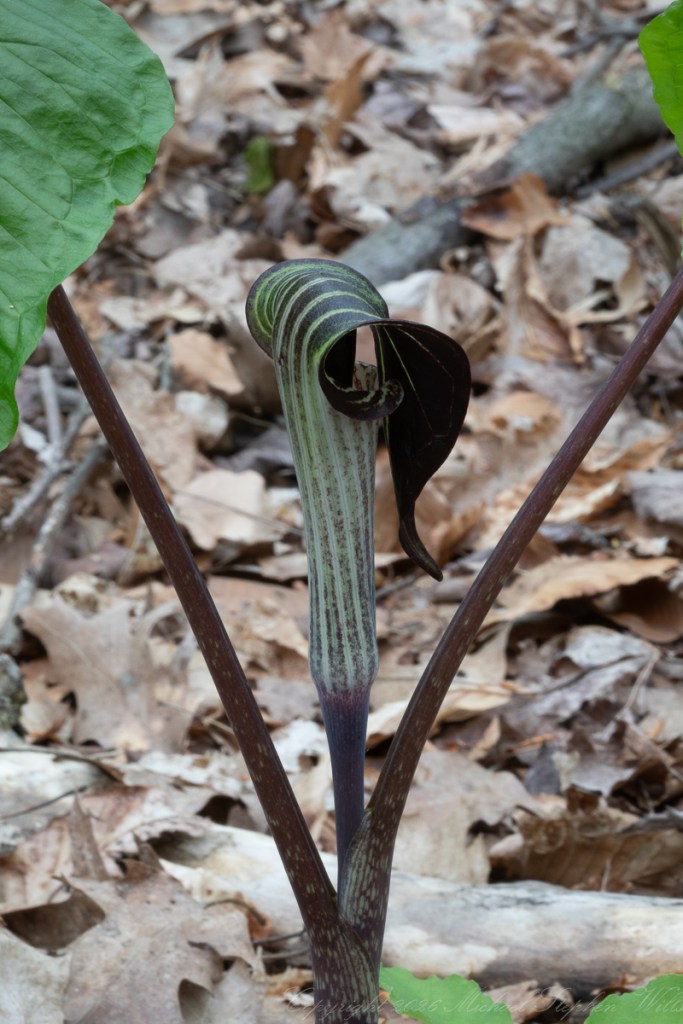
There are plants that announce themselves with banners and trumpets, and there are plants that exist in a vow of secrecy. The Jack-in-the-pulpit belongs to the second order. One does not so much find it as gradually become aware of being observed by it. There in the leaf litter of Sapsucker Woods, among last autumn’s oak leaves and the gray ribs of fallen branches, it rises like a small green minister in a woodland chapel.
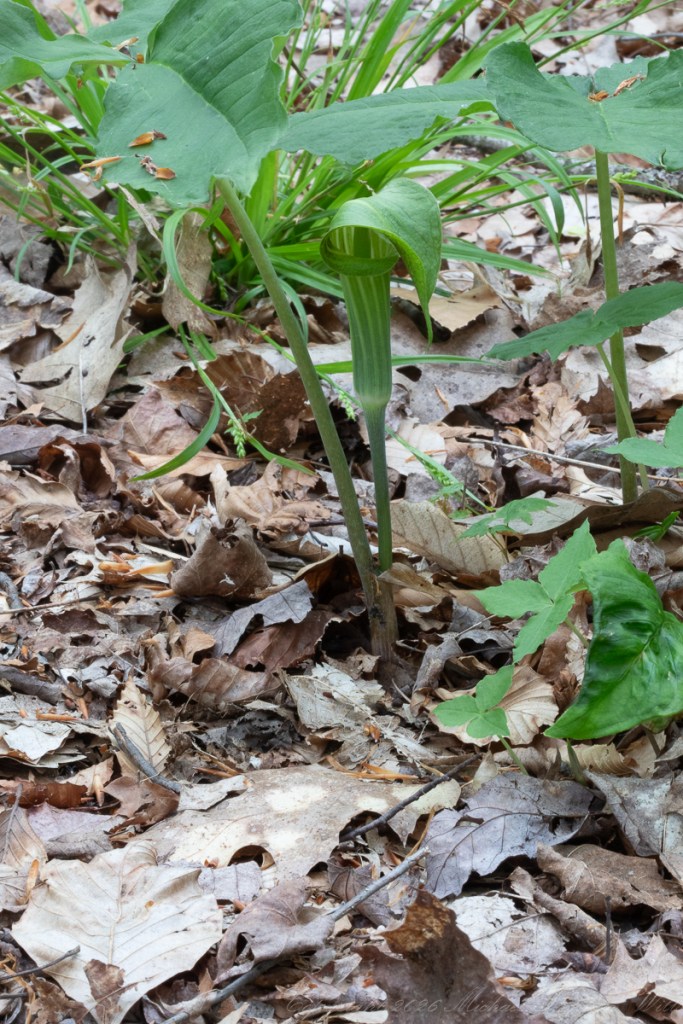
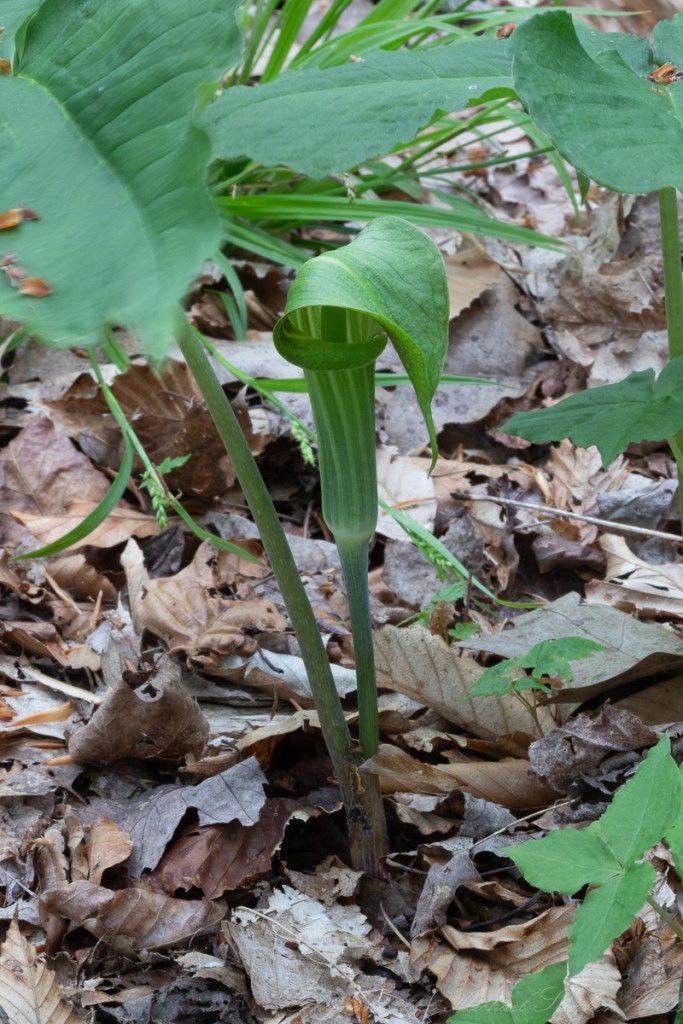
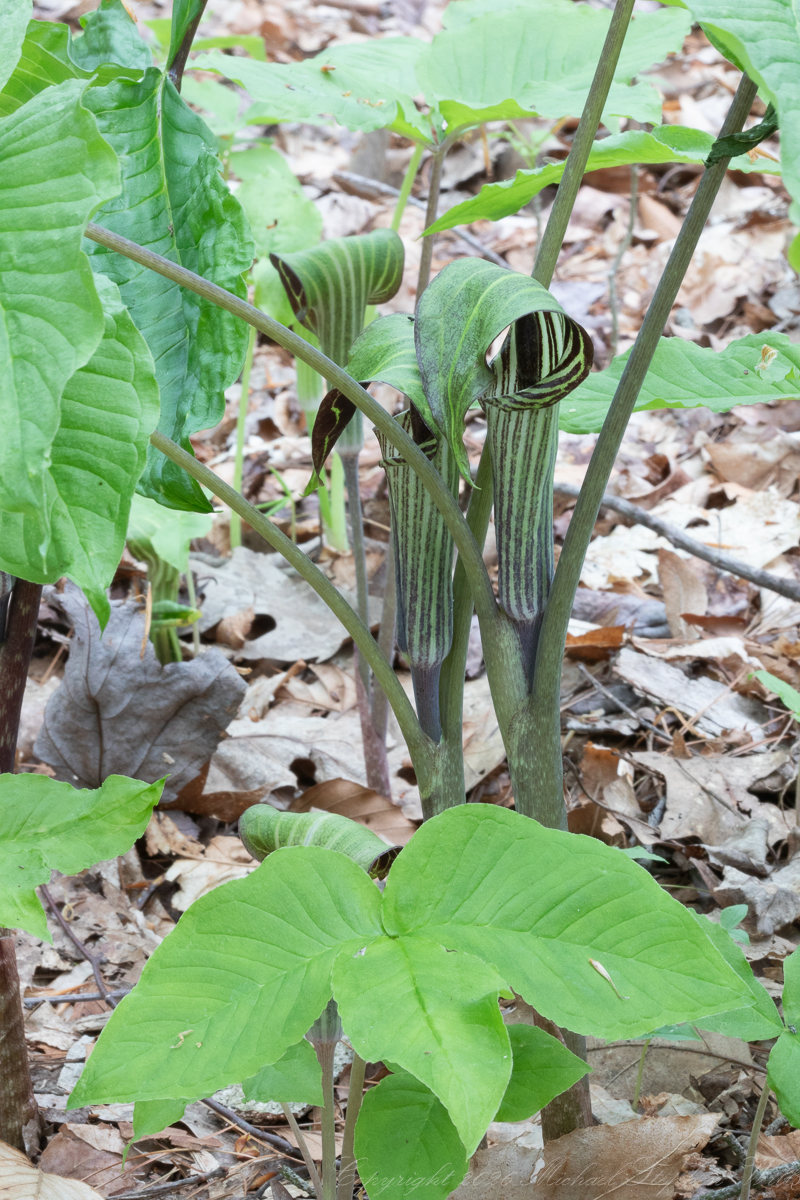
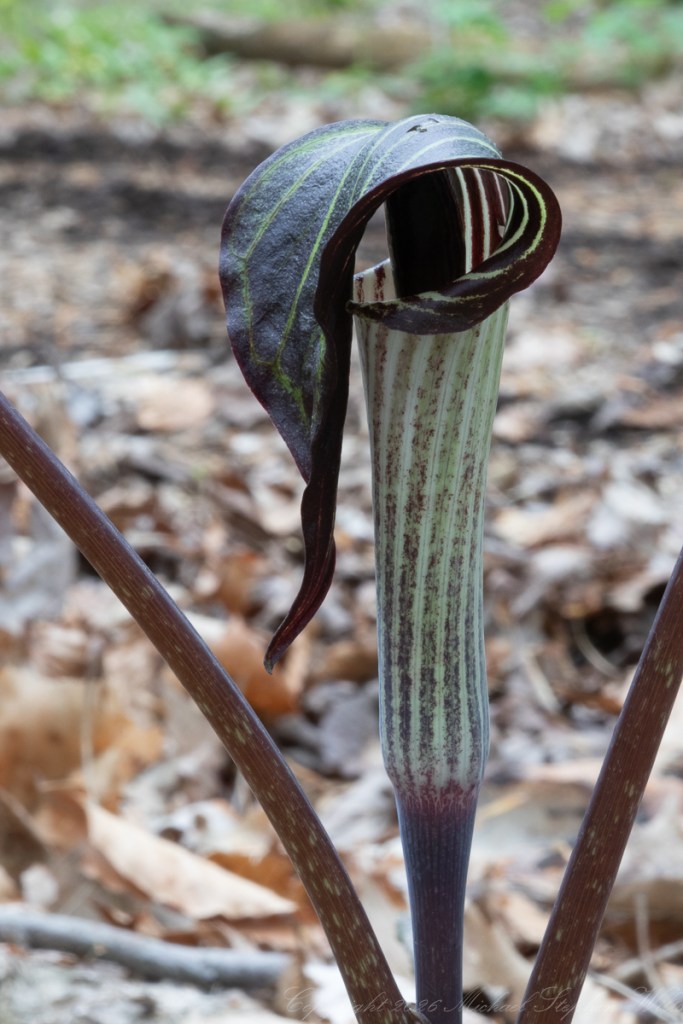
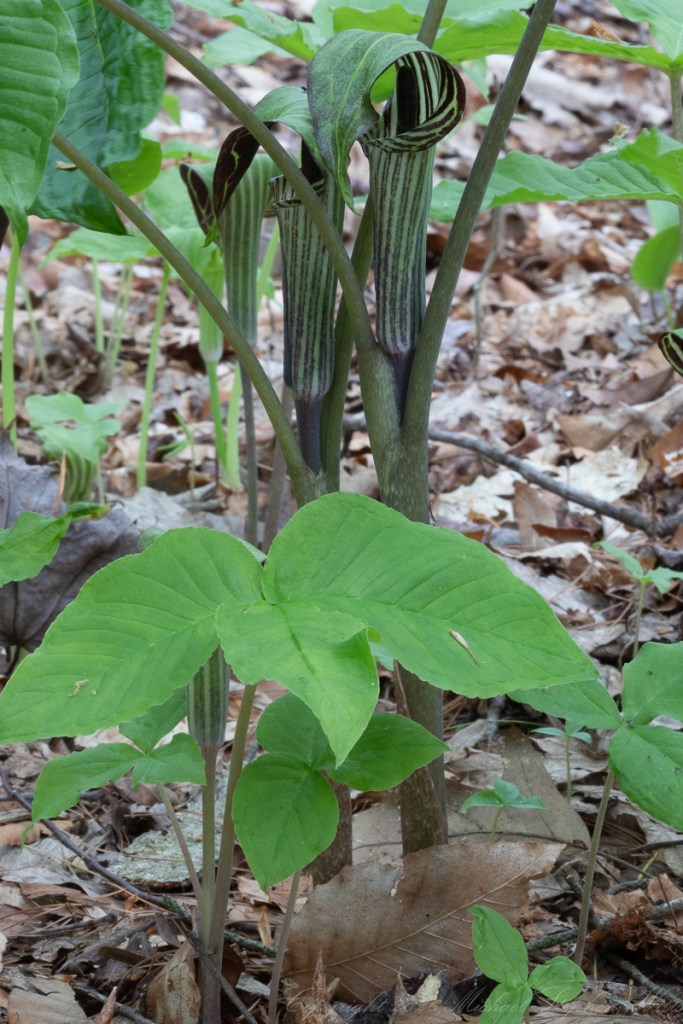
The flower is not showy in the usual sense. It has no bright face lifted to the sun, no petals flung open in invitation. Instead, it is architectural, hooded, inward. The striped spathe bends over the hidden spadix like a pulpit canopy, green outside and darkly veined within, as if the forest itself had written a sermon in shadow and chlorophyll. The longer I looked, the more it seemed less a flower than a presence: a woodland oracle with its hood drawn low.
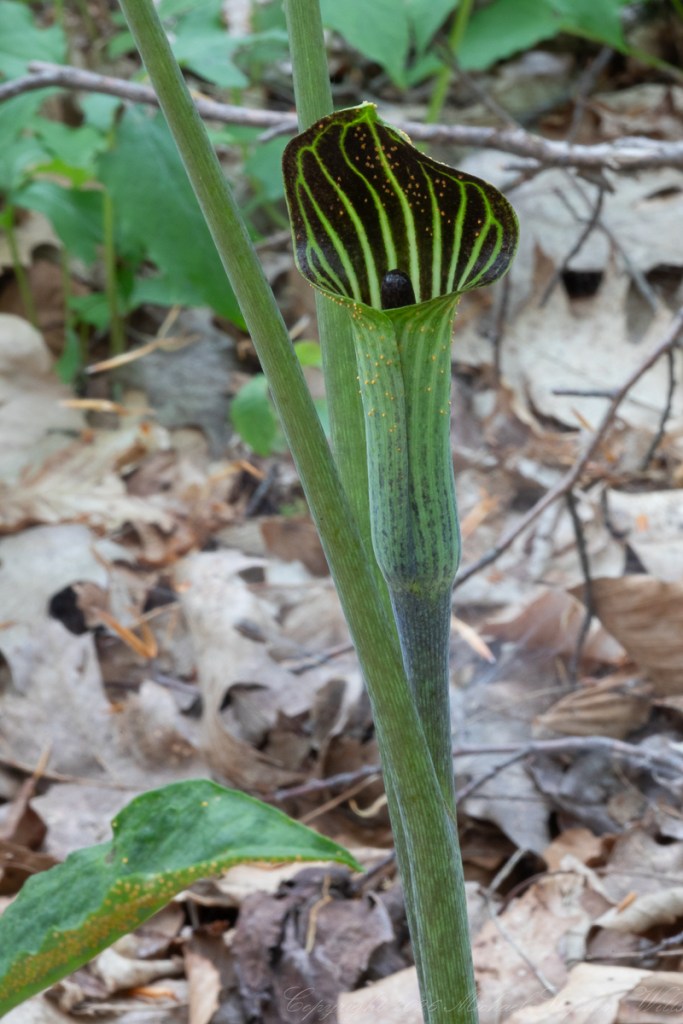
Sapsucker Woods. Ithaca, Tompkins County, New York State

In one plant, the pulpit flares open, dark-rimmed and luminous inside, its pale ribs running upward like the beams of a tiny cathedral. In another, the hood folds forward modestly, nearly concealing the chamber beneath. A third rises darker, with maroon stems and a striped throat, standing between two leaves like a figure pausing mid-speech. The photographs catch these variations beautifully: the open herald, the shy novice, the cloaked elder, each rooted in the brown memory of last year’s leaves.

Sapsucker Woods in late spring is seldom silent, though its quiet is deep. Overhead, the trees are leafing into their first full confidence. The air carries the flute-notes of wood thrushes from farther back in the green shade, those liquid phrases that seem to fall from a height and then echo somewhere inside the listener. Red-eyed vireos begin their patient, conversational preaching from the canopy. A catbird gives its slate-gray improvisations from the understory, while chickadees stitch the edges of the path with quick notes. The season has a thousand small voices, but the Jack-in-the-pulpit listens more than it sings.

That is part of its charm. It is a plant of composure. Around it, the forest spends itself freely: trillium leaves widen, violets brighten the ground, ferns loosen their green scrolls, and mosquitoes rehearse their thin insistence. But Jack remains collected. Its sermon is not declaimed; it is withheld. It asks the passerby to kneel inwardly, to meet it at its own scale. In a hurried world, it is a lesson in standing still.
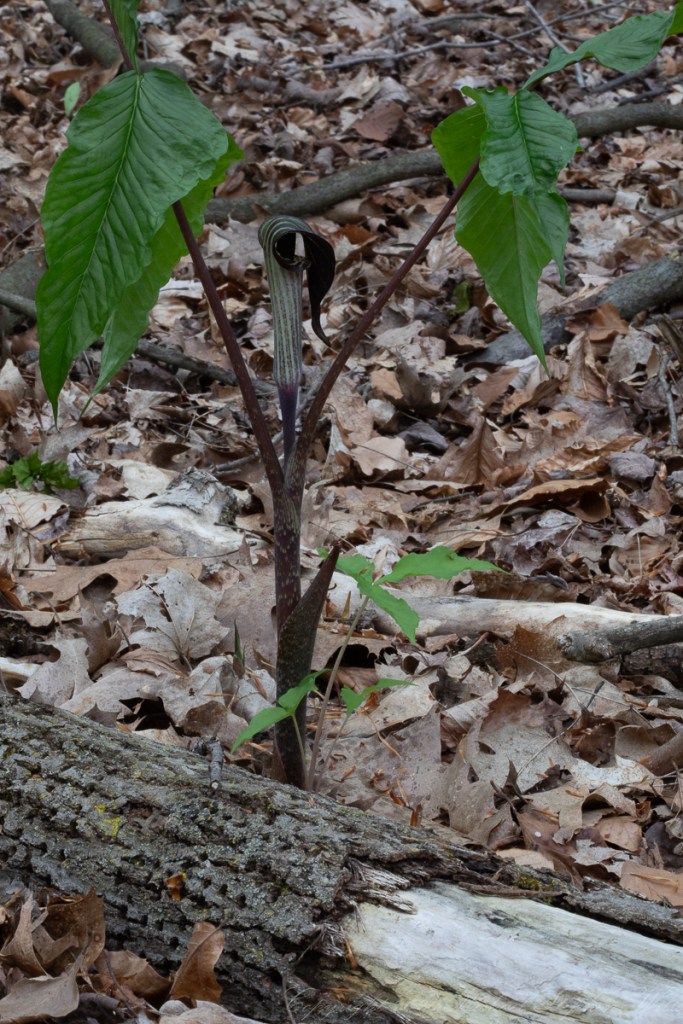
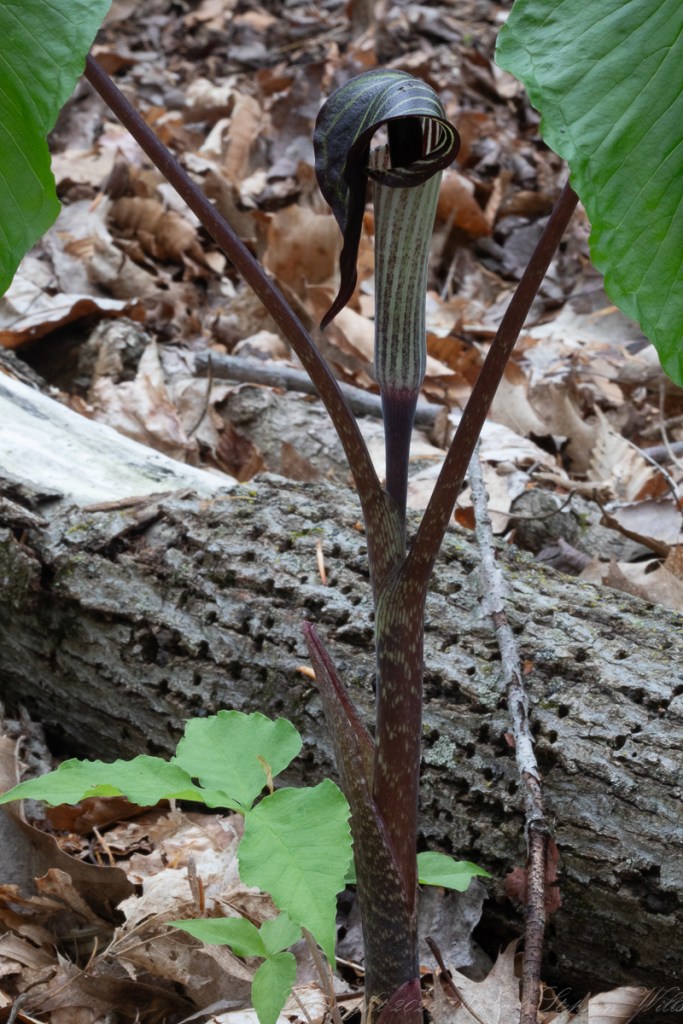
Georgia O’Keeffe might have understood this flower’s power: the way a close gaze enlarges the small until it becomes monumental. Seen from a distance, the Jack-in-the-pulpit is easily lost among leaves and stems. Seen closely, it becomes a world of line, chamber, curve, and shadow. The pale vertical striping inside the hood has the force of deliberate drawing. The dark rim of the spathe feels almost painted in, a border between secrecy and revelation. Its form is not delicate so much as concentrated—nature’s own green abstraction, folded around a mystery.
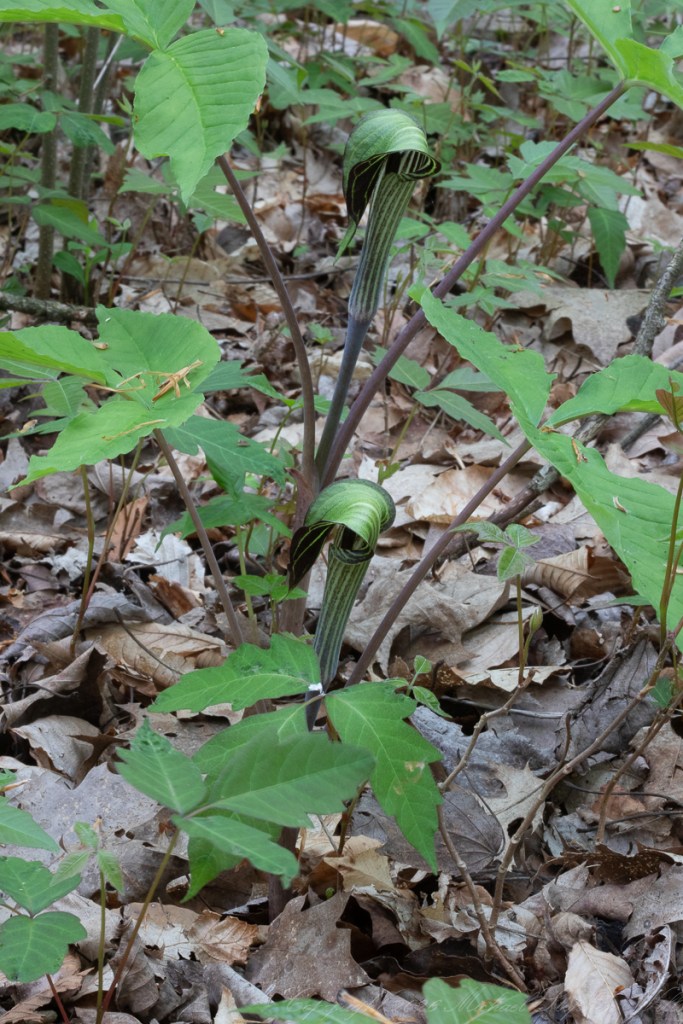
The woodland floor around these plants is a text in itself. Dry beech and oak leaves lie curled like old parchment. Sticks and roots cross the scene with accidental calligraphy. The fresh green leaves of the plant rise cleanly from this litter, making a contrast between decay and renewal so perfect that no moral needs to be supplied. The forest does not discard its past; it feeds upon it. Beneath every new hood and leaf is the slow generosity of what has fallen.
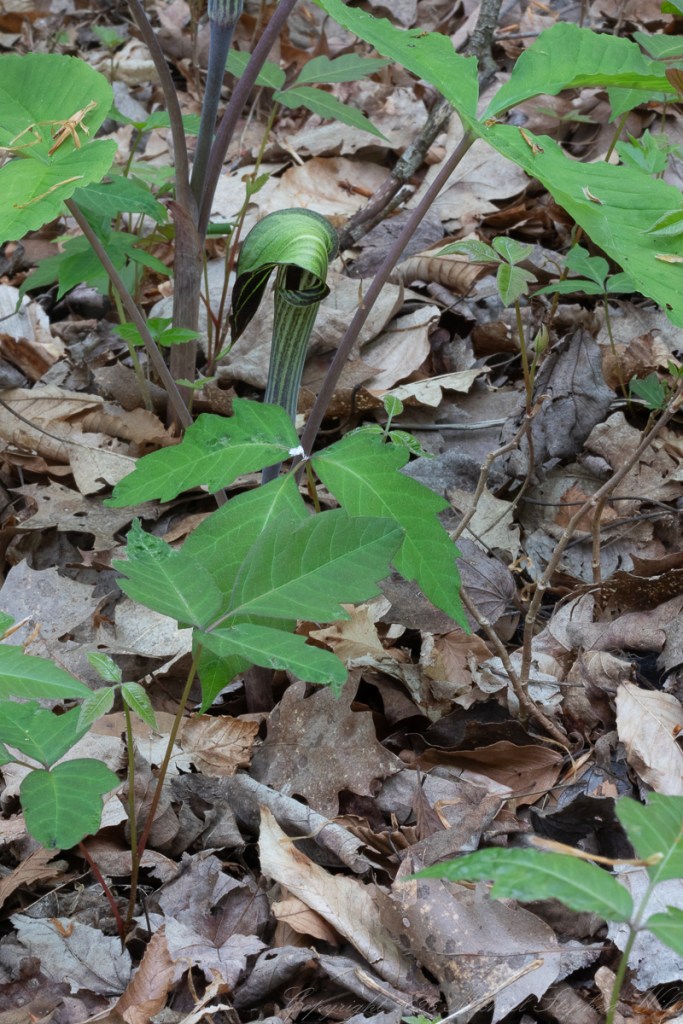
The Jack-in-the-pulpit is exactly the sort of neighbor that repays attention. It does not demand admiration; it rewards intimacy. Bend close and the lines appear, the subtle color, the strange animal vitality of the hooded form. Step back and it disappears again into the leafy congregation. It is a flower with the manners of a secret.
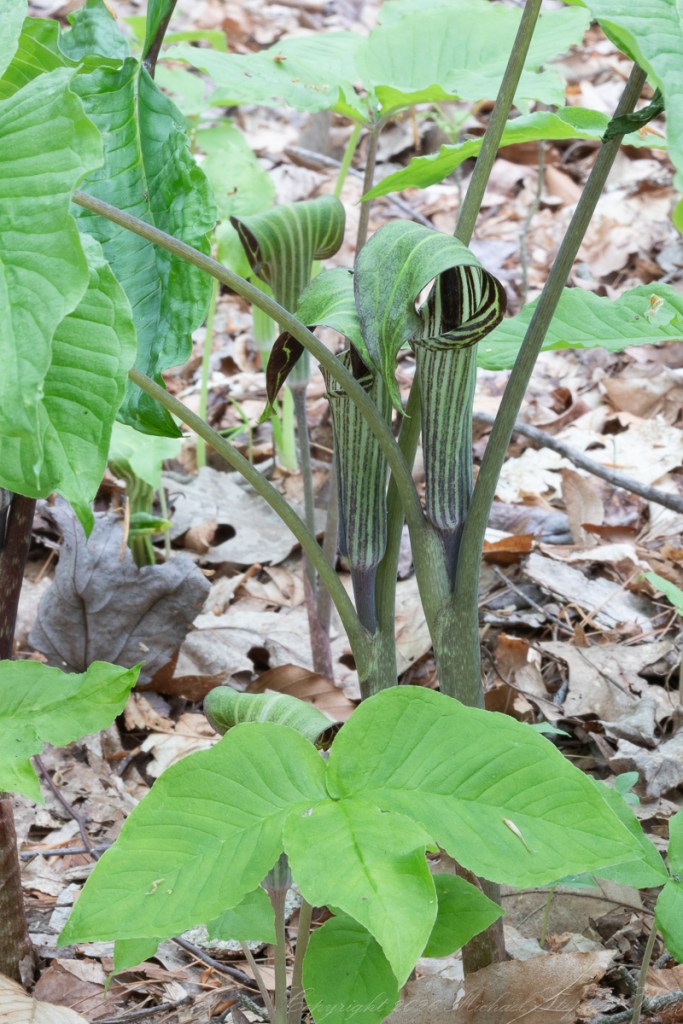
I was struck, especially, by how human we make it. We call it Jack, give it a pulpit, imagine it preaching. Yet perhaps the plant is not humanized so much as we are humbled into plant-like patience. Its chambered flower, its folded canopy, its upright poise—all suggest a ritual older than our metaphors. Before churches, before pulpits, before sermons, there were green hoods rising from the spring earth, gathering insects, light, and rain into the quiet business of being alive.
By the time I left, the birdsong had thickened. The woods were awake in layers: high song, low leaf-rustle, the soft give of the trail underfoot. Behind me, the Jack-in-the-pulpits remained at their posts, small sentinels of the damp shade. They seemed to keep their own counsel, and that was their gift. Some flowers brighten the day; these deepen it. They are not exclamation points in the forest, but parentheses—curved, shadowed, and full of meaning.
Click me to visit Michael Stephen Wills Online Finger Lakes Gallery.

Copyright 2026 All Rights Reserved Michael Stephen Wills

Among the Trout Lilies in Sapsucker Woods

On April 22, 2025, a wanderer discovers a trout lily, representing nature’s cycles, patience, and the interconnectedness of life through blooming, pollination, and nutrient cycling.

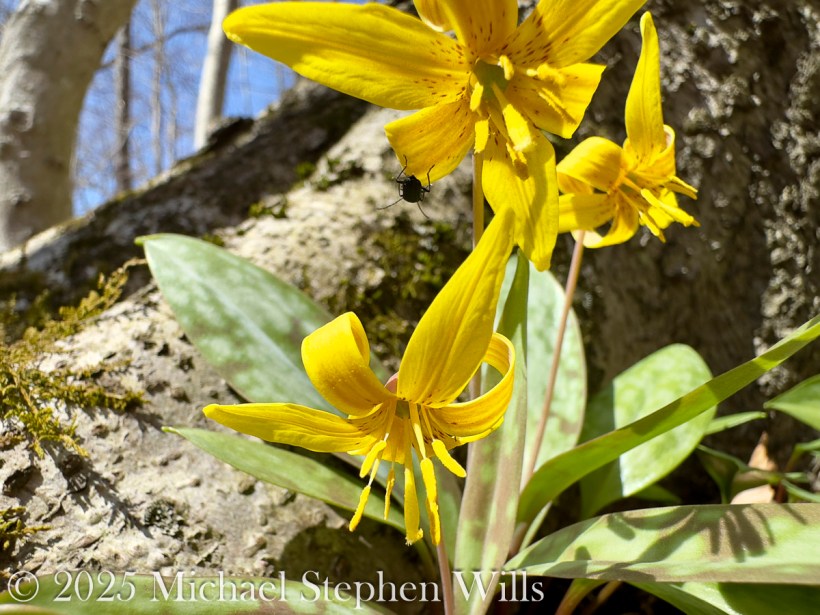
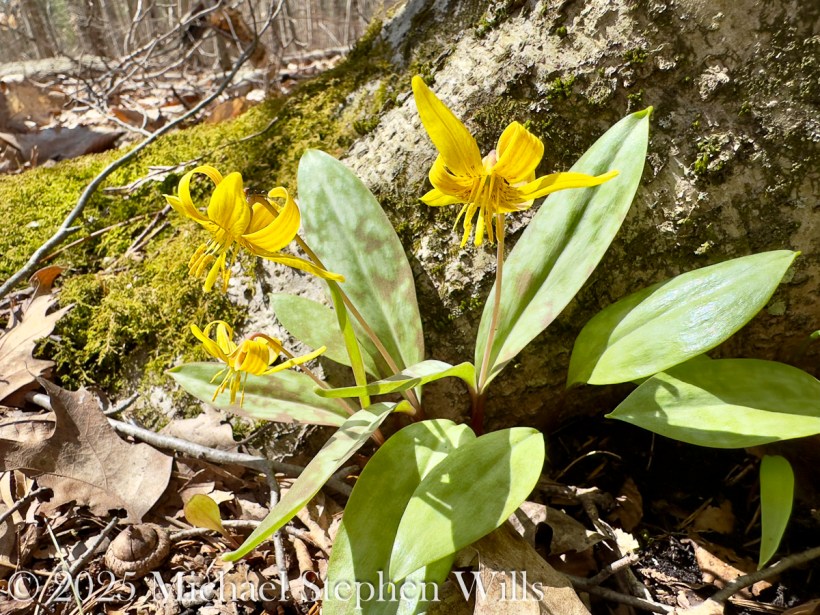
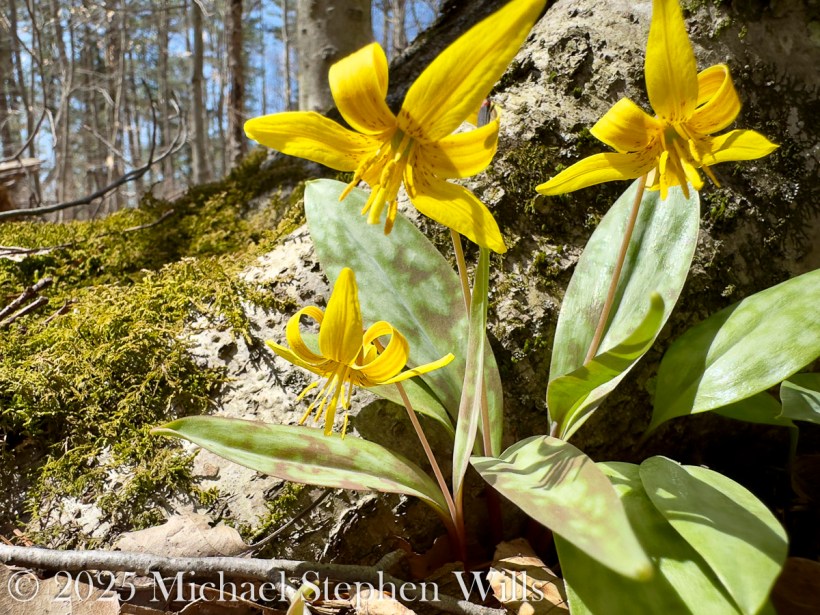
On the bright afternoon of April 22, 2025, I wander slowly through Sapsucker Woods, last year’s oak leaves soft underfoot and the smell of damp earth in the air. The trees stand bare, and somewhere a woodpecker drums as I search the ground for any sign of spring. A flash of gold catches my eye at the mossy base of a tree. Kneeling down, I find among the leaf litter a small wildflower glowing yellow.  It is a trout lily – Erythronium americanum – a solitary, nodding bloom on a slender stem. Six delicate petals flare backward, golden with a few reddish freckles near the throat; long stamens dangle beneath. Two lance-shaped leaves hug the ground, green marbled with burgundy-brown. Their mottled pattern looks like a brook trout’s flank. This flower is known by many names: “trout lily” for its fish-like leaves, “dogtooth violet” for its pointed white bulb 1, and “adder’s tongue” for its tongue-shaped leaf tip.

Its formal name, Erythronium americanum, comes from the Greek for “red”2—odd for a yellow bloom until one remembers the purple dogtooth violets of Europe. Americanum simply marks it as native here. I soon realize these trout lilies are not alone – dozens of dappled leaves carpet the damp earth around me. Most show no blossom at all, only a single freckled leaf standing alone. Only the older plants with two leaves manage to lift a yellow flower. In fact, they often form extensive colonies on the forest floor. I’ve learned a trout lily may wait seven years to bloom its first time3. Seasons of patience pass unseen underground, and then one spring it earns the chance to unfurl a golden star. That slow, patient rhythm of growth fills me with wonder.

A tiny black bee—or maybe a fly—lands on the trout lily’s bloom, drawn by its promise of pollen. It disappears into the flower’s downturned bell, brushing against the dusting of pollen inside. In early spring, few other blossoms are open, so this little lily is a lifeline for hungry pollinators4. There is even a solitary “trout lily bee” that times its life to these flowers5. Flower and insect share an ancient pact: the lily feeds the visitor, and the visitor carries the lily’s pollen onward to another bloom.

Within a week, the trout lily’s golden star will wither. By the time the canopy closes overhead, the flower will have curled into a green seedpod that splits open by early summer, releasing its seeds6. Each seed carries a tiny parcel of food irresistible to ants7. Ants haul the seeds to their nest, eat the morsel, and abandon the seed in their tunnels—unwittingly planting the next generation. The name for this circular ecological dance is myrmecochory. Over time, the colony inches across the forest floor, guided by these tiny gardeners. During its short life above ground, this little lily helps the forest. Its roots soak up nutrients from the damp soil, keeping them from washing away in spring rains8. When the plant dies back, those nutrients return to the earth as the leaves decay, nourishing other life. In this way, a patch of trout lilies forms a quiet bridge between seasons—capturing nutrients in spring and returning them by summer’s end. I touch one cool leaf, feeling connected to this cycle.

I rise and take a final look at the little yellow lily. Its brief bloom reminds me that life’s most beautiful moments are fleeting yet return each year. This blossom will vanish in a few days, a blink of the season, but it will come back next spring as faithful as hope. In its patience and generosity, I sense kinship. Like the trout lily, we too have long periods of waiting and rare moments of blooming. We also rely on small kindnesses to help us thrive—like a friend in hard times or a community that carries our dreams to fertile ground. And we are part of a larger cycle, giving and receiving, leaving something of ourselves to nurture the future. As I continue down the trail, I carry the image of that humble flower with me—a gentle assurance that even the smallest life can leave a lasting impression, and that hope will always return with the spring.

Enter your email to receive notification of future postings. I will not sell or share your email address.

Footnotes

  1. wildadirondacks.org Trout lily’s common names: “Trout lily” refers to the trout-like mottling on its leaves, while “dogtooth violet” refers to the tooth-like shape of its underground bulb (despite not being a true violet). It is also sometimes called “adder’s tongue.” ↩
  2. en.wikipedia.org The genus name Erythronium comes from the Greek erythros, meaning “red,” originally referring to the red-purple flowers of the European dogtooth violet (Erythronium dens-canis). The species name americanum denotes that it is native to America. ↩
  3. peacevalleynaturecenter.org Trout lilies often grow in large colonies and most individuals in a colony are non-flowering. A plant typically needs about seven years of growth before it produces its first bloom. ↩
  4. peacevalleynaturecenter.org Spring ephemeral wildflowers like the trout lily provide crucial early nectar and pollen for pollinators (bees, flies, butterflies) emerging in early spring. ↩
  5. appalachianforestnha.org The trout lily miner bee (Andrena erythronii) is a solitary bee whose life cycle is closely tied to the trout lily; it forages primarily on trout lily flowers, making it a specialist pollinator of this species. ↩
  6. wildadirondacks.org After pollination, trout lily flowers are replaced by seed capsules that ripen and split open to release the seeds in late spring. ↩
  7. atozflowers.com Erythronium americanum seeds have a small fleshy appendage called an elaiosome, which attracts ants. The ants carry the seeds to their nests, aiding in dispersal in exchange for the food reward, a mutualism known as myrmecochory. ↩
  8. pubmed.ncbi.nlm.nih.gov By growing and taking up nutrients during the brief spring season, trout lily plants help retain important nutrients (like potassium and nitrogen) in the ecosystem. When the plants die back and decay, those nutrients return to the soil, contributing to the forest’s nutrient cycle. ↩

Our Day at Cayuga Nature Center and Finger Lakes Beekeepers Club Learning Apiary

Join us on a captivating adventure at the Cayuga Nature Center’s Treetops Treehouse and the Finger Lakes Beekeepers Club Learning Apiary. Discover the wonders of the forest canopy, marvel at the intricate world of honeybees, and meet a tiny land snail that sparked the curiosity of two young explorers. Dive into a day filled with discovery, learning, and unforgettable moments in nature.

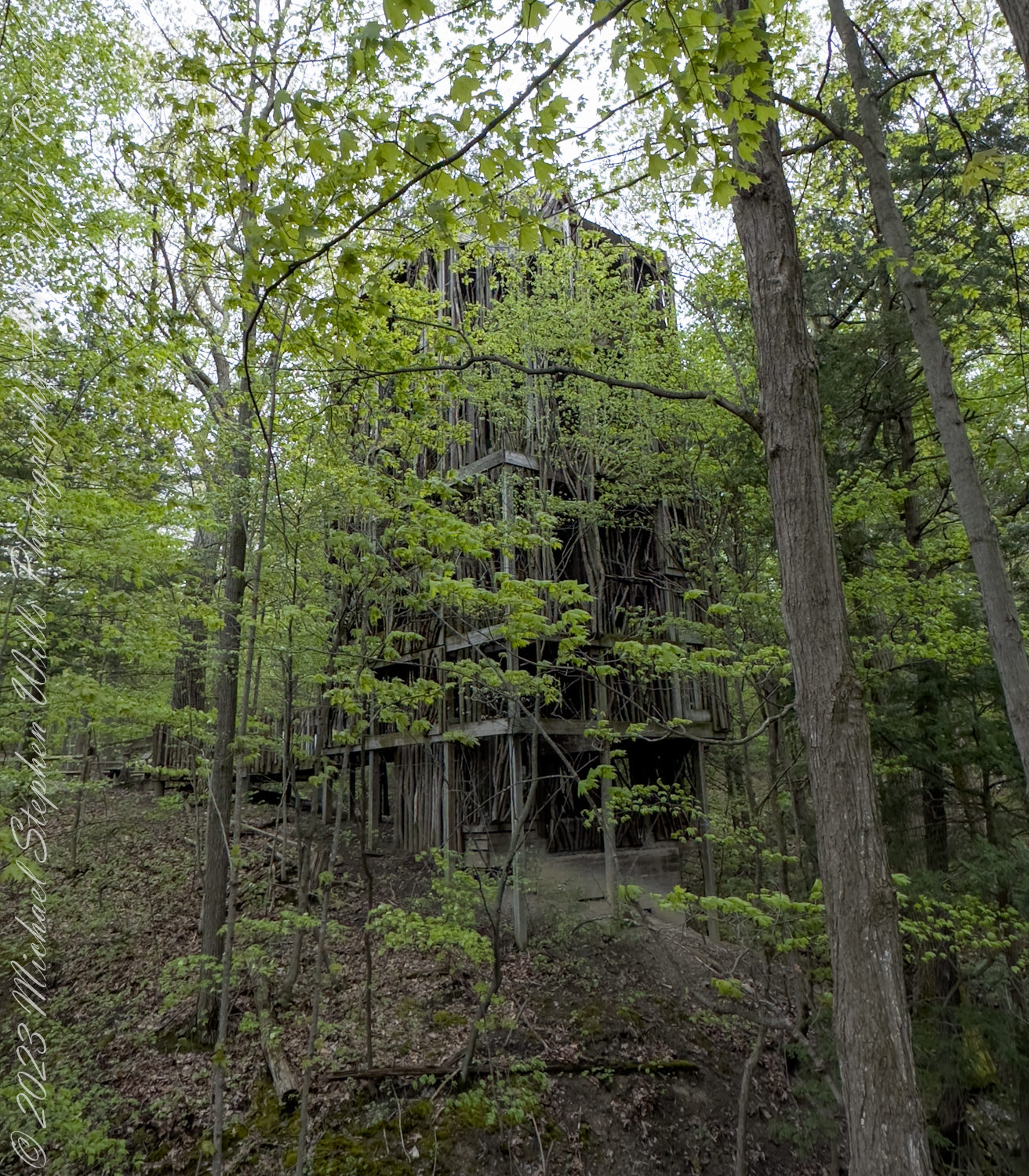
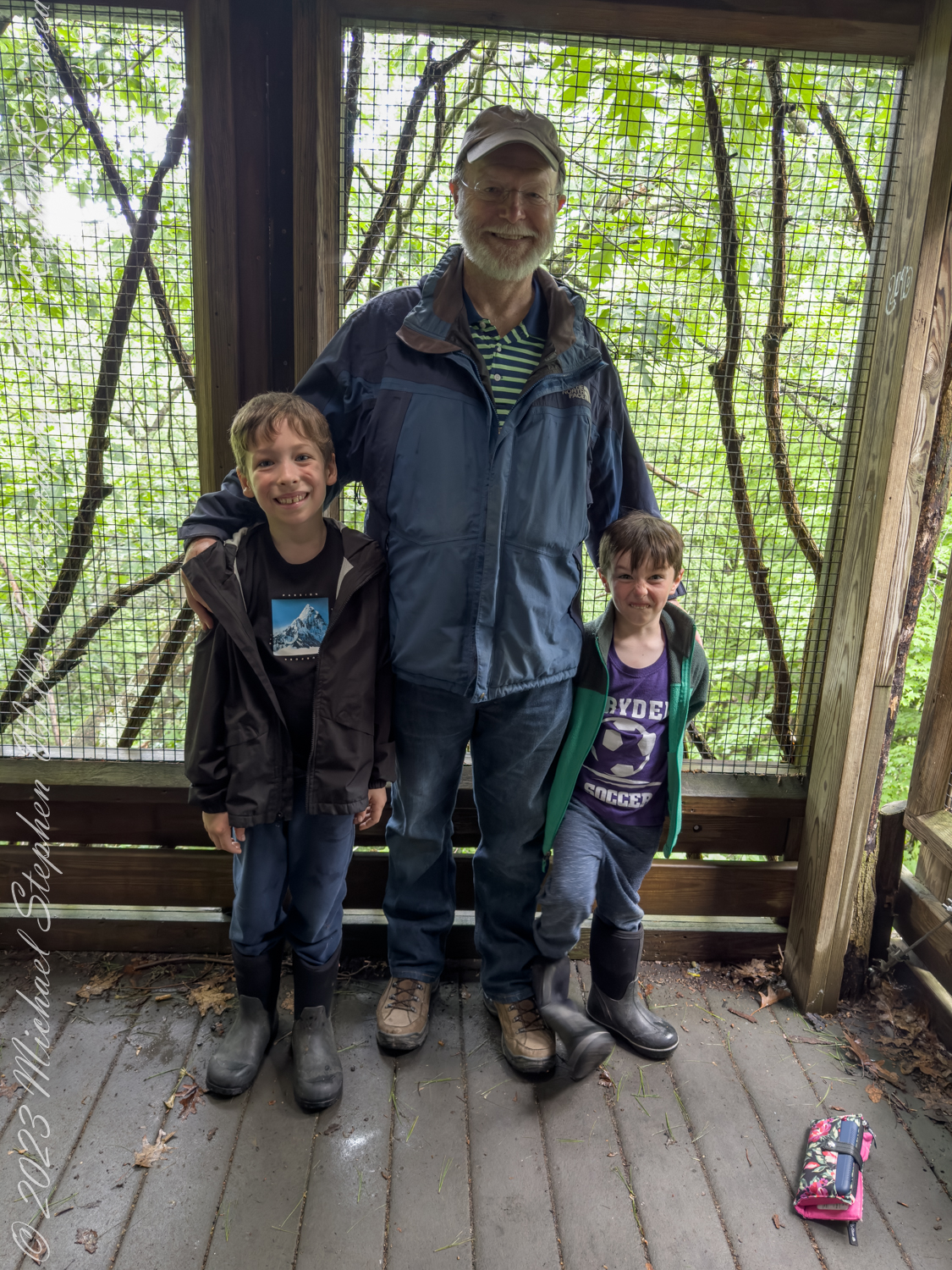
The morning air was crisp and filled with the promise of adventure as we set off for the Cayuga Nature Center, a hidden gem nestled in the heart of Ithaca. The destination: the Treetops Treehouse, a magical structure that promised an immersive experience in nature for me, my sister Diane and two grandsons, Sam and Rory.

As we approached the treehouse, the boys’ excitement was palpable. The Treetops Treehouse is a marvel of rustic architecture, a multi-level structure that blends seamlessly with the surrounding forest. It was designed to give visitors a bird’s-eye view of the forest canopy, allowing for a unique perspective on the local flora and fauna.

Exploring the Treetops

Upon arrival, we were greeted by the gentle rustle of leaves and the chorus of bird songs. The boys raced ahead, eager to explore the winding pathways and hidden nooks of the treehouse. The structure is constructed entirely of wood, with sturdy railings and wide platforms that offer panoramic views of the forest.

We were particularly fascinated by the various interpretive signs that explained the local ecosystem. We learned about the different species of trees, the birds that nested in the canopy, and the small mammals that scurried along the forest floor. It was a delight to sparked their curiosity of the natural world.

Discovering a Land Snail

Meadow Trail

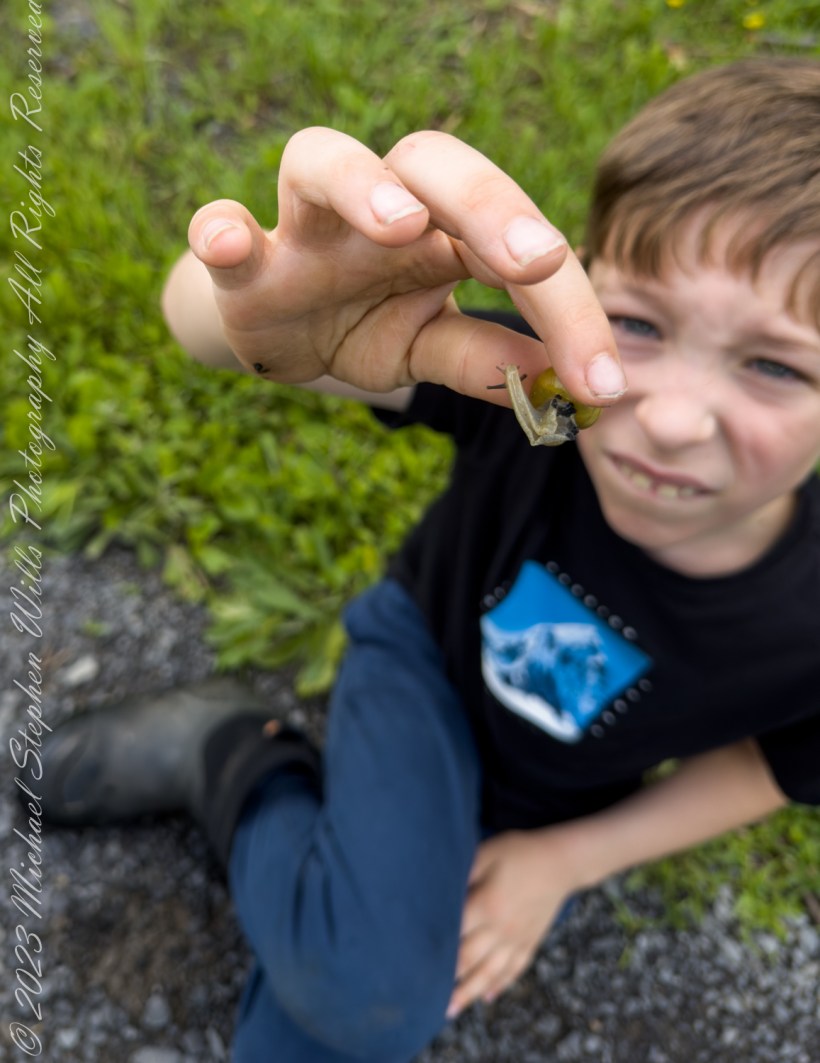
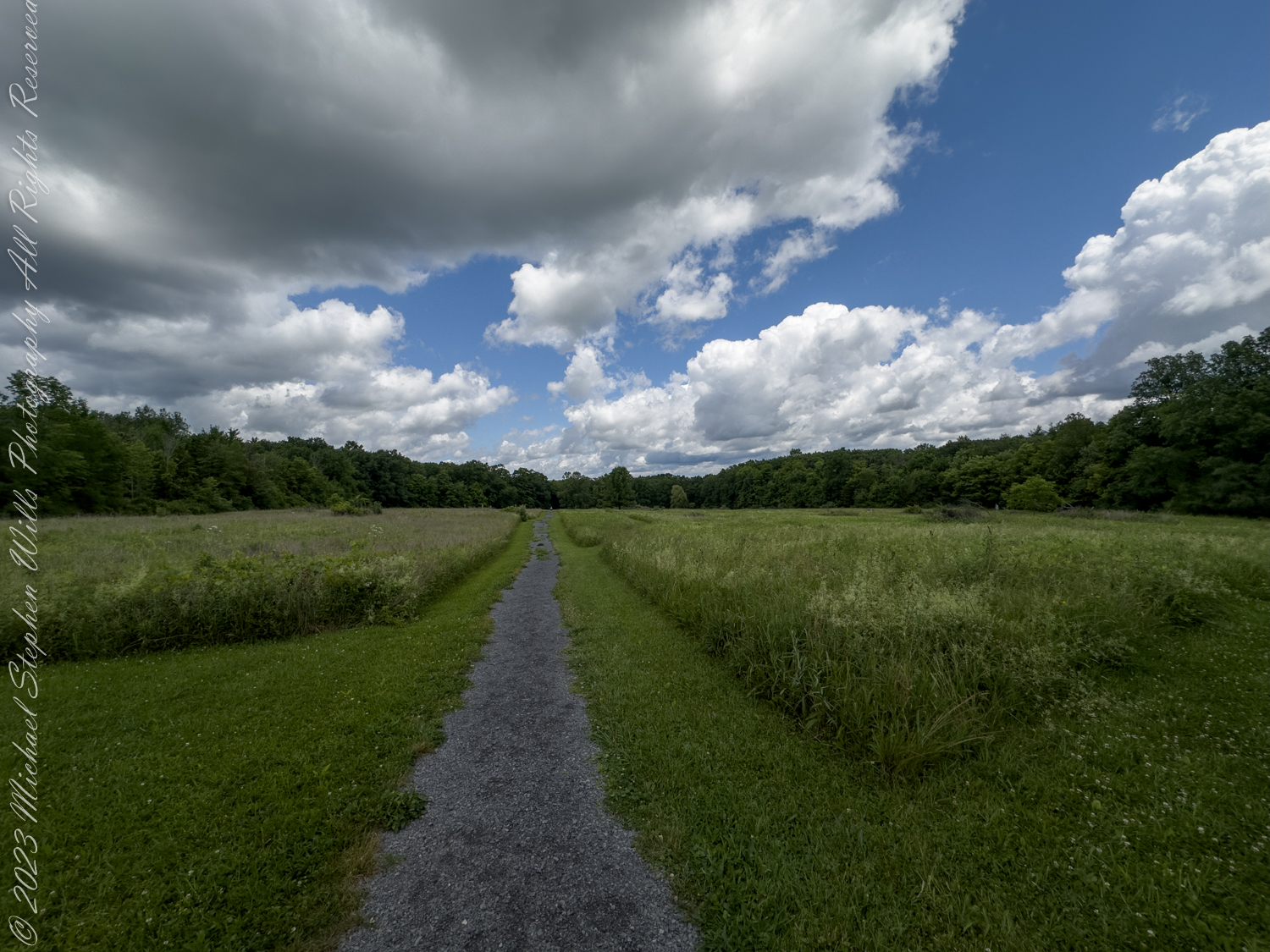
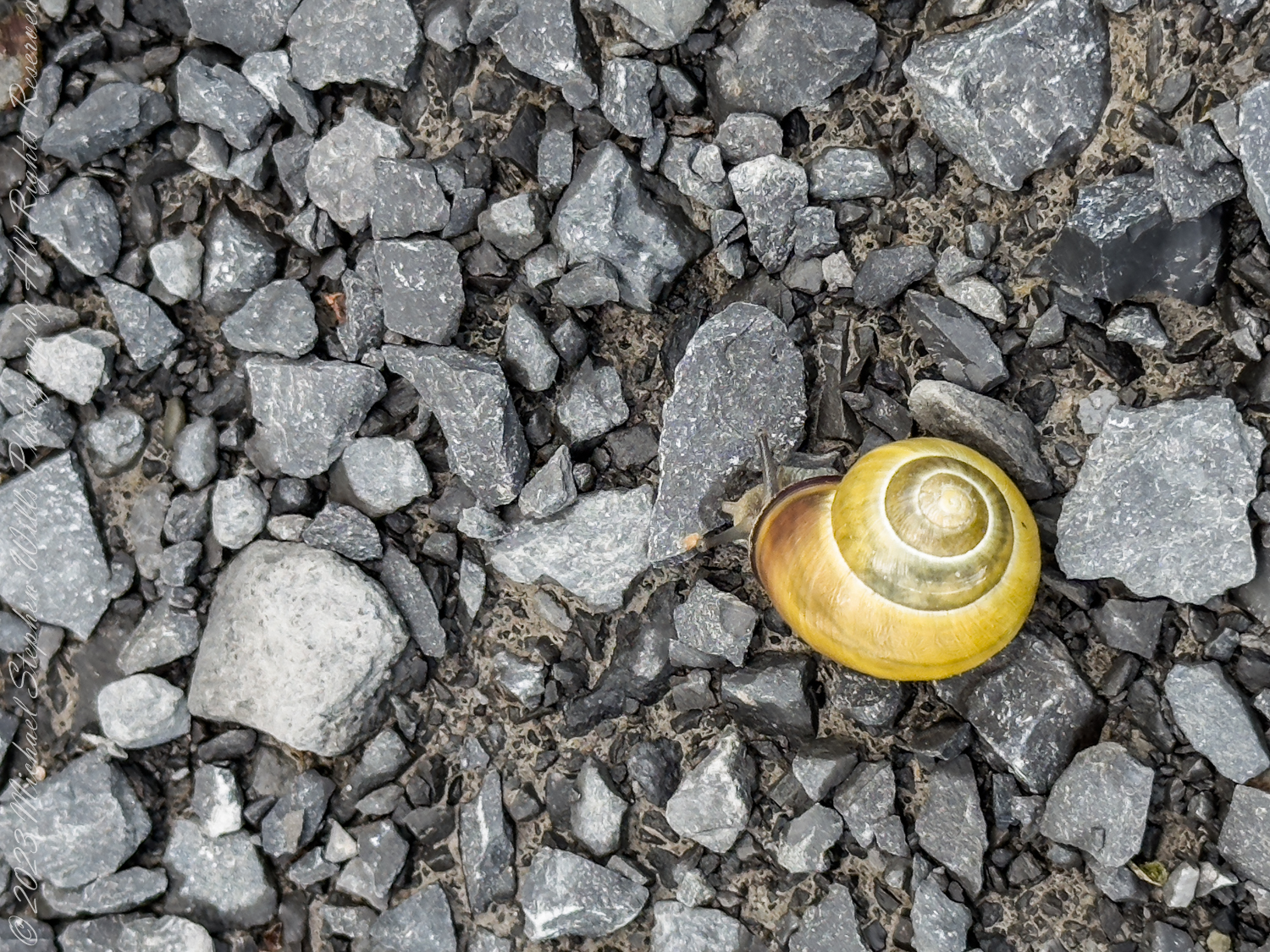
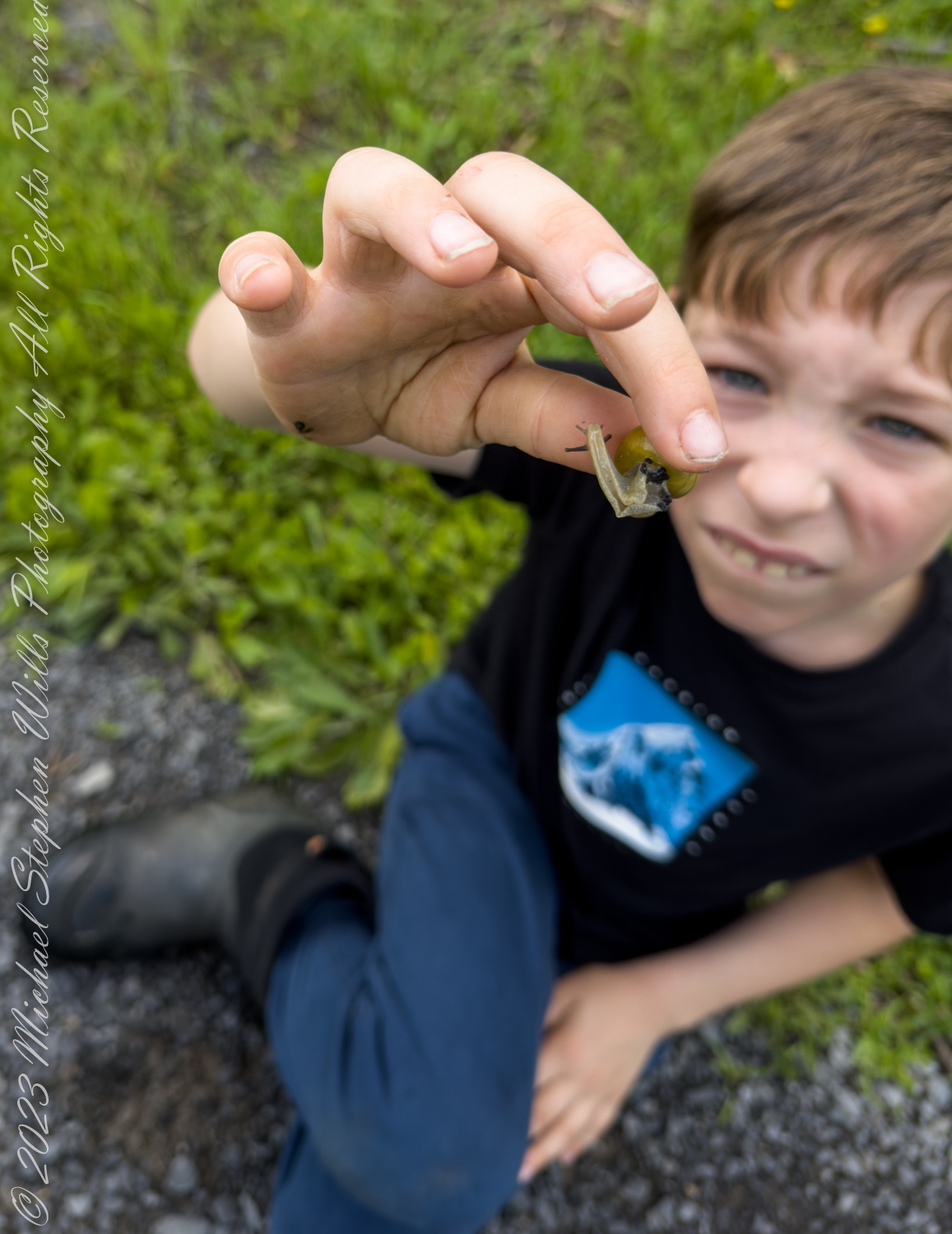
Afterwards, walking along a meadow trail, Rory’s keen eyes spotted something unusual on the ground. Nestled among the fallen leaves was a small land snail, its delicate shell glistening in the dappled sunlight. The boys and I gathered around to observe this tiny marvel of nature.

The snail appeared to be from the genus Triodopsis or Neohelix, possibly Triodopsis albolabris or Neohelix albolabris, known for their white-lipped shells. These snails are common in moist, forested environments and play a crucial role in the ecosystem as decomposers. They feed on decaying plant material, helping to recycle nutrients back into the soil.

The Learning Apiary

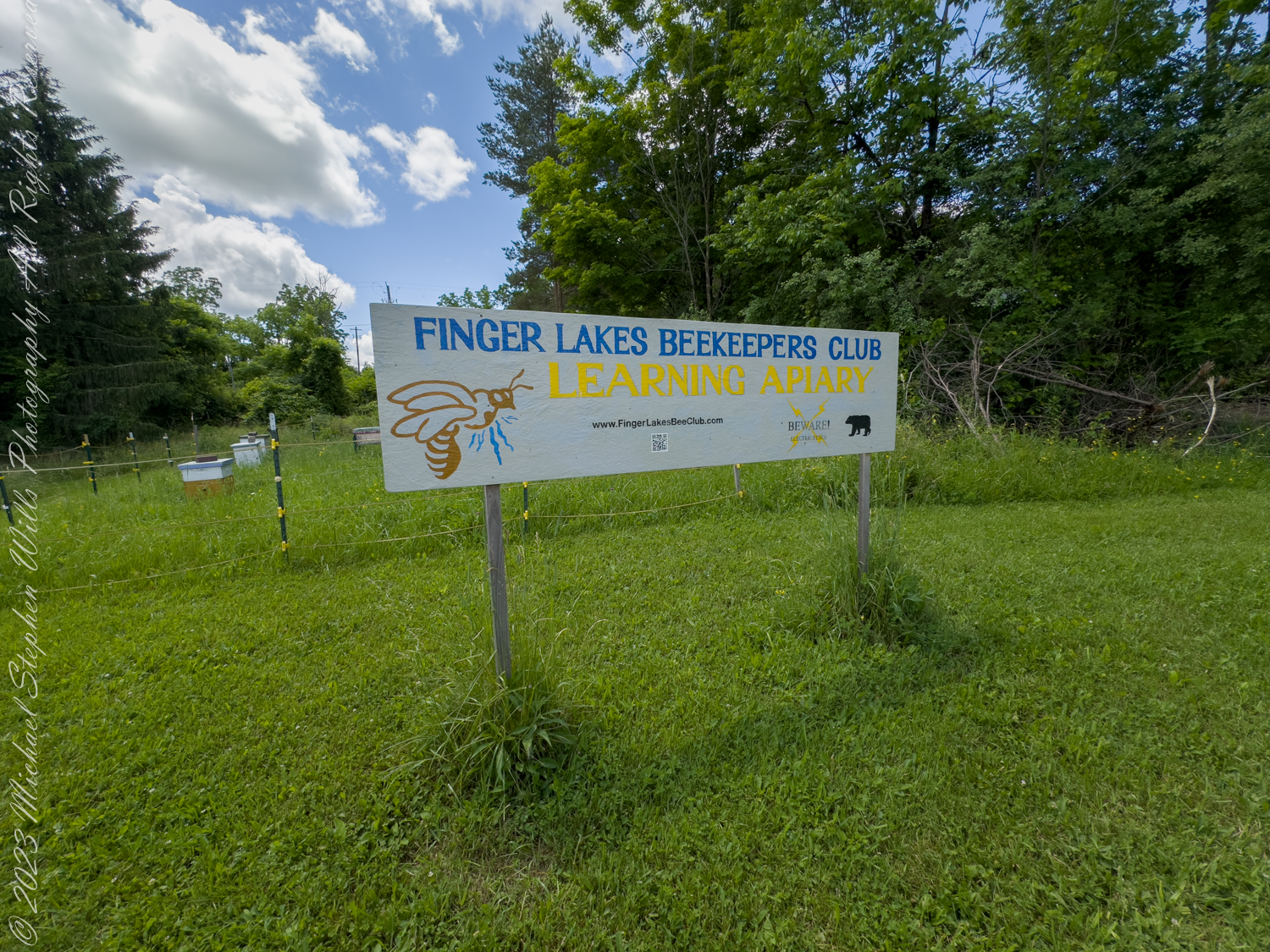
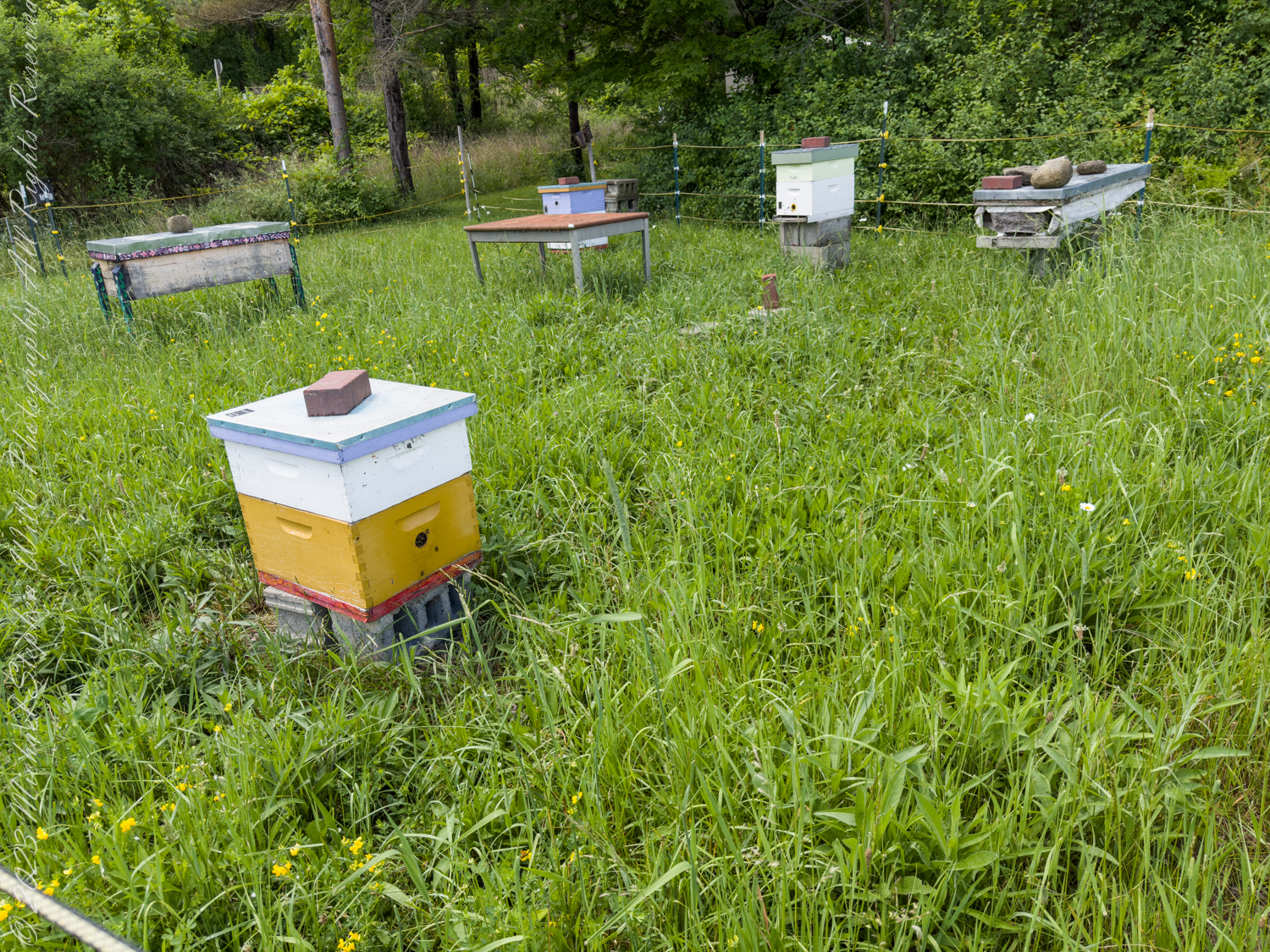
Further along the meadow trail, we made our way to the Finger Lakes Beekeepers Club Learning Apiary. The apiary is a place of learning and discovery, where visitors can gain insight into the fascinating world of honeybees and beekeeping.

The apiary is composed of several beehives, each carefully maintained by members of the Beekeepers Club. We were careful to keep our distance from the electrified fence, protection against marauding bears and humans.

“ever-busy bees”

Wildflowers in Bloom

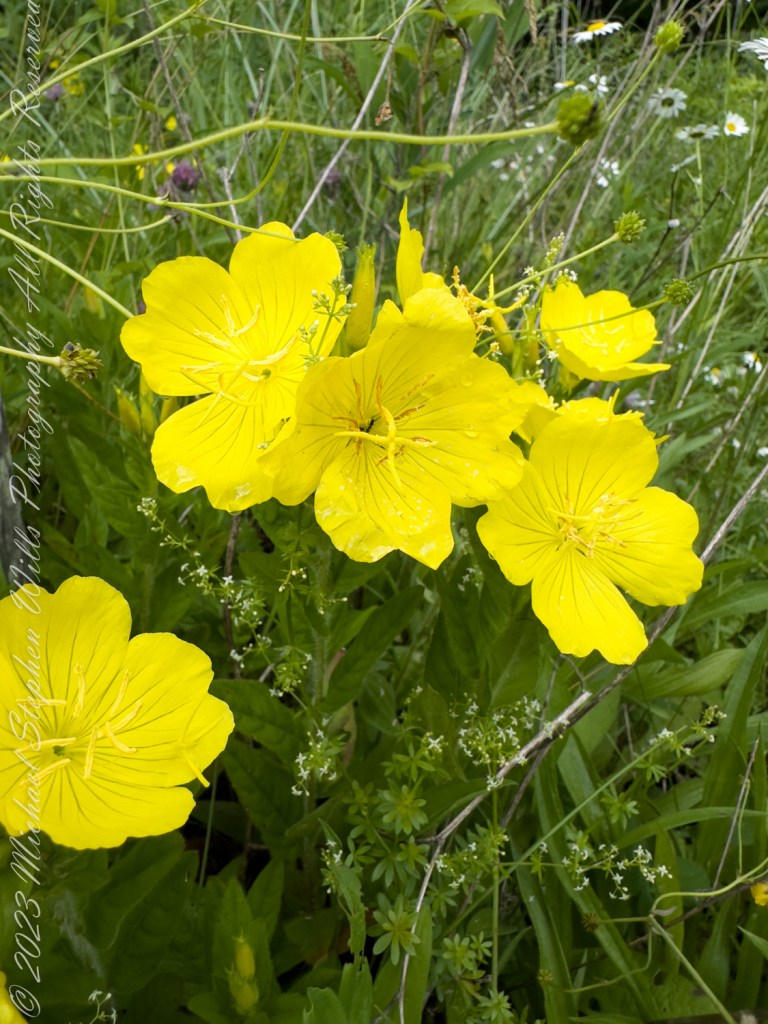
Narrow Leaved Sundrops

As we walked back from the apiary, the trail was lined with a vibrant display of wildflowers. The late spring bloom painted the landscape with splashes of color, from the golden yellows of evening primrose to the delicate whites of daisies.

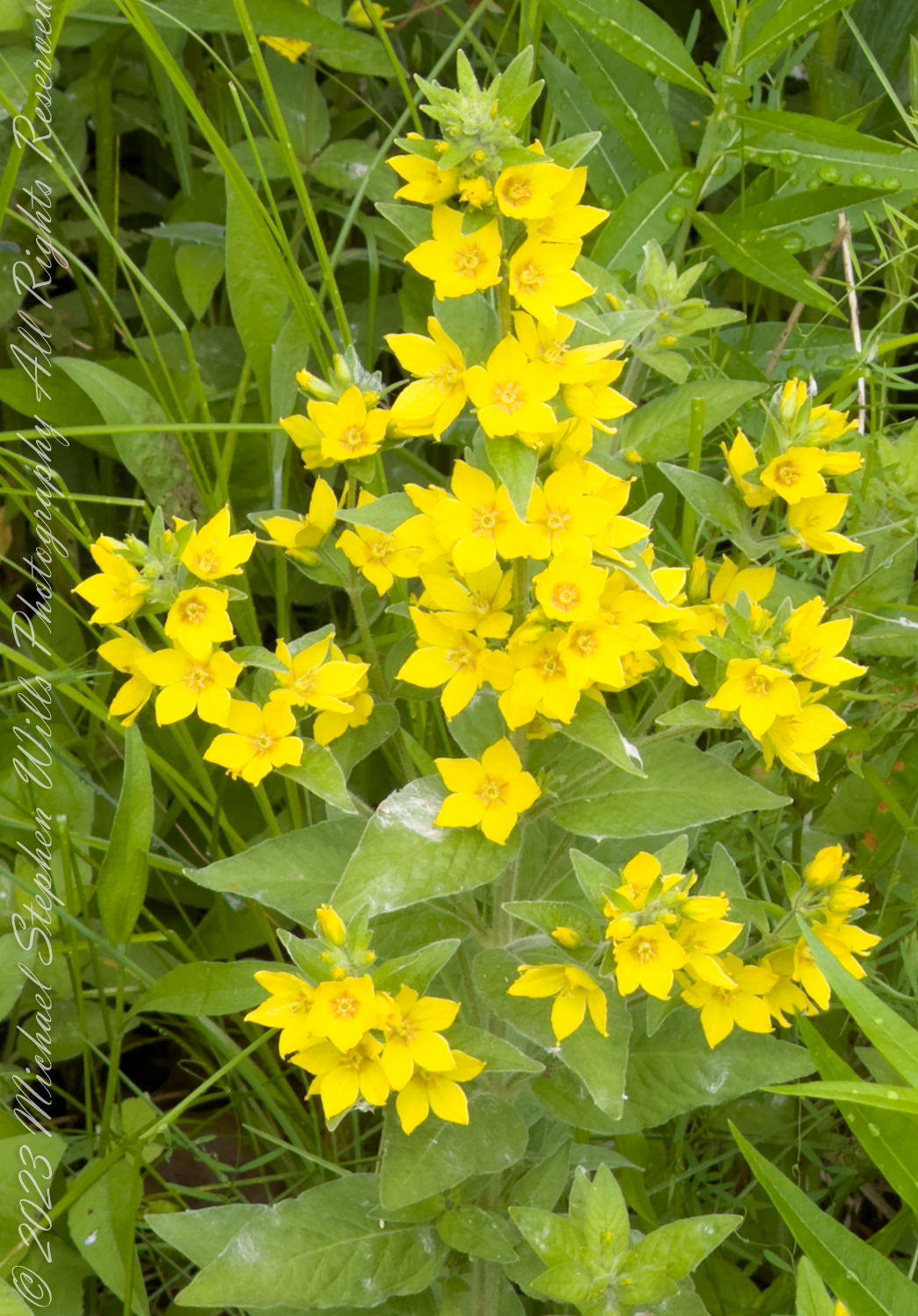
Large Yellow Loosestrife

One particular cluster of bright yellow flowers caught our attention. It was the Lysimachia punctata, commonly known as yellow loosestrife. These star-shaped flowers grow in dense clusters and are a favorite among pollinators. The boys marveled at the intricate patterns and vibrant colors, adding another layer of wonder to our day.

Reflections on a Memorable Day

As the day drew to a close, we found a quiet spot to sit and reflect on our adventures. The boys were bubbling with stories to tell their parents—of the towering treehouse, the tiny snail, the bustling beehives, and the fields of wildflowers. It was a day filled with discovery and learning, one that brought us closer to nature and to each other.

The Cayuga Nature Center and the Finger Lakes Beekeepers Club Learning Apiary provided a perfect setting for an outing that was both educational and exhilarating. The experiences we shared will undoubtedly leave a lasting impression on Sam and Rory, nurturing their love for the natural world and the myriad forms of life that inhabit it.

Meadow View

As we packed up and headed home, the boys already began planning our next adventure. The allure of the natural world, with its endless mysteries and wonders, had woven its spell, and we were eager to explore more of what it had to offer.

Copyright 2024 Michael Stephen Wills All Rights Reserved

Among Fallen Leaves

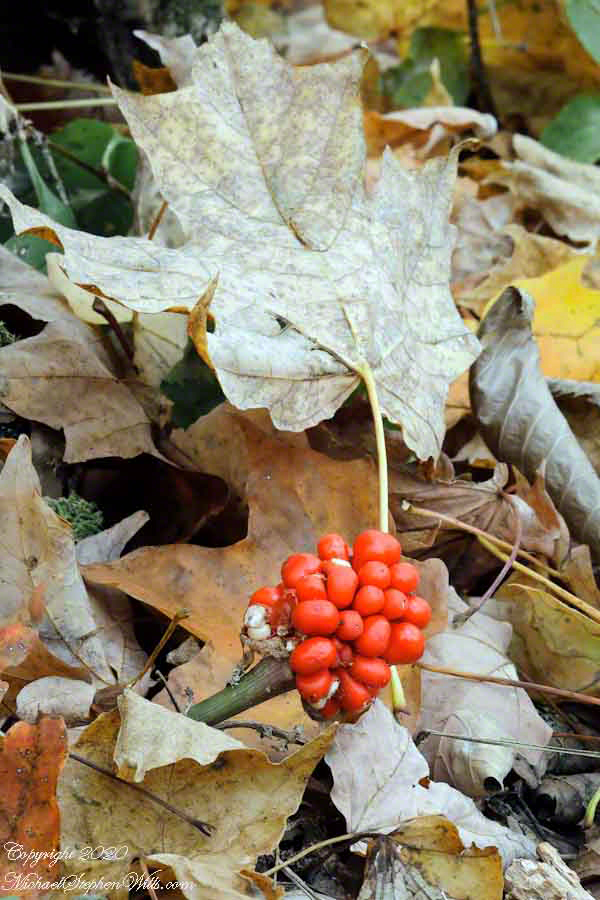
The red berries of the Jack-in-the-Pulpit plant play a key role in seed dispersion, wildlife sustenance, and fueling its energy storage organ, the corm.

As the crisp air of autumn settles in and the leaves begin their spectacular transformation into hues of red, orange, and yellow, the forest floor comes alive with a myriad of hidden wonders. Among these wonders, the Jack-in-the-Pulpit (Arisaema triphyllum) stands out for its striking red berries and the role they play in the fall glory of the woodland ecosystem. In this essay, we will explore the beauty and significance of these red berries and how they are intrinsically linked to the plant’s corm.

The Jack-in-the-Pulpit, a native perennial herbaceous plant of North America, is known for its distinctive appearance, featuring a hood-like structure known as the spathe and a tall, slender stalk called the spadix. It is during the fall season that the plant’s fascinating red berries make their appearance, contrasting vividly against the backdrop of autumn’s colors. These berries are the result of a process that begins in the spring, when the plant first emerges from its underground corm.

Throughout the growing season, the Jack-in-the-Pulpit devotes its energy to producing these striking red berries, which serve several important ecological functions. The red berries are not only visually appealing but also function as a means of reproduction for the plant. They contain seeds that, once mature, can be dispersed to establish new Jack-in-the-Pulpit plants. These seeds are often transported by animals that consume the berries, such as birds and rodents, which then disperse them in their droppings, contributing to the plant’s spread throughout the forest.

The bright red color of the berries is a key feature that attracts birds, making them an essential food source during the fall and early winter months. Birds like thrushes, cardinals, and robins are known to feed on the Jack-in-the-Pulpit berries, aiding in seed dispersal while benefiting from the nutrient-rich fruits. This mutualistic relationship between the plant and its avian dispersers showcases the interconnectedness of the forest ecosystem, where each species relies on the other for survival and propagation.

The significance of the Jack-in-the-Pulpit’s red berries extends to the corm beneath the surface. The corm serves as an energy storage organ for the plant, helping it survive through the harsh winter months when the above-ground parts of the plant wither and die. During the fall, as the plant directs its energy toward producing berries, it also transfers nutrients to the corm, ensuring its vitality and readiness for the following spring.

Furthermore, the corm itself can serve as an energy reserve for the production of future berries and the growth of new shoots. As the plant enters dormancy, it relies on the stored energy in the corm to fuel its growth when conditions become favorable in the next growing season. In this way, the corm and the red berries are intricately linked, with the berries representing the culmination of a year-long process of energy accumulation and reproduction.

In conclusion, the red berries of the Jack-in-the-Pulpit are a captivating and vital component of the fall glory that graces our woodlands. Their vibrant color and ecological role in seed dispersal highlight the plant’s contribution to the forest ecosystem’s richness and diversity. Moreover, these berries are a testament to the interconnectedness of nature, as they are not only visually stunning but also an essential food source for wildlife. As we marvel at the beauty of fall and explore the wonders of the natural world, let us take a moment to appreciate the significance of the red berries of the Jack-in-the-Pulpit and their role in the intricate web of life that surrounds us.

Copyright 2023 Michael Stephen Wills All Right Reserved MichaelStephenWills.com