A June Meditation at Houston Pond in Cornell’s F.R. Newman Arboretum

A June meditation at Houston Pond in Cornell’s F.R. Newman Arboretum, where water lilies, turtles, cattails, and summer light gather into green silence.

On June 21, 2026, just after noon, Houston Pond of the F.R. Newman Arboretum held the day in a green, breathing stillness. The sun stood high over Ithaca, bright enough to polish every lily pad, every cattail blade, every glossy fold of leaf. This light of the first summer day entered the scene, becoming part of the water, part of the trees, part of the quiet intelligence of the pond.
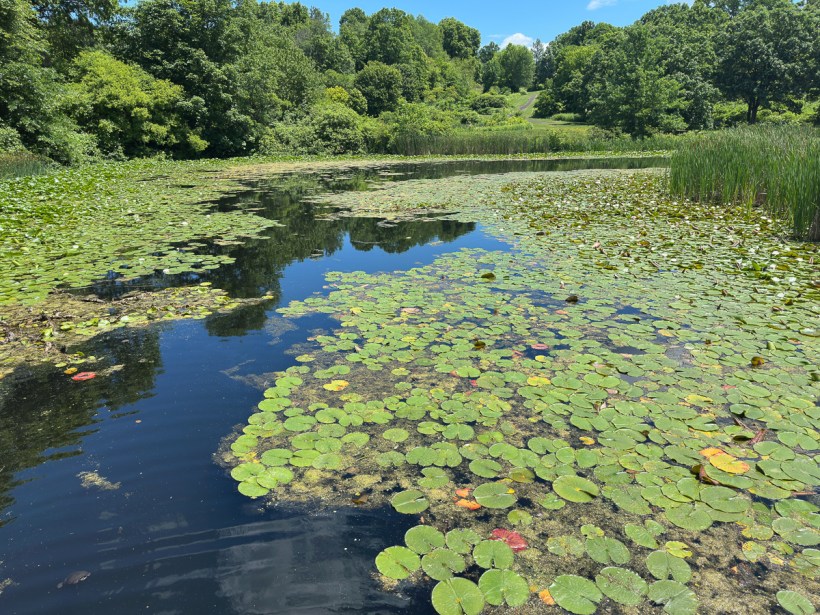
Houston Pond

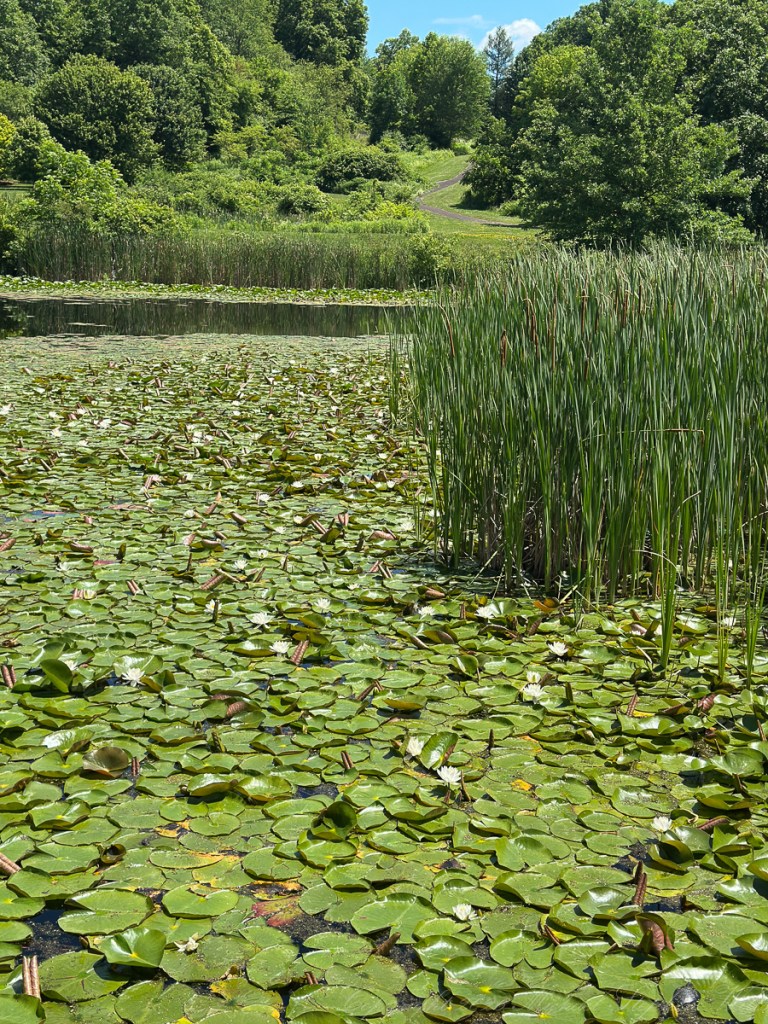
The pond was nearly covered with lily pads, a floating mosaic of green circles, some fresh and whole, others freckled, torn, yellowing. Between them, dark water opened in irregular channels, deep blue-black, mirroring trees and sky. These openings felt like pauses in a long sentence, small places where the pond allowed itself to breathe. Around the margins, cattails stood in dense ranks, upright and watchful, like a congregation listening to the sermon of light.

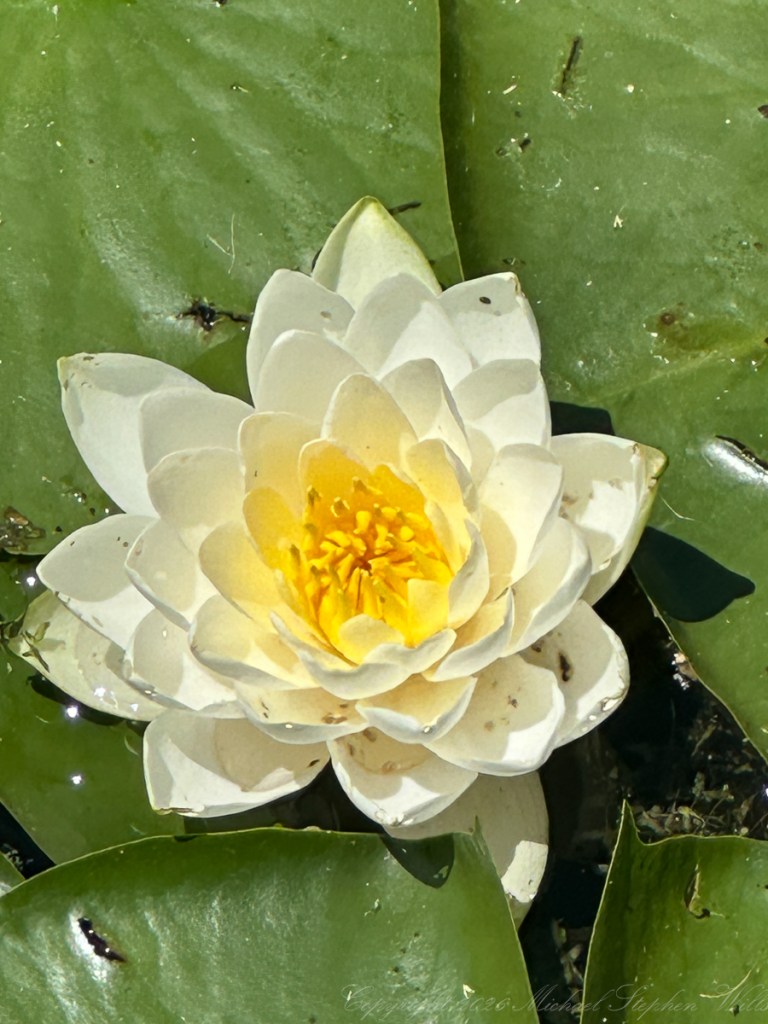
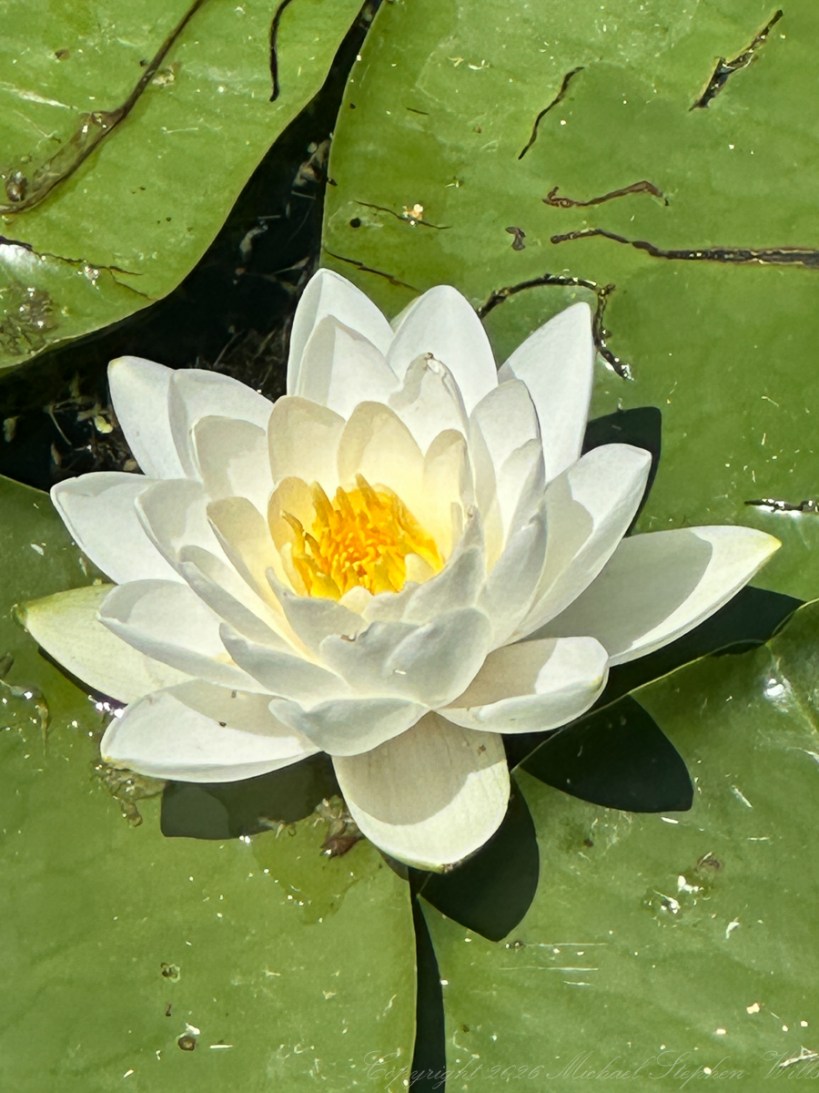
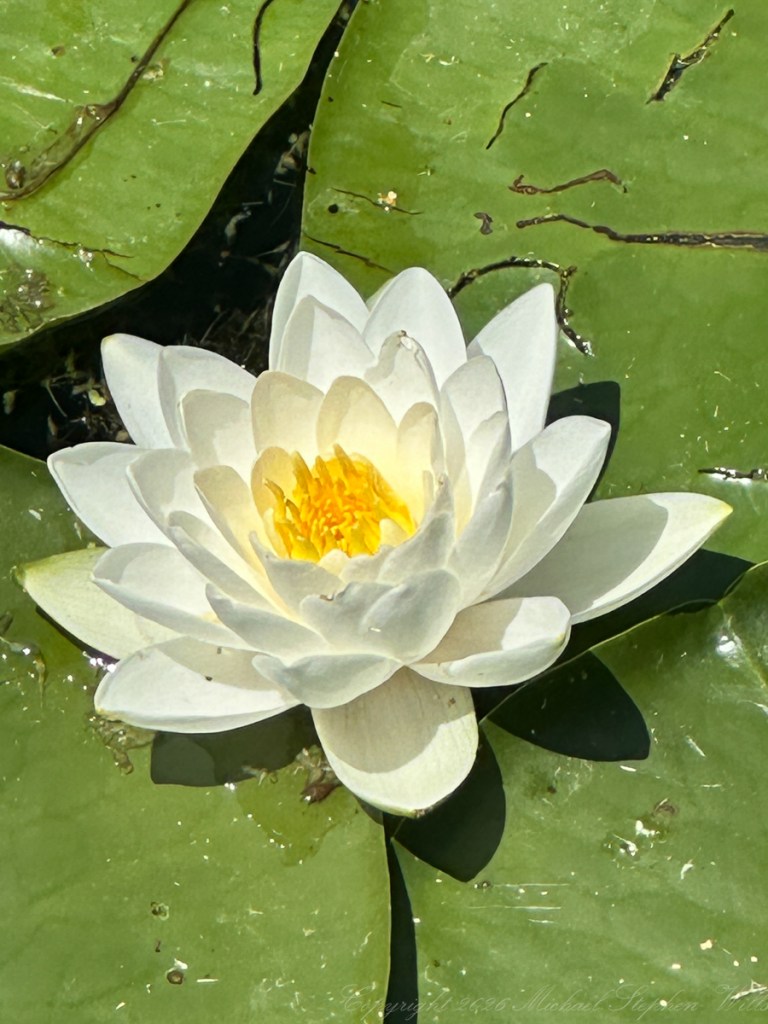
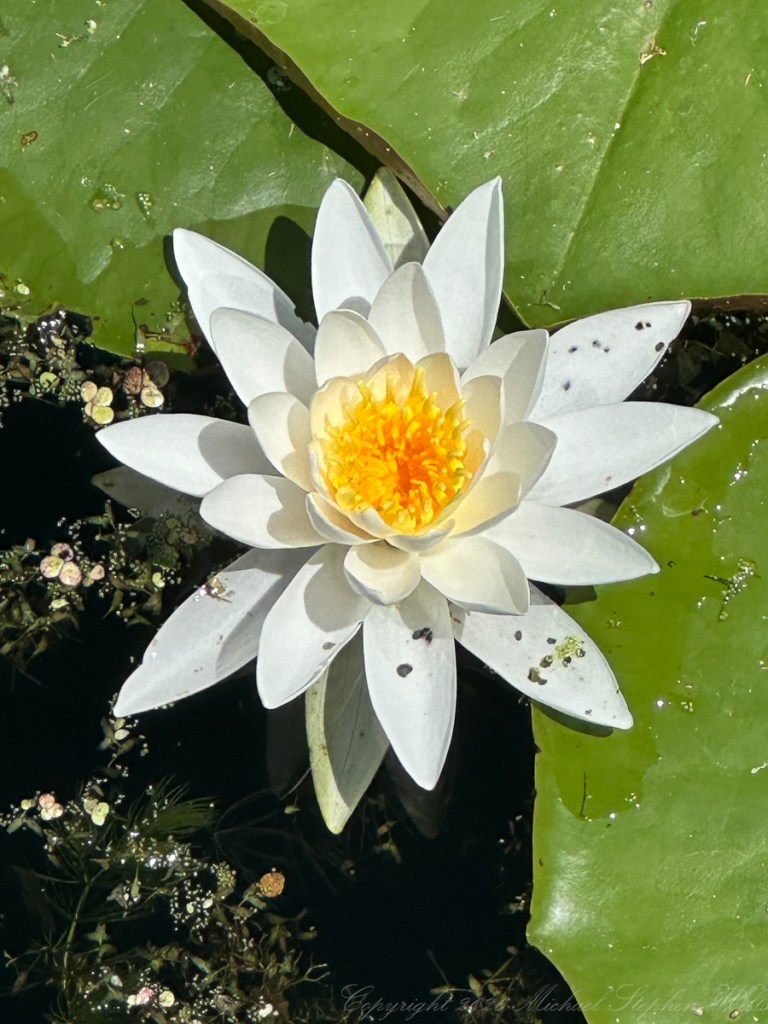
At the center of this water-world, white lilies opened with calm authority. Their petals rose cleanly from the surrounding abundance, white against green, flame-hearted with yellow. Each flower seemed impossible and inevitable at once: born from mud, rooted in darkness, arriving as a cup of light. A water lily is one of nature’s great acts of persuasion. It asks us to believe that beauty can rise without apology from what is hidden, tangled, and submerged.
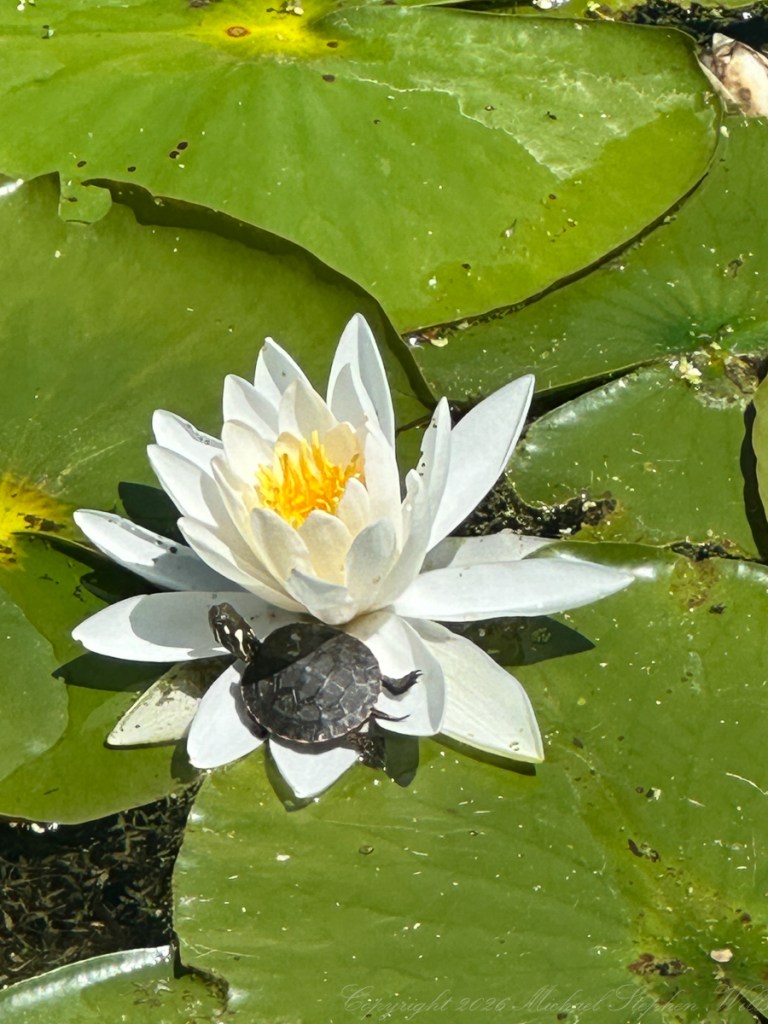
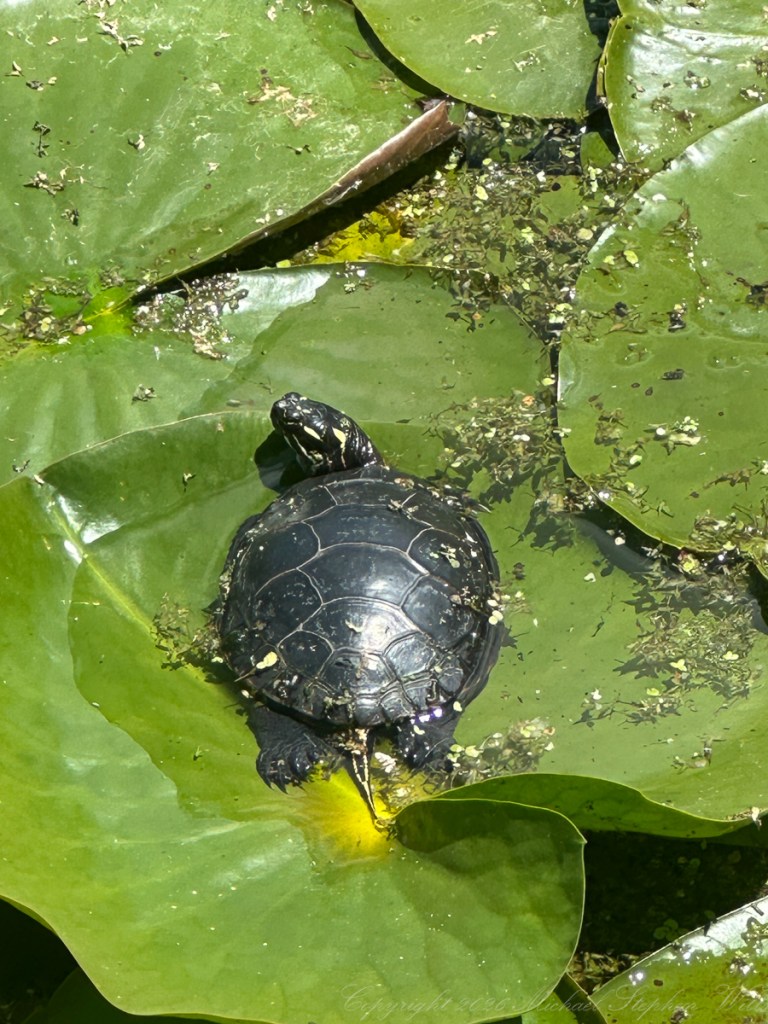
One blossom carried an unexpected visitor. A small turtle had climbed onto the flower, its dark shell resting against the white petals, one leg extended in complete confidence. The scene was both comic and profound. The lily was a raft, a chapel, a sun-warmed throne. The turtle seemed to understand what people often forget: beauty is not diminished by being used. It is completed by being entered. The flower did not become less beautiful because the turtle climbed aboard. It became more of the world.
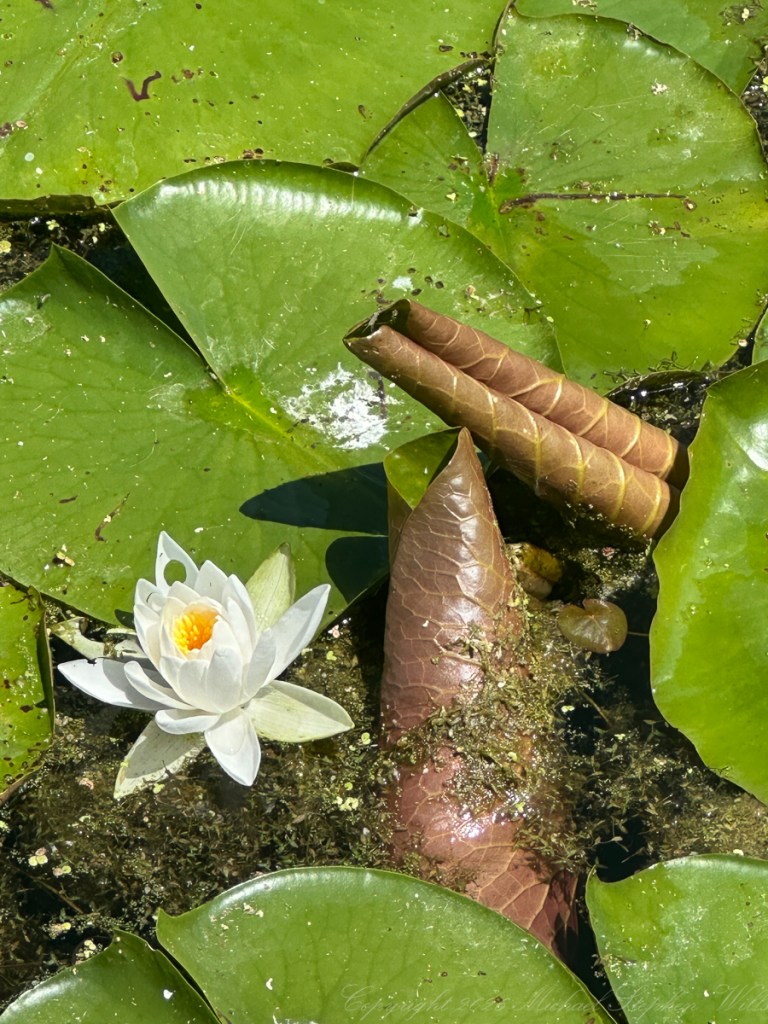
Nearby, new lily leaves still held their rolled shapes, brown and burnished, rising like curled scrolls from the water. They had not yet flattened into the broad green plates surrounding them. In their tight forms was the promise of unfolding, the secret grammar of growth. Around them, older leaves floated with scars and stains, reminders that even in June’s fullness the season carries time within it. Summer is not a fixed paradise. It is motion disguised as abundance.
Beyond the pond, the arboretum rose in layers: meadow, shrubs, cattails, dark trees, open sky. A path climbed away through the greenery, pale and narrow, inviting without insisting. The woods stood dense and generous, every tree leafed out in the opulence of early summer. Clouds drifted over the blue, white and soft, their reflections briefly caught in the pond’s darker openings. The whole place seemed balanced between cultivation and surrender. Human hands had shaped the arboretum, named its paths, protected its plantings, opened it to walkers and watchers. Yet the pond itself answered in its own language: water, root, wing, shell, blossom, shadow.
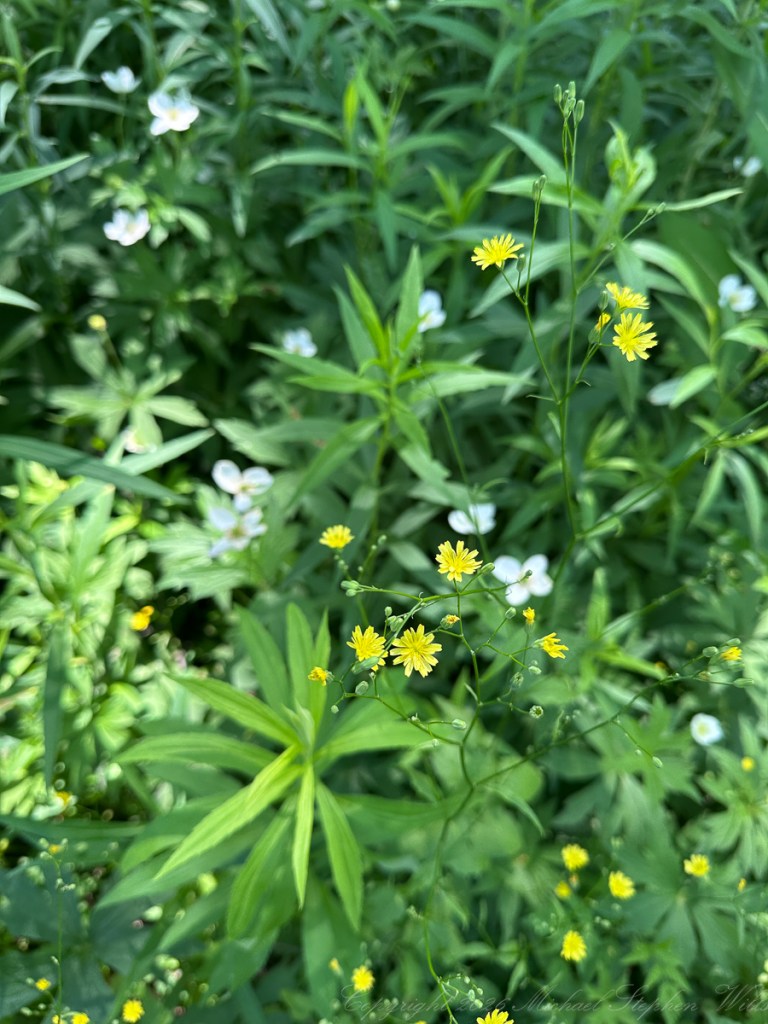
Away from the broad view, the smaller flowers made their quieter claims. Tiny yellow blooms lifted themselves on fine stems among the leaves, little sparks in a green hush. White blossoms hovered behind them, half blurred, like memories of spring still lingering in the understory. A single white flower opened over sharply cut leaves, its petals simple, its center delicate with stamens. It had none of the dramatic presence of the water lilies, but it possessed a different power: the power of being almost missed.
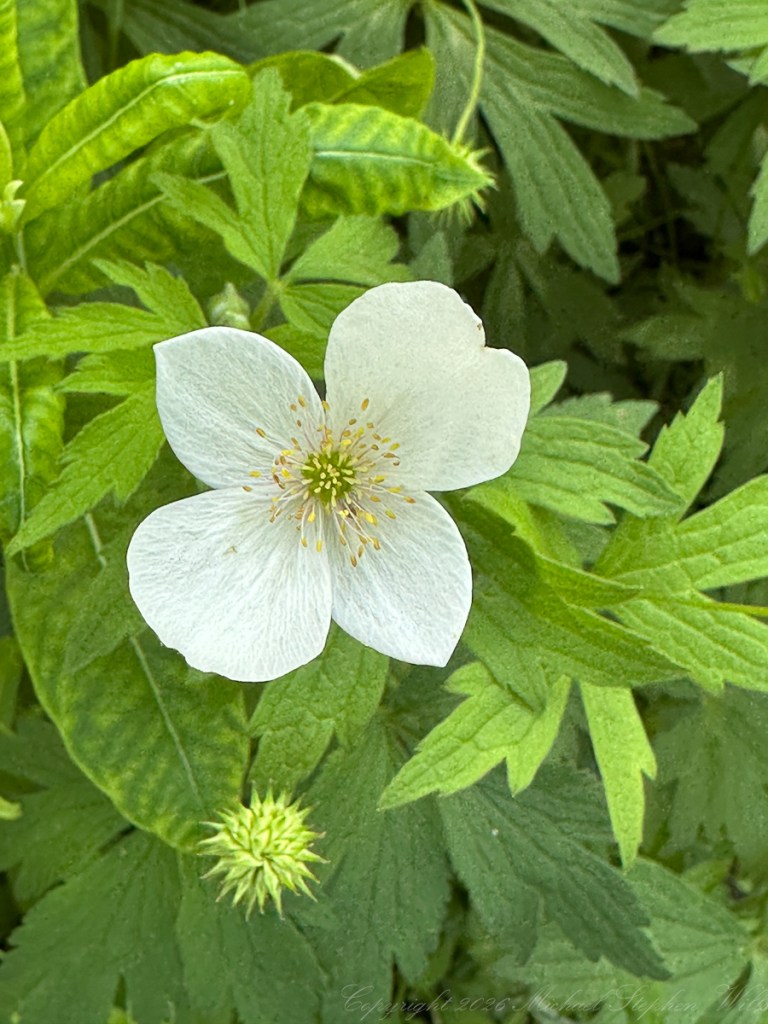
That is one of the arboretum’s gifts. It teaches scale. First the eye takes in the pond, the sweep of trees, the blue sky, the mass of cattails. Then attention narrows. A petal. A turtle’s foot. A torn leaf edge. A yellow flower no larger than a thought. The place asks us to look widely, then closely, then widely again. It trains the mind away from haste. It reminds us that wonder is not always a thunderclap. Sometimes it is a small white bloom waiting at ankle height.
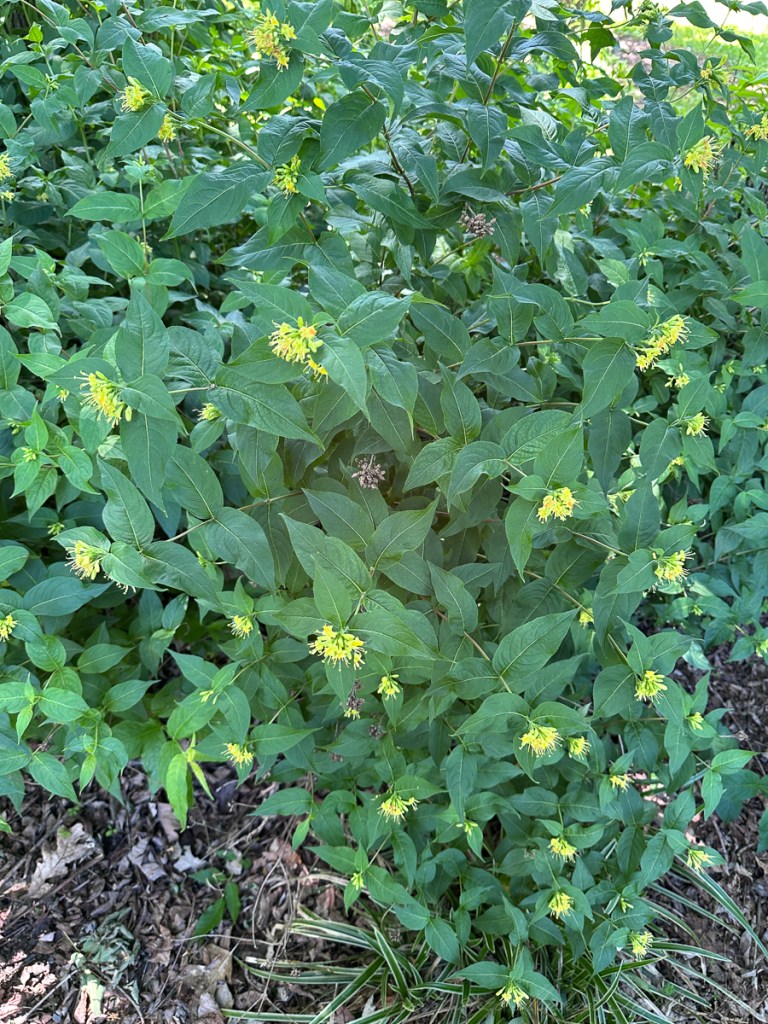
Northern Bush Honeysuckle (Diervilla lonicera)

The yellow honeysuckle-like blossoms tucked among broad leaves offered another kind of intimacy. Their pale tubes and slender filaments seemed made for visitors more delicate than us. They belonged to the hidden commerce of June: pollinators, fragrance, pollen, fruit-to-come. Much of what matters in a place like Houston Pond happens below notice. Roots thicken. Insects navigate. Turtles choose their sunning places. Flowers open and close according to laws older than memory. The pond is never still, only patient.
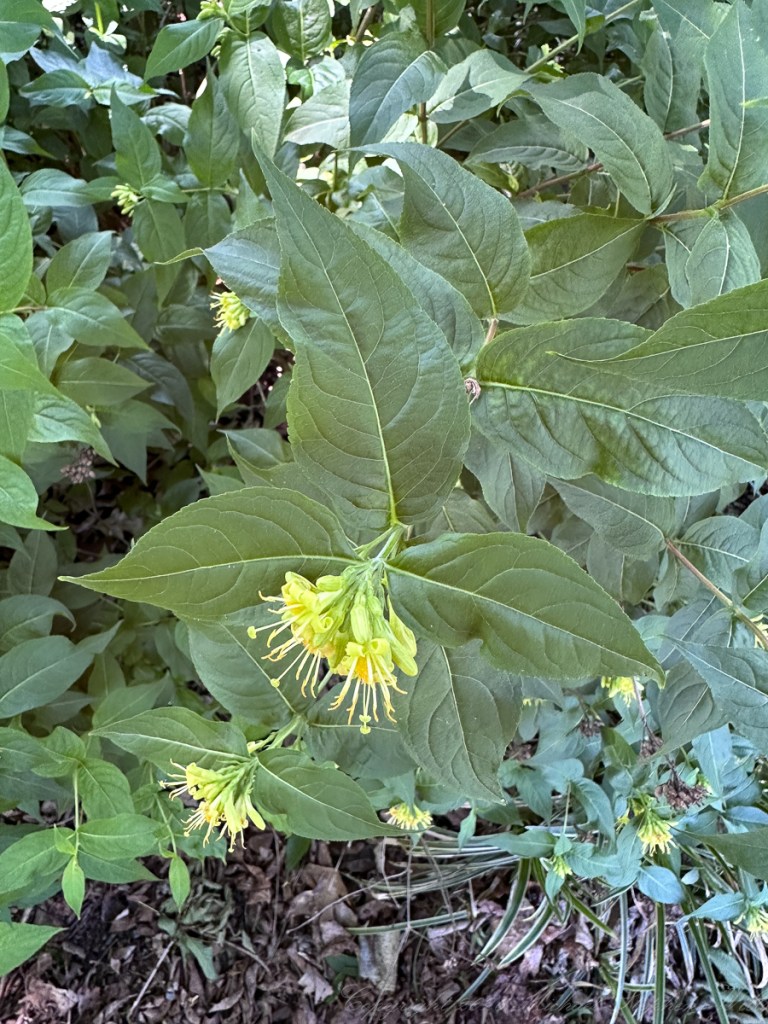
Northern Bush Honeysuckle (Diervilla lonicera)

Standing there, I felt the day gather itself into one phrase: green silence, golden heart. The white lilies held the light. The cattails guarded the edges. The turtle rested without concern for symbolism. And all around, the arboretum offered its deep reassurance: life does not need to announce itself loudly to be complete.

June in the F.R. Newman Arboretum is a state of attention within a season. Houston Pond receives the sky, feeds the lilies, shelters the small dark bodies of turtles, and gives back a vision of the world refreshed by reflection. To walk there at midday is to be reminded that the ordinary is only ordinary until we stop long enough to see it. Then the pond becomes a mirror with roots, the lily a white flame on dark water, and the whole green world a quiet invitation to belong.
Click me to visit Michael Stephen Wills Online Finger Lakes Gallery.

Enter your email to receive notification of future postings. I will not sell or share your email address.

Glacial Kettle Bog Wonders: Photographing Pitcher Plants at the O.D. Engeln Preserve in Freeville

Step onto Freeville’s O.D. Engeln Preserve boardwalk and meet purple pitcher plants in a glacial kettle bog—carnivorous beauty, hidden blooms, and macro-photo magic.

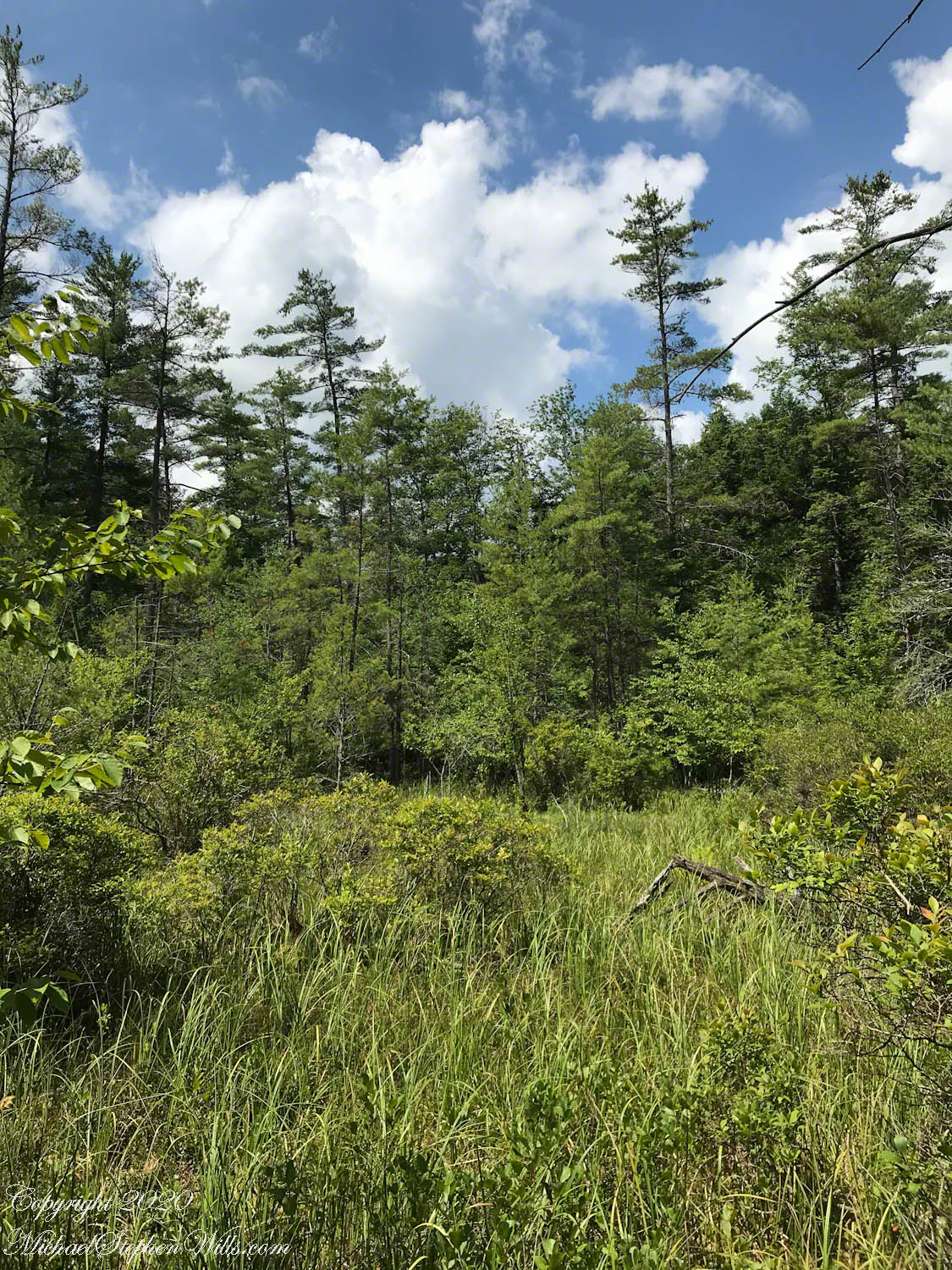
Seen from 1000 feet above in Google Earth, the O.D. (Von) Engeln Preserve at Malloryville Road lays itself out in two glacial “kettles,” pond and bog; a simple diagram drawn by ice and time, then complicated by everything that has happened since. In my photograph, taken from the bog observation platform on a July morning, the sky is rinsed blue, clouds billow, conifers stitch along the rim around open space. Step closer, or lower your lens, and the openness resolves into a crowded, intimate architecture of sedges and moss, twigs and standing water, sunlight and shadow.

I came here for a plant that does not announce itself the way wildflowers often do. The purple pitcher plant, Sarracenia purpurea, is a quiet scandal: a green vessel in a place where green should be satisfied simply to survive. I arrived equipped for attentiveness—an iPhone for the broad scene, and a Canon DSLR with the F2.8 100 mm macro lens for the stars of this bog. The macro lens is an instrument of humility. It forces you to admit that the important drama is often no bigger than your palm.

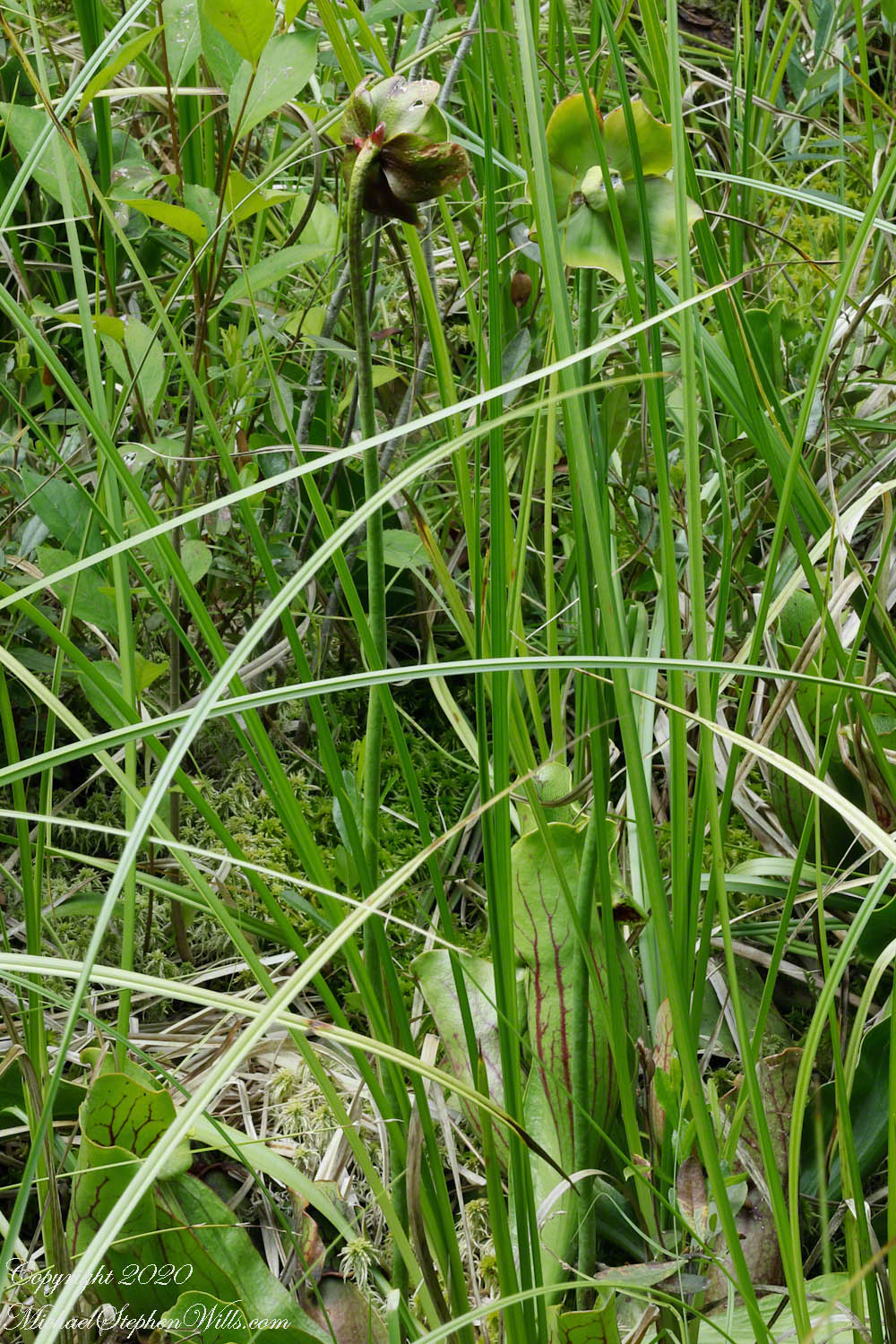
In earlier years, the pitchers could be found right where a visitor naturally looks—within the central cut-out of the observation deck, close enough to lean over and study. But the bog is not a museum display; it is a living negotiation. This season, highbush blueberries pressing in from the margin had crowded the pitchers out, pushing the flowering plants into the grasses eight to ten feet away. The shift is small in human terms, the kind of distance you cross without thinking. In bog terms, it is displacement—an erasure of a familiar scene, a reminder that rarity is not only about numbers but also about space.

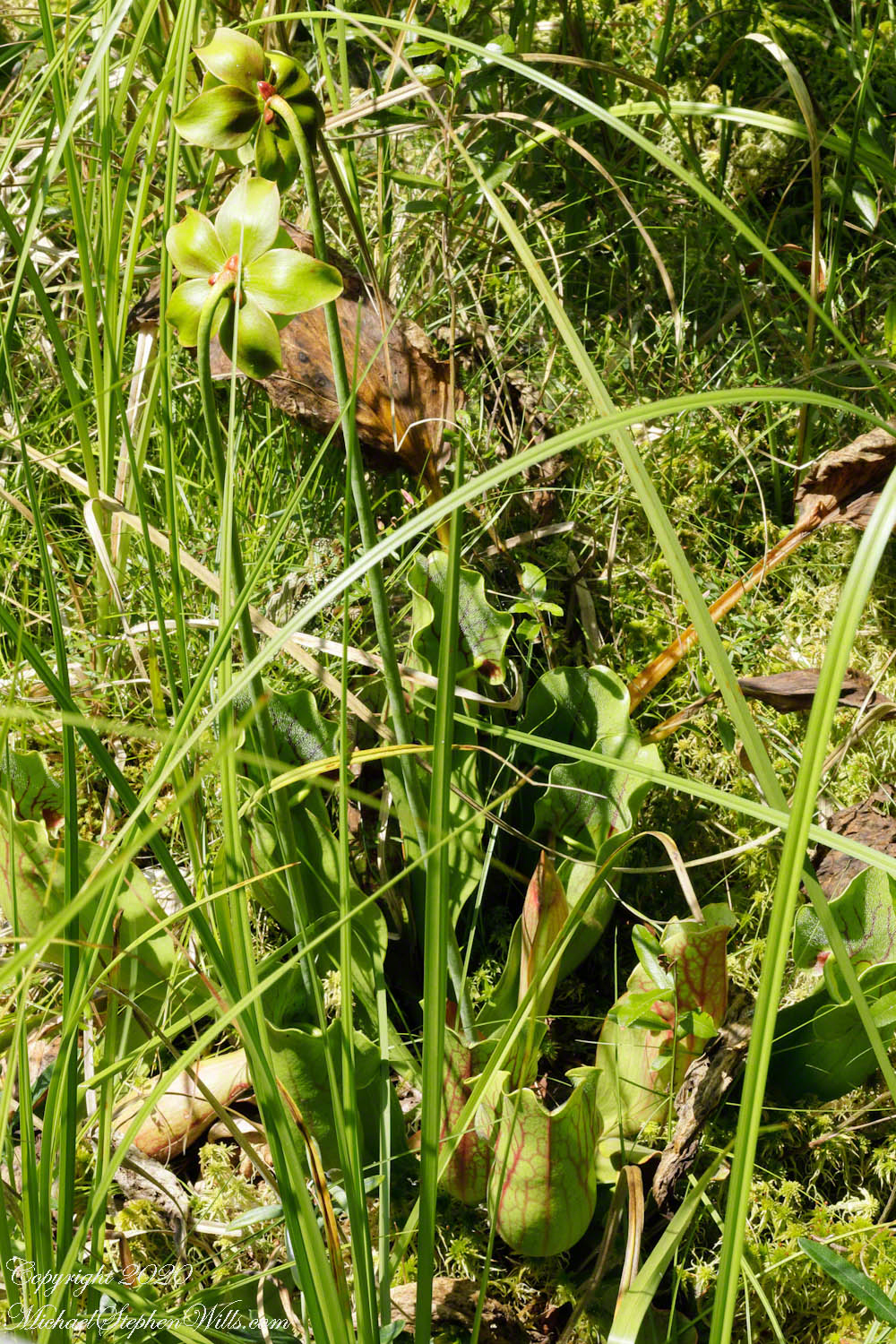
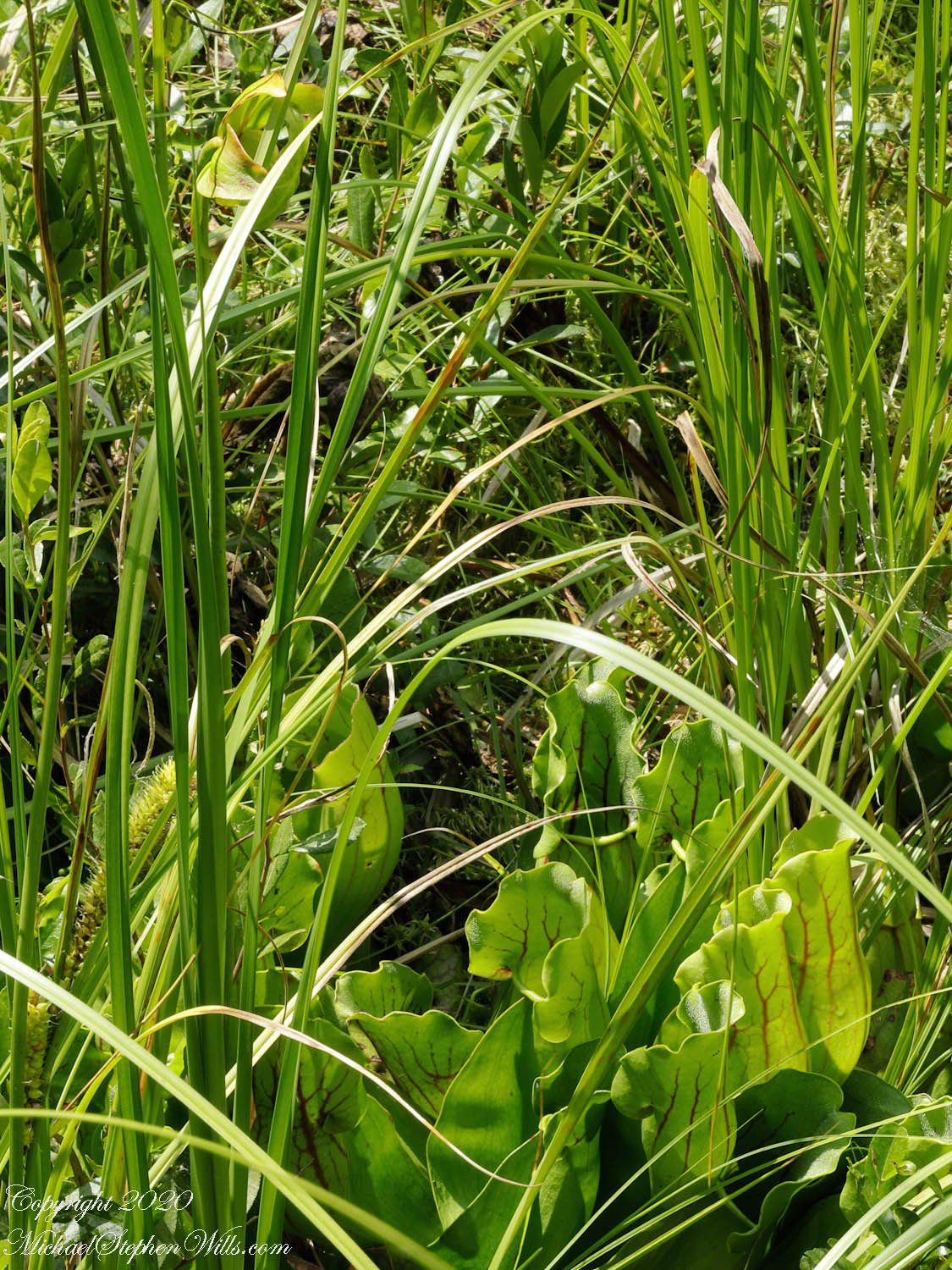
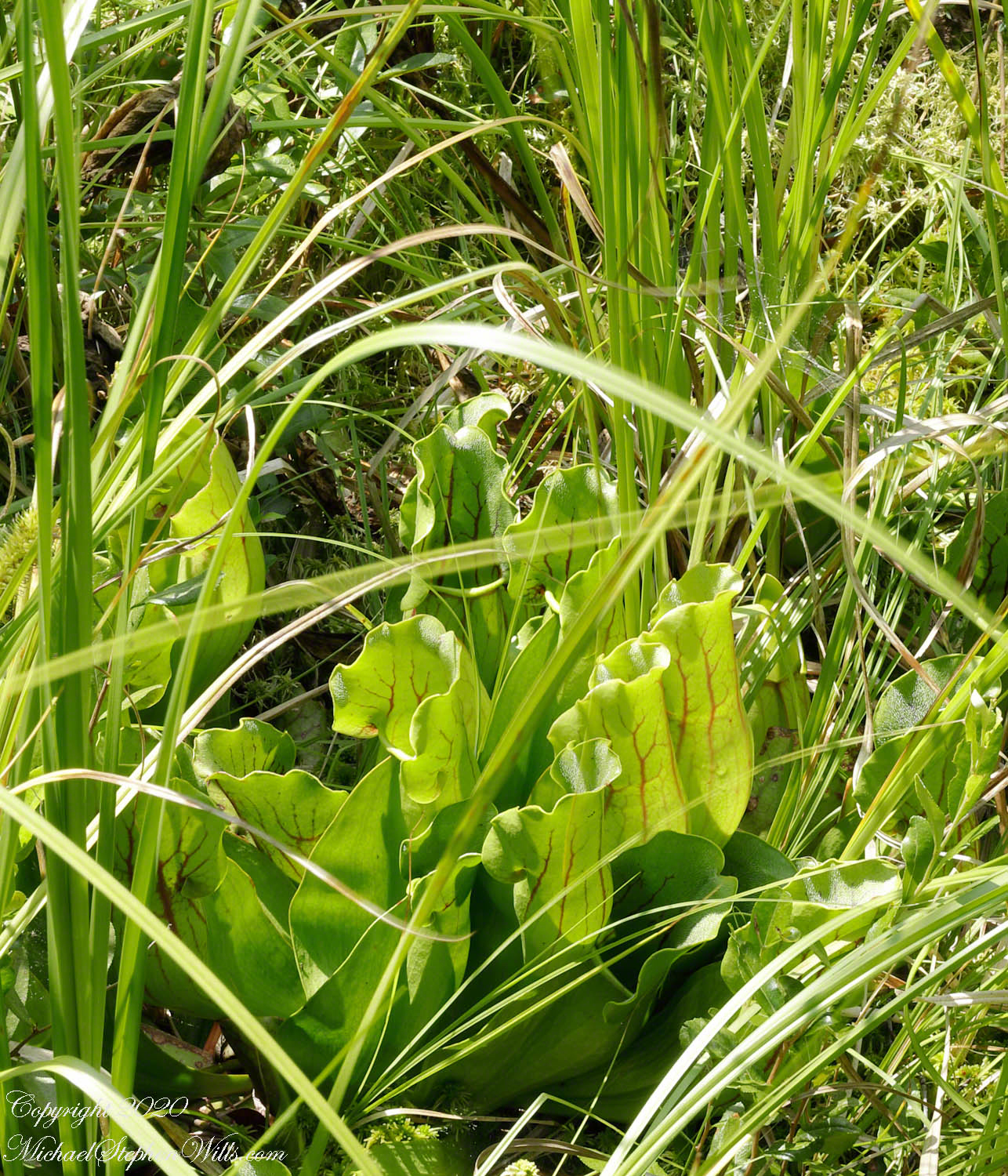
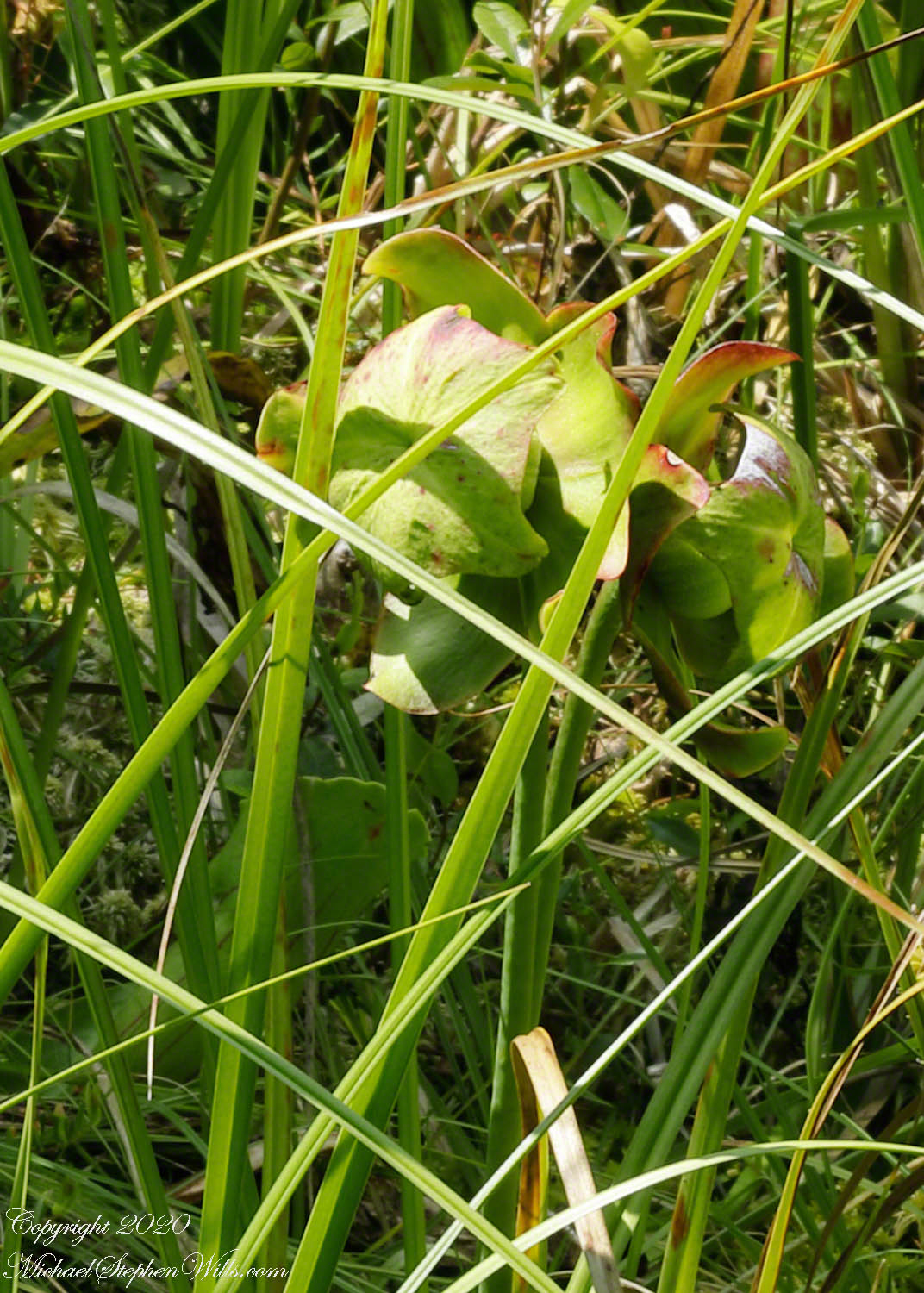
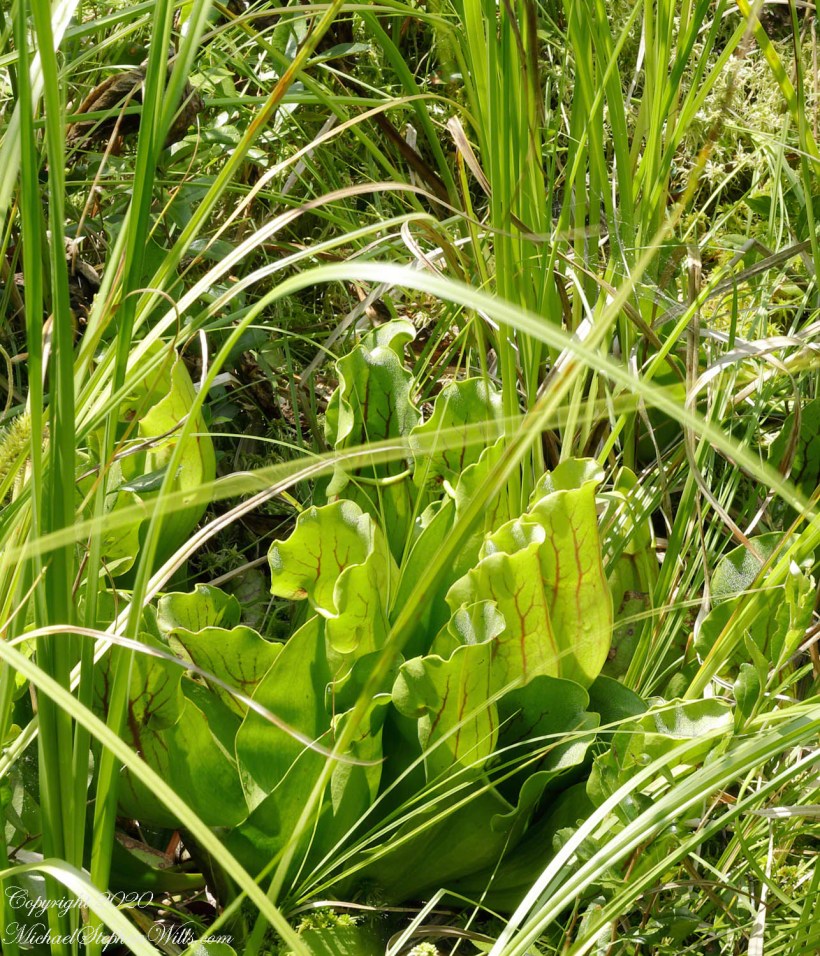
The pitchers themselves—those “turtle socks,” as they’ve been nicknamed—sit at ground level in a rosette, their mouths open to weather. Sunlight floods the cups and turns them into something both domestic and uncanny: a set of green, veined slippers left out to air, or a cluster of small amphorae awaiting an offering. In the bog’s thin soil, nourishment is hard-won. The pitcher plant answers that poverty with invention. Instead of arguing with the chemistry of peat, it borrows from the animal world—luring and taking what the air can spare. The cup is a trap, yes, but also a reservoir: rainwater gathered and held, a miniature wetland that mirrors the preserve’s larger one.

There is a tension here that never quite resolves: the plant’s beauty, and the plant’s appetite. We admire the cup’s red veining, the glossy rim, the way the opening flares like a lip; then we remember what the lip is for. We admire the flower’s elegant sheltering forms; then we realize the shelter is also a funnel, a choreography. This is not cruelty—no more than winter is cruelty. It is adaptation made visible, a lesson in how form follows need, and how need can produce something unexpectedly lovely.

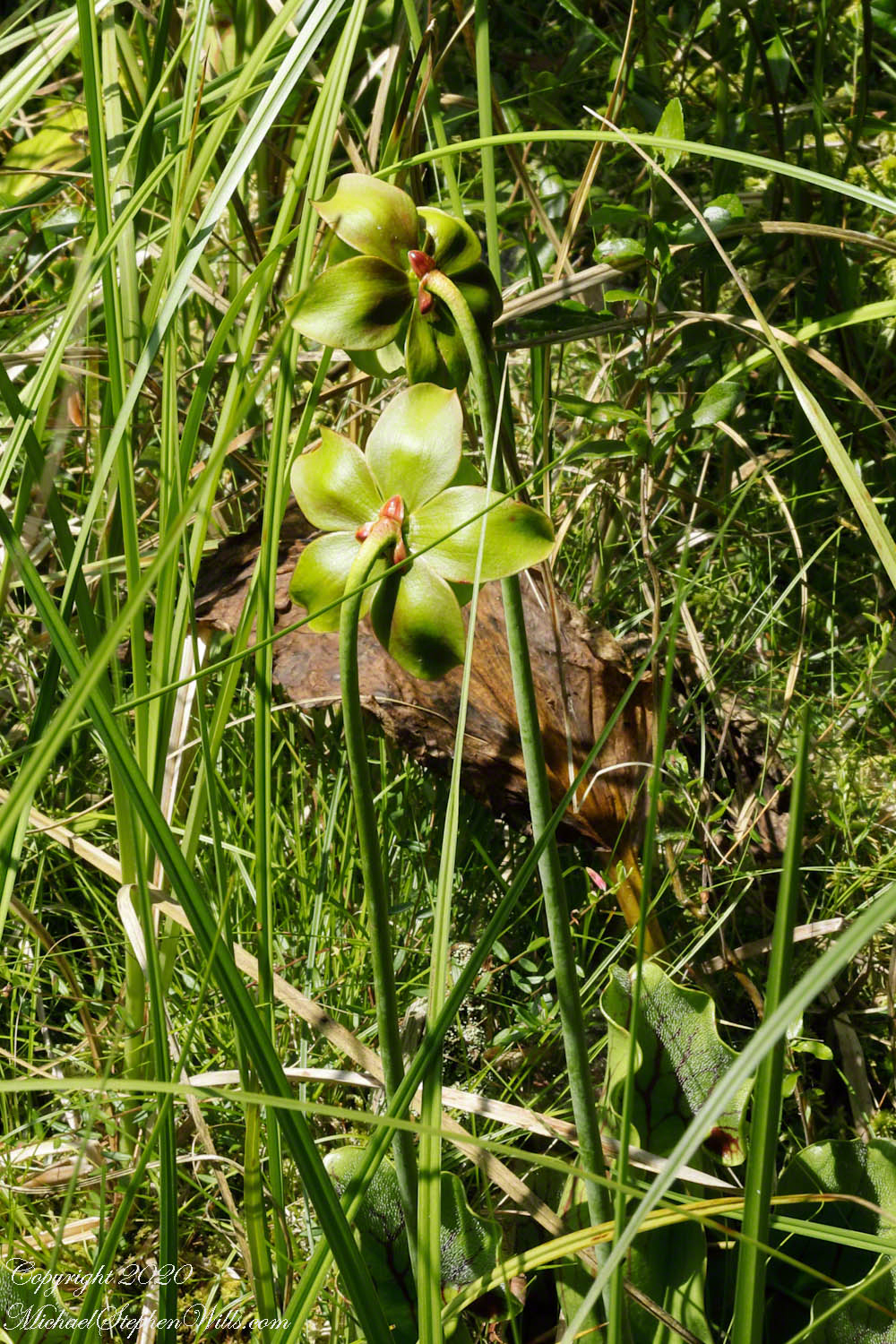
And yet the real marvel—the reason I came that day—rises above the traps on a strong stalk, lifted clear of the dangerous mouths below. The flower is not purple in the obvious way its common name promises. It is subtler and stranger: a suspended structure with the poise of a lantern and the protective logic of armor. It struck me as a flower unlike any I have experienced, resembling an insect carapace, with the reproductive element underneath a hood. That hooded design feels less like ornament than strategy—an architecture that guides a pollinator’s route, controlling entrances and exits the way the pitcher controls the fall of an insect.

Even the flower’s back side refuses to perform for the camera. From the posterior angle, “there are only bracts”—plain supporting structures, the botanical equivalent of scaffolding left in place once the facade is finished. The bog, too, shows its scaffolding everywhere: dead stems, old wood, peat-dark water, last year’s leaves. A preserve is never only what is blooming. It is what persists.

I found myself thinking about the details I wanted but could not quite capture that day: the downward facing hairs inside the pitcher—those one-way bristles that make retreat difficult once a victim has slipped in. I or my lens was not up to this challange. The shortcoming was minor, but instructive. The bog offers glimpses, not guarantees. It invites return visits, different light, different seasons, a different kind of patience.

Standing on the platform I felt the preserve’s central truth: these are landscapes shaped by constraint—by ice, by water, by nutrient scarcity, by the slow encroachment of shrubs—and yet they keep producing improbable forms. The purple pitcher plant is one of those forms: a green cup that drinks rain, a flower that wears a hood, a turtle sock that turns hunger into design. In a place where the ground itself seems to refuse abundance, the plant answers with a different kind of richness—an elegance that is also a solution.

Enter your email to receive notification of future postings. I will not sell or share your email address.