On June 21, 2026, just after noon, Houston Pond of the F.R. Newman Arboretum held the day in a green, breathing stillness. The sun stood high over Ithaca, bright enough to polish every lily pad, every cattail blade, every glossy fold of leaf. This light of the first summer day entered the scene, becoming part of the water, part of the trees, part of the quiet intelligence of the pond.
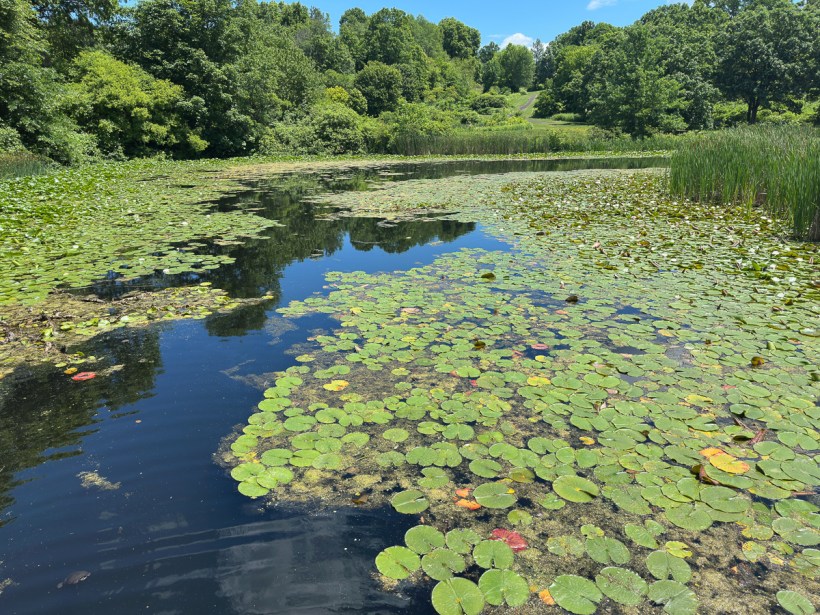
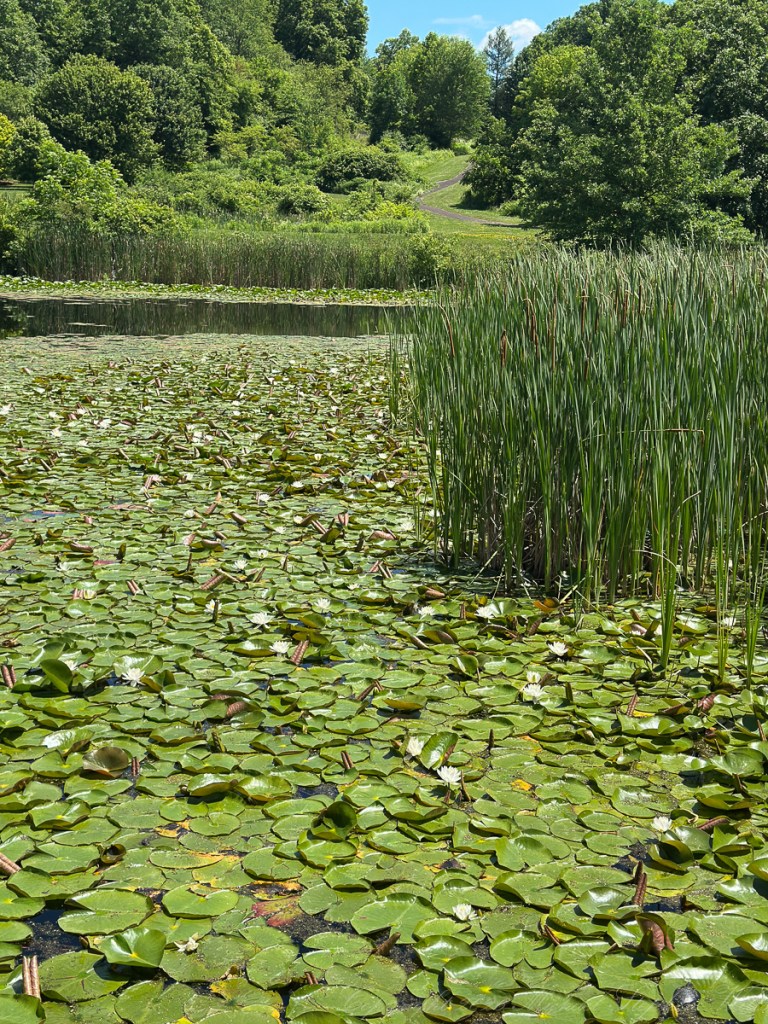
The pond was nearly covered with lily pads, a floating mosaic of green circles, some fresh and whole, others freckled, torn, yellowing. Between them, dark water opened in irregular channels, deep blue-black, mirroring trees and sky. These openings felt like pauses in a long sentence, small places where the pond allowed itself to breathe. Around the margins, cattails stood in dense ranks, upright and watchful, like a congregation listening to the sermon of light.
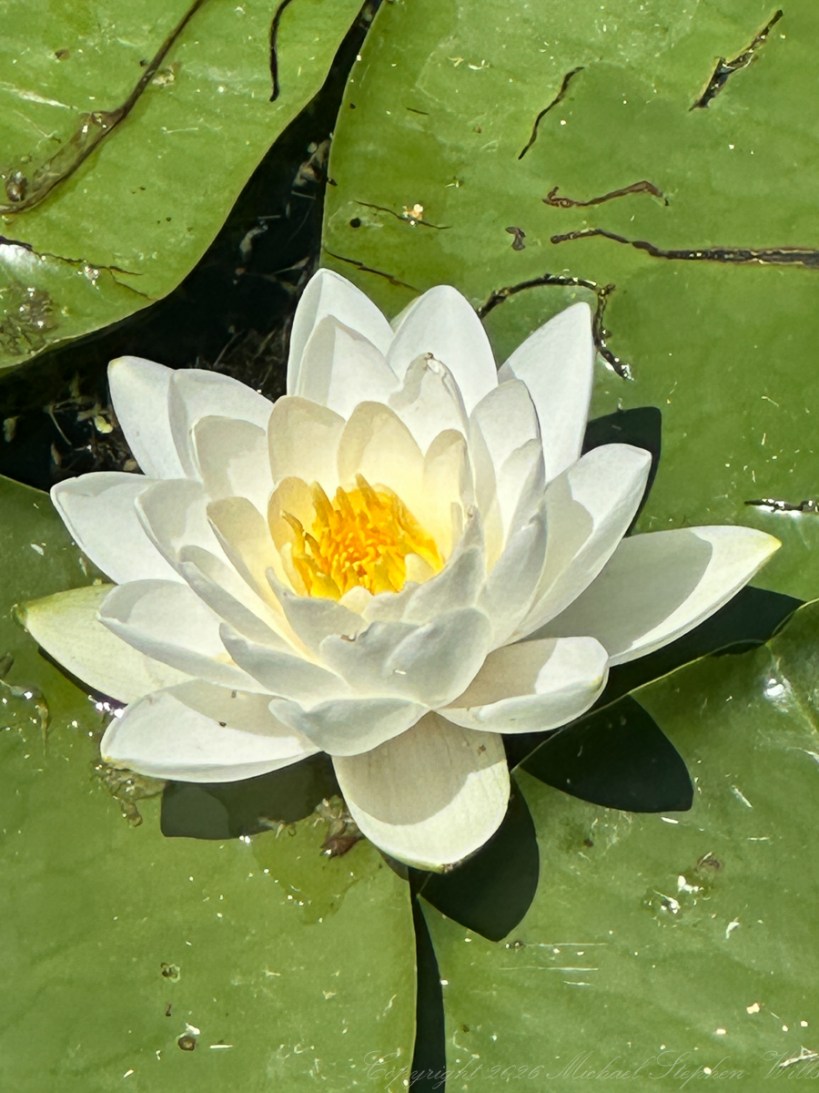
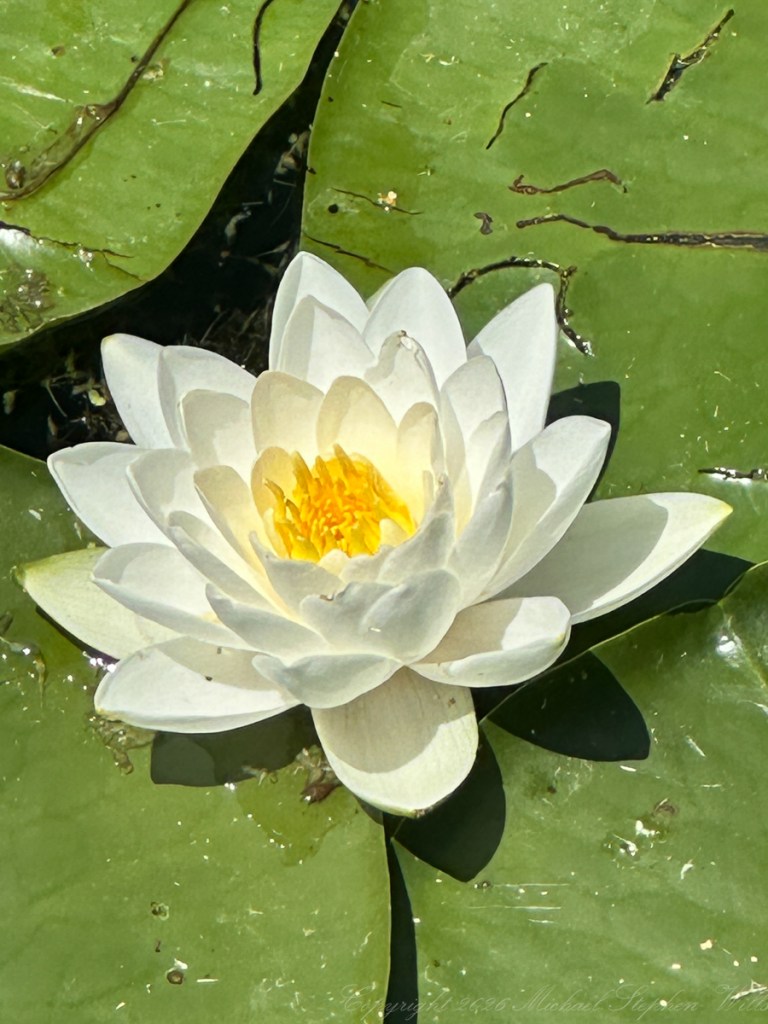
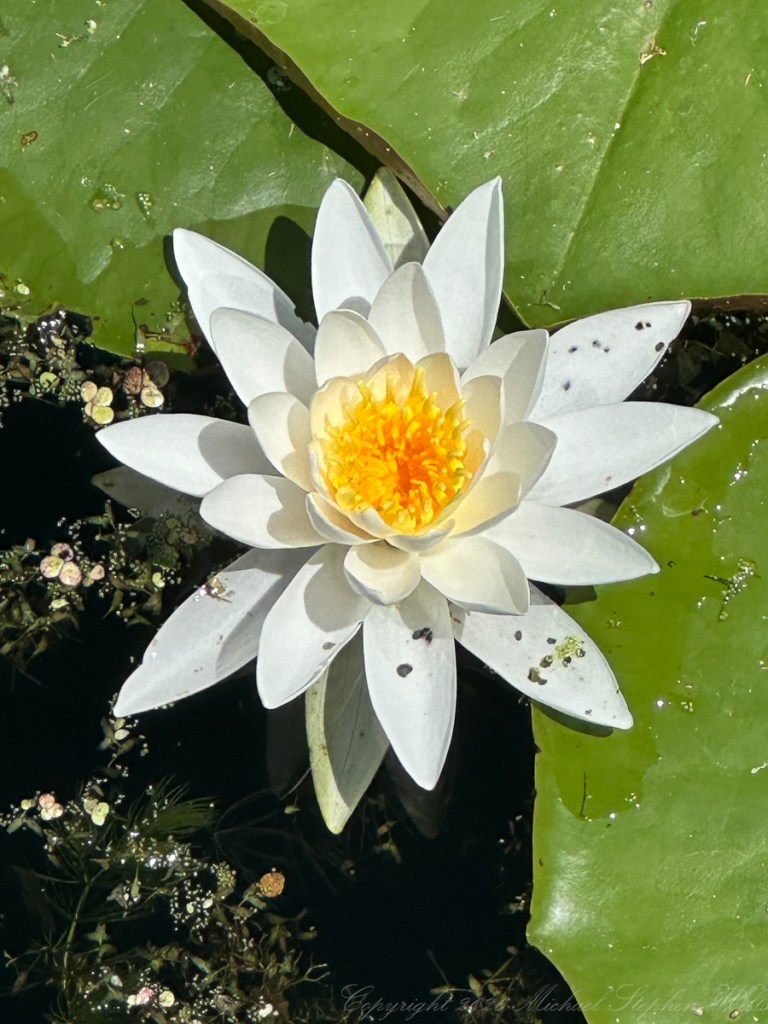
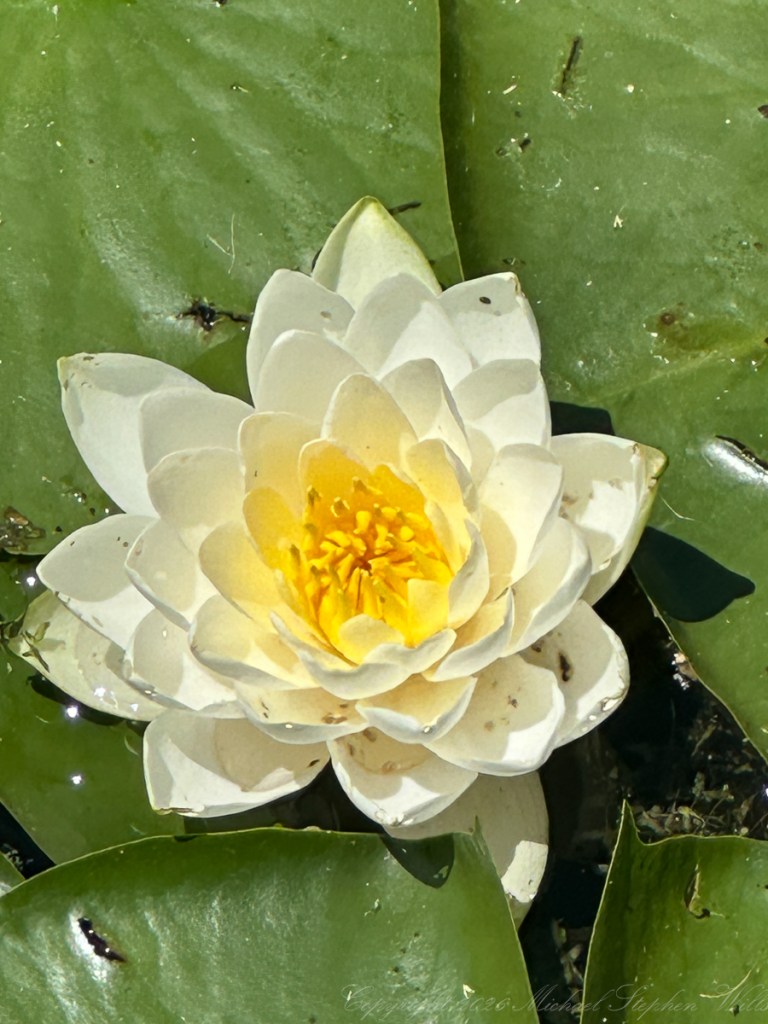
At the center of this water-world, white lilies opened with calm authority. Their petals rose cleanly from the surrounding abundance, white against green, flame-hearted with yellow. Each flower seemed impossible and inevitable at once: born from mud, rooted in darkness, arriving as a cup of light. A water lily is one of nature’s great acts of persuasion. It asks us to believe that beauty can rise without apology from what is hidden, tangled, and submerged.
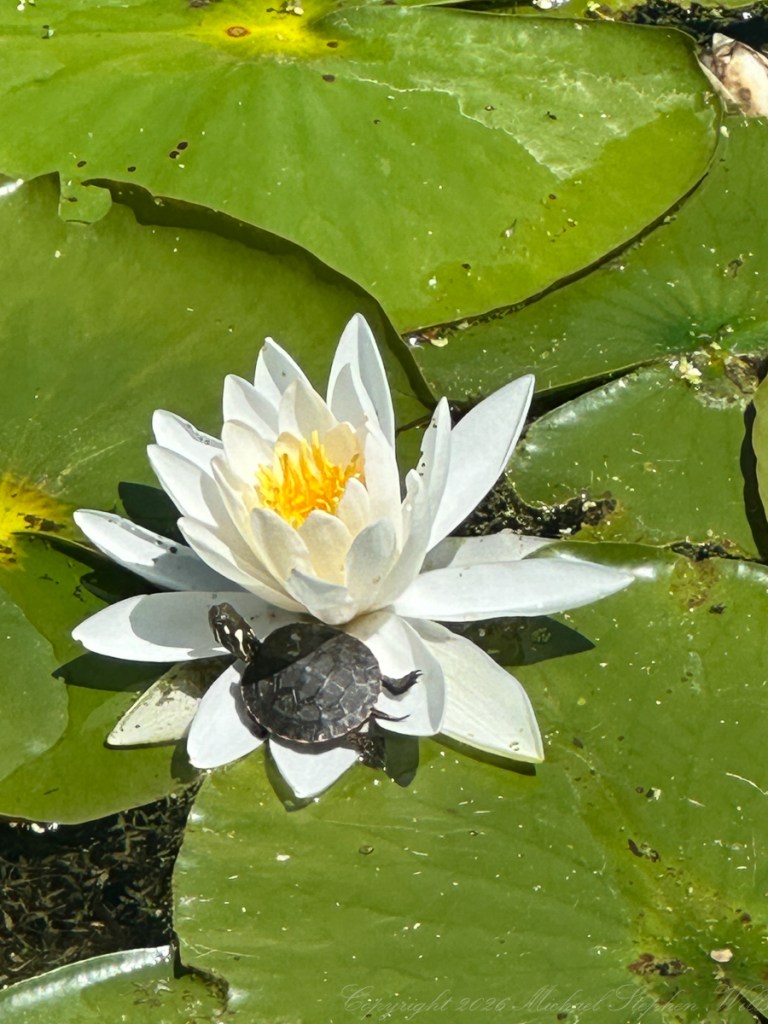
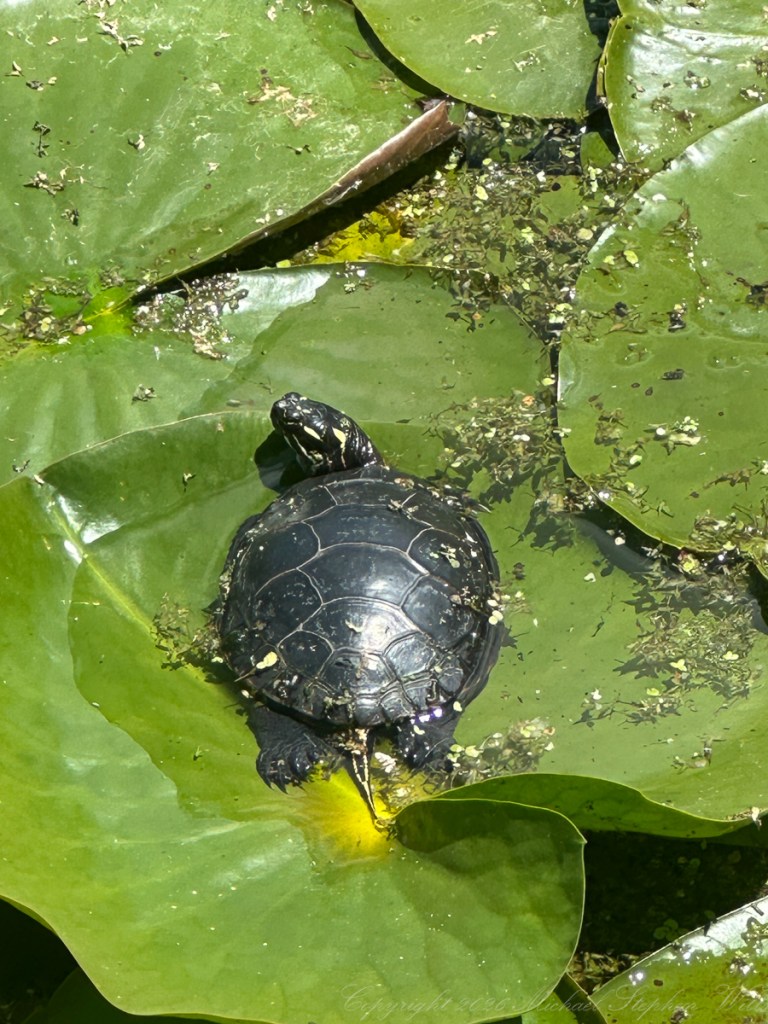
One blossom carried an unexpected visitor. A small turtle had climbed onto the flower, its dark shell resting against the white petals, one leg extended in complete confidence. The scene was both comic and profound. The lily was a raft, a chapel, a sun-warmed throne. The turtle seemed to understand what people often forget: beauty is not diminished by being used. It is completed by being entered. The flower did not become less beautiful because the turtle climbed aboard. It became more of the world.
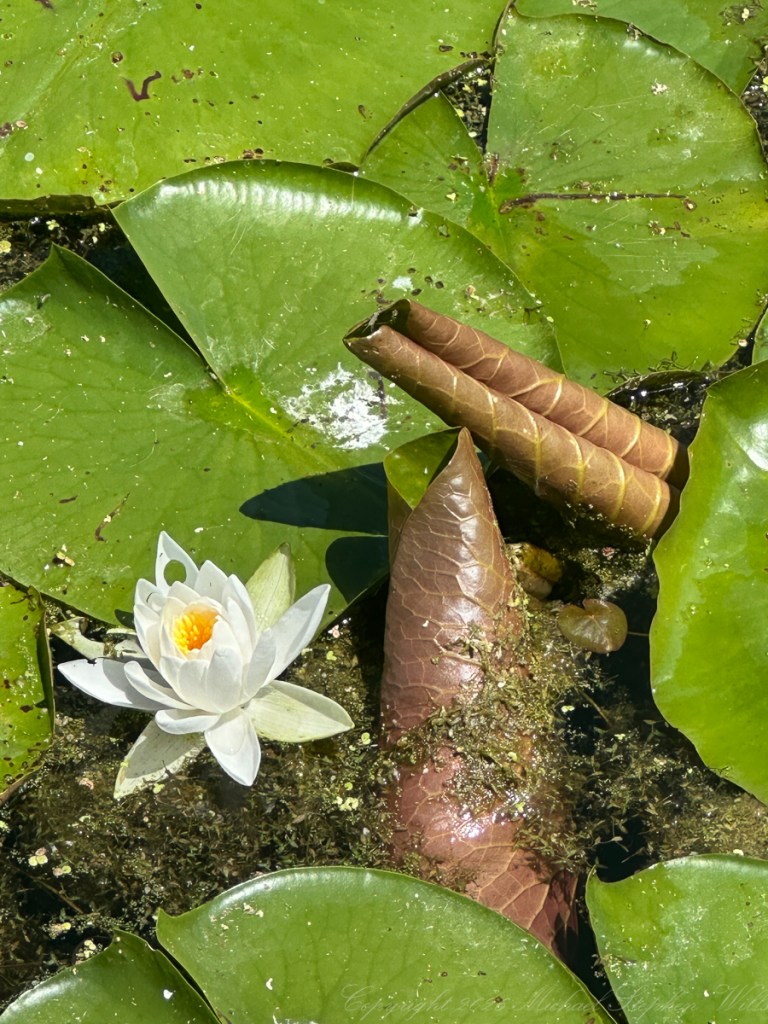
Nearby, new lily leaves still held their rolled shapes, brown and burnished, rising like curled scrolls from the water. They had not yet flattened into the broad green plates surrounding them. In their tight forms was the promise of unfolding, the secret grammar of growth. Around them, older leaves floated with scars and stains, reminders that even in June’s fullness the season carries time within it. Summer is not a fixed paradise. It is motion disguised as abundance.
Beyond the pond, the arboretum rose in layers: meadow, shrubs, cattails, dark trees, open sky. A path climbed away through the greenery, pale and narrow, inviting without insisting. The woods stood dense and generous, every tree leafed out in the opulence of early summer. Clouds drifted over the blue, white and soft, their reflections briefly caught in the pond’s darker openings. The whole place seemed balanced between cultivation and surrender. Human hands had shaped the arboretum, named its paths, protected its plantings, opened it to walkers and watchers. Yet the pond itself answered in its own language: water, root, wing, shell, blossom, shadow.
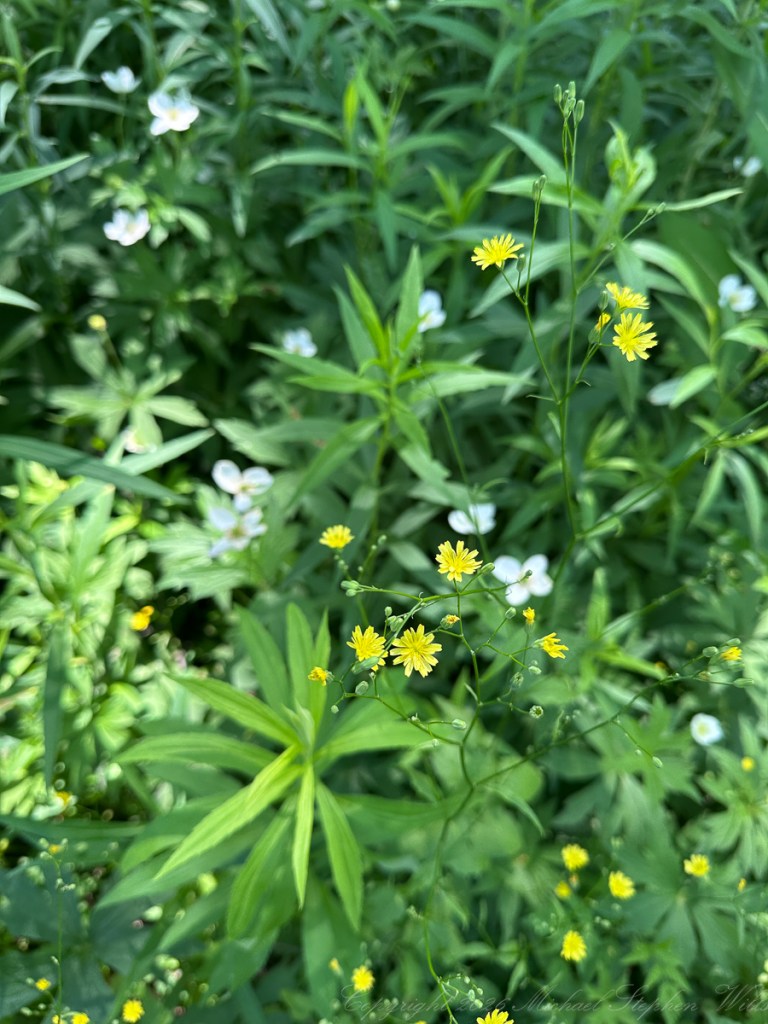
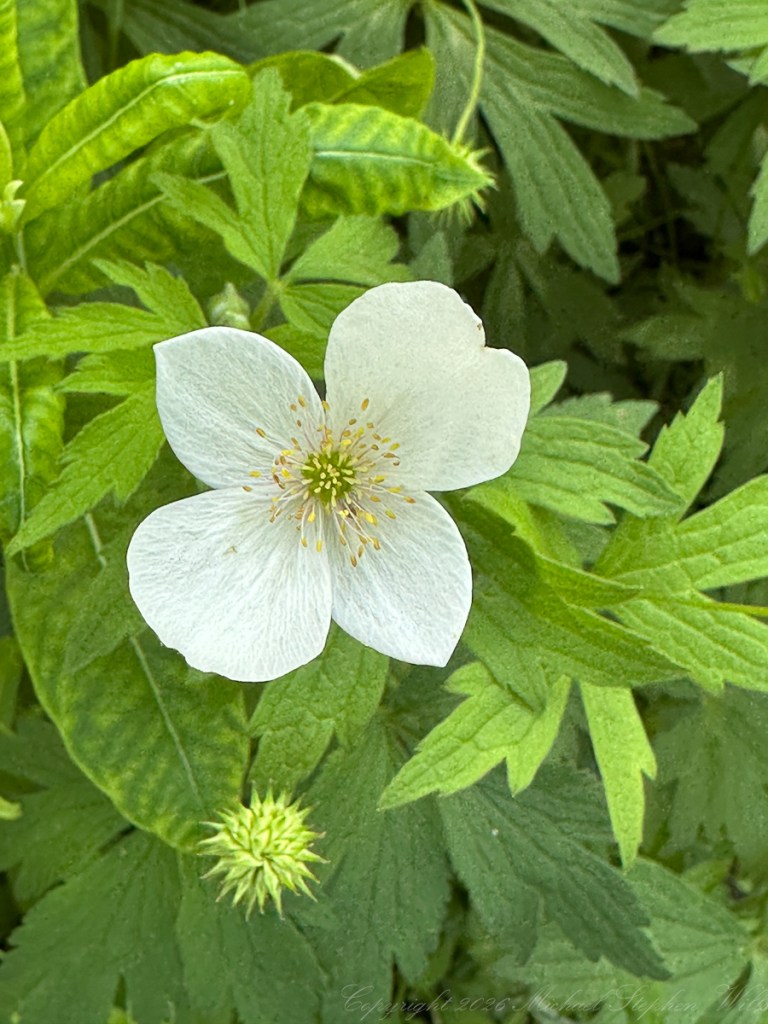
Away from the broad view, the smaller flowers made their quieter claims. Tiny yellow blooms lifted themselves on fine stems among the leaves, little sparks in a green hush. White blossoms hovered behind them, half blurred, like memories of spring still lingering in the understory. A single white flower opened over sharply cut leaves, its petals simple, its center delicate with stamens. It had none of the dramatic presence of the water lilies, but it possessed a different power: the power of being almost missed.
That is one of the arboretum’s gifts. It teaches scale. First the eye takes in the pond, the sweep of trees, the blue sky, the mass of cattails. Then attention narrows. A petal. A turtle’s foot. A torn leaf edge. A yellow flower no larger than a thought. The place asks us to look widely, then closely, then widely again. It trains the mind away from haste. It reminds us that wonder is not always a thunderclap. Sometimes it is a small white bloom waiting at ankle height.
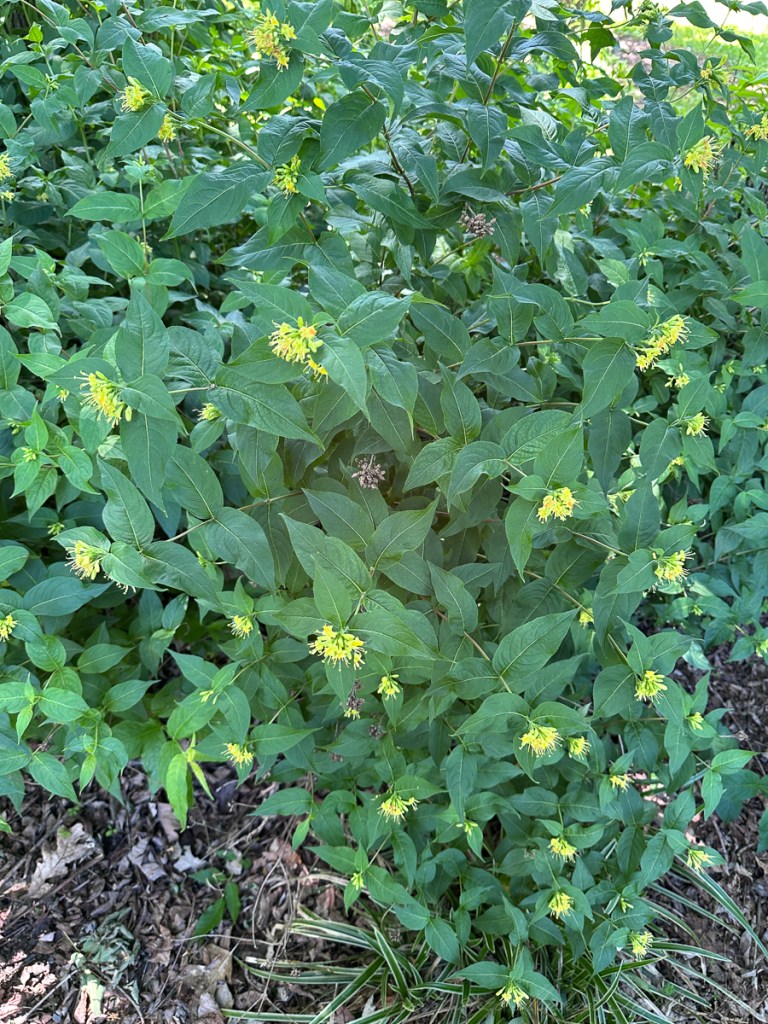
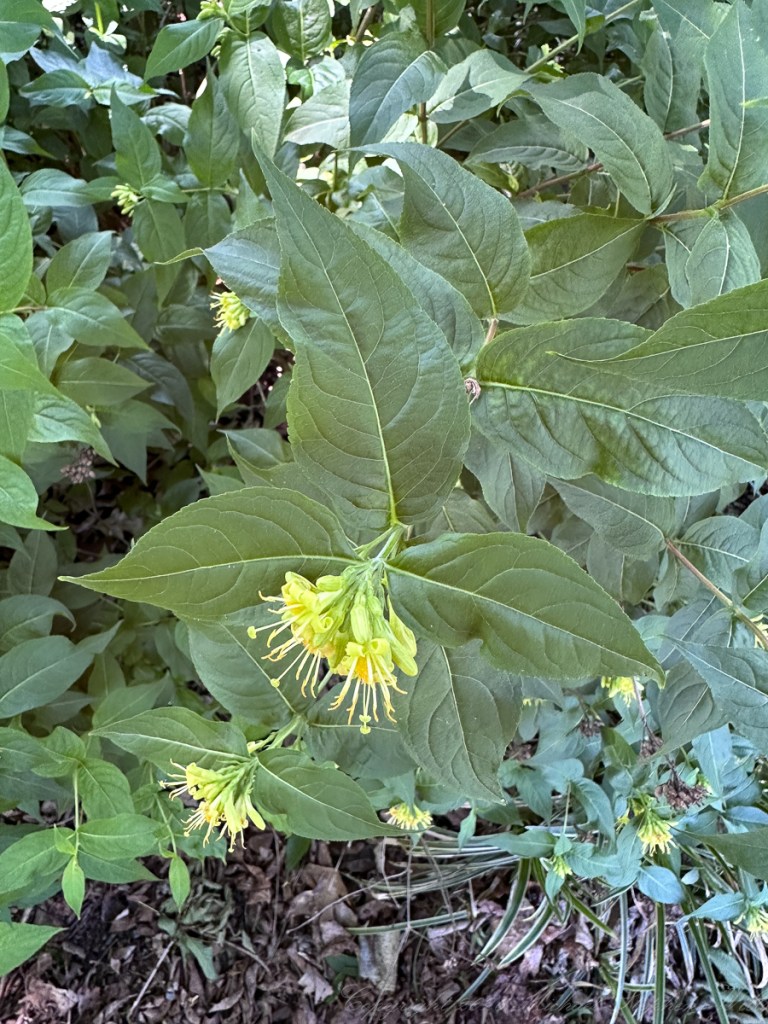
The yellow honeysuckle-like blossoms tucked among broad leaves offered another kind of intimacy. Their pale tubes and slender filaments seemed made for visitors more delicate than us. They belonged to the hidden commerce of June: pollinators, fragrance, pollen, fruit-to-come. Much of what matters in a place like Houston Pond happens below notice. Roots thicken. Insects navigate. Turtles choose their sunning places. Flowers open and close according to laws older than memory. The pond is never still, only patient.
Standing there, I felt the day gather itself into one phrase: green silence, golden heart. The white lilies held the light. The cattails guarded the edges. The turtle rested without concern for symbolism. And all around, the arboretum offered its deep reassurance: life does not need to announce itself loudly to be complete.
June in the F.R. Newman Arboretum is a state of attention within a season. Houston Pond receives the sky, feeds the lilies, shelters the small dark bodies of turtles, and gives back a vision of the world refreshed by reflection. To walk there at midday is to be reminded that the ordinary is only ordinary until we stop long enough to see it. Then the pond becomes a mirror with roots, the lily a white flame on dark water, and the whole green world a quiet invitation to belong.

