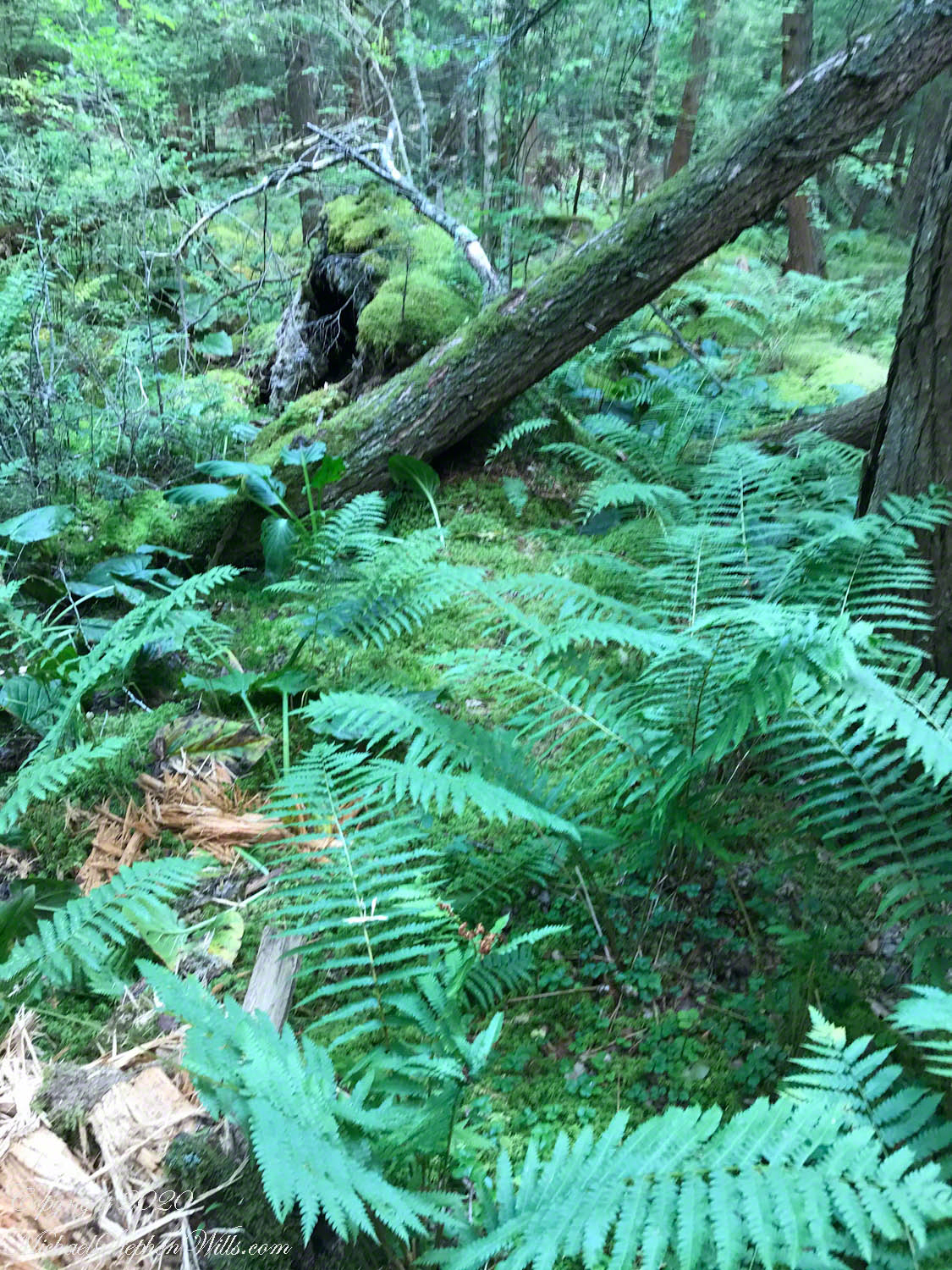
McLean Bogs in Early Spring: Pitcher Plants, Skunk Cabbage, a Quiet Walk with Grandchildren

A quiet early spring walk through McLean Bogs reveals pitcher plants, skunk cabbage, and the subtle beauty of glacial wetlands shared with grandchildren.

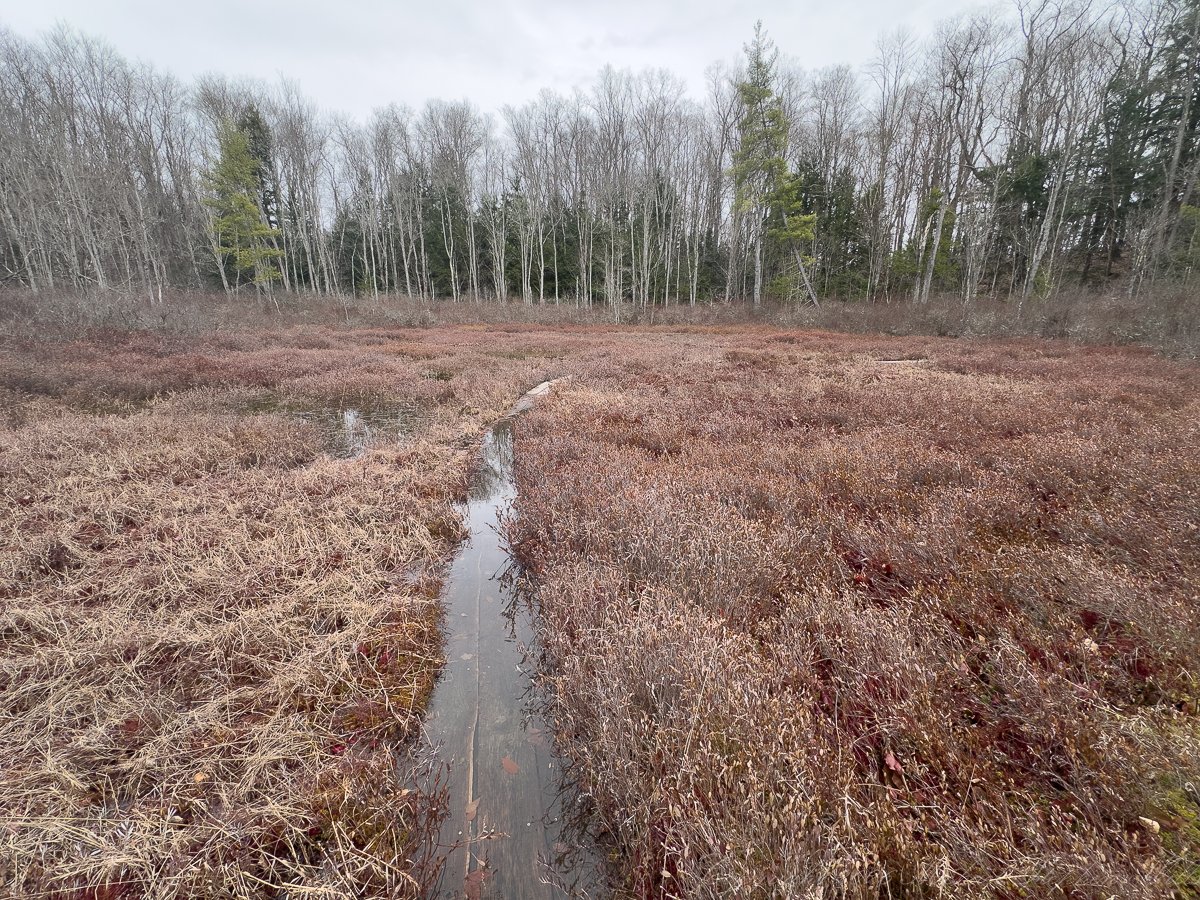
The path into McLean Bogs begins without ceremony, a narrowing of the world. The road falls away, the trees gather closer, and the ground softens underfoot, remembering water. You arrive at a threshold. The air seems altered, quieter, carrying a faint mineral stillness, as though the glacier that shaped this place has not entirely withdrawn its presence.
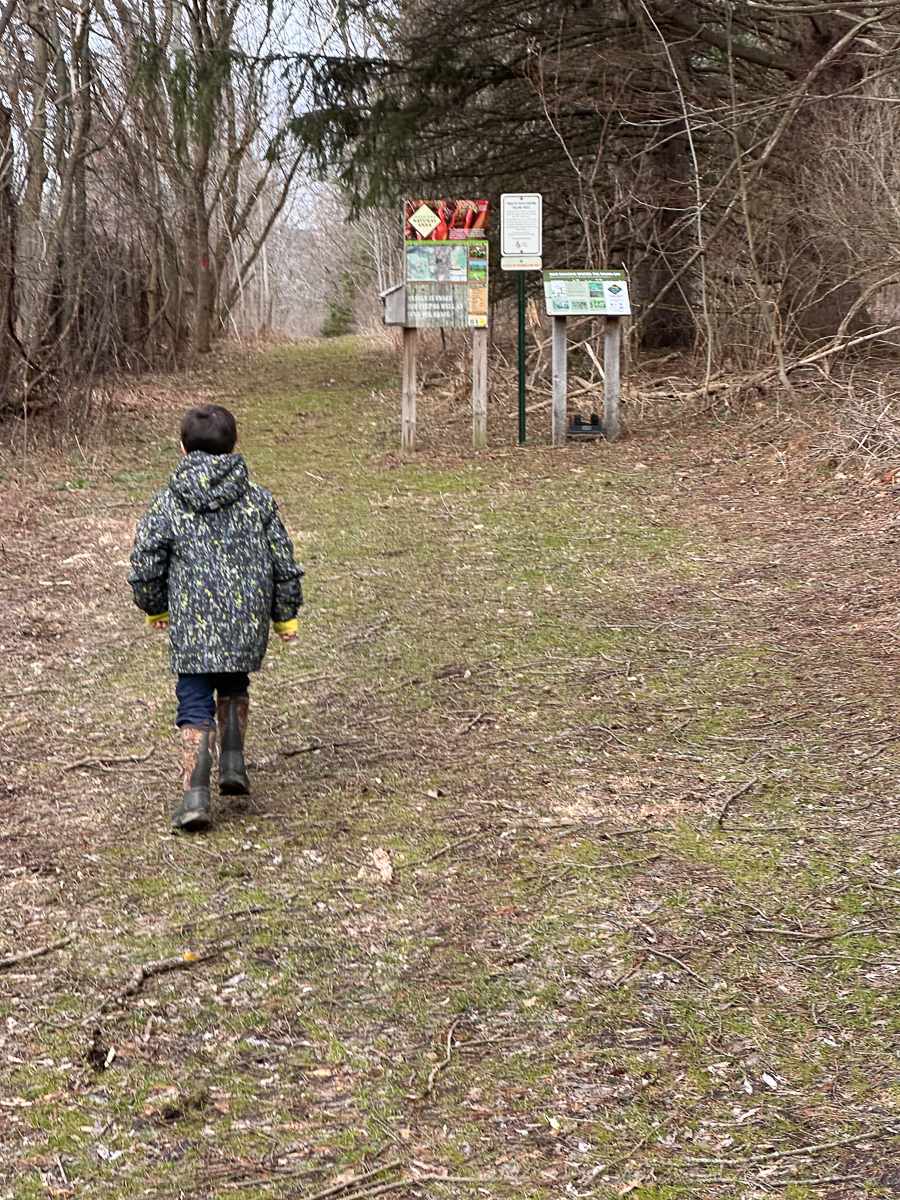
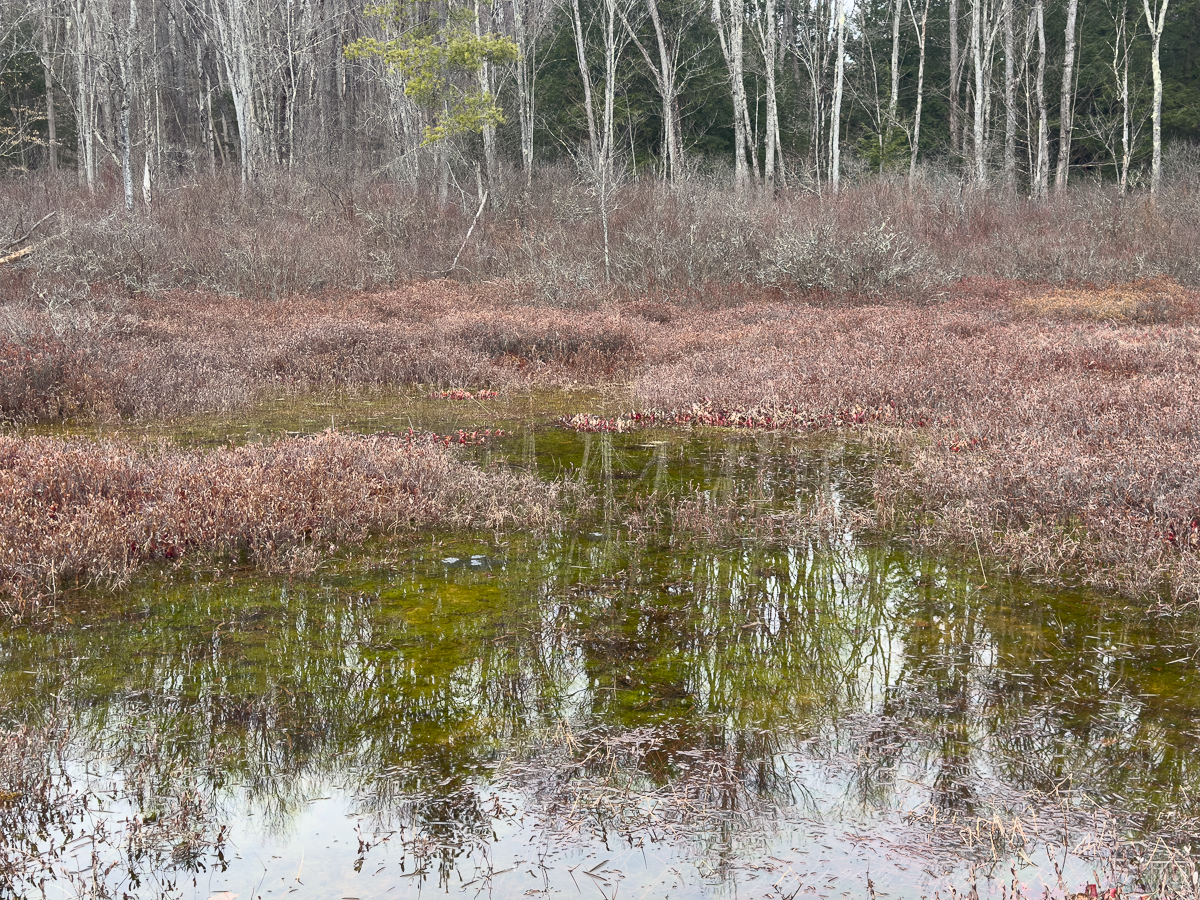
McLean Bog, Tompkins County, New York State part of Cornell Botanical Gardens

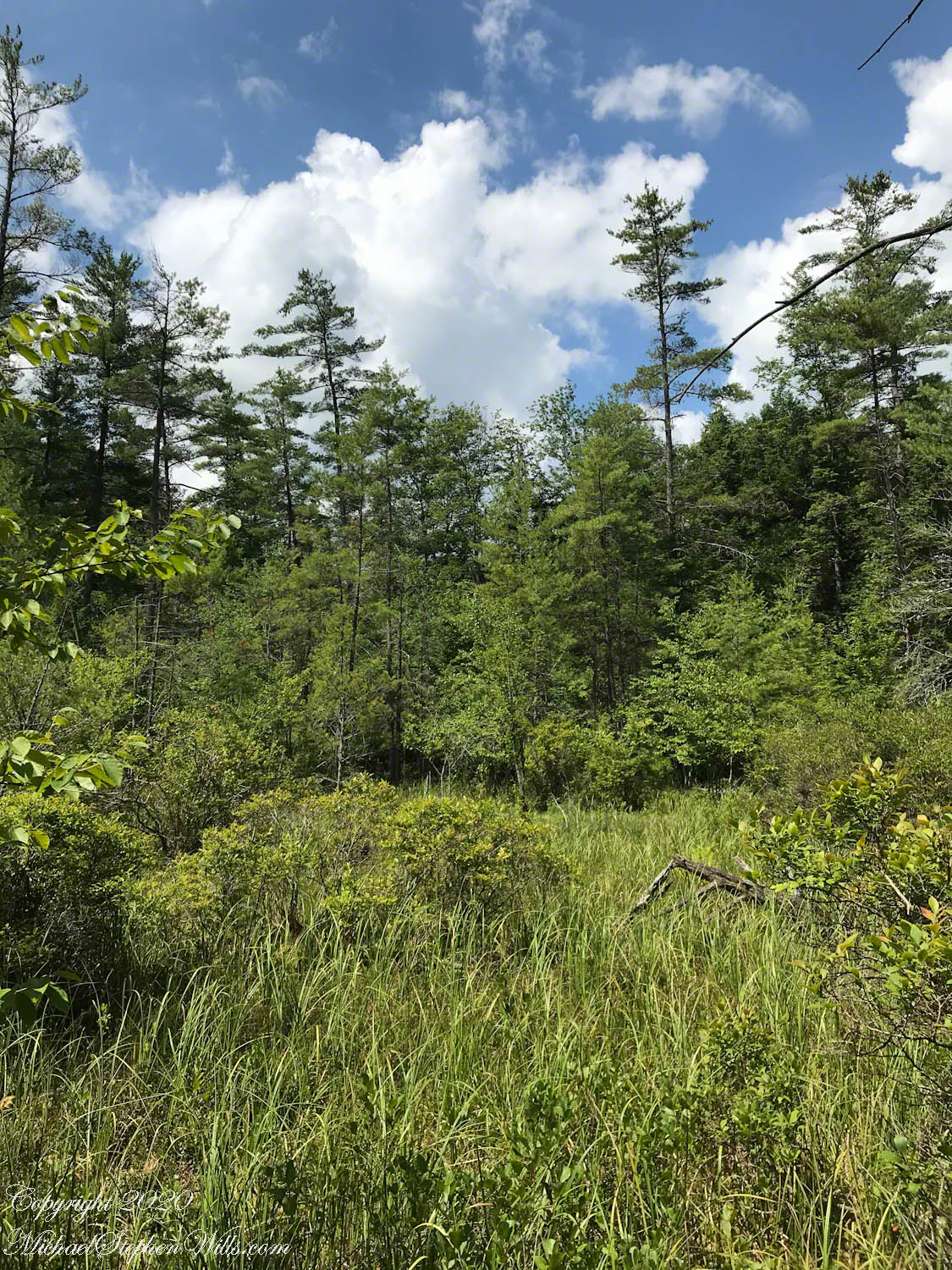
The pond holds the sky with patient fidelity. Its surface is dark, reflective, contemplative—mirroring a band of bare trees and the pale sweep of early-spring cloud. Nothing disturbs it. No wind, no bird, no ripple of urgency. It is the kind of water that asks nothing of you except attention. And in giving it, you feel the pace of your own thoughts begin to slow, as if they too must match the bog’s ancient tempo.
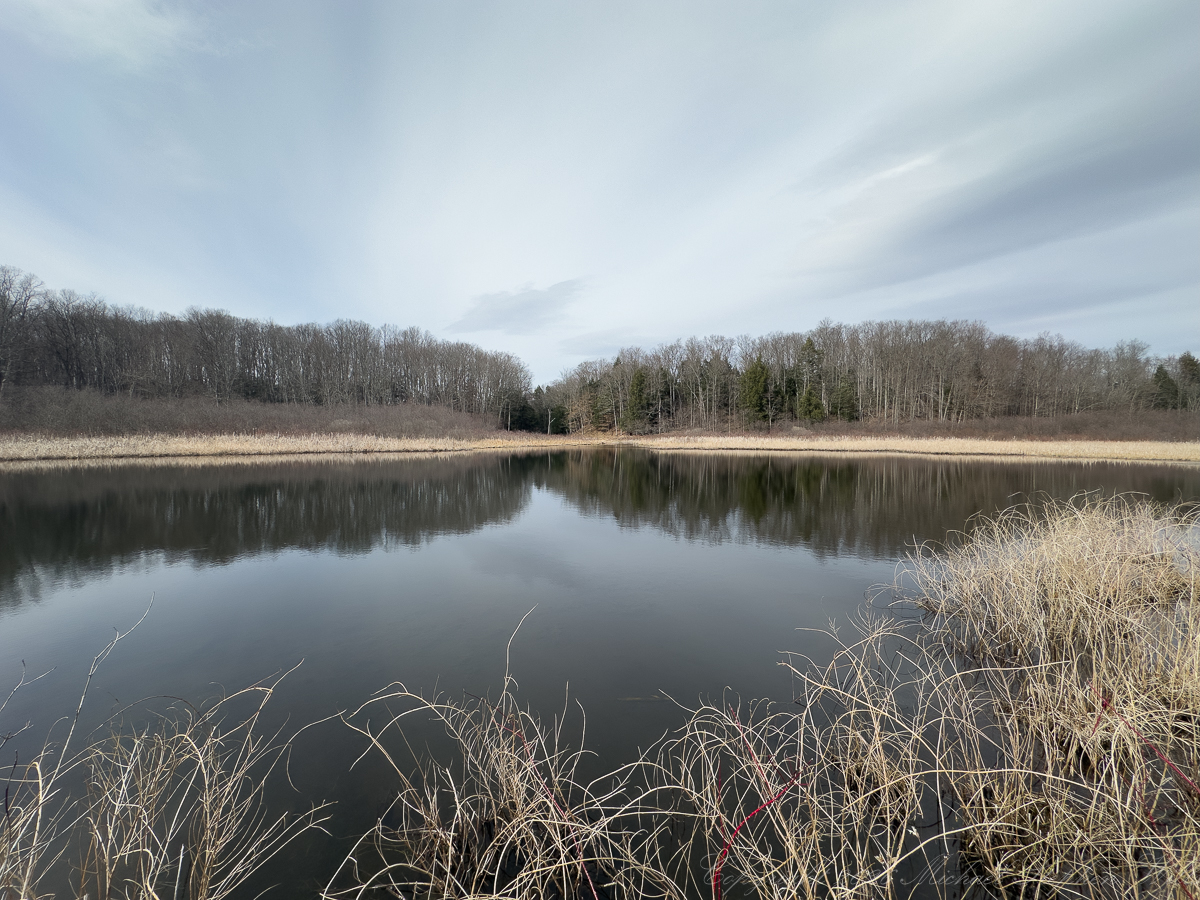
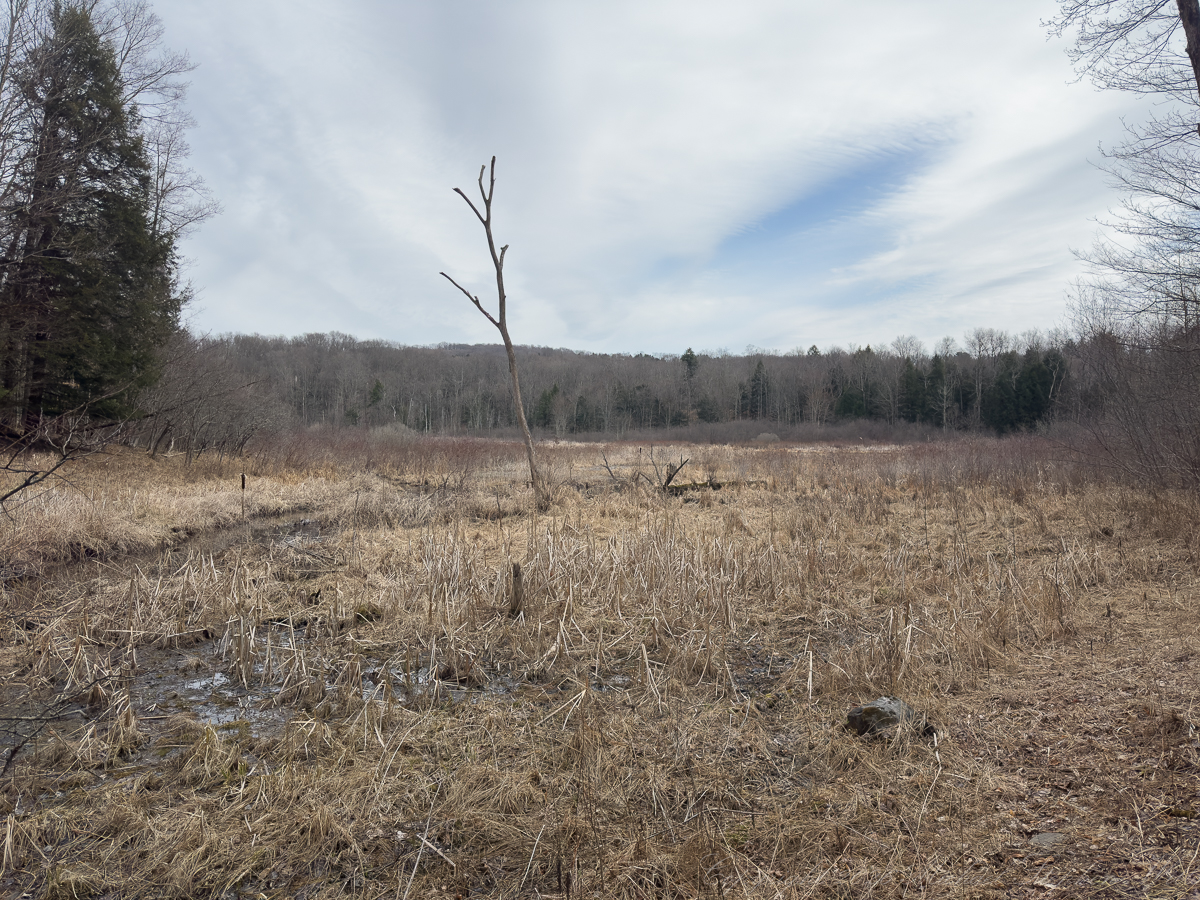
At the edge, grasses stand in muted gold, last year’s growth bowed but not broken. They frame the water as do an unfinished sentence. You can imagine how, in another month, this quiet will be interrupted by green—by the rising insistence of life. But today, the landscape is held in suspension, between endings and beginnings.
On the boardwalk, my grandsons, Sam and Rory, find what the place offers most readily: evidence. A small gray pellet of fur and bone delicately assembled and then discarded. Nearby, a twisting length of scat, marked with the unmistakable language of survival. These are not the symbols we teach in books, but they are legible all the same. The boys lean close, curious, unbothered by what adults might turn away from. To them, this is not unpleasant—it is a clue, a message left behind by an unseen life moving through the same narrow corridors of forest and marsh.
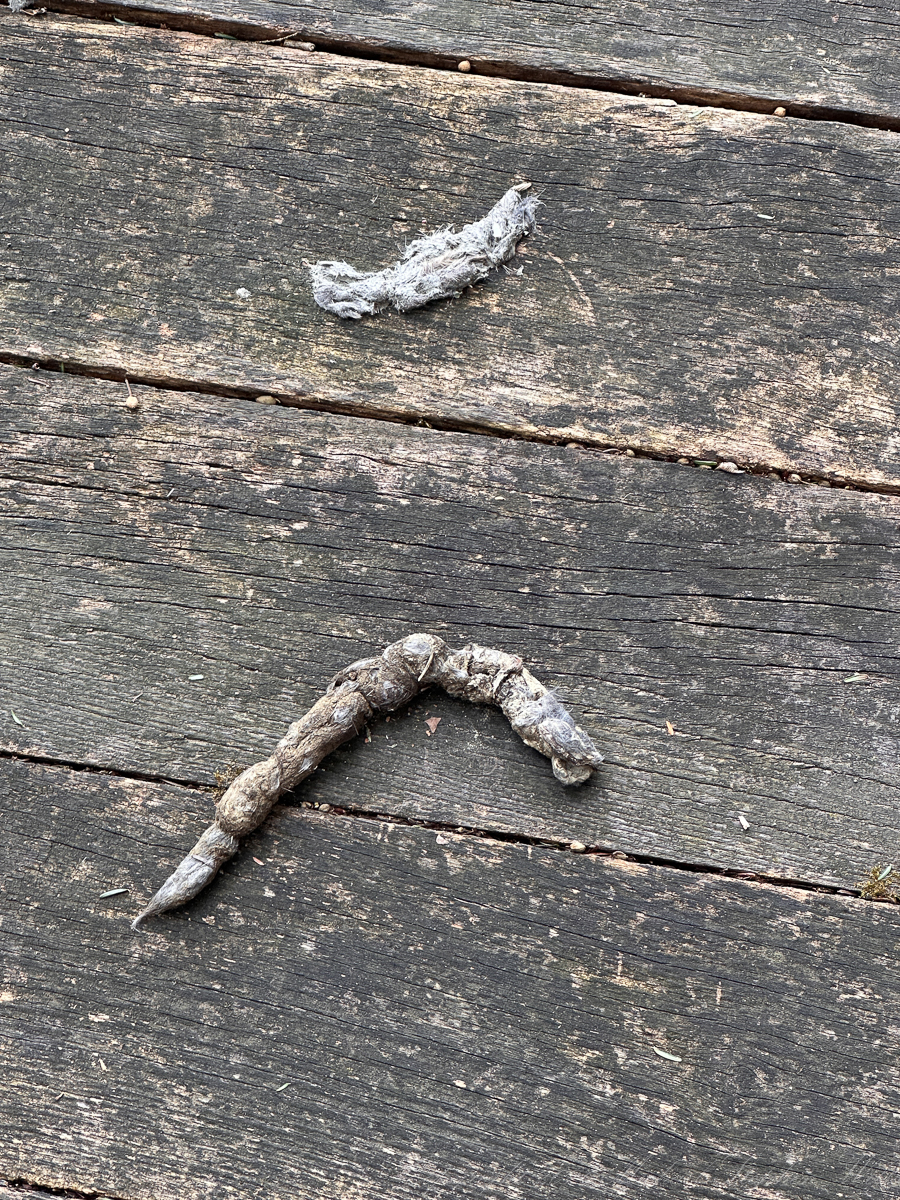
There is something honest in that exchange. The bog does not disguise itself. It offers no curated beauty, no ornamental flourish. What it gives instead is continuity—the quiet assurance that life persists in forms both delicate and stark. And the children, without pretense, receive it as it is.

Deeper in the woods, a small structure of branches rises against the trunk of a tree, a lean-to, improvised and incomplete. Its architecture is simple, almost instinctive, a tentative answer to the question of shelter. Sam and Rory stand before it, boots sunk slightly in the soft ground, their bodies close together in that unconscious gesture of kinship. One leans into the other, not for support exactly, but for connection.
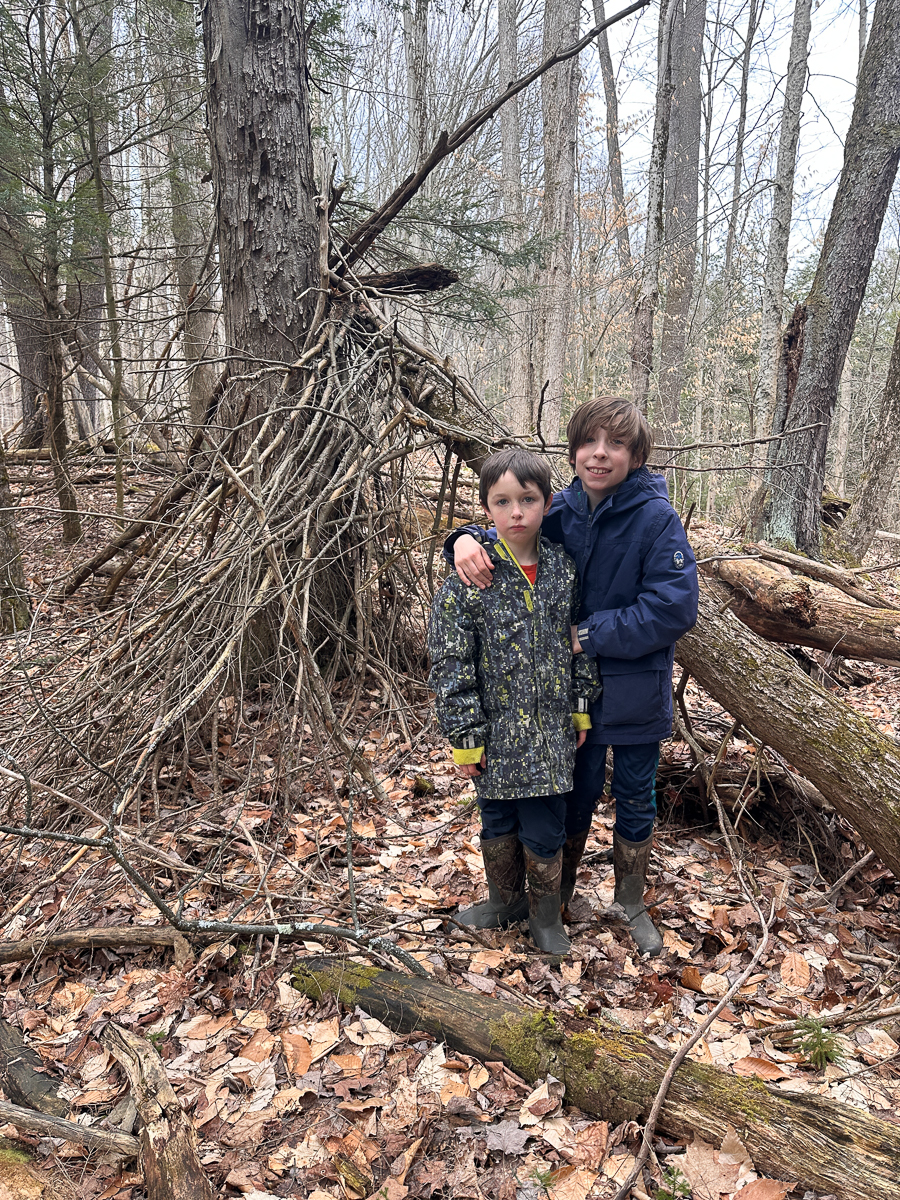
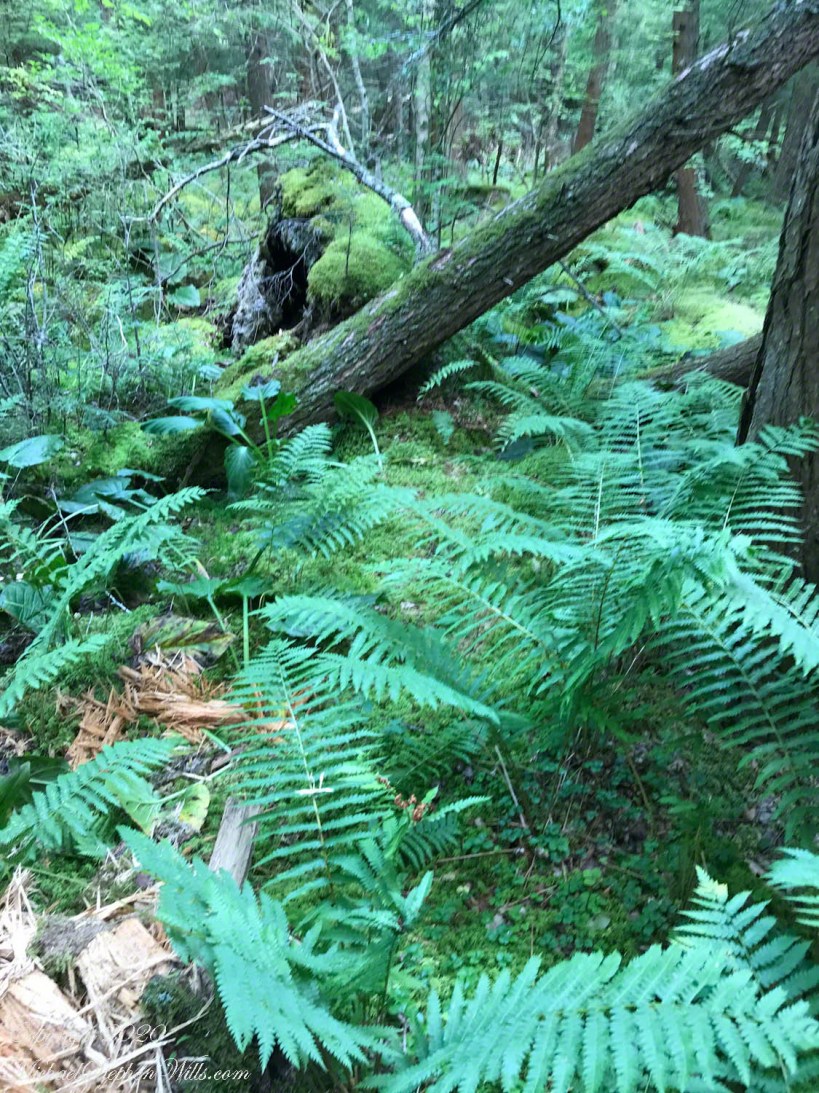
Behind them, the forest extends in gray and brown, a lattice of trunks and fallen limbs. It is not the lush abundance of summer, but something more revealing—a stripped-down anatomy of place. Here you see the bones of the landscape, the structure beneath the surface. And in that exposure, there is a different kind of beauty, one relies on form, on persistence, on time itself.
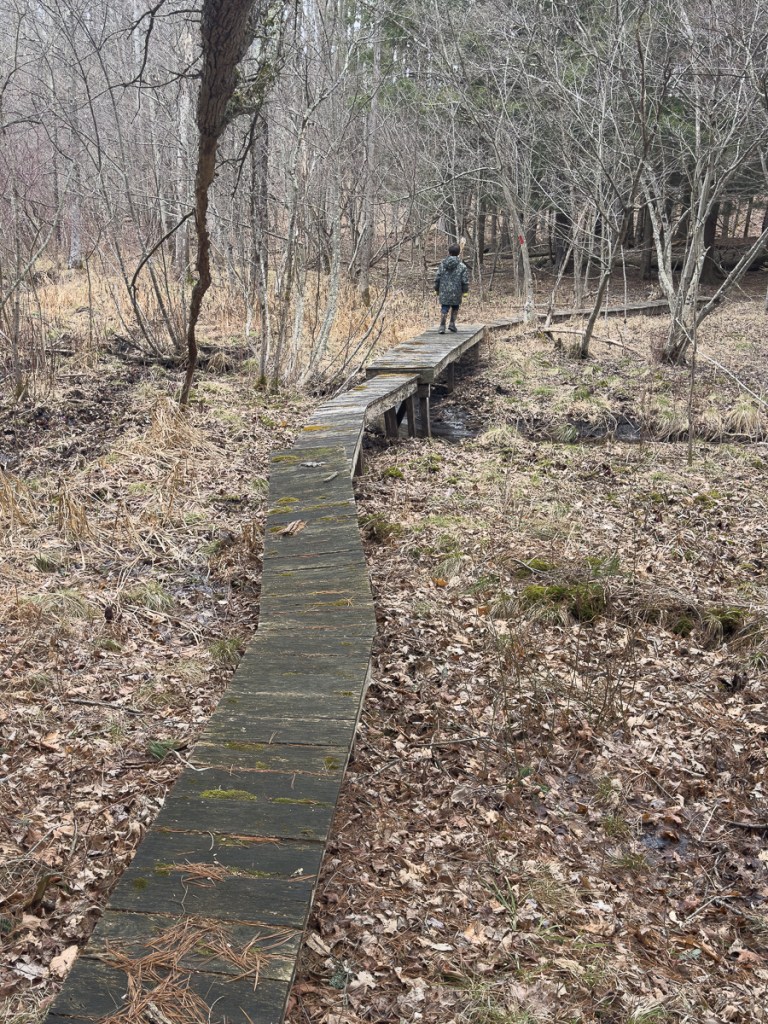
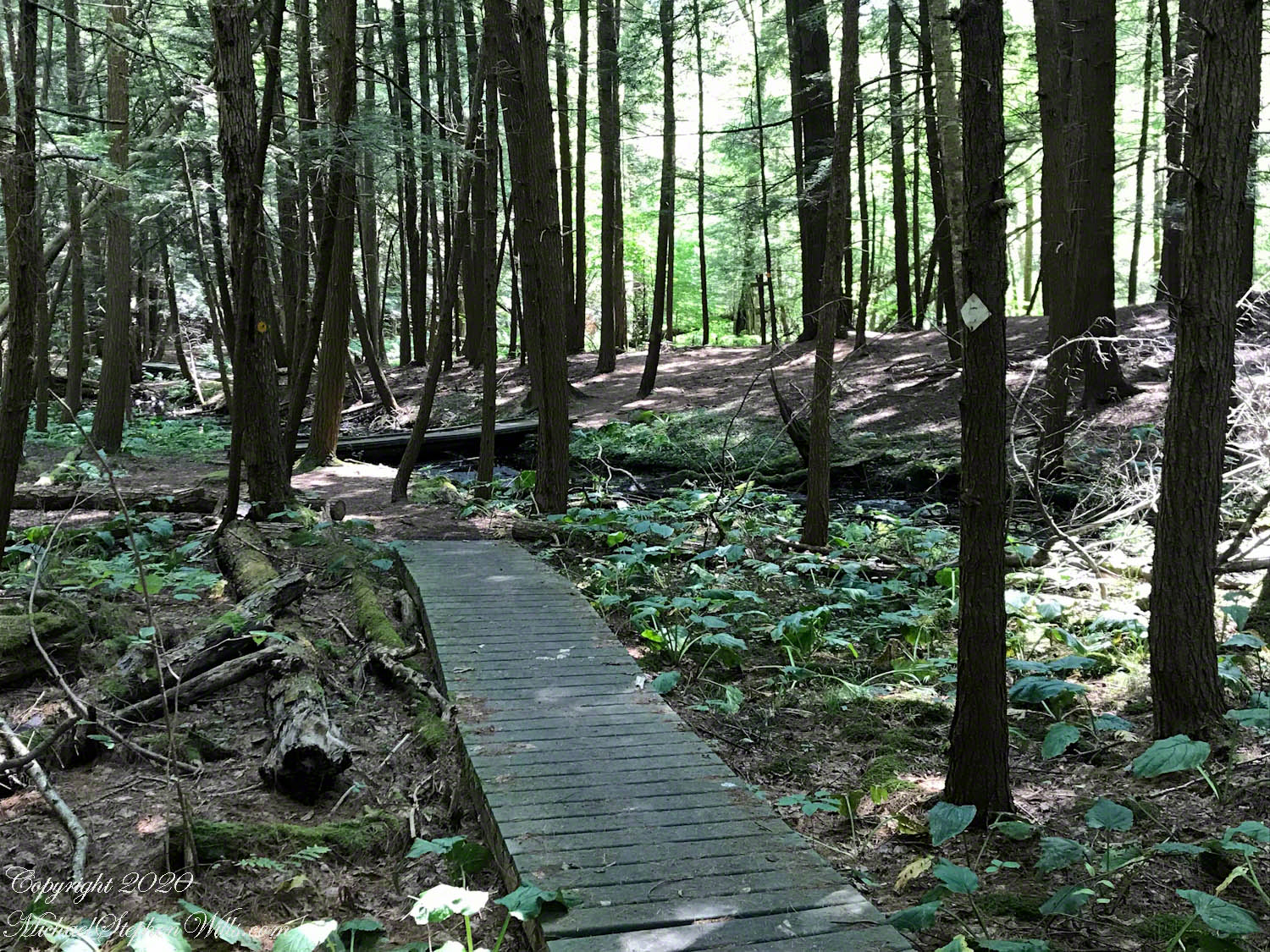
The boardwalk carries you out into the open bog, where the ground gives way to water and moss. It is a narrow path, elevated just enough to allow passage, and it bends gently, as though respecting the terrain rather than imposing upon it. Rory walks ahead, small against the expanse, following the curve without question. There is trust in that movement—the simple faith that the path will hold, that it leads somewhere worth going.
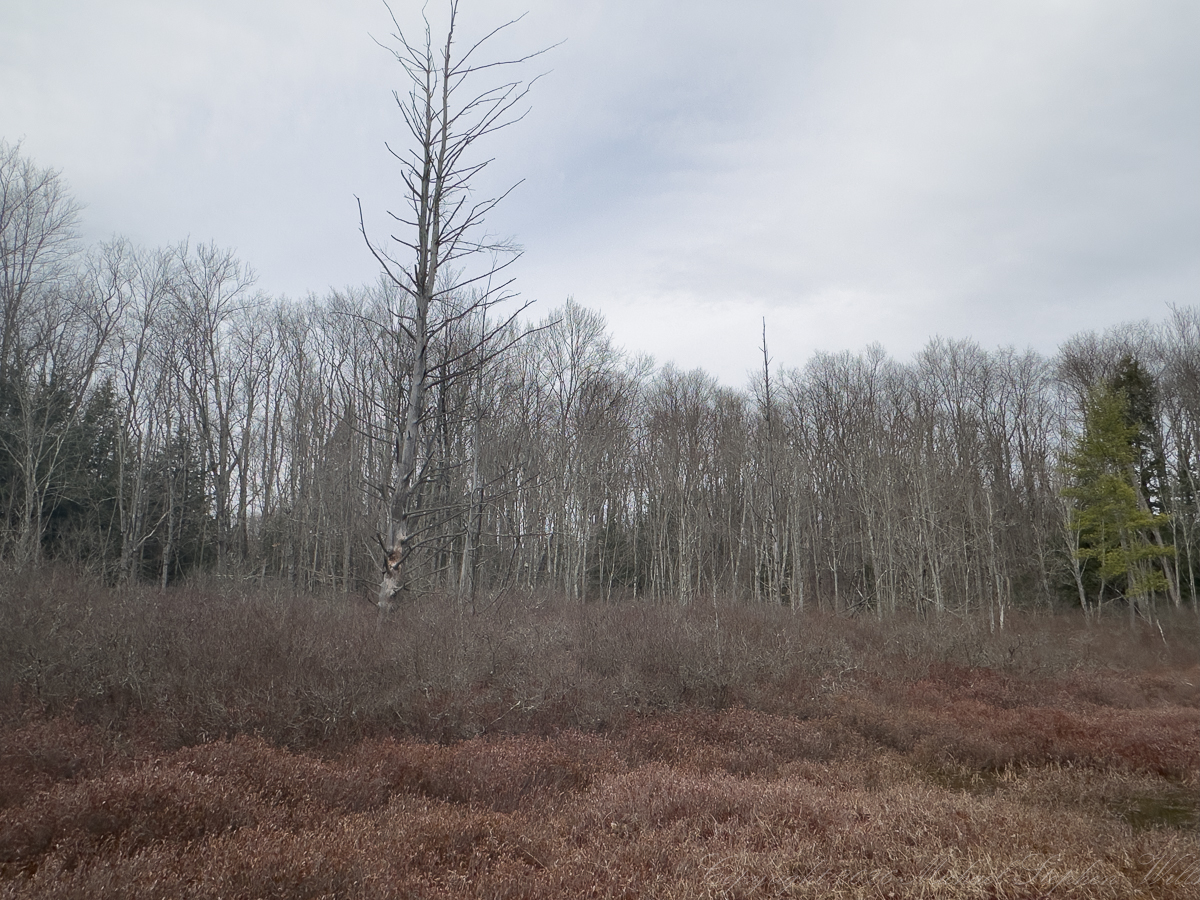
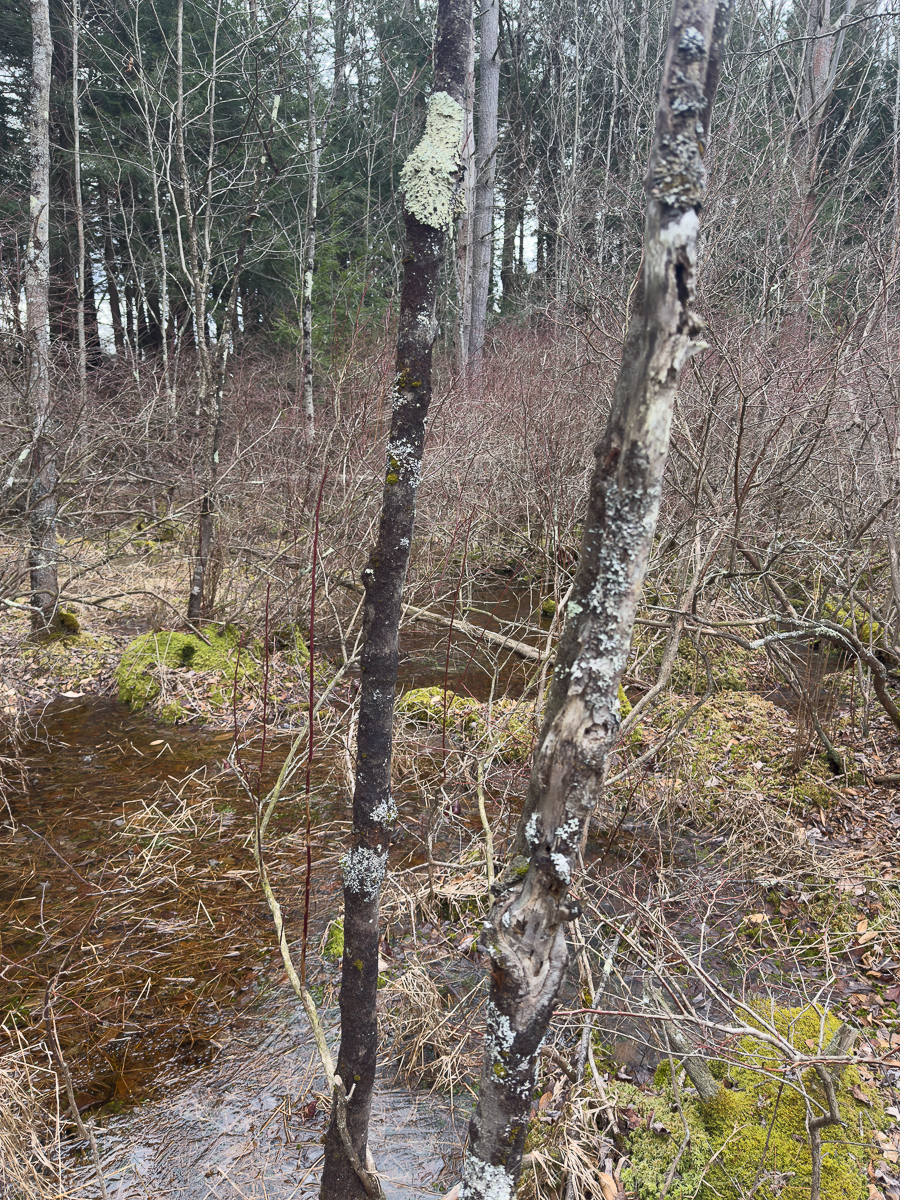
Around you, the bog stretches in subtle variation. Patches of standing water reflect a green that seems almost improbable in this season, the work of mosses and algae that thrive where others cannot. The vegetation is low, dense, textured—a mosaic rather than a meadow. And here and there, like small embers against the muted field, the pitchers rise.
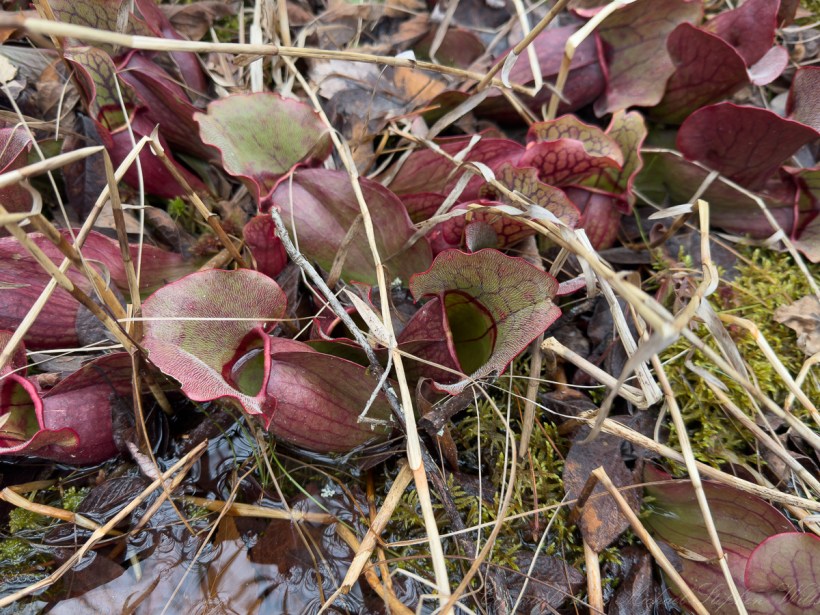
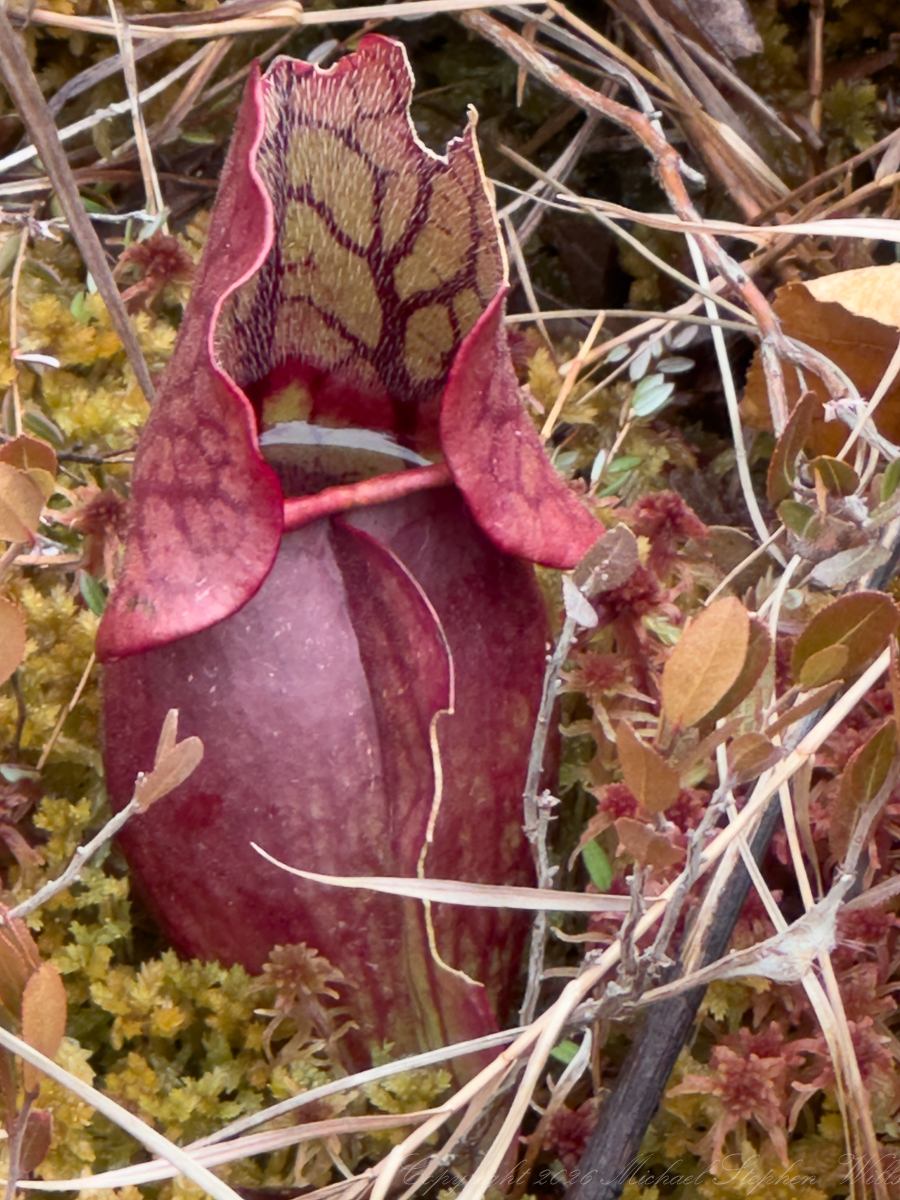
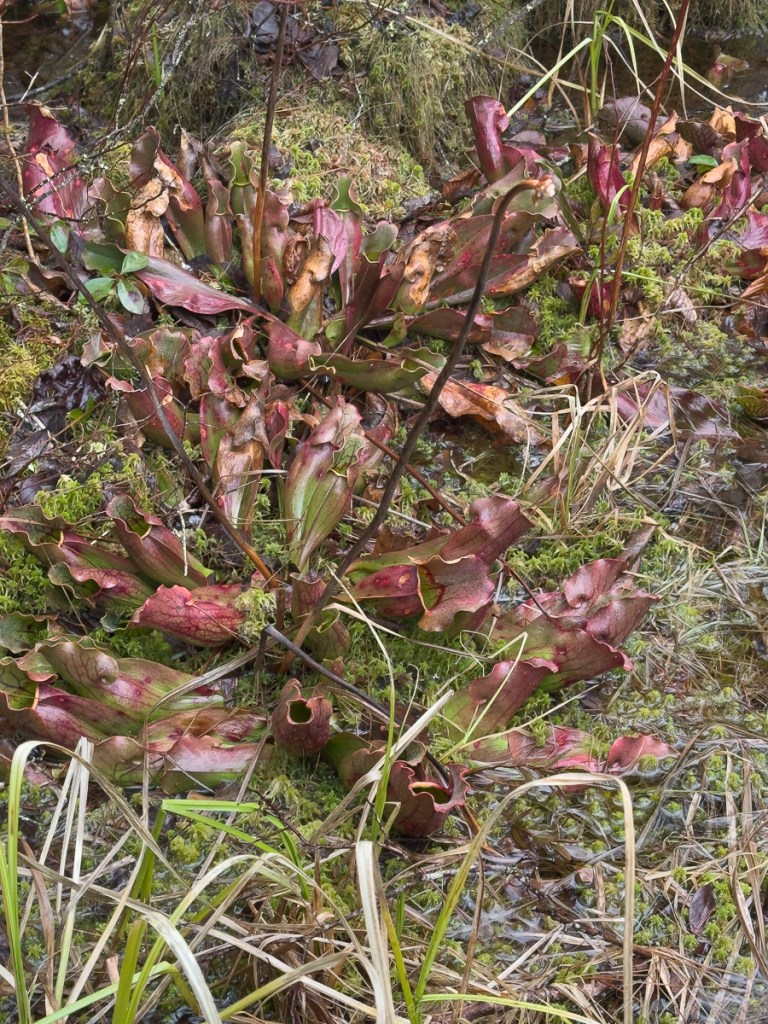
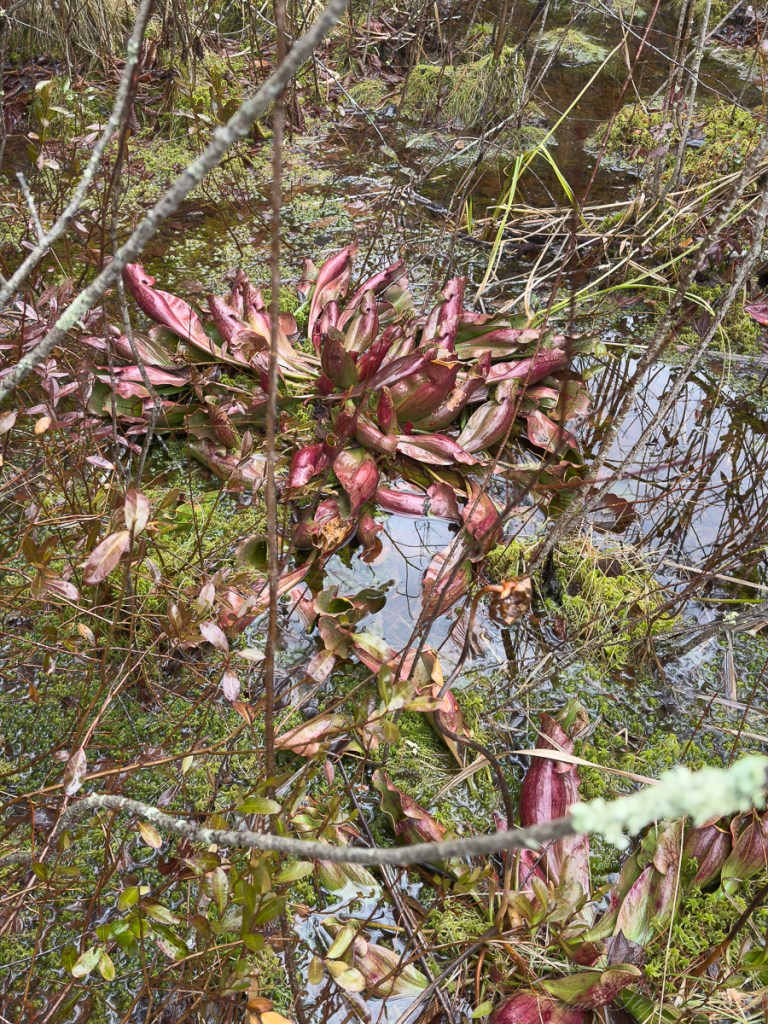
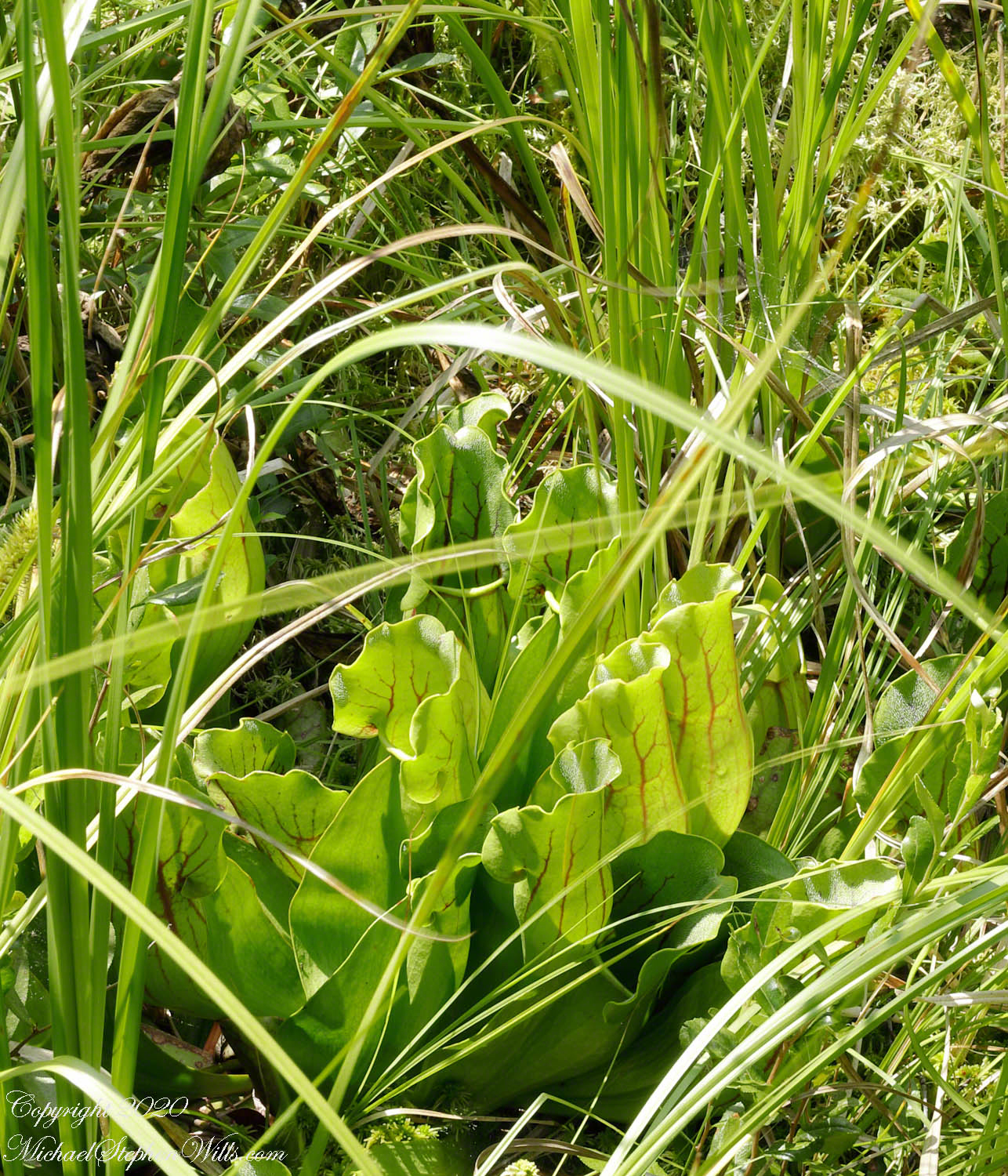
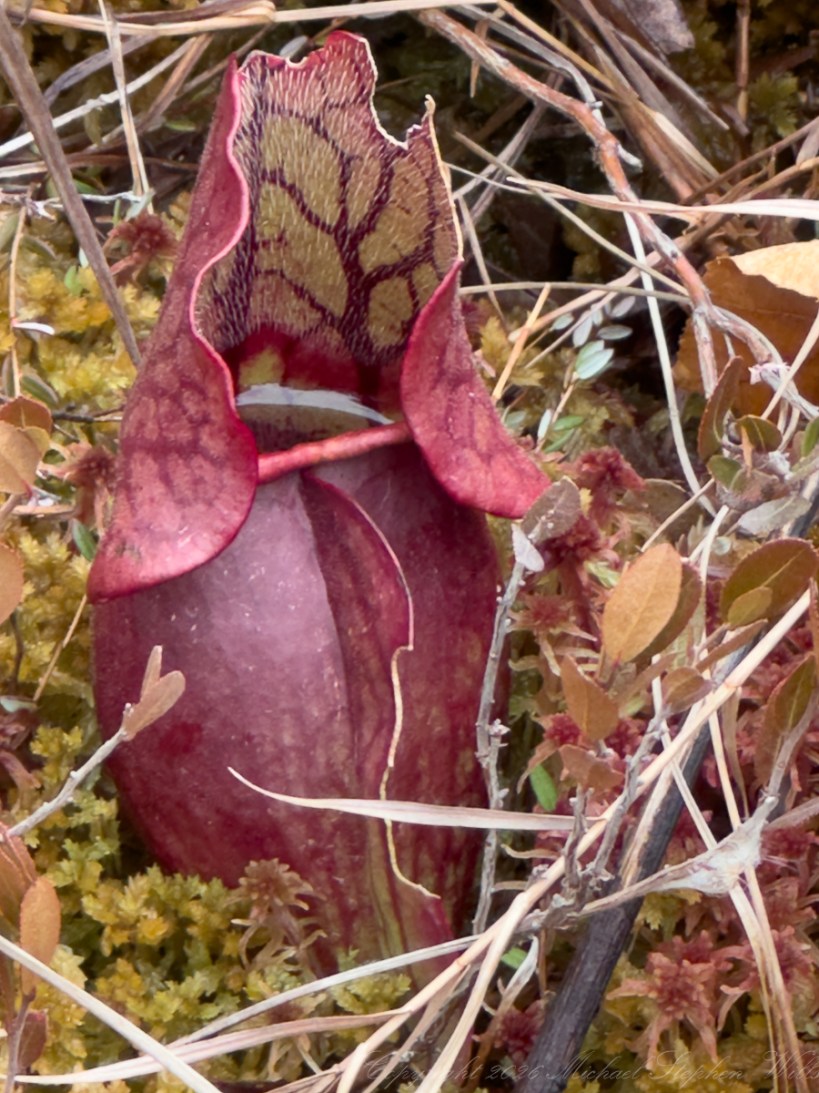
The pitcher plants are both beautiful and unsettling. Their deep red forms, veined with intricate patterns, hold themselves open to the world. They are vessels, yes, and thresholds, invitations with consequence. Insects, drawn by color or scent, enter and do not leave. It is easy to think of them as passive, but they are anything but. They are active participants in the exchange of life, taking what the poor soil cannot provide.
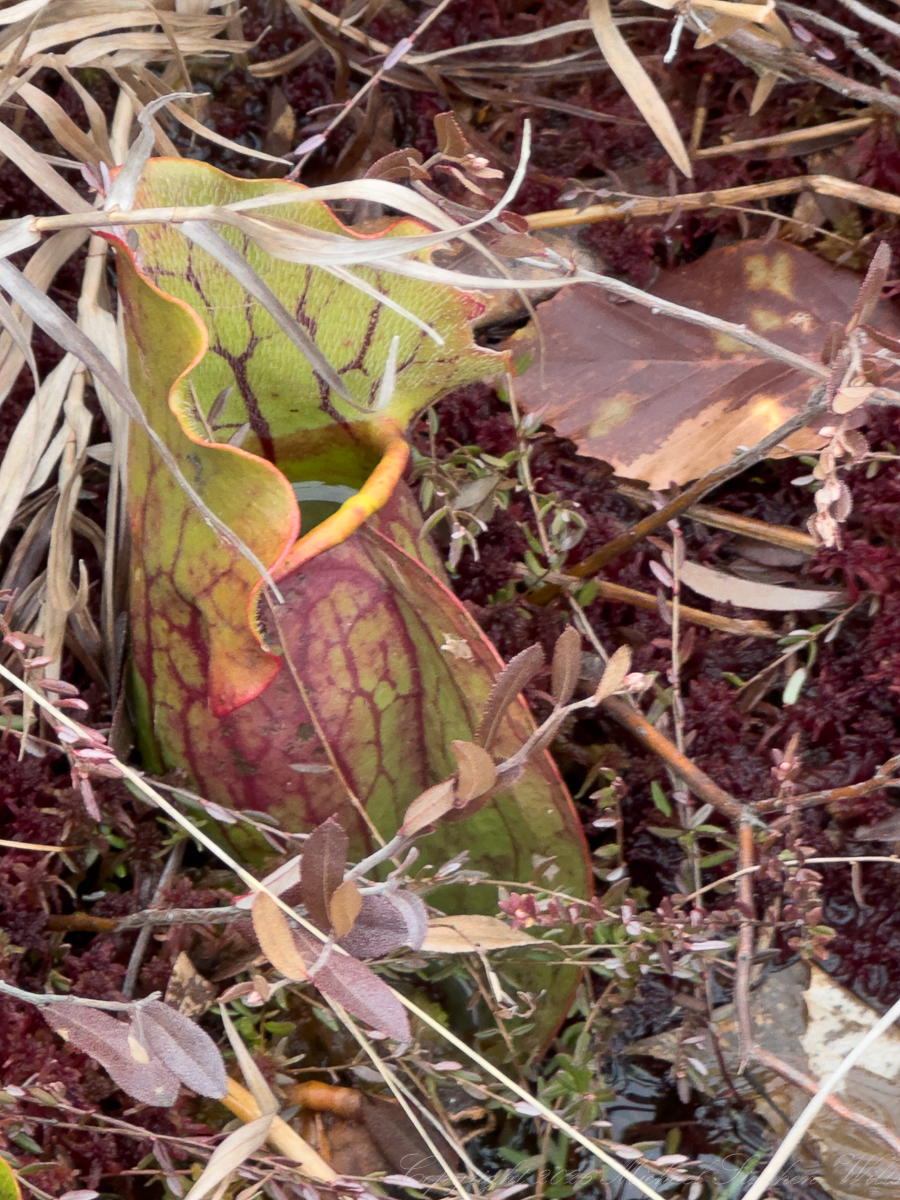
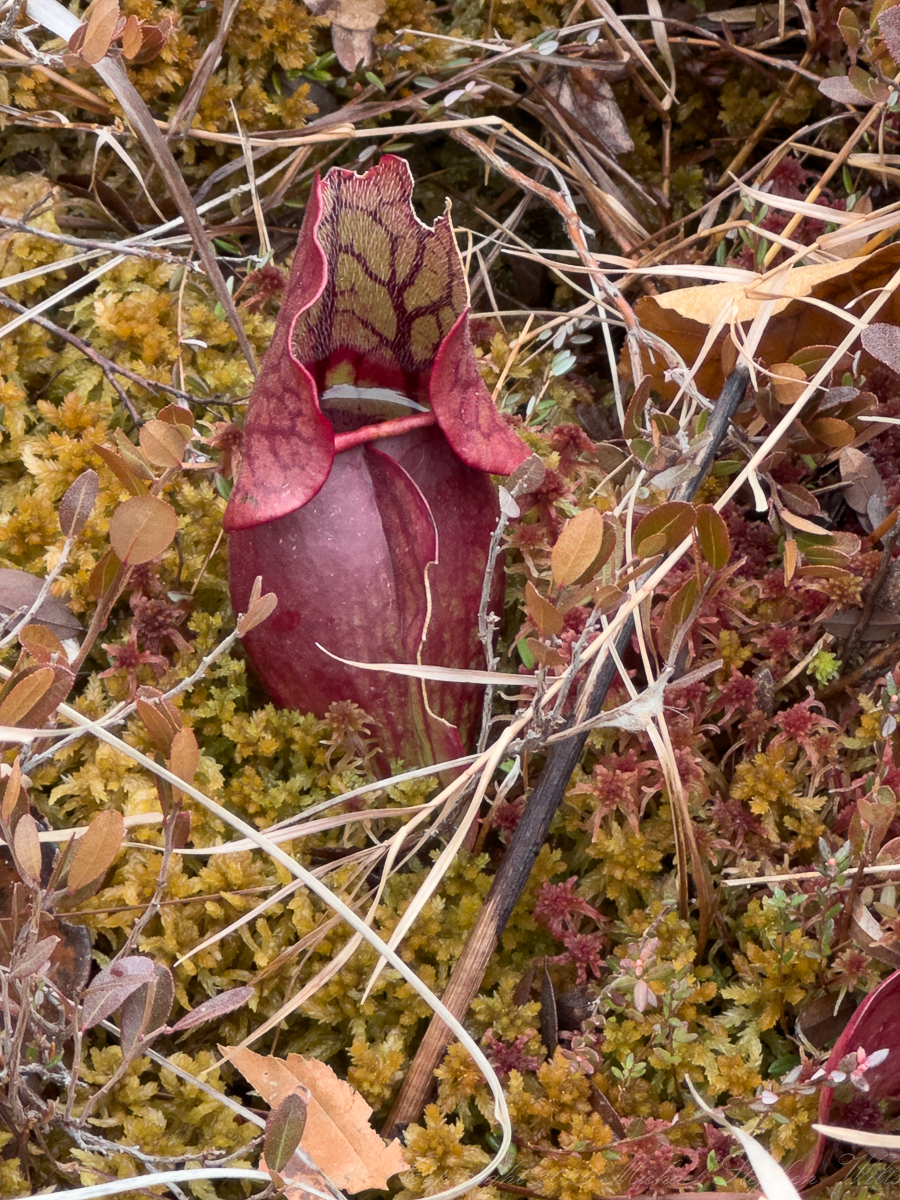
You kneel to look more closely, drawn in despite yourself. The interior of the pitcher is a map of intention—every line, every curve serving a purpose. And yet, there is an elegance to it, a precision that feels almost artistic. It is not cruelty, exactly, but necessity rendered with a kind of quiet grace.
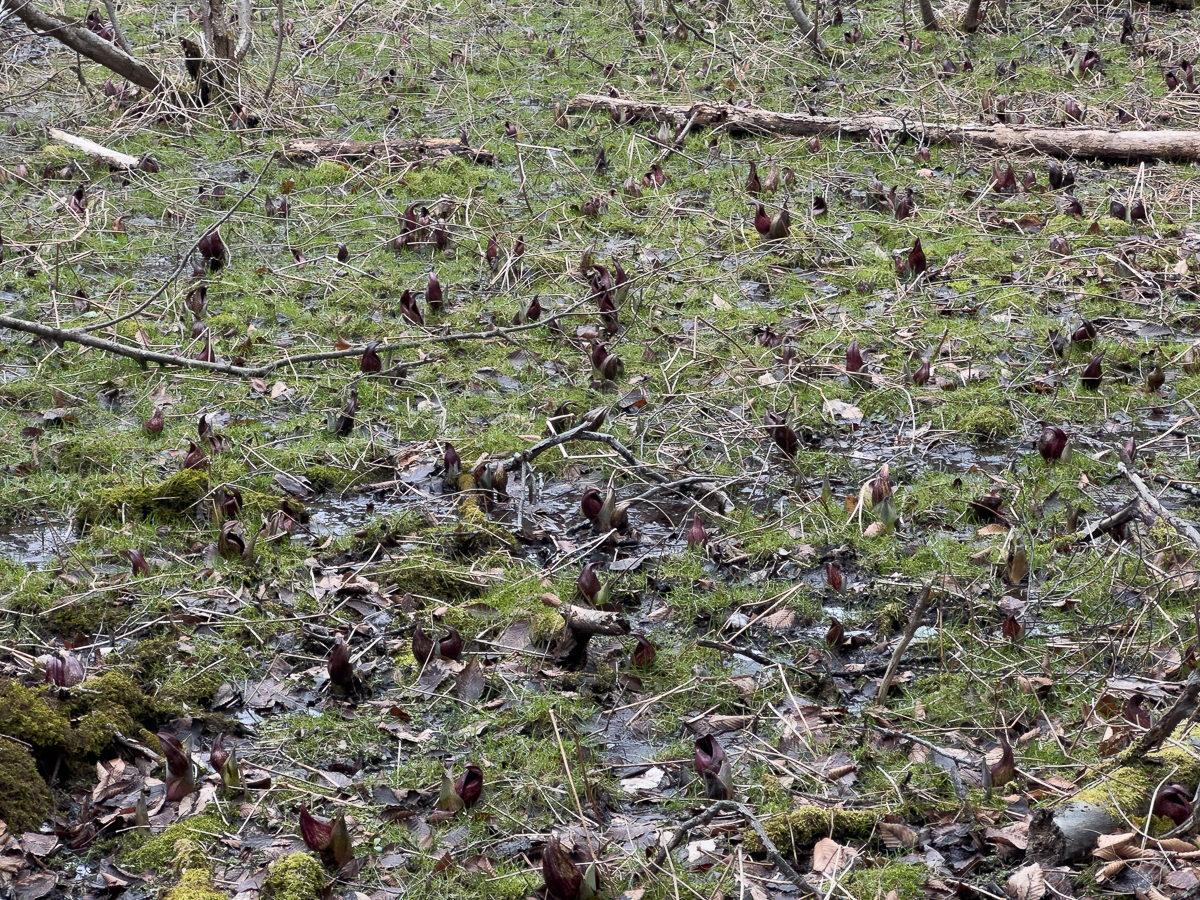
McLean Bog, Tompkins County, New York State part of Cornell Botanical Gardens

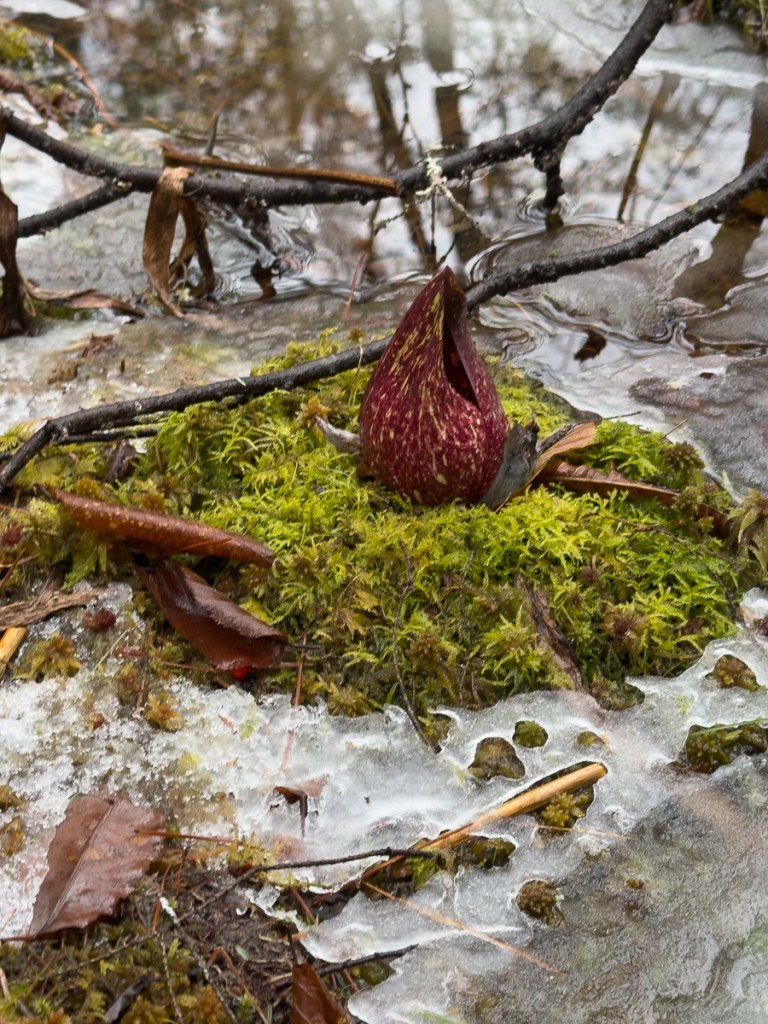
Elsewhere, the first signs of skunk cabbage emerge, their dark, curved forms pushing through saturated ground. They are early risers, indifferent to cold, generating their own heat to break through frost. They do not wait for spring; they create their own version of it. Scattered across the forest floor, they resemble a field of small, listening shapes—each one a declaration that life does not always arrive gently.

And so you move through the bog as a participant in its slow unfolding. Sam and Rory run ahead, then return, their boots muddy, their hands full of nothing in particular. They do not need to name what they have seen. The experience is enough.

As we return to the preserve edge, this sign stands—formal, declarative, assigning significance in the language of designation: Registered Natural Landmark. This place is important, rare, worthy of protection. But the words feel almost secondary after what you have just walked through.
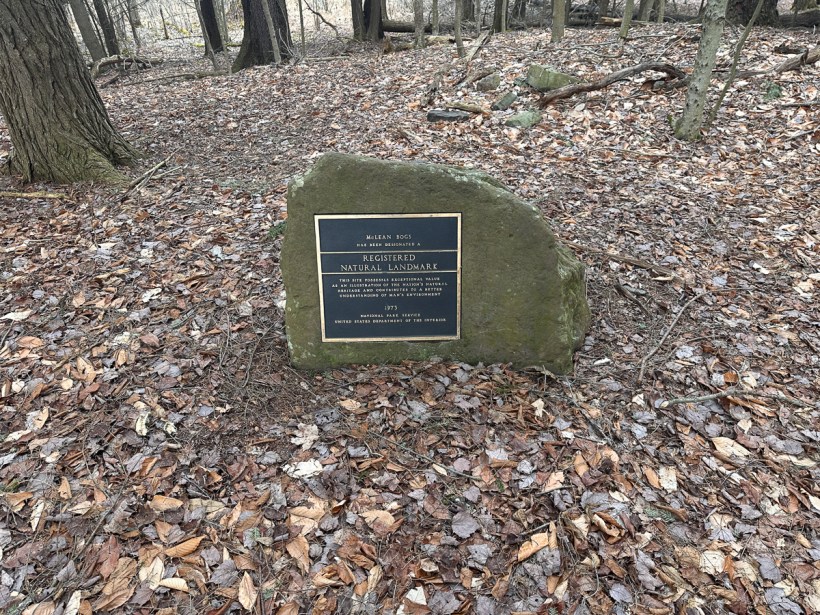
McLEAN BOGS has been designated a REGISTERED NATURAL LANDMARK

This site possesses exceptional value as an illustration of the nation’s natural heritage and contributes to a better understanding of man’s environment.
National Park Service, United States Department of the Interior 1973.

Because the true measure of McLean Bogs is not in its classification, but in its effect. It changes the rhythm of your thinking. It draws your attention downward—to the ground beneath your feet, to the subtle movements of water and growth, to the quiet negotiations of life that continues with or without witnesses.

And perhaps that is what Thoreau meant, though he said it more simply: that heaven is not only above us, distant and abstract, but also here, immediate and tangible, woven into the fabric of the earth itself.

In the bog, that idea does not feel like metaphor. It feels like observation.
Enter your email to receive notification of future postings. I will not sell or share your email address.

Where Winter Yields: Skunk Cabbage, Pitcher Plants, and Milky Ice at Malloryville Preserve

A late winter walk through Malloryville Preserve reveals milky ice, emerging skunk cabbage, and hidden wetland life—seen through the curious eyes of grandchildren.

The morning began in that quiet register peculiar to late winter in the Finger Lakes—when the calendar insists on spring, yet the land, still half-claimed by frost, speaks in a more cautious dialect. At the O.D. von Engeln Preserve at Malloryville, the woods held both seasons in tension. Snow lingered in shaded hollows, while the exposed ground, damp and rust-colored, breathed with thaw.

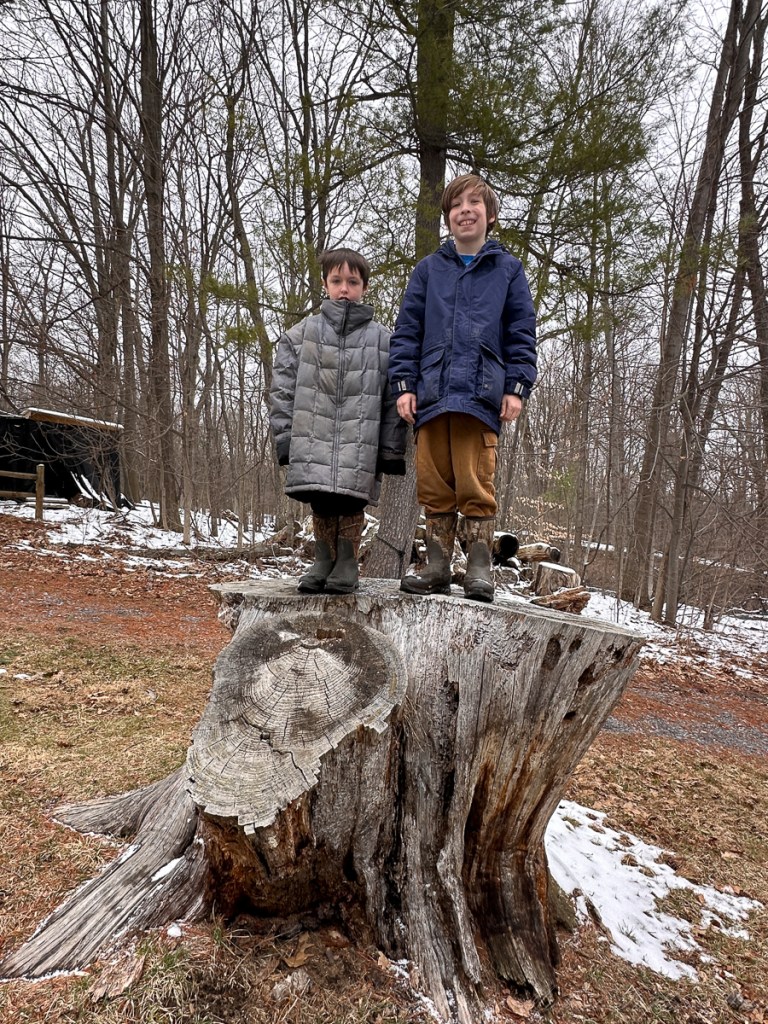
Sam and Rory—boots muddied almost immediately—climbed atop a great, weathered stump, its cut face fanned with the geometry of years. There is something about a stump that invites children upward, as though it were not a remnant but a stage. From their perch they surveyed a kingdom of bare trunks and quiet trails, their laughter momentarily lifting the stillness. Behind them, the forest rose in gray-brown columns, and beneath them, the history of a tree—rings like a clock no one can wind backward.

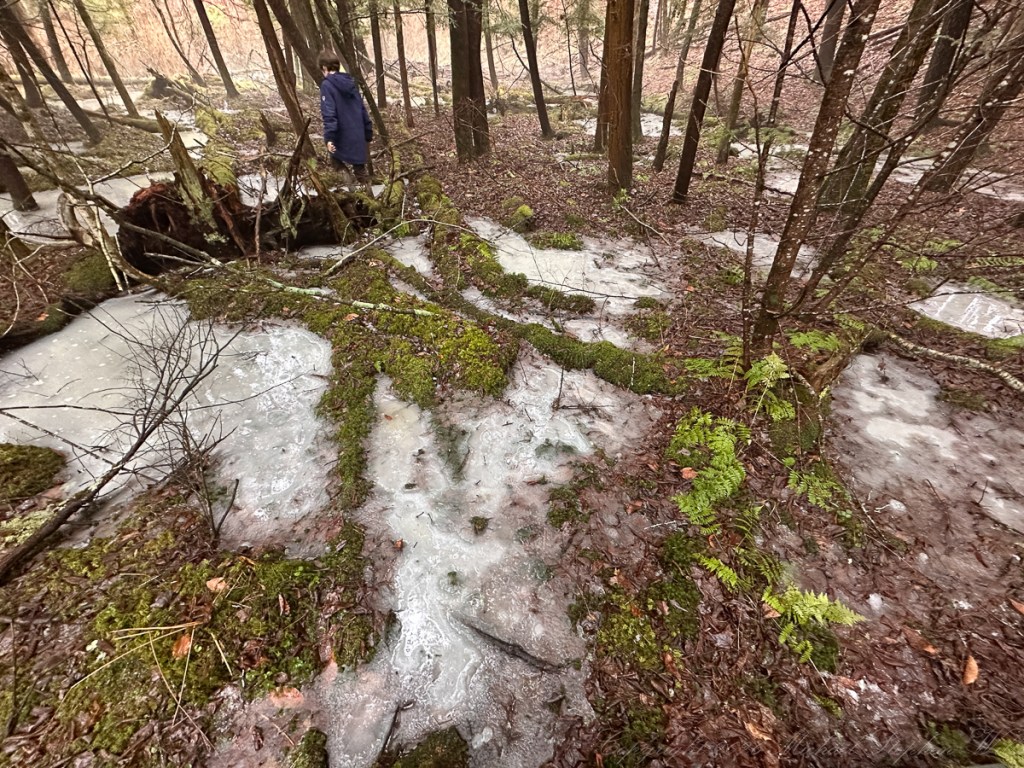
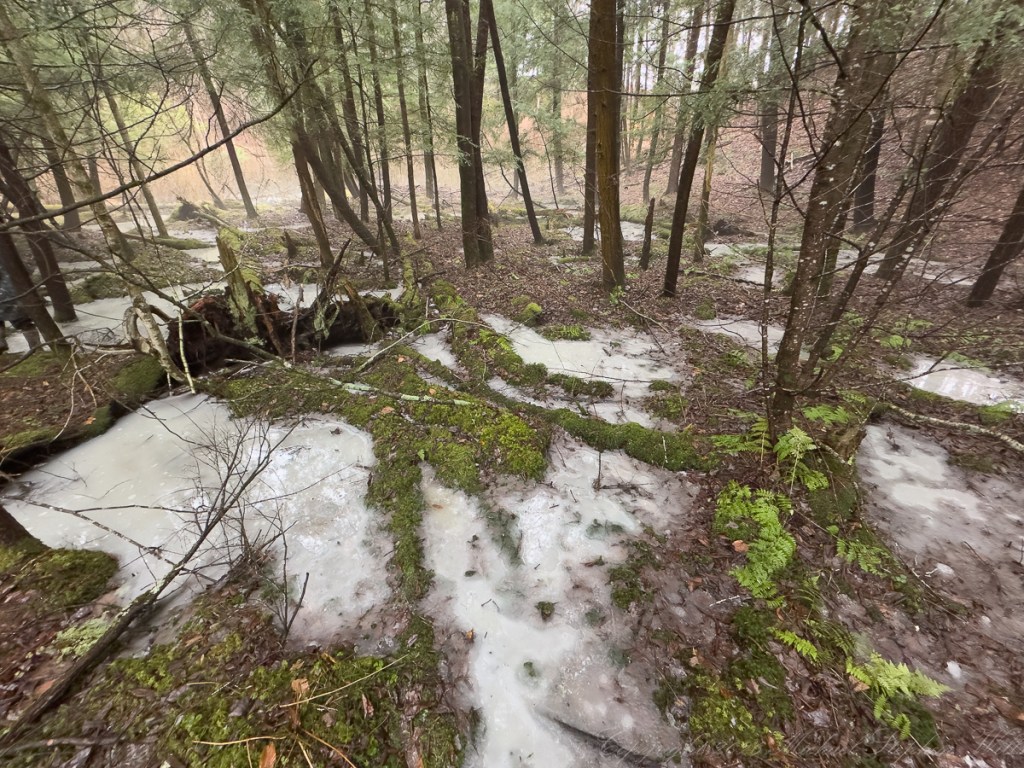
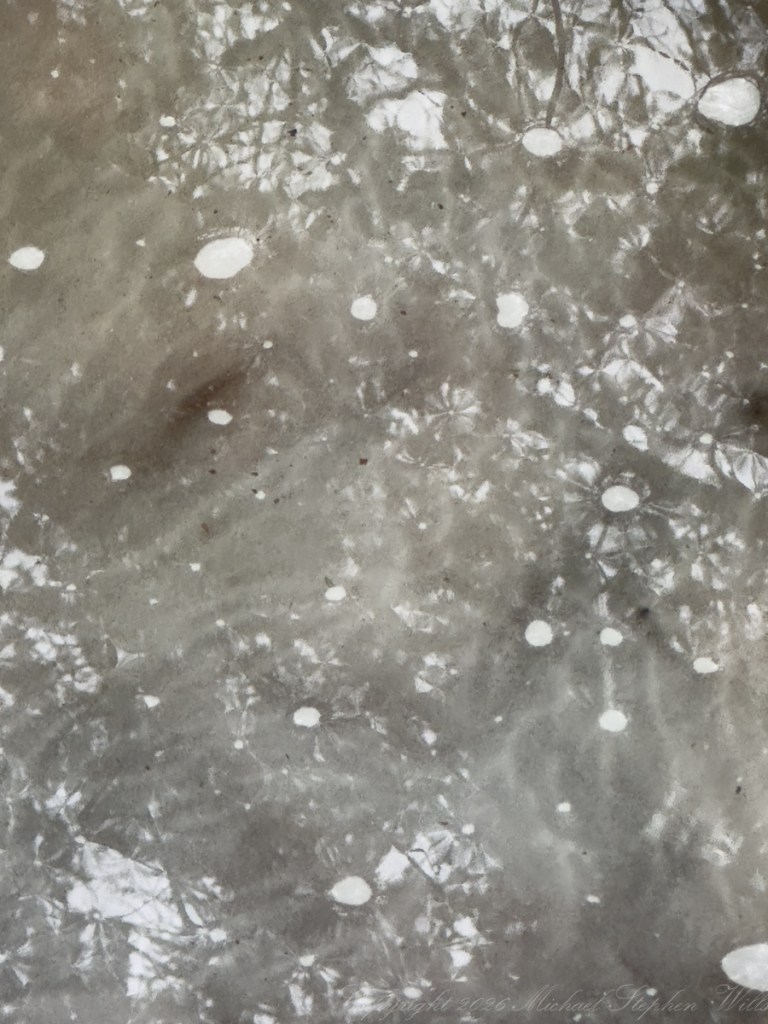
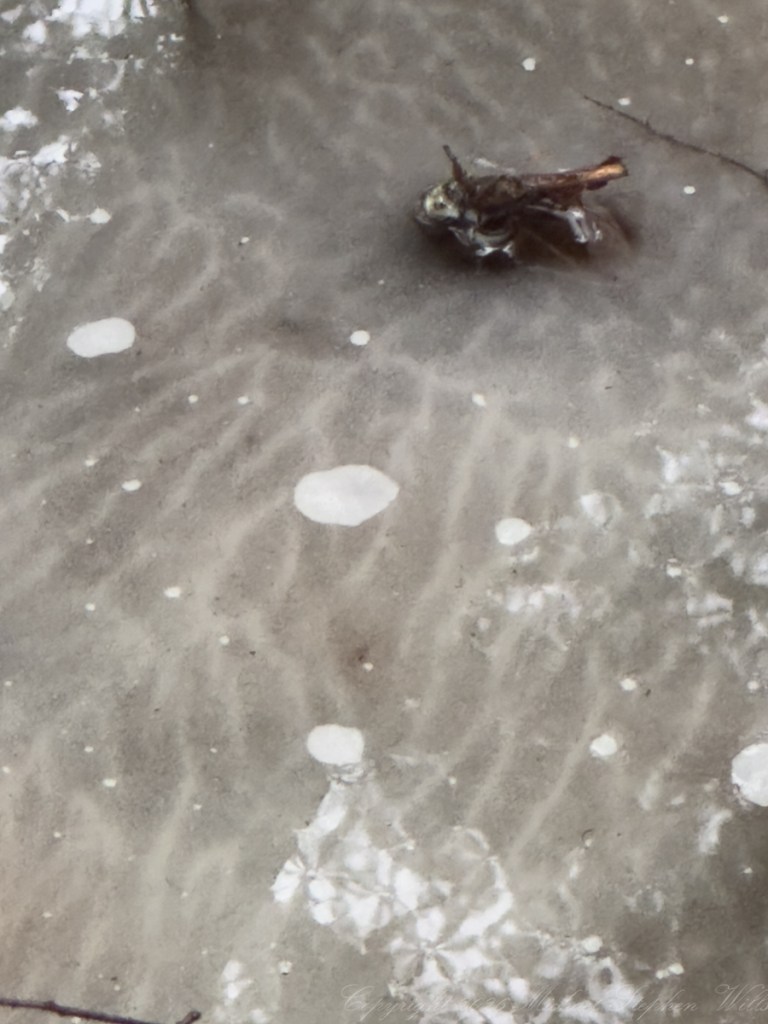
We moved downslope toward the seepage-fed lowlands that give this preserve its particular character. Here, the ground softens, water gathers, and winter lingers longer in pockets of ice that seem reluctant to relinquish their hold. The ice itself told a story—not clear and crystalline, but cloudy, milky, almost opalescent. This opacity is the signature of trapped air, minute bubbles frozen in suspension as water repeatedly melts and refreezes. Each cycle interrupts the orderly lattice of ice, scattering light and transforming transparency into a pale, diffused glow. It is ice that remembers its instability.

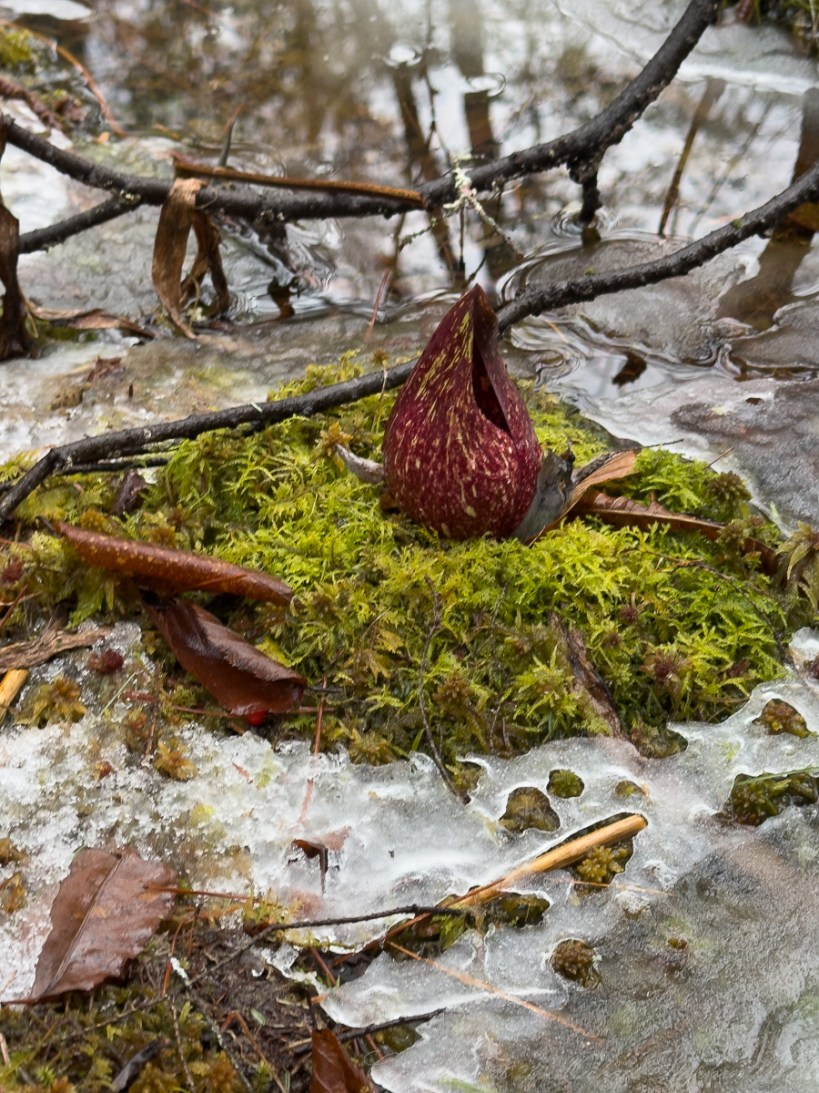
Threading through this ice were narrow rivulets of meltwater, tracing paths around moss-covered hummocks. These islands—bright green even in winter—rose like miniature continents in a frozen sea. On one such hummock, we found this skunk cabbage. Its mottled spathe, deep maroon flecked with yellow, pushed upward through the cold, its form both alien and ancient. I pointed out to the boys that this plant generates its own heat—a metabolic furnace capable of melting the surrounding snow. It is one of the earliest heralds of spring, though it announces itself not with color alone, but with scent—a pungency that walked with us that day.

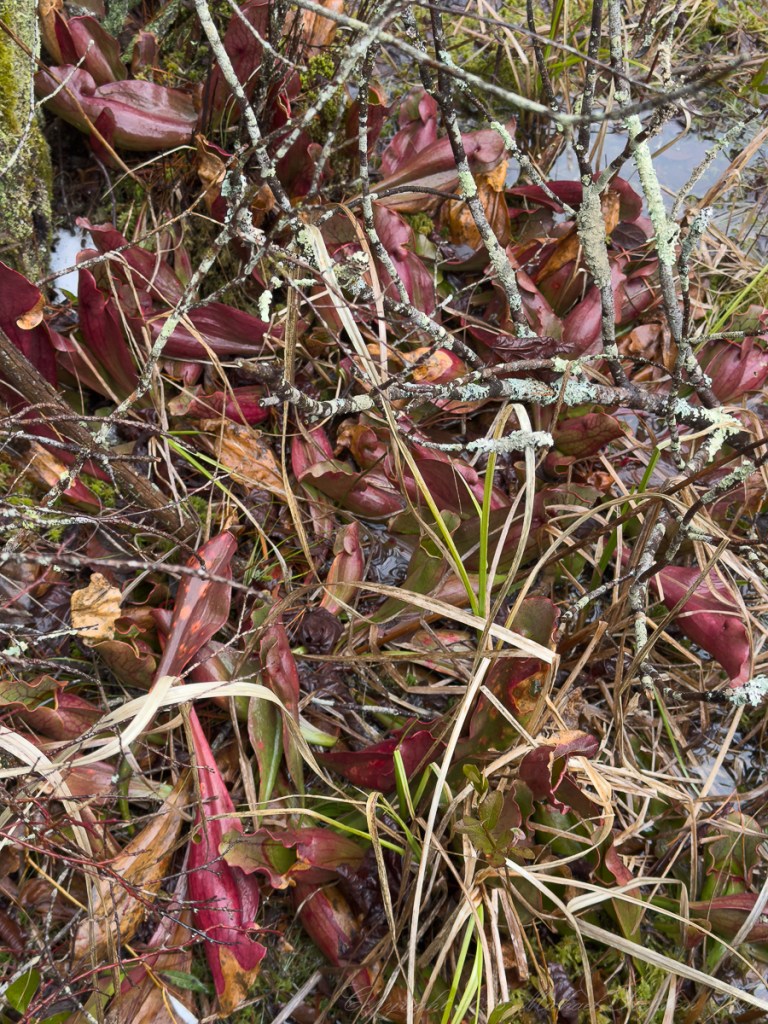
Nearby, nestled in the sphagnum, were the pitcher plants—Sarracenia purpurea—their tubular leaves tinged with winter’s reds and greens. Even in dormancy, they held their form, each pitcher a small reservoir. I explained how these plants supplement the nutrient-poor conditions of the bog by capturing insects, their modified leaves forming a subtle trap. The boys leaned in, curious, perhaps imagining the unseen dramas that would unfold here in warmer months.

The wetland was a place of plants and textures. The ice thinned near the edges, revealing water beneath that reflected the vertical lines of trees above. Droplets fell intermittently from branches, punctuating the quiet with soft, irregular taps. It was a landscape in transition, each element negotiating its passage from one state to another.

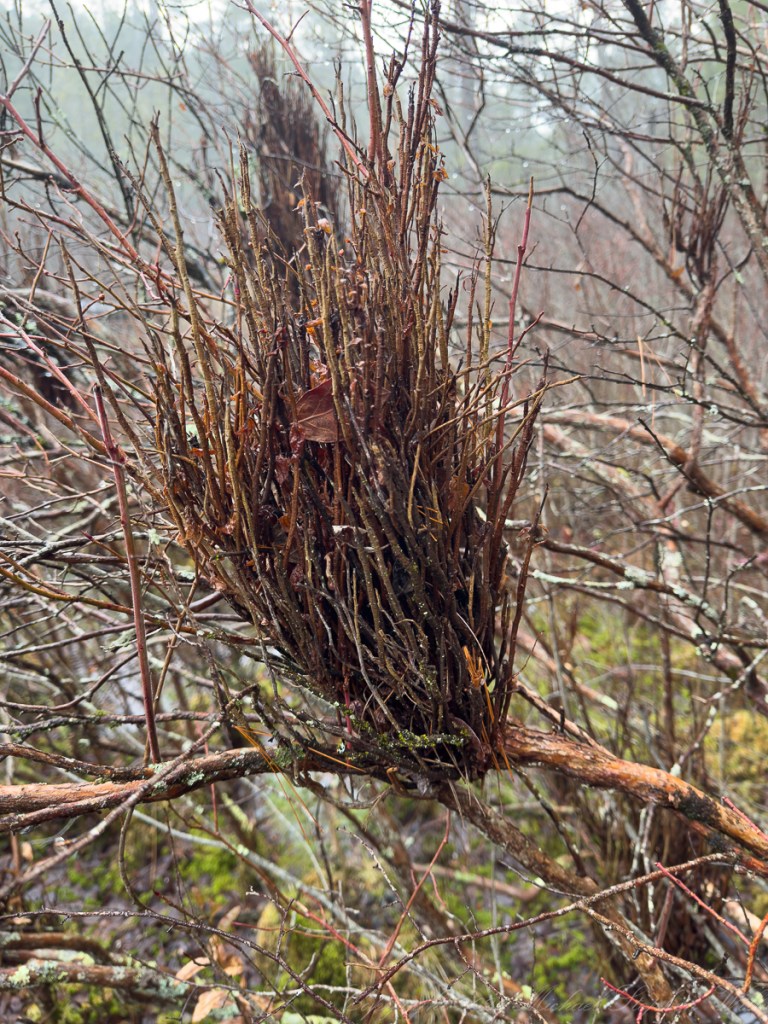
Along a tangle of shrubs, I noticed an unusual growth—a dense, broom-like cluster of twigs protruding from what appeared to be a highbush blueberry. This “witches’ broom” is often the result of fungal infection or other physiological stress, causing the plant to produce a profusion of shoots from a single point. To a child’s eye, it might seem like a bird’s nest or some deliberate construction, but it is, in fact, the plant’s own altered architecture—a distortion that nonetheless becomes part of the ecosystem, offering shelter to small creatures.

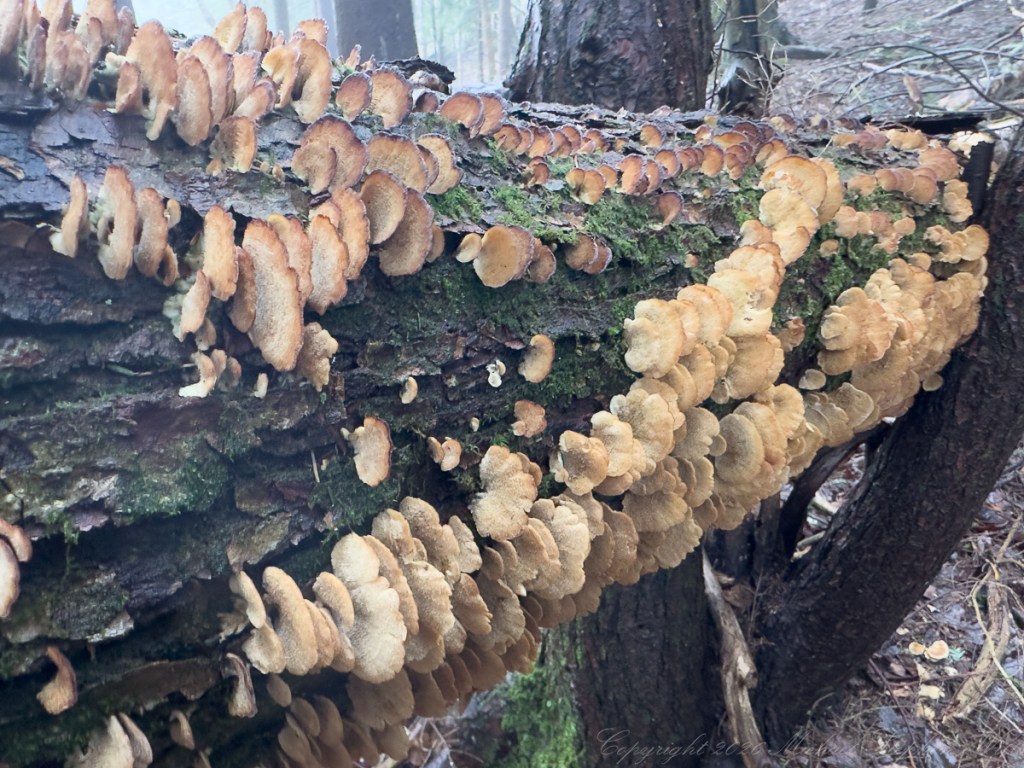
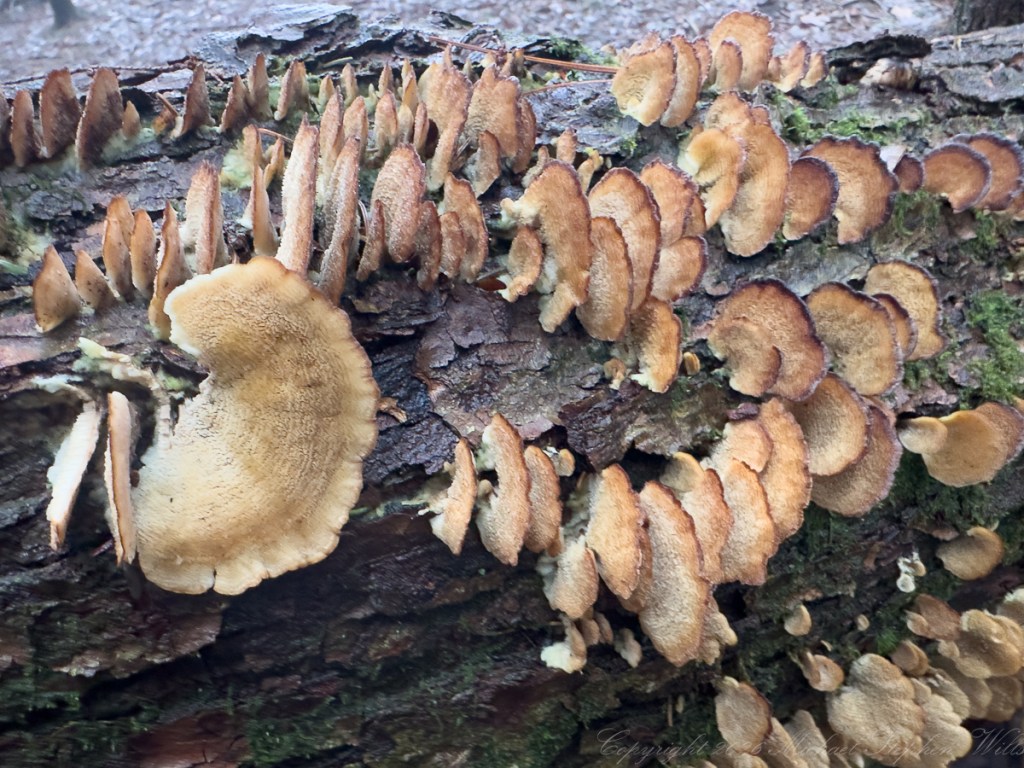
Further along, a fallen log bore the layered forms of shelf fungi, each bracket extending outward like a series of pages half-opened. Their colors—muted tans and browns—blended with the wood, yet their structure was unmistakable. These polypores are the quiet recyclers of the forest, breaking down lignin and cellulose, returning the substance of the tree to the soil. I ran my fingers lightly along their surface, feeling the fine texture, while the boys, less cautious, tapped them as though testing their solidity.

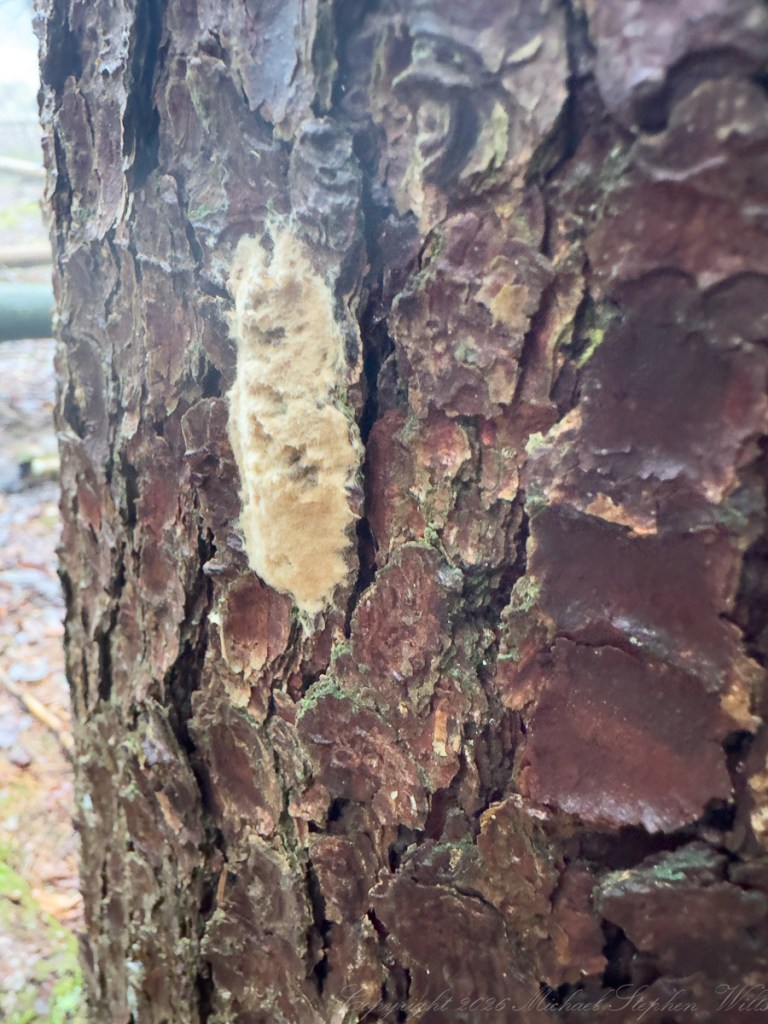
On the bark of a nearby tree, we encountered a patch of what looked like pale, fuzzy insulation—the egg mass of the spongy moth. I explained that each of these masses could contain hundreds of eggs, waiting for the warmth of spring to hatch. It was a reminder that even in this subdued season, the next wave of life was already prepared, concealed in plain sight.

As we made our way back, the boys’ boots squelched in the soft ground, their earlier perch on the stump now a distant memory. Yet the morning had offered them—and me—something more enduring than a climb. It had revealed a landscape in flux, where ice is not merely frozen water but a record of change, where plants defy cold through chemistry, and where even decay participates in renewal.

Late winter, in a place like Malloryville, is not an absence of life but a study in persistence. It asks for attention, for patience, and for a willingness to see beauty in transition. Walking with Sam and Rory, I was reminded that discovery does not wait for spring. It is already here, written in ice, moss, and the quiet industry of the forest.

Enter your email to receive notification of future postings. I will not sell or share your email address.

Fens, Bogs, and Flowing Water of Malloryville Preserve of Freeville, New York

Discover Malloryville Preserve in Freeville, New York—a hidden Finger Lakes wetland of fens, bogs, and flowing water where glacial history and rare plants meet.

Water defines the O.D. von Engeln Preserve at Malloryville long before we see or hear it. At first, it is only a dampness in the air, a coolness at ankle level, a dark sheen between sedge tussocks. In the space of a half-hour walk, we pass through fen, bog, marsh, and swamp, each distinct, yet bound together by the same slow, persistent flow.

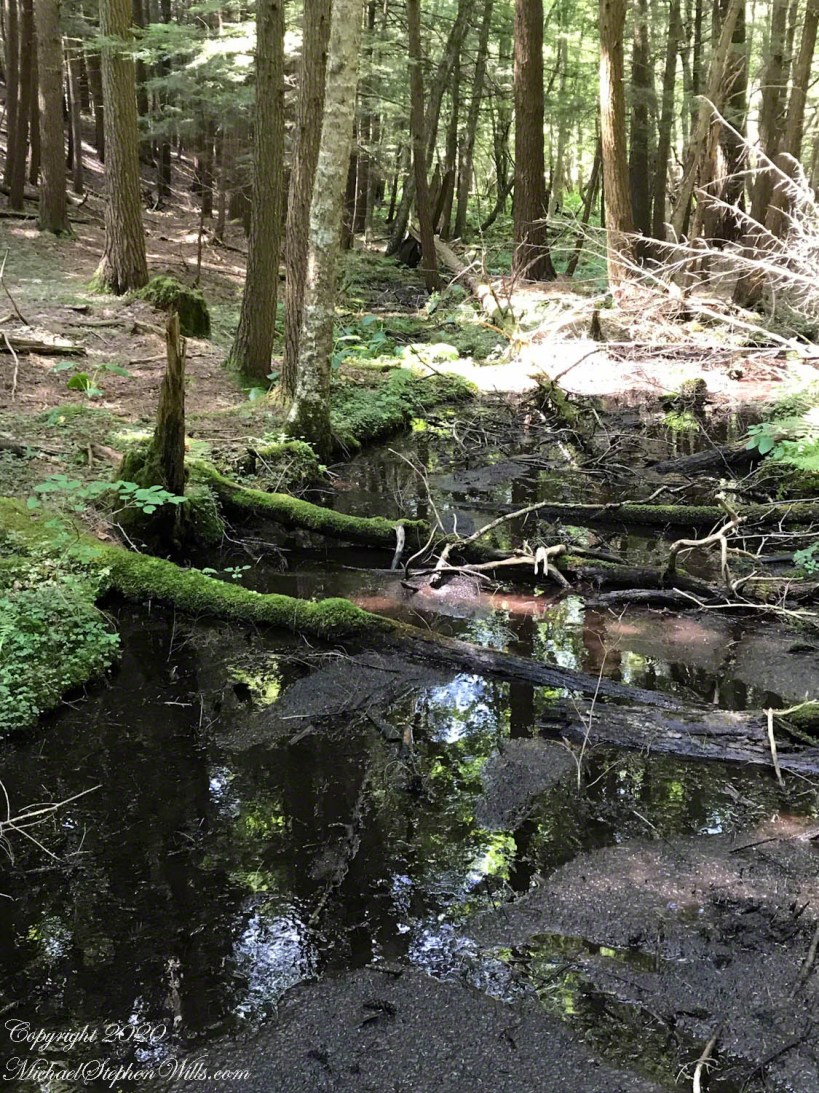
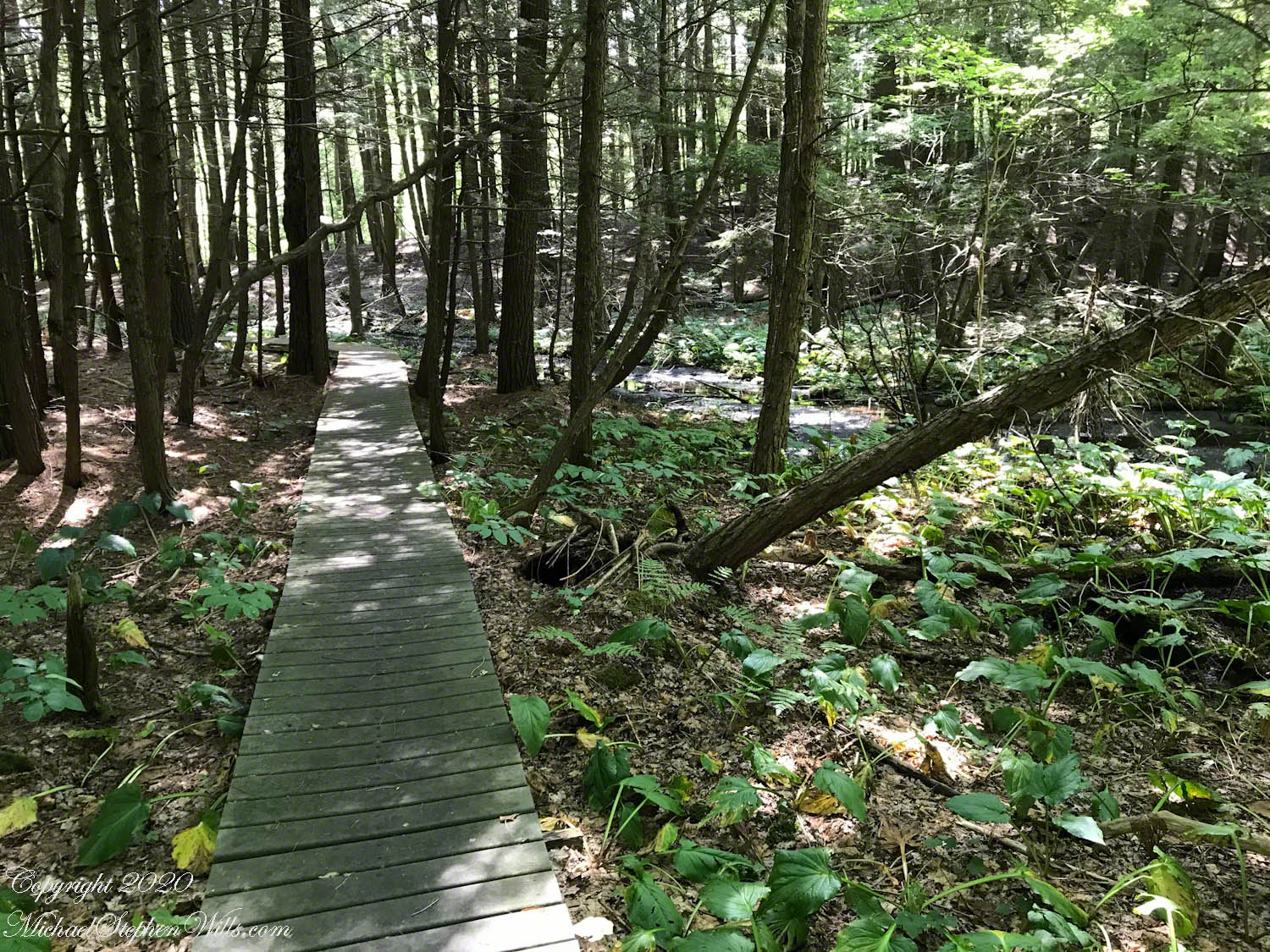
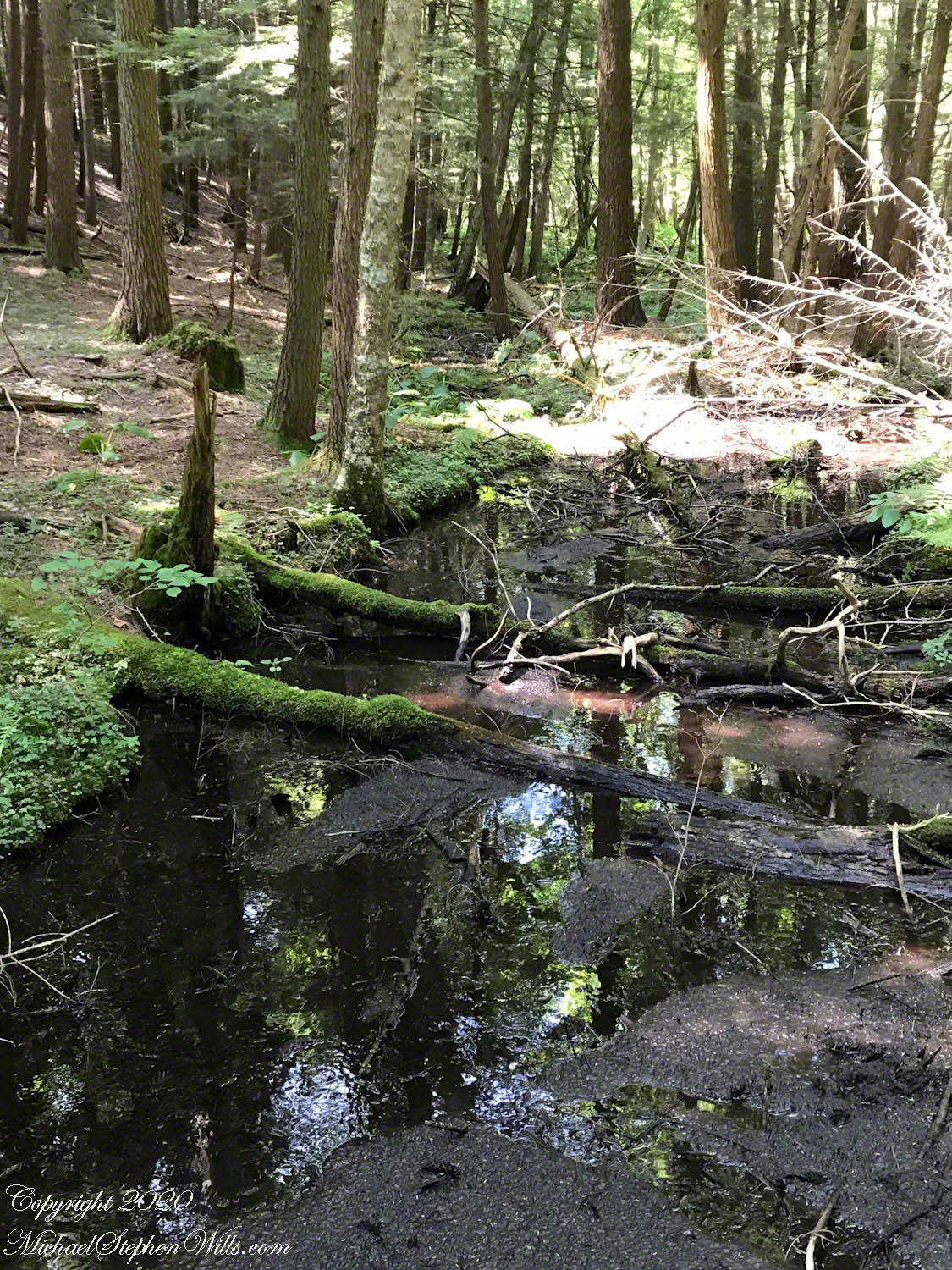
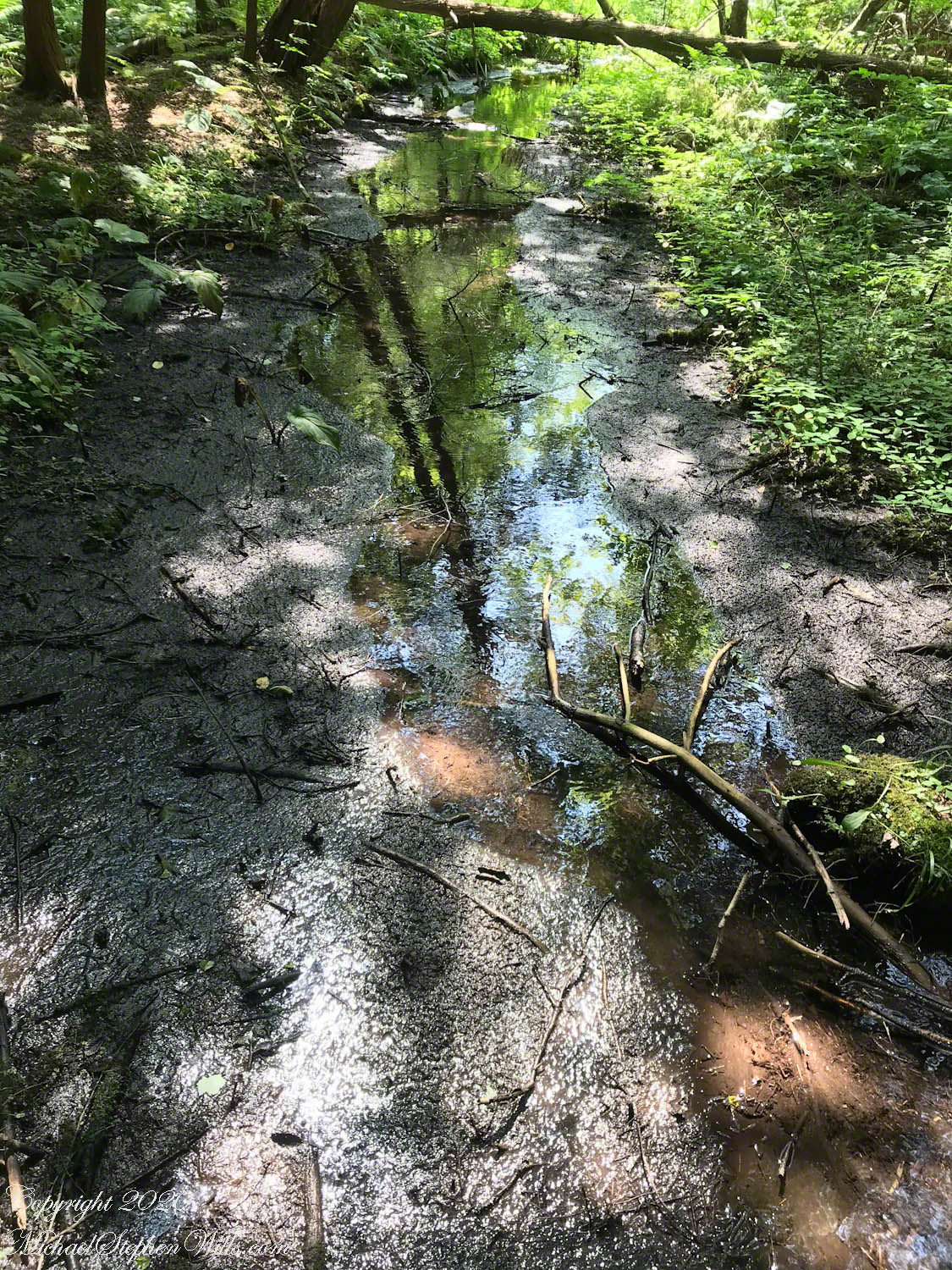
Here we are traversing a swamp, our steps buoyed along on planking made from recycled plastic. The boardwalk floats visually above pools the color of tea, edged with moss and skunk cabbage. It’s easy to imagine what this crossing would have been like before the planks were laid—boots sinking, knees splashed, delicate plants crushed. The modern walkway is a quiet compromise: we may enter this saturated world without trampling it, a human gesture that matches the preserve’s ethos of protection and restraint.

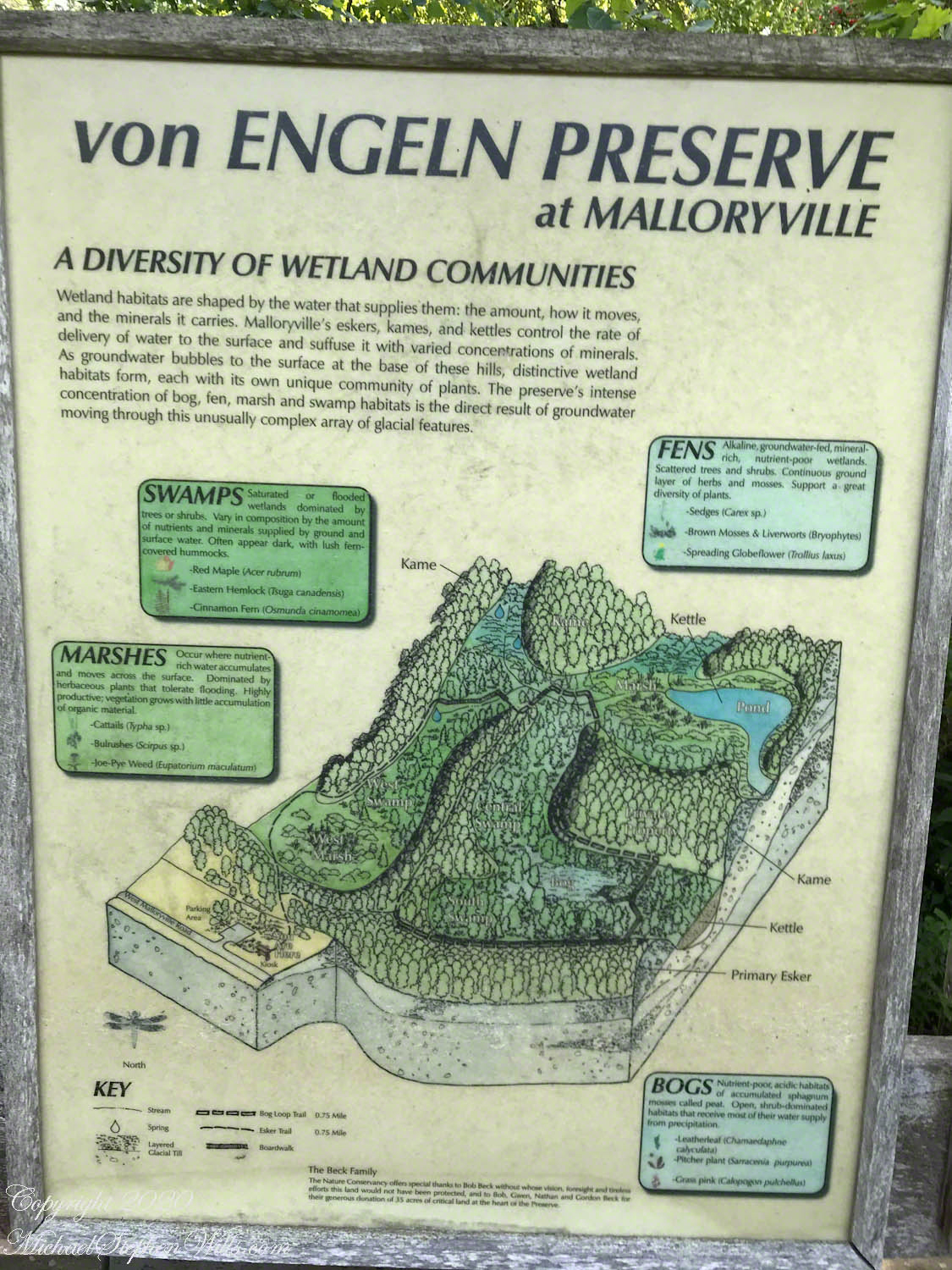
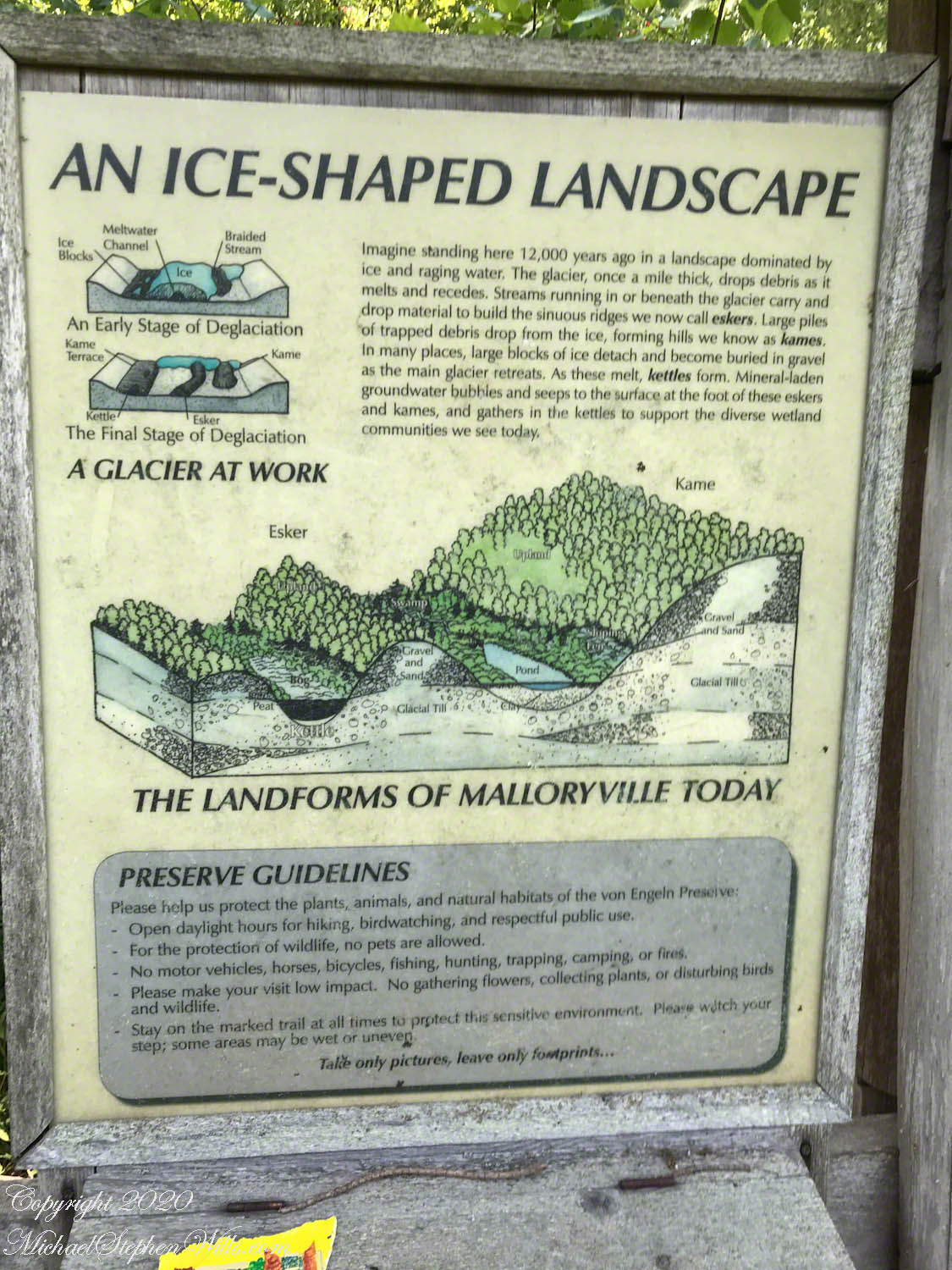
The Malloryville wetlands lie in a low pocket along Fall Creek, a landscape shaped by the last ice age. As the glacier that once covered this region melted, torrents of water tunneled through the ice, depositing braided ridges of sand and gravel known as eskers. Today, more than a mile of these ancient riverbeds winds through the preserve, narrow wooded spines rising above the surrounding wetlands. From an esker crest, the pattern of water reveals itself: dark channels of open flow, pale pools rimmed with sedge, patches of sphagnum floating like cushions, and, farther off, the straight silver of Fall Creek.

But the story of Malloryville’s water begins far from these pools. Rain falls on the uplands as cool, slightly acidic water. It sinks through glacial till—a jumble left by the ice—and begins a long, blind journey underground. As it moves, the water reacts with the minerals it encounters. Where it brushes limestone or other carbonate-rich layers, it is slowly neutralized and picks up dissolved calcium and magnesium. By the time it resurfaces in low spots, it may be transformed from sour, soft rain to mineral-rich groundwater.

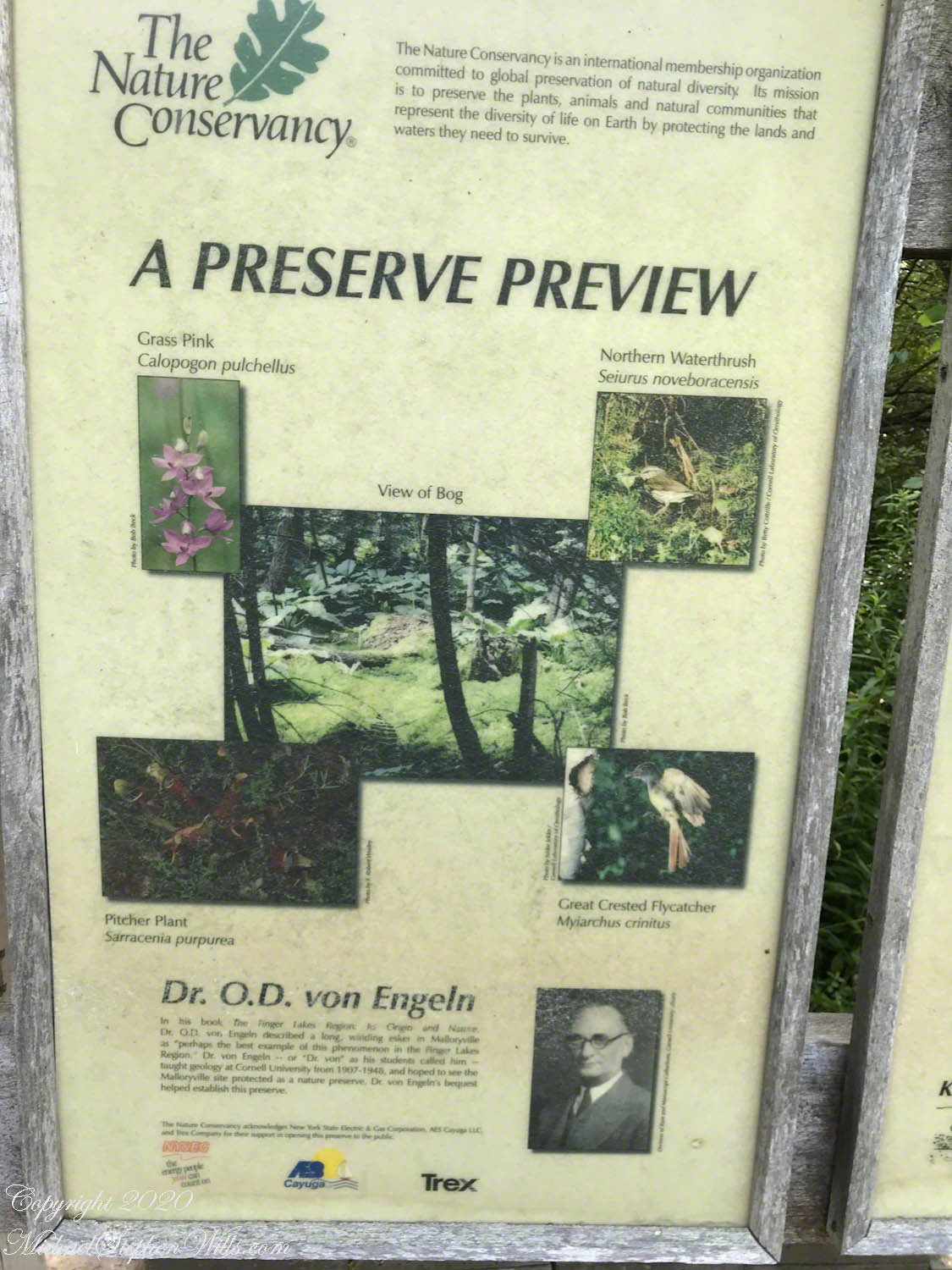
Those subtle chemical shifts are written onto the land. In some hollows, where water still mainly reflects its origin as rain, the environment becomes a bog—cold, acidic, nutrient-poor. Here, sphagnum moss knits a floating carpet, and only specialists such as leatherleaf and cranberries can endure. In other pockets, where groundwater welling up from below brings minerals, we find fens: lush, lime-touched wetlands offering niches for orchids, sedges, and the carnivorous pitcher plant. Marshes and swamps round out the spectrum, their standing water and wooded shade forming still more microhabitats.

In this small preserve, all these wetland types coexist side by side, threaded by water that often moves so slowly it appears not to move at all. The stillness is deceptive. A slight difference in elevation—barely the height of your boot—can determine whether water spreads and stagnates, seeps outward in a fan, or concentrates into a narrow, unseen channel. Hydrologists studying the area have shown that a water-table mound of only a few inches can redirect the underground flow and, over time, steer the evolution from open fen to peat-filled bog.

Human history here is entwined with that quiet power. The founders of the preserve, themselves from a dairy farming family, came to understand that the springs, seeps, and wetlands feeding Fall Creek were vulnerable. Gravel pits on nearby land had already bitten into the valley; another such excavation on this side would have severed the veins of water that sustain the fen and bog. Their years-long effort to protect the property culminated in a Nature Conservancy preserve whose very purpose is to safeguard water and the uncommon communities it supports.

The boardwalk under our feet is part of that story. Its recycled-plastic planks do not rot in constant dampness, and their smooth, slightly hollow sound reminds us with each step that we are guests in a place where soil never truly dries. At the edges of the walkway, tamarack and red maple lift their trunks from hummocks, their roots anchored in peat built grain by grain from centuries of water-logged plant remains. In the open patches, we can seek out pitcher plants, their flaring, water-filled leaves digesting unwary insects to make up for the nutrient-poor conditions.

Everywhere, water moves almost invisibly. It rises as a cold trickle at the base of the esker, fans through the moss as a thin sheet, and gathers again in dark, tannin-stained channels. It rarely speaks aloud; only in spring flood or after hard rain does it murmur against roots or tap lightly at the plastic planks. Yet its influence is written in every texture and color—emerald moss, rusty sedge, the silvery bark of birch leaning over a pool.

To walk in Malloryville is to learn to read this subtle handwriting. We begin by noticing the obvious: the wetness, the boardwalk, the glimpses of standing water. By the end of the walk, we are tracing gradients—how the plants shift with elevation, how the ground feels underfoot, how the air cools or warms by a degree or two. We sense the long journey of water from sky to stone to peatland to creek, and onward to Cayuga Lake and the wider world beyond.

Water, flowing quietly, almost soundlessly, with powerful effect: Malloryville Preserve, that power is persistence. It is the power to carve a valley, to build a peatland one stem at a time, to sustain rare communities of plants and animals in a modest corner of New York. To honor such water is to move carefully, speak softly, and remember that our presence, like our boardwalk, should allow the flow beneath to continue its ancient work.

Enter your email to receive notification of future postings. I will not sell or share your email address.

Exploring Malloryville Preserve: A Hidden Glacial Wetland Gem in New York’s Finger Lakes

Explore the O.D. von Engeln Preserve at Malloryville, a hidden Finger Lakes wetland where glacial eskers, kettles, and springs reveal the deep story of ice and water.

In the heart of upstate New York, the Finger Lakes region stretches out like a handprint left by the last great ice sheets—long, narrow lakes aligned north to south, their steep-sided valleys feeding into a lattice of creeks, waterfalls, and wetlands. It is a landscape defined by water and time: glaciers grinding south, then melting back north some 12,000 years ago, carving deep troughs, piling up ridges of gravel and sand, and leaving behind a terrain that is anything but simple.

The O.D. von Engeln Preserve at Malloryville, near the small village of Freeville, is one of the quiet places where that story is written most clearly on the land. It doesn’t shout like Taughannock Falls or Ithaca’s famous gorges. Instead, it whispers—through the curves of its hills, the softness of its ground, the unexpected appearance of a spring at the base of a gravel ridge. Here, in a relatively compact area, you can see how ice and water worked together to shape the Finger Lakes region we know today.

Overflow from a Kettle Pond threads through a meadow before feeding Fall Creek. The O.D.von Engeln Preserve at Malloryville.

By the time the preserve officially opened in 1997, the name O.D. von Engeln was already familiar to anyone curious about local geology. His classic book on the Finger Lakes helped generations of readers understand that the scenery around them was not random, but the result of powerful, understandable processes. Reading von Engeln, the rolling hills and quiet valleys near Freeville become more than background—they become evidence: of buried ice, rushing meltwater, and the slow settling of sediments into the forms we walk on now.

Malloryville is an outdoor classroom for that lesson. The preserve is built around a cluster of glacial landforms—eskers, kames, and kettles—that create a three-dimensional mosaic of ridges and hollows. Eskers, those long, winding gravel ridges left by rivers that once flowed inside the glacier, snake through the forest like frozen currents of stone. Kames—steep, irregular hills of sand and gravel—rise suddenly from the surrounding lowlands. Kettles, the depressions left behind when buried ice blocks melted away, now cradle wetlands and pools.

Beneath and between these features, groundwater is constantly on the move. It seeps through layers of sand and gravel, emerges as cold springs at the foot of slopes, and spreads out into swamps, fens, and marshes. In the Finger Lakes, water is always telling a story; at Malloryville, it’s simply easier to hear. Follow the trail and you move through a succession of wet worlds: a seep-fed fen with delicate mosses and sedges, a shrub swamp where skunk cabbage thrusts up in early spring, a cattail marsh that hums with birds and insects in summer.

For my family, the story of Malloryville began even before the preserve had a name. We lived nearby along Fall Creek, itself a thread in the larger fabric of the Cayuga Lake watershed. My son and I camped for the first time on top of an esker just beyond our front door, our tent perched on what I would later learn was the remnant of a stream that once tunneled through the base of a glacier. At the time, it was simply a magical narrow ridge in the woods. Only later, with von Engeln’s guidance and the preserve’s interpretive signs, did that ridge become a sentence in a much older, longer narrative.

That is one of the great gifts of the Finger Lakes: the chance to move from simple admiration—“this is beautiful”—to understanding—“this is how it came to be.” The steep slopes along Cayuga, Seneca, or Skaneateles; the drumlin fields near the north ends of the lakes; the hanging valleys and waterfalls; and the quiet wetlands of places like Malloryville are all chapters in the same glacial chronicle. Once you learn to read one place, you begin to read them all.

Walking into the O.D. von Engeln Preserve, you enter that story at a small, intimate scale. The parking area and trailhead give way quickly to a world where the ground feels different—sometimes firm and gravelly, sometimes soft and yielding underfoot. Wooden walkways and narrow paths thread through shady forest and open wetland. Each bend offers a subtle shift: a new plant community, a change in water clarity or flow, a small sign explaining what lies beneath your feet.

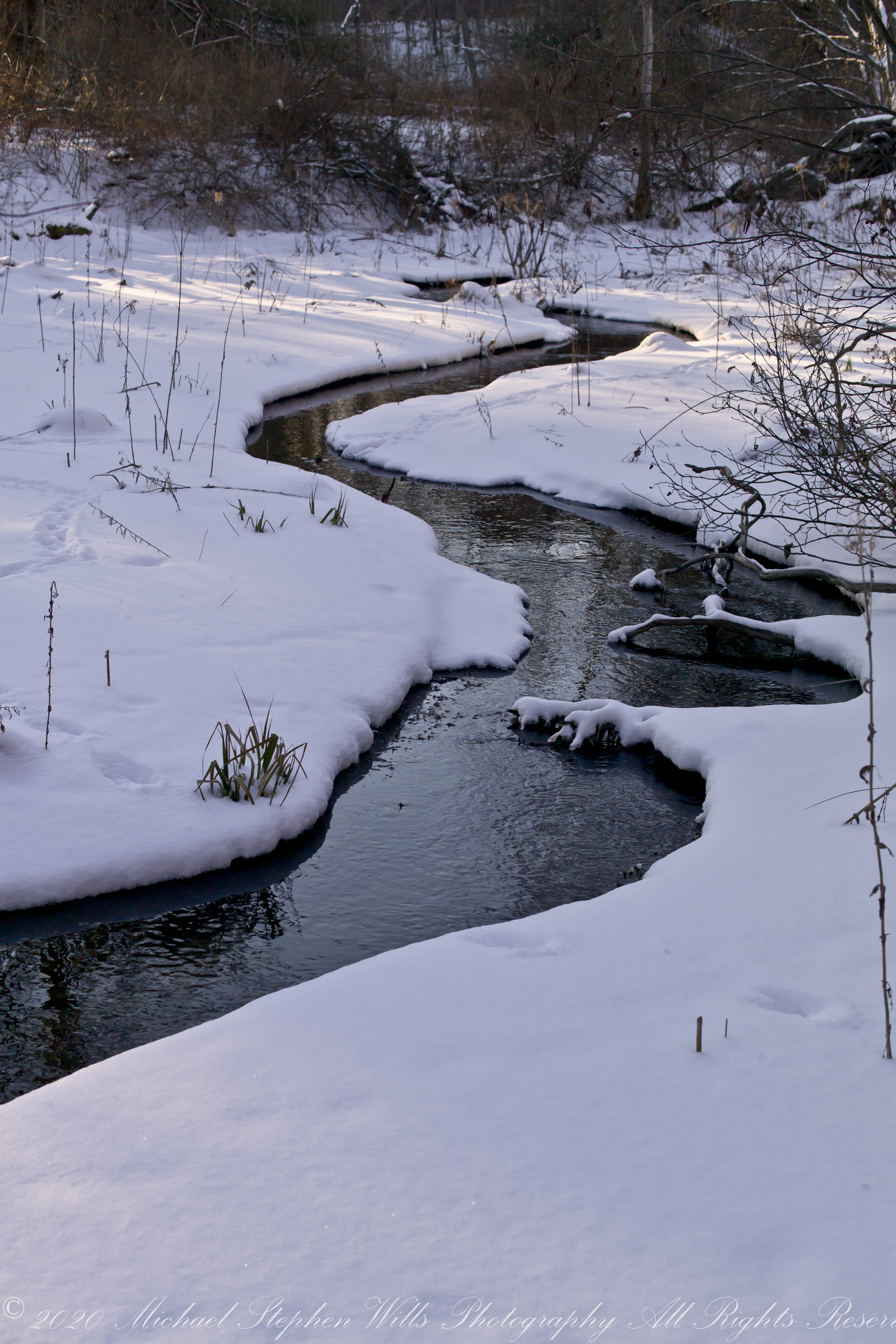
Fall Creek meanders through the esker fields of the Malloryville Preserve. Here is the view from an abandoned railroad bridge. The preserve is near Freeville in the Finger Lakes Region of New York State.

This is not grand scenery in the postcard sense; it is something quieter and deeper. Malloryville invites you to slow down and notice. To ask why a particular ridge is so narrow, why water emerges here but not there, why one hollow is filled with shrubs and another with moss and sedge. In learning those answers, you gain not only an appreciation for this modest preserve but also a richer understanding of the entire Finger Lakes region.

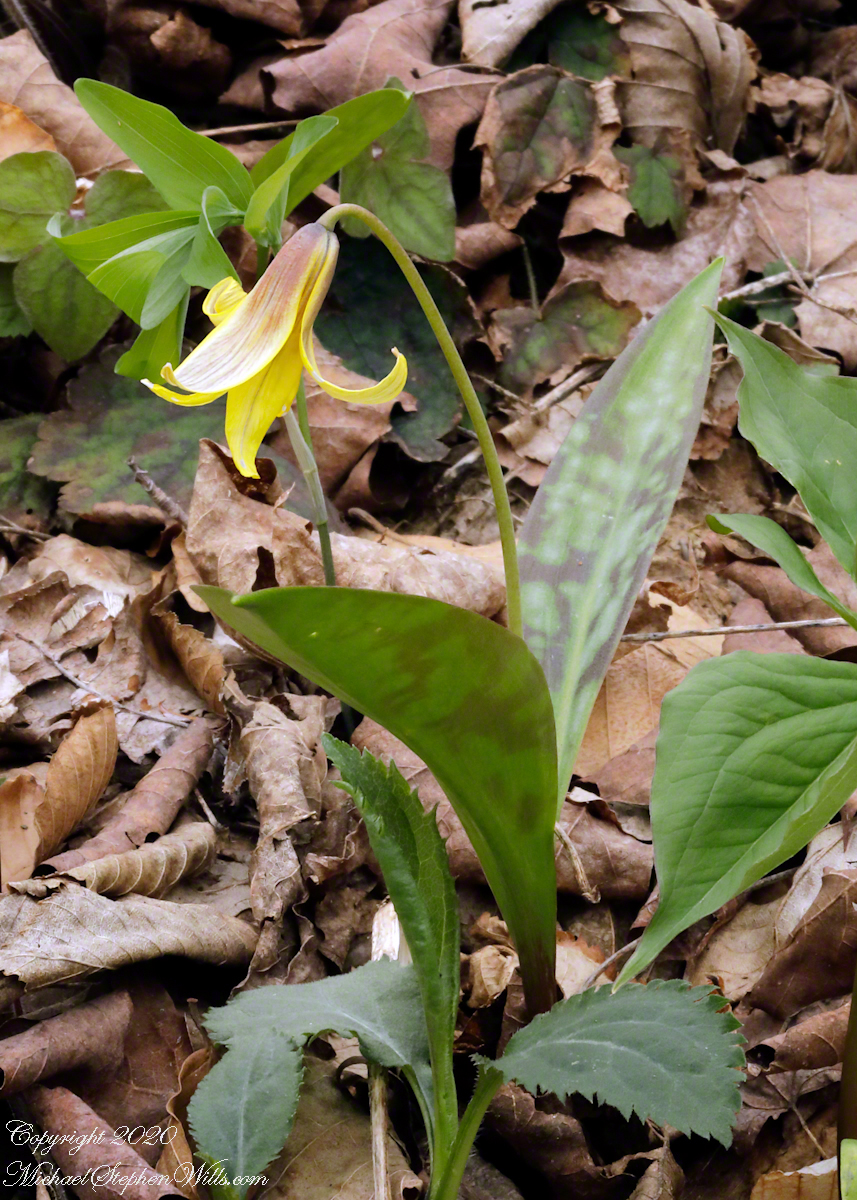
The Trout Lily (Erythronium americanum) is named for the mottled brown leaves resembling marking on trout.

In the end, the O.D. von Engeln Preserve at Malloryville is a lens—a way of seeing. Through it, the familiar landscapes of central New York—valleys, hills, streams, and lakes—come into sharper focus as the lasting work of ice and water. Stand on an esker, look across a kettle wetland, listen to the quiet trickle of a spring, and you are standing inside the very processes that shaped the Finger Lakes.

Enter your email to receive notification of future postings. I will not sell or share your email address.