The Hills Around Ithaca: A Landscape Ablaze

Explore autumn in New York’s Finger Lakes through vivid fall foliage photography, harvested cornfields, colorful woodlands, and sweeping views across the hills surrounding Ithaca.

Climbing Hector Street a maple compelled me to pull over on the way to Robert H. Treman park. Its leaves had turned a brilliant red, with orange lingering among the lower branches. Standing beside a home, it had grown into a broad, beautifully shaped tree, its crown reaching high above the roofline. Fallen leaves covered the grass around its trunk, though plenty remained overhead.
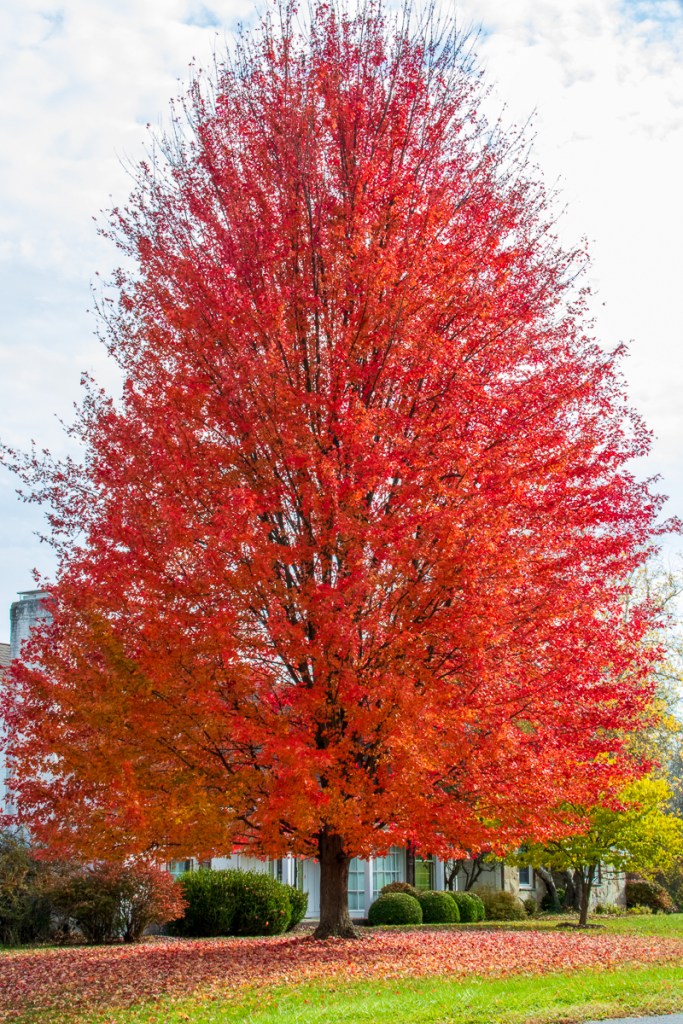
This Red Maple graces Hector Street, Ithaca, New York. I may be a Freeman Maple, a hybrid of Red Maple (Acer rubrum) and Silver Maple (Acer saccharinum). There is a cultivar of the Freeman Maple named Autumn Blaze® Maple Scientific name: Acer × freemanii, potentially Acer × freemanii ‘Jeffersred’ (Autumn Blaze).

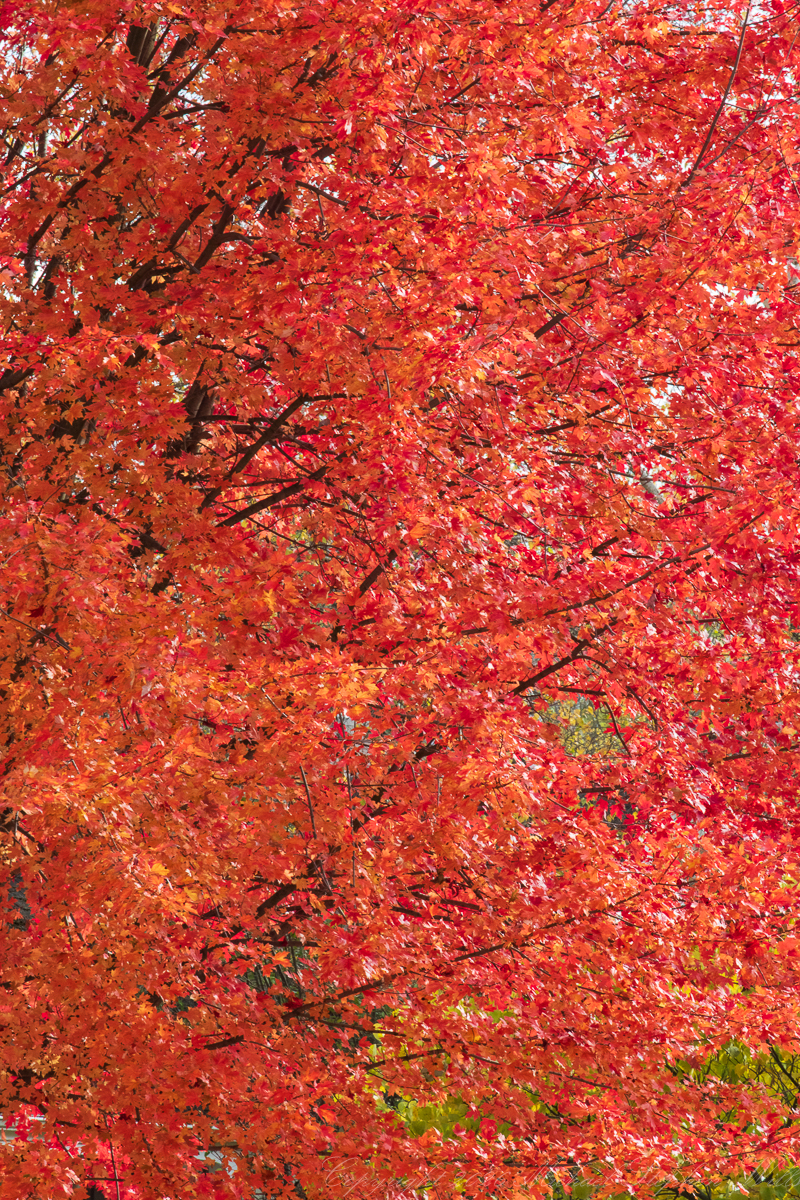
I photographed the whole tree first, then moved in closer. At that distance, the red canopy became a collection of individual leaves, some catching the sunlight, others shaded by overlapping branches. There were more variations in color than the first impression suggested, from bright vermilion to darker crimson, with occasional patches of yellow and green.
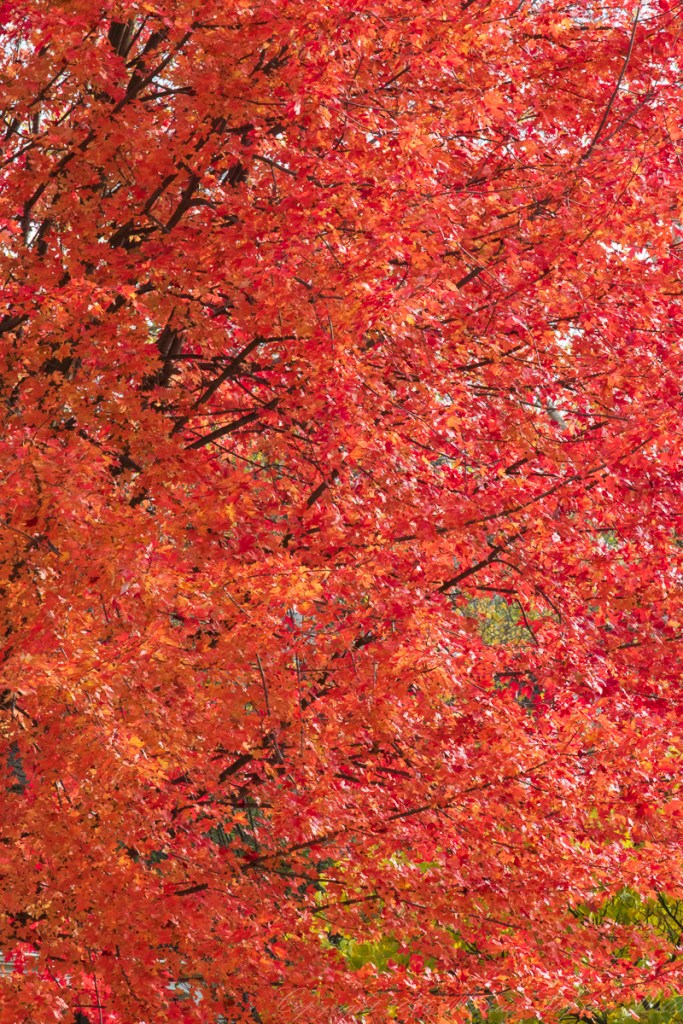
A fine tree caught a few days before full leaf drop.

From there, the views opened onto the surrounding farmland. A harvested cornfield sloped away toward a line of hardwoods, beyond which the hills rose in several layers. The corn had been cut close to the ground, leaving rows of pale stubble that ran toward the trees. The distant hills were muted by haze, their autumn colors softened into browns, purples, and blue-gray.
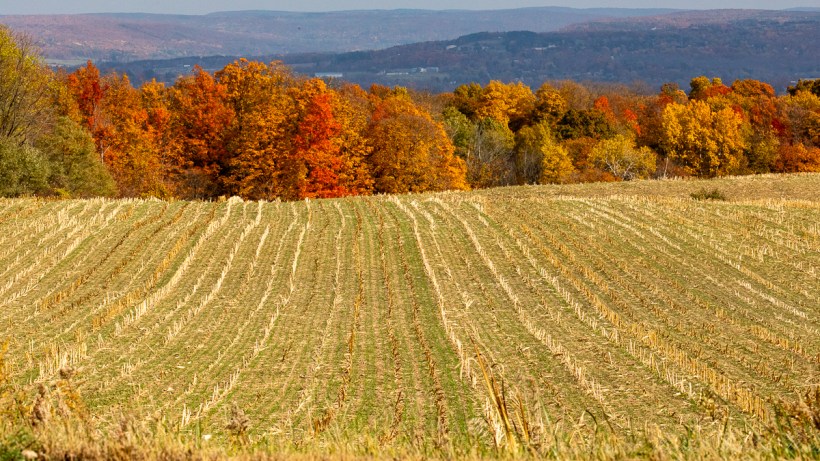
A harvested corn field, glowing trees, Ithaca’s East Hill, across Cascadilla Creek to Ellis Hollow. From Colegrove Road, Enfield, Tompkins County, New York State, Finger Lakes Region.

The foreground trees were another matter. Maples, oaks and other hardwoods carried an abundance of orange, yellow, and red foliage. Some had already begun losing their leaves, leaving bare branches among the still-crowded crowns. The variation gave the woodland a pleasing irregularity. Autumn had reached nearly every tree, though not all were keeping the same schedule.
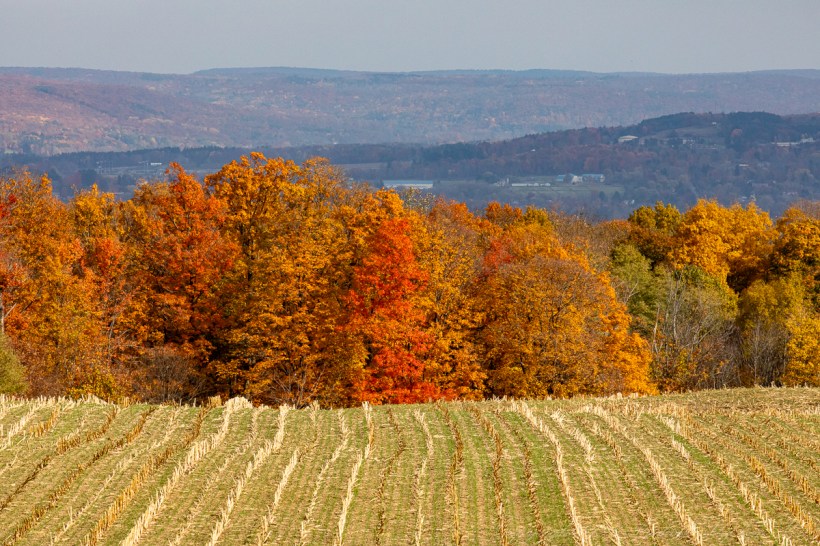
I used the telephoto lens to bring the distant hills closer to the foreground. It compressed the distance between them, bringing the wooded slopes into the same composition as the trees at the edge of the fields. A particularly bright orange-red tree stood among its golden neighbors, drawing my attention more than once.
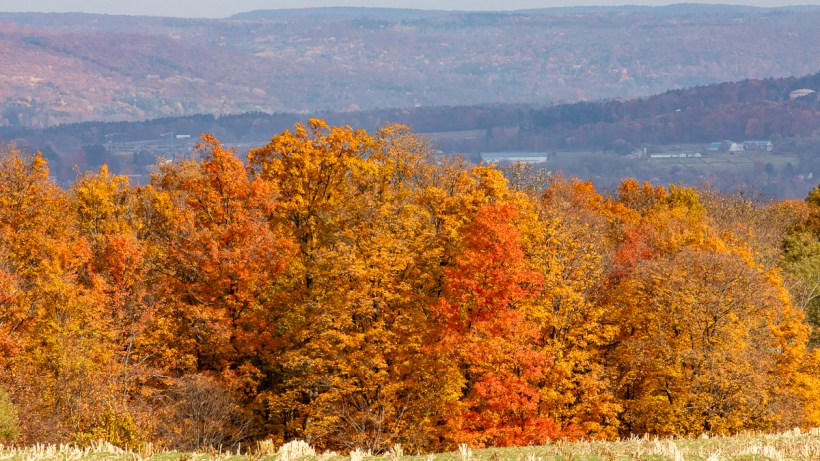
The view was worth exploring from several angles. In one direction, the treetops almost filled the frame. In another, the distant ridges became more prominent, with a narrow strip of harvested field along the bottom. Those cut corn stalks helped establish the scale of the view, a reminder that these were working fields as well as pleasant places to look out over the countryside.

Farther across the valley, buildings came into view above the foreground trees. Two tall towers, Ithaca College residence halls, stood near the center of the distant complex, with wooded hills rising behind them. Even at that distance, the buildings were recognizable as part of the developed landscape around Ithaca. Through the long lens, they appeared surprisingly close to the autumn trees, though considerable ground separated them.
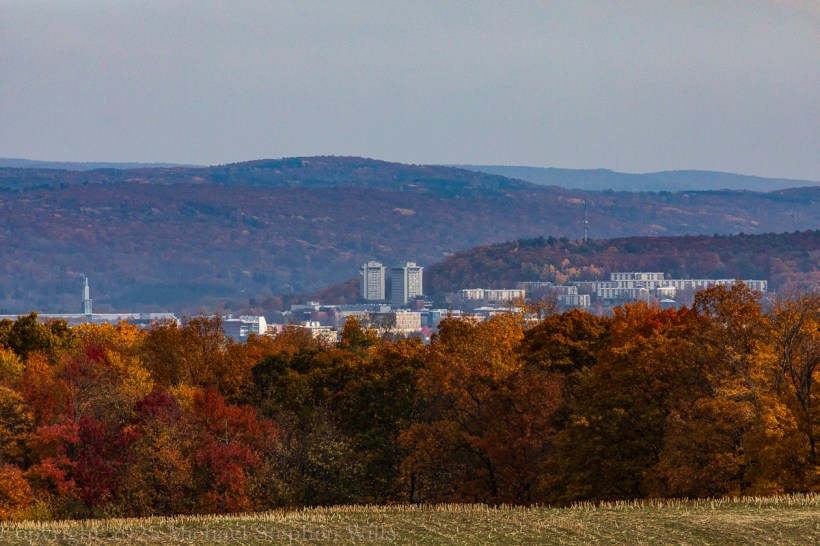
A harvested corn field, glowing trees, Ithaca College, the backside of East Hill. From Sheffield Road, Enfield, Tompkins County, New York State, Finger Lakes Region.

I found myself looking from the buildings to the hills behind them. The human structures occupied only a small portion of the scene. The wooded slopes continued well beyond, fading into the hazy distance.
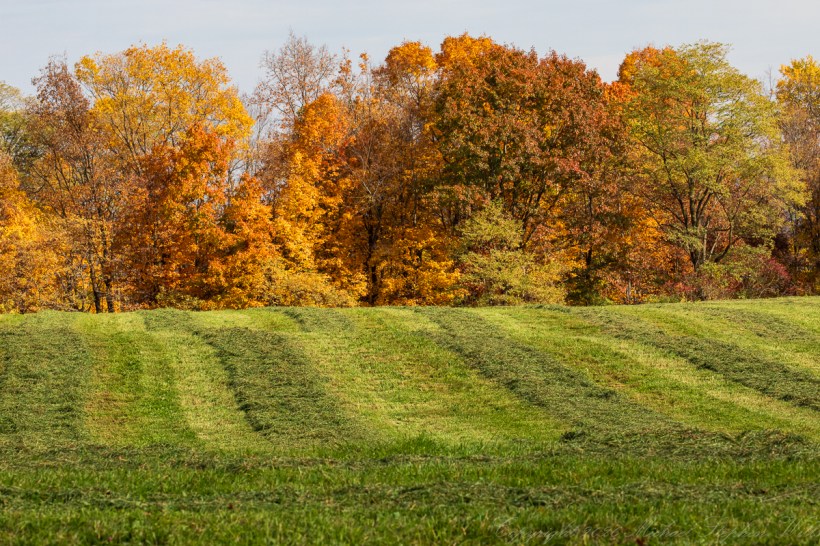
Mowed grass (for hay) glowing trees. From Colegrove Road, Enfield, Tompkins County, New York State, Finger Lakes Region.

Nearby, the fields offered a different kind of photograph.
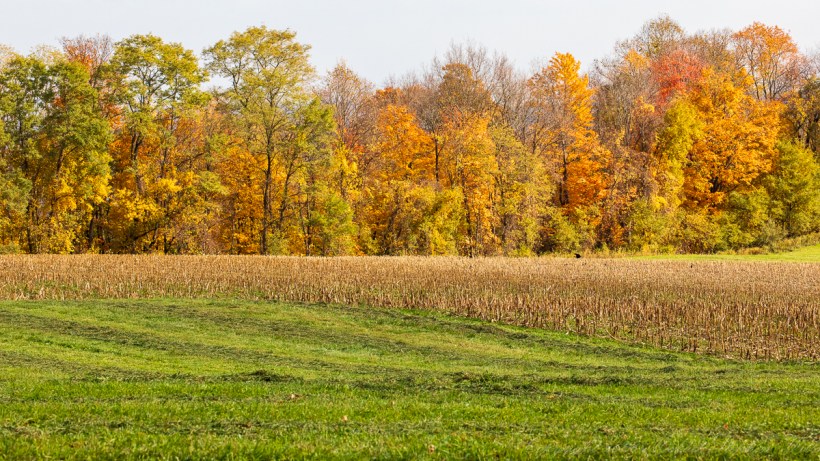
Mowed grass (for hay), harvested corn field with one crow, glowing trees. From Colegrove Road, Enfield, Tompkins County, New York State, Finger Lakes Region.

Freshly mowed grass covered a gentle rise, its alternating bands making broad green stripes across the slope. Beyond the crest stood a dense stand of hardwoods in yellow, orange, bronze, and lingering green. Some trees were nearly bare, their gray branches visible among those still holding their leaves.
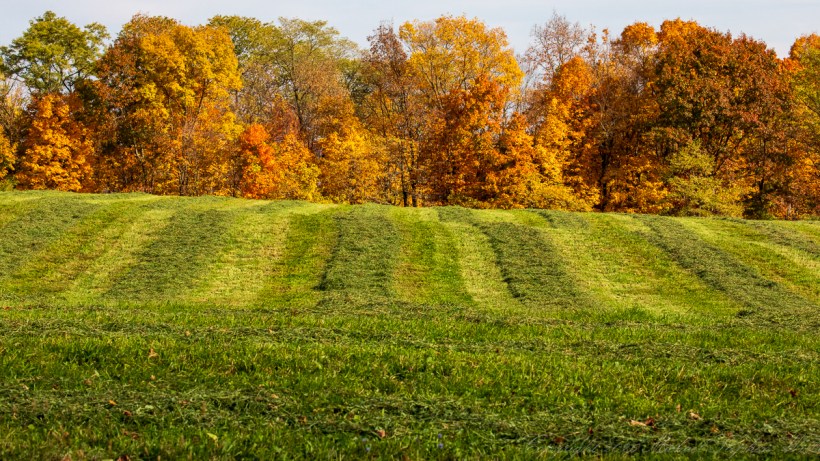
Mowed grass (for hay), glowing trees. From Colegrove Road, Enfield, Tompkins County, New York State, Finger Lakes Region.

The mowing patterns made an interesting foreground. Their straight, deliberate lines contrasted with the irregular branching of the trees. I tried several compositions, shifting the balance between field and woodland. In some, the grass occupied most of the photograph; in others, the trees were the principal subject.
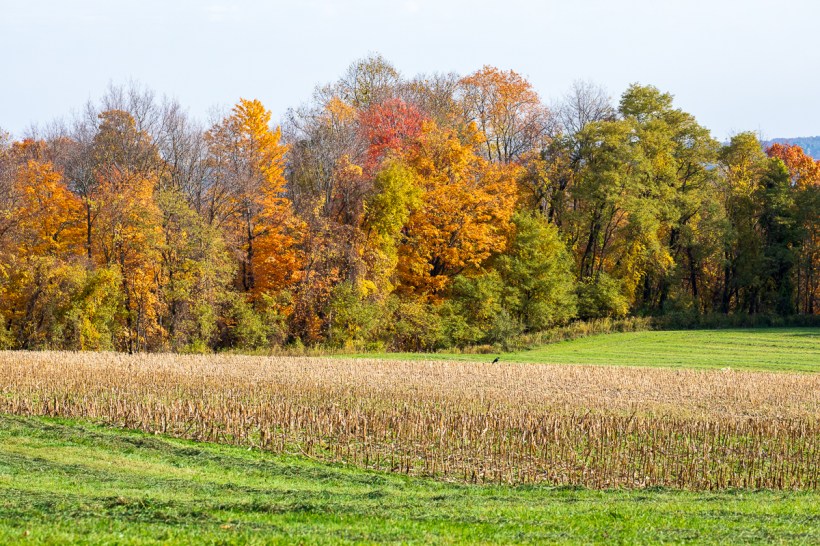
Mowed grass (for hay), harvested corn field with one crow, glowing trees. From Colegrove Road, Enfield, Tompkins County, New York State, Finger Lakes Region.

Another field, still covered with the dry remains of corn, lay between the green grass and the woods. The three bands—green, tan, and the many colors of autumn—made a satisfying arrangement. A small dark bird stood near the far edge of the cut corn, easily overlooked against the larger scene.
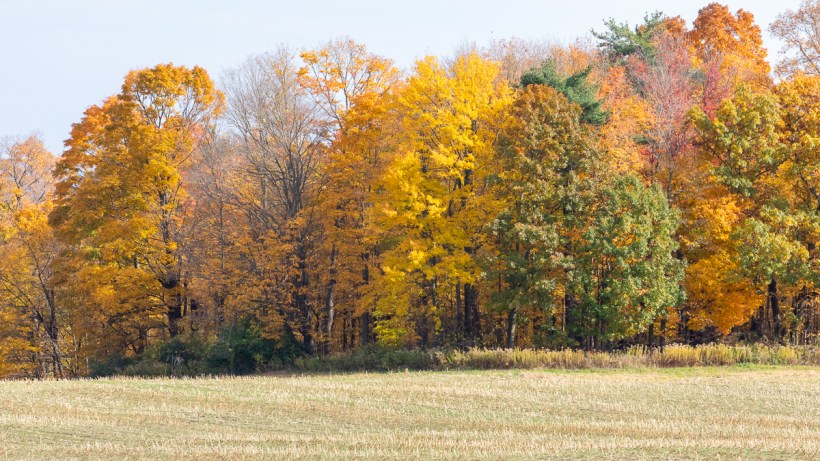
A harvested corn field, glowing trees. From Colegrove Road, Enfield, Tompkins County, New York State, Finger Lakes Region.

The trees themselves deserved a closer look. A large yellow maple was especially bright among its neighbors. Nearby, an oak held leaves that had turned a warm brown, and behind them, patches of green remained where other trees had not yet completed their change. A few bare crowns rose above the rest.
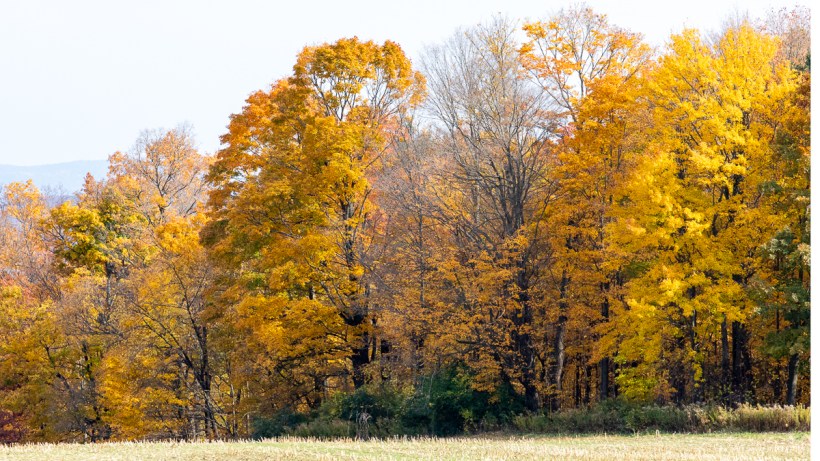
Glowing trees, Ithaca’s East Hill, across Cascadilla Creek to Ellis Hollow. From Colegrove Road, Enfield, Tompkins County, New York State, Finger Lakes Region.

I liked the mixture. In a photograph of autumn foliage, the temptation is to find the brightest reds and yellows, but the subdued trees are just as important. Their browns, grays, and remaining greens give the brighter colors something to stand against.

My last view included an old barn and silo, partly concealed by trees and tall weeds. The barn’s red roof showed through the branches, while its pale walls were visible above the uncut vegetation. Beyond it, the woods covered the hills in orange and gold, with a few brilliant red trees scattered among them.
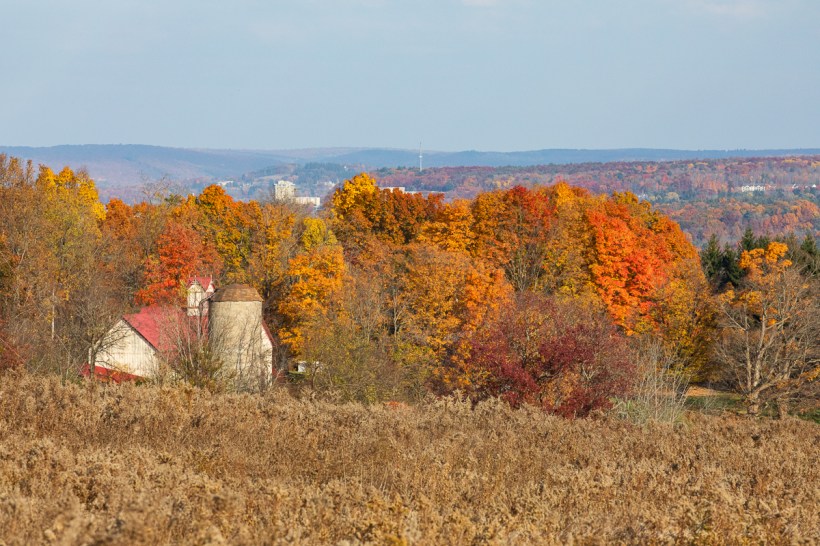
The eastward view from Enfield Falls Road on October 28, 2026. Ithaca College is partially seen beyond the farmstead with browned goldenrod in foreground. Enfield, Tompkins County, New York State, Finger Lakes Region.

The buildings belonged to the countryside as naturally as the fields around them. I wondered how many autumns that barn had stood there, its roof appearing and disappearing behind the changing foliage.

By then, I had photographed quite a variety of scenes, from the single red maple to the broad views across the valley. What I enjoyed most was the chance to look carefully at familiar surroundings. The harvested fields, mowed grass, distant buildings, and wooded hills were all part of the landscape I knew. Autumn had changed their appearance without changing their character.

In another few weeks, most of those leaves will be gone. The hills turned gray and brown, the fields at rest, and the views through the trees open again.

For now, there was still plenty of color, and I was glad to have been out with the camera to see it.
Click me to visit Michael Stephen Wills Online Finger Lakes Photography

Enter your email to receive notification of future postings. I will not sell or share your email address.

Exploring Taughannock Falls State Park: September Light in the Finger Lakes

A September walk at Taughannock Falls reveals layered cliffs, white snakeroot, drifting clouds, Cayuga Lake, and the quiet threshold between summer and autumn.

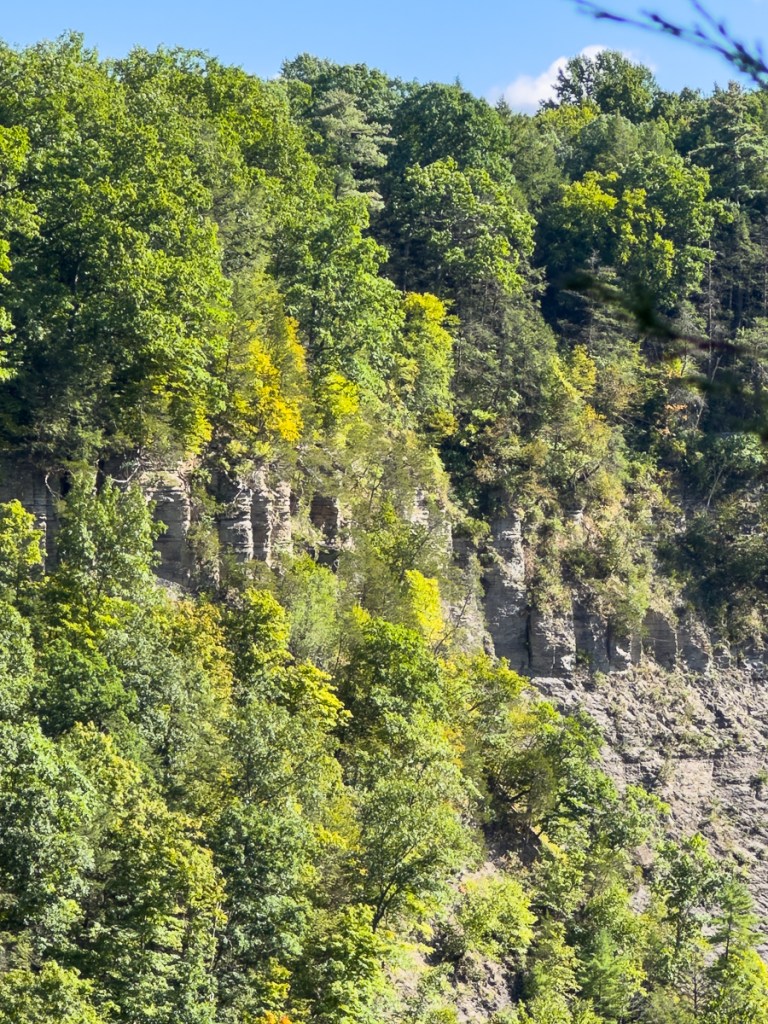
On September 14, 2026, Taughannock held itself between seasons. Summer had not yet departed; autumn had not yet claimed the gorge. The trees still wore their full green abundance. Yet, here and there, high on the rims and tucked into the ravine walls, yellow had begun its quiet work. I experienced it as hints, as first thoughts, as small flames beginning among the maples and shrubs.

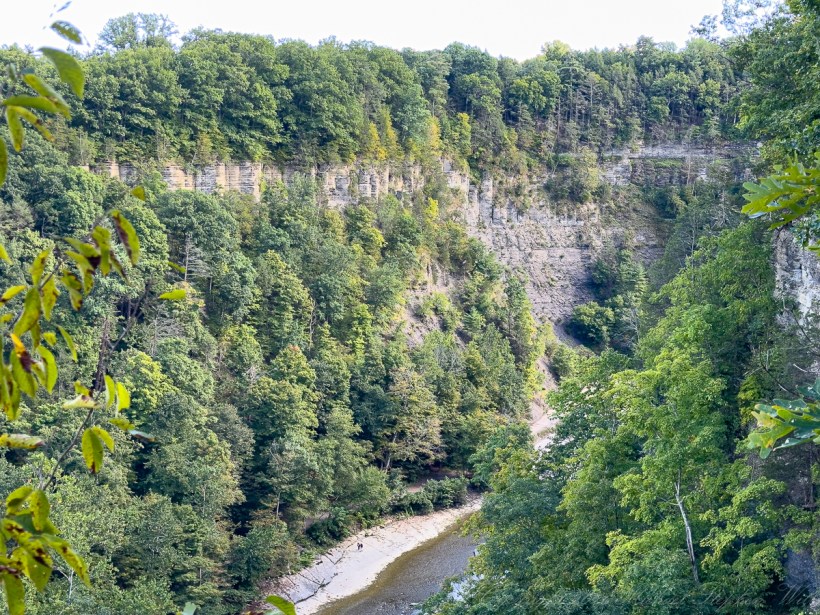
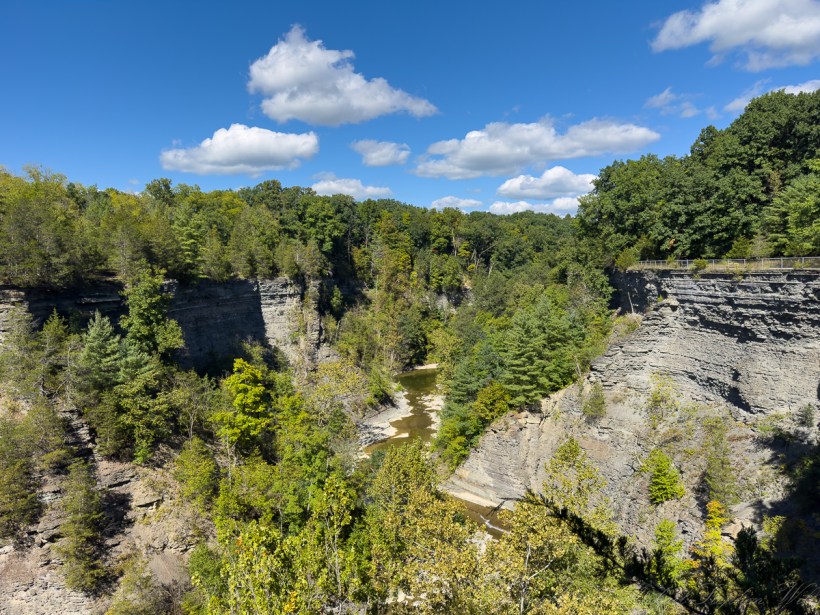
The view from the South Rim Trail. From a walk around Taughannock Falls State Park, down the South rim Trail, up the North Rim Trail. September 14, 2026

The gorge opened first as architecture: a long cleft of layered stone, inhuman shades of gray, cut by water through an immensity of time. From the rim, the creek below seemed almost modest, a brown-green ribbon moving through a corridor it had patiently made. The cliffs did not appear carved so much as remembered into shape. Bed after bed, ledge after ledge, they held the ancient sea in their faces. The rock seemed written in lines, a ledger of vanished depths, pressure, uplift, frost, collapse, and flow. Trees clung wherever they could. Roots found cracks. Cedars leaned over voids. Hardwood trunks rose from impossible perches, answering stone with leaf.

An extravagant sky above all. This blue, saturated and clean, carried great white clouds across the park like slow, wandering thoughts; too soft for a place so sternly cut by geology. Yet that contrast is part of Taughannock’s power: air and stone, cloud and shale, the brief and the enduring sharing one frame. The clouds drifted without urgency while the gorge below testified to forces that measure themselves in millennia. Standing there, the human mind is pulled in two directions at once—toward the fleeting weather of the day and toward the deep patience of the earth.

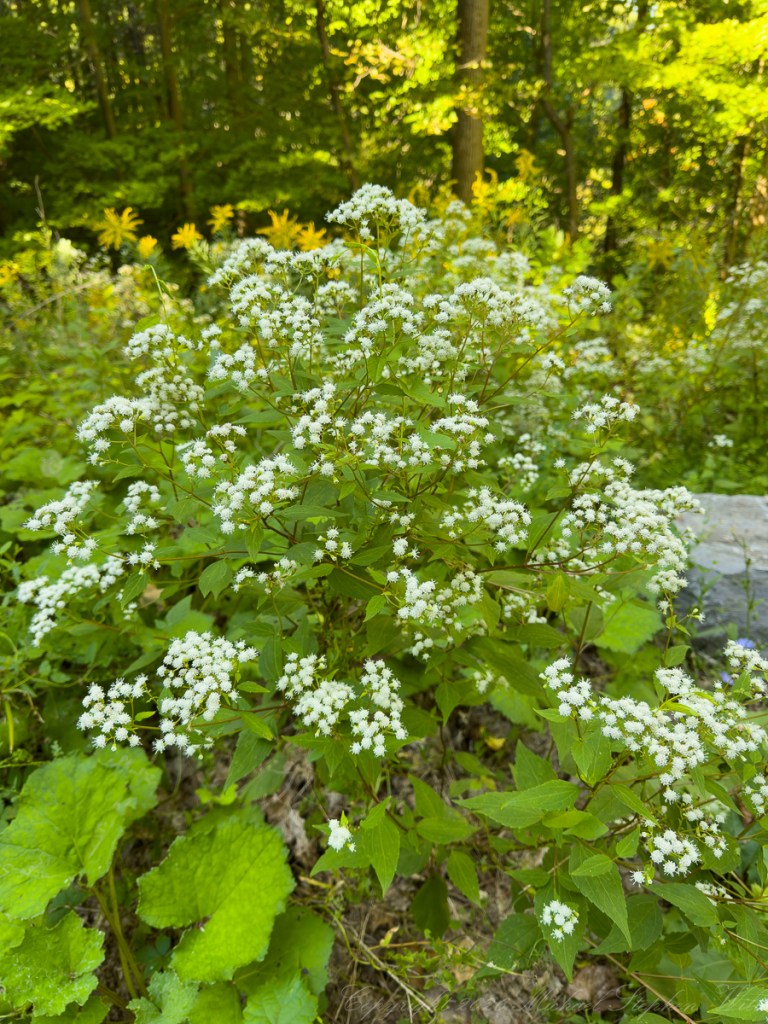
Snakeroot, a poisonous perennial herb

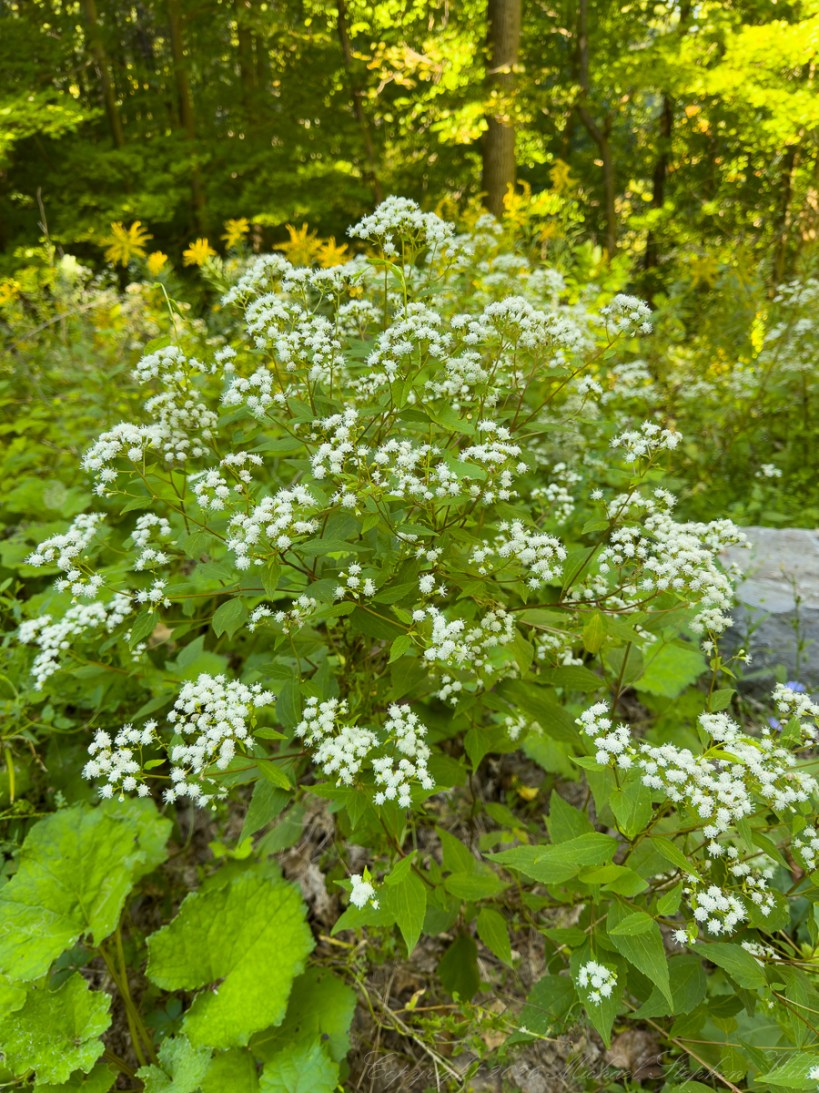
Along the wooded trail, the eye dropped from grandeur to intimacy. White snakeroot bloomed in loose clusters, each tiny flower a small, tufted star gathered into a milky constellation above serrated leaves. Behind it, the forest glowed with the filtered green light of late summer. Goldenrod rose farther back, blurred into warmth. The plants seemed not lesser than the falls or cliffs, only quieter. Requiring a different scale of attention. The gorge overwhelms; the flower invites. One must bend inward to see it properly.

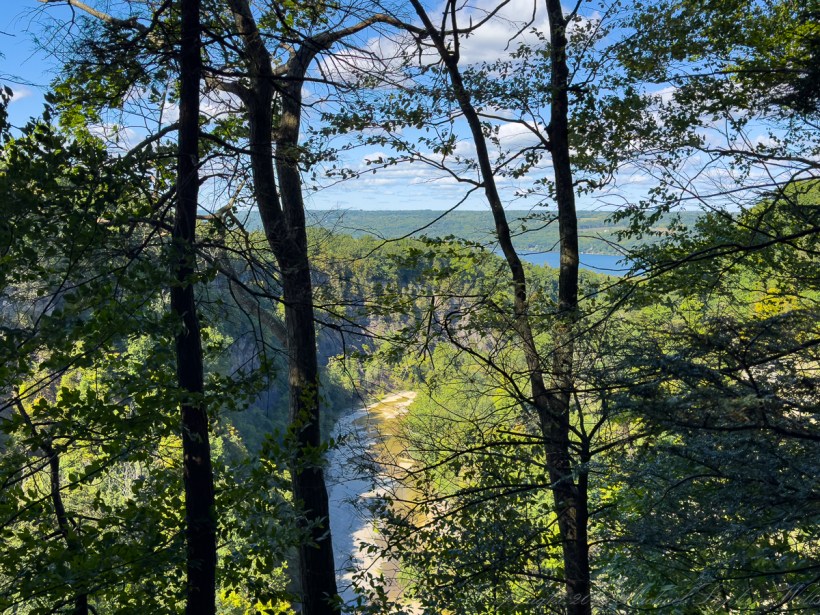
Seen from the South Rim Trail.

Through the trees, Cayuga Lake appeared like a blue promise beyond the gorge. Branches crossed the view in dark strokes, turning the scene into a natural stained-glass window: cliff, water, sky, leaf. The lake lay beyond the ravine’s mouth, broad and reflective, suggesting release after confinement. The creek that had moved through shadow and stone would eventually find that open water. There was comfort in that progression: narrowness giving way to breadth, descent becoming arrival.

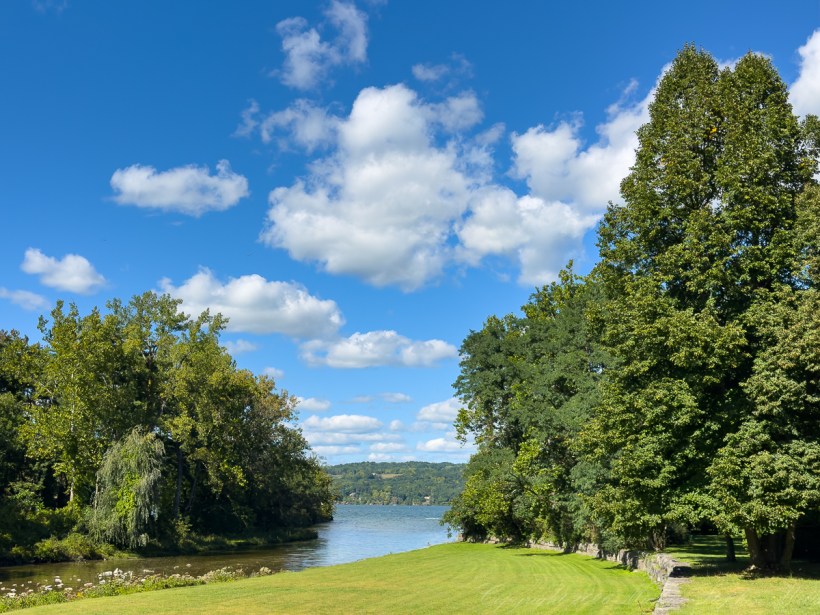
Mouth of Taughannock Creek as it enters Cayuga Lake

At the lakeside, the mood changed again. The same day, the same park, but another world. A green lawn sloped toward the water, bordered by trees heavy with leaves. The lake opened between them, wind-textured and blue-gray beneath the marching clouds. The place felt pastoral after the sternness of the gorge. Here the land breathed easily: gorge cliffs were replaced by open distance, by the far shore softened with trees and scattered houses. The park became a threshold between cultivated calm and wild excavation.

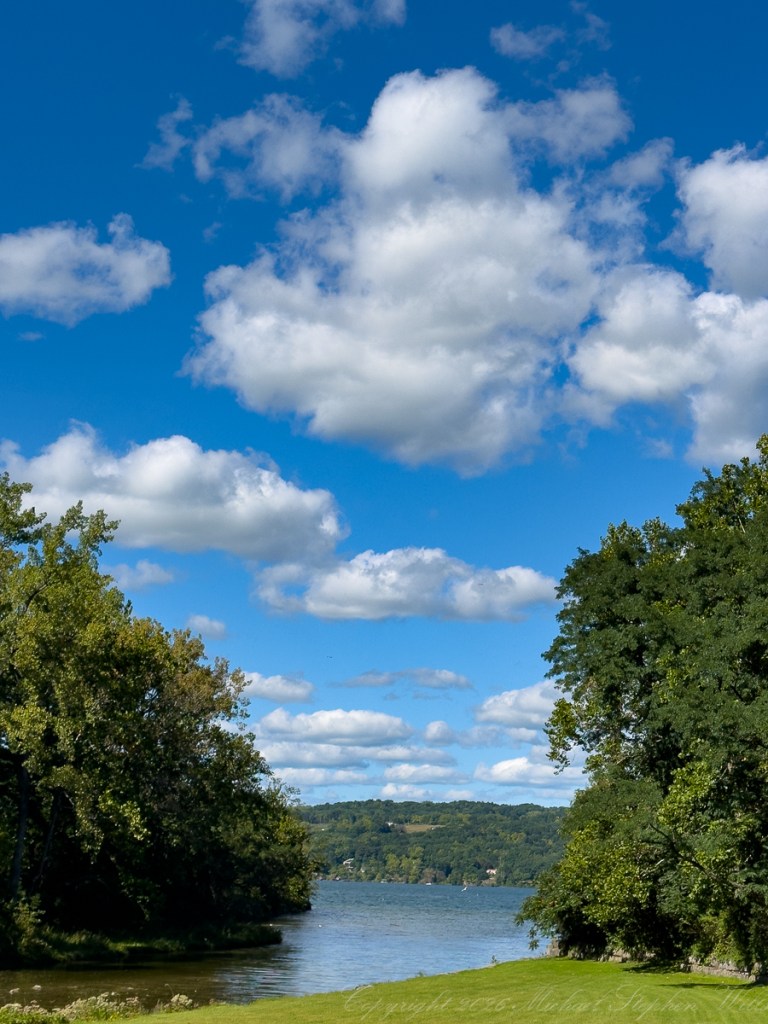
I enjoy the layered effects of clouds.

Then the camera turned upward, giving the sky its own portrait. The clouds took on presence, no longer background but subject—rounded, luminous, casting faint shadows upon themselves. Below them, lake and shore narrowed into a band, as though the world had been rearranged so that sky could speak first. There is a kind of mercy in such a sky. It loosens the mind. It reminds us that even above a gorge, above evidence of erosion and collapse, there is spaciousness.

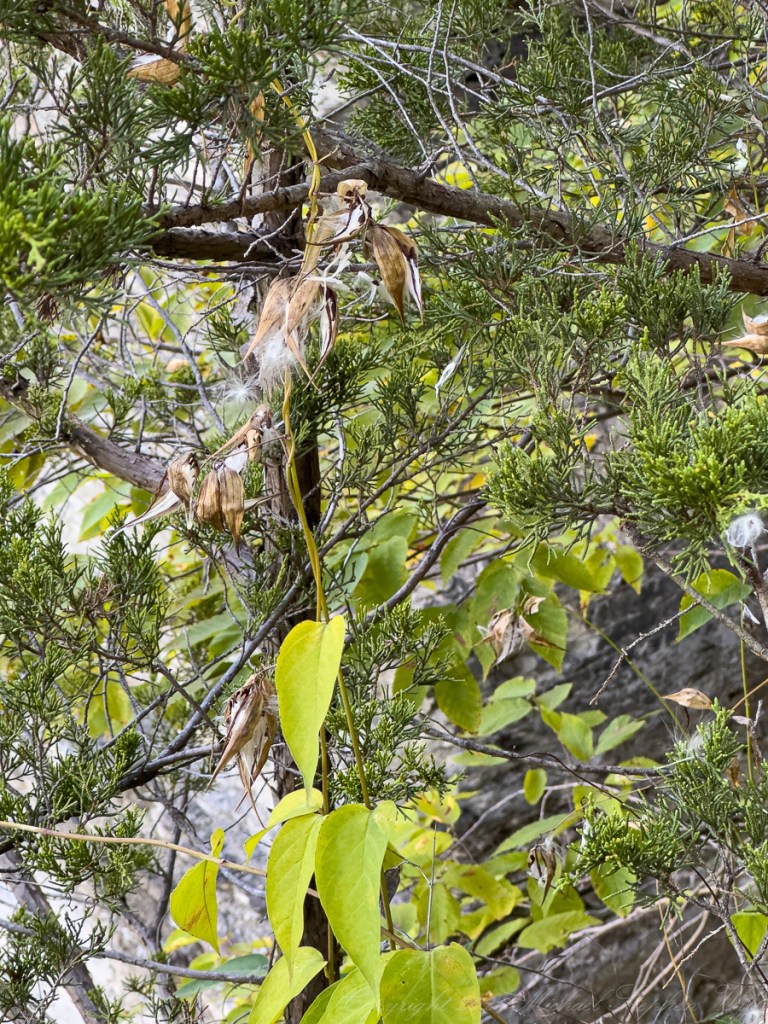
Black Swallow-wort (Vincetoxicum nigrum). Found along the North Rim Trail.

Among the cedars, split pods had released their silk. Pale filaments caught on rough branches and evergreen sprays, small scraps of flight arrested in mid-escape. The pods hung dry and curled, their work nearly done. Seeds that had been hidden were now entrusted to air. This, too, was September’s language: opening, loosening, letting go. Not the dramatic fall of leaves yet, but a subtler surrender. The season had begun to unfasten its clasps.

A view from the North Rim Trail.

From another rim view, the gorge wall rose in broken columns and pale faces, half-covered by green. Vegetation softened the precipice but did not conceal it. The cliff remained adamant, a vertical memory of water’s persistence. Far below, the creek bent through bars of exposed stone, and tiny figures on the gorge floor gave scale to the scene. The people were scarcely marks against the immensity, yet their presence mattered. They reminded the eye that wonder is not abstract. Someone stands there, looks up, and receives the place.

The visitors are on the overlook, in the gorge on the bridge and below the falls.

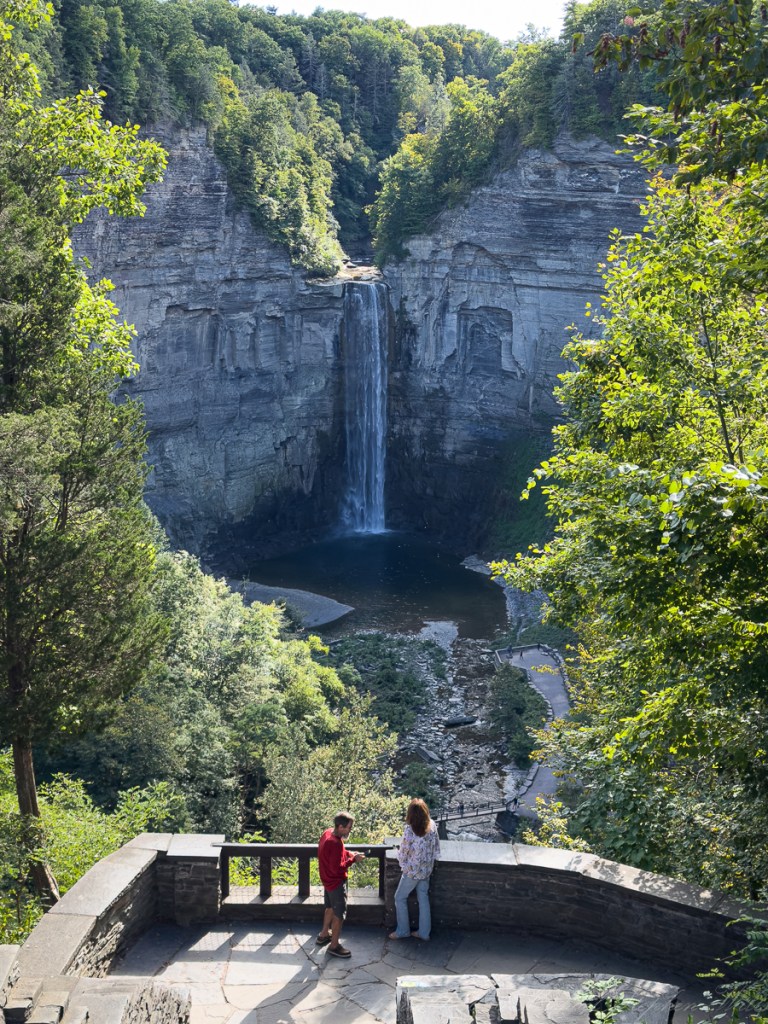
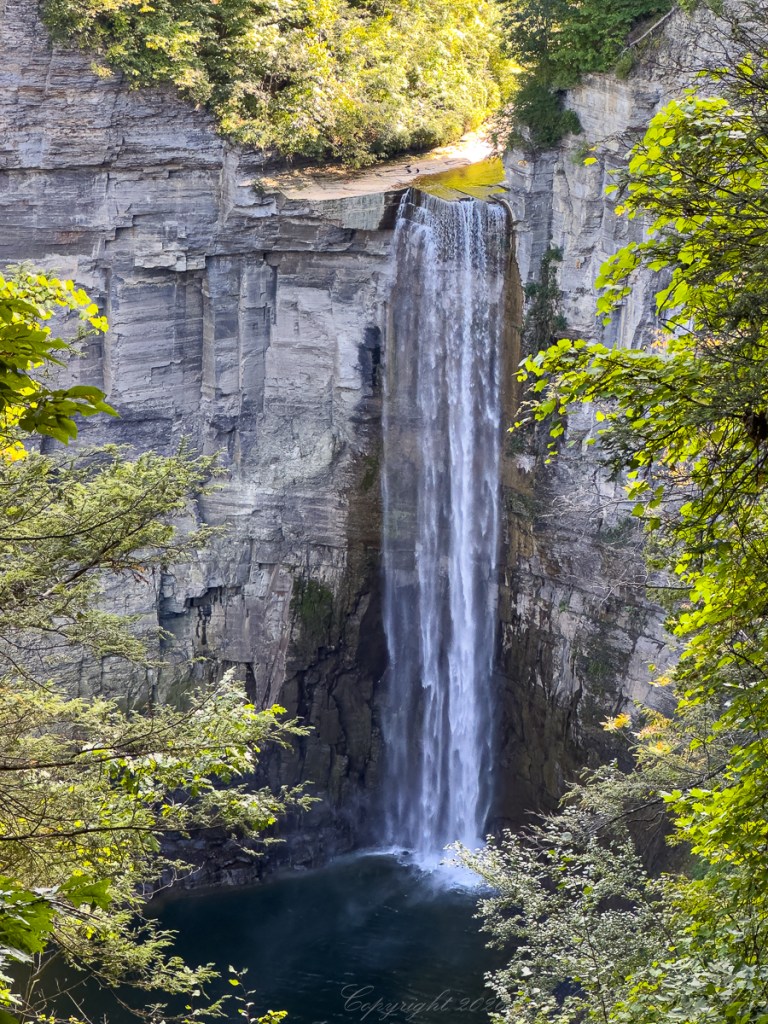
At the overlook, Taughannock Falls appeared framed by stone and leaf, descending in a long white irrepressible column into the dark basin below. The falls seemed both powerful and delicate, a veil and a force. Water dropped from the high lip in strands, gathered itself in motion, then shattered into mist and sound. Around it, the cliffs bore stains, fractures, alcoves, and ledges—the wounds and ornaments made by time. Layers of visitors receed in the foreground, small and temporary, held for a moment before the great amphitheater.

For this view proceed south on the North Rim Trail from the observation area parking. Did you spot the gathering of crows?

Farther along the North Rim Trail, the falls filled the vision. Sunlight touched the rim above; shadow deepened the plunge pool below. The water seemed to fall from brightness into mystery. That is often how memory works: a clear edge, a shining beginning, then a descent into depths we cannot entirely see. Yet the sound continues. The motion continues. The stream that vanishes in shadow reappears downstream, moving toward the lake.

Watch on YouTube for the best experience.

For me, what remains from this walk is a whole sequence: cliff and cloud, snakeroot and seed silk, lake and lawn, distant figures and enduring stone. Taughannock on September 14, 2026, offered no single lesson. It offered a composition of scale. The vast does not cancel the small. The flower belongs beside the gorge. The seed silk belongs beside the falls. The human figure belongs, briefly, gratefully, at the overlook.

By God’s Grace the water keeps falling.

Click me to visit Michael Stephen Wills Online Finger Lakes Gallery.

Enter your email to receive notification of future postings. I will not sell or share your email address.