The Hills Around Ithaca: A Landscape Ablaze

Explore autumn in New York’s Finger Lakes through vivid fall foliage photography, harvested cornfields, colorful woodlands, and sweeping views across the hills surrounding Ithaca.

Climbing Hector Street a maple compelled me to pull over on the way to Robert H. Treman park. Its leaves had turned a brilliant red, with orange lingering among the lower branches. Standing beside a home, it had grown into a broad, beautifully shaped tree, its crown reaching high above the roofline. Fallen leaves covered the grass around its trunk, though plenty remained overhead.
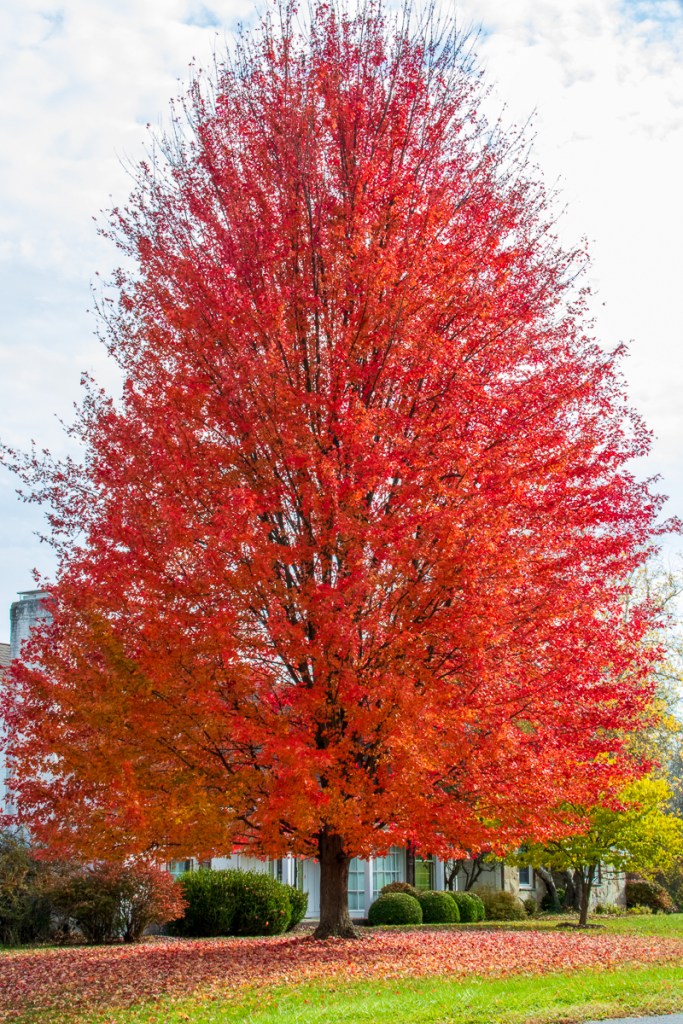
This Red Maple graces Hector Street, Ithaca, New York. I may be a Freeman Maple, a hybrid of Red Maple (Acer rubrum) and Silver Maple (Acer saccharinum). There is a cultivar of the Freeman Maple named Autumn Blaze® Maple Scientific name: Acer × freemanii, potentially Acer × freemanii ‘Jeffersred’ (Autumn Blaze).

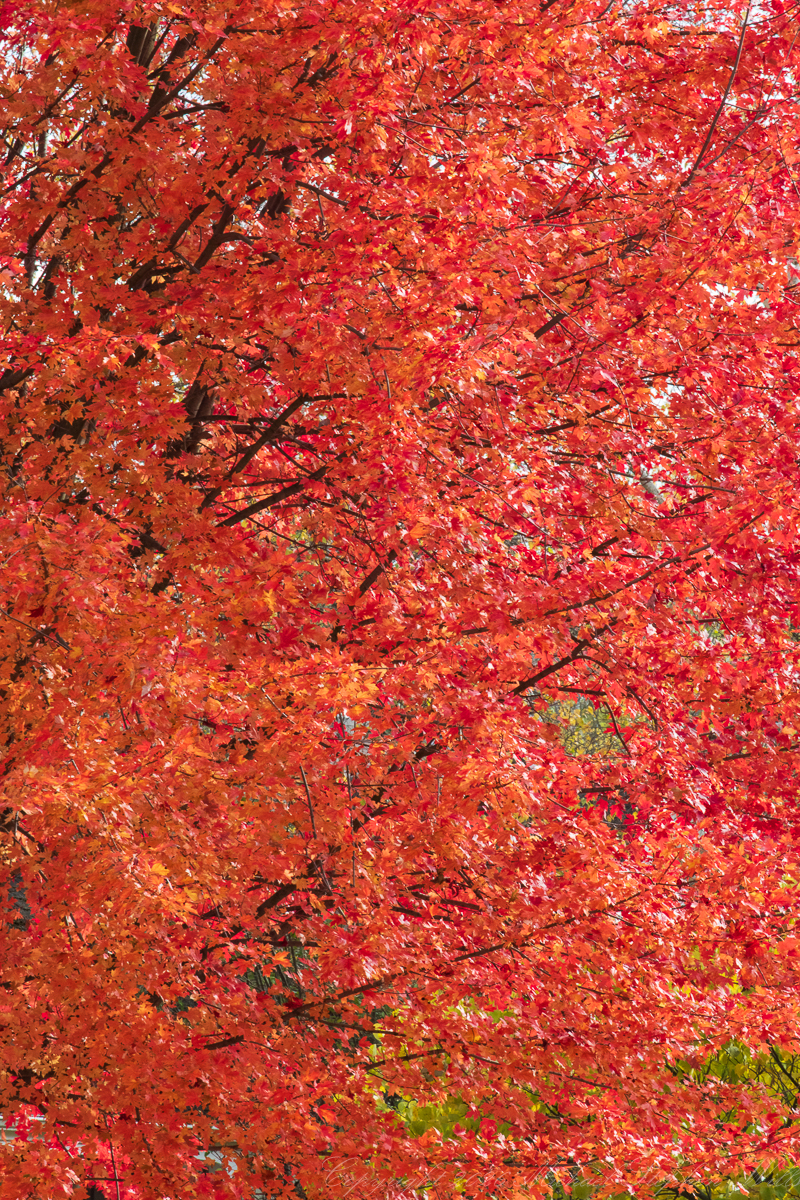
I photographed the whole tree first, then moved in closer. At that distance, the red canopy became a collection of individual leaves, some catching the sunlight, others shaded by overlapping branches. There were more variations in color than the first impression suggested, from bright vermilion to darker crimson, with occasional patches of yellow and green.

A fine tree caught a few days before full leaf drop.

From there, the views opened onto the surrounding farmland. A harvested cornfield sloped away toward a line of hardwoods, beyond which the hills rose in several layers. The corn had been cut close to the ground, leaving rows of pale stubble that ran toward the trees. The distant hills were muted by haze, their autumn colors softened into browns, purples, and blue-gray.
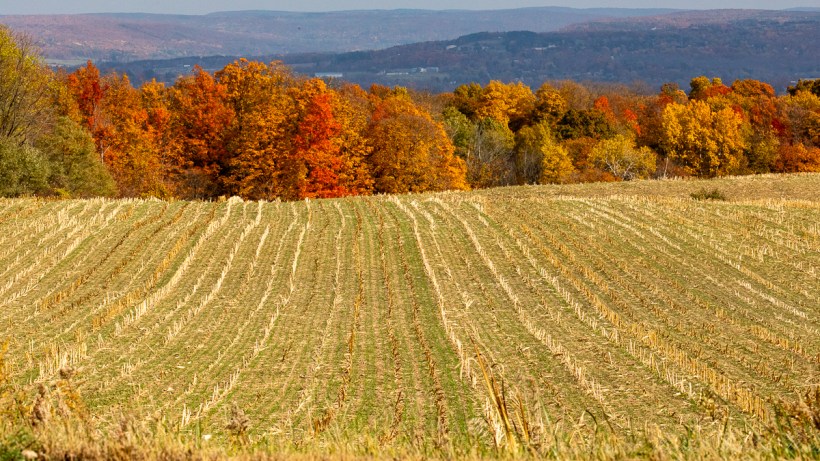
A harvested corn field, glowing trees, Ithaca’s East Hill, across Cascadilla Creek to Ellis Hollow. From Colegrove Road, Enfield, Tompkins County, New York State, Finger Lakes Region.

The foreground trees were another matter. Maples, oaks and other hardwoods carried an abundance of orange, yellow, and red foliage. Some had already begun losing their leaves, leaving bare branches among the still-crowded crowns. The variation gave the woodland a pleasing irregularity. Autumn had reached nearly every tree, though not all were keeping the same schedule.
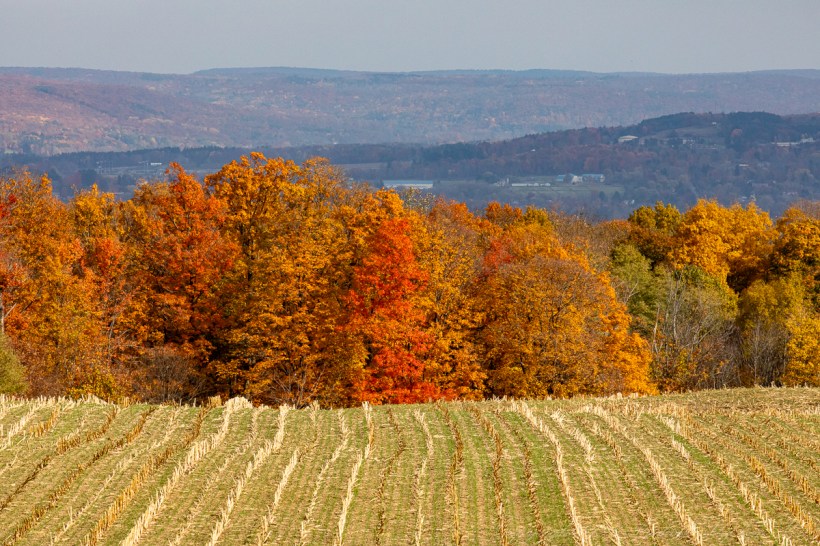
I used the telephoto lens to bring the distant hills closer to the foreground. It compressed the distance between them, bringing the wooded slopes into the same composition as the trees at the edge of the fields. A particularly bright orange-red tree stood among its golden neighbors, drawing my attention more than once.
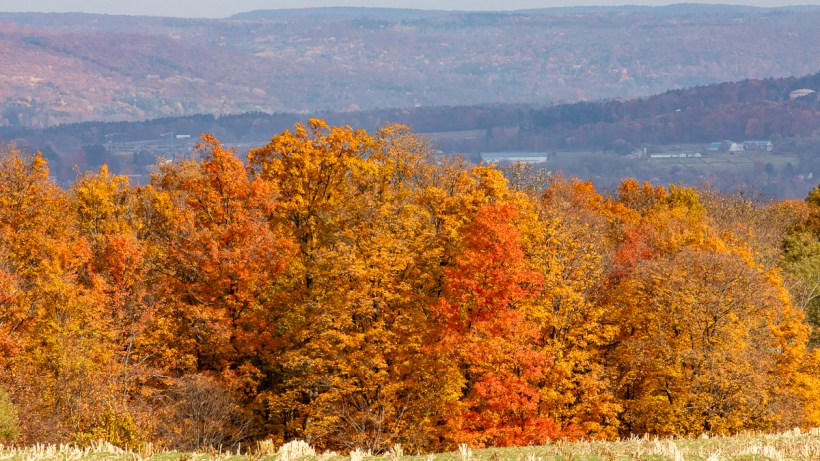
The view was worth exploring from several angles. In one direction, the treetops almost filled the frame. In another, the distant ridges became more prominent, with a narrow strip of harvested field along the bottom. Those cut corn stalks helped establish the scale of the view, a reminder that these were working fields as well as pleasant places to look out over the countryside.

Farther across the valley, buildings came into view above the foreground trees. Two tall towers, Ithaca College residence halls, stood near the center of the distant complex, with wooded hills rising behind them. Even at that distance, the buildings were recognizable as part of the developed landscape around Ithaca. Through the long lens, they appeared surprisingly close to the autumn trees, though considerable ground separated them.
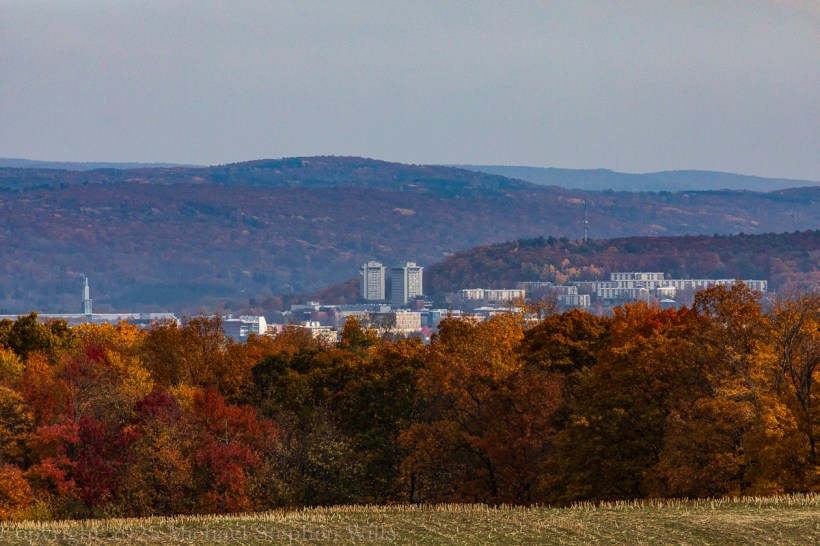
A harvested corn field, glowing trees, Ithaca College, the backside of East Hill. From Sheffield Road, Enfield, Tompkins County, New York State, Finger Lakes Region.

I found myself looking from the buildings to the hills behind them. The human structures occupied only a small portion of the scene. The wooded slopes continued well beyond, fading into the hazy distance.
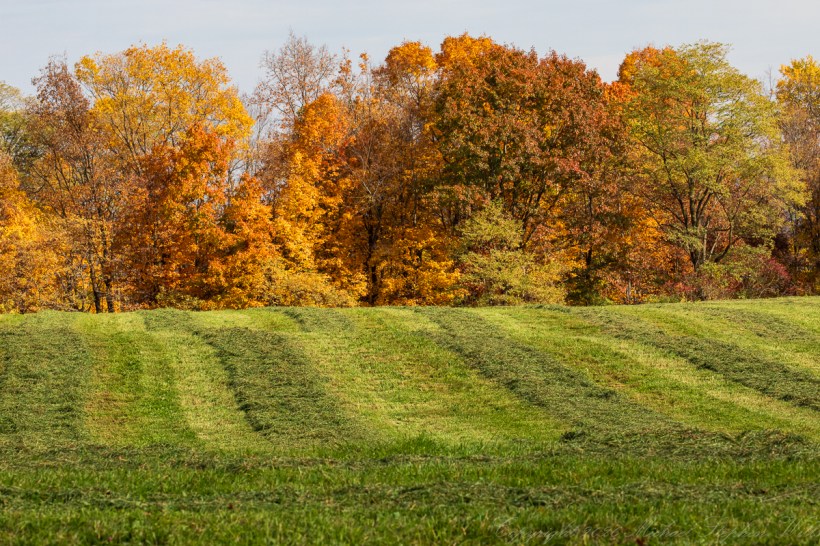
Mowed grass (for hay) glowing trees. From Colegrove Road, Enfield, Tompkins County, New York State, Finger Lakes Region.

Nearby, the fields offered a different kind of photograph.
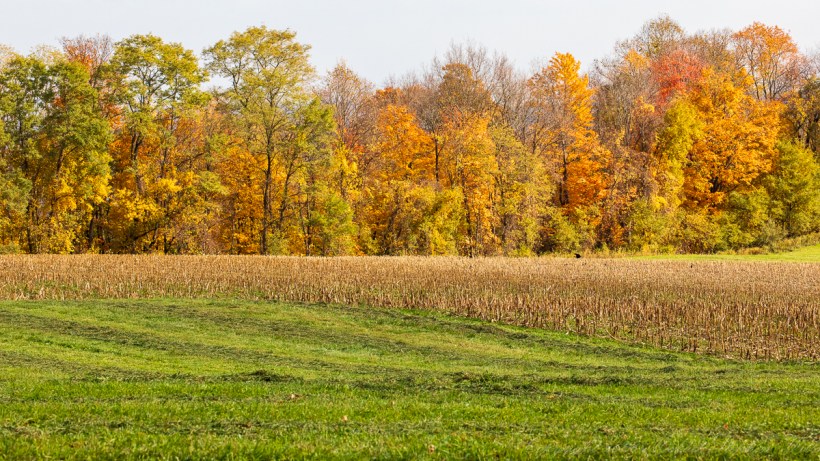
Mowed grass (for hay), harvested corn field with one crow, glowing trees. From Colegrove Road, Enfield, Tompkins County, New York State, Finger Lakes Region.

Freshly mowed grass covered a gentle rise, its alternating bands making broad green stripes across the slope. Beyond the crest stood a dense stand of hardwoods in yellow, orange, bronze, and lingering green. Some trees were nearly bare, their gray branches visible among those still holding their leaves.
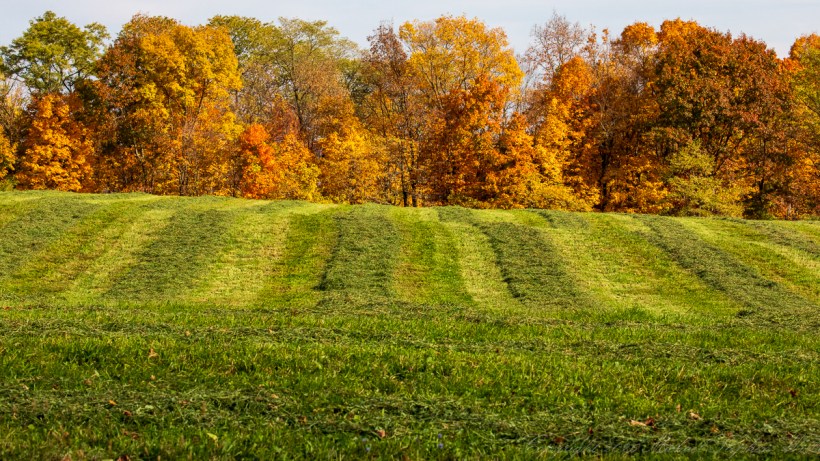
Mowed grass (for hay), glowing trees. From Colegrove Road, Enfield, Tompkins County, New York State, Finger Lakes Region.

The mowing patterns made an interesting foreground. Their straight, deliberate lines contrasted with the irregular branching of the trees. I tried several compositions, shifting the balance between field and woodland. In some, the grass occupied most of the photograph; in others, the trees were the principal subject.
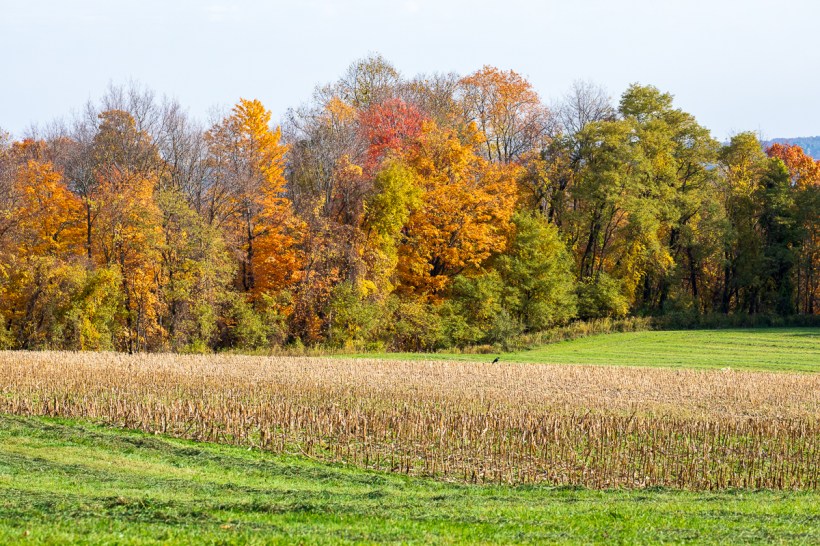
Mowed grass (for hay), harvested corn field with one crow, glowing trees. From Colegrove Road, Enfield, Tompkins County, New York State, Finger Lakes Region.

Another field, still covered with the dry remains of corn, lay between the green grass and the woods. The three bands—green, tan, and the many colors of autumn—made a satisfying arrangement. A small dark bird stood near the far edge of the cut corn, easily overlooked against the larger scene.
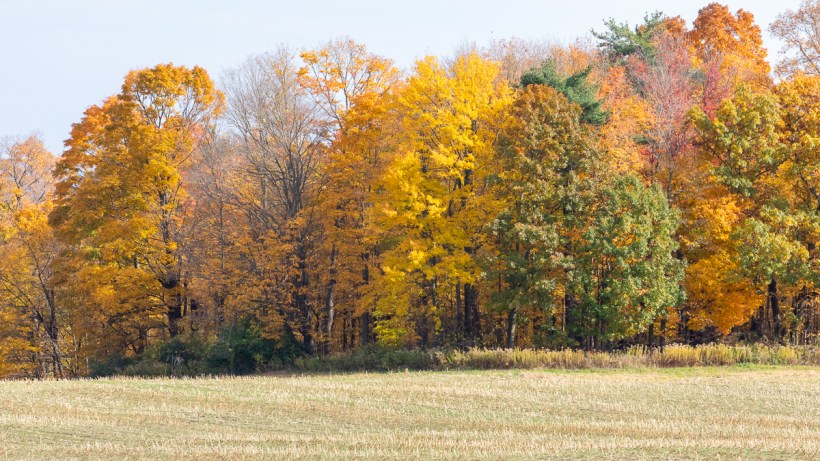
A harvested corn field, glowing trees. From Colegrove Road, Enfield, Tompkins County, New York State, Finger Lakes Region.

The trees themselves deserved a closer look. A large yellow maple was especially bright among its neighbors. Nearby, an oak held leaves that had turned a warm brown, and behind them, patches of green remained where other trees had not yet completed their change. A few bare crowns rose above the rest.
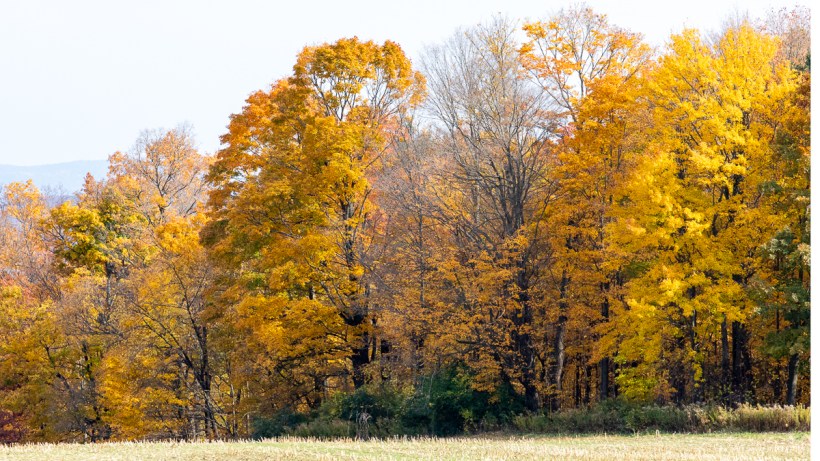
Glowing trees, Ithaca’s East Hill, across Cascadilla Creek to Ellis Hollow. From Colegrove Road, Enfield, Tompkins County, New York State, Finger Lakes Region.

I liked the mixture. In a photograph of autumn foliage, the temptation is to find the brightest reds and yellows, but the subdued trees are just as important. Their browns, grays, and remaining greens give the brighter colors something to stand against.

My last view included an old barn and silo, partly concealed by trees and tall weeds. The barn’s red roof showed through the branches, while its pale walls were visible above the uncut vegetation. Beyond it, the woods covered the hills in orange and gold, with a few brilliant red trees scattered among them.
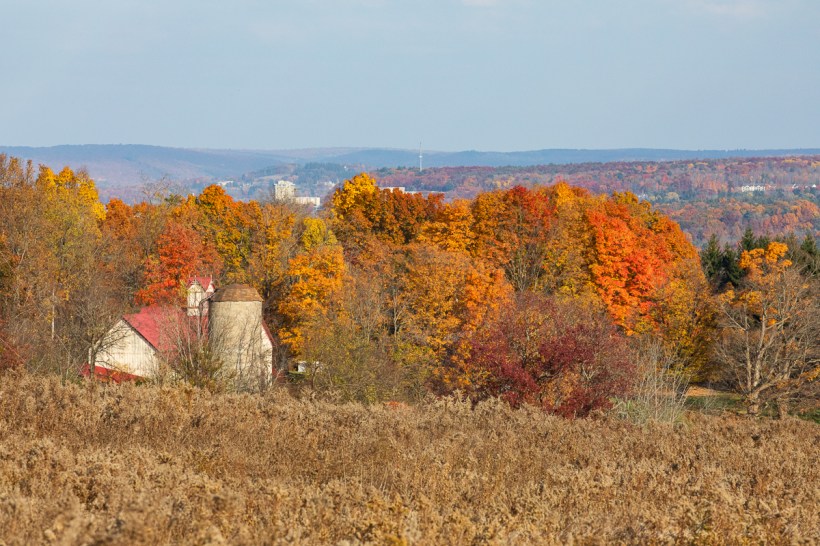
The eastward view from Enfield Falls Road on October 28, 2026. Ithaca College is partially seen beyond the farmstead with browned goldenrod in foreground. Enfield, Tompkins County, New York State, Finger Lakes Region.

The buildings belonged to the countryside as naturally as the fields around them. I wondered how many autumns that barn had stood there, its roof appearing and disappearing behind the changing foliage.

By then, I had photographed quite a variety of scenes, from the single red maple to the broad views across the valley. What I enjoyed most was the chance to look carefully at familiar surroundings. The harvested fields, mowed grass, distant buildings, and wooded hills were all part of the landscape I knew. Autumn had changed their appearance without changing their character.

In another few weeks, most of those leaves will be gone. The hills turned gray and brown, the fields at rest, and the views through the trees open again.

For now, there was still plenty of color, and I was glad to have been out with the camera to see it.
Click me to visit Michael Stephen Wills Online Finger Lakes Photography

Enter your email to receive notification of future postings. I will not sell or share your email address.

A Strange Orchard at Cornell: Discovering Rona Pondick’s Untitled Tree Sculpture

On a March afternoon at Cornell University, I encounter Rona Pondick’s surreal sculpture Untitled Tree, where scattered aluminum “fruit” reveal unsettling human teeth beneath bare branches.

An encounter with Rona Pondick’s Untitled Tree (1997)

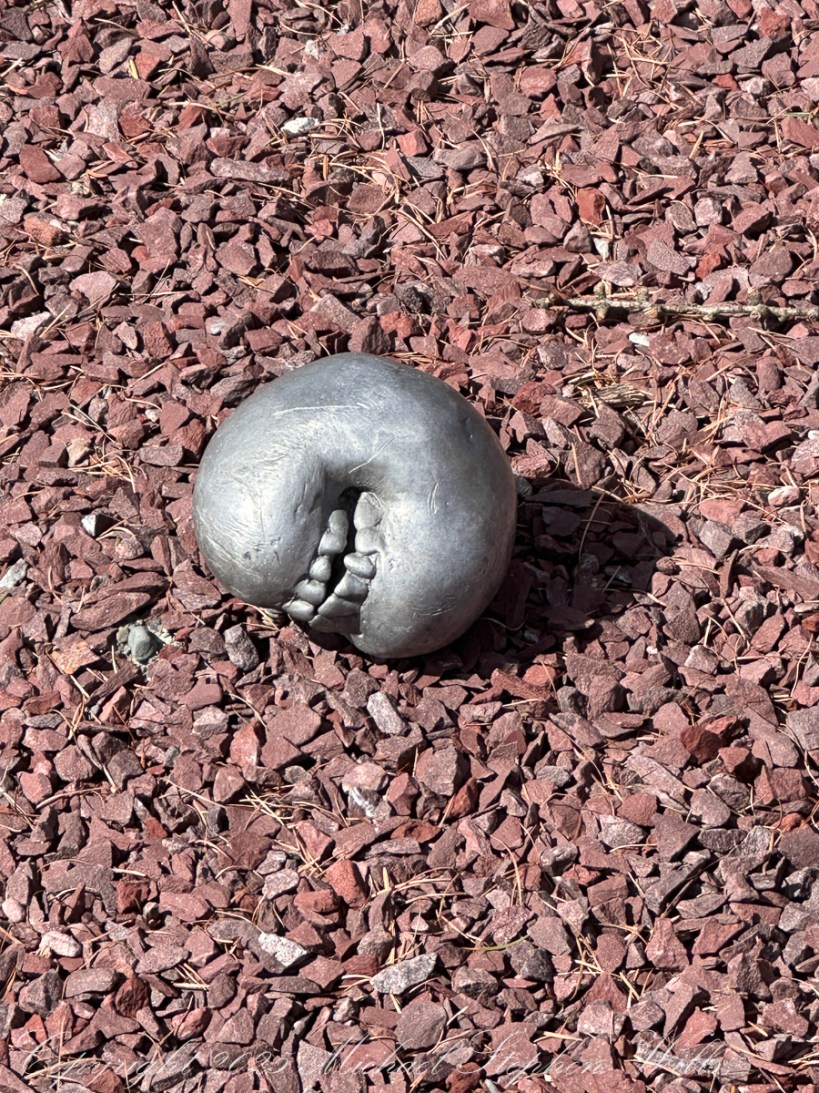
One March afternoon on the lawn near the Herbert F. Johnson Museum of Art at Cornell, you might notice a small, leafless tree rising from a circle of red gravel. At first it seems merely dormant, another tree waiting for the long Ithaca winter to loosen its grip. But as you approach, the scene grows quietly unsettling. Around the trunk lie dozens of smooth gray forms—small, rounded objects like stones or fruit that have fallen from the branches.

Then you see the teeth.

The objects scattered beneath the tree are cast aluminum forms bearing unmistakably human molars. They appear to have dropped from the tree like strange metallic apples, a harvest that belongs less to botany than to anatomy. This disquieting grove is Untitled Tree (1997) by the American sculptor Rona Pondick.


The Artist of Hybrids

Pondick, born in Brooklyn in 1952 and trained at Queens College and the Yale School of Art, has spent decades exploring the language of the body in sculpture—often literally. Her work frequently uses casts of body parts, particularly teeth or her own head, creating forms that merge human anatomy with animals, plants, or everyday objects.

The result is a sculptural vocabulary that feels simultaneously ancient and uncanny. Critics often describe her work as “hybrid”—a blending of the human body with other forms, echoing mythic creatures such as sphinxes or centaurs while remaining distinctly contemporary.

Teeth have been a recurring motif in Pondick’s art since the 1980s, when she began casting them and embedding them in unexpected contexts. These fragments of the body carry a peculiar emotional charge: they evoke childhood, appetite, vulnerability, and mortality all at once.


A Sculpture That Feels Like a Dream

Created in 1997, Untitled Tree belongs to a group of works where Pondick began experimenting with trees as sculptural forms. She has explained that she sometimes uses actual branches or trunks as starting points for casting in metal, translating natural textures into aluminum or steel.

The Cornell sculpture is monumental yet restrained:

  • a cast-aluminum tree,
  • surrounded by dozens of small aluminum objects,
  • each about the size of a stone but bearing human teeth.

Seen from a distance, the scene reads like a quiet landscape intervention. Up close, however, it feels like a fragment from a surreal dream—a tree that has shed something disturbingly human.


The Poetry of the Fallen Teeth

Standing before it on that March afternoon, one might think of the sculpture as a botanical riddle.

Trees drop fruit.
They drop leaves.
In autumn they drop seeds.

But this tree has dropped teeth.

The idea is both playful and faintly macabre. The small aluminum forms resemble seeds, yet their teeth suggest the human mouth—the place of speech, hunger, laughter, and loss. The sculpture seems to whisper that the natural world and the human body are not separate realms but entwined systems of growth and decay.

In the red gravel circle beneath the tree, the objects appear almost archaeological, as though a curious species once grew here and shed fragments of itself into the soil.


Cornell’s Quiet Surrealist Grove

Placed on the lawn near the Johnson Museum’s striking I. M. Pei building, the sculpture forms a gentle conversation between art, architecture, and landscape. In winter the bare branches echo the skeletal trees around it. In summer the aluminum trunk gleams among living foliage.

And the scattered teeth remain—silent, patient, and oddly humorous.

They remind us that nature, like art, can be unsettling and beautiful at the same time.

Enter your email to receive notification of future postings. I will not sell or share your email address.