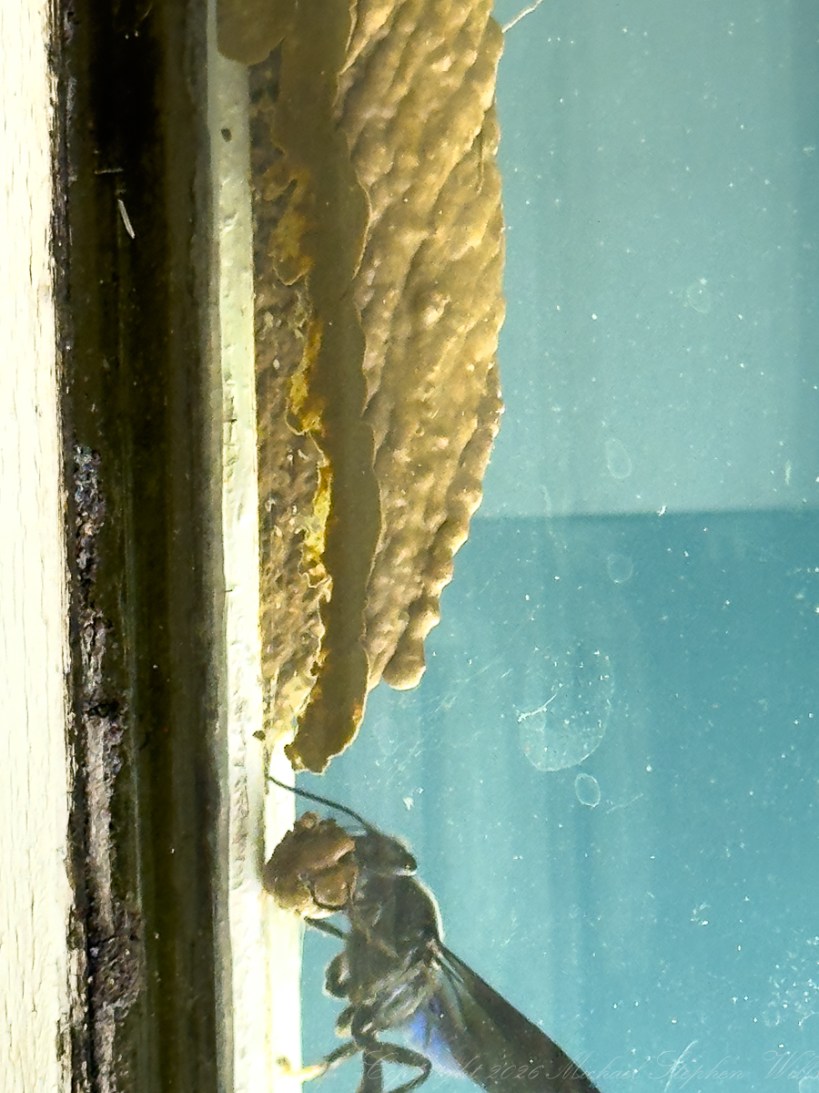
The Organ-Pipe Mud Dauber Wasp at Our Window

An persistant buzzing at an east-facing window led to an unexpected discovery: an organ-pipe mud dauber tending its earthen nest, revealing a hidden world of architecture, courtship, spider hunting, and parental care just beyond the glass.

On a morning in late July, the songs and raucous calls of Blue Jays, Cardinals, and Carolina Wrens were joined by another sound—an intermittent, insistent buzzing. It seemed to be an angry wasp, an unwelcome distraction as I worked facing the large east-facing picture window. Orchids line the window ledge, their pots and foliage blocking my view of the lower edge where I assumed the insect was trapped.

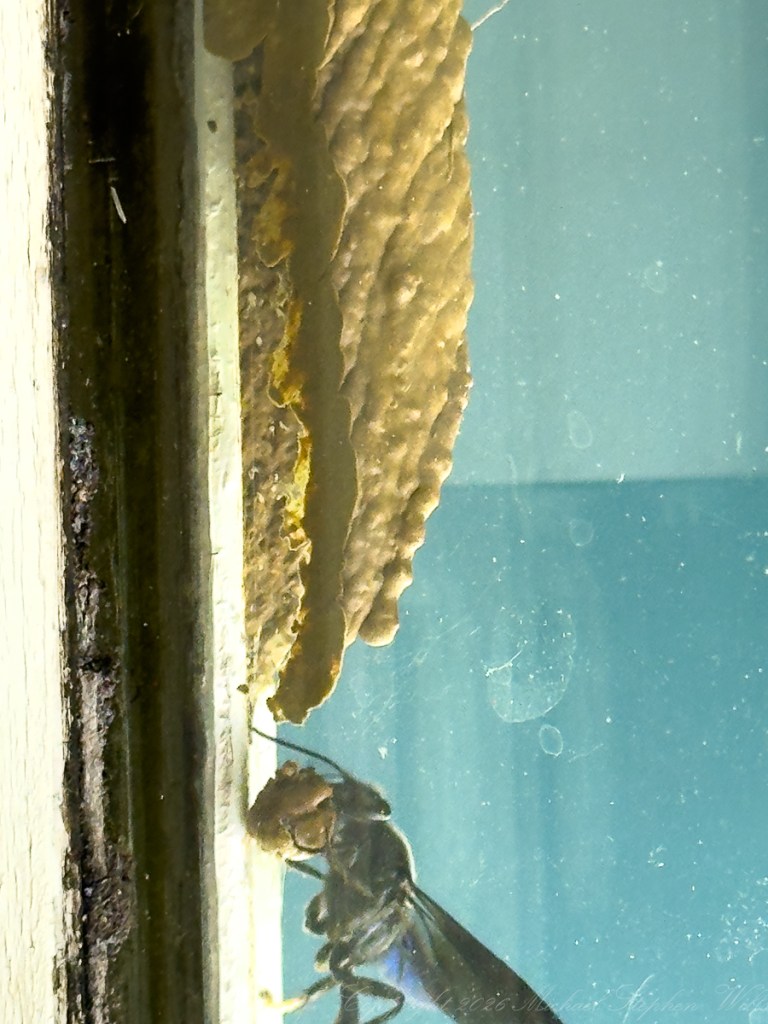
During one of the silences, I approached with a cup and stiff sheet of paper, prepared to capture the intruder and carry it outdoors. Peering cautiously around the orchid pots, I saw nothing. Then the buzzing resumed. Following the sound, I looked more carefully and discovered something entirely unexpected: affixed to the outside edge of the window was a long tan column of dried earth.
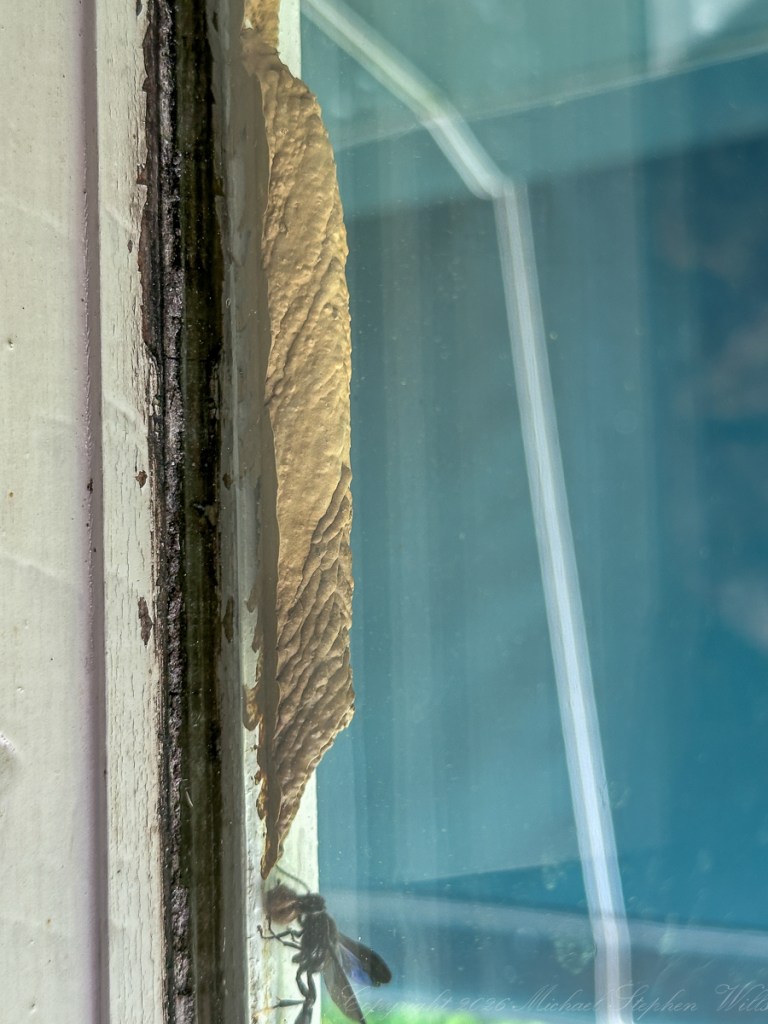
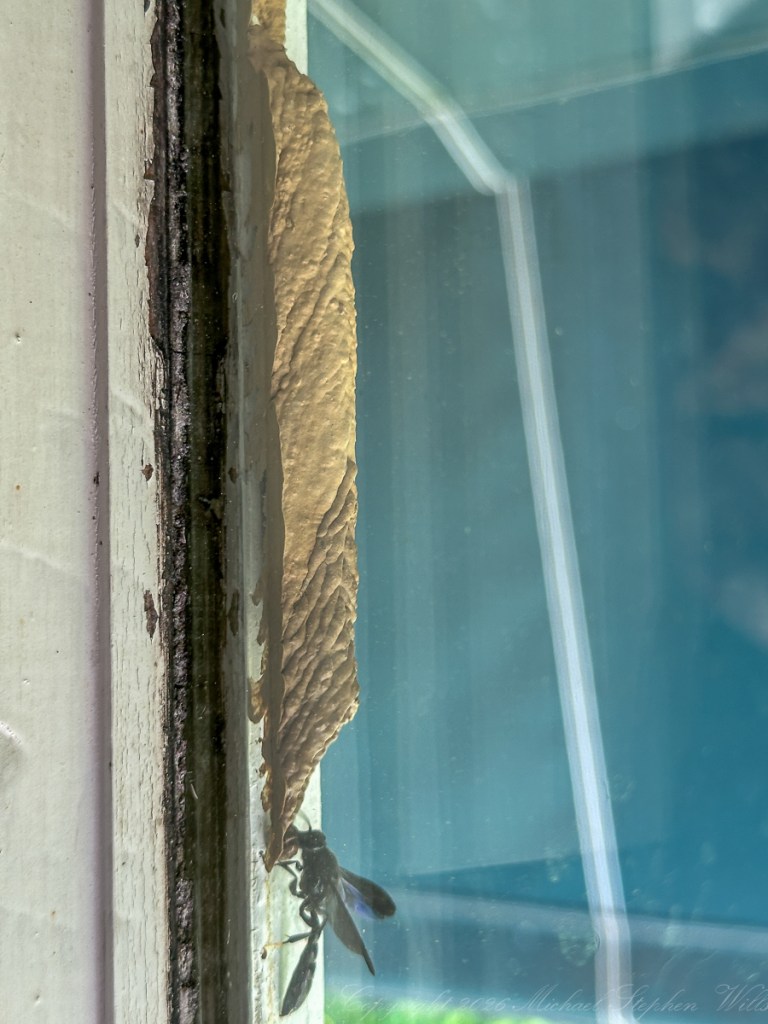
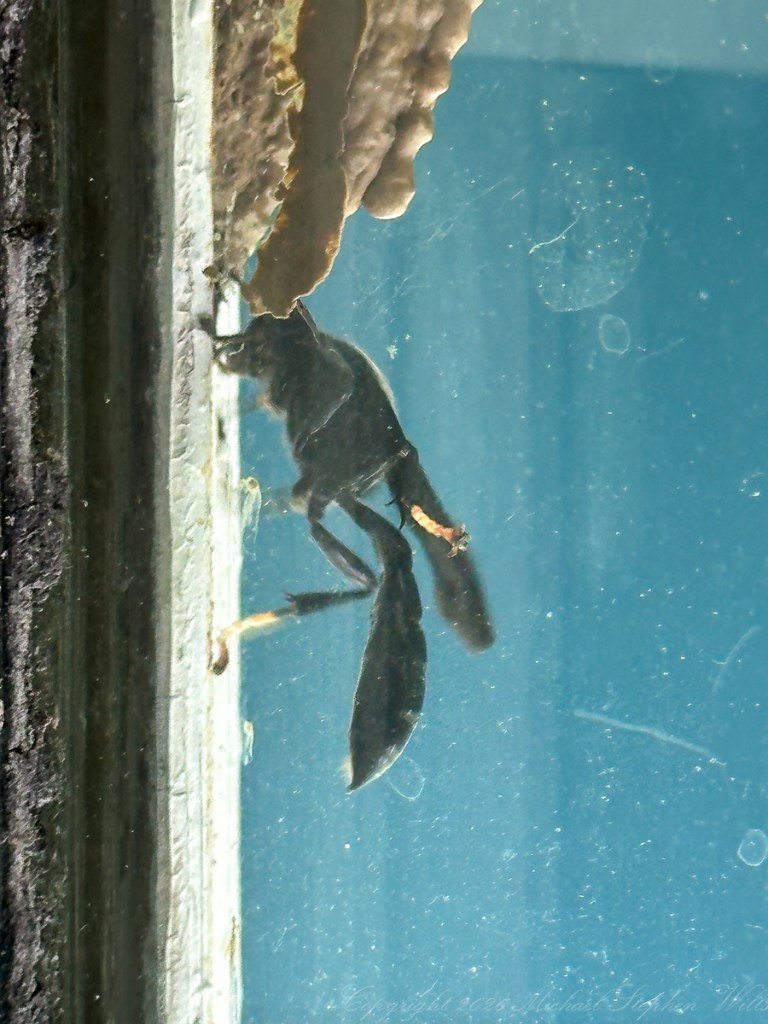
It looked geological—a miniature formation of hardened sediment affixed to the corner of painted wood and glass. Its surface was ridged and corrugated, each irregular band recording some earlier act of construction. At its lower end appeared the architect: a large, lustrous black wasp.

I discovered the wasp’s identity also explained both the strange earthen structure and that surprisingly loud buzz: this was an organ-pipe mud dauber, Trypoxylon politum. The species occurs through much of eastern North America and is the largest member of its genus in our region.
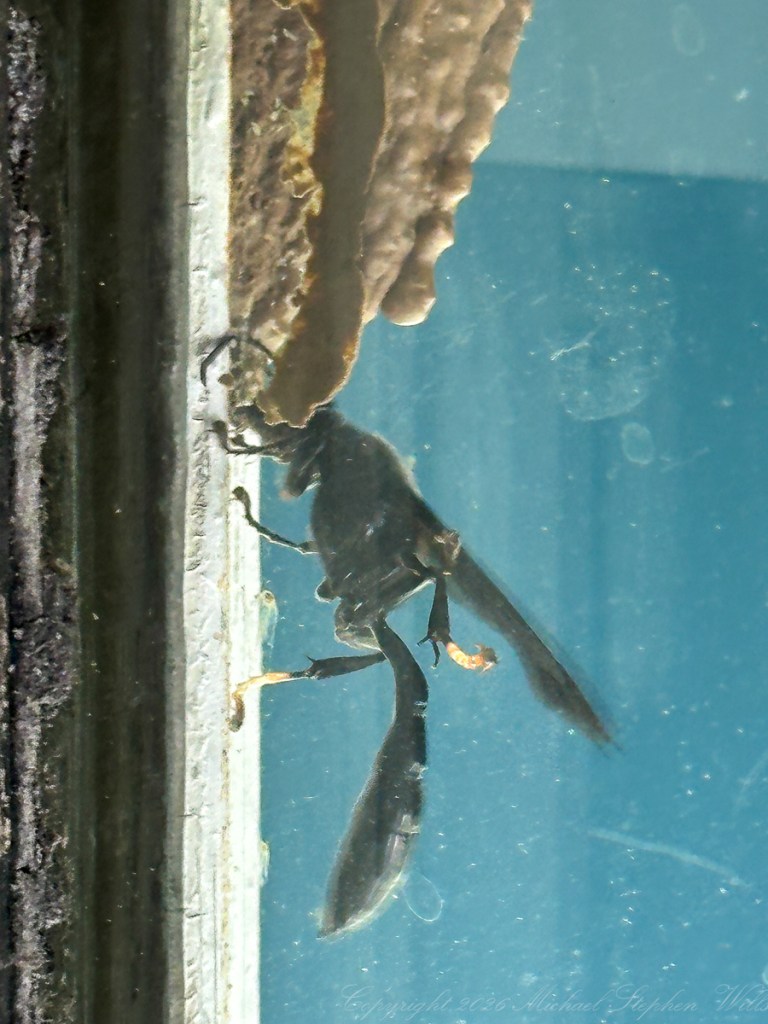
The name is wonderfully descriptive. The female constructs elongated tubes of mud side by side against sheltered walls, bridges, rock faces and buildings. A completed group resembles the vertical pipes of an old church organ. What I had initially taken for a crude column of dirt was, in fact, architecture.

The wasp itself has an austere beauty. Its body is predominantly polished black, sometimes seeming almost blue-black as sunlight catches the wings and exoskeleton. The abdomen is extraordinarily slender near its base before widening toward the end, giving the insect a delicate, elongated silhouette. Long black legs hang beneath it, with pale markings on portions of the hind feet. In my photographs the wings sometimes flash an unexpected smoky violet-blue, while the legs grasp the painted window frame beside the ocher-colored mud. Against that earthy structure the wasp looks almost metallic.

Yet the formidable appearance is misleading. Unlike yellowjackets and other colonial wasps, the organ-pipe mud dauber is essentially solitary. There is no queen commanding a workforce and no populous colony ready to defend the nest. A female constructs and provisions her own nest, and solitary wasps consequently tend to be much less defensive than social species.

But Trypoxylon politum adds a fascinating complication to the word solitary.

A male may remain at the nest while his mate is away. He guards its entrance against intruders—including parasitic insects and rival males—and may produce a conspicuous buzzing when something approaches. That behavior makes me reconsider my first encounter. The creature I heard behind the orchids was not an insect frantically trapped indoors at all. The window glass separated us. I was inside; the wasp was outside, stationed beside its earthen fortress. What sounded to me like anger was vigilance, though I also observed similar buzzing as the female shaped each ball of mud.

The female performs the more astonishing work. She gathers wet mud and carries it repeatedly to the nest, gradually extending a tube. Inside she creates a succession of chambers. Then she becomes a hunter.
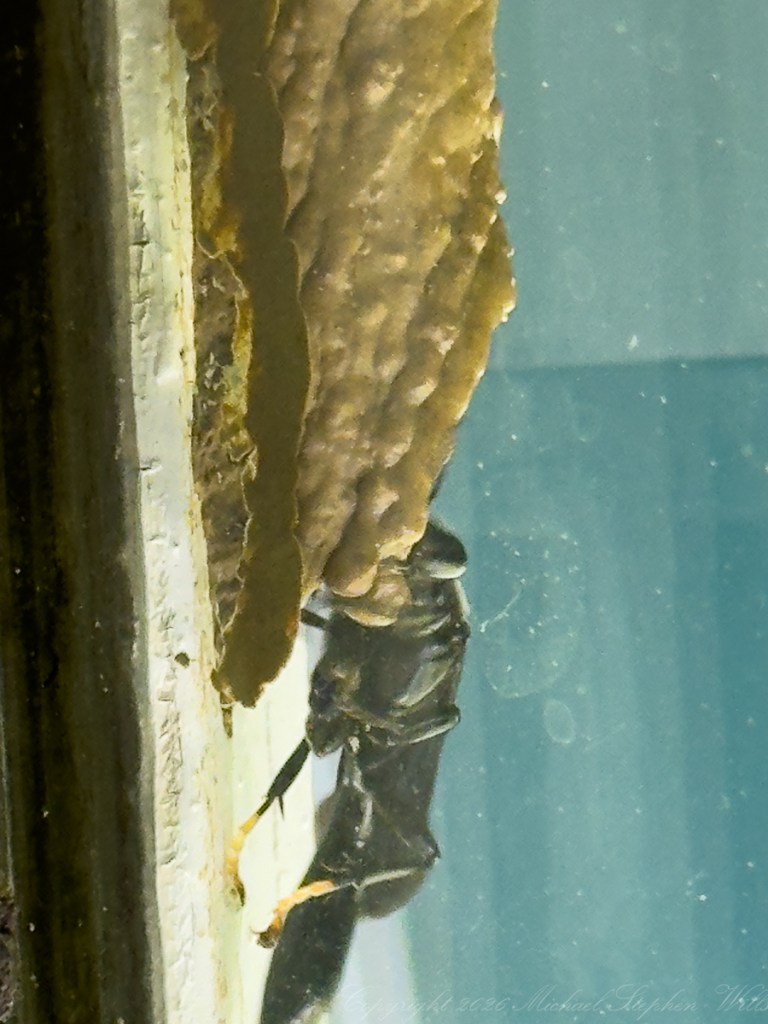
Her quarry is spiders.

She captures and paralyzes them, carrying them back to the nest and packing several into each cell—reported numbers range from about three to eighteen spiders with the fertilized female eggs better provisioned. Upon this living but immobilized store of food she lays an egg and seals the chamber with mud. The larva that hatches within has a private larder of fresh prey. Another chamber follows, and another, until the peculiar earthen pipe becomes a nursery divided into hidden rooms.

Watch two wasps building the nest.

There is something almost unsettling in that knowledge. Within the rough tan structure, a nest, on our window frame lie spiders gathered from our garden, each incorporated into the reproductive cycle of another animal. Predator becomes provision; mud becomes shelter; a few inches of ordinary window trim become an ecosystem.

That is what held my attention long after the original buzzing ceased. I had sat only a few feet away, day after day, unaware that another creature was carrying out an intricate sequence of hunting, construction, mating and parental investment on the opposite side of the glass.

The window had seemed a boundary between our house and the natural world. The organ-pipe mud dauber revealed it to be something else: a place where the two worlds meet.

And all it took for me to notice was a buzz.
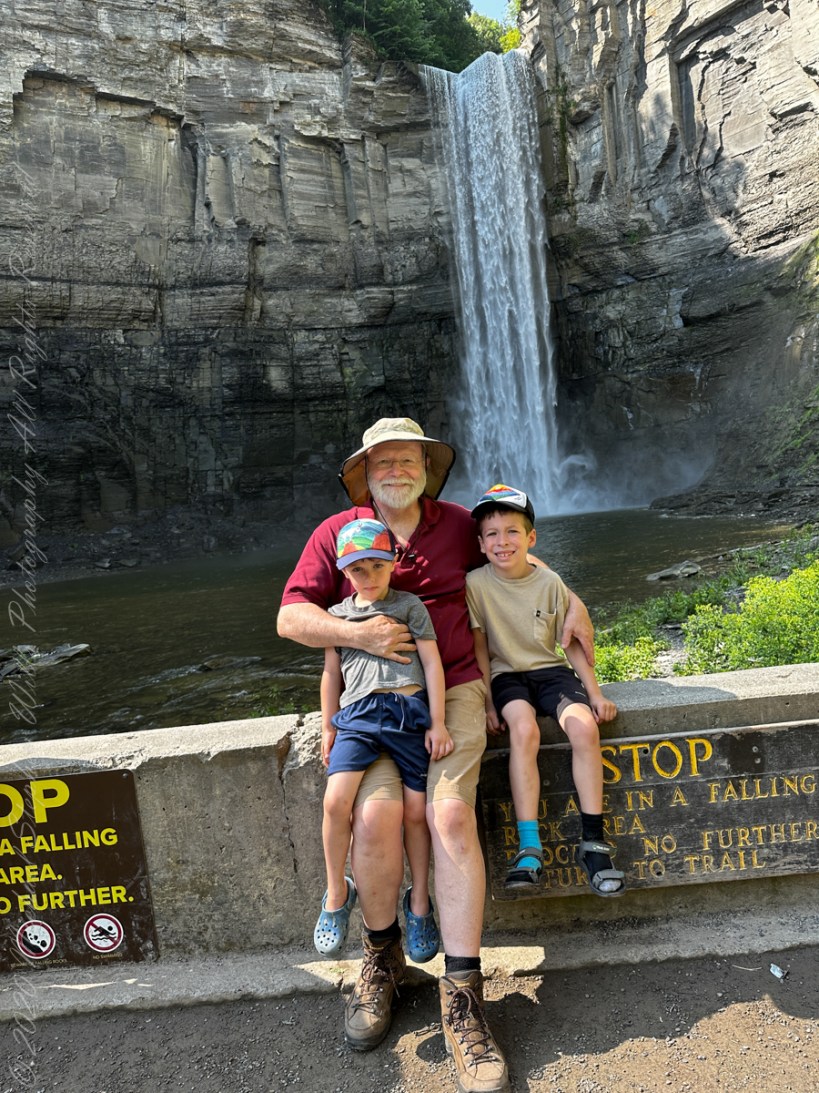
Click me to visit Michael Stephen Wills Online Finger Lakes Gallery.
Enter your email to receive notification of future postings. I will not sell or share your email address.

Taughannock Gorge with the kids – part 2

Several possible sources have been proposed for the name Taughannock, all of which describe Native American origins. One translation suggests that the name is derived from a combination of Iroquois and Algonquin terms meaning “great fall in the woods”.  An alternate theory suggests that the name may refer to a Lenni Lenape (Delaware) chief named Taughannock who died near the falls during a battle.

A nice lady offered to take the photo….challenged to keep it straight.

During the second half of the nineteenth century, steamboats, railroads and Victorian hotels were built in the region to serve tourists who traveled to view the falls. By 1925 the hotels were failing due to a decline in tourism, and New York State began acquiring land to form a park.

Pollywogs!! Catch and release

J.S. Halsey built a two and a half story hotel in 1850, known variously as the Cataract Hotel or Taughannock House (or simply as Halsey’s Hotel) at the Taughannock Falls Overlook.

Visitors could reach the hotel by taking a train to Cayuga Lake, take a steamboat across the lake to Goodwin’s Point, then finally board a stagecoach to reach the hotel. The hotel site today is the location of the park visitor center and parking lot.

Enjoy!!

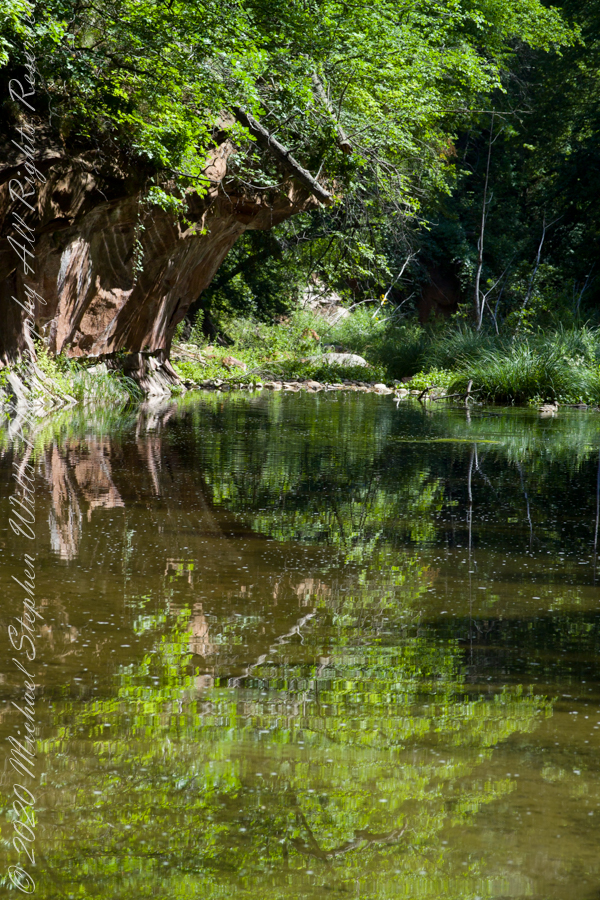
Oak Creek Reflections

early one still morning

The fault of Oak Creek changes direction, here it turns east/west through Schnebly Hill Formation red sandstone for which Sedona is famous.

West Fork (108) Trail, Sedona, Yavapai County, Arizona

“Hello” from Oak Creek Canyon, “Photo by Pam Wills”

Click this link for my Fine Art Photography gallery. You can find Oak Creek Mandala in the Arizona gallery.  The gallery description gives more information about the site.

Click this link for another Arizona post, “Cochise Dawn.”

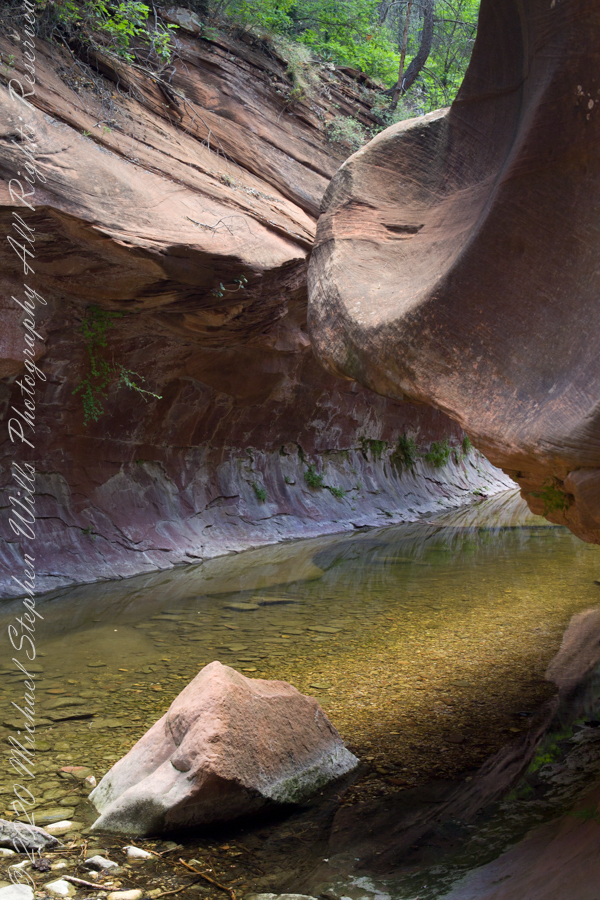
Sandstone Gallery

early one still morning

The fault of Oak Creek changes direction, here it forms a north/south gallery through Schnebly Hill Formation red sandstone for which Sedona is famous.

West Fork (108) Trail, Sedona, Yavapai County, Arizona

“Hello” from Oak Creek Canyon, “Photo by Pam Wills”

Click this link for my Fine Art Photography gallery. You can find Oak Creek Mandala in the Arizona gallery.  The gallery description gives more information about the site.

Click this link for another Arizona post, “Cochise Dawn.”

Summer Garden

2021

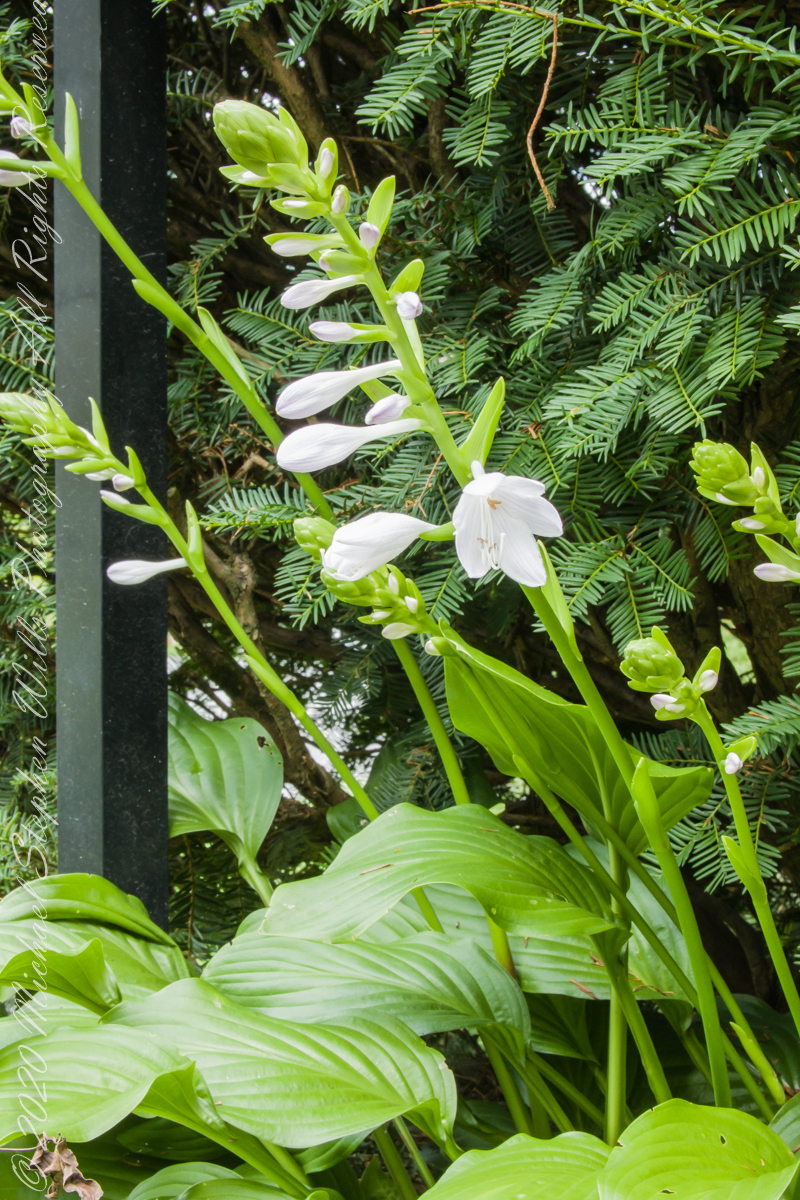
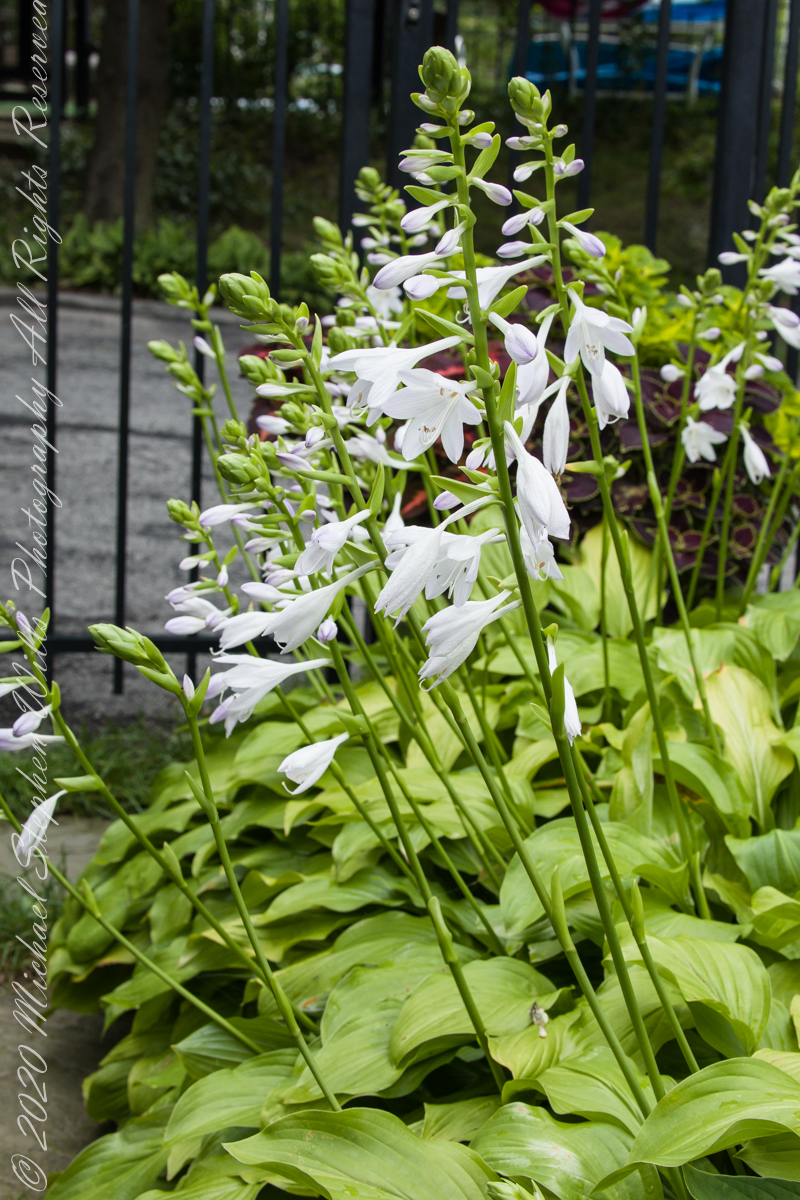
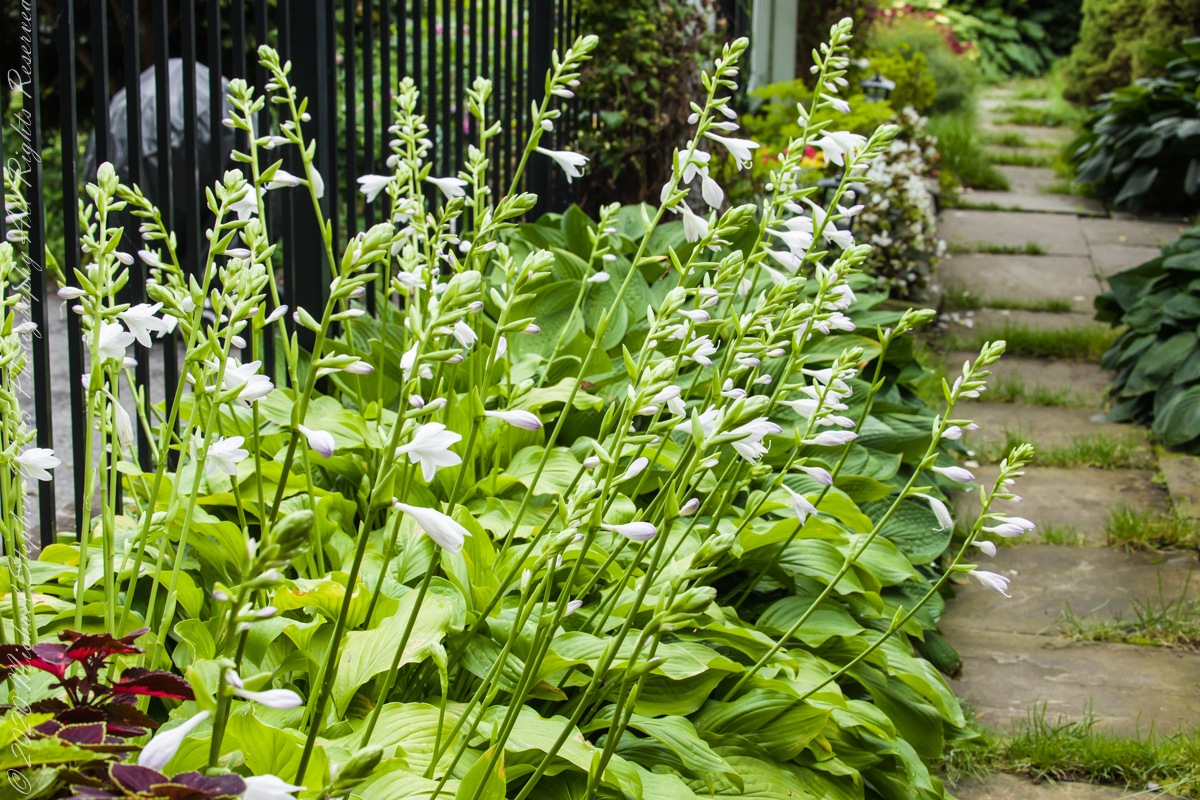
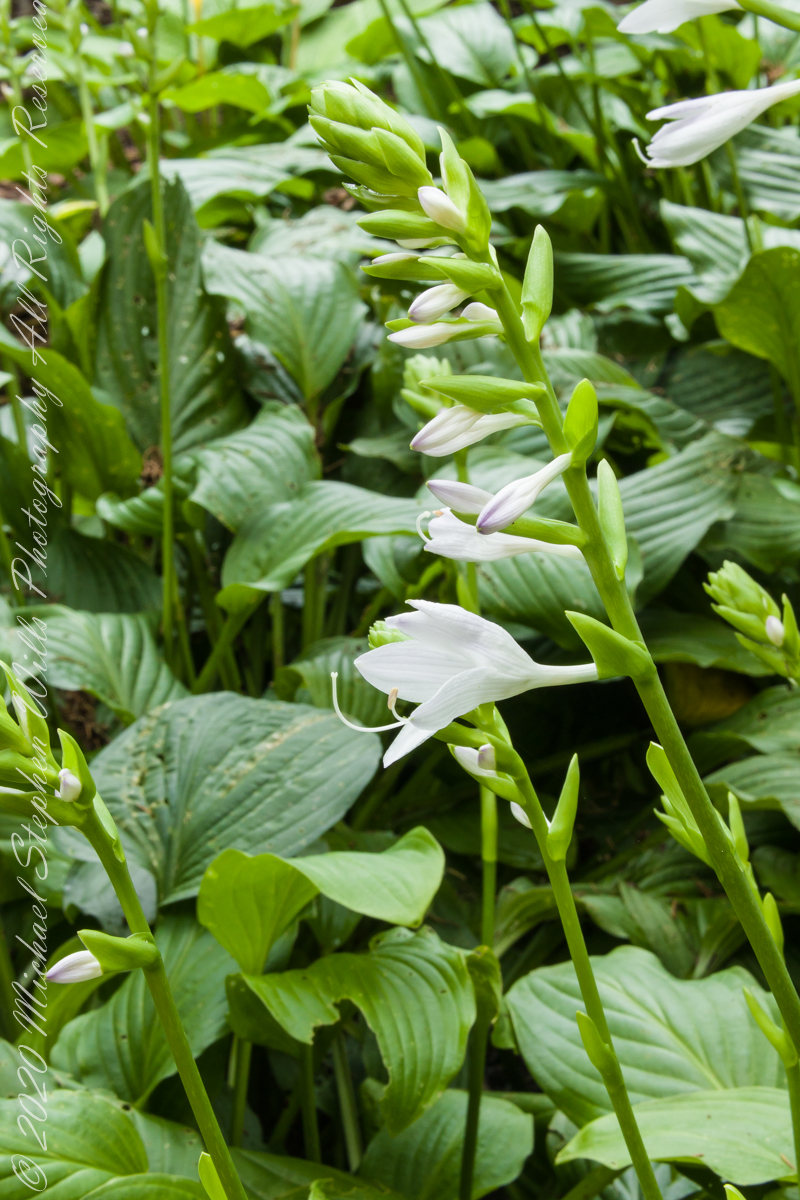
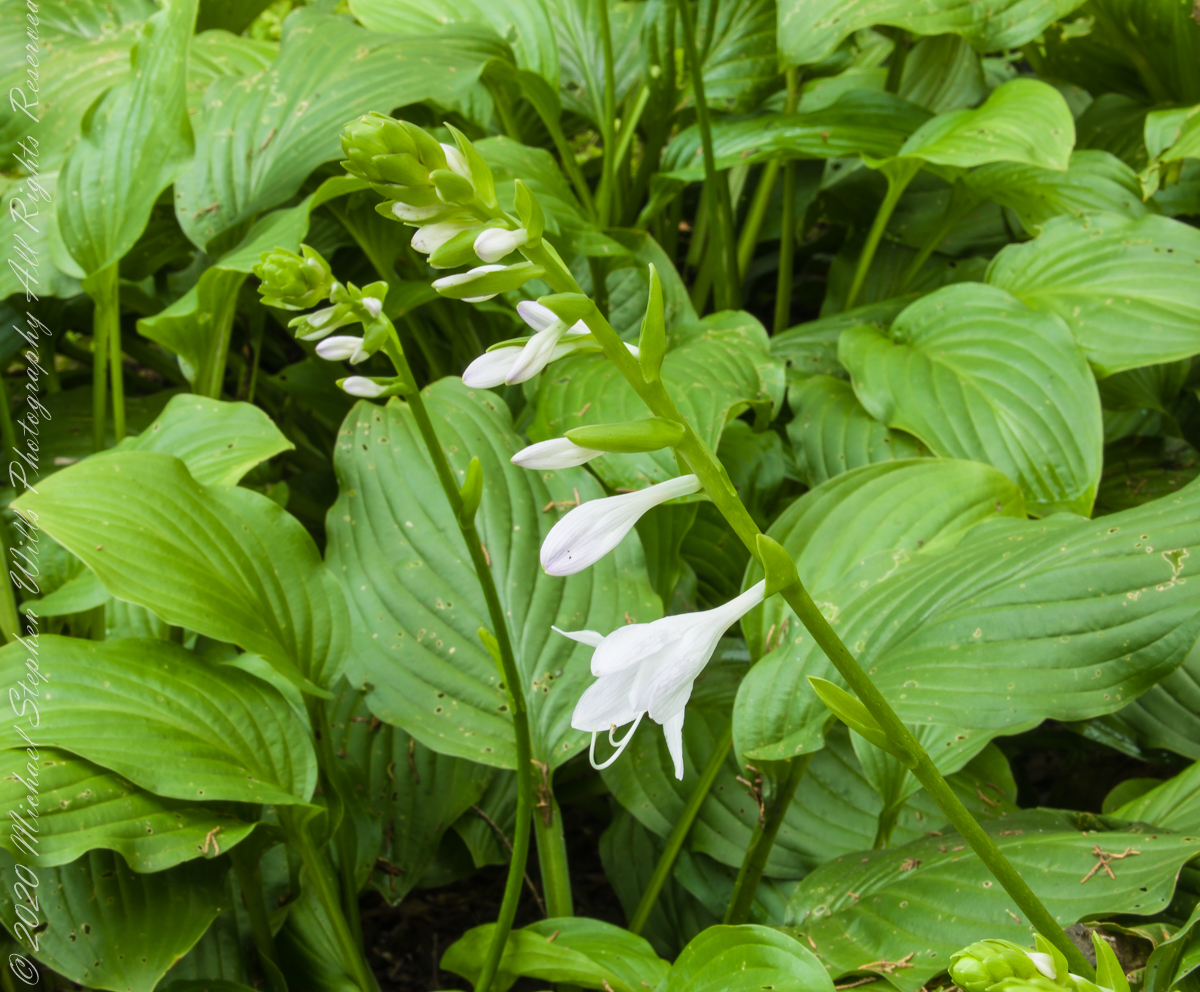
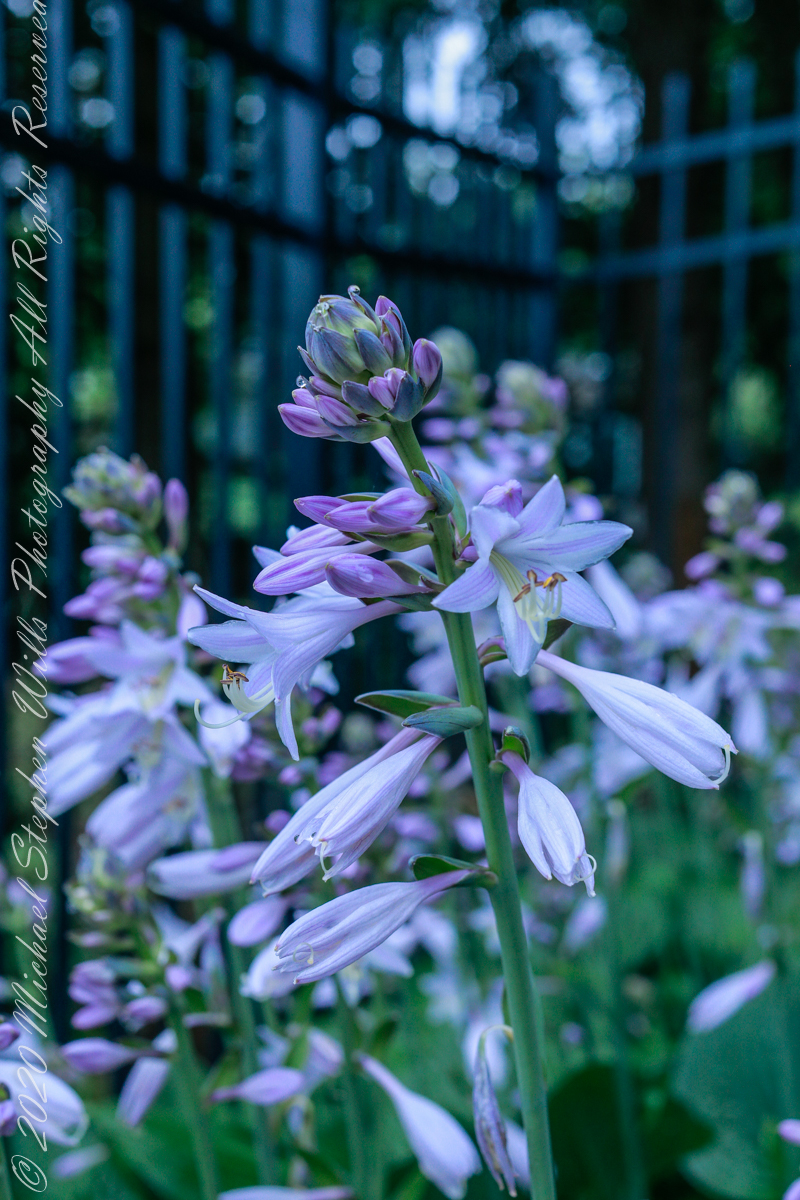
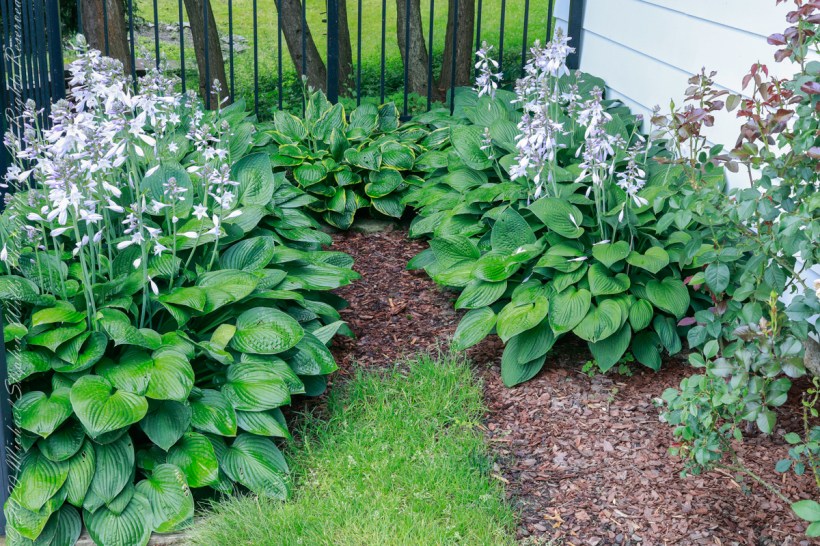
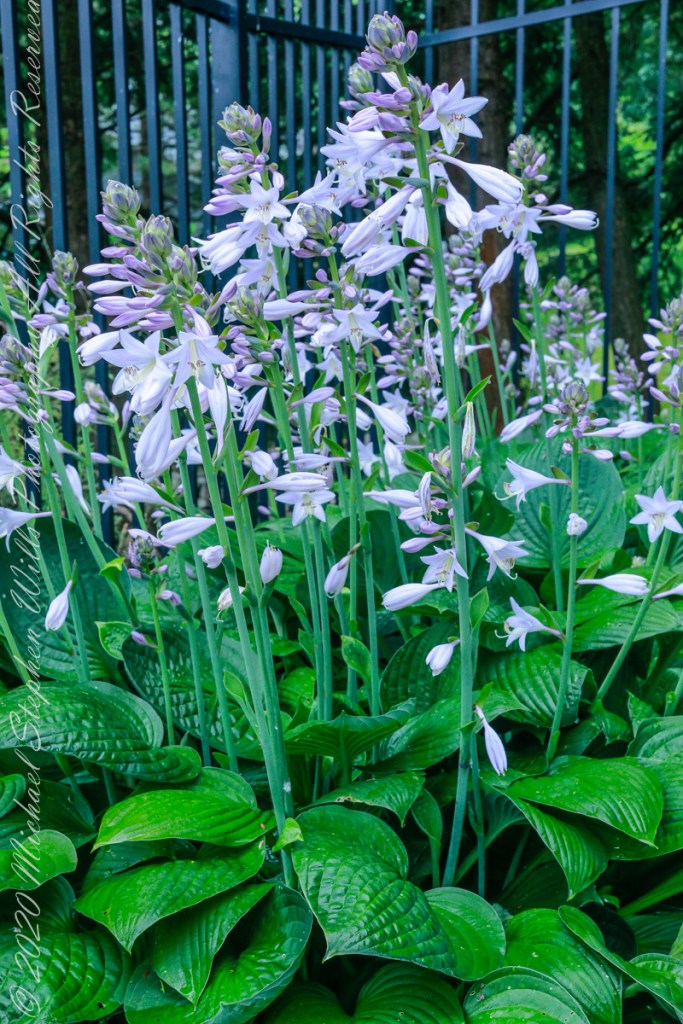
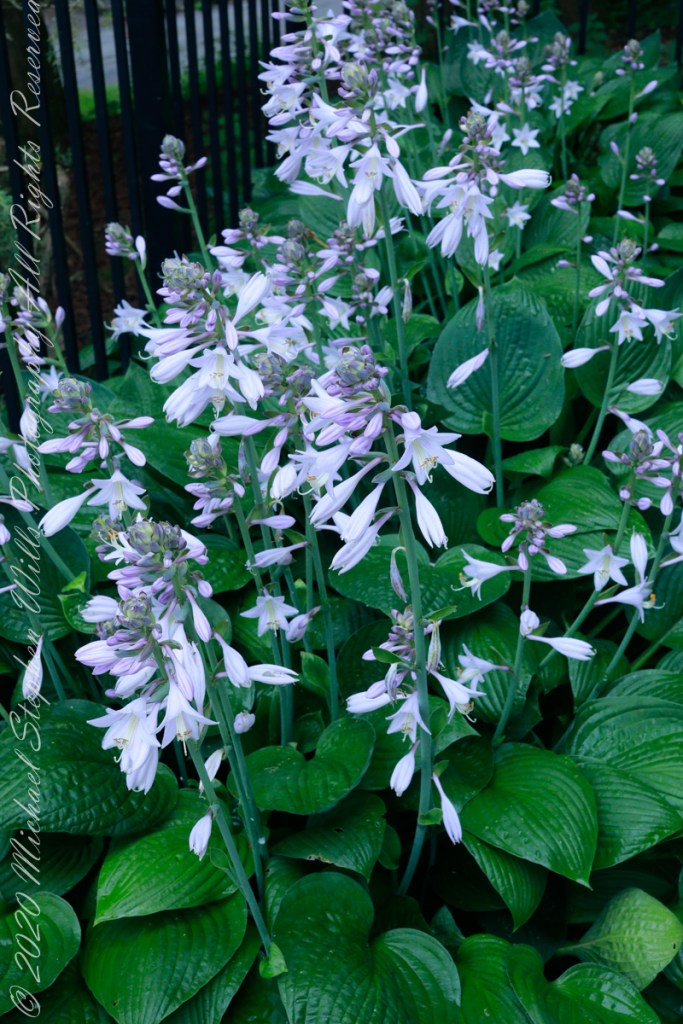
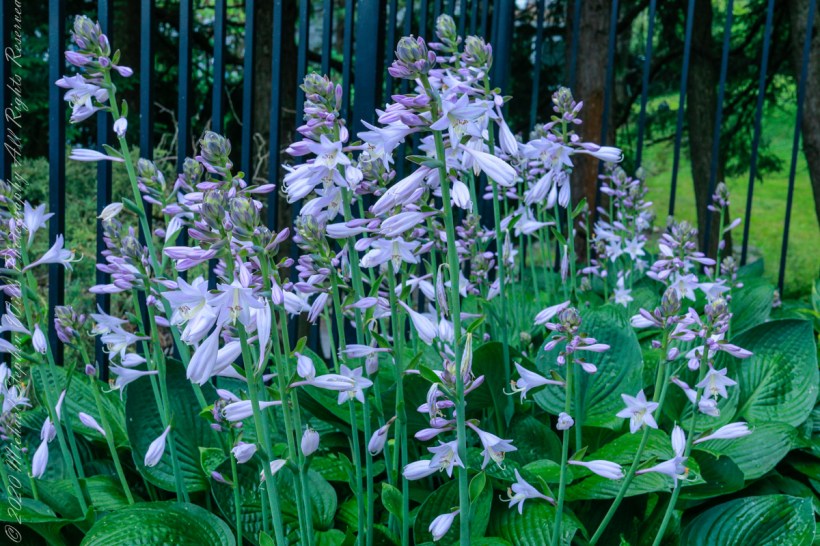
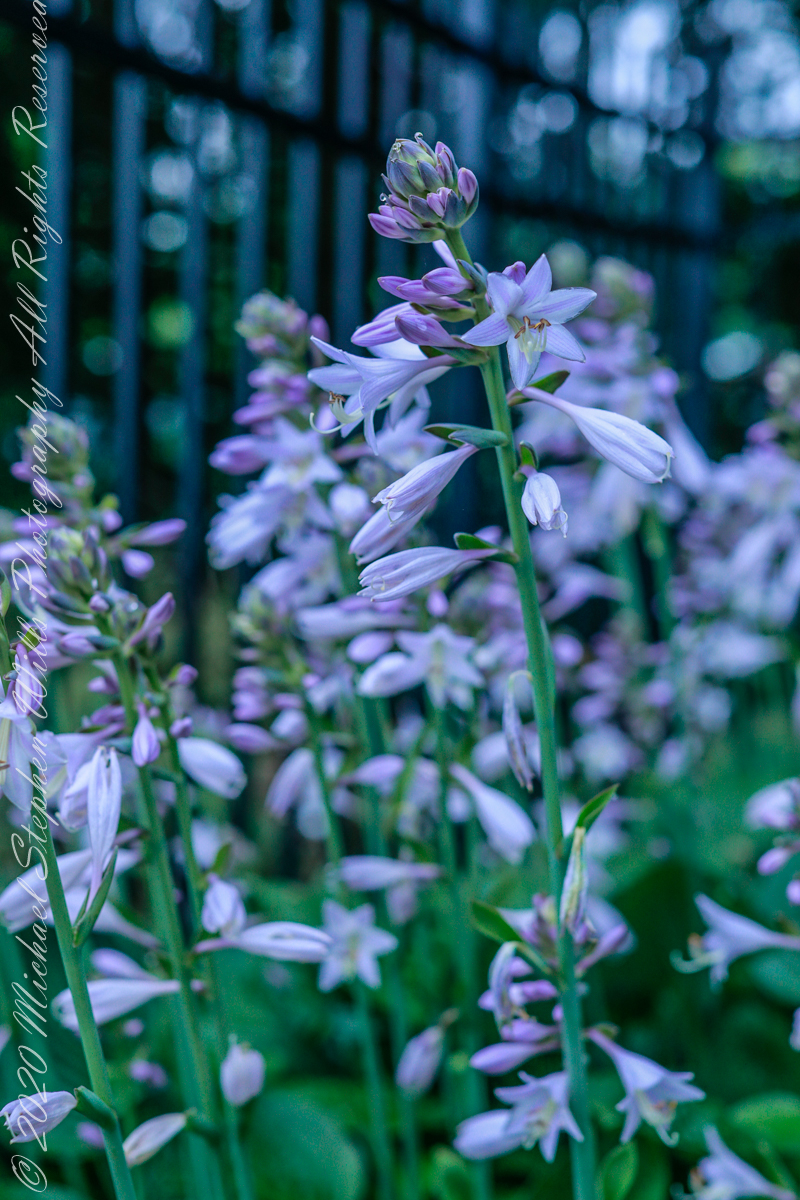
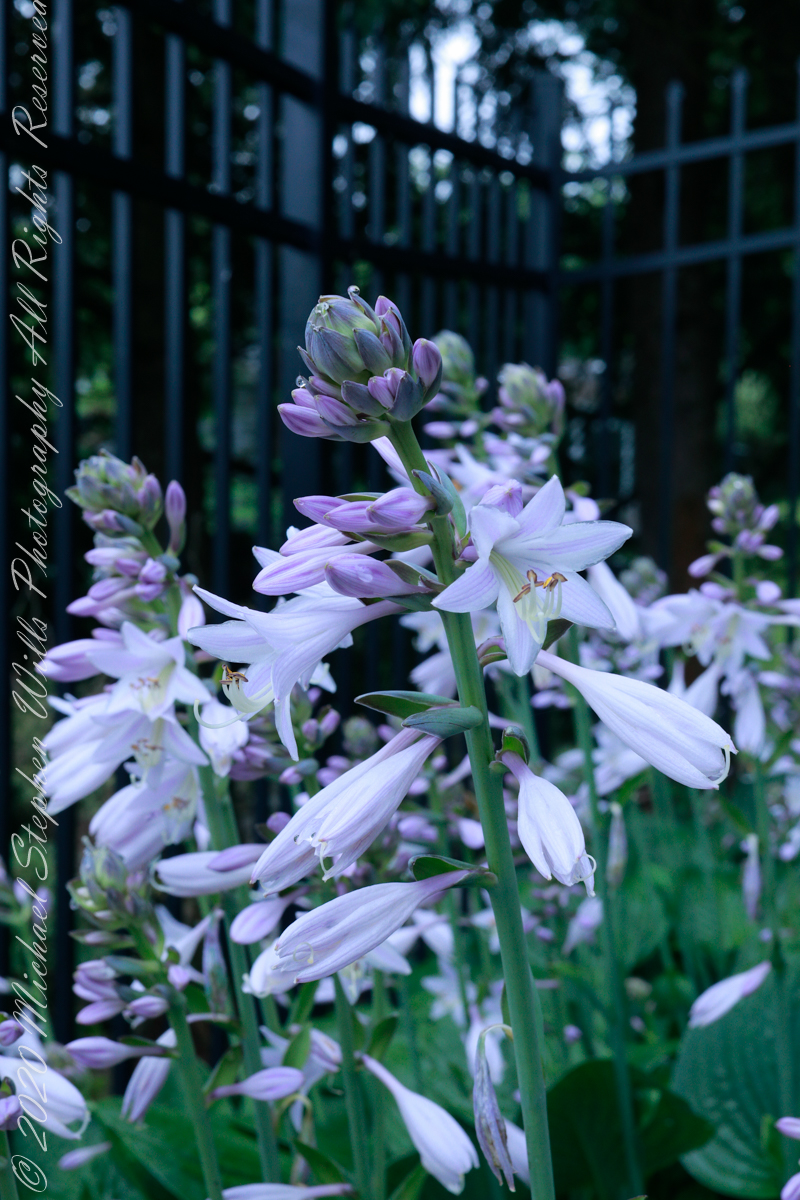
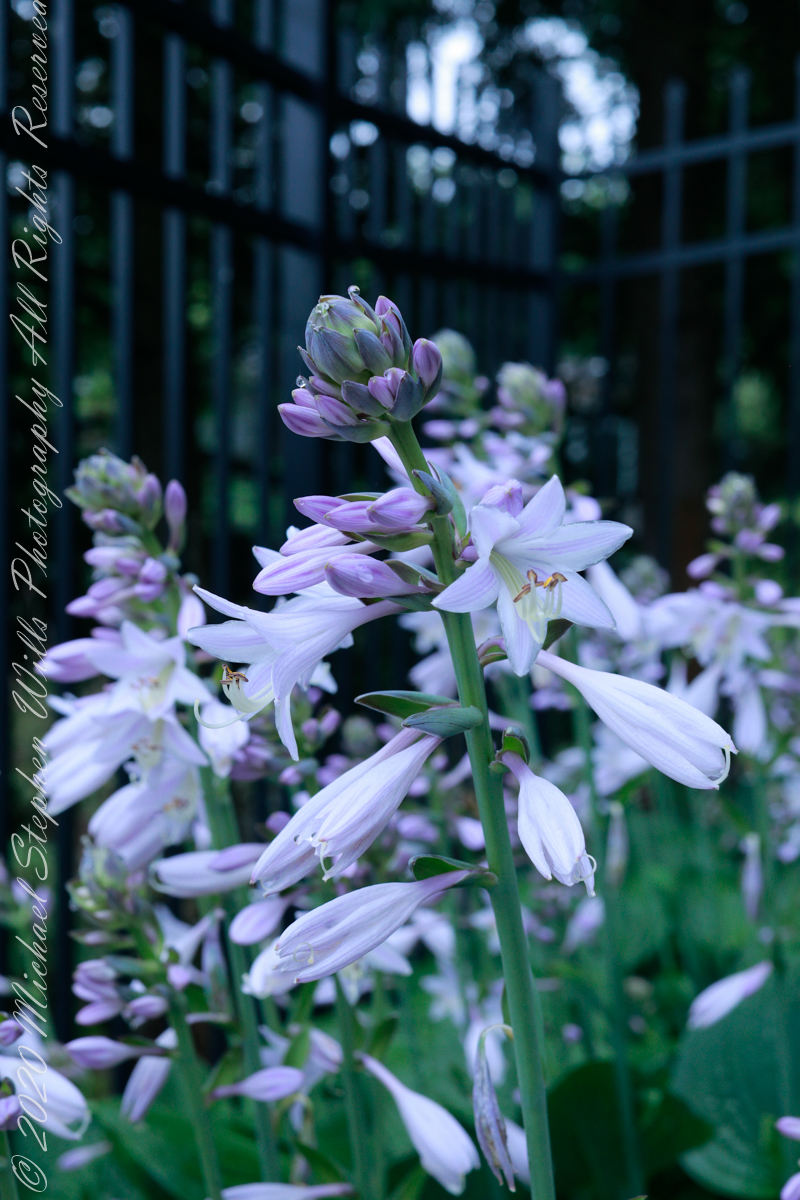
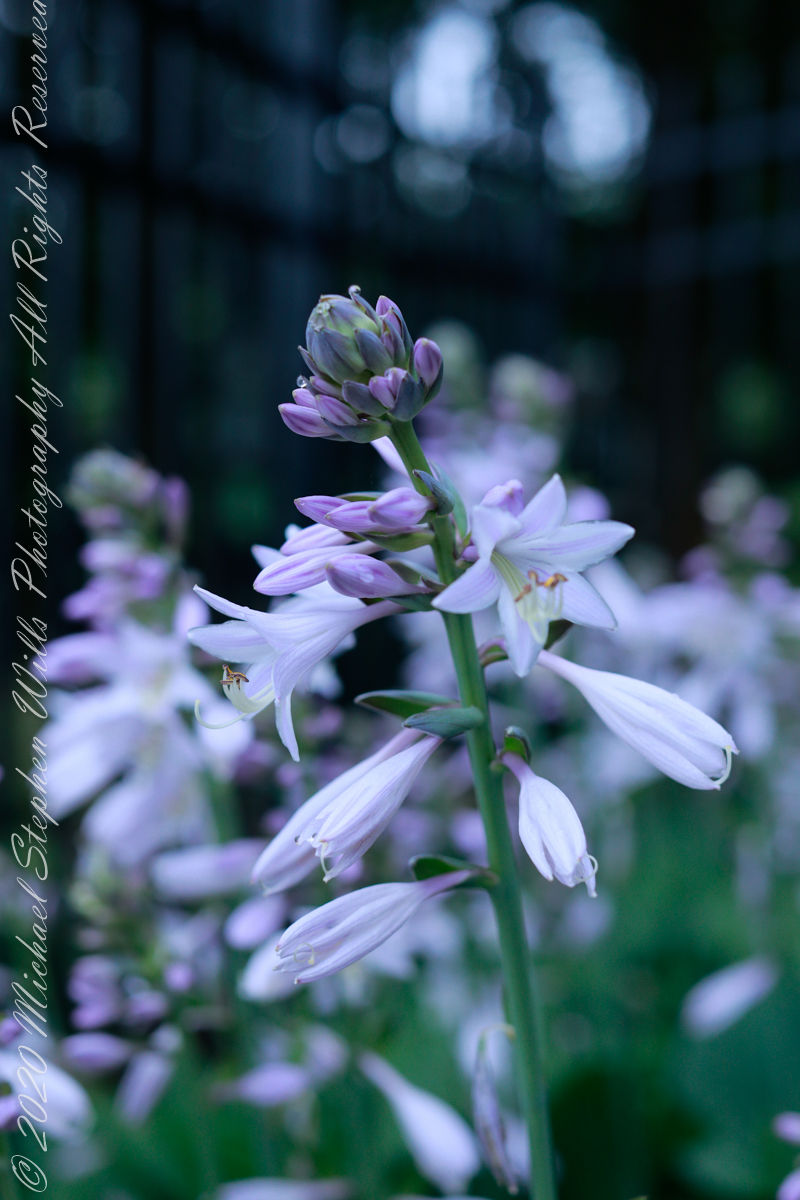
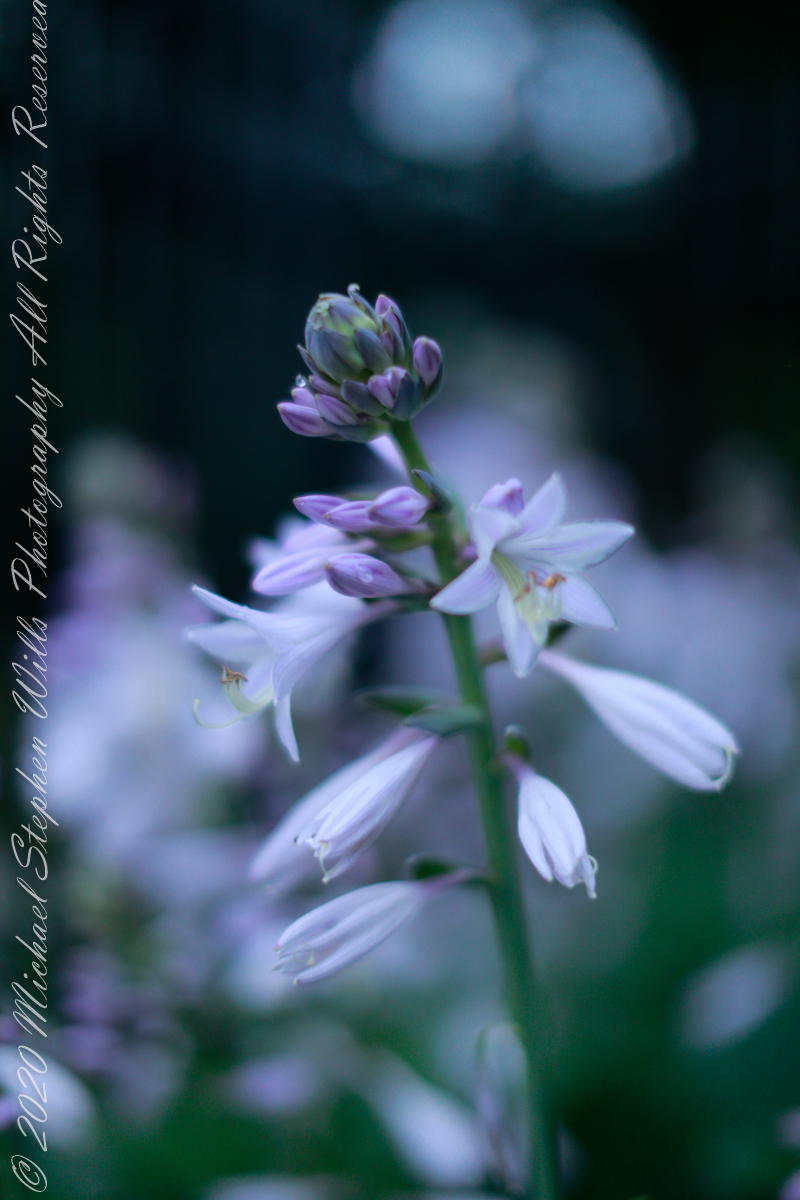
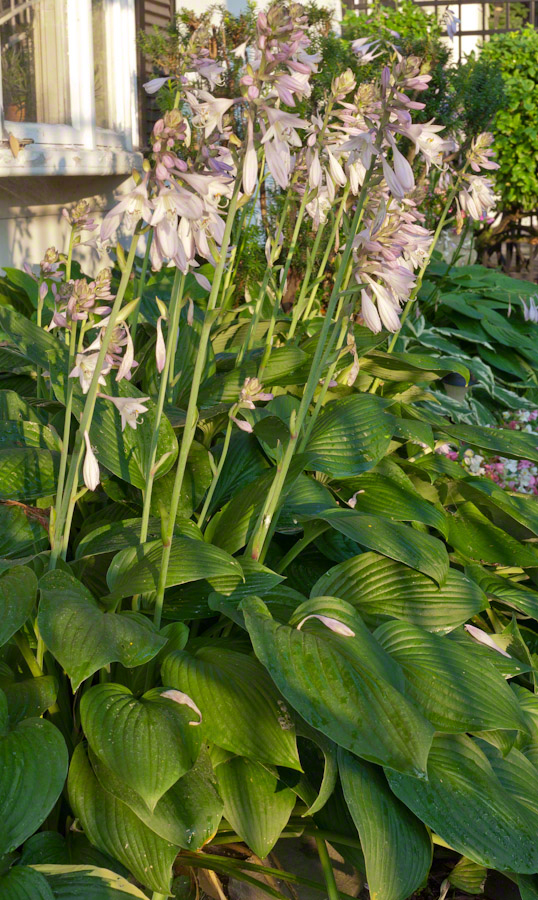
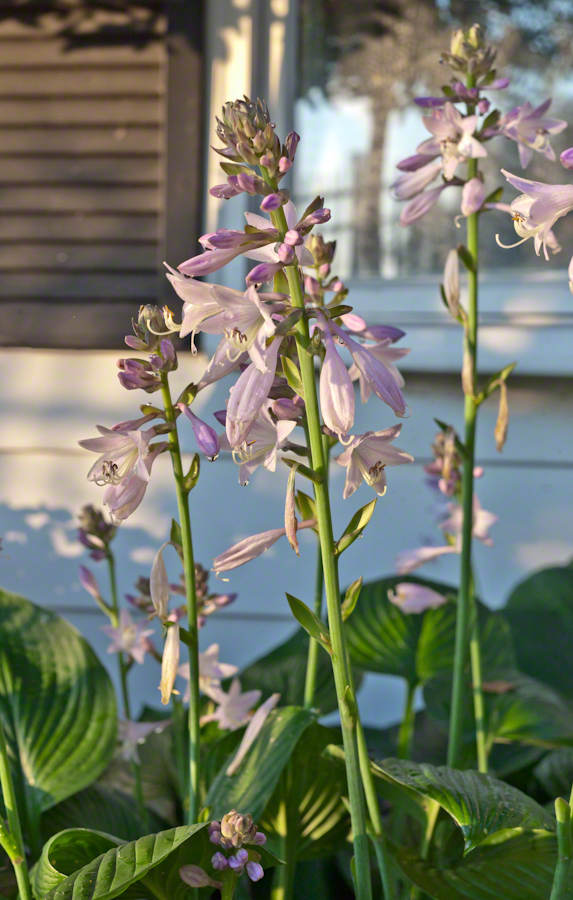
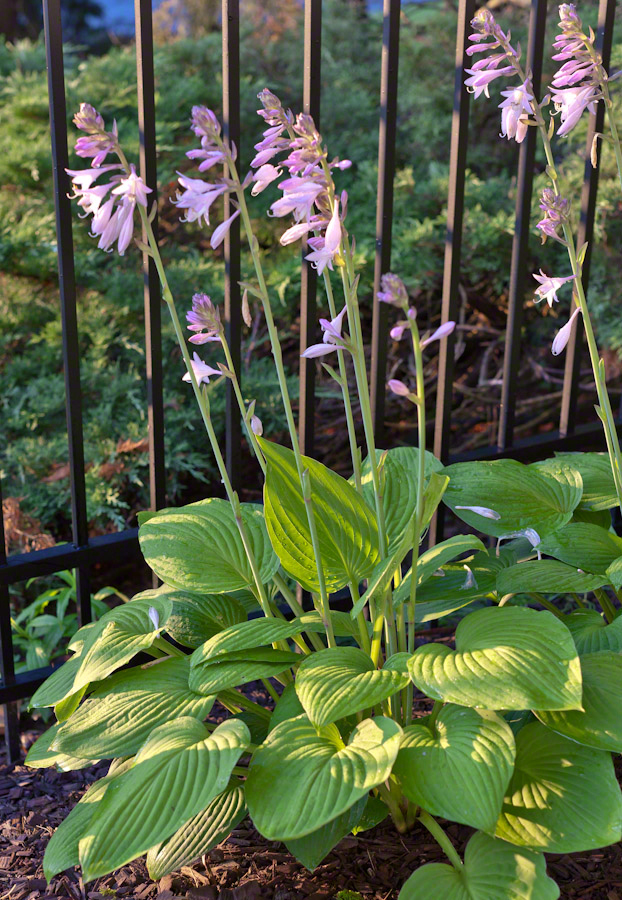
Pam requested photographs of hosta flower stalks with blooms and developing buds. I setup the Manfrotto tripod, the Canon dslr mounted with an Canon EF 70-300mm f/4.5-5.6L lens at ISO 1600 and these are the results.

Native to northeastern Asia, In 1812 the genera Hosta was named for the European botanist Nicholas Thomas Host. Also called plantain lily for the habit of the herbaceous stalks to grow radially from a center.

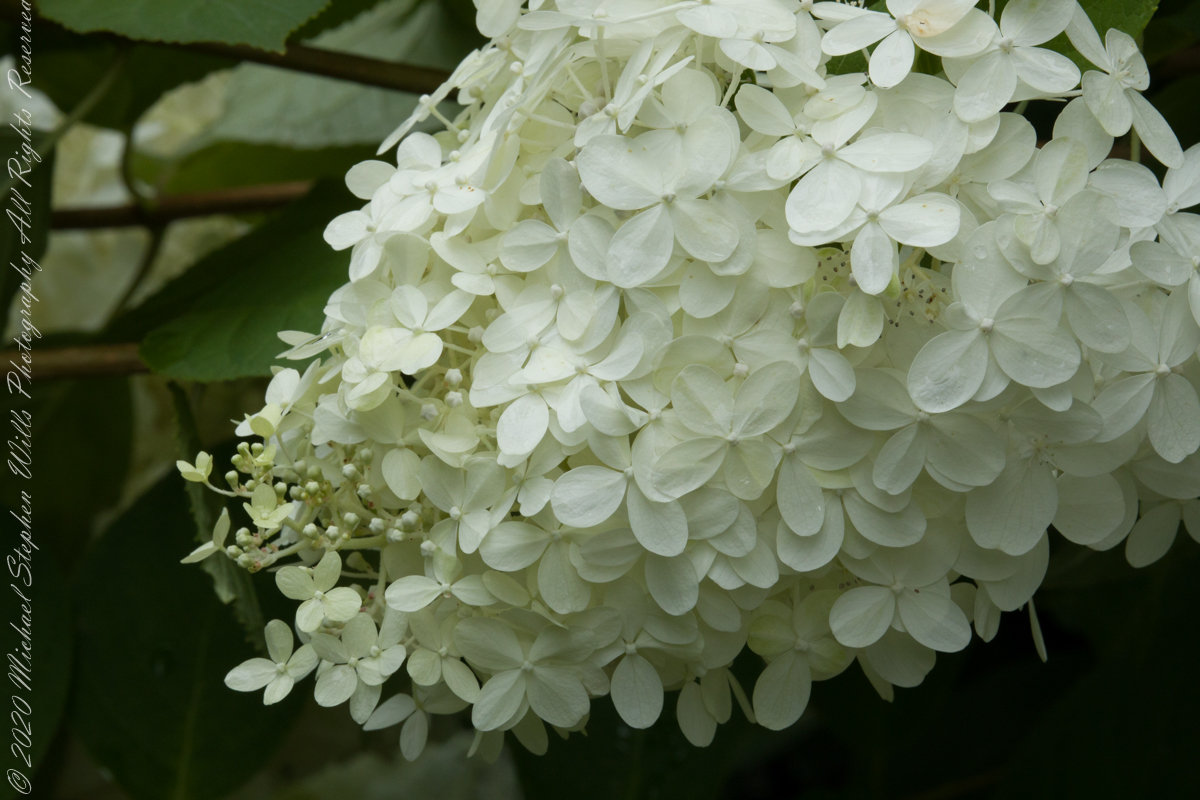
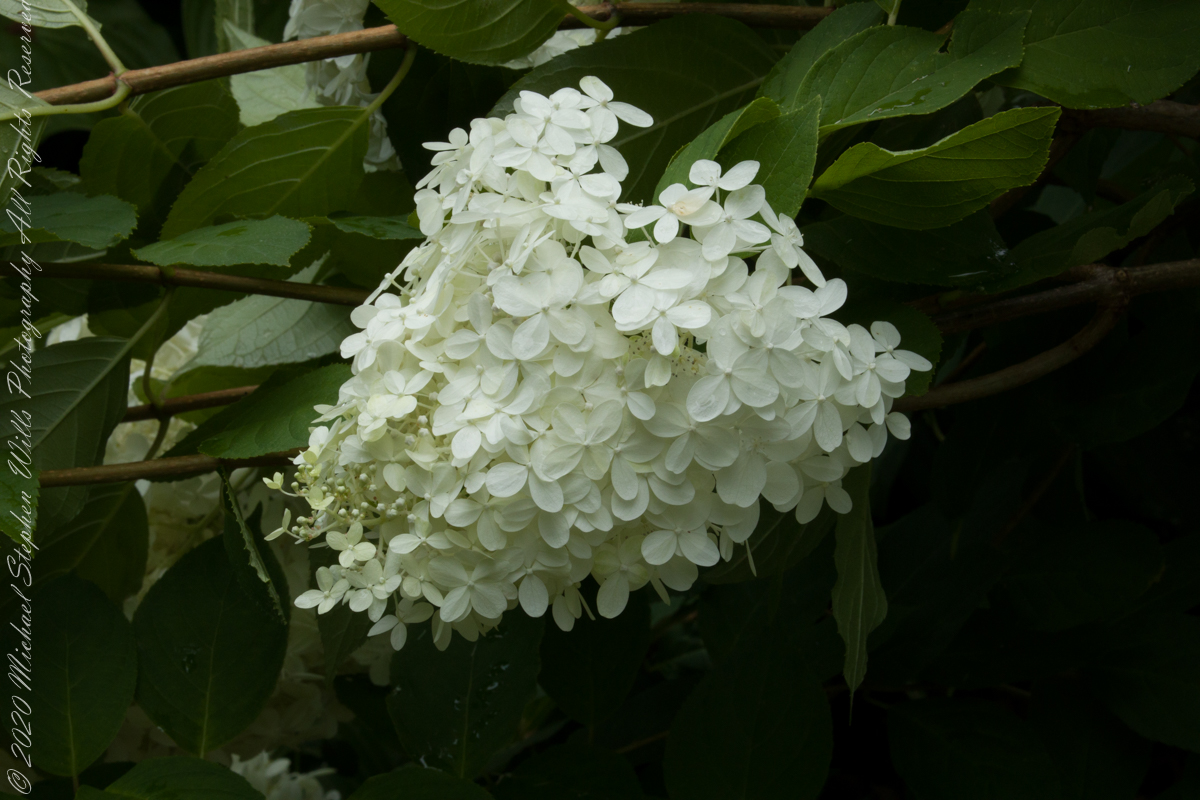
The name “Hydrangea is derived from Greek and means ‘water vessel’ (hydria), in reference to the shape of its seed capsules. The earlier name, Hortensia, is a Latinised version of the French given name Hortense, honoring French astronomer and mathematician Nicole-Reine Hortense Lepaute.” _wikipedia


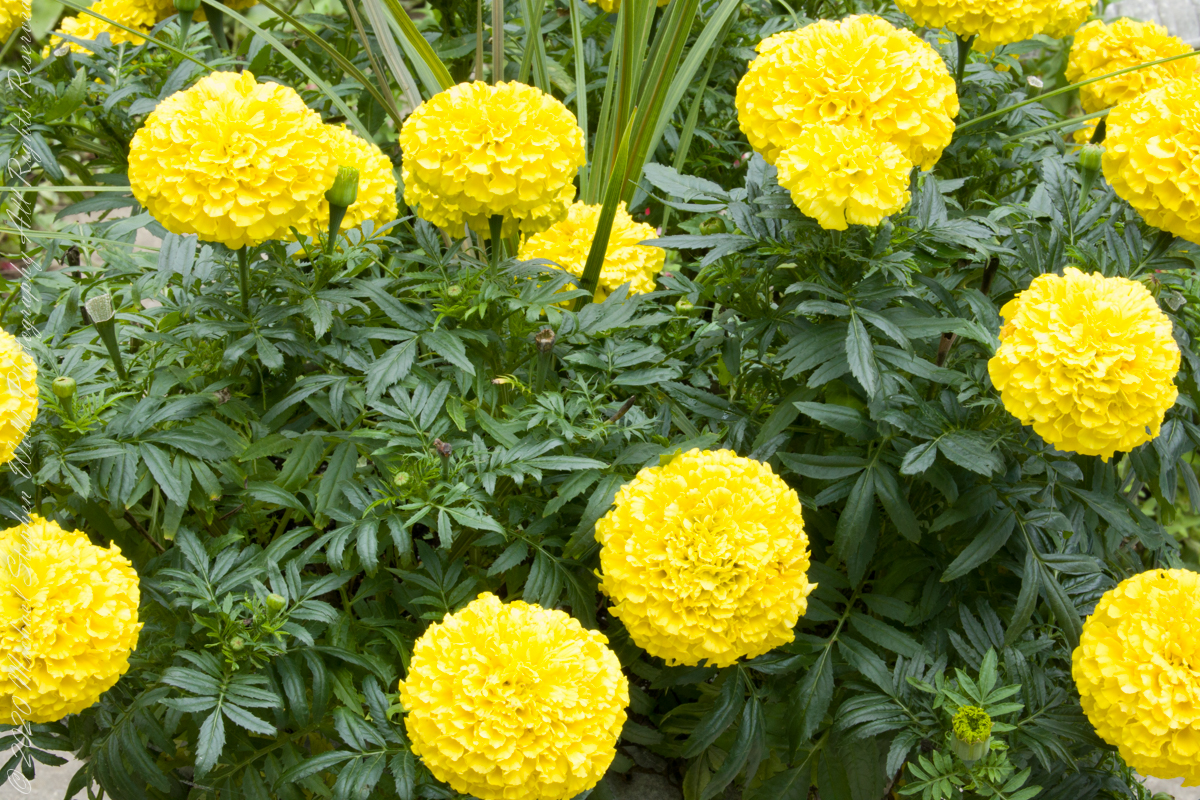
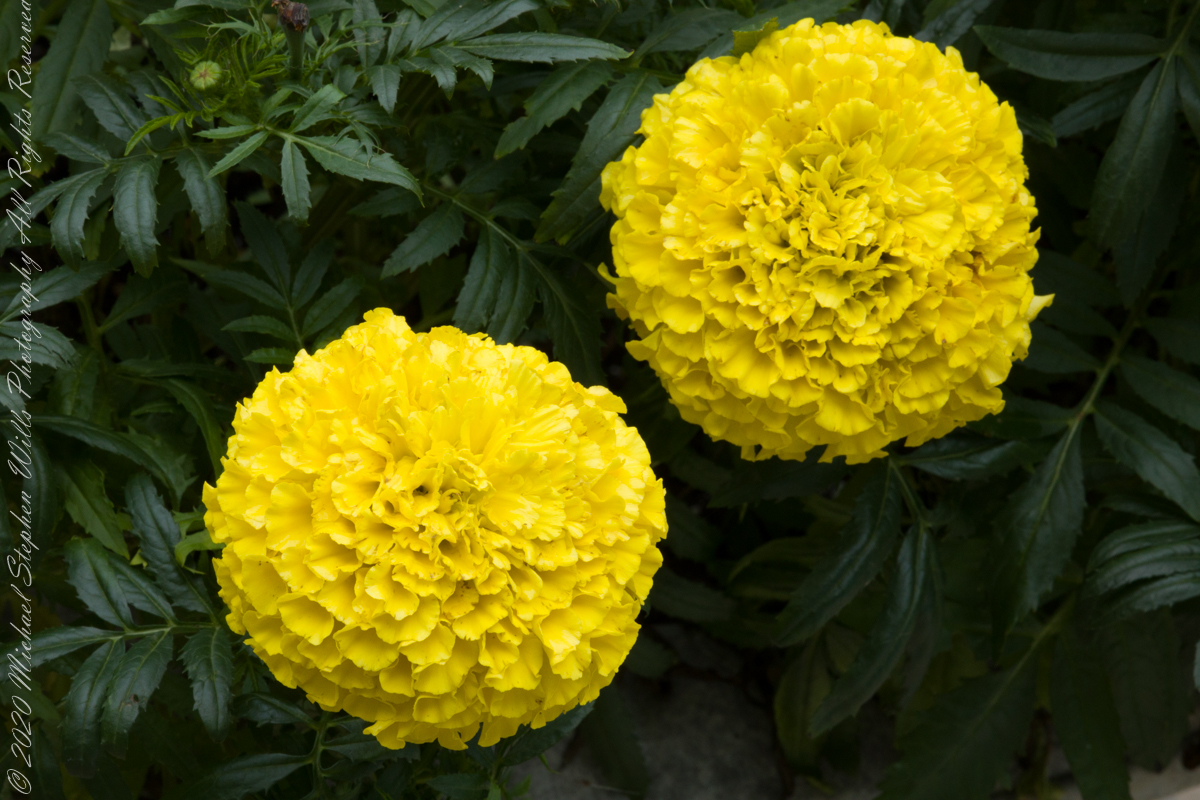
The common name “Marigold” refers to the Virgin Mary.

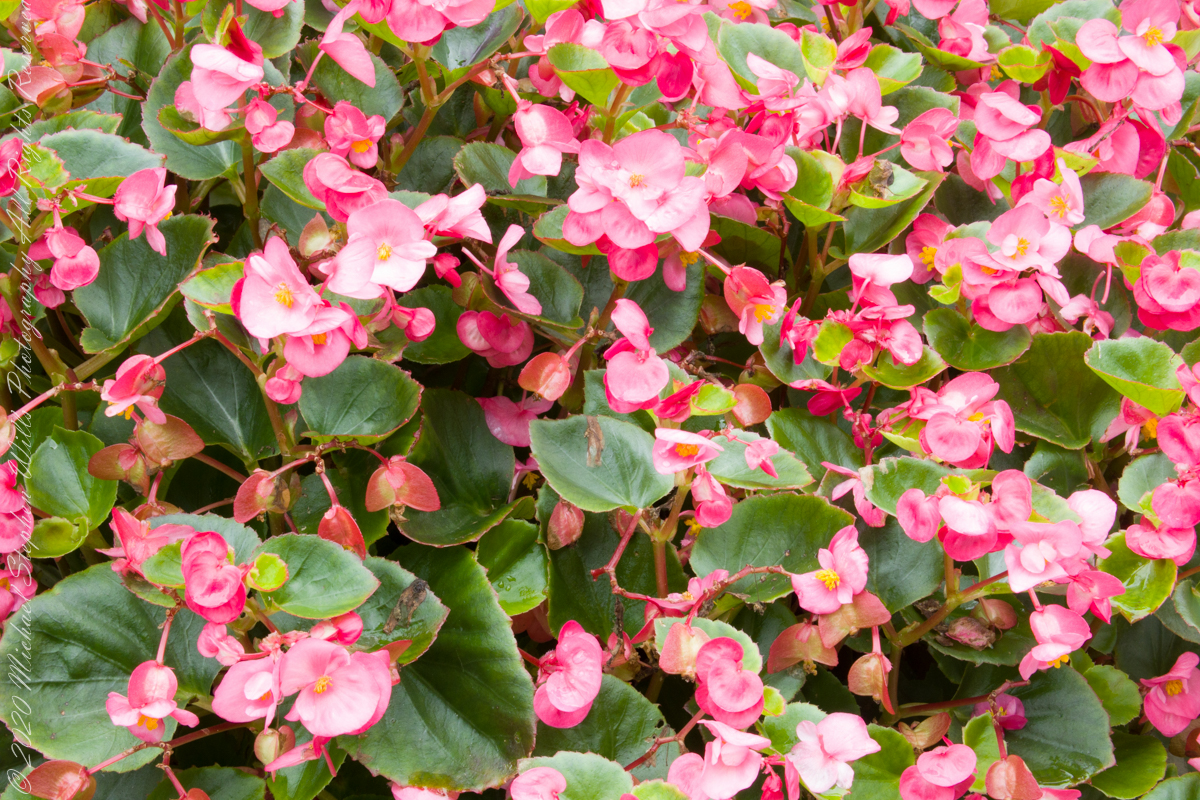
Begonias come in so many shapes and colors.

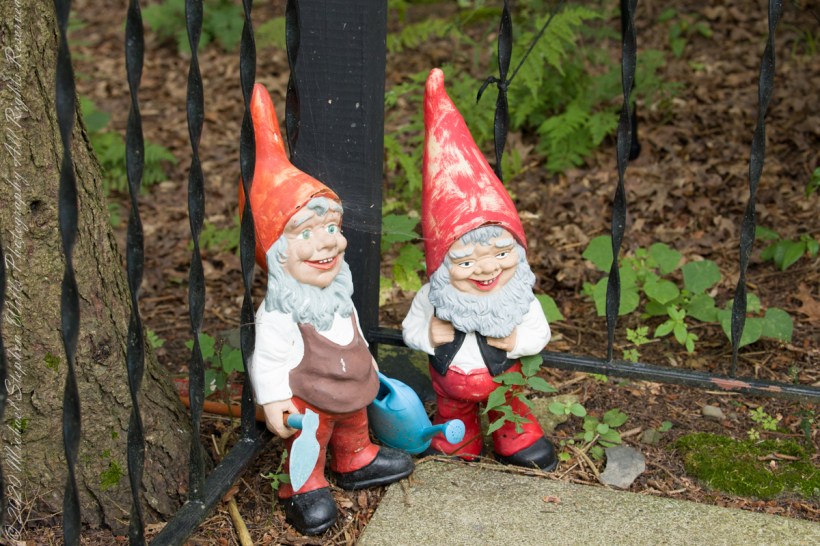
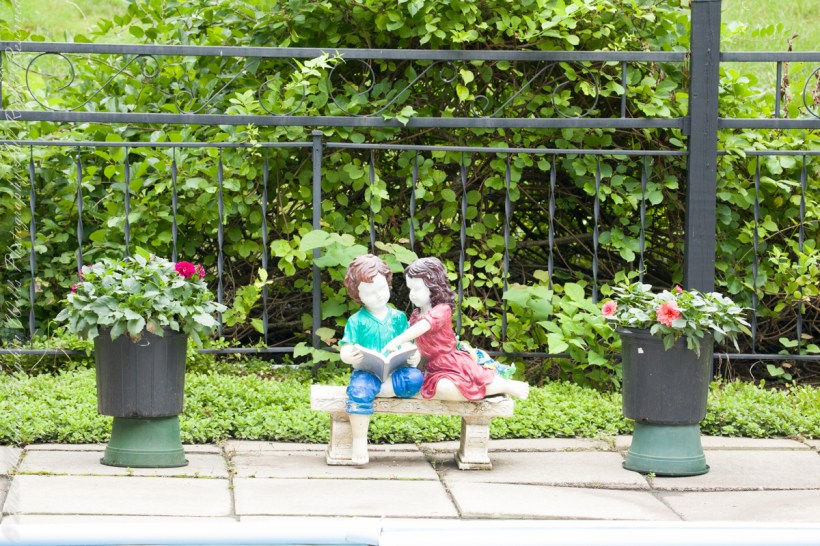
Garden Gnomes, Bird Bath and Sculpture

Copyright 2021 Michael Stephen Wills All Rights Reserved

Hosta

Hosta Blooms on a cloudy, still summer dawn

On July 17, 2021 Ithaca was socked in with heavy clouds obscuring sunrise, a perfect moment to capture Pam’s hostas flowering with the upper stalks still budding. I setup the Manfrotto tripod, the Canon dslr mounted with an EF 50 mm 1:1.2 L at ISO 800 and these are the results.

Native to northeastern Asia, In 1812 the genera Hosta was named for the European botanist Nicholas Thomas Host. Also called plantain lily for the habit of the herbaceous stalks to grow radially from a center.

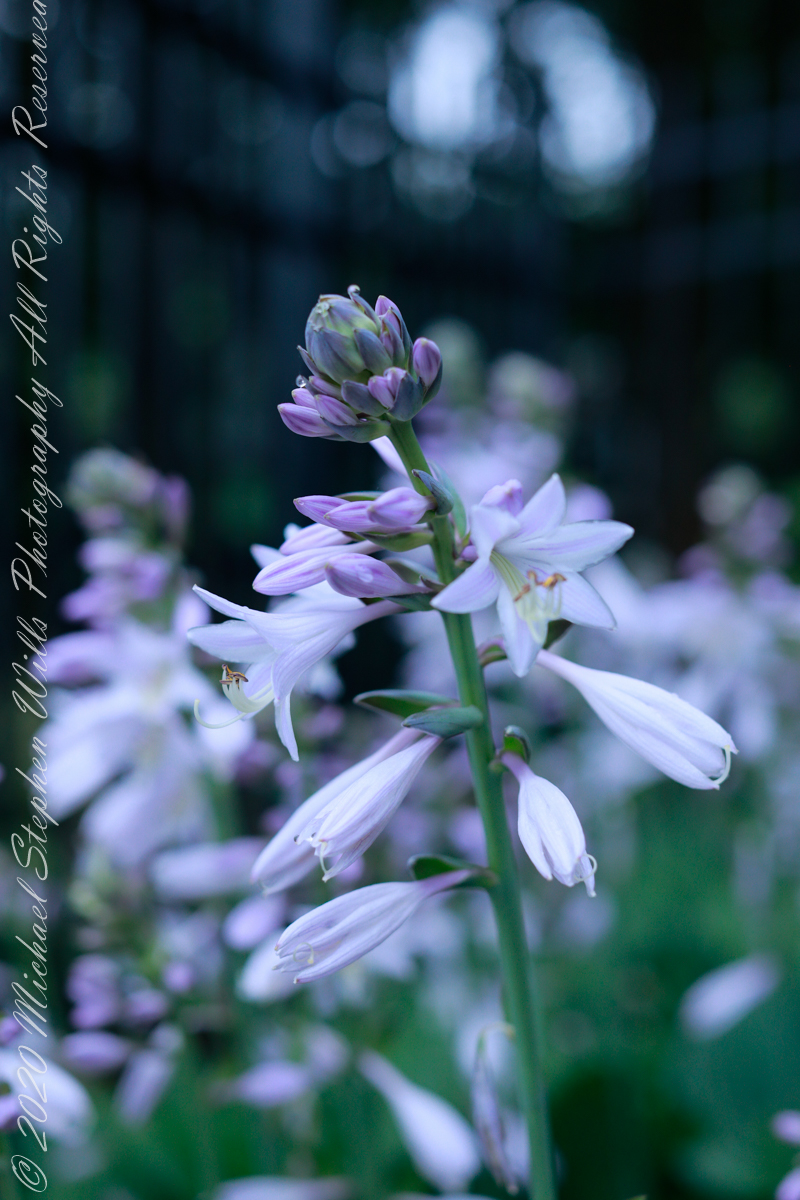
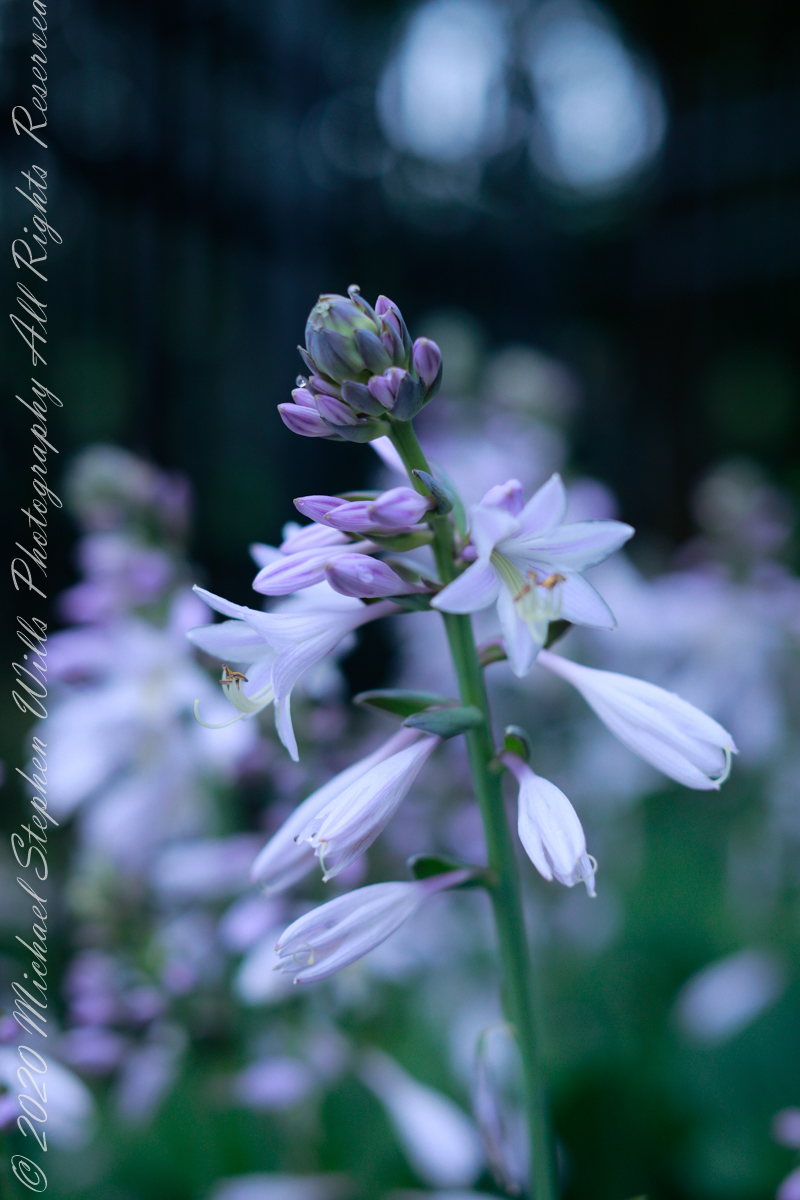
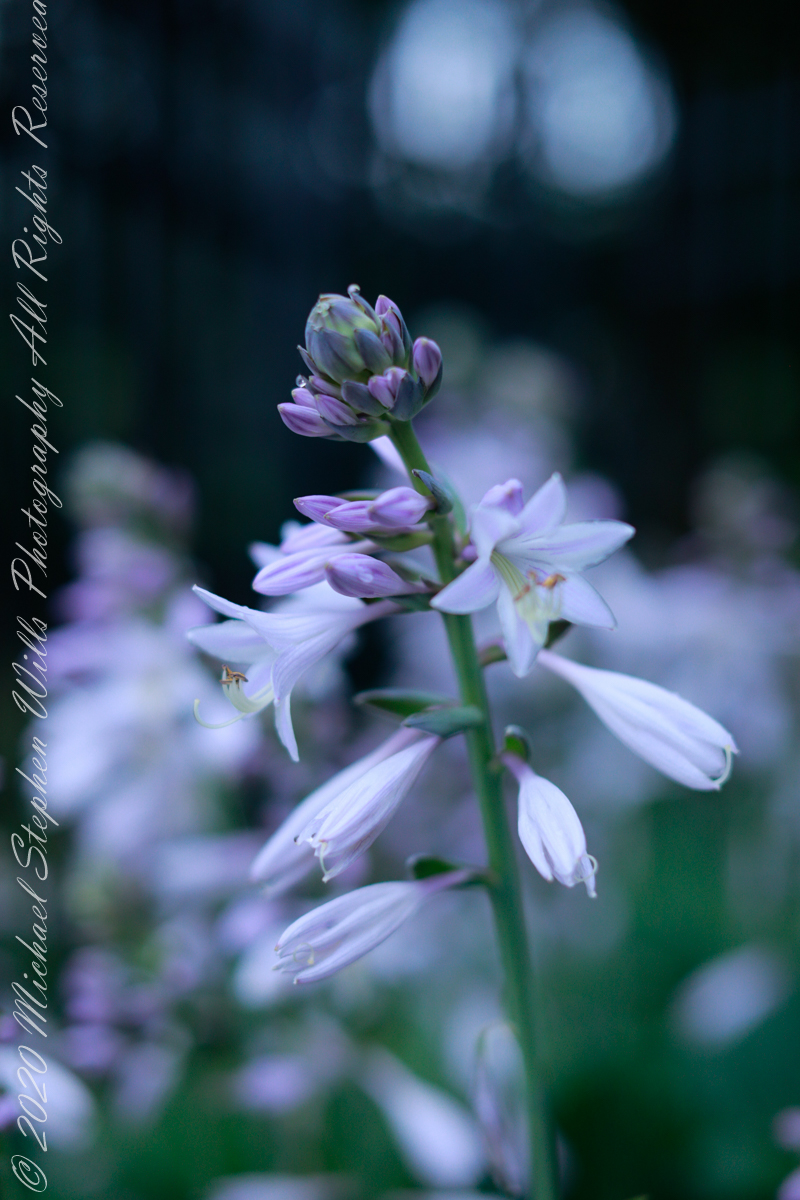
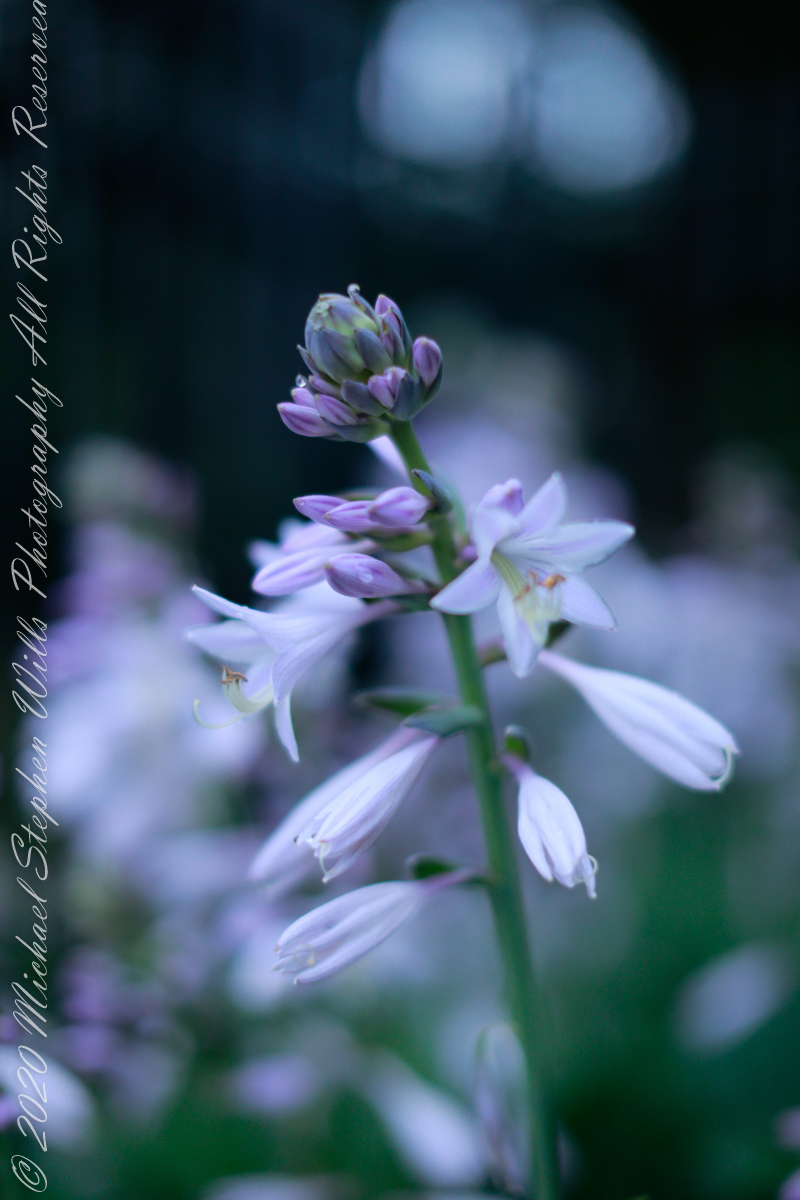
This series moves from the lens diaphragm starting at the smallest opening, greatest depth of field and longest exposure, to the widest, most shallow depth of field and shortest exposure. The air was very still this morning, allowing me to experiment.


Here is my favorite version from the above experiment. Do you have a favorite? Named it in comment and please explain your choice.

Copyright 2021 Michael Stephen Wills All Rights Reserved

Blooms: Hosta and Echinacea

Hosta and Echinacea Blooms in a summer dawn

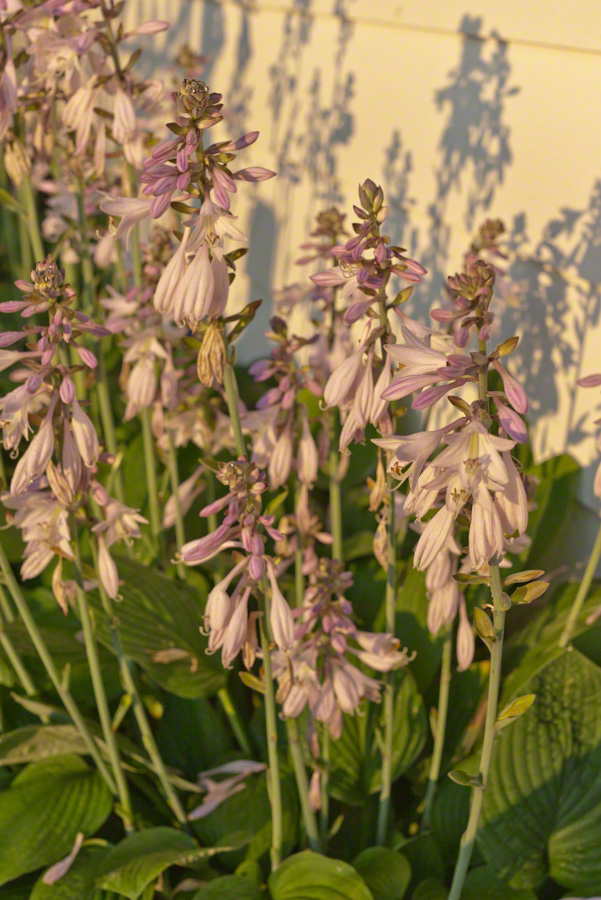
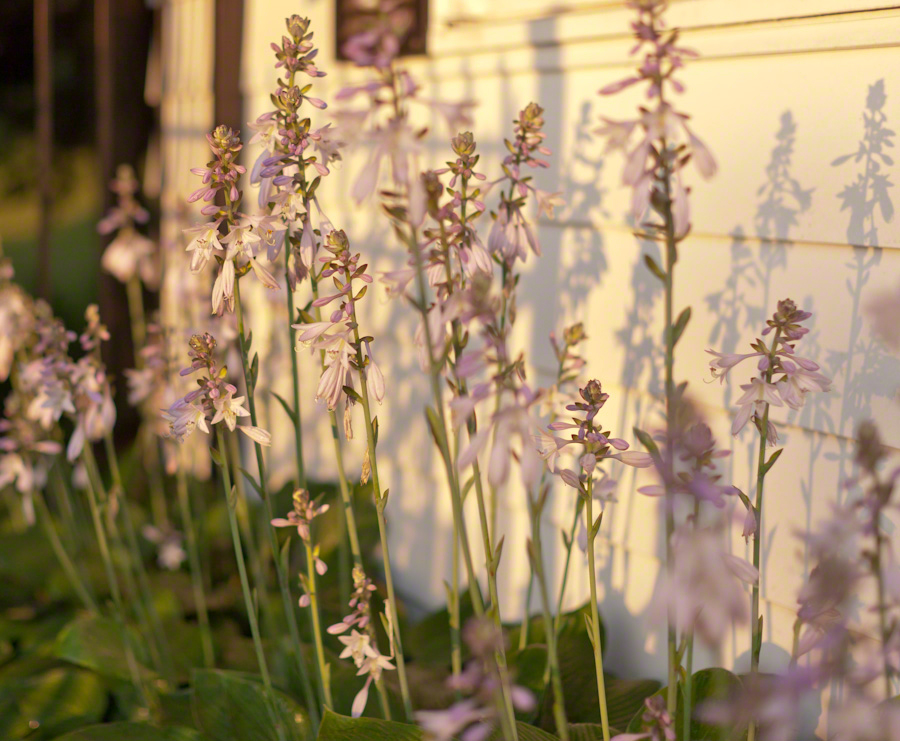
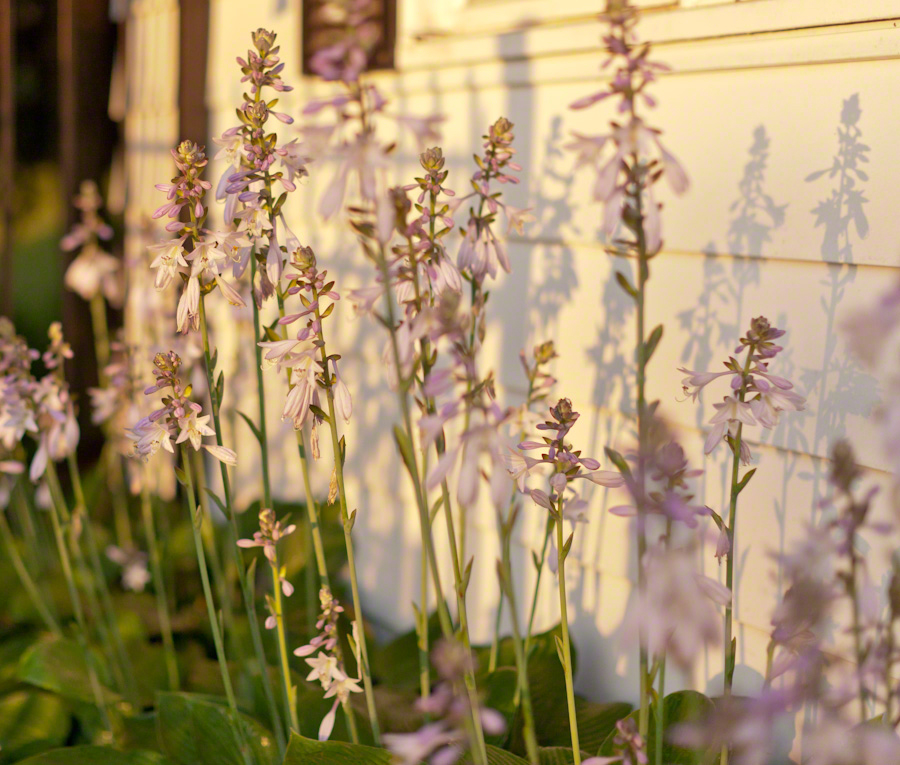
My wife, Pam, requested photographs of her hosta taken in the first sun of a summer day. Just after the sun broke the clouds this Summer 2017 morning I had the Manfrotto tripod set up, the Canon mounted with my new EF 50 mm 1:1.2 L, and this is the result.

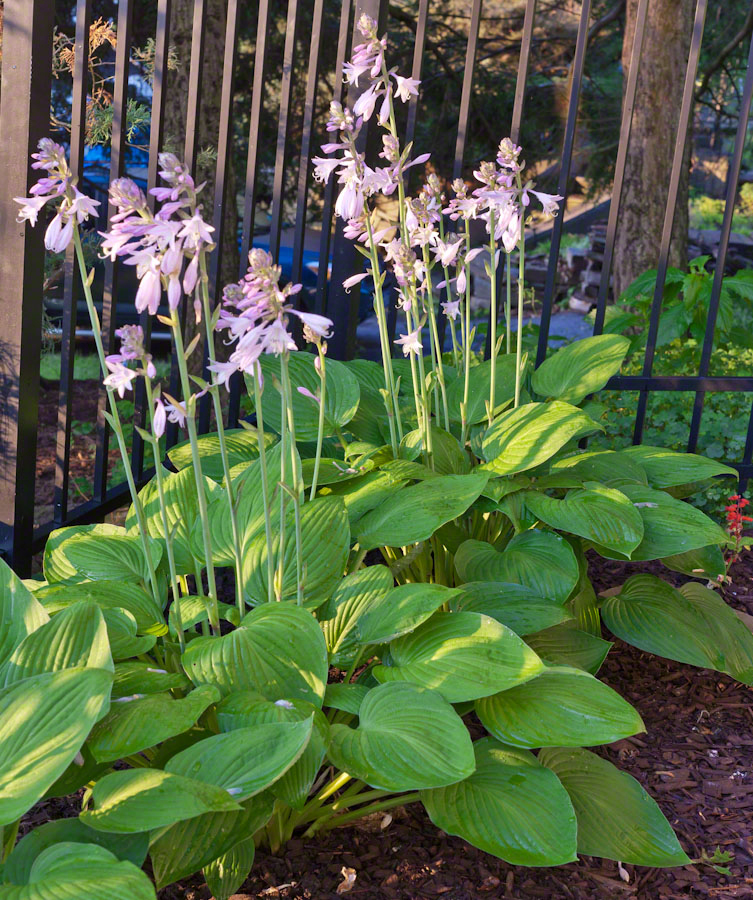
Overview of the hosta and blooms. These are also called Plaintain Lilies. Over the years, Pam has propagated three plants by splitting them and replanting. In 2016r we invested in a fence around the front yard to prevent the deer from browsing them to the ground. In pandemic year 2020, Summer, another fence was installed for the backyard. Pam plans more hosta propagation in celebration.

Study of hosta flowers.

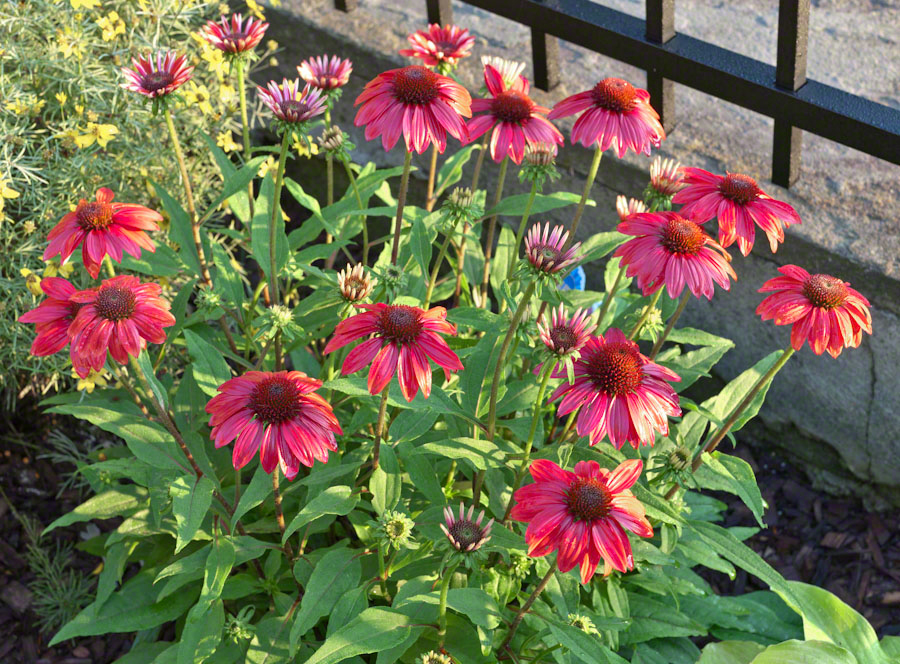
Purple cone flowers, aka Echinacea.
HostaEchinacea-0093

Copyright 2021 Michael Stephen Wills All Rights Reserved