This Hepatica acutiloba, the sharp-lobed hepatica, I found in Fillmore Glen last April, capturing them with the Apple Iphone 14 proMax.
“’The liverleaf puts forth her sister blooms of faintest blue soon after the late snows have melted. Indeed, these fragile-seeming, enable-like flowers are sometimes found actually beneath the snow, and form one of the many instances which we encounter among flowers, as among their human contemporaries, where the frail and delicate-looking withstand storm and stress far better than their more robust-appearing brethren.”
Click for my Fine Art Photography Gallery.
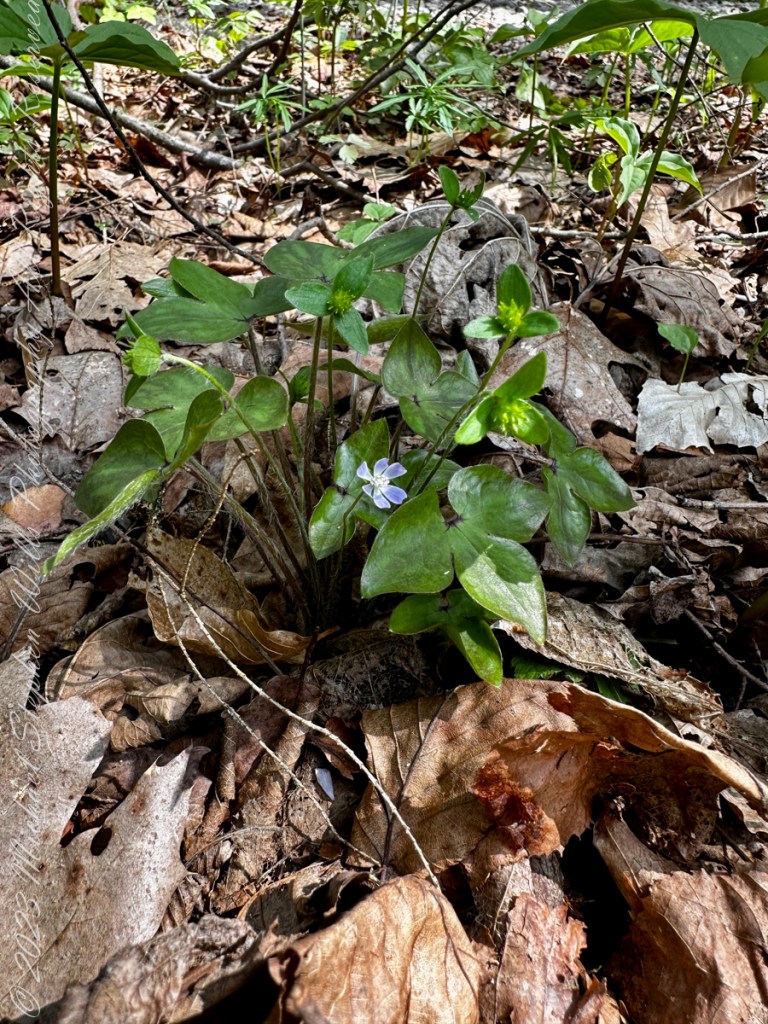
Each clump-forming plant grows 5 to 19 cm (2.0 to 7.5 in) tall, flowering in the early to mid-spring. The flowers are greenish-white, white, purple, or pinkish in color, with a rounded shape. After flowering the fruits are produced in small, rounded columned heads, on pedicels 1 to 4 mm long seen here in these gone to seed flowers. When the fruits, called achenes, are ripe they are ovoid in shape, 3.5–4.7 mm long and 1.3–1.9 mm wide, slightly winged and tend to lack a beak.
“The rusty leaves of last summer are obliged to suffice for the plant’s foliage until some little time after the blossoms have appeared, when the young fresh leaves begin to uncurl themselves. Someone has suggested that the fuzzy little buds look as though they were still wearing their furs as protection against the wintry weather which so often stretches late into our spring.”
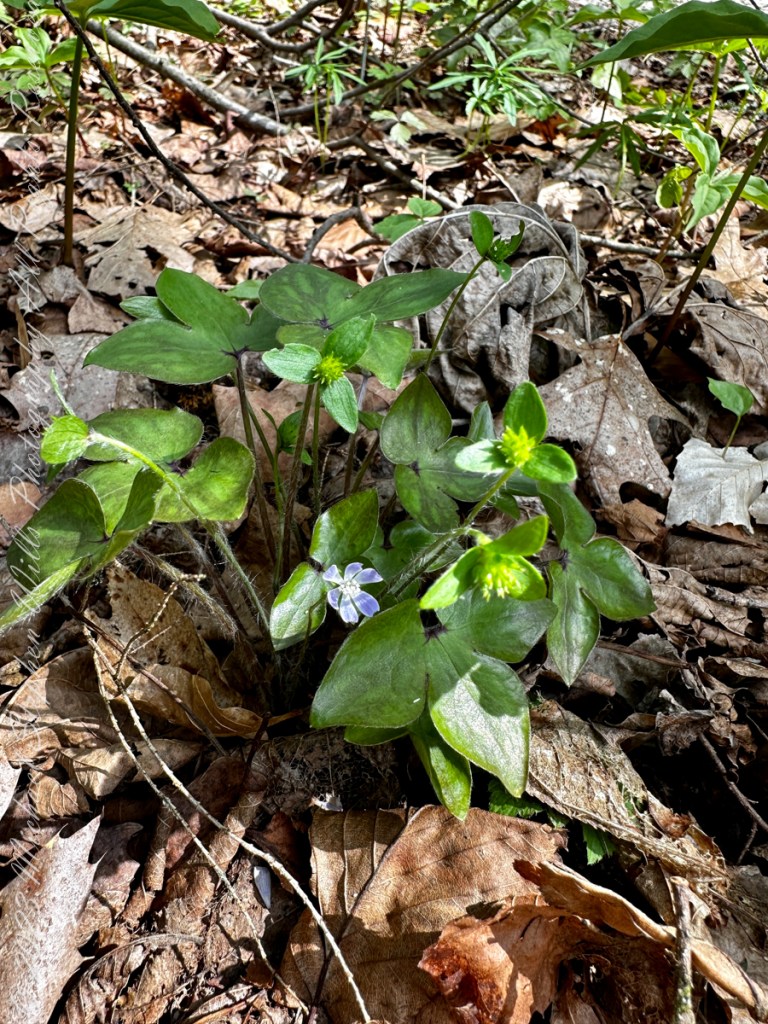
Hepatica cultivation has been popular in Japan since the 18th century (mid-Edo period), where flowers with doubled petals and a range of color patterns have been developed.
Noted for its tolerance of alkaline limestone-derived soils, Hepatica may grow in a wide range of conditions; it can be found either in deeply shaded deciduous (especially beech) woodland and scrub or grassland in full sun. Hepatica will also grow in both sandy and clay-rich substrates, being associated with limestone. Moist soil and winter snowfall are required; Hepatica is tolerant of winter snow cover, but less so of dry frost.
Propagation is done by seeds or by dividing vigorous clumps in spring. However, seedlings take several years to reach bloom size, and divided plants are slow to thicken.
Hepatica was once used as a medicinal herb. Owing to the doctrine of signatures, the plant was once thought to be an effective treatment for liver disorders. Although poisonous in large doses, the leaves and flowers may be used as an astringent, as a demulcent for slow-healing injuries, and as a diuretic.
References:
The quotes are from From “How to know the wildflowers,” by Mrs. William Starr Dana, Houghton Mifflin, Boston, 1989
Otherwise, Wikipedia, “Hepatica acutiloba” and “Hepatica”
 Michael Stephen Wills Photography