On a frost-gilded February morning, I found myself standing before an unexpected flare of color amidst the winter grey. There it stood, a shrub, unassuming in stature yet defiantly vibrant with clusters of crimson berries — a solitary flame against the cold. It was Ilex verticillata, the winterberry, although its name was unbeknownst to me at the time.
I couldn’t help but be drawn to this leafless holly, whose red pearls seemed to harbor the warmth of a thousand suns, a beacon for the eyes and the soul in the stark chill. Winter, in its icy splendor, often strips the world to its bones, yet here was this bush, bedecked with jewels, thriving in defiance of the frigid air. My curiosity was as piqued as the sharpness of the air that morning.
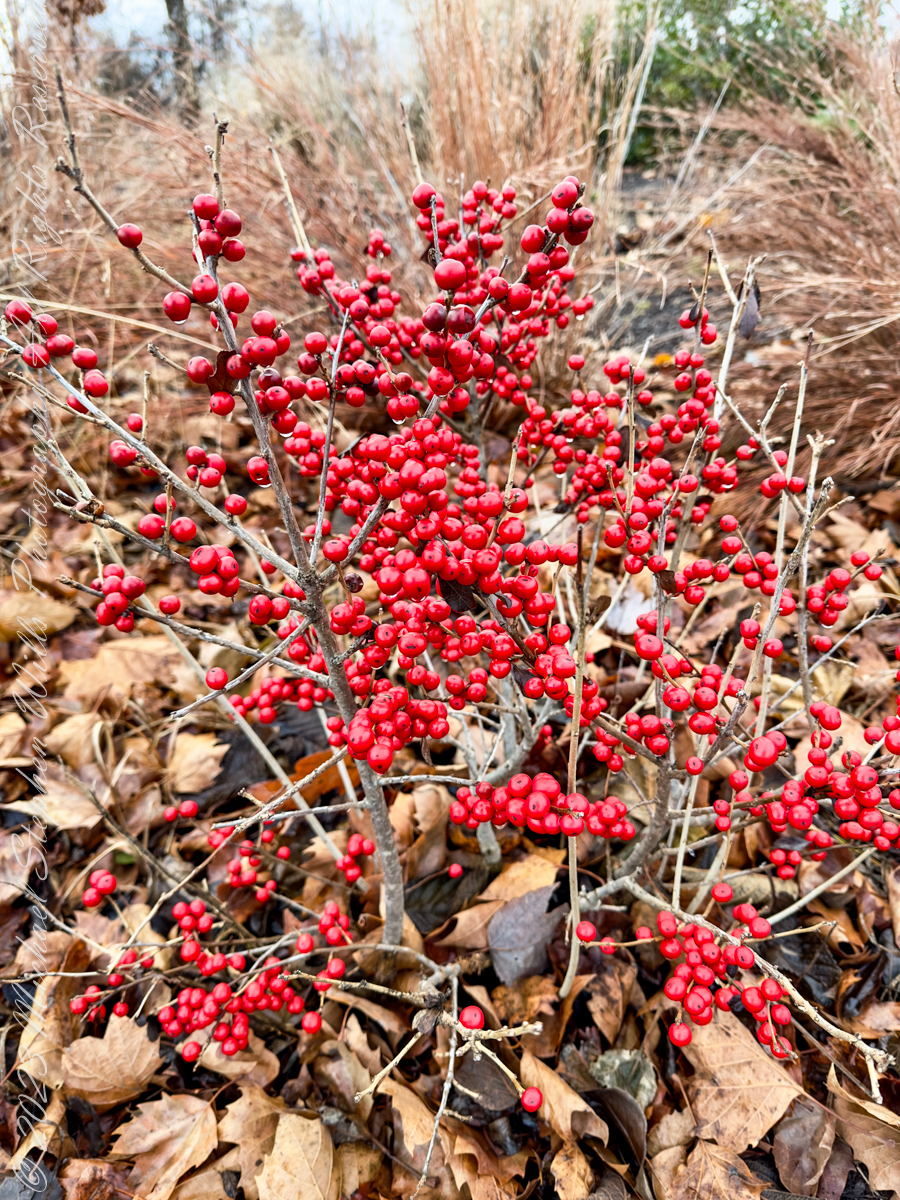
The shrub stood proudly in a private yard, fronting the street as if it were the guardian of the home behind it. I asked myself, “Why here, where the gardens were otherwise dormant, had this holly taken root and flourished?”
My quest for understanding led me down a path of discovery, starting with the friendly homeowner who was tending to the remnants of what once was a vibrant flower bed. With a smile as warm as the berries were cold to touch, he shared the story of the winterberry. It was a tale passed down from his grandmother, who had planted the holly many years ago. She believed that a touch of life in the dead of winter was a reminder that warmth would always return, a belief she wanted to pass on to those who were lucky enough to witness the winterberry in full splendor.
The berries, he explained, weren’t just a spectacle for the winter-weary human eye. They were a crucial source of sustenance for the winged residents of our town, robins among them, who feasted on the berries. Native Americans used the berries for medicine, thus the name “fever berries,” and never as food. He then expounded on the plant’s scientific name “Ilex verticillata.” The genus name “Ilex” is derived from the Latin name “Quercus ilex” for holm oak, which refers to the similarity of the leaves of holly and oak trees. The species name “verticillata” is derived from the Latin word verticillus, meaning “whorl” or “whorled,” which refers to the arrangement of the flowers in the leaf axils.
Armed with this knowledge, I came to appreciate the winterberry not just for its beauty, but for its role in the tapestry of life even in the depths of winter. The berries represented hope, sustenance, and the enduring cycle of life.
As I walked away, the emotional resolution was clear. The winterberry was a legacy, a living testament to the wisdom of those who came before us, teaching us to find joy in the little havens of life that persist even when all seems barren. It was a reminder that sometimes, the coldest days bring forth the warmest hearts — or in this case, the brightest berries.
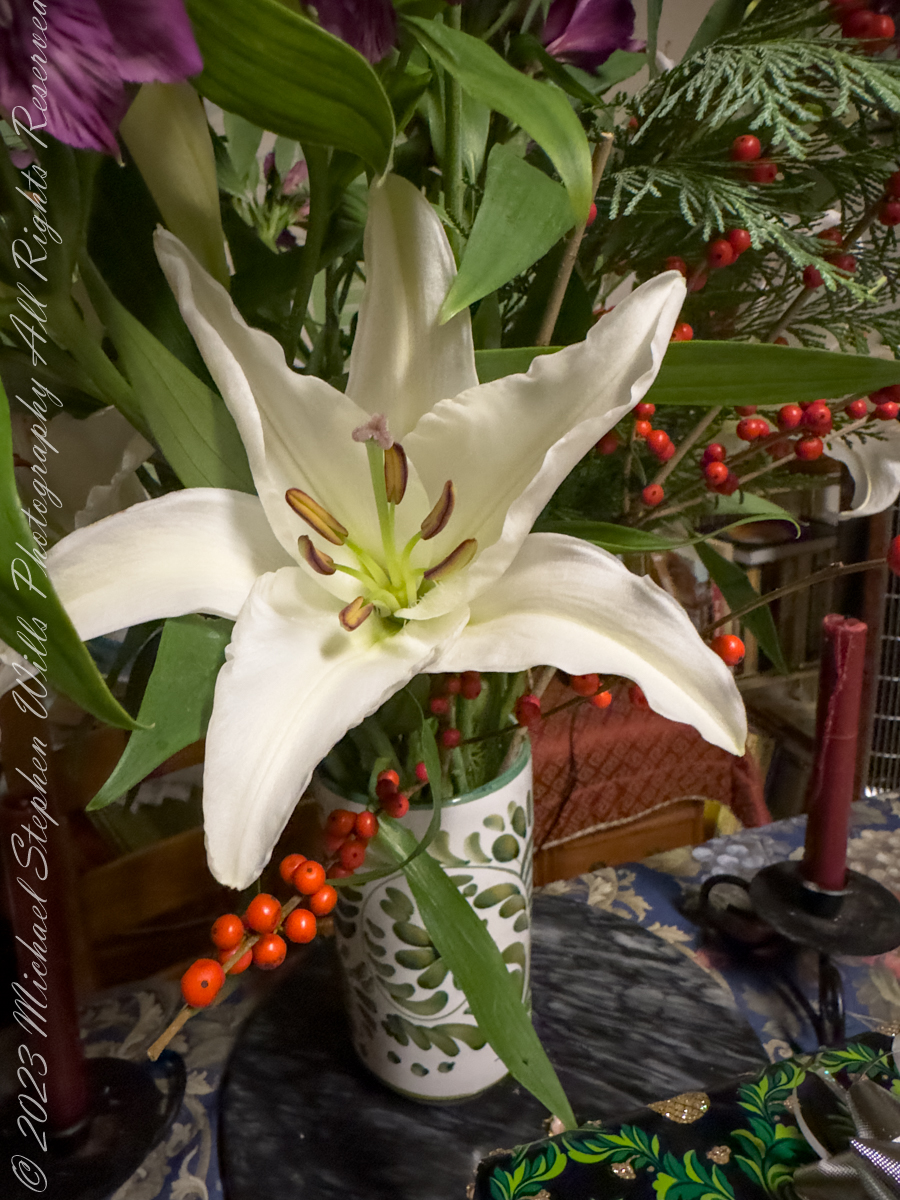
I returned home, my footsteps lighter than before, my spirit a bit brighter. The winterberry, with its humble endurance, had etched a simple but powerful message into my winter musings: life, in all its vibrancy, finds a way. And sometimes, it’s right there on a quiet street, in a private yard, waiting to be discovered and cherished.
 Michael Stephen Wills Photography