On the shores of Cocoa Beach, where the January winds dance freely, the once-proud towers of sand now stand humbled. What was sculpted by human hands—carefully packed and shaped with laughter—has become a relic of its former grandeur. The wind, with its gentle yet relentless touch, carves away at their edges, smoothing and softening their once-crisp lines. The castles, now mere echoes of their original form, hold a quiet dignity in their decay. Impermanence is their fate.
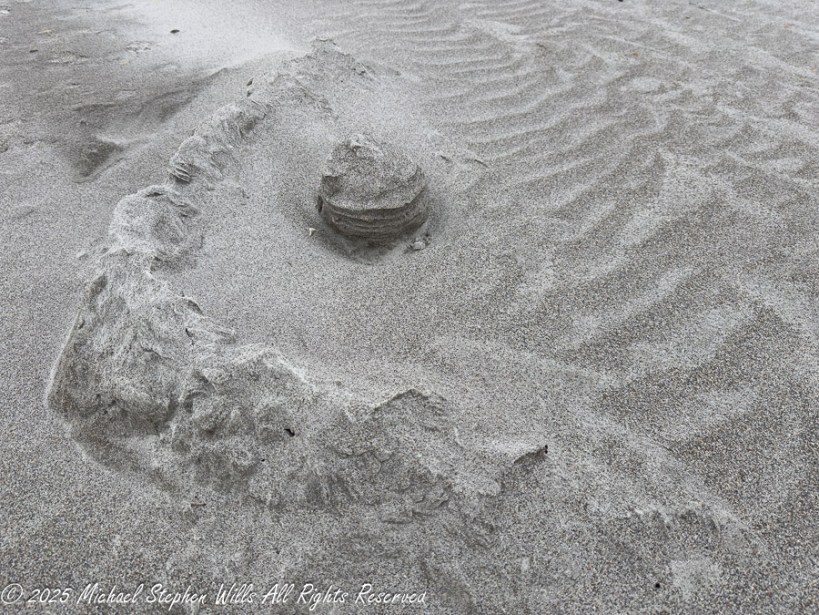
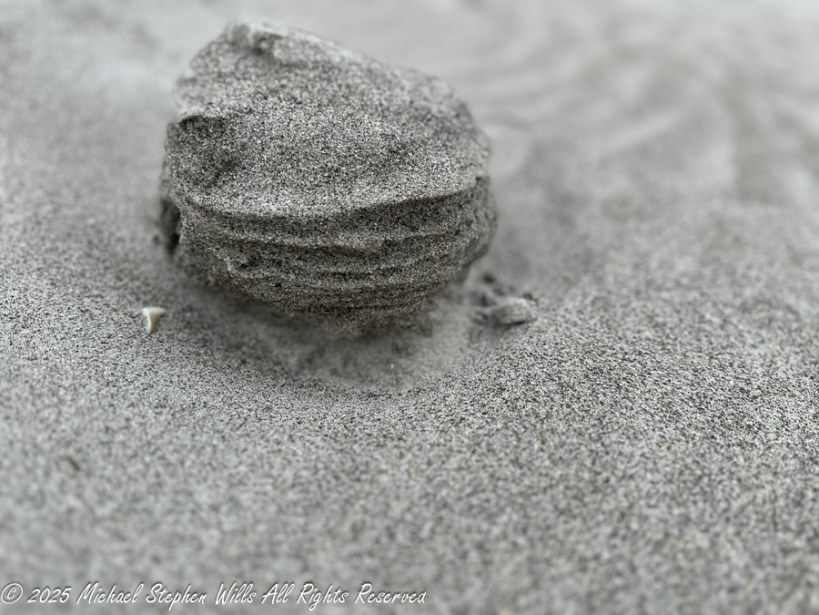
In the first photograph, the remnants of a sand fortress curve in a gentle arc, protecting a lone pillar—perhaps the last bastion of a crumbling empire. The textures of wind-blown ridges ripple across the sand like waves frozen in time, whispering of the invisible forces that shape the land. The delicate striations of the eroded peak, captured in close detail in the second image, reveal the layers of creation and destruction, each grain bearing witness to the ceaseless march of time.
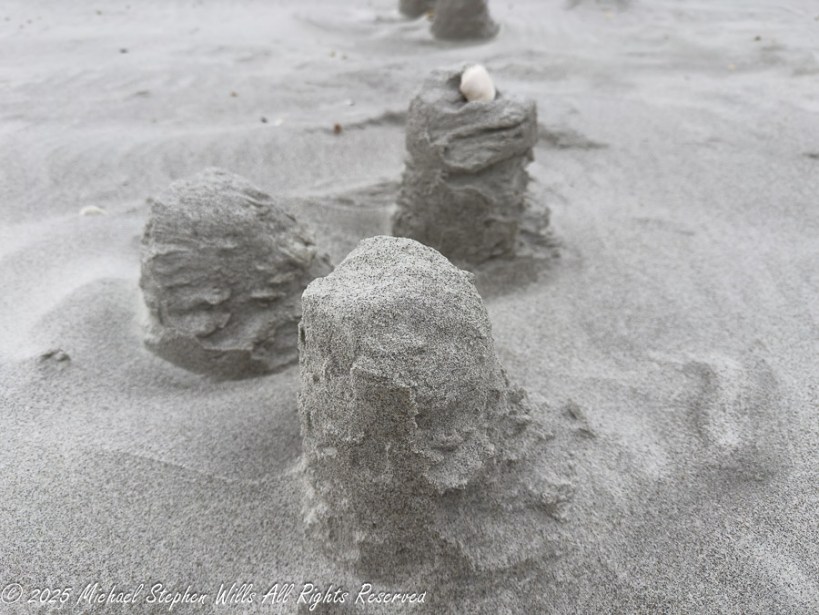
The third image brings a sense of companionship to this landscape of change. Like silent sentinels, the remaining sand pillars stand together, weathered but resolute. One wears a crown of a single shell—a reminder that even in the face of erosion, beauty persists. These fleeting structures, built in joy, now bow to nature’s artistry, embracing the inevitable with quiet grace.
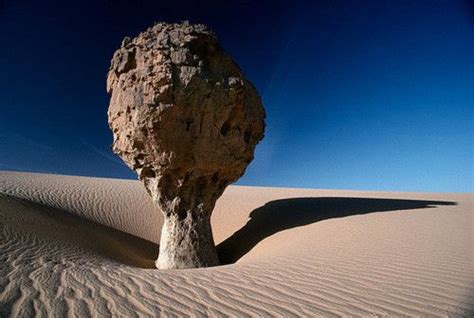
And yet, beyond the gentle shores of Cocoa Beach, in the vast and timeless expanse of the Sahara Desert, wind-carved monoliths stand as testament to the power of patience. The fourth photograph—an imposing formation shaped by millennia of desert winds—towers over the golden dunes, its shadow stretching far into the sands. Where the beach’s castles fall in a day, the desert’s sculptures endure for centuries, silent witnesses to the ebb and flow of time on a grander scale.
But are they so different? Whether in the fleeting impermanence of Cocoa Beach or the enduring vastness of the Sahara, the hand of the wind shapes all things. Each formation tells the same story—of creation, of erosion, and of transformation. They whisper to us that beauty is not defined by permanence, but by the dance between time and the elements.
As the sun sets over the beach, casting long shadows across the sand, one cannot help but marvel at the artistry of nature. Whether lasting an afternoon or an age, the sculptures of wind and sand remind us that all things are in motion, and every grain, every ripple, every fleeting moment holds a story waiting to be told.


I’m always amazed by sand sculptures
LikeLiked by 1 person
Nature is incredible! So beautiful!
LikeLiked by 1 person
So true, Ribana!
Nature’s artistry is unmatched, and the ever-changing sand formations at Cocoa Beach are a perfect example.
Have you ever come across a natural scene that took your breath away?
LikeLike
Wind is the persistent sculptor.
LikeLiked by 1 person
Well said, Hien!
The wind is indeed a tireless artist, shaping the landscape grain by grain.
It’s fascinating how something so invisible can leave such a lasting imprint on the world.
Have you seen any particularly striking examples of wind-sculpted landscapes?
LikeLike
Nature creates wonderfully beautiful art.
LikeLiked by 1 person
Absolutely, Matroos!
Nature is the ultimate artist, constantly shaping and reshaping the world around us.
The sand formations at Cocoa Beach are just one example of how erosion and time collaborate to create something truly mesmerizing.
Have you ever come across a natural formation that left you in awe?
LikeLiked by 1 person
Quite well. Especially in Luxembourg. Narrow rock outcrops and caves in the Luxembourg sandstone were created due to the fact that individual blocks separated from each other and slipped or tilted onto the underlying water-retaining marl layers.
Traces of weathering to which the rock is exposed can be seen everywhere. Particularly characteristic is the honeycomb weathering in calcareous rock, which is reminiscent of bee combs.
LikeLiked by 1 person
Just now I looked up the Mullerthal Trail….a wonderful find. Thanks so much Matroos. https://www.mullerthal.lu/discover-the-mullerthal-region/nature/geological-highlights
LikeLiked by 1 person
Nature’s artistic touch is all around us. The sculpture from the Sahara is amazing. Michael, you asked me in the Acrosanti post if I’ve visited the center in Columbus. I was late in answering so here’s my response: Since my daughter lives in Montana, I’ve been blessed with the experience of visiting this center. The surrounding landscape encompasses a nature park with the Scioto River serving as a backdrop.
LikeLiked by 1 person
I looked it up and there are many parks associated with the Scioto River….what is the name of the park as I’d like to know more. Thanks for the information, BigSkyBuckeye.
LikeLiked by 1 person
Michael, the park is part of the Columbus and Franklin County park system. The park is called Scioto Audubon Metro Park. The center that I shared is located within the park’s boundaries, and it is called the Grange Insurance Audubon Center.
LikeLike
Great, central city location. I have it marked on my map for the next time we visit Columbus.
LikeLiked by 1 person
Wonderful!
LikeLiked by 1 person