In a shaded hollow of Sapsucker Woods, where the hush of ancient time lingers like mist among the trees, the Interrupted Fern rises from the soft, damp floor with a quiet grace. Its fronds, broad and arching, seem less grown than unfurled—as if unrolling a memory held for millions of years.
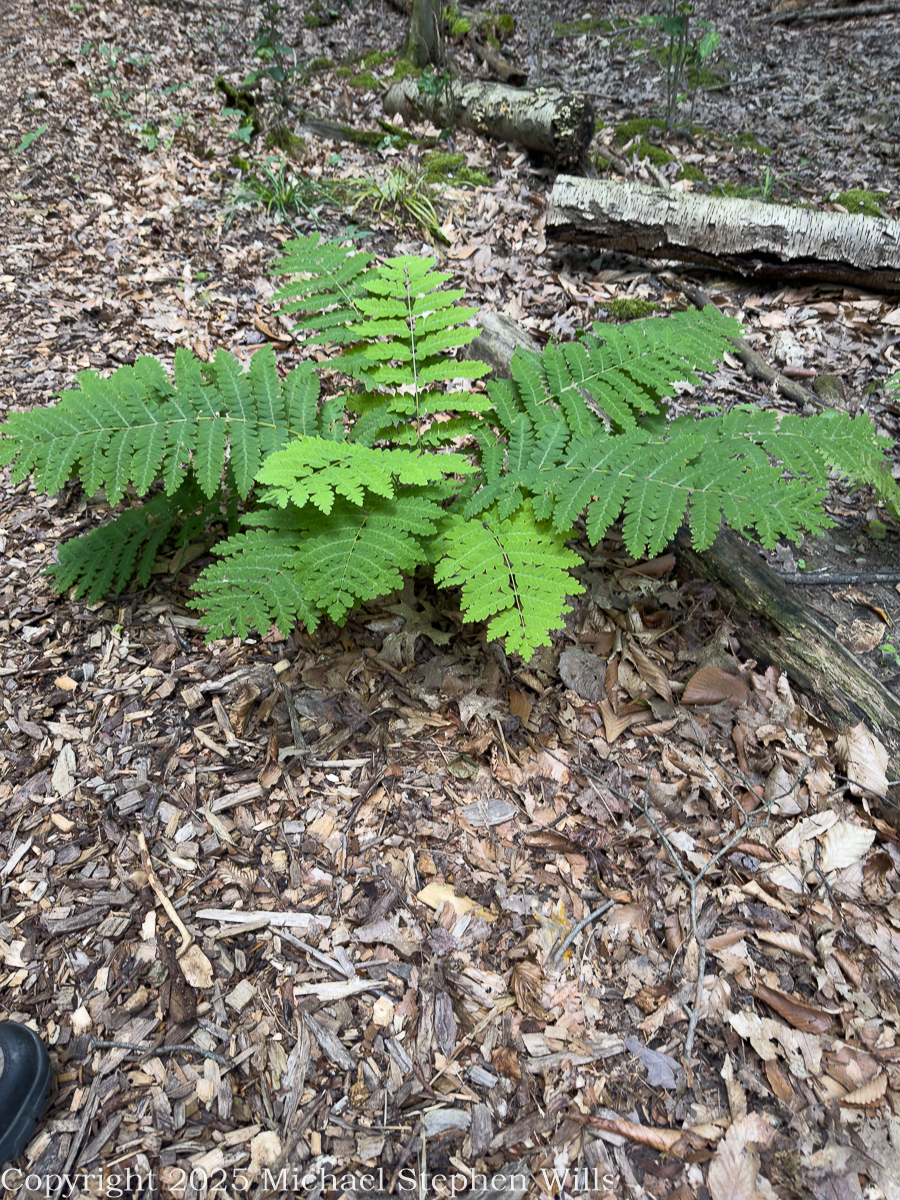
The plant’s name, Osmunda claytoniana, carries echoes of two worlds. “Osmunda,” perhaps once spoken in the sacred groves of northern Europe, is thought to honor a forgotten god—Osmunder, one of Thor’s names, a guardian of strength and storm. The species name pays tribute to John Clayton, an early colonial botanist who walked Virginia’s forests centuries ago and recognized in this fern a quiet marvel worth remembering.
And so this plant, whose lineage reaches back more than 200 million years, is rooted not just in soil and stone, but in language and lore.
The fern’s common name—Interrupted—describes the curious habit of its fertile fronds, which rise briefly in midsummer, dark and beadlike, then wither and vanish, leaving a ghostly gap midway up the blade. It is as though the plant had paused mid-sentence, letting silence speak where others would persist. In this interruption, the forest itself seems to take a breath.
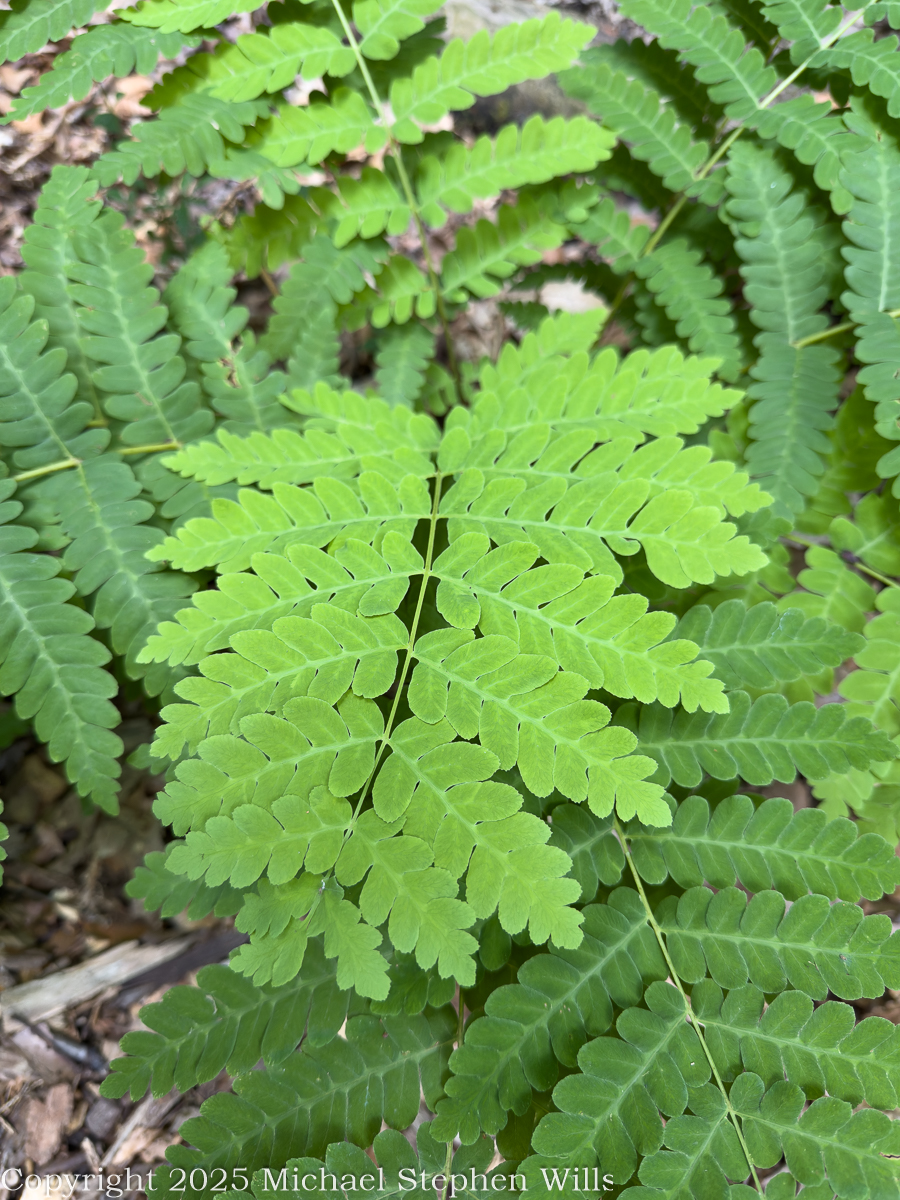
The roots of Osmunda claytoniana twist into fibrous mats beneath the soil. These rhizomes, dense and springy, were once harvested as osmunda fiber, prized by horticulturists for cradling delicate orchids—a gentle reminder of how often nature’s strength serves human fragility. And though the Interrupted Fern is not celebrated in pharmacopeias, its kin were used by Indigenous peoples as poultices for wounds, or brewed into mild tonics to ease internal aches—suggesting a long, quiet partnership with humankind.
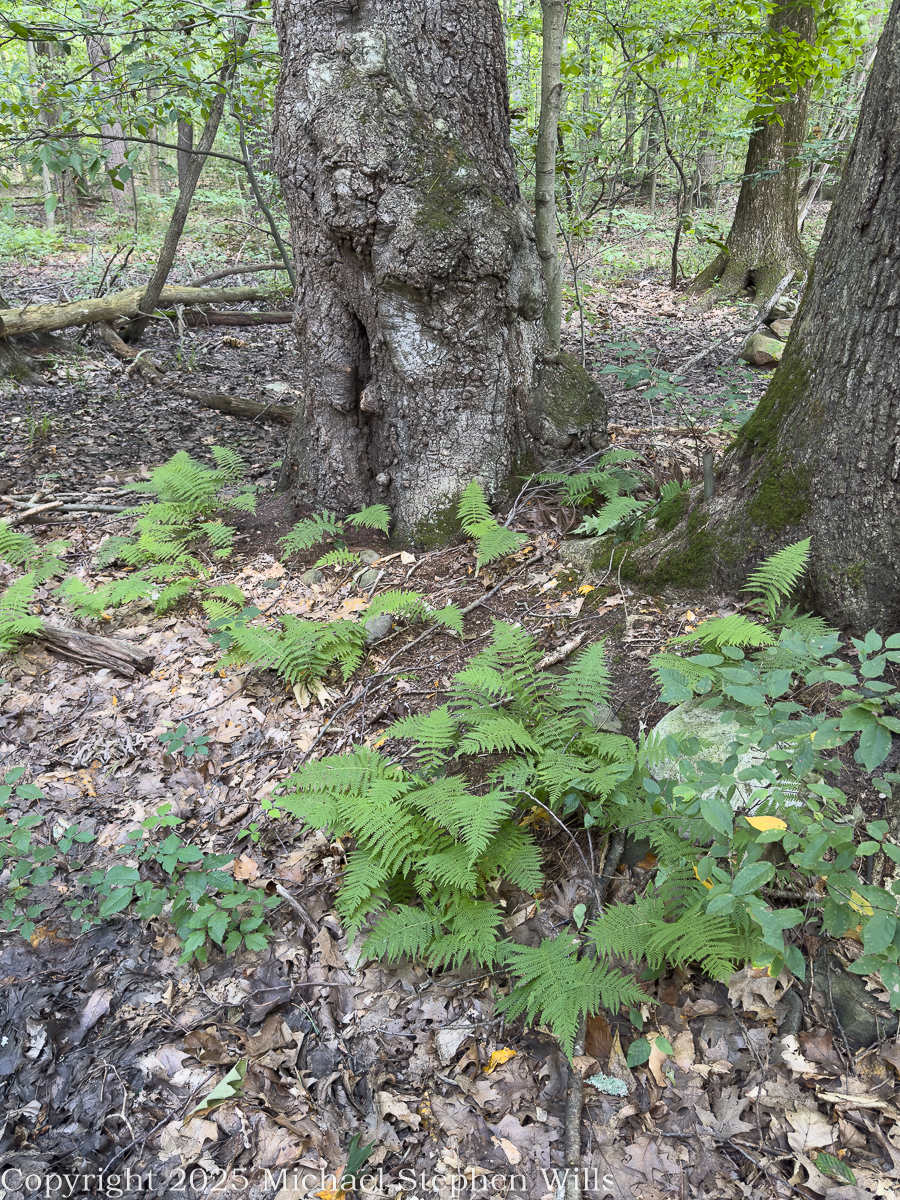
There is little need for blossoms or fragrance here. The beauty of this fern is in its restraint. Its fronds do not shout, but rather whisper of deep time, of shaded ravines and glacial meltwaters, of forests that once stood where oceans now roll. Some said ferns were touched by magic—that they bloomed only on Midsummer’s Eve and vanished before the eye could see. The Interrupted Fern, with its appearing and disappearing fronds, might well have inspired such tales.
And so, in the filtered light beneath the canopy, this ancient fern lives on—not as a relic, but as a quiet thread in the fabric of the living forest. To stand in its presence is to feel a kind of reverence—not for what is rare, but for what endures.
Enter your email to receive notification of future postings. I will not sell or share your email address.



So poetic Michael
LikeLiked by 1 person
Good morning, Sheree. I took a second look at the photo and discovered it was not the Sensitive Fern, but instead the Interrupted Fern. the essay was revised.
LikeLiked by 1 person
As if I would know the difference 🤭
LikeLiked by 1 person
Haha, fair enough, Sheree! Ferns can be tricky—nature loves her subtle disguises. I’m just glad you’re along for the journey, misidentifications and all. Thanks as always for reading and sharing in the discovery!
LikeLiked by 1 person
Pleasure as always Michael
LikeLiked by 1 person
Dear Michael, so beautifully and interestingly written. Best regards Sylvie
LikeLiked by 1 person
Thank you so much, Sylvie. I’m truly glad you found it both beautiful and interesting. Nature offers such rich stories—it’s a joy to bring them to life through writing and to share them with thoughtful readers like you.
LikeLiked by 1 person
Inspiring post! Michael, thank you for sharing the resilience of the Sensitive Fern. At a nearby nature park, I have witnessed the steadfast attitude of tiny saplings springing up through the landscape’s following the melting of winter’s snow.
LikeLiked by 1 person
Thank you, BigSkyBuckeye. I always appreciate your thoughtful reflections. There’s something deeply moving about those early signs of renewal—whether it’s a Sensitive Fern reclaiming its place or saplings pushing up through thawed ground. Nature’s quiet resilience never ceases to inspire, especially in those tender moments just after winter’s retreat. I imagine that nature park near you must be a rewarding place to watch the seasons unfold.
LikeLike
Great written and good photos of course.
Many greetings, Ben
LikeLiked by 1 person
Thank you so much, Ben! I’m really glad you enjoyed the writing and photos. It means a lot coming from a fellow nature enthusiast. Many greetings to you as well—hope you’re finding beauty in your own corner of the world!
Warm regards,
Michael
LikeLiked by 1 person
Hello Michael,
It is always a real treat to learn more about the nature of your beautiful hometown through your thoughtful observations and beautiful images. Sapsucker Woods in the summer looks to be another world from what we experienced back in deep Winter. But so beautiful in all seasons.
We hope summer has been good so far, and all our best to your wife and lovely grandsons☺️
LikeLiked by 2 people
Dear Takami,
Thank you so much for your kind words—it always means a great deal coming from you. I often think back to our winter walk in Sapsucker Woods, the snow muffling every sound, the trees bare and brimming with quiet mystery. How different the woods feel in summer—alive with birdsong, ferns unfurling, and the shimmer of dragonflies along the water’s edge. I would love for us to share that season together someday too.
Summer here has been gentle and generous, and I’ll pass along your warm wishes to Pam and the boys—they’ll be touched. Hoping your summer in Japan has been just as peaceful and full of wonder.
With gratitude,
Michael
LikeLike