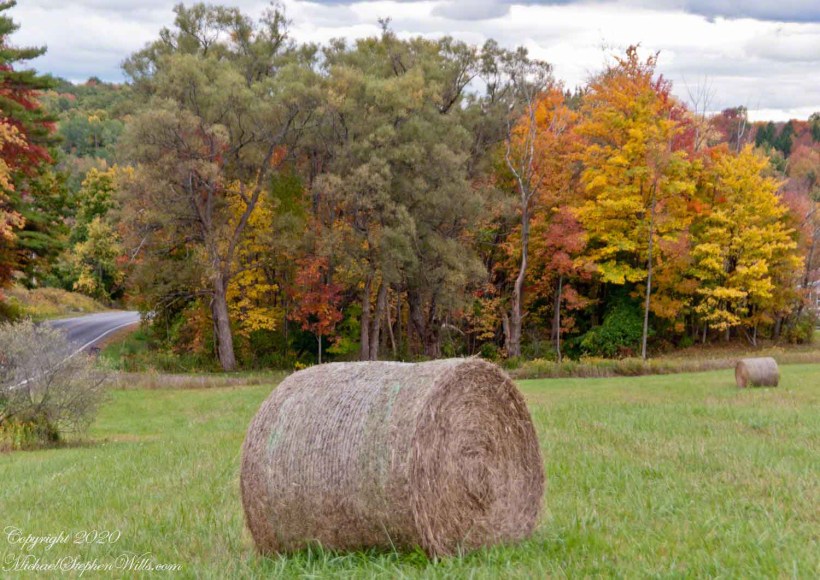
Dry grass gathered for winter feed on Durfee Hill.
Click image for a larger version.
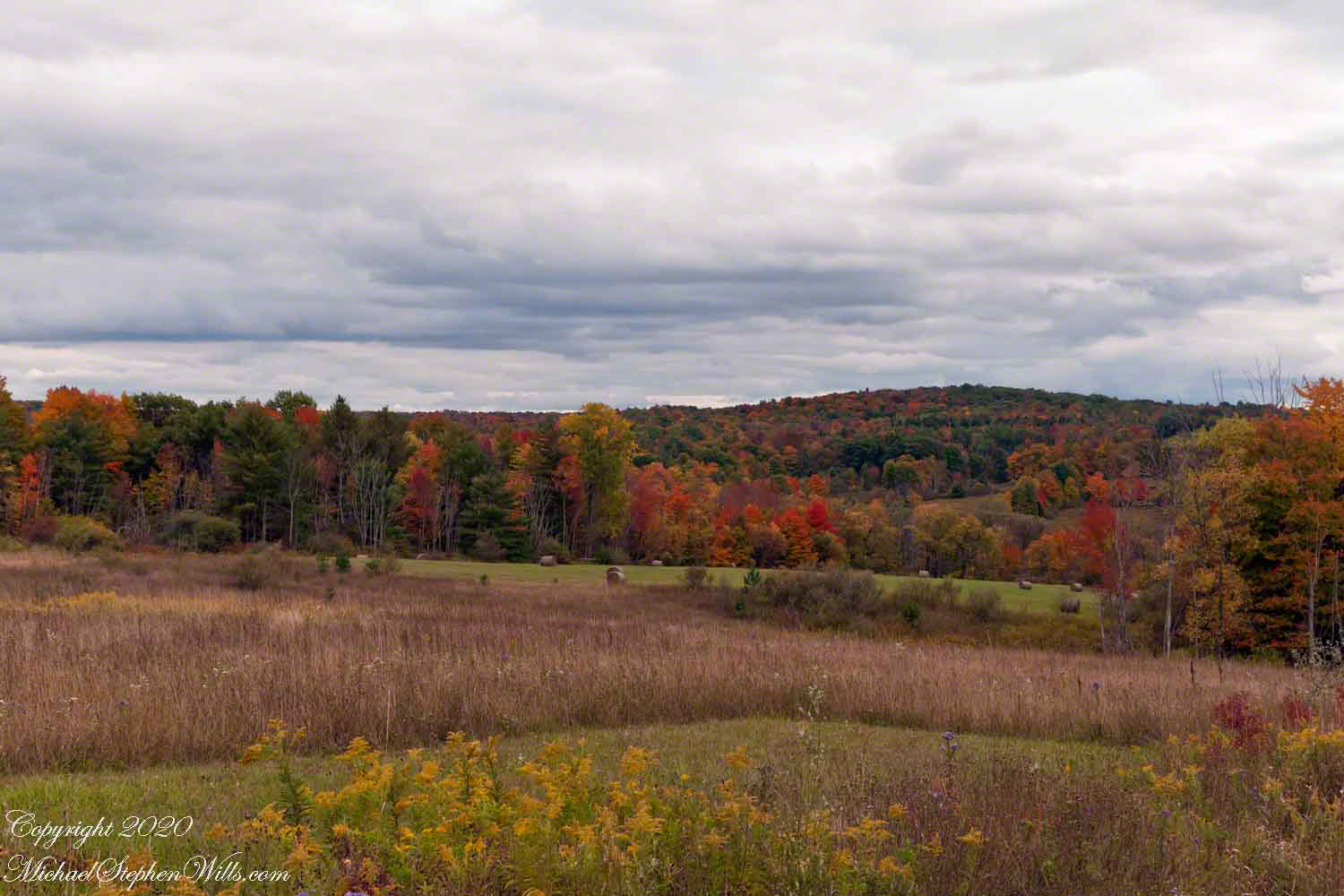
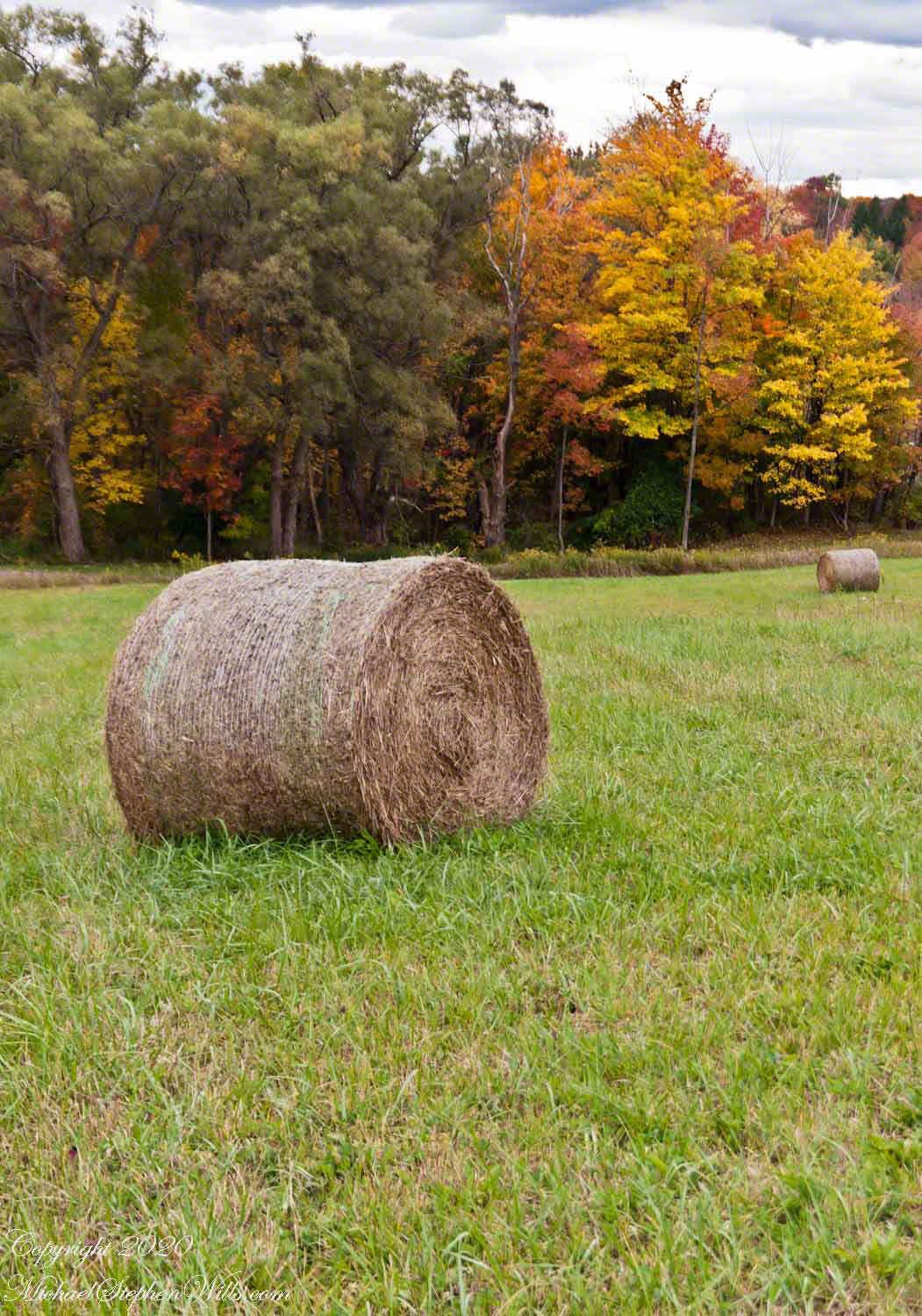
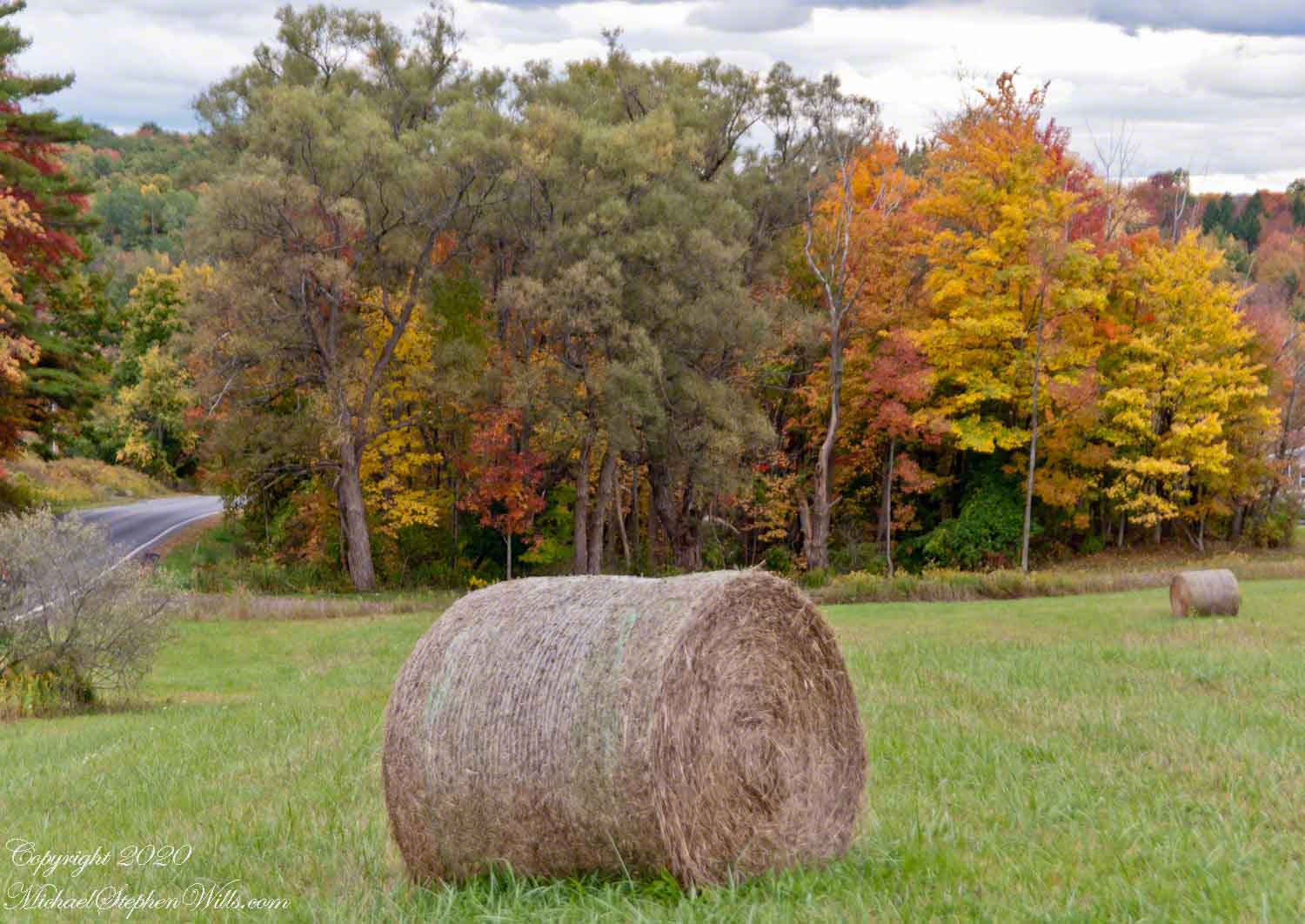
Haymaking, the age-old agricultural practice of harvesting, drying, and storing grasses and leguminous plants, has been central to sustaining livestock throughout history, especially during seasons when fresh pasture is not available. This practice, rooted in necessity and refined by tradition, embodies the intersection of human ingenuity with the rhythm of nature.
Origins of Haymaking
The origins of haymaking can be traced back to a time when early agricultural communities recognized the need to store feed for animals during lean seasons. While the exact timeline of its inception is hard to pin down, ancient texts and artifacts suggest that the process of drying and storing grass as hay has been practiced for millennia. Early haymaking was predominantly manual, relying heavily on the natural process of sun drying.
The Process of Haymaking
Haymaking usually begins with mowing, the act of cutting down the grass when it has reached its peak nutritional value, just before or as it starts flowering. After mowing, the grass is left on the field to dry, a process known as ‘tedding’. The drying process is crucial as it prevents the growth of mold and bacteria which can spoil the hay and make it unsafe for consumption.
To facilitate even drying, the cut grass is often turned over, or ‘tedded’, using specialized equipment or manually with pitchforks. This ensures that the moisture from the bottom layers of the grass is exposed to the sun and air. Once dried, the hay is raked into rows to prepare for the final stage of baling. Baling involves compacting the dried hay into bundles, making it easier for transportation and storage. Over the years, bales have evolved from simple tied bundles to more compact and uniform shapes, thanks to modern machinery.
The Importance of Haymaking
Haymaking is more than just a routine agricultural activity; it’s a lifeline for livestock farmers. Properly made hay provides essential nutrients to animals like cattle, sheep, and horses during winter months when fresh grass is scarce. Moreover, for dairy farmers, the quality of hay can directly impact the quality and quantity of milk produced.
Furthermore, the economic implications of haymaking are significant. A successful haymaking season can mean the difference between a profitable year and financial strain, especially in areas heavily dependent on livestock farming.
Modern Advances and Challenges
With the advent of technology, the haymaking process has seen numerous advancements. Modern machinery, from mowers to balers, has made the process more efficient, reducing the time and labor required. Advances in weather prediction tools have also assisted farmers in choosing the optimal time for haymaking, maximizing the chances of getting dry weather which is crucial for the process.
However, haymaking, like many agricultural practices, faces challenges in the modern era. Climate change and its resultant unpredictable weather patterns pose significant risks. Unexpected rains during the drying phase can severely affect the quality of hay. Moreover, urbanization and changing land use patterns are reducing the available land for hay cultivation.
Conclusion
Haymaking, as an agricultural practice, exemplifies the human endeavor to harness nature’s bounty for sustenance. From its ancient origins to modern implementations, it remains a testament to the farmer’s deep understanding of the land and its cycles. In a broader sense, haymaking underscores the importance of preparedness, of looking ahead and planning for the future, a lesson that resonates well beyond the confines of agriculture. As we face contemporary challenges, revisiting and valuing such practices can offer insights into sustainable and harmonious living.
P.S. Reader BigSkyBuckeye offered this insight, “Having lived many years in rural, ranching communities, one sees the lifeline of hay for winter feeding of cattle. One important note–most ranchers separate their stacks of bails with some distance, so a lightning strike doesn’t consume every bail.”
Copyright 2023 Michael Stephen Wills All Rights Reserved
 Michael Stephen Wills Photography