While beachcombing I witnessed an awe-inspiring moment where tranquility meets military prowess.
Discover the captivating blend of nature and technology in my latest post.
As I approached the placid stretch of sand known as Second Beach, adjacent to the Patrick Space Force Base, the Atlantic breeze carried a tang of salt that mixed with the distant, almost imperceptible hum of powerful engines. The sand, still cool beneath my feet, bore the imprints of morning walkers and the scuttle marks of sandpipers. It was a peaceful canvas, soon to be underscored by the might of aviation prowess.
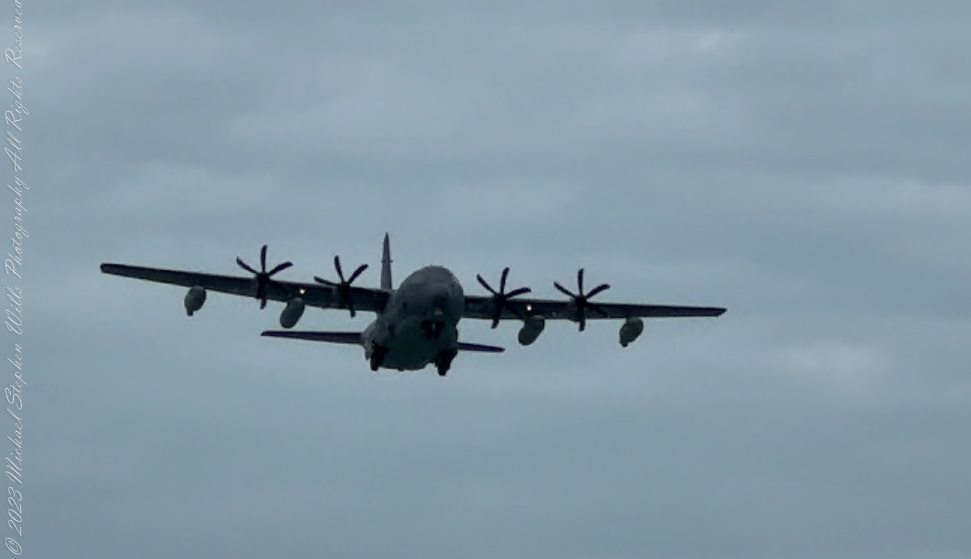
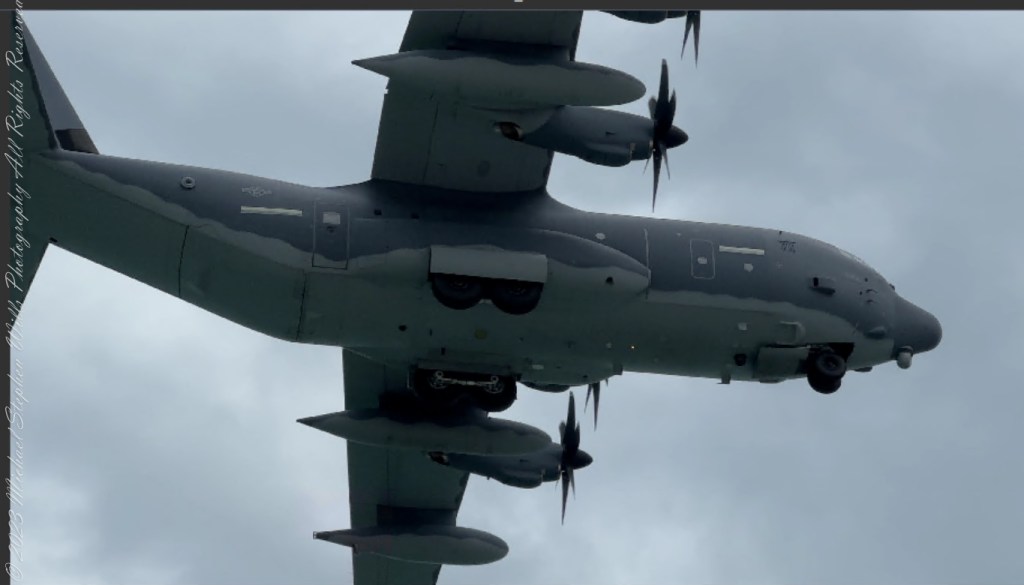
Having walked barely a tenth of a mile along the shoreline, the tranquil horizon was interrupted by the advancing silhouette of the Lockheed Martin C-130J Super Hercules. The Hercules, a titan of the skies, made its approach, its four Rolls-Royce AE 2100D3 turboprop engines altering the cadence of the ocean’s whispers. There’s a unique blend of awe and humility one feels in the presence of such human engineering, a craft capable of touching the farthest reaches of the globe, delivering hope or strategic might with equal prowess.
The Lockheed Martin C-130J Super Hercules is an extensive update of the C-130 Hercules, primarily involving new engines, avionics, and structural improvements. Here’s a more detailed look into the aircraft’s features and capabilities:
Engines and Performance:
The C-130J is powered by four Rolls-Royce AE 2100D3 turboprop engines, each driving a six-bladed composite propeller.
It’s capable of taking off from unprepared runways for expeditions, emergencies, or other complex missions.
Avionics and Systems:
The flight deck features modern avionics with heads-up displays (HUDs) for each pilot and advanced navigation systems.
It is equipped with a digital autopilot, improving performance and reducing crew workload.
Capacity and Versatility:
The C-130J can carry more than 40,000 pounds of cargo and has a range of about 2,000 nautical miles with a 35,000-pound payload.
It can accommodate a wide variety of cargo, including vehicles, pallets, and personnel or airdrop loads.
The aircraft is air-refuelable, extending its range for prolonged missions.
Design Improvements:
Enhanced structural design allowing for a greater lift and having a higher maximum takeoff weight than previous C-130 models.
The “J” model incorporates a longer fuselage than the original C-130H.
Operational Use:
The C-130J is used by the United States Air Force, the Marine Corps, and the Coast Guard, as well as numerous allied nations around the world.
Its roles include medevac, airborne assault, search and rescue, scientific research support, weather reconnaissance, aerial refueling, maritime patrol, and aerial firefighting.
Upgrade and Maintenance:
The C-130J has been continually updated with new technology and systems since its initial deployment to maintain its operational capabilities and extend its service life.
A robust maintenance and upgrade program supports global operations in varied and harsh environments, ensuring readiness and reliability.
With its combination of speed, range, and airlift
As the Hercules descended, its shadow enveloped my position, transient and thrilling. The aircraft’s formidability was evident in the robust structure and the propellers cutting through the air with surgical precision. The six-bladed composites, in harmonious rotation, seemed like the spokes of some celestial chariot, ushering the giants of the sky onto the earthly stage. Even as it neared the runway, the versatility of the Super Hercules was unmistakable; crafted for austere conditions, yet here it was, gliding over a picturesque landscape, a sentinel on a peaceful mission.
The Hercules passed overhead with a display of grace uncharacteristic of such a large aircraft, the whirring of its engines a testament to the ceaseless vigil it keeps across the skies. As it touched down, the craft transformed from a spectral giant back into a tangible instrument of air superiority and logistical support.
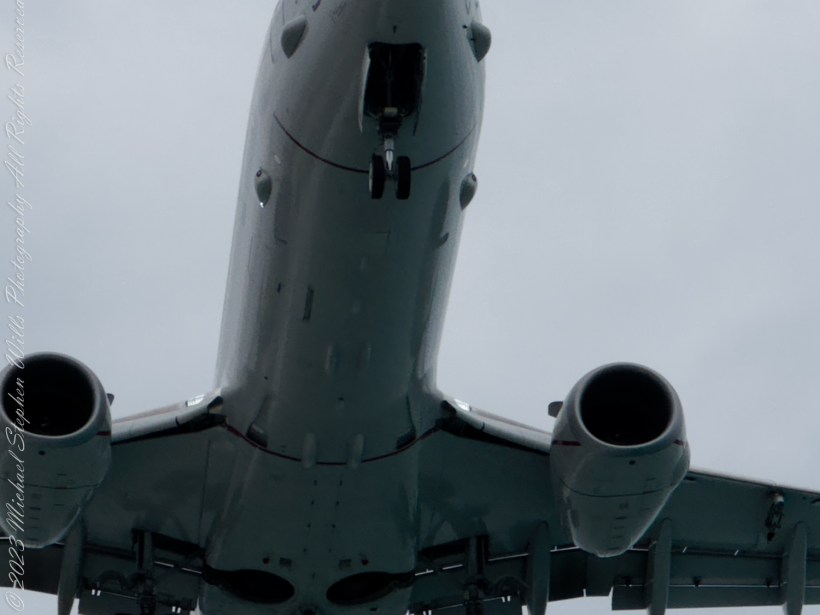
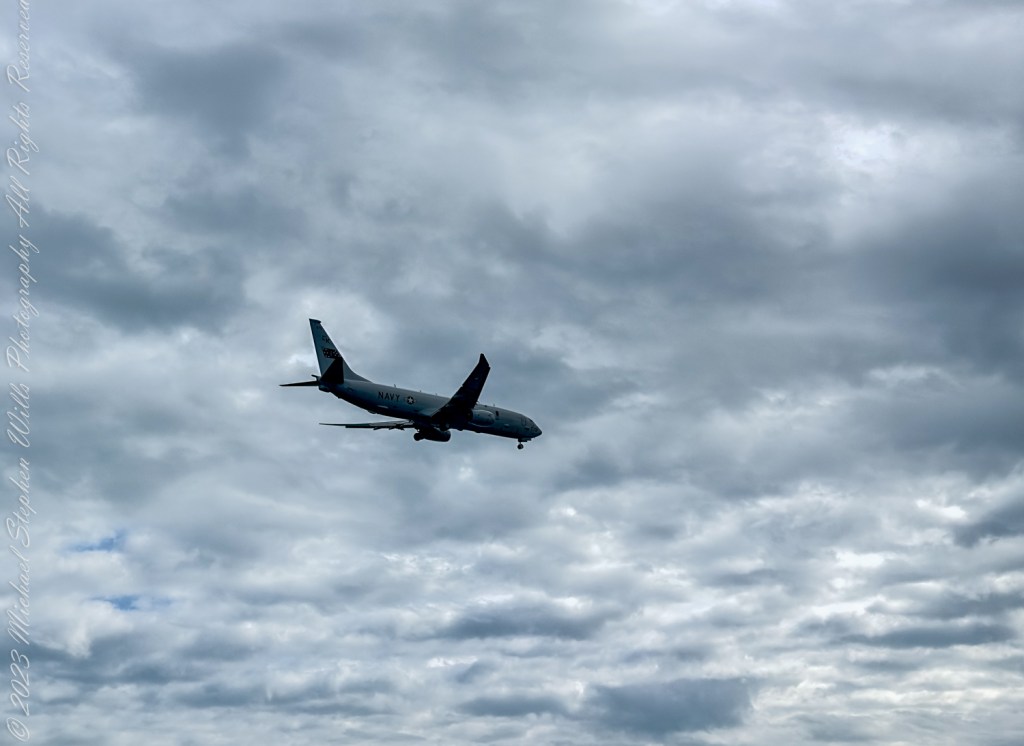
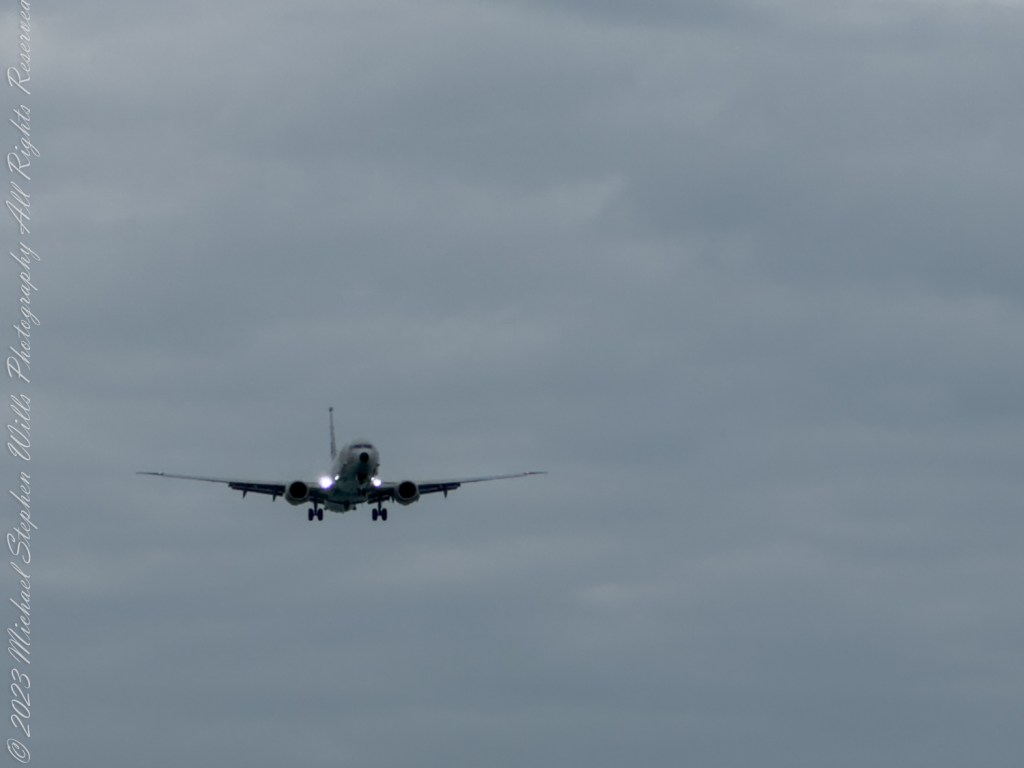
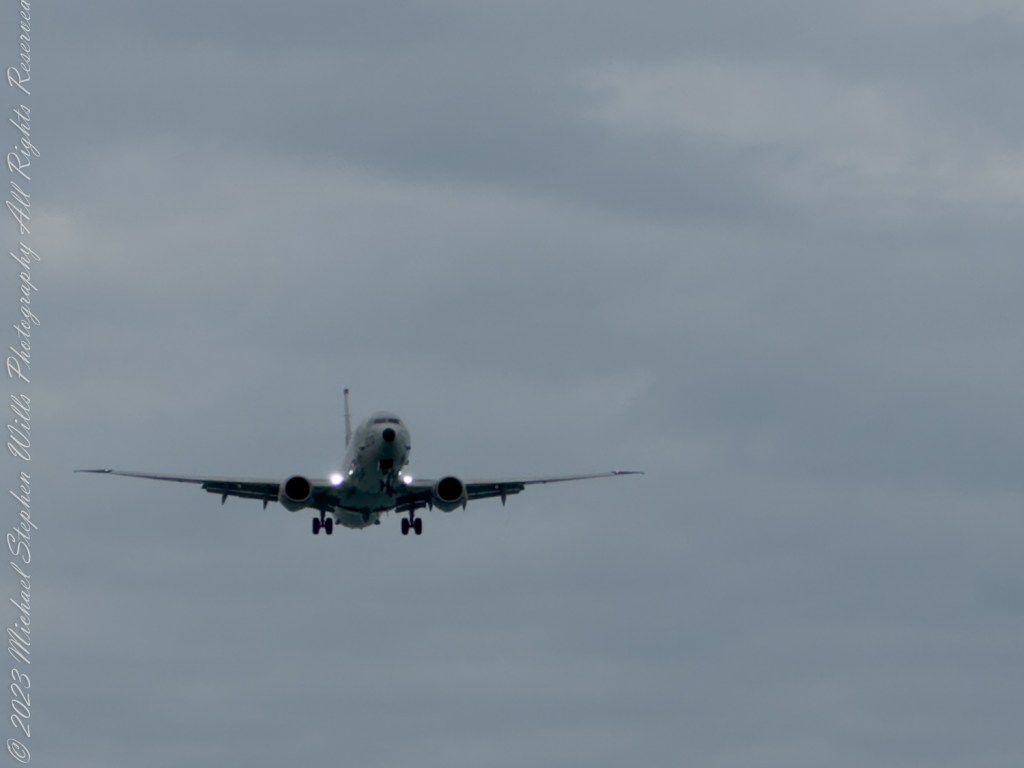
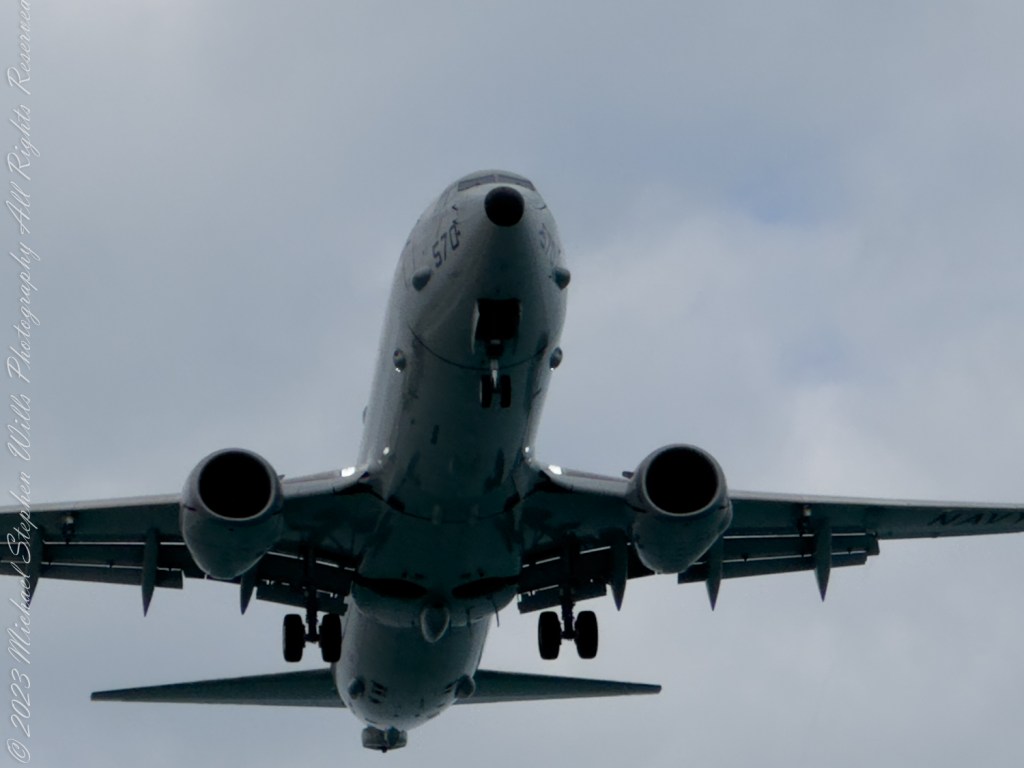
After an interlude of peaceful wave breaks another form caught my eye. The sleek, more modern contours of the Boeing P-8 Poseidon emerged from the azure, its twin engines a whisper of progression against the roar of the Hercules before it. This maritime patrol aircraft, with its lineage traced back to the reliable Boeing 737, represents the evolution of aerial surveillance and anti-submarine warfare.
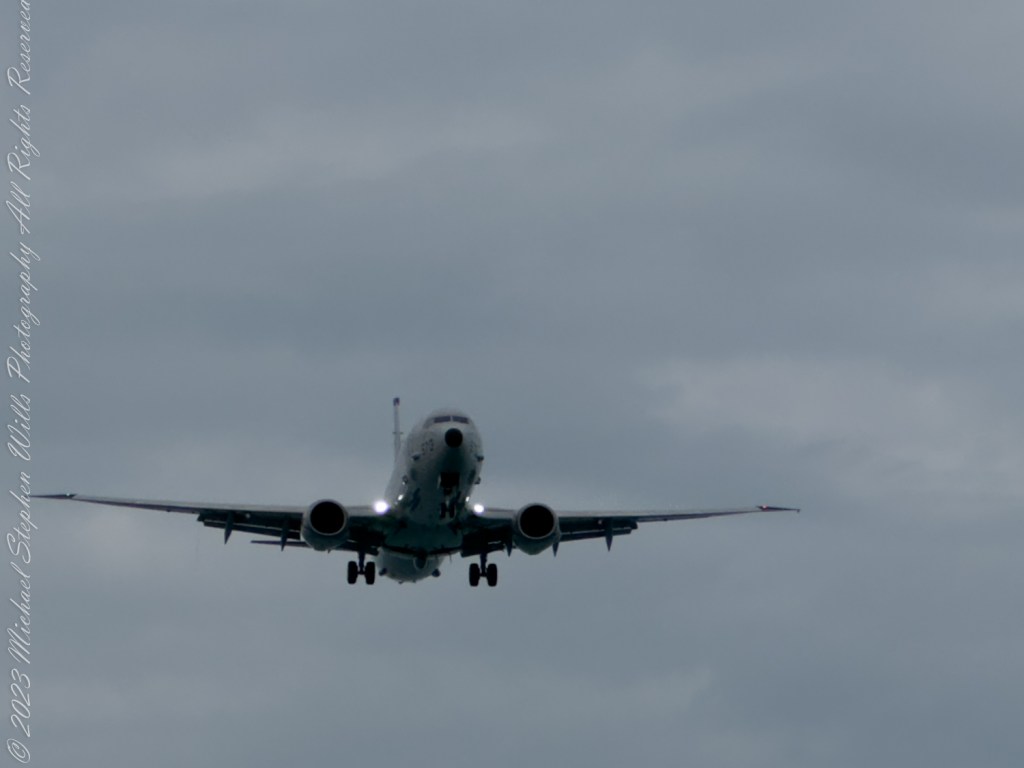
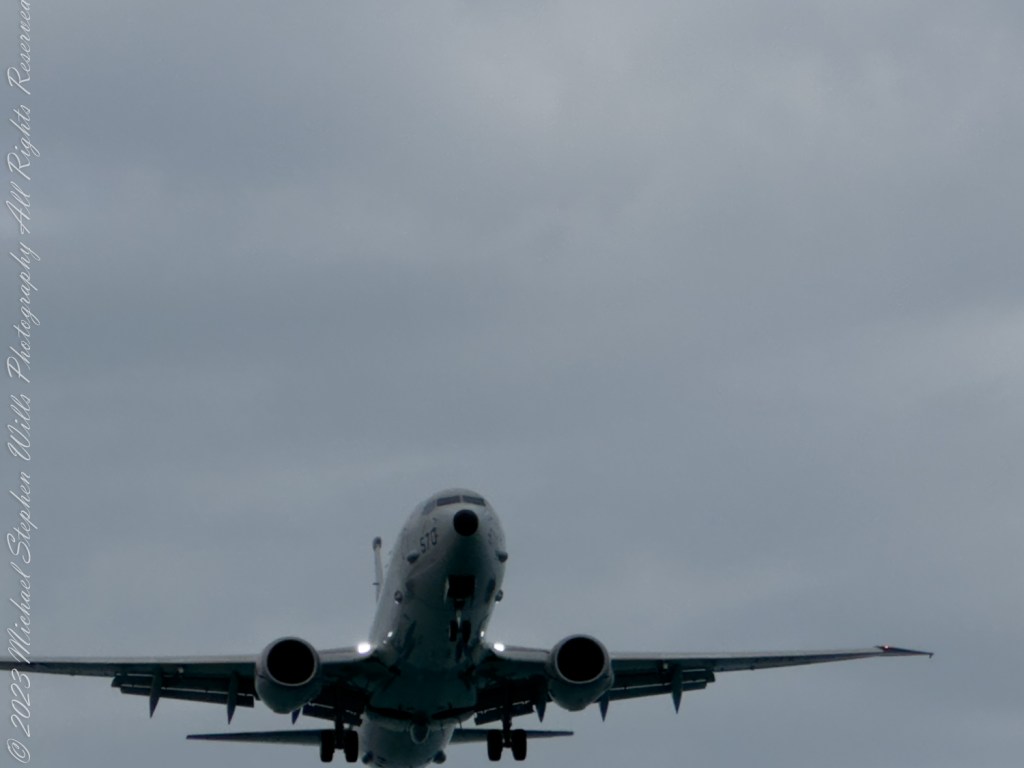
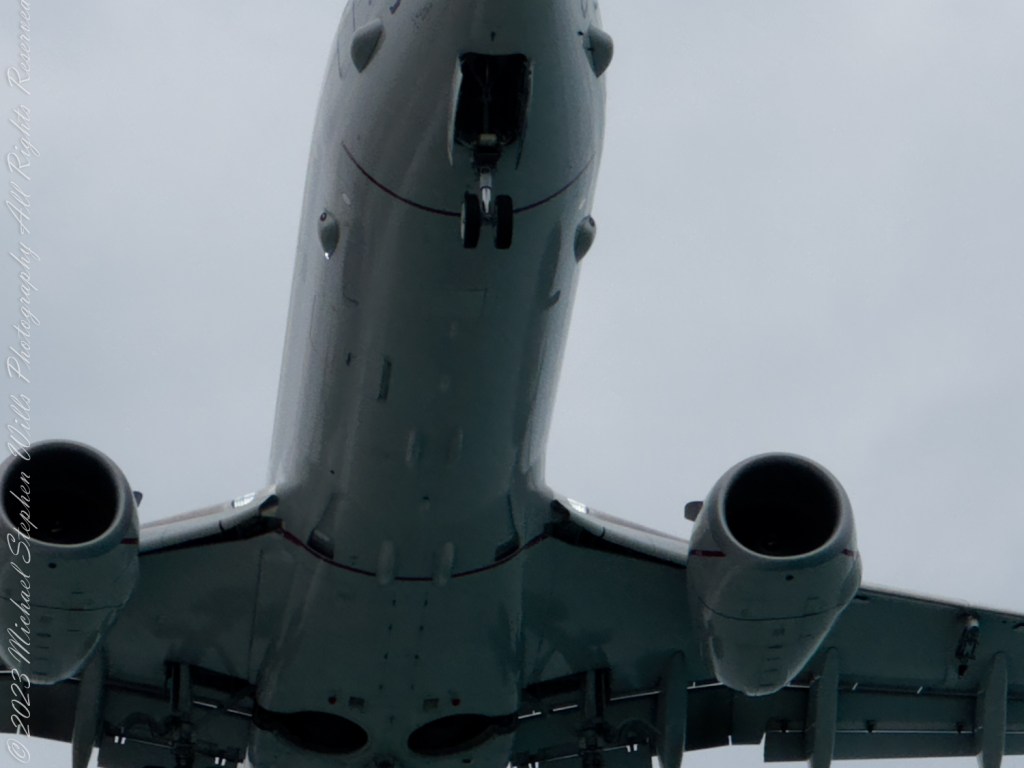
As the P-8 Poseidon drew closer, descending with an elegant ease, its profile cut a striking contrast against the gray clouds above. Its advanced radar arrays, mounted under the wings and fuselage, hinted at the craft’s hidden eyes—eyes that watch over the ocean’s expanse with vigilance. There was an undeniable presence of precision and technological advancement that surrounded the Poseidon as it sailed through the air.
The Boeing P-8 Poseidon is a highly advanced, long-range, anti-submarine warfare (ASW), anti-surface warfare (ASuW), and intelligence, surveillance, and reconnaissance (ISR) aircraft. It’s a military derivative of the Boeing 737 Next-Generation airplane and is used primarily by the U.S. Navy.
Key features and capabilities include:
Advanced Sensors: The P-8 is equipped with a state-of-the-art sensor suite that allows it to track both surface ships and submarines. The aircraft carries a maritime radar, a high-definition electro-optic/infrared (EO/IR) camera, and an advanced magnetic anomaly detector (MAD) for submarine hunting.
Communication and Combat Systems: It features a secure and interoperable communication system that enables real-time data-sharing with other assets in the battle space. The P-8 has an advanced mission control system that helps gather and process surveillance data.
Armament: The P-8 can carry torpedoes, Harpoon anti-ship missiles, and other weapons. It has both internal and wing-mounted hardpoints for weapons storage and delivery.
Operational Range: The aircraft has an extended operational range, capable of long-duration missions and covering vast areas of ocean on a single sortie.
Survivability: Being a modern military aircraft, the P-8 includes defensive systems to protect against surface-to-air threats.
Versatility: While primarily designed for maritime patrol, the P-8 also supports a wide range of missions, including search and rescue, shipping protection, and electronic intelligence gathering.
It passed over with a smoothness that belied its tactical purpose, a guardian of the seas ensuring the unseen threats remained held at bay. It was an ethereal sight, the embodiment of modern warfare’s stealth and strategic intelligence. The Poseidon’s landing gear, deployed and ready, connected with the tarmac in a seamless dance of man, machine, and purpose.
Standing there, I felt enveloped in a narrative much larger than myself—a narrative of human ingenuity, the relentless pursuit of security, and the silent promise of guardianship from above. With the passing of these large warplanes, I was reminded of the thin line between serene shores and the turbulent skies, and the ever-vigilant watch kept by these titans of the sky.
Copyright 2024 Michael Stephen Wills All Rights Reserved
 Michael Stephen Wills Photography