Click Me for my Online Gallery
It was from reviewing this photograph, and others, I realized the photo of the woman being evacuated did not include the guardhouse. That is the guardhouse high above us.
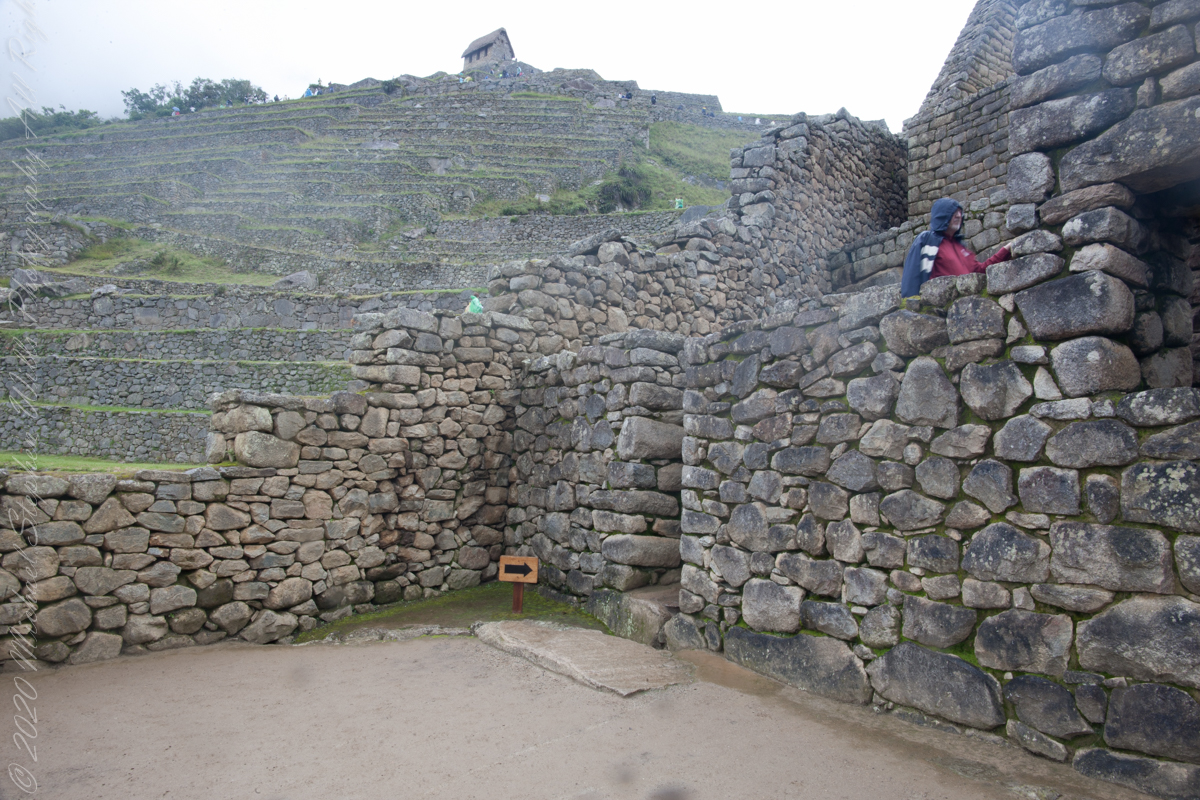
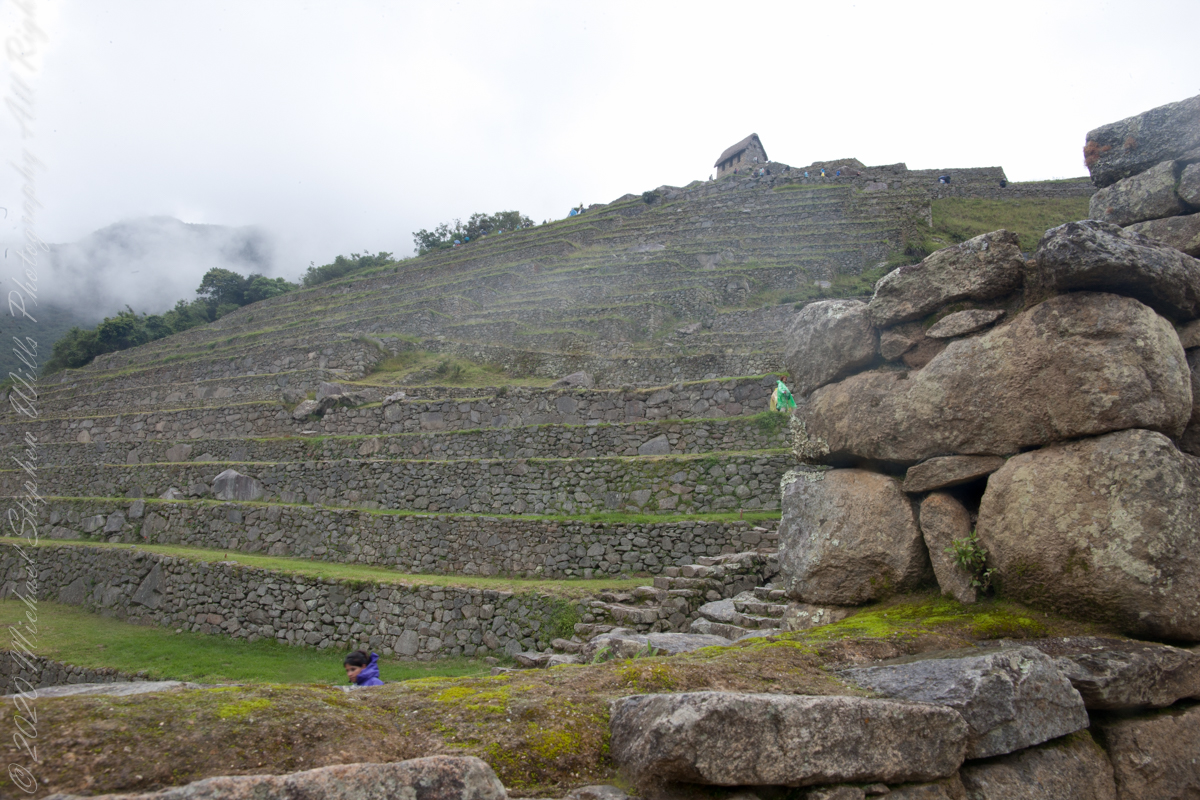
This photo taken from the rock wall foreground in previous photo.
“Embedded within a dramatic landscape at the meeting point between the Peruvian Andes and the Amazon Basin, the Historic Sanctuary of Machu Picchu is among the greatest artistic, architectural and land use achievements anywhere and the most significant tangible legacy of the Inca civilization. Recognized for outstanding cultural and natural values, the mixed World Heritage property covers 32,592 hectares of mountain slopes, peaks and valleys surrounding its heart, the spectacular archaeological monument of “La Ciudadela” (the Citadel) at more than 2,400 meters above sea level. Built in the fifteenth century Machu Picchu was abandoned when the Inca Empire was conquered by the Spaniards in the sixteenth century. It was not until 1911 that the archaeological complex was made known to the outside world.“
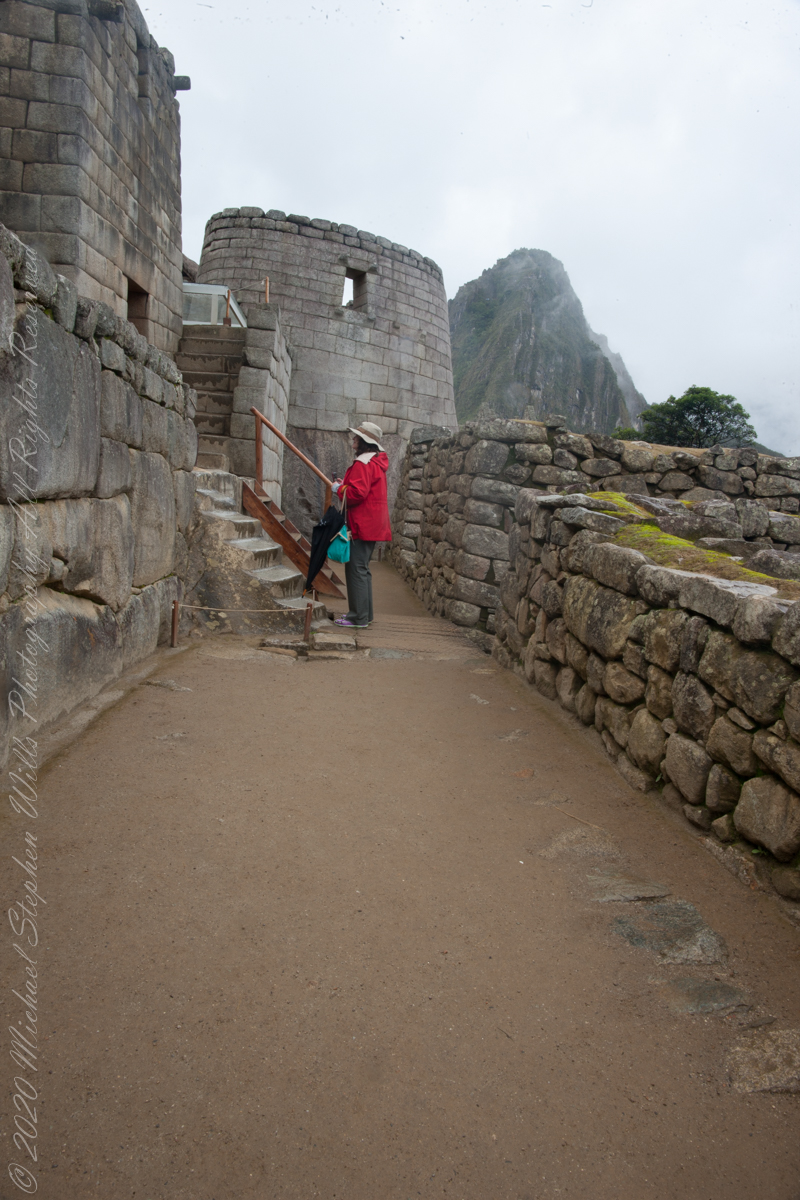
“The approximately 200 structures making up this outstanding religious, ceremonial, astronomical and agricultural center are set on a steep ridge, crisscrossed by stone terraces. Following a rigorous plan the city is divided into a lower and upper part, separating the farming from residential areas, with a large square between the two. To this day, many of Machu Picchu’s mysteries remain unresolved, including the exact role it may have played in the Incas’ sophisticated understanding of astronomy and domestication of wild plant species.“
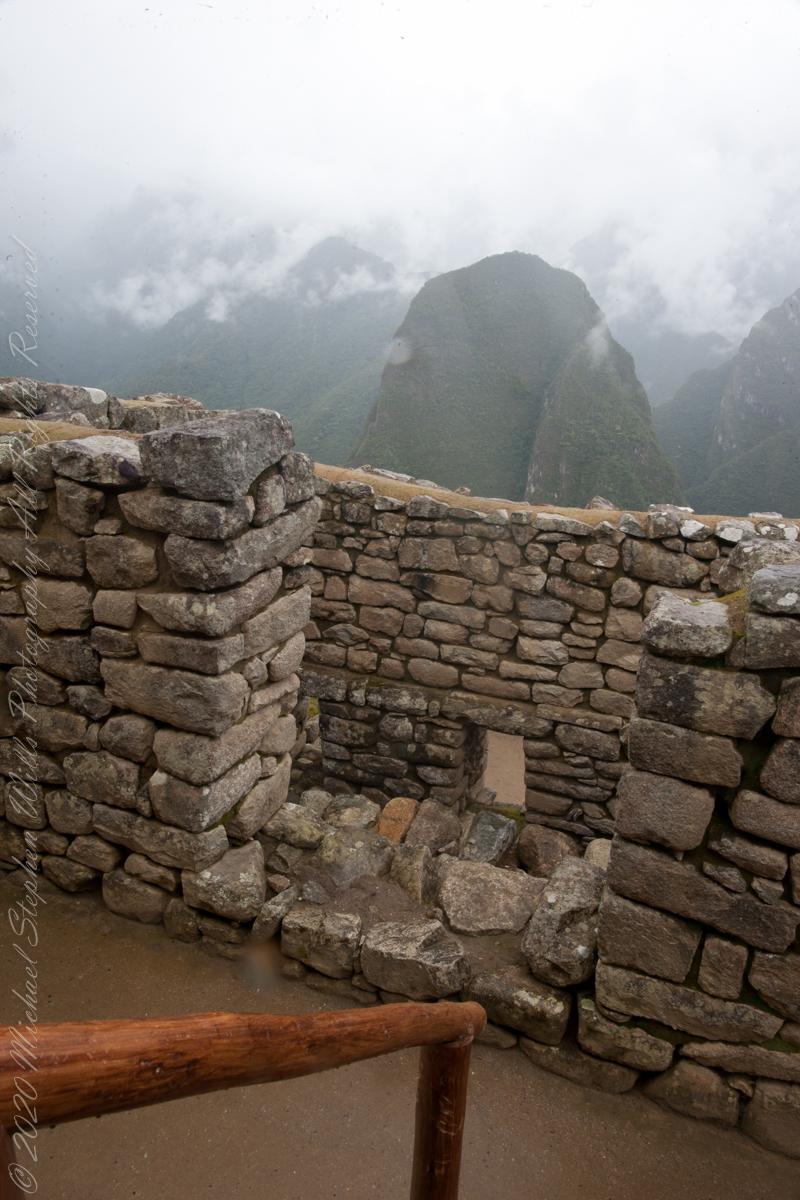
“The massive yet refined architecture of Machu Picchu blends exceptionally well with the stunning natural environment, with which it is intricately linked. Numerous subsidiary centers, an extensive road and trail system, irrigation canals and agricultural terraces bear witness to longstanding, often on-going human use. The rugged topography making some areas difficult to access has resulted in a mosaic of used areas and diverse natural habitats. The Eastern slopes of the tropical Andes with its enormous gradient from high altitude “Puna” grasslands and Polylepis thickets to montane cloud forests all the way down towards the tropical lowland forests are known to harbour a rich biodiversity and high endemism of global significance. Despite its small size the property contributes to conserving a very rich habitat and species diversity with remarkable endemic and relict flora and fauna.“
Click me for the next chapter of this series, “Hall, Rooms, Doorways.”
Reference: text in italics and quotes is from the UNESCO World Heritage Site.
 Michael Stephen Wills Photography
Love the photos.
Interesting trivia – The well-known Transformers movie series was filming in Peru in 2021 for their latest “thin plot with over the top special effects and explosions” summer action move, Transformers 7: Rise of the Beasts. The movie hit theaters in June 2023 but I streamed it last week. Peru’s stunning spots like Cusco and Machu Picchu got featured in the film. I enjoyed the film. I’m a sucker for giant robots and kaiju. 😀
LikeLiked by 1 person
I’ll check it out!! Thanks, Khurt. How’s your summer progressing?
LikeLike