“Dennstaedtia punctilobula, the eastern hayscented fern or hay-scented fern, is a species of fern native to eastern North America, from Newfoundland west to Wisconsin and Arkansas, and south in the Appalachian Mountains to northern Alabama; it is most abundant in the east of its range, with only scattered populations in the west.”
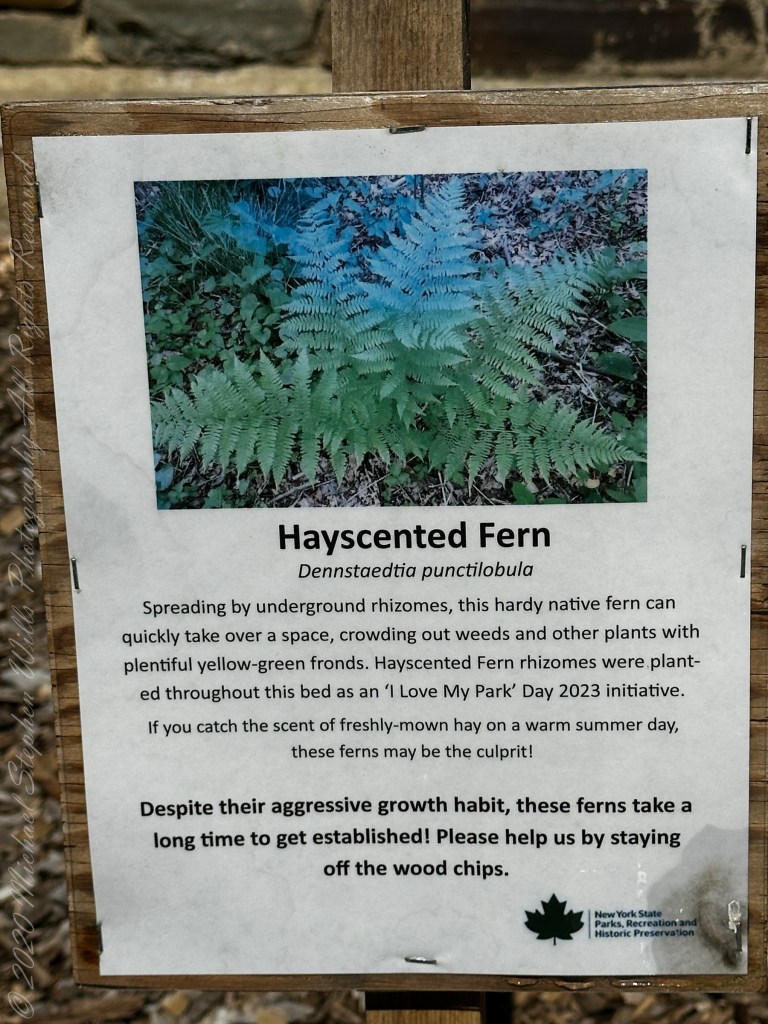
“It is a deciduous fern with fronds growing to 40–100 cm (rarely 130 cm) tall and 10–30 cm broad; the fronds are bipinnate, with pinnatifid pinnules about three times as long as broad. It occurs in damp or dry acidic soils in woods or open woods, from sea level up to 1,200 m altitude.”
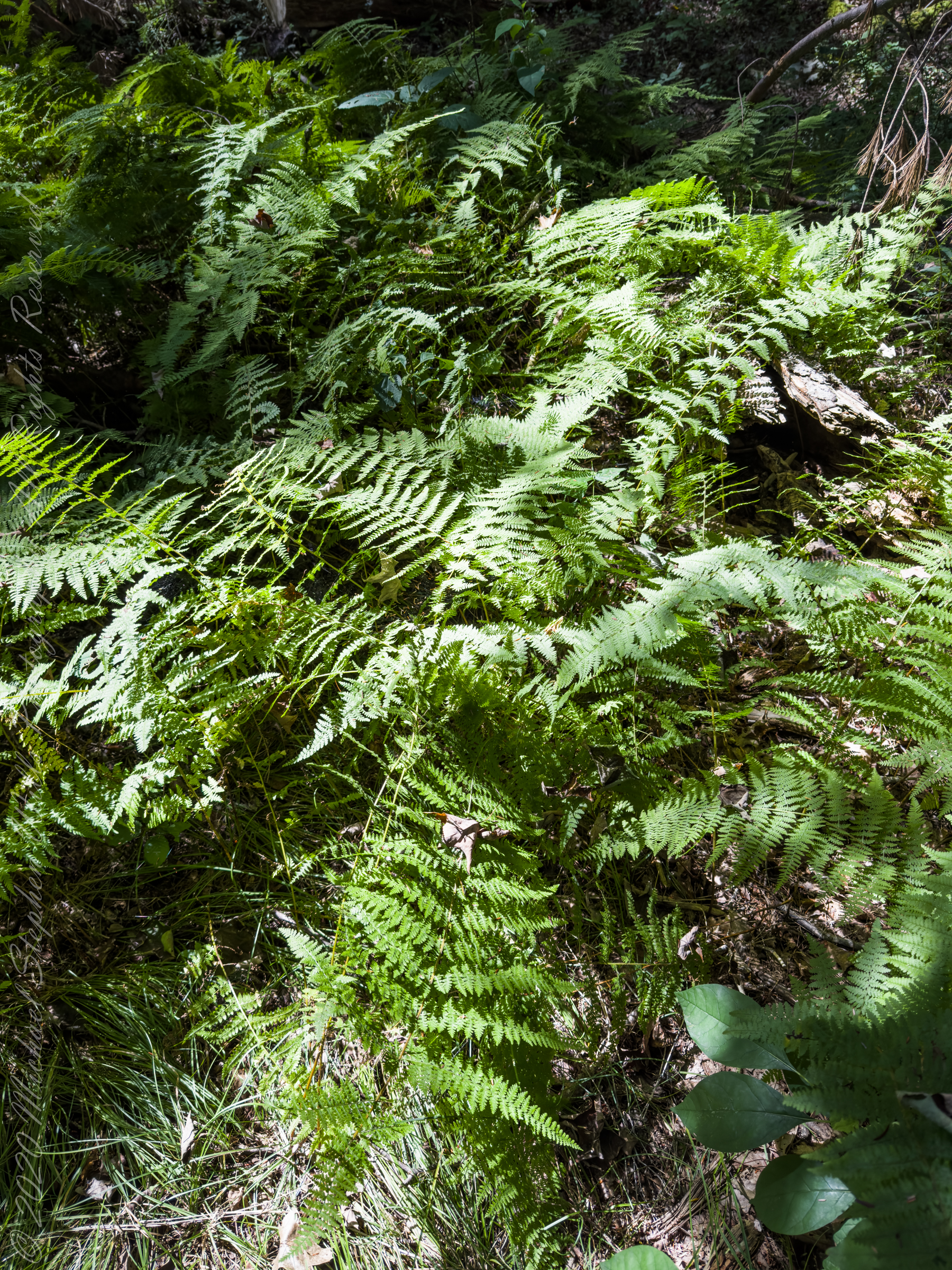
“Dennstaedtia punctilobula can exhibit varying degrees of phototropism. The common name “Hay-scented Fern” comes from the fact that crushing it produces an aroma of fresh hay.“
“The presence of D. punctilobula influences the dynamics of the understory vegetation of many forests in the eastern United States. An abundance of highbush blackberry (Rubus allegheniensis) in open areas encourages new tree seedlings. Where the effects of herbivorous animals (such as deer) reduce the abundance of R. allegheniensis, D. punctilobula, which is not browsed by deer, takes over. Where D. punctilobula becomes common, the growth of tree seedlings is restricted.”
Reference: text in italics and quotes is from the Wikipedia, “Dennstaedtia punctilobula.”
 Michael Stephen Wills Photography
Gorgeous ferns
LikeLiked by 1 person
older than history
LikeLiked by 1 person
Indeed Michael
LikeLiked by 1 person
I’m such a fan of ferns, even more so after learning that they help crowd out weeds.
LikeLiked by 1 person
My wife collects them into fern gardens.
LikeLiked by 1 person