Encounter with Helianthus debilis
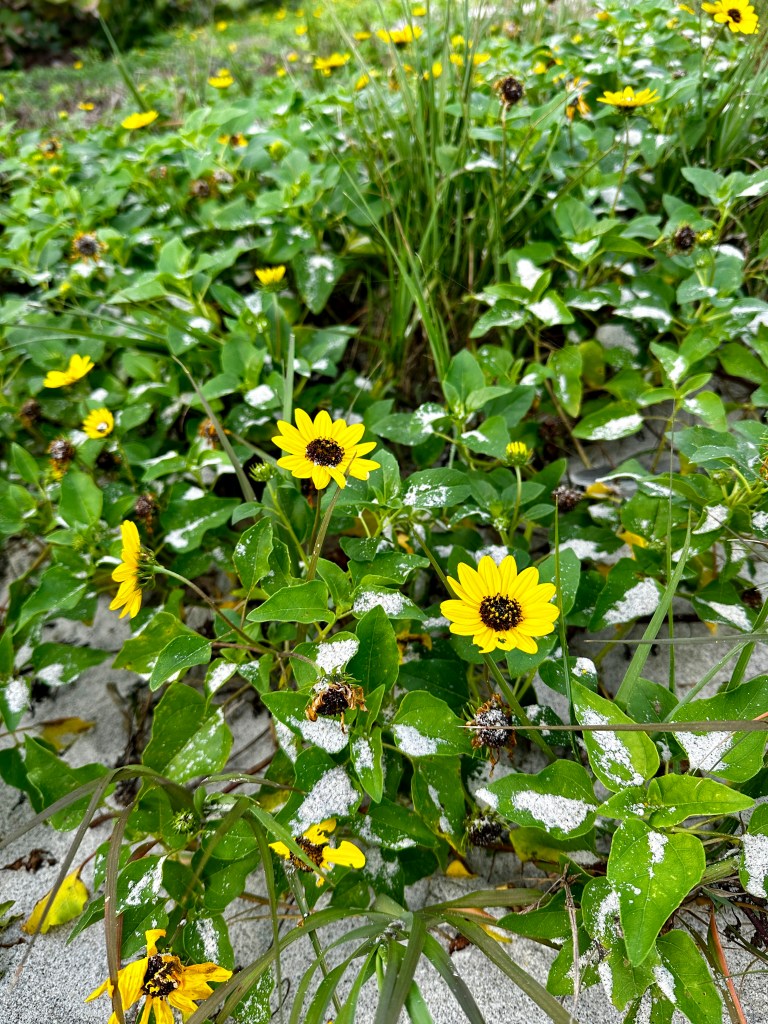
Strolling along the beachfront of Patrick Space Force Base, Florida, my gaze is captivated by a cluster of dune sunflowers, or Helianthus debilis. These hardy perennials are native to the coastal sand dunes of the southeastern United States and have made a home amidst the sandy grains where few dare to take root.
The Sunflower’s Domain
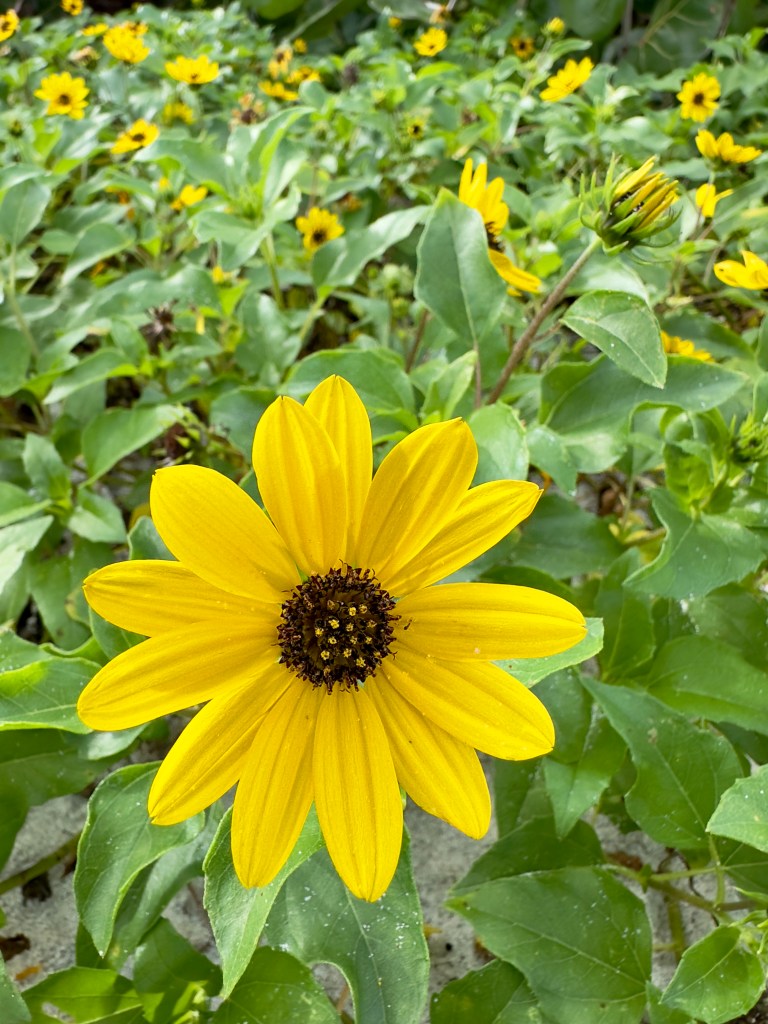
Helianthus debilis, distinguished by its large, yellow ray florets and dark center disks, thrives in this challenging environment. The dunes provide a unique ecosystem, where the sunflowers can withstand high salinity, shifting sands, and the full force of the sun’s rays. Their deep root systems anchor the sandy soil, helping to prevent erosion and maintain the integrity of the dune landscape.
Adaptation and Survival
The dune sunflower’s adaptation to its coastal environment is a marvel of nature. Its silvery-green leaves are covered with tiny hairs, reflecting sunlight and conserving moisture. The flowers bloom throughout the year, ensuring a constant presence of color along the dunes. Their hardiness is a testament to the sunflower’s evolutionary success in a habitat where freshwater is scarce and the soil is nutrient-poor.
A Native’s Role in the Ecosystem
As a native species, the dune sunflower plays a crucial role in the coastal ecosystem. It serves as a food source for local wildlife, including insects and birds, and its presence helps stabilize dune formations. The ecological value of Helianthus debilis extends beyond its beauty, as it contributes to the biodiversity and resilience of the coastal dunes.
The Dynamics of Dune Life
The life of a dune sunflower is inextricably linked to the ebb and flow of the coastal environment. Each plant is a microhabitat, supporting a range of organisms from the larvae of the dune butterfly to the burrowing beetles that find refuge in the sand. The interaction between the sunflowers and these creatures creates a dynamic web of life, each species depending on the others for survival.
Reflections on Resilience
The dune sunflower’s ability to flourish in such an austere environment is a profound reminder of the resilience of nature. As I observe the sunflowers, I am struck by their tenacity, their willingness to face the elements head-on. They are a beacon of life in a place where existence is a daily challenge, and their perseverance is a lesson in the art of endurance.
Conclusion: A Testament to Nature’s Ingenuity
As the sun begins to set, casting a warm glow over the dunes, I take a final look at the Helianthus debilis. Their scientific wonders and ecological im portance leave a lasting impression. They are not just flowers; they are a testament to nature’s ingenuity, an embodiment of the delicate balance between life and the environment. These dune sunflowers are a symbol of hope, a reminder that in the face of adversity, life finds a way to not just survive, but to thrive.


I’ve never seen a dune sunflower before. They are quite pretty. Thanks for sharing more about them.
LikeLiked by 1 person
The spot of bright yellow among the green/gray (sea grapes) and beige (sand) is most welcome. I very much enjoyed the research on this one. You are most welcome, Maggie.
LikeLiked by 1 person
What a wonderful little flower. It is interesting to know something about them.
LikeLiked by 1 person
Sylvie, I learn so much by observing the world, then researching. Let’s continue to learn about the world, together.
LikeLiked by 1 person
Dunes are an interesting environment, and these sunflowers are a part of it I didn’t know about until I read your post.
LikeLiked by 1 person
Audrey, I learn so much by observing the world, then researching. Let’s continue to learn about the world, together.
LikeLiked by 1 person