Treman Early Autumn Walk IX

The post discusses various unique kennings, their meanings, and reflects on the term “Swan-Road” symbolizing a serene river.

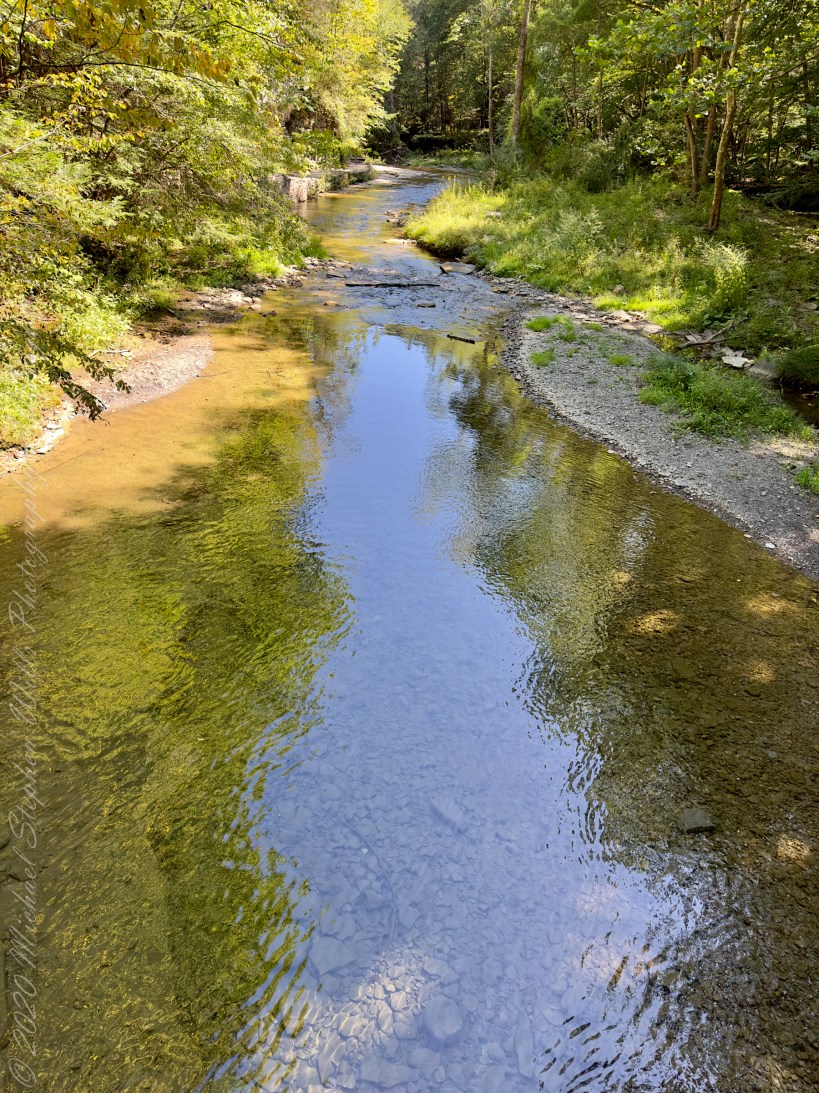
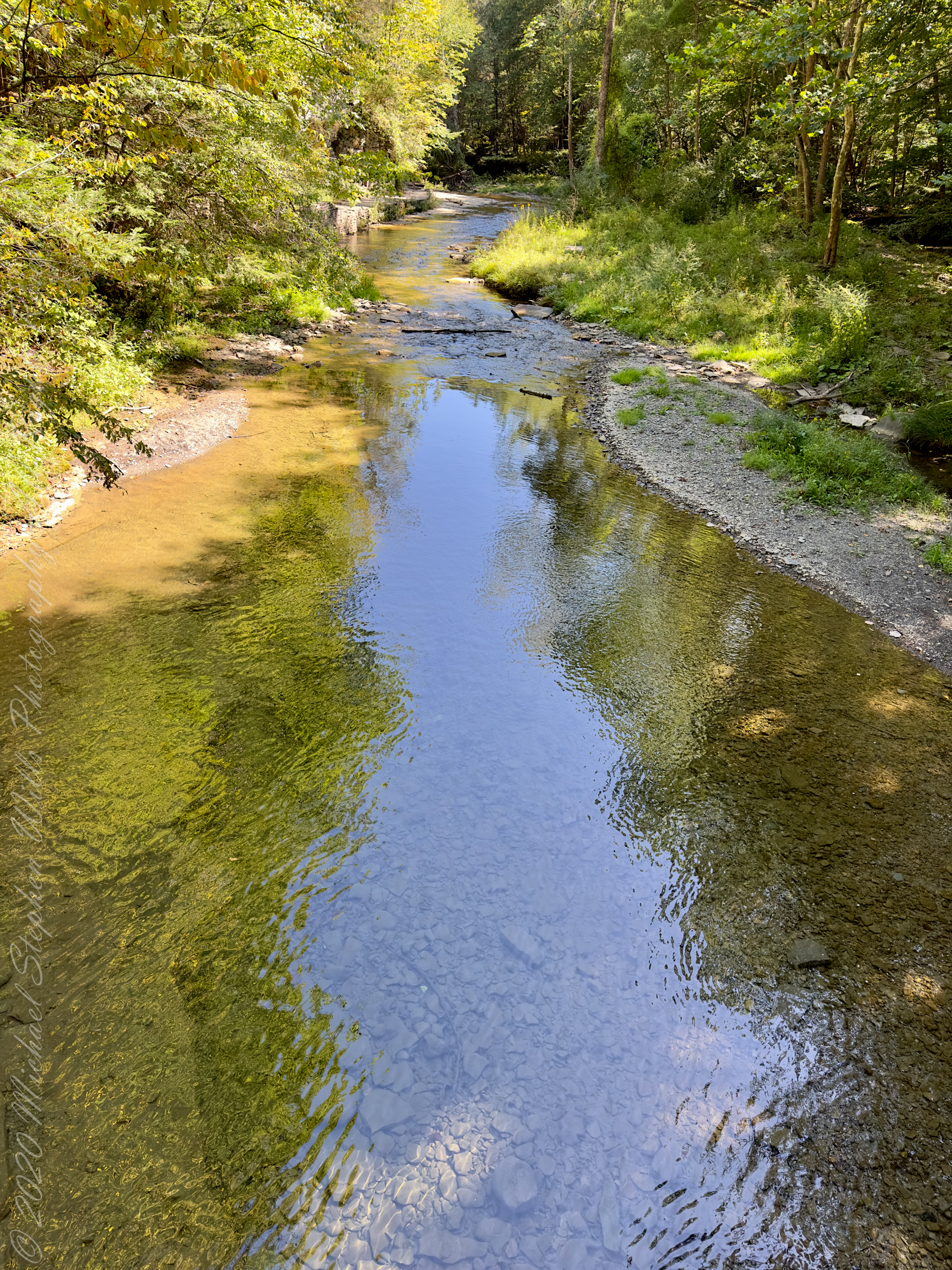
Below Lucifer Falls this quiet water flows beneath a bridge linking Gorge and Rim trails. The reflection of blue sky between river trees brings to mind the kenning “Swan-Road.” To me it is more fitting than the established meaning: “The Sea,” also associated more appropriately with Whale-Road.
Swan Road

The seldom used English verb “ken.” The Oxford English dictionary proposed the word was borrowed from Norse based on a confluence of meaning, i.e. to know. When it is turned into a noun with the -ing ending, it is a phrase that brings to mind and object described.

Other kennings from : “Whale road = sea (e.g., a place where whales travel); Treasure seat = throne (e.g., the source of treasure or reward, or the role of the king in rewarding his men); Ring giver, ring breaker = king (e.g., the person who bestows rings, or breaks off a piece of his golden bracelet as a reward); Sword sleep = death (e.g., a “sleep” caused by a sword wound); Rapture of heaven = sun (e.g., the sun, brightest of heavenly objects, the joy of heaven); Weaver of peace = wife (e.g., a person whose grace and mildness instills peace, or one who creates domestic tranquility); Earl’s defense = Beowulf (e.g., the one who defends Hrothgar); Mead seats = benches in Heorot (e.g., the places where people sit and drink).”

Click Me for a master work of English poetry that employs kenning forms, “The Porcupine” by Galway Kinnell.

References:

–text in italics and quotes is from the eNotes.com, “Beowulf.”

–Kinnell, Galway. “The Porcupine.” The Hudson Review 20, no. 2 (1967): 219–22.
Copyright 2023 All Rights Reserved Michael Stephen Wills

Treman Early Autumn Walk III

Cultivated vs Wild

Dennstaedtia punctilobula, the eastern hayscented fern or hay-scented fern, is a species of fern native to eastern North America, from Newfoundland west to Wisconsin and Arkansas, and south in the Appalachian Mountains to northern Alabama; it is most abundant in the east of its range, with only scattered populations in the west.”

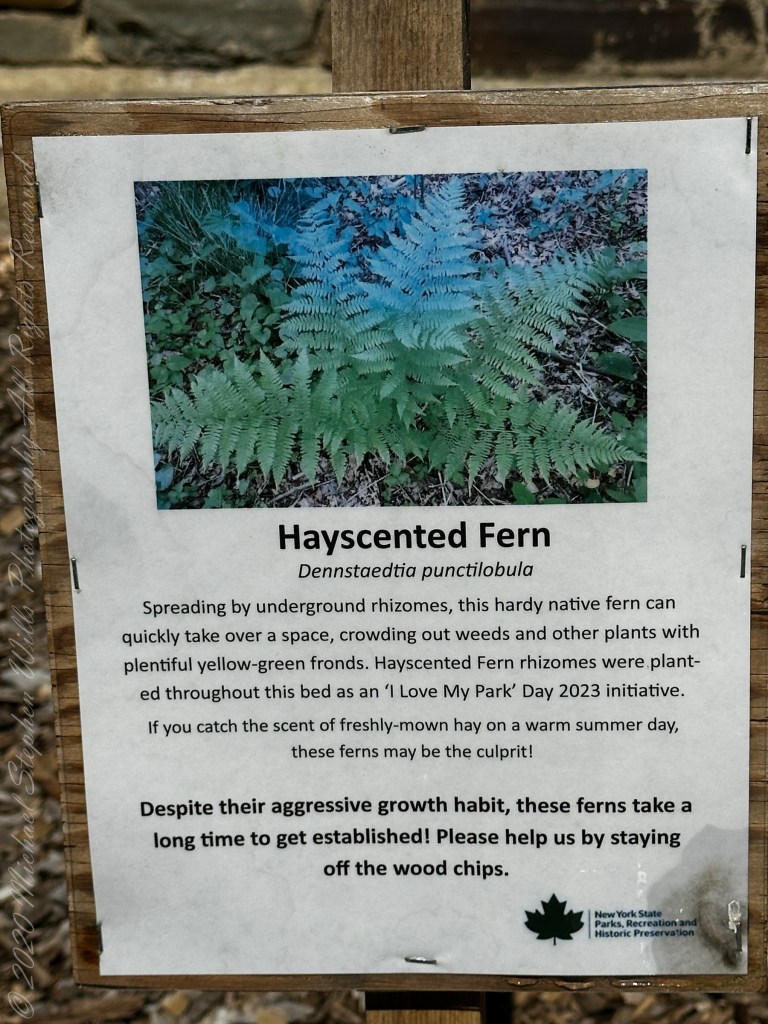
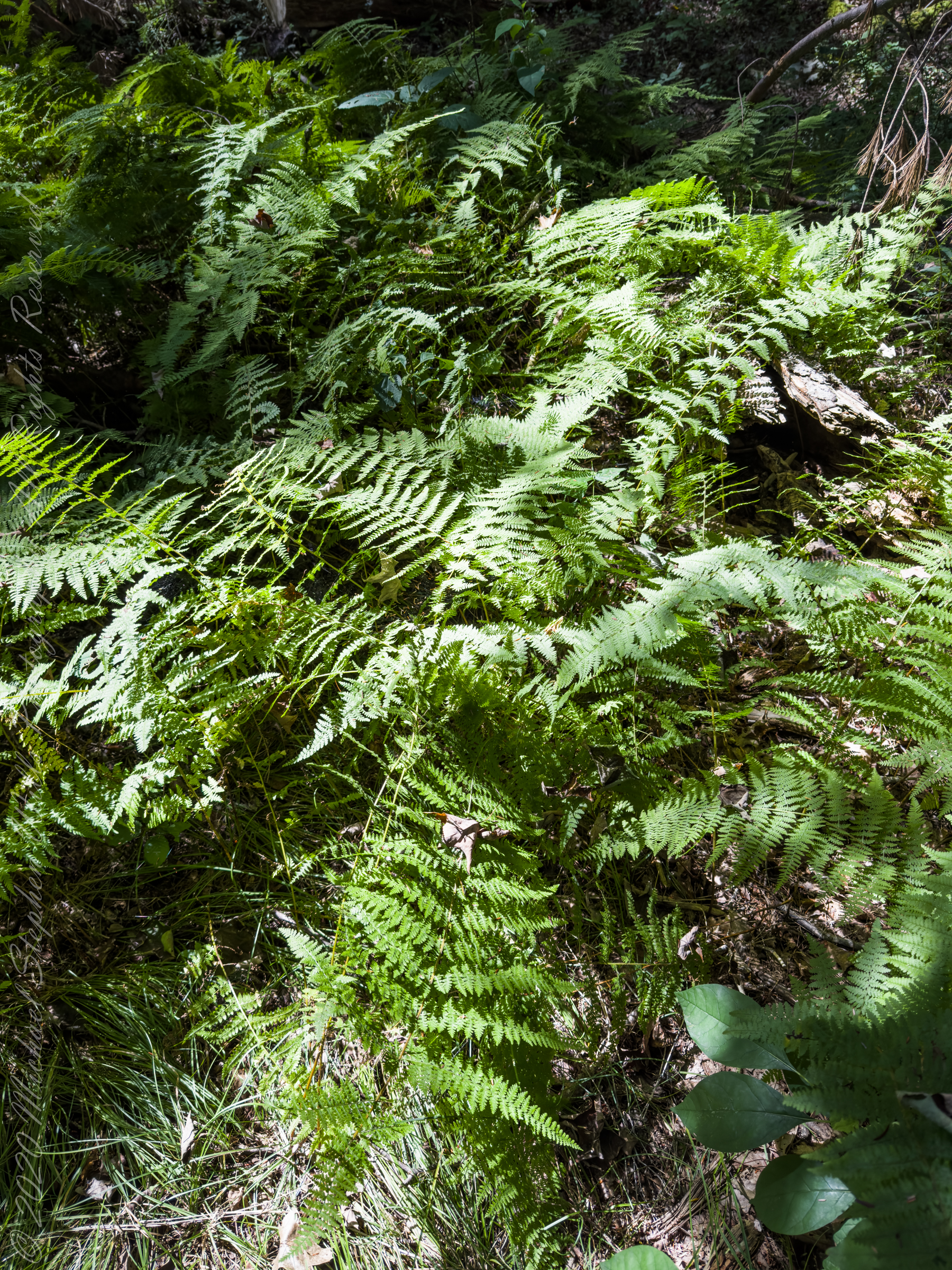
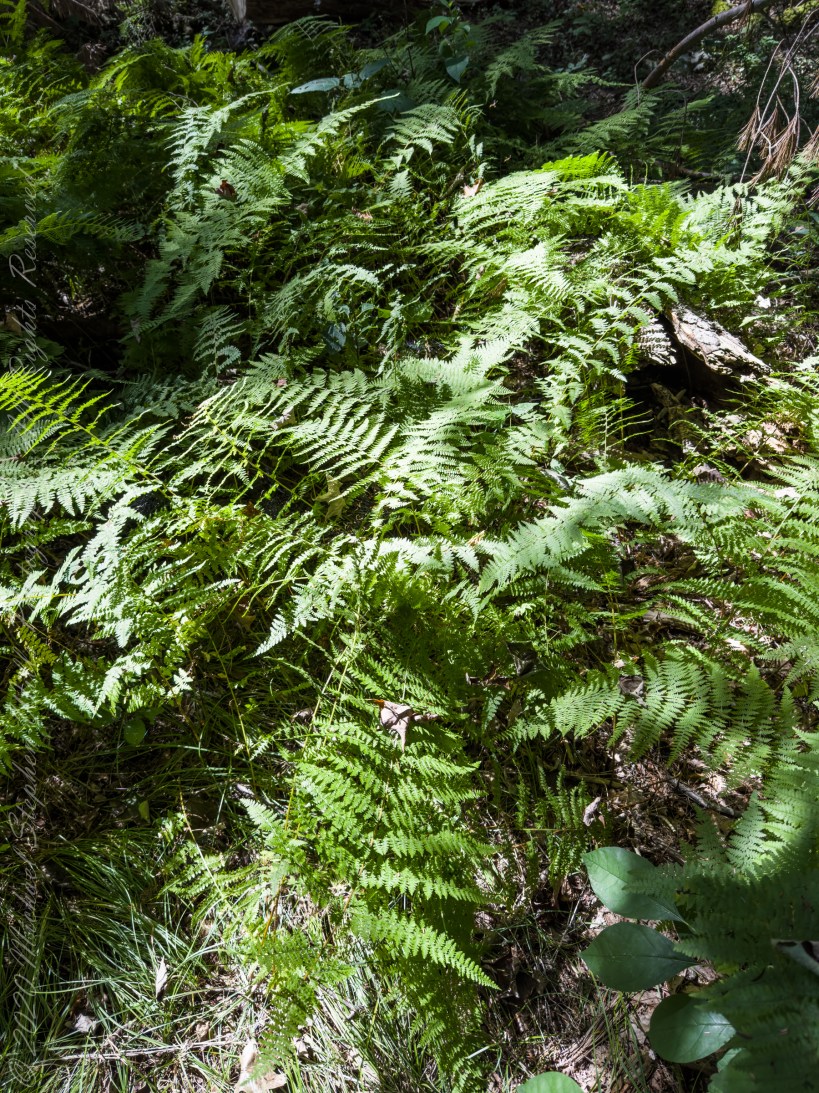
Hayscenter Fern ( Dennstaedtia punctilobula), spreading by underground rhizomes, this hardy fern native to the Finger Lakes Region of New York State, can quickly take over a space, crowding out weeds and other plants with plentiful yellow-green fronds.

“It is a deciduous fern with fronds growing to 40–100 cm (rarely 130 cm) tall and 10–30 cm broad; the fronds are bipinnate, with pinnatifid pinnules about three times as long as broad. It occurs in damp or dry acidic soils in woods or open woods, from sea level up to 1,200 m altitude.”

“Dennstaedtia punctilobula can exhibit varying degrees of phototropism. The common name “Hay-scented Fern” comes from the fact that crushing it produces an aroma of fresh hay.

“The presence of D. punctilobula influences the dynamics of the understory vegetation of many forests in the eastern United States. An abundance of highbush blackberry (Rubus allegheniensis) in open areas encourages new tree seedlings. Where the effects of herbivorous animals (such as deer) reduce the abundance of R. allegheniensis, D. punctilobula, which is not browsed by deer, takes over. Where D. punctilobula becomes common, the growth of tree seedlings is restricted.”

Reference: text in italics and quotes is from the Wikipedia, “Dennstaedtia punctilobula.”

Copyright 2023 All Rights Reserved Michael Stephen Wills