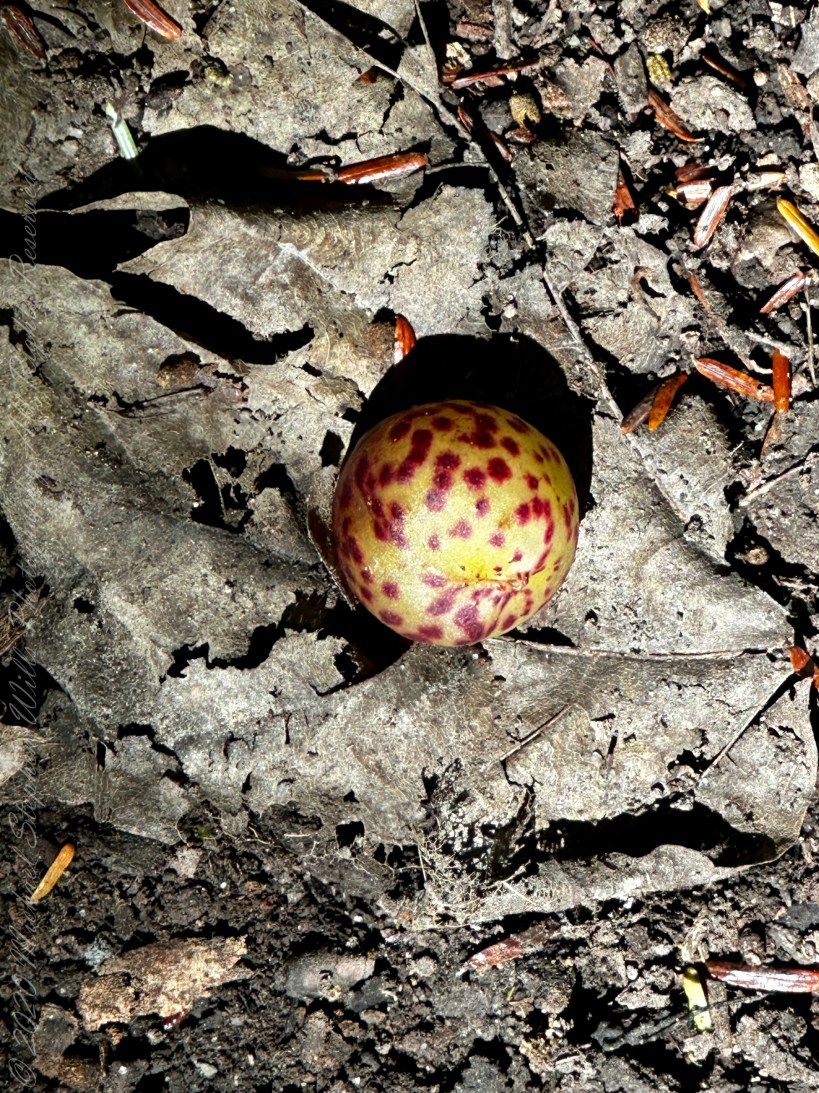
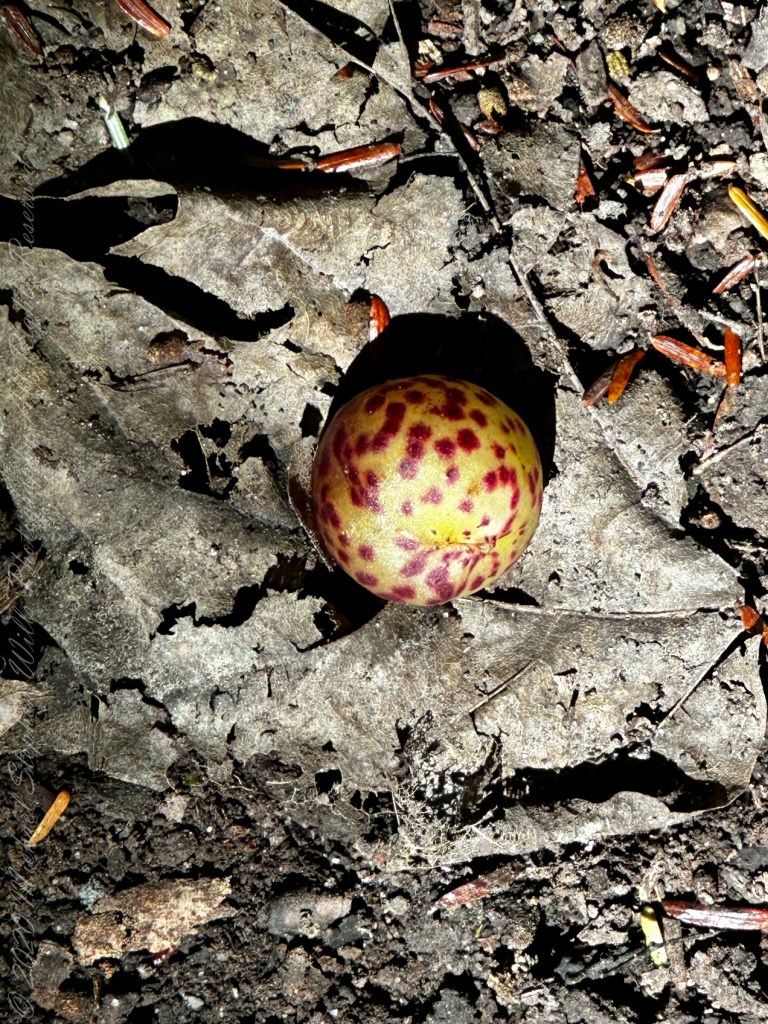
This is an Oak Apple gall. An adult female wasp lays single eggs in developing leaf buds. The wasp larvae feed on the gall tissue resulting from their secretions, which modify the oak bud into the gall, a structure that protects the developing larvae until they undergo metamorphosis into adults.
“Oak galls have been used in the production of ink since at least the time of the Roman Empire. From the Middle Ages to the early twentieth century, iron gall ink was the main medium used for writing in the Western world.”
“Gall nuts are a source of tannin in the production of iron gall ink. Tannins belong to a group of molecules known as polyphenols and can be taken from different parts of plants such as leaves, pods, fruits, and gall nuts.”
“Along with gall nuts, other important ingredients in the production of iron gall ink include iron sulfate and gum arabic. The reaction between the tannins from the gall nut and the iron produces a complex that gives the iron gall ink its color. The gum arabic makes the ink more viscous and helps bind the ink to the writing surface.”
“According to recent research, traces of iron-gall ink have been found on the Dead Sea scrolls and on the ‘lost’ Gospel of Judas. Iron-gall ink may have been used for 1,800 years, but it does not withstand the test of time well. Over the course of centuries, the ink fades, and discolours and damages the paper. Iron gall ink is manufactured chiefly by artists enthusiastic about reviving old methods or possibly forgers of old documents.”
Reference: text in italics and quotes is from the Wikipedia, “Oak Apple Gall” and “Oak Marble Gall.”



 Michael Stephen Wills Photography