Notice the groupings of visitors in the middle distance of Pam’s photograph, gathered around remains of late Bronze age elements.
Click pic for a larger view, in a new tab. When using WordPress Reader, you need to open the post first.
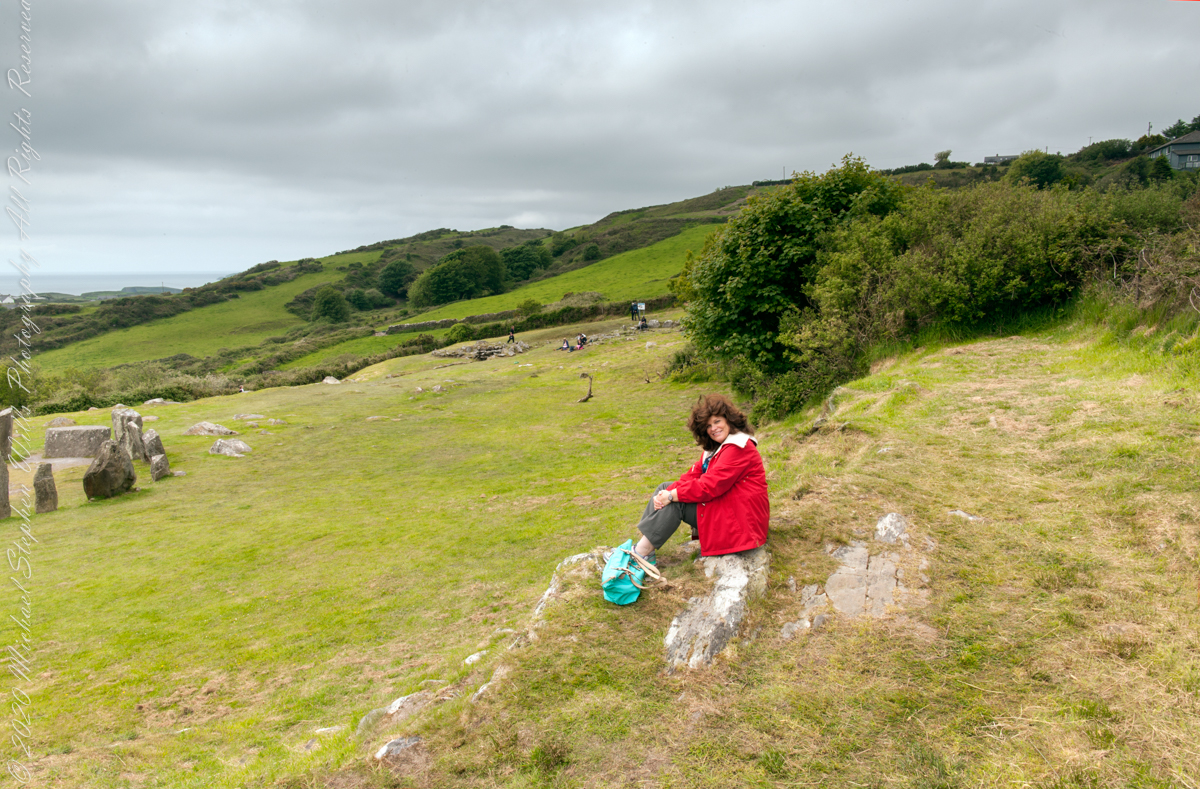
There is a sign to explain…
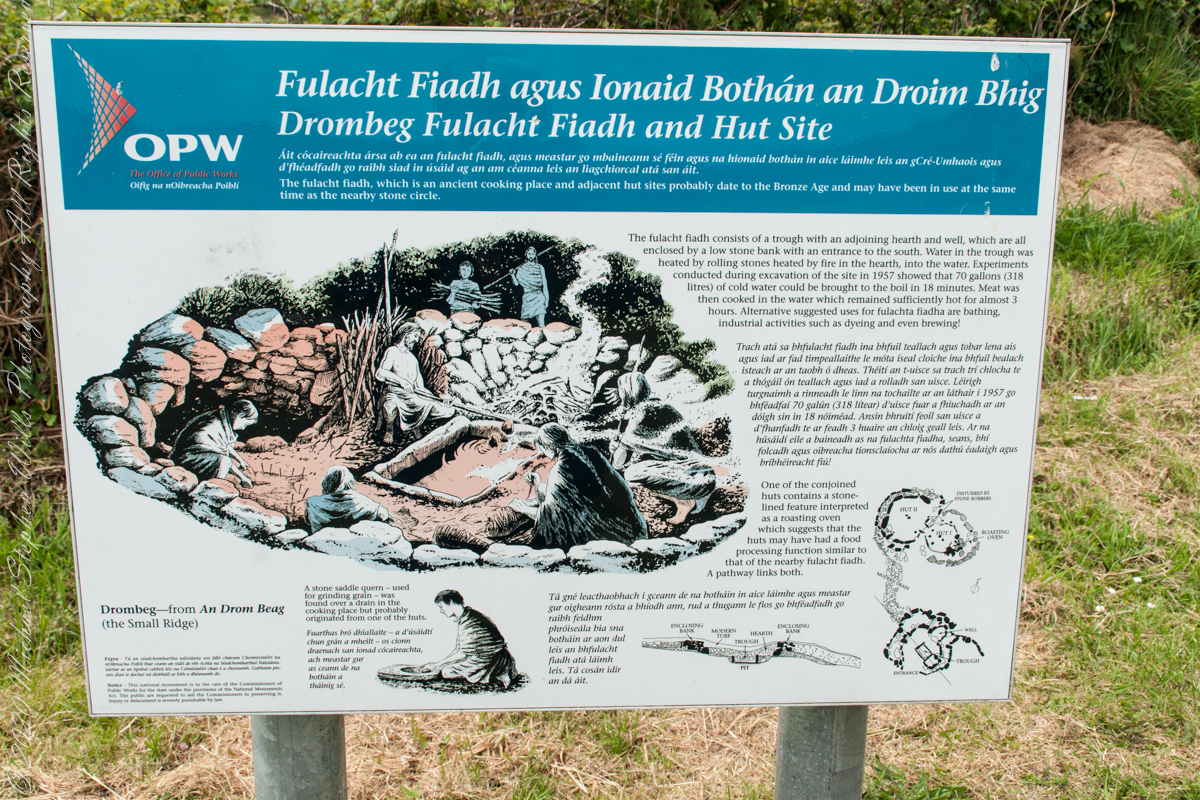
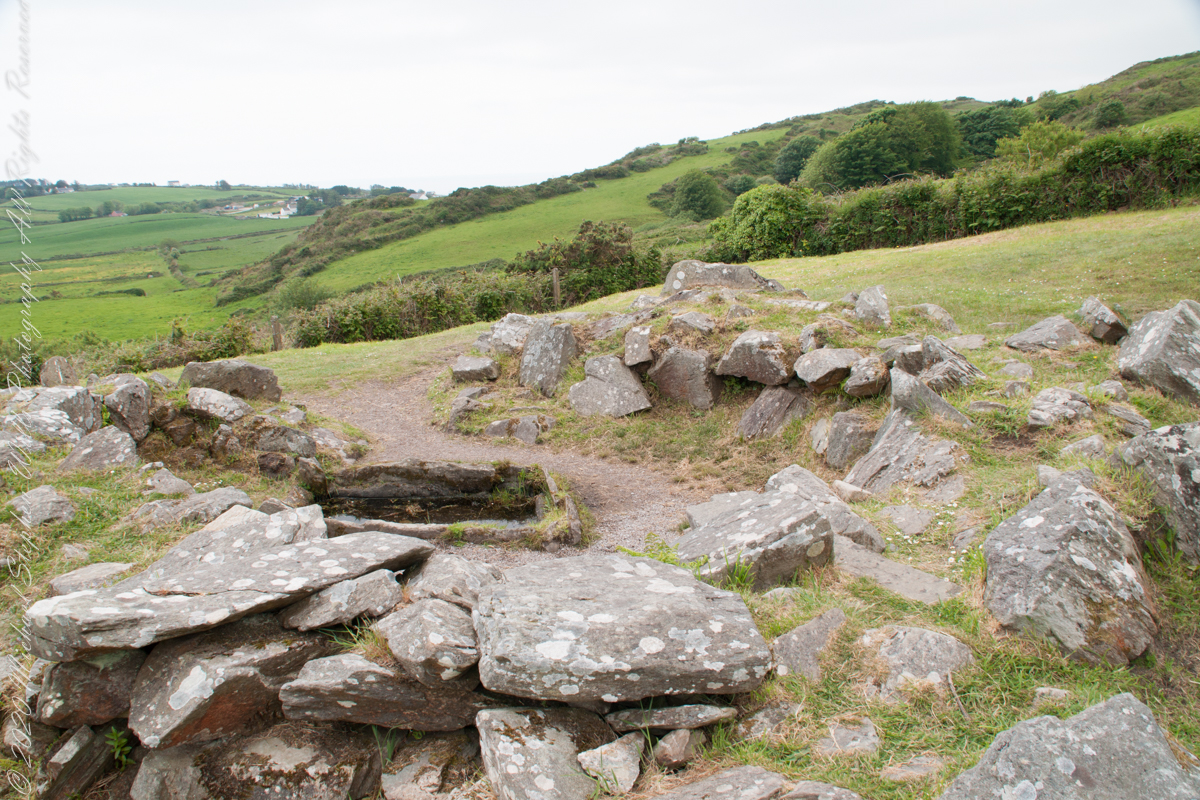
In modern Ireland the word fulacht means barbeque and the archeological sites with characteristics in common, such as a water source, health and pit, are named “Fulacht fiadh,” derived from Old Irish sources. In all cases the link is to some kind of preparation activity involving heat and moisture. Found throughout Ireland, Great Britan and the Isle of Man where the sites are called burnt mounds. The Drombeg Fulacht fiadh exemplifies all characterists. There is a horseshoe shaped rock walled/banked, now a remnant, enclosure, entrance to the south. In the middle is a pit, at Drombeg lined with rock, a spring on one side, a hearth on the other. A stone saddle quern, used for grinding grain, was nearby Adjacent huts, rock walls with post holes, do not suggest a settlement, but rather a temporary use.


I wondered about the etymology of the Irish term and found this article, which offers conjectures but admits that the etymology is uncertain:
https://en.wikipedia.org/wiki/Fulacht_fiadh
LikeLiked by 1 person
Etymology, as such, is a frustrating exercise for Irish language. There is no “Oxford English Dictionary” for the historically supressed Irish language. The features are called “Burnt Mounds” in the United Kingdom. Here is a link to more background info as the the mystery of the Fulacht Fiadh.
LikeLike
Yes, suppression over the centuries worked against preserving the language’s history.
I’m not seeing your link.
LikeLiked by 1 person
https://archive.archaeology.org/1201/letter/fulacht_fiadh_ale_bronze_age_ireland.html
LikeLike