Headed south from Cong Village, past the venerable Cong Abbey then Saint Mary’s Church of Ireland, the road bends into the Ashford Castle estate. Time seems to shift here. The stonework of the abbey lingers in memory, only to give way to manicured parkland, ancient trees, and the shimmer of water. The road itself, aptly named Ashford Castle, carries the traveler to a place where history, nature, and imagination meet.
I do not recall passing a guard box on my first visit, though one now stands firmly on the roadside, manned and proper, as though the estate were never meant to be entered without ceremony. In truth, Ashford Castle has always carried the air of a threshold—between village and wild, past and present, myth and reality.
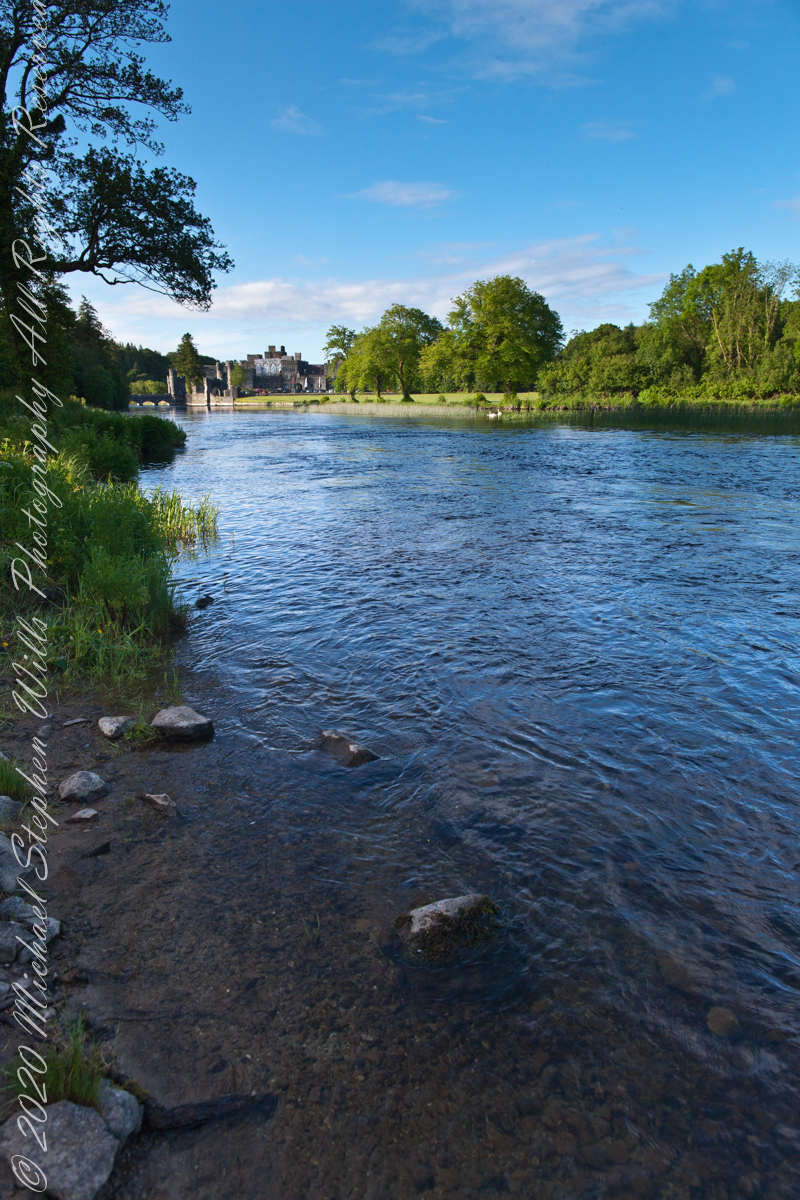
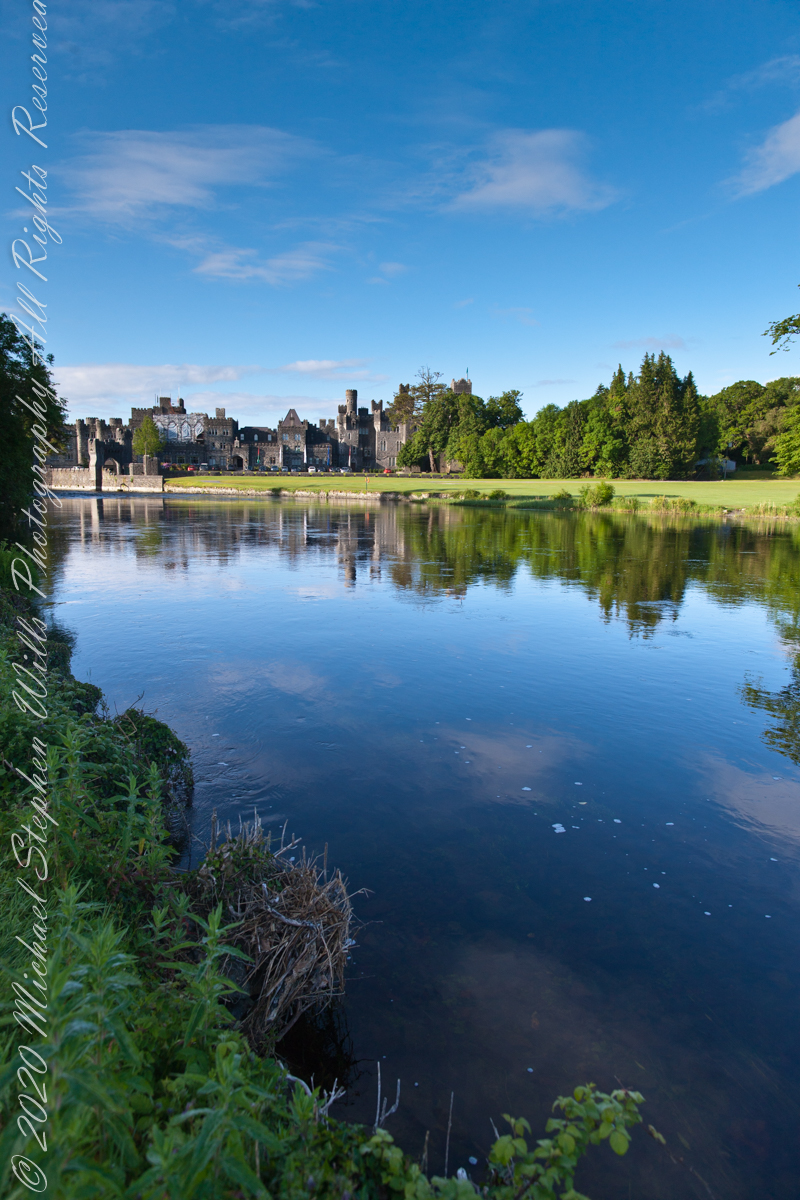
Soon the road brings one to the banks of the Cong River. Here the water widens, flowing calm and sure, and across it rises the battlemented silhouette of Ashford Castle itself. Its towers, turrets, and stony walls seem to grow from the riverbank like something inevitable, a fortress transformed into elegance. The castle’s mirrored reflection on the water doubles the grandeur, as though the real and imagined castle exist side by side.
It is no wonder filmmakers found inspiration here. Scenes from the classic 1952 film The Quiet Man—the tale of Sean Thornton, played by John Wayne, and the fiery Mary Kate Danaher, embodied by Maureen O’Hara—were shot on the far bank of this very river. To watch them walking by these waters is to see Ashford Castle woven into Hollywood’s Irish dreamscape, a backdrop both romantic and enduring.
Yet long before cinema, the river was already a stage. The Cong River is a natural marvel. It emerges from the same Carboniferous limestone that shapes the Burren of County Clare—an austere landscape of limestone pavements etched with fossils and caves, where rare alpine and Mediterranean plants thrive among ancient tombs. Through fissures in this ancient bedrock, the waters of Lough Mask find their way underground before rising again at Cong. This subterranean journey, through stone filters laid down some 350 million years ago, leaves the water clarified, luminous, and cold. By the time it slides past Ashford Castle, it has the purity of glass.
It is in this clarity while walking the opposite bank on a different morning I found a parent swan and its cygnet feeding. The adult glided, immaculate, its long neck bowed as drops of river fell from its beak. At its side, the cygnet paddled with earnest strokes, gray down still clinging, a fragile shadow of what it would one day become. Together they traced a quiet path across the water, ripples fanning behind them.
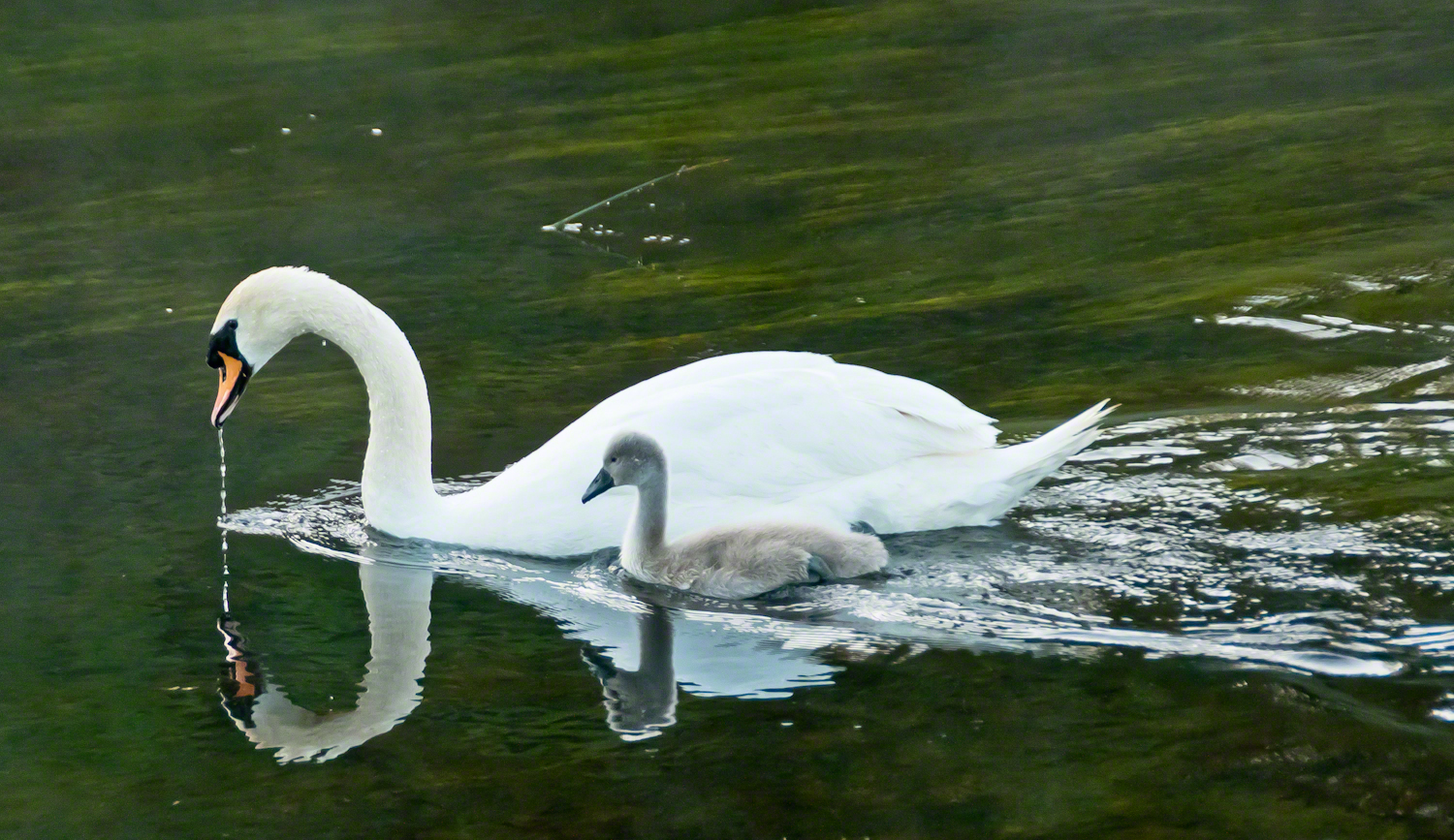
Few images so perfectly match their setting: a medieval castle, guardian of centuries, reflected in the same waters where these swans carried on their timeless rhythm of nurture and growth. It was as if the river itself composed the scene—a blending of stone, water, bird, and sky that belonged nowhere else but here.
The swan has long been a symbol in Irish lore. The Children of Lir, cursed to live as swans for nine hundred years, are among the most haunting figures of Celtic mythology. To see the white bird with its offspring before Ashford Castle was to glimpse that myth breathing still, alive on the Cong River.
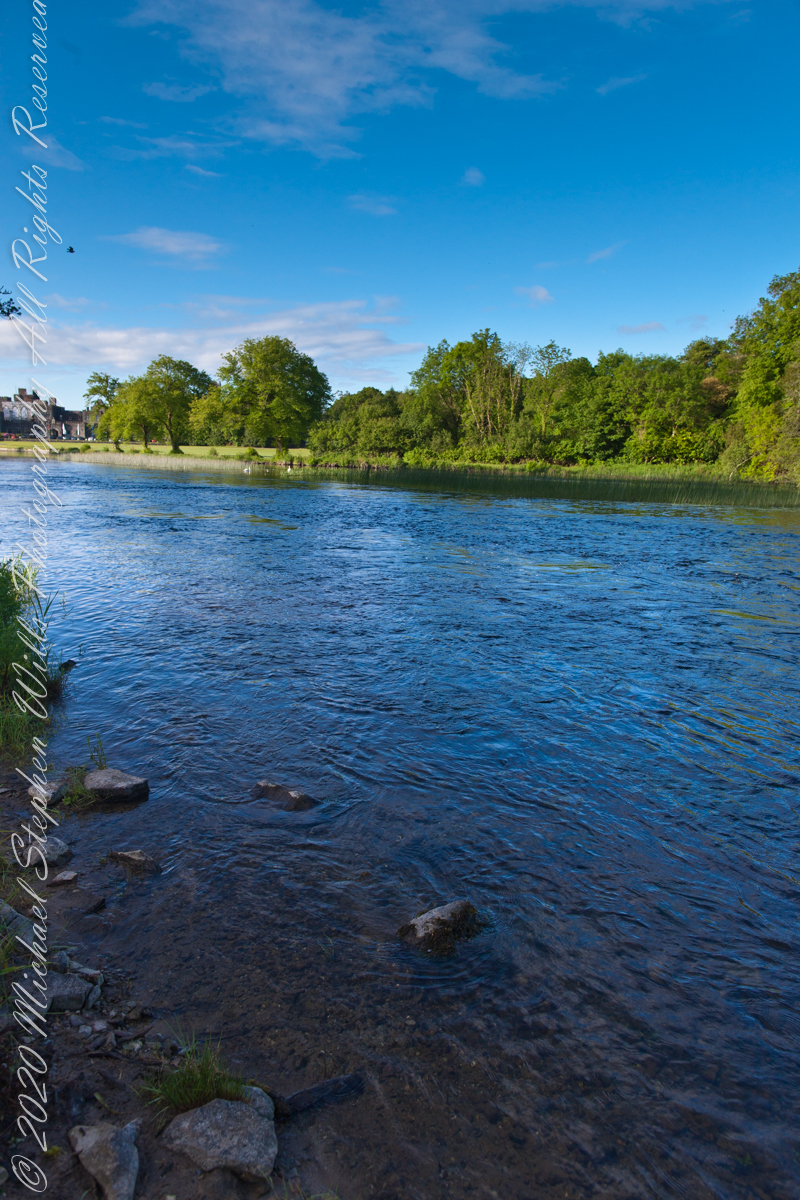
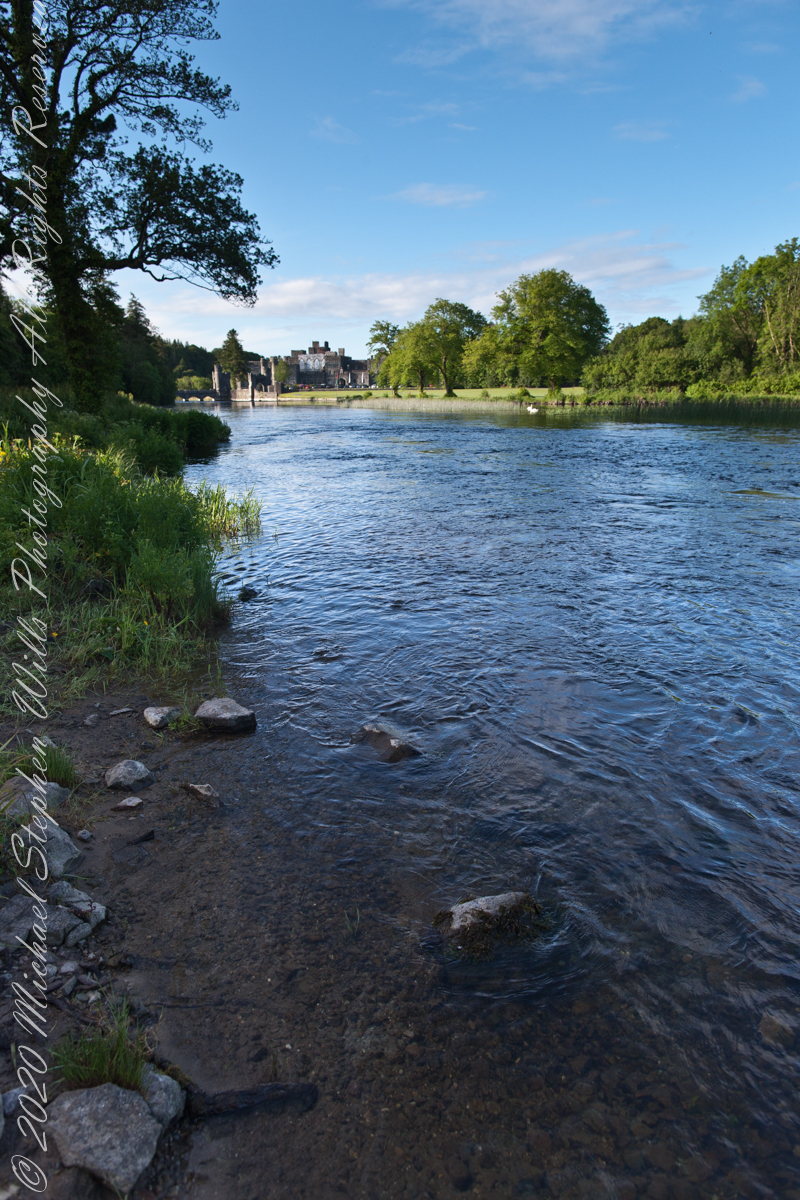
Photographers know the difficulty of capturing water and stone without losing the life between them. On that morning, however, the river gave freely—its surface alternately smooth as glass and dappled with breeze. Stones at the water’s edge appeared like stepping-stones into history. Each frame revealed another face of the estate: the wide reach of the Cong, the castle framed by trees, the play of cloud shadows across the current.
The castle itself, though reshaped as a luxury retreat, still speaks of older times. Founded in the 13th century by the Anglo-Normans, Ashford passed through centuries of conquest and change before becoming, in the 19th century, a romantic Victorian pile. Today its battlements remain picturesque rather than defensive, but the sense of continuity—of lives unfolding along these banks—has not faded.
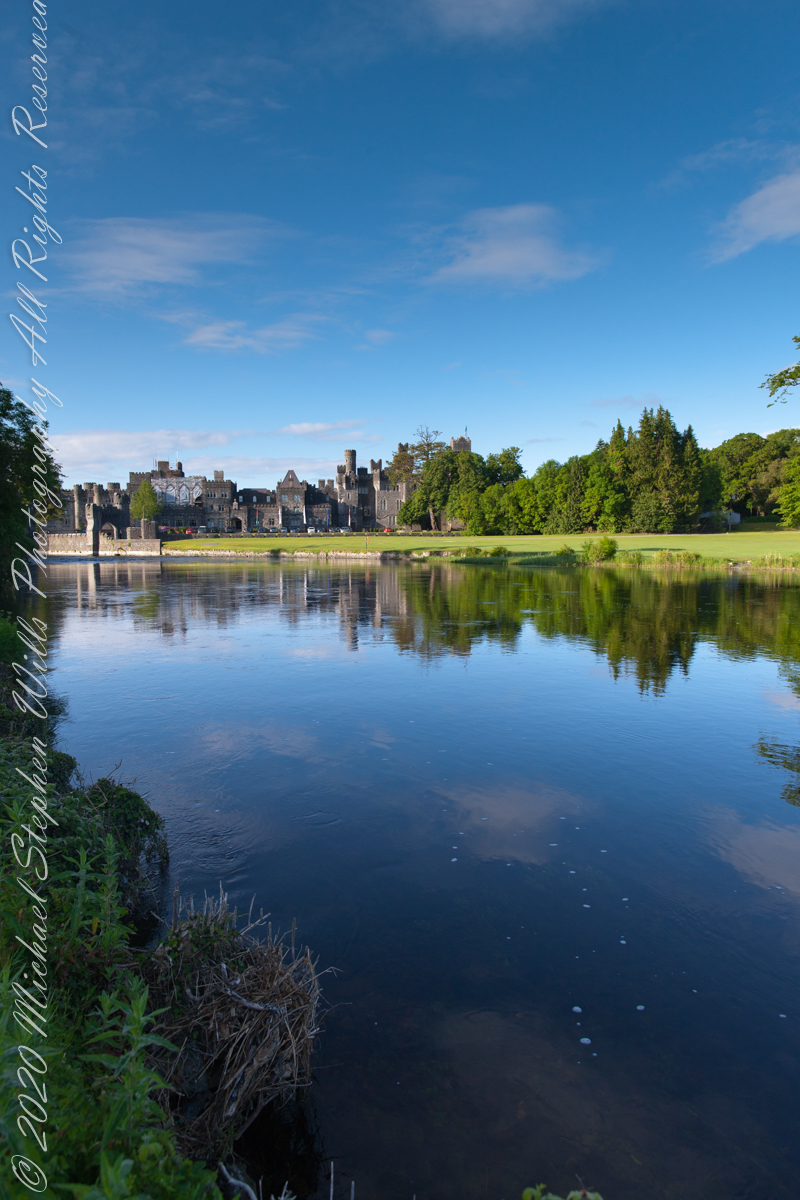
Standing there, camera in hand, I was struck by the layered meaning of this place. The Cong River flows from unseen caverns, purified by limestone older than memory. It nourishes swans, reeds, and trout alike. It reflects both a castle and a sky. Along its opposite bank, legends of cinema and Celtic lore alike find footing.
As the swan and cygnet drifted slowly downstream, I thought of them as part of the same enduring thread. Parent and child mirrored castle and village, past and future, permanence and change. The ripples they left widened until they touched both banks, an unbroken gesture across centuries.
Click this link to read another Ireland story “The Cloigtheach of Glendalough.”
Click this link to read another Ireland story “Killeany Bouy.”
Enter your email to receive notification of future postings. I will not sell or share your email address.



Just what I needed this morning Michael, a gentle walk in cool, green, calm countryside. Fabulous photos, as always, I love those with images reflected in the water.
LikeLiked by 1 person
Thank you, Sheree—so glad the cool greens reached your morning. The reflections are my favorite, too—like the castle pausing to admire itself. Appreciate your kind words!
LikeLiked by 1 person
You’re very welcome Michael
LikeLiked by 1 person
What a picturesque narrative you have woven here. It urges me to book reservations so I can see and feel the wonder in person. Lovely.
LikeLiked by 1 person
Thank you, Linda—what a lovely note. If you do go, save a little time to wander the path along the Cong River; the water runs so clear, and the castle rises like a storybook beyond the trees. The abbey ruins and the bridge from The Quiet Man are a short amble away, and the swans often drift by like little white boats. If you start planning, I’m happy to share a few favorite spots!
LikeLiked by 1 person
My husband and I watched “The Quiet Man” before our trip to Ireland. His ancestors were Thorntons! Thanks for this tip about where some of it was filmed.
LikeLiked by 1 person
How perfect, Marie—watching The Quiet Man with a Thornton in the house! Sean Thornton would approve. Many scenes were filmed right in Cong and around Ashford Castle; the village still wears the film like a smile. If you return, pop into Pat Cohan’s on the main street and wander the riverside paths—those are the moments where the movie and the place feel wonderfully the same.
LikeLiked by 1 person
Thank you, Dalo—what a generous note! There really is a hint of Celtic magic along the Cong, especially on those calm mornings when the river turns to a mirror. The Quiet Man is the perfect companion—so much of it lives right there in Cong that the village feels like the film softly playing in the background. Cheers, and go raibh maith agat!
LikeLike
Your words bring Ashford Castle and the Cong River to life with history, nature, and a touch of Celtic magic.. which my Irish blood always fall for 😊 🍀. The blend of lore and natural wonder makes me want to watch The Quiet Man so I can get a little bit more. The reflections—both in the water and in your writing—make my morning perfect. Cheers!
LikeLiked by 2 people