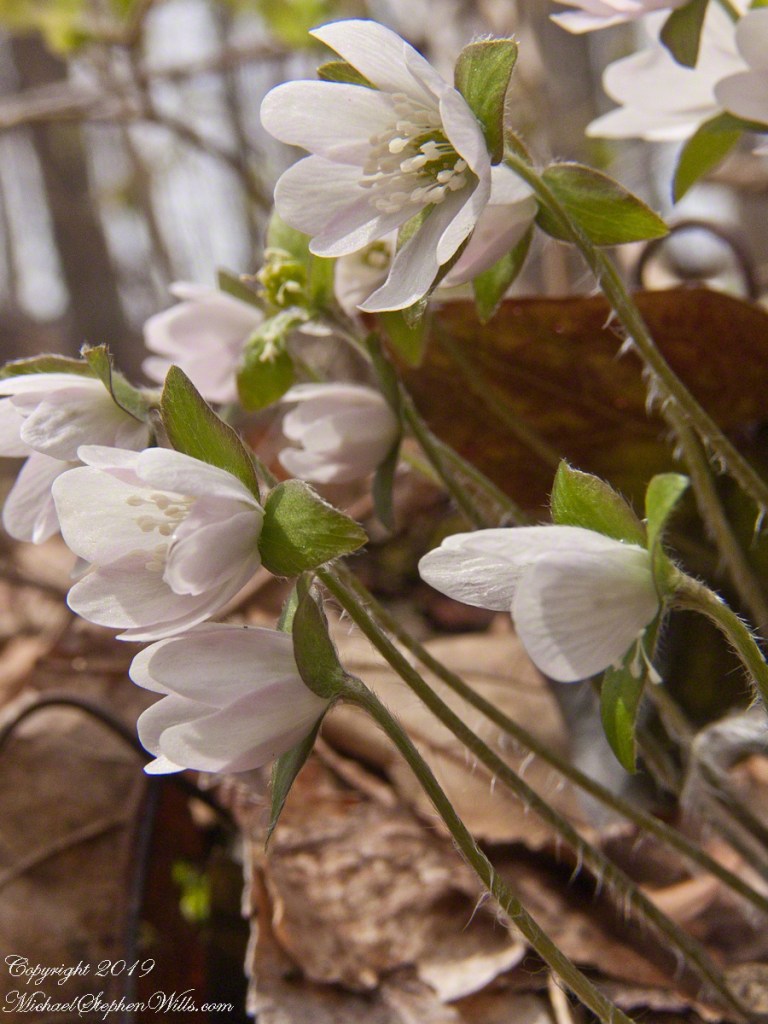
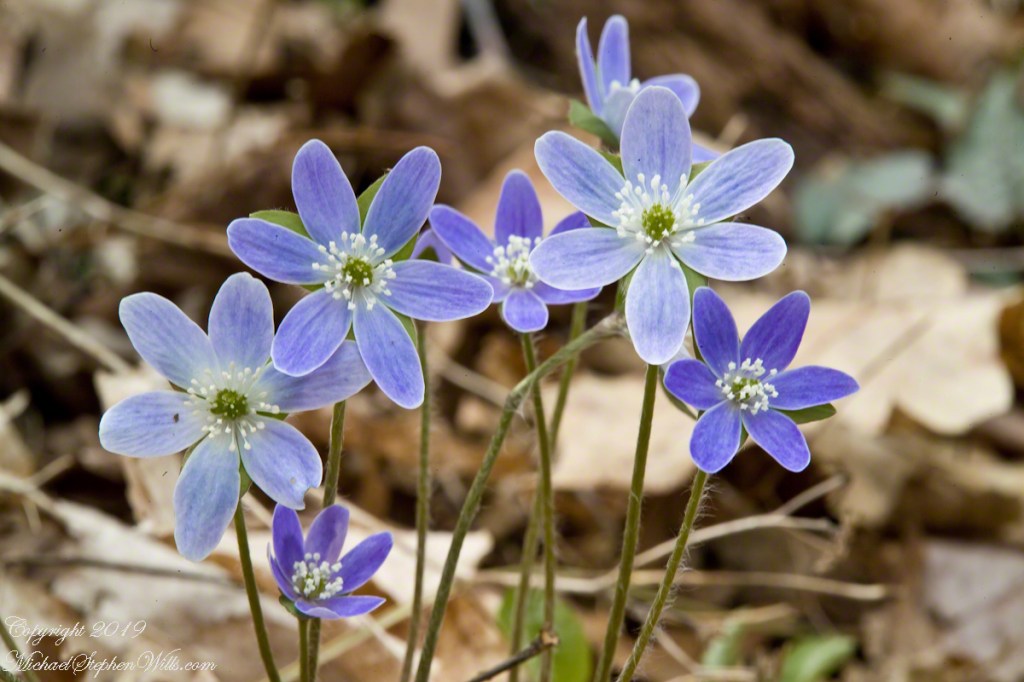
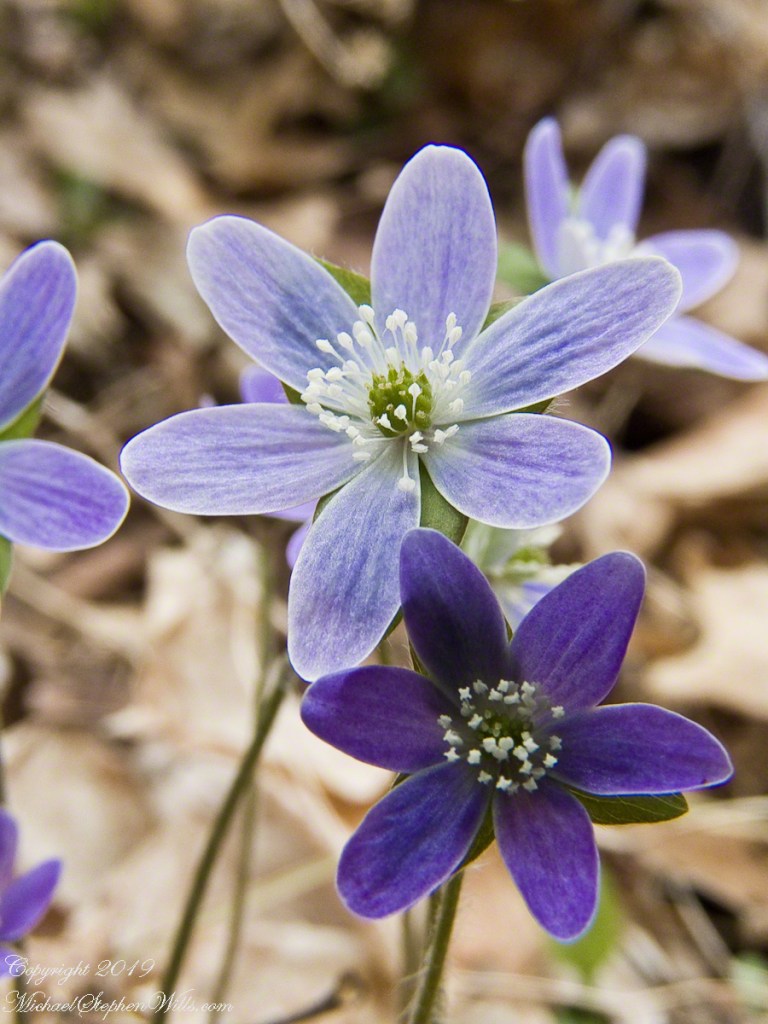
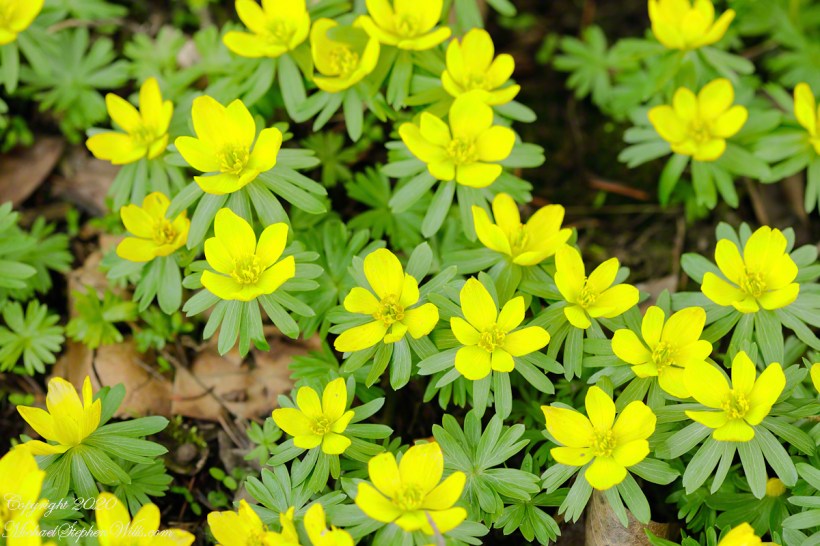
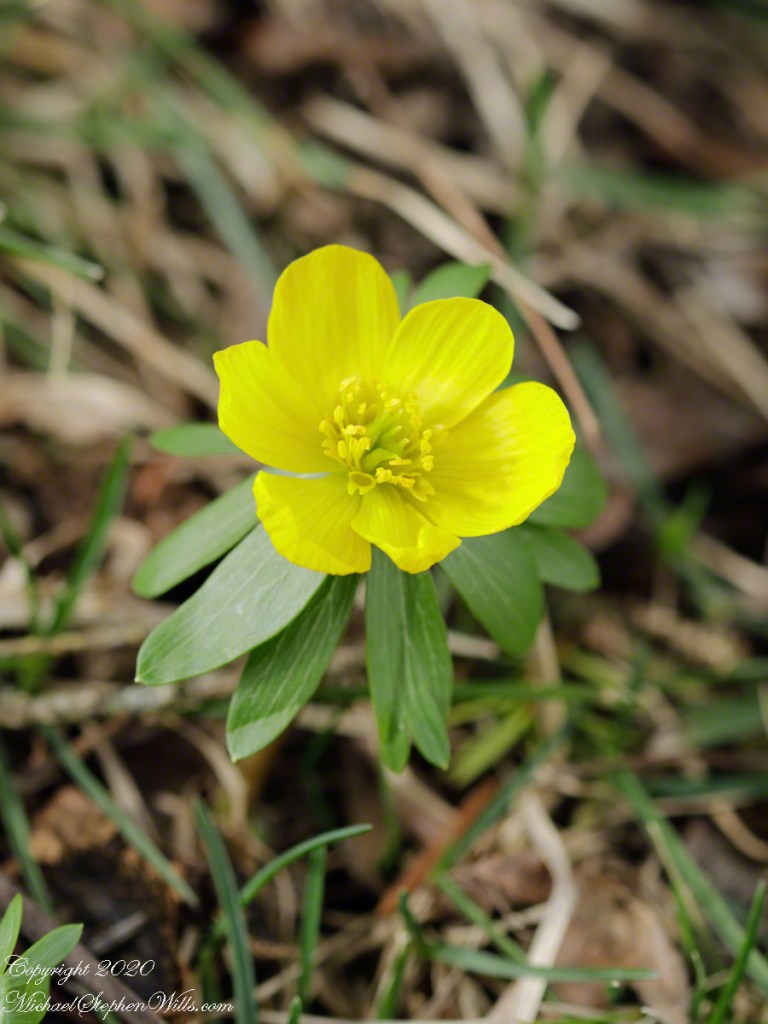
Most every year since 2002 I’ve photographed these personable beauties, the first wildflowers to bloom as early as late February through the snows.
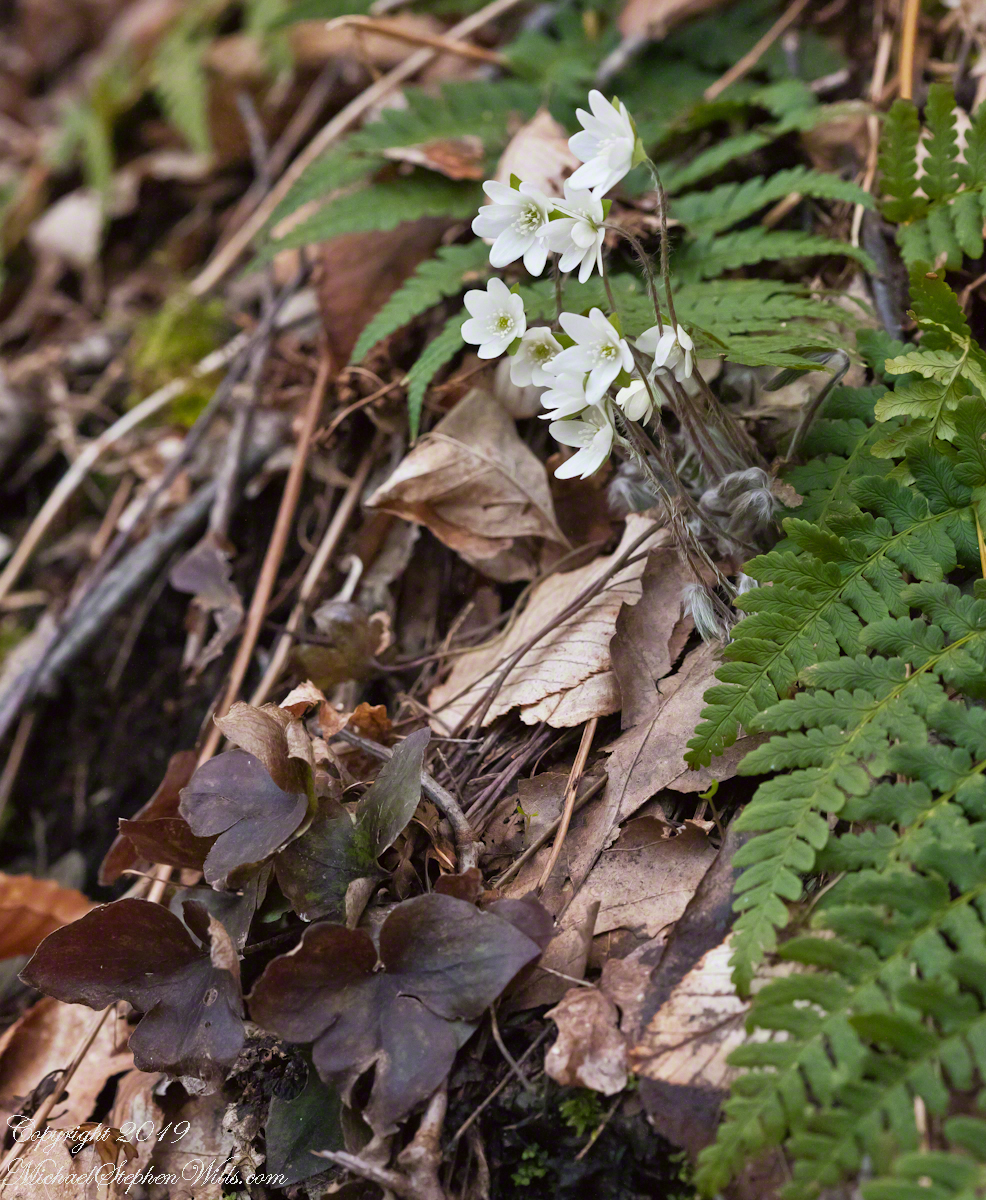
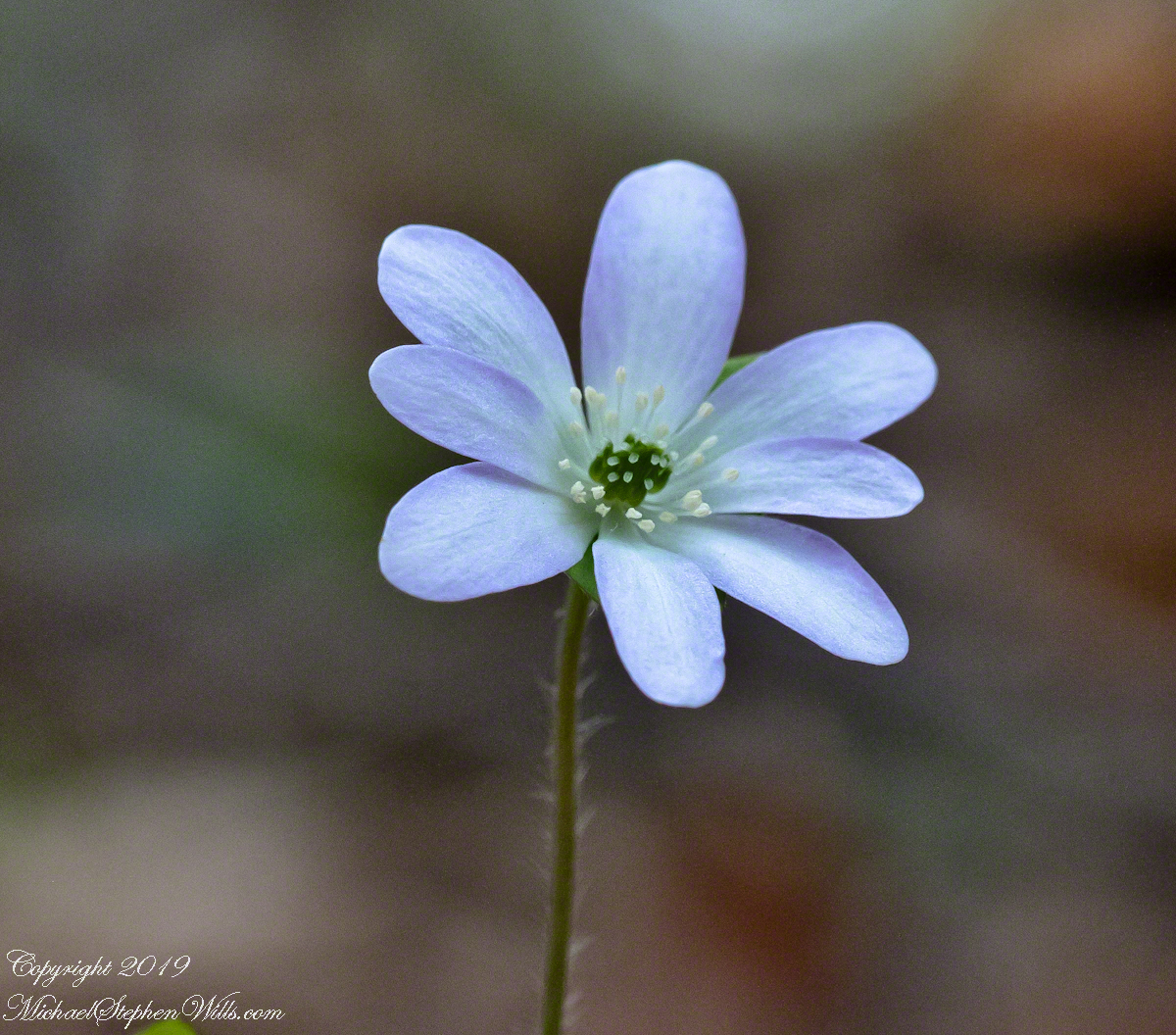
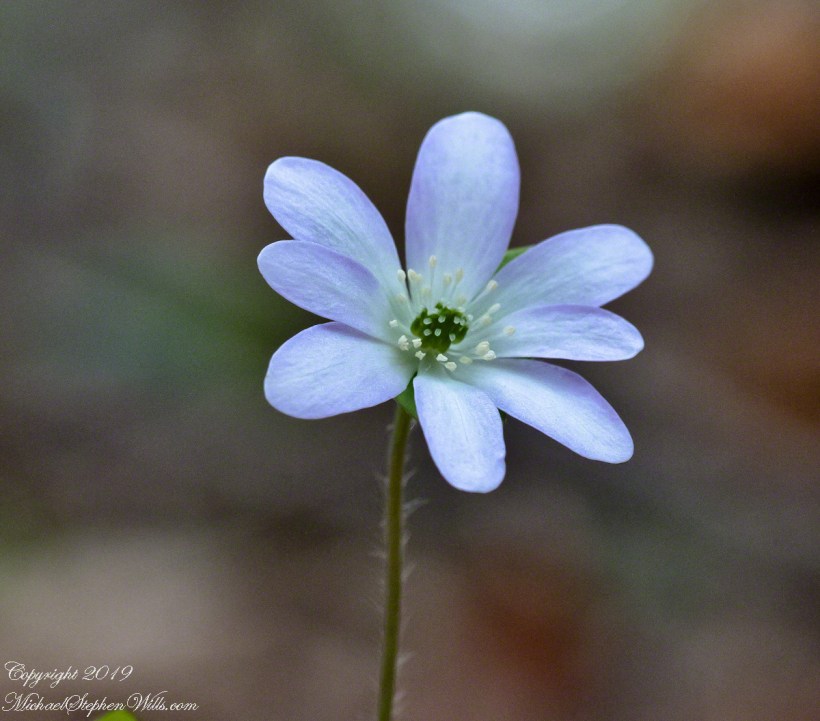
Early Spring Beauties
Most every year since 2002 I’ve photographed these personable beauties, the first wildflowers to bloom as early as late February through the snows.
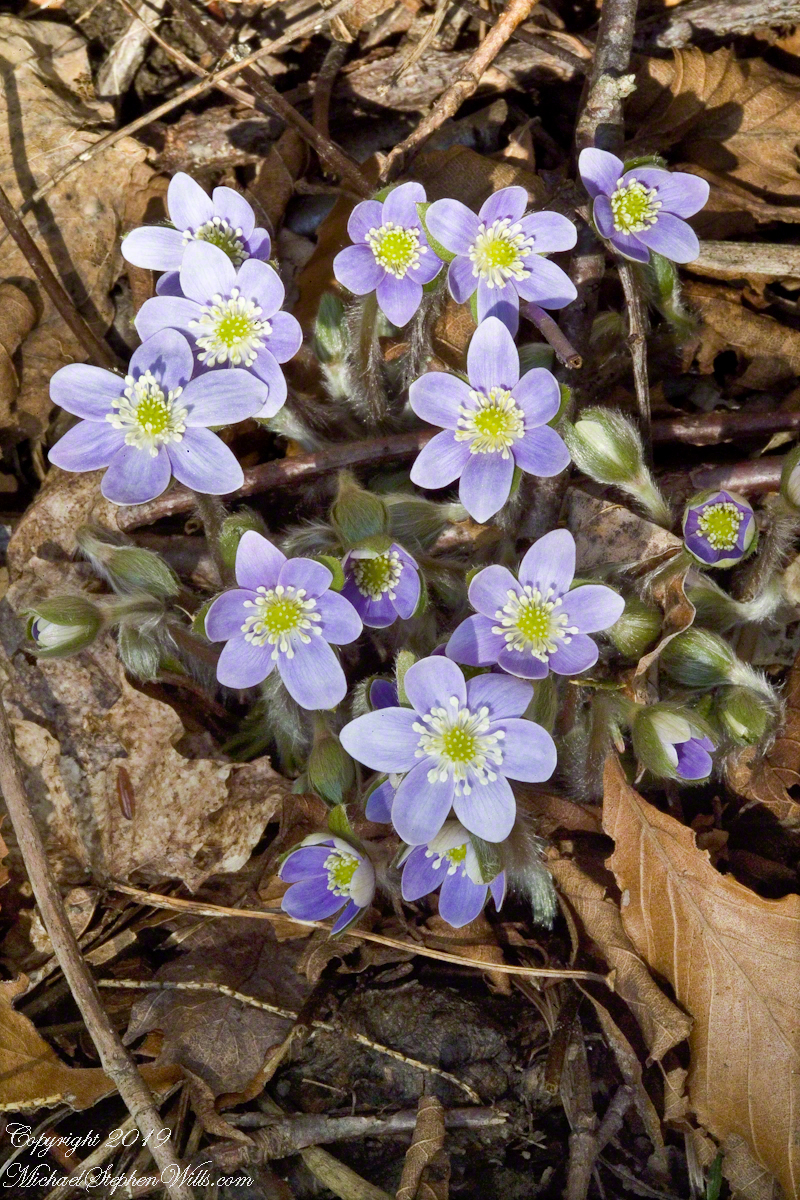
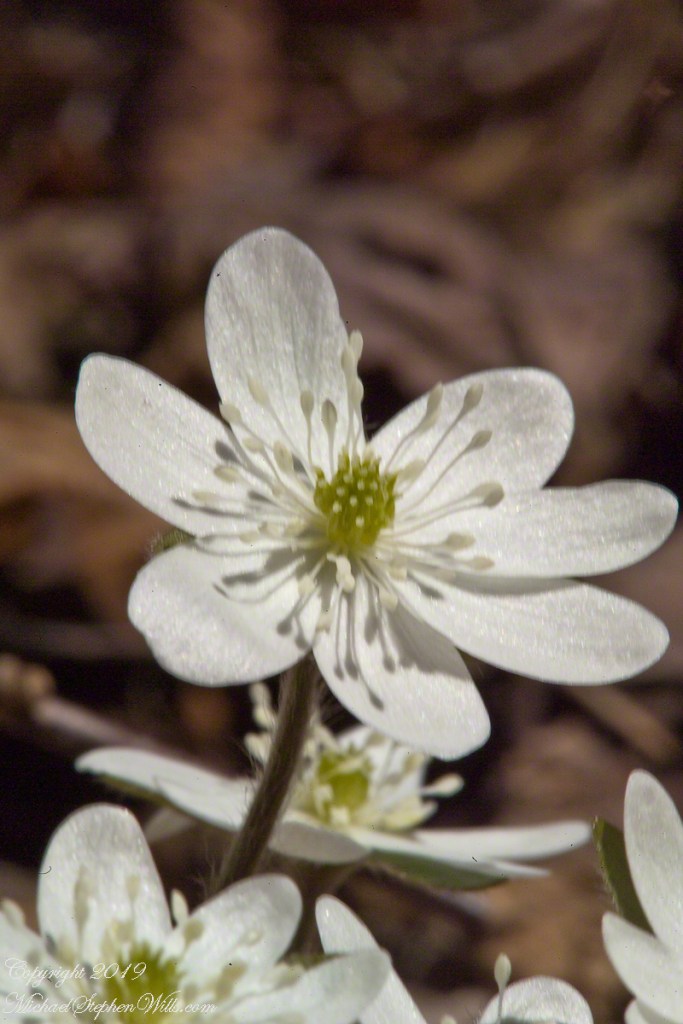
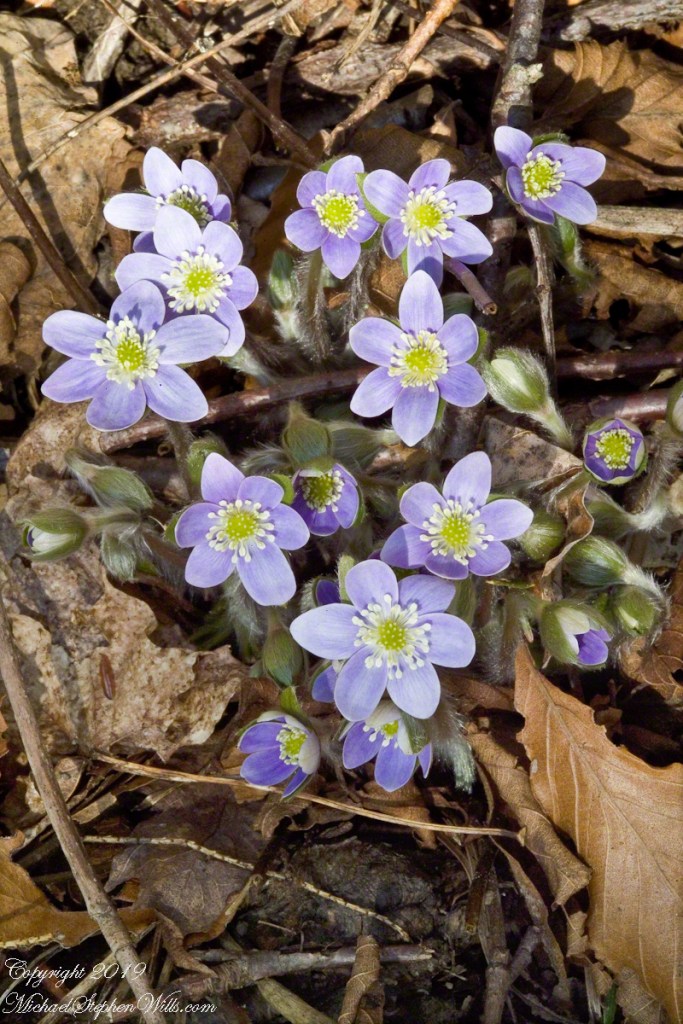
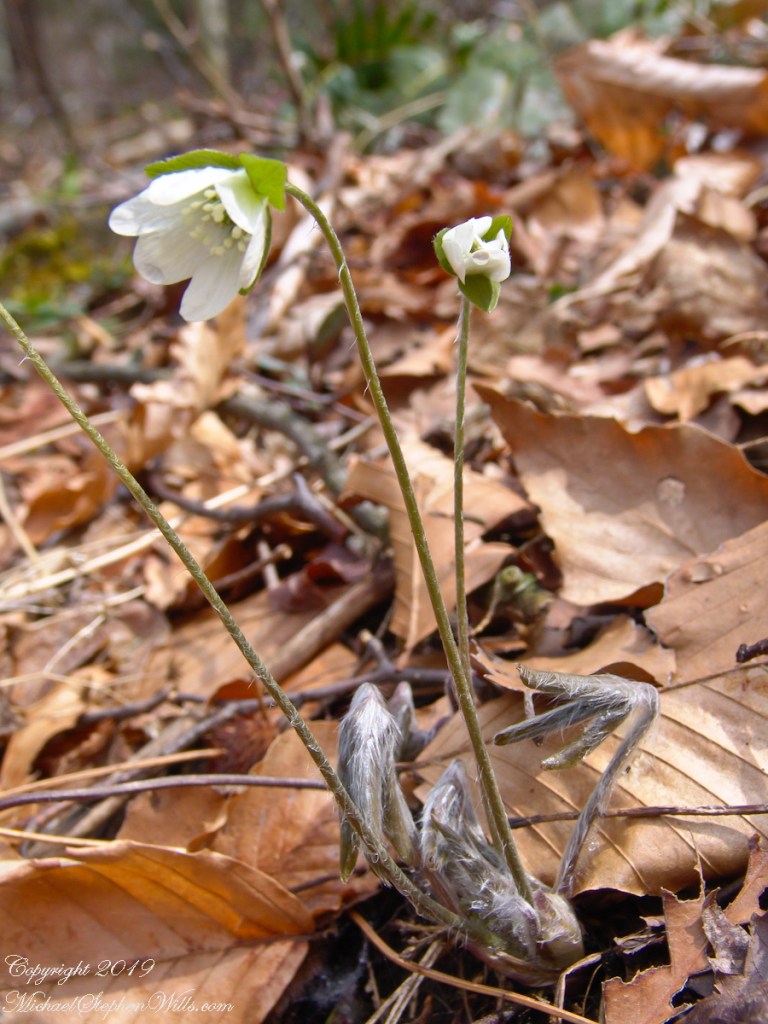
Hepatica from April 2007
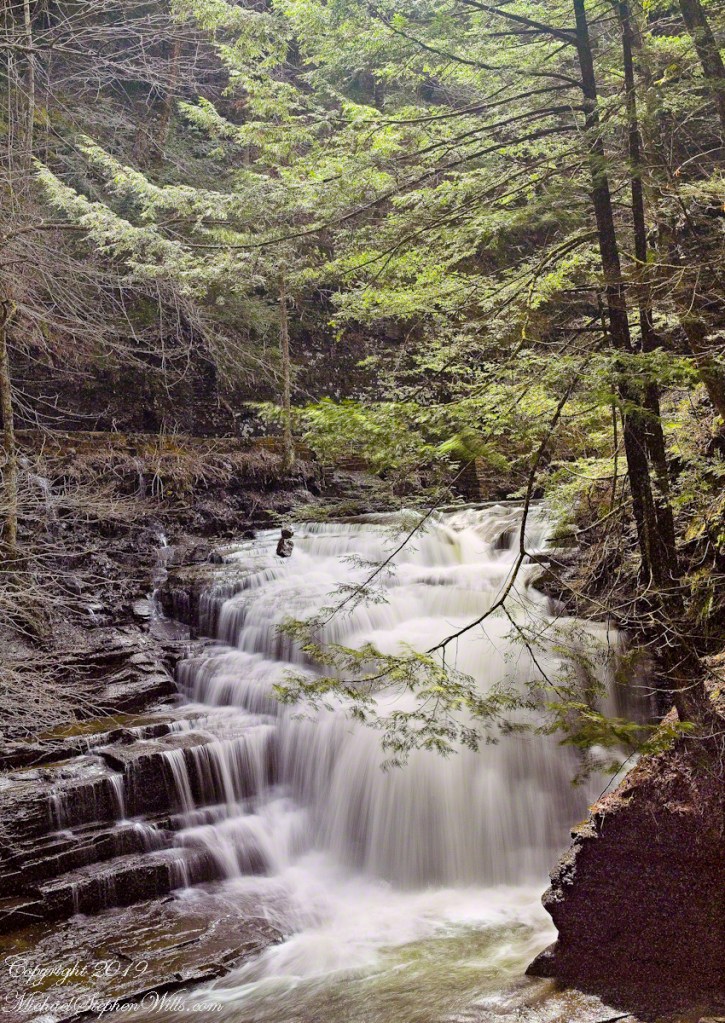
Back in 2007 I used a 100 mm Canon Macro lens on a Kodak slr along with a Sony DSC-F828 variable lens for this mix of macro and habitat captures presented as a gallery so you can flip back and forth among the larger images. Click any image to bring up a larger version.
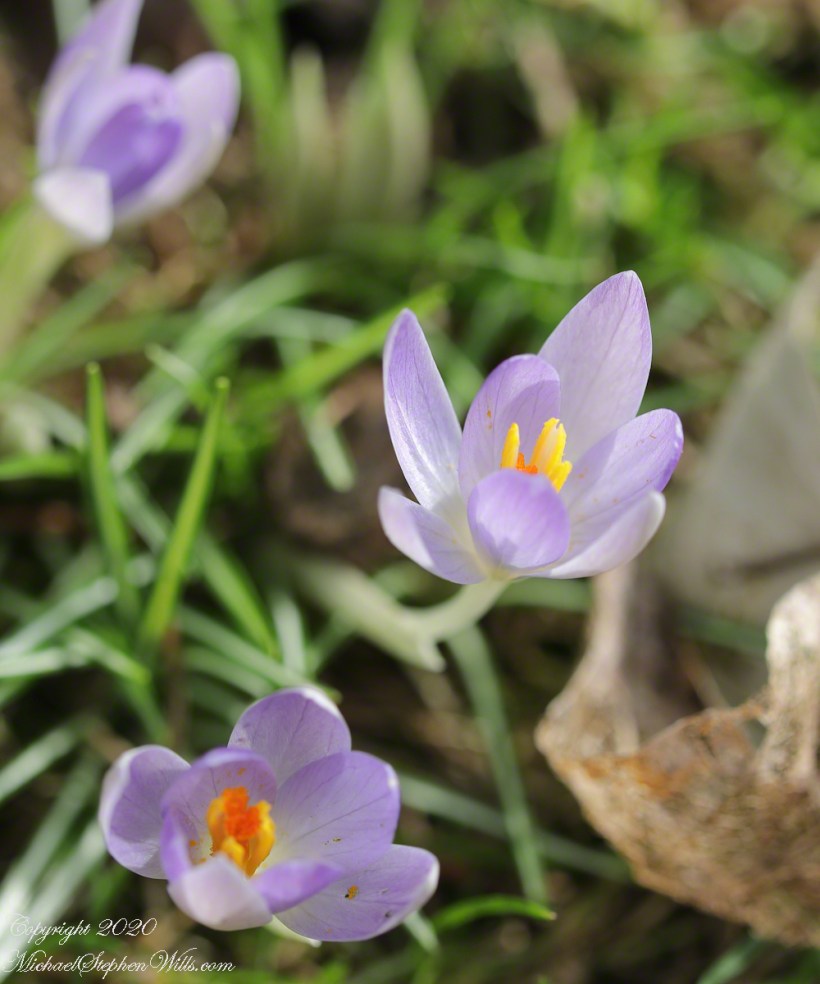
With the thermometer in the 40’s on March 12 these crocus were open, under the same magnolia tree as the buttercups from the 10th. The blooms close during cold snaps much as you see in the first post.
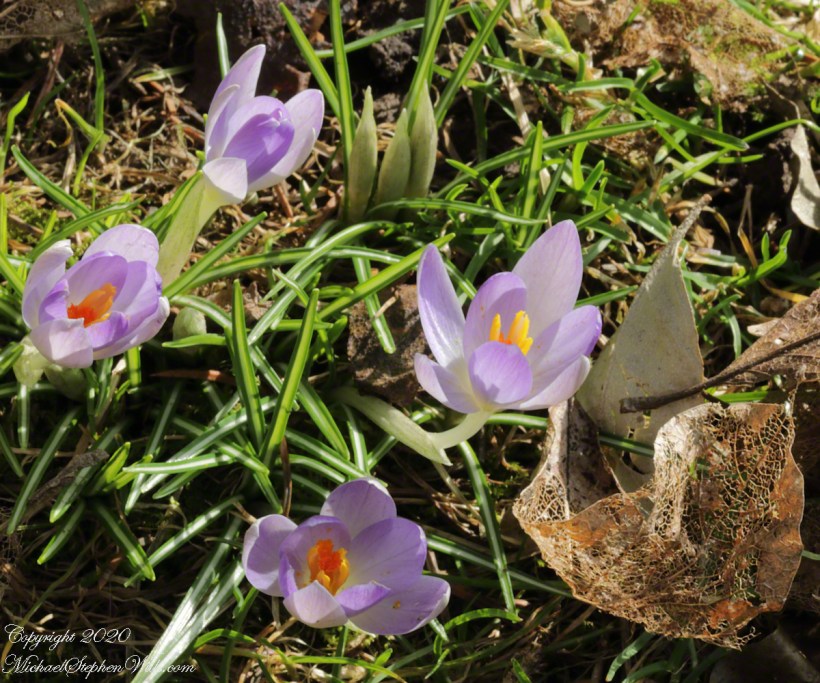
A tripod held the composition steady and the timer was set to 2 seconds for extra stability. With the leaf body worn away by time, the remaining veining turns the form lacy.
Here is a slideshow today’s and previous wildflowers.
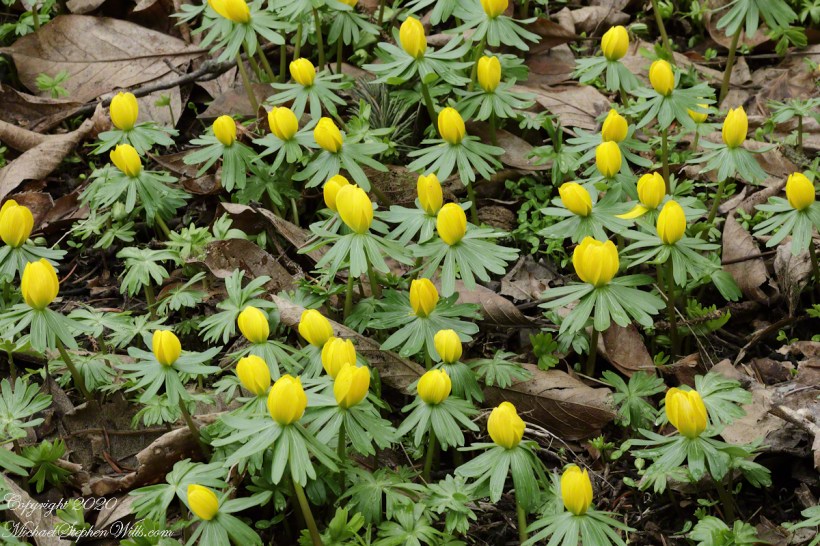
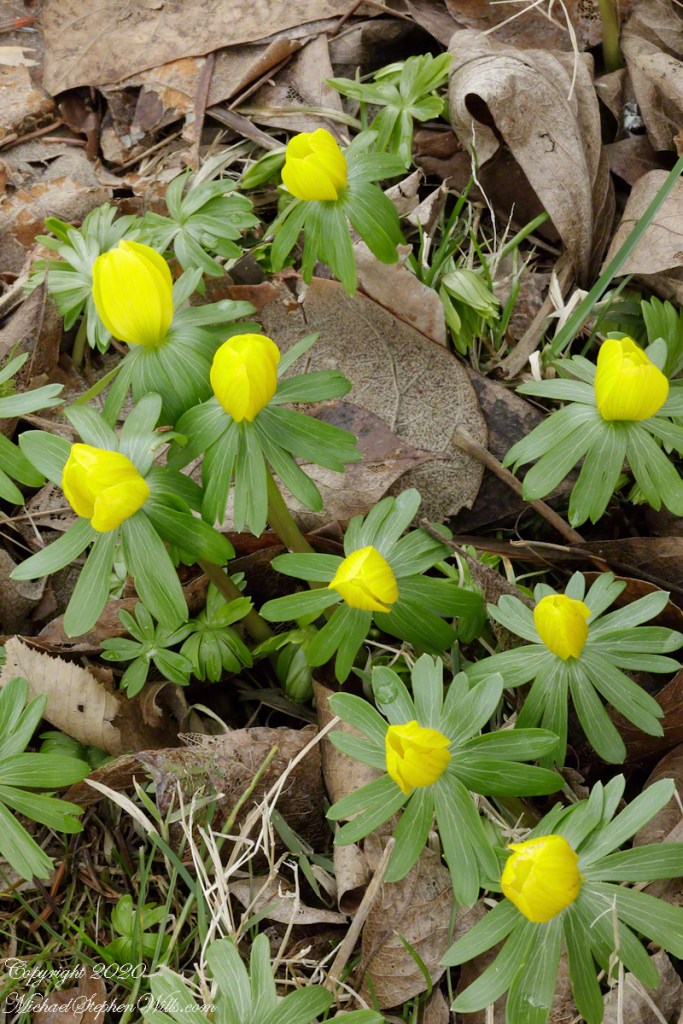
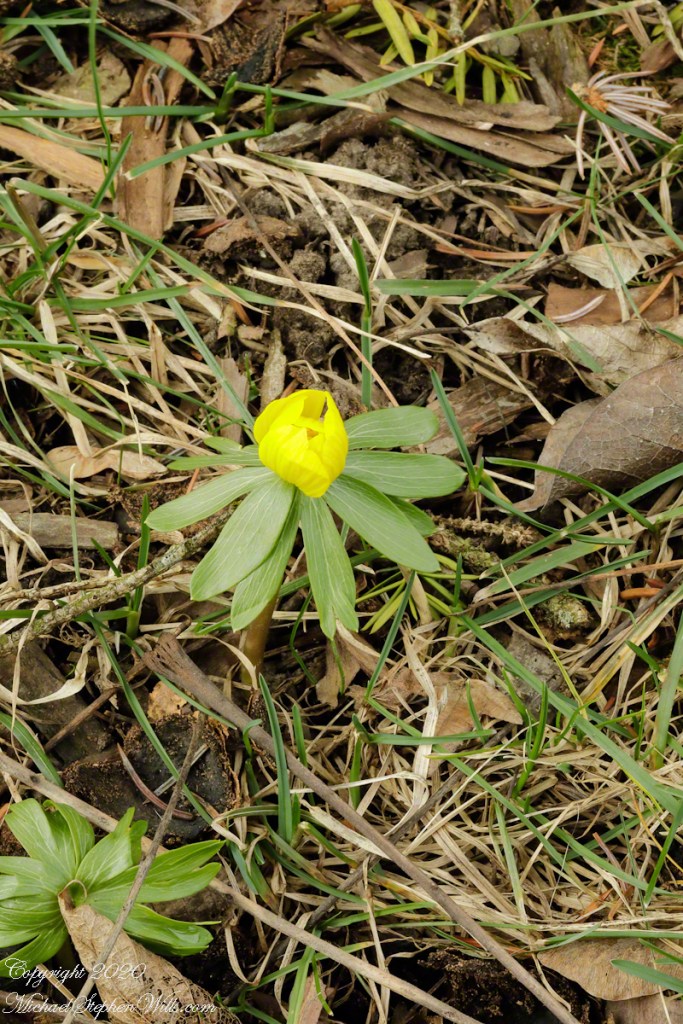
Noticing small miracles, taking the time and effort to capture them…..
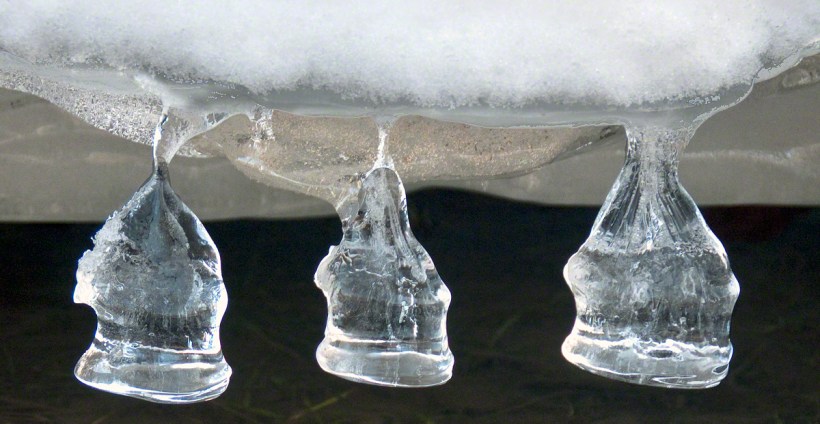
These icicles were formed along Fall Creek during the coldest months of February in the Finger Lakes Region of New York State.
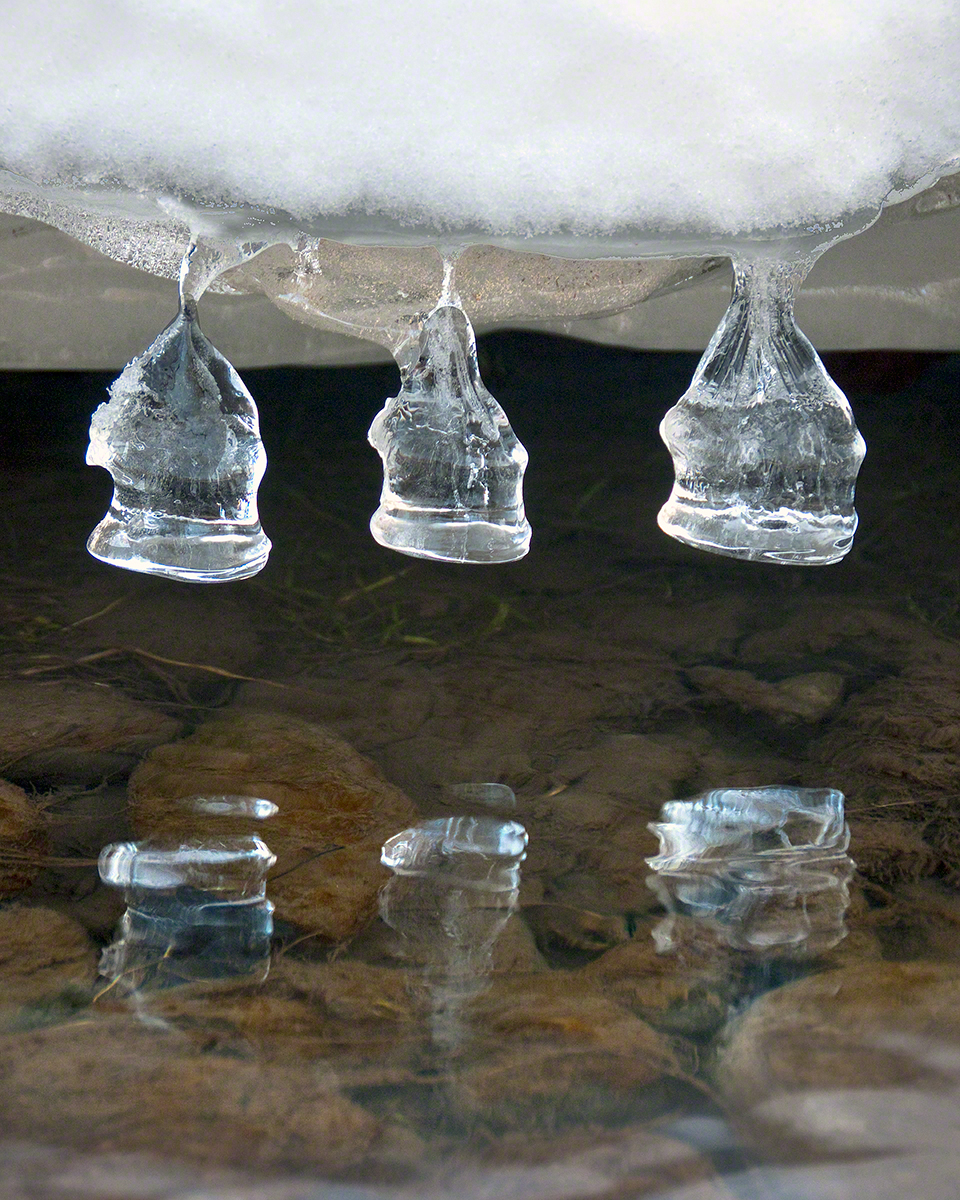
The transient nature of these forms is suggested by the thinness of the pedicle joining each bell to the ice lobe of the ledge. Note the golden crystals in the ice lobe.
A visualization of the symbolic power of the numeral three, reflected on itself. Question: what do “threes” mean to you?
Captured with the Sony DSLR-A700, DT 16-105mm F3.5-5.6 lens, hoya circular polarizing filter, mounted on the Manfrotto tripod with ball head.
Click the photograph for my online gallery Ice Bells listing.
Reflections and Mementoes
Where would we be without Saint Patrick? He was a force, to be sure. A favorite story, is the landing of his return to the island 432 AD. The tides on the eastern coast of the Irish Sea can be strong. His plan was to sail up to coast further north than what we call today Strangford Lough. On passing this inlet the boat was swept into the lough tidal narrows. Circumstances called for a landing, rather than wait for the tide. Patrick came ashore where the Slaney River enter the lough and “quickly converted” the local chieftan, Dichu, who provided a barn for holding services. The name of the town “Saul” in Irish is Sabhall Phádraig, translated as “Patrick’s Barn.”
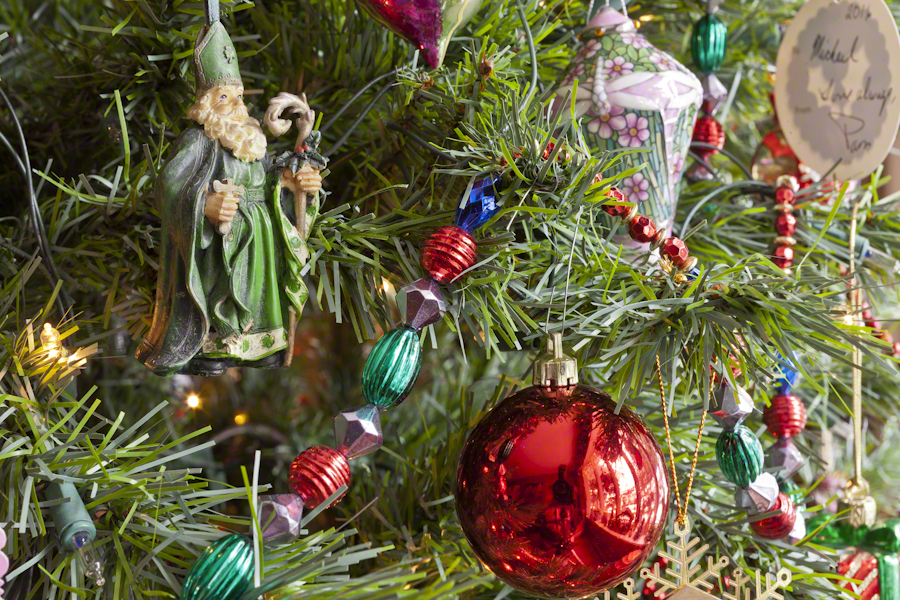
In this posting I’ll go lighter on descriptions of technique. Leave it to say I held to the Canon fixed lens EF 50mm f1.2L USM throughout. Some, like the photograph of Saint Patrick, used a tripod. Others, like the latter two of the following Irish Themed Cross set were handheld. Generally a flash was used to supplement ambient sunlight from a large north-facing bay window.
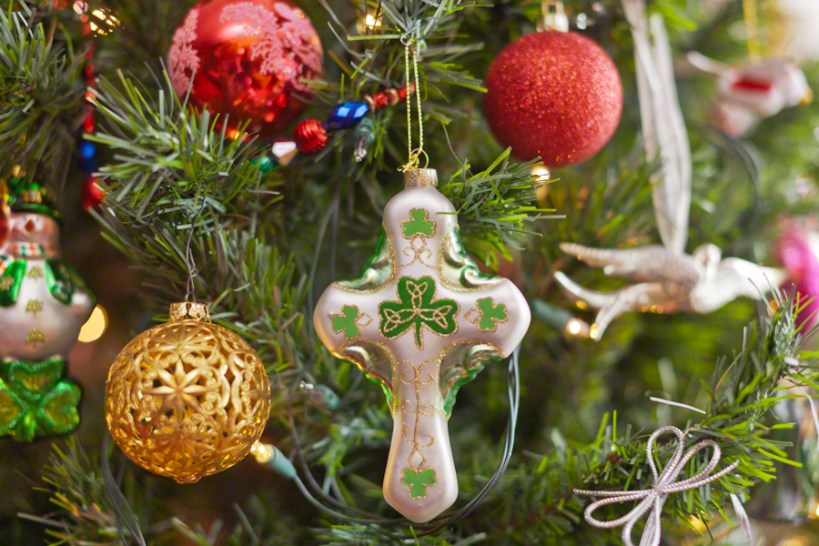
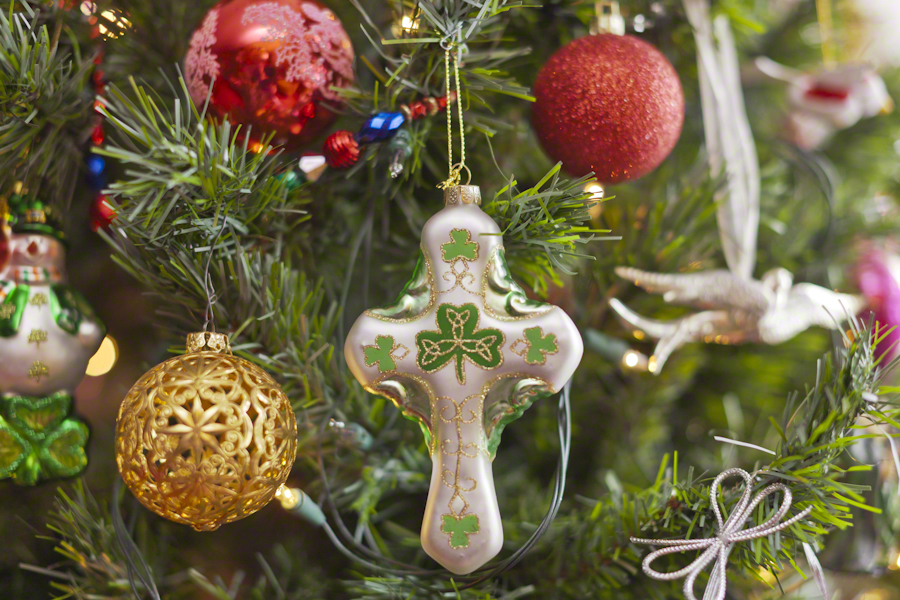
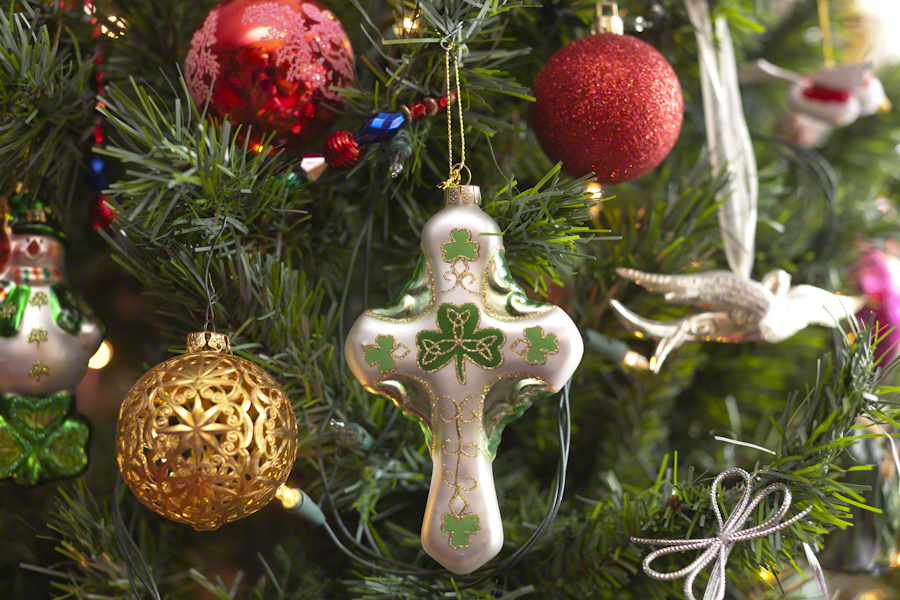
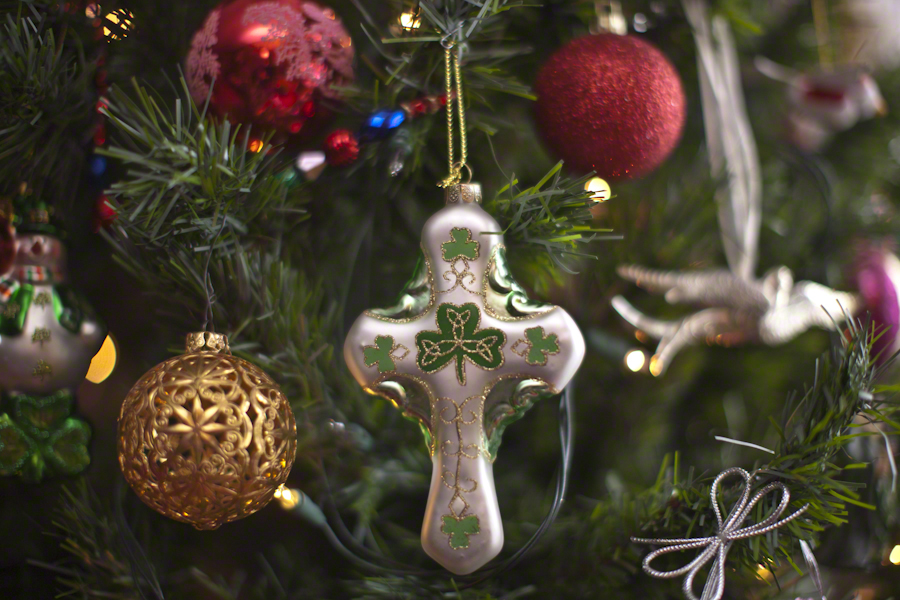
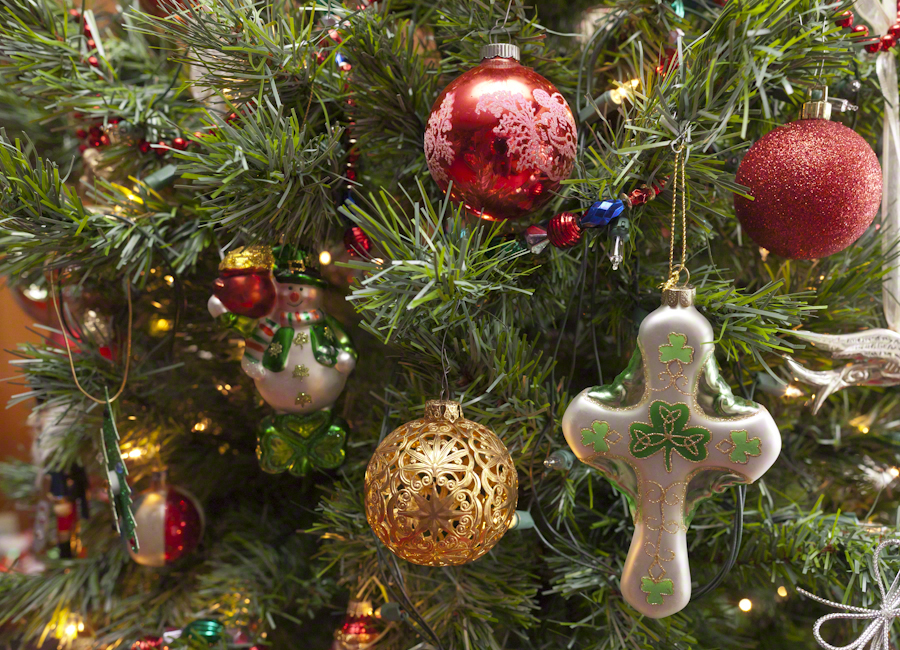
Here the “celtic” cross is converted to an Irish theme through a substitution of a shamrock with golden decoration inspired by pagan neolithic petroglyphs for the nimbus (circle) intersecting the central intersection of arms and stem.
For the first three I played with aperture, taking advantage of the stability of a tripod. The final two of the set are handheld.
Note the fanciful leprechaun snowman with pot o’ gold, on the left.

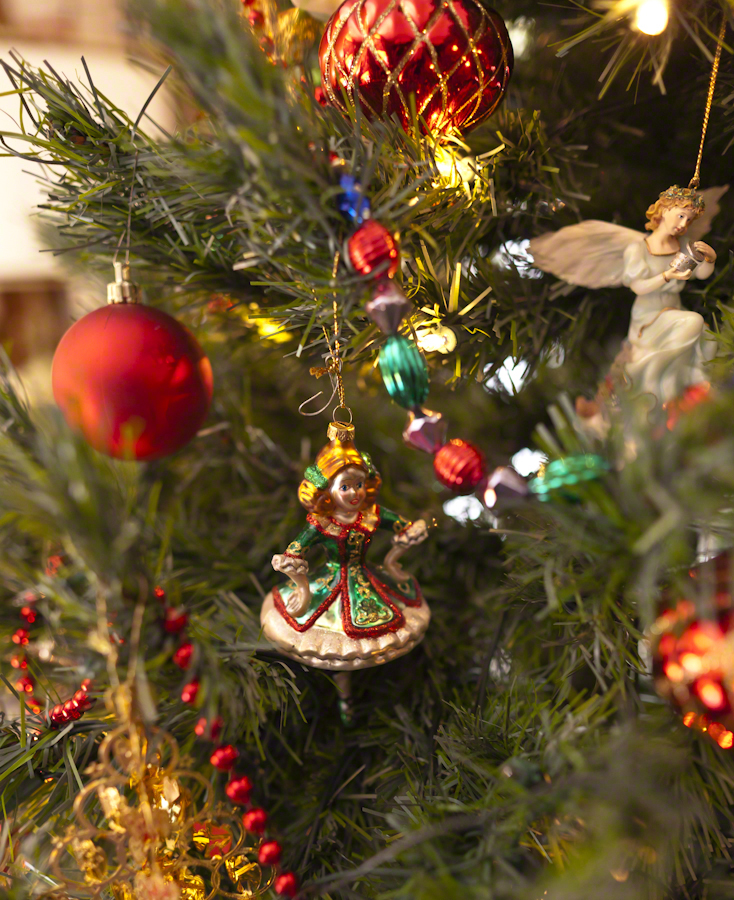
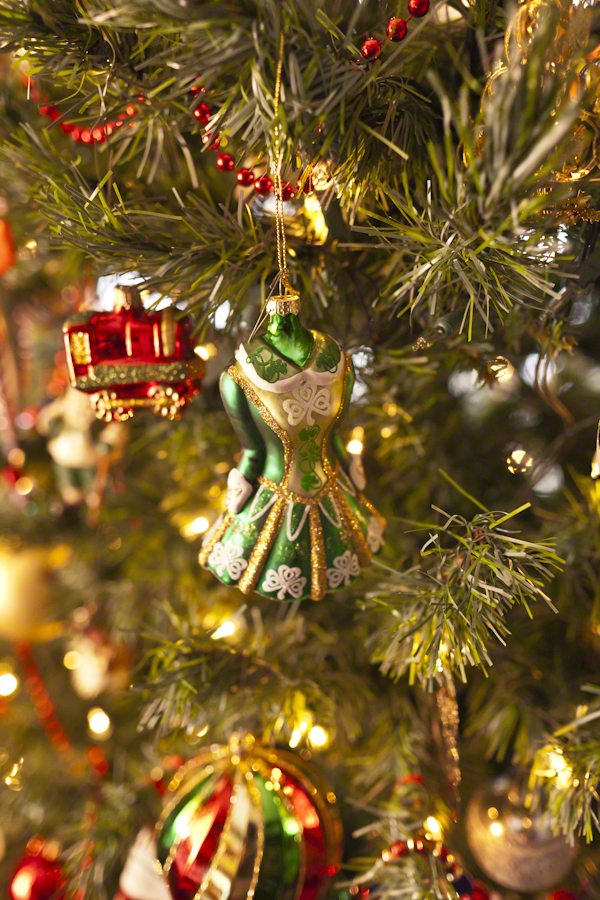
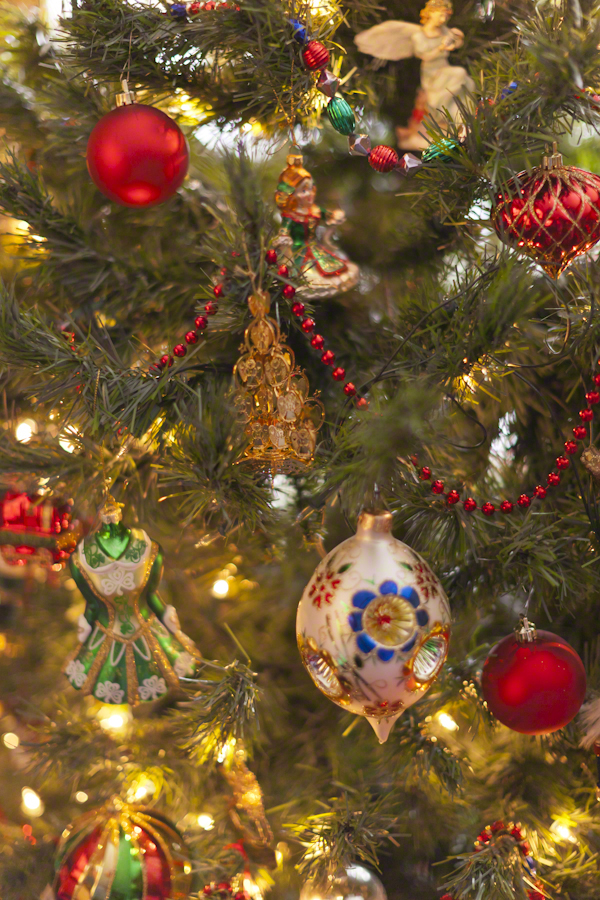
Blown glass Irish dancers.
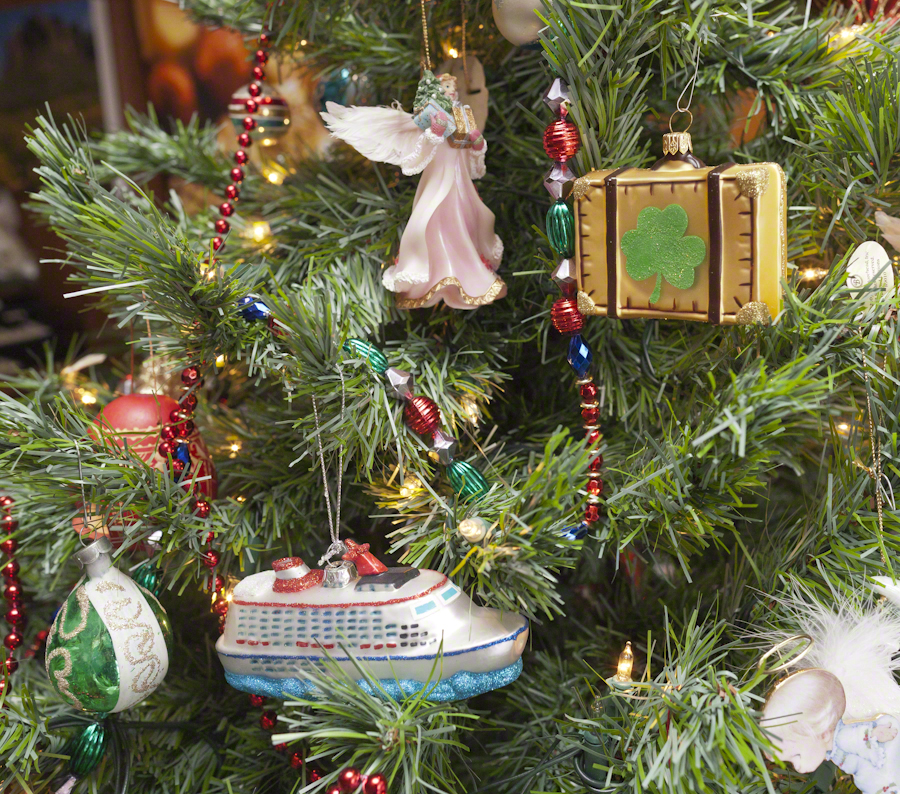
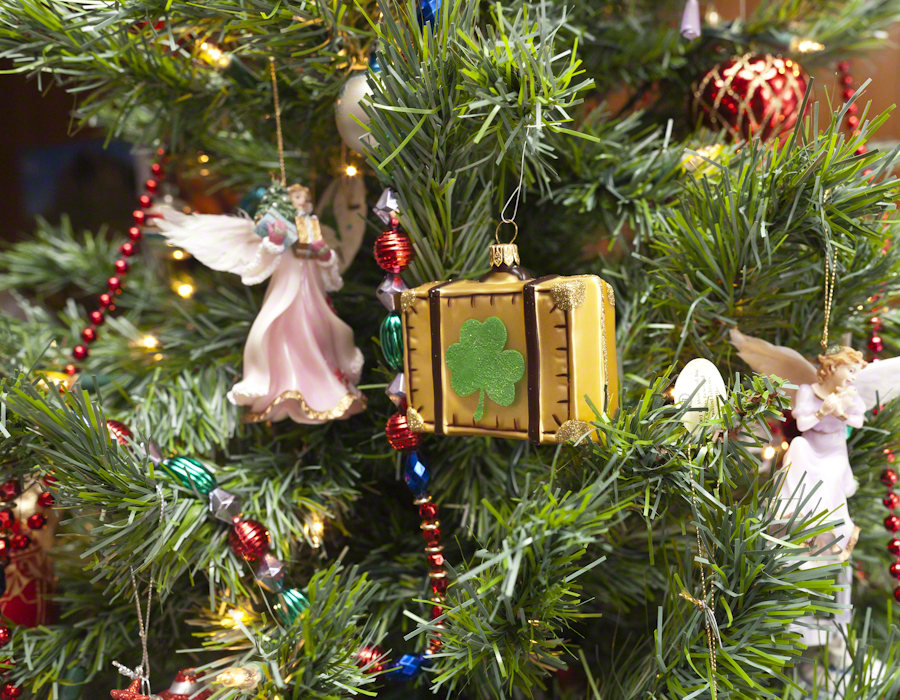
“Travel memories”
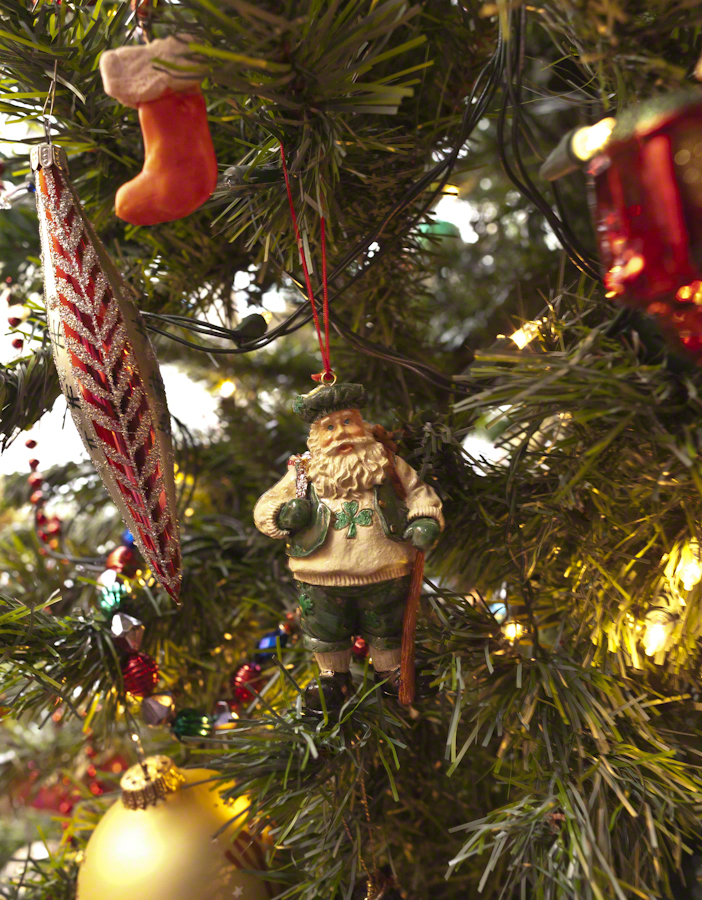
Lets’s finish up with a resin cast Santa Claus in hiking garb. Hiking is a favorite activity of ours. Featuring a stout staff and Aran Island sweater.
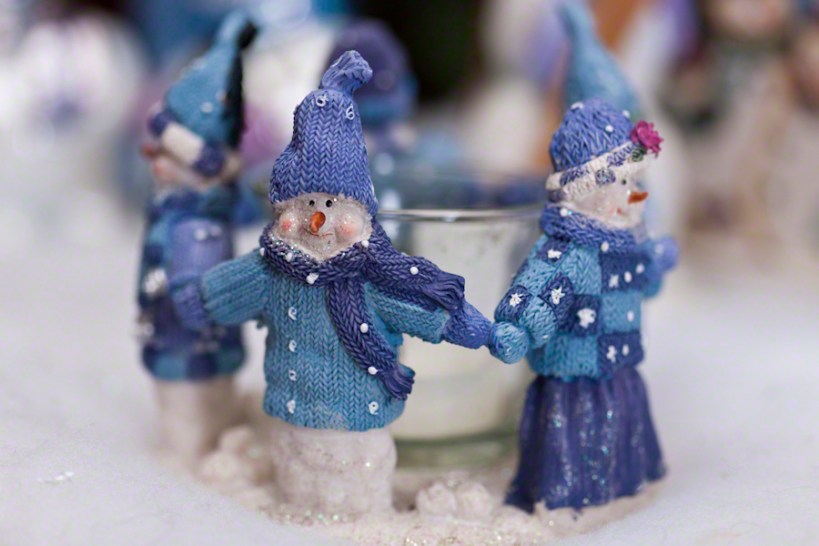
Cozy Snowmen dance round the candle
My dear wife Pam is the heart of Christmas in our home. Over the years we have collected a treasure of ornaments and knick-knacks she crafts into displays around our one. Pam completed the project well in advance of our grandchild holiday visits, before card writing and gift wrapping.
My contribution is a photographic time capsule. Here is some of my artistic output from this work.
This grouping of five cozy snowmen (three males, two females) are warmly dressed in knit sweaters and stocking caps; the women with long skirts. The five hold hands in a ring, rising from a common platform. We place a cup and devotional candle in the center.
The tiny group evokes community, harmony, amity. I captured them with a Canon EOS 1Ds Mark III dslr, a fixed Canon EF 100mm f/2.8L macro lens mounted on a Manfrotto studio tripod and hydrostatic ball head. Fixed lenses provide the sharpest macros. The mounting allowed precise framing and use of the widest aperture and a low ISO. The light sources were sunlight from a large north facing bay window, a Canon Speedlite 600Ex-Rt and the candle. When used, the flash was angled in various ways toward the ceiling.
I start with a tight shot, maximum aperture. A single figure is in clear focus, the remaining gradually lost in the bokeh. The flash was used. I can almost see then circling around the candle in a winter wind.
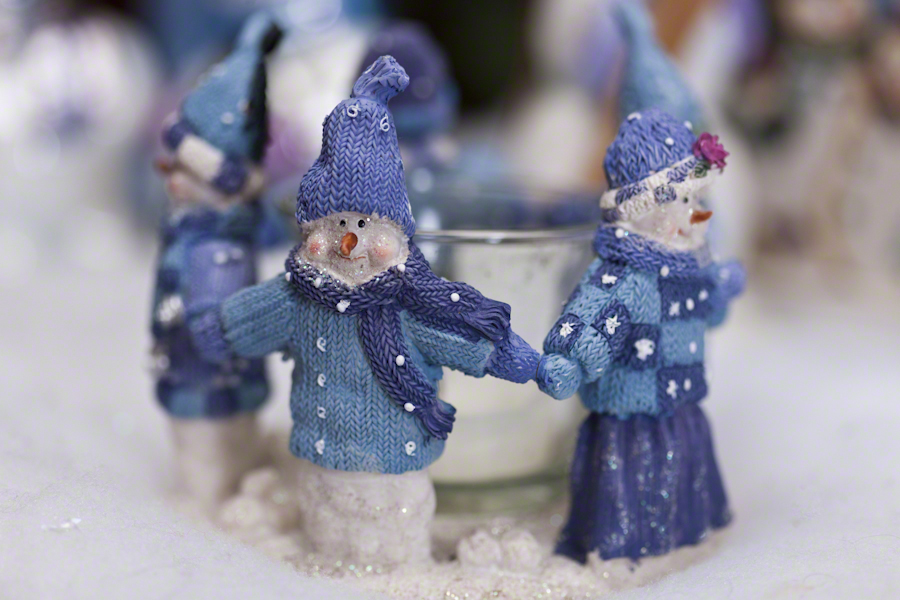
Here the candle is lighted, aperture narrow to f8 using only the candle and ambient light (no flash). The group is visible within surrounding figures. I backed away and the viewpoint is higher.
The candle light enhances the perception of community.
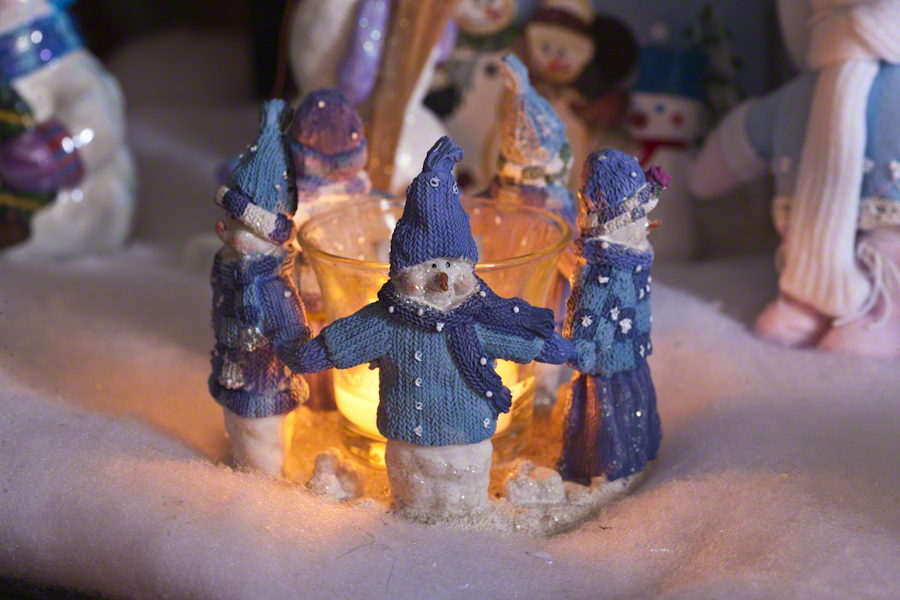
Viewpoint is closer, still only the candle and ambient light. Aperture widened to 3.5. I must remove the hair in lightroom.
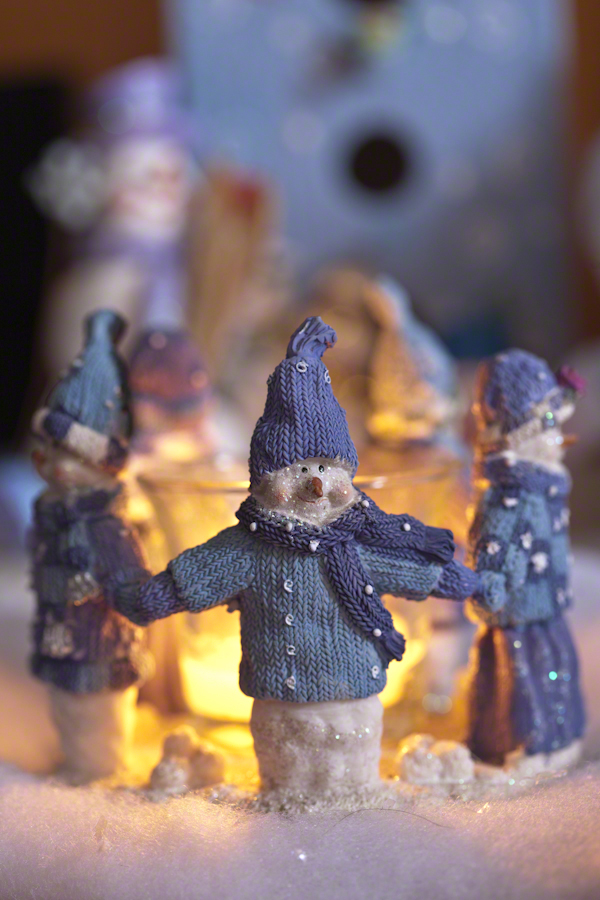
I backed off, aperture at the max with only the candle and ambient light. The figures are placed in a tableau with other snowmen and a structure, a birdhouse.
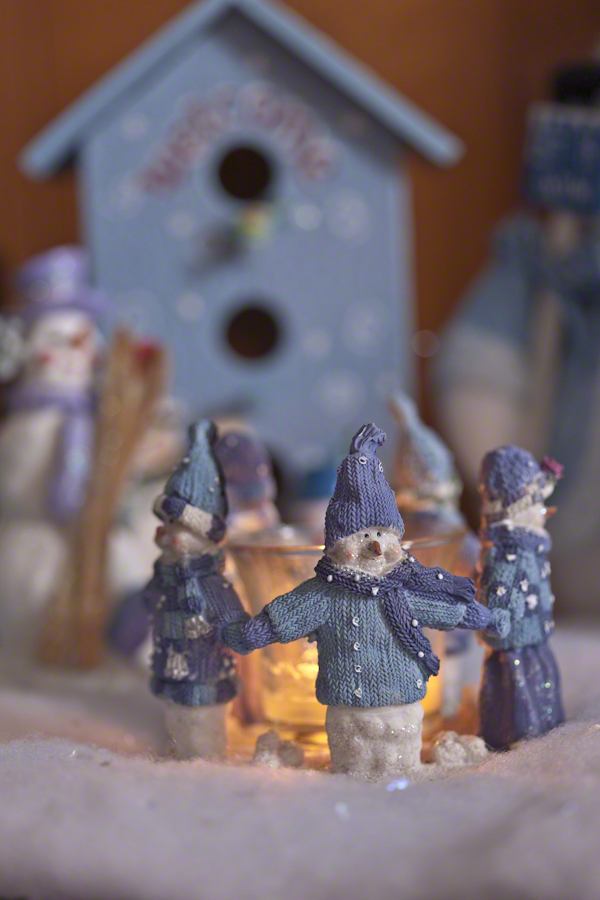
For this overview I swapped in a Canon 24mm f/1.4L II USM with a flash, aperture f2.2.

Copyright 2020 Michael Stephen Wills All Rights Reserved

reaction to cold temperature
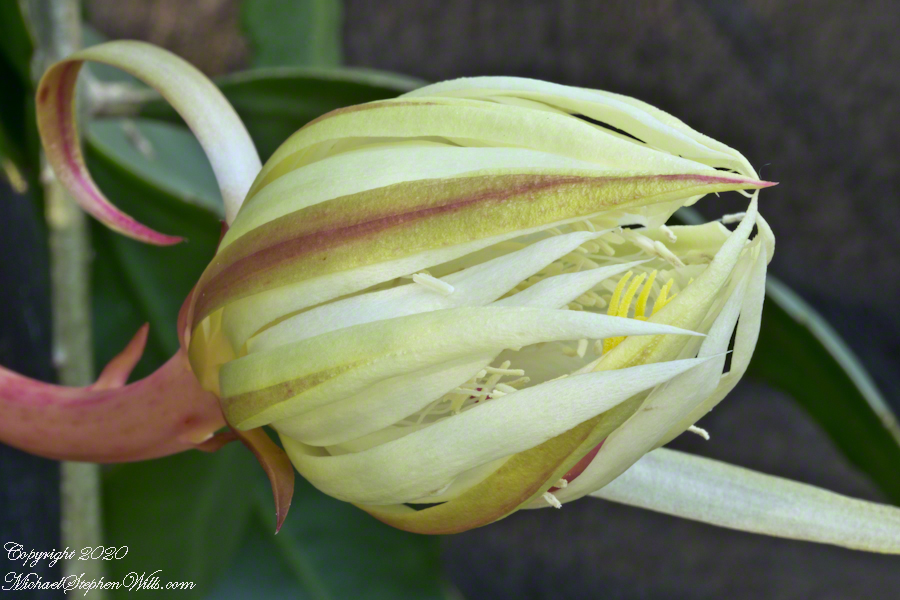
For the final post of this series on Cereus blooms, of the four buds two failed to fully open after the weather turned cold in late September/Early October. Here is the failed bloom from the same opening bud featured in the last Cereus posting.


References
Wikipedia, “Epiphyllum, “Epiphyllum oxypetalum,”epiphyte.”
Copyright 2020 Michael Stephen Wills All Rights Reserved

soon to open
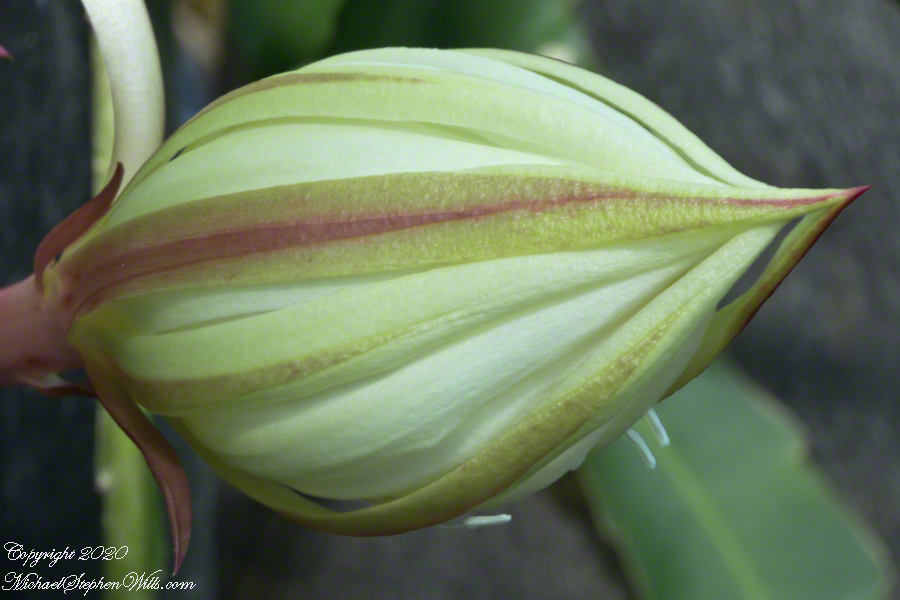
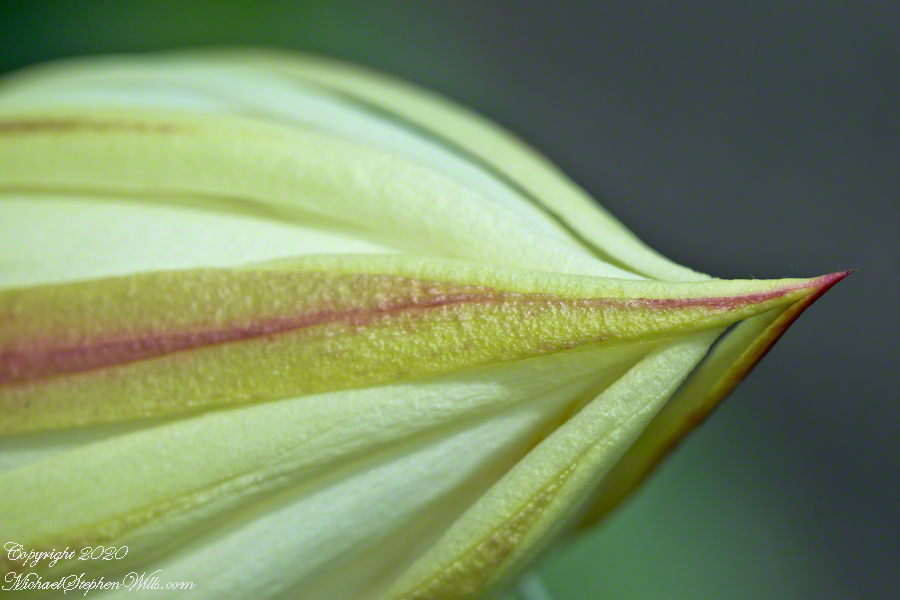
Here is a continuation of the previous Cereus posting, the ultimate macros of a bloom on the edge of opening.



References
Wikipedia, “Epiphyllum, “Epiphyllum oxypetalum,”epiphyte.”
Copyright 2020 Michael Stephen Wills All Rights Reserved
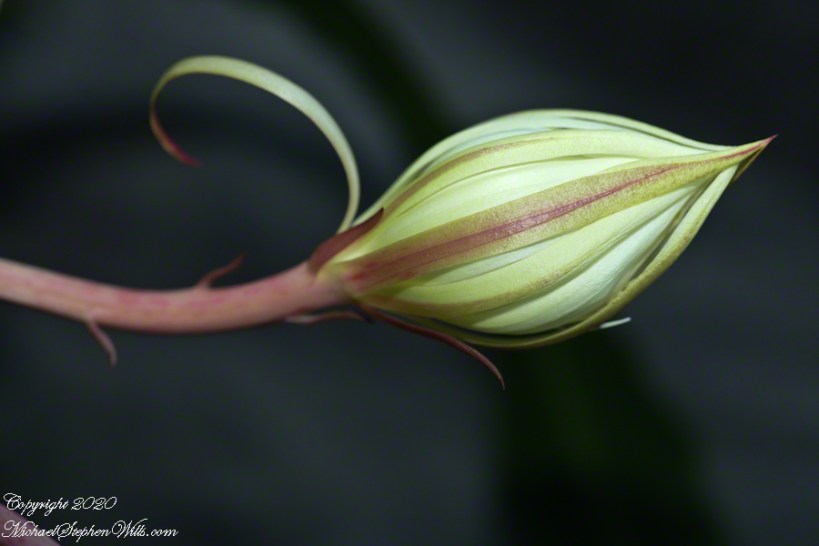
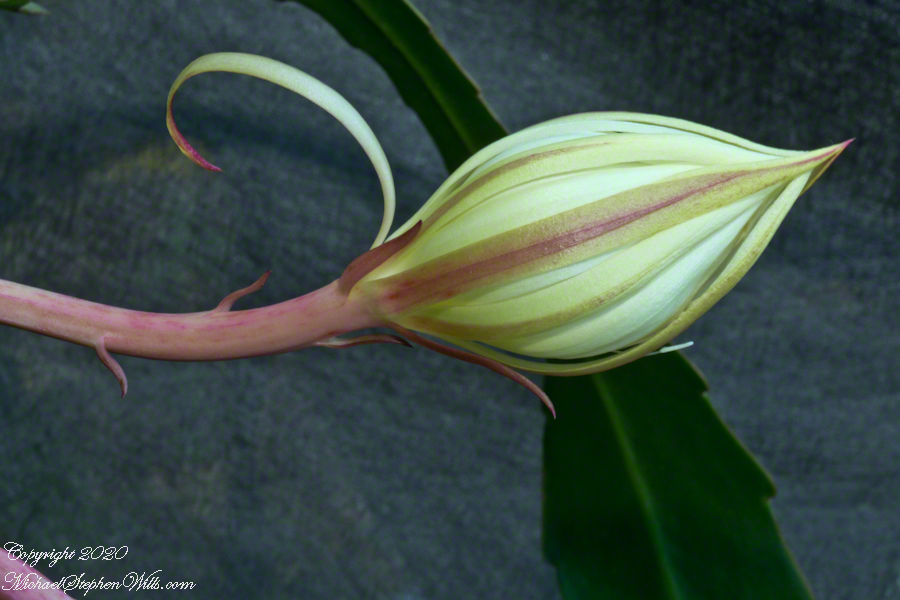
evening preparation
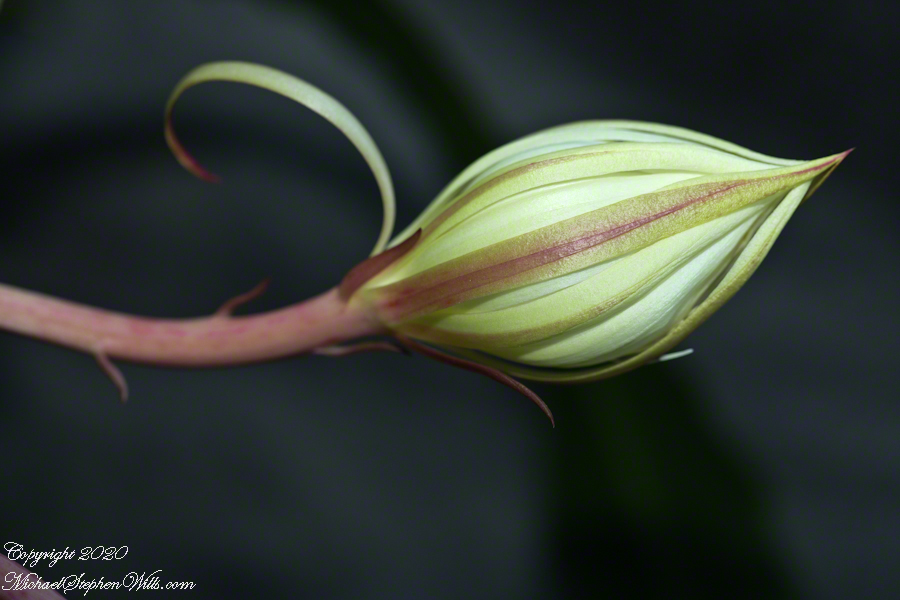
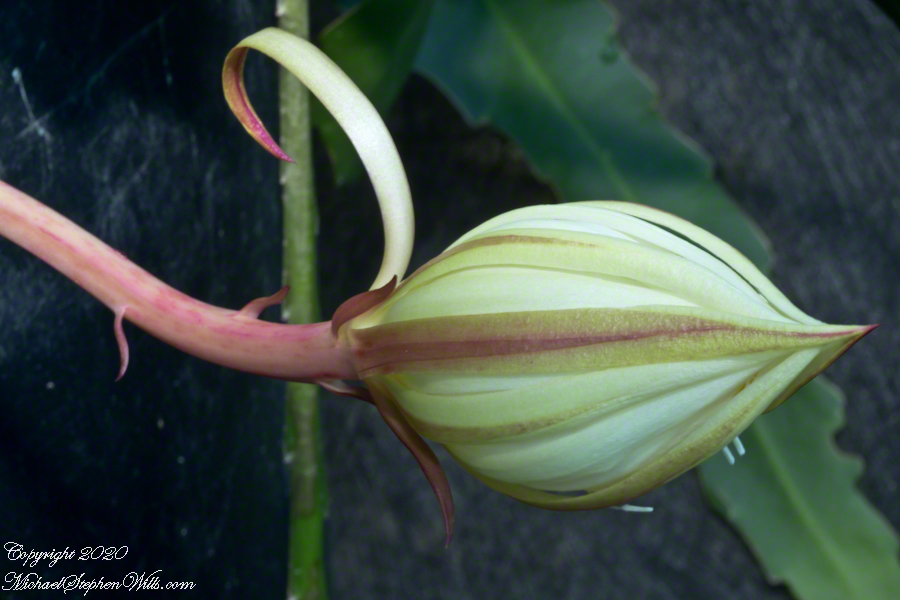
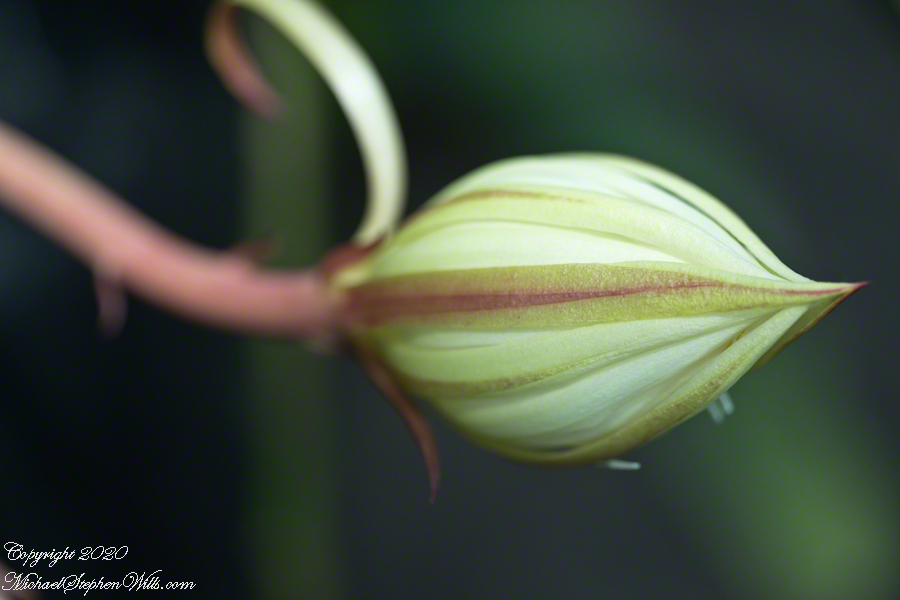
Almost bursting open, the third of four flower buds of our Night Blooming Cereus caught one October evening just before opening. The black background is repurposed anit-weed ground cover material.
Here is a series of flash photographs at varying apertures and angles. The white rods are emerging anthers, the pollen-containing tips of long stamens seen in my previous postings of the open flowers.
References
Wikipedia, “Epiphyllum, “Epiphyllum oxypetalum,”epiphyte.”
Copyright 2020 Michael Stephen Wills All Rights Reserved
What is this plant?
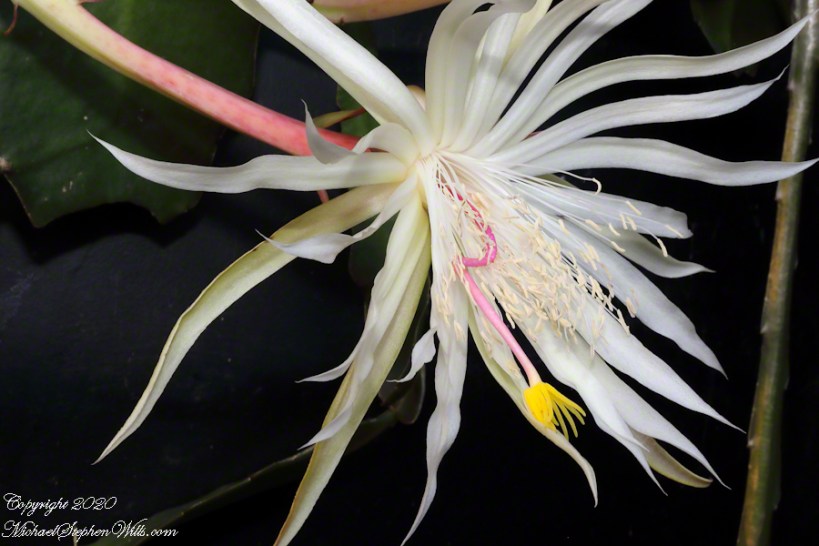
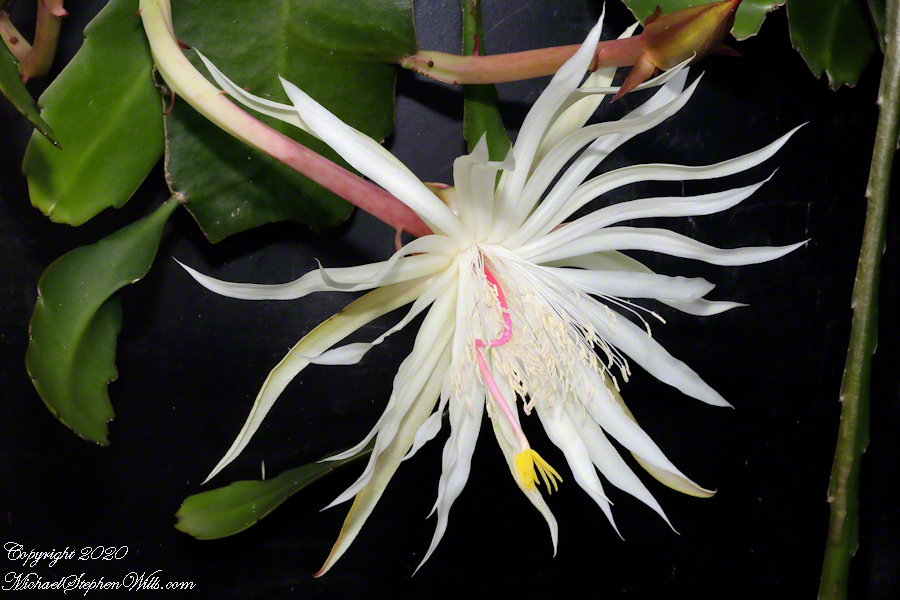
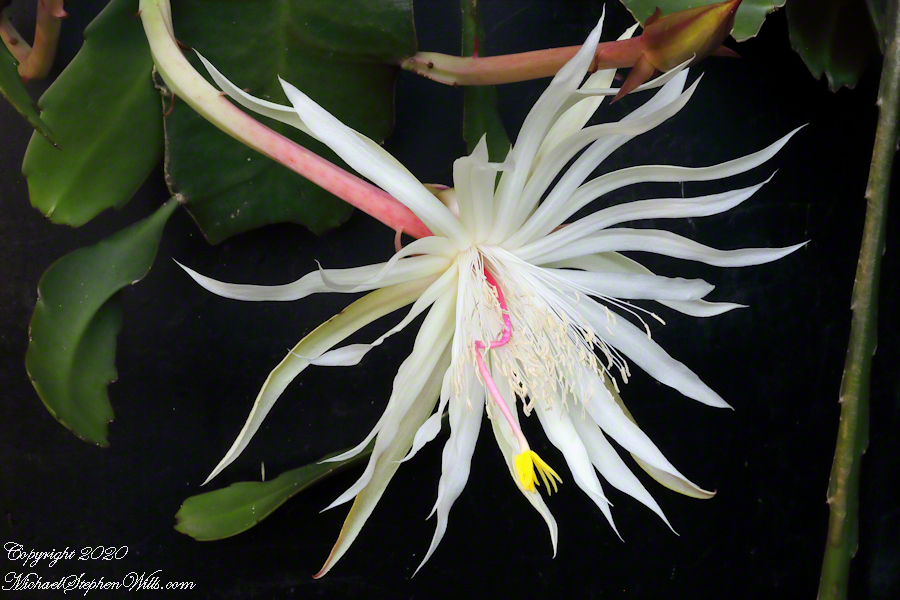
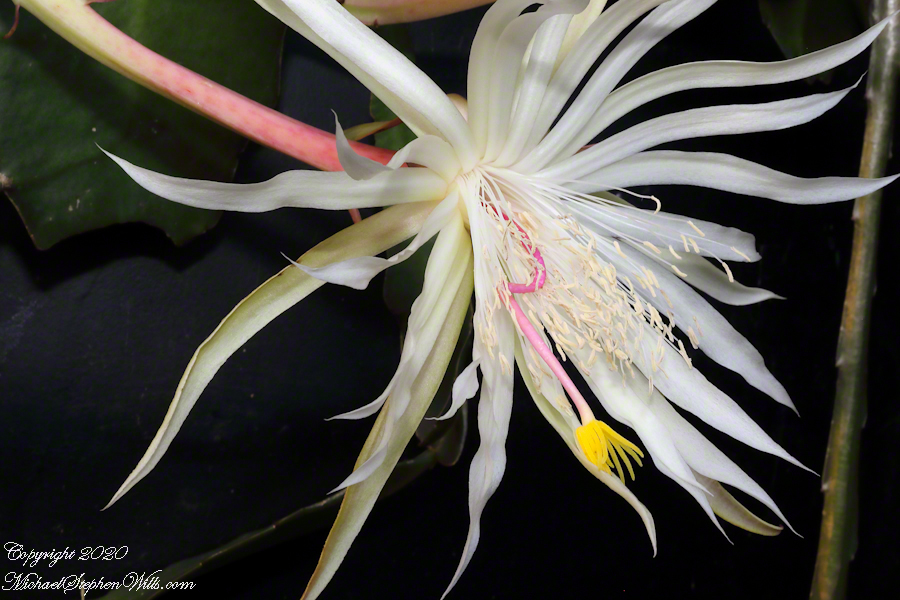
Bloom #2 of this season. Two more in the wings. I broke out the flash and the Canon 100 mm “macro” lens for this series taken an hour after sunrise before this one-night-only bloom wilted.
References
Wikipedia, “Epiphyllum, “Epiphyllum oxypetalum,”epiphyte.”
Copyright 2020 Michael Stephen Wills All Rights Reserved

