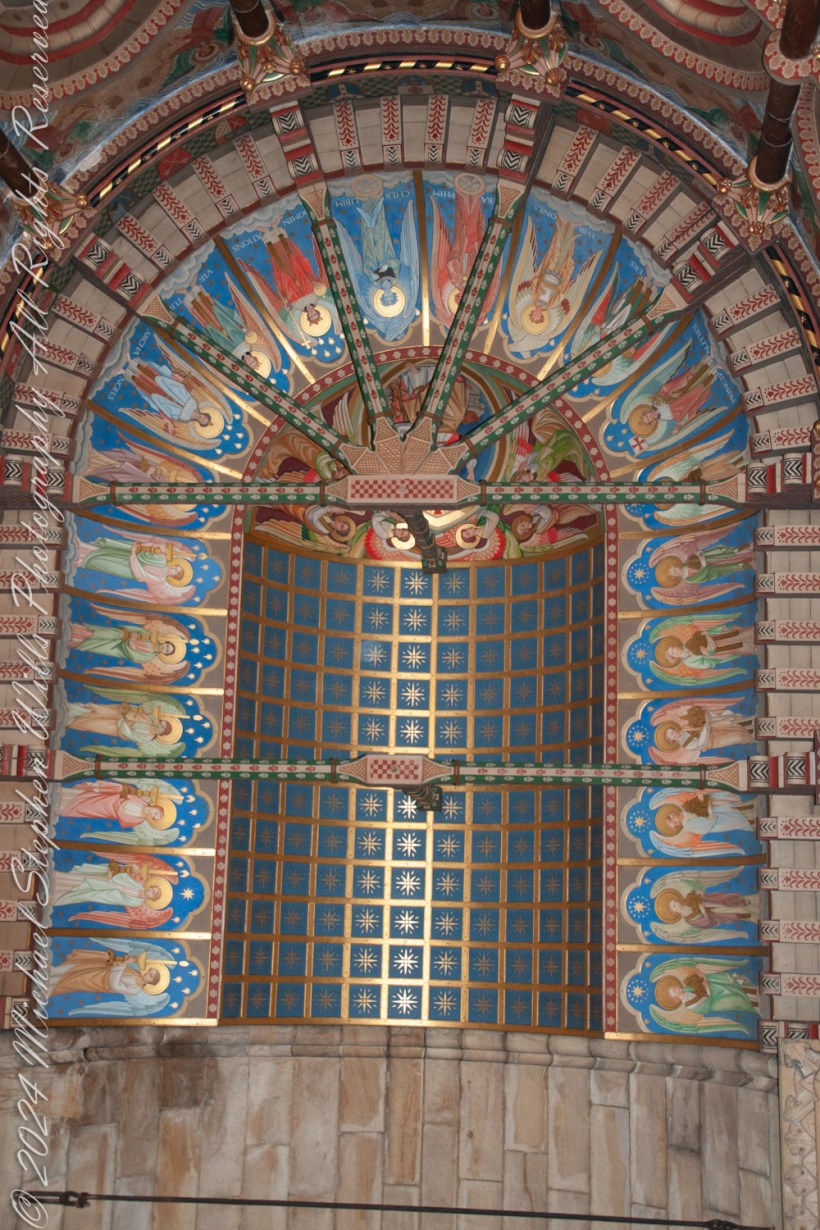
As I stood on the floor of Saint Fin Barre’s Cathedral in Cork, Ireland, I gazed upward toward the Apse and sanctuary ceiling at the eastern end. Turning my eyes directly to the west, I found myself captivated by the crossing ceiling—the very heart where the nave intersects with the transepts, forming the iconic cross shape typical of Gothic cathedral architecture.
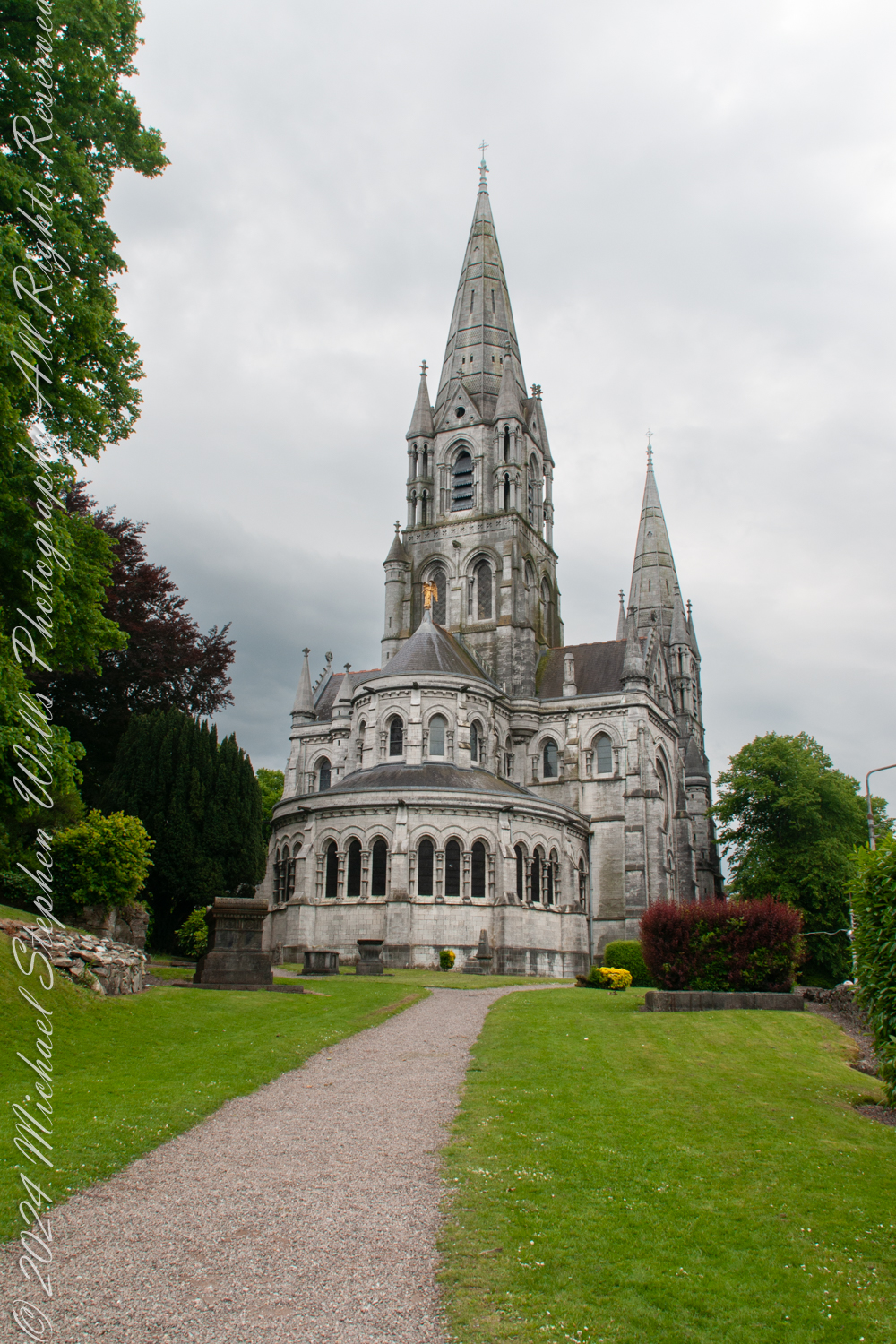
In my imagination the central tower and spire soared majestically above the crossing ceiling. The ceiling there featured intricate architectural elements like ribbed vaults and a lantern tower, allowing light to flood into the space below. This crossing served as a beautiful transitional space between the sanctuary and the main body of the cathedral, the nave.
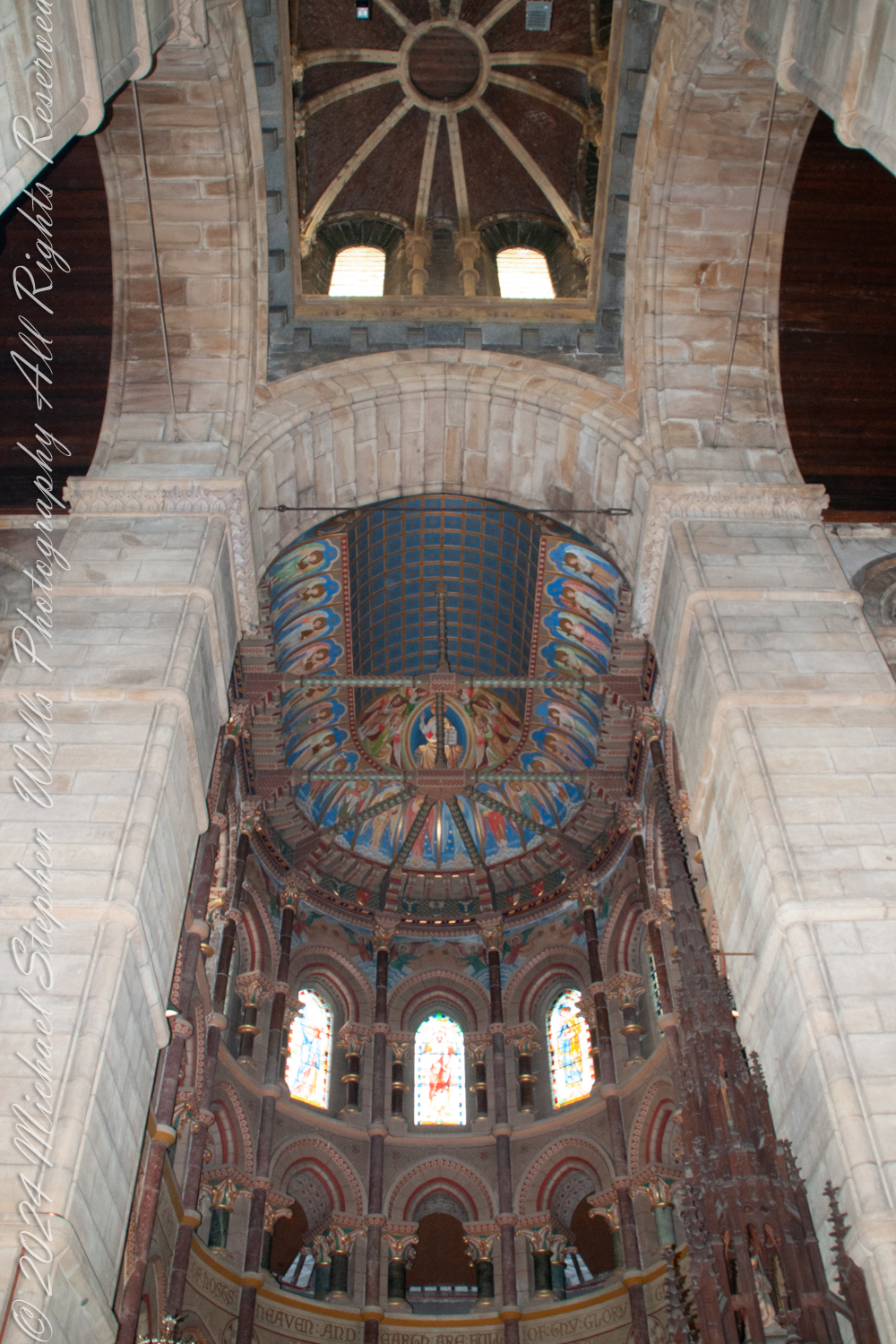
Focusing my camera on the Sanctuary Ceiling of Saint Fin Barre’s Cathedral, I was struck by the stunning example of Victorian Gothic Revival artistry before me. Designed by the architect William Burges, who envisioned every detail of the cathedral, the ceiling reflected his meticulous attention to detail and his love for vibrant colors and symbolic ornamentation.
The rich iconography drew me in. Angels adorned the ceiling, likely representing the celestial hierarchy or the glorification of Christ. Each angel held symbolic items—trumpets, stars, or scrolls—emphasizing their roles as messengers and worshippers of God.
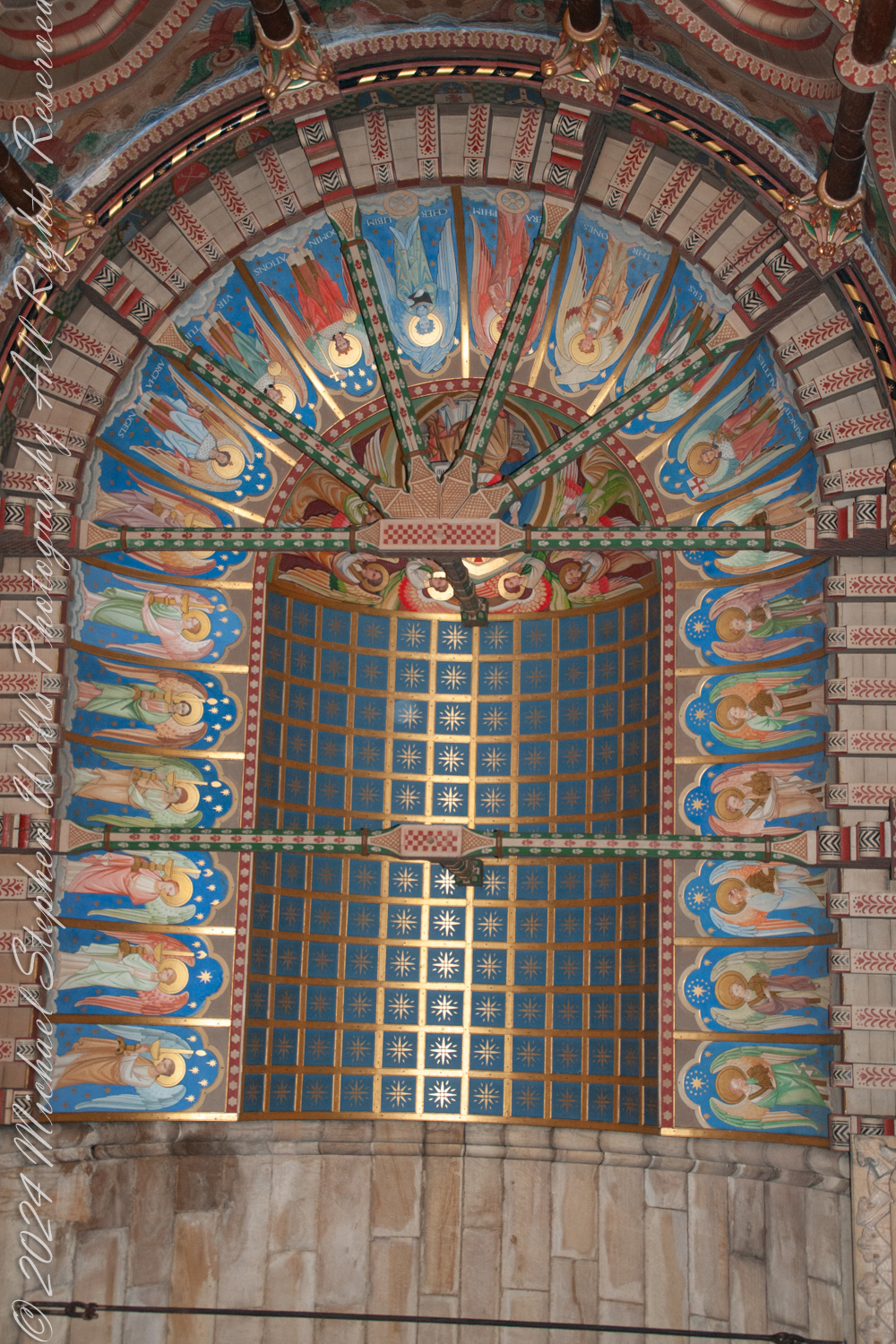
The radiant color scheme was breathtaking. Deep blues, shimmering golds, lush greens, and vivid reds combined to create a striking visual effect, symbolizing heaven and divine majesty. Gold accents caught and reflected the light, reinforcing the idea of heavenly glory.
Geometric and star patterns embellished the vaults. The blue panels dotted with gold stars symbolized the heavens—a common motif in Gothic church ceilings. These stars seemed to represent divine guidance or eternity, adding another layer of meaning to the already rich tapestry above me.
The structural elements themselves were works of art. Painted ribs intersected across the ceiling, highlighting the Gothic architecture’s ribbed vaulting. Their intricate designs in green and red emphasized both structural beauty and functional elegance.
The symbolism was profound. The angels with their instruments and the starry heavens collectively evoked themes of divine worship and the glory of God’s kingdom. This alignment with the Victorian Gothic ideal of infusing spiritual symbolism into architectural elements was evident in every brushstroke.
Knowing that William Burges envisioned Saint Fin Barre’s Cathedral as a “Bible in stone,” I felt a deep connection to his purpose. Standing beneath the Sanctuary Ceiling—the focal point above the altar—I sensed how it served to elevate worshippers’ gaze and spirits toward the divine.
Capturing these scenes through my lens, I was documenting a testament to the artistic and architectural achievements of the 19th century. Saint Fin Barre’s Cathedral is a place of worship and also a living gallery of history, faith, and unparalleled craftsmanship.
 Michael Stephen Wills Photography