Introduction
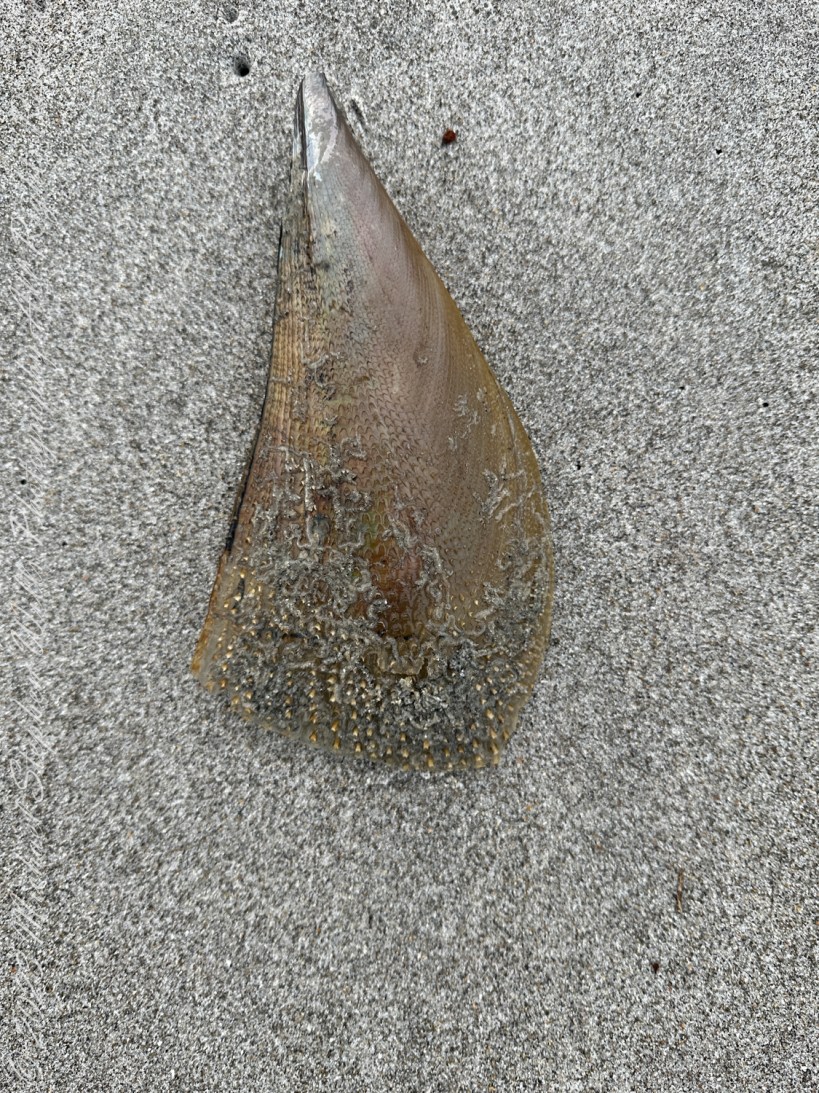
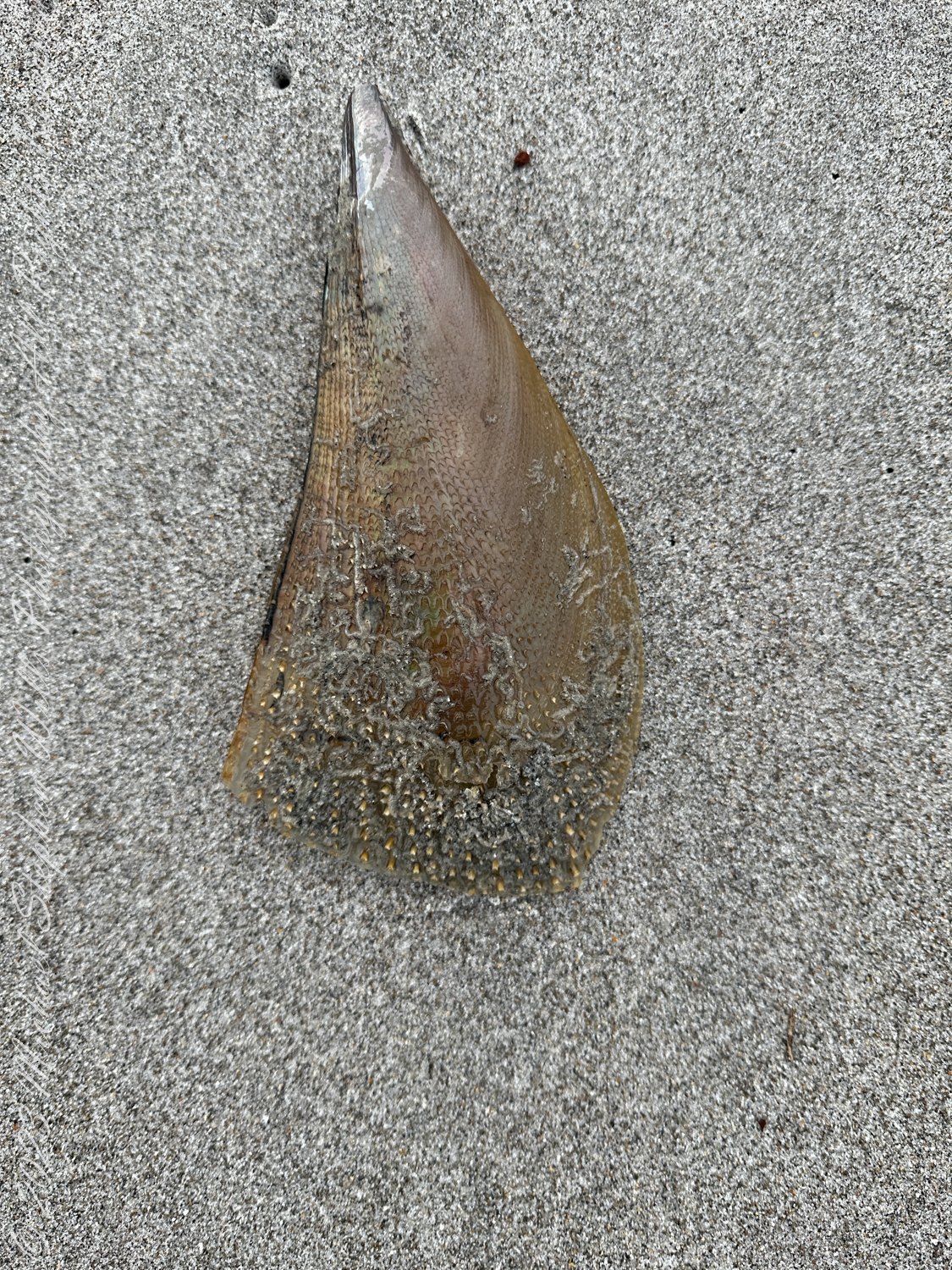
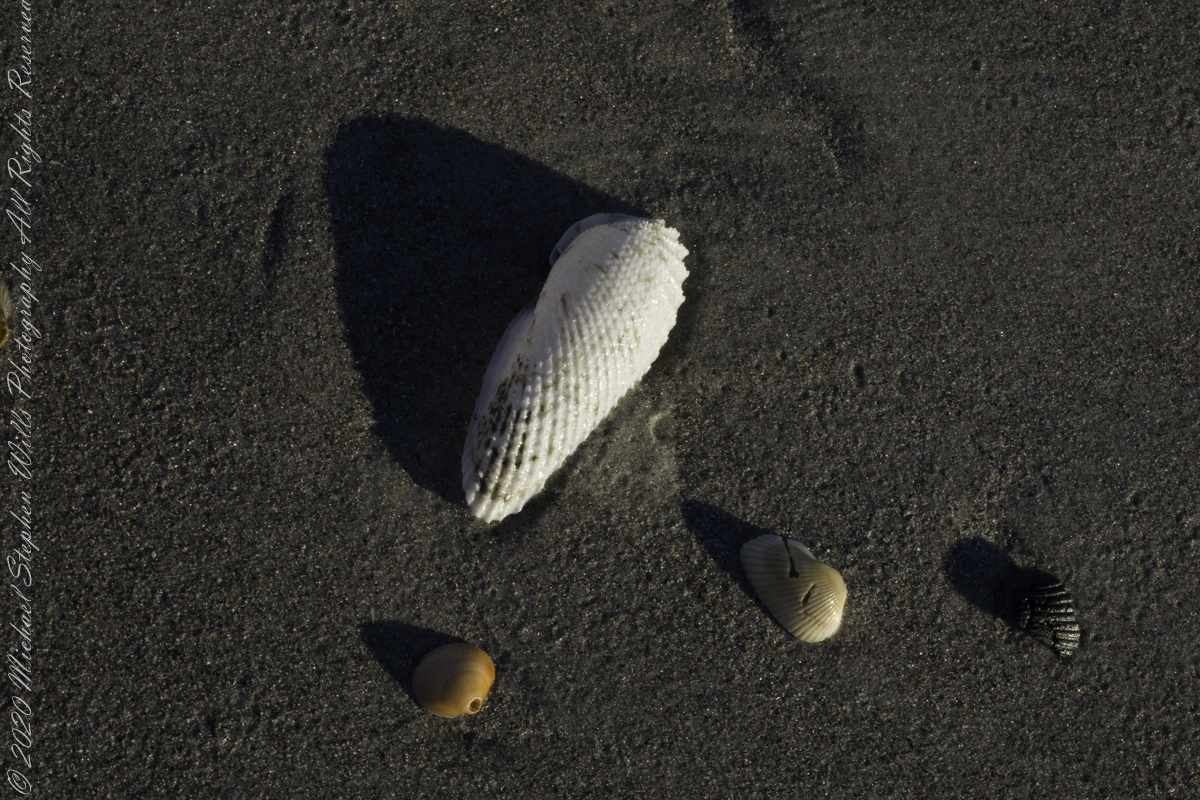
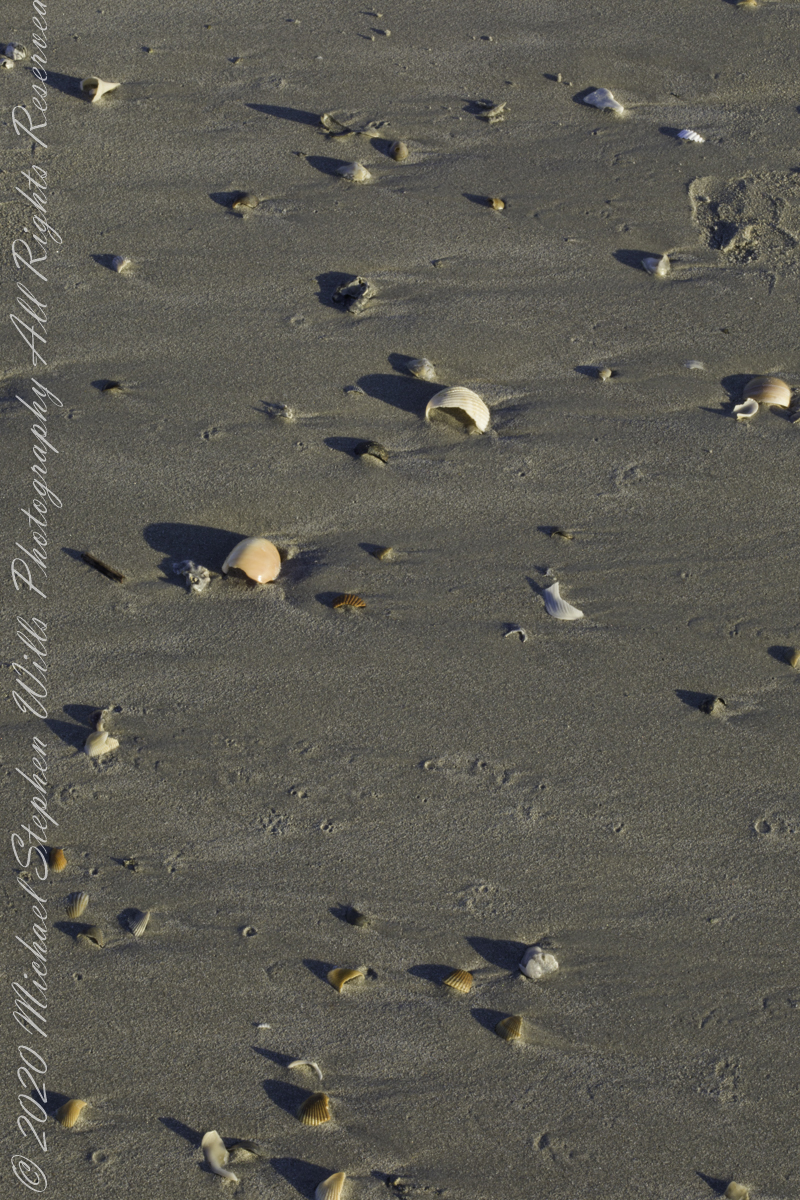
One evening, as the sun dipped below the horizon, my wife Pam and I walked along the Cocoa Beach shore. There, among the relics of the receding high tide, I found a complete shell, a rare occurrence where often only fragments are discovered. This intact specimen was a rigid pen shell, scientifically known as Atrina rigida, its 6-inch length and 4-inch width a testament to its resilience in the face of the ocean’s might.
Etymology and Common Name
The scientific name ‘Atrina rigida’ is steeped in Latin origins, with ‘atrium’ suggesting a ‘hall’ and ‘rigidus’ denoting ‘stiff.’ This nomenclature reflects the shell’s hardy structure, reminiscent of a grand hall’s architecture, standing firm against the elements. The common name “Pen Shell” draws from the shell’s elongated, pen-like appearance when it stands vertically in the sand, resembling antique writing quills used in centuries past.
Ecology and Habitat
“The rigid pen mollusk burrows as it grows, but the wide posterior end of the shell always remains exposed so water from above the seafloor can be drawn through the inhalant chamber of the mantle cavity. Typical of bivalves, water is drawn over gills or ctenidium by the beating of cilia where oxygen from the water is absorbed. Suspended food and other water-borne nutrients also become trapped in mucus, which is then transported to the mouth, digested and expelled as feces. Unique gutter-like waste canals in the viscera of the inhalant chamber also help to keep gills and other organs clear from silt and other unwanted water-borne particles by expelling these as pseudofeces. Its anterior end is typically buried in fine substrate and attached by byssal threads, with its wider posterior gaping end extending just above the sea bottom surface to facilitate filter-feeding. Algae (e.g. Lobophora variegata) and invertebrates such as sponges and encrusting corals tend to grow on the exposed part of the shell and may camouflage it very well.” [1]
Rarity of a Whole Pen Shell
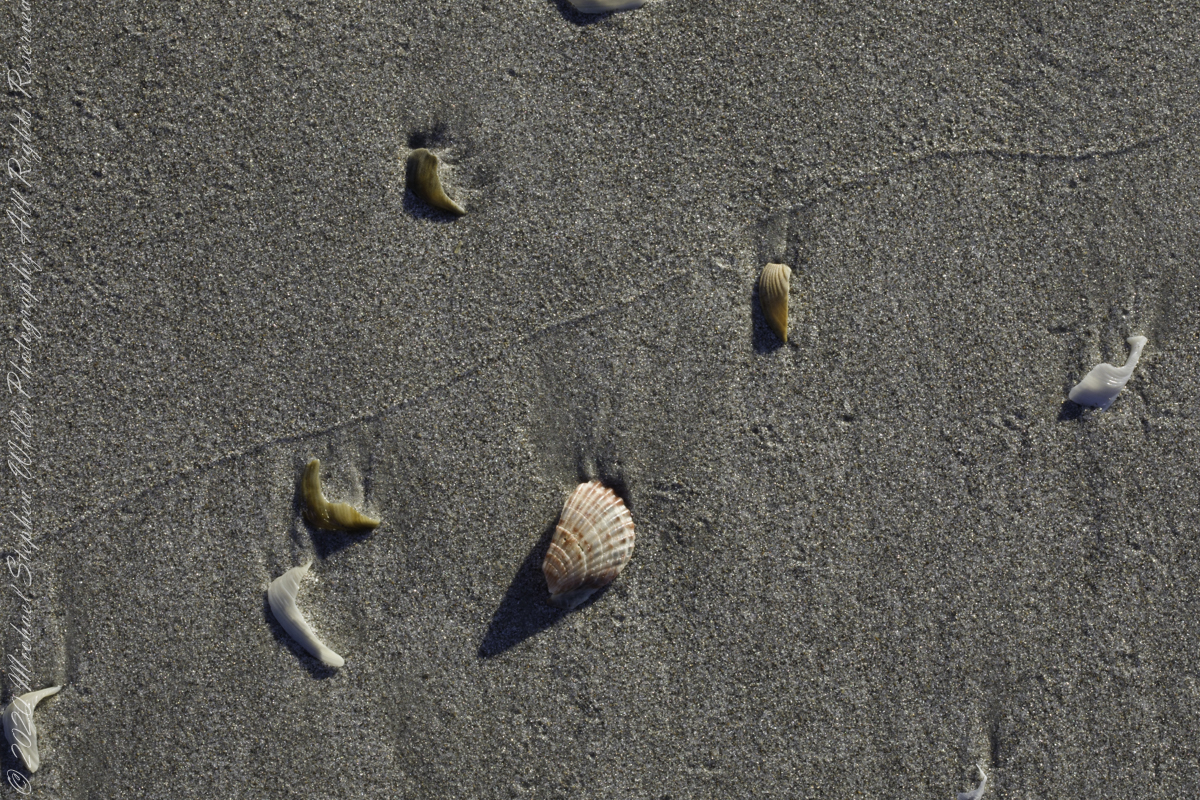
Typically, one finds only broken shards of these shells, the complete forms often victims to the ocean’s relentless energy or human activity. The intact shell I found lying atop the sand was therefore a unique and precious find, its wholeness mirroring the unbroken evening calm.
The Beauty of Nacre and Sea Silk
Look inside a rigid pen shell to find a hidden treasure: the nacre, or mother-of-pearl, lining the interior. This lustrous, iridescent layer is typically found on the inner surface, a stark contrast to the rough exterior. The nacre’s smooth, reflective quality has made pen shells a source of ornamentation throughout history, their beauty extracted from the depths to adorn human creations.
“Sea silk is an extremely fine, rare, and valuable fabric that is made from the long silky filaments or byssus secreted by a gland in the foot of pen shells (in particular Pinna nobilis). The byssus is used by the clam to attach itself to the seabed.
Sea silk was produced in the Mediterranean region from the large marine bivalve mollusk Pinna nobilis until early in the 20th century. The animal, whose shell is sometimes almost a metre long, adheres itself pointed end down to rocks in the intertidal zone using a tuft of very strong thin fibres. These byssi or filaments (which can be six centimeters long) are spun and, when treated with lemon juice, turn a golden color, which never fades.
The cloth produced from these filaments can be woven even more finely than silk, and is extremely light and warm; it was said that a pair of women’s gloves made from the fabric could fit into half a walnut shell and a pair of stockings in a snuffbox. The cloth attracts clothes moths, the larvae of which will eat it.
Pinna nobilis is also sometimes gathered for its edible flesh and occasional pearls of fair quality.” [2]
Location and Personal Impact
Our discovery on Cocoa Beach, a location known for its diverse marine life, added to the sense of connection with the natural world. The shell’s journey to rest upon the sand, whole and unblemished, felt like a shared secret between the ocean and us, a fleeting glimpse into the life of a creature whose home is often hidden beneath the waves.
Conservation and Reflection
This encounter with a complete Atrina rigida emphasizes the importance of marine conservation and protecting such fragile ecosystems. It serves as a poignant reminder of our responsibility to the environment and the need for collective action to preserve the ocean’s myriad inhabitants.
Conclusion
Finding a whole rigid pen shell amidst our peaceful walk was an extraordinary event that transcended mere chance. It provided a moment of awe, an opportunity to marvel at the elegance of nature’s design, and a reminder of the delicate balance that exists within our planet’s ecosystems. This intact Atrina rigida from Cocoa Beach will forever symbolize the enduring beauty and complexity of the marine world.
References
- Wikipedia articles for “Atrina rigida,”
- and “Sea Silk.”
 Michael Stephen Wills Photography