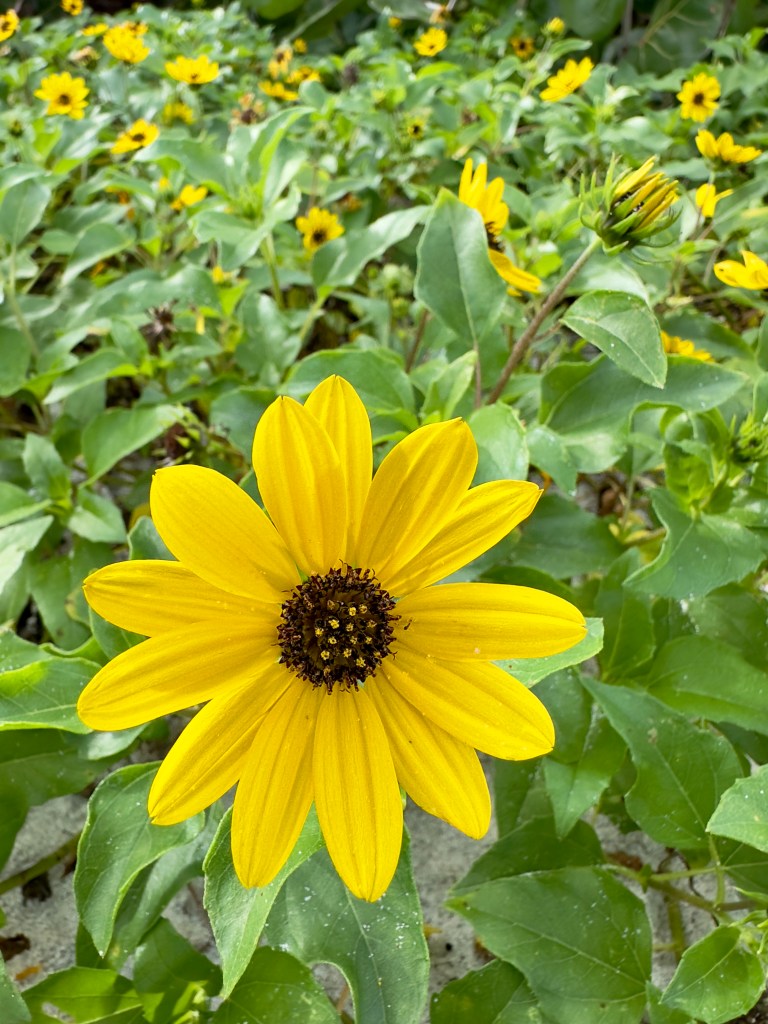
Erosion and Beauty: Cocoa Beach’s Sand Sculptures

At Cocoa Beach, sand castles succumb to time, showcasing beauty in decay, while desert monoliths endure. Both narratives reveal nature’s artistry through impermanence and transformation.

On the shores of Cocoa Beach, where the January winds dance freely, the once-proud towers of sand now stand humbled. What was sculpted by human hands—carefully packed and shaped with laughter—has become a relic of its former grandeur. The wind, with its gentle yet relentless touch, carves away at their edges, smoothing and softening their once-crisp lines. The castles, now mere echoes of their original form, hold a quiet dignity in their decay. Impermanence is their fate.
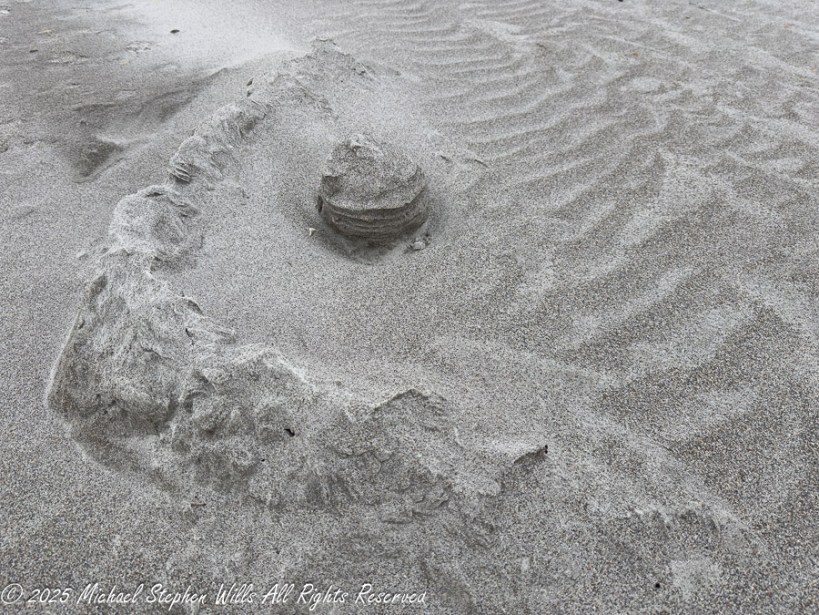
Cocoa Beach, Brevard County, Florida, Space Coast, January 2025

In the first photograph, the remnants of a sand fortress curve in a gentle arc, protecting a lone pillar—perhaps the last bastion of a crumbling empire. The textures of wind-blown ridges ripple across the sand like waves frozen in time, whispering of the invisible forces that shape the land. The delicate striations of the eroded peak, captured in close detail in the second image, reveal the layers of creation and destruction, each grain bearing witness to the ceaseless march of time.
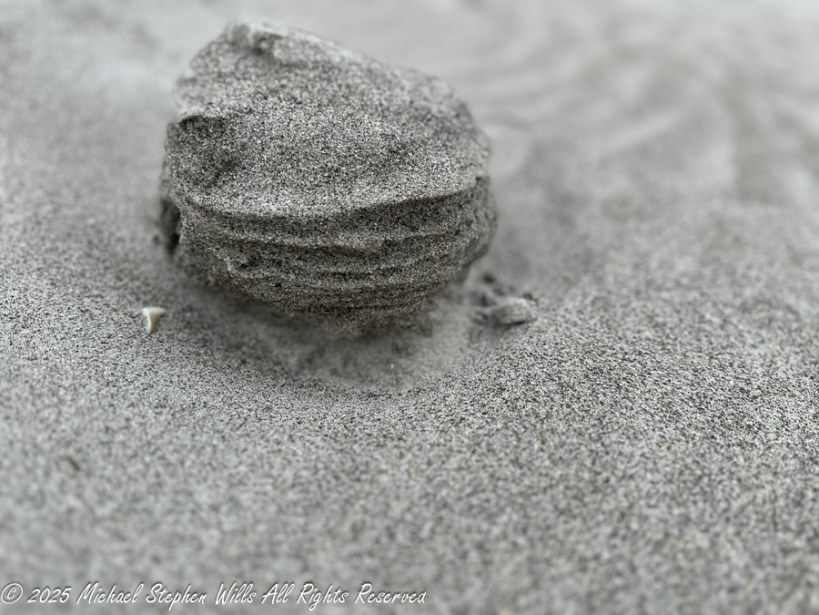
Cocoa Beach, Brevard County, Florida, Space Coast, January 2025

The third image brings a sense of companionship to this landscape of change. Like silent sentinels, the remaining sand pillars stand together, weathered but resolute. One wears a crown of a single shell—a reminder that even in the face of erosion, beauty persists. These fleeting structures, built in joy, now bow to nature’s artistry, embracing the inevitable with quiet grace.
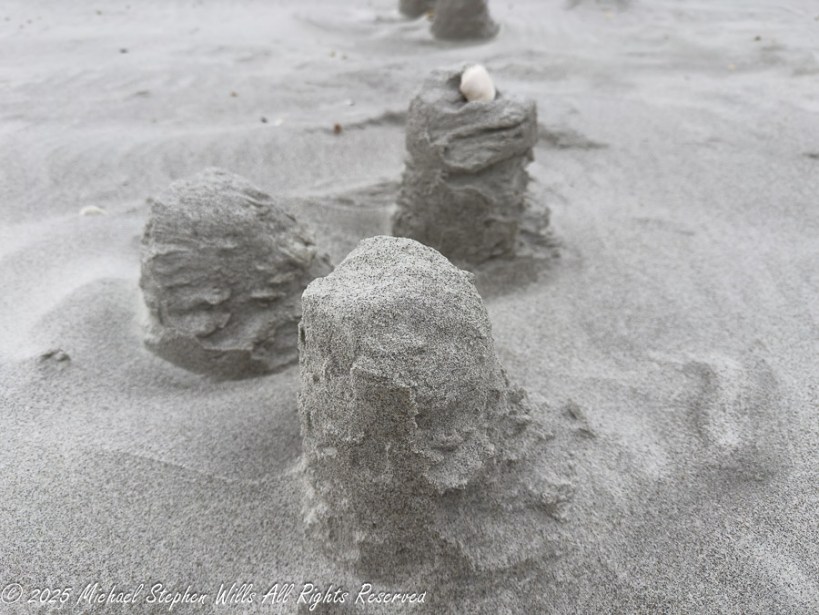
Cocoa Beach, Brevard County, Florida, Space Coast, January 2025

And yet, beyond the gentle shores of Cocoa Beach, in the vast and timeless expanse of the Sahara Desert, wind-carved monoliths stand as testament to the power of patience. The fourth photograph—an imposing formation shaped by millennia of desert winds—towers over the golden dunes, its shadow stretching far into the sands. Where the beach’s castles fall in a day, the desert’s sculptures endure for centuries, silent witnesses to the ebb and flow of time on a grander scale.
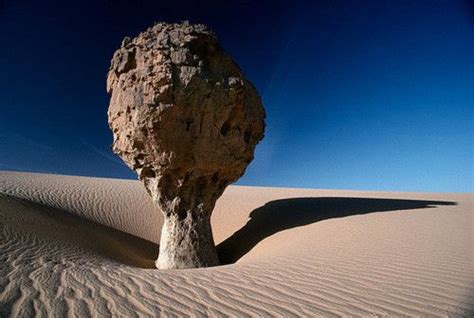
Wind carved geological formation, Sahara desert. Credit “scraped from the web”

But are they so different? Whether in the fleeting impermanence of Cocoa Beach or the enduring vastness of the Sahara, the hand of the wind shapes all things. Each formation tells the same story—of creation, of erosion, and of transformation. They whisper to us that beauty is not defined by permanence, but by the dance between time and the elements.

As the sun sets over the beach, casting long shadows across the sand, one cannot help but marvel at the artistry of nature. Whether lasting an afternoon or an age, the sculptures of wind and sand remind us that all things are in motion, and every grain, every ripple, every fleeting moment holds a story waiting to be told.
Enter your email to receive notification of future postings. I will not sell or share your email address.

A Beachcomber’s Musings on Floridian Dune Ecology

Discover the resilient beauty of Florida’s dune sunflowers through the eyes of a beachcomber. Uncover the secrets of Helianthus debilis, a symbol of hope thriving where sea meets sand. Join the coastal dance of life.

Encounter with Helianthus debilis


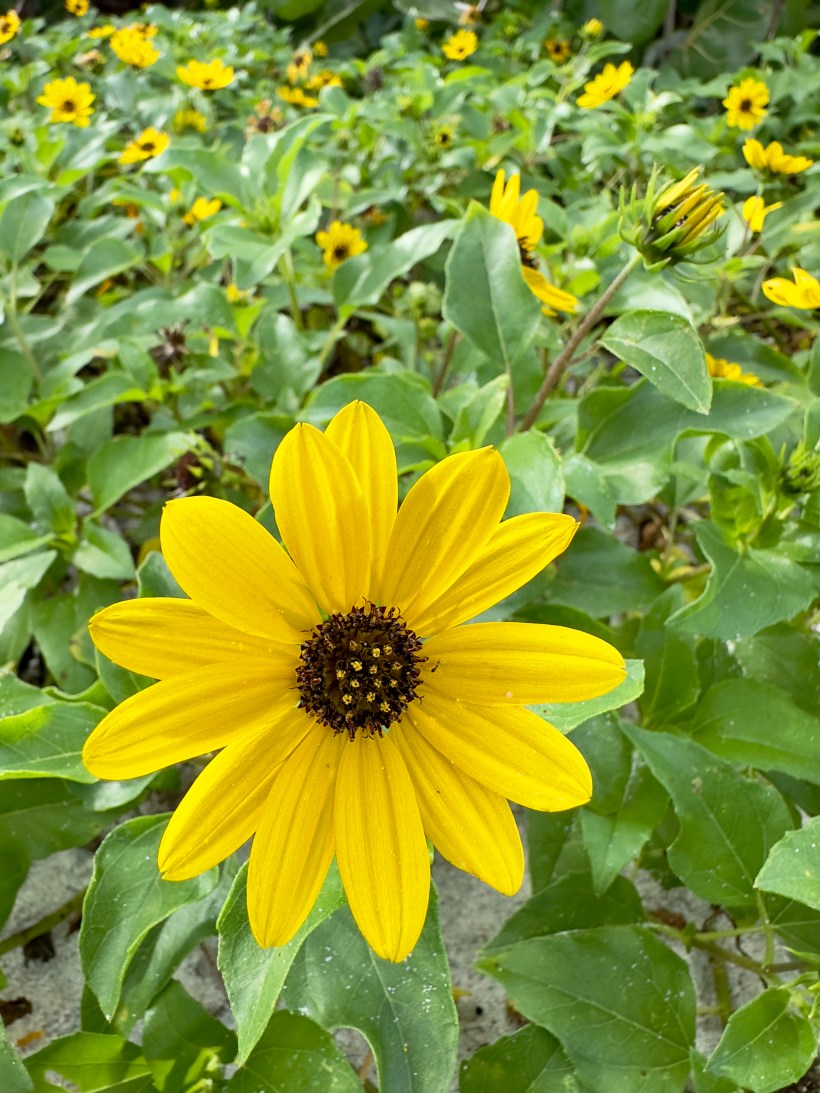
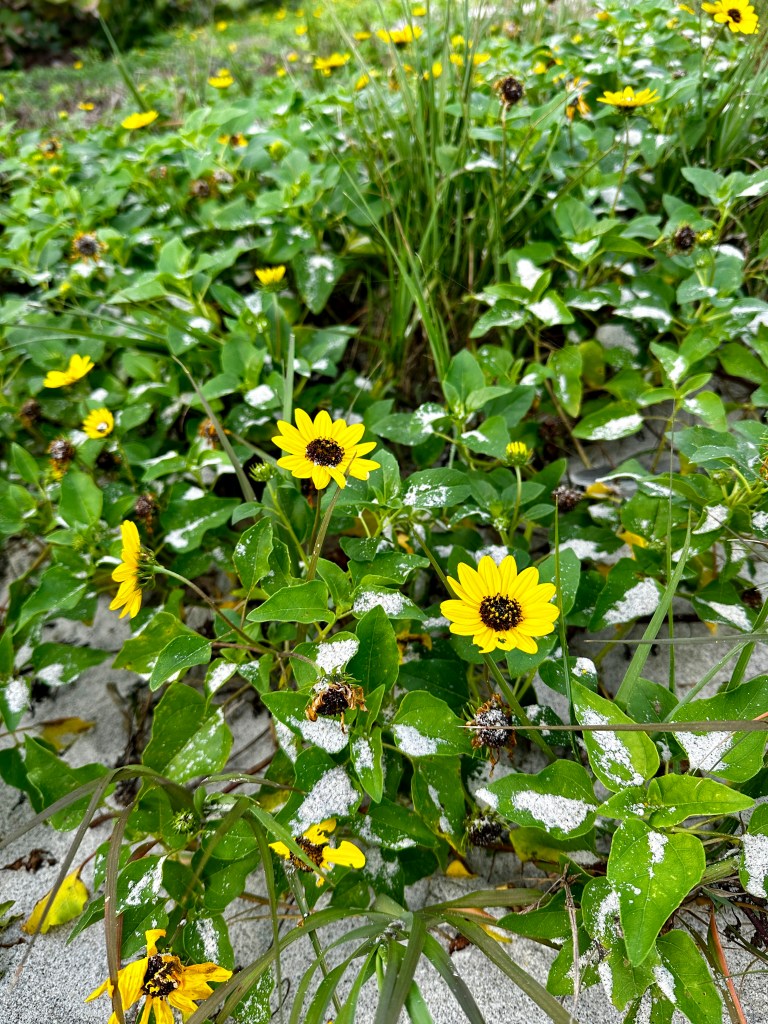
Strolling along the beachfront of Patrick Space Force Base, Florida, my gaze is captivated by a cluster of dune sunflowers, or Helianthus debilis. These hardy perennials are native to the coastal sand dunes of the southeastern United States and have made a home amidst the sandy grains where few dare to take root.

The Sunflower’s Domain


Helianthus debilis, distinguished by its large, yellow ray florets and dark center disks, thrives in this challenging environment. The dunes provide a unique ecosystem, where the sunflowers can withstand high salinity, shifting sands, and the full force of the sun’s rays. Their deep root systems anchor the sandy soil, helping to prevent erosion and maintain the integrity of the dune landscape.

Adaptation and Survival


The dune sunflower’s adaptation to its coastal environment is a marvel of nature. Its silvery-green leaves are covered with tiny hairs, reflecting sunlight and conserving moisture. The flowers bloom throughout the year, ensuring a constant presence of color along the dunes. Their hardiness is a testament to the sunflower’s evolutionary success in a habitat where freshwater is scarce and the soil is nutrient-poor.

A Native’s Role in the Ecosystem


As a native species, the dune sunflower plays a crucial role in the coastal ecosystem. It serves as a food source for local wildlife, including insects and birds, and its presence helps stabilize dune formations. The ecological value of Helianthus debilis extends beyond its beauty, as it contributes to the biodiversity and resilience of the coastal dunes.

The Dynamics of Dune Life


The life of a dune sunflower is inextricably linked to the ebb and flow of the coastal environment. Each plant is a microhabitat, supporting a range of organisms from the larvae of the dune butterfly to the burrowing beetles that find refuge in the sand. The interaction between the sunflowers and these creatures creates a dynamic web of life, each species depending on the others for survival.

Reflections on Resilience


The dune sunflower’s ability to flourish in such an austere environment is a profound reminder of the resilience of nature. As I observe the sunflowers, I am struck by their tenacity, their willingness to face the elements head-on. They are a beacon of life in a place where existence is a daily challenge, and their perseverance is a lesson in the art of endurance.

Conclusion: A Testament to Nature’s Ingenuity


As the sun begins to set, casting a warm glow over the dunes, I take a final look at the Helianthus debilis. Their scientific wonders and ecological im portance leave a lasting impression. They are not just flowers; they are a testament to nature’s ingenuity, an embodiment of the delicate balance between life and the environment. These dune sunflowers are a symbol of hope, a reminder that in the face of adversity, life finds a way to not just survive, but to thrive.

Copyright 2024 Michael Stephen Wills All Rights Reserved