Overview
Shelf fungus, also known as bracket fungus, comprises various species of polypore mushrooms that grow on trees, logs, or branches, forming shelf-like structures. These fungi are integral to forest ecosystems, functioning as decomposers that break down the cellulose and lignin in wood, facilitating nutrient cycling. They possess a hard, woody basidiocarp — the fruiting body — which can persist for years. The spore-producing surface is typically on the underside, featuring numerous tiny pores where spores are released. Shelf fungi are diverse, with species ranging from saprophytic to parasitic, some contributing to tree diseases like heart rot.
Hint: click image for larger view. Ctrl/+ to enlarge / Ctrl/- to reduce
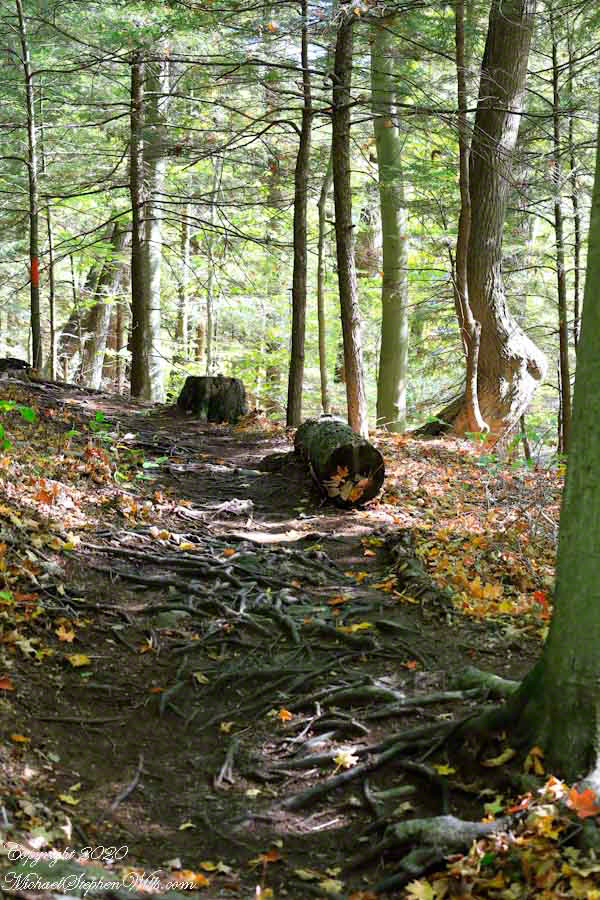
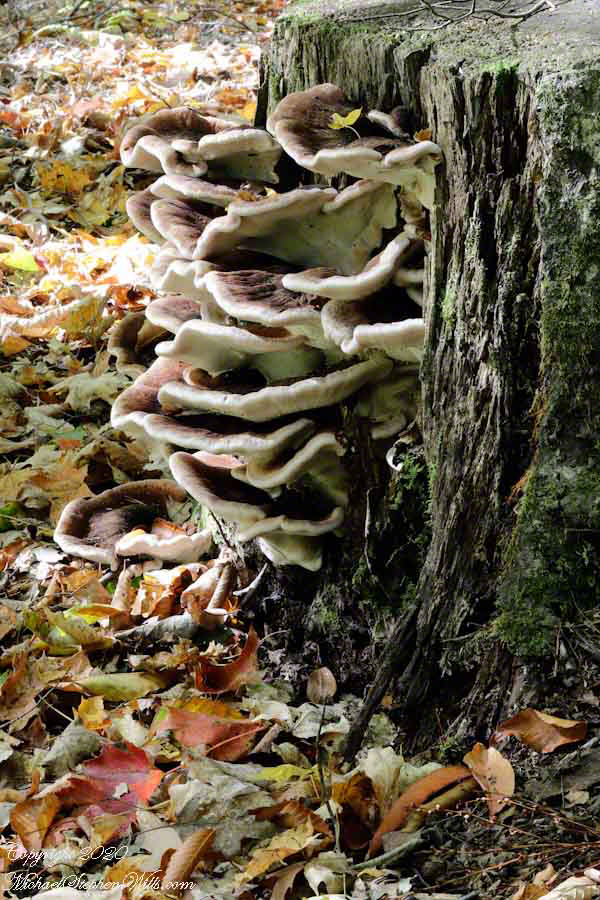
Poetically Fungal
Shelf fungi captivate me with their silent tenacity, perched like wooden sentinels on forest guardians. Their presence is a reminder of nature’s cycles, breaking down the old to nourish the new. Each time I spy their intricate layers and earthy hues, I’m reminded of life’s layered complexities. They are nature’s artists, painting decay with a purposeful brush, turning fallen timber into rich soil. To me, they symbolize resilience, a testament to thriving in place, despite the odds. In their quiet existence, they echo the beauty of transformation, an emblem of life’s perpetual motion within the stillness of the woods.
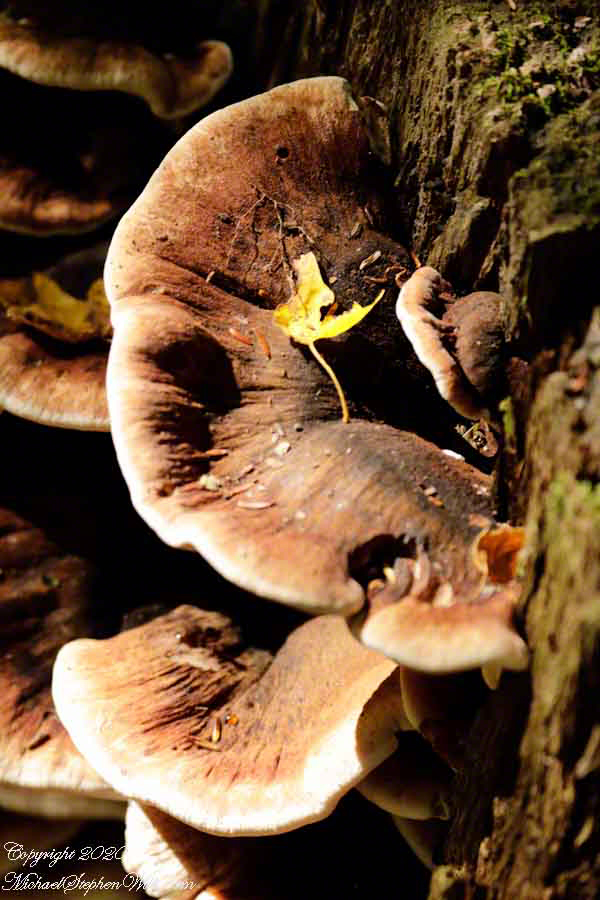
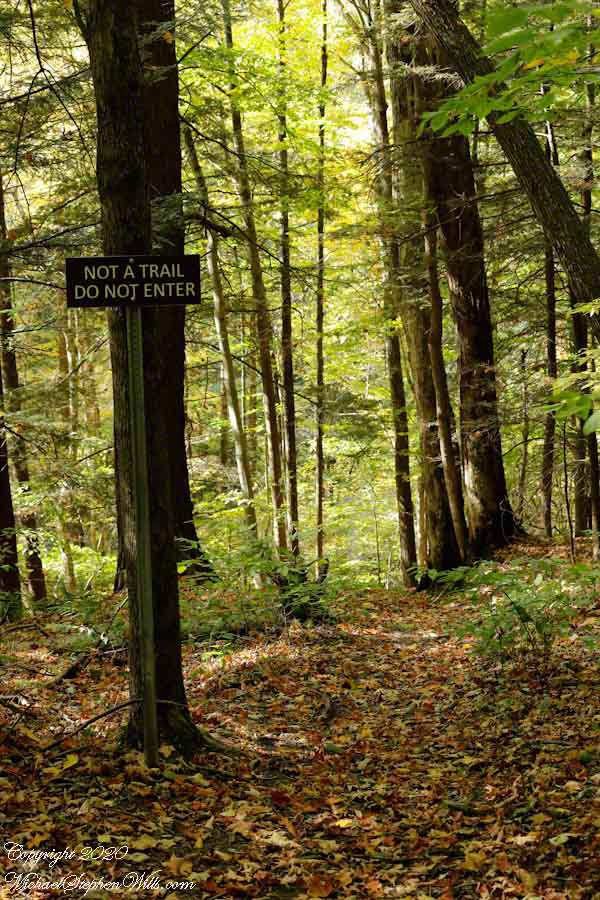
Natively Fungal
The relationship between Native Americans and shelf fungi is rooted in a profound understanding of the natural world, where every element has a role in the cultural and practical life of a community. Shelf fungi, with their sturdy, shelf-like projections from trees, have been an integral part of Native American tradition, utilized for both medicinal and practical purposes.
Medicinally, various tribes recognized the healing properties of certain shelf fungi. The Iroquois, for example, used bracket fungi in poultices to treat wounds and swelling. Other tribes found uses for shelf fungi as anti-inflammatory agents or as a means to stop bleeding, embracing the fungi’s natural anticoagulant properties.
In everyday life, the unique physical properties of shelf fungi lent themselves to multiple uses. The Piptoporus betulinus, commonly known as the birch polypore, was carried by the Otzi the Iceman, a natural mummy dating back to over 5,000 years ago, likely for its antiseptic properties and as a means to carry embers due to its ability to smolder without flame. This hints at a broader prehistoric and indigenous use of fungi for fire carrying.
The tinder fungus, a type of shelf fungus, was particularly valued for its ability to hold a flame. Native Americans often used this fungus to transport fire between camps. They would hollow out a section of the fungus, fill it with hot embers, and cover it to create a portable and long-lasting source of fire. This was an essential technology for survival, especially during long treks or in adverse weather conditions.
Moreover, the Ganoderma species, commonly referred to as the Artist’s Conk, served as a canvas for art. These fungi have a white pore surface that darkens when touched. Native American artists utilized this characteristic to etch drawings and messages, turning these fungi into storytelling and communicative tools.
The profound connection between Native Americans and shelf fungi illustrates a deep ecological wisdom where even a simple fungus is interwoven into the fabric of cultural and survival practices. This symbiosis underscores the importance of every organism within an ecosystem, a lesson that resonates with contemporary efforts to understand and preserve our natural world.


Anytime I find any mushrooms in the woods I feel a need to pretend to be a photographer haha But you do it better
LikeLiked by 1 person
Thanks for the compliment, Jessica. I’ll rely on you to find the edible mushrooms.
LikeLike
Amazing pictures Michael!
Thank you for share.
Take care.
Elvira
LikeLiked by 1 person
Thanks for the compliment, Elvira.
LikeLiked by 1 person
Thank´s to you Michael.
Take care.
Elvira
LikeLike
I love tree ‘shrooms. I find them fascinating.
LikeLiked by 1 person
I am never able to do them justice, will keep trying.
LikeLike
❤
LikeLiked by 1 person
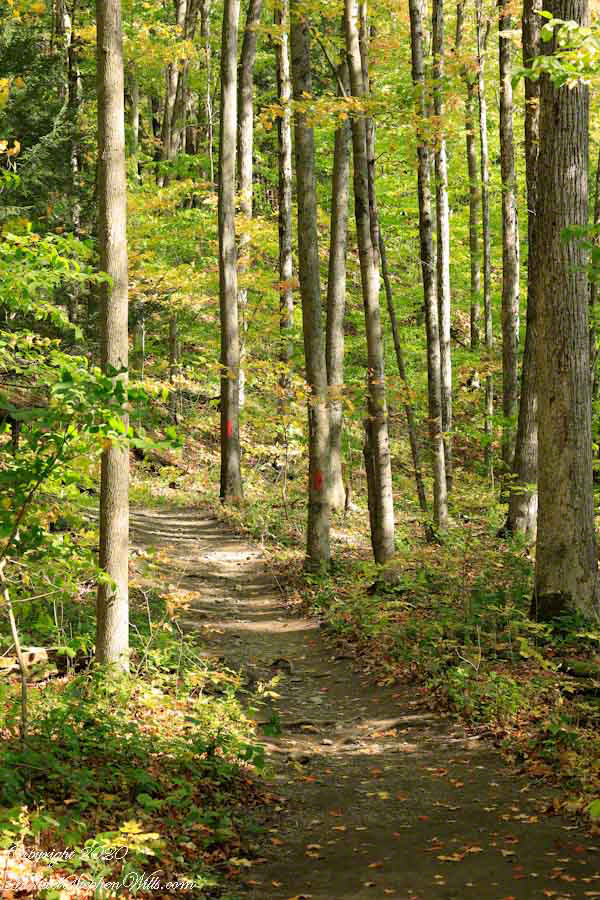
Wonderful photos of the mushrooms and the Trail that is not a trail and a trail that is a trail!
LikeLiked by 1 person
Glad you caught that, I laughed as well. Actually, the “not a trail” leads to a very pretty area that was closed when hillside fell away and took the lower path. I go down there often.
LikeLiked by 1 person
I wish I’d found one of those “This is not a trail” signs a couple of memorable times in the past! And I wonder if I’ll ever see a photo of fungi without remembering Seinfeld and the “fungus among us.”
LikeLiked by 1 person
I’ve been on that type of trail and have stories to “prove” it. ha ha
LikeLike
Nice post 🖊️
LikeLiked by 1 person
very much enjoyed this read.. I too love the fungi…. and enjoy finding them in my travels..
LikeLiked by 1 person
What we see fascinates us, the unseen supports us.
LikeLike
Great captures. I’m such a fan of mushrooms and shelf fungi and enjoy coming across them while hiking.
LikeLiked by 1 person
So essential for healthy, thriving forests.
LikeLiked by 1 person
Michael, I appreciate your eye for details with both your ready camera and your descriptive narrative. Some of my nature park hikes have revealed different examples of fungal growth.
I also enjoyed your story from the Hole. Well done.
LikeLiked by 1 person
Good to hear from you, BigSkyBuckeye. You can count on me to bring you to the “best” places. ha ha
LikeLike