The windows of the Space Shuttle represent a pinnacle of engineering and material science, intricately designed to withstand the harsh realities of space travel while providing astronauts with a vital connection to the outside universe. The journey of these windows, from concept to creation and through their performance in the harsh environment of space, is a testament to human ingenuity and the relentless pursuit of exploration.
At the heart of the Space Shuttle’s windows is fused silica glass, a material selected for its exceptional properties, including high thermal resistance, strength, and optical clarity. This choice was crucial, as the windows had to endure rapid temperature shifts from the cold vacuum of space to the searing heat of re-entry, which could exceed 1,650 degrees Celsius (3,000 degrees Fahrenheit). Corning Incorporated, known for its innovative glass solutions, was responsible for manufacturing this fused silica, utilizing a high-purity synthesis process that ensured the material could withstand the extreme conditions of space without degrading.
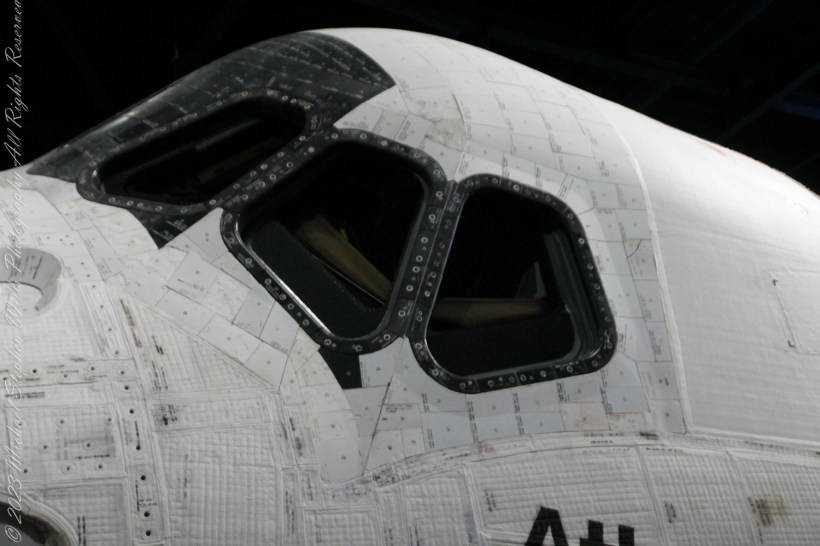
The design and assembly process of the Shuttle’s windows was a feat of engineering. Each window was carefully framed and installed to maintain the spacecraft’s integrity and internal pressure in the vacuum of space. This involved a complex sealing mechanism that had to be both robust and fail-safe, ensuring the safety of the crew and the success of the mission. The installation process was rigorous, involving a series of tests that simulated the harsh conditions of space to validate the windows’ performance. These tests were crucial to identifying and rectifying any potential issues that could compromise the mission or the astronauts’ safety.
In space, the Shuttle’s windows faced numerous challenges, from the threat of micrometeoroid impacts to the intense radiation of the sun. Despite these hazards, the windows performed admirably, a testament to their design and the materials used. One notable instance of their resilience was observed during the STS-61 mission, where despite micrometeoroid impacts, the windows’ integrity remained intact, ensuring the crew’s safety and mission success.
The windows also played a critical role during the Shuttle’s re-entry into Earth’s atmosphere, a phase of the mission that subjected the spacecraft to extreme heat. The windows’ ability to withstand this heat while providing the crew with a clear view for navigation was vital for a safe landing. This was achieved through the use of multiple glass layers and protective coatings, which insulated the interior from the re-entry heat.
Beyond their technical specifications and performance, the Space Shuttle’s windows served a more profound purpose. They provided astronauts with a visual connection to the Earth and space, offering perspectives that few humans have experienced. These views not only aided scientific observation and mission operations but also offered moments of unparalleled beauty, inspiring both astronauts and people on Earth.
The legacy of the Space Shuttle’s windows extends beyond their technical achievements, embodying the spirit of exploration and the human quest for knowledge. They were not merely components of a spacecraft but windows to the universe, enabling us to look beyond our planet and dream of the possibilities that lie in the vast expanse of space. Through their resilience, clarity, and performance, the Space Shuttle’s windows stand as a symbol of human ingenuity, a small but significant part of our journey to the stars.


From your tour one immediately sees the payback from intricate engineering and design of various components of the shuttle, such as these windows.
LikeLiked by 1 person
That is the answer to those critics who complain we need to “fix the problems on Earth” before going to space. Humanity on earth has moved forward using the knowledge gained from the “space race,” “space shuttle,” ands “ISS” development.
LikeLike