In the Sonoran Desert near Tucson, Arizona, San Xavier del Bac rises like a vision out of time. Within its adobe walls and domed ceilings lie layers of symbolism—an indigenous inheritance and Spanish colonial fervor merged into a singular living devotion. The photographs presented here, saturated with morning light, guide us through a meditative journey into this mission’s spiritual and aesthetic soul.
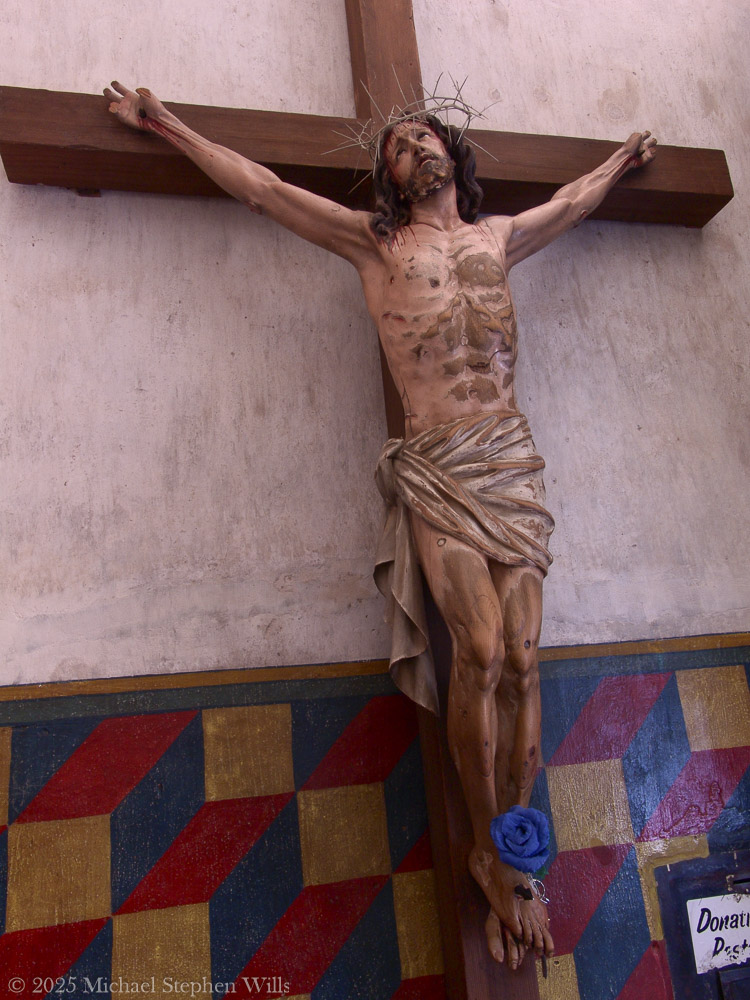
The crucifix dominates the first image—the depiction of Christ crucified, emaciated, bruised, crowned with thorns. His suffering is not abstract but visceral, carved in every wound and strained muscle. This figure of Christ, so brutally human, is draped in a tattered loincloth, a humble covering amid divine sacrifice. At his feet rests an offering: a blue artificial flower, incongruent in its brightness yet perfectly placed, a modern votive that expresses both reverence and continuity. It reminds us that humble devotion endures.
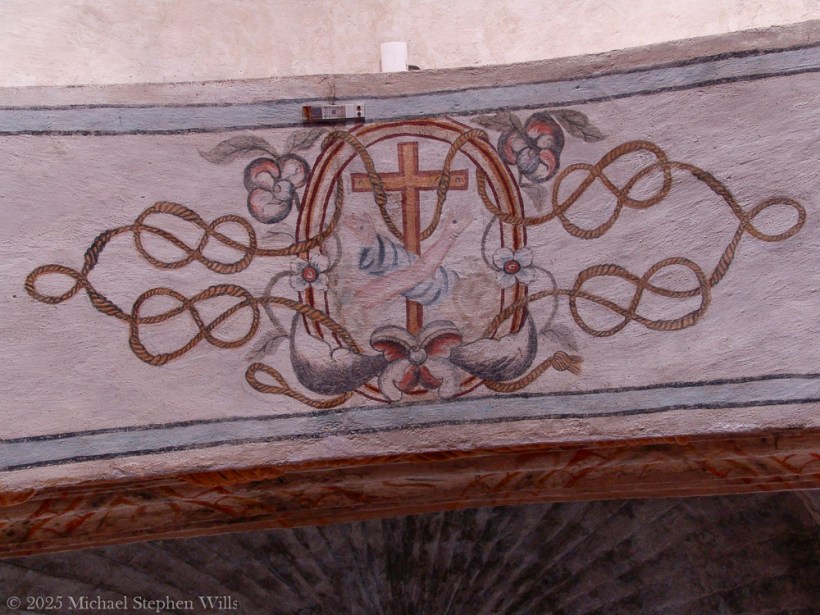
The fresco, with its cross flanked by stylized doves and roses, extends the Passion’s symbolism into sacred geometry. Doves—universal emblems of peace and the Holy Spirit—face one another in symmetrical grace, drawing the eye into the cross they flank. The single length of curling, intertwined golden ropes bind all elements in unity, perhaps reflecting divine infinity. The floral elements speak to rebirth and resurrection, a soft counterpoint to the harshness of the Crucifixion. Here, pain and peace coexist in a visual hymn.
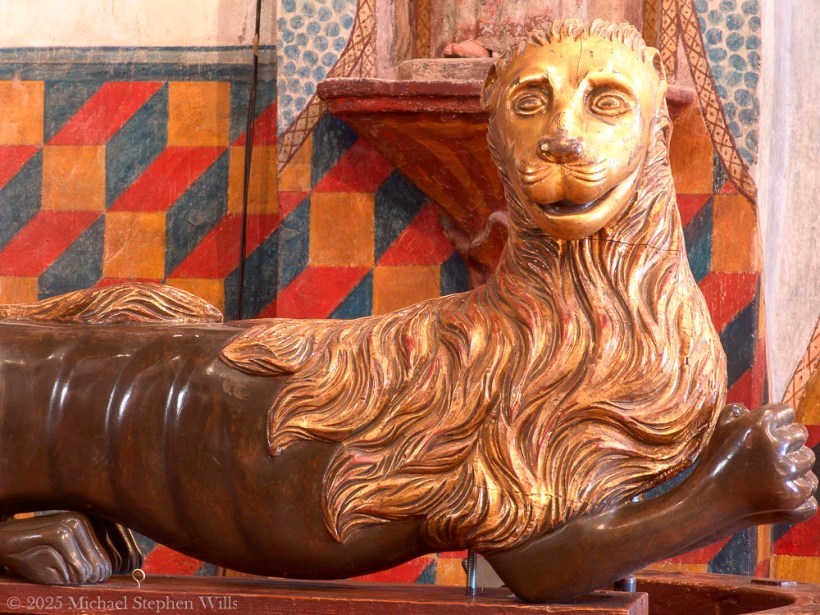
The lion sculpture, oddly cheerful in its golden face, seems at first a puzzle. Yet within Christian iconography, the lion often represents Saint Mark, the Evangelist, or the power and vigilance of God. This lion, rendered with stylized curls and a strong, reclining pose, guards the sanctuary. Its gilded mane mirrors the opulence of heaven, even in this humble desert mission. The lion’s curious gaze invites us to move past fear, toward the mysteries within.
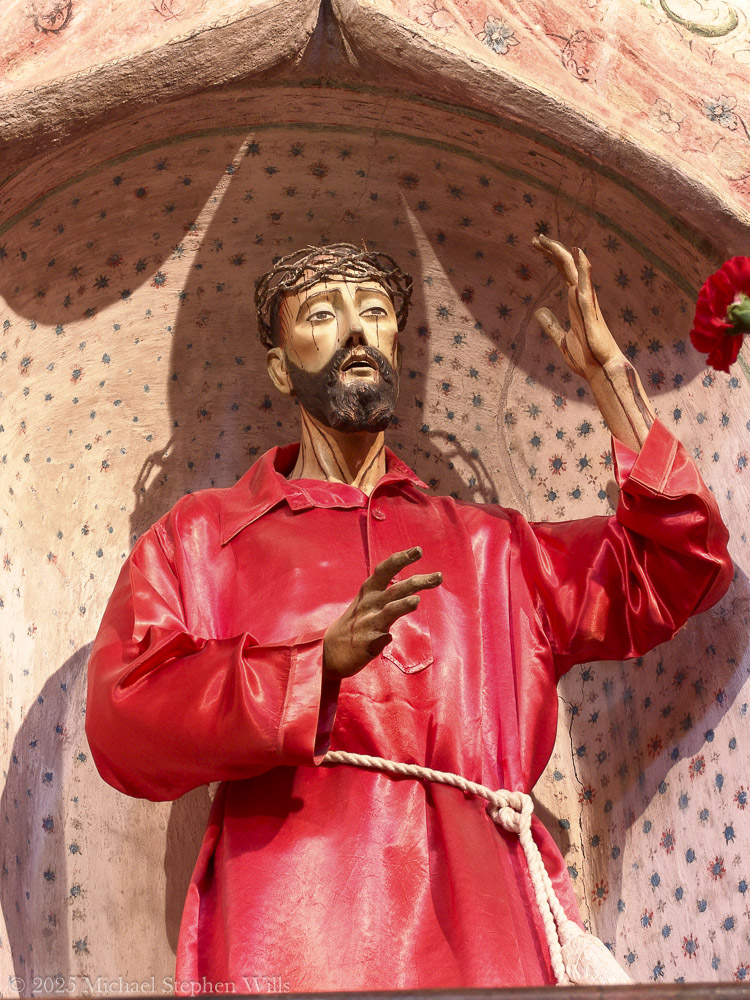
We then meet a robed figure in red—another portrayal of Christ, this time during the Passion, perhaps as the Ecce Homo (“Behold the Man”). His upraised hands and expressive face embody pathos and divine forbearance. The red robe evokes both martyrdom and kingship. He does not plead; he offers. The backdrop is simple but speckled with blue floral motifs, creating a visual bridge to the Virgin’s image nearby.
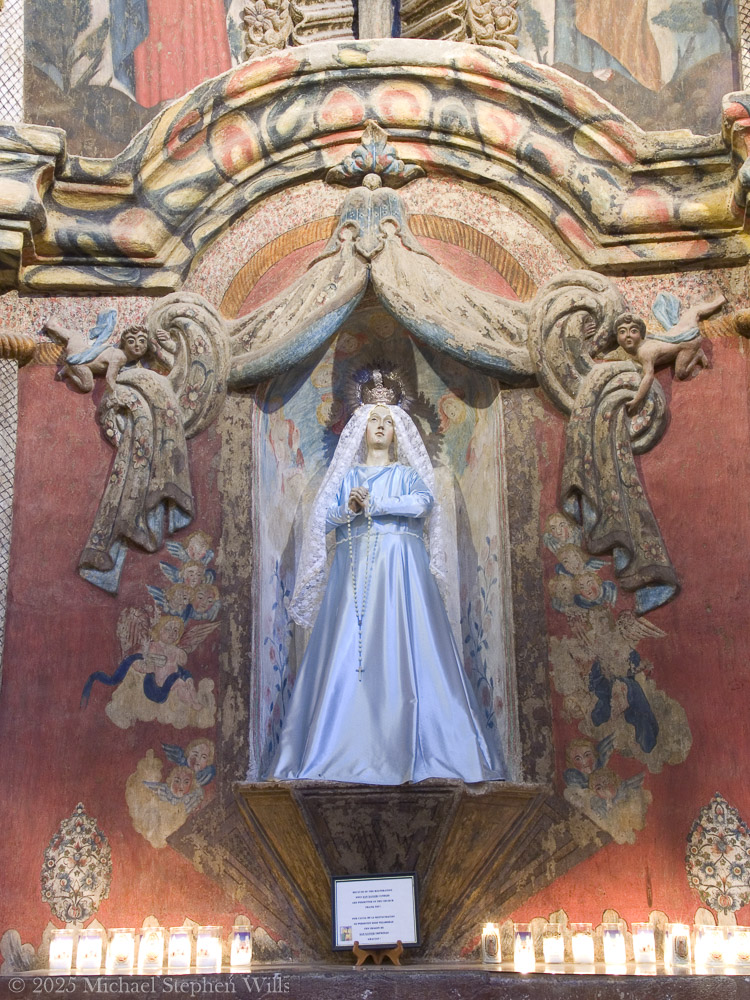
The Virgin Mary appears in blue and white—colors of purity, serenity, and devotion. She stands among votive candles and gazes gently ahead, hands joined in prayer. Her dress flows around her, anchored by a rosary that loops downward like an anchor to the earth. Angels and cherubs flank her in painted stucco, echoing heaven’s embrace. This is not the triumphal Mary of high cathedrals but a deeply human one, a mother, accessible and protective. The candles flickering below affirm that faith is alive here, not simply preserved.
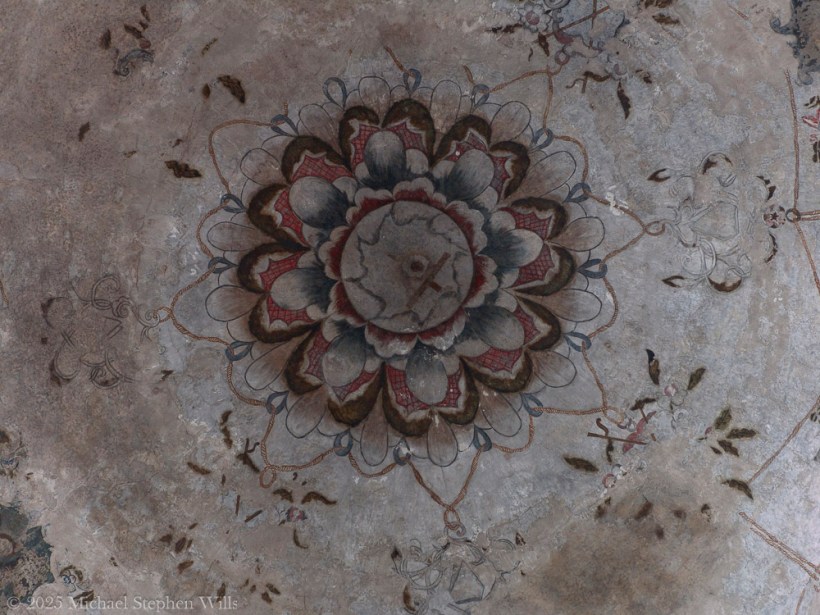
A ceiling medallion next draws us into a more abstract vision. A floral rosette centers on the cross and tools of Christ’s Passion—the nails, spear, and ladder arranged in contemplative symmetry. These instruments of torture are enclosed in beauty, as if the heavens themselves have sanctified the suffering. It is a paradox of faith, this transformation of pain into purpose, death into eternal life.
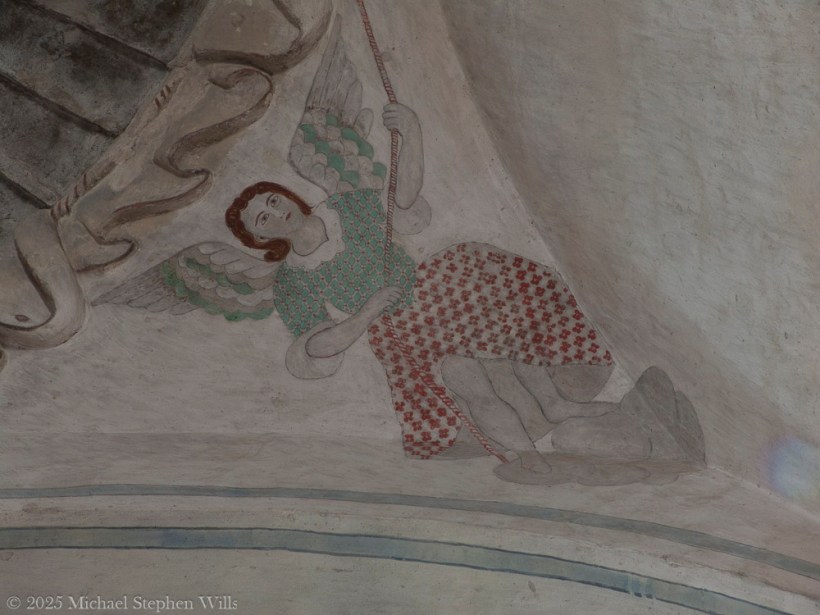
And in the arch’s corner, an angel descends—painted simply, yet with care. The figure pulls at a rope, perhaps to ring a bell or lift a curtain, a symbolic act of revelation or invitation. With wings green and soft, a skirt patterned in red flowers, suggesting femininity, grounding the divine in local textile tradition. The angel bridges the earthly with the divine, echoing the mission’s purpose: to guide and accompany.
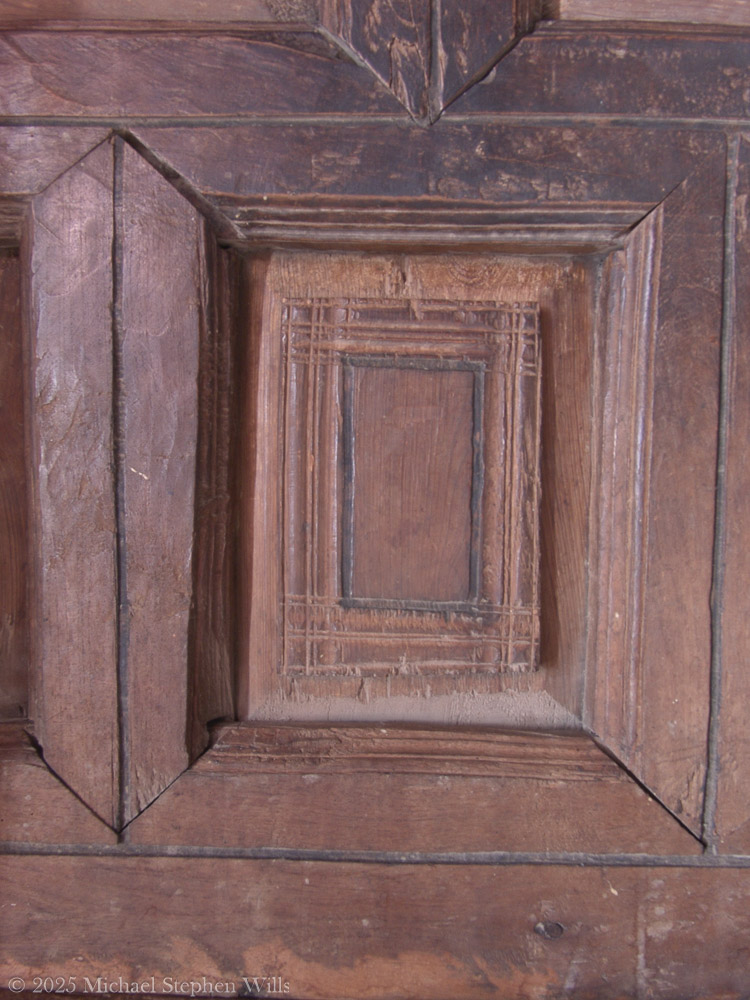
Finally, a carved wood panel—plain, aged, and sacred in its wear. The texture of centuries rests in its grain, the indentations of faithful hands passing by. This is the tactile memory of San Xavier: not only what is seen, but what has been touched, prayed over, believed.
Taken together, these images form a tapestry of devotion, colonial artistry, indigenous fusion, and enduring reverence. San Xavier del Bac is a place where symbols still speak, where color and form do more than please the eye—they lift the spirit. In this space, belief is remembered to be continually reborn.
 Michael Stephen Wills Photography
That’s beautiful
LikeLiked by 1 person
Thank you, Sheree! Your steady encouragement means the world to me. The mission’s artistry and spirit make it easy to find beauty—was there a particular image or symbol that caught your eye this time? I always enjoy hearing your impressions, and I’m grateful you’re on this journey with me.
LikeLiked by 1 person
I particularly enjoyed the more unusual depictions
LikeLiked by 1 person
❤
LikeLiked by 1 person
Thank you, orededrum! Your heart emoji says it all, and it means a lot. I’m glad the post touched you—if any particular detail or image stood out, I’d love to hear more. Your support keeps the creative inspiration flowing!
LikeLike
This is a beautiful post, Stephen. I thoroughly enjoyed it.
LikeLiked by 1 person
Thank you so much, Kymber! I’m delighted the post resonated with you. (Just a small note—my name is Michael, but I answer happily to most anything when the conversation is this kind and encouraging!) San Xavier’s blend of art, history, and devotion never fails to inspire me, and it’s wonderful to know the write‑up spoke to you as well. I’d love to hear what aspects of the mission moved you most—its intricate carvings, the vibrant frescoes, or perhaps the way the light fills the sanctuary. Your thoughts are always welcome, and I look forward to continuing the conversation.
LikeLiked by 1 person
And how long have I been calling you “Stephen?” lol I’m sorry. Correction noted. lol
It was the image of Christ and how you mentioned he looked “brutally human.” I thought the same.
LikeLiked by 1 person
I saw another representation of the suffering Christ in the Johnson Museum of Art, Cornell University, yesterday.
LikeLiked by 1 person
A beautiful descriptive series of photos ~ further enhanced with your fine writing, Michael. This is a perfect post to ponder on the eve of Easter. The warm morning light adds an even greater spiritual feel to the images you present. Your words: “The floral elements speak to rebirth and resurrection, a soft counterpoint to the harshness of the Crucifixion. Here, pain and peace coexist in a visual hymn…” reflect the feeling throughout the post. Beautifully put together. Thank you, and wish you a wonderful Easter weekend.
LikeLiked by 1 person
Thank you so much, Dalo—your words mean a great deal. I’m especially touched that the post resonated with you in the context of Easter; it’s a time so rich with reflection, and San Xavier seemed to embody that spirit in every detail. I’m glad the morning light and imagery came through with the feeling I hoped to convey. Your comment is a gift—thoughtful, poetic in its own right, and deeply appreciated. Wishing you a peaceful and meaningful Easter weekend as well.
LikeLike
An image is often worth more than a thousand words, but the insights you have shared makes me appreciate them even more. There are so many layers, history and meaning behind each – a lifetime is not enough to enjoy them all. Thankfully, we have this global connection allowing us to share and appreciate our common humanity. Thank you for sharing!
LikeLiked by 1 person
Dear Takami,
Your words are truly heartening. I’m so grateful that we can explore such places together across the miles. This global connection, as you said so well, is a gift. Thank you for taking the time to see, reflect, and respond with such grace.
Warm wishes from Ithaca,
Michael
LikeLiked by 1 person