Here are some thoughts on various physical representations of the iconic Space Shuttle we encountered during our travels.
Vision
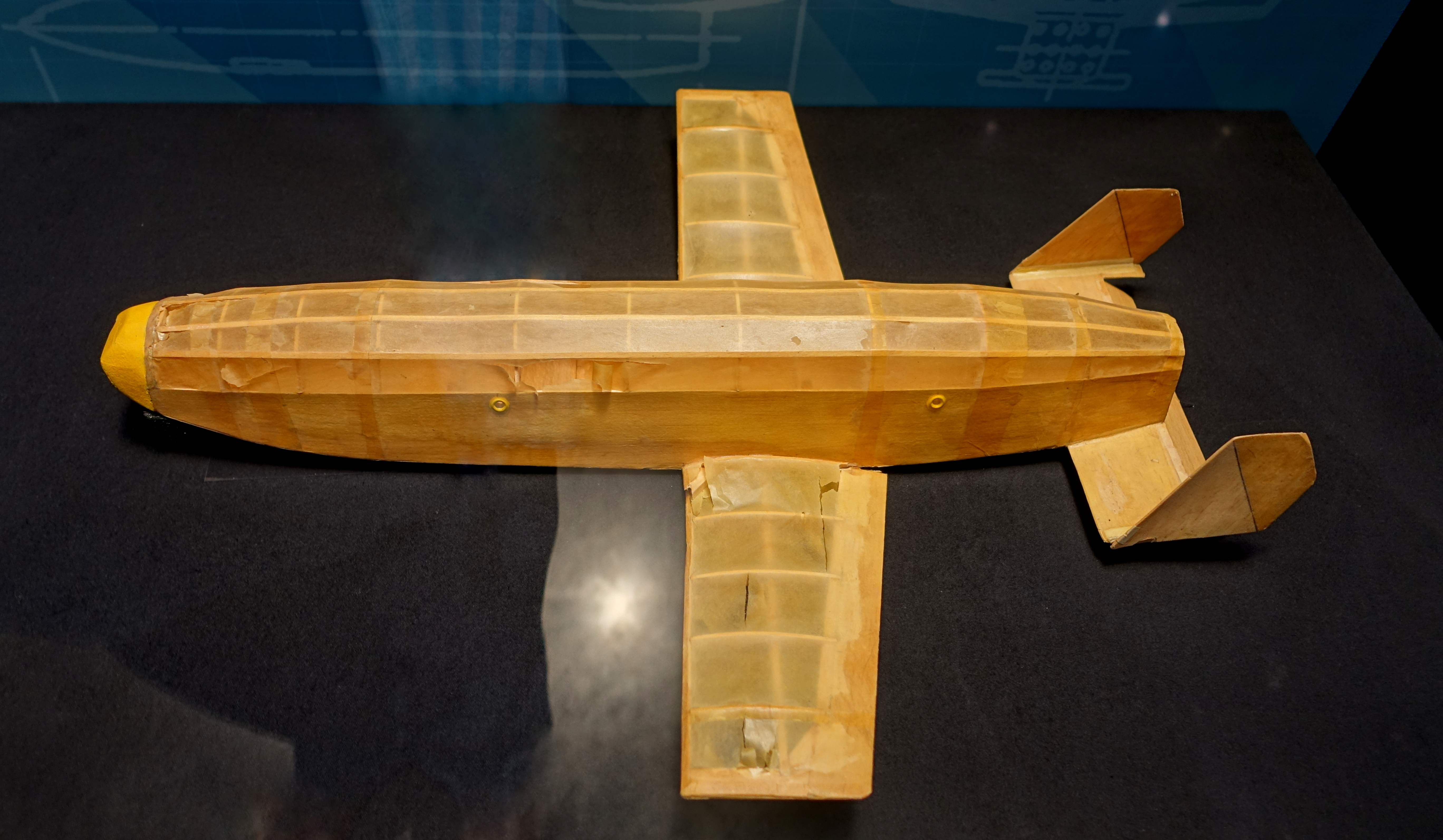
Dr. Maxime “Max” Faget joined NASA in 1958, where he headed the group that designed America’s first manned spacecraft, the Mercury capsule. In 1969, Dr. Faget was the director of engineering and development at NASA. On April 1, 1969, Dr. Max Faget tossed this balsa wood toy toward his team of engineers hard at work landing a man on the moon. During this time Dr. Faget’s team also began creating a revolutionary space vehicle for NASA. “We’re going to build America’s next spacecraft. And it’s going to launch like a spacecraft. It’s going to land like a plane.” –text from Kennedy Space Center display, see following.
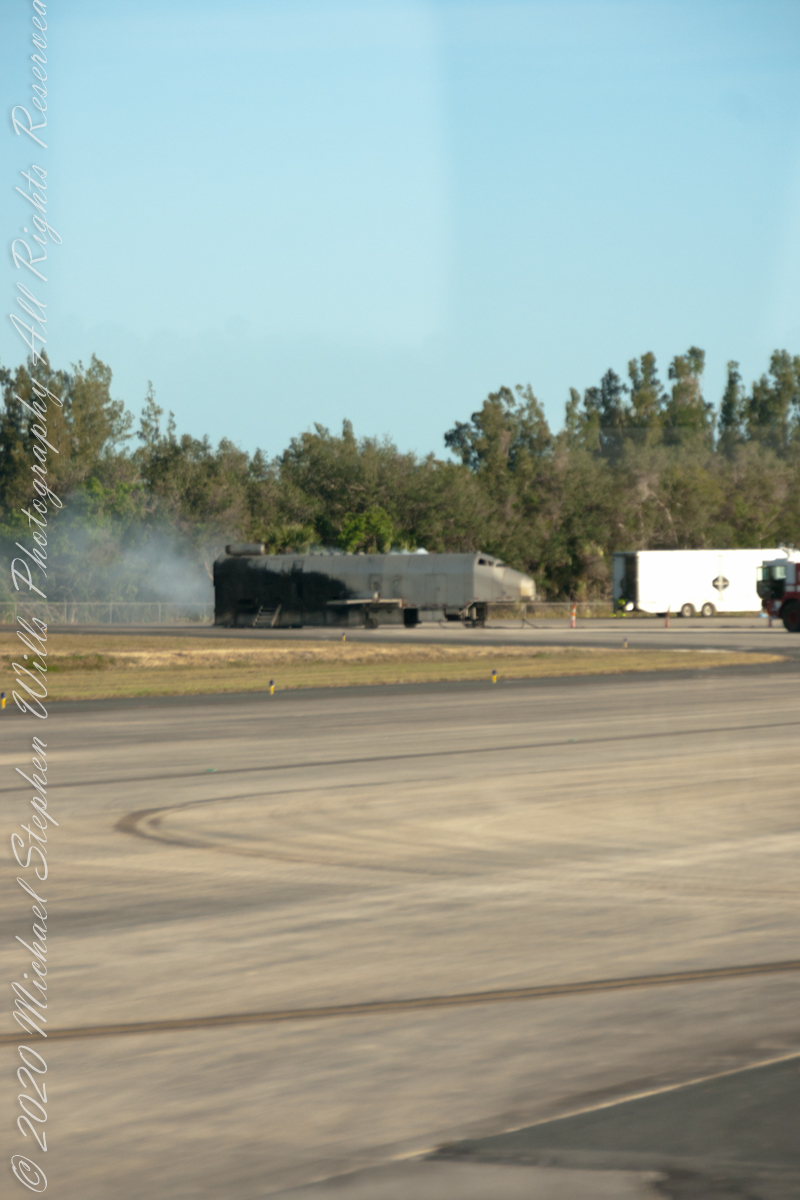
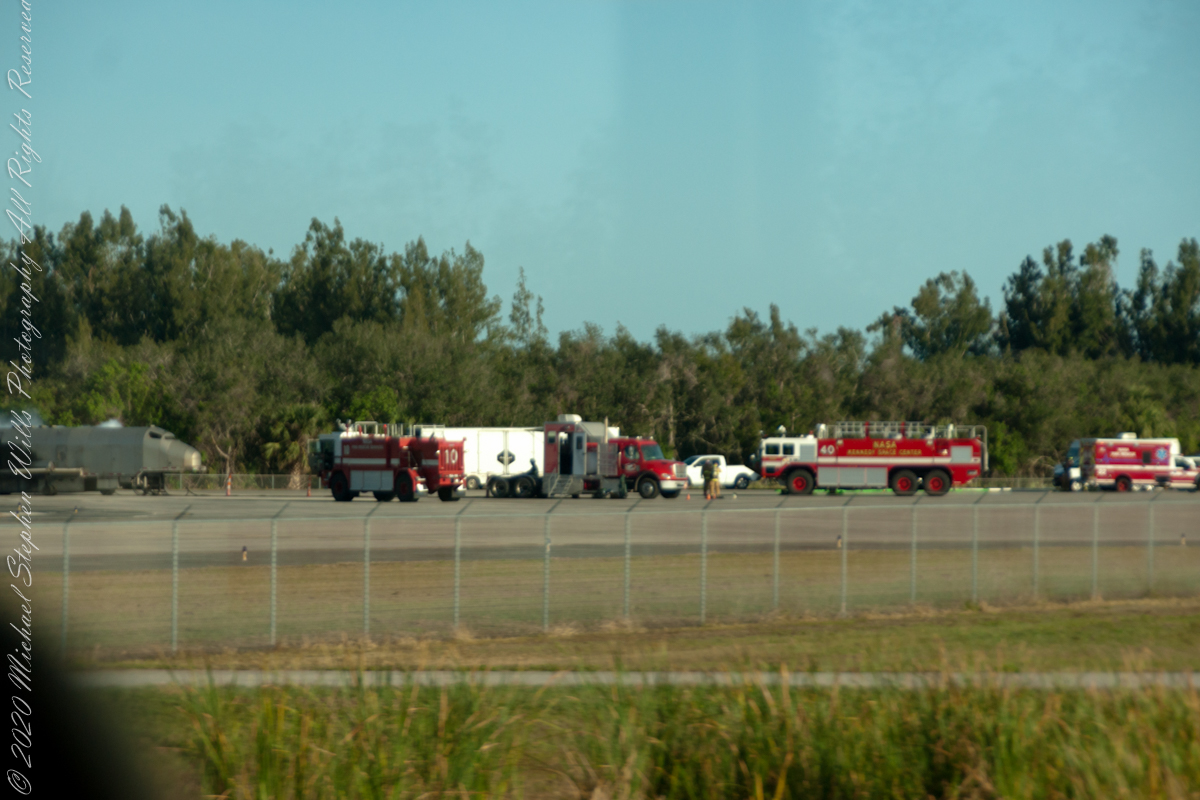
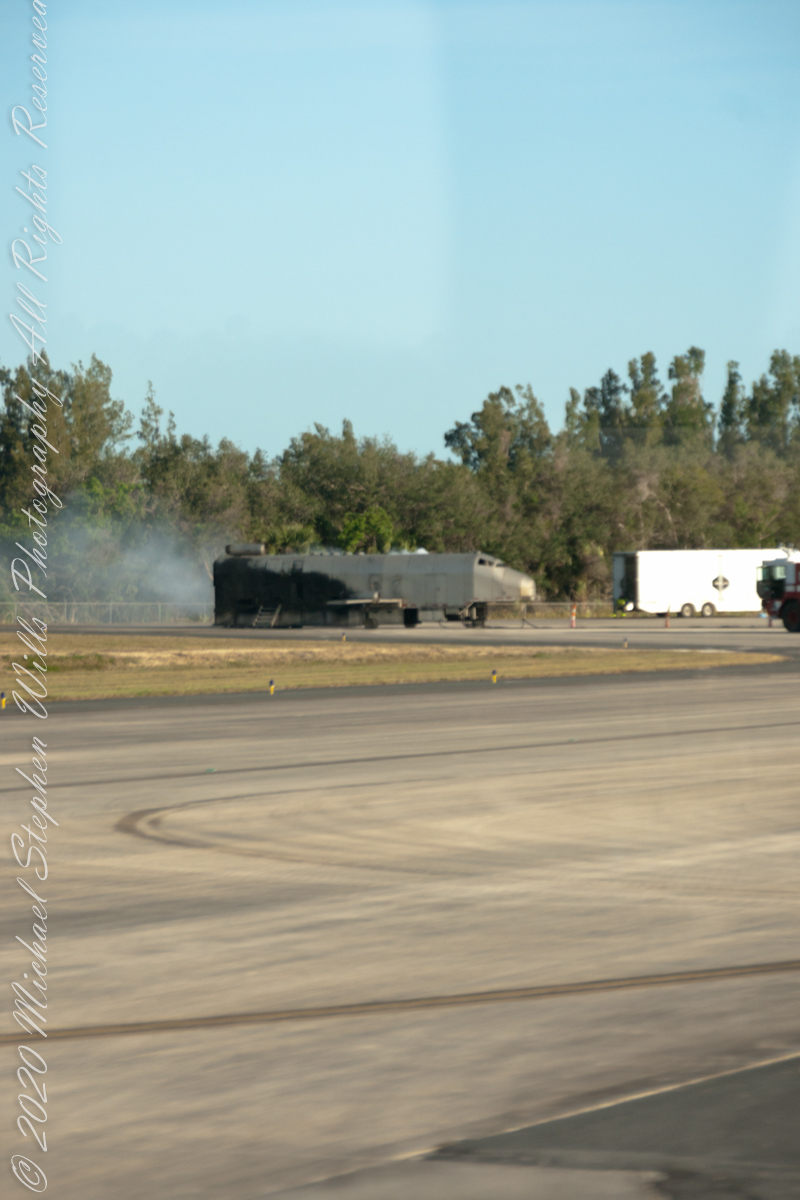
The Space Shuttle life size model still in use for fire training at Station #2 at the Shuttle Landing Facility.
Two Inspirations
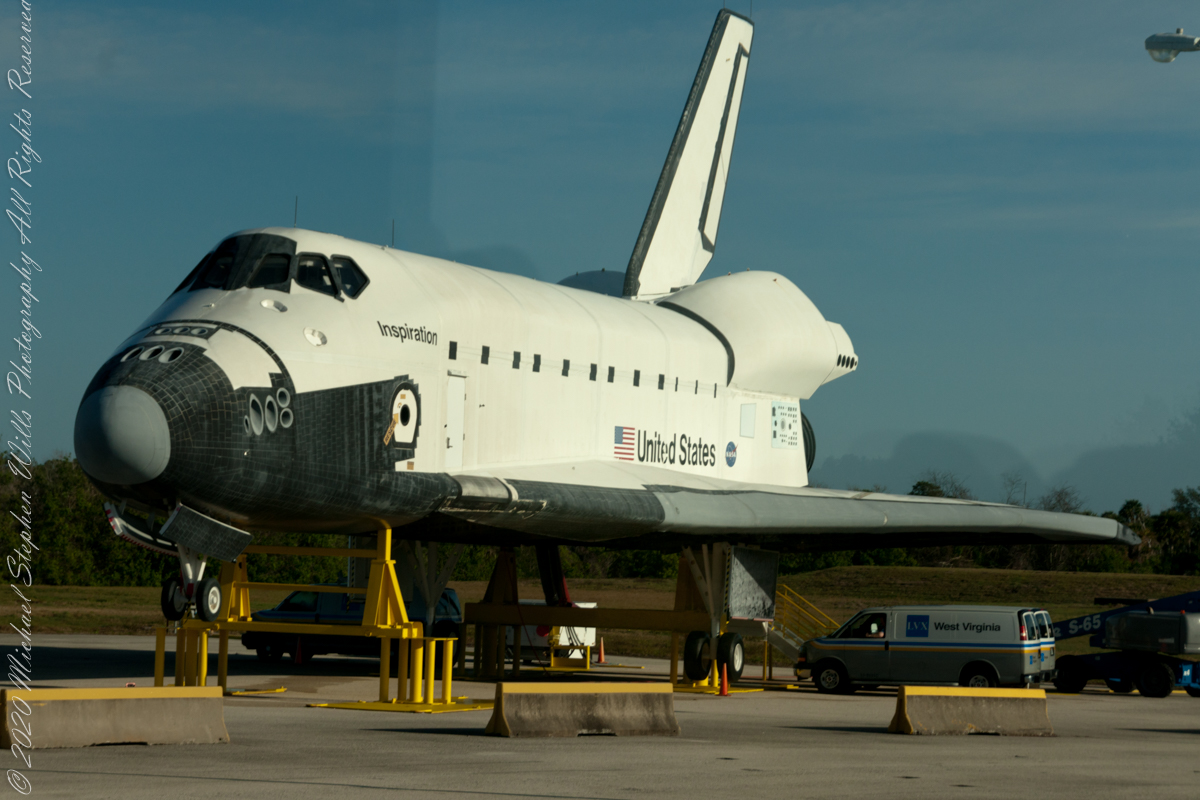
On display next to the Shuttle Landing Facility
April 29, 2016 – Almost five years after NASA’s last space shuttle landed in Florida, an orbiter returned to the runway at the Kennedy Space Center. The model orbiter “Inspiration” was rolled out to Kennedy’s Shuttle Landing Facility on Wednesday (April 27), where it will be rebuilt into a traveling exhibit. The full-scale mockup was previously on display at the now-former location of the U.S. Astronaut Hall of Fame in Titusville. LVX System, which acquired the 122-foot-long (37 meter) shuttle replica from NASA, moved the Inspiration from the Hall to a work yard in January. The company, which has an agreement with NASA to study visual light communication for deep space missions, intends to use the space shuttle as a vehicle for both educational outreach and marketing. “Over the past four months, work has been done to bolster the shuttle’s structure and aesthetics in preparation for the move this week, an LVX spokesperson said.” – from the “Collect Space” web site
The “Inspiration” model of my photograph, from our 2018 Shuttle Landing Facility visit, is a second Space Shuttle mock-up built by Kennedy Space Center carpenters from a rocket booster body.
Happy Birthday
Three birthday cakes Pam Wills created with input from her grandson. He helped to decorate the cakes. Featured is the Cape Canaveral lighthouse with launch sites, Kennedy Space Center launch site 39A with the shuttle and rockets. Foreground, in partial view is a tableau of the 1969 moon landing.
Copyright 2022 Michael Stephen Wills All Rights Reserved.
We left our Cocoa Beach hotel in the pre-dawn hours of February 6, 2018, with our tickets in hand for the first launch of Space X’s “Falcon Heavy”, our reward for arriving early was a spot on the third bus.
Tooling Around
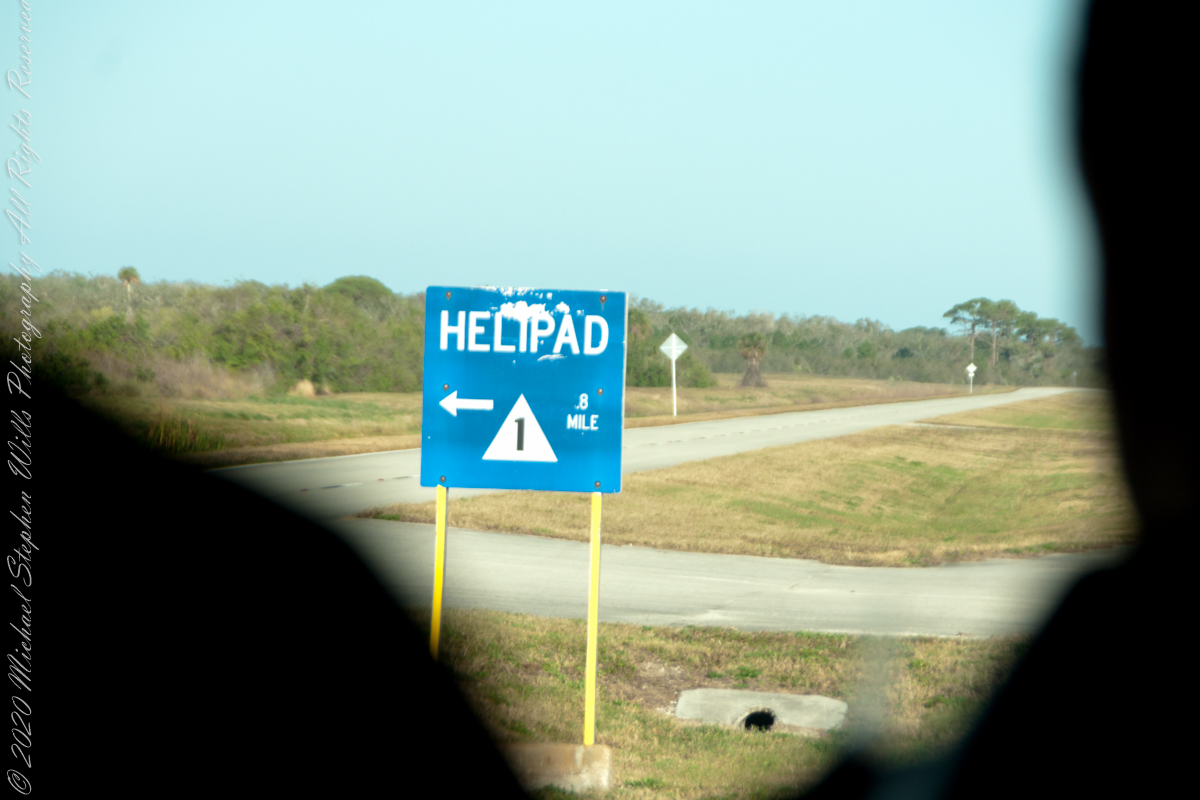
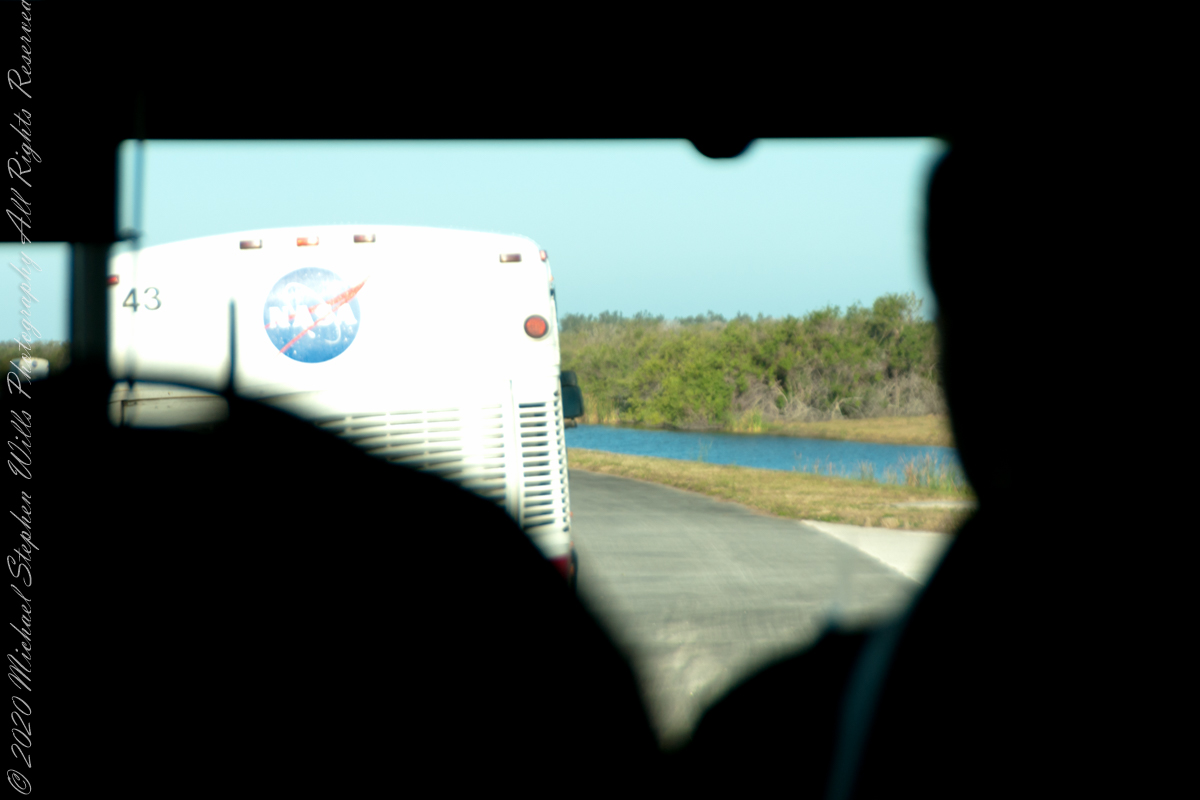
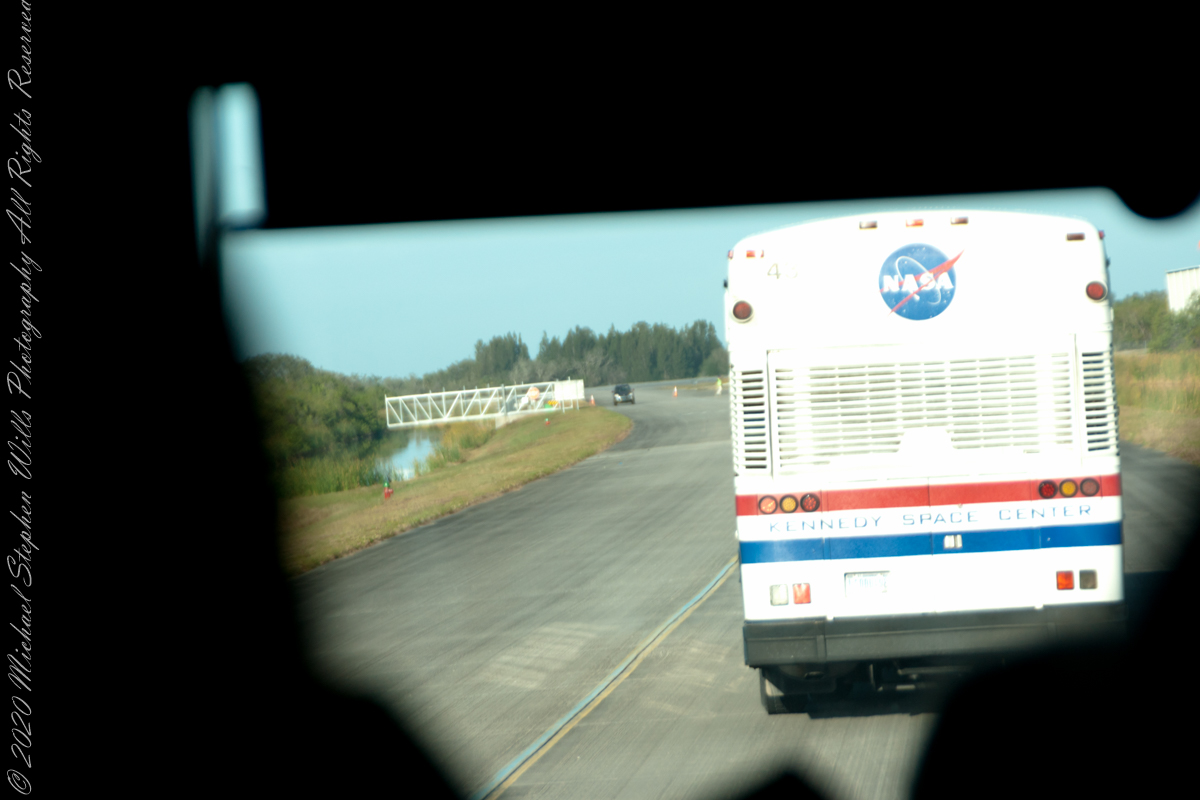
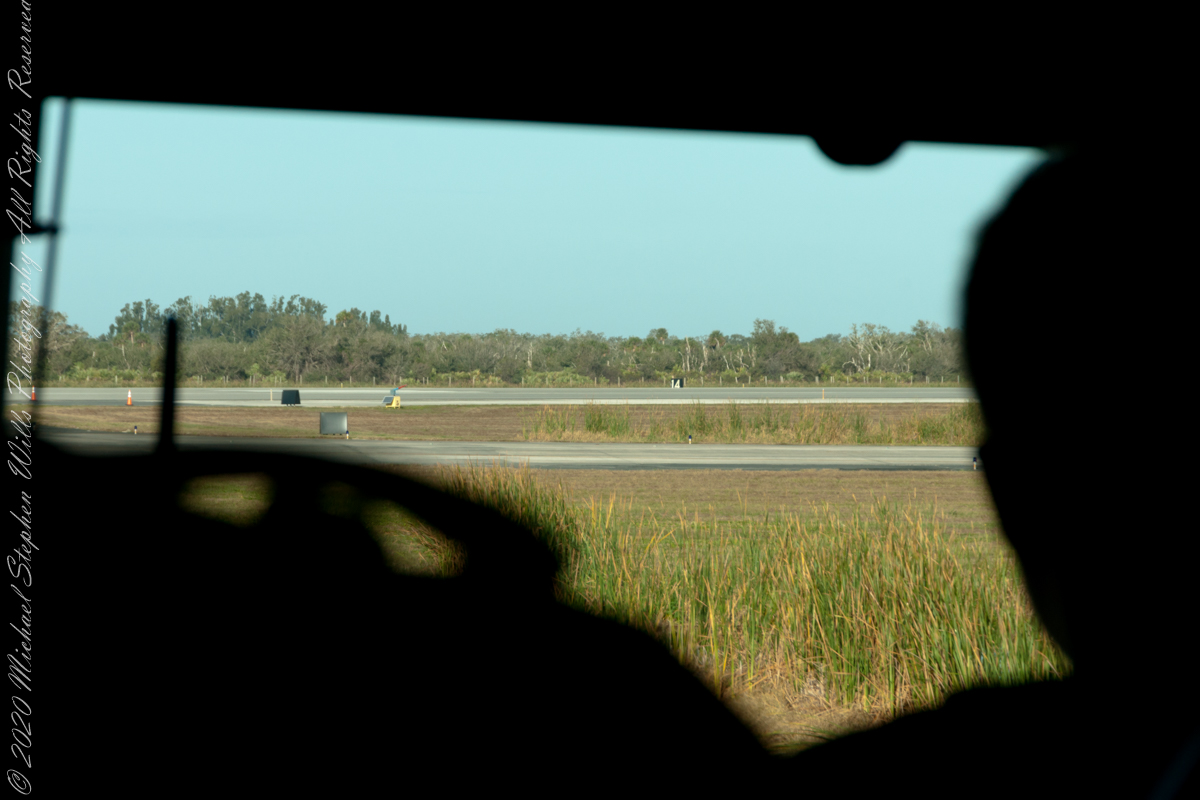
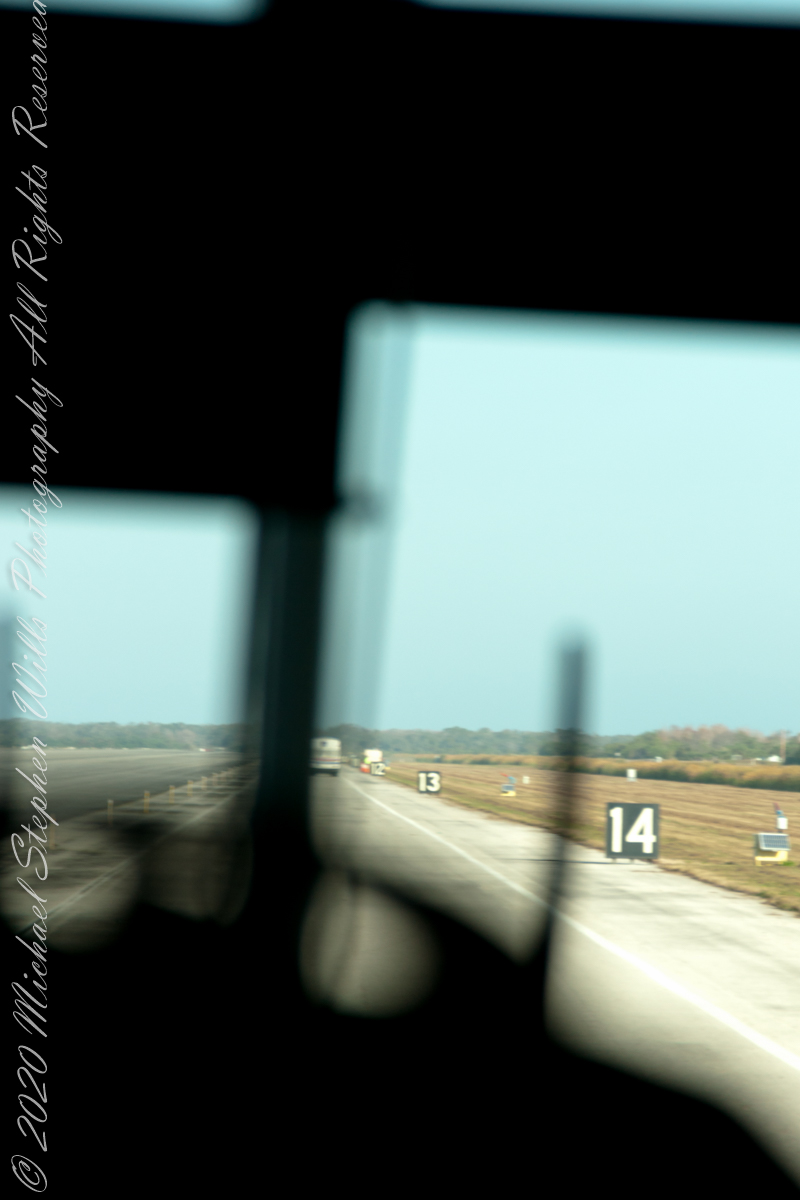
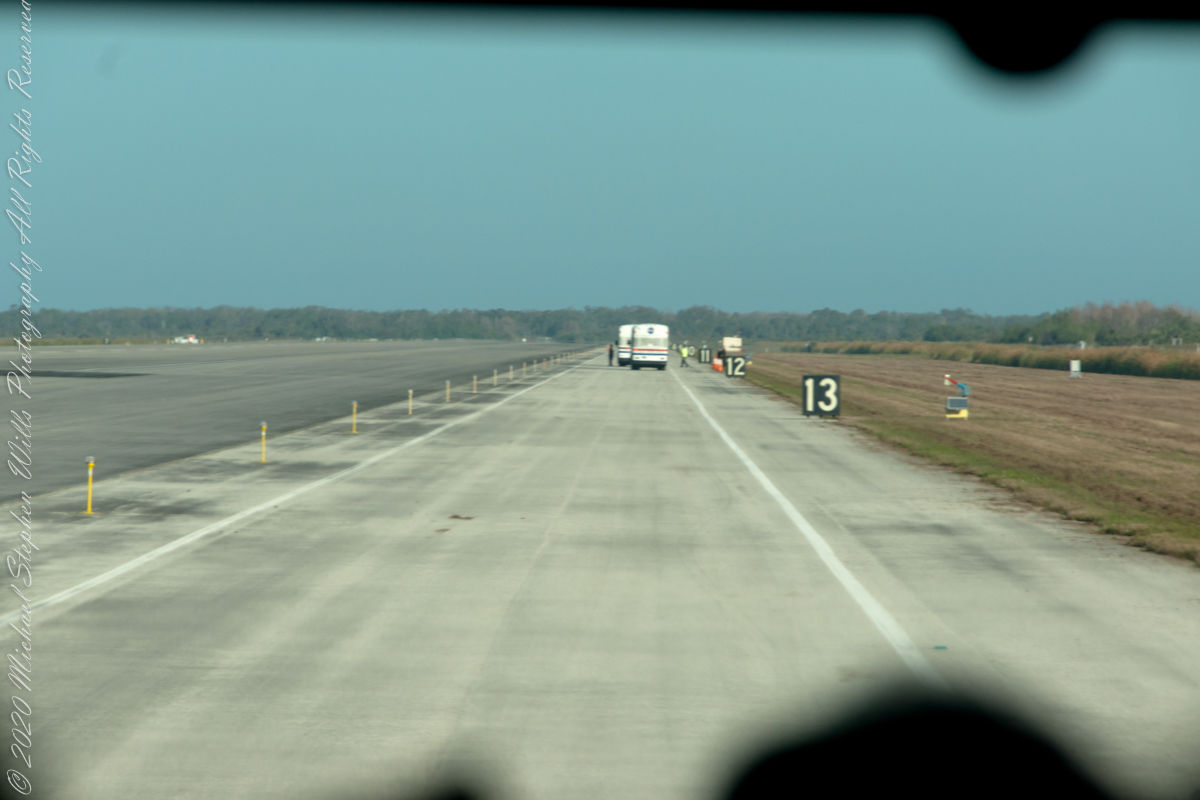
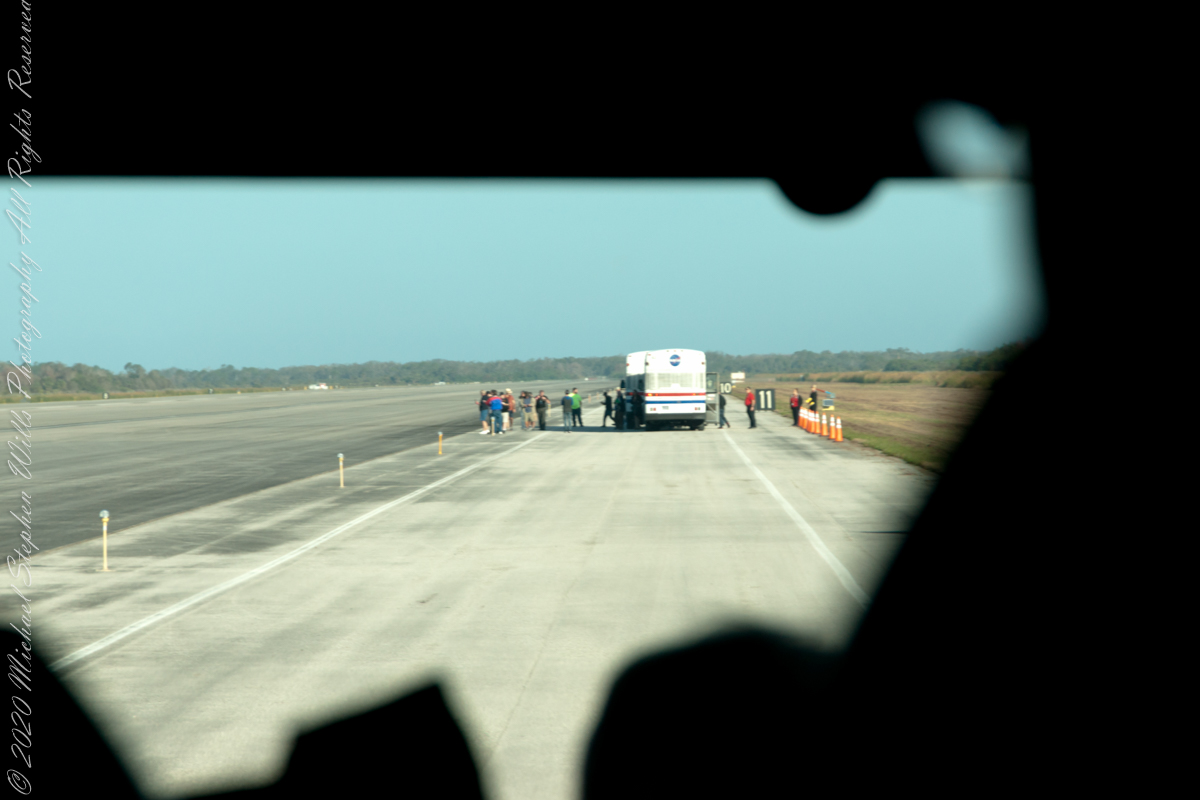
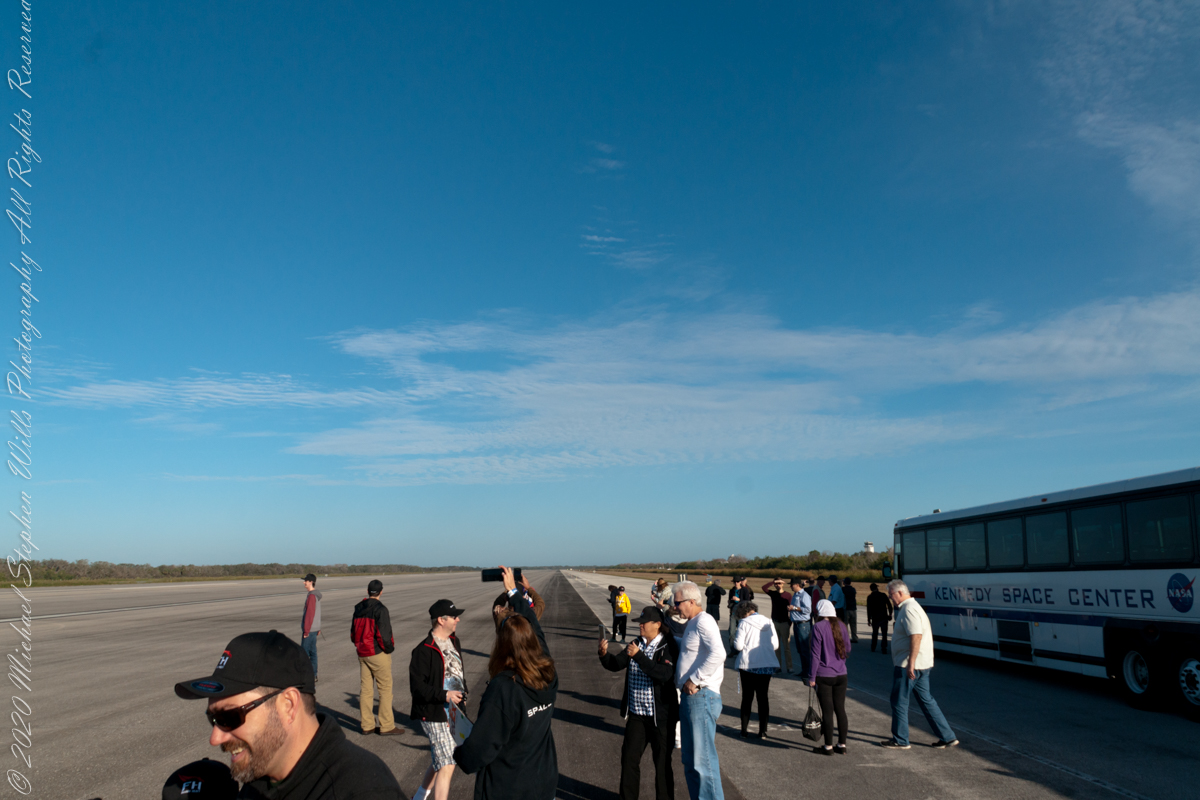
On the way to our final destination, the Apollo-Saturn V center, we were privileged to visit the Shuttle Landing Facility. Here are a few snapshots from the bus.
Click Any Image for a larger viewe
A waterway chock full of alligators — not visible until it is “too late”First view of runway
Preparing for the Worst
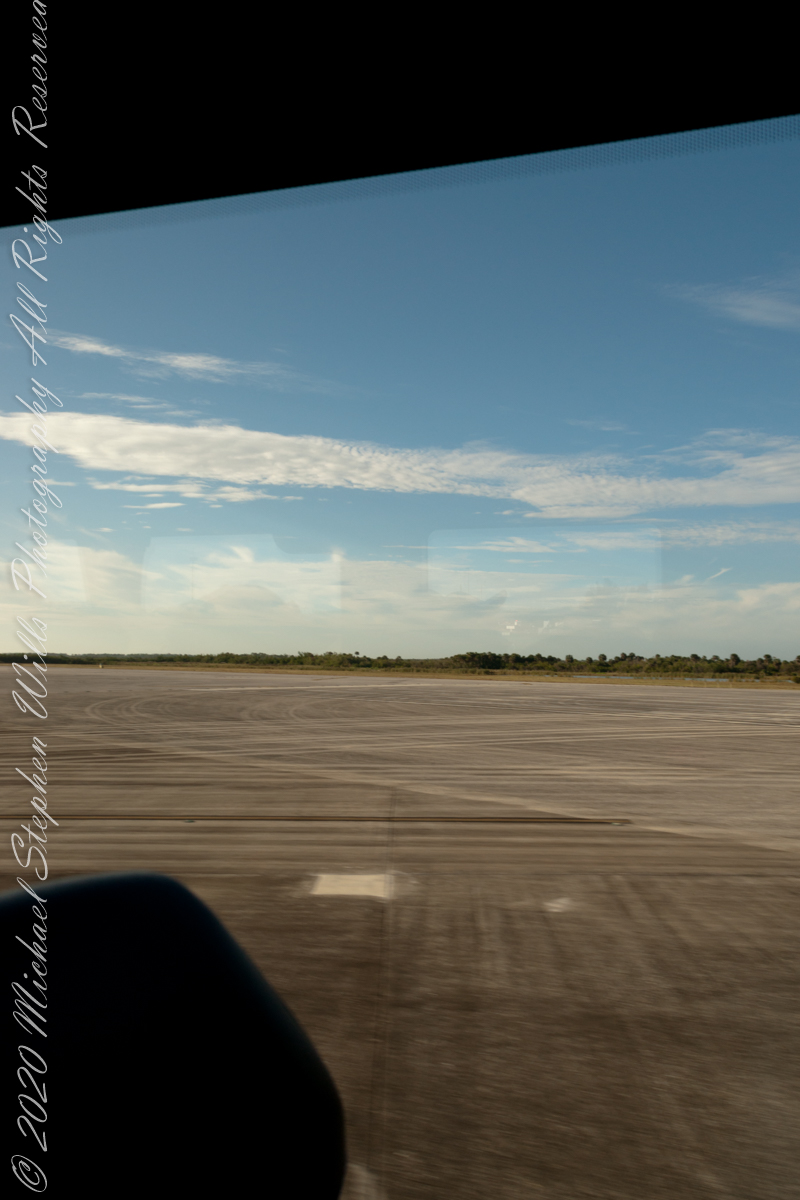
Fire Station 2 (Shuttle Landing Facility) – Kennedy Parkway NorthA rough and charred mock up of a Space Shuttle still smoking from the last training sessionImmense Turnabout, runway just visible
A Smooth Landing
Two buses ahead of us
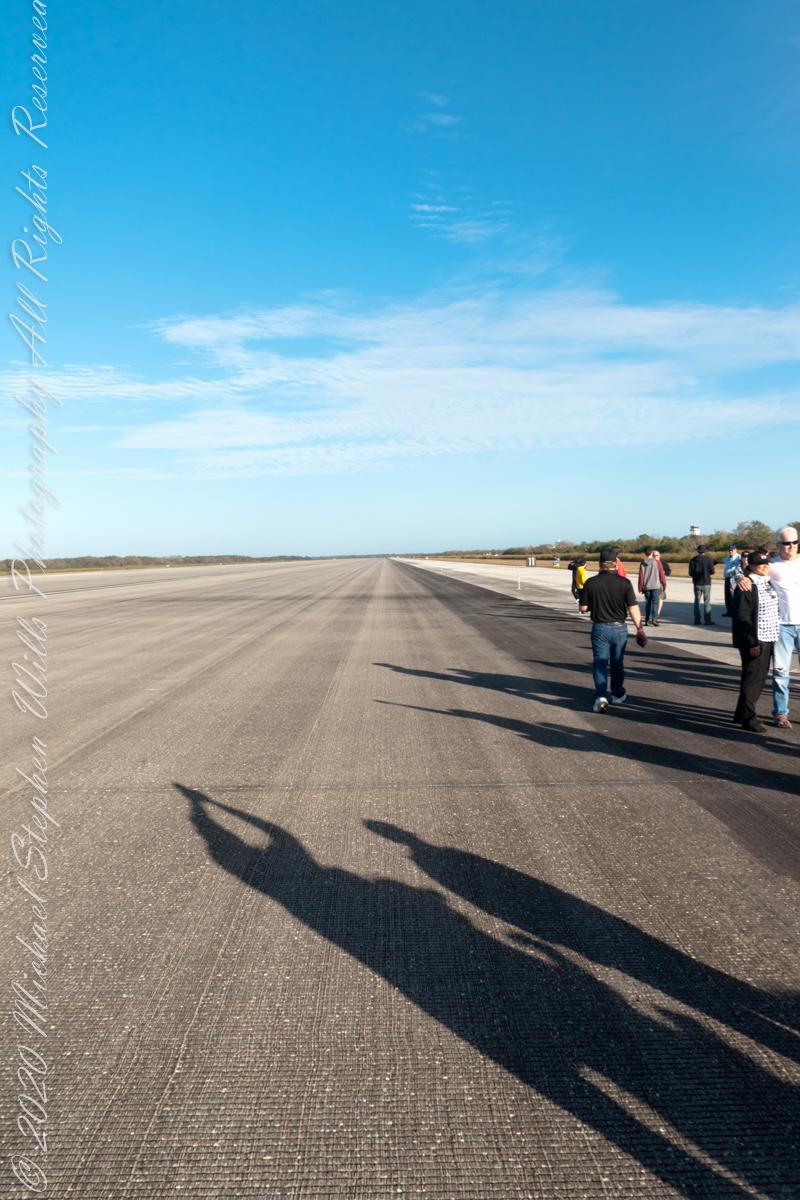
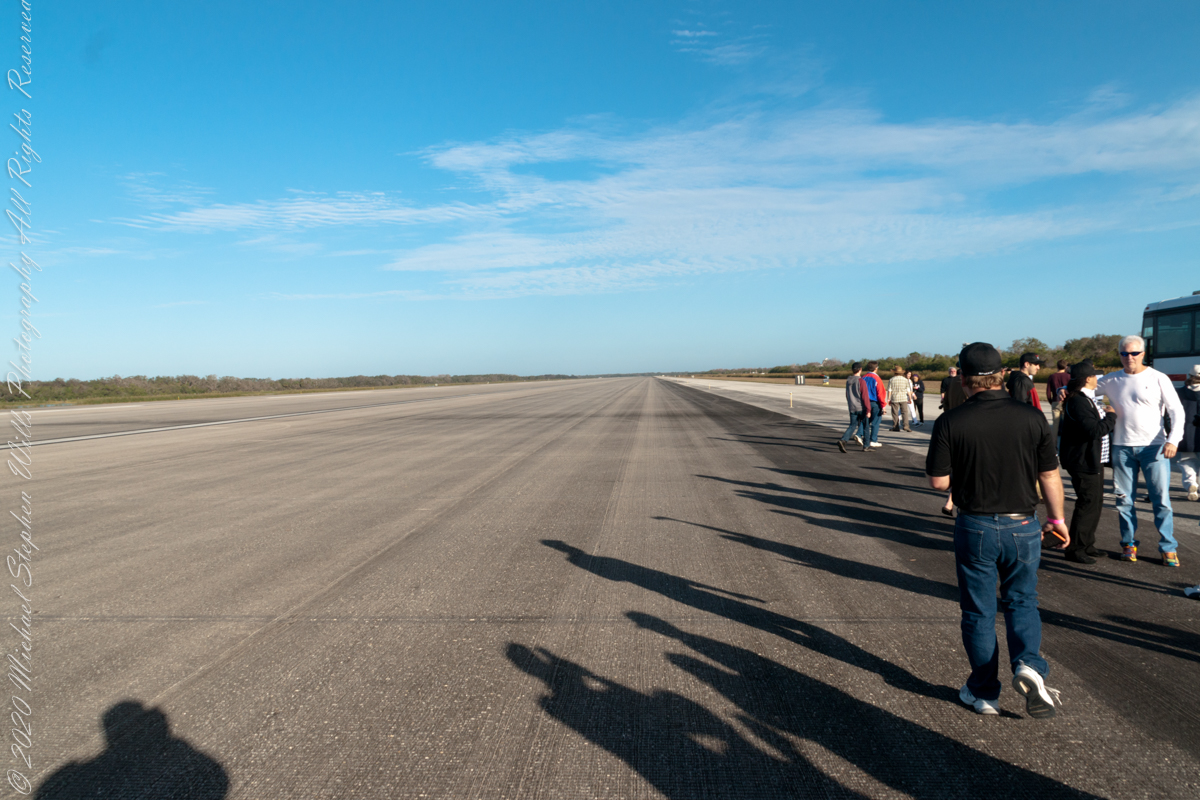
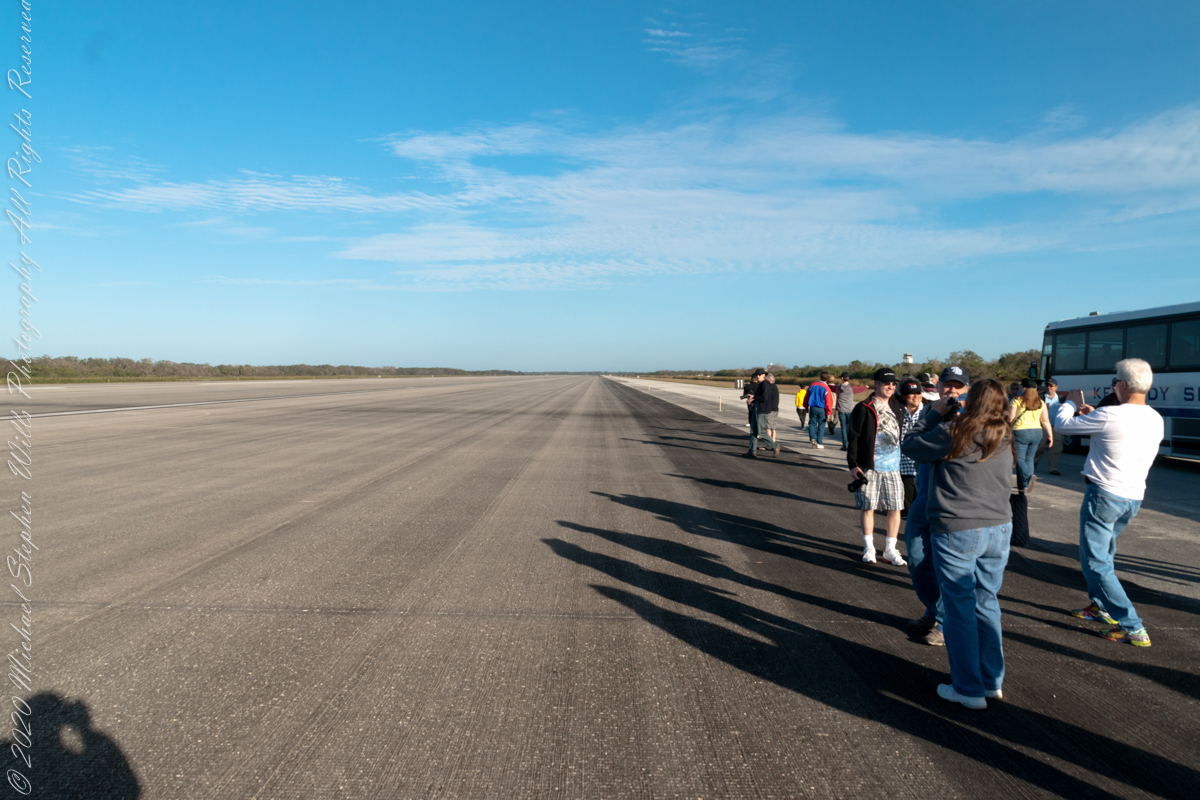
Aside from holding the record for world’s longest runway, the surface itself exceptionally engineered, consisting of an extremely high-friction concrete strip designed to maximize the braking ability of the Space Shuttle at its high landing speed, with a paving thickness of 16.0 inches (40.6 cm) at the center. It uses a grooved design to provide drainage and further increase the coefficient of friction. The original groove design was found to actually provide too much friction for the rubber used in the Shuttle’s tires, causing failures during several landings. This issue was resolved by grinding down the pavement, reducing the depth of the grooves significantly
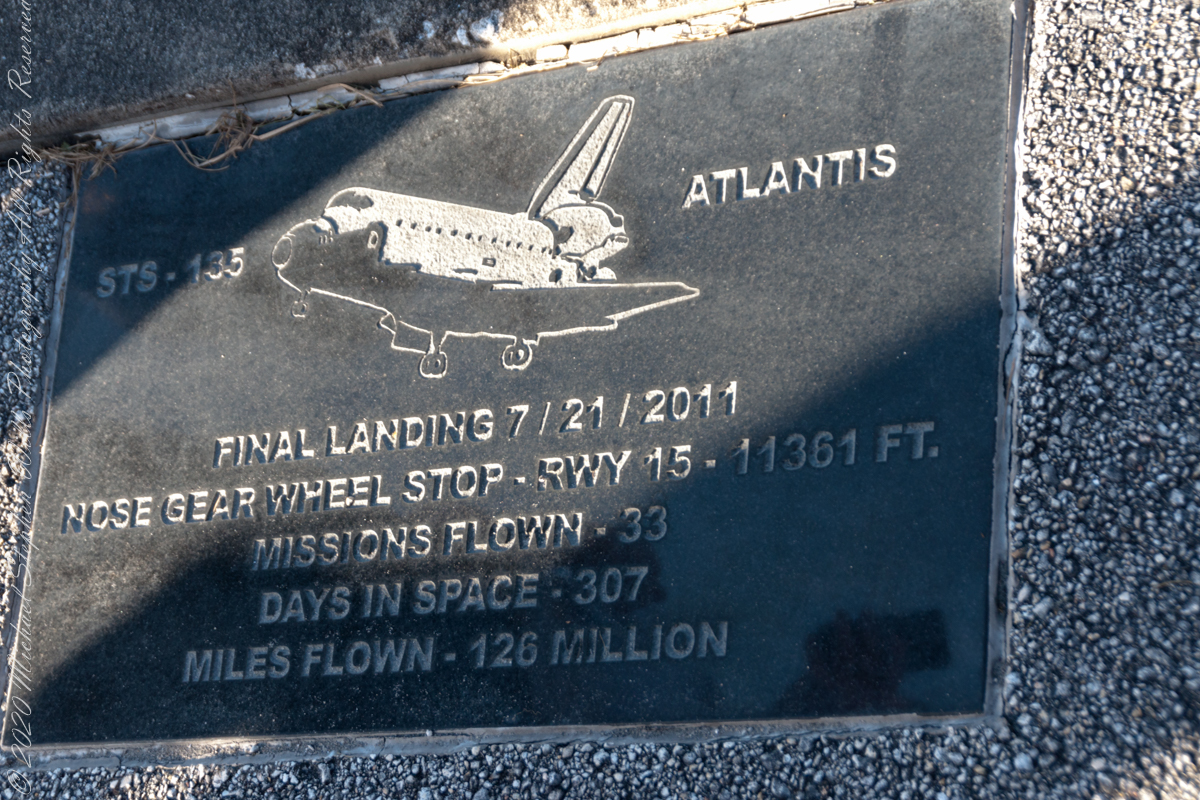
Atlantis plaque on the access pathway along the Shuttle Landing Facility. It reads “STS-135 Atlantis Final Landing 7/21/2011. Nose Gear Whell Stop – RWY 15 – 11,361 Feet. Missions Flown- 33 ; Days in Space – 307 ; Miles Flown – 125 Million
Sources of information for this post: I used information from the Wikipedia site for the key words “STS-107” as well as the official web site for Kennedy Space Center Fire Department.
Copyright 2022 Michael Stephen Wills All Rights Reserved.
Driving to Cocoa Beach from Ithaca, Pam and I missed a horrendous storm because we did a side trip to Louisville, Kentucky, avoiding I95 January 4th and 5th and a rare and treacherous ice storm.
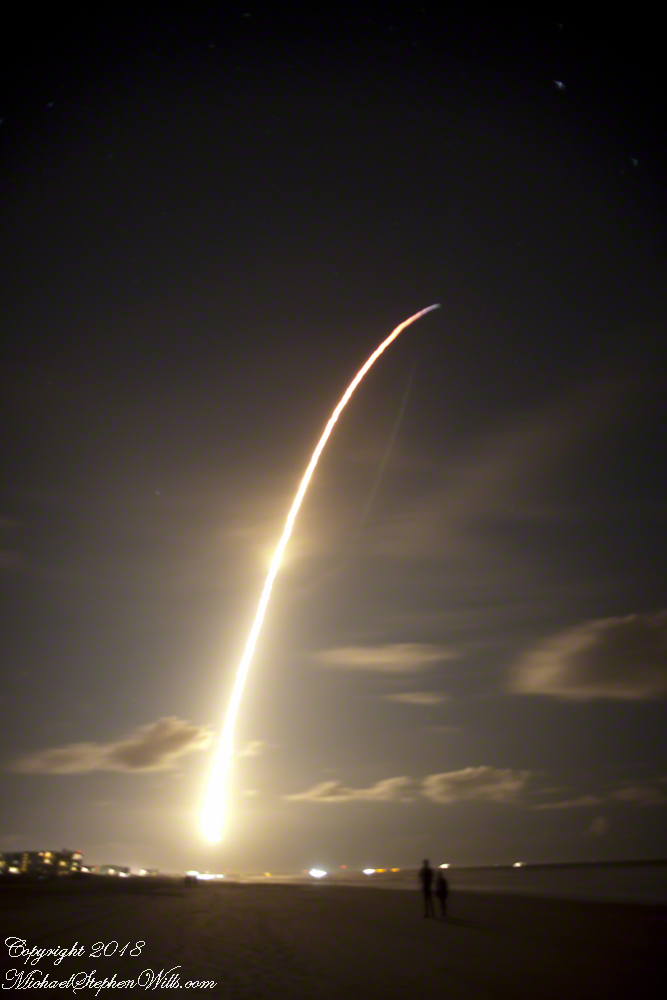
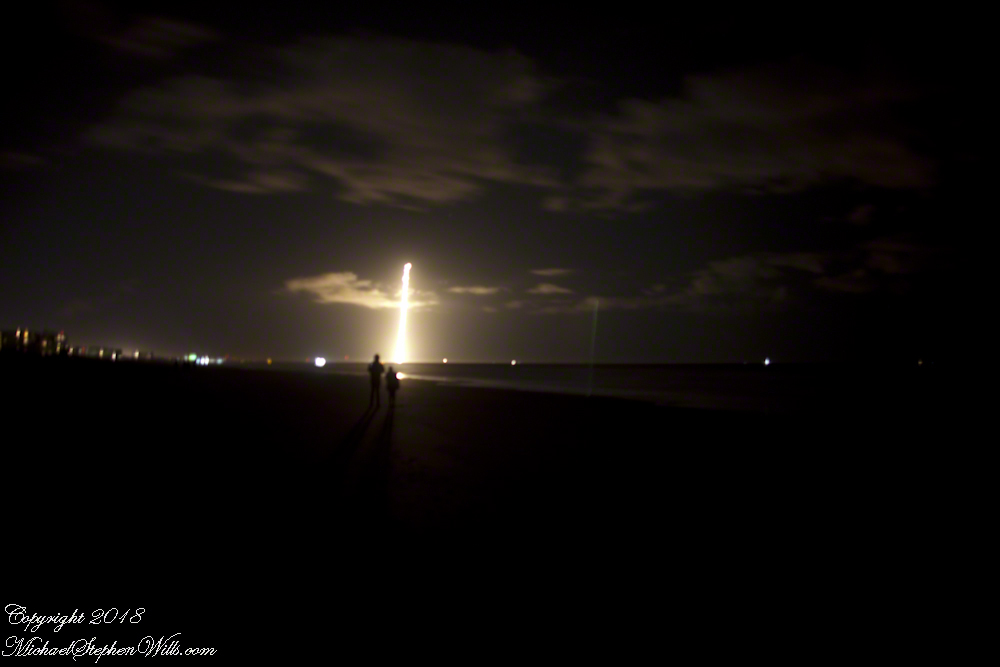
We met people who were stranded overnight near Savannah, Georgia while, on the same days, we drove Kentucky Hill Country for an overnight at Macon, Georgia all in excellent, dry, cold weather. The storm itself, was a stroke of luck. The first Space X launch of 2018 was delayed by the weather until the evening of Sunday, January 7th. I was in place, in the dark, on Cocoa Beach with my Canon DSLR on bulb mode, securely mounted on a travel tripod. My choice of lens was the 24 mm “wide angle.”
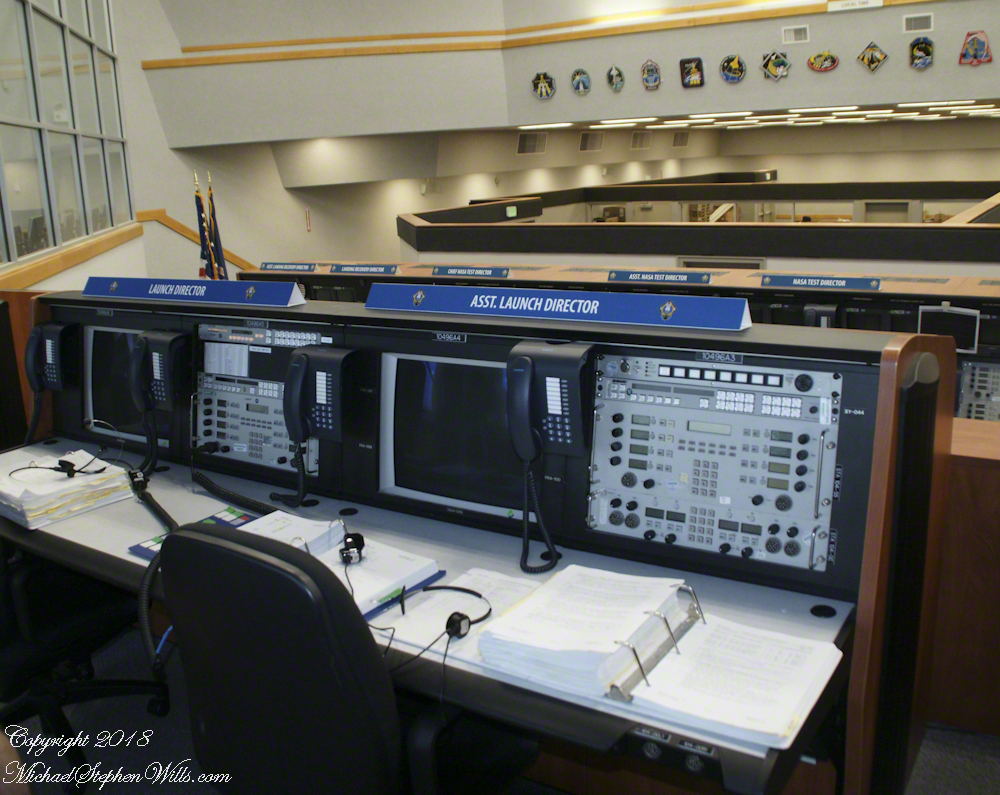
Proximity to the Kennedy Space Center is a reason we return to Cocoa Beach. A year ago, March 2007, we did the “Launch Director Tour” offered once a month (if at all) and had a fantastic day. I’ll need to blog about it.
For now, here is a shot from the former Space Shuttle launch room.
I planned camera placement well for this night launch. The view held the entire parabola of the trail. Camera placement was based on researching the launch complex, finding it on Google Earth, using the line feature to determine the orientation of the complex from my location on Cocoa Beach.
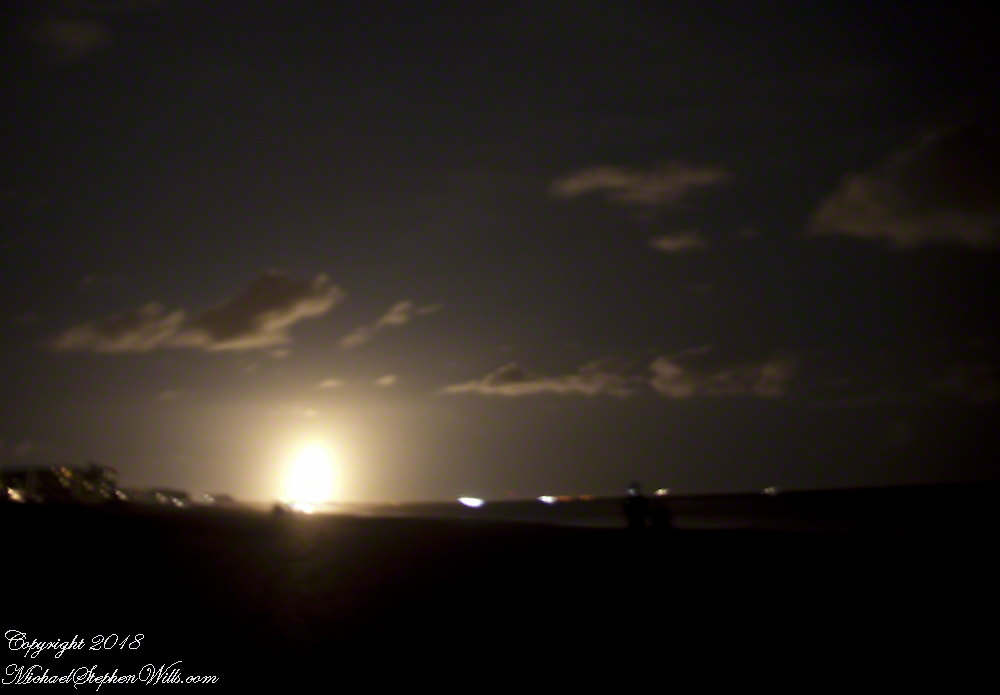
Live, the start of the launch is like a dawn in the northern sky. I broke off the exposure to somewhat capture the effect.
The human eye, only the Falcon 9 flame is visible, as a single point of bright light ever rising, lighting the beach and clouds in a soft glow.
The long exposure blends the flame into a bright parabola, at one point the rocket engines throttle back, eventually the color changed to reddish from bright white. I held the exposure until the rocket flame, in the image, turned to blue and faded away.
We waited for six (6) or so minutes, the camera mount and orientation unchanged, and then the incredible returning booster briefly lit up to land at Cape Canaveral Air Force Station. I missed the beginning of the burn. In retrospect, I should have timed the launch and opened the shuttle 5 minutes or so after “blast off.”
Followed by a TWO sonic boom finale. Kabooom….Kabooom.
We read in the news the secret military satellite, named “Zuma”, on top of the Falcon crashed into the Indian Ocean. SpaceX claimed the launch was a success (??), that the protective fairing jettisoned successfully. No mention was made of the secret payload. The failure was with the Northup Grumman built “Zuma” satellite? Hmmmmm.
Copyright 2022 Michael Stephen Wills All Rights Reserved.
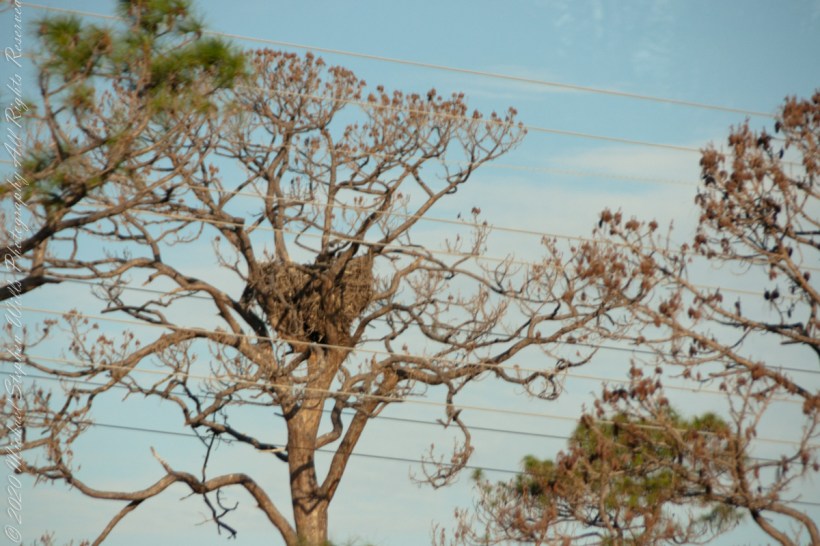
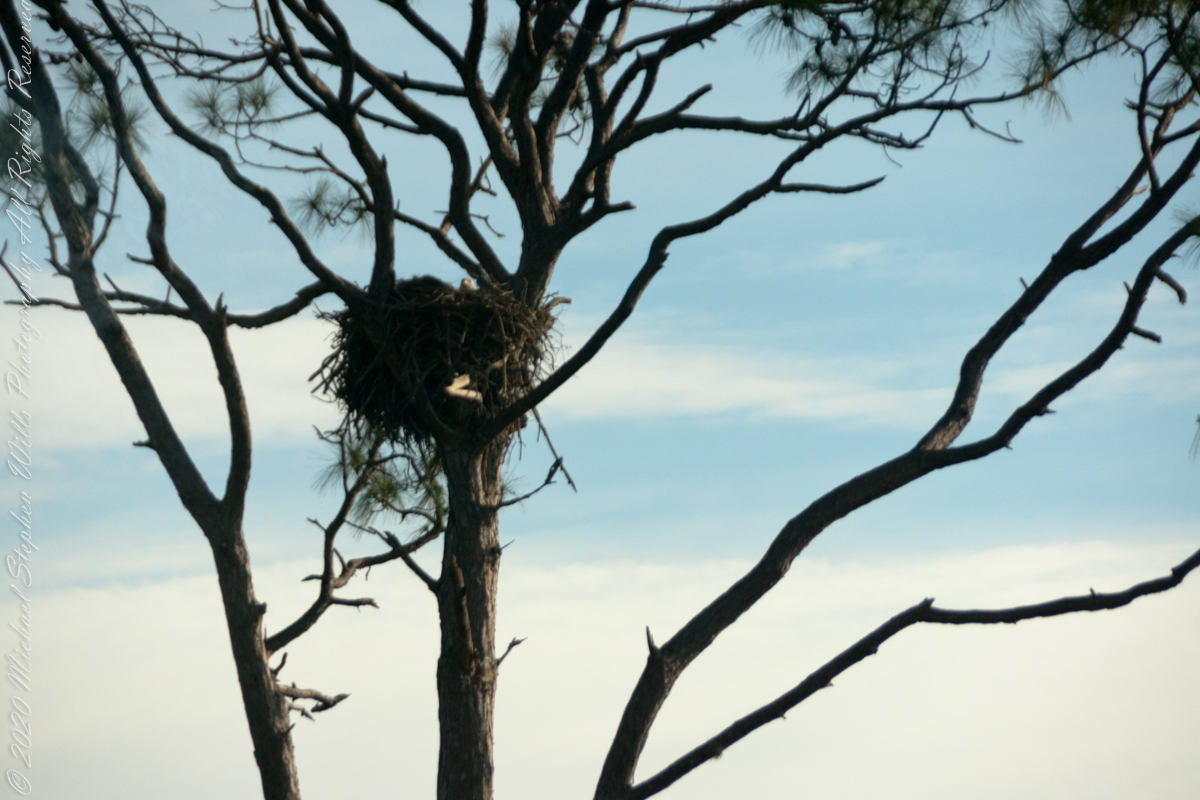
Our Shuttle Landing Facility side trip brought us twice by one of the five Bald Eagle nests around Kennedy Space Center. The entire Center land is part of the National Wildlife Refuge of Merrit Island. Rockets and wildlife coexist very well, in fact the Shuttle Landing Facility is also known as the Gator Tanning Facility. The reptiles crawl up from the canals surrounding the landing strip on all four sides to bask on the smooth concrete.
First Turn
The nest tree is on the median of a divided highway. Driving into the Landing Facility the nest tree was to the east, brightly lit by the morning sun.
Click Any Image for a larger viewe
Second Turn
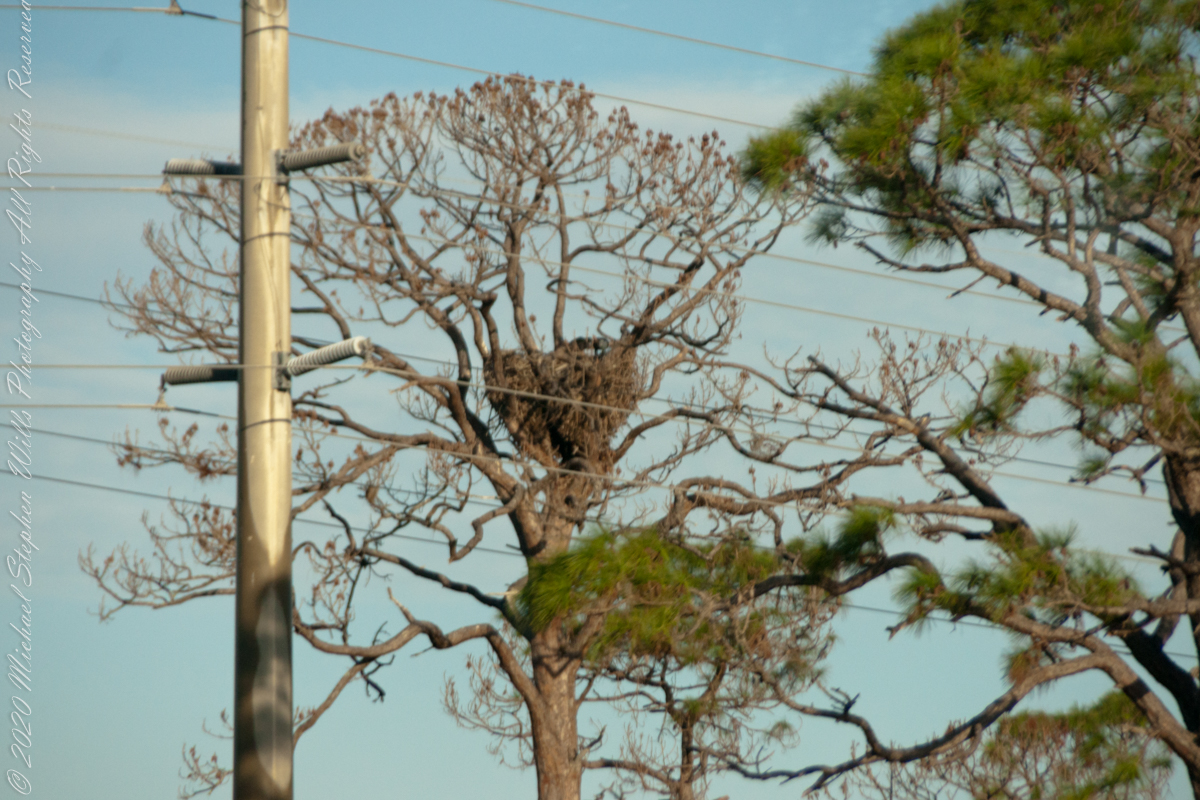
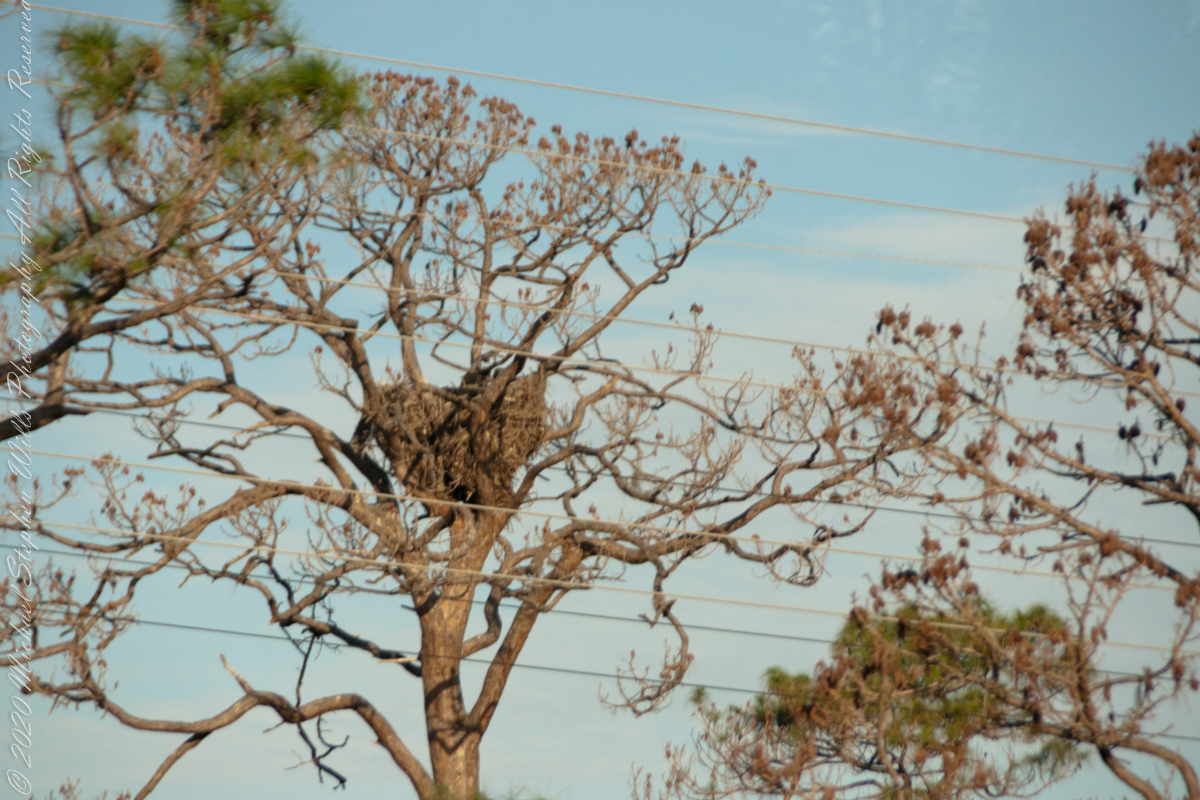
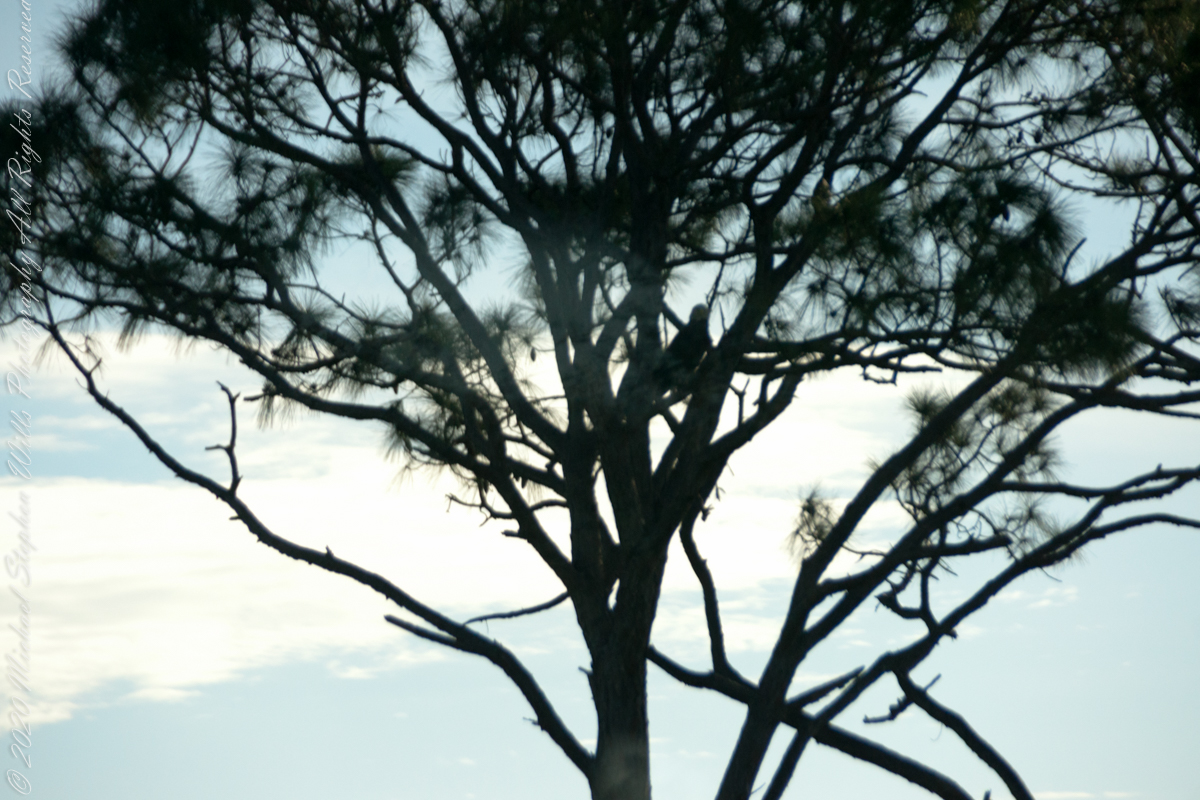
On the return trip the nest was backlit. Look closely: the head of an eaglet (?) is just visible above the nest rim.
The parent eagle is silhouetted in the tree branches.
Sources of information for this post: I used information from the Wikipedia site for the key words “STS-107.”
Copyright 2022 Michael Stephen Wills All Rights Reserved.
We left our Cocoa Beach hotel in the pre-dawn hours of February 6, 2018 with our tickets in hand for the first launch of Space X’s “Falcon Heavy, our reward for arriving early was a spot on the third bus to the Apollo-Saturn V center. At 4 miles from Launch Complex 39a this is the prime location for “VIP” viewing.
The Columbia Disaster
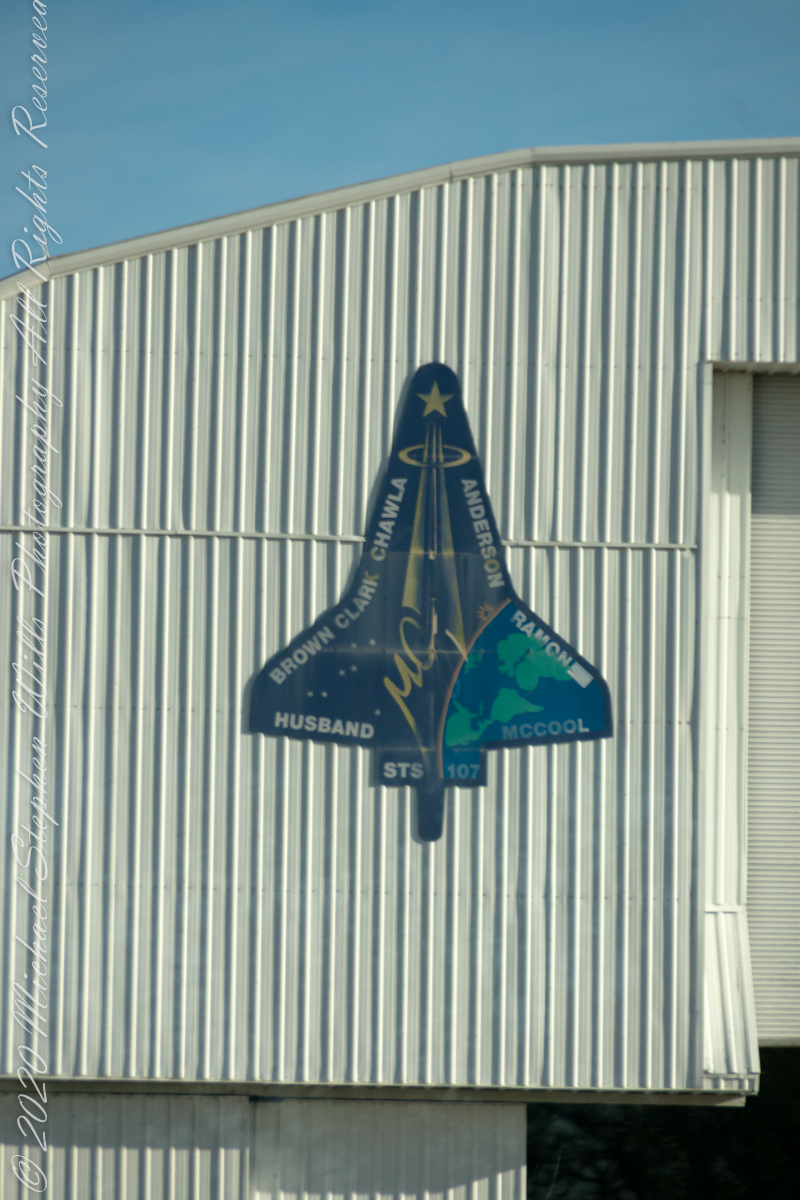
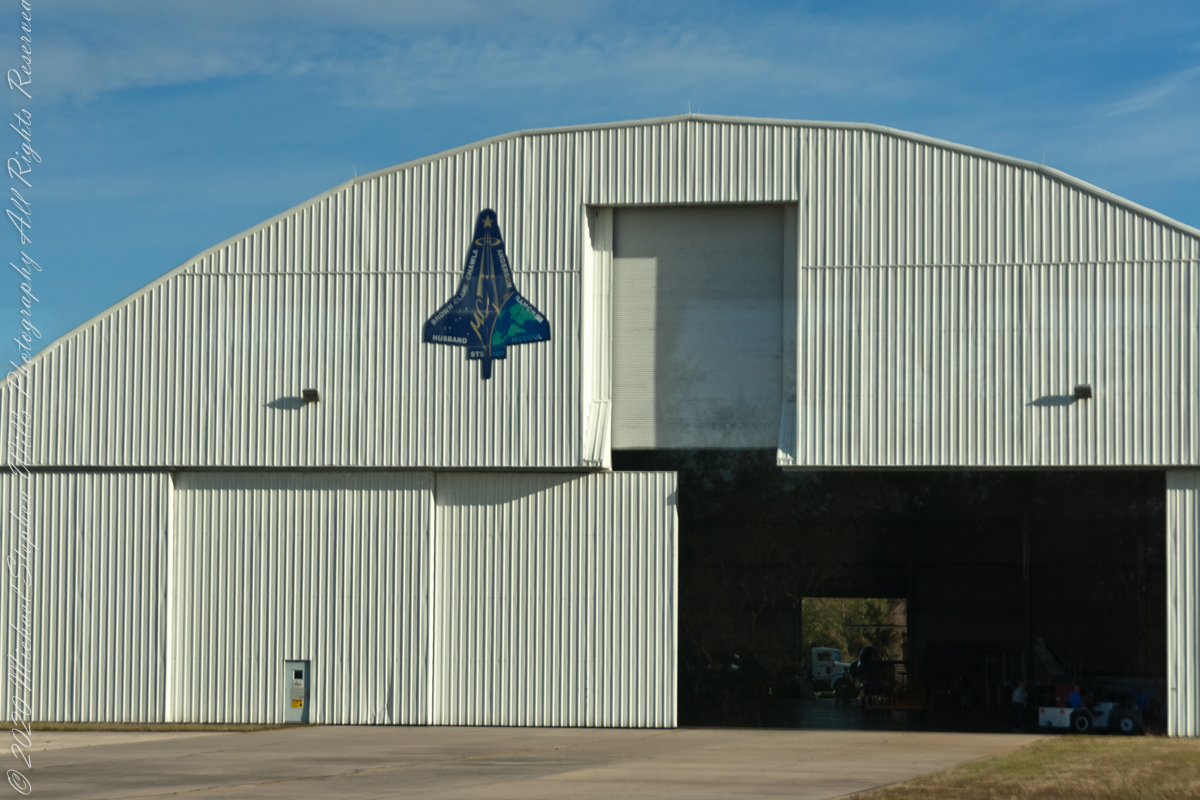
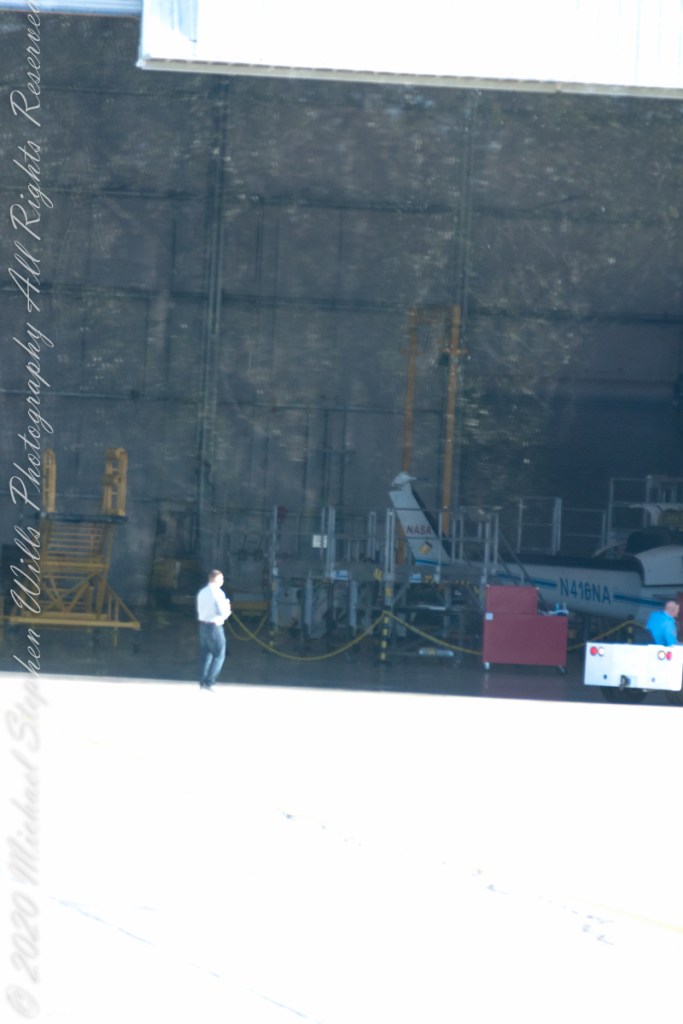
We were privileged to visit the Shuttle Landing Facility on the way, this hangar on the SLF access road was pointed out by the guide. Here was where the remains of Space Shuttle Columbia were collected after the disaster.
Click Any Image for a larger viewe
STS-107 was the 113th flight of the Space Shuttle program, and the 28th and final flight of Space Shuttle Columbia. The mission launched from Kennedy Space Center in Florida on January 16, 2003 and during its 15 days, 22 hours, 20 minutes, 32 seconds in orbit conducted a multitude of international scientific experiments. It was also the 88th post-Challenger disaster mission. An in-flight break up during reentry into the atmosphere on February 1 killed all seven crew members and disintegrated Columbia. — wikipedia
The logo is from the Columbia Accident Safety Board, the group that investigated the cause of the loss.
Immediately after the disaster, NASA convened the Columbia accident Investigation Board to determine the cause of the disintegration. The source of the failure was determined to have been caused by a piece of foam that broke off during launch and damaged the thermal protection system (reinforced carbon-carbon panels and thermal protection tiles) on the leading edge of the orbiter’s left wing. During re-entry the damaged wing slowly overheated and came apart, eventually leading to loss of control and disintegration of the vehicle. The cockpit window frame is now exhibited in a memorial inside the Space Shuttle Atlantis Pavilion at the Kennedy Space Center. — wikipedia
I zoomed in for a close look at the interior
The damage to the thermal protection system on the wing was similar to that Atlantis had sustained in 1988 during STS-27, the second mission after the Space Shuttle Challenger disaster. However, the damage on STS-27 occurred at a spot that had more robust metal (a thin steel plate near the landing gear), and that mission survived the re-entry. — wikipedia
Sources of information for this post: I used information from the Wikipedia site for the key words “STS-107.”
Copyright 2022 Michael Stephen Wills All Rights Reserved.



 Michael Stephen Wills Photography