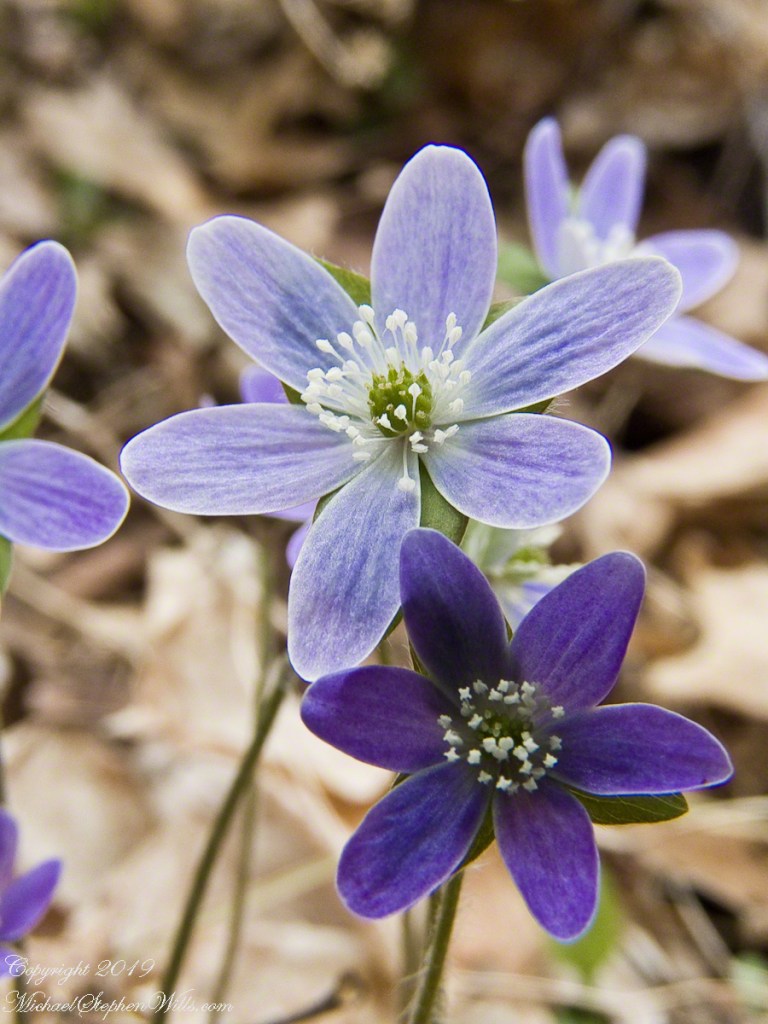
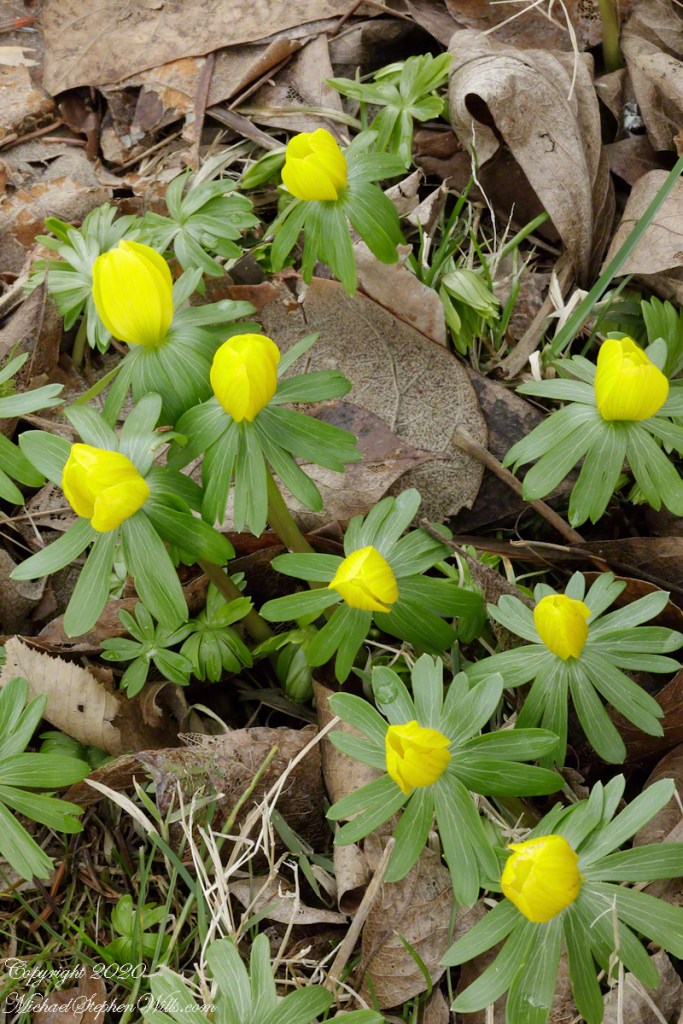
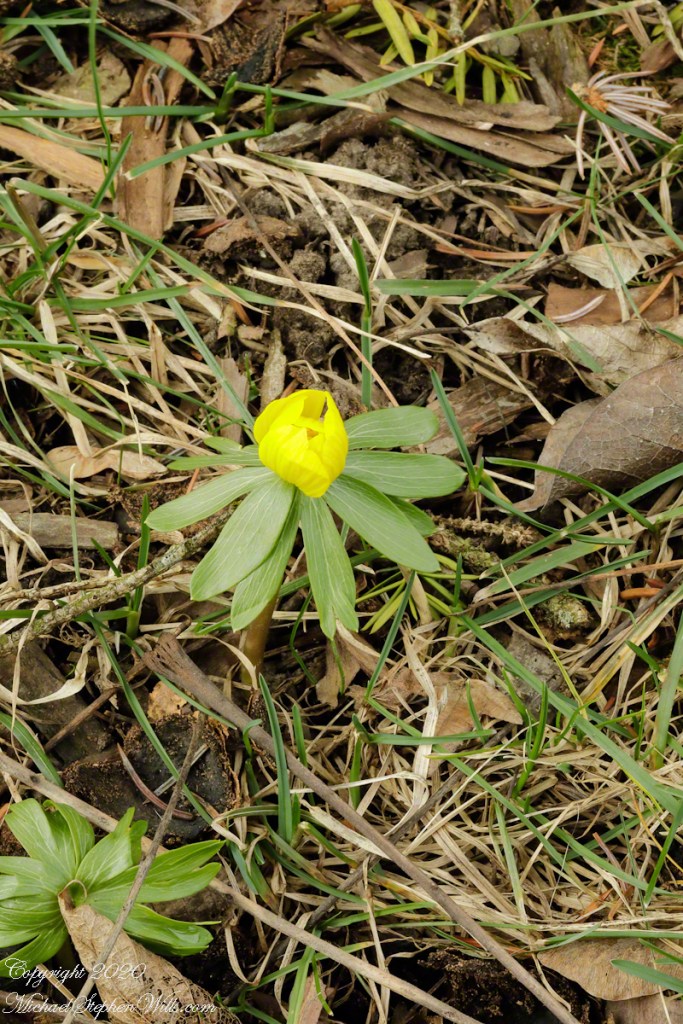
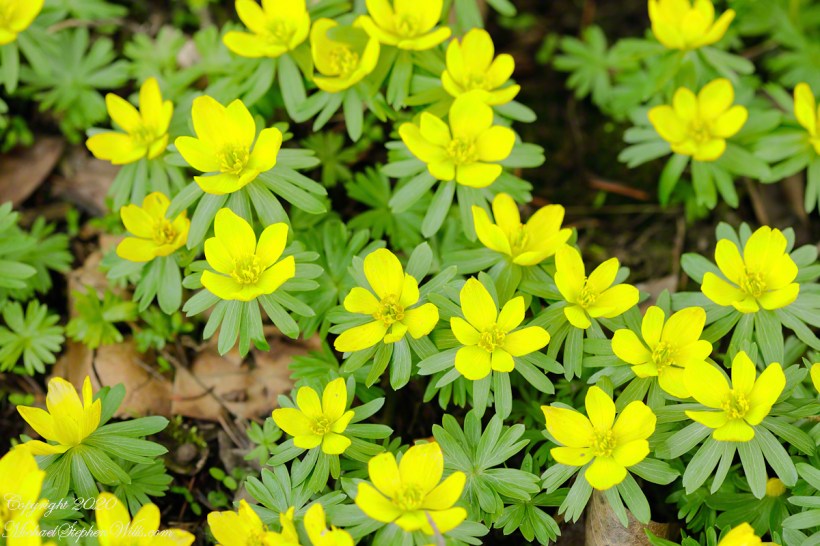
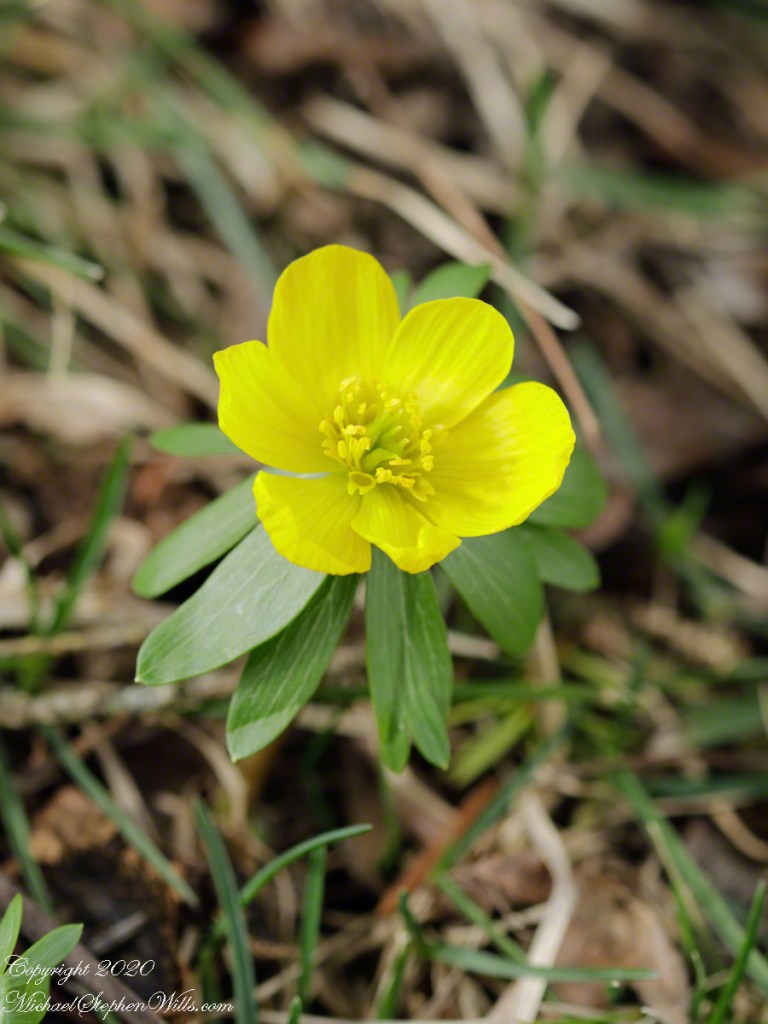
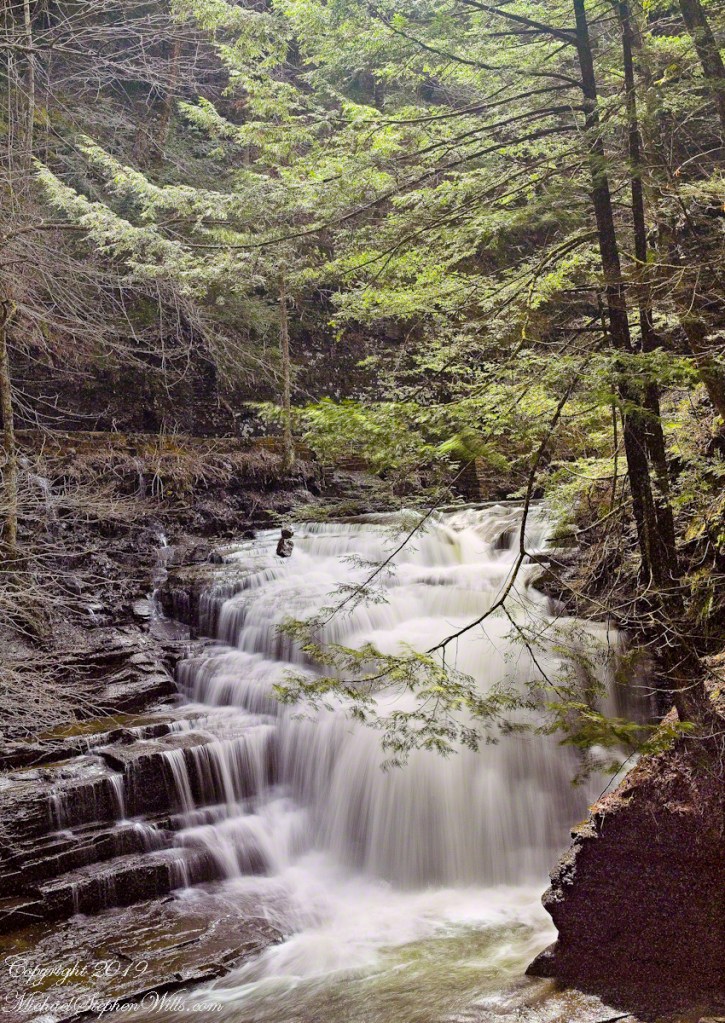
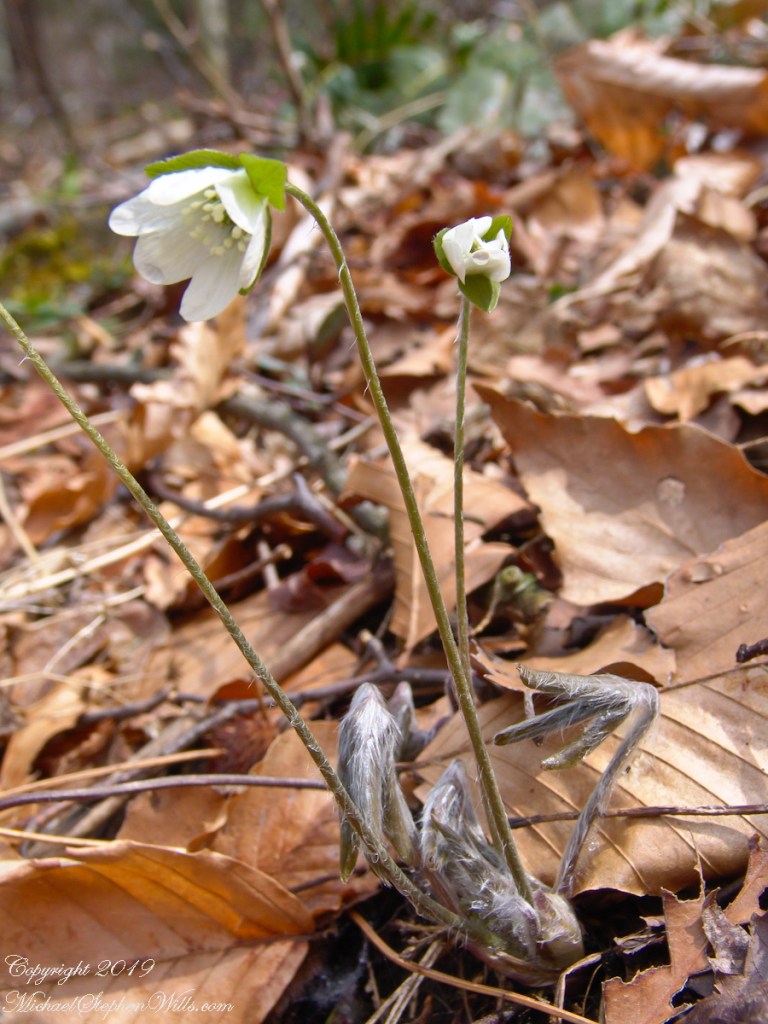
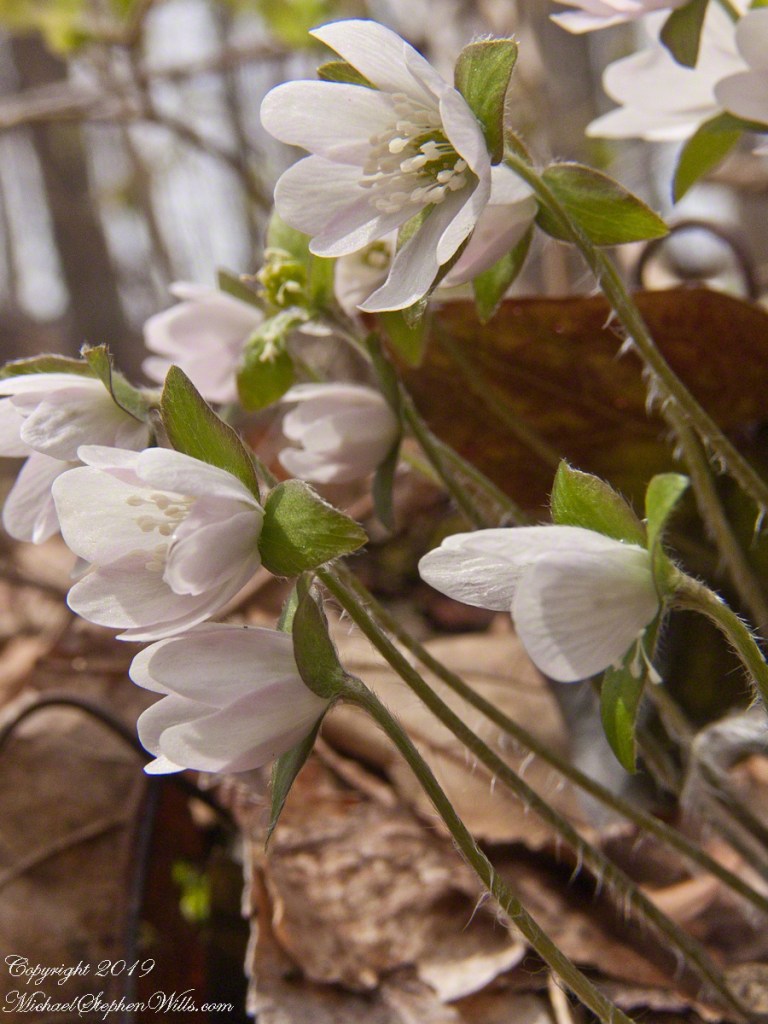
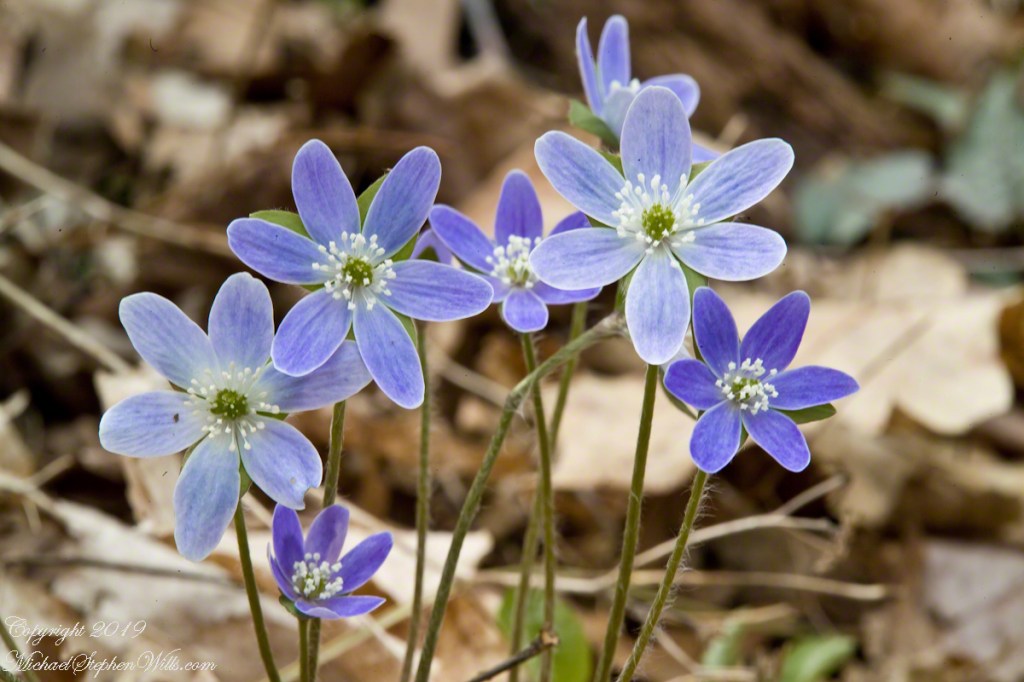
Hepatica, Fillmore Glen

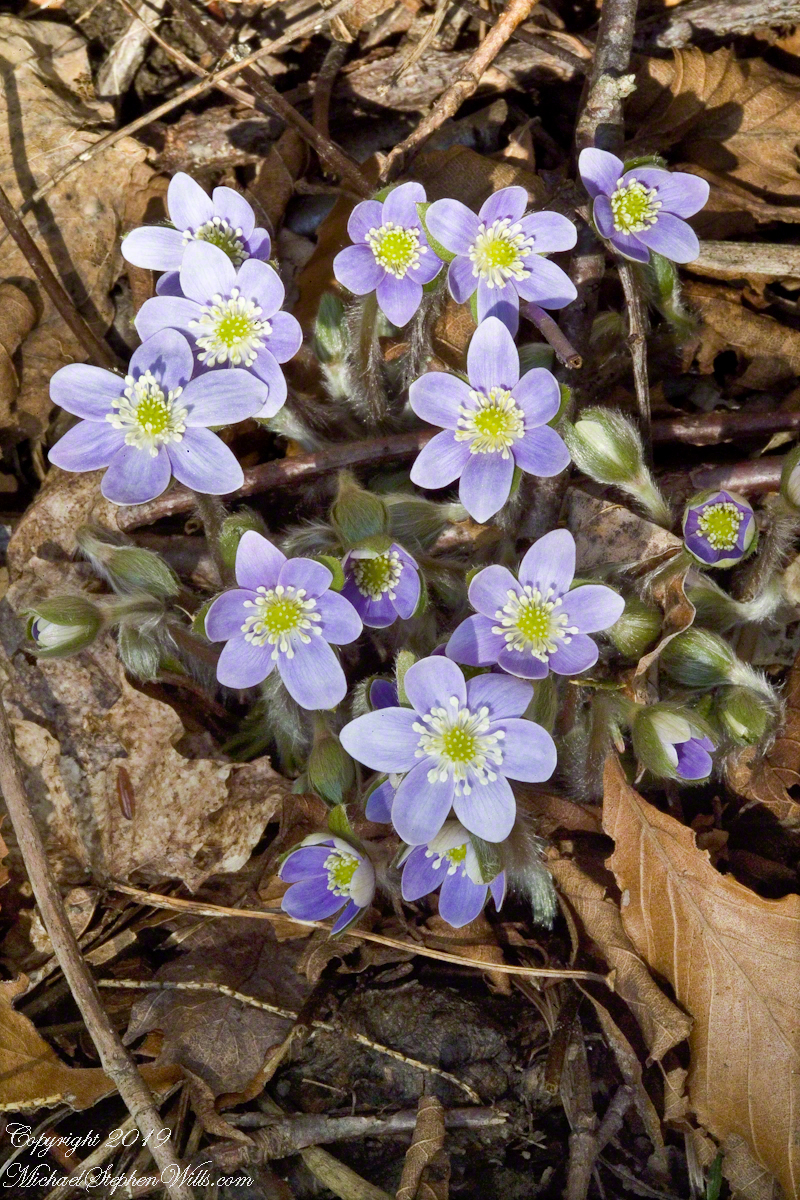
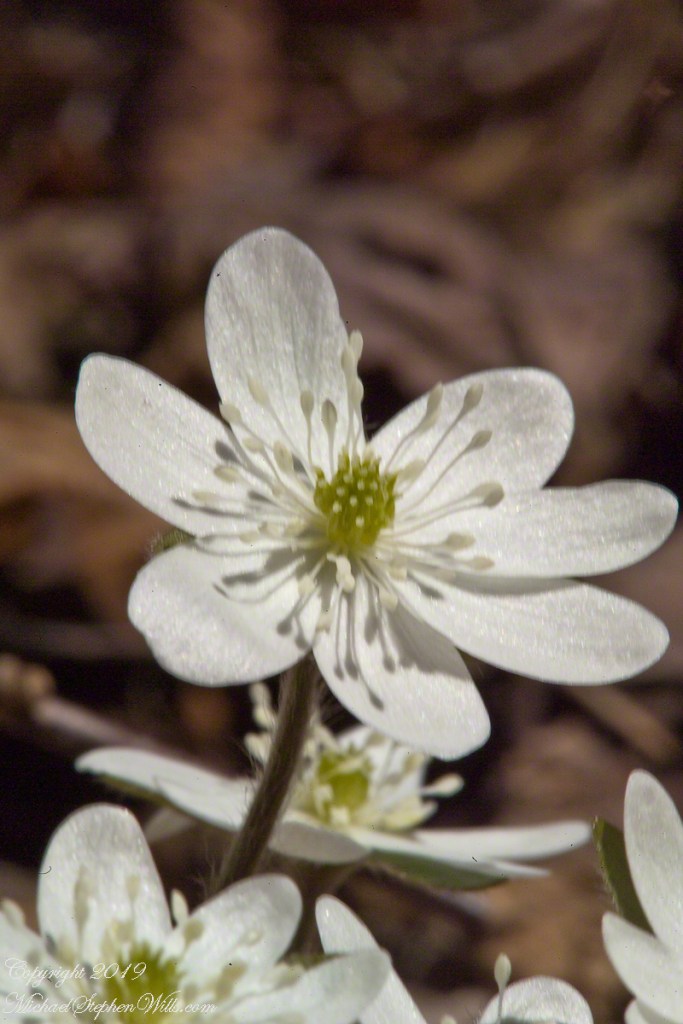
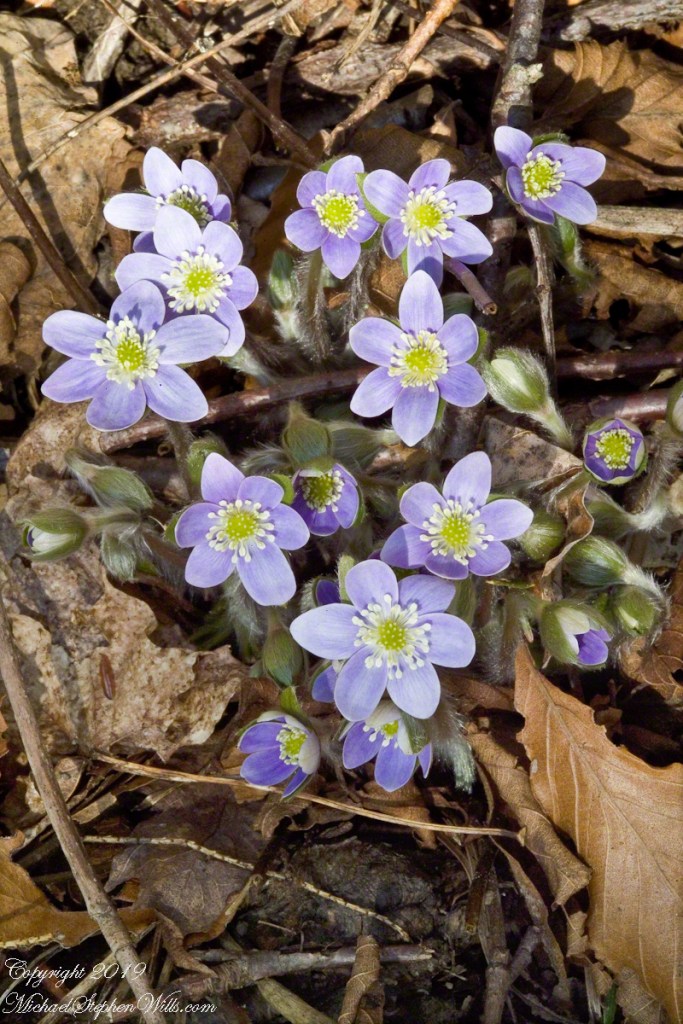
Hepatica from April 2007

Back in 2007 I used a 100 mm Canon Macro lens on a Kodak slr along with a Sony DSC-F828 variable lens for this mix of macro and habitat captures presented as a gallery so you can flip back and forth among the larger images. Click any image to bring up a larger version.

Click for my “Finger Lakes Memories” Fine Art Photography Gallery.

Copyright 2019 All Rights Reserved Michael Stephen Wills

Wildflowers Late Winter / Early Spring 3

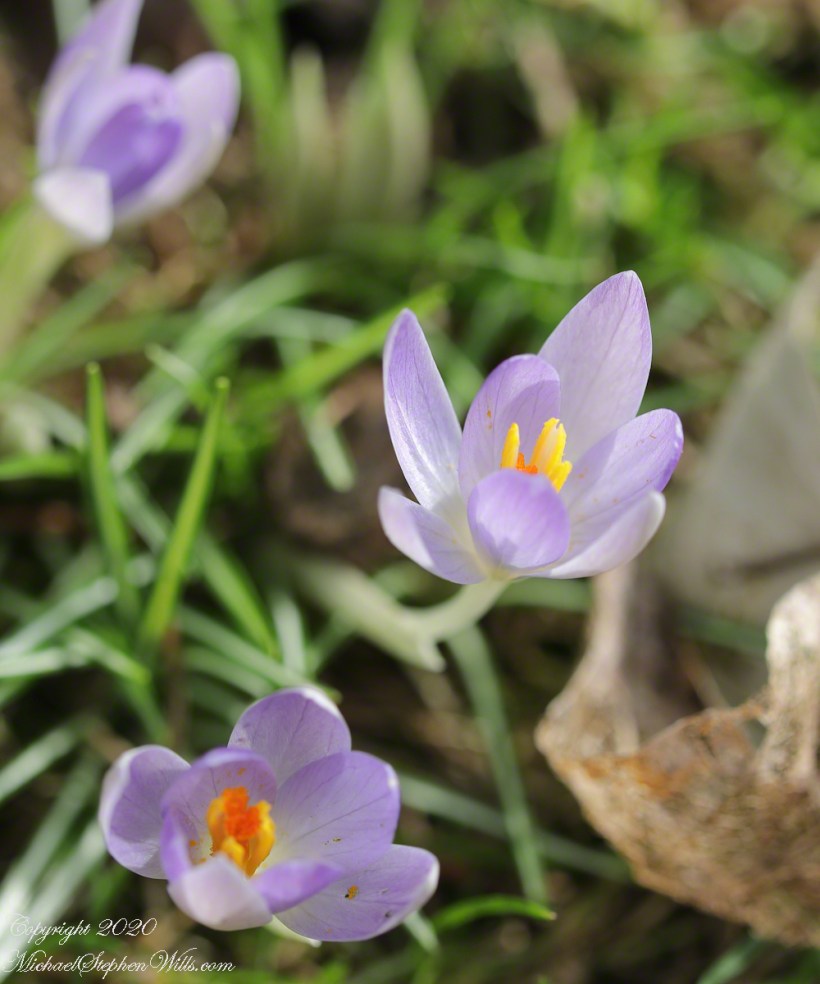
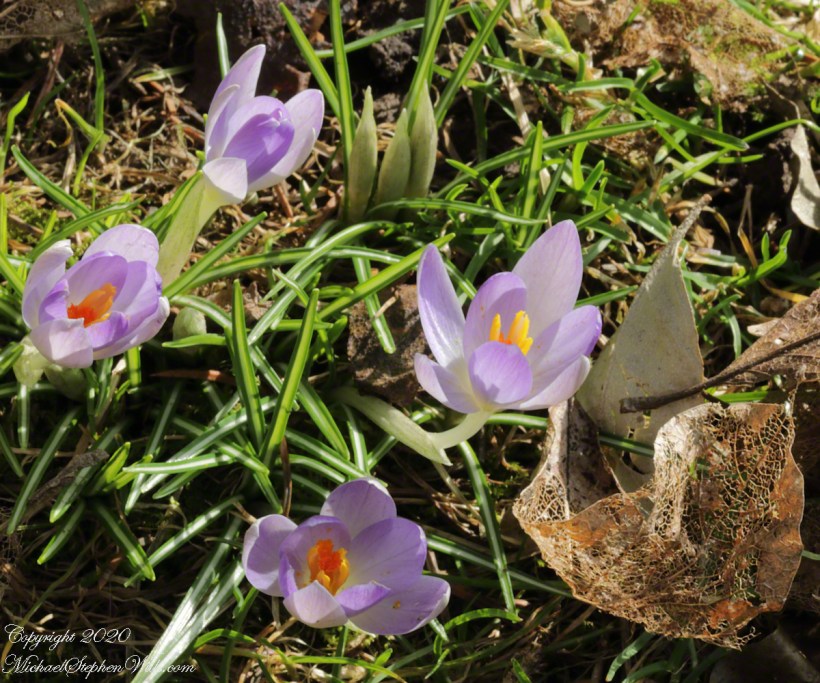
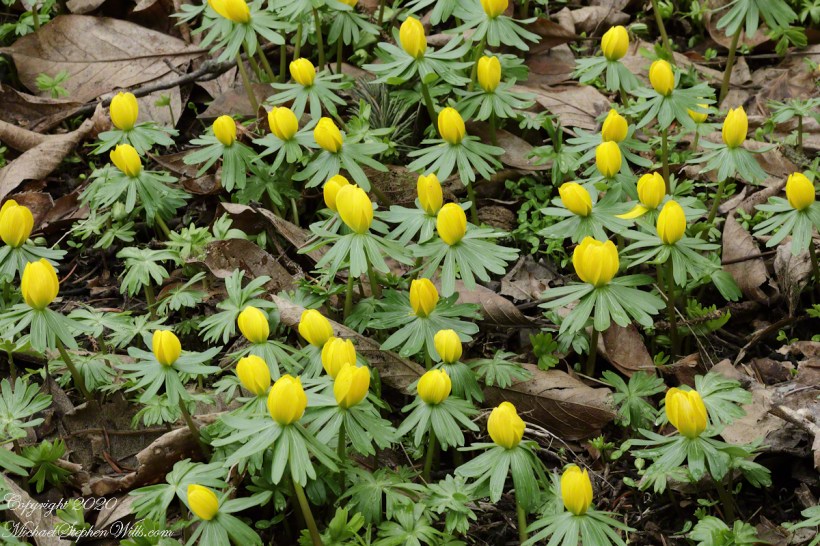
With the thermometer in the 40’s on March 12 these crocus were open, under the same magnolia tree as the buttercups from the 10th. The blooms close during cold snaps much as you see in the first post.

Click photograph for a larger view. To do this from WordPress Reader, you need to first click the title of this post to open a new page.

A tripod held the composition steady and the timer was set to 2 seconds for extra stability. With the leaf body worn away by time, the remaining veining turns the form lacy.

Here is a slideshow today’s and previous wildflowers.

Copyright 2021 All Rights Reserved Michael Stephen Wills

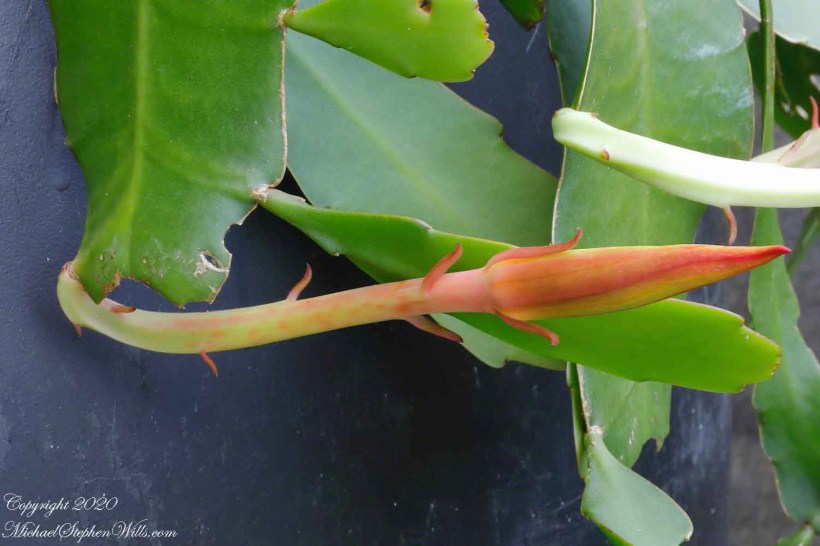
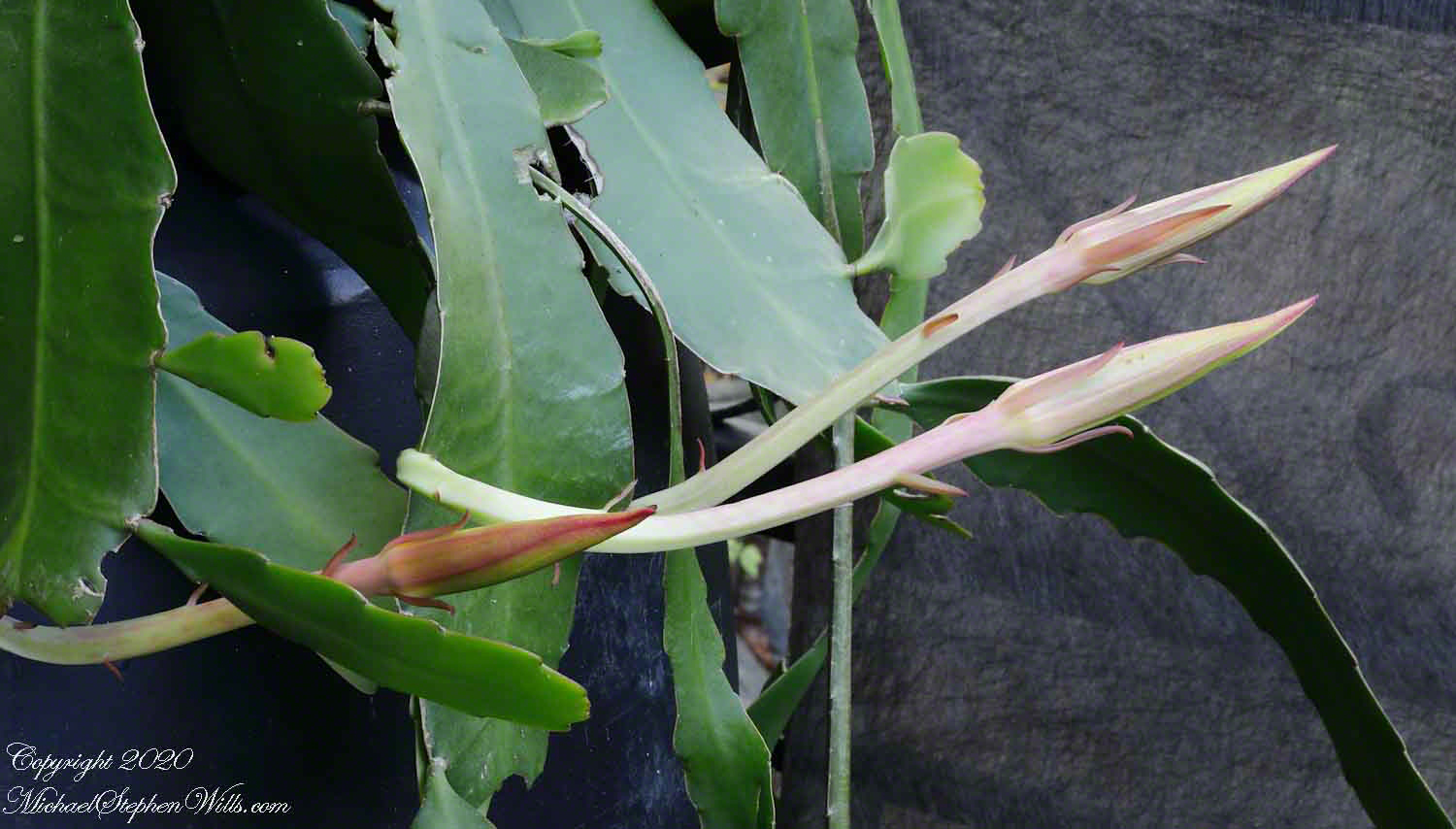
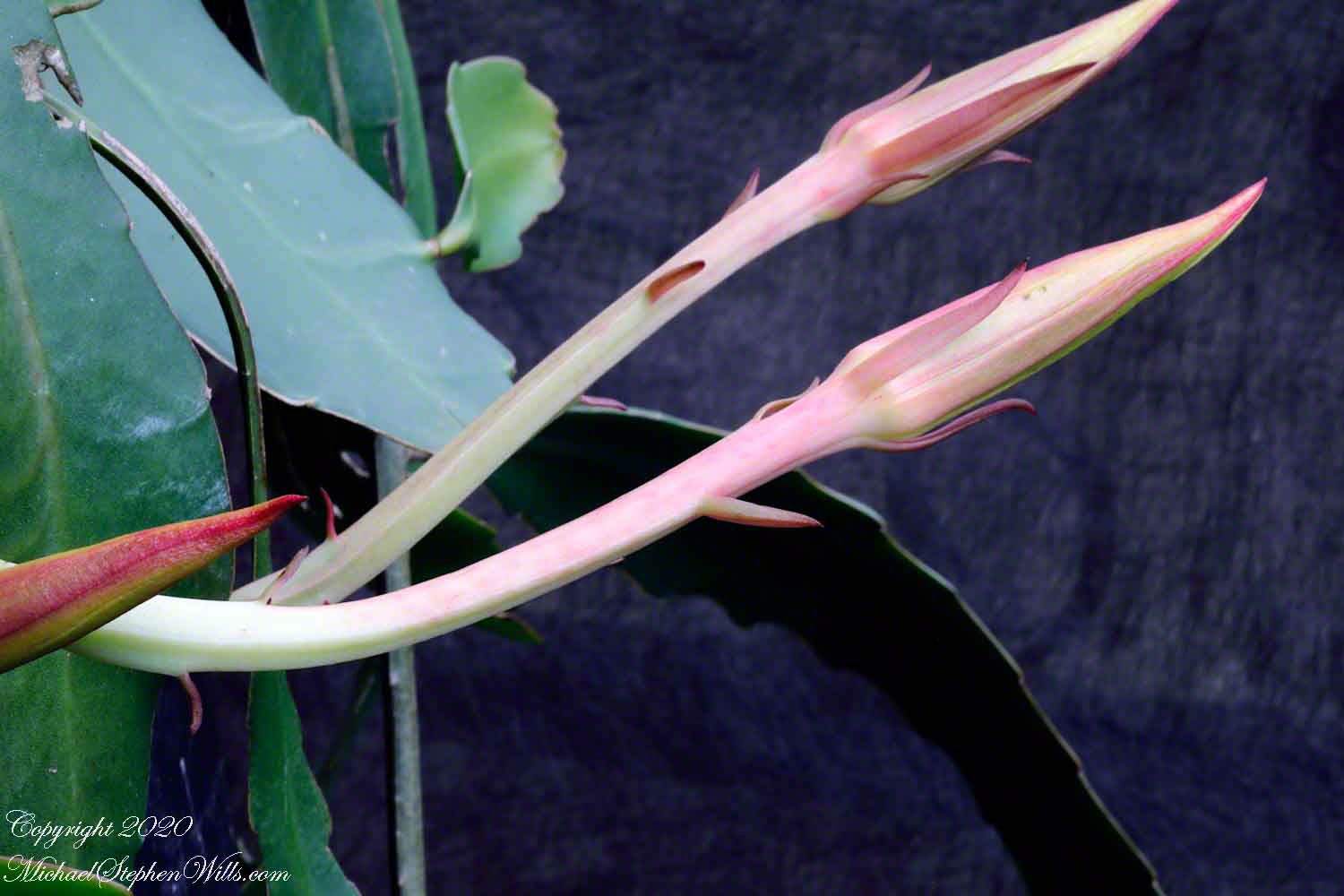
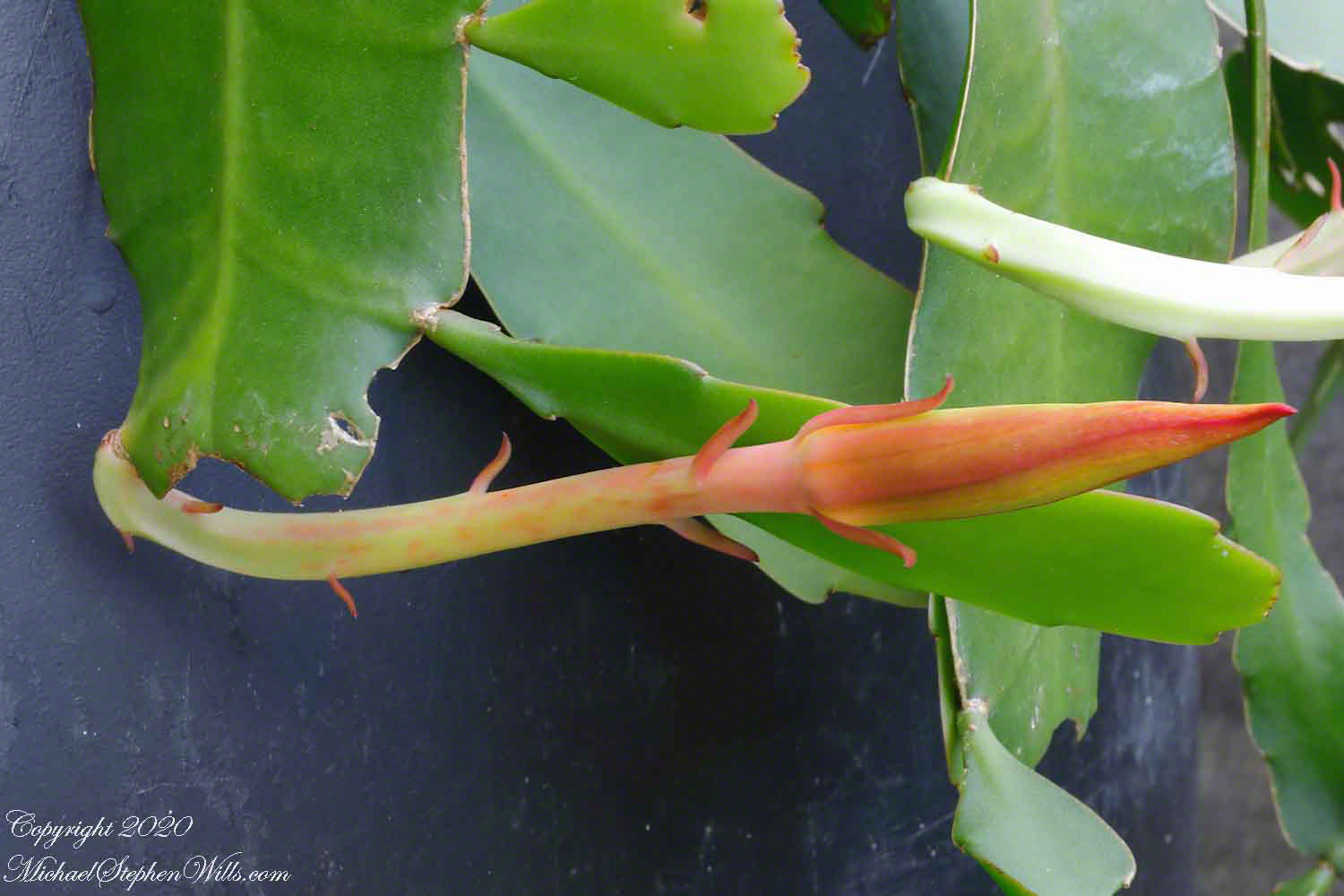
Night Blooming Cereus VII

reaction to cold temperature

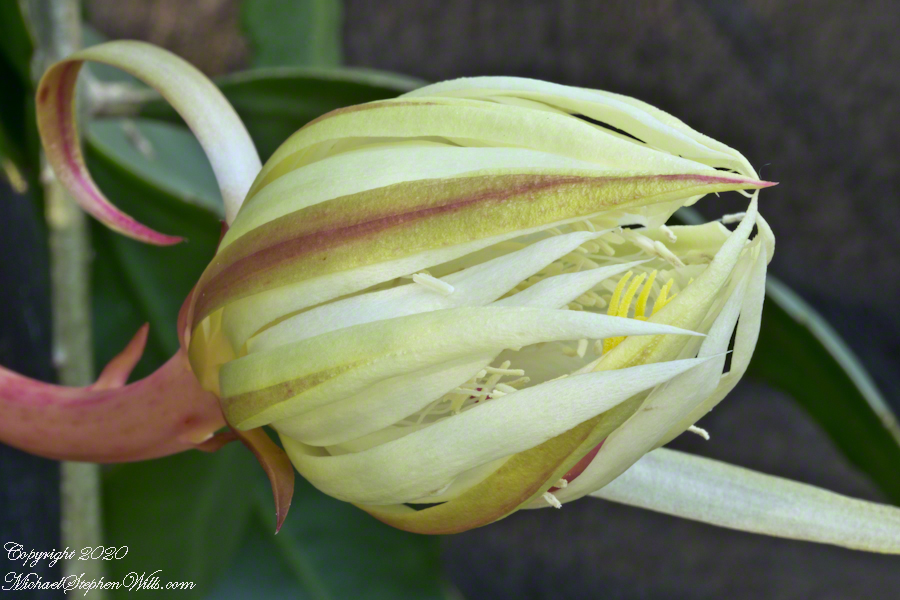
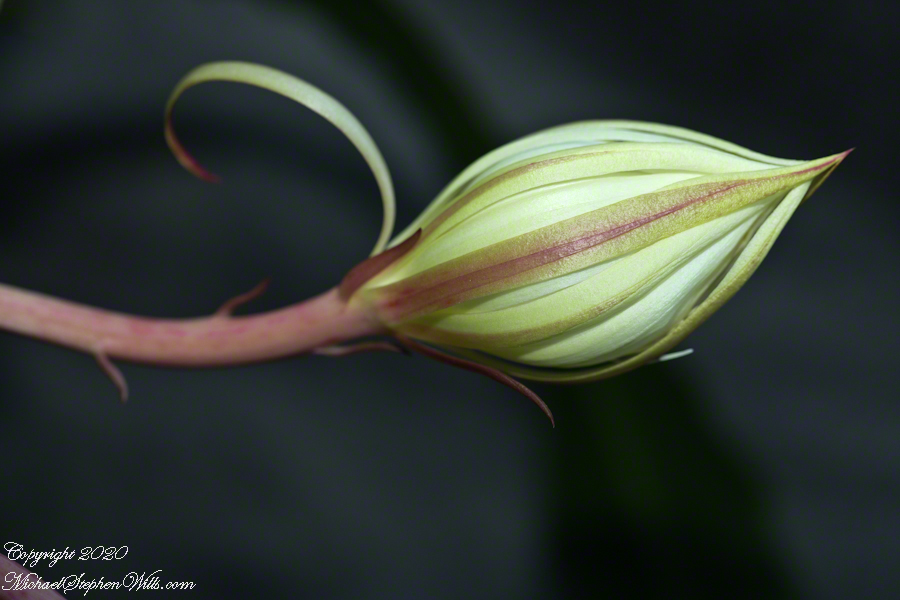
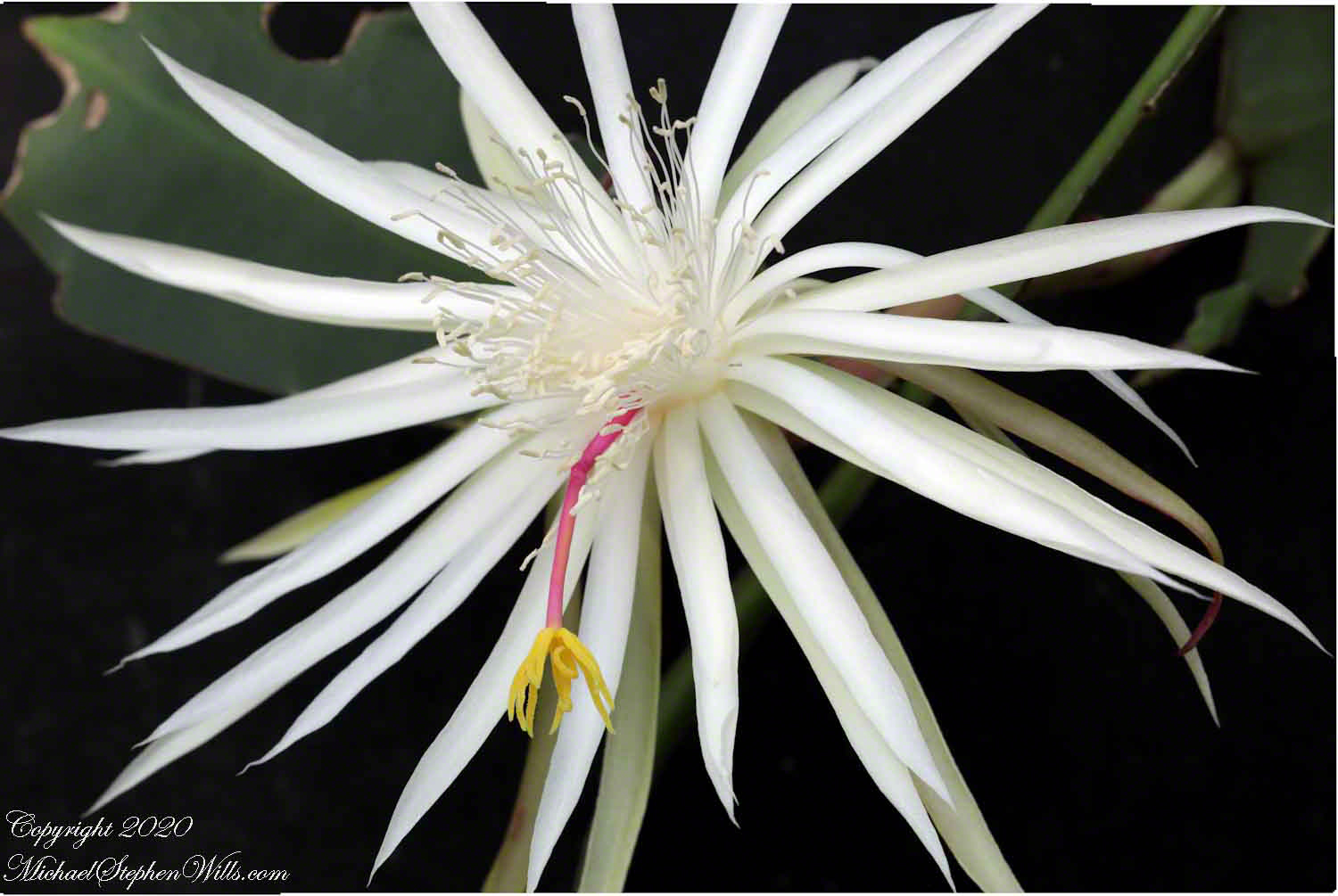
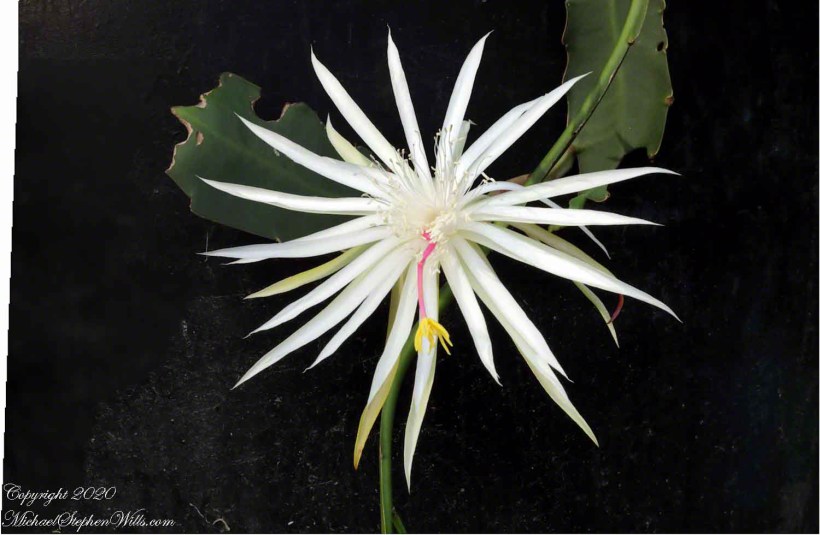
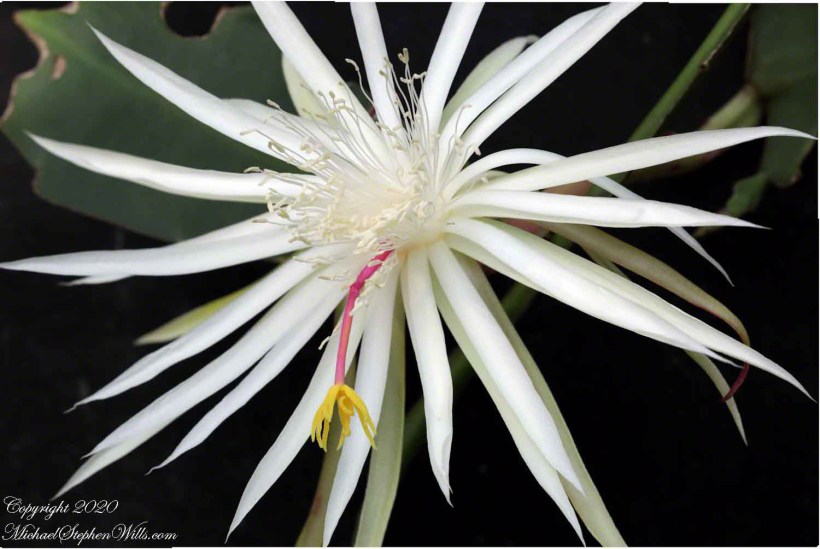
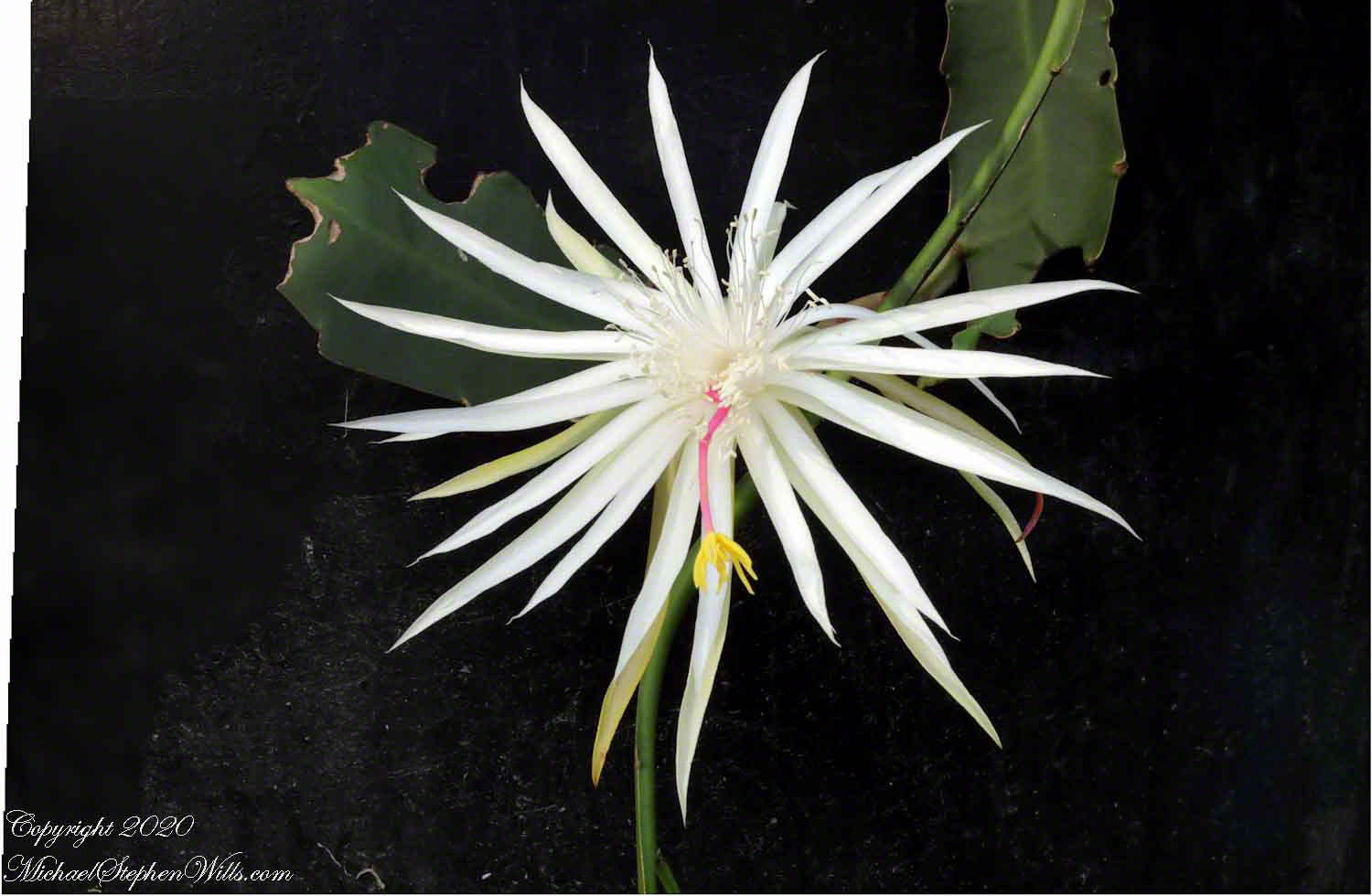
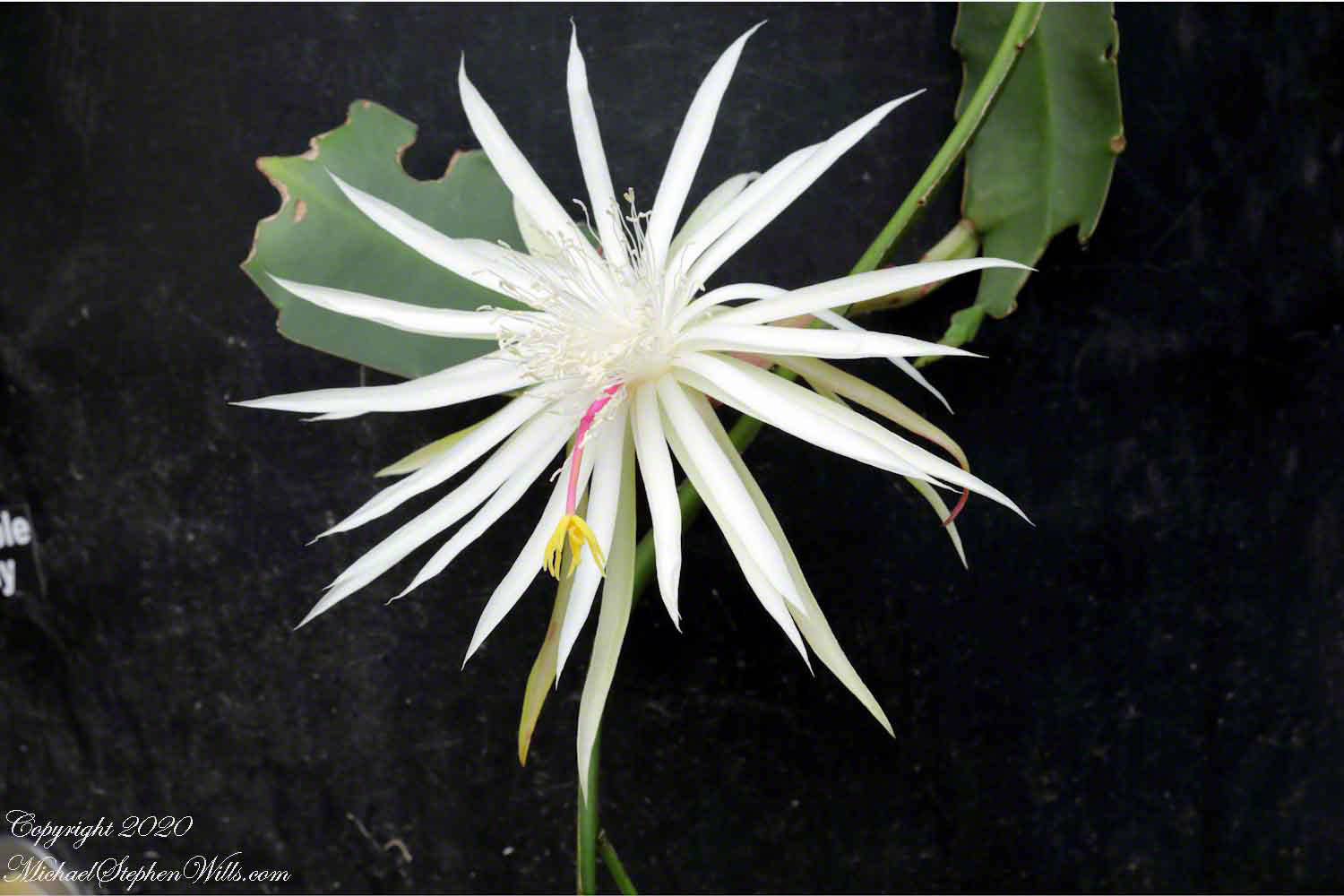
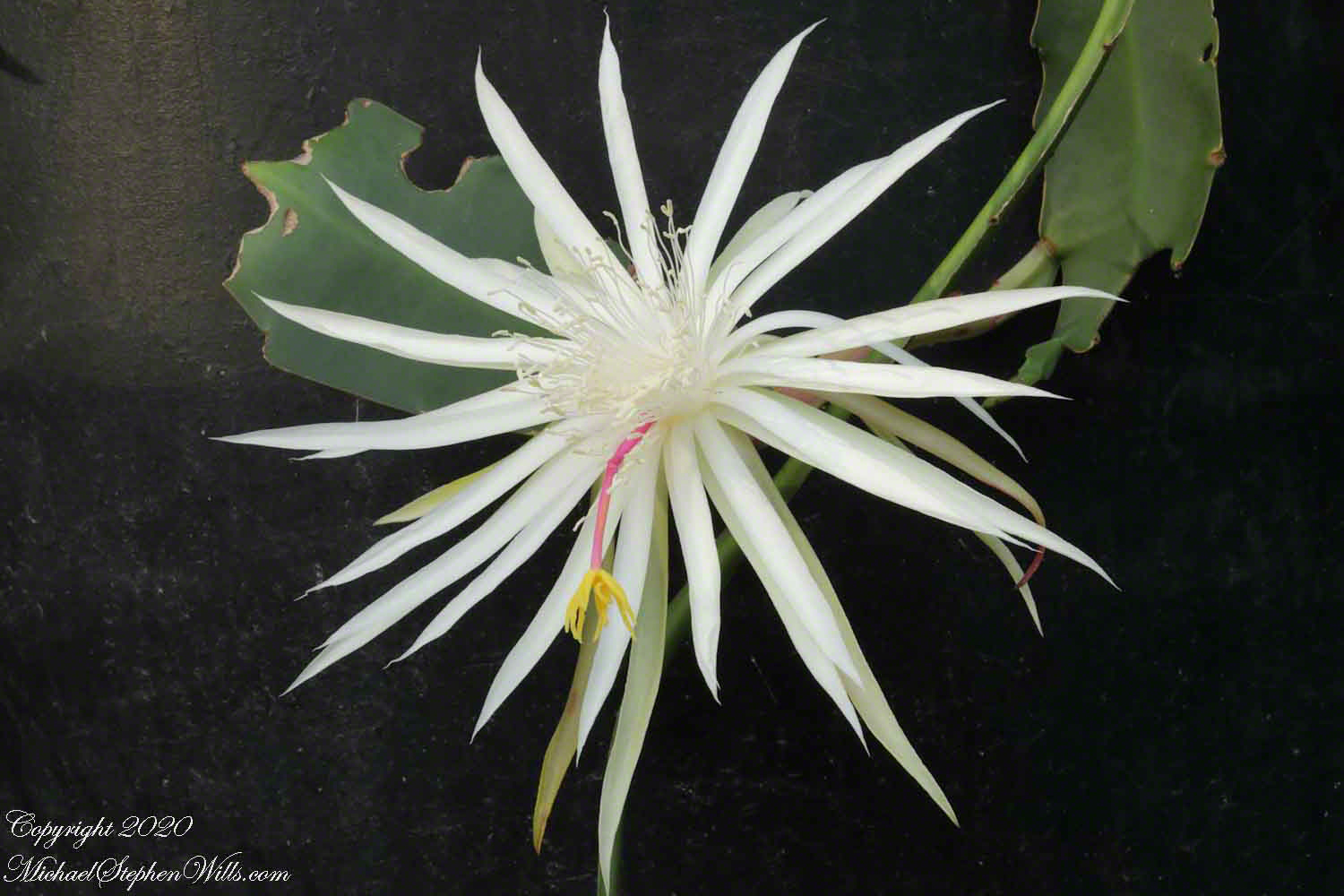
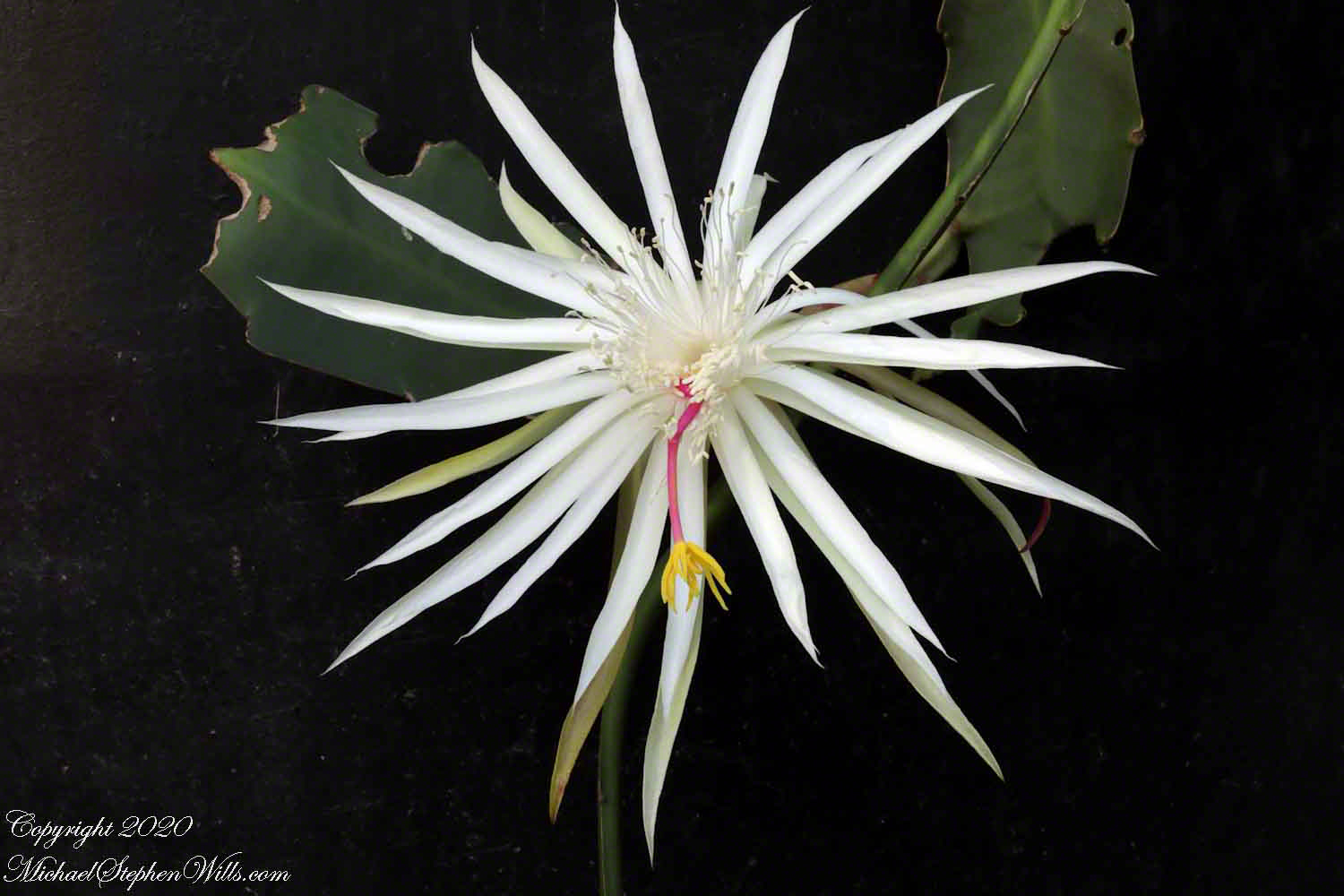
For the final post of this series on Cereus blooms, of the four buds two failed to fully open after the weather turned cold in late September/Early October. Here is the failed bloom from the same opening bud featured in the last Cereus posting.

Click me for another Cereus flower post.

References

Wikipedia, “Epiphyllum, “Epiphyllum oxypetalum,”epiphyte.”

Copyright 2020 Michael Stephen Wills All Rights Reserved
Night Blooming Cereus VI

soon to open

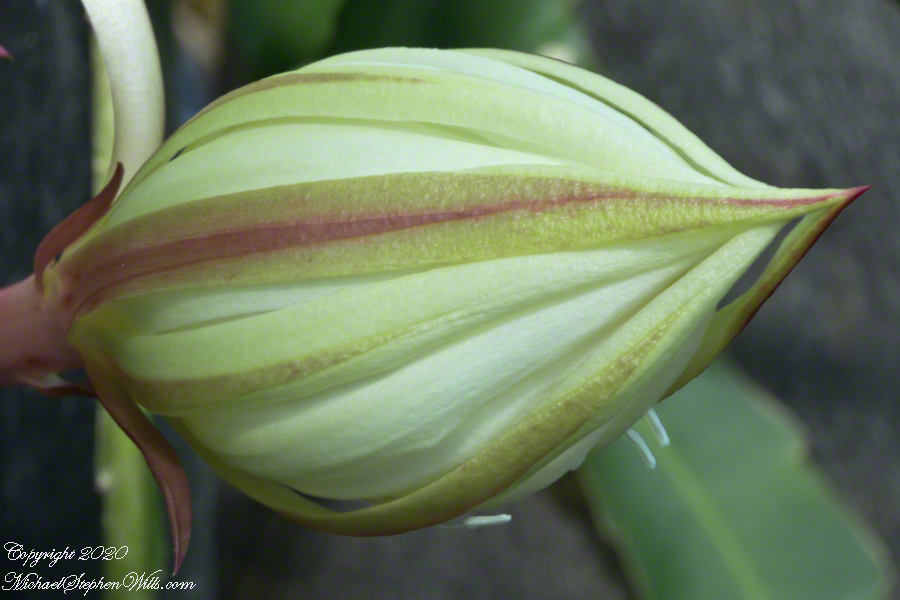
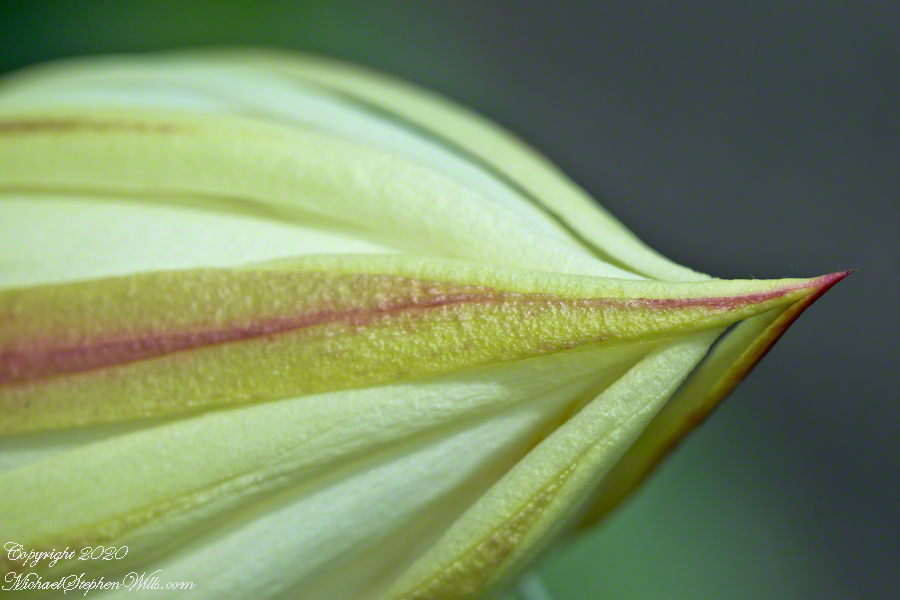
Here is a continuation of the previous Cereus posting, the ultimate macros of a bloom on the edge of opening.

Click me for another Cereus flower post.

References

Wikipedia, “Epiphyllum, “Epiphyllum oxypetalum,”epiphyte.”

Copyright 2020 Michael Stephen Wills All Rights Reserved
Night Blooming Cereus V

evening preparation

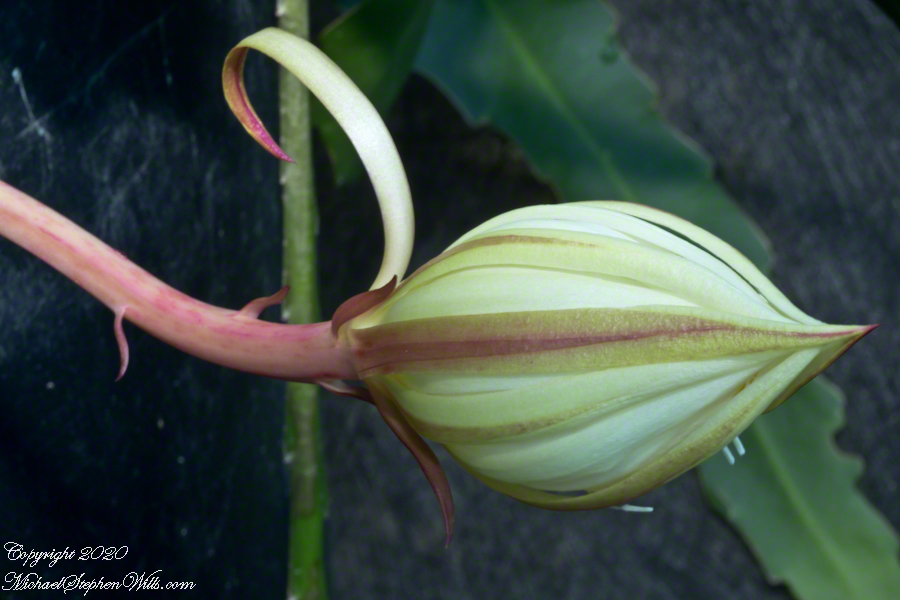
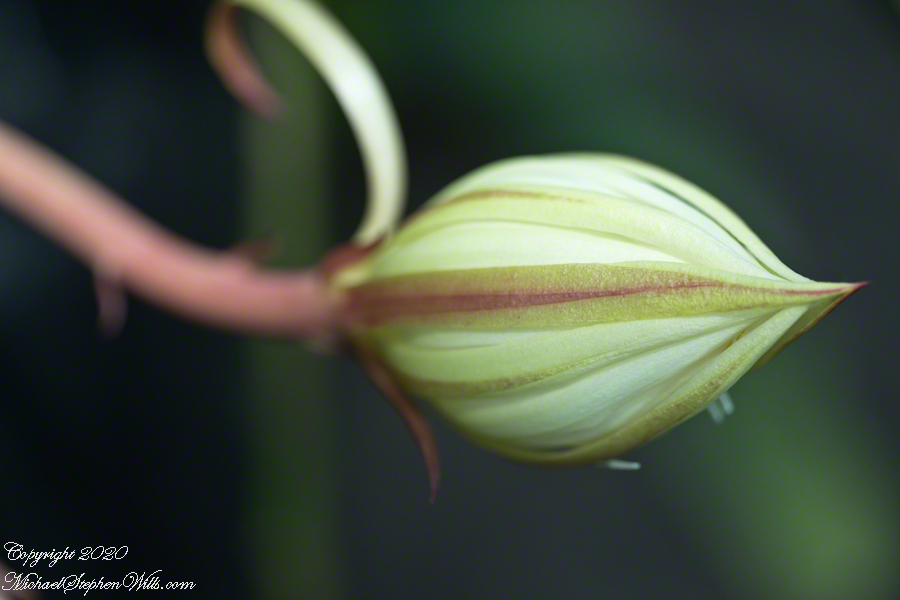
Almost bursting open, the third of four flower buds of our Night Blooming Cereus caught one October evening just before opening. The black background is repurposed anit-weed ground cover material.

Here is a series of flash photographs at varying apertures and angles. The white rods are emerging anthers, the pollen-containing tips of long stamens seen in my previous postings of the open flowers.

Click me for another Cereus flower post.

References

Wikipedia, “Epiphyllum, “Epiphyllum oxypetalum,”epiphyte.”

Copyright 2020 Michael Stephen Wills All Rights Reserved
Night Blooming Cereus III

Source of popular name?

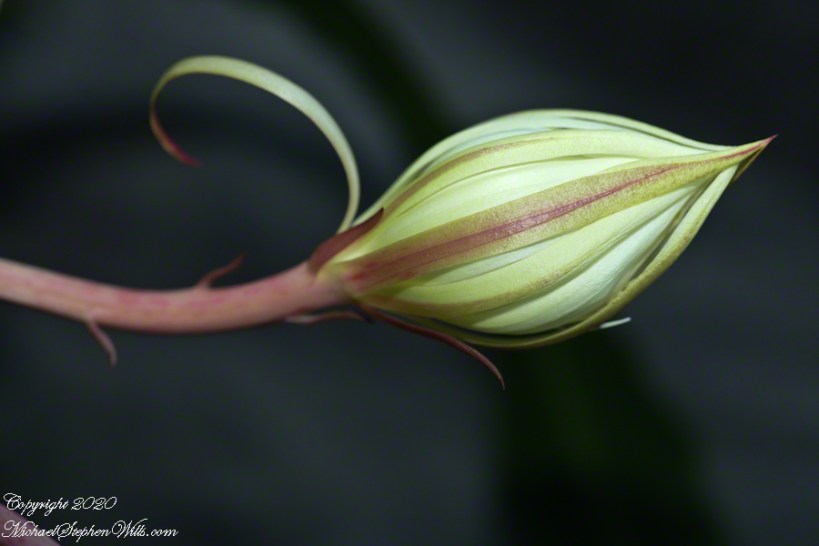
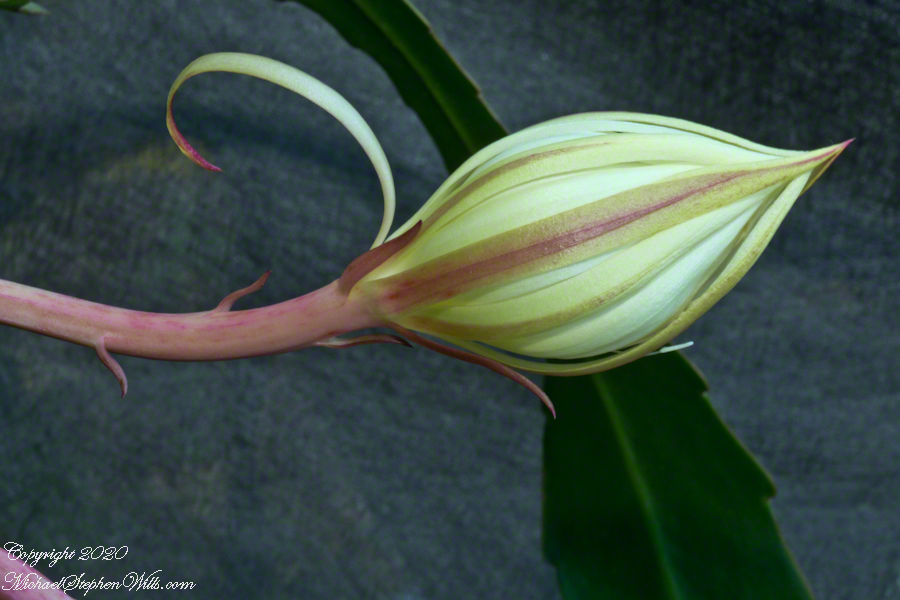
In an earlier posts the popular name of this plant, “Night Blooming Cereus” was introduced as incorrect, still there must be some truth in the name, I believe it is found in the developing flower stalk and bud.

“Cereus” is from the Greek word for candle. Don’t these developing flower stalks, resemble a candle and the bud a flame?

Click image for a larger version.

Here’s the flower from an earlier bloom this season.

Click me for another flower post, “Another Woody Peony.”

References

Wikipedia, “Epiphyllum, “Epiphyllum oxypetalum,”epiphyte.”

Copyright 2020 Michael Stephen Wills All Rights Reserved
Night Blooming Cereus II

What is this plant?

Epiphyllum oxypetalum, the scientific name for this plant identifies the name “Night Blooming Cereus” as incorrect. The plant is of the genus Epiphyllum, identifying it as an epiphytic organism that grows on the surface of a plant and derives its moisture and nutrients from the air, rain, water (in marine environments) or from debris accumulating around it.  

Nor is it in the tribe Cereeae, derived from the Greek and Latin word for “wax”, “torch” or candle. Plants of the Cereeae tribe, including those in the genus Cereus, are cactus with a columnar structure, are are terrestrial, not epiphytic, plants.

Epiphyllum oxypetalum, also know as Dutchman’s pipe cactus, princess of the night, queen of the night, is a species of cactus and one of the most cultivated species in its genus. E. oxypetalum rarely blooms and only at night, and its flowers are reported to wilt before dawn.

The species name oxypetalum is derived from the word, “oxy” meaning sharp, pointed, acute for the characteristic petal shape.

For the bloom photographed here, I can report it was in this condition 7 am, after sunrise, and did not wilt until after noon.

Click me for the next post of this series.

References

Wikipedia, “Epiphyllum, “Epiphyllum oxypetalum,”epiphyte.”

Copyright 2020 Michael Stephen Wills All Rights Reserved
Night Blooming Cereus I

Photomerge vs. high f-stop

It is possible to puzzled over my choice of an ungainly potted plant acquired over two years ago from the Eddydale farm stand. We popped in for tomatoes, sweet corn and watermelons after a hike along nearby Treman Park, I spotted the plant on display in the front. The cashier suggested we visit the greenhouse to view the parent, currently in bloom. Memory of the blossoms were short lived as we lived with this collection of malformed green lobes sprouting long stalks.

The plant occupied a pool-side water barrel summers, a bedroom corner winters. This year, 2020, flower buds formed late July, one on a lengthening stalk. “Dutchman’s pipe cactus” is a popular name, from the appearance of the flower on the end of a stalk turned up with a terminal curve.

Keeping a watch eye on progress, I noted a swelling on Wednesday, September 23rd morning, more pronounced by evening. First thing Thursday morning the flower was in full glory. I used a Canon EOS 5D Mark IV with the Canon EF 70 – 300 mm lens. The variable focal length lens can be used for macros, offering more flexibility compared to the 100 mm macro lens.

For the first three photographs of this series I used the Photoshop feature Photomerge, combining 12 or so image files. For each file the camera was mounted on a Manfrotto BeFree carbon fiber tripod with a ball head. Focus was on manual and, using the screen of the Canon 5D I gradually changed the focus, crisp focus moving between planes. In theory, the Photomerge chooses the best focus for each image producing a perfect result.

As the session progressed the scene brightened and for these last two photographs I used aperture priority at the highest value (36) and autofocus.

Here is a comparison of a merged and high aperture photograph.

Click me for another flower post, “Another Woody Peony.”

Copyright 2020 Michael Stephen Wills All Rights Reserved
Weedy Orchid IV

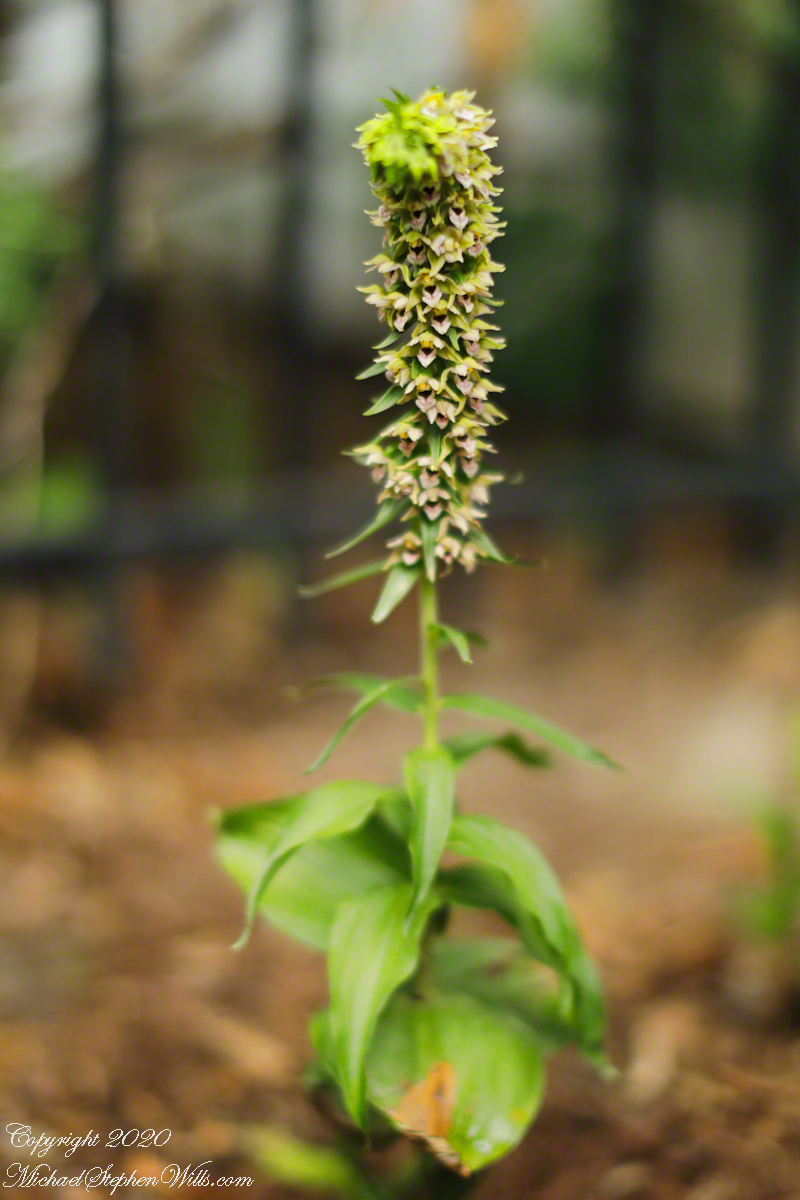
Broad-leaved Helleborine (Epipactis helleborine), a wild orchid, is a wide ranging, invasive, plant now found across North America. I suspect this success is based on a partnership with fungi. Commonly known as the “Weedy Orchid” it is not especially particular on the fungus partner, accepting a wide, curiously undefined for lack of research, variety.

In this the fourth of a five part series, the 50 mm lens f-stop is tamped down a bit, narrowing the diaphragm to f2.2, yielding the column of orchid faces in sharp focus. The nodding top, bent into the frame, unfocused, stem and leaves soft focus, still lots of detail discernible. Background far less distracting.

Click photograph for a larger view and use Ctrl-x to zoom in closer.

Today’s header image is from yesterday’s post, by way of comparison.

Click me for the first post of this series.

.to be continued.

Copyright 2020 Michael Stephen Wills All Rights Reserved
Hammond Hill Walk V

Facing the sun

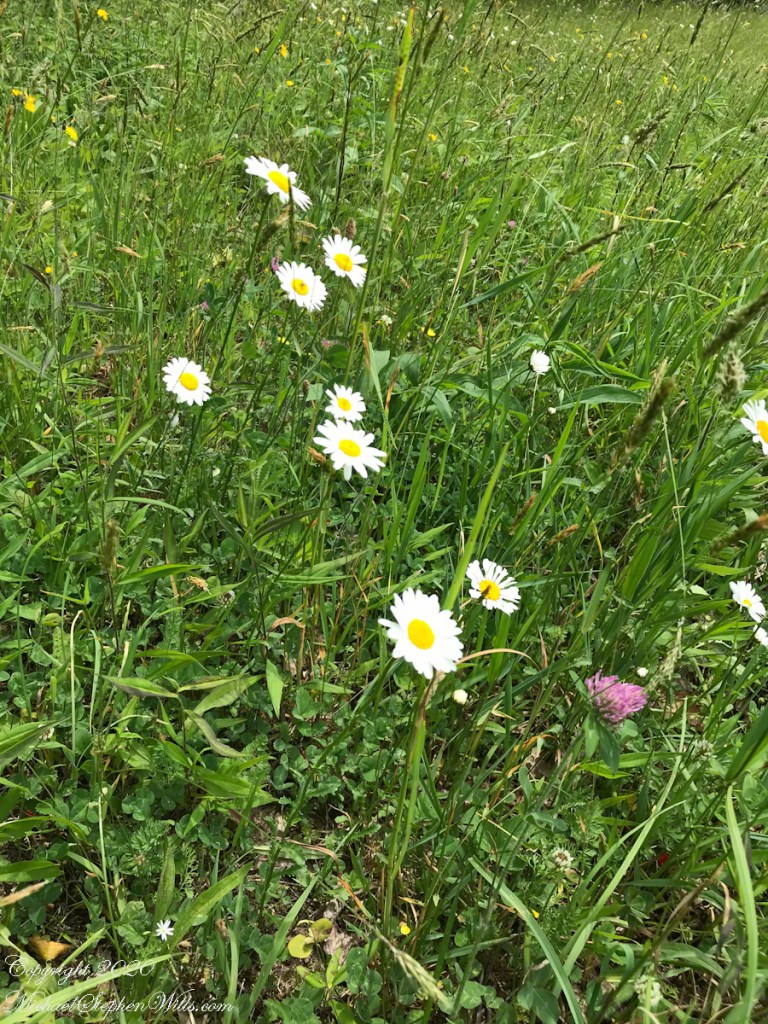
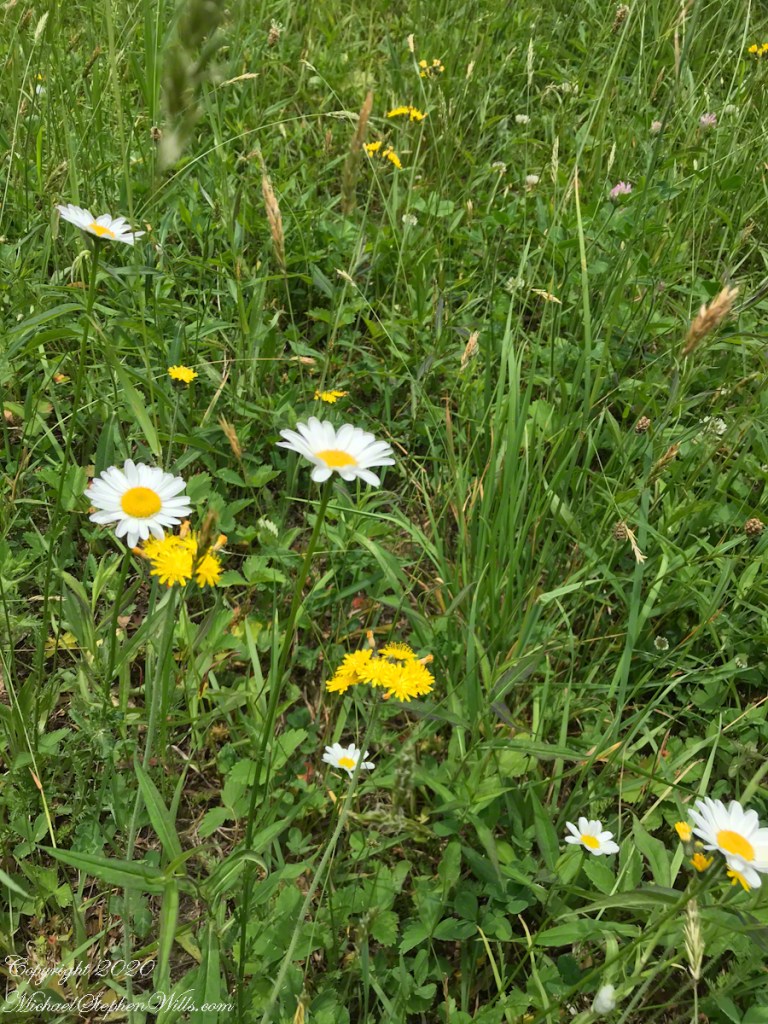
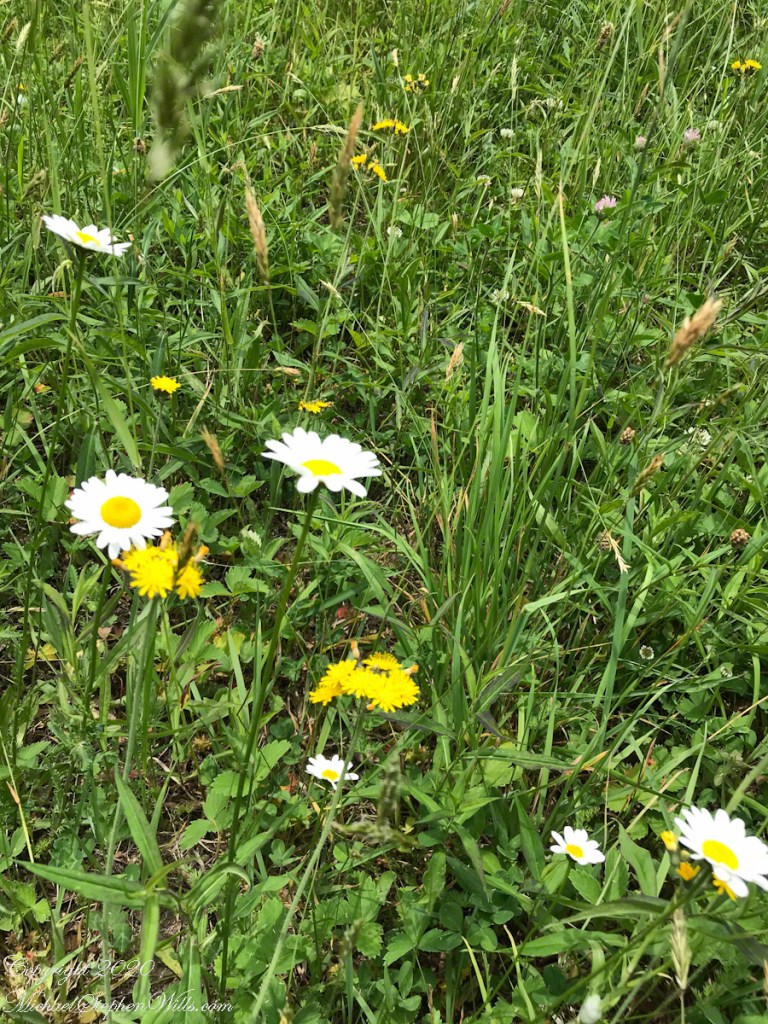
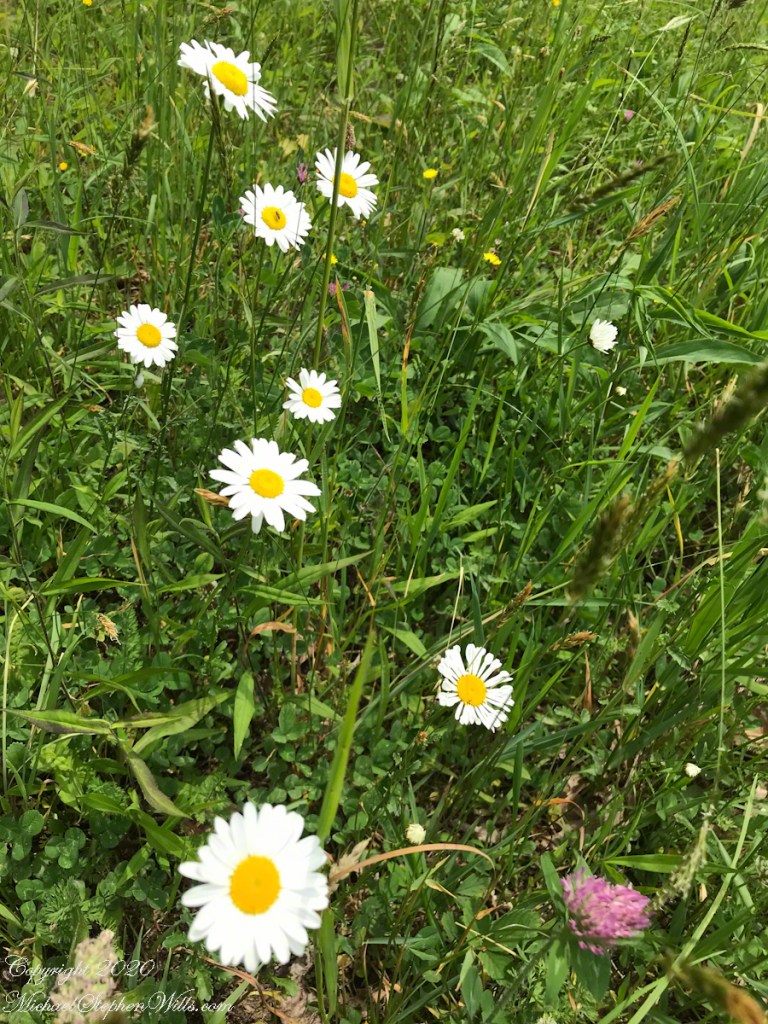
I close this walk at the turnaround point, the high meadow, with a fireworks display of daisies.

Click any photograph for a larger view. To do this from WordPress Reader, you need to first click the title of this post to open a new page.

Copyright 2020 All Rights Reserved Michael Stephen Wills