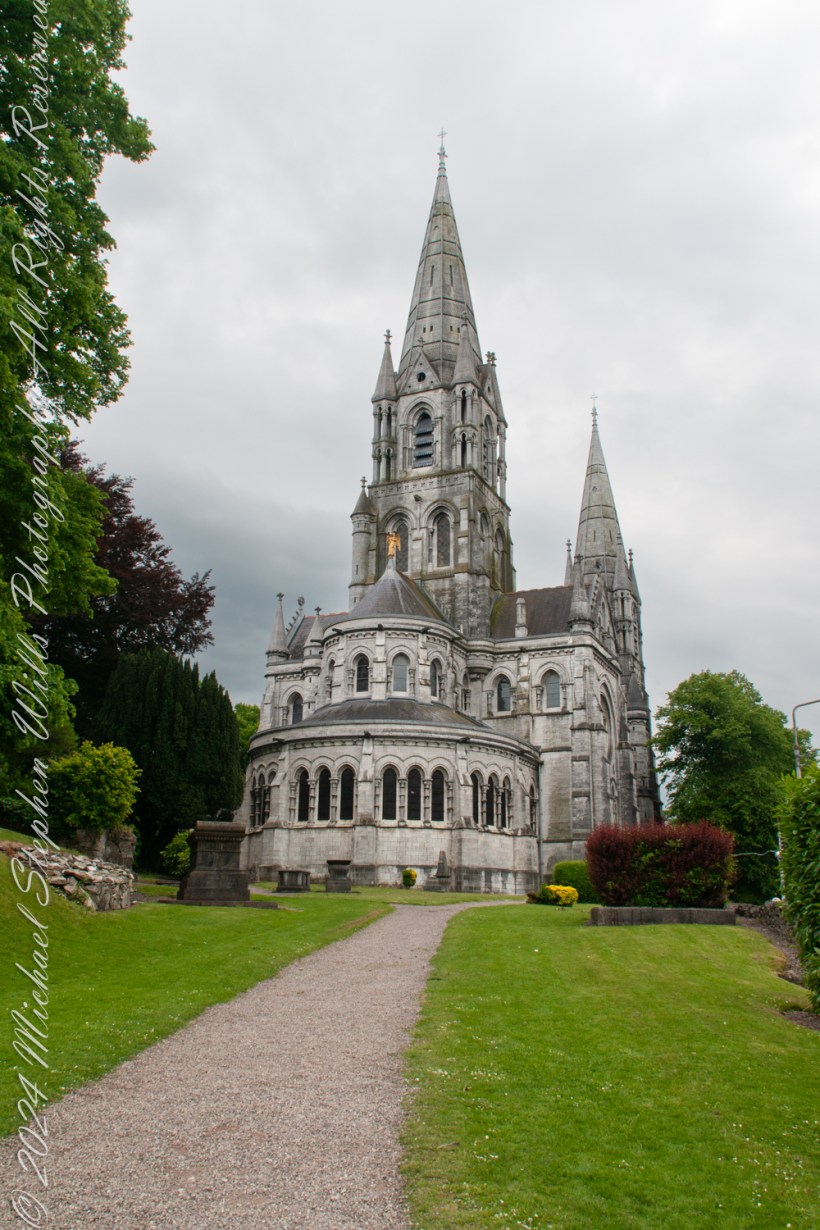
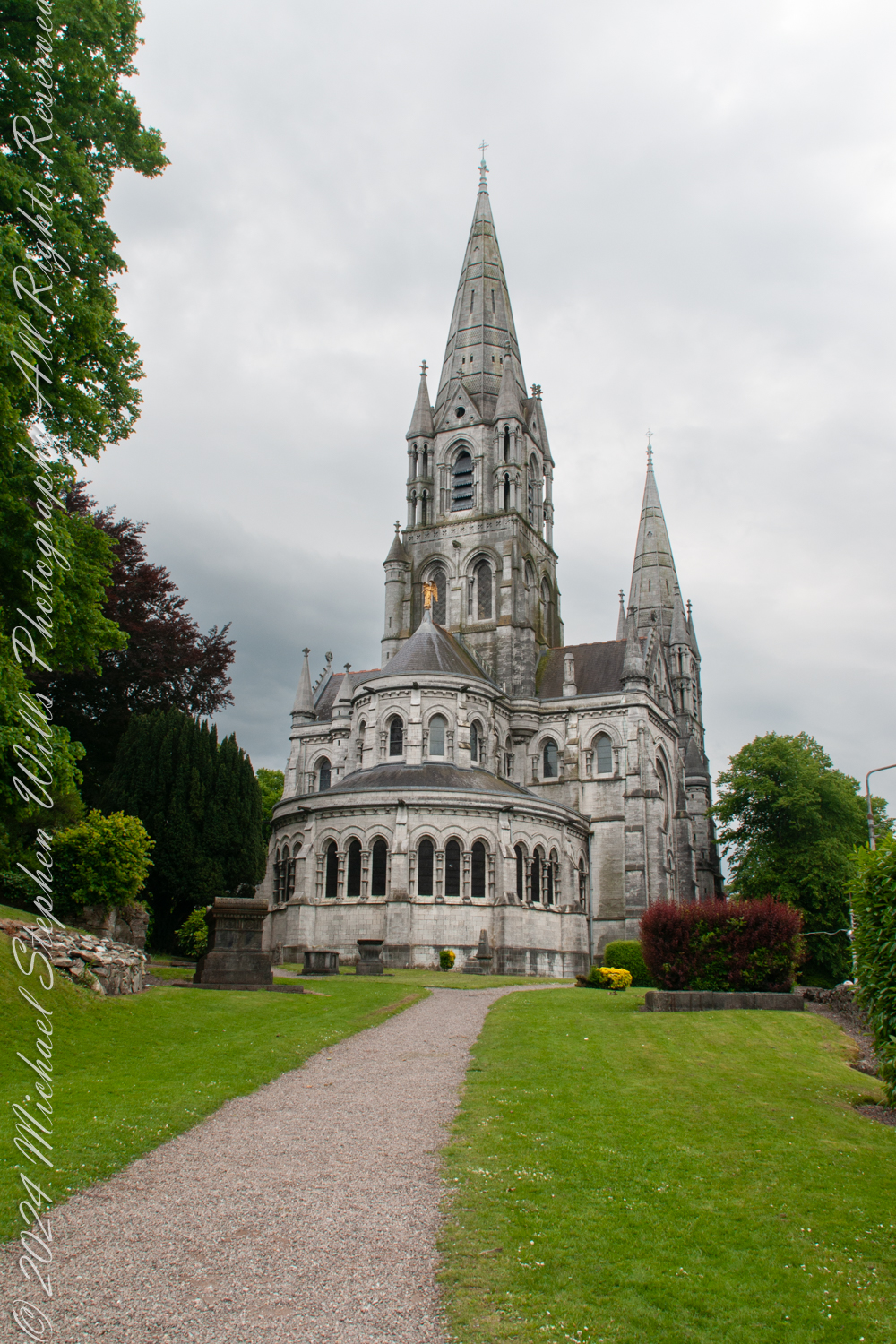
The towering Western Portico of Saint Fin Barre’s Cathedral leads into the sacred space of the church while serving as a canvas for a profound narrative of divine judgment and grace. Standing before it, I am drawn into its intricate details, particularly the central set of doors flanked by the ten virgins—five wise and five foolish—embodied in stunning columnar statues. Their story is drawn from the Gospel of Matthew (25:1–13), a parable of spiritual preparedness that echoes throughout the cathedral’s architecture.
The parable tells of ten virgins who go out to meet the bridegroom, each carrying a lamp. The wise virgins take oil with their lamps, while the foolish take none. When the bridegroom is delayed, all ten fall asleep. At midnight, the cry rings out, “Here is the bridegroom! Come out to meet him!” The virgins awaken and trim their lamps. The foolish ones, realizing their lamps are going out, plead with the wise to share their oil, but the wise refuse, saying, “There may not be enough for both us and you. Instead, go to those who sell oil and buy some for yourselves.” While the foolish virgins are away buying oil, the bridegroom arrives, and the wise virgins go with him into the wedding banquet. The door is shut. Later, the foolish virgins return, crying, “Lord, Lord, open the door for us!” But he replies, “Truly I tell you, I do not know you.” The parable concludes with the warning: “Therefore, keep watch, because you do not know the day or the hour.”
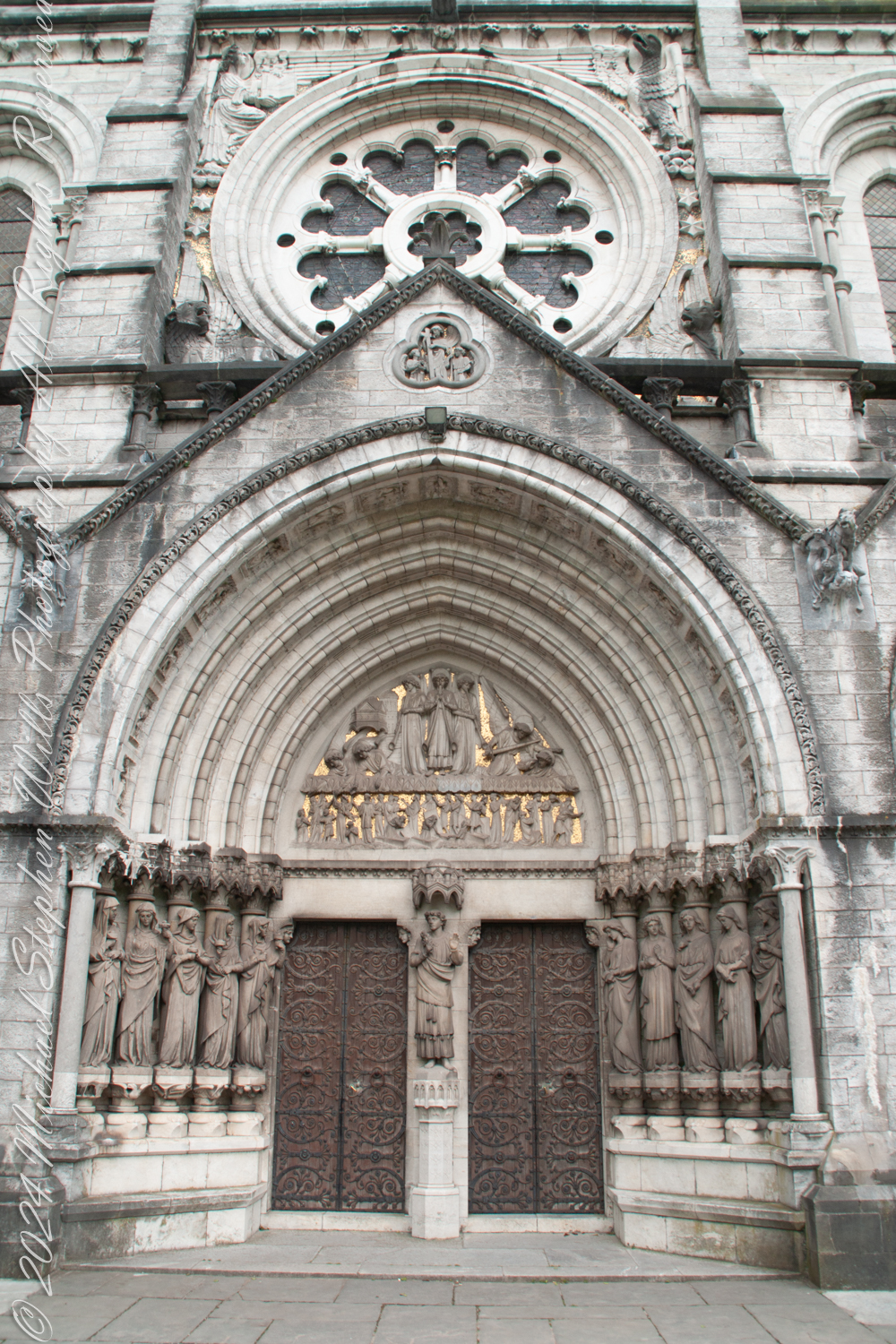
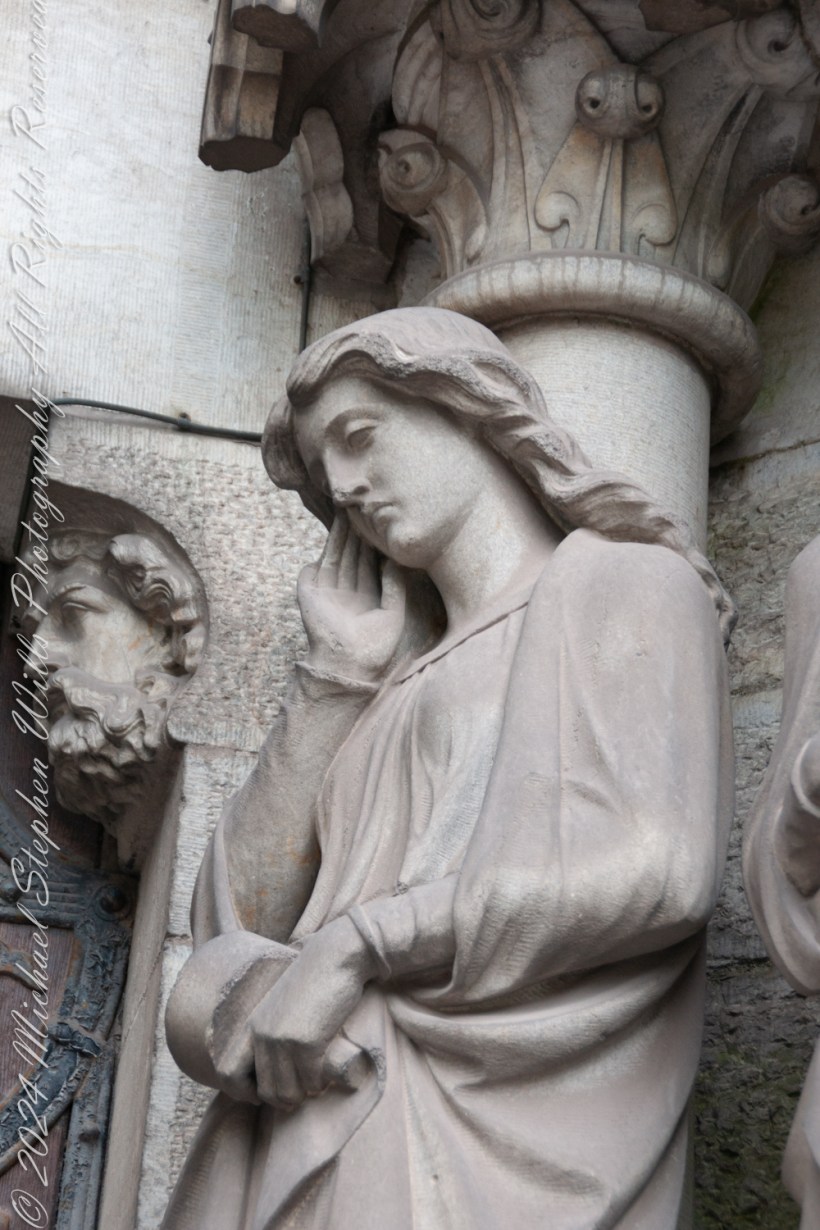
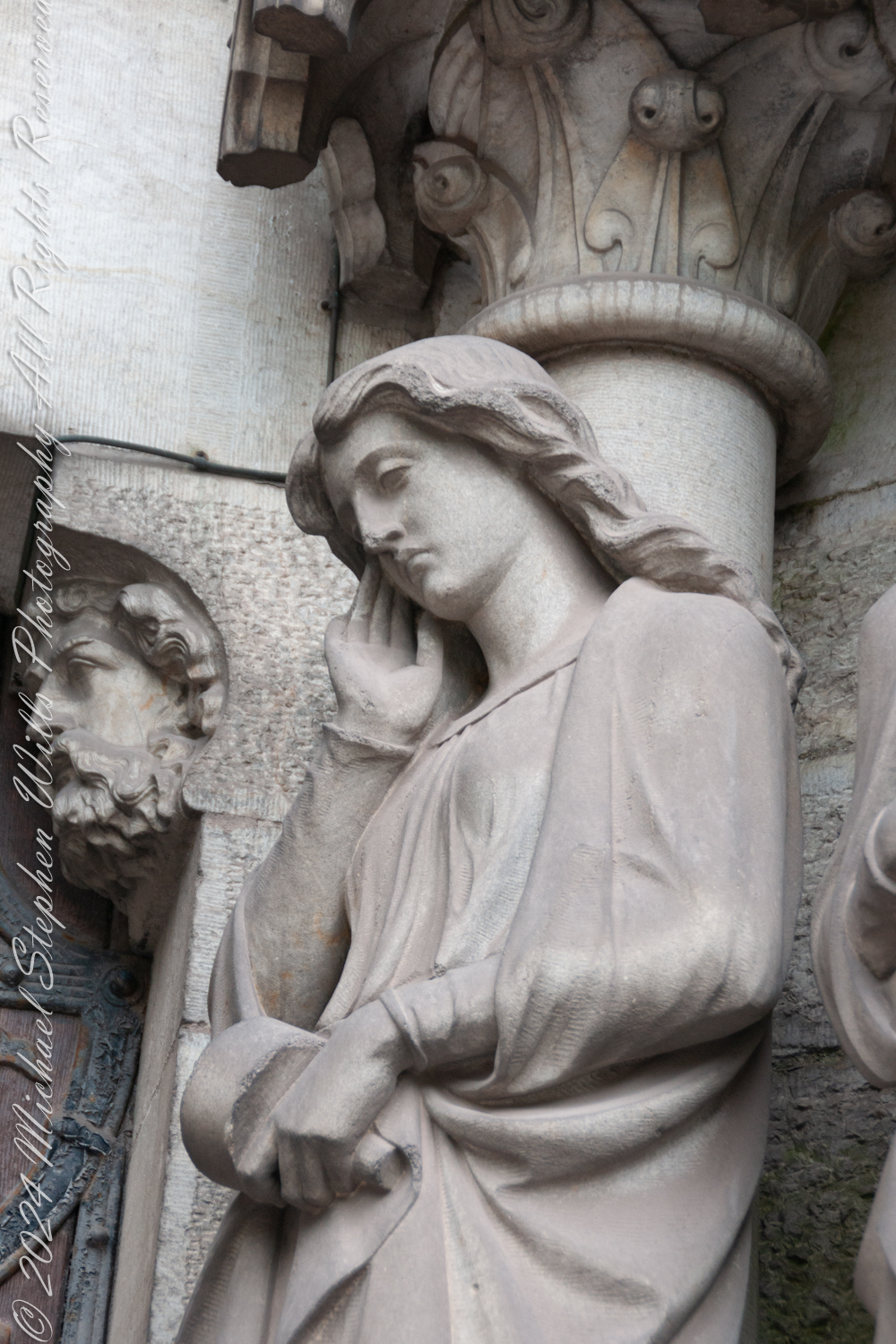
On either side of the central door, the virgins stand as sentinels, embodying this story. The wise virgins, to the right of Christ, hold their lamps aloft, flames burning brightly, symbols of readiness and spiritual vigilance. Their faces are serene, reflecting a sense of fulfillment in their preparedness to meet the bridegroom. To the left, the foolish virgins clutch their unlit lamps, their postures and expressions marked by despair and regret. The detail in their sculpting is exquisite—draped garments, forlorn gazes, and, in the case of the leftmost virgin, a subtle gesture of mourning, her hand resting thoughtfully against her cheek as though lamenting her unpreparedness.
Beneath each figure lies a pedestal adorned with imagery that amplifies their symbolic meaning. The wise virgins stand upon a foundation of flourishing life: vines, flowers, and fruits, evoking the vitality and promise of spiritual readiness. In contrast, the pedestals of the foolish virgins are carved with desolation—withered branches, skeletal forms, and motifs of death, stark reminders of the spiritual decay brought by neglect and complacency.
At the heart of the narrative stands Christ, the Bridegroom. His figure, commanding yet compassionate, turns toward the wise virgins, his gesture one of welcome and blessing. The flowing robes and the serene expression of the Christ figure emphasize his dual roles as judge and redeemer. It is a moment of movement captured in stone—Christ leaning into the wise while his back turns on the foolish, a subtle yet striking commentary on divine justice.
Above the door, the tympanum deepens this narrative, depicting the ultimate moment of judgment. Surmounted by three angels announcing the resurrection, their imagery and gold background harking to the Resurrection Angel of the east cathedral side with gold a symbol of purity and divine light; the dead rise from their graves, their fates determined by their spiritual choices. On the right, angels extend their hands to the faithful, pulling them upward toward eternal life. Their forms radiate lightness, their wings creating a sense of ascension and joy. On the left, the scene is markedly darker: angels, stern and unyielding, drive the condemned downward, their bodies twisted in expressions of agony. Flames lick at the edges of the scene, signaling the fires of damnation.
The weight of this imagery is palpable. The parable of the ten virgins, brought to life in stone, underscores the centrality of vigilance and readiness in the Christian faith. The Western Portico is a story carved in stone, a vivid testament to the choices each person must make. Standing before it, I am not merely a viewer but a participant, invited to reflect on my own readiness and my place in this cosmic drama. The intricacy and theological depth of this space leave an indelible impression, a reminder of the eternal truths that the cathedral seeks to communicate through its art.
 Michael Stephen Wills Photography