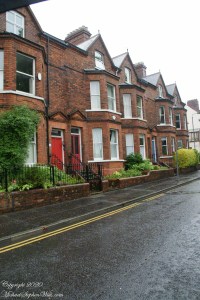
The Ulster Museum is set among the Botanic Gardens. Armed with umbrellas, Pam and I parked on this interesting street, Colenso Parade, on one side these row houses, on the other the gardens.
Click photograph for a larger view. To do this from WordPress Reader, you need to first click the title of this post to open a new page.
Interesting, “no parking at any time” indicated by a double yellow line along the curb. We parked with everyone else, across the street on the Botanical Gardens side.
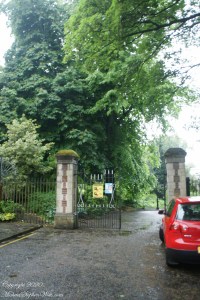
We parked and walked in, free as you please, taking in some of the beauty on our way to “Treasures from the Girona”, a permanent Ulster Museum exhibit.
I compliment the photography skills of our waitress
Our time strolling the walks was all too brief, 20 minutes, not enough to savor the treasures of knowledge suggested by the words “Botanic Garden.”
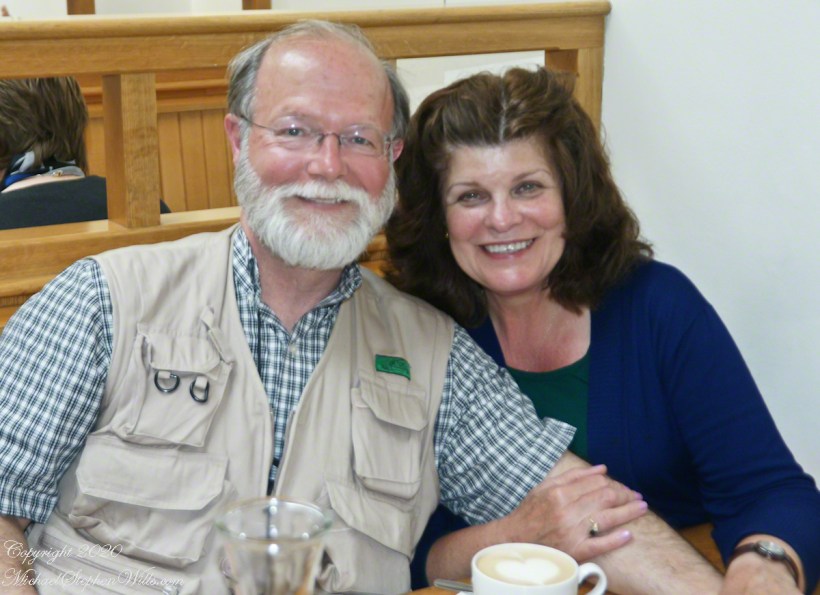
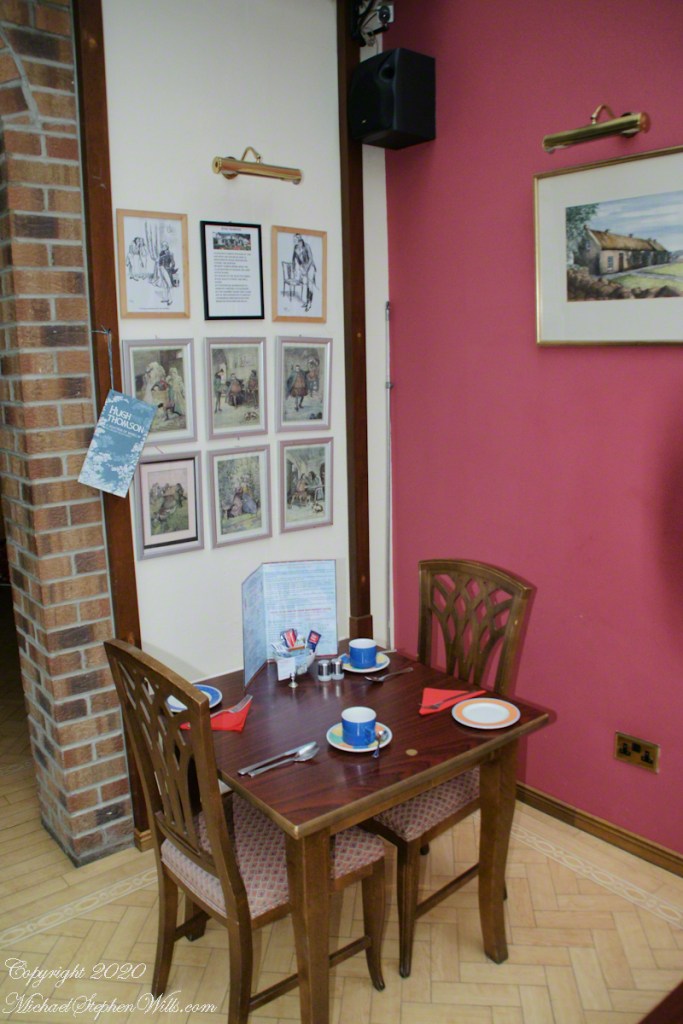
After our tour of the Ulster Museum and the Botanic Gardens of Belfast we stopped in for refreshment across the street at Maggie May’s Belfast Cafe. I am wearing a Cortland Line Company fishing vest adapted for photography. I purchased the vest at the company store, Cortland, New York just north of our Ithaca home.
Click photograph for a larger view. To do this from WordPress Reader, you need to first click the title of this post to open a new page.
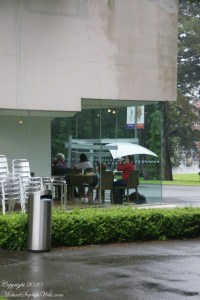
The Museum Cafe from outside
I compliment the photography skills of our waitress
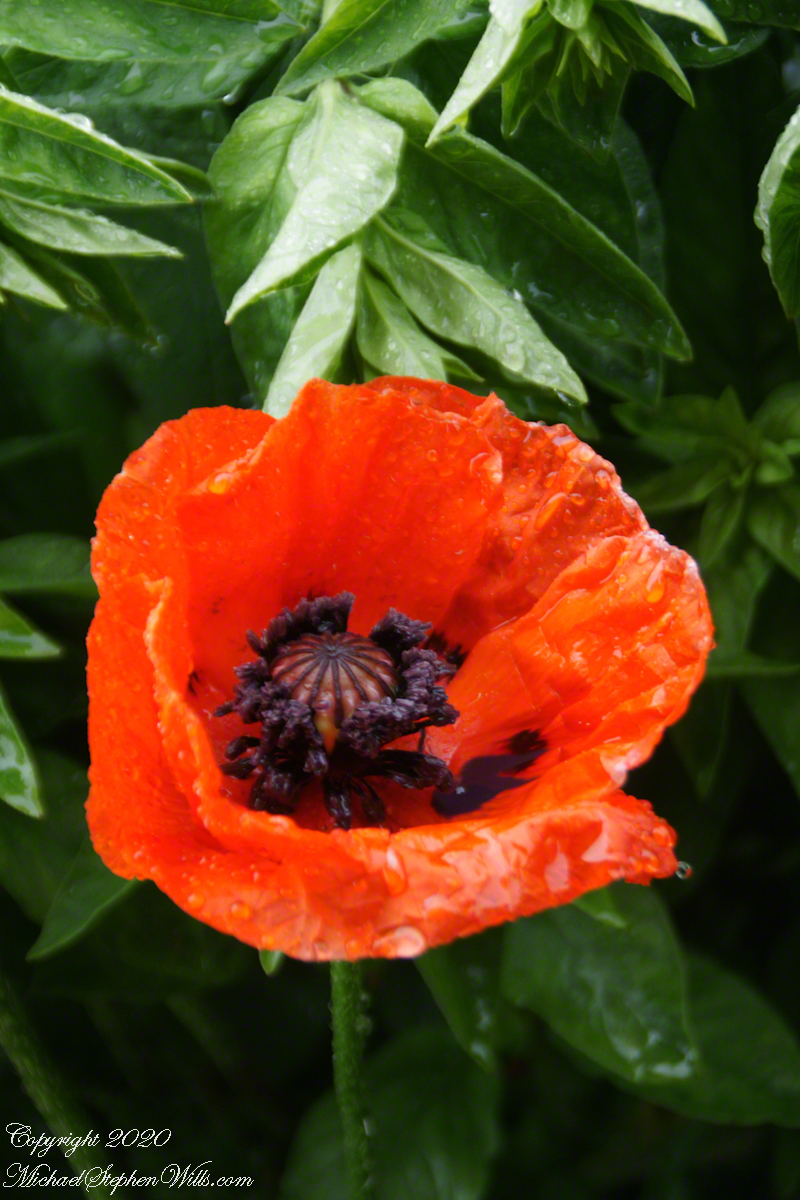
Our latte’s were perfection. The header photo looks forward to our visit to the gardens.
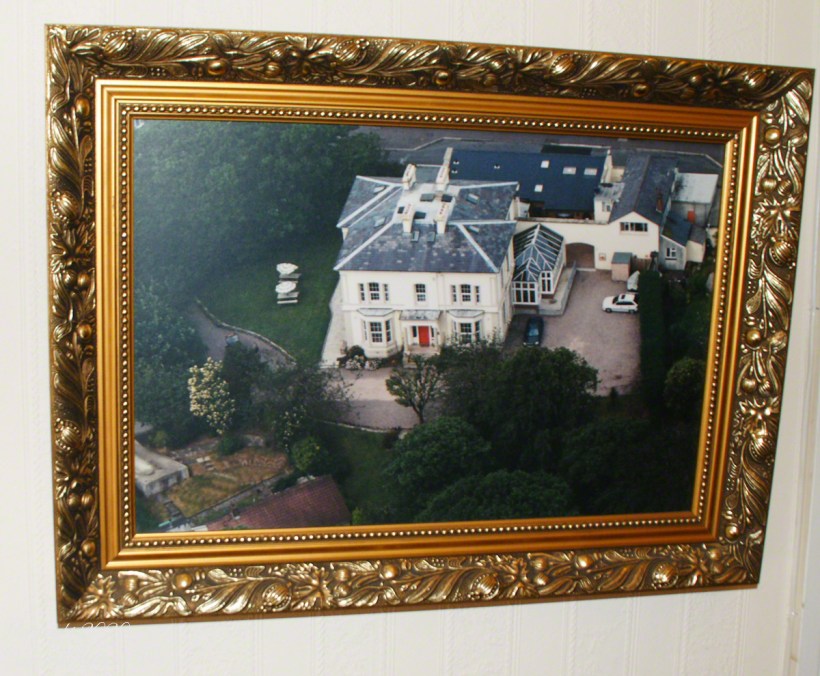
A steady, drenching rain graced the landscape and ourselves during the road trip from Coleraine to Belfast. These are the parting photographs of Breezemont Manor, our lodging for the Antrim Glens exploration (see “A Bit about Torr Head for an entry point).
Before leaving I did a cursory photographic tour, skipping the messy bedroom. We arrived very late, after the posted arrival time. A plain-spoken Ulster Scotsman kindly let us in with a few choice words. After dinner out photographing the very nice room in pristine state was neglected.
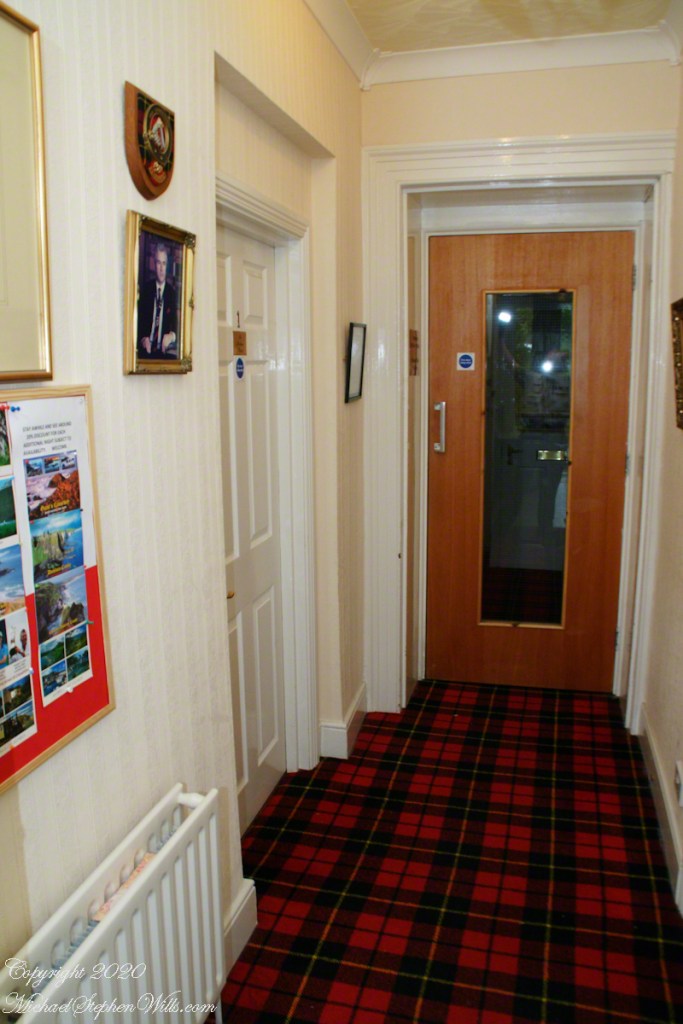
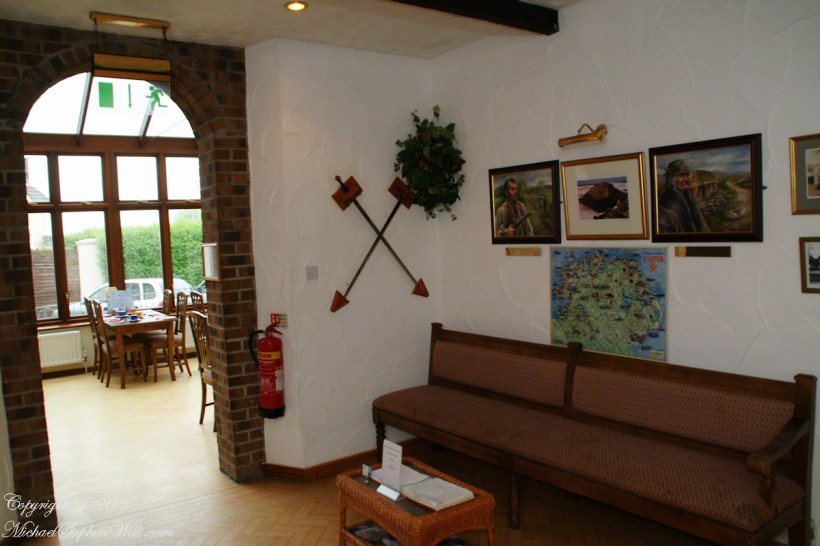
The foyer, carpeted in a plaid and photographed below, bore the Scottish identity of the proprietor.
Click photograph for a larger view. To do this from WordPress Reader, you need to first click the title of this post to open a new page.
First Impression
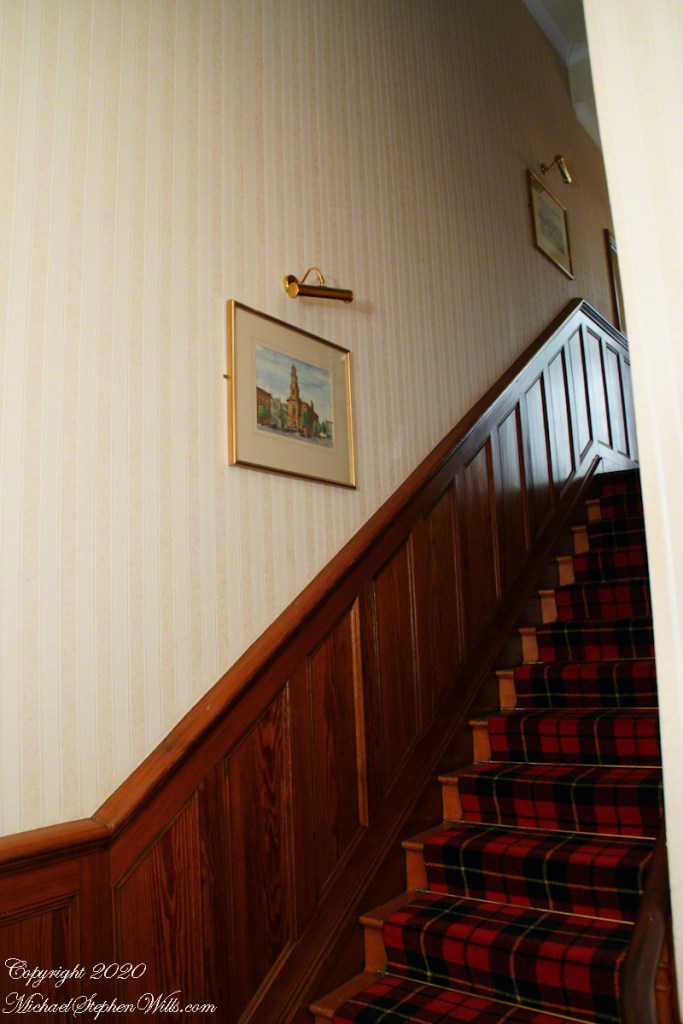
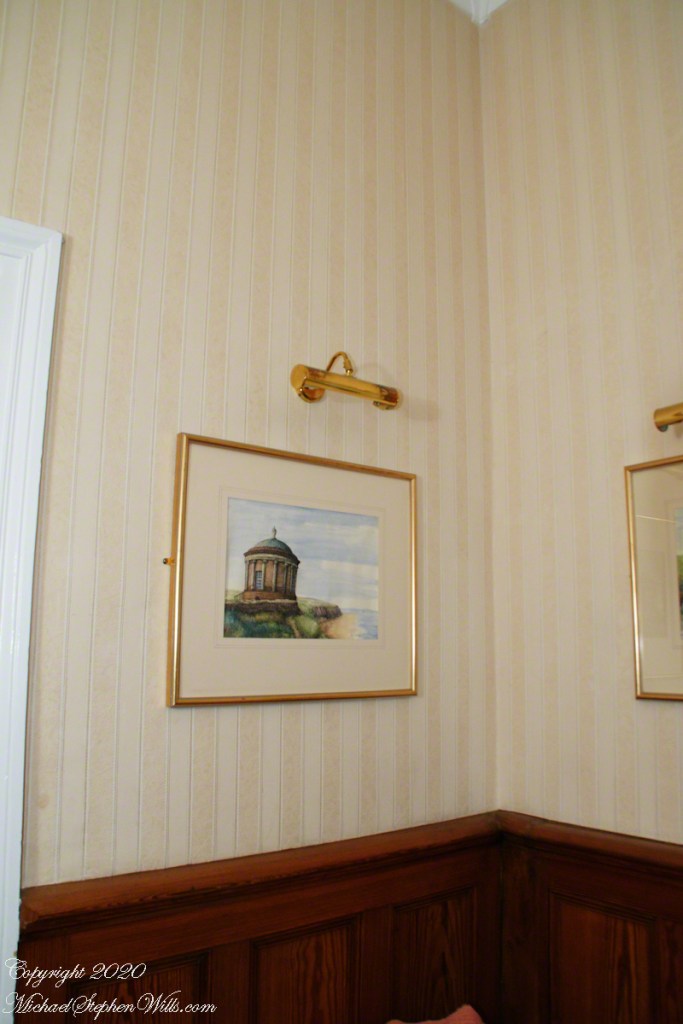
Throughout there were tinted etchings, featuring local buildings.
Folly overlooking the Atlantic, Hezlett House
Tasteful Art featuring local sites
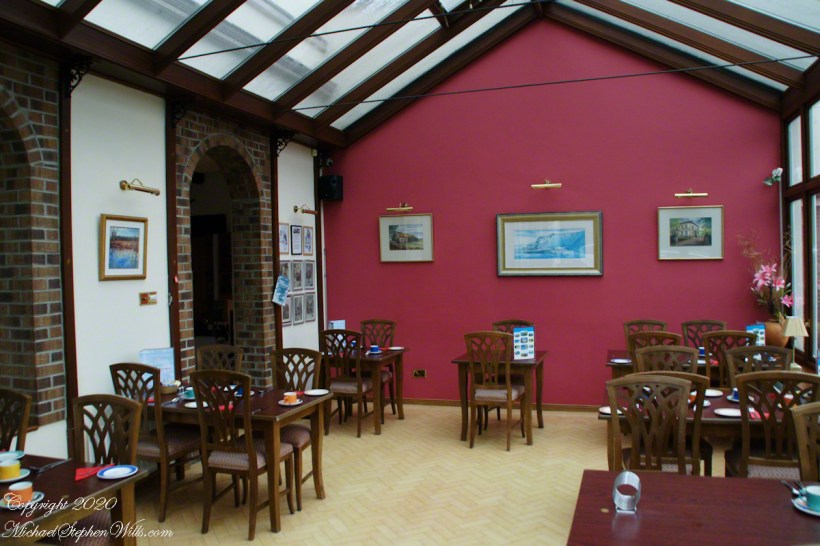
An overview of the property. The glassed-in addition on the right hand (east) side is the breakfast room.
Breezemont Manor Bed and Breakfast, closed since June 2018
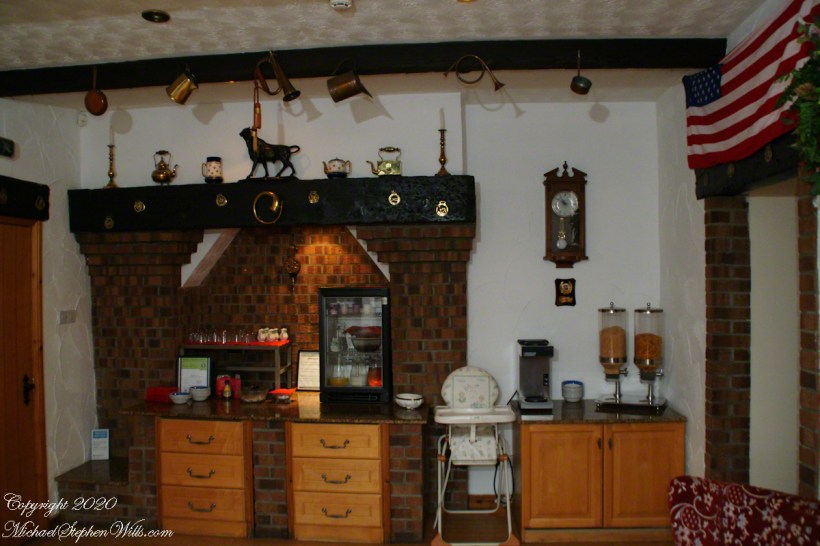
We enjoyed two breakfasts here.
Communication and Control
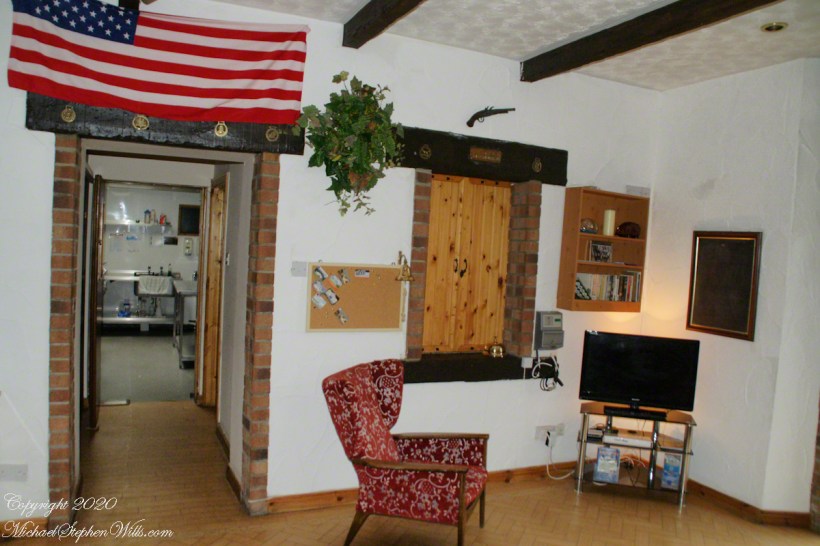
There is a strong connection with the USA, where many Ulster Scots emigrated, including my own great and double great paternal grandmothers.
Let’s finish our exploration of the “Treasures from the Girona” permanent exhibit, Ulster Museum, Belfast, Northern Ireland.
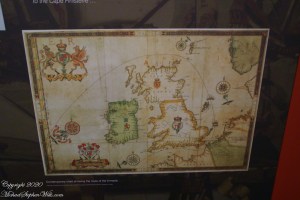
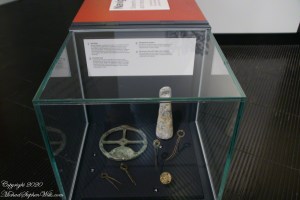
One hundred and eighty five (185) years after La Girona ran aground and broke up on the, later named, Spanish Rocks, the first reliable navigational chronometer was tested (1773). The navigators of the Spanish Armada remnants were sore pressed to follow the orders of their commander (see below) because (1) Spanish charts were incomplete and inaccurate (2) without accurate time keeping they were only able to reliably measure the location north/south (latitude), not east/west (longitude). Without this, navigators used Dead Reckoning, they measured current position from the last position, heading (direction of motion), and speed.
Click photograph for a larger view. To do this from WordPress Reader, you need to first click the title of this post to open a new page.
The astrolab (below), used to measure the angle between a heavenly body (sun/moon/star) and the horizon at a given time of day, obtained the latitude. The dividers used on the (unreliable) charts. A weight on a measured cord determined the depth of the bottom. Not recovered was the instrument for estimating speed. It is a length of rope knotted at set intervals and attached to a “chip log” resistant to passage through water. Thrown into the water a sailor counted how many knots passed by in a given time, thus the designation, still used today, of speed in “knots”.
Navigation
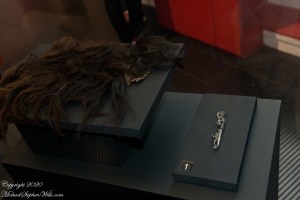
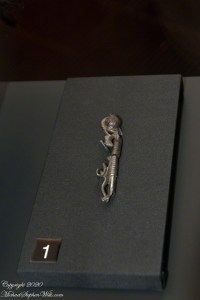
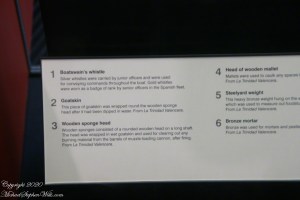
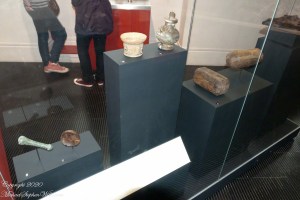
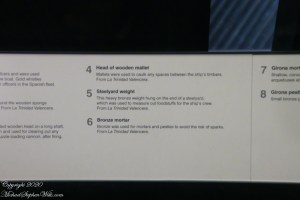
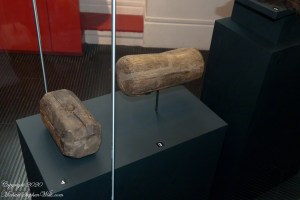
Sound (a whistle) was the method used for command and control by both Spanish and British.
Communication and Control
Interesting odds and ends.
Tools of the Trade
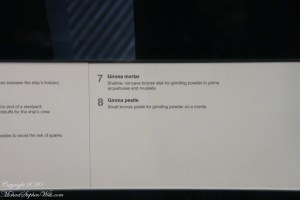
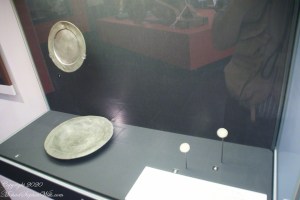
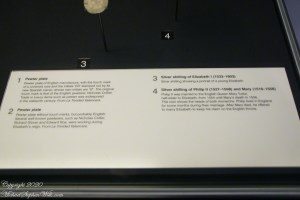
Evidence of trade between England and Spain.
Pewter dishes and Historical Information from Silver Coinage
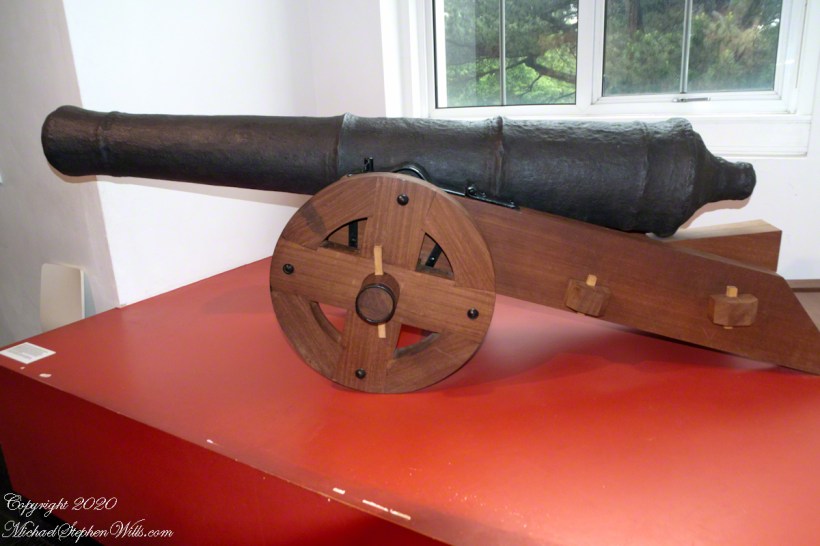
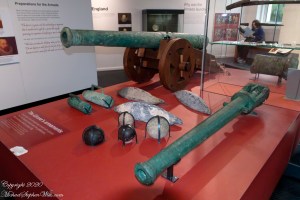
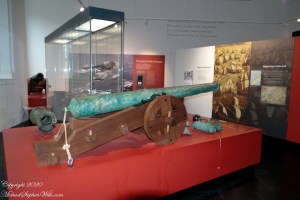
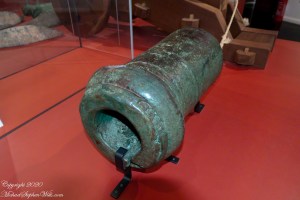
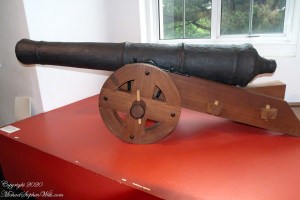
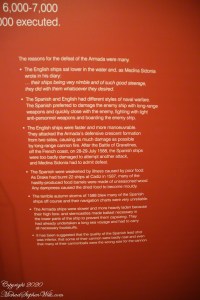
A Spanish warship was less maneuverable than the English. Equipped with more canons, heavily ballasted to overcome the tendency to capsize because higher in the water, the Spanish crews were not able to bring their guns to best use against the English.
Click photograph for a larger view. To do this from WordPress Reader, you need to first click the title of this post to open a new page.
Pam is in the background, patiently waiting, engorssed in the exhibit catalog.
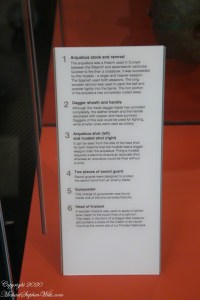
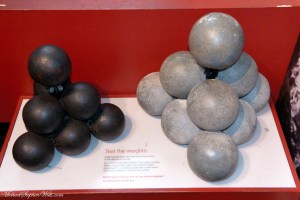
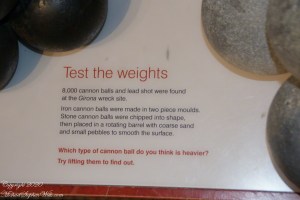
Unfortunatley, this placard does not correspond to the photos; however, read it for more information about armaments.
The gun carriage is modern, made for this exhibit.
Stone cannon balls from the stone age, the “Flintstones”? Modern guns rely on the same technology from China, 1250 A.D.
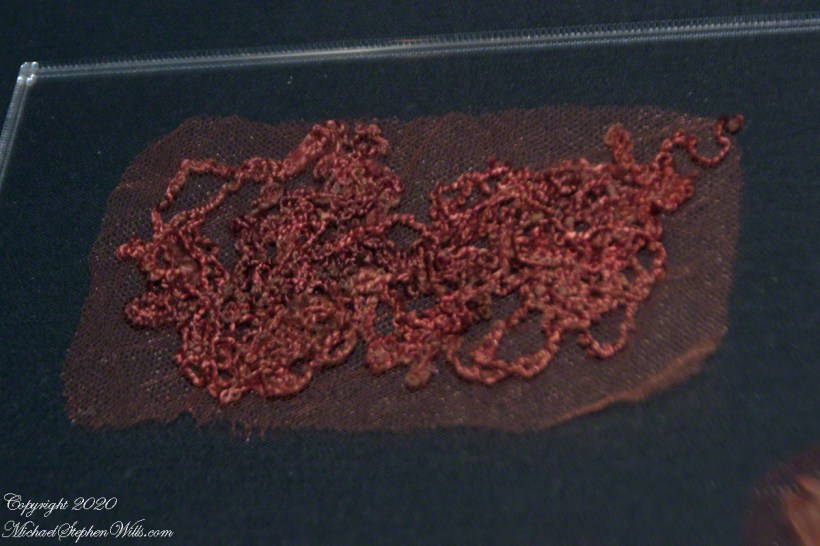
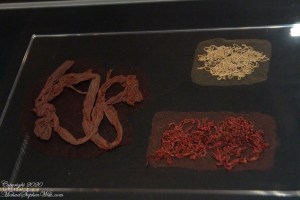
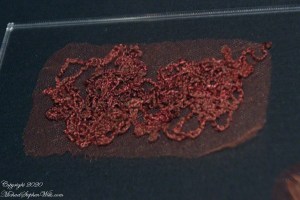
Precious metals were not the only loot shipped to Spain from the American colonies. Among the finds from La Girona, scarlet and yellow silk ribbons decorated the officers’ clothing. The red dye was obtained from the cochineal insect which lived on the nopal cactus in Mexico. Cochineal was imported in very large quantities by the Spanish and was in demand all over the world for its rich, carmine color.
Click photograph for a larger view. To do this from WordPress Reader, you need to first click the title of this post to open a new page.
Silk Ribbons from La Girona
This silk, still darkly colored today, is testament to the stability of cochineal dye, the reason it is still coveted today yielding four times the price of synthetic dye. Today, you are most likely to encounter cochineal on your lips: lipstick and (natural) food colorant.
Deep Red of Cochineal
The bright scarlet wool cloth of the English Redcoat officers, famous in the USA from the Revolutionary War, was from cochineal. The uniforms were more suited for formal battlefield than Minuteman attacks. The more expensive cochineal scarlet made targets of the officers.
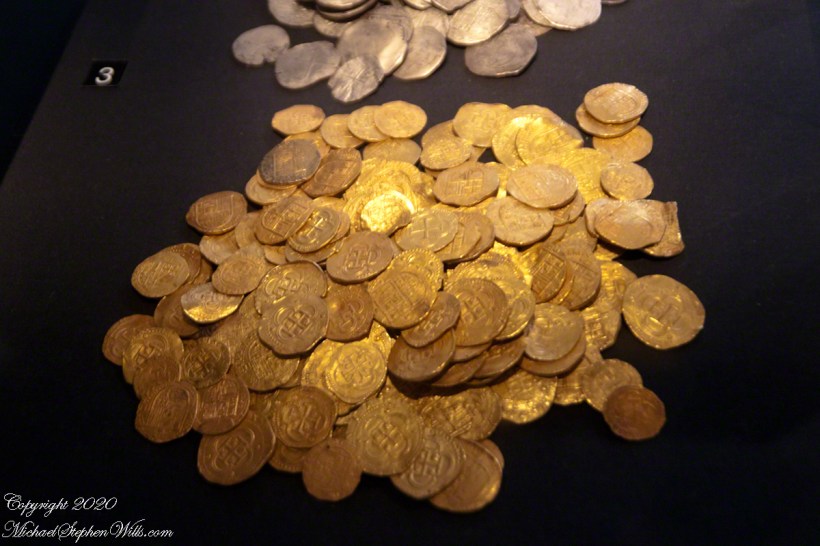
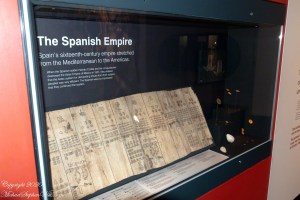
Today’s focus from Belfast’s Ulster Museum permanent exhibit “Treasures from the Girona” is the lengths the Spanish went to acquire costly metals. Gold was the lure Columbus held out to Spanish royalty. The Spanish found their El Dorado in the accumulated wealth of the Incas, acquired through force and murder.
Inca temples were covered in gold. The Spanish needed only to peel it off and carry it away. They found some gold to mine, minimal compared to the silver. Armada ships did not haul gold and silver from the American and the modern treasure hunter’s yield was not expected to be huge, nor was it. As silver and, to a lesser extent, gold filled Spanish coffers the ambitions of the Spanish monarchs were unleashed. It financed the building and launching of the Armada.
Click photograph for a larger view. To do this from WordPress Reader, you need to first click the title of this post to open a new page.
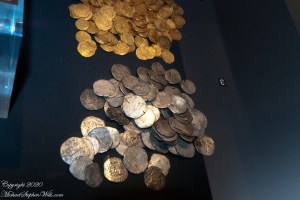
One Pile Each of Gold and Silver Coins
Among the hundreds of silver coins were many eight-real pieces, often called “pieces of eight”. The “silver hill” of Potosi, discovered in 1544 in Bolivia, provided most of the silver bullion for the Spanish Empire. Ten percent of mine workers were Inca slaves. After these were worked to death, the Spanish acquired African slaves.
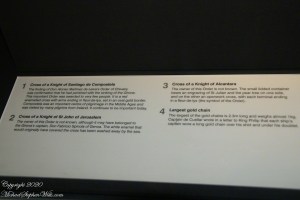
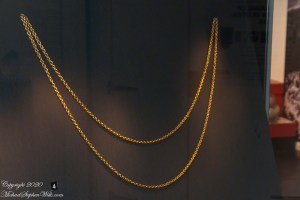
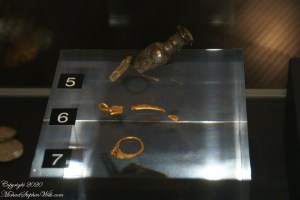
I wonder if the ship Captains discarded their kilogram of gold chain to the enveloping waves, in exchange for survival. My guess is, “no”. It was an emblem of rank, losing it was a personal disgrace.
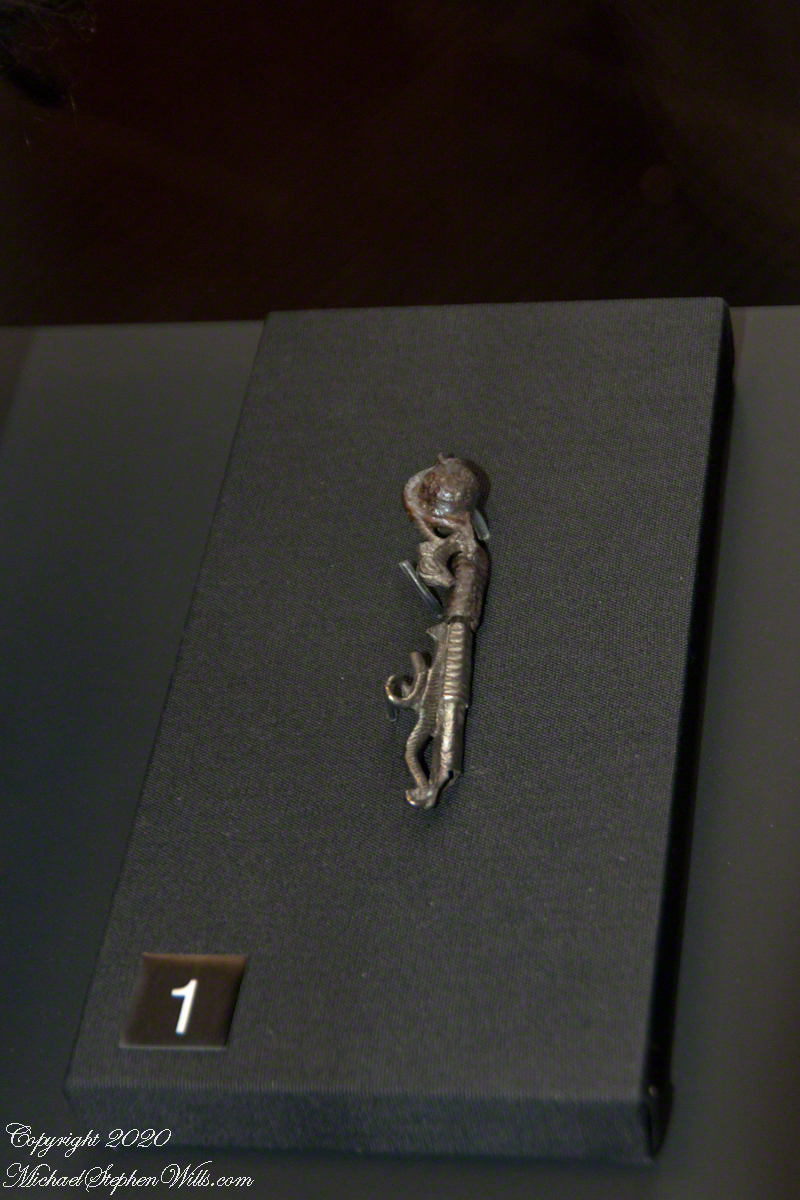
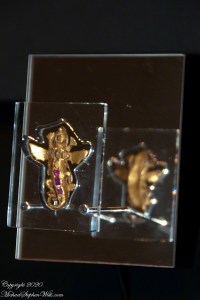
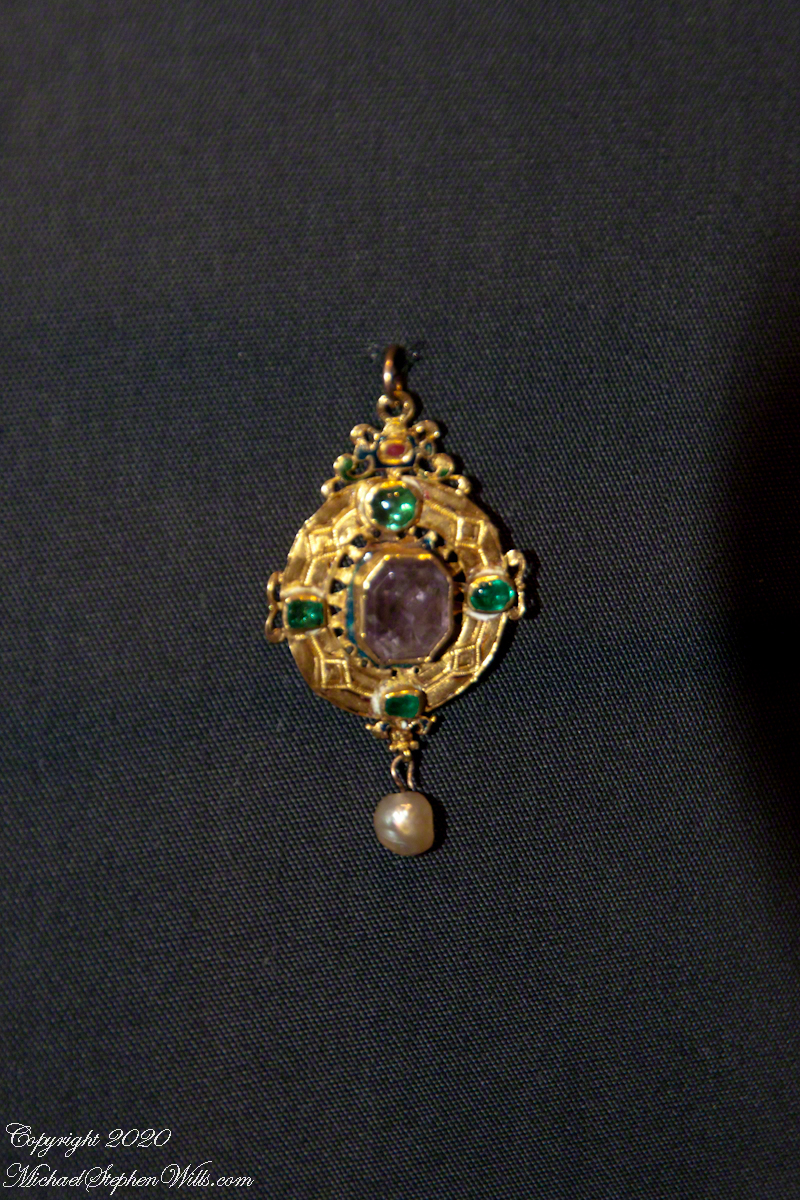
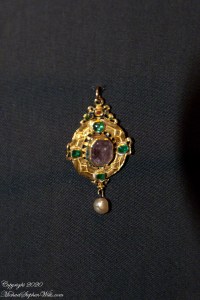
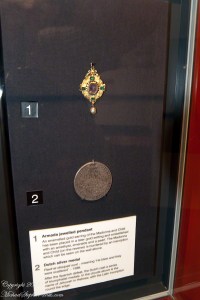
(from the Museum Placard) The jewel in the following photograph epitomizes the wealth and outreach of the Spanish Empire in the late sixteenth century and has become an icon for the Armada. Just three of the original nine rubies survive. The jewel takes the form of an exotic animal, either a real Mexican salamander or a mythical creature, and reflects the great importance of the gold and silver brought from the colonies. The gold came from South America, with the rubies probably came from Burma. In legend, the salamander had the twin magical properties of being able to both extinguish and survive fire. This made it a powerful good luck charm on a wooden fighting ship, where fire was one of the greatest dangers.
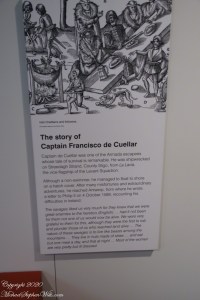
Today’s exploration of the Ulster Museum permanent exhibit “Treasures from the Girona” begins with the account of a survivor.
Click photograph for a larger view. To do this from WordPress Reader, you need to first click the title of this post to open a new page.
Irish were sympathetic to the Spanish castaways
He was extremely fortunate to escape with his life. After Calais, the attack of the English fireships, the Spanish ships suffered repeated North Atlantic storms, driven onto the irregular coast of which they had no knowledge or charts. It was with the assistance of Irish natives the survivors were able to regroup and embark on an ill-fated escape.
The reason for the heavy losses from the Girona wreck was the crew from several other ruined ships were on board.
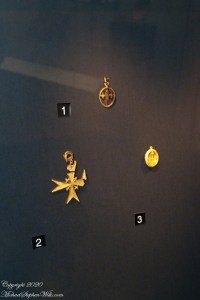
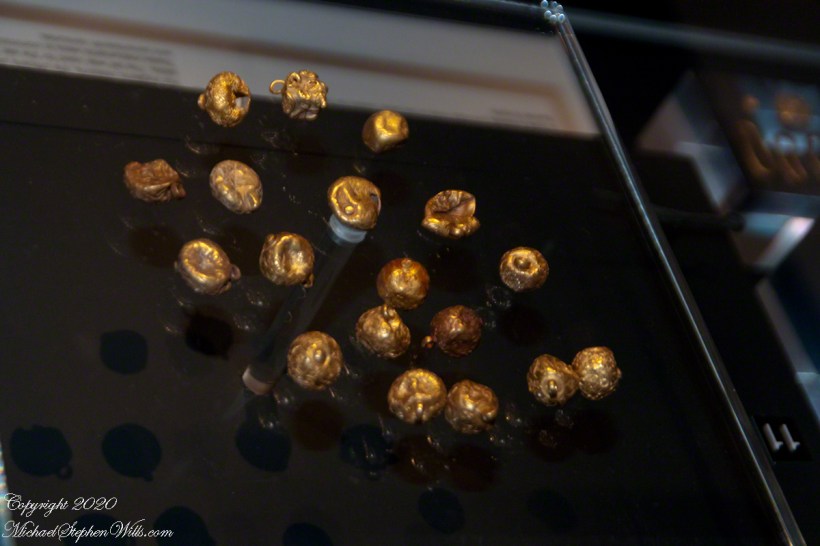
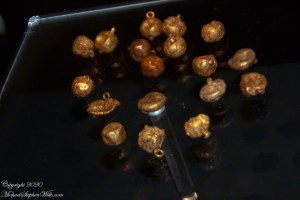
The individuality of the lost comes across through their gold trimmings. It is said that wealthy Spaniards owned up to four sets of gold buttons, each with a different design.
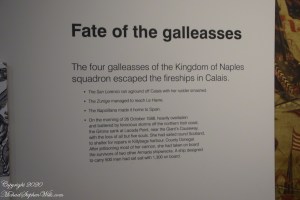
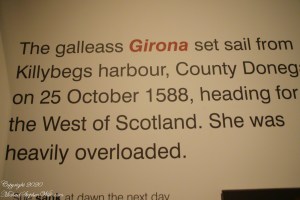
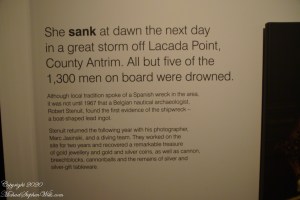
In this post we explore further, using my photographs of the Ulster Museum exhibit “Treasures from the Girona”, how the Spanish galleass La Girona came to be wrecked on the north coast of Ireland. It was not the only ship lost. Of the 130 armada ships, a third (43) did not return.
Click photograph for a larger view. To do this from WordPress Reader, you need to first click the title of this post to open a new page.
Inexperienced, Reluctant Leadership
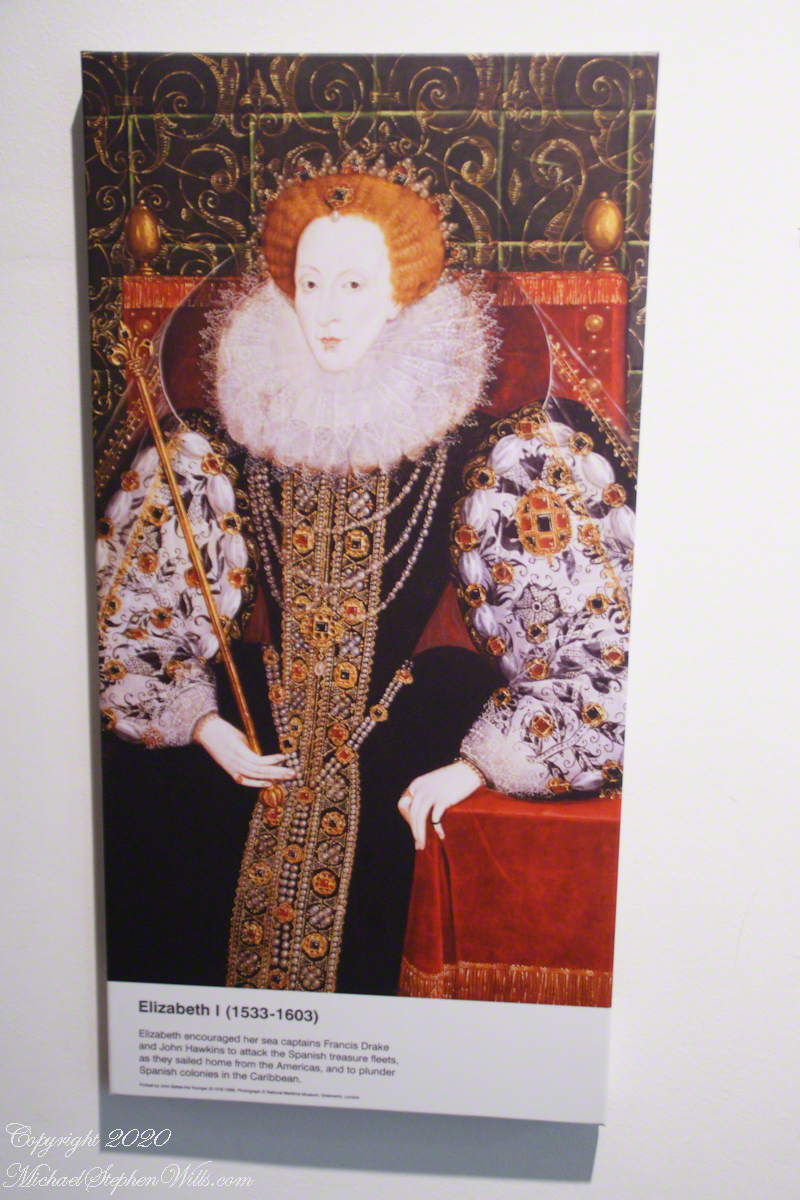
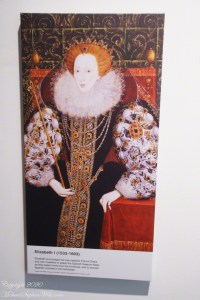
Religion was the crux, Catholic Spain wanted to forestall Queen Elizabeth I’s establishment of Protestantism initiated by her father King Henry VII.
This placard displays treasure. The text implies it was not recovered from La Girona. The bronze medallion was struck by the Dutch in commemoration of the victory.
Pam and I woke early on June 8 for that 138 mile drive to my cousin’s farm on the Cooley peninsula, County Louth, Republic of Ireland. Learning the day before, from the Giants Causeway visitor center, of treasure recovered from a shipwreck off that coast, we planned to visit Belfast, where the Ulster Museum has a permanent exhibit, “Treasures from the Girona”. This is just a taste of the historical provided by this excellent exhibit….if you visit Northern Ireland make time to visit the Ulster Museum.
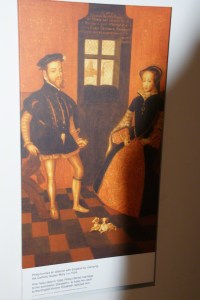
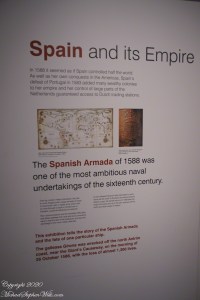
In this post we explore, using my photographs of the museum exhibits, how the Spanish galleass La Girona came to be in the North Atlantic off the Irish coast. The ship was part of a fleet supporting an invasion of England from Flanders.
Click photograph for a larger view. To do this from WordPress Reader, you need to first click the title of this post to open a new page.
Broad Stroke of events
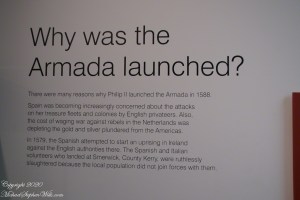
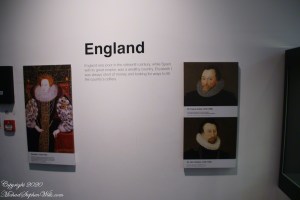
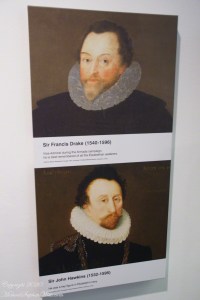
Religion was the crux, Catholic Spain wanted to forestall Queen Elizabeth I’s establishment of Protestantism initiated by her father King Henry VII and support of Dutch protestants against Spain. State sponsored piracy of Spanish ships was a secondary justification.

 Michael Stephen Wills Photography