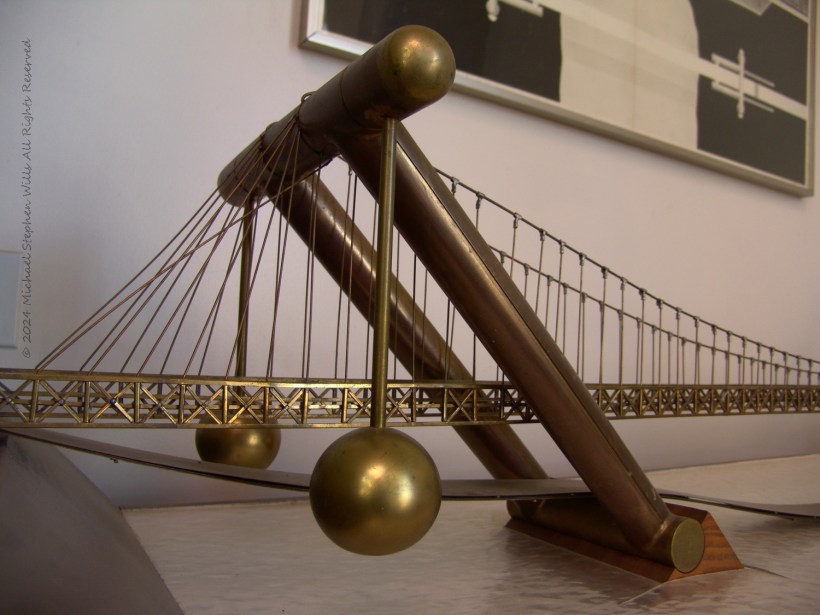
For me room was hushed, as if holding its breath in reverence for the dreams of a man who dared to reimagine not just buildings, but entire landscapes. I stood before the model of the Pulse Bridge, a work envisioned by the inimitable architect and philosopher Paolo Soleri. This was a living, breathing entity in miniature—a whisper of the city’s heartbeat rendered in metal and form.
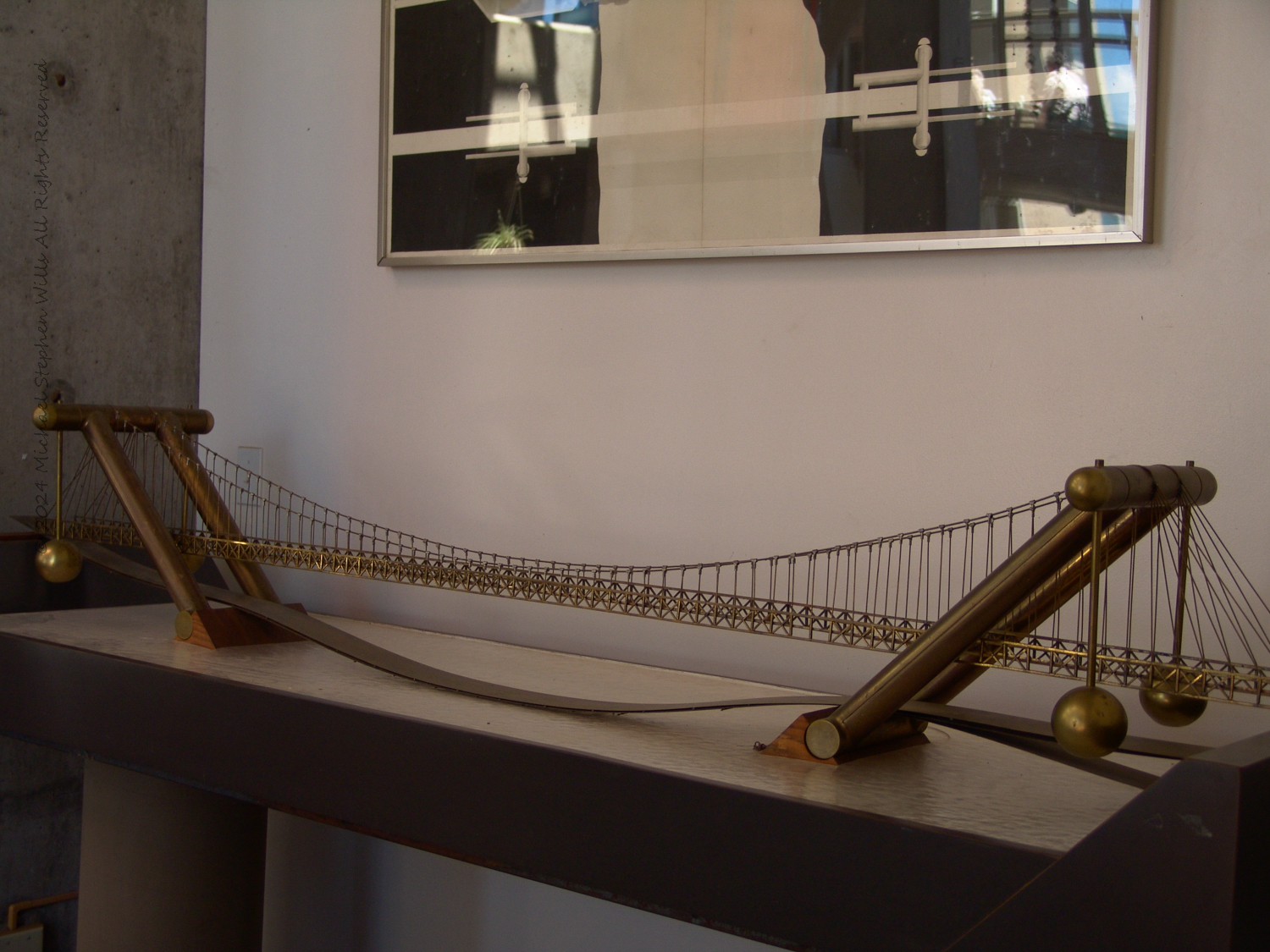
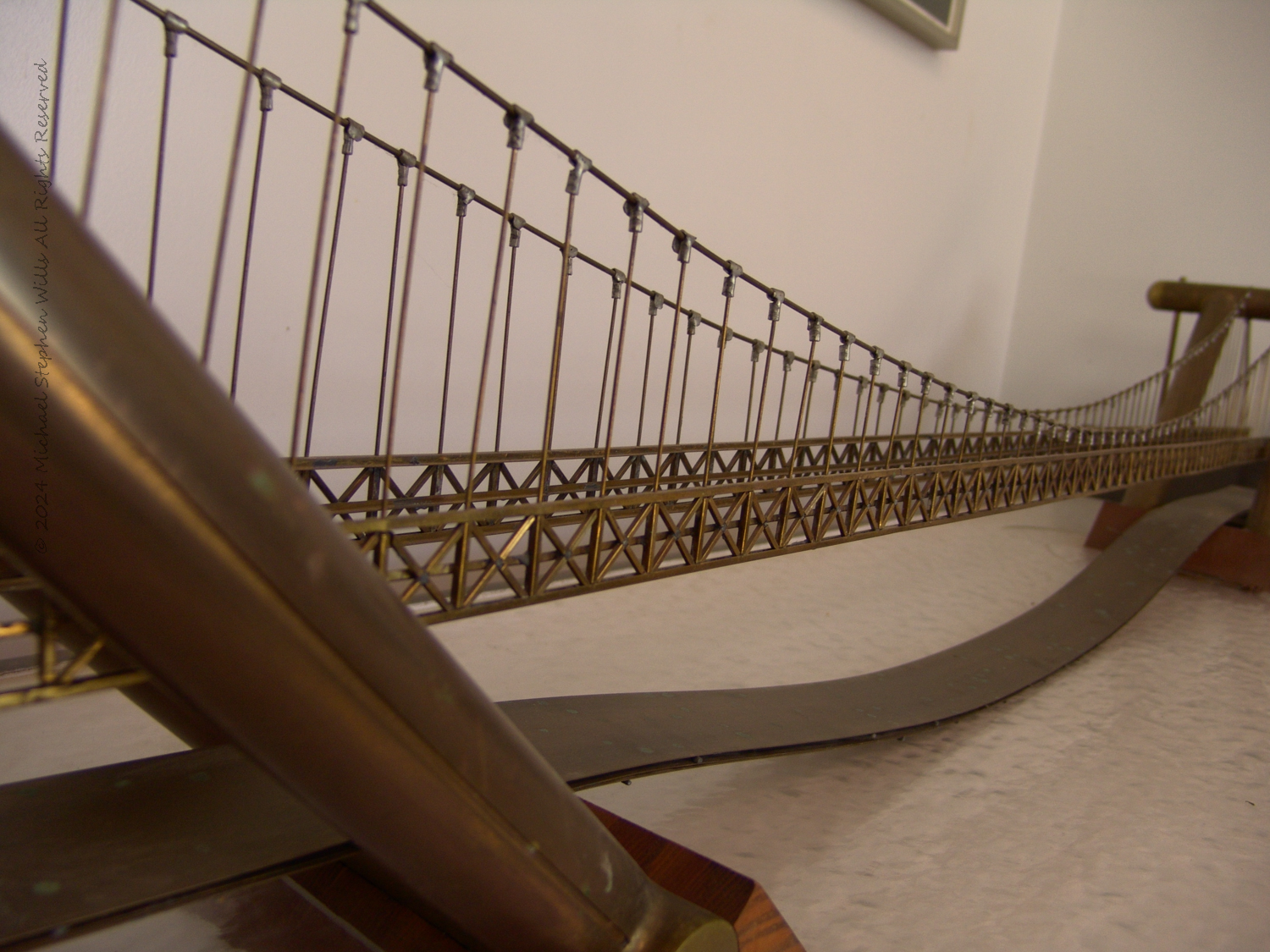
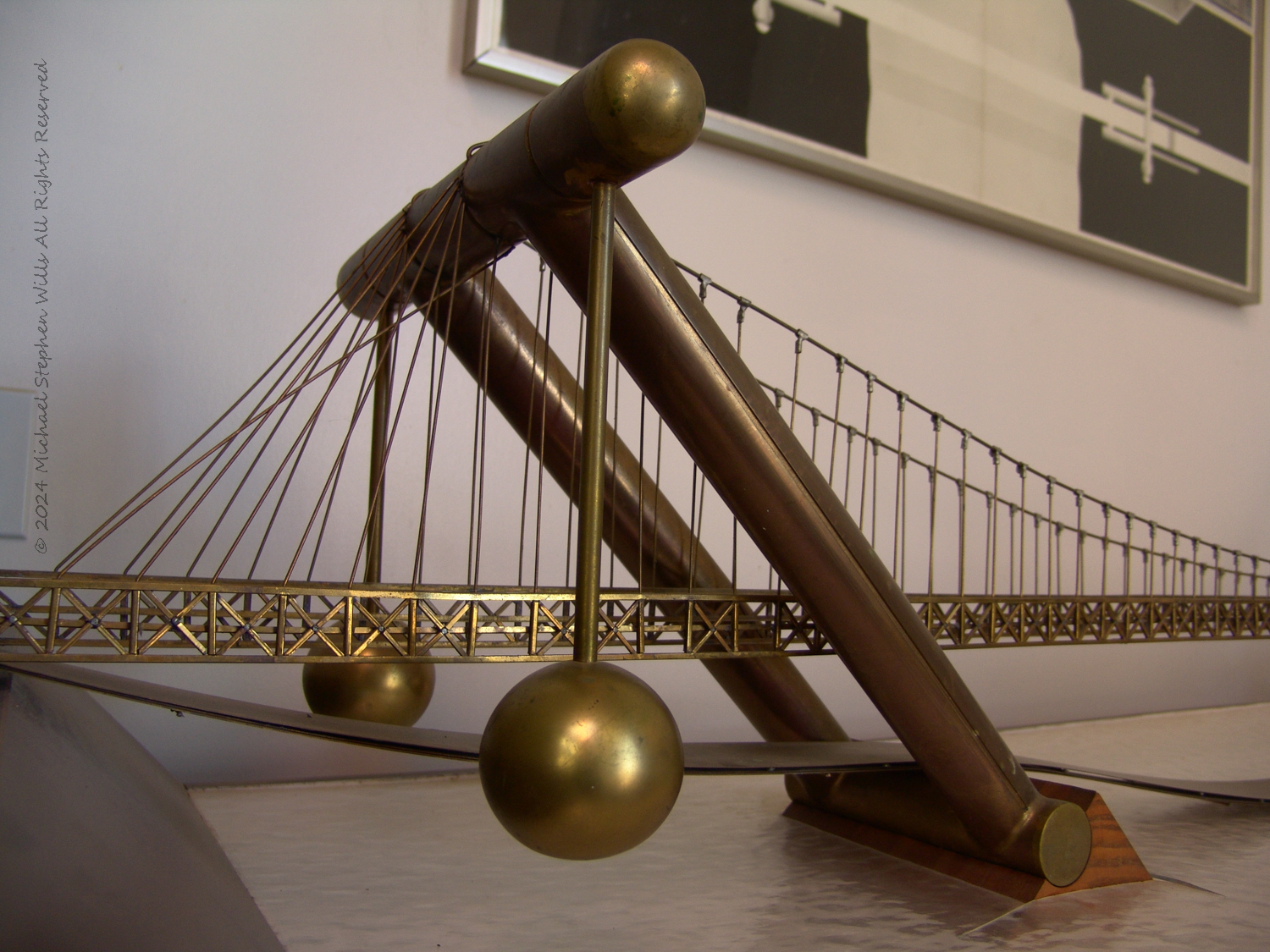
The bridge stretched across the table, a golden ribbon suspended in perpetual motion. Its delicate cables, taut and slender, mirrored the veins of a great urban organism. I leaned closer, catching the glint of light on the brass framework, which seemed to hum with possibility. The slanted pylons, bold and angled at 45 degrees, rose like colossal compass points charting a path into a future yet unbuilt. Their elegant incline gave the structure a sense of poise and power, as though it were both rooted in the earth and ready to leap skyward.
At either end of the model, spherical ballast weights gleamed like captive suns, their surfaces smooth and luminous. These orbs symbolized adaptability, a dynamic response to the unpredictable forces of wind, weight, and weather. Soleri’s genius was palpable in these spheres—each a small, controlled impulse that could tip, pour, or hold water to balance the bridge’s pulse, much like the human heart adjusts its rhythm to life’s demands.
As I circled the model, I noticed how the bridge’s levels—three distinct layers—seemed to invite a diversity of life. The uppermost level promised a vista for pedestrians and the rhythmic flow of cars. Beneath, a middle layer hinted at a mix of vehicles and trucks, and the lowest level seemed destined for the silent hum of trains, utilities, and unseen infrastructure. It was a symphony of movement, each level contributing its own notes to the city’s harmony.
And yet, the most captivating feature was not the mechanics or the engineering marvels, but the philosophy embedded within. Soleri’s vision was not just to build a bridge, but to craft an experience—a structure that could breathe, flex, and adapt to the ever-changing pulse of New York. He imagined the pylons as cultural hubs, housing optical museums, exhibitions on bridge history, and even gift shops. The bridge was as much about connecting people as it was about connecting places.
Standing there, I felt the weight of Soleri’s ambition. The Pulse Bridge was a manifesto, a declaration that utilitarian structures could inspire wonder and nurture life. I imagined walking across its span, the city stretching out on either side, the bridge subtly shifting beneath my feet as it responded to the flow of traffic and the gusts of wind. It would be a conversation between structure and environment, a dialogue that reminded me of the living world we so often take for granted.
The longer I stood before the model, the more I realized it was not just a reflection of Soleri’s imagination but a challenge to our own. Could we build a future where beauty and function danced together, where even a bridge could sing of resilience and grace? The Pulse Bridge dared us to try.
In that quiet room, with sunlight streaming through the windows and casting delicate shadows across the model, I felt the profound allure of what could be. Soleri’s bridge was an idea—a luminous thread connecting visionaries across time, urging us all to dream bigger, build better, and embrace the pulse of life in all its complexity.
 Michael Stephen Wills Photography