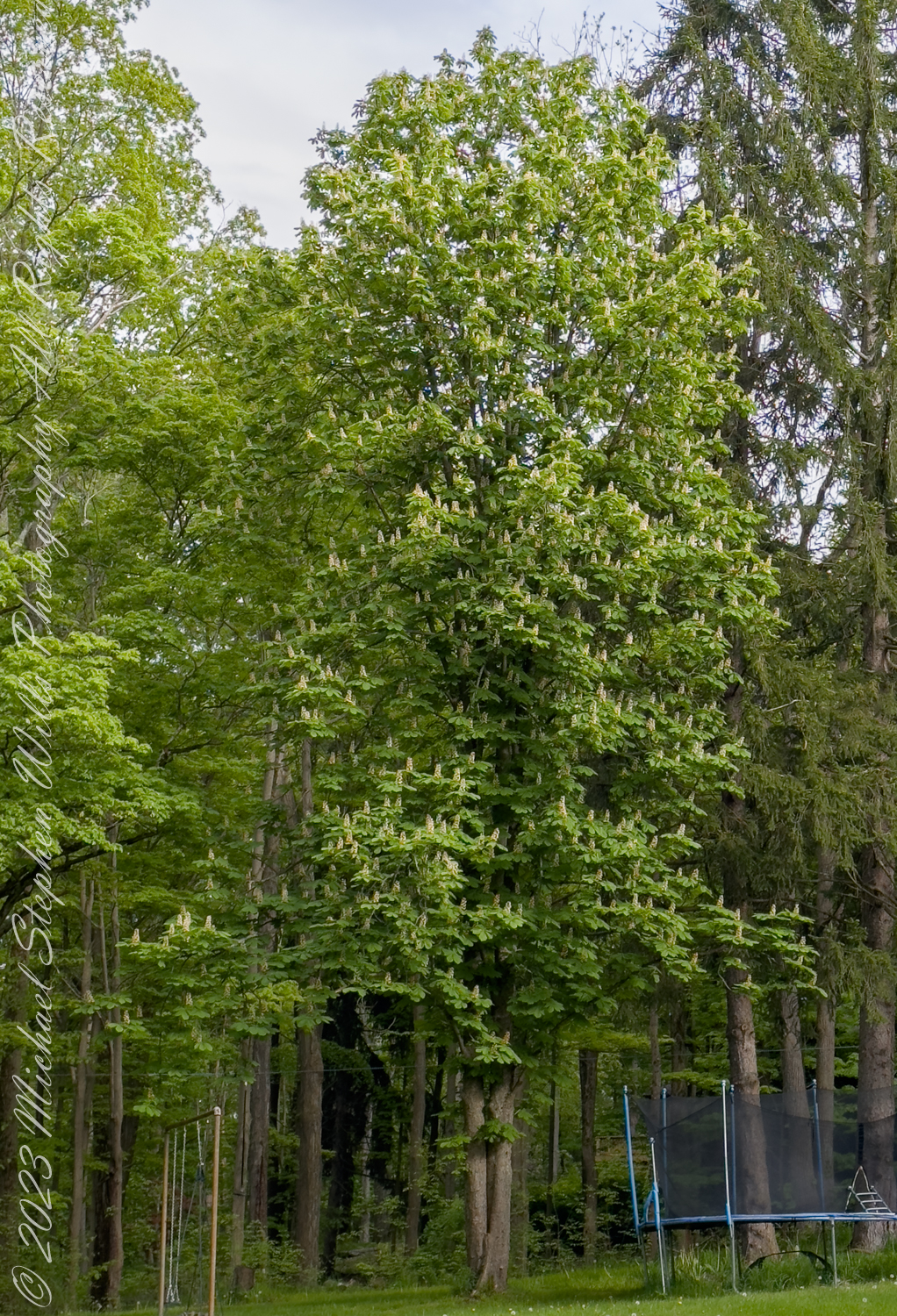
On a serene Mother’s Day in 2024, I found myself walking the slopes above Cayuga Lake, embraced by the spring warmth and the vibrant blossoms of the Horse Chestnut tree (Aesculus hippocastanum). This moment was a seasonal celebration and a deep dive into the botanical and cultural tapestry that this majestic tree weaves.
The Botanical Brilliance of the Horse Chestnut
The Horse Chestnut tree, with its robust stature and radiant floral displays, is a sight to behold, a study in botanical survival and adaptation. Originally native to a small area in the Pindus Mountains mixed forests and the Balkan mixed forests of Southeast Europe, this tree has traversed continents and histories to root itself into diverse landscapes, including the fertile grounds above Cayuga Lake.
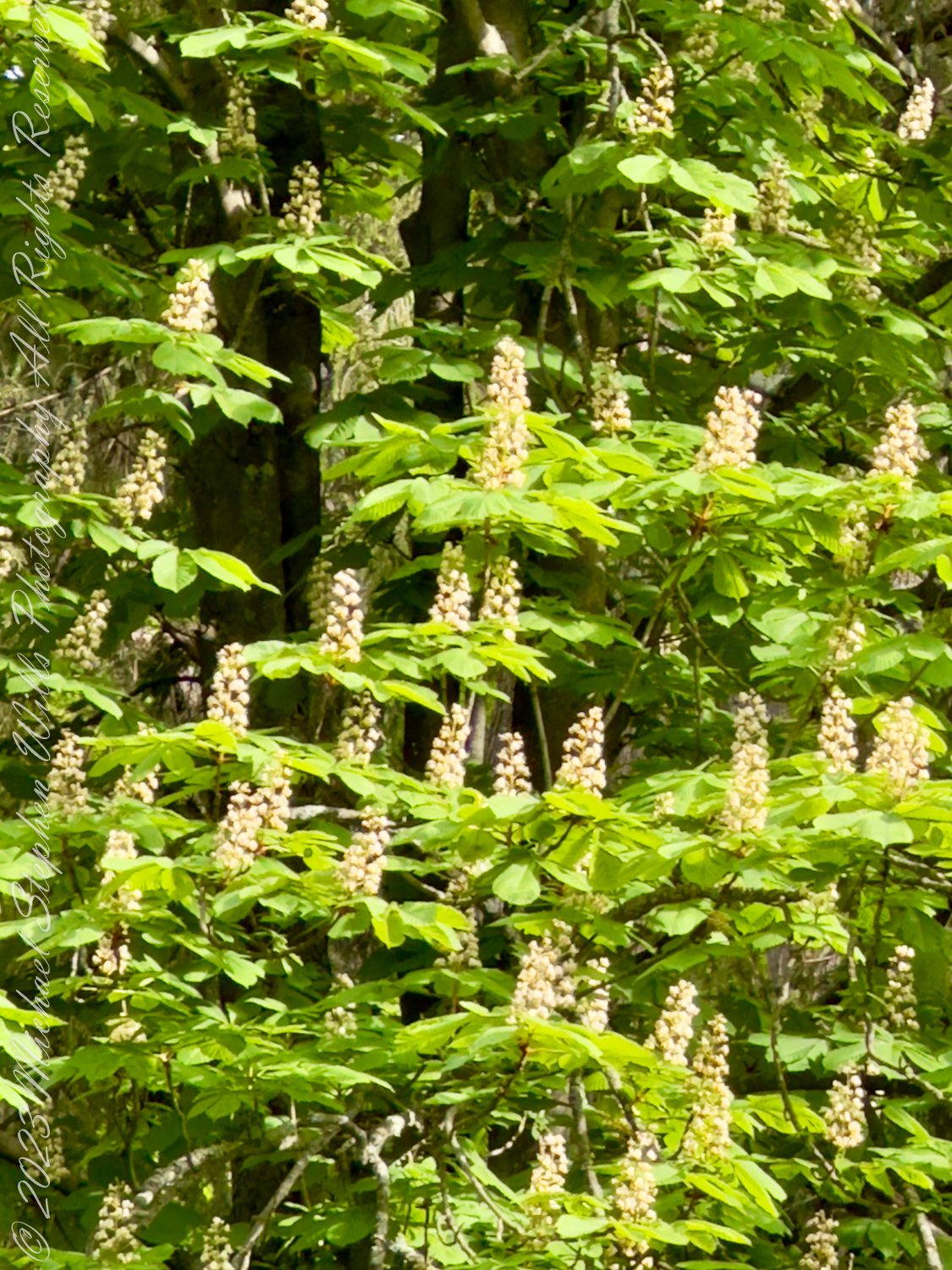
Each spring, the Horse Chestnut’s candle-like flower spikes, scientifically known as ‘panicles’, burst forth in a shower of whites and subtle pinks, each petal marked distinctively with a blotch of yellow or red. These blooms are structured to attract a variety of pollinators, playing a crucial role in the local ecological narrative by supporting biodiversity.
Historical Uses and Cultural Significance
The journey of the Horse Chestnut tree from its native lands to the Americas is a tale of practicality and reverence. Native Americans, prior to the arrival of European settlers, were keen observers of their environment but may not have had a direct historical use for the Horse Chestnut, as it was introduced later. However, the European settlers quickly discovered the tree’s multiple uses. The wood, known for its softness and workability, was used to make furniture and boxes, while the bark found its place in the tanning industry due to its rich tannin content.
Most notably, the seeds of the Horse Chestnut were ground and used as a form of laundry detergent and to treat various ailments, a testament to the tree’s utility in pioneering life. This aspect of the Horse Chestnut highlights a broader theme of how both Native Americans and European settlers utilized natural resources for survival and economic purposes, blending the lines between utility and conservation.
A Reflection on the Natural History and Ecology
As I strolled beneath the boughs heavy with spring’s bounty, the historical echoes of the Horse Chestnut’s uses merged with the present chorus of birds nesting in its branches. The tree’s role extends beyond human uses; it is a vital component of the local ecosystems. The dense canopy provides shelter and the flowers feed pollinators, which in turn support the broader food web.
Environmental factors, particularly those influenced by climate change, pose challenges to the Horse Chestnut. Issues such as leaf blotch and the conker tree moth threaten its health and longevity. Observing the Horse Chestnut’s current vibrancy, I am reminded of the resilience and adaptability that this species has demonstrated over centuries.
Conclusion: A Legacy Continues
As the day drew to a close and the sun cast long shadows over Cayuga Lake, the Horse Chestnut stood as a botanical specimen, a living monument to natural history and human ingenuity. The tree’s story is a powerful reminder of our intertwined destinies with the plant kingdom—how plants shape our cultures, sustain our environments, and continue to amaze with their ecological and aesthetic contributions.
 Michael Stephen Wills Photography
You are lucky to have horse chestnut trees around you!
LikeLiked by 1 person
Hi Hien,
Thank you for your kind words! I do feel fortunate to have horse chestnut trees nearby. Their blossoms add a special charm to this time of year. Do you have any favorite trees or blossoms in Princeton? I’d love to hear about the natural beauty in your area!
Best, Mike
LikeLike
This is a wonderful tribute to the horse chestnut, Mike.
LikeLiked by 2 people
The tree has the fabulous “Christmas Tree” shape and the flowers are like candles.
LikeLiked by 1 person
Wow! Very interesting nature story about Horse Chesnut’s and your photos a re wonderful.
Thank’s for share Michael must be an amazing place to visit
Have a blessing day next to yours.
LikeLiked by 2 people
Hi Elvira,
Thank you so much for your kind words! I’m glad you enjoyed the story and the photos. We love the shores of Cayuga Lake, and I’m happy to share its beauty with others.
Wishing you a blessed day as well!
Best,
Michael
LikeLiked by 2 people
The Horse Chestnut is certainly a splendid looking tree. Apparently, it grows quite well in the cooler regions of Australia.
You must have truly enjoyed your Mother’s Day walk, especially with the Horse Chestnut tree in bloom.
LikeLiked by 2 people
Hi Carolyn,
Absolutely, the Horse Chestnut is a magnificent tree! It’s wonderful to hear that it thrives in the cooler regions of Australia as well. Our mothers and the entire family had a fantastic Mother’s Day, and the blooming Horse Chestnut made it even more special.
Thank you for your lovely comment!
Best,
Michael
LikeLiked by 2 people
Hi Michael
It was very interesting, thank you so much for share. Looks like a wonderful and relaxing place.
Have a blessed day as well.
All the best,
Elvira
LikeLiked by 2 people
Oh so true, Elvira. Cheers!!
LikeLiked by 2 people
That’s wonderful, Michael.
Cheers!
LikeLiked by 2 people
Chestnut blossoms are beautiful!
LikeLiked by 2 people
Dear Maggie,
Thank you for your lovely comment! I’m glad you share my admiration for the beautiful chestnut blossoms. They truly are a delight to see, especially on Mother’s Day.
Warm regards, Mike
LikeLiked by 1 person
It’s wonderful to see the continuing legacy of the Horse Chestnut. I was walking early this morning at Chestnut Ridge Metro Park. While the hardy chestnut trees faded away because of disease long ago, there is much to experience and praise in the cathedral-like environment.
LikeLiked by 1 person
Thank you, BigSkyBuckeye, for your comment. Chestnut Ridge Metro Park is a perfect local for springtime walks. I learned just now the part is the first ridge in the foothills of the Appalachian Mountains? The park’s diverse habitats and scenic views make it a great spot for nature walks and enjoying the outdoors. I appreciate you sharing your experience!
LikeLiked by 1 person
Mike, thank you for sharing some of your research. Indeed, the park captures the beauty and terrain of the Appalachian foothills. The trails are natural and all vegetation stays in the park as part of the continuing ecosystem.
LikeLiked by 1 person