A narrow path, a handful of low stone walls, and small white flowers scattered through the grass: the photographs of our exploration at Drombeg preserve details that invite a closer look. Beside the Fulacht Fiadh, two adjoining huts survive as outlines in the ground. Exploring this part of the site with my wife, Pam, gives me a way to think about the people behind the stones, even when so much of their story remains beyond our reach.
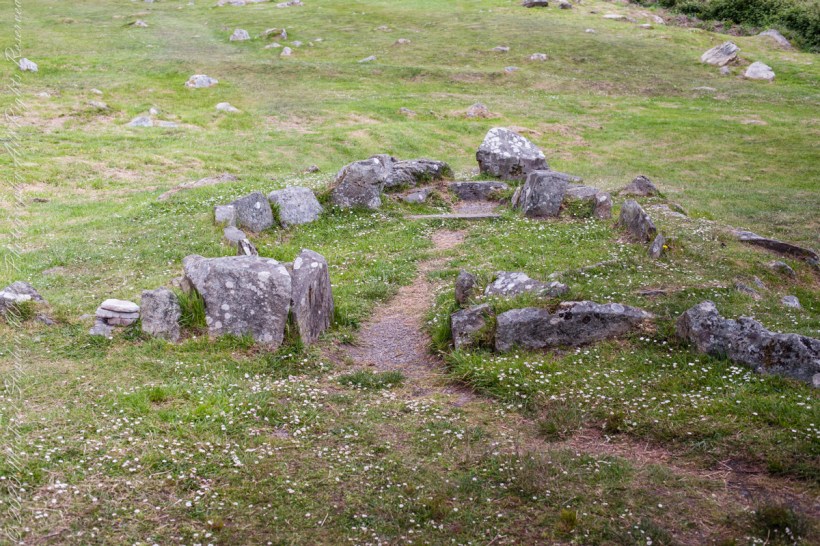
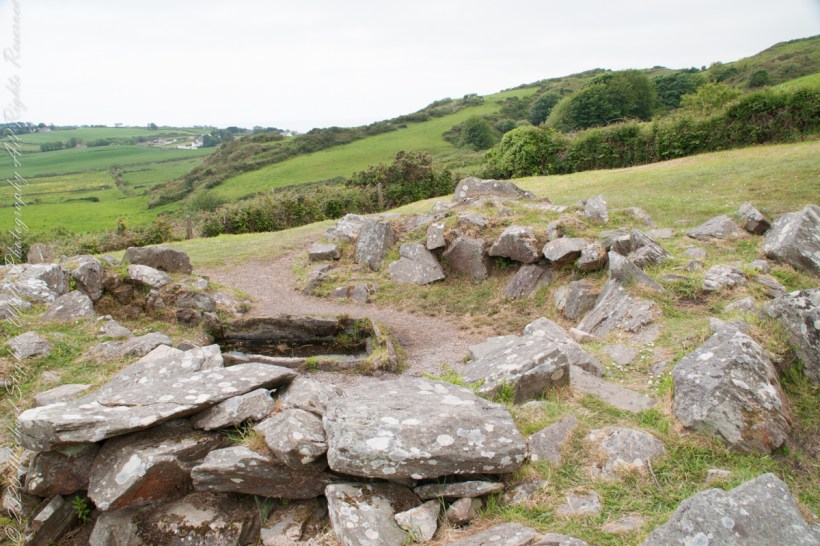
The first photograph, one of the huts, draws the eye along a worn strip of earth toward an opening between upright stones. Beyond it, the hut’s curved boundary gathers a patch of grass into something recognizable as a space. Some stones stand prominently; others barely rise above the turf. Pale lichen marks their faces. Small flowers grow around their bases, softening the edges without quite concealing the arrangement.
Looking at that opening, I imagine the simple act of entering. It is an ordinary movement, one Pam and I have made through countless doorways together. Here, the surviving stones give that familiar action an unfamiliar setting. What would it have meant to cross this threshold when the hut was in use? The photograph cannot answer, but it makes the question feel close enough to linger over.
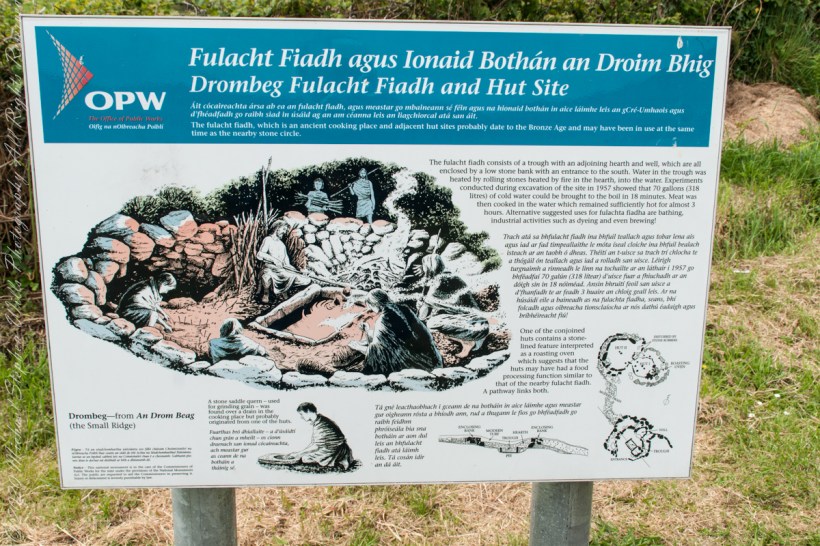
The fulacht fiadh consists of a trough with an adjoining hearth and well, which are all enclosed by a low stone bank with an entrance to the south. Water in the trough was heated by rolling stones heated by fire in the hearth, into the water. Experiments conducted during excavation of the site in 1957 showed that 70 gallons (318 litres) of cold water could be brought to the boil in 18 minutes. Meat was then cooked in the water which remained sufficiently hot for almost 3 hours. Alternative suggested uses for fulachta fiadha are bathing, industrial activities such as dyeing and even brewing!
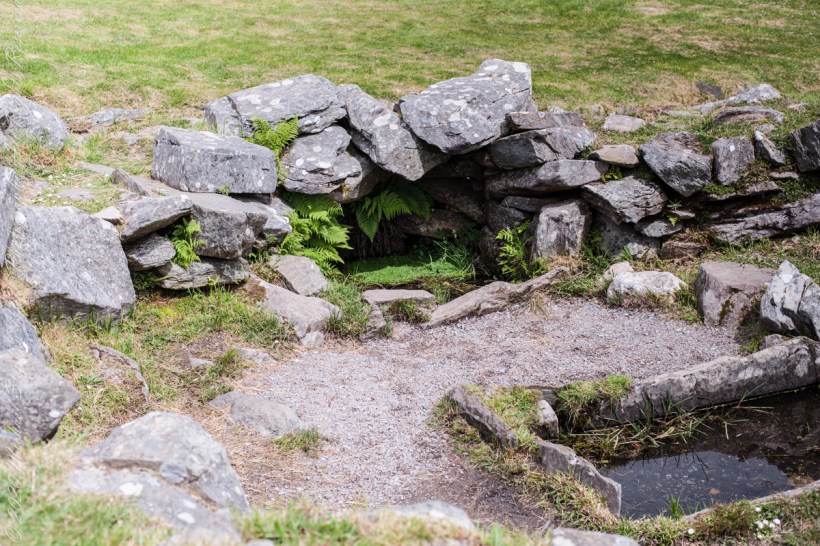
One of the conjoined huts contains a stone-lined feature interpreted as a roasting oven which suggests that the huts may have had a food processing function similar to that of the nearby fulacht fiadh. A pathway links both.
A stone saddle quern – used for grinding grain – was found over a drain in the cooking place but probably originated from one of the huts.
Drombeg—from An Drom Beag
(the Small Ridge)
The accompanying OPW placard give us a few firm details. Drombeg has two huts adjoining the Fulacht Fiadh, with a connecting path. Hut B incorporates a rock-lined hearth that possibly served as an oven. Those few words change the way I read the scene. The low remains become places with a relationship to one another, and the path becomes a useful thread to follow through the scattered stone.
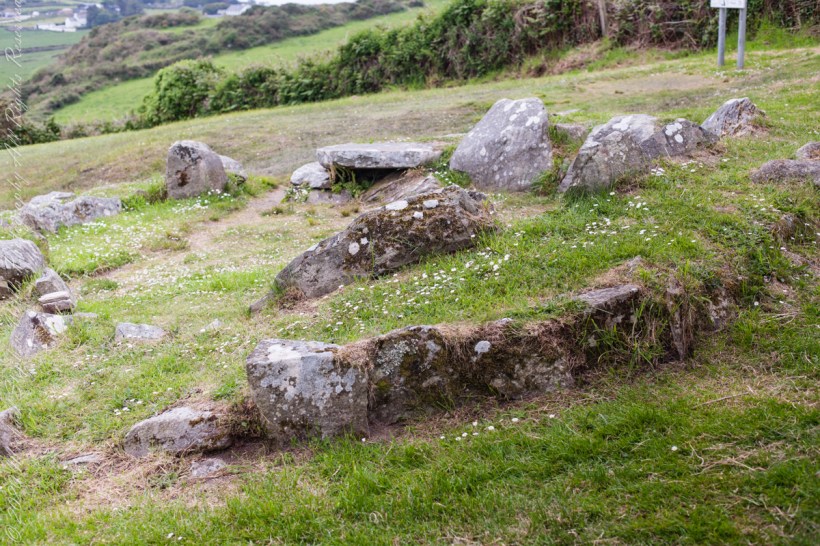
In the wider view, the ground slopes away toward hedges, green fields, and distant buildings. Closer to the camera, irregular stones trace the hut through grass and patches of bare earth. A broad, flat slab rests above a dark recess. Nothing in the photograph announces itself with grandeur. Its interest lies in how closely we look, and in the small connections we begin to make.
The hearth is a detail that holds my attention. The OPW placard notes are careful: it possibly served as an oven. I want to keep that uncertainty intact. It leaves room for curiosity without turning a suggestion into a fact. Even with that restraint, the possibility of cooking brings a human scale to the ruins. An oven suggests work to be done, something to prepare, someone waiting.
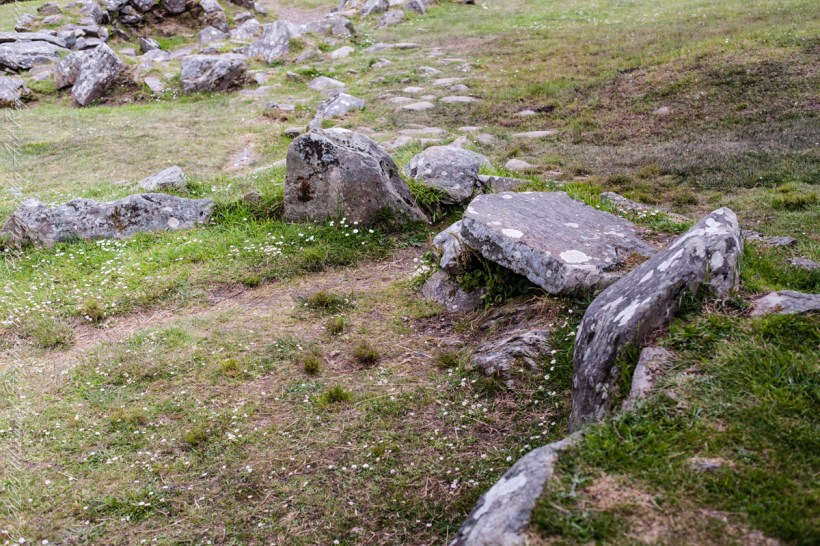
The closest photograph brings the hearth into sharper focus. White patches of lichen spread across the the irregular rock wall. Plants fill small gaps beneath it. The stones lean at different angles, and the trough leads the eye onward. The view holds the intimate detail and the larger setting together, allowing us to consider how these neighboring spaces might have related.
I imagine a person tending heat there, watching carefully, occupied with a task that mattered in the moment. That is an imagined scene, not something these photographs establish. Yet it helps me approach the stones with a different kind of attention. Whoever used this place had practical concerns that we can wonder about, even when their names, words, and particular circumstances are lost to us.
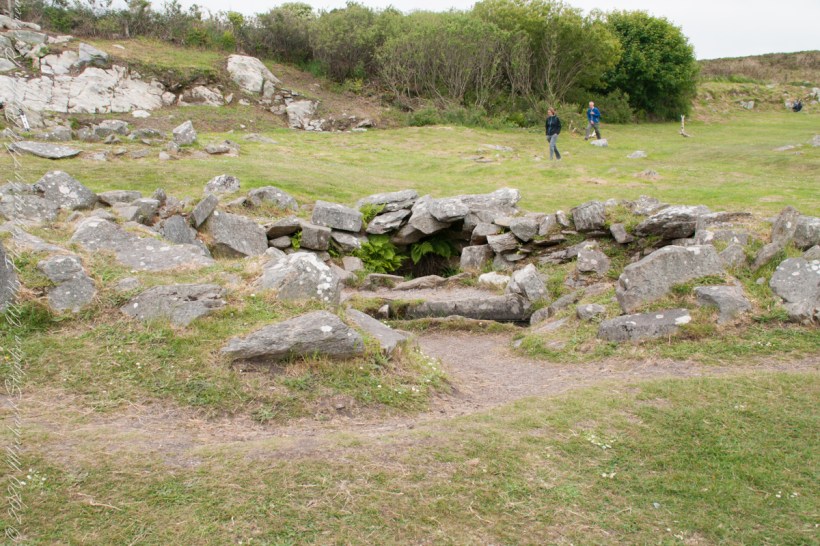
The Fulacht Fiadh site contains a hearth as well.
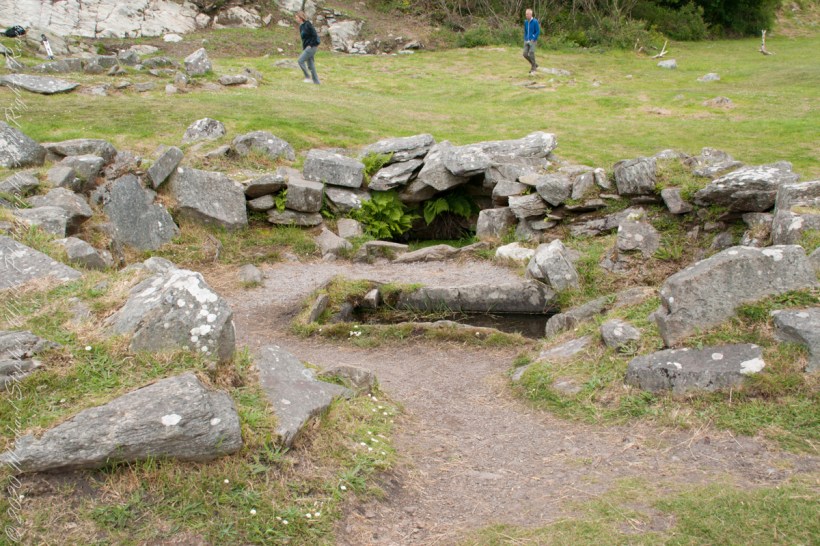
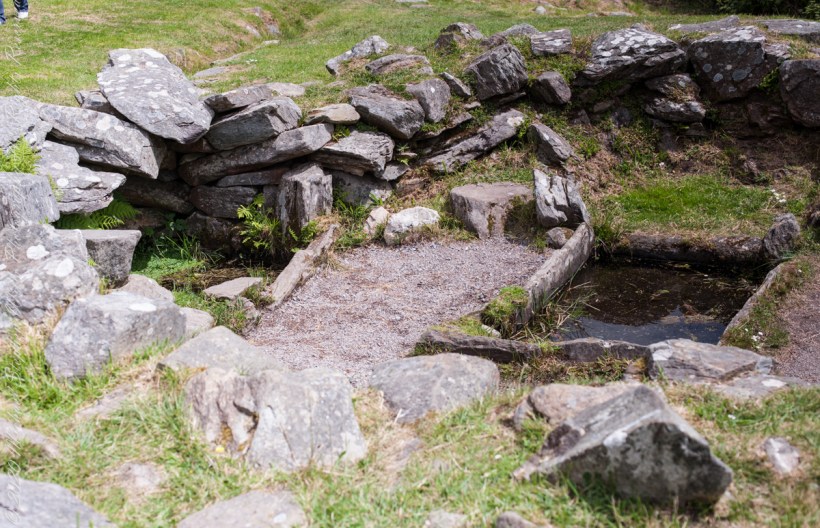
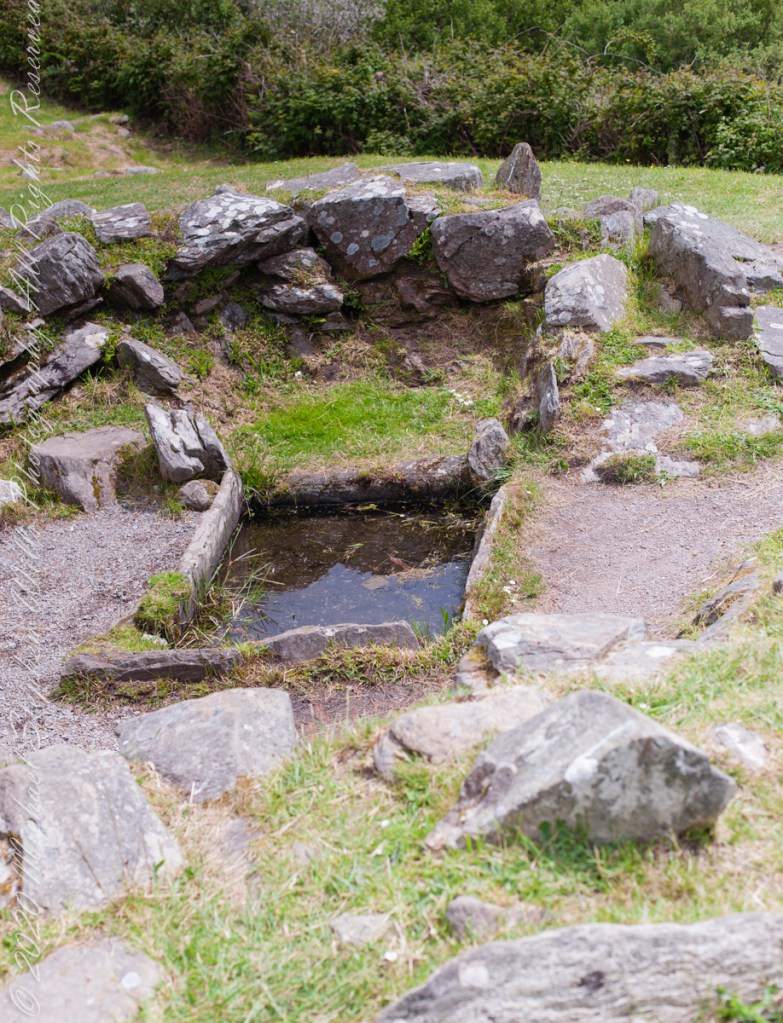
For me, sharing an exploration like this with Pam offers its own pleasure: having someone beside whom to consider what remains. I cannot supply a remembered conversation from these pictures. I can, however, imagine the questions we might carry away. How much can a surviving outline tell us? At what point does looking become imagining? How do we appreciate a place while leaving its unanswered questions open?
These photographs bring back to mind a low doorway, a path, and the hearth. Together, they offer a modest but absorbing way into Drombeg. The flowers are small enough to overlook; so are some of the stones. Giving them attention becomes part of the experience. In this telling of our visit, that is what I would keep: Pam and me exploring the surviving shapes of a place, following what we can see, and letting a few careful questions accompany us.


It’s fun imagining what might have been.
LikeLike
I enjoy your “doorway” stories — here I took up that theme.
LikeLiked by 1 person
Thanks very much
LikeLike
Very interesting!
LikeLiked by 1 person
Thank you, Tom! I’m glad you found it interesting. Drombeg is one of those places where the landscape and its ancient history seem to come alive together.
LikeLike